High Purity Methane Gas Market Research Report 2033

High Purity Methane Gas Market Research Report 2033

Segments - by Grade (Research Grade, Electronic Grade, Industrial Grade, Others), by Application (Chemical Synthesis, Electronics, Energy, Laboratory, Others), by End-User (Chemical Industry, Electronics & Semiconductors, Energy & Power, Healthcare, Others), by Distribution Channel (Direct Sales, Distributors, Online Sales)

https://growthmarketreports.com/Raksha
Author : Raksha Sharma
https://growthmarketreports.com/Vaibhav
Fact-checked by : V. Chandola
https://growthmarketreports.com/Shruti
Editor : Shruti Bhat

Upcoming | Report ID :MC-5589 | 4.8 Rating | 75 Reviews | 271 Pages | Format : Docx PDF

Report Description


High Purity Methane Gas Market Outlook

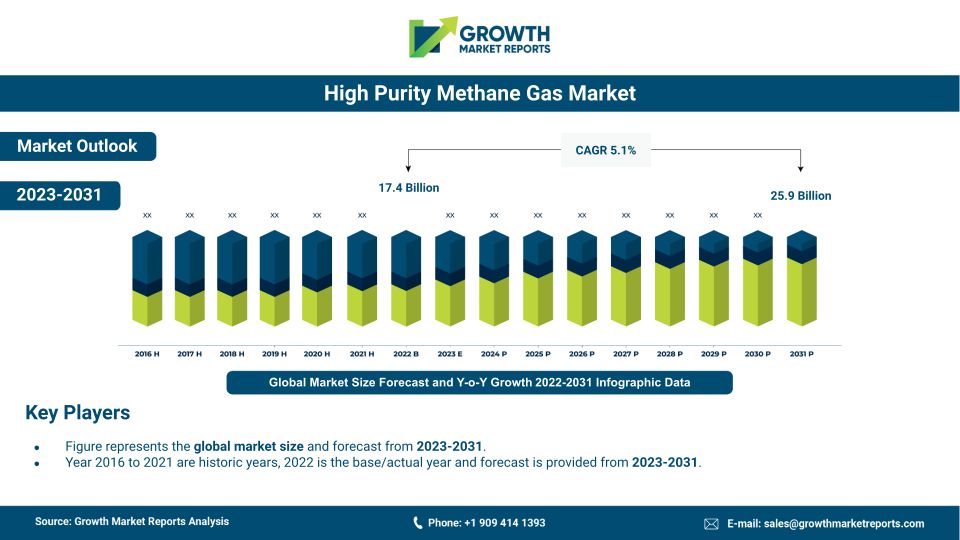
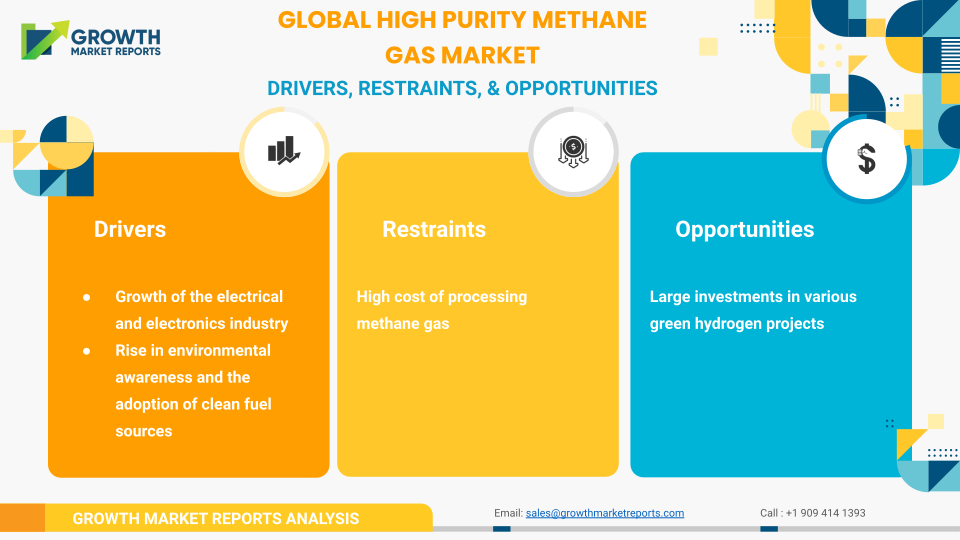
According to our latest research, the global high purity methane gas market size reached USD 6.45 billion in 2024, reflecting robust demand across multiple industries. The market is projected to grow at a CAGR of 6.7% from 2025 to 2033, culminating in a forecasted market size of USD 11.62 billion by 2033. This sustained growth is primarily driven by the expanding applications of high purity methane gas in electronics, chemical synthesis, and energy sectors, as well as the increasing technological advancements in gas purification and distribution. As per the latest research, the marketÂ’s upward trajectory is underpinned by rising investments in electronics manufacturing and the growing need for ultra-pure gases in semiconductor fabrication.

One of the most significant growth factors for the high purity methane gas market is the rapid expansion of the electronics and semiconductor industry. High purity methane gas is an essential precursor in the production of semiconductors and integrated circuits, where even trace contaminants can compromise product quality. With the proliferation of advanced technologies such as 5G, artificial intelligence, and the Internet of Things (IoT), there is a surging demand for high-performance electronic devices, which in turn propels the need for ultra-pure process gases. Furthermore, the shift towards miniaturization and the increasing complexity of semiconductor devices require even higher purity standards, thereby fueling the market for high purity methane gas. As governments and private enterprises continue to invest heavily in semiconductor manufacturing capabilities, especially in Asia Pacific and North America, the demand for high purity methane gas is expected to maintain its upward momentum.

Another key driver for the market is the growing adoption of high purity methane gas in chemical synthesis and energy applications. In the chemical industry, high purity methane is a critical feedstock for the synthesis of high-value chemicals and specialty materials. The stringent quality requirements in these processes mandate the use of methane with minimal impurities to ensure product consistency and process efficiency. Additionally, the energy sector is witnessing a paradigm shift towards cleaner fuels and advanced energy storage solutions, where high purity methane plays a pivotal role. The development of hydrogen production technologies, such as steam methane reforming (SMR), further amplifies the demand for high purity methane, as it is essential for achieving high conversion efficiencies and minimizing catalyst poisoning. These trends collectively contribute to the robust growth of the high purity methane gas market.

Technological advancements in gas purification, storage, and distribution have also significantly influenced the high purity methane gas market. Innovations in membrane separation, cryogenic distillation, and advanced filtration techniques have enabled manufacturers to achieve ultra-high purity levels required by end-users in electronics, healthcare, and research laboratories. The integration of digital monitoring and automation in gas distribution systems ensures consistent supply and traceability, which is critical for industries with zero-tolerance for contamination. Additionally, the emergence of online sales platforms and digital procurement channels has streamlined the supply chain, making high purity methane gas more accessible to a broader customer base. These technological developments not only enhance operational efficiency but also open new avenues for market expansion.

High-purity Gas plays a crucial role in the semiconductor industry, where the demand for contamination-free environments is paramount. As semiconductor devices become more sophisticated, the need for gases with minimal impurities has intensified. High-purity gases are essential in processes such as chemical vapor deposition and etching, where even the slightest impurity can lead to defects in the final product. The increasing complexity of semiconductor manufacturing, driven by advancements in technologies like 5G and AI, underscores the importance of maintaining high purity standards. This trend is not only evident in the semiconductor industry but also in other sectors like healthcare and research, where high-purity gases ensure the reliability and accuracy of processes.

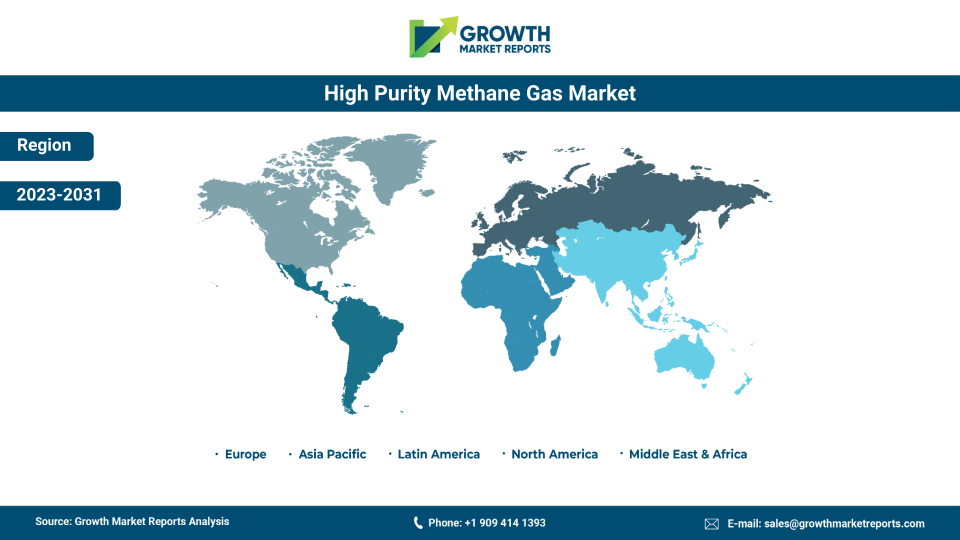
From a regional perspective, Asia Pacific remains the dominant market for high purity methane gas, accounting for the largest share in 2024, followed by North America and Europe. The regionÂ’s leadership is attributed to its flourishing electronics manufacturing sector, particularly in countries like China, Japan, South Korea, and Taiwan. Furthermore, Asia Pacific is witnessing significant investments in chemical production and energy infrastructure, which further bolsters the demand for high purity methane. North America and Europe are also experiencing steady growth, driven by advancements in semiconductor research, renewable energy projects, and stringent regulatory standards for gas purity. Meanwhile, the Middle East & Africa and Latin America are emerging as high-growth regions, supported by increasing industrialization and investments in energy projects. The regional outlook for the high purity methane gas market remains positive, with Asia Pacific expected to maintain its lead throughout the forecast period.

Global High Purity Methane Gas Industry Outlook

Grade Analysis

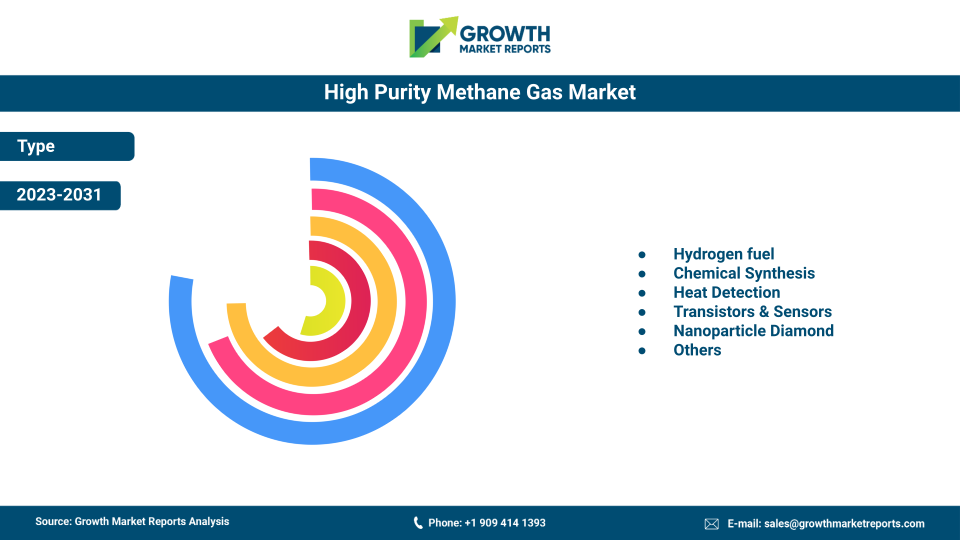
The high purity methane gas market is segmented by grade into research grade, electronic grade, industrial grade, and others, each catering to specific end-use requirements. Research grade methane is characterized by its ultra-high purity levels, typically above 99.999%, making it suitable for sensitive laboratory experiments, analytical research, and calibration standards. The demand for research grade methane is primarily driven by academic institutions, government laboratories, and research organizations engaged in advanced scientific studies. As research activities in material science, environmental monitoring, and analytical chemistry continue to expand globally, the consumption of research grade methane is expected to grow steadily. The global emphasis on scientific innovation and the increasing complexity of experimental protocols further underscore the importance of maintaining high standards of gas purity in research settings.

Electronic grade methane is the fastest-growing segment within the high purity methane gas market, fueled by its critical role in semiconductor manufacturing and electronics fabrication. This grade demands the highest purity levels, often exceeding 99.9999%, to prevent contamination during the deposition of thin films and the production of integrated circuits. The proliferation of advanced electronic devices, such as smartphones, wearables, and smart appliances, has placed immense pressure on manufacturers to adopt ultra-pure gases in their production processes. As a result, electronic grade methane is witnessing robust demand from leading semiconductor foundries and electronics manufacturers, particularly in Asia Pacific and North America. The ongoing advancements in microelectronics and the push towards next-generation chip technologies are expected to further accelerate the growth of this segment.

Industrial grade methane, while not as pure as research or electronic grades, is widely utilized across various industrial applications, including chemical synthesis, energy production, and metallurgy. This segment benefits from the rising adoption of methane as a cleaner alternative to conventional fuels and as a key feedstock in the production of chemicals such as hydrogen, methanol, and ammonia. The industrial grade segment is characterized by its cost-effectiveness and versatility, making it a preferred choice for large-scale industrial operations. The growing emphasis on sustainability and the shift towards low-carbon energy sources are likely to drive the demand for industrial grade methane in the coming years, especially in emerging economies where industrialization is on the rise.

The significance of High Purity Gas extends beyond traditional applications, finding new roles in emerging technologies and industries. As industries strive for greater efficiency and sustainability, the demand for high purity gases continues to rise. In the field of renewable energy, for instance, high purity gases are integral to the production of hydrogen through processes like electrolysis and steam methane reforming. These gases ensure the efficiency and effectiveness of energy conversion and storage technologies. Furthermore, high purity gases are increasingly being used in environmental monitoring and medical diagnostics, where precision and accuracy are critical. This expanding scope of applications highlights the growing importance of high purity gases in supporting technological advancements and addressing global challenges.

The "others" category encompasses specialty grades of methane tailored for niche applications, such as medical gases, environmental monitoring, and specialty coatings. These grades are formulated to meet specific purity and performance criteria, often involving customized purification and packaging solutions. The demand for specialty grades is influenced by evolving industry standards, regulatory requirements, and the emergence of new application areas. As industries continue to innovate and diversify their product offerings, the need for customized high purity methane solutions is expected to increase, providing new growth opportunities for market participants. Overall, the grade segmentation of the high purity methane gas market reflects a dynamic landscape driven by evolving end-user requirements and technological advancements in gas purification.

Report Scope

Attributes Details
Report Title High Purity Methane Gas Market Research Report 2033
By Grade Research Grade, Electronic Grade, Industrial Grade, Others
By Application Chemical Synthesis, Electronics, Energy, Laboratory, Others
By End-User Chemical Industry, Electronics & Semiconductors, Energy & Power, Healthcare, Others
By Distribution Channel Direct Sales, Distributors, Online Sales
Regions Covered North America, Europe, APAC, Latin America, MEA
Base Year 2024
Historic Data 2018-2023
Forecast Period 2025-2033
Number of Pages 271
Number of Tables & Figures 351
Customization Available Yes, the report can be customized as per your need.

Application Analysis

The application landscape of the high purity methane gas market is diverse, encompassing chemical synthesis, electronics, energy, laboratory, and other specialized uses. In chemical synthesis, high purity methane serves as a fundamental building block for the production of a wide range of chemicals, including hydrogen, methanol, acetylene, and halogenated compounds. The stringent purity requirements in these processes are essential to ensure high yields, process efficiency, and product consistency. As the chemical industry continues to evolve towards more sustainable and efficient production methods, the role of high purity methane as a clean and reliable feedstock becomes increasingly significant. The adoption of methane in advanced chemical processes, such as catalytic reforming and selective oxidation, is expected to drive the growth of this application segment.

The electronics application segment is the largest and fastest-growing market for high purity methane gas, owing to its indispensable role in semiconductor fabrication, thin film deposition, and microelectronics manufacturing. Methane is commonly used as a precursor gas in chemical vapor deposition (CVD) processes, where it contributes to the formation of high-quality silicon carbide, diamond-like carbon films, and other advanced materials. The relentless pursuit of miniaturization, higher performance, and energy efficiency in electronic devices necessitates the use of ultra-pure gases to prevent defects and ensure product reliability. The ongoing expansion of electronics manufacturing facilities, particularly in Asia Pacific, coupled with rising investments in research and development, is expected to sustain the strong demand for high purity methane in this segment.

In the energy sector, high purity methane is gaining traction as a clean fuel for power generation, hydrogen production, and energy storage applications. The global shift towards decarbonization and renewable energy integration has spurred interest in methane-based technologies, such as steam methane reforming (SMR) and methane pyrolysis, which offer efficient pathways for hydrogen production with low carbon emissions. Additionally, high purity methane is being explored as a potential fuel for advanced energy storage systems, including fuel cells and hybrid power plants. The growing adoption of these technologies, supported by favorable government policies and investments in clean energy infrastructure, is expected to drive the demand for high purity methane in the energy application segment.

The Methane to Sulfur Conversion process is gaining attention as a promising pathway for sustainable chemical production. This innovative approach involves the conversion of methane, a potent greenhouse gas, into valuable sulfur compounds. By leveraging advanced catalytic technologies, this process not only mitigates methane emissions but also produces sulfur, which is a key raw material in various industrial applications. The development of efficient methane to sulfur conversion technologies aligns with global efforts to reduce carbon footprints and transition towards a circular economy. As research and development in this field progress, the potential for integrating methane to sulfur conversion into existing industrial processes presents exciting opportunities for reducing environmental impact while enhancing resource efficiency.

Laboratory applications represent a significant market for high purity methane, as research institutions, testing laboratories, and calibration facilities require ultra-pure gases for analytical measurements, instrument calibration, and scientific experiments. The accuracy and reliability of analytical results are highly dependent on the purity of the gases used, making high purity methane a critical component in laboratory workflows. The increasing complexity of analytical techniques, such as gas chromatography and mass spectrometry, further underscores the importance of maintaining stringent purity standards. As research and development activities continue to expand across various scientific disciplines, the laboratory segment is poised for steady growth.

Other applications of high purity methane include its use in environmental monitoring, medical diagnostics, and specialty coatings. These niche segments are characterized by evolving regulatory standards and the need for customized gas solutions. The growing emphasis on environmental sustainability and the adoption of advanced monitoring technologies are expected to create new opportunities for high purity methane in specialized applications. Overall, the application segmentation of the high purity methane gas market highlights the versatility and critical importance of this gas across a wide range of industries.

End-User Analysis

The high purity methane gas market is segmented by end-user into chemical industry, electronics and semiconductors, energy and power, healthcare, and others, each with distinct consumption patterns and growth drivers. The chemical industry remains a major consumer of high purity methane, leveraging its use as a feedstock for the synthesis of ammonia, methanol, hydrogen, and other specialty chemicals. The increasing focus on process optimization, product quality, and regulatory compliance has heightened the demand for ultra-pure gases in chemical manufacturing. As the industry continues to evolve towards more sustainable and efficient production methods, the importance of high purity methane is expected to grow, particularly in regions with expanding chemical production capacities.

Electronics and semiconductors represent the largest and most dynamic end-user segment for high purity methane gas. The relentless pace of innovation in semiconductor technology, coupled with the growing adoption of advanced electronic devices, has driven the demand for ultra-pure process gases to unprecedented levels. High purity methane is a critical precursor in the deposition of thin films, the fabrication of microelectronic components, and the production of high-performance semiconductors. The rapid expansion of semiconductor manufacturing facilities in Asia Pacific, North America, and Europe, supported by substantial investments in research and development, is expected to sustain the robust growth of this end-user segment. The increasing complexity of semiconductor devices and the shift towards next-generation technologies further amplify the need for high purity methane.

The energy and power sector is emerging as a significant end-user of high purity methane, driven by the global transition towards cleaner fuels and advanced energy storage solutions. Methane-based technologies, such as steam methane reforming and methane pyrolysis, offer efficient pathways for hydrogen production, which is gaining traction as a key component of the future energy landscape. The adoption of high purity methane in fuel cells, hybrid power plants, and renewable energy integration is expected to drive the growth of this end-user segment. Additionally, the increasing focus on carbon capture and utilization (CCU) technologies presents new opportunities for the use of high purity methane in energy applications.

Healthcare is another important end-user segment, where high purity methane is used in medical diagnostics, pharmaceutical manufacturing, and laboratory research. The stringent purity requirements in healthcare applications are essential to ensure patient safety, product efficacy, and regulatory compliance. The growing emphasis on advanced diagnostic techniques, personalized medicine, and biotechnology research is expected to drive the demand for high purity methane in the healthcare sector. As healthcare systems worldwide continue to invest in research and innovation, the role of high purity gases in supporting these activities becomes increasingly critical.

The "others" category includes end-users in environmental monitoring, academic research, and specialty manufacturing, where high purity methane is used for niche applications. The evolving regulatory landscape, coupled with the increasing adoption of advanced monitoring and analytical technologies, is expected to create new growth opportunities in these segments. Overall, the end-user segmentation of the high purity methane gas market reflects a broad and dynamic customer base, driven by diverse application requirements and technological advancements.

Distribution Channel Analysis

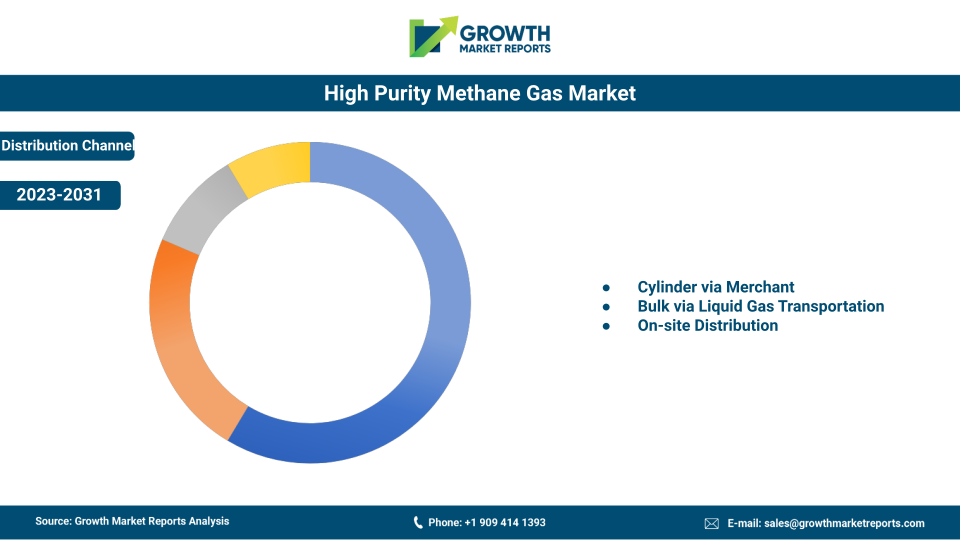
The distribution channel landscape for the high purity methane gas market is segmented into direct sales, distributors, and online sales, each offering unique advantages and challenges. Direct sales remain the preferred channel for large industrial customers and key end-users, such as electronics manufacturers and chemical producers. This channel provides greater control over product quality, supply chain management, and customer relationships, enabling suppliers to offer customized solutions and technical support. The increasing complexity of end-user requirements and the need for reliable, high-quality gas supply have reinforced the importance of direct sales in the high purity methane gas market. Leading manufacturers are investing in dedicated sales teams, technical service centers, and logistics infrastructure to strengthen their direct sales capabilities.

Distributors play a crucial role in extending the reach of high purity methane gas suppliers, especially in regions with fragmented demand or limited infrastructure. Distributors offer value-added services, such as inventory management, technical support, and local delivery, making them an integral part of the supply chain. The growing demand for high purity methane in emerging markets, coupled with the need for flexible and responsive distribution networks, has driven the expansion of distributor partnerships. Manufacturers are increasingly collaborating with regional and specialty distributors to enhance market penetration and address the unique needs of local customers. The distributor channel is expected to witness steady growth, particularly in Asia Pacific, Latin America, and the Middle East & Africa.

Online sales are an emerging distribution channel in the high purity methane gas market, driven by the digitalization of procurement processes and the growing adoption of e-commerce platforms. Online sales offer convenience, transparency, and a broader product selection, making them attractive to small and medium enterprises, research institutions, and laboratories. The integration of digital tools, such as real-time inventory tracking, automated order processing, and online technical support, has streamlined the procurement of high purity gases. As digital transformation continues to reshape the industrial gas market, online sales are expected to gain traction, particularly among tech-savvy customers and in regions with well-developed digital infrastructure.

The evolving distribution channel landscape reflects the growing complexity and diversity of customer requirements in the high purity methane gas market. Suppliers are increasingly adopting a multi-channel strategy, combining direct sales, distributor partnerships, and online platforms to maximize market reach and enhance customer satisfaction. The ongoing investments in digital technologies, supply chain optimization, and customer engagement are expected to drive further innovation in distribution channels, providing new growth opportunities for market participants.

Opportunities & Threats

The high purity methane gas market presents a multitude of opportunities for growth, driven by the rapid expansion of the electronics and semiconductor industry. As the world moves towards digitalization and the adoption of advanced technologies such as 5G, artificial intelligence, and autonomous systems, the demand for high-performance electronic devices continues to soar. This trend necessitates the use of ultra-pure process gases, including high purity methane, to ensure the quality and reliability of semiconductor components. The increasing investments in semiconductor manufacturing facilities, particularly in Asia Pacific, North America, and Europe, offer significant opportunities for market participants to expand their product offerings and strengthen their market presence. Additionally, the development of next-generation chip technologies and the growing complexity of electronic devices are expected to drive the demand for even higher purity standards, creating new avenues for innovation and differentiation.

Another major opportunity lies in the growing adoption of high purity methane gas in clean energy and hydrogen production applications. As governments and industries worldwide intensify their efforts to reduce carbon emissions and transition towards renewable energy sources, methane-based technologies such as steam methane reforming and methane pyrolysis are gaining traction as efficient pathways for hydrogen production. The integration of high purity methane in advanced energy storage systems, fuel cells, and hybrid power plants further expands its application scope. The increasing focus on sustainability, coupled with favorable regulatory policies and investments in clean energy infrastructure, is expected to create substantial growth opportunities for high purity methane gas suppliers. Moreover, the emergence of new application areas, such as environmental monitoring, medical diagnostics, and specialty coatings, offers additional avenues for market expansion.

Despite the promising growth prospects, the high purity methane gas market faces several restraining factors, the most notable being the high cost and complexity of gas purification and distribution. Achieving ultra-high purity levels requires advanced purification technologies, stringent quality control measures, and specialized storage and transportation solutions, all of which contribute to higher production costs. The volatility of raw material prices, coupled with the capital-intensive nature of gas purification infrastructure, can pose challenges for market participants, particularly small and medium enterprises. Additionally, the stringent regulatory requirements governing gas purity and safety standards add to the operational complexity and compliance burden. These factors may limit the adoption of high purity methane gas in cost-sensitive applications and regions, potentially restraining market growth.

Regional Outlook

Asia Pacific dominates the global high purity methane gas market, accounting for the largest share in 2024 with a market size of approximately USD 2.85 billion. The regionÂ’s leadership is driven by its flourishing electronics manufacturing sector, particularly in countries such as China, Japan, South Korea, and Taiwan. These countries are home to some of the worldÂ’s leading semiconductor foundries and electronics manufacturers, which are major consumers of high purity methane gas. The rapid industrialization, expanding chemical production capacities, and increasing investments in energy infrastructure further bolster the demand for high purity methane in Asia Pacific. The region is expected to maintain its dominance throughout the forecast period, with a projected CAGR of 7.2% from 2025 to 2033, outpacing other regions in terms of growth rate.

North America holds the second-largest share of the high purity methane gas market, with a market size of around USD 1.75 billion in 2024. The regionÂ’s growth is primarily attributed to its advanced semiconductor research and manufacturing capabilities, as well as the increasing adoption of clean energy technologies. The United States, in particular, is a major hub for semiconductor innovation, supported by substantial investments in research and development, government initiatives, and a robust ecosystem of technology companies. The presence of leading chemical and healthcare industries further contributes to the steady demand for high purity methane gas in North America. The region is expected to witness a healthy CAGR over the forecast period, driven by ongoing advancements in electronics, energy, and healthcare applications.

Europe is another significant market for high purity methane gas, with a market size of approximately USD 1.10 billion in 2024. The regionÂ’s growth is supported by its strong chemical and pharmaceutical industries, as well as the increasing focus on sustainability and clean energy solutions. Countries such as Germany, France, and the United Kingdom are leading adopters of high purity gases in advanced manufacturing, research, and energy applications. The Middle East & Africa and Latin America are emerging as high-growth regions, with market sizes of USD 0.45 billion and USD 0.30 billion respectively in 2024. These regions are witnessing increasing industrialization, investments in energy projects, and the adoption of advanced manufacturing technologies, which are expected to drive the demand for high purity methane gas in the coming years. Overall, the regional outlook for the high purity methane gas market remains positive, with Asia Pacific expected to maintain its lead and other regions experiencing steady growth.

High Purity Methane Gas Market Statistics

Competitor Outlook

The competitive landscape of the high purity methane gas market is characterized by the presence of several global and regional players, each striving to enhance their market share through product innovation, strategic partnerships, and capacity expansions. Leading companies are investing heavily in research and development to advance gas purification technologies, improve product quality, and meet the evolving needs of end-users in electronics, chemical, and energy sectors. The market is witnessing a trend towards vertical integration, with major players expanding their presence across the value chain, from raw material sourcing and gas production to purification, packaging, and distribution. This integration enables companies to maintain stringent quality control, optimize costs, and offer customized solutions to their customers.

Strategic collaborations and partnerships are increasingly common in the high purity methane gas market, as companies seek to leverage complementary strengths and expand their geographic reach. Joint ventures between gas producers, electronics manufacturers, and chemical companies are facilitating the development of advanced gas supply systems, digital monitoring solutions, and integrated service offerings. The growing importance of sustainability and environmental stewardship is also driving companies to invest in cleaner production methods, energy-efficient purification technologies, and eco-friendly packaging solutions. These initiatives not only enhance the competitive positioning of market participants but also align with the evolving expectations of customers and regulators.

Mergers and acquisitions are another key feature of the competitive landscape, as companies seek to consolidate their market position, access new technologies, and enter emerging markets. The acquisition of specialty gas producers, regional distributors, and technology providers enables leading players to broaden their product portfolios, enhance their distribution networks, and accelerate innovation. The market is also witnessing the entry of new players, particularly in Asia Pacific and other high-growth regions, driven by the increasing demand for high purity methane gas and the availability of advanced purification technologies. The competitive intensity is expected to remain high, with companies focusing on product differentiation, customer engagement, and operational excellence to sustain their market leadership.

Some of the major companies operating in the high purity methane gas market include Air Liquide S.A., Linde plc, Praxair Technology, Inc. (now part of Linde), Air Products and Chemicals, Inc., Matheson Tri-Gas, Inc., Messer Group GmbH, Showa Denko K.K., and Taiyo Nippon Sanso Corporation. These companies have established a strong global presence, supported by extensive production facilities, advanced purification technologies, and robust distribution networks. Air Liquide S.A. is renowned for its comprehensive portfolio of industrial and specialty gases, as well as its commitment to innovation and sustainability. Linde plc, following its merger with Praxair, has emerged as one of the worldÂ’s largest industrial gas companies, with a strong focus on high purity gases for electronics and chemical applications.

Air Products and Chemicals, Inc. is a leading provider of high purity gases and related technologies, serving a diverse customer base in electronics, energy, healthcare, and industrial sectors. Matheson Tri-Gas, Inc. and Messer Group GmbH are recognized for their expertise in specialty gases and their ability to deliver customized solutions to meet the unique needs of their customers. Showa Denko K.K. and Taiyo Nippon Sanso Corporation are prominent players in the Asia Pacific region, with a strong focus on serving the electronics and semiconductor industries. These companies are continuously investing in capacity expansions, technology upgrades, and strategic partnerships to enhance their competitive positioning and capitalize on emerging growth opportunities in the high purity methane gas market.

Key Players

  • Linde plc
  • Air Liquide S.A.
  • Praxair, Inc. (now part of Linde plc)
  • Air Products and Chemicals, Inc.
  • Messer Group GmbH
  • SHOWA DENKO K.K.
  • Sumitomo Seika Chemicals Co., Ltd.
  • Taiyo Nippon Sanso Corporation
  • Matheson Tri-Gas, Inc.
  • BASF SE
  • Coregas Pty Ltd
  • Iwatani Corporation
  • GCE Group
  • Buzwair Industrial Gases Factories
  • Chengdu Taiyu Industrial Gases Co., Ltd.
  • Sichuan Tianyi Science and Technology Co., Ltd.
  • Linde Gas Singapore Pte Ltd
  • Universal Industrial Gases, Inc.
  • Southern Gas Limited
  • Air Water Inc.
High Purity Methane Gas Market Overview

Segments

The High Purity Methane Gas market has been segmented on the basis of

Grade

  • Research Grade
  • Electronic Grade
  • Industrial Grade
  • Others

Application

  • Chemical Synthesis
  • Electronics
  • Energy
  • Laboratory
  • Others

End-User

  • Chemical Industry
  • Electronics & Semiconductors
  • Energy & Power
  • Healthcare
  • Others

Distribution Channel

  • Direct Sales
  • Distributors
  • Online Sales

Competitive Landscape

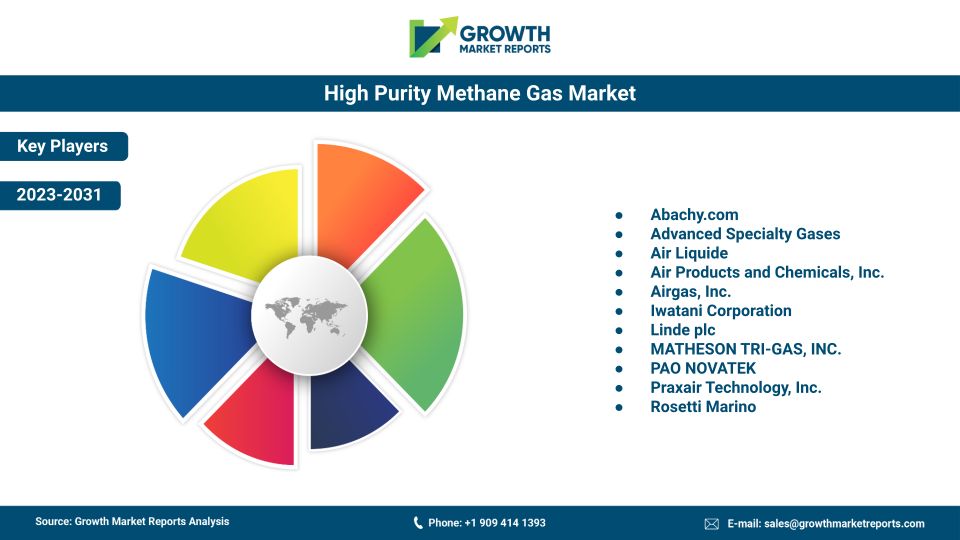
Key players competing in the global high purity methane gas market are Abachy.com; Advanced Specialty Gases; Air Liquide; Air Products and Chemicals, Inc.; Airgas, Inc.; Iwatani Corporation; Linde plc; MATHESON TRI-GAS, INC.; PAO NOVATEK; Praxair Technology, Inc.; and Rosetti Marino.

These companies adopt several development strategies such as product launches, mergers, acquisitions, collaboration, partnerships, and production expansion to tap into the untapped regions worldwide. These market players overcome constant obstacles such as fluctuating prices of raw materials and emerging new market competition, and make heavy investments in research & innovation to stay ahead of the curve. For instance,

  • In August 2022, NOVATEK-Yurkharovneftegas, a Russia-based gas company, has recently announced its initiative to use unmanned aerial vehicles ("UAVs") to monitor methane leaks. This project is part of a comprehensive environmental and climate change targets program that includes constructing a multi-level leak detection system. The company is taking a step towards reducing its environmental impact.

  • In February 2021, Rosetti Marino S.p.A., an Italian company providing engineering and construction services, acquired 60% of Green Methane s.r.l for an undisclosed amount, as part of its goal to present itself as an integrated contractor on the full Biogas treatment line. This acquisition will help the company achieve its aim.

  • In October 2020, Samsung Electronics, one of the global manufacturers, collaborated with Linde Plc by establishing a long-term agreement for the supply of modern gases of a ‘high virtue’ nature to the latest semiconductor facilities of Linde Plc in Pyeongtaek, South Korea. Linde is currently the primary supplier of various industrial gases to the existing facilities of Samsung.

High Purity Methane Gas Market Key Players

Frequently Asked Questions

Opportunities include rising demand from the electronics and clean energy sectors, and new applications in hydrogen production and environmental monitoring. Challenges involve high production costs, complex purification processes, and stringent regulatory standards.

Major companies include Linde plc, Air Liquide S.A., Air Products and Chemicals, Inc., Messer Group GmbH, Matheson Tri-Gas, Inc., Showa Denko K.K., Taiyo Nippon Sanso Corporation, and several others with global and regional presence.

Innovations in membrane separation, cryogenic distillation, advanced filtration, and digital monitoring have enabled higher purity levels and improved supply chain efficiency, supporting the growing demand in sensitive applications.

High purity methane gas is distributed through direct sales, distributors, and increasingly through online sales platforms. Direct sales are preferred by large industrial customers, while distributors and online channels cater to smaller buyers and emerging markets.

Asia Pacific leads the market, driven by its robust electronics manufacturing sector, followed by North America and Europe. The Middle East & Africa and Latin America are emerging as high-growth regions due to increasing industrialization.

High purity methane gas is essential in semiconductor fabrication and integrated circuit production. It is used in chemical vapor deposition processes to ensure defect-free thin films and high-performance microelectronics, where ultra-pure gases prevent contamination.

High purity methane gas is available in research grade (ultra-high purity for labs), electronic grade (for semiconductor manufacturing), industrial grade (for chemical synthesis and energy), and specialty grades for niche applications like medical diagnostics and environmental monitoring.

The main end-users of high purity methane gas are the electronics and semiconductor industry, chemical industry, energy and power sector, healthcare, and research laboratories.

The global high purity methane gas market is expected to grow from USD 6.45 billion in 2024 to USD 11.62 billion by 2033, at a CAGR of 6.7% during the forecast period.

High purity methane gas is methane that has been refined to contain minimal impurities, often exceeding 99.999% purity. It is crucial in industries like electronics, chemical synthesis, and energy, where even trace contaminants can compromise product quality and process efficiency.

Table Of Content

Chapter 1 Executive Summary
Chapter 2 Assumptions and Acronyms Used
Chapter 3 Research Methodology
Chapter 4 High Purity Methane Gas Market Overview
   4.1 Introduction
      4.1.1 Market Taxonomy
      4.1.2 Market Definition
      4.1.3 Macro-Economic Factors Impacting the Market Growth
   4.2 High Purity Methane Gas Market Dynamics
      4.2.1 Market Drivers
      4.2.2 Market Restraints
      4.2.3 Market Opportunity
   4.3 High Purity Methane Gas Market - Supply Chain Analysis
      4.3.1 List of Key Suppliers
      4.3.2 List of Key Distributors
      4.3.3 List of Key Consumers
   4.4 Key Forces Shaping the High Purity Methane Gas Market
      4.4.1 Bargaining Power of Suppliers
      4.4.2 Bargaining Power of Buyers
      4.4.3 Threat of Substitution
      4.4.4 Threat of New Entrants
      4.4.5 Competitive Rivalry
   4.5 Global High Purity Methane Gas Market Size & Forecast, 2023-2032
      4.5.1 High Purity Methane Gas Market Size and Y-o-Y Growth
      4.5.2 High Purity Methane Gas Market Absolute $ Opportunity

Chapter 5 Global High Purity Methane Gas Market Analysis and Forecast By Grade
   5.1 Introduction
      5.1.1 Key Market Trends & Growth Opportunities By Grade
      5.1.2 Basis Point Share (BPS) Analysis By Grade
      5.1.3 Absolute $ Opportunity Assessment By Grade
   5.2 High Purity Methane Gas Market Size Forecast By Grade
      5.2.1 Research Grade
      5.2.2 Electronic Grade
      5.2.3 Industrial Grade
      5.2.4 Others
   5.3 Market Attractiveness Analysis By Grade

Chapter 6 Global High Purity Methane Gas Market Analysis and Forecast By Application
   6.1 Introduction
      6.1.1 Key Market Trends & Growth Opportunities By Application
      6.1.2 Basis Point Share (BPS) Analysis By Application
      6.1.3 Absolute $ Opportunity Assessment By Application
   6.2 High Purity Methane Gas Market Size Forecast By Application
      6.2.1 Chemical Synthesis
      6.2.2 Electronics
      6.2.3 Energy
      6.2.4 Laboratory
      6.2.5 Others
   6.3 Market Attractiveness Analysis By Application

Chapter 7 Global High Purity Methane Gas Market Analysis and Forecast By End-User
   7.1 Introduction
      7.1.1 Key Market Trends & Growth Opportunities By End-User
      7.1.2 Basis Point Share (BPS) Analysis By End-User
      7.1.3 Absolute $ Opportunity Assessment By End-User
   7.2 High Purity Methane Gas Market Size Forecast By End-User
      7.2.1 Chemical Industry
      7.2.2 Electronics & Semiconductors
      7.2.3 Energy & Power
      7.2.4 Healthcare
      7.2.5 Others
   7.3 Market Attractiveness Analysis By End-User

Chapter 8 Global High Purity Methane Gas Market Analysis and Forecast By Distribution Channel
   8.1 Introduction
      8.1.1 Key Market Trends & Growth Opportunities By Distribution Channel
      8.1.2 Basis Point Share (BPS) Analysis By Distribution Channel
      8.1.3 Absolute $ Opportunity Assessment By Distribution Channel
   8.2 High Purity Methane Gas Market Size Forecast By Distribution Channel
      8.2.1 Direct Sales
      8.2.2 Distributors
      8.2.3 Online Sales
   8.3 Market Attractiveness Analysis By Distribution Channel

Chapter 9 Global High Purity Methane Gas Market Analysis and Forecast by Region
   9.1 Introduction
      9.1.1 Key Market Trends & Growth Opportunities By Region
      9.1.2 Basis Point Share (BPS) Analysis By Region
      9.1.3 Absolute $ Opportunity Assessment By Region
   9.2 High Purity Methane Gas Market Size Forecast By Region
      9.2.1 North America
      9.2.2 Europe
      9.2.3 Asia Pacific
      9.2.4 Latin America
      9.2.5 Middle East & Africa (MEA)
   9.3 Market Attractiveness Analysis By Region

Chapter 10 Coronavirus Disease (COVID-19) Impact 
   10.1 Introduction 
   10.2 Current & Future Impact Analysis 
   10.3 Economic Impact Analysis 
   10.4 Government Policies 
   10.5 Investment Scenario

Chapter 11 North America High Purity Methane Gas Analysis and Forecast
   11.1 Introduction
   11.2 North America High Purity Methane Gas Market Size Forecast by Country
      11.2.1 U.S.
      11.2.2 Canada
   11.3 Basis Point Share (BPS) Analysis by Country
   11.4 Absolute $ Opportunity Assessment by Country
   11.5 Market Attractiveness Analysis by Country
   11.6 North America High Purity Methane Gas Market Size Forecast By Grade
      11.6.1 Research Grade
      11.6.2 Electronic Grade
      11.6.3 Industrial Grade
      11.6.4 Others
   11.7 Basis Point Share (BPS) Analysis By Grade 
   11.8 Absolute $ Opportunity Assessment By Grade 
   11.9 Market Attractiveness Analysis By Grade
   11.10 North America High Purity Methane Gas Market Size Forecast By Application
      11.10.1 Chemical Synthesis
      11.10.2 Electronics
      11.10.3 Energy
      11.10.4 Laboratory
      11.10.5 Others
   11.11 Basis Point Share (BPS) Analysis By Application 
   11.12 Absolute $ Opportunity Assessment By Application 
   11.13 Market Attractiveness Analysis By Application
   11.14 North America High Purity Methane Gas Market Size Forecast By End-User
      11.14.1 Chemical Industry
      11.14.2 Electronics & Semiconductors
      11.14.3 Energy & Power
      11.14.4 Healthcare
      11.14.5 Others
   11.15 Basis Point Share (BPS) Analysis By End-User 
   11.16 Absolute $ Opportunity Assessment By End-User 
   11.17 Market Attractiveness Analysis By End-User
   11.18 North America High Purity Methane Gas Market Size Forecast By Distribution Channel
      11.18.1 Direct Sales
      11.18.2 Distributors
      11.18.3 Online Sales
   11.19 Basis Point Share (BPS) Analysis By Distribution Channel 
   11.20 Absolute $ Opportunity Assessment By Distribution Channel 
   11.21 Market Attractiveness Analysis By Distribution Channel

Chapter 12 Europe High Purity Methane Gas Analysis and Forecast
   12.1 Introduction
   12.2 Europe High Purity Methane Gas Market Size Forecast by Country
      12.2.1 Germany
      12.2.2 France
      12.2.3 Italy
      12.2.4 U.K.
      12.2.5 Spain
      12.2.6 Russia
      12.2.7 Rest of Europe
   12.3 Basis Point Share (BPS) Analysis by Country
   12.4 Absolute $ Opportunity Assessment by Country
   12.5 Market Attractiveness Analysis by Country
   12.6 Europe High Purity Methane Gas Market Size Forecast By Grade
      12.6.1 Research Grade
      12.6.2 Electronic Grade
      12.6.3 Industrial Grade
      12.6.4 Others
   12.7 Basis Point Share (BPS) Analysis By Grade 
   12.8 Absolute $ Opportunity Assessment By Grade 
   12.9 Market Attractiveness Analysis By Grade
   12.10 Europe High Purity Methane Gas Market Size Forecast By Application
      12.10.1 Chemical Synthesis
      12.10.2 Electronics
      12.10.3 Energy
      12.10.4 Laboratory
      12.10.5 Others
   12.11 Basis Point Share (BPS) Analysis By Application 
   12.12 Absolute $ Opportunity Assessment By Application 
   12.13 Market Attractiveness Analysis By Application
   12.14 Europe High Purity Methane Gas Market Size Forecast By End-User
      12.14.1 Chemical Industry
      12.14.2 Electronics & Semiconductors
      12.14.3 Energy & Power
      12.14.4 Healthcare
      12.14.5 Others
   12.15 Basis Point Share (BPS) Analysis By End-User 
   12.16 Absolute $ Opportunity Assessment By End-User 
   12.17 Market Attractiveness Analysis By End-User
   12.18 Europe High Purity Methane Gas Market Size Forecast By Distribution Channel
      12.18.1 Direct Sales
      12.18.2 Distributors
      12.18.3 Online Sales
   12.19 Basis Point Share (BPS) Analysis By Distribution Channel 
   12.20 Absolute $ Opportunity Assessment By Distribution Channel 
   12.21 Market Attractiveness Analysis By Distribution Channel

Chapter 13 Asia Pacific High Purity Methane Gas Analysis and Forecast
   13.1 Introduction
   13.2 Asia Pacific High Purity Methane Gas Market Size Forecast by Country
      13.2.1 China
      13.2.2 Japan
      13.2.3 South Korea
      13.2.4 India
      13.2.5 Australia
      13.2.6 South East Asia (SEA)
      13.2.7 Rest of Asia Pacific (APAC)
   13.3 Basis Point Share (BPS) Analysis by Country
   13.4 Absolute $ Opportunity Assessment by Country
   13.5 Market Attractiveness Analysis by Country
   13.6 Asia Pacific High Purity Methane Gas Market Size Forecast By Grade
      13.6.1 Research Grade
      13.6.2 Electronic Grade
      13.6.3 Industrial Grade
      13.6.4 Others
   13.7 Basis Point Share (BPS) Analysis By Grade 
   13.8 Absolute $ Opportunity Assessment By Grade 
   13.9 Market Attractiveness Analysis By Grade
   13.10 Asia Pacific High Purity Methane Gas Market Size Forecast By Application
      13.10.1 Chemical Synthesis
      13.10.2 Electronics
      13.10.3 Energy
      13.10.4 Laboratory
      13.10.5 Others
   13.11 Basis Point Share (BPS) Analysis By Application 
   13.12 Absolute $ Opportunity Assessment By Application 
   13.13 Market Attractiveness Analysis By Application
   13.14 Asia Pacific High Purity Methane Gas Market Size Forecast By End-User
      13.14.1 Chemical Industry
      13.14.2 Electronics & Semiconductors
      13.14.3 Energy & Power
      13.14.4 Healthcare
      13.14.5 Others
   13.15 Basis Point Share (BPS) Analysis By End-User 
   13.16 Absolute $ Opportunity Assessment By End-User 
   13.17 Market Attractiveness Analysis By End-User
   13.18 Asia Pacific High Purity Methane Gas Market Size Forecast By Distribution Channel
      13.18.1 Direct Sales
      13.18.2 Distributors
      13.18.3 Online Sales
   13.19 Basis Point Share (BPS) Analysis By Distribution Channel 
   13.20 Absolute $ Opportunity Assessment By Distribution Channel 
   13.21 Market Attractiveness Analysis By Distribution Channel

Chapter 14 Latin America High Purity Methane Gas Analysis and Forecast
   14.1 Introduction
   14.2 Latin America High Purity Methane Gas Market Size Forecast by Country
      14.2.1 Brazil
      14.2.2 Mexico
      14.2.3 Rest of Latin America (LATAM)
   14.3 Basis Point Share (BPS) Analysis by Country
   14.4 Absolute $ Opportunity Assessment by Country
   14.5 Market Attractiveness Analysis by Country
   14.6 Latin America High Purity Methane Gas Market Size Forecast By Grade
      14.6.1 Research Grade
      14.6.2 Electronic Grade
      14.6.3 Industrial Grade
      14.6.4 Others
   14.7 Basis Point Share (BPS) Analysis By Grade 
   14.8 Absolute $ Opportunity Assessment By Grade 
   14.9 Market Attractiveness Analysis By Grade
   14.10 Latin America High Purity Methane Gas Market Size Forecast By Application
      14.10.1 Chemical Synthesis
      14.10.2 Electronics
      14.10.3 Energy
      14.10.4 Laboratory
      14.10.5 Others
   14.11 Basis Point Share (BPS) Analysis By Application 
   14.12 Absolute $ Opportunity Assessment By Application 
   14.13 Market Attractiveness Analysis By Application
   14.14 Latin America High Purity Methane Gas Market Size Forecast By End-User
      14.14.1 Chemical Industry
      14.14.2 Electronics & Semiconductors
      14.14.3 Energy & Power
      14.14.4 Healthcare
      14.14.5 Others
   14.15 Basis Point Share (BPS) Analysis By End-User 
   14.16 Absolute $ Opportunity Assessment By End-User 
   14.17 Market Attractiveness Analysis By End-User
   14.18 Latin America High Purity Methane Gas Market Size Forecast By Distribution Channel
      14.18.1 Direct Sales
      14.18.2 Distributors
      14.18.3 Online Sales
   14.19 Basis Point Share (BPS) Analysis By Distribution Channel 
   14.20 Absolute $ Opportunity Assessment By Distribution Channel 
   14.21 Market Attractiveness Analysis By Distribution Channel

Chapter 15 Middle East & Africa (MEA) High Purity Methane Gas Analysis and Forecast
   15.1 Introduction
   15.2 Middle East & Africa (MEA) High Purity Methane Gas Market Size Forecast by Country
      15.2.1 Saudi Arabia
      15.2.2 South Africa
      15.2.3 UAE
      15.2.4 Rest of Middle East & Africa (MEA)
   15.3 Basis Point Share (BPS) Analysis by Country
   15.4 Absolute $ Opportunity Assessment by Country
   15.5 Market Attractiveness Analysis by Country
   15.6 Middle East & Africa (MEA) High Purity Methane Gas Market Size Forecast By Grade
      15.6.1 Research Grade
      15.6.2 Electronic Grade
      15.6.3 Industrial Grade
      15.6.4 Others
   15.7 Basis Point Share (BPS) Analysis By Grade 
   15.8 Absolute $ Opportunity Assessment By Grade 
   15.9 Market Attractiveness Analysis By Grade
   15.10 Middle East & Africa (MEA) High Purity Methane Gas Market Size Forecast By Application
      15.10.1 Chemical Synthesis
      15.10.2 Electronics
      15.10.3 Energy
      15.10.4 Laboratory
      15.10.5 Others
   15.11 Basis Point Share (BPS) Analysis By Application 
   15.12 Absolute $ Opportunity Assessment By Application 
   15.13 Market Attractiveness Analysis By Application
   15.14 Middle East & Africa (MEA) High Purity Methane Gas Market Size Forecast By End-User
      15.14.1 Chemical Industry
      15.14.2 Electronics & Semiconductors
      15.14.3 Energy & Power
      15.14.4 Healthcare
      15.14.5 Others
   15.15 Basis Point Share (BPS) Analysis By End-User 
   15.16 Absolute $ Opportunity Assessment By End-User 
   15.17 Market Attractiveness Analysis By End-User
   15.18 Middle East & Africa (MEA) High Purity Methane Gas Market Size Forecast By Distribution Channel
      15.18.1 Direct Sales
      15.18.2 Distributors
      15.18.3 Online Sales
   15.19 Basis Point Share (BPS) Analysis By Distribution Channel 
   15.20 Absolute $ Opportunity Assessment By Distribution Channel 
   15.21 Market Attractiveness Analysis By Distribution Channel

Chapter 16 Competition Landscape 
   16.1 High Purity Methane Gas Market: Competitive Dashboard
   16.2 Global High Purity Methane Gas Market: Market Share Analysis, 2023
   16.3 Company Profiles (Details – Overview, Financials, Developments, Strategy) 
      16.3.1 Linde plc
Air Liquide S.A.
Praxair, Inc. (now part of Linde plc)
Air Products and Chemicals, Inc.
Messer Group GmbH
SHOWA DENKO K.K.
Sumitomo Seika Chemicals Co., Ltd.
Taiyo Nippon Sanso Corporation
Matheson Tri-Gas, Inc.
BASF SE
Coregas Pty Ltd
Iwatani Corporation
GCE Group
Buzwair Industrial Gases Factories
Chengdu Taiyu Industrial Gases Co., Ltd.
Sichuan Tianyi Science and Technology Co., Ltd.
Linde Gas Singapore Pte Ltd
Universal Industrial Gases, Inc.
Southern Gas Limited
Air Water Inc.

Methodology

Our Clients

Pfizer
sinopec
Honda Motor Co. Ltd.
Dassault Aviation
General Mills
Microsoft
General Electric
Siemens Healthcare