Heat Exchanger Market Research Report 2033

Heat Exchanger Market Research Report 2033

Segments - by Type (Shell & Tube, Plate & Frame, Air Cooled, Finned Tube, Others), by Material (Steel, Copper, Aluminum, Others), by Application (HVAC & Refrigeration, Chemical, Power Generation, Food & Beverage, Oil & Gas, Automotive, Others), by End-User (Industrial, Commercial, Residential)

https://growthmarketreports.com/Raksha
Author : Raksha Sharma
https://growthmarketreports.com/Vaibhav
Fact-checked by : V. Chandola
https://growthmarketreports.com/Shruti
Editor : Shruti Bhat

Upcoming | Report ID :CM-1454 | 4.1 Rating | 95 Reviews | 266 Pages | Format : Docx PDF

Report Description


Heat Exchanger Market Outlook

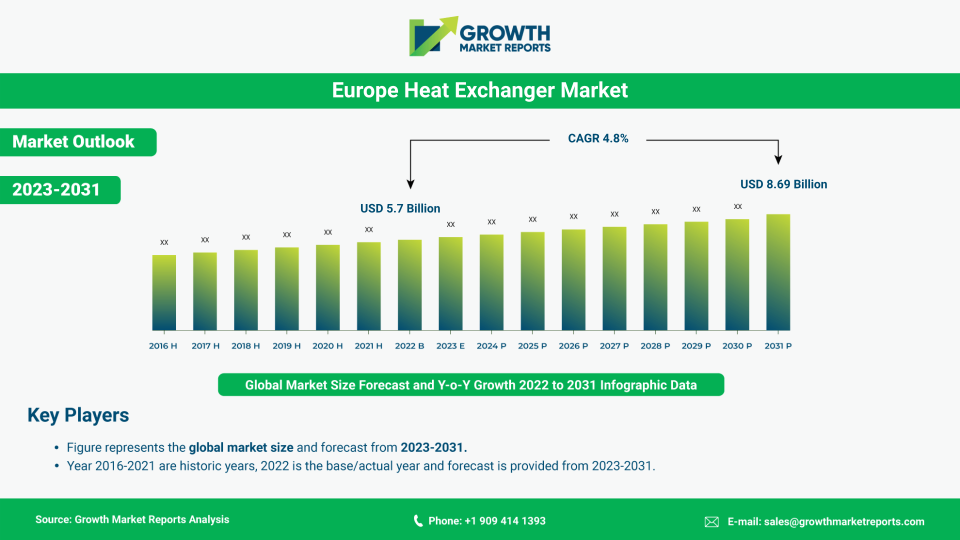
According to our latest research, the global heat exchanger market size in 2024 stands at USD 19.8 billion, exhibiting robust expansion driven by the increasing demand for efficient thermal management solutions across diverse industries. The market is forecasted to reach USD 36.4 billion by 2033, growing at a compelling CAGR of 7.1% from 2025 to 2033. This impressive growth trajectory is primarily attributed to the surging adoption of energy-efficient technologies, stringent environmental regulations, and the rapid growth of end-use sectors such as chemical processing, power generation, and HVAC. As per our latest research, the ongoing shift towards sustainable industrial operations and the need for optimized heat transfer solutions are further catalyzing market expansion globally.

Several key growth factors are propelling the heat exchanger market. One of the most significant drivers is the global emphasis on energy efficiency and sustainability. As industries and governments strive to reduce carbon emissions and energy consumption, the adoption of advanced heat exchangers has become essential. These devices play a pivotal role in minimizing energy losses and improving overall process efficiency in sectors such as power generation, oil & gas, and chemical manufacturing. Moreover, the rising investments in renewable energy projects, such as solar thermal plants and geothermal facilities, are fueling demand for specialized heat exchangers capable of withstanding harsh operational environments and delivering superior thermal performance. The integration of IoT and smart monitoring technologies in heat exchangers is further enhancing their efficiency, reliability, and predictive maintenance capabilities, thereby attracting significant investments from industry stakeholders.

Another crucial growth factor is the expanding application landscape of heat exchangers, particularly in emerging economies. The rapid industrialization and urbanization witnessed in regions such as Asia Pacific and the Middle East are driving the demand for efficient heating, ventilation, and air conditioning (HVAC) systems in commercial and residential buildings. Additionally, the food & beverage and automotive sectors are increasingly utilizing heat exchangers to ensure process optimization, product quality, and regulatory compliance. The rising consumer awareness regarding indoor air quality and energy conservation is also boosting the adoption of advanced HVAC systems equipped with high-performance heat exchangers. Furthermore, the increasing prevalence of district heating and cooling systems in urban centers is creating new avenues for market growth, as these systems rely heavily on heat exchangers for efficient energy distribution.

Technological advancements and product innovations are further strengthening the growth prospects of the heat exchanger market. Manufacturers are focusing on developing compact, lightweight, and corrosion-resistant heat exchangers using advanced materials such as stainless steel, titanium, and specialized alloys. These innovations are enabling the deployment of heat exchangers in challenging environments, such as offshore oil rigs, chemical plants, and high-temperature power generation facilities. The growing trend of modular and customized heat exchanger designs is also catering to the specific requirements of diverse applications, thereby expanding the customer base. Additionally, the increasing adoption of additive manufacturing and advanced fabrication techniques is reducing production costs and lead times, thereby enhancing market competitiveness. The focus on lifecycle cost optimization and total cost of ownership is prompting end-users to invest in high-quality, durable heat exchangers, further driving market revenues.

From a regional perspective, Asia Pacific dominates the global heat exchanger market, accounting for the largest share in 2024. This dominance is underpinned by the region's rapid industrialization, expanding manufacturing base, and significant investments in infrastructure development. North America and Europe also represent substantial markets, driven by stringent energy efficiency regulations, technological advancements, and the presence of major industry players. The Middle East & Africa and Latin America are emerging as promising markets, supported by growing investments in oil & gas, power generation, and urban infrastructure projects. The regional outlook for the heat exchanger market remains positive, with sustained investments in sustainable energy, process optimization, and industrial automation expected to drive growth across all major geographies.

Global Heat Exchanger  Industry Outlook

Type Analysis

The heat exchanger market is segmented by type, with each category offering unique advantages and catering to specific application requirements. Shell & tube heat exchangers remain the most widely used type, owing to their robust construction, high-pressure handling capabilities, and suitability for large-scale industrial processes. These exchangers are extensively deployed in oil refineries, chemical plants, and power generation facilities, where they efficiently manage high-temperature and high-pressure fluids. The ongoing modernization of aging industrial infrastructure and the expansion of process industries are driving the demand for advanced shell & tube heat exchangers with enhanced heat transfer efficiency and corrosion resistance. Manufacturers are also focusing on integrating smart sensors and monitoring systems to optimize performance and minimize downtime.

Plate & frame heat exchangers are gaining significant traction due to their compact design, high thermal efficiency, and ease of maintenance. These exchangers are particularly favored in HVAC, food & beverage, and pharmaceutical applications, where space constraints and hygiene standards are critical considerations. The modular nature of plate & frame heat exchangers allows for easy capacity expansion and customization, making them ideal for applications with fluctuating process demands. The increasing adoption of energy-efficient HVAC systems in commercial buildings and the stringent regulatory requirements in the food processing industry are fueling the demand for advanced plate & frame heat exchangers. Innovations such as gasketed, welded, and brazed plate designs are further enhancing their operational flexibility and reliability.

Air cooled heat exchangers are witnessing growing adoption, especially in regions with limited water resources and stringent environmental regulations. These exchangers utilize ambient air as the cooling medium, eliminating the need for water and reducing operational costs. The oil & gas, power generation, and petrochemical industries are the primary end-users of air cooled heat exchangers, leveraging their ability to operate efficiently in remote and arid locations. The increasing focus on water conservation and the rising prevalence of dry cooling solutions in power plants are driving market growth. Manufacturers are investing in the development of high-performance finned tubes and advanced fan systems to enhance the heat transfer efficiency and reliability of air cooled exchangers.

Finned tube heat exchangers and other specialized types are also contributing to market expansion, particularly in applications requiring enhanced surface area for heat transfer. Finned tube exchangers are widely used in HVAC, refrigeration, and automotive applications, where they deliver efficient heat dissipation in compact form factors. The growing demand for energy-efficient and space-saving solutions in residential and commercial buildings is boosting the adoption of finned tube heat exchangers. Additionally, ongoing research and development efforts are focused on improving fin design, material selection, and manufacturing processes to further enhance the performance and durability of these exchangers. The market for other types, such as double pipe and spiral heat exchangers, is also witnessing steady growth, driven by niche applications in chemical processing and wastewater treatment.

Report Scope

Attributes Details
Report Title Heat Exchanger Market Research Report 2033
By Type Shell & Tube, Plate & Frame, Air Cooled, Finned Tube, Others
By Material Steel, Copper, Aluminum, Others
By Application HVAC & Refrigeration, Chemical, Power Generation, Food & Beverage, Oil & Gas, Automotive, Others
By End-User Industrial, Commercial, Residential
Regions Covered North America, Europe, APAC, Latin America, MEA
Base Year 2024
Historic Data 2018-2023
Forecast Period 2025-2033
Number of Pages 266
Number of Tables & Figures 309
Customization Available Yes, the report can be customized as per your need.

Material Analysis

The choice of material plays a critical role in determining the performance, durability, and cost-effectiveness of heat exchangers. Steel, particularly stainless steel, is the most widely used material, owing to its excellent corrosion resistance, mechanical strength, and thermal conductivity. Stainless steel heat exchangers are extensively deployed in chemical processing, power generation, and food & beverage industries, where they withstand aggressive fluids and high-temperature environments. The increasing focus on lifecycle cost optimization and regulatory compliance is driving the demand for advanced stainless steel alloys with enhanced resistance to pitting, crevice corrosion, and stress corrosion cracking. Manufacturers are also exploring the use of duplex and super duplex steels to address the evolving needs of critical applications.

Copper is another popular material, valued for its superior thermal conductivity and antimicrobial properties. Copper heat exchangers are widely used in HVAC, refrigeration, and residential water heating applications, where rapid heat transfer and hygiene are paramount. The growing emphasis on energy-efficient heating and cooling solutions in residential and commercial buildings is boosting the demand for copper-based heat exchangers. However, the volatility in copper prices and the increasing focus on cost reduction are prompting manufacturers to explore alternative materials and hybrid designs. The development of copper-aluminum composite heat exchangers is an emerging trend, offering a balance between performance, cost, and weight.

Aluminum is gaining popularity as a material of choice for heat exchangers, particularly in automotive, aerospace, and lightweight HVAC applications. Aluminum offers a favorable combination of low density, high thermal conductivity, and excellent corrosion resistance, making it ideal for applications where weight reduction and energy efficiency are critical. The automotive industry's shift towards electric and hybrid vehicles is driving the demand for compact, lightweight aluminum heat exchangers for battery cooling and cabin climate control. Additionally, advancements in aluminum alloy development and fabrication techniques are enabling the production of high-performance heat exchangers with intricate geometries and enhanced durability.

Other materials, such as titanium, nickel alloys, and specialized polymers, are also being utilized in niche applications requiring exceptional corrosion resistance, high-temperature stability, and chemical inertness. Titanium heat exchangers, for instance, are favored in desalination plants, marine applications, and chemical processing facilities handling aggressive fluids. The high initial cost of these materials is offset by their superior performance and extended service life, making them a preferred choice for critical applications. The ongoing research and development efforts aimed at improving material properties, reducing manufacturing costs, and enhancing recyclability are expected to further expand the application scope of advanced materials in the heat exchanger market.

Application Analysis

The HVAC & refrigeration segment represents one of the largest and fastest-growing applications for heat exchangers. The increasing demand for energy-efficient heating and cooling solutions in residential, commercial, and industrial buildings is driving the adoption of advanced heat exchangers in HVAC systems. The rising awareness of indoor air quality, coupled with stringent energy efficiency regulations, is prompting building owners and operators to invest in high-performance heat exchangers for ventilation, air conditioning, and refrigeration applications. The integration of smart controls and IoT-enabled monitoring systems is further enhancing the operational efficiency and reliability of HVAC heat exchangers, reducing maintenance costs and improving occupant comfort.

The chemical industry is another major application area, leveraging heat exchangers for process heating, cooling, condensation, and evaporation operations. The complexity and diversity of chemical processes require customized heat exchanger solutions capable of handling corrosive fluids, high pressures, and extreme temperatures. The ongoing expansion of the global chemical industry, particularly in Asia Pacific and the Middle East, is fueling the demand for advanced heat exchangers with superior thermal performance and corrosion resistance. Manufacturers are focusing on developing modular and scalable designs to meet the evolving needs of chemical processing facilities, while also ensuring compliance with stringent safety and environmental regulations.

Power generation is a key application segment, with heat exchangers playing a critical role in thermal power plants, nuclear reactors, and renewable energy facilities. The global transition towards cleaner and more efficient power generation technologies is driving the adoption of high-efficiency heat exchangers for steam generation, waste heat recovery, and cooling applications. The increasing investments in solar thermal and geothermal power projects are creating new opportunities for specialized heat exchangers capable of operating under challenging conditions. The focus on reducing greenhouse gas emissions and optimizing energy utilization is prompting power plant operators to upgrade existing infrastructure with advanced heat exchangers, further boosting market growth.

Other important application segments include food & beverage, oil & gas, and automotive. In the food & beverage industry, heat exchangers are essential for pasteurization, sterilization, and temperature control processes, ensuring product quality and safety. The oil & gas sector relies on heat exchangers for crude oil processing, gas treatment, and LNG liquefaction, where efficient heat transfer is crucial for operational efficiency and environmental compliance. The automotive industry is increasingly utilizing compact and lightweight heat exchangers for engine cooling, transmission oil cooling, and battery thermal management in electric vehicles. The diversification of application areas and the continuous evolution of process requirements are expected to drive sustained demand for innovative heat exchanger solutions across multiple industries.

End-User Analysis

The industrial sector is the largest end-user of heat exchangers, accounting for a significant share of global market revenues. Industries such as chemical processing, oil & gas, power generation, and food & beverage rely heavily on heat exchangers for process optimization, energy recovery, and regulatory compliance. The increasing focus on operational efficiency, cost reduction, and environmental sustainability is prompting industrial operators to invest in advanced heat exchanger technologies. The adoption of modular and scalable heat exchanger solutions is enabling industries to adapt to changing process demands and regulatory requirements, further driving market growth. The ongoing digital transformation of industrial operations, including the integration of smart sensors and predictive maintenance systems, is enhancing the performance and reliability of industrial heat exchangers.

The commercial sector is witnessing rapid growth, driven by the rising demand for energy-efficient HVAC systems in office buildings, shopping malls, hotels, hospitals, and educational institutions. The increasing emphasis on green building certifications and sustainable construction practices is boosting the adoption of high-performance heat exchangers in commercial buildings. The integration of heat recovery systems, district heating and cooling networks, and smart building management systems is further enhancing the energy efficiency and operational flexibility of commercial heat exchangers. The growing trend of urbanization and the expansion of commercial infrastructure in emerging economies are expected to create new opportunities for market players in the coming years.

The residential sector is also contributing to market growth, particularly in regions with extreme climatic conditions and high energy consumption. The increasing awareness of energy conservation and indoor air quality is driving the adoption of advanced heat exchangers in residential heating, ventilation, and air conditioning systems. The growing popularity of decentralized energy systems, such as heat pumps and solar thermal systems, is further boosting the demand for compact and efficient heat exchangers in residential applications. Manufacturers are focusing on developing user-friendly, low-maintenance, and aesthetically appealing heat exchanger solutions to cater to the evolving preferences of residential consumers. The increasing availability of government incentives and rebates for energy-efficient home upgrades is expected to accelerate market penetration in the residential segment.

Opportunities & Threats

The heat exchanger market presents significant opportunities for growth, particularly in the context of global sustainability initiatives and the transition towards renewable energy sources. The increasing investments in solar thermal, geothermal, and waste heat recovery projects are creating new avenues for specialized heat exchanger solutions capable of operating under extreme conditions. The ongoing digital transformation of industrial processes is enabling the integration of smart sensors, real-time monitoring, and predictive maintenance systems in heat exchangers, enhancing their operational efficiency and reliability. The growing trend of modular and customized heat exchanger designs is catering to the specific requirements of diverse applications, expanding the addressable market for manufacturers. Additionally, the focus on lifecycle cost optimization and total cost of ownership is prompting end-users to invest in high-quality, durable heat exchangers, further driving market revenues.

Another major opportunity lies in the development and adoption of advanced materials and manufacturing technologies. The increasing use of stainless steel, titanium, and specialized alloys is enabling the deployment of heat exchangers in challenging environments, such as offshore oil rigs, chemical plants, and high-temperature power generation facilities. The adoption of additive manufacturing and advanced fabrication techniques is reducing production costs and lead times, enhancing market competitiveness. The growing emphasis on recyclability and environmental sustainability is also prompting manufacturers to explore eco-friendly materials and production processes. The expansion of application areas, such as electric vehicle battery cooling, data center thermal management, and district heating and cooling systems, is expected to create new growth opportunities for market players in the coming years.

Despite the promising growth prospects, the heat exchanger market faces several restraining factors. One of the primary challenges is the volatility in raw material prices, particularly for steel, copper, and aluminum. Fluctuations in material costs can significantly impact the profitability of manufacturers and limit the adoption of advanced heat exchanger solutions, especially in price-sensitive markets. The high initial investment required for the deployment of specialized heat exchangers, such as those made from titanium or nickel alloys, can also be a barrier for small and medium-sized enterprises. Additionally, the complexity of design, installation, and maintenance of heat exchangers can pose operational challenges, particularly in industries with limited technical expertise. The presence of stringent regulatory requirements and certification standards can further increase the compliance burden for manufacturers, impacting market growth.

Regional Outlook

The Asia Pacific region dominates the global heat exchanger market, accounting for approximately 40% of the total market size in 2024, with a value of around USD 7.9 billion. This dominance is driven by rapid industrialization, urbanization, and significant investments in infrastructure development across countries such as China, India, Japan, and South Korea. The expanding manufacturing base, coupled with the growing demand for energy-efficient HVAC systems and process optimization solutions, is fueling the adoption of advanced heat exchangers in the region. The increasing focus on renewable energy projects, such as solar thermal and geothermal power plants, is further boosting market growth. The Asia Pacific heat exchanger market is expected to register the highest CAGR of 8.2% during the forecast period, outpacing other regions.

North America represents a mature market for heat exchangers, with a market size of approximately USD 4.6 billion in 2024. The region's growth is primarily driven by stringent energy efficiency regulations, technological advancements, and the presence of major industry players. The United States and Canada are leading contributors, with significant demand from the oil & gas, chemical, and power generation sectors. The increasing adoption of smart building technologies and the focus on reducing greenhouse gas emissions are driving the deployment of advanced heat exchangers in commercial and residential buildings. The ongoing modernization of aging industrial infrastructure and the expansion of renewable energy projects are expected to sustain market growth in North America over the forecast period.

Europe holds a substantial share of the global heat exchanger market, valued at around USD 3.8 billion in 2024. The region's market is characterized by the presence of stringent environmental regulations, a strong focus on energy efficiency, and a well-established industrial base. Countries such as Germany, France, the United Kingdom, and Italy are major contributors, with significant demand from the chemical, power generation, and HVAC sectors. The increasing adoption of district heating and cooling systems, coupled with the expansion of renewable energy projects, is driving the demand for advanced heat exchangers in Europe. The Middle East & Africa and Latin America are emerging as promising markets, with a combined market size of approximately USD 3.5 billion in 2024, supported by growing investments in oil & gas, power generation, and urban infrastructure development.

Heat Exchanger  Market Statistics

Competitor Outlook

The global heat exchanger market is highly competitive, with the presence of numerous multinational corporations and regional players vying for market share. The competitive landscape is characterized by intense rivalry, continuous innovation, and strategic collaborations aimed at expanding product portfolios and geographical reach. Leading manufacturers are focusing on developing advanced heat exchanger solutions with enhanced thermal performance, durability, and operational flexibility to cater to the evolving needs of diverse end-use industries. The integration of smart technologies, such as IoT-enabled monitoring systems and predictive maintenance solutions, is emerging as a key differentiator in the market, enabling companies to deliver value-added services and strengthen customer relationships.

Mergers, acquisitions, and strategic partnerships are common strategies adopted by major players to enhance their market position and access new growth opportunities. Companies are investing in research and development to innovate new materials, improve manufacturing processes, and develop customized solutions tailored to specific application requirements. The focus on sustainability and environmental compliance is prompting manufacturers to explore eco-friendly materials and energy-efficient designs, further differentiating their offerings in the market. The increasing emphasis on lifecycle cost optimization and total cost of ownership is driving companies to offer comprehensive aftersales services, including maintenance, repair, and retrofitting solutions.

The market also witnesses the entry of new players, particularly in emerging economies, leveraging cost advantages and localized manufacturing capabilities to cater to regional demand. However, the high capital investment required for advanced manufacturing facilities and the complexity of product design and certification pose significant entry barriers. Established players continue to dominate the market, leveraging their extensive distribution networks, technical expertise, and brand reputation to maintain a competitive edge. The ongoing digital transformation of industrial operations is creating new opportunities for companies to differentiate themselves through data-driven solutions and value-added services.

Some of the major companies operating in the global heat exchanger market include Alfa Laval AB, Kelvion Holding GmbH, Danfoss A/S, Xylem Inc., SPX Corporation, API Heat Transfer, GEA Group AG, Hisaka Works, Ltd., Mersen S.A., and Johnson Controls International plc. Alfa Laval AB is a global leader in heat transfer, separation, and fluid handling technologies, offering a comprehensive portfolio of heat exchangers for various industries. Kelvion Holding GmbH specializes in customized heat exchanger solutions for power generation, oil & gas, and HVAC applications. Danfoss A/S is known for its innovative heat exchanger designs and focus on energy efficiency and sustainability. Xylem Inc. and SPX Corporation are prominent players in the water and wastewater treatment and industrial process sectors, respectively, offering a wide range of heat transfer solutions.

API Heat Transfer and GEA Group AG are renowned for their expertise in plate & frame and shell & tube heat exchangers, catering to the chemical, food & beverage, and pharmaceutical industries. Hisaka Works, Ltd. and Mersen S.A. offer specialized heat exchanger solutions for high-performance applications, including chemical processing and renewable energy. Johnson Controls International plc is a leading provider of HVAC and building management solutions, integrating advanced heat exchangers into its product offerings. These companies are continuously investing in research and development, expanding their global footprint, and enhancing their service capabilities to address the evolving needs of customers and maintain their leadership positions in the competitive heat exchanger market.

Key Players

  • Alfa Laval
  • Kelvion Holding GmbH
  • Xylem Inc.
  • Danfoss A/S
  • SPX FLOW, Inc.
  • API Heat Transfer
  • Hisaka Works, Ltd.
  • SWEP International AB
  • Güntner GmbH & Co. KG
  • HRS Heat Exchangers
  • Chart Industries, Inc.
  • Mersen S.A.
  • Tranter, Inc.
  • Thermax Limited
  • Modine Manufacturing Company
  • GEA Group AG
  • Sondex A/S
  • Funke Wärmeaustauscher Apparatebau GmbH
  • Linde Engineering
  • Doosan Corporation
Heat Exchanger  Market Overview

Segments

The Heat Exchanger market has been segmented on the basis of

Type

  • Shell & Tube
  • Plate & Frame
  • Air Cooled
  • Finned Tube
  • Others

Material

  • Steel
  • Copper
  • Aluminum
  • Others

Application

  • HVAC & Refrigeration
  • Chemical
  • Power Generation
  • Food & Beverage
  • Oil & Gas
  • Automotive
  • Others

End-User

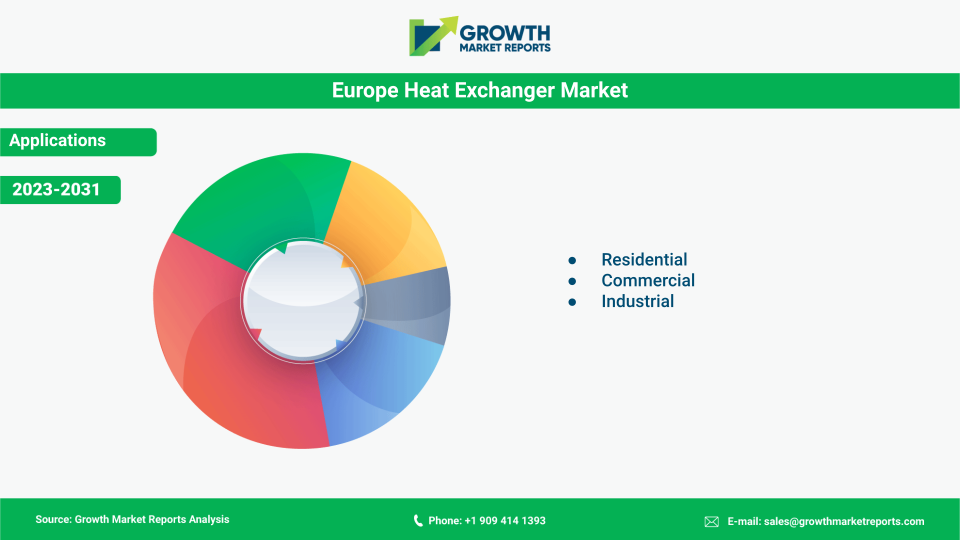
  • Industrial
  • Commercial
  • Residential

Competitive Landscape

Key players competing in the Europe heat exchange market include Vahterus Oy, Alfa Laval, Danfoss A/S, Hisaka Works Ltd, and LARSEN & TOUBRO LIMITED.

Companies are engaging in partnerships and collaborations to expand their market share.
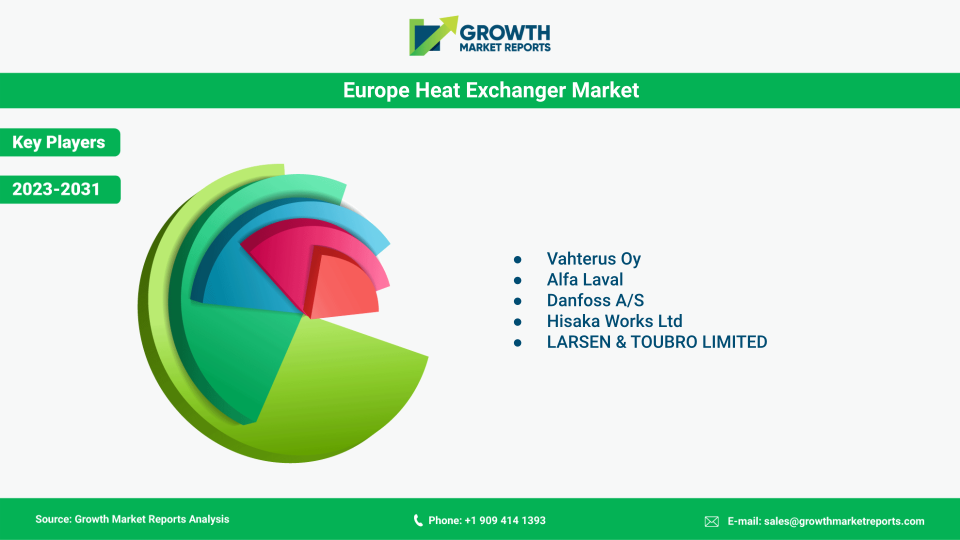
Europe Heat Exchanger Market Key Players

Frequently Asked Questions

Yes, the Heat Exchanger Market Research Report 2033 offers customization options to meet specific client requirements.

Key challenges include volatility in raw material prices, high initial investment for advanced exchangers, complexity in design and maintenance, and stringent regulatory requirements.

Trends include the integration of IoT and smart monitoring, development of compact and corrosion-resistant designs, use of advanced materials, modular and customized solutions, and adoption of additive manufacturing for cost and lead time reduction.

Major companies include Alfa Laval AB, Kelvion Holding GmbH, Danfoss A/S, Xylem Inc., SPX Corporation, API Heat Transfer, GEA Group AG, Hisaka Works, Ltd., Mersen S.A., and Johnson Controls International plc.

Heat exchangers are widely used in HVAC & refrigeration, chemical processing, power generation, food & beverage, oil & gas, and automotive industries for heating, cooling, and energy recovery.

Common materials include stainless steel, copper, aluminum, titanium, nickel alloys, and specialized polymers. The choice depends on the application, required corrosion resistance, and thermal performance.

The main types of heat exchangers are shell & tube, plate & frame, air cooled, finned tube, and other specialized types such as double pipe and spiral heat exchangers.

Asia Pacific dominates the global heat exchanger market, accounting for about 40% of the total market size in 2024, followed by North America and Europe. The Middle East & Africa and Latin America are emerging as promising markets.

Key growth drivers include increasing demand for energy-efficient technologies, stringent environmental regulations, rapid industrialization, expansion of end-use sectors like chemical processing, power generation, and HVAC, and the adoption of smart and IoT-enabled heat exchangers.

The global heat exchanger market size in 2024 is estimated at USD 19.8 billion and is projected to reach USD 36.4 billion by 2033, growing at a CAGR of 7.1% from 2025 to 2033.

Table Of Content

Chapter 1 Executive Summary
Chapter 2 Assumptions and Acronyms Used
Chapter 3 Research Methodology
Chapter 4 Heat Exchanger  Market Overview
   4.1 Introduction
      4.1.1 Market Taxonomy
      4.1.2 Market Definition
      4.1.3 Macro-Economic Factors Impacting the Market Growth
   4.2 Heat Exchanger  Market Dynamics
      4.2.1 Market Drivers
      4.2.2 Market Restraints
      4.2.3 Market Opportunity
   4.3 Heat Exchanger  Market - Supply Chain Analysis
      4.3.1 List of Key Suppliers
      4.3.2 List of Key Distributors
      4.3.3 List of Key Consumers
   4.4 Key Forces Shaping the Heat Exchanger  Market
      4.4.1 Bargaining Power of Suppliers
      4.4.2 Bargaining Power of Buyers
      4.4.3 Threat of Substitution
      4.4.4 Threat of New Entrants
      4.4.5 Competitive Rivalry
   4.5 Global Heat Exchanger  Market Size & Forecast, 2023-2032
      4.5.1 Heat Exchanger  Market Size and Y-o-Y Growth
      4.5.2 Heat Exchanger  Market Absolute $ Opportunity

Chapter 5 Global Heat Exchanger  Market Analysis and Forecast By Type
   5.1 Introduction
      5.1.1 Key Market Trends & Growth Opportunities By Type
      5.1.2 Basis Point Share (BPS) Analysis By Type
      5.1.3 Absolute $ Opportunity Assessment By Type
   5.2 Heat Exchanger  Market Size Forecast By Type
      5.2.1 Shell & Tube
      5.2.2 Plate & Frame
      5.2.3 Air Cooled
      5.2.4 Finned Tube
      5.2.5 Others
   5.3 Market Attractiveness Analysis By Type

Chapter 6 Global Heat Exchanger  Market Analysis and Forecast By Material
   6.1 Introduction
      6.1.1 Key Market Trends & Growth Opportunities By Material
      6.1.2 Basis Point Share (BPS) Analysis By Material
      6.1.3 Absolute $ Opportunity Assessment By Material
   6.2 Heat Exchanger  Market Size Forecast By Material
      6.2.1 Steel
      6.2.2 Copper
      6.2.3 Aluminum
      6.2.4 Others
   6.3 Market Attractiveness Analysis By Material

Chapter 7 Global Heat Exchanger  Market Analysis and Forecast By Application
   7.1 Introduction
      7.1.1 Key Market Trends & Growth Opportunities By Application
      7.1.2 Basis Point Share (BPS) Analysis By Application
      7.1.3 Absolute $ Opportunity Assessment By Application
   7.2 Heat Exchanger  Market Size Forecast By Application
      7.2.1 HVAC & Refrigeration
      7.2.2 Chemical
      7.2.3 Power Generation
      7.2.4 Food & Beverage
      7.2.5 Oil & Gas
      7.2.6 Automotive
      7.2.7 Others
   7.3 Market Attractiveness Analysis By Application

Chapter 8 Global Heat Exchanger  Market Analysis and Forecast By End-User
   8.1 Introduction
      8.1.1 Key Market Trends & Growth Opportunities By End-User
      8.1.2 Basis Point Share (BPS) Analysis By End-User
      8.1.3 Absolute $ Opportunity Assessment By End-User
   8.2 Heat Exchanger  Market Size Forecast By End-User
      8.2.1 Industrial
      8.2.2 Commercial
      8.2.3 Residential
   8.3 Market Attractiveness Analysis By End-User

Chapter 9 Global Heat Exchanger  Market Analysis and Forecast by Region
   9.1 Introduction
      9.1.1 Key Market Trends & Growth Opportunities By Region
      9.1.2 Basis Point Share (BPS) Analysis By Region
      9.1.3 Absolute $ Opportunity Assessment By Region
   9.2 Heat Exchanger  Market Size Forecast By Region
      9.2.1 North America
      9.2.2 Europe
      9.2.3 Asia Pacific
      9.2.4 Latin America
      9.2.5 Middle East & Africa (MEA)
   9.3 Market Attractiveness Analysis By Region

Chapter 10 Coronavirus Disease (COVID-19) Impact 
   10.1 Introduction 
   10.2 Current & Future Impact Analysis 
   10.3 Economic Impact Analysis 
   10.4 Government Policies 
   10.5 Investment Scenario

Chapter 11 North America Heat Exchanger  Analysis and Forecast
   11.1 Introduction
   11.2 North America Heat Exchanger  Market Size Forecast by Country
      11.2.1 U.S.
      11.2.2 Canada
   11.3 Basis Point Share (BPS) Analysis by Country
   11.4 Absolute $ Opportunity Assessment by Country
   11.5 Market Attractiveness Analysis by Country
   11.6 North America Heat Exchanger  Market Size Forecast By Type
      11.6.1 Shell & Tube
      11.6.2 Plate & Frame
      11.6.3 Air Cooled
      11.6.4 Finned Tube
      11.6.5 Others
   11.7 Basis Point Share (BPS) Analysis By Type 
   11.8 Absolute $ Opportunity Assessment By Type 
   11.9 Market Attractiveness Analysis By Type
   11.10 North America Heat Exchanger  Market Size Forecast By Material
      11.10.1 Steel
      11.10.2 Copper
      11.10.3 Aluminum
      11.10.4 Others
   11.11 Basis Point Share (BPS) Analysis By Material 
   11.12 Absolute $ Opportunity Assessment By Material 
   11.13 Market Attractiveness Analysis By Material
   11.14 North America Heat Exchanger  Market Size Forecast By Application
      11.14.1 HVAC & Refrigeration
      11.14.2 Chemical
      11.14.3 Power Generation
      11.14.4 Food & Beverage
      11.14.5 Oil & Gas
      11.14.6 Automotive
      11.14.7 Others
   11.15 Basis Point Share (BPS) Analysis By Application 
   11.16 Absolute $ Opportunity Assessment By Application 
   11.17 Market Attractiveness Analysis By Application
   11.18 North America Heat Exchanger  Market Size Forecast By End-User
      11.18.1 Industrial
      11.18.2 Commercial
      11.18.3 Residential
   11.19 Basis Point Share (BPS) Analysis By End-User 
   11.20 Absolute $ Opportunity Assessment By End-User 
   11.21 Market Attractiveness Analysis By End-User

Chapter 12 Europe Heat Exchanger  Analysis and Forecast
   12.1 Introduction
   12.2 Europe Heat Exchanger  Market Size Forecast by Country
      12.2.1 Germany
      12.2.2 France
      12.2.3 Italy
      12.2.4 U.K.
      12.2.5 Spain
      12.2.6 Russia
      12.2.7 Rest of Europe
   12.3 Basis Point Share (BPS) Analysis by Country
   12.4 Absolute $ Opportunity Assessment by Country
   12.5 Market Attractiveness Analysis by Country
   12.6 Europe Heat Exchanger  Market Size Forecast By Type
      12.6.1 Shell & Tube
      12.6.2 Plate & Frame
      12.6.3 Air Cooled
      12.6.4 Finned Tube
      12.6.5 Others
   12.7 Basis Point Share (BPS) Analysis By Type 
   12.8 Absolute $ Opportunity Assessment By Type 
   12.9 Market Attractiveness Analysis By Type
   12.10 Europe Heat Exchanger  Market Size Forecast By Material
      12.10.1 Steel
      12.10.2 Copper
      12.10.3 Aluminum
      12.10.4 Others
   12.11 Basis Point Share (BPS) Analysis By Material 
   12.12 Absolute $ Opportunity Assessment By Material 
   12.13 Market Attractiveness Analysis By Material
   12.14 Europe Heat Exchanger  Market Size Forecast By Application
      12.14.1 HVAC & Refrigeration
      12.14.2 Chemical
      12.14.3 Power Generation
      12.14.4 Food & Beverage
      12.14.5 Oil & Gas
      12.14.6 Automotive
      12.14.7 Others
   12.15 Basis Point Share (BPS) Analysis By Application 
   12.16 Absolute $ Opportunity Assessment By Application 
   12.17 Market Attractiveness Analysis By Application
   12.18 Europe Heat Exchanger  Market Size Forecast By End-User
      12.18.1 Industrial
      12.18.2 Commercial
      12.18.3 Residential
   12.19 Basis Point Share (BPS) Analysis By End-User 
   12.20 Absolute $ Opportunity Assessment By End-User 
   12.21 Market Attractiveness Analysis By End-User

Chapter 13 Asia Pacific Heat Exchanger  Analysis and Forecast
   13.1 Introduction
   13.2 Asia Pacific Heat Exchanger  Market Size Forecast by Country
      13.2.1 China
      13.2.2 Japan
      13.2.3 South Korea
      13.2.4 India
      13.2.5 Australia
      13.2.6 South East Asia (SEA)
      13.2.7 Rest of Asia Pacific (APAC)
   13.3 Basis Point Share (BPS) Analysis by Country
   13.4 Absolute $ Opportunity Assessment by Country
   13.5 Market Attractiveness Analysis by Country
   13.6 Asia Pacific Heat Exchanger  Market Size Forecast By Type
      13.6.1 Shell & Tube
      13.6.2 Plate & Frame
      13.6.3 Air Cooled
      13.6.4 Finned Tube
      13.6.5 Others
   13.7 Basis Point Share (BPS) Analysis By Type 
   13.8 Absolute $ Opportunity Assessment By Type 
   13.9 Market Attractiveness Analysis By Type
   13.10 Asia Pacific Heat Exchanger  Market Size Forecast By Material
      13.10.1 Steel
      13.10.2 Copper
      13.10.3 Aluminum
      13.10.4 Others
   13.11 Basis Point Share (BPS) Analysis By Material 
   13.12 Absolute $ Opportunity Assessment By Material 
   13.13 Market Attractiveness Analysis By Material
   13.14 Asia Pacific Heat Exchanger  Market Size Forecast By Application
      13.14.1 HVAC & Refrigeration
      13.14.2 Chemical
      13.14.3 Power Generation
      13.14.4 Food & Beverage
      13.14.5 Oil & Gas
      13.14.6 Automotive
      13.14.7 Others
   13.15 Basis Point Share (BPS) Analysis By Application 
   13.16 Absolute $ Opportunity Assessment By Application 
   13.17 Market Attractiveness Analysis By Application
   13.18 Asia Pacific Heat Exchanger  Market Size Forecast By End-User
      13.18.1 Industrial
      13.18.2 Commercial
      13.18.3 Residential
   13.19 Basis Point Share (BPS) Analysis By End-User 
   13.20 Absolute $ Opportunity Assessment By End-User 
   13.21 Market Attractiveness Analysis By End-User

Chapter 14 Latin America Heat Exchanger  Analysis and Forecast
   14.1 Introduction
   14.2 Latin America Heat Exchanger  Market Size Forecast by Country
      14.2.1 Brazil
      14.2.2 Mexico
      14.2.3 Rest of Latin America (LATAM)
   14.3 Basis Point Share (BPS) Analysis by Country
   14.4 Absolute $ Opportunity Assessment by Country
   14.5 Market Attractiveness Analysis by Country
   14.6 Latin America Heat Exchanger  Market Size Forecast By Type
      14.6.1 Shell & Tube
      14.6.2 Plate & Frame
      14.6.3 Air Cooled
      14.6.4 Finned Tube
      14.6.5 Others
   14.7 Basis Point Share (BPS) Analysis By Type 
   14.8 Absolute $ Opportunity Assessment By Type 
   14.9 Market Attractiveness Analysis By Type
   14.10 Latin America Heat Exchanger  Market Size Forecast By Material
      14.10.1 Steel
      14.10.2 Copper
      14.10.3 Aluminum
      14.10.4 Others
   14.11 Basis Point Share (BPS) Analysis By Material 
   14.12 Absolute $ Opportunity Assessment By Material 
   14.13 Market Attractiveness Analysis By Material
   14.14 Latin America Heat Exchanger  Market Size Forecast By Application
      14.14.1 HVAC & Refrigeration
      14.14.2 Chemical
      14.14.3 Power Generation
      14.14.4 Food & Beverage
      14.14.5 Oil & Gas
      14.14.6 Automotive
      14.14.7 Others
   14.15 Basis Point Share (BPS) Analysis By Application 
   14.16 Absolute $ Opportunity Assessment By Application 
   14.17 Market Attractiveness Analysis By Application
   14.18 Latin America Heat Exchanger  Market Size Forecast By End-User
      14.18.1 Industrial
      14.18.2 Commercial
      14.18.3 Residential
   14.19 Basis Point Share (BPS) Analysis By End-User 
   14.20 Absolute $ Opportunity Assessment By End-User 
   14.21 Market Attractiveness Analysis By End-User

Chapter 15 Middle East & Africa (MEA) Heat Exchanger  Analysis and Forecast
   15.1 Introduction
   15.2 Middle East & Africa (MEA) Heat Exchanger  Market Size Forecast by Country
      15.2.1 Saudi Arabia
      15.2.2 South Africa
      15.2.3 UAE
      15.2.4 Rest of Middle East & Africa (MEA)
   15.3 Basis Point Share (BPS) Analysis by Country
   15.4 Absolute $ Opportunity Assessment by Country
   15.5 Market Attractiveness Analysis by Country
   15.6 Middle East & Africa (MEA) Heat Exchanger  Market Size Forecast By Type
      15.6.1 Shell & Tube
      15.6.2 Plate & Frame
      15.6.3 Air Cooled
      15.6.4 Finned Tube
      15.6.5 Others
   15.7 Basis Point Share (BPS) Analysis By Type 
   15.8 Absolute $ Opportunity Assessment By Type 
   15.9 Market Attractiveness Analysis By Type
   15.10 Middle East & Africa (MEA) Heat Exchanger  Market Size Forecast By Material
      15.10.1 Steel
      15.10.2 Copper
      15.10.3 Aluminum
      15.10.4 Others
   15.11 Basis Point Share (BPS) Analysis By Material 
   15.12 Absolute $ Opportunity Assessment By Material 
   15.13 Market Attractiveness Analysis By Material
   15.14 Middle East & Africa (MEA) Heat Exchanger  Market Size Forecast By Application
      15.14.1 HVAC & Refrigeration
      15.14.2 Chemical
      15.14.3 Power Generation
      15.14.4 Food & Beverage
      15.14.5 Oil & Gas
      15.14.6 Automotive
      15.14.7 Others
   15.15 Basis Point Share (BPS) Analysis By Application 
   15.16 Absolute $ Opportunity Assessment By Application 
   15.17 Market Attractiveness Analysis By Application
   15.18 Middle East & Africa (MEA) Heat Exchanger  Market Size Forecast By End-User
      15.18.1 Industrial
      15.18.2 Commercial
      15.18.3 Residential
   15.19 Basis Point Share (BPS) Analysis By End-User 
   15.20 Absolute $ Opportunity Assessment By End-User 
   15.21 Market Attractiveness Analysis By End-User

Chapter 16 Competition Landscape 
   16.1 Heat Exchanger  Market: Competitive Dashboard
   16.2 Global Heat Exchanger  Market: Market Share Analysis, 2023
   16.3 Company Profiles (Details – Overview, Financials, Developments, Strategy) 
      16.3.1 Alfa Laval
Kelvion Holding GmbH
Xylem Inc.
Danfoss A/S
SPX FLOW, Inc.
API Heat Transfer
Hisaka Works, Ltd.
SWEP International AB
Güntner GmbH & Co. KG
HRS Heat Exchangers
Chart Industries, Inc.
Mersen S.A.
Tranter, Inc.
Thermax Limited
Modine Manufacturing Company
GEA Group AG
Sondex A/S
Funke Wärmeaustauscher Apparatebau GmbH
Linde Engineering
Doosan Corporation

Methodology

Our Clients

Deloitte
FedEx Logistics
sinopec
Microsoft
Nestle SA
General Mills
Honda Motor Co. Ltd.
The John Holland Group