Segments - by Product Type (Submersible, Suction), by Fuel Type (Petrol, Diesel, CNG, LPG, Others), by Flow Meter (Mechanical, Electronic), by Application (Automotive, Aviation, Marine, Others), by Distribution Channel (OEM, Aftermarket)
This report is updated with the latest market data and insights as of June 2026. Base year: 2025 | Forecast period: 2026-2034
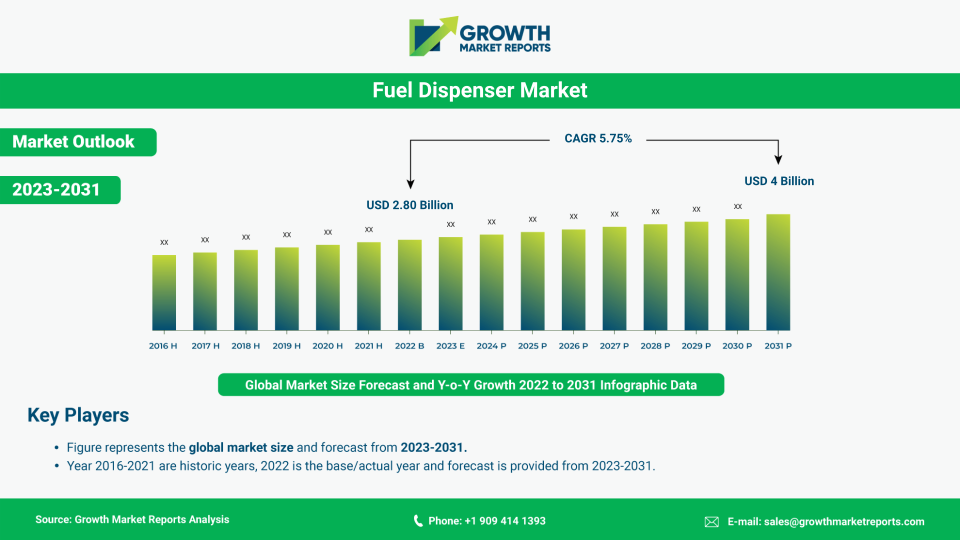
According to our latest research, the global fuel dispenser market size reached USD 3.1 billion in 2025, the base year for this study. With a projected compound annual growth rate (CAGR) of 5.7% from 2026 to 2034, the market is expected to achieve a value of approximately USD 5.1 billion by the end of 2034. This robust growth is driven by increasing vehicle ownership, rapid urbanization, and the ongoing expansion of fuel retail infrastructure worldwide. The market is also witnessing accelerating technological advancements and a growing focus on automation and digitalization, which are further fueling demand for modern fuel dispensing solutions.
One of the primary growth factors in the fuel dispenser market is the rising global demand for automobiles, both commercial and passenger vehicles. As more consumers in emerging economies gain access to vehicles, the need for efficient and reliable fuel dispensing solutions is becoming increasingly important. The expansion of transportation and logistics networks, particularly in Asia Pacific and Latin America, is contributing to the installation of new fuel stations and, consequently, the increased adoption of advanced fuel dispensers. Additionally, stricter environmental regulations are prompting fuel retailers to upgrade their dispensing systems to minimize leaks and emissions, thereby boosting market growth through the forecast period.
Technological innovation is a key driver shaping the fuel dispenser market landscape in 2025. The integration of IoT-based monitoring systems, contactless payment solutions, and real-time data analytics is transforming traditional fuel dispensers into smart, connected devices. These advancements not only enhance operational efficiency but also improve customer experience and safety. The shift towards electronic flow meters and automated inventory management systems is streamlining station operations and reducing manual errors. Furthermore, the development of multi-fuel dispensers capable of handling alternative fuels such as CNG and LPG is supporting the transition towards cleaner energy sources, catering to evolving consumer preferences and regulatory mandates. The broader fuel retail sector is simultaneously undergoing rapid modernization, amplifying demand for next-generation dispensing equipment.
The growing emphasis on sustainability and energy diversification is further propelling the adoption of advanced fuel dispensers. Governments across the globe are investing in infrastructure to support alternative fuels, including compressed natural gas (CNG) and liquefied petroleum gas (LPG), as part of their strategies to reduce carbon emissions. This trend is fostering demand for dispensers that can accommodate multiple fuel types, including biofuels and hydrogen in select regions. The market for hydrogen dispenser meters is gaining particular momentum in Europe, Japan, and North America as hydrogen mobility pilots scale into commercial deployments. The fuel dispenser aftermarket is simultaneously witnessing significant growth as operators retrofit existing stations with modern dispensing technologies to comply with updated safety and environmental standards. The combined effect of these factors is expected to sustain the momentum of the fuel dispenser market over the 2026-2034 forecast period.
The rise of the Fuel Station POS Media Network is playing a pivotal role in transforming the fuel retail landscape. These networks enable fuel stations to offer dynamic advertising and promotional content directly at the point of sale, enhancing customer engagement and driving additional revenue streams. By integrating digital displays with fuel dispensers, retailers can deliver targeted marketing messages, loyalty program updates, and real-time promotions to consumers while they refuel. This innovative approach improves the overall customer experience and allows fuel retailers to differentiate themselves in a competitive market. As the demand for personalized and interactive customer interactions grows, the adoption of Fuel Station POS Media Networks is expected to accelerate, further fueling the evolution of the fuel dispenser market through 2034.
From a regional perspective, Asia Pacific remains the dominant market for fuel dispensers, accounting for the largest share in 2025. The region's growth is attributed to rapid urbanization, expanding middle-class populations, and substantial investments in transportation infrastructure. North America and Europe are also significant markets, driven by technological innovation, stringent environmental regulations, and the modernization of existing fuel retail networks. Meanwhile, the Middle East & Africa and Latin America are emerging as high-potential markets, supported by ongoing investments in energy infrastructure and a growing focus on alternative fuels. Despite regional variations, the global outlook for the fuel dispenser market remains positive, underpinned by strong demand fundamentals and continuous technological progress.
The fuel dispenser market is segmented by product type into submersible and suction dispensers, each serving distinct operational needs and installation environments. Submersible dispensers, which position the pump inside the fuel tank, have gained widespread preference due to their higher efficiency, reduced risk of vapor lock, and lower maintenance requirements. These dispensers are particularly popular in high-volume fueling stations, where their ability to deliver fuel at consistent pressure and flow rates enhances throughput and minimizes customer wait times. As of 2025, submersible dispensers account for approximately 62.5% of the global market by revenue, reflecting their dominant commercial adoption. The ongoing adoption of submersible dispensers is further supported by advancements in pump design that have improved durability and reduced operational noise, making them suitable for urban and suburban fuel stations.
Suction dispensers utilize above-ground pumps to draw fuel from underground tanks. These dispensers are typically favored in smaller or rural fuel stations where installation simplicity and lower upfront costs are critical considerations. While suction dispensers are generally less efficient than their submersible counterparts, ongoing improvements in pump technology and materials have enhanced their reliability and extended their service life. In regions with less developed infrastructure or where station operators prioritize ease of maintenance, suction dispensers continue to play a vital role in ensuring fuel accessibility. The suction segment holds approximately 37.5% of the market in 2025, maintaining relevance especially across parts of Sub-Saharan Africa, South and Southeast Asia, and rural Latin America. The segment also benefits from growing demand for fuel transfer pump solutions that complement suction-based dispensing at remote and off-road fueling points.
The choice between submersible and suction dispensers depends on factors such as station size, expected fuel throughput, regulatory requirements, and site-specific installation constraints. In mature markets like North America and Europe, submersible dispensers are increasingly replacing older suction models as part of station modernization initiatives. Conversely, in developing regions, suction dispensers maintain their relevance due to cost-effectiveness and adaptability to diverse site conditions. The ongoing evolution of both dispenser types, driven by technological innovation and material advancements, is expected to sustain their respective market shares over the 2026-2034 forecast period.
Looking ahead, demand for hybrid dispenser solutions that combine the benefits of both submersible and suction technologies is expected to rise. These hybrid systems offer enhanced flexibility, allowing operators to optimize fuel delivery based on site-specific requirements and customer preferences. Additionally, the integration of smart monitoring and diagnostic features in both submersible and suction dispensers is enabling proactive maintenance and reducing downtime, further enhancing their value proposition. As fuel retailers continue to upgrade their infrastructure to meet evolving consumer and regulatory demands, the product type segment will remain a focal point of innovation and investment in the fuel dispenser market.
| Attributes | Details |
| Report Title | Fuel Dispenser Market Research Report 2025-2034 |
| By Product Type | Submersible, Suction |
| By Fuel Type | Petrol, Diesel, CNG, LPG, Others |
| By Flow Meter | Mechanical, Electronic |
| By Application | Automotive, Aviation, Marine, Others |
| By Distribution Channel | OEM, Aftermarket |
| Regions Covered | North America, Europe, APAC, Latin America, MEA |
| Base Year | 2025 |
| Historic Data | 2019-2024 |
| Forecast Period | 2026-2034 |
| Number of Pages | 274 |
| Number of Tables & Figures | 257 |
| Customization Available | Yes, the report can be customized as per your need. |
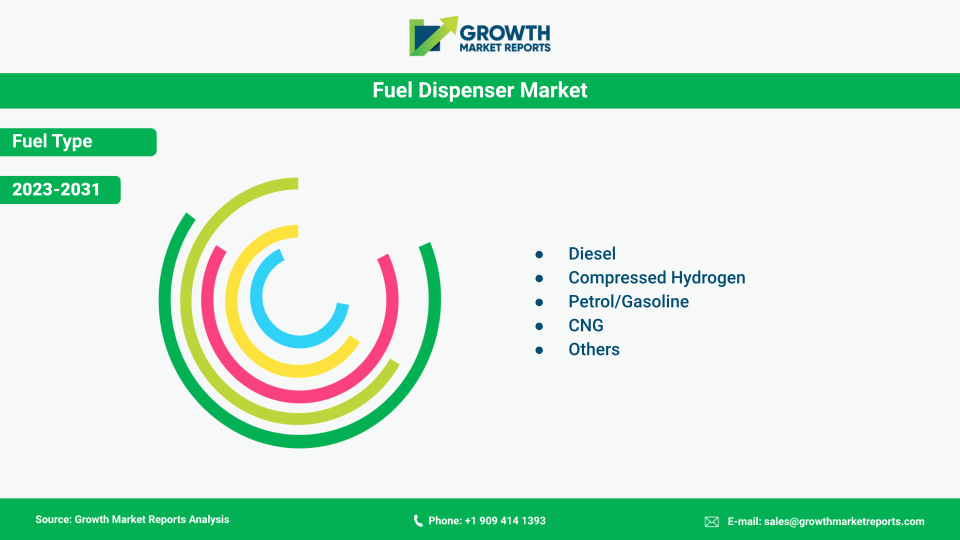
The fuel type segment of the fuel dispenser market encompasses petrol, diesel, CNG, LPG, and other emerging alternatives. Traditionally, petrol and diesel dispensers have dominated the market, reflecting the global reliance on internal combustion engine vehicles. However, the growing adoption of cleaner fuels such as CNG and LPG is reshaping the competitive landscape in 2025. Governments worldwide are implementing policies to reduce vehicular emissions and promote the use of alternative fuels, which is driving the installation of multi-fuel dispensers capable of handling various fuel types. This trend is particularly pronounced in Asia Pacific and Europe, where environmental concerns and regulatory mandates are accelerating the shift towards greener energy sources. Manufacturers are also responding to growing demand for dedicated diesel dispensing equipment designed to handle ultra-low-sulfur and bio-blended diesel formulations entering markets in 2025.
Petrol dispensers continue to hold a significant share of the market, especially in regions with high passenger vehicle densities. The ongoing expansion of urban and suburban fuel stations, coupled with rising vehicle ownership, is sustaining demand for petrol dispensing solutions. Diesel dispensers, meanwhile, are essential for commercial vehicles, agricultural machinery, and long-haul transportation fleets. The continued growth of logistics and freight industries is ensuring steady demand for diesel dispensers, particularly in North America, Latin America, and parts of Asia Pacific.
The market for CNG and LPG dispensers is experiencing robust growth as consumers and fleet operators seek cost-effective and environmentally friendly fueling options. CNG dispensers are gaining traction in countries with abundant natural gas reserves and supportive government policies, such as India, China, and several Middle Eastern nations. The development of dedicated CNG corridors and the expansion of refueling infrastructure are further bolstering market growth. The growing market for propane fueling dispensers is also noteworthy, particularly in North America and parts of Europe, where autogas programs are expanding fleets running on liquefied petroleum gas. Similarly, LPG dispensers are witnessing increased adoption in regions where LPG is widely used as a transportation fuel, including parts of Europe and Asia.
Emerging fuel types such as hydrogen, LNG, and biofuels are beginning to influence the fuel dispenser market with increasing visibility. Although their current combined market share remains relatively modest, ongoing investments in hydrogen infrastructure and advancements in biofuel production are expected to create meaningful new growth opportunities over the 2026-2034 forecast horizon. Interest in LNG dispensing solutions is rising particularly for heavy-duty trucking corridors in Europe and North America. Fuel dispenser manufacturers are responding by developing versatile, future-ready solutions that can accommodate a wide range of fuel types, ensuring long-term relevance and compatibility with evolving energy landscapes.
Flow meters are a critical component of fuel dispensers, ensuring accurate measurement and delivery of fuel to end-users. The market is segmented into mechanical and electronic flow meters, each offering distinct advantages and catering to different operational environments. Mechanical flow meters, which rely on positive displacement or turbine mechanisms, have been the industry standard for decades due to their robustness, simplicity, and cost-effectiveness. These meters are particularly well-suited for regions with limited access to advanced infrastructure or where ease of maintenance is a priority.
Despite their reliability, mechanical flow meters are gradually being supplanted by electronic flow meters, which offer superior accuracy, digital integration, and advanced monitoring capabilities. Electronic flow meters leverage sensors and microprocessors to ensure precise fuel measurement, real-time data transmission, and seamless integration with station management systems. This digital transformation is enabling fuel retailers to optimize inventory management, enhance transaction transparency, and comply with increasingly stringent regulatory requirements for fuel dispensing accuracy. As of 2025, the electronic segment is growing at a materially faster pace than the mechanical segment across virtually all major geographies.
The adoption of electronic flow meters is particularly strong in developed markets such as North America and Europe, where fuel retailers prioritize operational efficiency and regulatory compliance. These meters are also gaining traction in emerging markets as infrastructure improves and the cost of digital technologies declines. The integration of electronic flow meters with IoT platforms and cloud-based analytics is further enhancing their value proposition, enabling predictive maintenance, remote diagnostics, and automated reporting. These capabilities are becoming baseline expectations among larger fuel network operators by 2025.
Looking forward through 2034, the flow meter segment is expected to witness continued innovation, with manufacturers focusing on enhancing durability, reducing maintenance requirements, and expanding compatibility with alternative fuels including hydrogen and bio-blended products. The development of hybrid flow meters that combine the resilience of mechanical systems with the precision of electronic technologies is also emerging as a promising trend. As fuel dispensers become increasingly sophisticated and interconnected, the demand for advanced flow metering solutions will remain a key driver of overall market growth.
The application segment of the fuel dispenser market includes automotive, aviation, marine, and other specialized uses. Automotive applications represent the largest share of the market, driven by the sheer volume of passenger and commercial vehicles requiring regular refueling. The proliferation of fuel stations in urban, suburban, and rural areas is sustaining robust demand for automotive fuel dispensers, particularly in regions experiencing rapid economic growth and urbanization. Additionally, the rise of fleet management services and ride-sharing platforms is contributing to increased fuel consumption and dispenser installations across the 2026-2034 forecast period.
Aviation applications, while representing a smaller share of the market, are characterized by stringent safety and accuracy requirements. Fuel dispensers used in airports and airfields must comply with rigorous regulatory standards and are often equipped with specialized filtration and monitoring systems to ensure fuel purity and delivery precision. The recovery and continued growth of the global aviation sector, particularly in emerging markets across Asia Pacific and the Middle East, is supporting steady demand for advanced aviation fuel dispensers in 2025 and beyond.
Marine applications constitute another important segment, serving the refueling needs of commercial and recreational vessels. Marine fuel dispensers are designed to withstand harsh environmental conditions and deliver large volumes of fuel efficiently and safely. The expansion of global trade and the increasing popularity of recreational boating are driving investments in marine fueling infrastructure, thereby supporting market growth in this segment throughout the forecast period.
Other applications, such as fuel dispensing for construction, mining, and agricultural equipment, also contribute to market demand. These specialized dispensers are tailored to the unique operational requirements of off-road vehicles and heavy machinery, often featuring enhanced durability, mobility, and compatibility with a range of fuel types. As industries continue to modernize their fleets and prioritize operational efficiency, the application segment of the fuel dispenser market is expected to remain diverse and dynamic through 2034.
The fuel dispenser market is segmented by distribution channel into OEM (original equipment manufacturer) and aftermarket segments. OEM sales represent dispensers supplied directly to fuel station operators as part of new station installations or major upgrades. This channel is characterized by close partnerships between dispenser manufacturers and fuel retailers, with a focus on delivering customized solutions that meet specific operational and regulatory requirements. OEM sales are typically driven by large-scale infrastructure projects, network expansions, and the entry of international fuel brands into new markets, trends that remain active across Asia Pacific, the Middle East, and Latin America in 2025.
The aftermarket segment encompasses the sale of replacement dispensers, spare parts, and upgrade kits to existing fuel stations. This channel is gaining increasing importance as fuel retailers seek to modernize their facilities, enhance operational efficiency, and comply with evolving safety and environmental standards. Aftermarket sales are driven by the need to retrofit older stations with advanced technologies such as electronic flow meters, contactless payment systems, and multi-fuel dispensing capabilities. The growing prevalence of service contracts and maintenance agreements is also supporting aftermarket growth, as operators prioritize equipment uptime and reliability in an increasingly competitive retail fuel environment.
OEM and aftermarket channels each present distinct challenges and opportunities for fuel dispenser manufacturers. While OEM sales offer the potential for large, high-value contracts, they are often subject to competitive bidding processes and long sales cycles. Aftermarket sales provide recurring revenue streams and opportunities for customer engagement through value-added services and upgrades. Manufacturers that can effectively balance both channels and offer comprehensive lifecycle support are well positioned to capture market share and build long-term customer relationships as the market grows toward USD 5.1 billion by 2034.
The increasing complexity of fuel dispenser technologies is also driving demand for specialized training, technical support, and remote monitoring services. As fuel retailers seek to maximize the return on their equipment investments, the role of distribution channel partners in providing end-to-end solutions and ongoing support is becoming increasingly important. The evolution of the distribution channel segment will continue to shape the competitive dynamics of the fuel dispenser market in the years ahead.
The fuel dispenser market is poised for significant opportunities driven by the global transition toward cleaner and more diversified energy sources. The ongoing shift towards alternative fuels such as CNG, LPG, hydrogen, and biofuels is creating demand for multi-fuel dispensers and advanced fueling infrastructure. Governments and regulatory bodies are implementing policies and incentives to promote the adoption of low-emission vehicles and support the development of alternative fuel corridors. Fuel dispenser manufacturers that can innovate and deliver adaptable, future-ready solutions are well positioned to capitalize on these trends and expand their market presence across diverse geographies through 2034.
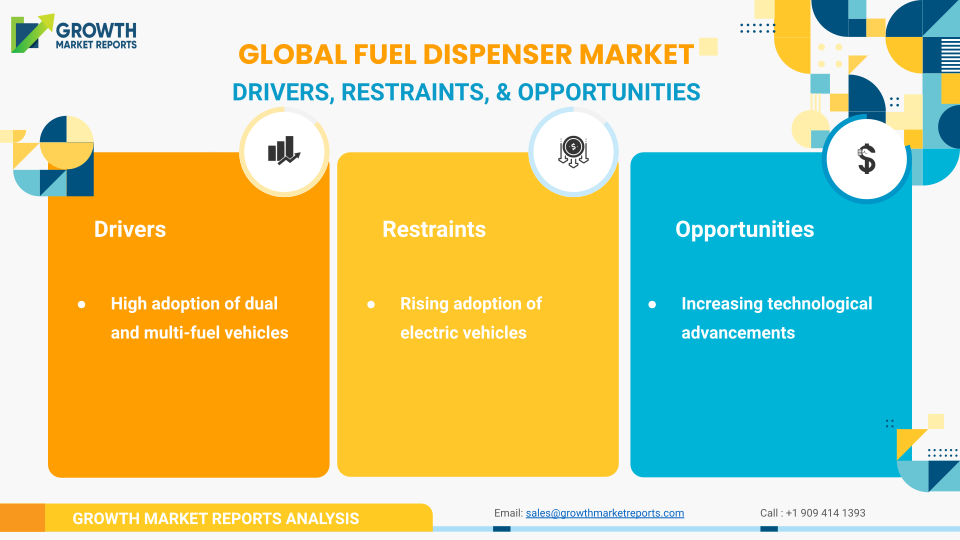
Another major opportunity lies in the digital transformation of fuel retail operations. The integration of IoT, cloud computing, and advanced analytics into fuel dispenser systems is enabling real-time monitoring, predictive maintenance, and enhanced customer engagement. These digital capabilities are helping fuel retailers optimize inventory management, reduce operational costs, and deliver personalized experiences to customers. The growing adoption of contactless payment solutions and mobile fueling apps is also creating new revenue streams and strengthening customer loyalty. As digitalization becomes increasingly central to fuel retail strategies, the demand for smart, connected dispensers is expected to accelerate considerably over the 2026-2034 forecast horizon.
Despite these opportunities, the fuel dispenser market faces several threats and restrainers. The global shift towards electric vehicles (EVs) and the proliferation of EV charging infrastructure pose a long-term challenge to traditional fuel dispenser demand. As governments and consumers prioritize decarbonization, the share of internal combustion engine vehicles is expected to decline gradually, particularly in developed markets. Additionally, the fuel dispenser industry is subject to stringent safety, environmental, and quality regulations, which can increase compliance costs and create barriers to entry for new players. Economic volatility, fluctuating oil prices, and geopolitical uncertainties may also impact market growth by affecting fuel consumption patterns and infrastructure investments during the forecast period.
The Asia Pacific region continues to dominate the global fuel dispenser market, accounting for approximately 42% of total revenue in 2025, or around USD 1.3 billion. Rapid urbanization, expanding vehicle ownership, and significant investments in transportation infrastructure are driving robust demand for fuel dispensers across key markets such as China, India, Japan, and Southeast Asia. The region's focus on alternative fuels, particularly CNG and LPG, is further supporting market growth, as governments implement policies to reduce emissions and promote energy diversification. With a projected CAGR of 6.3% through 2034, Asia Pacific is expected to maintain its leadership position and offer substantial growth opportunities for fuel dispenser manufacturers and related infrastructure providers.
North America represents the second-largest regional market, with a market size of approximately USD 760 million in 2025. The region's growth is driven by the modernization of existing fuel retail infrastructure, the adoption of advanced dispensing technologies, and a strong focus on regulatory compliance. The United States and Canada are leading the way in digital transformation, with widespread implementation of electronic flow meters, contactless payment solutions, and real-time monitoring systems. The presence of major fuel retailers and a mature automotive sector further support steady demand for fuel dispensers in North America, while growing interest in hydrogen and renewable fuels adds a new dimension to regional market dynamics.
Europe holds a significant share of the global fuel dispenser market, with a market size of around USD 667 million in 2025. The region is characterized by stringent environmental regulations, a strong emphasis on alternative fuels, and a high level of technological innovation. Countries such as Germany, the United Kingdom, France, and Italy are at the forefront of adopting multi-fuel dispensers and supporting the transition to cleaner energy sources, including hydrogen and biogas. Meanwhile, the Middle East & Africa and Latin America are emerging as high-potential markets, with combined revenues of approximately USD 373 million in 2025. These regions are benefiting from ongoing investments in energy infrastructure, growing vehicle ownership, and a rising focus on alternative fuels including LPG and CNG. As these trends continue, the regional outlook for the fuel dispenser market remains positive, with opportunities for growth and innovation across all major geographies through the end of the 2026-2034 forecast period.
The competitive landscape of the fuel dispenser market is characterized by the presence of several established global players, as well as a growing number of regional and local manufacturers. Leading companies are focusing on product innovation, strategic partnerships, and geographic expansion to strengthen their market positions and capture emerging opportunities. The market is highly dynamic in 2025, with frequent technological advancements and evolving customer requirements driving continuous investment in research and development. Key areas of competition include dispenser accuracy, reliability, compatibility with alternative fuels, integration with digital payment and management systems, and compliance with regulatory standards.
Major players in the fuel dispenser market are leveraging their extensive distribution networks and brand recognition to secure large-scale contracts with fuel retailers and infrastructure developers. These companies are also investing in after-sales support, technical training, and remote monitoring services to enhance customer satisfaction and build long-term relationships. The ability to offer comprehensive, end-to-end solutions that encompass installation, maintenance, and upgrades is becoming a key differentiator in the market. Additionally, leading manufacturers are expanding their product portfolios to include multi-fuel dispensers, electronic flow meters, and IoT-enabled solutions, catering to the diverse needs of global customers across the 2026-2034 horizon.
The market is witnessing increased collaboration between fuel dispenser manufacturers and technology providers, particularly in the areas of digital payment integration, cloud-based analytics, and cybersecurity. These partnerships are enabling the development of smart, connected dispensers that deliver enhanced operational efficiency and customer convenience. At the same time, regional and local players are focusing on cost-effective solutions and tailored offerings to address the specific requirements of emerging markets. The competitive landscape is thus characterized by a balance between global innovation and local adaptation, with all players striving to capture a share of the growing fuel dispenser market as it expands toward USD 5.1 billion by 2034.
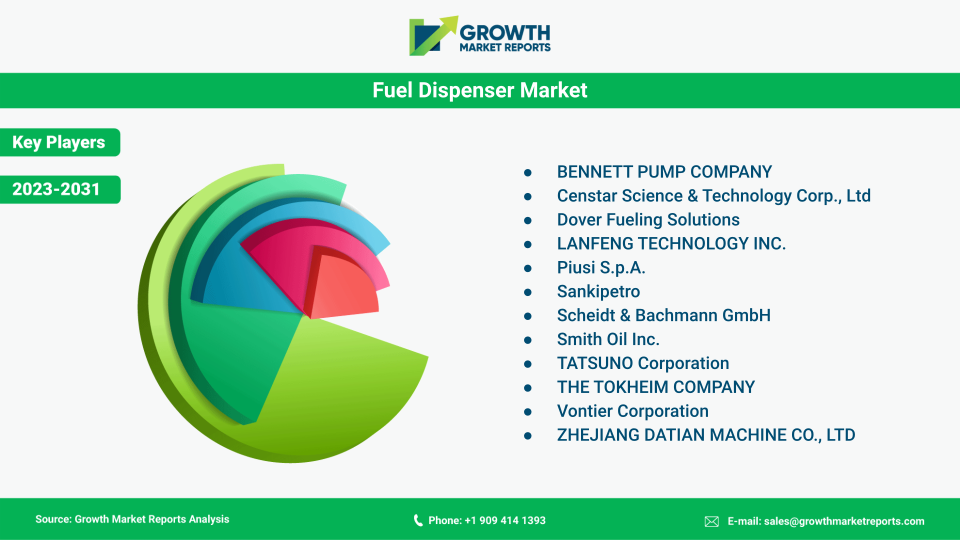
Some of the major companies operating in the global fuel dispenser market include Gilbarco Veeder-Root, Wayne Fueling Systems LLC (a Dover company), Dover Fueling Solutions (Tokheim), Tatsuno Corporation, Bennett Pump Company, Scheidt & Bachmann GmbH, and PIUSI S.p.A. These companies are recognized for their technological leadership, extensive product portfolios, and global reach. Gilbarco Veeder-Root and Wayne Fueling Systems are particularly noted for their focus on digital transformation and the development of smart dispenser solutions. Tatsuno Corporation maintains a strong presence across Asia Pacific markets, while Dover Fueling Solutions holds significant share in Europe and North America. Bennett Pump Company is a leading player in North American commercial and fleet fueling. Scheidt & Bachmann and PIUSI S.p.A. are known for their innovation in electronic flow meters and multi-fuel dispensing technologies. Censtar Science & Technology Corp. and Zhejiang Lanfeng Machine Co. represent the competitive strength of Chinese manufacturers serving both domestic and emerging international markets. As competition intensifies and customer expectations continue to evolve, these companies are expected to remain at the forefront of the fuel dispenser market, driving innovation and shaping the future of fuel retailing worldwide.
The Fuel Dispenser market has been segmented on the basis of
Opportunities include the global buildout of alternative-fuel infrastructure (CNG, LPG, hydrogen), digital transformation of fuel retail operations, retrofit and modernization of aging station equipment, and expansion into high-growth emerging markets. Key threats include the long-term displacement of internal combustion engine vehicles by electric vehicles, rising compliance costs from tightening environmental and safety regulations, and macroeconomic volatility that can delay capital investment in new fuel station infrastructure.
The market is divided into mechanical and electronic flow meters. Mechanical meters, based on positive displacement or turbine technology, remain prevalent in cost-sensitive and less-developed markets due to their robustness and low maintenance. Electronic flow meters are growing faster, especially in North America and Europe, offering superior accuracy, digital data transmission, and integration with inventory management and payment platforms. The shift toward electronic meters is expected to continue throughout the 2026-2034 forecast period.
Automotive applications dominate the market, encompassing passenger cars, light commercial vehicles, and heavy-duty trucks at retail and fleet fueling stations. Aviation represents a smaller but high-specification segment, requiring rigorous filtration and accuracy standards at airports and airfields. Marine applications serve commercial and recreational vessels, while other applications cover construction, mining, and agricultural equipment fueling needs, collectively sustaining diverse and steady demand.
Leading companies include Gilbarco Veeder-Root, Wayne Fueling Systems LLC, Dover Fueling Solutions (Tokheim), Tatsuno Corporation, Bennett Pump Company, Scheidt & Bachmann GmbH, PIUSI S.p.A., Censtar Science & Technology Corp., Franklin Fueling Systems, and Compac Industries Ltd. These players compete on technology innovation, global distribution reach, multi-fuel compatibility, and comprehensive lifecycle service offerings.
Key trends include IoT-based real-time monitoring and remote diagnostics, cloud-connected station management systems, electronic flow meters with high metering accuracy, and seamless contactless and mobile payment integration. Predictive maintenance capabilities, cybersecurity enhancements, and digital advertising at the point of sale are also reshaping the industry. Manufacturers are additionally investing in dispenser compatibility with hydrogen and biofuels to align with the global energy transition underway in 2025.
Manufacturers are developing multi-fuel and dedicated dispensers for CNG, LPG, hydrogen, and biofuels. CNG dispensers are expanding rapidly in India, China, and Middle Eastern markets, while LPG dispensers maintain strong adoption across parts of Europe and Asia. Hydrogen dispensers represent the fastest-emerging niche, with growing infrastructure investment in North America, Europe, and Japan. Versatile, future-ready platforms that accommodate multiple fuel types are becoming a central product strategy for leading manufacturers through 2034.
The market is primarily segmented into submersible and suction dispensers. Submersible dispensers, which house the pump inside the underground storage tank, command the larger share (approximately 62.5% in 2025) due to higher efficiency, lower vapor-lock risk, and reduced maintenance needs. Suction dispensers use above-ground pumps and remain important in smaller or rural stations where lower upfront costs and installation simplicity are priorities.
Asia Pacific leads the global market with roughly 42% of total 2025 revenue, driven by China, India, Japan, and Southeast Asia. North America holds the second-largest share at approximately 24.5%, followed by Europe at around 21.5%. Latin America and the Middle East & Africa together account for the remaining share and are among the fastest-growing regions, supported by ongoing energy infrastructure investments and expanding vehicle ownership.
The primary drivers include rapid urbanization and growing vehicle parc in emerging economies, expansion of transportation and logistics networks, and stricter environmental regulations that prompt operators to upgrade dispensing equipment. Technological advancements such as IoT-enabled monitoring, contactless payment integration, and multi-fuel dispensing capabilities are also accelerating market growth. Government incentives supporting CNG, LPG, and hydrogen refueling infrastructure represent an additional structural tailwind through the 2026-2034 forecast period.
According to our latest research, the global fuel dispenser market reached USD 3.1 billion in 2025, the base year for this study. Growing at a CAGR of 5.7% from 2026 to 2034, the market is projected to reach approximately USD 5.1 billion by the end of 2034. This growth is underpinned by rising vehicle ownership, expansion of fuel retail networks, and accelerating adoption of alternative-fuel dispensing infrastructure worldwide.