Food Bulking Agents Market Research Report 2033

Food Bulking Agents Market Research Report 2033

Segments - by Product Type (Polydextrose, Cellulose, Starch, Inulin, Maltodextrin, Others), by Source (Natural, Synthetic), by Application (Bakery & Confectionery, Dairy Products, Beverages, Meat Products, Sauces & Dressings, Others), by Function (Thickening, Stabilizing, Texturizing, Others), by Distribution Channel (Supermarkets/Hypermarkets, Convenience Stores, Online Retail, Others)

https://growthmarketreports.com/Anuradha
Author : Anuradha B. More
https://growthmarketreports.com/Vaibhav
Fact-checked by : Vaibhav Chandola
https://growthmarketreports.com/Shruti
Editor : Shruti Bhat

Upcoming | Report ID :FB-4461 | 4.3 Rating | 71 Reviews | 261 Pages | Format : Docx PDF

Report Description


Food Bulking Agents Market Outlook

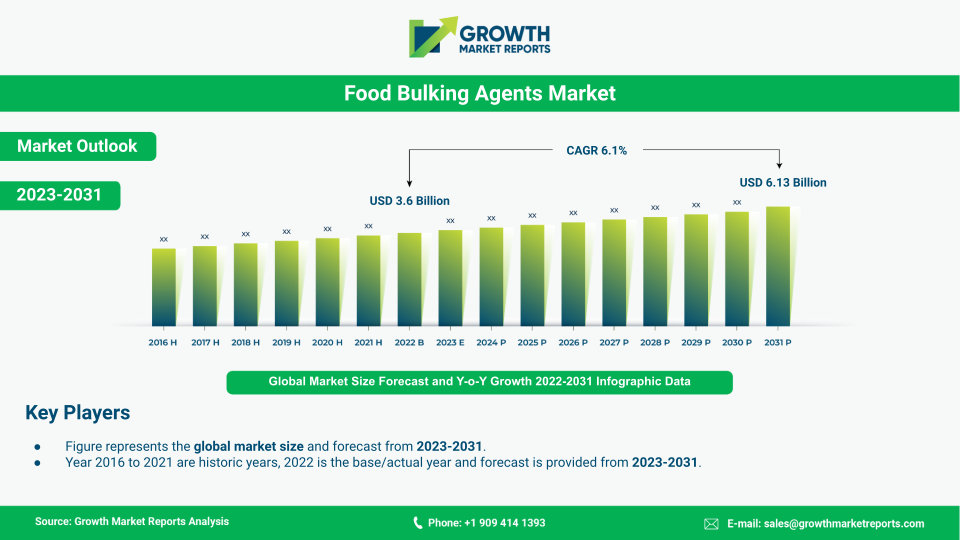
According to our latest research, the global food bulking agents market size reached USD 4.1 billion in 2024, reflecting a robust demand across the food and beverage industry. The market is projected to expand at a CAGR of 6.2% from 2025 to 2033, reaching an estimated USD 7.1 billion by 2033. This growth is primarily driven by increasing consumer awareness regarding calorie reduction, the rising prevalence of obesity and diabetes worldwide, and the food industry's focus on product innovation and reformulation. As per the latest research, food bulking agents are playing a pivotal role in enabling manufacturers to produce healthier, low-calorie, and fiber-enriched food products without compromising on texture or taste.

One of the most significant growth factors for the food bulking agents market is the escalating demand for functional and fortified foods. Consumers are increasingly seeking products that not only satisfy hunger but also provide additional health benefits, such as improved digestion, enhanced satiety, and better glycemic control. Bulking agents such as inulin, cellulose, and polydextrose are being incorporated into a wide array of food products to boost fiber content and reduce sugar and fat levels. This trend is particularly pronounced in developed economies, where health-conscious consumers are driving innovation in bakery, confectionery, dairy, and ready-to-eat segments. The food industry’s ongoing efforts to cater to these evolving consumer preferences are expected to continue propelling the market forward over the forecast period.

Another crucial driver is the regulatory support and favorable government policies promoting the use of dietary fibers and low-calorie ingredients. Regulatory bodies such as the US Food and Drug Administration (FDA) and the European Food Safety Authority (EFSA) have recognized several bulking agents as safe for consumption and have encouraged their inclusion in food formulations. This regulatory backing has instilled confidence among manufacturers and consumers alike, accelerating the adoption of bulking agents in mainstream food products. Furthermore, the increasing incidence of lifestyle-related diseases has prompted governments and health organizations to advocate for healthier food choices, further stimulating the demand for food bulking agents.

Technological advancements and continuous research and development (R&D) activities are also fueling the growth of the food bulking agents market. Food scientists are leveraging novel processing techniques and ingredient innovations to enhance the functionality, taste, and texture of bulking agents. The emergence of clean label trends and the rising popularity of plant-based diets have prompted manufacturers to explore natural and sustainable sources of bulking agents, such as chicory root, oats, and legumes. These innovations are not only expanding the application scope of bulking agents but are also enabling food producers to differentiate their offerings in an increasingly competitive market landscape.

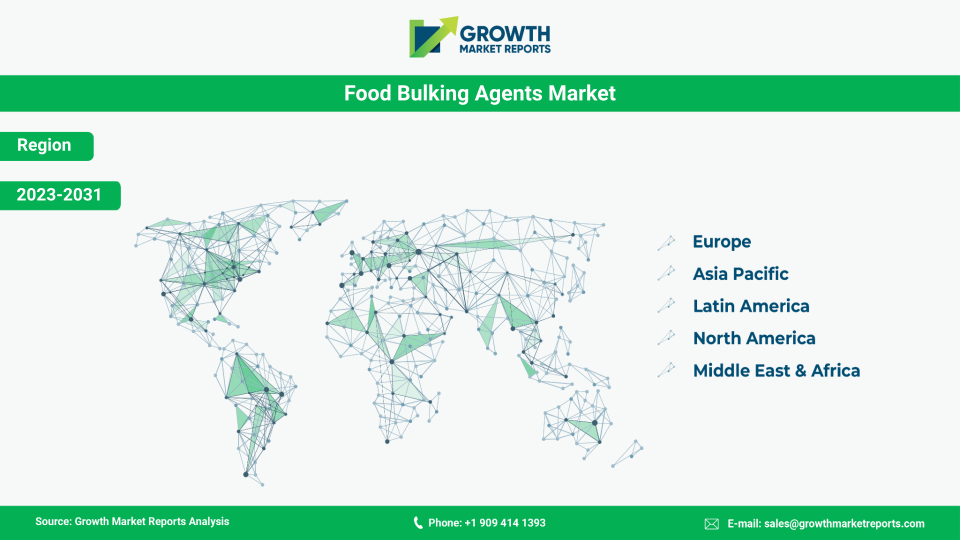
From a regional perspective, North America currently dominates the food bulking agents market, accounting for the largest revenue share in 2024, followed closely by Europe and Asia Pacific. The high prevalence of obesity and related health concerns in these regions has spurred the adoption of low-calorie and high-fiber foods, driving the demand for bulking agents. Asia Pacific, on the other hand, is witnessing the fastest growth, fueled by rapid urbanization, changing dietary habits, and a burgeoning middle-class population with increasing disposable incomes. Latin America and the Middle East & Africa are also experiencing steady growth, albeit at a slower pace, as health awareness continues to rise and food processing industries expand in these regions.

Global Food Bulking Agents Industry Outlook

Product Type Analysis

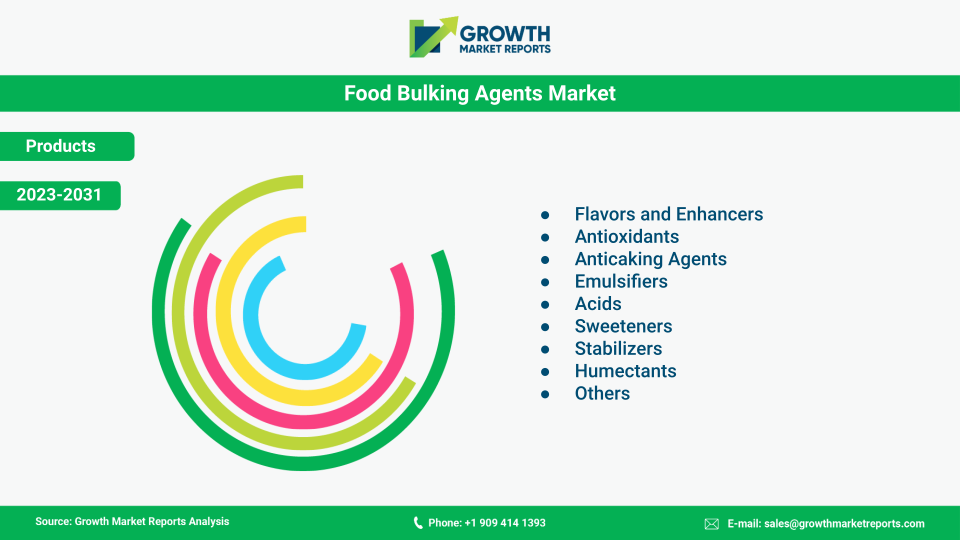
The food bulking agents market is segmented by product type into polydextrose, cellulose, starch, inulin, maltodextrin, and others. Among these, polydextrose holds a significant share, owing to its multifunctional properties as a low-calorie bulking agent and its ability to enhance texture and mouthfeel in a variety of food products. Polydextrose is extensively used in bakery, confectionery, beverages, and dairy applications due to its solubility, stability, and compatibility with other ingredients. Its role in sugar reduction and calorie management has made it a preferred choice among manufacturers targeting health-conscious consumers.

Cellulose, both in its microcrystalline and powdered forms, is another widely used bulking agent, particularly valued for its insoluble fiber content and its ability to improve the structure and stability of processed foods. Cellulose is commonly incorporated into bakery products, meat analogues, and dairy alternatives, where it functions as a thickener, stabilizer, and texturizer. The growing trend towards plant-based and vegan diets has further boosted the demand for cellulose-based bulking agents, as they align with clean label and allergen-free product claims.

Starch-based bulking agents, derived from sources such as corn, potato, and tapioca, continue to play a vital role in the market due to their versatility and cost-effectiveness. Modified starches are particularly popular in processed foods, where they provide bulk, improve texture, and stabilize emulsions. The increasing adoption of gluten-free and allergen-free formulations has driven innovation in starch-based bulking agents, with manufacturers developing new variants to cater to diverse dietary requirements.

Inulin, a naturally occurring prebiotic fiber, has gained prominence as a bulking agent in recent years due to its health benefits and functional properties. Inulin promotes digestive health, supports gut microbiota, and aids in sugar and fat reduction, making it highly desirable for health-oriented food products. Its mild sweetness and solubility make it suitable for a wide range of applications, including dairy, bakery, and beverages. The rising consumer interest in gut health and functional foods is expected to drive continued growth in the inulin segment.

Maltodextrin and other specialty bulking agents, such as gums and resistant dextrins, also contribute to the market’s diversity. Maltodextrin is widely used for its ability to provide bulk without significantly altering taste or texture. Specialty agents are increasingly being developed to meet specific functional needs, such as enhanced solubility, improved mouthfeel, or targeted health benefits. The ongoing R&D efforts in this segment are expected to yield innovative products that cater to the evolving demands of food manufacturers and consumers alike.

Report Scope

Attributes Details
Report Title Food Bulking Agents Market Research Report 2033
By Product Type Polydextrose, Cellulose, Starch, Inulin, Maltodextrin, Others
By Source Natural, Synthetic
By Application Bakery & Confectionery, Dairy Products, Beverages, Meat Products, Sauces & Dressings, Others
By Function Thickening, Stabilizing, Texturizing, Others
By Distribution Channel Supermarkets/Hypermarkets, Convenience Stores, Online Retail, Others
Regions Covered North America, Europe, APAC, Latin America, MEA
Base Year 2024
Historic Data 2018-2023
Forecast Period 2025-2033
Number of Pages 261
Number of Tables & Figures 295
Customization Available Yes, the report can be customized as per your need.

Source Analysis

The food bulking agents market is segmented by source into natural and synthetic categories. Natural bulking agents, derived from plant and microbial sources, are witnessing surging demand as consumers increasingly prioritize clean label, minimally processed, and sustainable ingredients. Ingredients such as inulin, cellulose, and starch sourced from chicory root, oats, and tubers are being favored by manufacturers aiming to align with organic and non-GMO product claims. The rise of plant-based diets and the growing aversion to artificial additives have further accelerated the adoption of natural bulking agents across various food applications.

Synthetic bulking agents, while still relevant, are facing scrutiny due to shifting consumer preferences and regulatory pressures. These agents, often produced through chemical synthesis or modification, offer advantages such as consistent quality, high purity, and tailored functionality. However, concerns regarding potential health risks and the desire for more transparent ingredient sourcing have led some manufacturers to reformulate products using natural alternatives. Despite these challenges, synthetic bulking agents continue to find application in certain processed foods where specific functional attributes are required, such as in sugar-free confectionery and low-calorie beverages.

The competitive landscape between natural and synthetic sources is shaped by factors such as cost, availability, functionality, and consumer perception. Natural bulking agents generally command a price premium due to their sourcing and processing requirements, but they offer the advantage of clean label appeal and perceived health benefits. Synthetic agents, on the other hand, are often more cost-effective and offer greater consistency in large-scale food production. The choice between natural and synthetic sources is ultimately influenced by the target market, regulatory environment, and the specific functional needs of the end product.

The trend towards sustainability and environmental responsibility is also impacting sourcing decisions in the food bulking agents market. Manufacturers are increasingly exploring renewable and upcycled sources for bulking agents, such as using agricultural byproducts or waste streams. This not only reduces the environmental footprint of food production but also supports the circular economy. As sustainability becomes a key differentiator in the food industry, the demand for naturally sourced, eco-friendly bulking agents is expected to outpace that of synthetic alternatives.

Looking ahead, the interplay between innovation, consumer demand, and regulatory developments will continue to shape the source dynamics of the food bulking agents market. Manufacturers that can effectively balance functionality, cost, and sustainability will be well-positioned to capitalize on emerging opportunities in both the natural and synthetic segments.

Application Analysis

The application landscape of the food bulking agents market is diverse, encompassing bakery & confectionery, dairy products, beverages, meat products, sauces & dressings, and other processed foods. The bakery & confectionery segment represents the largest application area, driven by the need to improve texture, reduce sugar and fat content, and enhance fiber levels in products such as bread, cakes, cookies, and candies. Bulking agents like inulin, cellulose, and polydextrose are widely used to achieve these objectives, enabling manufacturers to create healthier and more appealing baked goods that cater to the growing demand for functional foods.

Dairy products, including yogurts, ice creams, and cheese analogues, constitute another significant application segment. Bulking agents are employed to mimic the mouthfeel and creaminess of full-fat dairy while reducing calorie content and improving nutritional profiles. Inulin and maltodextrin, for example, are commonly used in low-fat and lactose-free dairy formulations to enhance texture and stability. The rising popularity of plant-based dairy alternatives has also spurred the use of bulking agents derived from natural sources, as manufacturers seek to replicate the sensory attributes of traditional dairy products.

In the beverages segment, bulking agents play a crucial role in sugar reduction, calorie management, and fiber enrichment. Functional beverages, such as fiber-enriched juices, meal replacement shakes, and sports drinks, are incorporating bulking agents to improve satiety and deliver added health benefits. The growing consumer interest in digestive health and weight management is driving innovation in this category, with manufacturers leveraging bulking agents to differentiate their products and capture new market segments.

Meat products and meat analogues are also important application areas for bulking agents, particularly as the demand for plant-based and reduced-fat meat alternatives continues to rise. Bulking agents such as cellulose, starch, and polydextrose are used to improve texture, water retention, and binding properties in processed meats and meat substitutes. This not only enhances the sensory appeal of these products but also supports efforts to reduce fat and calorie content without compromising on taste or quality.

Sauces, dressings, and other processed foods represent additional growth opportunities for the food bulking agents market. Bulking agents are utilized to thicken, stabilize, and texturize sauces and dressings, ensuring consistent quality and extended shelf life. The versatility of bulking agents enables their application across a wide range of food products, supporting manufacturers in meeting the evolving demands of health-conscious and convenience-oriented consumers.

Function Analysis

Within the food bulking agents market, functional segmentation includes thickening, stabilizing, texturizing, and other specialized roles. The thickening function is particularly prominent, as bulking agents are widely used to increase the viscosity and improve the mouthfeel of liquid and semi-solid foods. Starch, cellulose, and gums are commonly employed as thickeners in soups, sauces, dairy products, and beverages, providing desirable texture and consistency while enabling calorie reduction.

Stabilizing is another critical function of food bulking agents, especially in products that require extended shelf life and resistance to physical and chemical changes. Bulking agents help prevent phase separation, crystallization, and syneresis in products such as dressings, yogurts, and frozen desserts. The ability to maintain product stability under varying storage and handling conditions is a key consideration for manufacturers, driving the demand for high-performance bulking agents with proven stabilizing properties.

Texturizing is a vital function in the development of appealing food products, as it directly influences consumer perception and acceptance. Bulking agents are used to create specific textures, such as creaminess, chewiness, or crispness, depending on the application. In bakery, confectionery, and snack products, texturizing agents help achieve the desired bite and mouthfeel, contributing to product differentiation and brand loyalty. The trend towards healthier formulations has heightened the importance of texturizing, as manufacturers seek to replicate the sensory attributes of traditional foods while reducing fat, sugar, and calorie content.

Other functions of bulking agents include water retention, emulsification, and fiber enrichment. In meat products, for instance, bulking agents help retain moisture and improve juiciness, while in beverages, they can aid in emulsifying fat and enhancing mouthfeel. Fiber enrichment is an increasingly important function, as consumers seek foods that support digestive health and satiety. Bulking agents such as inulin and resistant starch are being incorporated into a wide range of products to boost fiber content and deliver functional health benefits.

The multifunctional nature of bulking agents underscores their importance in modern food processing. Manufacturers are continually exploring new applications and combinations of bulking agents to meet the evolving demands of consumers and regulatory authorities. As the focus on health, sustainability, and sensory quality intensifies, the functional versatility of bulking agents will remain a key driver of market growth.

Distribution Channel Analysis

Distribution channels play a pivotal role in the food bulking agents market, with supermarkets and hypermarkets accounting for the largest share of retail sales in 2024. These outlets offer consumers a wide variety of food products containing bulking agents, including bakery items, dairy products, snacks, and beverages. The visibility and accessibility of these products in large retail formats have contributed to the growing consumer awareness and adoption of foods formulated with bulking agents. Supermarkets and hypermarkets also provide manufacturers with opportunities for product placement, promotional activities, and direct engagement with consumers.

Convenience stores represent another important distribution channel, particularly in urban areas where busy lifestyles and the demand for on-the-go food options are prevalent. These stores typically stock a curated selection of processed foods, snacks, and beverages that often contain bulking agents for improved texture, shelf life, and nutritional value. The convenience store channel is expected to witness steady growth, supported by increasing urbanization and the expansion of retail networks in emerging markets.

Online retail is rapidly gaining traction as a distribution channel for food products containing bulking agents. The proliferation of e-commerce platforms, coupled with the growing preference for online grocery shopping, has made it easier for consumers to access a diverse range of specialty foods, health products, and dietary supplements formulated with bulking agents. Online retail offers the advantage of product information transparency, customer reviews, and personalized recommendations, empowering consumers to make informed choices based on their health and dietary needs.

Other distribution channels, including specialty health food stores, pharmacies, and direct-to-consumer models, are also contributing to the growth of the food bulking agents market. Specialty stores cater to niche consumer segments seeking organic, gluten-free, and functional foods, while pharmacies are increasingly stocking dietary supplements and meal replacement products containing bulking agents. The direct-to-consumer channel, enabled by digital marketing and subscription services, allows manufacturers to build direct relationships with health-conscious consumers and deliver tailored product offerings.

The evolving distribution landscape is characterized by increasing channel diversification, digitalization, and a focus on consumer convenience. Manufacturers and retailers that can effectively leverage multiple channels and deliver a seamless omnichannel experience will be well-positioned to capture market share and drive long-term growth in the food bulking agents market.

Opportunities & Threats

The food bulking agents market presents a multitude of growth opportunities, particularly in the context of rising health consciousness and the demand for functional foods. One of the most promising opportunities lies in the development of innovative bulking agents derived from novel and sustainable sources. With the increasing emphasis on plant-based diets, manufacturers are exploring the use of pulses, legumes, and upcycled agricultural byproducts as alternative sources of dietary fiber and bulking agents. These innovations not only address consumer demand for clean label and eco-friendly ingredients but also support the food industry’s sustainability goals. Additionally, the growing popularity of personalized nutrition and functional foods tailored to specific health needs, such as digestive health, weight management, and glycemic control, is creating new avenues for product differentiation and market expansion.

Another significant opportunity is the expansion of the food bulking agents market in emerging economies, particularly in Asia Pacific and Latin America. Rapid urbanization, rising disposable incomes, and changing dietary patterns are driving the adoption of processed and convenience foods in these regions. As health awareness increases, there is a growing demand for low-calorie, high-fiber, and fortified food products, creating a favorable environment for the uptake of bulking agents. Manufacturers that can adapt their product portfolios to local tastes, preferences, and regulatory requirements will be well-positioned to capitalize on these growth opportunities. Furthermore, strategic partnerships with local distributors and retailers can help accelerate market penetration and brand recognition in these high-growth regions.

Despite the positive outlook, the food bulking agents market faces certain restraints and threats that could impede its growth. One of the primary challenges is the potential for negative consumer perception regarding the use of certain synthetic or chemically modified bulking agents. As consumers become more discerning and demand greater transparency in food labeling, manufacturers may face pressure to reformulate products or justify the inclusion of specific ingredients. Additionally, the complex and evolving regulatory landscape governing food additives and labeling requirements can pose compliance challenges for manufacturers operating in multiple markets. Price volatility and supply chain disruptions, particularly for natural bulking agents sourced from specific crops or regions, also represent potential threats to market stability and growth.

Regional Outlook

Regionally, North America remains the largest market for food bulking agents, with a market size of approximately USD 1.2 billion in 2024. The region’s dominance is attributed to high consumer awareness of health and wellness, a well-established processed food industry, and strong regulatory support for the use of dietary fibers and low-calorie ingredients. The United States, in particular, is a major contributor to regional growth, with manufacturers actively innovating to meet the evolving preferences of health-conscious consumers. The market in North America is expected to maintain steady growth, supported by ongoing product innovation and the rising prevalence of obesity and lifestyle-related diseases.

Europe follows closely, with a market size of around USD 1.0 billion in 2024. The region is characterized by stringent regulatory standards, a strong focus on sustainability, and a high demand for clean label and organic food products. Countries such as Germany, France, and the United Kingdom are at the forefront of adopting bulking agents in bakery, dairy, and beverage applications. The European market is projected to grow at a CAGR of 5.7% through 2033, driven by increasing health awareness, the popularity of plant-based diets, and ongoing innovation in functional food ingredients.

Asia Pacific is emerging as the fastest-growing region in the food bulking agents market, with a market size of USD 0.9 billion in 2024. The region’s rapid growth is fueled by urbanization, rising disposable incomes, and a shift towards Western dietary patterns. China, India, and Japan are key markets, with expanding food processing industries and increasing consumer demand for healthier food options. The Asia Pacific market is expected to outpace other regions in terms of growth rate, presenting significant opportunities for manufacturers seeking to expand their global footprint. Latin America and the Middle East & Africa, with market sizes of USD 0.6 billion and USD 0.4 billion respectively, are also witnessing steady growth as health awareness and processed food consumption rise in these regions.

Food Bulking Agents Market Statistics

Competitor Outlook

The competitive landscape of the food bulking agents market is characterized by the presence of both global and regional players, each vying for market share through product innovation, strategic partnerships, and geographic expansion. Leading companies are investing heavily in research and development to create novel bulking agents that cater to the evolving needs of food manufacturers and consumers. The focus is on developing multifunctional ingredients that offer enhanced functionality, improved sensory attributes, and added health benefits. Companies are also prioritizing sustainability and clean label claims, sourcing raw materials from renewable and traceable sources to meet the growing demand for eco-friendly and transparent food ingredients.

Mergers, acquisitions, and collaborations are common strategies employed by major players to strengthen their market position and expand their product portfolios. These strategic moves enable companies to leverage complementary strengths, access new markets, and accelerate the commercialization of innovative bulking agents. The industry is also witnessing increased collaboration between ingredient suppliers, food manufacturers, and research institutions to drive innovation and address emerging challenges related to functionality, safety, and regulatory compliance.

The market is highly competitive, with companies differentiating themselves through product quality, pricing, distribution networks, and customer service. Leading players are leveraging advanced processing technologies and proprietary formulations to deliver superior performance and meet the specific needs of their clients. The ability to offer customized solutions and technical support is becoming increasingly important, as food manufacturers seek to optimize product formulations and achieve desired sensory and nutritional outcomes.

Some of the major companies operating in the food bulking agents market include Ingredion Incorporated, Cargill, Incorporated, Tate & Lyle PLC, DuPont de Nemours, Inc., Archer Daniels Midland Company, Roquette Frères, and Kerry Group plc. Ingredion is recognized for its extensive portfolio of starches, fibers, and specialty ingredients, catering to a wide range of food applications. Cargill offers a diverse range of bulking agents, including polydextrose and maltodextrin, and is known for its commitment to sustainability and responsible sourcing. Tate & Lyle is a global leader in fiber and sweetener solutions, with a strong focus on innovation and health-oriented ingredients. DuPont, now part of IFF, is renowned for its expertise in functional food ingredients and technical support services.

Roquette Frères is a leading supplier of plant-based ingredients, including inulin and pea fiber, and is actively expanding its presence in the natural and clean label segments. Kerry Group plc is known for its integrated solutions and focus on taste, nutrition, and functionality. These companies are continuously investing in R&D, expanding their production capacities, and enhancing their distribution networks to maintain a competitive edge in the dynamic food bulking agents market. Regional players and emerging startups are also making significant contributions, particularly in niche segments and local markets, further intensifying competition and driving innovation across the industry.

Key Players

  • Archer Daniels Midland Company (ADM)
  • Cargill, Incorporated
  • DuPont de Nemours, Inc.
  • Ingredion Incorporated
  • Tate & Lyle PLC
  • Kerry Group plc
  • Jungbunzlauer Suisse AG
  • Roquette Frères
  • Ashland Global Holdings Inc.
  • CP Kelco U.S., Inc.
  • Palsgaard A/S
  • FMC Corporation
  • Corbion N.V.
  • Avebe U.A.
  • Fiberstar, Inc.
  • AEP Colloids, Inc.
  • TIC Gums, Inc.
  • Puratos Group
  • Sensient Technologies Corporation
  • BASF SE
Food Bulking Agents Market Overview

Segments

The Food Bulking Agents market has been segmented on the basis of

Product Type

  • Polydextrose
  • Cellulose
  • Starch
  • Inulin
  • Maltodextrin
  • Others

Source

  • Natural
  • Synthetic

Application

  • Bakery & Confectionery
  • Dairy Products
  • Beverages
  • Meat Products
  • Sauces & Dressings
  • Others

Function

  • Thickening
  • Stabilizing
  • Texturizing
  • Others

Distribution Channel

  • Supermarkets/Hypermarkets
  • Convenience Stores
  • Online Retail
  • Others

Competitive Landscape

Key players in the global food bulking agent market include Sayona Colors, Ningbo Pangs Chem, Sumimoto Technology, Zhengzhou Natural Chemical, Acroyali, Adhya Biotech, Flavors and Enhancers, BASF, Danisco, Archer Daniels Midland, Associated British Foods, DSM, Ajinomoto, Eastman Chemicals, Givaudan.

These players engage in mergers & acquisitions, collaborations, agreements, and partnerships to strengthen their geographical presence.


Food Bulking Agents Market Key Players

Frequently Asked Questions

Key companies include Archer Daniels Midland Company (ADM), Cargill, DuPont de Nemours, Ingredion Incorporated, Tate & Lyle, Kerry Group, Roquette Frères, Jungbunzlauer Suisse AG, Ashland Global Holdings, CP Kelco, and others.

They are distributed through supermarkets/hypermarkets, convenience stores, online retail, specialty health food stores, pharmacies, and direct-to-consumer channels, with supermarkets and hypermarkets accounting for the largest share.

Bulking agents serve functions such as thickening, stabilizing, texturizing, water retention, emulsification, and fiber enrichment, helping manufacturers create appealing, stable, and nutritious food products.

North America is the largest market, followed by Europe and Asia Pacific. Asia Pacific is the fastest-growing region due to urbanization, changing diets, and rising disposable incomes. Latin America and the Middle East & Africa are also experiencing steady growth.

Bulking agents are widely used in bakery & confectionery, dairy products, beverages, meat products and analogues, sauces & dressings, and other processed foods to improve texture, reduce calories, and enhance fiber content.

The market is segmented into natural and synthetic sources. Natural bulking agents, derived from plants and microbes, are increasingly popular due to clean label and sustainability trends, while synthetic agents offer consistency and cost-effectiveness but face scrutiny over health concerns.

The main types include polydextrose, cellulose (microcrystalline and powdered), starch (corn, potato, tapioca), inulin, maltodextrin, and specialty agents such as gums and resistant dextrins.

Key drivers include rising consumer awareness about calorie reduction, increasing obesity and diabetes rates, demand for functional and fortified foods, regulatory support for dietary fibers, and ongoing product innovation in the food industry.

Food bulking agents are ingredients added to food products to increase volume, improve texture, and enhance mouthfeel without significantly increasing calories. They are crucial for creating healthier, low-calorie, and fiber-enriched foods that maintain desirable taste and texture.

The global food bulking agents market reached USD 4.1 billion in 2024 and is projected to grow at a CAGR of 6.2% from 2025 to 2033, reaching approximately USD 7.1 billion by 2033.

Table Of Content

Chapter 1 Executive Summary
Chapter 2 Assumptions and Acronyms Used
Chapter 3 Research Methodology
Chapter 4 Food Bulking Agents Market Overview
   4.1 Introduction
      4.1.1 Market Taxonomy
      4.1.2 Market Definition
      4.1.3 Macro-Economic Factors Impacting the Market Growth
   4.2 Food Bulking Agents Market Dynamics
      4.2.1 Market Drivers
      4.2.2 Market Restraints
      4.2.3 Market Opportunity
   4.3 Food Bulking Agents Market - Supply Chain Analysis
      4.3.1 List of Key Suppliers
      4.3.2 List of Key Distributors
      4.3.3 List of Key Consumers
   4.4 Key Forces Shaping the Food Bulking Agents Market
      4.4.1 Bargaining Power of Suppliers
      4.4.2 Bargaining Power of Buyers
      4.4.3 Threat of Substitution
      4.4.4 Threat of New Entrants
      4.4.5 Competitive Rivalry
   4.5 Global Food Bulking Agents Market Size & Forecast, 2023-2032
      4.5.1 Food Bulking Agents Market Size and Y-o-Y Growth
      4.5.2 Food Bulking Agents Market Absolute $ Opportunity

Chapter 5 Global Food Bulking Agents Market Analysis and Forecast By Product Type
   5.1 Introduction
      5.1.1 Key Market Trends & Growth Opportunities By Product Type
      5.1.2 Basis Point Share (BPS) Analysis By Product Type
      5.1.3 Absolute $ Opportunity Assessment By Product Type
   5.2 Food Bulking Agents Market Size Forecast By Product Type
      5.2.1 Polydextrose
      5.2.2 Cellulose
      5.2.3 Starch
      5.2.4 Inulin
      5.2.5 Maltodextrin
      5.2.6 Others
   5.3 Market Attractiveness Analysis By Product Type

Chapter 6 Global Food Bulking Agents Market Analysis and Forecast By Source
   6.1 Introduction
      6.1.1 Key Market Trends & Growth Opportunities By Source
      6.1.2 Basis Point Share (BPS) Analysis By Source
      6.1.3 Absolute $ Opportunity Assessment By Source
   6.2 Food Bulking Agents Market Size Forecast By Source
      6.2.1 Natural
      6.2.2 Synthetic
   6.3 Market Attractiveness Analysis By Source

Chapter 7 Global Food Bulking Agents Market Analysis and Forecast By Application
   7.1 Introduction
      7.1.1 Key Market Trends & Growth Opportunities By Application
      7.1.2 Basis Point Share (BPS) Analysis By Application
      7.1.3 Absolute $ Opportunity Assessment By Application
   7.2 Food Bulking Agents Market Size Forecast By Application
      7.2.1 Bakery & Confectionery
      7.2.2 Dairy Products
      7.2.3 Beverages
      7.2.4 Meat Products
      7.2.5 Sauces & Dressings
      7.2.6 Others
   7.3 Market Attractiveness Analysis By Application

Chapter 8 Global Food Bulking Agents Market Analysis and Forecast By Function
   8.1 Introduction
      8.1.1 Key Market Trends & Growth Opportunities By Function
      8.1.2 Basis Point Share (BPS) Analysis By Function
      8.1.3 Absolute $ Opportunity Assessment By Function
   8.2 Food Bulking Agents Market Size Forecast By Function
      8.2.1 Thickening
      8.2.2 Stabilizing
      8.2.3 Texturizing
      8.2.4 Others
   8.3 Market Attractiveness Analysis By Function

Chapter 9 Global Food Bulking Agents Market Analysis and Forecast By Distribution Channel
   9.1 Introduction
      9.1.1 Key Market Trends & Growth Opportunities By Distribution Channel
      9.1.2 Basis Point Share (BPS) Analysis By Distribution Channel
      9.1.3 Absolute $ Opportunity Assessment By Distribution Channel
   9.2 Food Bulking Agents Market Size Forecast By Distribution Channel
      9.2.1 Supermarkets/Hypermarkets
      9.2.2 Convenience Stores
      9.2.3 Online Retail
      9.2.4 Others
   9.3 Market Attractiveness Analysis By Distribution Channel

Chapter 10 Global Food Bulking Agents Market Analysis and Forecast by Region
   10.1 Introduction
      10.1.1 Key Market Trends & Growth Opportunities By Region
      10.1.2 Basis Point Share (BPS) Analysis By Region
      10.1.3 Absolute $ Opportunity Assessment By Region
   10.2 Food Bulking Agents Market Size Forecast By Region
      10.2.1 North America
      10.2.2 Europe
      10.2.3 Asia Pacific
      10.2.4 Latin America
      10.2.5 Middle East & Africa (MEA)
   10.3 Market Attractiveness Analysis By Region

Chapter 11 Coronavirus Disease (COVID-19) Impact 
   11.1 Introduction 
   11.2 Current & Future Impact Analysis 
   11.3 Economic Impact Analysis 
   11.4 Government Policies 
   11.5 Investment Scenario

Chapter 12 North America Food Bulking Agents Analysis and Forecast
   12.1 Introduction
   12.2 North America Food Bulking Agents Market Size Forecast by Country
      12.2.1 U.S.
      12.2.2 Canada
   12.3 Basis Point Share (BPS) Analysis by Country
   12.4 Absolute $ Opportunity Assessment by Country
   12.5 Market Attractiveness Analysis by Country
   12.6 North America Food Bulking Agents Market Size Forecast By Product Type
      12.6.1 Polydextrose
      12.6.2 Cellulose
      12.6.3 Starch
      12.6.4 Inulin
      12.6.5 Maltodextrin
      12.6.6 Others
   12.7 Basis Point Share (BPS) Analysis By Product Type 
   12.8 Absolute $ Opportunity Assessment By Product Type 
   12.9 Market Attractiveness Analysis By Product Type
   12.10 North America Food Bulking Agents Market Size Forecast By Source
      12.10.1 Natural
      12.10.2 Synthetic
   12.11 Basis Point Share (BPS) Analysis By Source 
   12.12 Absolute $ Opportunity Assessment By Source 
   12.13 Market Attractiveness Analysis By Source
   12.14 North America Food Bulking Agents Market Size Forecast By Application
      12.14.1 Bakery & Confectionery
      12.14.2 Dairy Products
      12.14.3 Beverages
      12.14.4 Meat Products
      12.14.5 Sauces & Dressings
      12.14.6 Others
   12.15 Basis Point Share (BPS) Analysis By Application 
   12.16 Absolute $ Opportunity Assessment By Application 
   12.17 Market Attractiveness Analysis By Application
   12.18 North America Food Bulking Agents Market Size Forecast By Function
      12.18.1 Thickening
      12.18.2 Stabilizing
      12.18.3 Texturizing
      12.18.4 Others
   12.19 Basis Point Share (BPS) Analysis By Function 
   12.20 Absolute $ Opportunity Assessment By Function 
   12.21 Market Attractiveness Analysis By Function
   12.22 North America Food Bulking Agents Market Size Forecast By Distribution Channel
      12.22.1 Supermarkets/Hypermarkets
      12.22.2 Convenience Stores
      12.22.3 Online Retail
      12.22.4 Others
   12.23 Basis Point Share (BPS) Analysis By Distribution Channel 
   12.24 Absolute $ Opportunity Assessment By Distribution Channel 
   12.25 Market Attractiveness Analysis By Distribution Channel

Chapter 13 Europe Food Bulking Agents Analysis and Forecast
   13.1 Introduction
   13.2 Europe Food Bulking Agents Market Size Forecast by Country
      13.2.1 Germany
      13.2.2 France
      13.2.3 Italy
      13.2.4 U.K.
      13.2.5 Spain
      13.2.6 Russia
      13.2.7 Rest of Europe
   13.3 Basis Point Share (BPS) Analysis by Country
   13.4 Absolute $ Opportunity Assessment by Country
   13.5 Market Attractiveness Analysis by Country
   13.6 Europe Food Bulking Agents Market Size Forecast By Product Type
      13.6.1 Polydextrose
      13.6.2 Cellulose
      13.6.3 Starch
      13.6.4 Inulin
      13.6.5 Maltodextrin
      13.6.6 Others
   13.7 Basis Point Share (BPS) Analysis By Product Type 
   13.8 Absolute $ Opportunity Assessment By Product Type 
   13.9 Market Attractiveness Analysis By Product Type
   13.10 Europe Food Bulking Agents Market Size Forecast By Source
      13.10.1 Natural
      13.10.2 Synthetic
   13.11 Basis Point Share (BPS) Analysis By Source 
   13.12 Absolute $ Opportunity Assessment By Source 
   13.13 Market Attractiveness Analysis By Source
   13.14 Europe Food Bulking Agents Market Size Forecast By Application
      13.14.1 Bakery & Confectionery
      13.14.2 Dairy Products
      13.14.3 Beverages
      13.14.4 Meat Products
      13.14.5 Sauces & Dressings
      13.14.6 Others
   13.15 Basis Point Share (BPS) Analysis By Application 
   13.16 Absolute $ Opportunity Assessment By Application 
   13.17 Market Attractiveness Analysis By Application
   13.18 Europe Food Bulking Agents Market Size Forecast By Function
      13.18.1 Thickening
      13.18.2 Stabilizing
      13.18.3 Texturizing
      13.18.4 Others
   13.19 Basis Point Share (BPS) Analysis By Function 
   13.20 Absolute $ Opportunity Assessment By Function 
   13.21 Market Attractiveness Analysis By Function
   13.22 Europe Food Bulking Agents Market Size Forecast By Distribution Channel
      13.22.1 Supermarkets/Hypermarkets
      13.22.2 Convenience Stores
      13.22.3 Online Retail
      13.22.4 Others
   13.23 Basis Point Share (BPS) Analysis By Distribution Channel 
   13.24 Absolute $ Opportunity Assessment By Distribution Channel 
   13.25 Market Attractiveness Analysis By Distribution Channel

Chapter 14 Asia Pacific Food Bulking Agents Analysis and Forecast
   14.1 Introduction
   14.2 Asia Pacific Food Bulking Agents Market Size Forecast by Country
      14.2.1 China
      14.2.2 Japan
      14.2.3 South Korea
      14.2.4 India
      14.2.5 Australia
      14.2.6 South East Asia (SEA)
      14.2.7 Rest of Asia Pacific (APAC)
   14.3 Basis Point Share (BPS) Analysis by Country
   14.4 Absolute $ Opportunity Assessment by Country
   14.5 Market Attractiveness Analysis by Country
   14.6 Asia Pacific Food Bulking Agents Market Size Forecast By Product Type
      14.6.1 Polydextrose
      14.6.2 Cellulose
      14.6.3 Starch
      14.6.4 Inulin
      14.6.5 Maltodextrin
      14.6.6 Others
   14.7 Basis Point Share (BPS) Analysis By Product Type 
   14.8 Absolute $ Opportunity Assessment By Product Type 
   14.9 Market Attractiveness Analysis By Product Type
   14.10 Asia Pacific Food Bulking Agents Market Size Forecast By Source
      14.10.1 Natural
      14.10.2 Synthetic
   14.11 Basis Point Share (BPS) Analysis By Source 
   14.12 Absolute $ Opportunity Assessment By Source 
   14.13 Market Attractiveness Analysis By Source
   14.14 Asia Pacific Food Bulking Agents Market Size Forecast By Application
      14.14.1 Bakery & Confectionery
      14.14.2 Dairy Products
      14.14.3 Beverages
      14.14.4 Meat Products
      14.14.5 Sauces & Dressings
      14.14.6 Others
   14.15 Basis Point Share (BPS) Analysis By Application 
   14.16 Absolute $ Opportunity Assessment By Application 
   14.17 Market Attractiveness Analysis By Application
   14.18 Asia Pacific Food Bulking Agents Market Size Forecast By Function
      14.18.1 Thickening
      14.18.2 Stabilizing
      14.18.3 Texturizing
      14.18.4 Others
   14.19 Basis Point Share (BPS) Analysis By Function 
   14.20 Absolute $ Opportunity Assessment By Function 
   14.21 Market Attractiveness Analysis By Function
   14.22 Asia Pacific Food Bulking Agents Market Size Forecast By Distribution Channel
      14.22.1 Supermarkets/Hypermarkets
      14.22.2 Convenience Stores
      14.22.3 Online Retail
      14.22.4 Others
   14.23 Basis Point Share (BPS) Analysis By Distribution Channel 
   14.24 Absolute $ Opportunity Assessment By Distribution Channel 
   14.25 Market Attractiveness Analysis By Distribution Channel

Chapter 15 Latin America Food Bulking Agents Analysis and Forecast
   15.1 Introduction
   15.2 Latin America Food Bulking Agents Market Size Forecast by Country
      15.2.1 Brazil
      15.2.2 Mexico
      15.2.3 Rest of Latin America (LATAM)
   15.3 Basis Point Share (BPS) Analysis by Country
   15.4 Absolute $ Opportunity Assessment by Country
   15.5 Market Attractiveness Analysis by Country
   15.6 Latin America Food Bulking Agents Market Size Forecast By Product Type
      15.6.1 Polydextrose
      15.6.2 Cellulose
      15.6.3 Starch
      15.6.4 Inulin
      15.6.5 Maltodextrin
      15.6.6 Others
   15.7 Basis Point Share (BPS) Analysis By Product Type 
   15.8 Absolute $ Opportunity Assessment By Product Type 
   15.9 Market Attractiveness Analysis By Product Type
   15.10 Latin America Food Bulking Agents Market Size Forecast By Source
      15.10.1 Natural
      15.10.2 Synthetic
   15.11 Basis Point Share (BPS) Analysis By Source 
   15.12 Absolute $ Opportunity Assessment By Source 
   15.13 Market Attractiveness Analysis By Source
   15.14 Latin America Food Bulking Agents Market Size Forecast By Application
      15.14.1 Bakery & Confectionery
      15.14.2 Dairy Products
      15.14.3 Beverages
      15.14.4 Meat Products
      15.14.5 Sauces & Dressings
      15.14.6 Others
   15.15 Basis Point Share (BPS) Analysis By Application 
   15.16 Absolute $ Opportunity Assessment By Application 
   15.17 Market Attractiveness Analysis By Application
   15.18 Latin America Food Bulking Agents Market Size Forecast By Function
      15.18.1 Thickening
      15.18.2 Stabilizing
      15.18.3 Texturizing
      15.18.4 Others
   15.19 Basis Point Share (BPS) Analysis By Function 
   15.20 Absolute $ Opportunity Assessment By Function 
   15.21 Market Attractiveness Analysis By Function
   15.22 Latin America Food Bulking Agents Market Size Forecast By Distribution Channel
      15.22.1 Supermarkets/Hypermarkets
      15.22.2 Convenience Stores
      15.22.3 Online Retail
      15.22.4 Others
   15.23 Basis Point Share (BPS) Analysis By Distribution Channel 
   15.24 Absolute $ Opportunity Assessment By Distribution Channel 
   15.25 Market Attractiveness Analysis By Distribution Channel

Chapter 16 Middle East & Africa (MEA) Food Bulking Agents Analysis and Forecast
   16.1 Introduction
   16.2 Middle East & Africa (MEA) Food Bulking Agents Market Size Forecast by Country
      16.2.1 Saudi Arabia
      16.2.2 South Africa
      16.2.3 UAE
      16.2.4 Rest of Middle East & Africa (MEA)
   16.3 Basis Point Share (BPS) Analysis by Country
   16.4 Absolute $ Opportunity Assessment by Country
   16.5 Market Attractiveness Analysis by Country
   16.6 Middle East & Africa (MEA) Food Bulking Agents Market Size Forecast By Product Type
      16.6.1 Polydextrose
      16.6.2 Cellulose
      16.6.3 Starch
      16.6.4 Inulin
      16.6.5 Maltodextrin
      16.6.6 Others
   16.7 Basis Point Share (BPS) Analysis By Product Type 
   16.8 Absolute $ Opportunity Assessment By Product Type 
   16.9 Market Attractiveness Analysis By Product Type
   16.10 Middle East & Africa (MEA) Food Bulking Agents Market Size Forecast By Source
      16.10.1 Natural
      16.10.2 Synthetic
   16.11 Basis Point Share (BPS) Analysis By Source 
   16.12 Absolute $ Opportunity Assessment By Source 
   16.13 Market Attractiveness Analysis By Source
   16.14 Middle East & Africa (MEA) Food Bulking Agents Market Size Forecast By Application
      16.14.1 Bakery & Confectionery
      16.14.2 Dairy Products
      16.14.3 Beverages
      16.14.4 Meat Products
      16.14.5 Sauces & Dressings
      16.14.6 Others
   16.15 Basis Point Share (BPS) Analysis By Application 
   16.16 Absolute $ Opportunity Assessment By Application 
   16.17 Market Attractiveness Analysis By Application
   16.18 Middle East & Africa (MEA) Food Bulking Agents Market Size Forecast By Function
      16.18.1 Thickening
      16.18.2 Stabilizing
      16.18.3 Texturizing
      16.18.4 Others
   16.19 Basis Point Share (BPS) Analysis By Function 
   16.20 Absolute $ Opportunity Assessment By Function 
   16.21 Market Attractiveness Analysis By Function
   16.22 Middle East & Africa (MEA) Food Bulking Agents Market Size Forecast By Distribution Channel
      16.22.1 Supermarkets/Hypermarkets
      16.22.2 Convenience Stores
      16.22.3 Online Retail
      16.22.4 Others
   16.23 Basis Point Share (BPS) Analysis By Distribution Channel 
   16.24 Absolute $ Opportunity Assessment By Distribution Channel 
   16.25 Market Attractiveness Analysis By Distribution Channel

Chapter 17 Competition Landscape 
   17.1 Food Bulking Agents Market: Competitive Dashboard
   17.2 Global Food Bulking Agents Market: Market Share Analysis, 2023
   17.3 Company Profiles (Details – Overview, Financials, Developments, Strategy) 
      17.3.1 Archer Daniels Midland Company (ADM)
Cargill, Incorporated
DuPont de Nemours, Inc.
Ingredion Incorporated
Tate & Lyle PLC
Kerry Group plc
Jungbunzlauer Suisse AG
Roquette Frères
Ashland Global Holdings Inc.
CP Kelco U.S., Inc.
Palsgaard A/S
FMC Corporation
Corbion N.V.
Avebe U.A.
Fiberstar, Inc.
AEP Colloids, Inc.
TIC Gums, Inc.
Puratos Group
Sensient Technologies Corporation
BASF SE

Methodology

Our Clients

sinopec
Deloitte
Dassault Aviation
Honda Motor Co. Ltd.
Pfizer
Nestle SA
FedEx Logistics
Microsoft