Flexible Packaging Line Equipment Market Research Report 2033

Flexible Packaging Line Equipment Market Research Report 2033

Segments - by Equipment Type (Form-Fill-Seal Machines, Wrapping Machines, Case Packing Machines, Palletizing Machines, Labeling Machines, Others), by Packaging Material (Plastic, Paper, Metal, Others), by End-Use Industry (Food & Beverage, Pharmaceuticals, Personal Care & Cosmetics, Household Products, Industrial, Others), by Automation Level (Automatic, Semi-Automatic, Manual)

https://growthmarketreports.com/Raksha
Author : Raksha Sharma
https://growthmarketreports.com/Vaibhav
Fact-checked by : V. Chandola
https://growthmarketreports.com/Shruti
Editor : Shruti Bhat

Upcoming | Report ID :MC-6410 | 4.1 Rating | 17 Reviews | 285 Pages | Format : Docx PDF

Report Description


Flexible Packaging Line Equipment Market Outlook

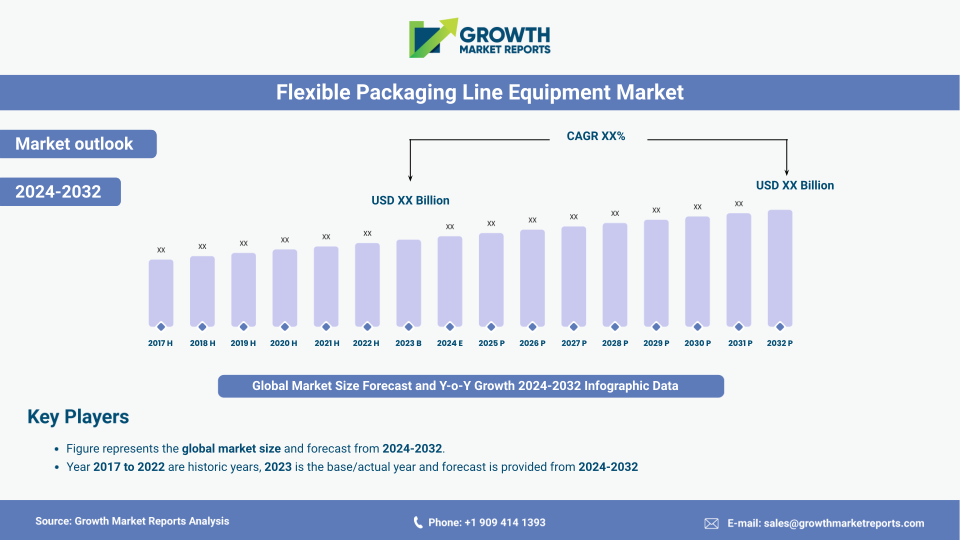
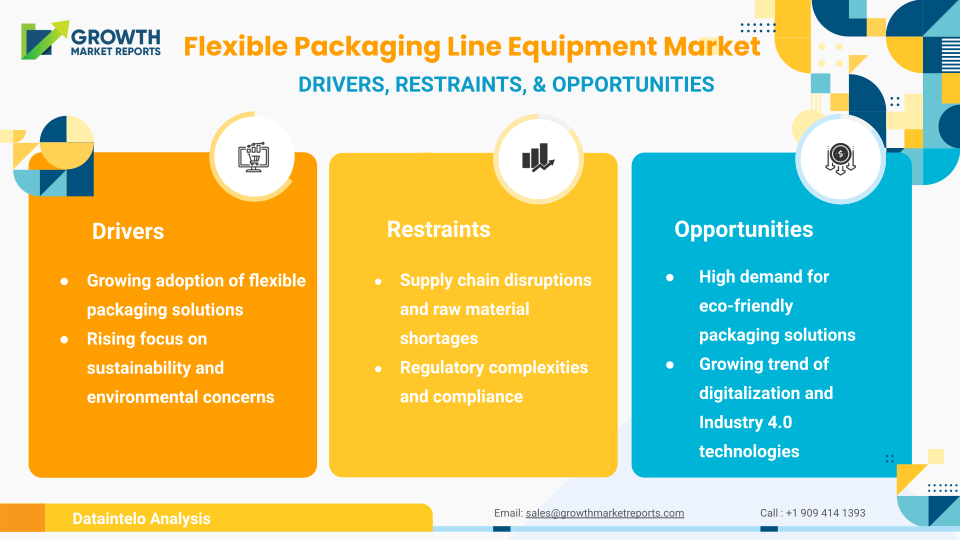
According to our latest research, the global flexible packaging line equipment market size reached USD 7.32 billion in 2024. The industry is advancing at a robust CAGR of 6.1% and is forecasted to achieve a value of USD 12.44 billion by 2033. This impressive growth trajectory is primarily driven by rising demand for cost-effective, sustainable, and efficient packaging solutions across multiple sectors, particularly in food and beverage, pharmaceuticals, and personal care industries. The market’s expansion is further fueled by technological advancements in automation and the increasing adoption of flexible packaging formats, which offer enhanced convenience and extended product shelf life.

One of the central growth drivers for the flexible packaging line equipment market is the escalating shift among manufacturers and brand owners towards flexible packaging formats. This trend is especially pronounced in the food and beverage sector, where flexible packaging enables longer shelf life, improved product safety, and reduced transportation costs due to its lightweight nature. The rapid urbanization and evolving consumer preferences for ready-to-eat and on-the-go products are pushing companies to invest in advanced packaging line equipment that can handle high volumes efficiently while accommodating a variety of packaging designs and materials. Furthermore, stringent regulations regarding food safety and quality have compelled manufacturers to upgrade their packaging lines with state-of-the-art equipment that ensures compliance and traceability.

Another significant factor contributing to market growth is the integration of automation and digital technologies in packaging line equipment. The advent of Industry 4.0 has revolutionized the packaging sector by introducing smart machines capable of real-time monitoring, predictive maintenance, and seamless integration with enterprise resource planning (ERP) systems. Automated flexible packaging lines not only enhance operational efficiency but also minimize human error, reduce labor costs, and improve overall equipment effectiveness (OEE). The growing emphasis on sustainability is also influencing equipment design, with manufacturers developing machines that support recyclable and biodegradable materials, thereby aligning with global environmental goals and consumer expectations.

Additionally, the increasing demand for personalized and small-batch packaging, driven by the rise of e-commerce and direct-to-consumer sales channels, is propelling the adoption of flexible packaging line equipment. Companies are seeking flexible, modular, and scalable solutions that can quickly adapt to changing product sizes, formats, and market demands. This need for agility is particularly evident in the personal care, cosmetics, and household products industries, where frequent product launches and short product life cycles require versatile packaging equipment. The ability to swiftly switch between different packaging materials and formats without significant downtime is becoming a critical competitive advantage for manufacturers in this dynamic market landscape.

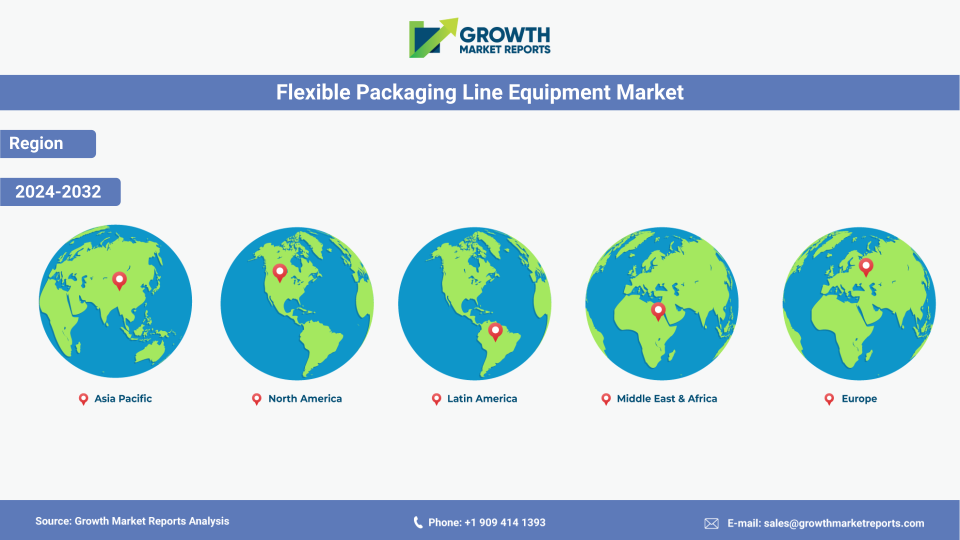
Regionally, the Asia Pacific region holds a dominant position in the global flexible packaging line equipment market, accounting for the largest share in 2024. This leadership is attributed to rapid industrialization, expanding middle-class population, and the proliferation of manufacturing facilities in countries such as China, India, and Southeast Asian nations. North America and Europe follow closely, driven by technological innovation, high consumer awareness, and strict regulatory standards. Latin America and the Middle East & Africa are also witnessing steady growth, supported by increasing investments in infrastructure, growing food processing industries, and rising adoption of modern packaging technologies. The regional dynamics are shaped by a combination of economic development, regulatory frameworks, and evolving consumer behaviors, which collectively influence the demand for advanced flexible packaging line equipment.

Global Flexible Packaging Line Equipment  Industry Outlook

Equipment Type Analysis

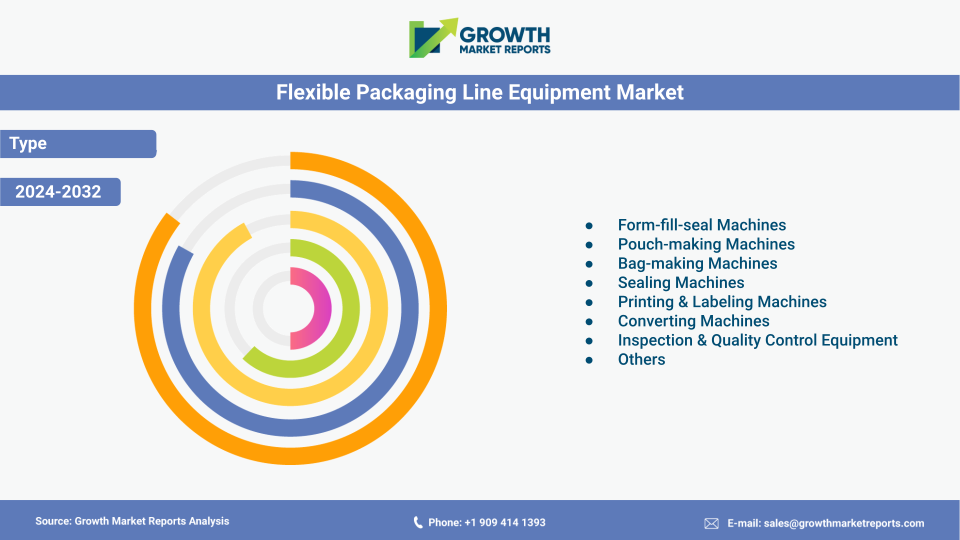
The flexible packaging line equipment market is segmented by equipment type, including form-fill-seal machines, wrapping machines, case packing machines, palletizing machines, labeling machines, and others. Form-fill-seal (FFS) machines represent a significant share of the market due to their versatility in handling various packaging formats and their ability to perform multiple functions within a single integrated system. FFS machines are widely adopted in the food & beverage and pharmaceutical industries, where high-speed production, hygiene, and product integrity are paramount. The demand for these machines is further bolstered by the increasing trend towards single-serve and portion-controlled packaging, which requires precise and efficient filling and sealing operations.

Wrapping machines are another vital segment, catering to industries that require protective and attractive packaging for products such as confectionery, bakery items, and personal care goods. These machines are essential for ensuring product safety, extending shelf life, and enhancing visual appeal on retail shelves. Technological advancements have led to the development of high-speed, energy-efficient wrapping machines that can handle a wide range of packaging films, including eco-friendly and biodegradable materials. The growing consumer preference for sustainable packaging is prompting manufacturers to invest in wrapping machines that support the use of recyclable materials without compromising on performance or product protection.

Case packing machines and palletizing machines are critical for the downstream segment of the packaging line, ensuring efficient secondary and tertiary packaging. These machines are increasingly being integrated with robotic systems and advanced control software to automate the packing and palletizing processes, thereby reducing manual labor and minimizing errors. The adoption of automated case packing and palletizing solutions is particularly high in large-scale manufacturing facilities, where throughput, accuracy, and reliability are key performance indicators. The trend towards warehouse automation and the need for seamless logistics operations are expected to drive sustained demand for these equipment types in the coming years.

Labeling machines play a pivotal role in ensuring product traceability, regulatory compliance, and brand differentiation. The increasing complexity of labeling requirements, including the need for variable data printing, barcoding, and tamper-evident features, is driving the adoption of advanced labeling machines equipped with digital printing and inspection technologies. These machines are indispensable in sectors such as pharmaceuticals and food & beverage, where accurate and legible labeling is critical for consumer safety and regulatory adherence. The integration of labeling machines with vision inspection systems and data management platforms is further enhancing their value proposition, enabling manufacturers to achieve higher levels of quality assurance and operational efficiency.

Report Scope

Attributes Details
Report Title Flexible Packaging Line Equipment Market Research Report 2033
By Equipment Type Form-Fill-Seal Machines, Wrapping Machines, Case Packing Machines, Palletizing Machines, Labeling Machines, Others
By Packaging Material Plastic, Paper, Metal, Others
By End-Use Industry Food & Beverage, Pharmaceuticals, Personal Care & Cosmetics, Household Products, Industrial, Others
By Automation Level Automatic, Semi-Automatic, Manual
Regions Covered North America, Europe, APAC, Latin America, MEA
Base Year 2024
Historic Data 2018-2023
Forecast Period 2025-2033
Number of Pages 285
Number of Tables & Figures 265
Customization Available Yes, the report can be customized as per your need.

Packaging Material Analysis

The flexible packaging line equipment market is segmented by packaging material into plastic, paper, metal, and others. Plastic remains the most widely used material due to its versatility, cost-effectiveness, and excellent barrier properties. The proliferation of flexible plastic packaging in industries such as food & beverage, pharmaceuticals, and personal care has been a key driver for the demand for specialized packaging equipment capable of handling various plastic films, laminates, and pouches. However, the environmental impact of plastic waste has led to increased scrutiny and a gradual shift towards recyclable and biodegradable alternatives. Equipment manufacturers are responding by developing machines that can efficiently process new-generation plastics, including bio-based and compostable materials, without compromising on speed or quality.

Paper-based flexible packaging is gaining traction as a sustainable alternative to plastic, particularly in regions with stringent environmental regulations and high consumer awareness. The adoption of paper packaging is most prominent in the food service, bakery, and snack industries, where brands are seeking to enhance their eco-friendly credentials. Packaging line equipment designed for paper materials must address unique challenges such as material strength, printability, and moisture resistance. Technological innovations in paper coating and lamination are enabling the production of high-performance paper-based packaging, and equipment manufacturers are developing solutions that ensure smooth handling, precise folding, and secure sealing of paper substrates.

Metal packaging, although representing a smaller share of the flexible packaging market, is essential for certain applications that require superior barrier properties and product protection. Aluminum foil-based flexible packaging is widely used in pharmaceuticals, dairy products, and high-value food items. Equipment for metal-based flexible packaging must be robust and capable of handling delicate materials without causing wrinkles or tears. The demand for metal packaging line equipment is expected to remain stable, supported by the need for tamper-proof and hygienic packaging solutions in sensitive product categories.

Other materials, including biodegradable films, compostable polymers, and hybrid laminates, are emerging as viable options in response to the global push for sustainability. The development of equipment that can handle these innovative materials is a key focus area for manufacturers aiming to differentiate themselves in the market. The ability to process a diverse range of packaging materials efficiently and reliably is becoming a critical requirement for flexible packaging line equipment, as brand owners seek to balance performance, cost, and environmental impact in their packaging strategies.

End-Use Industry Analysis

The flexible packaging line equipment market serves a diverse array of end-use industries, with food & beverage representing the largest segment. The demand for flexible packaging in this sector is driven by the need for convenience, extended shelf life, and attractive presentation. Packaging line equipment for food & beverage applications must meet stringent hygiene standards and offer the flexibility to handle a wide range of product types, including liquids, powders, snacks, and ready-to-eat meals. The rise of e-commerce and direct-to-consumer sales channels is further boosting demand for packaging solutions that ensure product integrity during transit and storage.

The pharmaceutical industry is another major end-user, requiring highly specialized packaging equipment to ensure product safety, traceability, and regulatory compliance. Flexible packaging is increasingly preferred for pharmaceutical products due to its tamper-evident features, ease of use, and ability to accommodate various dosage forms. Equipment for pharmaceutical packaging lines must be capable of precise filling, sealing, and labeling operations, often under sterile conditions. The growing trend towards personalized medicine and small-batch production is driving the need for flexible, modular packaging solutions that can be quickly reconfigured for different products and formats.

Personal care and cosmetics manufacturers are leveraging flexible packaging to differentiate their products and enhance consumer convenience. The dynamic nature of this industry, characterized by frequent product launches and rapidly changing consumer preferences, necessitates packaging line equipment that is adaptable and capable of producing a wide variety of packaging formats, including sachets, pouches, and tubes. The emphasis on premiumization and sustainability is prompting equipment suppliers to develop solutions that support high-quality printing, innovative shapes, and eco-friendly materials.

Household products and industrial applications also contribute significantly to the demand for flexible packaging line equipment. In the household sector, flexible packaging is used for products such as detergents, cleaning agents, and air fresheners, where durability and leak-proof performance are critical. Industrial applications include packaging for chemicals, lubricants, and construction materials, which require robust equipment capable of handling heavy-duty materials and ensuring product safety. The ability to customize packaging lines for specific end-use requirements is a key differentiator for equipment manufacturers targeting these diverse market segments.

Automation Level Analysis

Automation is a defining trend in the flexible packaging line equipment market, with equipment classified as automatic, semi-automatic, or manual. Fully automatic packaging lines are becoming increasingly prevalent, particularly in large-scale manufacturing environments where high throughput, consistency, and minimal human intervention are essential. These systems are equipped with advanced sensors, robotics, and control software that enable real-time monitoring, predictive maintenance, and seamless integration with upstream and downstream processes. The adoption of automatic packaging lines is driven by the need to reduce labor costs, enhance operational efficiency, and ensure product quality.

Semi-automatic packaging lines offer a balance between automation and manual intervention, making them suitable for small to medium-sized enterprises (SMEs) and applications with frequent product changeovers. These systems provide flexibility in handling different packaging formats and are often used in industries with diverse product portfolios or variable production volumes. Semi-automatic equipment enables manufacturers to scale their operations gradually and optimize their investment in automation based on specific business needs and market conditions.

Manual packaging lines, while representing a smaller share of the market, remain relevant in niche applications and regions with limited access to capital or skilled labor. Manual systems are typically used for low-volume, high-value products or in environments where customization and craftsmanship are prioritized over speed and efficiency. The demand for manual packaging equipment is expected to decline over time as automation becomes more affordable and accessible, but it will continue to serve specialized market segments where flexibility and human oversight are essential.

The trend towards automation is further reinforced by the integration of digital technologies such as the Internet of Things (IoT), artificial intelligence (AI), and machine learning. These innovations are enabling smarter packaging lines that can self-optimize, predict maintenance needs, and provide actionable insights to operators. Equipment manufacturers are investing in research and development to deliver solutions that not only automate physical processes but also enhance data visibility, traceability, and decision-making across the entire packaging value chain.

Opportunities & Threats

The flexible packaging line equipment market presents numerous opportunities for growth, particularly in emerging economies where industrialization, urbanization, and rising consumer incomes are driving demand for packaged goods. The increasing adoption of flexible packaging in sectors such as food & beverage, pharmaceuticals, and personal care is creating a robust pipeline of opportunities for equipment manufacturers. The shift towards sustainable packaging materials, including recyclable and biodegradable options, is opening new avenues for innovation in equipment design and functionality. Companies that can develop versatile, energy-efficient, and environmentally friendly packaging solutions are well-positioned to capture a larger share of the market and build long-term customer relationships.

Another significant opportunity lies in the integration of automation and digital technologies into packaging line equipment. The rise of Industry 4.0 and the proliferation of smart factories are driving demand for packaging solutions that offer real-time monitoring, predictive analytics, and seamless connectivity with other manufacturing systems. Equipment manufacturers that can provide modular, scalable, and digitally enabled solutions are likely to benefit from the ongoing digital transformation of the packaging industry. Additionally, the growing trend towards personalized and small-batch packaging, fueled by the rise of e-commerce and direct-to-consumer sales, is creating demand for flexible and agile packaging lines capable of rapid changeovers and customization.

Despite these opportunities, the market faces several restraining factors, including the high initial investment required for advanced packaging line equipment. Small and medium-sized enterprises (SMEs) may find it challenging to justify the cost of automation, particularly in regions with limited access to financing or technical expertise. The complexity of integrating new equipment with existing production lines can also pose operational challenges, leading to potential downtime and productivity losses during the transition period. Furthermore, the ongoing volatility in raw material prices, particularly for plastics and metals, can impact the cost structure and profitability of packaging equipment manufacturers.

Regional Outlook

Asia Pacific remains the largest and fastest-growing region in the global flexible packaging line equipment market, accounting for a market size of USD 2.94 billion in 2024. The region is expected to maintain a strong CAGR of 7.2% through 2033, driven by rapid industrialization, expanding manufacturing capacities, and rising consumer demand for packaged goods. Key markets such as China, India, Japan, and Southeast Asian countries are witnessing significant investments in food processing, pharmaceuticals, and personal care industries, all of which rely heavily on advanced packaging solutions. Government initiatives to promote domestic manufacturing and improve food safety standards are further accelerating the adoption of flexible packaging line equipment in the region.

North America holds the second-largest share of the market, with a value of USD 1.85 billion in 2024. The region’s growth is supported by a well-established manufacturing base, high levels of automation, and stringent regulatory requirements for packaging safety and quality. The presence of leading packaging equipment manufacturers and a strong focus on technological innovation are key factors contributing to the region’s market leadership. The United States and Canada are at the forefront of adopting smart packaging solutions, leveraging digital technologies to enhance efficiency, traceability, and sustainability across the packaging value chain.

Europe follows closely, with a market size of USD 1.56 billion in 2024, characterized by a mature and highly regulated packaging industry. The region’s growth is driven by increasing consumer awareness of sustainability, the adoption of eco-friendly packaging materials, and the implementation of circular economy initiatives. Countries such as Germany, France, and the United Kingdom are leading the way in promoting sustainable packaging practices and investing in advanced packaging line equipment. Latin America and the Middle East & Africa collectively account for USD 0.97 billion in 2024, with growth supported by rising investments in food processing, pharmaceuticals, and infrastructure development. These regions present significant untapped potential for market expansion, particularly as local industries modernize and adopt global best practices in packaging.

Flexible Packaging Line Equipment  Market Statistics

Competitor Outlook

The competitive landscape of the flexible packaging line equipment market is characterized by the presence of both global giants and regional players, each striving to enhance their market position through innovation, strategic partnerships, and expansion into new geographies. Leading companies are focusing on developing advanced, automated, and digitally integrated packaging solutions that cater to the evolving needs of end-users across various industries. The emphasis on sustainability and energy efficiency is prompting manufacturers to invest in research and development to create equipment that supports the use of recyclable and biodegradable materials, thereby aligning with global environmental goals and regulatory requirements.

Mergers, acquisitions, and collaborations are common strategies employed by key players to strengthen their product portfolios, expand their customer base, and gain access to new technologies. The increasing demand for customized and modular packaging solutions is driving companies to offer flexible equipment configurations that can be tailored to specific production requirements. In addition, the integration of IoT, AI, and machine learning technologies into packaging line equipment is enabling manufacturers to differentiate themselves by providing value-added features such as real-time monitoring, predictive maintenance, and enhanced data analytics.

The market is also witnessing the entry of new players, particularly in emerging economies, who are leveraging local market knowledge and cost advantages to compete effectively with established brands. These companies are often focused on providing cost-effective and user-friendly solutions for small and medium-sized enterprises, addressing the unique challenges and opportunities present in their respective regions. The competitive intensity is further heightened by the rapid pace of technological change and the need for continuous innovation to meet the evolving demands of end-users.

Some of the major companies operating in the flexible packaging line equipment market include Bosch Packaging Technology (Syntegon), IMA Group, Coesia S.p.A., Ishida Co., Ltd., Barry-Wehmiller Companies, Inc., ProMach, Inc., MULTIVAC Group, and KHS GmbH. Bosch Packaging Technology, now operating as Syntegon, is renowned for its comprehensive range of automated packaging solutions and strong focus on innovation and sustainability. IMA Group is a global leader in the design and manufacture of packaging machines for the pharmaceutical, food, and cosmetics industries, with a strong emphasis on modularity and digital integration. Coesia S.p.A. specializes in advanced packaging and automation solutions, catering to a wide range of industries and offering cutting-edge technologies such as robotics and IoT-enabled systems.

Ishida Co., Ltd. is a prominent player in the weighing, packaging, and inspection equipment segment, known for its high-precision and high-speed solutions. Barry-Wehmiller Companies, Inc. offers a diverse portfolio of packaging equipment and services, with a focus on customer-centric innovation and operational excellence. ProMach, Inc. is recognized for its comprehensive range of packaging machinery and integrated solutions, serving a broad spectrum of industries worldwide. MULTIVAC Group and KHS GmbH are also key players, with strong capabilities in automated packaging systems, sustainability initiatives, and global service networks. These companies are continuously investing in R&D, expanding their product offerings, and enhancing their service capabilities to maintain their competitive edge in the dynamic and rapidly evolving flexible packaging line equipment market.

Key Players

  • Bosch Packaging Technology
  • IMA Group
  • Barry-Wehmiller Companies
  • Coesia Group
  • ProMach
  • Mondi Group
  • MULTIVAC Group
  • Ishida Co., Ltd.
  • Optima Packaging Group
  • Mespack
  • PAC Machinery
  • Robert Bosch GmbH
  • GEA Group
  • Krones AG
  • Syntegon Technology
  • ULMA Packaging
  • TNA Solutions
  • Viking Masek
  • Duravant
  • Fuji Machinery Co., Ltd.
Flexible Packaging Line Equipment  Market Overview

Segments

The Flexible Packaging Line Equipment market has been segmented on the basis of

Equipment Type

  • Form-Fill-Seal Machines
  • Wrapping Machines
  • Case Packing Machines
  • Palletizing Machines
  • Labeling Machines
  • Others

Packaging Material

  • Plastic
  • Paper
  • Metal
  • Others

End-Use Industry

  • Food & Beverage
  • Pharmaceuticals
  • Personal Care & Cosmetics
  • Household Products
  • Industrial
  • Others

Automation Level

  • Automatic
  • Semi-Automatic
  • Manual

Competitive Landscape

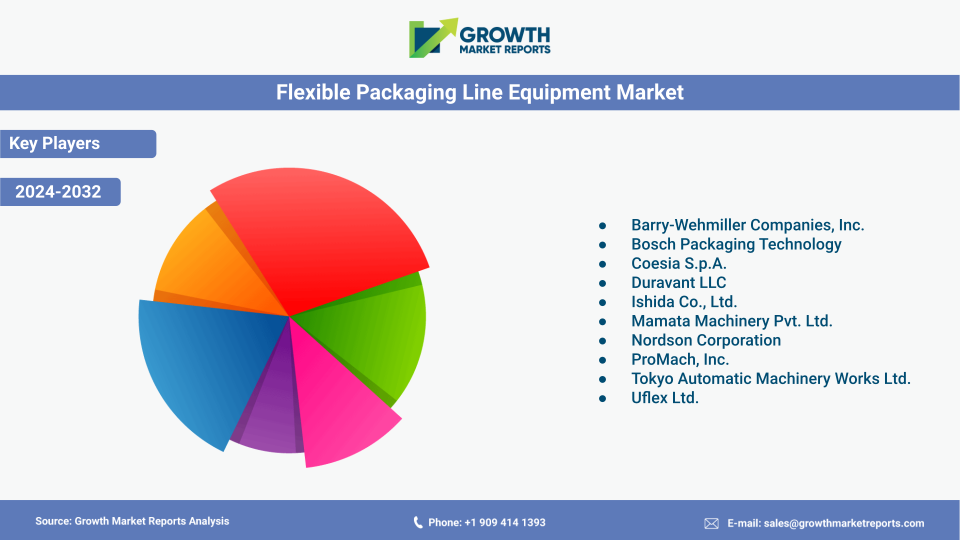
Key players competing in the global flexible packaging line equipment market are Barry-Wehmiller Companies, Inc.; Bosch Packaging Technology; Coesia S.p.A.; Duravant LLC; Ishida Co., Ltd.; Mamata Machinery Pvt. Ltd.; Nordson Corporation; ProMach, Inc.; Tokyo Automatic Machinery Works Ltd.; and Uflex Ltd.

  • In February 2024, Coesia S.p.A announced a collaboration with X-Rite, a global key company in color science and technology, to integrate advanced color control solutions into their printing equipment.

  • On February 1, 2024, Körber's Business Area Pharma completed the acquisition of a majority stake in Rondo-Pak LLC, a US-based printing and packaging company. This strategic acquisition strengthens capabilities of Körber in pharmaceutical and biotech packaging, especially in sustainable solutions, further solidifying its market position in the sector.

     Flexible Packaging Line Equipment Market Key Players

Frequently Asked Questions

Manufacturers are developing machines that support recyclable and biodegradable materials, aligning with global environmental goals and consumer demand for sustainable packaging solutions.

Challenges include high initial investment costs, complexity of integrating new equipment with existing lines, and volatility in raw material prices.

Key players include Bosch Packaging Technology (Syntegon), IMA Group, Coesia S.p.A., Ishida Co., Ltd., Barry-Wehmiller Companies, ProMach, MULTIVAC Group, and KHS GmbH.

Major end-use industries include food & beverage, pharmaceuticals, personal care & cosmetics, household products, and industrial sectors.

Common materials include plastic, paper, metal, and emerging options like biodegradable films and compostable polymers. Plastic remains the most widely used due to its versatility and barrier properties.

Automation is a major trend, with fully automatic packaging lines becoming more prevalent. Automated systems enhance operational efficiency, reduce labor costs, and improve product quality through real-time monitoring and predictive maintenance.

The market includes form-fill-seal machines, wrapping machines, case packing machines, palletizing machines, labeling machines, and other specialized equipment.

Asia Pacific holds the largest market share, followed by North America and Europe. Latin America and the Middle East & Africa are also experiencing steady growth due to increased investments and modernization.

Key growth drivers include rising demand for cost-effective and sustainable packaging, technological advancements in automation, increasing adoption of flexible packaging formats, and expanding end-use industries such as food & beverage, pharmaceuticals, and personal care.

As of 2024, the global flexible packaging line equipment market is valued at USD 7.32 billion and is projected to reach USD 12.44 billion by 2033.

Table Of Content

Chapter 1 Executive Summary
Chapter 2 Assumptions and Acronyms Used
Chapter 3 Research Methodology
Chapter 4 Flexible Packaging Line Equipment  Market Overview
   4.1 Introduction
      4.1.1 Market Taxonomy
      4.1.2 Market Definition
      4.1.3 Macro-Economic Factors Impacting the Market Growth
   4.2 Flexible Packaging Line Equipment  Market Dynamics
      4.2.1 Market Drivers
      4.2.2 Market Restraints
      4.2.3 Market Opportunity
   4.3 Flexible Packaging Line Equipment  Market - Supply Chain Analysis
      4.3.1 List of Key Suppliers
      4.3.2 List of Key Distributors
      4.3.3 List of Key Consumers
   4.4 Key Forces Shaping the Flexible Packaging Line Equipment  Market
      4.4.1 Bargaining Power of Suppliers
      4.4.2 Bargaining Power of Buyers
      4.4.3 Threat of Substitution
      4.4.4 Threat of New Entrants
      4.4.5 Competitive Rivalry
   4.5 Global Flexible Packaging Line Equipment  Market Size & Forecast, 2023-2032
      4.5.1 Flexible Packaging Line Equipment  Market Size and Y-o-Y Growth
      4.5.2 Flexible Packaging Line Equipment  Market Absolute $ Opportunity

Chapter 5 Global Flexible Packaging Line Equipment  Market Analysis and Forecast By Equipment Type
   5.1 Introduction
      5.1.1 Key Market Trends & Growth Opportunities By Equipment Type
      5.1.2 Basis Point Share (BPS) Analysis By Equipment Type
      5.1.3 Absolute $ Opportunity Assessment By Equipment Type
   5.2 Flexible Packaging Line Equipment  Market Size Forecast By Equipment Type
      5.2.1 Form-Fill-Seal Machines
      5.2.2 Wrapping Machines
      5.2.3 Case Packing Machines
      5.2.4 Palletizing Machines
      5.2.5 Labeling Machines
      5.2.6 Others
   5.3 Market Attractiveness Analysis By Equipment Type

Chapter 6 Global Flexible Packaging Line Equipment  Market Analysis and Forecast By Packaging Material
   6.1 Introduction
      6.1.1 Key Market Trends & Growth Opportunities By Packaging Material
      6.1.2 Basis Point Share (BPS) Analysis By Packaging Material
      6.1.3 Absolute $ Opportunity Assessment By Packaging Material
   6.2 Flexible Packaging Line Equipment  Market Size Forecast By Packaging Material
      6.2.1 Plastic
      6.2.2 Paper
      6.2.3 Metal
      6.2.4 Others
   6.3 Market Attractiveness Analysis By Packaging Material

Chapter 7 Global Flexible Packaging Line Equipment  Market Analysis and Forecast By End-Use Industry
   7.1 Introduction
      7.1.1 Key Market Trends & Growth Opportunities By End-Use Industry
      7.1.2 Basis Point Share (BPS) Analysis By End-Use Industry
      7.1.3 Absolute $ Opportunity Assessment By End-Use Industry
   7.2 Flexible Packaging Line Equipment  Market Size Forecast By End-Use Industry
      7.2.1 Food & Beverage
      7.2.2 Pharmaceuticals
      7.2.3 Personal Care & Cosmetics
      7.2.4 Household Products
      7.2.5 Industrial
      7.2.6 Others
   7.3 Market Attractiveness Analysis By End-Use Industry

Chapter 8 Global Flexible Packaging Line Equipment  Market Analysis and Forecast By Automation Level
   8.1 Introduction
      8.1.1 Key Market Trends & Growth Opportunities By Automation Level
      8.1.2 Basis Point Share (BPS) Analysis By Automation Level
      8.1.3 Absolute $ Opportunity Assessment By Automation Level
   8.2 Flexible Packaging Line Equipment  Market Size Forecast By Automation Level
      8.2.1 Automatic
      8.2.2 Semi-Automatic
      8.2.3 Manual
   8.3 Market Attractiveness Analysis By Automation Level

Chapter 9 Global Flexible Packaging Line Equipment  Market Analysis and Forecast by Region
   9.1 Introduction
      9.1.1 Key Market Trends & Growth Opportunities By Region
      9.1.2 Basis Point Share (BPS) Analysis By Region
      9.1.3 Absolute $ Opportunity Assessment By Region
   9.2 Flexible Packaging Line Equipment  Market Size Forecast By Region
      9.2.1 North America
      9.2.2 Europe
      9.2.3 Asia Pacific
      9.2.4 Latin America
      9.2.5 Middle East & Africa (MEA)
   9.3 Market Attractiveness Analysis By Region

Chapter 10 Coronavirus Disease (COVID-19) Impact 
   10.1 Introduction 
   10.2 Current & Future Impact Analysis 
   10.3 Economic Impact Analysis 
   10.4 Government Policies 
   10.5 Investment Scenario

Chapter 11 North America Flexible Packaging Line Equipment  Analysis and Forecast
   11.1 Introduction
   11.2 North America Flexible Packaging Line Equipment  Market Size Forecast by Country
      11.2.1 U.S.
      11.2.2 Canada
   11.3 Basis Point Share (BPS) Analysis by Country
   11.4 Absolute $ Opportunity Assessment by Country
   11.5 Market Attractiveness Analysis by Country
   11.6 North America Flexible Packaging Line Equipment  Market Size Forecast By Equipment Type
      11.6.1 Form-Fill-Seal Machines
      11.6.2 Wrapping Machines
      11.6.3 Case Packing Machines
      11.6.4 Palletizing Machines
      11.6.5 Labeling Machines
      11.6.6 Others
   11.7 Basis Point Share (BPS) Analysis By Equipment Type 
   11.8 Absolute $ Opportunity Assessment By Equipment Type 
   11.9 Market Attractiveness Analysis By Equipment Type
   11.10 North America Flexible Packaging Line Equipment  Market Size Forecast By Packaging Material
      11.10.1 Plastic
      11.10.2 Paper
      11.10.3 Metal
      11.10.4 Others
   11.11 Basis Point Share (BPS) Analysis By Packaging Material 
   11.12 Absolute $ Opportunity Assessment By Packaging Material 
   11.13 Market Attractiveness Analysis By Packaging Material
   11.14 North America Flexible Packaging Line Equipment  Market Size Forecast By End-Use Industry
      11.14.1 Food & Beverage
      11.14.2 Pharmaceuticals
      11.14.3 Personal Care & Cosmetics
      11.14.4 Household Products
      11.14.5 Industrial
      11.14.6 Others
   11.15 Basis Point Share (BPS) Analysis By End-Use Industry 
   11.16 Absolute $ Opportunity Assessment By End-Use Industry 
   11.17 Market Attractiveness Analysis By End-Use Industry
   11.18 North America Flexible Packaging Line Equipment  Market Size Forecast By Automation Level
      11.18.1 Automatic
      11.18.2 Semi-Automatic
      11.18.3 Manual
   11.19 Basis Point Share (BPS) Analysis By Automation Level 
   11.20 Absolute $ Opportunity Assessment By Automation Level 
   11.21 Market Attractiveness Analysis By Automation Level

Chapter 12 Europe Flexible Packaging Line Equipment  Analysis and Forecast
   12.1 Introduction
   12.2 Europe Flexible Packaging Line Equipment  Market Size Forecast by Country
      12.2.1 Germany
      12.2.2 France
      12.2.3 Italy
      12.2.4 U.K.
      12.2.5 Spain
      12.2.6 Russia
      12.2.7 Rest of Europe
   12.3 Basis Point Share (BPS) Analysis by Country
   12.4 Absolute $ Opportunity Assessment by Country
   12.5 Market Attractiveness Analysis by Country
   12.6 Europe Flexible Packaging Line Equipment  Market Size Forecast By Equipment Type
      12.6.1 Form-Fill-Seal Machines
      12.6.2 Wrapping Machines
      12.6.3 Case Packing Machines
      12.6.4 Palletizing Machines
      12.6.5 Labeling Machines
      12.6.6 Others
   12.7 Basis Point Share (BPS) Analysis By Equipment Type 
   12.8 Absolute $ Opportunity Assessment By Equipment Type 
   12.9 Market Attractiveness Analysis By Equipment Type
   12.10 Europe Flexible Packaging Line Equipment  Market Size Forecast By Packaging Material
      12.10.1 Plastic
      12.10.2 Paper
      12.10.3 Metal
      12.10.4 Others
   12.11 Basis Point Share (BPS) Analysis By Packaging Material 
   12.12 Absolute $ Opportunity Assessment By Packaging Material 
   12.13 Market Attractiveness Analysis By Packaging Material
   12.14 Europe Flexible Packaging Line Equipment  Market Size Forecast By End-Use Industry
      12.14.1 Food & Beverage
      12.14.2 Pharmaceuticals
      12.14.3 Personal Care & Cosmetics
      12.14.4 Household Products
      12.14.5 Industrial
      12.14.6 Others
   12.15 Basis Point Share (BPS) Analysis By End-Use Industry 
   12.16 Absolute $ Opportunity Assessment By End-Use Industry 
   12.17 Market Attractiveness Analysis By End-Use Industry
   12.18 Europe Flexible Packaging Line Equipment  Market Size Forecast By Automation Level
      12.18.1 Automatic
      12.18.2 Semi-Automatic
      12.18.3 Manual
   12.19 Basis Point Share (BPS) Analysis By Automation Level 
   12.20 Absolute $ Opportunity Assessment By Automation Level 
   12.21 Market Attractiveness Analysis By Automation Level

Chapter 13 Asia Pacific Flexible Packaging Line Equipment  Analysis and Forecast
   13.1 Introduction
   13.2 Asia Pacific Flexible Packaging Line Equipment  Market Size Forecast by Country
      13.2.1 China
      13.2.2 Japan
      13.2.3 South Korea
      13.2.4 India
      13.2.5 Australia
      13.2.6 South East Asia (SEA)
      13.2.7 Rest of Asia Pacific (APAC)
   13.3 Basis Point Share (BPS) Analysis by Country
   13.4 Absolute $ Opportunity Assessment by Country
   13.5 Market Attractiveness Analysis by Country
   13.6 Asia Pacific Flexible Packaging Line Equipment  Market Size Forecast By Equipment Type
      13.6.1 Form-Fill-Seal Machines
      13.6.2 Wrapping Machines
      13.6.3 Case Packing Machines
      13.6.4 Palletizing Machines
      13.6.5 Labeling Machines
      13.6.6 Others
   13.7 Basis Point Share (BPS) Analysis By Equipment Type 
   13.8 Absolute $ Opportunity Assessment By Equipment Type 
   13.9 Market Attractiveness Analysis By Equipment Type
   13.10 Asia Pacific Flexible Packaging Line Equipment  Market Size Forecast By Packaging Material
      13.10.1 Plastic
      13.10.2 Paper
      13.10.3 Metal
      13.10.4 Others
   13.11 Basis Point Share (BPS) Analysis By Packaging Material 
   13.12 Absolute $ Opportunity Assessment By Packaging Material 
   13.13 Market Attractiveness Analysis By Packaging Material
   13.14 Asia Pacific Flexible Packaging Line Equipment  Market Size Forecast By End-Use Industry
      13.14.1 Food & Beverage
      13.14.2 Pharmaceuticals
      13.14.3 Personal Care & Cosmetics
      13.14.4 Household Products
      13.14.5 Industrial
      13.14.6 Others
   13.15 Basis Point Share (BPS) Analysis By End-Use Industry 
   13.16 Absolute $ Opportunity Assessment By End-Use Industry 
   13.17 Market Attractiveness Analysis By End-Use Industry
   13.18 Asia Pacific Flexible Packaging Line Equipment  Market Size Forecast By Automation Level
      13.18.1 Automatic
      13.18.2 Semi-Automatic
      13.18.3 Manual
   13.19 Basis Point Share (BPS) Analysis By Automation Level 
   13.20 Absolute $ Opportunity Assessment By Automation Level 
   13.21 Market Attractiveness Analysis By Automation Level

Chapter 14 Latin America Flexible Packaging Line Equipment  Analysis and Forecast
   14.1 Introduction
   14.2 Latin America Flexible Packaging Line Equipment  Market Size Forecast by Country
      14.2.1 Brazil
      14.2.2 Mexico
      14.2.3 Rest of Latin America (LATAM)
   14.3 Basis Point Share (BPS) Analysis by Country
   14.4 Absolute $ Opportunity Assessment by Country
   14.5 Market Attractiveness Analysis by Country
   14.6 Latin America Flexible Packaging Line Equipment  Market Size Forecast By Equipment Type
      14.6.1 Form-Fill-Seal Machines
      14.6.2 Wrapping Machines
      14.6.3 Case Packing Machines
      14.6.4 Palletizing Machines
      14.6.5 Labeling Machines
      14.6.6 Others
   14.7 Basis Point Share (BPS) Analysis By Equipment Type 
   14.8 Absolute $ Opportunity Assessment By Equipment Type 
   14.9 Market Attractiveness Analysis By Equipment Type
   14.10 Latin America Flexible Packaging Line Equipment  Market Size Forecast By Packaging Material
      14.10.1 Plastic
      14.10.2 Paper
      14.10.3 Metal
      14.10.4 Others
   14.11 Basis Point Share (BPS) Analysis By Packaging Material 
   14.12 Absolute $ Opportunity Assessment By Packaging Material 
   14.13 Market Attractiveness Analysis By Packaging Material
   14.14 Latin America Flexible Packaging Line Equipment  Market Size Forecast By End-Use Industry
      14.14.1 Food & Beverage
      14.14.2 Pharmaceuticals
      14.14.3 Personal Care & Cosmetics
      14.14.4 Household Products
      14.14.5 Industrial
      14.14.6 Others
   14.15 Basis Point Share (BPS) Analysis By End-Use Industry 
   14.16 Absolute $ Opportunity Assessment By End-Use Industry 
   14.17 Market Attractiveness Analysis By End-Use Industry
   14.18 Latin America Flexible Packaging Line Equipment  Market Size Forecast By Automation Level
      14.18.1 Automatic
      14.18.2 Semi-Automatic
      14.18.3 Manual
   14.19 Basis Point Share (BPS) Analysis By Automation Level 
   14.20 Absolute $ Opportunity Assessment By Automation Level 
   14.21 Market Attractiveness Analysis By Automation Level

Chapter 15 Middle East & Africa (MEA) Flexible Packaging Line Equipment  Analysis and Forecast
   15.1 Introduction
   15.2 Middle East & Africa (MEA) Flexible Packaging Line Equipment  Market Size Forecast by Country
      15.2.1 Saudi Arabia
      15.2.2 South Africa
      15.2.3 UAE
      15.2.4 Rest of Middle East & Africa (MEA)
   15.3 Basis Point Share (BPS) Analysis by Country
   15.4 Absolute $ Opportunity Assessment by Country
   15.5 Market Attractiveness Analysis by Country
   15.6 Middle East & Africa (MEA) Flexible Packaging Line Equipment  Market Size Forecast By Equipment Type
      15.6.1 Form-Fill-Seal Machines
      15.6.2 Wrapping Machines
      15.6.3 Case Packing Machines
      15.6.4 Palletizing Machines
      15.6.5 Labeling Machines
      15.6.6 Others
   15.7 Basis Point Share (BPS) Analysis By Equipment Type 
   15.8 Absolute $ Opportunity Assessment By Equipment Type 
   15.9 Market Attractiveness Analysis By Equipment Type
   15.10 Middle East & Africa (MEA) Flexible Packaging Line Equipment  Market Size Forecast By Packaging Material
      15.10.1 Plastic
      15.10.2 Paper
      15.10.3 Metal
      15.10.4 Others
   15.11 Basis Point Share (BPS) Analysis By Packaging Material 
   15.12 Absolute $ Opportunity Assessment By Packaging Material 
   15.13 Market Attractiveness Analysis By Packaging Material
   15.14 Middle East & Africa (MEA) Flexible Packaging Line Equipment  Market Size Forecast By End-Use Industry
      15.14.1 Food & Beverage
      15.14.2 Pharmaceuticals
      15.14.3 Personal Care & Cosmetics
      15.14.4 Household Products
      15.14.5 Industrial
      15.14.6 Others
   15.15 Basis Point Share (BPS) Analysis By End-Use Industry 
   15.16 Absolute $ Opportunity Assessment By End-Use Industry 
   15.17 Market Attractiveness Analysis By End-Use Industry
   15.18 Middle East & Africa (MEA) Flexible Packaging Line Equipment  Market Size Forecast By Automation Level
      15.18.1 Automatic
      15.18.2 Semi-Automatic
      15.18.3 Manual
   15.19 Basis Point Share (BPS) Analysis By Automation Level 
   15.20 Absolute $ Opportunity Assessment By Automation Level 
   15.21 Market Attractiveness Analysis By Automation Level

Chapter 16 Competition Landscape 
   16.1 Flexible Packaging Line Equipment  Market: Competitive Dashboard
   16.2 Global Flexible Packaging Line Equipment  Market: Market Share Analysis, 2023
   16.3 Company Profiles (Details – Overview, Financials, Developments, Strategy) 
      16.3.1 Bosch Packaging Technology
IMA Group
Barry-Wehmiller Companies
Coesia Group
ProMach
Mondi Group
MULTIVAC Group
Ishida Co., Ltd.
Optima Packaging Group
Mespack
PAC Machinery
Robert Bosch GmbH
GEA Group
Krones AG
Syntegon Technology
ULMA Packaging
TNA Solutions
Viking Masek
Duravant
Fuji Machinery Co., Ltd.

Methodology

Our Clients

Siemens Healthcare
Pfizer
Honda Motor Co. Ltd.
The John Holland Group
Nestle SA
Deloitte
Microsoft
General Mills