Fishing Nets and Aquaculture Cage Market Research Report 2033

Fishing Nets and Aquaculture Cage Market Research Report 2033

Segments - by Product Type (Fishing Nets, Aquaculture Cages), by Material (Nylon, Polyethylene, Polypropylene, HDPE, Others), by Application (Commercial Fishing, Aquaculture, Others), by End-User (Fisheries, Aquaculture Farms, Others), by Distribution Channel (Direct Sales, Distributors/Wholesalers, Online Retail)

https://growthmarketreports.com/Anuradha
Author : Anuradha B. More
https://growthmarketreports.com/Vaibhav
Fact-checked by : Vaibhav Chandola
https://growthmarketreports.com/Shruti
Editor : Shruti Bhat

Upcoming | Report ID :FB-4894 | 4.8 Rating | 97 Reviews | 293 Pages | Format : Docx PDF

Report Description


Fishing Nets and Aquaculture Cage Market Outlook

According to our latest research, the global Fishing Nets and Aquaculture Cage market size reached USD 2.78 billion in 2024, with a compound annual growth rate (CAGR) of 5.4% expected from 2025 to 2033. The market is projected to climb to USD 4.45 billion by 2033, driven by the rising demand for sustainable seafood and the expansion of commercial aquaculture operations. As per our analysis, robust investments in aquaculture infrastructure and technological advancements in netting materials are among the key factors propelling this marketÂ’s growth in the coming years.

One of the primary growth drivers for the Fishing Nets and Aquaculture Cage market is the increasing global appetite for seafood, which is pushing both traditional fisheries and aquaculture farms to expand their production capacities. The worldÂ’s population is not only growing but also shifting dietary preferences towards protein-rich foods, particularly fish, which is perceived as a healthy and sustainable choice. This trend is further amplified by governmental initiatives and international organizations advocating for responsible fishing practices and sustainable aquaculture, encouraging the adoption of advanced fishing nets and robust aquaculture cages. Moreover, the depletion of natural fish stocks in many regions has intensified the focus on aquaculture, leading to a surge in demand for high-quality, durable netting products that can withstand harsh marine environments and minimize fish escape.

Technological innovation is another significant catalyst for the marketÂ’s expansion. The industry is witnessing a shift from traditional natural fibers to synthetic materials such as nylon, polyethylene, polypropylene, and HDPE, which offer superior strength, longevity, and resistance to biofouling. Manufacturers are investing in research and development to create nets and cages that reduce maintenance costs, improve fish health, and enhance operational efficiency. For example, the integration of antifouling coatings and smart monitoring systems is helping operators detect damages and optimize feeding, thereby reducing losses and boosting productivity. These advancements are particularly vital in regions with challenging climatic conditions, where the durability and functionality of nets and cages are paramount to economic viability.

Another important growth factor is the tightening of regulatory frameworks and certification requirements around the globe. Governments and industry bodies are imposing stricter standards on fishing and aquaculture operations to ensure environmental sustainability and food safety. This has led to a growing preference for certified, traceable, and environmentally friendly netting products. The increased scrutiny from consumers and retailers regarding the origin and sustainability of seafood is compelling market participants to adopt best practices and invest in modern equipment. As a result, the market for advanced fishing nets and aquaculture cages is witnessing a steady uptick, especially in regions where compliance with international standards is a prerequisite for export.

In the realm of aquaculture, the concept of a Net Pen has emerged as a pivotal innovation, particularly in the context of offshore fish farming. Net Pens are essentially floating enclosures that provide a controlled environment for the cultivation of fish, allowing for optimal growth conditions while minimizing the impact on surrounding ecosystems. These structures are designed to withstand the dynamic conditions of open waters, offering a sustainable solution to meet the increasing demand for seafood. The use of Net Pens is gaining traction as they facilitate efficient resource use, reduce land-based farming pressures, and contribute to the diversification of aquaculture practices. As the industry evolves, the integration of advanced materials and monitoring technologies within Net Pens is enhancing their effectiveness, making them an integral component of modern aquaculture strategies.

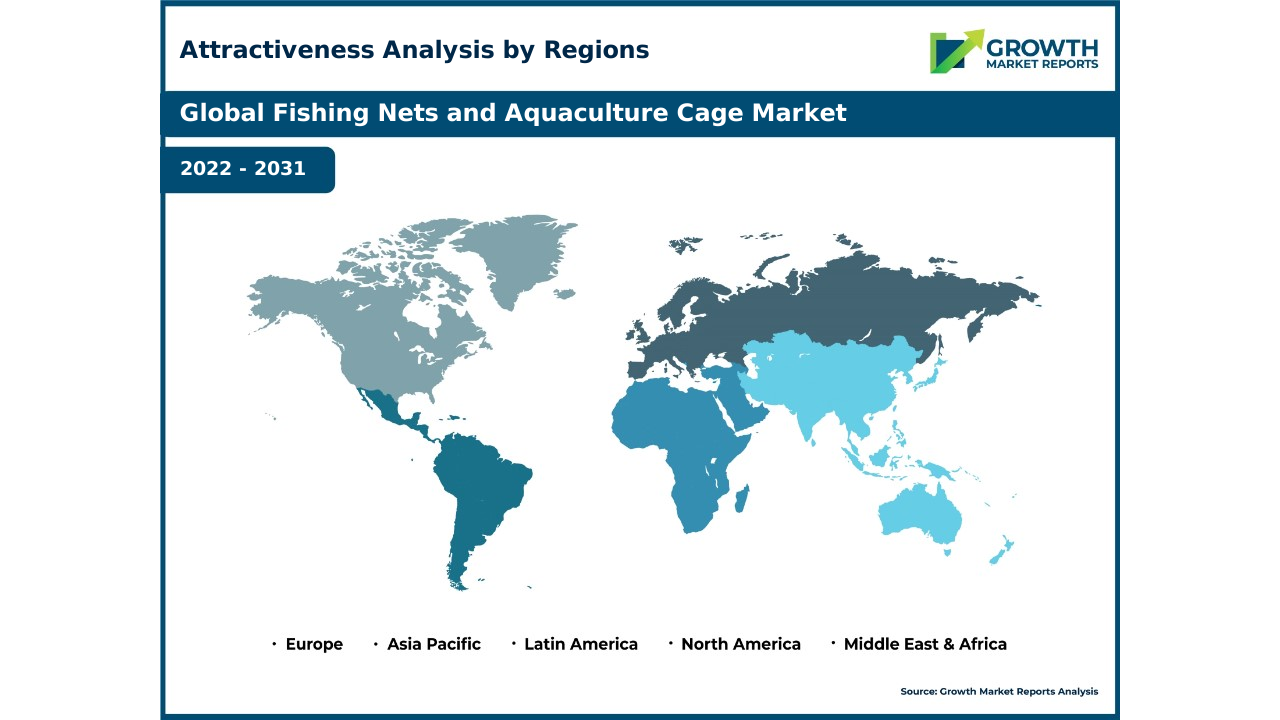
Regionally, the Asia Pacific dominates the Fishing Nets and Aquaculture Cage market, accounting for the largest share in both volume and value. This is primarily due to the regionÂ’s extensive coastline, favorable climatic conditions, and the presence of some of the worldÂ’s leading aquaculture producers such as China, India, and Vietnam. North America and Europe follow, driven by technological adoption and stringent regulatory standards. Meanwhile, Latin America and the Middle East & Africa are emerging as high-potential markets, supported by government investments in fisheries and the growing adoption of aquaculture as a means of food security and economic development.

Global Fishing Nets and Aquaculture Cage Industry Outlook

Product Type Analysis

The Fishing Nets and Aquaculture Cage market is segmented by product type into Fishing Nets and Aquaculture Cages, each catering to distinct applications within the fisheries and aquaculture industries. Fishing nets remain the backbone of traditional and commercial fishing operations, with a wide variety of net types such as gill nets, trawl nets, and seine nets being employed based on target species and fishing environments. These nets are continuously evolving, with manufacturers focusing on enhancing their durability, selectivity, and ease of handling. The integration of lightweight synthetic fibers has allowed for larger and more efficient nets, enabling fishermen to increase their catch while minimizing bycatch and environmental impact. The demand for specialized nets that comply with local and international regulations is also on the rise, as fisheries seek to maintain their sustainability certifications and market access.

Aquaculture cages, on the other hand, are gaining traction as the global aquaculture industry expands to meet the surging demand for farmed fish and seafood. These cages are engineered to provide optimal living conditions for various fish species, ensuring high survival rates and healthy growth. The latest designs incorporate features such as predator resistance, enhanced water flow, and modularity, allowing for scalable operations in both coastal and offshore environments. The use of high-density polyethylene (HDPE) and other advanced polymers has significantly improved the lifespan and safety of aquaculture cages, making them suitable for deployment in open seas where environmental stresses are high. This segment is expected to witness robust growth, particularly in regions where aquaculture is being promoted as a strategic sector for food security.

The interplay between fishing nets and aquaculture cages is also noteworthy, as many operators are diversifying their activities to include both capture fisheries and aquaculture. This trend is driving the demand for integrated solutions that offer flexibility, ease of maintenance, and compliance with environmental standards. Manufacturers are responding by offering customizable products and turnkey solutions that cater to the specific needs of each client. The growing emphasis on traceability and biosecurity is further spurring innovation in both product types, with smart nets and cages equipped with sensors and monitoring systems becoming increasingly common.

From a market perspective, the fishing nets segment currently holds a larger share due to its widespread use across both inland and marine fisheries. However, the aquaculture cage segment is projected to grow at a faster pace, reflecting the global shift towards farmed seafood production. The increasing adoption of offshore aquaculture, driven by advancements in cage technology and the need to reduce pressure on nearshore ecosystems, is expected to be a key growth driver in the coming years. As a result, companies that can offer high-performance, cost-effective, and sustainable solutions for both fishing and aquaculture are well-positioned to capitalize on emerging opportunities in this dynamic market.

Report Scope

Attributes Details
Report Title Fishing Nets and Aquaculture Cage Market Market Research Report 2033
By Product Type Fishing Nets, Aquaculture Cages
By Material Nylon, Polyethylene, Polypropylene, HDPE, Others
By Application Commercial Fishing, Aquaculture, Others
By End-User Fisheries, Aquaculture Farms, Others
By Distribution Channel Direct Sales, Distributors/Wholesalers, Online Retail
Regions Covered North America, Europe, APAC, Latin America, MEA
Base Year 2024
Historic Data 2018-2023
Forecast Period 2025-2033
Number of Pages 293
Number of Tables & Figures 392
Customization Available Yes, the report can be customized as per your need.

Material Analysis

Material selection plays a critical role in the performance, durability, and sustainability of fishing nets and aquaculture cages. The market is segmented by material into Nylon, Polyethylene, Polypropylene, HDPE, and Others, with each offering distinct advantages and trade-offs. Nylon remains a popular choice for fishing nets due to its high tensile strength, flexibility, and resistance to abrasion. It is particularly favored in applications where lightweight and ease of handling are important, such as in gill nets and seine nets. However, nylon is susceptible to degradation from ultraviolet (UV) exposure and marine organisms, prompting manufacturers to develop UV-stabilized variants and protective coatings to extend product life.

Polyethylene and polypropylene are increasingly being adopted for both fishing nets and aquaculture cages, thanks to their excellent chemical resistance, low water absorption, and affordability. Polyethylene, especially in its high-density form (HDPE), is widely used in aquaculture cages due to its robustness, buoyancy, and resistance to biofouling. HDPE cages can withstand harsh marine conditions, including strong currents and waves, making them ideal for offshore aquaculture operations. Polypropylene, while less common than polyethylene, offers similar benefits and is valued for its light weight and ease of fabrication. Both materials are recyclable, aligning with the growing emphasis on environmental sustainability in the fisheries sector.

The "Others" category includes materials such as polyester, polyvinyl chloride (PVC), and various blends that are used for specialized applications. Polyester nets, for example, offer superior dimensional stability and minimal elongation, making them suitable for deep-sea fishing and high-tension environments. PVC-coated nets are used in situations where resistance to fouling and easy cleaning are priorities, such as in shellfish farming. Innovations in material science are leading to the development of hybrid nets that combine the best attributes of multiple polymers, as well as biodegradable options that help reduce the environmental footprint of lost or discarded gear.

The choice of material is often dictated by operational requirements, regulatory standards, and cost considerations. Fisheries and aquaculture operators are increasingly seeking materials that offer a balance of strength, longevity, and environmental performance. Suppliers are responding by offering a wide range of options, including custom formulations and coatings that address specific challenges such as predator attacks, biofouling, and UV degradation. The ongoing transition towards more sustainable and recyclable materials is expected to accelerate, driven by regulatory pressures and consumer demand for eco-friendly seafood products.

Application Analysis

The Fishing Nets and Aquaculture Cage market is segmented by application into Commercial Fishing, Aquaculture, and Others, reflecting the diverse end uses of these products. Commercial fishing remains a dominant application, accounting for a significant share of the market. This segment encompasses both small-scale artisanal fisheries and large industrial operations targeting a wide variety of species in marine and freshwater environments. The demand for high-performance nets that maximize catch efficiency while minimizing bycatch and environmental impact is driving innovation in this segment. Regulatory requirements regarding mesh size, selectivity, and traceability are also shaping product development and procurement decisions.

Aquaculture is the fastest-growing application segment, fueled by the global shift towards farmed seafood as a means of ensuring food security and meeting rising consumer demand. Aquaculture cages are essential for the containment, protection, and growth of farmed fish and shellfish, with designs tailored to species-specific needs and local environmental conditions. The adoption of advanced cage systems, including offshore and submersible designs, is enabling operators to expand production while minimizing environmental impacts and disease risks. The integration of smart technologies for monitoring water quality, fish health, and structural integrity is further enhancing the efficiency and sustainability of aquaculture operations.

The "Others" application category includes uses such as recreational fishing, research, environmental monitoring, and habitat restoration. While these segments are smaller in scale compared to commercial fishing and aquaculture, they represent important niches with specialized requirements. For example, research institutions and conservation organizations use customized nets and cages for population assessments, species recovery programs, and habitat enhancement projects. The demand for environmentally friendly and non-invasive gear is particularly high in these applications, reflecting the broader trend towards sustainability and ecosystem preservation.

Overall, the application landscape for fishing nets and aquaculture cages is evolving in response to changing industry dynamics, regulatory frameworks, and consumer preferences. Commercial fishing will continue to be a major driver of demand, but the rapid expansion of aquaculture and the emergence of new applications are expected to reshape the market in the coming years. Companies that can offer versatile, high-performance solutions tailored to the specific needs of each application will be well-positioned to capture growth opportunities and strengthen their competitive position.

End-User Analysis

The end-user segmentation of the Fishing Nets and Aquaculture Cage market includes Fisheries, Aquaculture Farms, and Others, each with distinct operational requirements and purchasing behaviors. Fisheries, encompassing both capture fisheries and fish processing enterprises, represent a significant portion of the market. These end-users prioritize nets that offer high catch efficiency, durability, and compliance with regulatory standards. The shift towards responsible fishing practices and certification schemes such as the Marine Stewardship Council (MSC) is influencing procurement decisions, with a growing emphasis on traceability, selectivity, and environmental performance.

Aquaculture farms are the fastest-growing end-user segment, reflecting the global trend towards farmed seafood production. These operations require a range of netting solutions, from juvenile containment nets to large-scale grow-out cages capable of withstanding harsh marine conditions. The focus is on products that offer biosecurity, predator resistance, and ease of maintenance, as well as compatibility with automated feeding and monitoring systems. The increasing scale and sophistication of aquaculture operations, particularly in Asia Pacific and Latin America, are driving demand for advanced cage systems and customized netting solutions.

The "Others" category includes research institutions, government agencies, non-governmental organizations (NGOs), and recreational users. These end-users typically require specialized products for applications such as stock assessment, habitat restoration, and educational programs. The demand for environmentally friendly and non-invasive gear is particularly high in these segments, reflecting the broader trend towards sustainability and ecosystem preservation. Manufacturers are responding by offering a range of options, including biodegradable nets and custom-designed cages for research and conservation projects.

The end-user landscape is characterized by a high degree of fragmentation, with a mix of large industrial operators, small-scale enterprises, and niche users. This diversity presents both challenges and opportunities for suppliers, who must balance the need for standardized, cost-effective products with the demand for customization and innovation. The growing emphasis on sustainability, traceability, and compliance is expected to shape end-user preferences and drive investment in modern netting and cage solutions.

Distribution Channel Analysis

Distribution channels for Fishing Nets and Aquaculture Cages are segmented into Direct Sales, Distributors/Wholesalers, and Online Retail. Direct sales remain a preferred channel for large-scale fisheries and aquaculture farms, which often require customized solutions and ongoing technical support. Manufacturers work closely with these clients to design, deliver, and maintain products that meet specific operational and regulatory requirements. The direct sales model enables suppliers to build long-term relationships, provide value-added services, and respond quickly to changing customer needs.

Distributors and wholesalers play a crucial role in extending market reach, particularly in regions with a large number of small and medium-sized operators. These intermediaries offer a broad range of products from multiple suppliers, enabling customers to compare options and access the latest innovations. Distributors often provide additional services such as inventory management, financing, and technical support, making them an essential part of the supply chain. The presence of well-established distribution networks is particularly important in emerging markets, where access to advanced products and after-sales support can be limited.

Online retail is an emerging channel, driven by the digital transformation of the fisheries and aquaculture industries. E-commerce platforms offer a convenient and cost-effective way for small-scale operators, hobbyists, and niche users to access a wide range of products. Online channels are particularly popular for standardized products such as replacement nets, accessories, and maintenance supplies. The growth of online retail is also being supported by improvements in logistics, payment systems, and digital marketing, enabling suppliers to reach new customer segments and expand their geographic footprint.

The distribution landscape is evolving in response to changing customer preferences, technological advancements, and market consolidation. Suppliers are increasingly adopting omnichannel strategies, combining direct sales, distribution partnerships, and online platforms to maximize market coverage and enhance customer experience. The integration of digital tools for product selection, customization, and order tracking is further improving efficiency and transparency across the supply chain. As competition intensifies, the ability to offer seamless, responsive, and value-added distribution solutions will be a key differentiator for market leaders.

Opportunities & Threats

The Fishing Nets and Aquaculture Cage market presents a wealth of opportunities for growth and innovation. One of the most promising areas is the development of sustainable and environmentally friendly products. As regulatory pressures and consumer awareness around marine pollution and ghost fishing gear intensify, there is a growing demand for biodegradable nets, recyclable materials, and gear retrieval solutions. Companies that invest in eco-friendly technologies and secure relevant certifications are likely to gain a competitive edge, access new markets, and strengthen relationships with environmentally conscious customers and stakeholders. Additionally, the integration of smart technologies such as IoT-enabled sensors, real-time monitoring, and automated maintenance systems offers significant potential to enhance operational efficiency, reduce losses, and improve fish health across both fisheries and aquaculture operations.

Another key opportunity lies in the expansion of offshore and high-tech aquaculture, particularly in regions with limited nearshore space or challenging environmental conditions. The development of robust, modular, and scalable cage systems capable of withstanding open-sea environments is enabling producers to tap into new production areas and diversify their product offerings. Partnerships between equipment manufacturers, technology providers, and research institutions are driving innovation in cage design, materials, and management practices. Furthermore, the increasing adoption of certification schemes and traceability solutions is opening up premium markets for responsibly sourced seafood, creating new revenue streams for operators who can demonstrate compliance with international standards.

Despite these opportunities, the market faces several restraining factors. The high initial investment required for advanced netting and cage systems can be a significant barrier for small and medium-sized enterprises, particularly in developing regions. The cost of compliance with stringent regulatory requirements, including environmental impact assessments, certification, and monitoring, can also add to operational expenses. Additionally, the risk of disease outbreaks, predator attacks, and extreme weather events poses ongoing challenges for both fisheries and aquaculture operators, necessitating continuous investment in innovation, maintenance, and risk management. Addressing these challenges will require a coordinated effort among industry stakeholders, policymakers, and technology providers to ensure the long-term sustainability and resilience of the sector.

Regional Outlook

The Asia Pacific region is the undisputed leader in the global Fishing Nets and Aquaculture Cage market, accounting for approximately 55% of the global market share in 2024, with a market value of around USD 1.53 billion. This dominance is attributed to the regionÂ’s extensive coastline, favorable climatic conditions, and the presence of major aquaculture producers such as China, India, and Vietnam. Rapid urbanization, rising disposable incomes, and increasing seafood consumption are fueling demand for advanced fishing and aquaculture equipment. Governments in the region are actively supporting the sector through investments in infrastructure, research, and training, further boosting market growth. The Asia Pacific market is expected to maintain a robust CAGR of 6.1% through 2033, outpacing other regions due to ongoing capacity expansion and technological adoption.

North America holds a significant share of the market, valued at approximately USD 480 million in 2024. The region is characterized by a high degree of technological sophistication, stringent regulatory standards, and a strong focus on sustainability. The United States and Canada are leading adopters of advanced netting materials, smart monitoring systems, and offshore cage technologies. The market in North America is driven by both commercial fishing and aquaculture, with a growing emphasis on traceability, certification, and eco-friendly products. The region is also witnessing increased investment in research and development, with public and private sector collaboration driving innovation in gear design, materials, and management practices.

Europe represents another key market, with a value of approximately USD 420 million in 2024. The region is home to a diverse and highly regulated fisheries sector, as well as a rapidly expanding aquaculture industry. Countries such as Norway, Scotland, and Spain are at the forefront of adopting advanced cage systems and sustainable netting solutions. The European UnionÂ’s emphasis on environmental protection, food safety, and responsible sourcing is shaping market dynamics and driving demand for certified, traceable, and recyclable products. Latin America and the Middle East & Africa are emerging as high-potential markets, with combined values of around USD 350 million in 2024. These regions are benefiting from government investments, international partnerships, and the adoption of modern aquaculture practices, positioning them for above-average growth in the coming years.

Fishing Nets and Aquaculture Cage Market Statistics

Competitor Outlook

The competitive landscape of the Fishing Nets and Aquaculture Cage market is characterized by a mix of large multinational corporations, regional players, and specialized manufacturers. The industry is marked by intense competition, with companies vying for market share through product innovation, quality, pricing, and customer service. Leading players are investing heavily in research and development to create advanced materials, smart technologies, and eco-friendly solutions that address the evolving needs of fisheries and aquaculture operators. Strategic partnerships, mergers and acquisitions, and geographic expansion are common strategies employed to strengthen market position and access new customer segments.

Product differentiation is a key focus area, with manufacturers offering a wide range of options tailored to specific applications, species, and environmental conditions. The ability to provide customized solutions, technical support, and after-sales services is increasingly important, particularly for large-scale and offshore operations. Companies are also leveraging digital platforms and e-commerce to enhance customer engagement, streamline procurement, and expand their reach. The growing emphasis on sustainability and certification is prompting market leaders to invest in eco-friendly materials, traceability systems, and gear retrieval programs, positioning themselves as trusted partners for responsible seafood production.

The market is witnessing a gradual shift towards consolidation, with larger players acquiring regional manufacturers to enhance their product portfolios, distribution networks, and technological capabilities. This trend is expected to continue as competition intensifies and the need for scale, innovation, and compliance increases. At the same time, niche players and startups are carving out specialized segments by focusing on cutting-edge technologies, such as biodegradable nets, smart cages, and integrated monitoring systems. Collaboration between industry stakeholders, research institutions, and government agencies is fostering innovation and driving the development of next-generation solutions.

Major companies operating in the Fishing Nets and Aquaculture Cage market include Garware Technical Fibres Ltd., AKVA Group, Hvalpsund Net AS, NET Systems Inc., and Qingdao Qihang Fishing Cage Co. Ltd. Garware Technical Fibres is renowned for its high-performance synthetic netting materials and innovative aquaculture solutions, serving clients in over 75 countries. AKVA Group is a global leader in aquaculture technology, offering a comprehensive portfolio of cage systems, nets, and digital solutions for fish farming. Hvalpsund Net AS specializes in the design and manufacture of custom nets and cages for both fisheries and aquaculture, with a strong focus on quality and sustainability. NET Systems Inc. is known for its advanced fishing and aquaculture gear, serving commercial operators in North America and beyond. Qingdao Qihang Fishing Cage Co. Ltd. is a leading supplier in the Asia Pacific region, providing a wide range of cage systems and netting products tailored to local and international markets.

These companies are at the forefront of innovation, sustainability, and customer service, setting industry benchmarks and driving the evolution of the Fishing Nets and Aquaculture Cage market. Their ability to anticipate market trends, invest in cutting-edge technologies, and deliver value-added solutions will be critical to maintaining leadership and capturing growth opportunities in this dynamic and rapidly evolving sector.

Key Players

  • Nitto Seimo Co., Ltd.
  • Garware Technical Fibres Ltd.
  • AKVA Group
  • Hunan Xinhai Co., Ltd.
  • King Chou Marine Tech Co., Ltd.
  • Net Systems, Inc.
  • Badinotti Group
  • Anping Qinghe Metal Mesh Co., Ltd.
  • Zhejiang Honghai Steel Structure Co., Ltd.
  • Memphis Net & Twine Co., Inc.
  • Miller Net Company, Inc.
  • Siang May Group
  • Weihai Huaxing Nets Co., Ltd.
  • InnovaSea Systems, Inc.
  • Vónin
  • Selstad AS
  • Norwegian Netting AS
  • Yuanjiang Fuxin Net Industry Co., Ltd.
  • Bridport Nets Ltd.
  • Hvalpsund Net A/S
Fishing Nets and Aquaculture Cage Market Overview

Segments

The Fishing Nets and Aquaculture Cage market has been segmented on the basis of

Product Type

  • Fishing Nets
  • Aquaculture Cages

Material

  • Nylon
  • Polyethylene
  • Polypropylene
  • HDPE
  • Others

Application

  • Commercial Fishing
  • Aquaculture
  • Others

End-User

  • Fisheries
  • Aquaculture Farms
  • Others

Distribution Channel

  • Direct Sales
  • Distributors/Wholesalers
  • Online Retail

Competitive Landscape

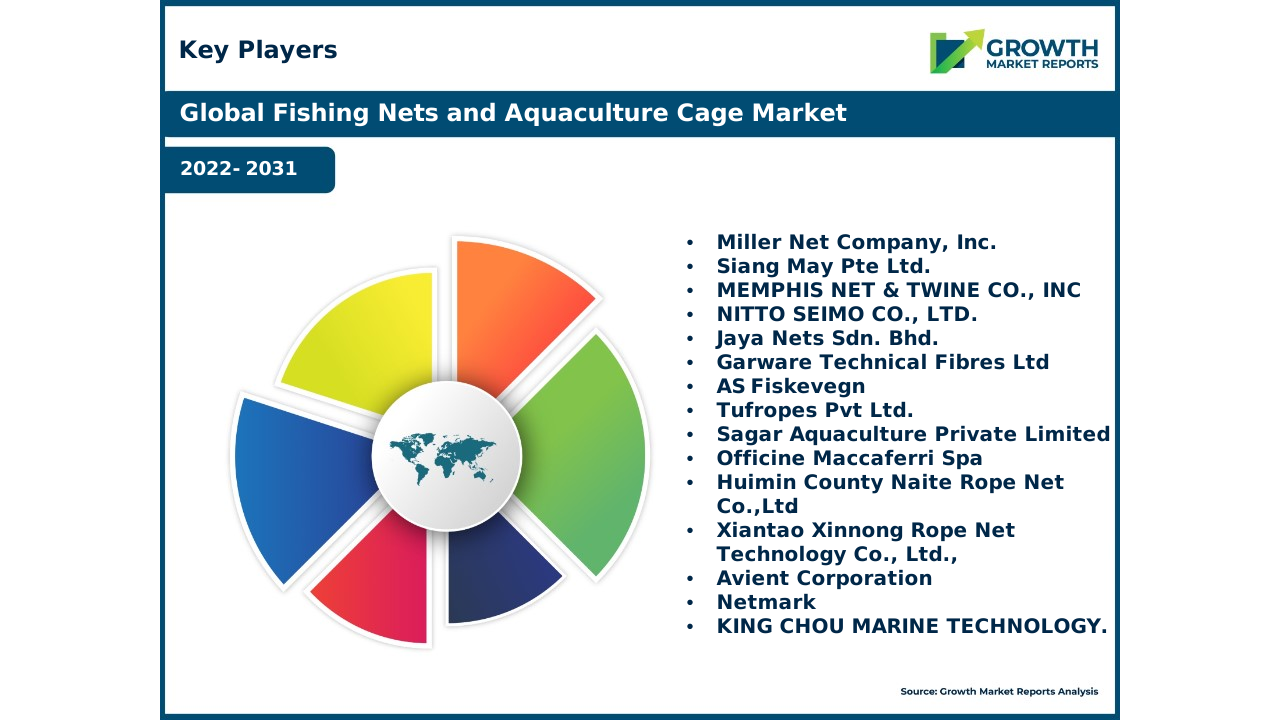
  • Top players in the market include Miller Net Company, Inc., Siang May Pte Ltd., MEMPHIS NET & TWINE CO., INC., NITTO SEIMO CO., LTD., Jaya Nets Sdn. Bhd., Garware Technical Fibres Ltd., AS Fiskevegn, Tufropes Pvt Ltd., Sagar Aquaculture Private Limited., Officine Maccaferri Spa, Huimin County Naite Rope Net Co.,Ltd., Xiantao Xinnong Rope Net Technology Co., Ltd., Avient Corporation, Netmark, and KING CHOU MARINE TECHNOLOGY.
  • The players are adopting key strategies such as acquisition, collaborations, and geographical expansion where potential opportunity for the Global Fishing Nets and Aquaculture Cage Market.

Fishing Nets and Aquaculture Cage Market Key Players

Frequently Asked Questions

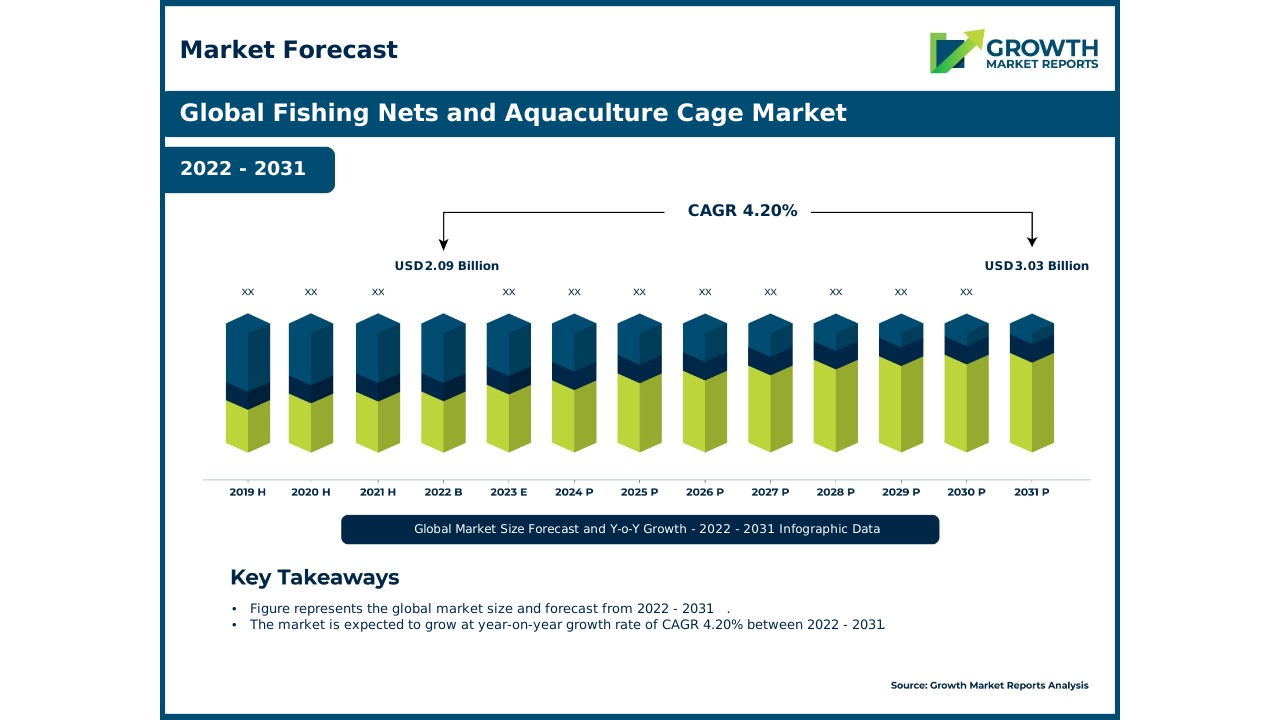
The fishing nets and aquaculture cage market is is projected to reach USD 3.03 Bn by 2031, expanding at a CAGR of 4.20% during the forecast period 2023-2031.

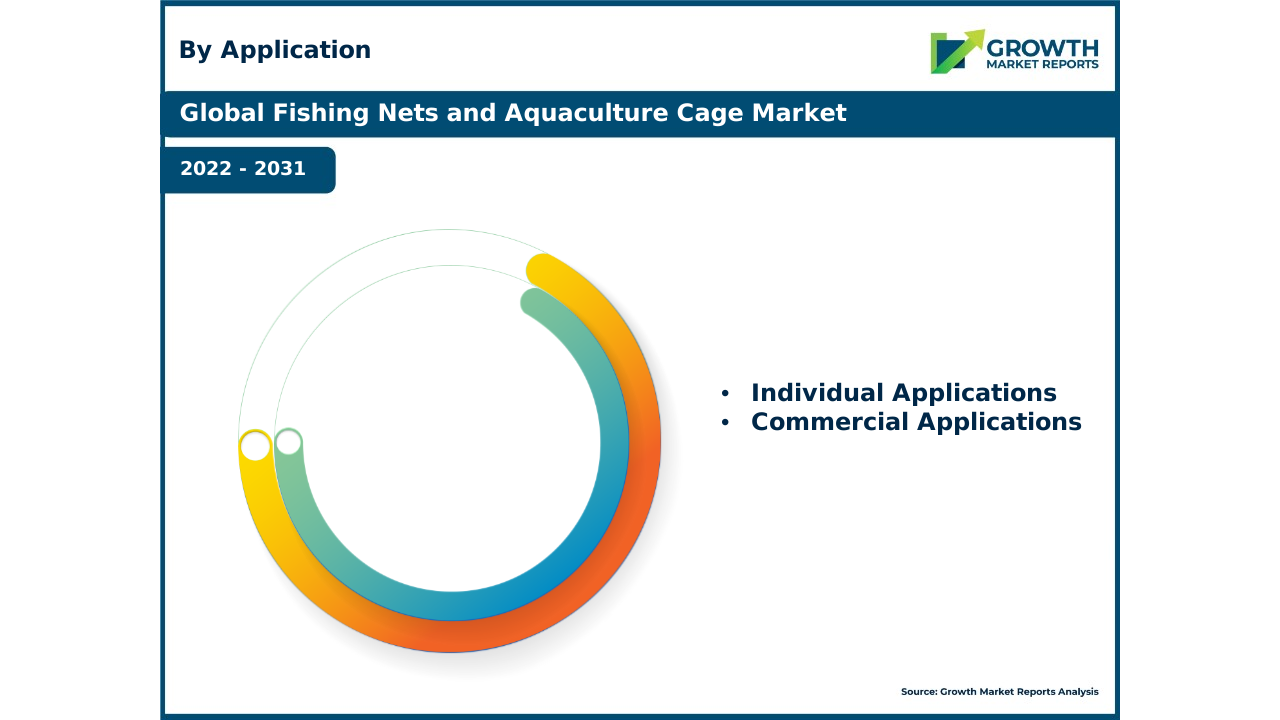
Based on application, the individual segment constituted a key share of the fishing nets and aquaculture cage market in 2022.

Increasing demand for seafood products and means for alternative income are the factors expected to drive the market growth during forecast period.

Asia Pacific is likely to dominate the fishing nets and aquaculture cage market during the forecast period.

Key players in the global market are Miller Net Company, Inc., Siang May Pte Ltd., MEMPHIS NET & TWINE CO., INC., NITTO SEIMO CO., LTD., Jaya Nets Sdn. Bhd., Garware Technical Fibres Ltd., AS Fiskevegn, Tufropes Pvt Ltd., Sagar Aquaculture Private Limited., Officine Maccaferri Spa, Huimin County Naite Rope Net Co.,Ltd., Xiantao Xinnong Rope Net Technology Co., Ltd., Avient Corporation, Netmark, and KING CHOU MARINE TECHNOLOGY

Table Of Content

Chapter 1 Executive Summary
Chapter 2 Assumptions and Acronyms Used
Chapter 3 Research Methodology
Chapter 4 Fishing Nets and Aquaculture Cage Market Overview
   4.1 Introduction
      4.1.1 Market Taxonomy
      4.1.2 Market Definition
      4.1.3 Macro-Economic Factors Impacting the Market Growth
   4.2 Fishing Nets and Aquaculture Cage Market Dynamics
      4.2.1 Market Drivers
      4.2.2 Market Restraints
      4.2.3 Market Opportunity
   4.3 Fishing Nets and Aquaculture Cage Market - Supply Chain Analysis
      4.3.1 List of Key Suppliers
      4.3.2 List of Key Distributors
      4.3.3 List of Key Consumers
   4.4 Key Forces Shaping the Fishing Nets and Aquaculture Cage Market
      4.4.1 Bargaining Power of Suppliers
      4.4.2 Bargaining Power of Buyers
      4.4.3 Threat of Substitution
      4.4.4 Threat of New Entrants
      4.4.5 Competitive Rivalry
   4.5 Global Fishing Nets and Aquaculture Cage Market Size & Forecast, 2023-2032
      4.5.1 Fishing Nets and Aquaculture Cage Market Size and Y-o-Y Growth
      4.5.2 Fishing Nets and Aquaculture Cage Market Absolute $ Opportunity

Chapter 5 Global Fishing Nets and Aquaculture Cage Market Analysis and Forecast By Product Type
   5.1 Introduction
      5.1.1 Key Market Trends & Growth Opportunities By Product Type
      5.1.2 Basis Point Share (BPS) Analysis By Product Type
      5.1.3 Absolute $ Opportunity Assessment By Product Type
   5.2 Fishing Nets and Aquaculture Cage Market Size Forecast By Product Type
      5.2.1 Fishing Nets
      5.2.2 Aquaculture Cages
   5.3 Market Attractiveness Analysis By Product Type

Chapter 6 Global Fishing Nets and Aquaculture Cage Market Analysis and Forecast By Material
   6.1 Introduction
      6.1.1 Key Market Trends & Growth Opportunities By Material
      6.1.2 Basis Point Share (BPS) Analysis By Material
      6.1.3 Absolute $ Opportunity Assessment By Material
   6.2 Fishing Nets and Aquaculture Cage Market Size Forecast By Material
      6.2.1 Nylon
      6.2.2 Polyethylene
      6.2.3 Polypropylene
      6.2.4 HDPE
      6.2.5 Others
   6.3 Market Attractiveness Analysis By Material

Chapter 7 Global Fishing Nets and Aquaculture Cage Market Analysis and Forecast By Application
   7.1 Introduction
      7.1.1 Key Market Trends & Growth Opportunities By Application
      7.1.2 Basis Point Share (BPS) Analysis By Application
      7.1.3 Absolute $ Opportunity Assessment By Application
   7.2 Fishing Nets and Aquaculture Cage Market Size Forecast By Application
      7.2.1 Commercial Fishing
      7.2.2 Aquaculture
      7.2.3 Others
   7.3 Market Attractiveness Analysis By Application

Chapter 8 Global Fishing Nets and Aquaculture Cage Market Analysis and Forecast By End-User
   8.1 Introduction
      8.1.1 Key Market Trends & Growth Opportunities By End-User
      8.1.2 Basis Point Share (BPS) Analysis By End-User
      8.1.3 Absolute $ Opportunity Assessment By End-User
   8.2 Fishing Nets and Aquaculture Cage Market Size Forecast By End-User
      8.2.1 Fisheries
      8.2.2 Aquaculture Farms
      8.2.3 Others
   8.3 Market Attractiveness Analysis By End-User

Chapter 9 Global Fishing Nets and Aquaculture Cage Market Analysis and Forecast By Distribution Channel
   9.1 Introduction
      9.1.1 Key Market Trends & Growth Opportunities By Distribution Channel
      9.1.2 Basis Point Share (BPS) Analysis By Distribution Channel
      9.1.3 Absolute $ Opportunity Assessment By Distribution Channel
   9.2 Fishing Nets and Aquaculture Cage Market Size Forecast By Distribution Channel
      9.2.1 Direct Sales
      9.2.2 Distributors/Wholesalers
      9.2.3 Online Retail
   9.3 Market Attractiveness Analysis By Distribution Channel

Chapter 10 Global Fishing Nets and Aquaculture Cage Market Analysis and Forecast by Region
   10.1 Introduction
      10.1.1 Key Market Trends & Growth Opportunities By Region
      10.1.2 Basis Point Share (BPS) Analysis By Region
      10.1.3 Absolute $ Opportunity Assessment By Region
   10.2 Fishing Nets and Aquaculture Cage Market Size Forecast By Region
      10.2.1 North America
      10.2.2 Europe
      10.2.3 Asia Pacific
      10.2.4 Latin America
      10.2.5 Middle East & Africa (MEA)
   10.3 Market Attractiveness Analysis By Region

Chapter 11 Coronavirus Disease (COVID-19) Impact 
   11.1 Introduction 
   11.2 Current & Future Impact Analysis 
   11.3 Economic Impact Analysis 
   11.4 Government Policies 
   11.5 Investment Scenario

Chapter 12 North America Fishing Nets and Aquaculture Cage Analysis and Forecast
   12.1 Introduction
   12.2 North America Fishing Nets and Aquaculture Cage Market Size Forecast by Country
      12.2.1 U.S.
      12.2.2 Canada
   12.3 Basis Point Share (BPS) Analysis by Country
   12.4 Absolute $ Opportunity Assessment by Country
   12.5 Market Attractiveness Analysis by Country
   12.6 North America Fishing Nets and Aquaculture Cage Market Size Forecast By Product Type
      12.6.1 Fishing Nets
      12.6.2 Aquaculture Cages
   12.7 Basis Point Share (BPS) Analysis By Product Type 
   12.8 Absolute $ Opportunity Assessment By Product Type 
   12.9 Market Attractiveness Analysis By Product Type
   12.10 North America Fishing Nets and Aquaculture Cage Market Size Forecast By Material
      12.10.1 Nylon
      12.10.2 Polyethylene
      12.10.3 Polypropylene
      12.10.4 HDPE
      12.10.5 Others
   12.11 Basis Point Share (BPS) Analysis By Material 
   12.12 Absolute $ Opportunity Assessment By Material 
   12.13 Market Attractiveness Analysis By Material
   12.14 North America Fishing Nets and Aquaculture Cage Market Size Forecast By Application
      12.14.1 Commercial Fishing
      12.14.2 Aquaculture
      12.14.3 Others
   12.15 Basis Point Share (BPS) Analysis By Application 
   12.16 Absolute $ Opportunity Assessment By Application 
   12.17 Market Attractiveness Analysis By Application
   12.18 North America Fishing Nets and Aquaculture Cage Market Size Forecast By End-User
      12.18.1 Fisheries
      12.18.2 Aquaculture Farms
      12.18.3 Others
   12.19 Basis Point Share (BPS) Analysis By End-User 
   12.20 Absolute $ Opportunity Assessment By End-User 
   12.21 Market Attractiveness Analysis By End-User
   12.22 North America Fishing Nets and Aquaculture Cage Market Size Forecast By Distribution Channel
      12.22.1 Direct Sales
      12.22.2 Distributors/Wholesalers
      12.22.3 Online Retail
   12.23 Basis Point Share (BPS) Analysis By Distribution Channel 
   12.24 Absolute $ Opportunity Assessment By Distribution Channel 
   12.25 Market Attractiveness Analysis By Distribution Channel

Chapter 13 Europe Fishing Nets and Aquaculture Cage Analysis and Forecast
   13.1 Introduction
   13.2 Europe Fishing Nets and Aquaculture Cage Market Size Forecast by Country
      13.2.1 Germany
      13.2.2 France
      13.2.3 Italy
      13.2.4 U.K.
      13.2.5 Spain
      13.2.6 Russia
      13.2.7 Rest of Europe
   13.3 Basis Point Share (BPS) Analysis by Country
   13.4 Absolute $ Opportunity Assessment by Country
   13.5 Market Attractiveness Analysis by Country
   13.6 Europe Fishing Nets and Aquaculture Cage Market Size Forecast By Product Type
      13.6.1 Fishing Nets
      13.6.2 Aquaculture Cages
   13.7 Basis Point Share (BPS) Analysis By Product Type 
   13.8 Absolute $ Opportunity Assessment By Product Type 
   13.9 Market Attractiveness Analysis By Product Type
   13.10 Europe Fishing Nets and Aquaculture Cage Market Size Forecast By Material
      13.10.1 Nylon
      13.10.2 Polyethylene
      13.10.3 Polypropylene
      13.10.4 HDPE
      13.10.5 Others
   13.11 Basis Point Share (BPS) Analysis By Material 
   13.12 Absolute $ Opportunity Assessment By Material 
   13.13 Market Attractiveness Analysis By Material
   13.14 Europe Fishing Nets and Aquaculture Cage Market Size Forecast By Application
      13.14.1 Commercial Fishing
      13.14.2 Aquaculture
      13.14.3 Others
   13.15 Basis Point Share (BPS) Analysis By Application 
   13.16 Absolute $ Opportunity Assessment By Application 
   13.17 Market Attractiveness Analysis By Application
   13.18 Europe Fishing Nets and Aquaculture Cage Market Size Forecast By End-User
      13.18.1 Fisheries
      13.18.2 Aquaculture Farms
      13.18.3 Others
   13.19 Basis Point Share (BPS) Analysis By End-User 
   13.20 Absolute $ Opportunity Assessment By End-User 
   13.21 Market Attractiveness Analysis By End-User
   13.22 Europe Fishing Nets and Aquaculture Cage Market Size Forecast By Distribution Channel
      13.22.1 Direct Sales
      13.22.2 Distributors/Wholesalers
      13.22.3 Online Retail
   13.23 Basis Point Share (BPS) Analysis By Distribution Channel 
   13.24 Absolute $ Opportunity Assessment By Distribution Channel 
   13.25 Market Attractiveness Analysis By Distribution Channel

Chapter 14 Asia Pacific Fishing Nets and Aquaculture Cage Analysis and Forecast
   14.1 Introduction
   14.2 Asia Pacific Fishing Nets and Aquaculture Cage Market Size Forecast by Country
      14.2.1 China
      14.2.2 Japan
      14.2.3 South Korea
      14.2.4 India
      14.2.5 Australia
      14.2.6 South East Asia (SEA)
      14.2.7 Rest of Asia Pacific (APAC)
   14.3 Basis Point Share (BPS) Analysis by Country
   14.4 Absolute $ Opportunity Assessment by Country
   14.5 Market Attractiveness Analysis by Country
   14.6 Asia Pacific Fishing Nets and Aquaculture Cage Market Size Forecast By Product Type
      14.6.1 Fishing Nets
      14.6.2 Aquaculture Cages
   14.7 Basis Point Share (BPS) Analysis By Product Type 
   14.8 Absolute $ Opportunity Assessment By Product Type 
   14.9 Market Attractiveness Analysis By Product Type
   14.10 Asia Pacific Fishing Nets and Aquaculture Cage Market Size Forecast By Material
      14.10.1 Nylon
      14.10.2 Polyethylene
      14.10.3 Polypropylene
      14.10.4 HDPE
      14.10.5 Others
   14.11 Basis Point Share (BPS) Analysis By Material 
   14.12 Absolute $ Opportunity Assessment By Material 
   14.13 Market Attractiveness Analysis By Material
   14.14 Asia Pacific Fishing Nets and Aquaculture Cage Market Size Forecast By Application
      14.14.1 Commercial Fishing
      14.14.2 Aquaculture
      14.14.3 Others
   14.15 Basis Point Share (BPS) Analysis By Application 
   14.16 Absolute $ Opportunity Assessment By Application 
   14.17 Market Attractiveness Analysis By Application
   14.18 Asia Pacific Fishing Nets and Aquaculture Cage Market Size Forecast By End-User
      14.18.1 Fisheries
      14.18.2 Aquaculture Farms
      14.18.3 Others
   14.19 Basis Point Share (BPS) Analysis By End-User 
   14.20 Absolute $ Opportunity Assessment By End-User 
   14.21 Market Attractiveness Analysis By End-User
   14.22 Asia Pacific Fishing Nets and Aquaculture Cage Market Size Forecast By Distribution Channel
      14.22.1 Direct Sales
      14.22.2 Distributors/Wholesalers
      14.22.3 Online Retail
   14.23 Basis Point Share (BPS) Analysis By Distribution Channel 
   14.24 Absolute $ Opportunity Assessment By Distribution Channel 
   14.25 Market Attractiveness Analysis By Distribution Channel

Chapter 15 Latin America Fishing Nets and Aquaculture Cage Analysis and Forecast
   15.1 Introduction
   15.2 Latin America Fishing Nets and Aquaculture Cage Market Size Forecast by Country
      15.2.1 Brazil
      15.2.2 Mexico
      15.2.3 Rest of Latin America (LATAM)
   15.3 Basis Point Share (BPS) Analysis by Country
   15.4 Absolute $ Opportunity Assessment by Country
   15.5 Market Attractiveness Analysis by Country
   15.6 Latin America Fishing Nets and Aquaculture Cage Market Size Forecast By Product Type
      15.6.1 Fishing Nets
      15.6.2 Aquaculture Cages
   15.7 Basis Point Share (BPS) Analysis By Product Type 
   15.8 Absolute $ Opportunity Assessment By Product Type 
   15.9 Market Attractiveness Analysis By Product Type
   15.10 Latin America Fishing Nets and Aquaculture Cage Market Size Forecast By Material
      15.10.1 Nylon
      15.10.2 Polyethylene
      15.10.3 Polypropylene
      15.10.4 HDPE
      15.10.5 Others
   15.11 Basis Point Share (BPS) Analysis By Material 
   15.12 Absolute $ Opportunity Assessment By Material 
   15.13 Market Attractiveness Analysis By Material
   15.14 Latin America Fishing Nets and Aquaculture Cage Market Size Forecast By Application
      15.14.1 Commercial Fishing
      15.14.2 Aquaculture
      15.14.3 Others
   15.15 Basis Point Share (BPS) Analysis By Application 
   15.16 Absolute $ Opportunity Assessment By Application 
   15.17 Market Attractiveness Analysis By Application
   15.18 Latin America Fishing Nets and Aquaculture Cage Market Size Forecast By End-User
      15.18.1 Fisheries
      15.18.2 Aquaculture Farms
      15.18.3 Others
   15.19 Basis Point Share (BPS) Analysis By End-User 
   15.20 Absolute $ Opportunity Assessment By End-User 
   15.21 Market Attractiveness Analysis By End-User
   15.22 Latin America Fishing Nets and Aquaculture Cage Market Size Forecast By Distribution Channel
      15.22.1 Direct Sales
      15.22.2 Distributors/Wholesalers
      15.22.3 Online Retail
   15.23 Basis Point Share (BPS) Analysis By Distribution Channel 
   15.24 Absolute $ Opportunity Assessment By Distribution Channel 
   15.25 Market Attractiveness Analysis By Distribution Channel

Chapter 16 Middle East & Africa (MEA) Fishing Nets and Aquaculture Cage Analysis and Forecast
   16.1 Introduction
   16.2 Middle East & Africa (MEA) Fishing Nets and Aquaculture Cage Market Size Forecast by Country
      16.2.1 Saudi Arabia
      16.2.2 South Africa
      16.2.3 UAE
      16.2.4 Rest of Middle East & Africa (MEA)
   16.3 Basis Point Share (BPS) Analysis by Country
   16.4 Absolute $ Opportunity Assessment by Country
   16.5 Market Attractiveness Analysis by Country
   16.6 Middle East & Africa (MEA) Fishing Nets and Aquaculture Cage Market Size Forecast By Product Type
      16.6.1 Fishing Nets
      16.6.2 Aquaculture Cages
   16.7 Basis Point Share (BPS) Analysis By Product Type 
   16.8 Absolute $ Opportunity Assessment By Product Type 
   16.9 Market Attractiveness Analysis By Product Type
   16.10 Middle East & Africa (MEA) Fishing Nets and Aquaculture Cage Market Size Forecast By Material
      16.10.1 Nylon
      16.10.2 Polyethylene
      16.10.3 Polypropylene
      16.10.4 HDPE
      16.10.5 Others
   16.11 Basis Point Share (BPS) Analysis By Material 
   16.12 Absolute $ Opportunity Assessment By Material 
   16.13 Market Attractiveness Analysis By Material
   16.14 Middle East & Africa (MEA) Fishing Nets and Aquaculture Cage Market Size Forecast By Application
      16.14.1 Commercial Fishing
      16.14.2 Aquaculture
      16.14.3 Others
   16.15 Basis Point Share (BPS) Analysis By Application 
   16.16 Absolute $ Opportunity Assessment By Application 
   16.17 Market Attractiveness Analysis By Application
   16.18 Middle East & Africa (MEA) Fishing Nets and Aquaculture Cage Market Size Forecast By End-User
      16.18.1 Fisheries
      16.18.2 Aquaculture Farms
      16.18.3 Others
   16.19 Basis Point Share (BPS) Analysis By End-User 
   16.20 Absolute $ Opportunity Assessment By End-User 
   16.21 Market Attractiveness Analysis By End-User
   16.22 Middle East & Africa (MEA) Fishing Nets and Aquaculture Cage Market Size Forecast By Distribution Channel
      16.22.1 Direct Sales
      16.22.2 Distributors/Wholesalers
      16.22.3 Online Retail
   16.23 Basis Point Share (BPS) Analysis By Distribution Channel 
   16.24 Absolute $ Opportunity Assessment By Distribution Channel 
   16.25 Market Attractiveness Analysis By Distribution Channel

Chapter 17 Competition Landscape 
   17.1 Fishing Nets and Aquaculture Cage Market: Competitive Dashboard
   17.2 Global Fishing Nets and Aquaculture Cage Market: Market Share Analysis, 2023
   17.3 Company Profiles (Details – Overview, Financials, Developments, Strategy) 
      17.3.1 Nitto Seimo Co., Ltd.
Garware Technical Fibres Ltd.
AKVA Group
Hunan Xinhai Co., Ltd.
King Chou Marine Tech Co., Ltd.
Net Systems, Inc.
Badinotti Group
Anping Qinghe Metal Mesh Co., Ltd.
Zhejiang Honghai Steel Structure Co., Ltd.
Memphis Net & Twine Co., Inc.
Miller Net Company, Inc.
Siang May Group
Weihai Huaxing Nets Co., Ltd.
InnovaSea Systems, Inc.
Vónin
Selstad AS
Norwegian Netting AS
Yuanjiang Fuxin Net Industry Co., Ltd.
Bridport Nets Ltd.
Hvalpsund Net A/S

Methodology

Our Clients

Pfizer
General Electric
Microsoft
Siemens Healthcare
Honda Motor Co. Ltd.
Dassault Aviation
sinopec
The John Holland Group