Segments - by Product Type (Centrifugal Pumps, Positive Displacement Pumps, Submersible Pumps, Circulation Pumps, Others), by Application (Automotive, Industrial, Residential, Agriculture, Commercial, Others), by Distribution Channel (Online, Offline), by End-User (OEMs, Aftermarket)
According to our latest research, the global electric water pumps market size has been valued at USD 5.62 billion in 2024, demonstrating robust growth driven by increasing demand for efficient water management solutions across key industries. The market is projected to expand at a CAGR of 6.3% from 2025 to 2033, reaching a forecasted value of USD 9.73 billion by 2033. This growth is primarily fueled by technological advancements, rising adoption of electric vehicles, and the urgent need for sustainable water solutions in both developed and emerging economies. As per our latest research, the electric water pumps market continues to gain momentum, with significant investments in product innovation and regional infrastructure development acting as key catalysts for expansion.
One of the primary growth factors for the electric water pumps market is the escalating need for energy-efficient water circulation systems in the automotive sector. The transition towards electric vehicles (EVs) has intensified the demand for reliable and high-performance electric water pumps, which are crucial for battery thermal management and engine cooling. Automakers are increasingly integrating advanced electric water pumps to reduce emissions, enhance fuel efficiency, and meet stringent regulatory standards. Additionally, the growing consumer awareness regarding the environmental impact of traditional mechanical pumps is propelling the shift towards electric alternatives, which offer superior efficiency and lower operational costs. This trend is anticipated to further accelerate as governments worldwide intensify efforts to promote sustainable transportation solutions.
Another significant driver for the electric water pumps market is the rapid urbanization and industrialization witnessed across Asia Pacific, Latin America, and Africa. These regions are experiencing substantial investments in infrastructure development, including water supply, wastewater treatment, and irrigation systems. Electric water pumps are increasingly preferred in these applications due to their reliability, ease of automation, and ability to operate efficiently under varying load conditions. The adoption of smart water management systems, coupled with the integration of IoT and remote monitoring technologies, is further enhancing the appeal of electric water pumps in municipal and industrial projects. Moreover, the rising focus on water conservation and efficient resource management is prompting governments and private enterprises to deploy electric water pumps as part of their sustainability initiatives.
The residential and commercial sectors are also contributing significantly to the growth of the electric water pumps market. The rising demand for reliable water supply solutions in urban households, coupled with the expansion of commercial establishments such as hotels, hospitals, and office complexes, is driving the adoption of electric water pumps. These pumps are favored for their compact design, quiet operation, and ability to deliver consistent water pressure. Additionally, the increasing prevalence of smart homes and building automation systems is boosting the integration of electric water pumps with advanced control features, enabling users to optimize water usage and reduce energy consumption. The growing emphasis on green building standards and sustainable construction practices is expected to further support market growth in the coming years.
The increasing complexity of water management systems in various sectors has led to the development of innovative solutions like the Electric Water Pump Controller. This device plays a crucial role in optimizing the performance of electric water pumps by providing precise control over pump operations. By integrating advanced sensors and automation technologies, the Electric Water Pump Controller ensures efficient water distribution, reduces energy consumption, and minimizes operational costs. Its ability to monitor real-time data and adjust pump settings dynamically makes it an indispensable tool for industries aiming to enhance water management efficiency. As the demand for smart water solutions grows, the adoption of Electric Water Pump Controllers is expected to rise, offering significant advantages in terms of resource conservation and operational reliability.
From a regional perspective, Asia Pacific continues to dominate the global electric water pumps market, accounting for the largest revenue share in 2024. The region's leadership is attributed to rapid industrialization, significant infrastructure investments, and the presence of major automotive manufacturing hubs in countries such as China, Japan, and India. North America and Europe are also witnessing steady growth, driven by technological innovation, stringent regulatory frameworks, and rising adoption of electric vehicles. Meanwhile, Latin America and the Middle East & Africa are emerging as high-potential markets, supported by government initiatives to improve water infrastructure and promote sustainable agricultural practices. The diverse regional dynamics underscore the importance of tailored strategies to capitalize on unique growth opportunities across different geographies.
The electric water pumps market is segmented by product type into centrifugal pumps, positive displacement pumps, submersible pumps, circulation pumps, and others. Centrifugal pumps continue to hold the largest market share, owing to their widespread application in water supply, irrigation, and industrial processes. These pumps are favored for their simple design, ease of maintenance, and ability to handle large volumes of water at relatively low cost. The ongoing advancements in materials and pump design are further enhancing the efficiency and durability of centrifugal pumps, making them the preferred choice for both OEMs and aftermarket applications. Additionally, the integration of variable frequency drives (VFDs) is enabling users to optimize pump performance and achieve significant energy savings.
Positive displacement pumps are gaining traction in specialized applications that require precise flow control and the ability to handle viscous or abrasive fluids. These pumps are commonly used in chemical processing, pharmaceuticals, and food & beverage industries, where consistent and accurate fluid delivery is critical. The growing demand for hygienic and contamination-free pumping solutions is driving the adoption of positive displacement pumps, particularly in industries with stringent quality standards. Manufacturers are focusing on developing innovative pump designs with improved sealing technologies and corrosion-resistant materials to cater to the evolving needs of these sectors.
Submersible pumps represent another significant segment within the electric water pumps market. These pumps are designed to operate while fully submerged in water, making them ideal for applications such as groundwater extraction, sewage treatment, and flood control. The increasing frequency of extreme weather events and the rising incidence of urban flooding are boosting the deployment of submersible pumps in municipal and emergency response operations. Technological advancements, such as the incorporation of smart sensors and remote monitoring capabilities, are enhancing the reliability and operational efficiency of submersible pumps, thereby expanding their adoption across diverse end-user industries.
Circulation pumps are witnessing growing adoption in residential and commercial heating, ventilation, and air conditioning (HVAC) systems. These pumps play a crucial role in ensuring consistent water flow and temperature regulation in hydronic heating and cooling applications. The rising popularity of energy-efficient HVAC systems, coupled with the increasing emphasis on indoor air quality and occupant comfort, is driving the demand for advanced circulation pumps. Market players are introducing innovative pump models with variable speed controls and integrated diagnostics to address the evolving requirements of modern buildings. The "others" segment, which includes specialty pumps and customized solutions, is also expected to witness steady growth, driven by niche applications in emerging industries.
| Attributes | Details |
| Report Title | Electric Water Pumps Market Research Report 2033 |
| By Product Type | Centrifugal Pumps, Positive Displacement Pumps, Submersible Pumps, Circulation Pumps, Others |
| By Application | Automotive, Industrial, Residential, Agriculture, Commercial, Others |
| By Distribution Channel | Online, Offline |
| By End-User | OEMs, Aftermarket |
| Regions Covered | North America, Europe, APAC, Latin America, MEA |
| Base Year | 2024 |
| Historic Data | 2018-2023 |
| Forecast Period | 2025-2033 |
| Number of Pages | 294 |
| Number of Tables & Figures | 274 |
| Customization Available | Yes, the report can be customized as per your need. |
The electric water pumps market is segmented by application into automotive, industrial, residential, agriculture, commercial, and others. The automotive segment remains a key driver of market growth, as electric water pumps are integral to modern vehicle cooling and thermal management systems. The shift towards electrification in the automotive industry is creating new opportunities for electric water pump manufacturers, as EVs and hybrid vehicles require specialized cooling solutions to maintain optimal battery and motor performance. Additionally, the adoption of electric water pumps in conventional internal combustion engine (ICE) vehicles is rising, as automakers seek to improve fuel efficiency and reduce emissions.
The industrial sector is another major contributor to the electric water pumps market, with applications spanning manufacturing, chemical processing, power generation, and water treatment. Industrial users prioritize reliability, efficiency, and ease of integration when selecting water pumps, as downtime can result in significant operational losses. The ongoing trend towards automation and digitalization in industrial processes is driving the adoption of smart electric water pumps equipped with advanced monitoring and control features. These pumps enable predictive maintenance, real-time performance tracking, and remote diagnostics, helping industrial users optimize resource utilization and minimize maintenance costs.
In the residential segment, electric water pumps are increasingly used for domestic water supply, pressure boosting, and garden irrigation. The rising urban population and the expansion of urban housing developments are fueling the demand for compact, energy-efficient water pumps that can deliver consistent performance in variable water supply conditions. The growing trend towards smart homes and automation is further boosting the integration of electric water pumps with home management systems, allowing users to monitor and control water usage remotely. The emphasis on water conservation and sustainability is prompting homeowners to invest in advanced water pump solutions that reduce wastage and lower utility bills.
The agriculture segment is witnessing steady growth, driven by the need for efficient irrigation and water management solutions to support increasing food production. Electric water pumps are widely used in drip irrigation, sprinkler systems, and groundwater extraction, enabling farmers to optimize water usage and improve crop yields. Government initiatives to promote sustainable agriculture and enhance rural infrastructure are supporting the adoption of electric water pumps in emerging economies. Manufacturers are developing rugged and energy-efficient pump models tailored to the unique requirements of agricultural applications, including solar-powered options for off-grid locations.
The commercial segment encompasses applications in office buildings, hotels, hospitals, shopping malls, and educational institutions. The demand for electric water pumps in this segment is driven by the need for reliable water supply, fire protection, and HVAC systems. The expansion of the commercial real estate sector, coupled with the increasing adoption of green building standards, is supporting the growth of electric water pump installations. The "others" category includes niche applications such as marine, mining, and construction, where electric water pumps are used for dewatering, slurry handling, and process water management.
The electric water pumps market is segmented by distribution channel into online and offline channels. The offline channel, which includes direct sales, distributors, and retail outlets, continues to dominate the market in terms of revenue share. Customers in industrial, commercial, and agricultural sectors often prefer offline channels due to the need for technical consultation, product demonstration, and after-sales support. Established relationships with distributors and the availability of customized solutions further reinforce the importance of offline channels in the electric water pumps market. Offline sales are particularly strong in regions with underdeveloped e-commerce infrastructure and where buyers require hands-on interaction with products before purchase.
However, the online distribution channel is witnessing rapid growth, driven by the increasing penetration of e-commerce platforms and the rising comfort level of customers with digital transactions. The convenience of browsing a wide range of products, comparing prices, and accessing customer reviews is attracting both individual and business buyers to online channels. Manufacturers and distributors are investing in user-friendly websites, digital marketing campaigns, and online customer support to enhance the buying experience. The COVID-19 pandemic has accelerated the shift towards online purchasing, as lockdowns and social distancing measures prompted customers to seek contactless procurement options.
The integration of advanced logistics and supply chain solutions is further supporting the growth of the online channel. Real-time inventory tracking, fast shipping, and hassle-free return policies are enabling online retailers to compete effectively with traditional offline channels. Additionally, the availability of detailed product specifications, installation guides, and virtual consultations is helping customers make informed purchasing decisions. The online channel is particularly popular among residential and small business customers, who value the convenience and transparency offered by digital platforms.
To capitalize on the growth of online sales, market players are adopting omnichannel strategies that combine the strengths of both online and offline channels. This approach allows manufacturers to reach a broader customer base, provide personalized service, and adapt to changing buying preferences. The seamless integration of online and offline channels is expected to become a key differentiator in the competitive electric water pumps market, enabling companies to enhance customer engagement and drive long-term loyalty.
The electric water pumps market is segmented by end-user into OEMs and aftermarket. OEMs (Original Equipment Manufacturers) represent a significant share of the market, as they source electric water pumps for integration into vehicles, industrial equipment, and home appliances during the manufacturing process. OEMs prioritize quality, reliability, and compliance with industry standards when selecting pump suppliers. The trend towards modular and customizable pump solutions is enabling OEMs to enhance product differentiation and meet the specific requirements of their end-users. Strategic partnerships between pump manufacturers and OEMs are fostering innovation and accelerating the adoption of next-generation electric water pumps.
The aftermarket segment is also experiencing robust growth, driven by the need for replacement, maintenance, and upgrade of existing water pump installations. The increasing average age of vehicles and industrial equipment is supporting the demand for aftermarket electric water pumps. Customers in the aftermarket segment seek cost-effective, high-performance pump solutions that offer easy installation and compatibility with a wide range of systems. Manufacturers are expanding their aftermarket product portfolios and strengthening their distribution networks to capture a larger share of this lucrative segment.
The growing focus on preventive maintenance and asset management is driving the adoption of advanced electric water pumps with remote monitoring and diagnostic capabilities in the aftermarket. These features enable end-users to detect potential issues early, reduce downtime, and extend the lifespan of their equipment. The availability of value-added services, such as installation support, training, and maintenance contracts, is further enhancing the appeal of aftermarket electric water pumps.
The interplay between OEM and aftermarket segments is shaping the competitive landscape of the electric water pumps market. While OEMs drive innovation and set quality benchmarks, the aftermarket segment offers opportunities for revenue diversification and customer engagement. Market players are leveraging data analytics and customer feedback to develop tailored solutions that address the evolving needs of both segments. The ability to provide comprehensive support throughout the product lifecycle is emerging as a key success factor in the electric water pumps market.
The electric water pumps market presents a range of compelling opportunities for industry participants. One of the most significant opportunities lies in the integration of smart technologies and IoT capabilities into electric water pump systems. The growing trend towards digitalization and automation in industrial, commercial, and residential applications is creating demand for pumps that can be remotely monitored, controlled, and optimized for energy efficiency. Manufacturers have the chance to differentiate their offerings by developing intelligent pump solutions that provide real-time performance data, predictive maintenance alerts, and seamless integration with building management systems. This shift towards smart pumps is expected to unlock new revenue streams and drive long-term market growth.
Another major opportunity for the electric water pumps market is the expansion into emerging economies, where rapid urbanization, infrastructure development, and agricultural modernization are fueling demand for efficient water management solutions. Governments in Asia Pacific, Africa, and Latin America are investing heavily in water supply, irrigation, and wastewater treatment projects, creating a favorable environment for electric water pump adoption. Market players can capitalize on these opportunities by offering tailored products that address the unique needs and challenges of these regions, such as solar-powered pumps for off-grid applications and ruggedized models for harsh operating conditions. Strategic collaborations with local partners and participation in government-led initiatives can further enhance market penetration and growth prospects.
Despite the positive outlook, the electric water pumps market faces certain restraining factors. One of the primary challenges is the high initial cost associated with advanced electric water pump systems, particularly those equipped with smart features and energy-saving technologies. While these pumps offer significant long-term benefits in terms of efficiency and reliability, the upfront investment can be a barrier for price-sensitive customers, especially in developing markets. Additionally, the presence of counterfeit and low-quality products in the market poses a threat to brand reputation and customer trust. To overcome these challenges, manufacturers need to focus on cost optimization, value engineering, and robust quality control measures, while also educating customers about the total cost of ownership and long-term savings offered by high-quality electric water pumps.
Asia Pacific stands as the dominant region in the global electric water pumps market, accounting for a revenue share of approximately USD 2.34 billion in 2024. The region's leadership is underpinned by rapid industrialization, urbanization, and significant investments in infrastructure development across China, India, Japan, and Southeast Asia. China, in particular, remains a key growth engine due to its large-scale manufacturing sector and burgeoning automotive industry. The increasing adoption of electric vehicles and the expansion of municipal water projects are further boosting demand for electric water pumps in the region. With a projected CAGR of 7.1% through 2033, Asia Pacific is expected to maintain its leading position, supported by favorable government policies, rising disposable incomes, and a strong focus on sustainability.
North America represents the second-largest regional market, with a market size of USD 1.28 billion in 2024. The region's growth is driven by technological innovation, stringent energy efficiency regulations, and the widespread adoption of electric vehicles. The United States and Canada are witnessing increasing investments in water infrastructure modernization and smart city projects, which are creating new opportunities for advanced electric water pump solutions. The emphasis on sustainability, coupled with the growing popularity of green building standards, is supporting the integration of energy-efficient pumps in residential and commercial applications. The region is expected to register steady growth over the forecast period, driven by ongoing product innovation and the presence of leading market players.
Europe is another significant market for electric water pumps, with a market value of USD 1.09 billion in 2024. The region's growth is fueled by the automotive industry's transition towards electrification, strict environmental regulations, and the increasing adoption of renewable energy solutions. Countries such as Germany, the United Kingdom, and France are at the forefront of promoting energy-efficient technologies and sustainable water management practices. The European market is characterized by a high level of product innovation, a strong focus on quality standards, and a well-established distribution network. Meanwhile, Latin America and the Middle East & Africa are emerging as high-potential markets, with a combined market size of USD 0.91 billion in 2024. These regions are benefiting from government initiatives to improve water infrastructure, promote agricultural development, and enhance access to reliable water supply solutions.
The electric water pumps market is highly competitive, with a diverse mix of global and regional players vying for market share. The competitive landscape is characterized by continuous product innovation, strategic partnerships, mergers and acquisitions, and a strong emphasis on quality and reliability. Leading companies are investing heavily in research and development to introduce advanced pump technologies that offer superior efficiency, durability, and smart features. The integration of digital solutions, such as IoT-enabled monitoring and predictive maintenance, is emerging as a key differentiator in the market, enabling companies to provide value-added services and enhance customer engagement.
Market players are also focusing on expanding their geographic footprint through strategic alliances, joint ventures, and the establishment of local manufacturing facilities. This approach allows companies to better serve the unique needs of different regions, adapt to local regulatory requirements, and optimize supply chain efficiency. The growing importance of sustainability and environmental responsibility is prompting companies to develop eco-friendly pump solutions that minimize energy consumption and reduce carbon emissions. Additionally, the ability to offer comprehensive after-sales support, including installation, maintenance, and training services, is becoming increasingly important for building long-term customer relationships and driving repeat business.
The competitive dynamics of the electric water pumps market are further influenced by the presence of low-cost manufacturers, particularly in Asia Pacific, who offer affordable pump solutions for price-sensitive markets. While these players pose a challenge to established brands, they also contribute to market expansion by increasing product accessibility and driving adoption in emerging economies. Leading companies are responding to this competition by differentiating their offerings through superior quality, advanced features, and strong brand reputation. The ability to innovate rapidly and respond to changing customer needs is critical for maintaining a competitive edge in this dynamic market.
Some of the major companies operating in the global electric water pumps market include Bosch Automotive Service Solutions Inc., Grundfos Holding A/S, Flowserve Corporation, Xylem Inc., KSB SE & Co. KGaA, Wilo SE, ITT Inc., Danfoss Group, and Ebara Corporation. Bosch is renowned for its expertise in automotive electric water pumps, offering advanced solutions for thermal management in electric and hybrid vehicles. Grundfos and Wilo are global leaders in residential, commercial, and industrial pump solutions, with a strong focus on energy efficiency and smart technologies. Flowserve and KSB are prominent players in the industrial and municipal segments, providing high-performance pumps for critical applications such as water treatment, power generation, and chemical processing.
Xylem Inc. stands out for its commitment to sustainability and innovation, offering a comprehensive portfolio of electric water pumps for water supply, wastewater management, and irrigation. ITT Inc. and Danfoss Group are recognized for their expertise in advanced pump technologies and digital solutions, catering to a wide range of end-user industries. Ebara Corporation, with its strong presence in Asia Pacific, is a key player in both OEM and aftermarket segments, offering reliable and high-quality pump solutions for diverse applications. These companies are continuously enhancing their product portfolios, expanding their global presence, and investing in R&D to stay ahead in the rapidly evolving electric water pumps market.
The Electric Water Pumps market has been segmented on the basis of
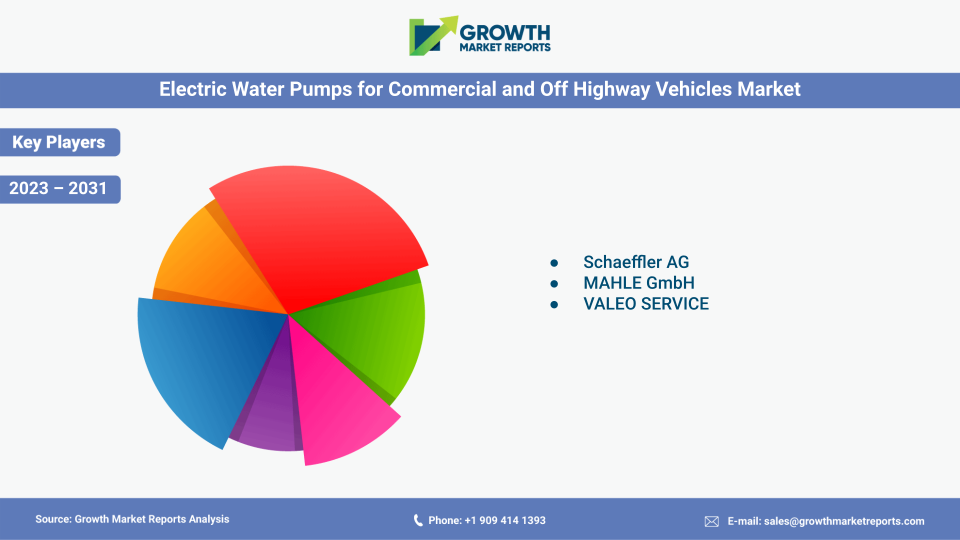
Key players in the market include Schaeffler AG, MAHLE GmbH, and VALEO SERVICE. These companies are considered as key manufacturers of electric water pumps for commercial & OHV based on their revenue, research & development (R&D) activities, regional presence, and supply chain management system.
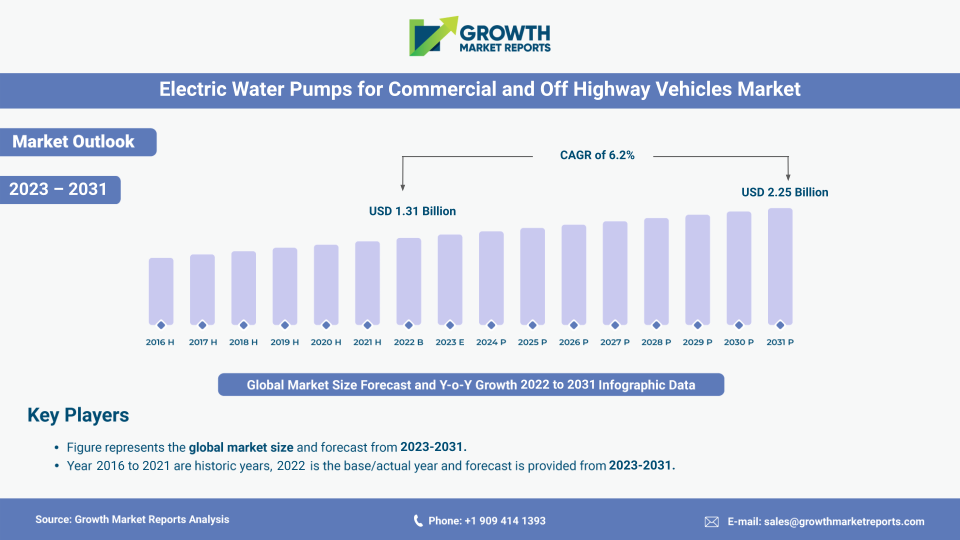
The electric water pumps for commercial & OHV market will grow at a CAGR of 6.2% during the forecast period.
The global electric water pumps for commercial & OHV market was valued at USD 1,095.3 Million in 2019.