Agriculture Tractor Market Report 2025-2034

Agriculture Tractor Market Report 2025-2034

Segments - by Product Type (Utility Tractors, Row Crop Tractors, Orchard Tractors, Industrial Tractors, Others), by Power Output (Below 40 HP, 40–100 HP, Above 100 HP), by Drive Type (2-Wheel Drive, 4-Wheel Drive), by Application (Land Preparation, Sowing & Planting, Harvesting, Others), by End-User (Farmers, Agricultural Contractors, Others)

https://growthmarketreports.com/Raksha
Author : Raksha Sharma
https://growthmarketreports.com/Vaibhav
Fact-checked by : V. Chandola
https://growthmarketreports.com/Rucha
Editor : Rucha Phatak

Last Updated : Jun, 2026 | Report ID :CM-1416 | 4.0 Rating | 27 Reviews | 282 Pages | Format : Docx PDF

Report Description

This report is updated with the latest market data and insights as of June 2026. Base year: 2025  |  Forecast period: 2026-2034


Agriculture Tractor Market Outlook

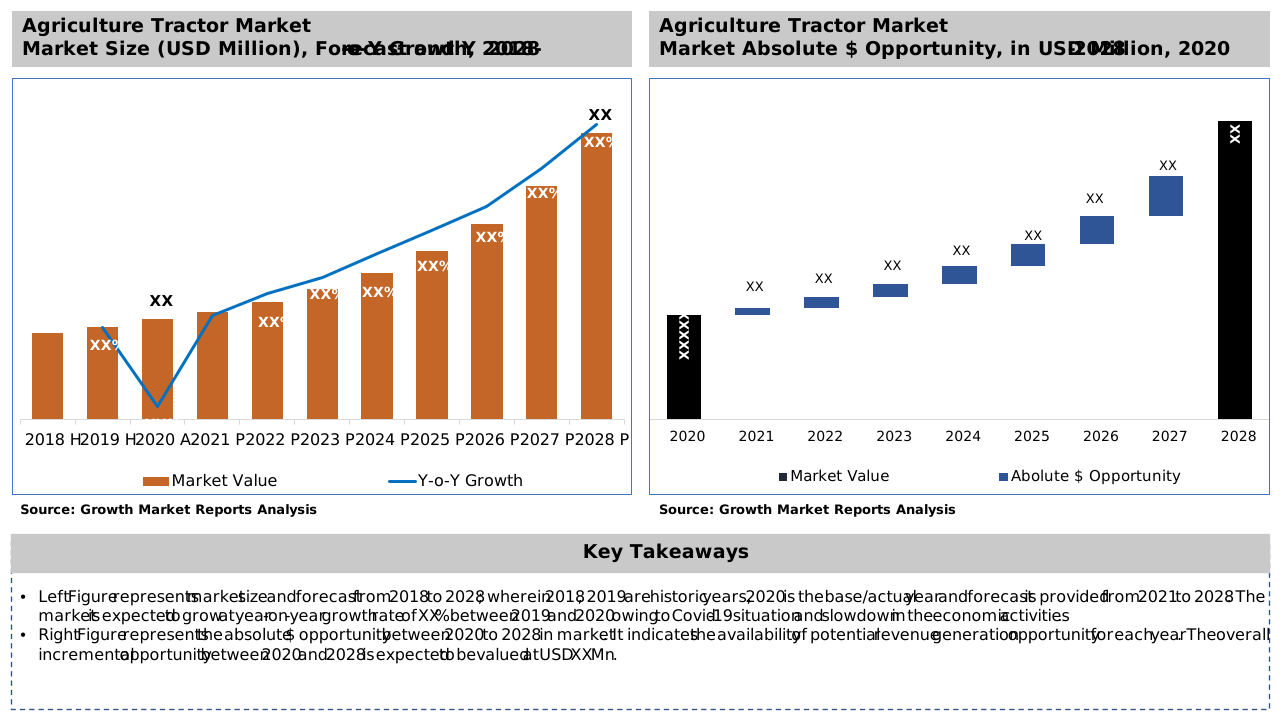
According to our latest research, the global agriculture tractor market size reached USD 73.1 billion in 2025, reflecting robust growth driven by technological advancements and increased mechanization in the farming sector. The market is expected to expand at a CAGR of 5.7% from 2026 to 2034, with the total market size projected to reach USD 120.8 billion by the end of 2034. This growth is primarily fueled by the rising demand for efficient agricultural practices, the adoption of precision farming, and supportive government policies that encourage farm mechanization across both developed and emerging economies.

Global Agriculture Tractor Market Size Forecast 2025-2034, USD Billion

One of the most significant growth factors for the agriculture tractor market is the accelerating trend of farm mechanization. As the global population continues to rise, there is increasing pressure on agricultural productivity to ensure food security. Farmers are increasingly seeking advanced machinery, including tractors, to enhance efficiency, reduce labor costs, and address the challenges posed by labor shortages. The integration of smart technologies such as GPS, telematics, and autonomous systems into tractors is transforming the sector, enabling higher precision and data-driven farming operations. These advancements not only improve productivity but also contribute to sustainable agricultural practices by optimizing resource usage and minimizing environmental impact. The broader agricultural machinery sector is experiencing similar momentum, reinforcing demand across interconnected equipment categories.

Another key driver is the supportive policy landscape and financial incentives provided by governments worldwide. In many regions, particularly in Asia Pacific and Latin America, governments are rolling out subsidies, low-interest loans, and tax benefits to encourage the adoption of modern agricultural machinery. These initiatives aim to uplift small and marginal farmers by making tractors more accessible and affordable, thus driving market penetration. Furthermore, the expansion of farm credit facilities and the presence of strong dealer networks are making it easier for farmers to purchase or lease tractors. This trend is particularly pronounced in emerging economies, where mechanization levels have traditionally lagged behind those of developed markets.

The market is also witnessing a surge in demand for specialized tractors tailored to specific farming needs, such as orchard tractors, compact tractors for horticulture, and high-power tractors for large-scale commercial farming. This diversification caters to the evolving needs of different end-users, from smallholder farmers to large agribusinesses. The growing popularity of contract farming and agricultural contractors has further broadened the customer base for tractor manufacturers. Additionally, the entry of multinational players and the rise of local manufacturing in key markets are intensifying competition and fostering innovation, leading to the introduction of more efficient and affordable tractor models. The rapid rise of electric farm tractors is also reshaping the product landscape as manufacturers respond to tightening emission standards and farmer demand for lower operating costs.

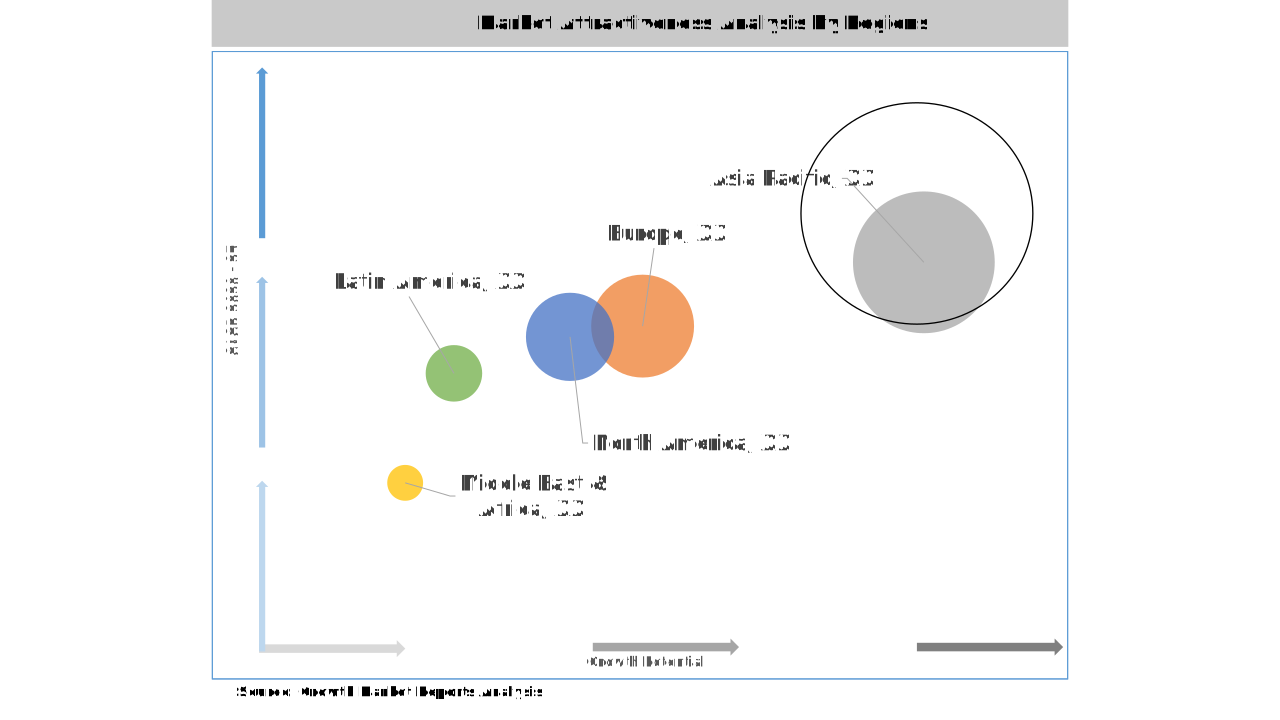
From a regional perspective, Asia Pacific continues to dominate the agriculture tractor market, accounting for the largest share in 2025. The region's leadership is underpinned by the vast agricultural landscape in countries like China and India, where government initiatives and rural development programs are actively promoting farm mechanization. North America and Europe follow closely, benefiting from advanced farming technologies and a strong focus on sustainable agriculture. Meanwhile, Latin America and the Middle East & Africa are emerging as high-potential markets, driven by increasing investments in agriculture and improving access to credit for farmers. The regional landscape is expected to evolve further as global players expand their footprint and local manufacturers strengthen their presence through strategic partnerships and product localization.

Product Type Analysis

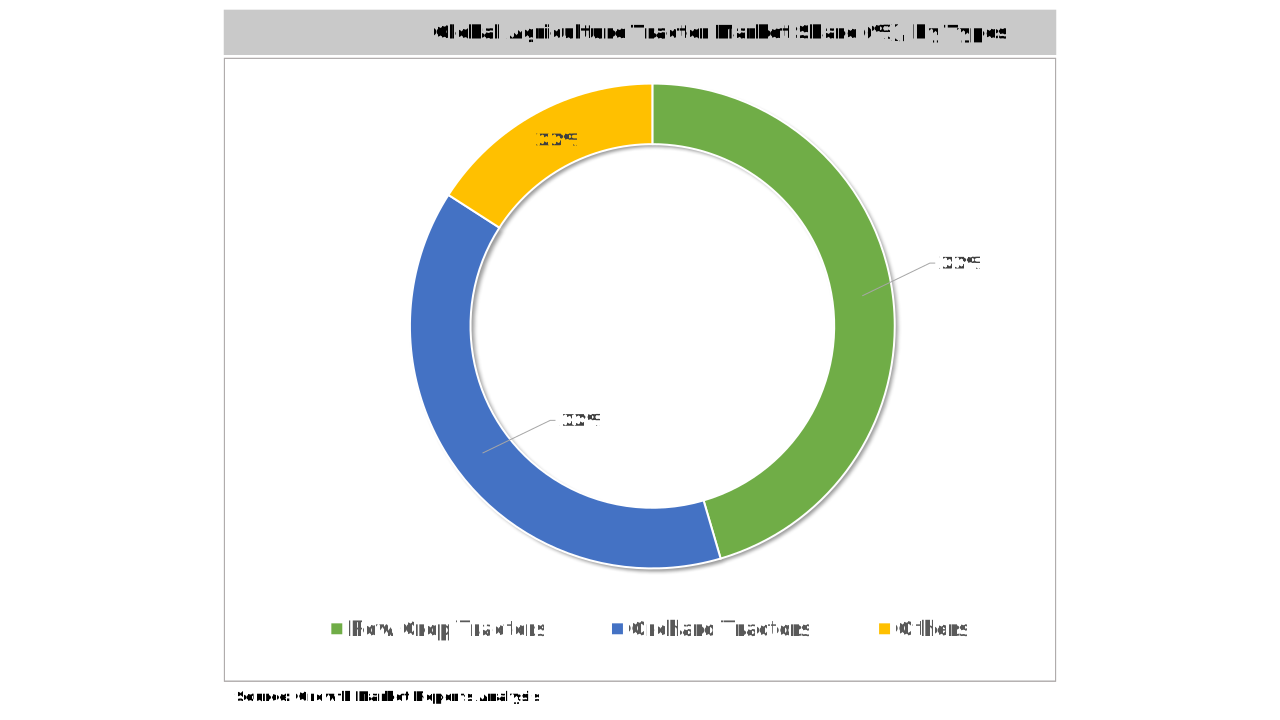
The agriculture tractor market by product type is segmented into utility tractors, row crop tractors, orchard tractors, industrial tractors, and others. Utility tractors continue to capture the largest share of the market at approximately 38.5% in 2025, owing to their versatility and suitability for a wide range of farming operations. These tractors are particularly favored by small and medium-sized farms, which require a single piece of equipment capable of performing multiple tasks, from land preparation to hauling. Manufacturers are focusing on enhancing the durability, fuel efficiency, and ease of maintenance of utility tractors, making them increasingly attractive to cost-conscious buyers in both developed and developing regions.

Agriculture Tractor Market Share by Product Type 2025

Row crop tractors, designed for tasks such as planting, cultivating, and harvesting crops grown in rows, are gaining traction in regions with extensive commercial farming. These tractors are equipped with advanced features like adjustable row spacing, high ground clearance, and precision control systems, enabling efficient operations in large-scale farms. The demand for row crop tractors is particularly strong in North America and Europe, where precision agriculture practices are widely adopted. Manufacturers are integrating advanced telematics and automation solutions into these tractors to cater to the growing demand for smart farming equipment.

Orchard tractors, which are compact and maneuverable, cater to the specific needs of fruit and nut growers. Their design enables easy navigation in narrow orchard rows without damaging crops, making them indispensable for horticulture and specialty crop farming. The rising trend of high-value crop cultivation, particularly in Mediterranean and tropical regions, is driving demand for orchard tractors. Manufacturers are focusing on developing models with advanced ergonomic features, improved operator comfort, and enhanced safety systems to meet the unique requirements of this segment.

Industrial tractors, used for non-farming applications such as landscaping, construction, and material handling, represent a smaller but growing segment of the market. The increasing adoption of tractors in infrastructure and rural development projects is expanding the addressable market for industrial tractors. Additionally, the others category, which includes compact and specialty tractors, is gaining momentum as niche applications in urban agriculture, greenhouse farming, and vineyard management become more prevalent. This diversification of product offerings reflects the evolving needs of the agricultural sector and the strategic efforts of manufacturers to capture new growth opportunities. The continued innovation across these categories also reinforces broader trends in the wider agricultural machinery market, where equipment specialization is accelerating.

Report Scope

Attributes Details
Report Title Agriculture Tractor Market Research Report 2034
By Product Type Utility Tractors, Row Crop Tractors, Orchard Tractors, Industrial Tractors, Others
By Power Output Below 40 HP, 40-100 HP, Above 100 HP
By Drive Type 2-Wheel Drive, 4-Wheel Drive
By Application Land Preparation, Sowing & Planting, Harvesting, Others
By End-User Farmers, Agricultural Contractors, Others
Regions Covered North America, Europe, APAC, Latin America, MEA
Base Year 2025
Historic Data 2019-2024
Forecast Period 2026-2034
Number of Pages 282
Number of Tables & Figures 331
Customization Available Yes, the report can be customized as per your need.

Power Output Analysis

The agriculture tractor market is segmented by power output into below 40 HP, 40-100 HP, and above 100 HP categories. Tractors with power output below 40 HP dominate the market, particularly in Asia Pacific and Africa, where smallholder and marginal farmers constitute a significant portion of the agricultural workforce. These tractors are ideal for light-duty tasks such as tilling, weeding, and small-scale transport, and their affordability makes them accessible to a broad customer base. Manufacturers are focusing on developing fuel-efficient, low-maintenance models in this segment to cater to the cost-sensitive needs of these markets.

The 40-100 HP segment is witnessing robust growth, driven by the increasing adoption of medium-sized tractors for a variety of farming operations. These tractors offer a balance between power and versatility, making them suitable for both small and medium-sized farms as well as commercial agricultural enterprises. The growing trend of multi-cropping and the need for efficient land preparation and harvesting equipment are boosting demand in this segment. Additionally, advancements in engine technology and the integration of precision farming tools are enhancing the appeal of 40-100 HP tractors among progressive farmers worldwide.

Tractors with power output above 100 HP are primarily used in large-scale commercial farming and mechanized agriculture in developed regions. These high-power tractors are equipped with advanced features such as GPS-guided steering, telematics, and automated implement controls, enabling efficient operations over vast tracts of land. The adoption of above 100 HP tractors is particularly strong in North America, Europe, and parts of Latin America, where large farms and agribusinesses require robust machinery for intensive operations. The trend toward consolidation of farmland and the expansion of commercial agriculture are expected to drive further growth in this segment through 2034.

Manufacturers are increasingly offering customizable options across all power output segments to address the diverse needs of farmers. The focus is on enhancing fuel efficiency, reducing emissions, and incorporating digital technologies to improve operational efficiency and sustainability. As environmental regulations become more stringent, there is a growing emphasis on the development of cleaner and more efficient engines, particularly in the above 100 HP segment. The emergence of battery-electric and hydrogen-powered high-horsepower models is beginning to reshape this segment, with several leading manufacturers announcing commercial launches between 2025 and 2027.

Drive Type Analysis

The agriculture tractor market by drive type is segmented into 2-wheel drive (2WD) and 4-wheel drive (4WD) tractors. 2WD tractors continue to hold a dominant share, especially in regions with flat terrain and small to medium-sized farms. These tractors are preferred for their simplicity, lower cost, and ease of maintenance. In markets like India, Southeast Asia, and parts of Africa, 2WD tractors are the workhorses of the agricultural sector, performing a wide range of tasks from plowing to transportation. Manufacturers are focusing on improving the durability and efficiency of 2WD tractors to meet the needs of cost-sensitive customers in these high-volume markets.

However, the demand for 4WD tractors is rising rapidly, particularly in developed regions and in applications that require higher traction and power. 4WD tractors offer superior performance on challenging terrains, such as hilly or muddy fields, and are essential for heavy-duty operations like deep plowing, subsoiling, and large-scale harvesting. The adoption of 4WD tractors is also being driven by the trend toward farm consolidation and the increasing size of agricultural holdings in North America, Europe, and parts of Latin America. Manufacturers are investing in advanced drivetrain technologies and ergonomic features to enhance the performance and operator comfort of 4WD models.

Industrial tractors, while traditionally associated with non-agricultural applications, are increasingly finding their place within the agricultural sector. These robust machines are designed to handle heavy-duty tasks and are particularly useful in large-scale operations that require significant power and durability. The versatility of industrial tractors allows them to be used in a variety of settings, from construction and landscaping to material handling and infrastructure development. In agriculture, they are often employed in tasks that demand high traction and stability, such as deep plowing and large-scale harvesting. The growing adoption of industrial tractors in agriculture reflects the sector's need for machinery that can withstand rigorous use and enhance operational efficiency.

The ongoing shift toward precision agriculture and the integration of smart technologies are further boosting the demand for 4WD tractors. These tractors are often equipped with GPS, auto-steering, and telematics systems, enabling farmers to optimize field operations, reduce input costs, and improve yields. The ability to attach a wide range of implements and the enhanced stability offered by 4WD systems make these tractors highly versatile and suitable for commercial farming operations. As farmers seek to maximize productivity and efficiency, the preference for 4WD tractors is expected to grow consistently through 2034.

Manufacturers are also exploring hybrid and electric drive technologies to cater to the evolving demands of the market. The development of energy-efficient and environmentally friendly drive systems is becoming a key focus area, particularly in regions with stringent emission regulations. Purpose-built electric tractor platforms are moving from pilot phases into scaled commercial availability, with 4WD configurations at the forefront of this transition. This trend is expected to create new growth opportunities and reshape the competitive dynamics in the agriculture tractor market over the forecast period.

Application Analysis

The agriculture tractor market is segmented by application into land preparation, sowing & planting, harvesting, and others. Land preparation remains the largest application segment, as tractors are extensively used for plowing, tilling, leveling, and soil conditioning. The demand for tractors in land preparation is driven by the need to improve soil health, enhance crop yields, and prepare fields for efficient sowing and planting. The adoption of advanced tillage equipment and precision land preparation practices is further boosting the demand for tractors in this segment as of 2025.

Sowing and planting represent a growing application area, as farmers increasingly adopt mechanized solutions to ensure timely and uniform seed placement. Tractors equipped with seed drills, planters, and transplanters are enabling higher productivity and better crop establishment. The trend toward multi-cropping and the need for efficient use of agricultural inputs are driving the adoption of mechanized sowing and planting equipment. Manufacturers are focusing on developing integrated solutions that combine tractors with advanced planting implements to meet the evolving needs of farmers across diverse geographies.

Harvesting is another critical application segment, especially in regions with large-scale commercial farming. Tractors are used to power a variety of harvesting equipment, including combine harvesters, forage harvesters, and balers. The growing demand for efficient and timely harvesting solutions is driving the adoption of high-power tractors equipped with advanced automation and telematics features. The integration of smart harvesting technologies is enabling farmers to optimize yields, reduce losses, and improve overall farm profitability, making this the fastest-growing application segment in the 2026-2034 forecast period.

The others category includes applications such as crop protection, irrigation, material handling, and transportation. The versatility of modern tractors, which can be fitted with a wide range of implements and attachments, is expanding their use beyond traditional farming operations. Manufacturers are focusing on developing multi-functional tractors that can perform a variety of tasks, reducing the need for multiple pieces of equipment and enhancing the overall value proposition for farmers. This trend is expected to drive further growth in the agriculture tractor market as farmers seek to maximize the utility and return on investment from their machinery through 2034.

End-User Analysis

The agriculture tractor market by end-user is segmented into farmers, agricultural contractors, and others. Farmers constitute the largest end-user segment, accounting for a significant share of tractor sales worldwide in 2025. The demand from this segment is driven by the need to enhance productivity, reduce manual labor, and improve farm profitability. Small and medium-sized farmers, in particular, are increasingly adopting tractors to mechanize key farming operations and remain competitive in a rapidly evolving agricultural landscape. Manufacturers are focusing on developing affordable and easy-to-maintain models to cater to the unique needs of this segment.

Agricultural contractors represent a rapidly growing end-user segment, particularly in regions where farm sizes are small and the cost of owning machinery is prohibitive. Contractors provide mechanized services to multiple farmers, enabling them to access modern equipment without the need for significant capital investment. The rise of custom hiring centers and the increasing popularity of contract farming are driving demand for tractors among agricultural contractors. Manufacturers are responding by offering flexible financing options and after-sales support to attract this growing customer base, with digital booking platforms for contractor services also gaining traction in 2025.

The others category includes government agencies, cooperatives, and corporate agribusinesses that invest in tractors for large-scale farming projects, rural development initiatives, and community mechanization programs. The involvement of these entities is particularly significant in emerging markets, where government-led schemes and public-private partnerships are playing a key role in promoting farm mechanization. The demand from this segment is often driven by the need for high-capacity and technologically advanced tractors capable of supporting large-scale operations.

Manufacturers are increasingly offering tailored solutions and value-added services to meet the diverse needs of different end-users. The focus is on enhancing product reliability, providing comprehensive after-sales support, and developing innovative financing and leasing options. This customer-centric approach is helping manufacturers strengthen their market position and capture new growth opportunities in the agriculture tractor market through the 2026-2034 forecast period.

Opportunities & Threats

The agriculture tractor market presents significant opportunities for growth, driven by the ongoing digital transformation of the agricultural sector. The integration of smart technologies such as GPS, telematics, and IoT-enabled sensors is enabling the development of connected tractors that offer real-time data analytics, remote monitoring, and predictive maintenance capabilities. These advancements are helping farmers optimize field operations, reduce input costs, and improve decision-making. The growing adoption of precision agriculture practices and the increasing availability of high-speed internet in rural areas are expected to further accelerate the adoption of smart tractors, creating new revenue streams for manufacturers and technology providers in the 2026-2034 period.

Another major opportunity lies in the expansion of the agriculture tractor market in emerging economies. Rapid urbanization, rising incomes, and changing dietary preferences are driving increased investment in agricultural modernization across Asia Pacific, Latin America, and Africa. Governments in these regions are implementing policies to promote farm mechanization, improve rural infrastructure, and enhance access to credit for farmers. The development of affordable and locally manufactured tractors tailored to the specific needs of smallholder farmers is expected to drive market penetration and support long-term growth. Additionally, the rise of sustainable agriculture and the growing demand for eco-friendly machinery, including battery-electric models, present significant opportunities for manufacturers to innovate and differentiate their product portfolios.

Despite these opportunities, the market faces several restraining factors, including the high initial cost of tractors and the limited availability of financing options in certain regions. Small and marginal farmers, particularly in developing countries, often struggle to afford modern machinery due to budget constraints and lack of access to credit. Additionally, the lack of adequate infrastructure, such as reliable power supply and maintenance facilities, can hinder the adoption of tractors in remote and underserved areas. Fluctuations in commodity prices and the impact of climate change on agricultural productivity also pose risks to market growth through 2034. Addressing these challenges will require coordinated efforts from manufacturers, governments, and financial institutions to develop innovative business models and support mechanisms for farmers.

Regional Outlook

Asia Pacific leads the agriculture tractor market, accounting for approximately 45% of the global market share in 2025, with a market size of USD 32.9 billion. The region's dominance is driven by the large agricultural base in countries such as India, China, and Japan, where government initiatives, rural development programs, and favorable financing schemes are promoting farm mechanization. India, in particular, remains the largest tractor market globally by volume, with strong demand from small and medium-sized farmers. The presence of a robust manufacturing ecosystem and the availability of affordable tractor models are further supporting market growth in Asia Pacific. The region is forecast to maintain its leading position through 2034.

Agriculture Tractor Market Regional Share 2025

North America holds the second-largest share of the agriculture tractor market, with a market size of USD 15.0 billion in 2025. The region is characterized by large-scale commercial farming, high mechanization levels, and widespread adoption of advanced technologies such as GPS-guided tractors and autonomous machinery. The United States is the key market in the region, supported by strong government backing for sustainable agriculture and the presence of leading global manufacturers. The market in North America is expected to grow at a CAGR of 4.9% from 2026 to 2034, driven by ongoing investments in precision agriculture and the replacement of aging machinery fleets.

Europe is another significant market, with a market size of USD 12.4 billion in 2025, driven by the focus on sustainable farming practices, stringent emission regulations, and the adoption of smart farming technologies. Key markets in the region include Germany, France, and the United Kingdom, where farmers are increasingly investing in high-power and technologically advanced tractors. Latin America and the Middle East & Africa are emerging as high-growth regions, with market sizes of USD 7.3 billion and USD 5.5 billion respectively in 2025. These regions are benefiting from improving access to credit, rising investments in agriculture, and government-led initiatives to promote mechanization. The regional landscape is expected to evolve significantly through 2034 as global players expand their presence and local manufacturers introduce innovative, affordable tractor models tailored to local needs.

Competitor Outlook

The agriculture tractor market is highly competitive, with a mix of global giants and regional players vying for market share. The competitive landscape is characterized by continuous innovation, strategic partnerships, and a strong focus on customer-centric solutions. Leading manufacturers are investing heavily in research and development to introduce advanced features such as autonomous driving, telematics, and precision farming capabilities. The integration of digital technologies and the development of energy-efficient engines are key differentiators in the market as of 2025, enabling companies to cater to the evolving needs of modern farmers.

Market leaders are expanding their global footprint through mergers, acquisitions, and joint ventures. These strategies are helping companies access new markets, enhance their product portfolios, and strengthen their distribution networks. The rise of local manufacturing in emerging economies is intensifying competition, as regional players leverage their understanding of local customer needs and cost advantages to gain market share. In addition, the growing emphasis on after-sales support, financing solutions, and value-added services is shaping the competitive dynamics and influencing purchasing decisions across the 2026-2034 forecast horizon.

The competitive landscape is further shaped by the entry of technology companies and startups that are introducing disruptive innovations in areas such as autonomous tractors, electric drive systems, and IoT-enabled solutions. These entrants are collaborating with traditional manufacturers to accelerate the adoption of smart farming technologies and create new business models. The increasing focus on sustainability and environmental compliance is also driving manufacturers to develop cleaner and more efficient tractors, in line with global trends toward green agriculture and net-zero commitments.

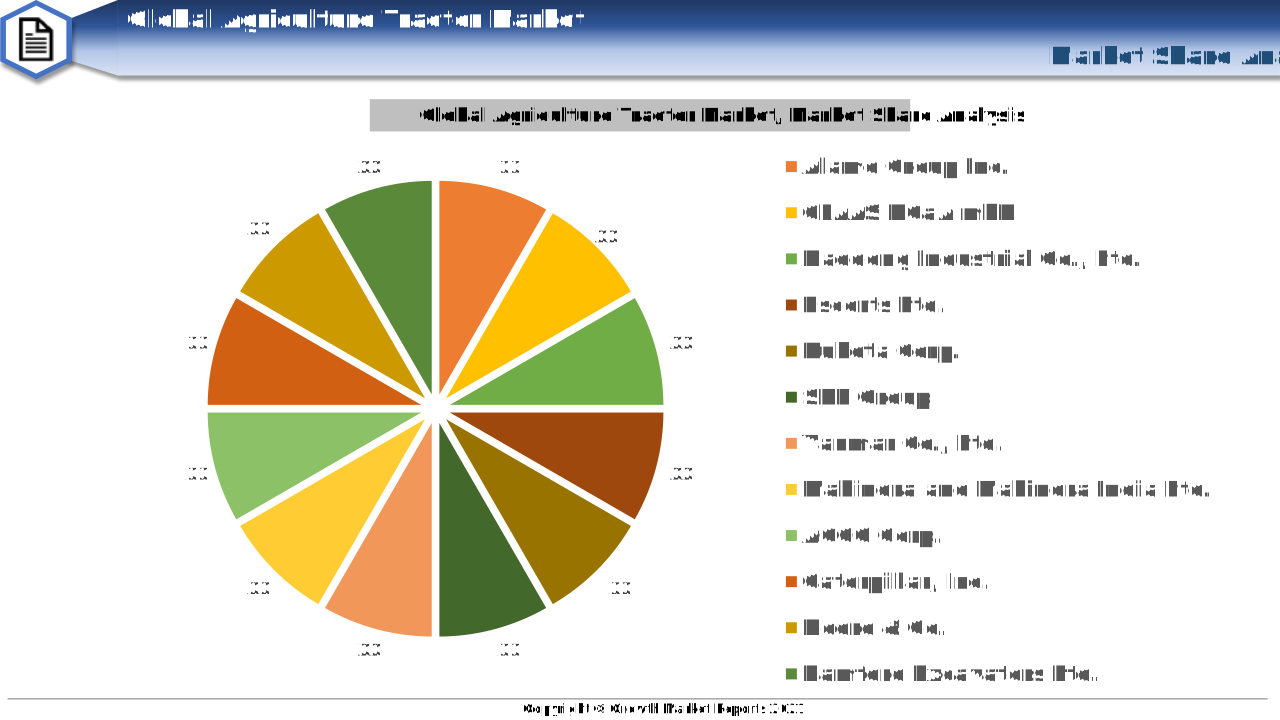
Some of the major companies operating in the agriculture tractor market include Deere & Company (John Deere), CNH Industrial N.V. (Case IH and New Holland Agriculture), AGCO Corporation (Massey Ferguson, Fendt, Valtra), Kubota Corporation, Mahindra & Mahindra Ltd., Escorts Kubota Limited, and CLAAS KGaA mbH. Deere & Company is renowned for its extensive product portfolio and strong global presence, offering a wide range of tractors equipped with advanced technologies including its proprietary John Deere Operations Center platform. CNH Industrial is a key player in both developed and emerging markets, with a focus on innovation and customer-centric solutions. AGCO Corporation is recognized for its diverse brand portfolio and commitment to sustainability, while Kubota Corporation is a leader in compact and specialty tractors, particularly across Asia Pacific.

Mahindra & Mahindra Ltd. is a dominant player in India and other emerging markets, known for its affordable and reliable tractor models. Escorts Kubota Limited, formed through the strategic partnership between Escorts and Kubota, is another major player focusing on innovative solutions and strong after-sales support. CLAAS KGaA mbH is a leading European player, specializing in high-power tractors and advanced harvesting equipment. SAME Deutz-Fahr Group and Argo Tractors also maintain strong positions in the European market, while Sonalika International Tractors and TAFE continue to expand aggressively across emerging markets. These companies are continuously investing in R&D, expanding their dealer networks, and enhancing their service offerings to maintain their competitive edge in the rapidly evolving agriculture tractor market through 2034.

Key Players

  • Deere & Company
  • CNH Industrial N.V.
  • AGCO Corporation
  • Kubota Corporation
  • Mahindra & Mahindra Ltd.
  • CLAAS KGaA mbH
  • SAME Deutz-Fahr Group S.p.A.
  • Yanmar Co., Ltd.
  • Tractors and Farm Equipment Limited (TAFE)
  • Escorts Kubota Limited
  • Sonalika International Tractors Ltd.
  • Fendt
  • New Holland Agriculture
  • JCB Ltd.
  • LS Mtron Ltd.
  • Argo Tractors S.p.A.
  • Zetor Tractors a.s.
  • Dongfeng Agricultural Machinery Co., Ltd.

Segments

The Agriculture Tractor market has been segmented on the basis of

Product Type

  • Utility Tractors
  • Row Crop Tractors
  • Orchard Tractors
  • Industrial Tractors
  • Others

Power Output

  • Below 40 HP
  • 40–100 HP
  • Above 100 HP

Drive Type

  • 2-Wheel Drive
  • 4-Wheel Drive

Application

  • Land Preparation
  • Sowing & Planting
  • Harvesting
  • Others

End-User

  • Farmers
  • Agricultural Contractors
  • Others

Frequently Asked Questions

Leading players include Deere & Company, CNH Industrial N.V., AGCO Corporation, Kubota Corporation, Mahindra & Mahindra Ltd., CLAAS KGaA mbH, SAME Deutz-Fahr Group S.p.A., Yanmar Co. Ltd., Tractors and Farm Equipment Limited (TAFE), Escorts Kubota Limited, Sonalika International Tractors Ltd., Fendt, New Holland Agriculture, and JCB Ltd. These companies compete on innovation, product breadth, after-sales service, and geographic reach.

Major challenges include the high upfront cost of advanced tractors limiting accessibility for smallholder farmers in developing regions, limited rural financing infrastructure, inadequate maintenance and service networks in remote areas, volatility in commodity prices reducing farmer purchasing power, and tightening emissions regulations requiring significant R&D investment. Climate change impacts on agricultural productivity and supply chain disruptions in component sourcing also pose ongoing risks to market growth.

Key advancements include autonomous and semi-autonomous tractor systems, GPS-guided auto-steering, IoT-enabled telematics for real-time monitoring and predictive maintenance, integration of artificial intelligence for precision field operations, and development of electric and hybrid drive systems. Manufacturers are also investing in connectivity platforms that link tractors to broader farm management software ecosystems, enabling data-driven decision-making across the entire crop cycle.

Farmers constitute the largest end-user segment, representing the majority of global tractor demand in 2025. Agricultural contractors are the fastest-growing end-user group, particularly in regions where smallholder farm sizes make individual ownership impractical. The others category, encompassing government agencies, cooperatives, and agribusinesses, is also growing as public-private mechanization programs expand in emerging markets.

The primary applications are land preparation, sowing and planting, harvesting, and others including crop protection, irrigation support, and material handling. Land preparation remains the largest application segment, as tractors are essential for plowing, tilling, and soil conditioning. Harvesting is the fastest-growing application, driven by demand for high-power machines equipped with automation and telematics features.

The market is divided into below 40 HP, 40-100 HP, and above 100 HP categories. The below 40 HP segment dominates in Asia Pacific and Africa, catering to smallholder farmers. The 40-100 HP segment is the fastest-growing globally, offering a balance of power and versatility for medium-scale operations. The above 100 HP segment is driven by large commercial farms in North America, Europe, and parts of Latin America.

The market is segmented into utility tractors, row crop tractors, orchard tractors, industrial tractors, and others. Utility tractors hold the largest share at approximately 38.5% of the 2025 market, owing to their versatility across a wide range of farming tasks. Row crop tractors and industrial tractors are also significant segments, while orchard and specialty tractors are growing rapidly alongside high-value crop cultivation trends.

Asia Pacific dominates the market, accounting for approximately 45% of the global share in 2025, led by India and China. North America holds the second-largest share at around 20.5%, followed by Europe at 17%. Latin America and the Middle East & Africa are high-growth emerging regions, together accounting for approximately 17.5% of the global market in 2025.

Key drivers include the rising global demand for food security requiring higher agricultural productivity, widespread labor shortages pushing farmers toward mechanization, integration of GPS and telematics into modern tractors, government subsidies and low-interest financing schemes in Asia Pacific and Latin America, and the growing adoption of precision farming practices that boost operational efficiency and reduce input waste.

The global agriculture tractor market reached USD 73.1 billion in 2025 and is projected to expand at a CAGR of 5.7% from 2026 to 2034, reaching approximately USD 120.8 billion by the end of 2034. This growth is driven by accelerating farm mechanization, rising precision agriculture adoption, and supportive government policies across both developed and emerging economies.

Table Of Content

Chapter 1 Executive Summary
Chapter 2 Assumptions and Acronyms Used
Chapter 3 Research Methodology
Chapter 4 Agriculture Tractor Market Overview
   4.1 Introduction
      4.1.1 Market Taxonomy
      4.1.2 Market Definition
      4.1.3 Macro-Economic Factors Impacting the Market Growth
   4.2 Agriculture Tractor Market Dynamics
      4.2.1 Market Drivers
      4.2.2 Market Restraints
      4.2.3 Market Opportunity
   4.3 Agriculture Tractor Market - Supply Chain Analysis
      4.3.1 List of Key Suppliers
      4.3.2 List of Key Distributors
      4.3.3 List of Key Consumers
   4.4 Key Forces Shaping the Agriculture Tractor Market
      4.4.1 Bargaining Power of Suppliers
      4.4.2 Bargaining Power of Buyers
      4.4.3 Threat of Substitution
      4.4.4 Threat of New Entrants
      4.4.5 Competitive Rivalry
   4.5 Global Agriculture Tractor Market Size & Forecast, 2023-2032
      4.5.1 Agriculture Tractor Market Size and Y-o-Y Growth
      4.5.2 Agriculture Tractor Market Absolute $ Opportunity

Chapter 5 Global Agriculture Tractor Market Analysis and Forecast By Product Type
   5.1 Introduction
      5.1.1 Key Market Trends & Growth Opportunities By Product Type
      5.1.2 Basis Point Share (BPS) Analysis By Product Type
      5.1.3 Absolute $ Opportunity Assessment By Product Type
   5.2 Agriculture Tractor Market Size Forecast By Product Type
      5.2.1 Utility Tractors
      5.2.2 Row Crop Tractors
      5.2.3 Orchard Tractors
      5.2.4 Industrial Tractors
      5.2.5 Others
   5.3 Market Attractiveness Analysis By Product Type

Chapter 6 Global Agriculture Tractor Market Analysis and Forecast By Power Output
   6.1 Introduction
      6.1.1 Key Market Trends & Growth Opportunities By Power Output
      6.1.2 Basis Point Share (BPS) Analysis By Power Output
      6.1.3 Absolute $ Opportunity Assessment By Power Output
   6.2 Agriculture Tractor Market Size Forecast By Power Output
      6.2.1 Below 40 HP
      6.2.2 40–100 HP
      6.2.3 Above 100 HP
   6.3 Market Attractiveness Analysis By Power Output

Chapter 7 Global Agriculture Tractor Market Analysis and Forecast By Drive Type
   7.1 Introduction
      7.1.1 Key Market Trends & Growth Opportunities By Drive Type
      7.1.2 Basis Point Share (BPS) Analysis By Drive Type
      7.1.3 Absolute $ Opportunity Assessment By Drive Type
   7.2 Agriculture Tractor Market Size Forecast By Drive Type
      7.2.1 2-Wheel Drive
      7.2.2 4-Wheel Drive
   7.3 Market Attractiveness Analysis By Drive Type

Chapter 8 Global Agriculture Tractor Market Analysis and Forecast By Application
   8.1 Introduction
      8.1.1 Key Market Trends & Growth Opportunities By Application
      8.1.2 Basis Point Share (BPS) Analysis By Application
      8.1.3 Absolute $ Opportunity Assessment By Application
   8.2 Agriculture Tractor Market Size Forecast By Application
      8.2.1 Land Preparation
      8.2.2 Sowing & Planting
      8.2.3 Harvesting
      8.2.4 Others
   8.3 Market Attractiveness Analysis By Application

Chapter 9 Global Agriculture Tractor Market Analysis and Forecast By End-User
   9.1 Introduction
      9.1.1 Key Market Trends & Growth Opportunities By End-User
      9.1.2 Basis Point Share (BPS) Analysis By End-User
      9.1.3 Absolute $ Opportunity Assessment By End-User
   9.2 Agriculture Tractor Market Size Forecast By End-User
      9.2.1 Farmers
      9.2.2 Agricultural Contractors
      9.2.3 Others
   9.3 Market Attractiveness Analysis By End-User

Chapter 10 Global Agriculture Tractor Market Analysis and Forecast by Region
   10.1 Introduction
      10.1.1 Key Market Trends & Growth Opportunities By Region
      10.1.2 Basis Point Share (BPS) Analysis By Region
      10.1.3 Absolute $ Opportunity Assessment By Region
   10.2 Agriculture Tractor Market Size Forecast By Region
      10.2.1 North America
      10.2.2 Europe
      10.2.3 Asia Pacific
      10.2.4 Latin America
      10.2.5 Middle East & Africa (MEA)
   10.3 Market Attractiveness Analysis By Region

Chapter 11 Coronavirus Disease (COVID-19) Impact 
   11.1 Introduction 
   11.2 Current & Future Impact Analysis 
   11.3 Economic Impact Analysis 
   11.4 Government Policies 
   11.5 Investment Scenario

Chapter 12 North America Agriculture Tractor Analysis and Forecast
   12.1 Introduction
   12.2 North America Agriculture Tractor Market Size Forecast by Country
      12.2.1 U.S.
      12.2.2 Canada
   12.3 Basis Point Share (BPS) Analysis by Country
   12.4 Absolute $ Opportunity Assessment by Country
   12.5 Market Attractiveness Analysis by Country
   12.6 North America Agriculture Tractor Market Size Forecast By Product Type
      12.6.1 Utility Tractors
      12.6.2 Row Crop Tractors
      12.6.3 Orchard Tractors
      12.6.4 Industrial Tractors
      12.6.5 Others
   12.7 Basis Point Share (BPS) Analysis By Product Type 
   12.8 Absolute $ Opportunity Assessment By Product Type 
   12.9 Market Attractiveness Analysis By Product Type
   12.10 North America Agriculture Tractor Market Size Forecast By Power Output
      12.10.1 Below 40 HP
      12.10.2 40–100 HP
      12.10.3 Above 100 HP
   12.11 Basis Point Share (BPS) Analysis By Power Output 
   12.12 Absolute $ Opportunity Assessment By Power Output 
   12.13 Market Attractiveness Analysis By Power Output
   12.14 North America Agriculture Tractor Market Size Forecast By Drive Type
      12.14.1 2-Wheel Drive
      12.14.2 4-Wheel Drive
   12.15 Basis Point Share (BPS) Analysis By Drive Type 
   12.16 Absolute $ Opportunity Assessment By Drive Type 
   12.17 Market Attractiveness Analysis By Drive Type
   12.18 North America Agriculture Tractor Market Size Forecast By Application
      12.18.1 Land Preparation
      12.18.2 Sowing & Planting
      12.18.3 Harvesting
      12.18.4 Others
   12.19 Basis Point Share (BPS) Analysis By Application 
   12.20 Absolute $ Opportunity Assessment By Application 
   12.21 Market Attractiveness Analysis By Application
   12.22 North America Agriculture Tractor Market Size Forecast By End-User
      12.22.1 Farmers
      12.22.2 Agricultural Contractors
      12.22.3 Others
   12.23 Basis Point Share (BPS) Analysis By End-User 
   12.24 Absolute $ Opportunity Assessment By End-User 
   12.25 Market Attractiveness Analysis By End-User

Chapter 13 Europe Agriculture Tractor Analysis and Forecast
   13.1 Introduction
   13.2 Europe Agriculture Tractor Market Size Forecast by Country
      13.2.1 Germany
      13.2.2 France
      13.2.3 Italy
      13.2.4 U.K.
      13.2.5 Spain
      13.2.6 Russia
      13.2.7 Rest of Europe
   13.3 Basis Point Share (BPS) Analysis by Country
   13.4 Absolute $ Opportunity Assessment by Country
   13.5 Market Attractiveness Analysis by Country
   13.6 Europe Agriculture Tractor Market Size Forecast By Product Type
      13.6.1 Utility Tractors
      13.6.2 Row Crop Tractors
      13.6.3 Orchard Tractors
      13.6.4 Industrial Tractors
      13.6.5 Others
   13.7 Basis Point Share (BPS) Analysis By Product Type 
   13.8 Absolute $ Opportunity Assessment By Product Type 
   13.9 Market Attractiveness Analysis By Product Type
   13.10 Europe Agriculture Tractor Market Size Forecast By Power Output
      13.10.1 Below 40 HP
      13.10.2 40–100 HP
      13.10.3 Above 100 HP
   13.11 Basis Point Share (BPS) Analysis By Power Output 
   13.12 Absolute $ Opportunity Assessment By Power Output 
   13.13 Market Attractiveness Analysis By Power Output
   13.14 Europe Agriculture Tractor Market Size Forecast By Drive Type
      13.14.1 2-Wheel Drive
      13.14.2 4-Wheel Drive
   13.15 Basis Point Share (BPS) Analysis By Drive Type 
   13.16 Absolute $ Opportunity Assessment By Drive Type 
   13.17 Market Attractiveness Analysis By Drive Type
   13.18 Europe Agriculture Tractor Market Size Forecast By Application
      13.18.1 Land Preparation
      13.18.2 Sowing & Planting
      13.18.3 Harvesting
      13.18.4 Others
   13.19 Basis Point Share (BPS) Analysis By Application 
   13.20 Absolute $ Opportunity Assessment By Application 
   13.21 Market Attractiveness Analysis By Application
   13.22 Europe Agriculture Tractor Market Size Forecast By End-User
      13.22.1 Farmers
      13.22.2 Agricultural Contractors
      13.22.3 Others
   13.23 Basis Point Share (BPS) Analysis By End-User 
   13.24 Absolute $ Opportunity Assessment By End-User 
   13.25 Market Attractiveness Analysis By End-User

Chapter 14 Asia Pacific Agriculture Tractor Analysis and Forecast
   14.1 Introduction
   14.2 Asia Pacific Agriculture Tractor Market Size Forecast by Country
      14.2.1 China
      14.2.2 Japan
      14.2.3 South Korea
      14.2.4 India
      14.2.5 Australia
      14.2.6 South East Asia (SEA)
      14.2.7 Rest of Asia Pacific (APAC)
   14.3 Basis Point Share (BPS) Analysis by Country
   14.4 Absolute $ Opportunity Assessment by Country
   14.5 Market Attractiveness Analysis by Country
   14.6 Asia Pacific Agriculture Tractor Market Size Forecast By Product Type
      14.6.1 Utility Tractors
      14.6.2 Row Crop Tractors
      14.6.3 Orchard Tractors
      14.6.4 Industrial Tractors
      14.6.5 Others
   14.7 Basis Point Share (BPS) Analysis By Product Type 
   14.8 Absolute $ Opportunity Assessment By Product Type 
   14.9 Market Attractiveness Analysis By Product Type
   14.10 Asia Pacific Agriculture Tractor Market Size Forecast By Power Output
      14.10.1 Below 40 HP
      14.10.2 40–100 HP
      14.10.3 Above 100 HP
   14.11 Basis Point Share (BPS) Analysis By Power Output 
   14.12 Absolute $ Opportunity Assessment By Power Output 
   14.13 Market Attractiveness Analysis By Power Output
   14.14 Asia Pacific Agriculture Tractor Market Size Forecast By Drive Type
      14.14.1 2-Wheel Drive
      14.14.2 4-Wheel Drive
   14.15 Basis Point Share (BPS) Analysis By Drive Type 
   14.16 Absolute $ Opportunity Assessment By Drive Type 
   14.17 Market Attractiveness Analysis By Drive Type
   14.18 Asia Pacific Agriculture Tractor Market Size Forecast By Application
      14.18.1 Land Preparation
      14.18.2 Sowing & Planting
      14.18.3 Harvesting
      14.18.4 Others
   14.19 Basis Point Share (BPS) Analysis By Application 
   14.20 Absolute $ Opportunity Assessment By Application 
   14.21 Market Attractiveness Analysis By Application
   14.22 Asia Pacific Agriculture Tractor Market Size Forecast By End-User
      14.22.1 Farmers
      14.22.2 Agricultural Contractors
      14.22.3 Others
   14.23 Basis Point Share (BPS) Analysis By End-User 
   14.24 Absolute $ Opportunity Assessment By End-User 
   14.25 Market Attractiveness Analysis By End-User

Chapter 15 Latin America Agriculture Tractor Analysis and Forecast
   15.1 Introduction
   15.2 Latin America Agriculture Tractor Market Size Forecast by Country
      15.2.1 Brazil
      15.2.2 Mexico
      15.2.3 Rest of Latin America (LATAM)
   15.3 Basis Point Share (BPS) Analysis by Country
   15.4 Absolute $ Opportunity Assessment by Country
   15.5 Market Attractiveness Analysis by Country
   15.6 Latin America Agriculture Tractor Market Size Forecast By Product Type
      15.6.1 Utility Tractors
      15.6.2 Row Crop Tractors
      15.6.3 Orchard Tractors
      15.6.4 Industrial Tractors
      15.6.5 Others
   15.7 Basis Point Share (BPS) Analysis By Product Type 
   15.8 Absolute $ Opportunity Assessment By Product Type 
   15.9 Market Attractiveness Analysis By Product Type
   15.10 Latin America Agriculture Tractor Market Size Forecast By Power Output
      15.10.1 Below 40 HP
      15.10.2 40–100 HP
      15.10.3 Above 100 HP
   15.11 Basis Point Share (BPS) Analysis By Power Output 
   15.12 Absolute $ Opportunity Assessment By Power Output 
   15.13 Market Attractiveness Analysis By Power Output
   15.14 Latin America Agriculture Tractor Market Size Forecast By Drive Type
      15.14.1 2-Wheel Drive
      15.14.2 4-Wheel Drive
   15.15 Basis Point Share (BPS) Analysis By Drive Type 
   15.16 Absolute $ Opportunity Assessment By Drive Type 
   15.17 Market Attractiveness Analysis By Drive Type
   15.18 Latin America Agriculture Tractor Market Size Forecast By Application
      15.18.1 Land Preparation
      15.18.2 Sowing & Planting
      15.18.3 Harvesting
      15.18.4 Others
   15.19 Basis Point Share (BPS) Analysis By Application 
   15.20 Absolute $ Opportunity Assessment By Application 
   15.21 Market Attractiveness Analysis By Application
   15.22 Latin America Agriculture Tractor Market Size Forecast By End-User
      15.22.1 Farmers
      15.22.2 Agricultural Contractors
      15.22.3 Others
   15.23 Basis Point Share (BPS) Analysis By End-User 
   15.24 Absolute $ Opportunity Assessment By End-User 
   15.25 Market Attractiveness Analysis By End-User

Chapter 16 Middle East & Africa (MEA) Agriculture Tractor Analysis and Forecast
   16.1 Introduction
   16.2 Middle East & Africa (MEA) Agriculture Tractor Market Size Forecast by Country
      16.2.1 Saudi Arabia
      16.2.2 South Africa
      16.2.3 UAE
      16.2.4 Rest of Middle East & Africa (MEA)
   16.3 Basis Point Share (BPS) Analysis by Country
   16.4 Absolute $ Opportunity Assessment by Country
   16.5 Market Attractiveness Analysis by Country
   16.6 Middle East & Africa (MEA) Agriculture Tractor Market Size Forecast By Product Type
      16.6.1 Utility Tractors
      16.6.2 Row Crop Tractors
      16.6.3 Orchard Tractors
      16.6.4 Industrial Tractors
      16.6.5 Others
   16.7 Basis Point Share (BPS) Analysis By Product Type 
   16.8 Absolute $ Opportunity Assessment By Product Type 
   16.9 Market Attractiveness Analysis By Product Type
   16.10 Middle East & Africa (MEA) Agriculture Tractor Market Size Forecast By Power Output
      16.10.1 Below 40 HP
      16.10.2 40–100 HP
      16.10.3 Above 100 HP
   16.11 Basis Point Share (BPS) Analysis By Power Output 
   16.12 Absolute $ Opportunity Assessment By Power Output 
   16.13 Market Attractiveness Analysis By Power Output
   16.14 Middle East & Africa (MEA) Agriculture Tractor Market Size Forecast By Drive Type
      16.14.1 2-Wheel Drive
      16.14.2 4-Wheel Drive
   16.15 Basis Point Share (BPS) Analysis By Drive Type 
   16.16 Absolute $ Opportunity Assessment By Drive Type 
   16.17 Market Attractiveness Analysis By Drive Type
   16.18 Middle East & Africa (MEA) Agriculture Tractor Market Size Forecast By Application
      16.18.1 Land Preparation
      16.18.2 Sowing & Planting
      16.18.3 Harvesting
      16.18.4 Others
   16.19 Basis Point Share (BPS) Analysis By Application 
   16.20 Absolute $ Opportunity Assessment By Application 
   16.21 Market Attractiveness Analysis By Application
   16.22 Middle East & Africa (MEA) Agriculture Tractor Market Size Forecast By End-User
      16.22.1 Farmers
      16.22.2 Agricultural Contractors
      16.22.3 Others
   16.23 Basis Point Share (BPS) Analysis By End-User 
   16.24 Absolute $ Opportunity Assessment By End-User 
   16.25 Market Attractiveness Analysis By End-User

Chapter 17 Competition Landscape 
   17.1 Agriculture Tractor Market: Competitive Dashboard
   17.2 Global Agriculture Tractor Market: Market Share Analysis, 2023
   17.3 Company Profiles (Details – Overview, Financials, Developments, Strategy) 
      17.3.1 Deere & Company
      17.3.2 CNH Industrial N.V.
      17.3.3 AGCO Corporation
      17.3.4 Kubota Corporation
      17.3.5 Mahindra & Mahindra Ltd.
      17.3.6 CLAAS KGaA mbH
      17.3.7 SAME Deutz-Fahr Group S.p.A.
      17.3.8 Yanmar Co., Ltd.
      17.3.9 Tractors and Farm Equipment Limited (TAFE)
      17.3.10 Escorts Kubota Limited
      17.3.11 Sonalika International Tractors Ltd.
      17.3.12 Fendt
      17.3.13 New Holland Agriculture
      17.3.14 JCB Ltd.
      17.3.15 LS Mtron Ltd.
      17.3.16 Argo Tractors S.p.A.
      17.3.17 Zetor Tractors a.s.
      17.3.18 Dongfeng Agricultural Machinery Co., Ltd.

Methodology

Our Clients

The John Holland Group
General Electric
Pfizer
Deloitte
Honda Motor Co. Ltd.
Nestle SA
General Mills
Dassault Aviation