Electric Vehicle Infotainment Market Research Report 2033

Electric Vehicle Infotainment Market Research Report 2033

Segments - by Product Type (Audio Units, Display Units, Navigation Units, Communication Units, Others), by Connectivity (Bluetooth, Wi-Fi, 4G/5G, Others), by Operating System (Android, Linux, QNX, Windows, Others), by Vehicle Type (Battery Electric Vehicles, Plug-in Hybrid Electric Vehicles, Hybrid Electric Vehicles), by Sales Channel (OEM, Aftermarket)

https://growthmarketreports.com/Raksha
Author : Raksha Sharma
https://growthmarketreports.com/Vaibhav
Fact-checked by : V. Chandola
https://growthmarketreports.com/Shruti
Editor : Shruti Bhat

Upcoming | Report ID :AL-3044 | 4.0 Rating | 70 Reviews | 267 Pages | Format : Docx PDF

Report Description


Electric Vehicle Infotainment Market Outlook

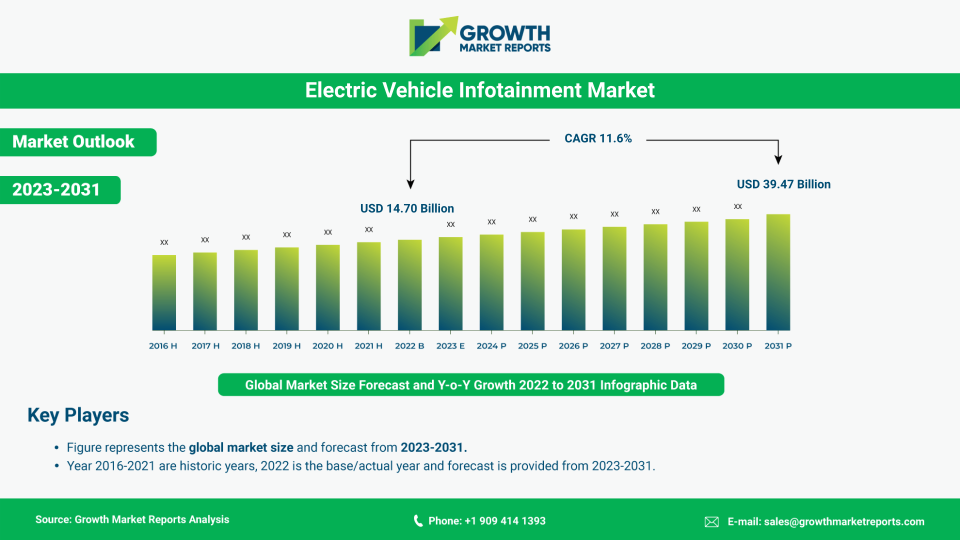
According to our latest research, the global Electric Vehicle Infotainment market size is valued at USD 5.8 billion in 2024, demonstrating robust growth momentum as the industry rapidly evolves. The market is expected to register a CAGR of 13.2% from 2025 to 2033, reaching a projected value of USD 17.5 billion by 2033. This impressive growth trajectory is driven by the increasing adoption of electric vehicles (EVs), rising consumer demand for connected mobility solutions, and the proliferation of advanced infotainment technologies within the automotive sector.

One of the primary growth factors propelling the Electric Vehicle Infotainment market is the accelerating shift toward electric mobility worldwide. With governments across major economies implementing stringent emission regulations and offering significant incentives for electric vehicle adoption, automakers are focusing on integrating advanced infotainment systems to differentiate their EV offerings. These systems, which include sophisticated audio, display, navigation, and communication units, enhance the overall driving experience and address the evolving expectations of tech-savvy consumers. The convergence of digital technology and automotive engineering is enabling seamless integration of infotainment platforms with vehicle telematics, further driving market expansion.

Another significant driver is the rapid advancement in connectivity technologies, such as Bluetooth, Wi-Fi, and 4G/5G networks. These technologies are pivotal in enabling real-time data exchange, over-the-air updates, and cloud-based services, which are now considered essential features in modern EV infotainment systems. The rising penetration of smartphones and the growing popularity of in-car entertainment and information services are pushing manufacturers to develop user-friendly, customizable, and highly interactive infotainment solutions. Additionally, the increasing focus on driver and passenger safety, facilitated by features like voice recognition, hands-free controls, and advanced navigation, is further supporting market growth.

The competitive landscape is also being shaped by the entry of technology giants and specialized software developers into the automotive infotainment domain. Collaborations between automakers and tech companies are leading to the introduction of innovative infotainment platforms that support a wide range of applications, including streaming, navigation, and vehicle diagnostics. The emergence of open-source operating systems such as Android and Linux is reducing development costs and accelerating time-to-market for new infotainment features. Moreover, the growing demand for personalized and immersive in-car experiences, especially among younger consumers, is compelling OEMs to invest heavily in research and development, thereby fueling the overall market growth.

Automotive Infotainment Systems are becoming increasingly pivotal in the transformation of electric vehicles, offering a seamless blend of entertainment, navigation, and connectivity. These systems are designed to enhance the driving experience by integrating advanced features such as voice recognition, real-time traffic updates, and personalized user interfaces. As consumer expectations evolve, automakers are investing in the development of infotainment systems that not only provide entertainment but also improve safety and convenience. The integration of these systems with vehicle telematics and smart mobility solutions is paving the way for a more connected and interactive driving experience, making them a key differentiator in the competitive automotive market.

In terms of regional outlook, Asia Pacific dominates the Electric Vehicle Infotainment market, accounting for the largest share in 2024, followed by North America and Europe. The rapid expansion of the EV market in China, Japan, and South Korea, coupled with strong government support and a robust consumer base, is driving the adoption of advanced infotainment systems in this region. North America is experiencing significant growth due to the presence of leading EV manufacturers and high consumer demand for premium in-car technologies. Meanwhile, Europe is benefiting from strict emission norms and a well-established automotive sector, fostering innovation in infotainment solutions. Latin America and the Middle East & Africa are emerging markets, gradually gaining traction as EV adoption increases and infrastructure improves.

Global Electric Vehicle Infotainment Industry Outlook

Product Type Analysis

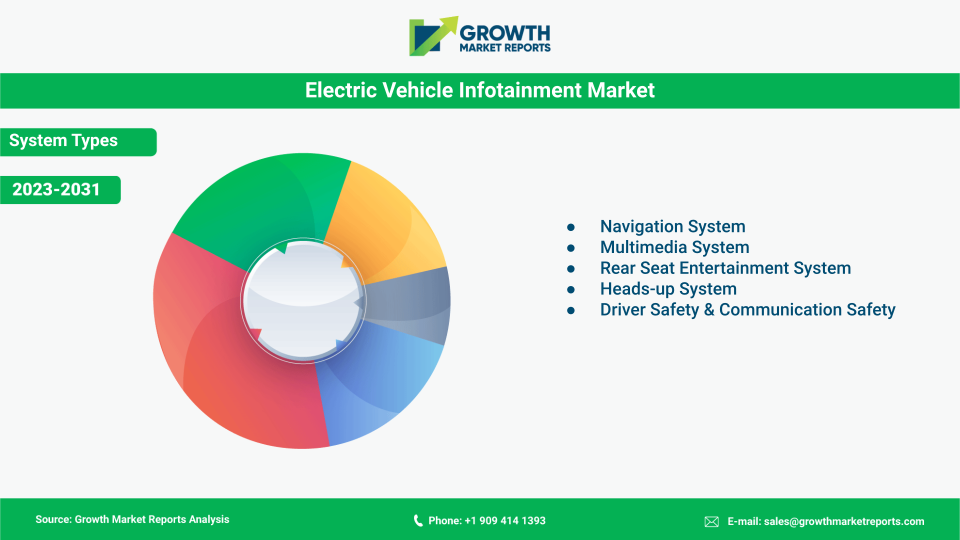
The Product Type segment of the Electric Vehicle Infotainment market encompasses audio units, display units, navigation units, communication units, and other specialized components. Audio units have historically been the cornerstone of automotive infotainment, but in the context of EVs, they are evolving to support high-definition sound and seamless integration with digital assistants and streaming services. Display units, including touchscreens and digital instrument clusters, are gaining prominence due to their role in delivering critical driving information, entertainment, and real-time navigation updates. The increasing adoption of larger, high-resolution displays is enhancing user experience and driving consumer preference for feature-rich infotainment systems.

Navigation units are becoming indispensable in electric vehicles, as range anxiety remains a key concern for EV owners. Advanced navigation systems now provide real-time traffic updates, charging station locations, and route optimization based on battery status, significantly improving convenience and peace of mind for drivers. Communication units, which facilitate hands-free calling, internet access, and vehicle-to-everything (V2X) communication, are being integrated to support connected car ecosystems and smart mobility solutions. These units enable seamless connectivity between the vehicle, driver, passengers, and external networks, paving the way for enhanced safety, productivity, and entertainment on the go.

The "Others" category within product types includes specialized infotainment components such as rear-seat entertainment systems, advanced driver-assistance system (ADAS) interfaces, and customizable user interfaces. These components are increasingly being adopted in premium and luxury EV models to cater to the growing demand for personalized in-car experiences. Automakers are leveraging modular infotainment architectures to offer flexible configurations that address diverse consumer preferences and market requirements. The integration of augmented reality (AR) and artificial intelligence (AI) into infotainment platforms is further enhancing functionality and user engagement, positioning infotainment as a key differentiator in the competitive EV landscape.

The evolution of Automotive Infotainment Systems is closely linked to advancements in connectivity technologies, which are enabling more sophisticated and interactive in-car experiences. With the rise of smart devices and the Internet of Things (IoT), these systems are now capable of offering features such as over-the-air updates, cloud-based services, and seamless integration with smartphones. This connectivity is not only enhancing entertainment options but also providing drivers with real-time information and diagnostics, contributing to safer and more efficient driving. As the automotive industry continues to innovate, the role of infotainment systems is expanding, becoming an integral part of the vehicle's digital ecosystem.

Overall, the product type segment is characterized by rapid innovation and a strong focus on enhancing user experience, safety, and connectivity. As electric vehicles become more mainstream, the demand for advanced infotainment solutions is expected to rise, driving continuous investment in R&D and the introduction of cutting-edge technologies across all product categories. The convergence of audio, display, navigation, and communication functionalities into integrated infotainment platforms is setting new benchmarks for the industry, shaping the future of in-car digital experiences.

Report Scope

Attributes Details
Report Title Electric Vehicle Infotainment Market Research Report 2033
By Product Type Audio Units, Display Units, Navigation Units, Communication Units, Others
By Connectivity Bluetooth, Wi-Fi, 4G/5G, Others
By Operating System Android, Linux, QNX, Windows, Others
By Vehicle Type Battery Electric Vehicles, Plug-in Hybrid Electric Vehicles, Hybrid Electric Vehicles
By Sales Channel OEM, Aftermarket
Regions Covered North America, Europe, APAC, Latin America, MEA
Base Year 2024
Historic Data 2018-2023
Forecast Period 2025-2033
Number of Pages 267
Number of Tables & Figures 291
Customization Available Yes, the report can be customized as per your need.

Connectivity Analysis

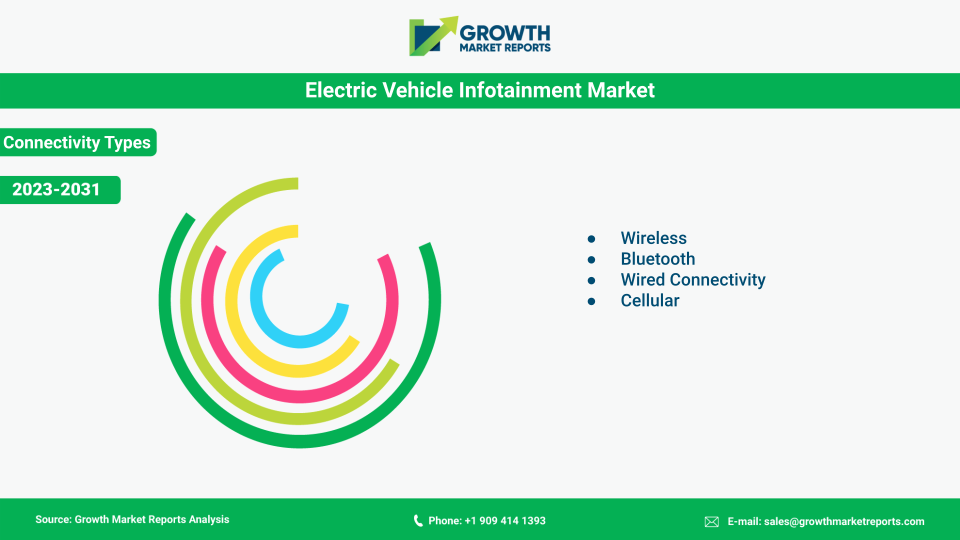
Connectivity is a critical enabler of the modern Electric Vehicle Infotainment market, with technologies such as Bluetooth, Wi-Fi, 4G/5G, and others forming the backbone of connected car ecosystems. Bluetooth remains a standard feature, enabling wireless audio streaming, hands-free calling, and device pairing, which are essential for driver safety and convenience. However, the advent of high-speed Wi-Fi and cellular connectivity is transforming infotainment systems into powerful hubs for real-time data exchange, cloud-based services, and over-the-air software updates. These advancements are facilitating the integration of a wide range of applications, from navigation and entertainment to diagnostics and remote vehicle management.

The adoption of 4G/5G connectivity is particularly noteworthy, as it enables high-bandwidth communication, low latency, and robust network reliability, supporting advanced infotainment features such as live video streaming, real-time traffic alerts, and interactive gaming. 5G, in particular, is expected to revolutionize the in-car experience by enabling immersive augmented reality applications, vehicle-to-vehicle (V2V) and vehicle-to-infrastructure (V2I) communication, and enhanced safety features. Automakers are partnering with telecom providers to deploy 5G-enabled infotainment platforms, positioning themselves at the forefront of the connected mobility revolution.

Wi-Fi connectivity is also gaining traction, especially in urban areas where public and private Wi-Fi networks are widely available. Wi-Fi enables seamless internet access for passengers, supports multi-device connectivity, and facilitates the use of cloud-based infotainment services. The integration of Wi-Fi hotspots in EVs is enhancing the appeal of infotainment systems, particularly among families and business travelers who require constant connectivity. Additionally, Wi-Fi Direct technology is enabling peer-to-peer communication between devices within the vehicle, further expanding the scope of in-car entertainment and productivity applications.

Tesla-Style Vertical Screen Head Units have set a new standard in the automotive industry, offering a sleek and modern interface that enhances the overall aesthetic and functionality of the vehicle's interior. These large, vertically oriented screens provide a more intuitive and immersive user experience, allowing drivers to access a wide range of applications with ease. The design not only facilitates better visibility and interaction but also supports advanced features such as split-screen functionality, real-time navigation, and multimedia streaming. As more automakers adopt this innovative approach, the demand for vertical screen head units is expected to grow, driving further advancements in automotive infotainment technology.

Other emerging connectivity options, such as Near Field Communication (NFC) and Ultra-Wideband (UWB), are being explored to support secure authentication, personalized user profiles, and proximity-based services. These technologies are expected to play a significant role in the evolution of smart infotainment systems, enabling seamless interaction between the vehicle, driver, and external devices. As connectivity becomes increasingly central to the infotainment experience, automakers and technology providers are investing heavily in cybersecurity measures to protect against potential threats and ensure data privacy for users.

Operating System Analysis

The choice of Operating System (OS) is a crucial factor influencing the functionality, performance, and user experience of Electric Vehicle Infotainment systems. The market is witnessing a shift from proprietary, closed-source platforms to open-source operating systems such as Android and Linux, which offer greater flexibility, scalability, and support for a wide range of applications. Android-based infotainment systems are gaining significant traction due to their familiarity, extensive app ecosystem, and seamless integration with Google services, including Maps, Assistant, and Play Store. Automakers are leveraging Android Automotive OS to deliver highly customizable, updatable, and feature-rich infotainment platforms that cater to diverse consumer preferences.

Linux is another popular choice, particularly among premium and luxury EV manufacturers, due to its open-source nature, robust security features, and support for real-time applications. The adoption of Linux-based infotainment systems is enabling automakers to develop unique user interfaces, integrate advanced driver-assistance features, and support over-the-air updates with minimal licensing costs. The flexibility of Linux also allows for easy integration of third-party applications and services, fostering innovation and differentiation in the competitive infotainment market.

QNX, developed by BlackBerry, remains a preferred operating system for safety-critical and mission-critical infotainment applications, owing to its proven reliability, security, and support for real-time processing. QNX is widely used in commercial vehicles, premium passenger cars, and electric vehicles that require robust performance and stringent safety standards. Its microkernel architecture and support for multiple virtual machines make it an ideal choice for complex infotainment systems that need to operate seamlessly alongside other vehicle functions.

Windows-based infotainment systems, while less prevalent than Android or Linux, continue to find application in certain markets and vehicle segments, particularly where integration with Microsoft services and enterprise applications is required. Other emerging operating systems, including proprietary platforms developed by automakers and technology providers, are being introduced to address specific market needs and regulatory requirements. The ongoing evolution of infotainment operating systems is fostering an environment of intense competition and rapid innovation, with user experience, security, and updatability emerging as key differentiators.

Vehicle Type Analysis

The Vehicle Type segment of the Electric Vehicle Infotainment market includes Battery Electric Vehicles (BEVs), Plug-in Hybrid Electric Vehicles (PHEVs), and Hybrid Electric Vehicles (HEVs), each with distinct infotainment requirements and market dynamics. BEVs, which operate solely on electric power, are at the forefront of infotainment innovation, as automakers seek to enhance the appeal of these vehicles through advanced digital experiences. Infotainment systems in BEVs often feature large touchscreens, AI-powered voice assistants, and comprehensive connectivity options, reflecting the premium positioning of many new electric models.

PHEVs, which combine an internal combustion engine with a rechargeable battery, are witnessing growing adoption of infotainment technologies that support energy management, charging optimization, and seamless transition between power sources. Infotainment systems in PHEVs are increasingly integrated with vehicle telematics and mobile applications, enabling remote monitoring, charging station location, and real-time energy consumption tracking. These features are helping to address range anxiety and enhance the overall ownership experience for PHEV users.

HEVs, which utilize both electric and conventional powertrains without external charging capability, are incorporating infotainment systems that focus on fuel efficiency, navigation, and connectivity. While HEVs may not offer the same level of digital sophistication as BEVs or PHEVs, the integration of infotainment features such as Bluetooth connectivity, navigation aids, and driver assistance systems is becoming standard. Automakers are leveraging infotainment as a means to differentiate their HEV offerings and appeal to environmentally conscious consumers seeking a balance between performance and sustainability.

The increasing electrification of commercial vehicles, including electric buses and delivery vans, is also driving demand for specialized infotainment solutions tailored to fleet management, route optimization, and passenger information services. As the electric vehicle market continues to diversify, the scope and functionality of infotainment systems are expanding to address the unique needs of different vehicle types. This trend is expected to drive sustained growth and innovation in the Electric Vehicle Infotainment market over the forecast period.

Sales Channel Analysis

The Sales Channel segment of the Electric Vehicle Infotainment market comprises Original Equipment Manufacturers (OEMs) and the Aftermarket, each playing a pivotal role in the distribution and adoption of infotainment technologies. OEMs are the primary channel for advanced, factory-installed infotainment systems, which are increasingly being positioned as standard or optional features in new electric vehicle models. Automakers are leveraging infotainment as a key differentiator, offering customizable packages that cater to diverse consumer preferences and market segments. OEM-installed systems benefit from seamless integration with vehicle electronics, enhanced reliability, and comprehensive warranty coverage, making them the preferred choice for many consumers.

The aftermarket segment, on the other hand, caters to existing vehicle owners seeking to upgrade or enhance their infotainment systems. Aftermarket solutions range from basic audio and navigation units to advanced, connected infotainment platforms that support smartphone integration, voice control, and wireless connectivity. The growing availability of plug-and-play aftermarket infotainment products is enabling consumers to access the latest technologies without purchasing a new vehicle, driving incremental demand in the market. However, aftermarket installations may face challenges related to compatibility, integration, and warranty coverage, which can impact adoption rates.

OEMs are increasingly collaborating with technology providers, software developers, and telecom operators to deliver next-generation infotainment systems that support over-the-air updates, cloud-based services, and personalized user experiences. These partnerships are enabling automakers to stay ahead of technological trends and respond quickly to changing consumer expectations. The ability to offer regular software updates and new features post-purchase is emerging as a key value proposition for OEM-installed infotainment systems, enhancing customer loyalty and brand differentiation.

The aftermarket segment is also evolving, with specialized retailers and service providers offering professional installation, customization, and support services. The rise of e-commerce platforms and online marketplaces is making it easier for consumers to access a wide range of aftermarket infotainment products, driving market expansion. As the Electric Vehicle Infotainment market matures, the interplay between OEM and aftermarket channels will continue to shape the competitive landscape and influence the adoption of new technologies.

Opportunities & Threats

The Electric Vehicle Infotainment market presents a wealth of opportunities for stakeholders across the value chain. The rapid adoption of electric vehicles, coupled with the growing demand for connected and personalized in-car experiences, is creating a fertile environment for innovation and growth. Automakers, technology providers, and software developers have the opportunity to differentiate their offerings by delivering advanced infotainment solutions that enhance safety, convenience, and entertainment. The integration of artificial intelligence, augmented reality, and cloud-based services into infotainment platforms is opening new avenues for value creation and customer engagement, positioning infotainment as a central component of the digital mobility ecosystem.

Another significant opportunity lies in the expansion of infotainment services beyond traditional entertainment and navigation. The rise of mobility-as-a-service (MaaS), shared mobility, and autonomous vehicles is driving demand for infotainment systems that support a wide range of applications, including fleet management, remote diagnostics, and passenger information services. The ability to deliver seamless, personalized, and context-aware experiences across different mobility platforms is emerging as a key competitive advantage. Additionally, the growing focus on sustainability and energy efficiency is prompting the development of infotainment features that support eco-driving, charging optimization, and real-time energy monitoring, further enhancing the value proposition of electric vehicles.

Despite the numerous opportunities, the Electric Vehicle Infotainment market faces several restraining factors that could impact growth. One of the primary challenges is the high cost of advanced infotainment systems, which can increase the overall price of electric vehicles and limit adoption among price-sensitive consumers. The complexity of integrating infotainment platforms with vehicle electronics, telematics, and safety systems can also pose technical and operational challenges for automakers. Furthermore, concerns related to data privacy, cybersecurity, and software reliability are becoming increasingly important as infotainment systems become more connected and data-driven. Addressing these challenges will require sustained investment in research and development, robust regulatory frameworks, and close collaboration between industry stakeholders.

Regional Outlook

The Asia Pacific region commands the largest share of the global Electric Vehicle Infotainment market, with a market size of USD 2.4 billion in 2024. This dominance is underpinned by the rapid adoption of electric vehicles in China, Japan, and South Korea, where government incentives, robust manufacturing capabilities, and a large consumer base are driving demand for advanced infotainment solutions. China, in particular, is at the forefront of the EV revolution, accounting for a significant portion of global EV sales and investment in smart mobility infrastructure. The region is expected to maintain its leadership position over the forecast period, with a projected CAGR of 14.1% through 2033.

North America is the second-largest market, valued at USD 1.5 billion in 2024, driven by the presence of leading electric vehicle manufacturers, high consumer demand for premium in-car technologies, and a strong focus on innovation. The United States is the primary growth engine in the region, supported by favorable regulatory policies, a well-established automotive industry, and a tech-savvy consumer base. The integration of advanced infotainment features, such as voice assistants, real-time navigation, and over-the-air updates, is becoming standard in new EV models, further fueling market growth. Canada and Mexico are also witnessing increased adoption of electric vehicles and infotainment technologies, contributing to the overall regional expansion.

Europe holds a significant share of the Electric Vehicle Infotainment market, with a market size of USD 1.2 billion in 2024. The region is characterized by stringent emission regulations, strong government support for electric mobility, and a mature automotive sector. Germany, France, the United Kingdom, and the Nordic countries are leading the adoption of EVs and advanced infotainment systems, driven by consumer demand for sustainability, safety, and connected experiences. The European market is expected to grow steadily, supported by ongoing investments in charging infrastructure, smart mobility solutions, and digital innovation. Latin America and Middle East & Africa are emerging markets, with a combined market size of USD 0.7 billion in 2024, gradually gaining traction as EV adoption increases and infrastructure improves.

Electric Vehicle Infotainment Market Statistics

Competitor Outlook

The competitive landscape of the Electric Vehicle Infotainment market is characterized by intense rivalry among global automotive OEMs, technology giants, and specialized software developers. Companies are vying for market share by introducing innovative infotainment platforms that offer seamless connectivity, intuitive user interfaces, and a wide range of applications. The convergence of automotive engineering and digital technology is fostering new business models, strategic partnerships, and cross-industry collaborations, as stakeholders seek to capitalize on the growing demand for connected mobility solutions. The ability to deliver personalized, updatable, and secure infotainment experiences is emerging as a key differentiator in the competitive landscape.

Leading automakers, such as Tesla, BMW, Mercedes-Benz, and General Motors, are investing heavily in the development of proprietary infotainment systems that integrate advanced features such as AI-powered voice assistants, augmented reality navigation, and cloud-based services. These companies are leveraging their brand strength, R&D capabilities, and global reach to set new benchmarks for in-car digital experiences. At the same time, technology companies like Google, Apple, and Microsoft are expanding their presence in the automotive infotainment domain through partnerships with OEMs and the introduction of open-source operating systems such as Android Automotive and Apple CarPlay. These platforms are enabling automakers to deliver familiar, customizable, and updatable infotainment solutions that cater to diverse consumer preferences.

Specialized infotainment and telematics providers, such as Panasonic, Harman International, Continental AG, and Bosch, play a crucial role in the market by offering modular, scalable, and feature-rich infotainment platforms to automakers worldwide. These companies are at the forefront of integrating advanced connectivity, cybersecurity, and user experience technologies into infotainment systems, enabling OEMs to differentiate their offerings and respond quickly to changing market trends. The ability to support over-the-air updates, cloud-based services, and third-party applications is emerging as a key value proposition for these providers, driving sustained growth and innovation.

Some of the major companies operating in the Electric Vehicle Infotainment market include Tesla, BMW, Mercedes-Benz, General Motors, Panasonic Corporation, Harman International (a Samsung company), Continental AG, Robert Bosch GmbH, Google (Alphabet Inc.), Apple Inc., and Microsoft Corporation. Tesla, for example, is renowned for its vertically integrated infotainment platform, featuring large touchscreens, real-time navigation, and over-the-air software updates. BMW and Mercedes-Benz are leveraging their premium brand positioning to offer advanced infotainment features, including AI-powered assistants, gesture controls, and immersive audio experiences. Panasonic, Harman, Continental, and Bosch are leading suppliers of infotainment hardware and software, supporting a wide range of OEMs with customizable, updatable, and secure solutions. Google, Apple, and Microsoft are driving the adoption of open-source operating systems and cloud-based services, enabling automakers to deliver next-generation infotainment experiences.

Key Players

  • Panasonic Corporation
  • Robert Bosch GmbH
  • Continental AG
  • Denso Corporation
  • Aptiv PLC
  • Harman International Industries, Inc.
  • Alpine Electronics, Inc.
  • Pioneer Corporation
  • Visteon Corporation
  • Garmin Ltd.
  • JVCKENWOOD Corporation
  • Mitsubishi Electric Corporation
  • Clarion Co., Ltd.
  • Magneti Marelli S.p.A.
  • TomTom International BV
  • Desay SV Automotive
  • Faurecia Clarion Electronics
  • Luxoft (A DXC Technology Company)
  • Samsung Electronics Co., Ltd.
  • Sony Corporation
Electric Vehicle Infotainment Market Overview

Segments

The Electric Vehicle Infotainment market has been segmented on the basis of

Product Type

  • Audio Units
  • Display Units
  • Navigation Units
  • Communication Units
  • Others

Connectivity

  • Bluetooth
  • Wi-Fi
  • 4G/5G
  • Others

Operating System

  • Android
  • Linux
  • QNX
  • Windows
  • Others

Vehicle Type

  • Battery Electric Vehicles
  • Plug-in Hybrid Electric Vehicles
  • Hybrid Electric Vehicles

Sales Channel

  • OEM
  • Aftermarket

Competitive Landscape

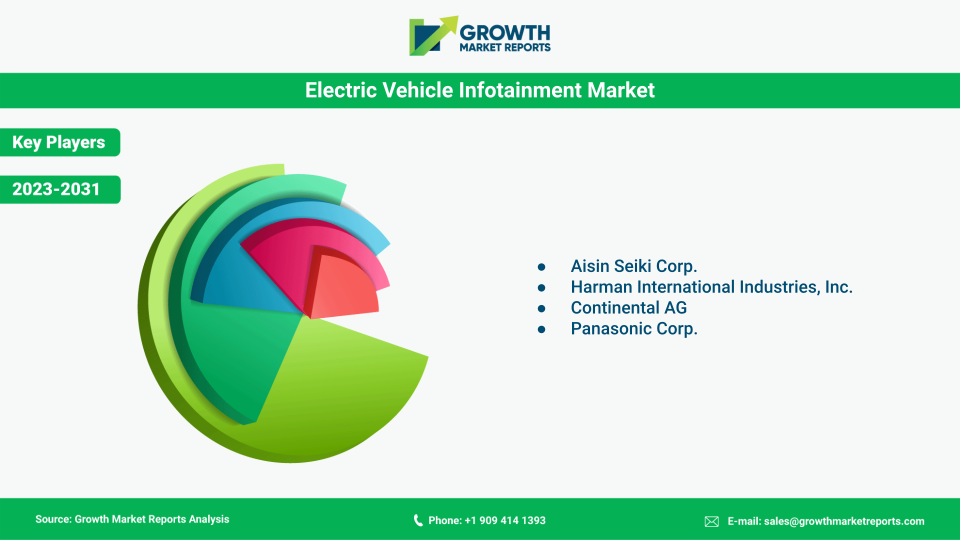
Key players competing in the global electric vehicle infotainment market are Aisin Seiki Corp.; Harman International Industries, Inc.; Continental AG; and Panasonic Corp. Companies are focusing on investment in R&D for development of innovative and customized infotainment system to maintain their competitive positions in the market.

Furthermore, companies have been widely engaged in strategic partnership, merger & acquisition, new product launch, and collaborations to boost their market share and acquiring new buyers.

For instance, in April 2021, LIZHI Inc. a China based leading interactive audio platform company collaborated with WM motor Chinas EV manufacturer to promote their innovation for the development of smart travel. By this collaboration LIZHI will provide their in car audio products for WM motors EVs.

In July 2019, Bosch announced a launch of a Shanghai based new Bosch digital R&D center. The R&D center will develop smart digital infotainment products, such as passenger and driver monitoring system, information domain computers, and 5G- vehicle-to-everything connectivity control units.

Electric Vehicle Infotainment Market Key Players

Frequently Asked Questions

Opportunities include innovation in AI, AR, and cloud services, and expanding infotainment for MaaS and autonomous vehicles. Challenges involve high costs, integration complexity, data privacy, and cybersecurity concerns.

Key players include Tesla, BMW, Mercedes-Benz, General Motors, Panasonic Corporation, Harman International, Continental AG, Bosch, Google, Apple, and Microsoft.

OEMs provide factory-installed infotainment systems with seamless integration and warranty coverage, while the aftermarket offers upgrade options for existing vehicles, though with potential compatibility challenges.

Infotainment systems are used in Battery Electric Vehicles (BEVs), Plug-in Hybrid Electric Vehicles (PHEVs), Hybrid Electric Vehicles (HEVs), and increasingly in electric commercial vehicles.

Popular operating systems include Android, Linux, QNX, Windows, and proprietary platforms. Android and Linux are favored for their flexibility and app ecosystems, while QNX is known for reliability and security.

Connectivity technologies like Bluetooth, Wi-Fi, 4G/5G, NFC, and UWB enable real-time data exchange, cloud-based services, over-the-air updates, and support for advanced features like live streaming and V2X communication.

Product types include audio units, display units, navigation units, communication units, and other specialized components such as rear-seat entertainment and ADAS interfaces.

Asia Pacific leads the market, followed by North America and Europe. China, Japan, and South Korea are key contributors in APAC, while the US drives growth in North America.

Major growth drivers include the rising adoption of electric vehicles, increasing demand for connected mobility solutions, advancements in infotainment technologies, and government incentives for EV adoption.

The global Electric Vehicle Infotainment market is valued at USD 5.8 billion in 2024 and is expected to reach USD 17.5 billion by 2033, growing at a CAGR of 13.2% from 2025 to 2033.

Table Of Content

Chapter 1 Executive Summary
Chapter 2 Assumptions and Acronyms Used
Chapter 3 Research Methodology
Chapter 4 Electric Vehicle Infotainment Market Overview
   4.1 Introduction
      4.1.1 Market Taxonomy
      4.1.2 Market Definition
      4.1.3 Macro-Economic Factors Impacting the Market Growth
   4.2 Electric Vehicle Infotainment Market Dynamics
      4.2.1 Market Drivers
      4.2.2 Market Restraints
      4.2.3 Market Opportunity
   4.3 Electric Vehicle Infotainment Market - Supply Chain Analysis
      4.3.1 List of Key Suppliers
      4.3.2 List of Key Distributors
      4.3.3 List of Key Consumers
   4.4 Key Forces Shaping the Electric Vehicle Infotainment Market
      4.4.1 Bargaining Power of Suppliers
      4.4.2 Bargaining Power of Buyers
      4.4.3 Threat of Substitution
      4.4.4 Threat of New Entrants
      4.4.5 Competitive Rivalry
   4.5 Global Electric Vehicle Infotainment Market Size & Forecast, 2023-2032
      4.5.1 Electric Vehicle Infotainment Market Size and Y-o-Y Growth
      4.5.2 Electric Vehicle Infotainment Market Absolute $ Opportunity

Chapter 5 Global Electric Vehicle Infotainment Market Analysis and Forecast By Product Type
   5.1 Introduction
      5.1.1 Key Market Trends & Growth Opportunities By Product Type
      5.1.2 Basis Point Share (BPS) Analysis By Product Type
      5.1.3 Absolute $ Opportunity Assessment By Product Type
   5.2 Electric Vehicle Infotainment Market Size Forecast By Product Type
      5.2.1 Audio Units
      5.2.2 Display Units
      5.2.3 Navigation Units
      5.2.4 Communication Units
      5.2.5 Others
   5.3 Market Attractiveness Analysis By Product Type

Chapter 6 Global Electric Vehicle Infotainment Market Analysis and Forecast By Connectivity
   6.1 Introduction
      6.1.1 Key Market Trends & Growth Opportunities By Connectivity
      6.1.2 Basis Point Share (BPS) Analysis By Connectivity
      6.1.3 Absolute $ Opportunity Assessment By Connectivity
   6.2 Electric Vehicle Infotainment Market Size Forecast By Connectivity
      6.2.1 Bluetooth
      6.2.2 Wi-Fi
      6.2.3 4G/5G
      6.2.4 Others
   6.3 Market Attractiveness Analysis By Connectivity

Chapter 7 Global Electric Vehicle Infotainment Market Analysis and Forecast By Operating System
   7.1 Introduction
      7.1.1 Key Market Trends & Growth Opportunities By Operating System
      7.1.2 Basis Point Share (BPS) Analysis By Operating System
      7.1.3 Absolute $ Opportunity Assessment By Operating System
   7.2 Electric Vehicle Infotainment Market Size Forecast By Operating System
      7.2.1 Android
      7.2.2 Linux
      7.2.3 QNX
      7.2.4 Windows
      7.2.5 Others
   7.3 Market Attractiveness Analysis By Operating System

Chapter 8 Global Electric Vehicle Infotainment Market Analysis and Forecast By Vehicle Type
   8.1 Introduction
      8.1.1 Key Market Trends & Growth Opportunities By Vehicle Type
      8.1.2 Basis Point Share (BPS) Analysis By Vehicle Type
      8.1.3 Absolute $ Opportunity Assessment By Vehicle Type
   8.2 Electric Vehicle Infotainment Market Size Forecast By Vehicle Type
      8.2.1 Battery Electric Vehicles
      8.2.2 Plug-in Hybrid Electric Vehicles
      8.2.3 Hybrid Electric Vehicles
   8.3 Market Attractiveness Analysis By Vehicle Type

Chapter 9 Global Electric Vehicle Infotainment Market Analysis and Forecast By Sales Channel
   9.1 Introduction
      9.1.1 Key Market Trends & Growth Opportunities By Sales Channel
      9.1.2 Basis Point Share (BPS) Analysis By Sales Channel
      9.1.3 Absolute $ Opportunity Assessment By Sales Channel
   9.2 Electric Vehicle Infotainment Market Size Forecast By Sales Channel
      9.2.1 OEM
      9.2.2 Aftermarket
   9.3 Market Attractiveness Analysis By Sales Channel

Chapter 10 Global Electric Vehicle Infotainment Market Analysis and Forecast by Region
   10.1 Introduction
      10.1.1 Key Market Trends & Growth Opportunities By Region
      10.1.2 Basis Point Share (BPS) Analysis By Region
      10.1.3 Absolute $ Opportunity Assessment By Region
   10.2 Electric Vehicle Infotainment Market Size Forecast By Region
      10.2.1 North America
      10.2.2 Europe
      10.2.3 Asia Pacific
      10.2.4 Latin America
      10.2.5 Middle East & Africa (MEA)
   10.3 Market Attractiveness Analysis By Region

Chapter 11 Coronavirus Disease (COVID-19) Impact 
   11.1 Introduction 
   11.2 Current & Future Impact Analysis 
   11.3 Economic Impact Analysis 
   11.4 Government Policies 
   11.5 Investment Scenario

Chapter 12 North America Electric Vehicle Infotainment Analysis and Forecast
   12.1 Introduction
   12.2 North America Electric Vehicle Infotainment Market Size Forecast by Country
      12.2.1 U.S.
      12.2.2 Canada
   12.3 Basis Point Share (BPS) Analysis by Country
   12.4 Absolute $ Opportunity Assessment by Country
   12.5 Market Attractiveness Analysis by Country
   12.6 North America Electric Vehicle Infotainment Market Size Forecast By Product Type
      12.6.1 Audio Units
      12.6.2 Display Units
      12.6.3 Navigation Units
      12.6.4 Communication Units
      12.6.5 Others
   12.7 Basis Point Share (BPS) Analysis By Product Type 
   12.8 Absolute $ Opportunity Assessment By Product Type 
   12.9 Market Attractiveness Analysis By Product Type
   12.10 North America Electric Vehicle Infotainment Market Size Forecast By Connectivity
      12.10.1 Bluetooth
      12.10.2 Wi-Fi
      12.10.3 4G/5G
      12.10.4 Others
   12.11 Basis Point Share (BPS) Analysis By Connectivity 
   12.12 Absolute $ Opportunity Assessment By Connectivity 
   12.13 Market Attractiveness Analysis By Connectivity
   12.14 North America Electric Vehicle Infotainment Market Size Forecast By Operating System
      12.14.1 Android
      12.14.2 Linux
      12.14.3 QNX
      12.14.4 Windows
      12.14.5 Others
   12.15 Basis Point Share (BPS) Analysis By Operating System 
   12.16 Absolute $ Opportunity Assessment By Operating System 
   12.17 Market Attractiveness Analysis By Operating System
   12.18 North America Electric Vehicle Infotainment Market Size Forecast By Vehicle Type
      12.18.1 Battery Electric Vehicles
      12.18.2 Plug-in Hybrid Electric Vehicles
      12.18.3 Hybrid Electric Vehicles
   12.19 Basis Point Share (BPS) Analysis By Vehicle Type 
   12.20 Absolute $ Opportunity Assessment By Vehicle Type 
   12.21 Market Attractiveness Analysis By Vehicle Type
   12.22 North America Electric Vehicle Infotainment Market Size Forecast By Sales Channel
      12.22.1 OEM
      12.22.2 Aftermarket
   12.23 Basis Point Share (BPS) Analysis By Sales Channel 
   12.24 Absolute $ Opportunity Assessment By Sales Channel 
   12.25 Market Attractiveness Analysis By Sales Channel

Chapter 13 Europe Electric Vehicle Infotainment Analysis and Forecast
   13.1 Introduction
   13.2 Europe Electric Vehicle Infotainment Market Size Forecast by Country
      13.2.1 Germany
      13.2.2 France
      13.2.3 Italy
      13.2.4 U.K.
      13.2.5 Spain
      13.2.6 Russia
      13.2.7 Rest of Europe
   13.3 Basis Point Share (BPS) Analysis by Country
   13.4 Absolute $ Opportunity Assessment by Country
   13.5 Market Attractiveness Analysis by Country
   13.6 Europe Electric Vehicle Infotainment Market Size Forecast By Product Type
      13.6.1 Audio Units
      13.6.2 Display Units
      13.6.3 Navigation Units
      13.6.4 Communication Units
      13.6.5 Others
   13.7 Basis Point Share (BPS) Analysis By Product Type 
   13.8 Absolute $ Opportunity Assessment By Product Type 
   13.9 Market Attractiveness Analysis By Product Type
   13.10 Europe Electric Vehicle Infotainment Market Size Forecast By Connectivity
      13.10.1 Bluetooth
      13.10.2 Wi-Fi
      13.10.3 4G/5G
      13.10.4 Others
   13.11 Basis Point Share (BPS) Analysis By Connectivity 
   13.12 Absolute $ Opportunity Assessment By Connectivity 
   13.13 Market Attractiveness Analysis By Connectivity
   13.14 Europe Electric Vehicle Infotainment Market Size Forecast By Operating System
      13.14.1 Android
      13.14.2 Linux
      13.14.3 QNX
      13.14.4 Windows
      13.14.5 Others
   13.15 Basis Point Share (BPS) Analysis By Operating System 
   13.16 Absolute $ Opportunity Assessment By Operating System 
   13.17 Market Attractiveness Analysis By Operating System
   13.18 Europe Electric Vehicle Infotainment Market Size Forecast By Vehicle Type
      13.18.1 Battery Electric Vehicles
      13.18.2 Plug-in Hybrid Electric Vehicles
      13.18.3 Hybrid Electric Vehicles
   13.19 Basis Point Share (BPS) Analysis By Vehicle Type 
   13.20 Absolute $ Opportunity Assessment By Vehicle Type 
   13.21 Market Attractiveness Analysis By Vehicle Type
   13.22 Europe Electric Vehicle Infotainment Market Size Forecast By Sales Channel
      13.22.1 OEM
      13.22.2 Aftermarket
   13.23 Basis Point Share (BPS) Analysis By Sales Channel 
   13.24 Absolute $ Opportunity Assessment By Sales Channel 
   13.25 Market Attractiveness Analysis By Sales Channel

Chapter 14 Asia Pacific Electric Vehicle Infotainment Analysis and Forecast
   14.1 Introduction
   14.2 Asia Pacific Electric Vehicle Infotainment Market Size Forecast by Country
      14.2.1 China
      14.2.2 Japan
      14.2.3 South Korea
      14.2.4 India
      14.2.5 Australia
      14.2.6 South East Asia (SEA)
      14.2.7 Rest of Asia Pacific (APAC)
   14.3 Basis Point Share (BPS) Analysis by Country
   14.4 Absolute $ Opportunity Assessment by Country
   14.5 Market Attractiveness Analysis by Country
   14.6 Asia Pacific Electric Vehicle Infotainment Market Size Forecast By Product Type
      14.6.1 Audio Units
      14.6.2 Display Units
      14.6.3 Navigation Units
      14.6.4 Communication Units
      14.6.5 Others
   14.7 Basis Point Share (BPS) Analysis By Product Type 
   14.8 Absolute $ Opportunity Assessment By Product Type 
   14.9 Market Attractiveness Analysis By Product Type
   14.10 Asia Pacific Electric Vehicle Infotainment Market Size Forecast By Connectivity
      14.10.1 Bluetooth
      14.10.2 Wi-Fi
      14.10.3 4G/5G
      14.10.4 Others
   14.11 Basis Point Share (BPS) Analysis By Connectivity 
   14.12 Absolute $ Opportunity Assessment By Connectivity 
   14.13 Market Attractiveness Analysis By Connectivity
   14.14 Asia Pacific Electric Vehicle Infotainment Market Size Forecast By Operating System
      14.14.1 Android
      14.14.2 Linux
      14.14.3 QNX
      14.14.4 Windows
      14.14.5 Others
   14.15 Basis Point Share (BPS) Analysis By Operating System 
   14.16 Absolute $ Opportunity Assessment By Operating System 
   14.17 Market Attractiveness Analysis By Operating System
   14.18 Asia Pacific Electric Vehicle Infotainment Market Size Forecast By Vehicle Type
      14.18.1 Battery Electric Vehicles
      14.18.2 Plug-in Hybrid Electric Vehicles
      14.18.3 Hybrid Electric Vehicles
   14.19 Basis Point Share (BPS) Analysis By Vehicle Type 
   14.20 Absolute $ Opportunity Assessment By Vehicle Type 
   14.21 Market Attractiveness Analysis By Vehicle Type
   14.22 Asia Pacific Electric Vehicle Infotainment Market Size Forecast By Sales Channel
      14.22.1 OEM
      14.22.2 Aftermarket
   14.23 Basis Point Share (BPS) Analysis By Sales Channel 
   14.24 Absolute $ Opportunity Assessment By Sales Channel 
   14.25 Market Attractiveness Analysis By Sales Channel

Chapter 15 Latin America Electric Vehicle Infotainment Analysis and Forecast
   15.1 Introduction
   15.2 Latin America Electric Vehicle Infotainment Market Size Forecast by Country
      15.2.1 Brazil
      15.2.2 Mexico
      15.2.3 Rest of Latin America (LATAM)
   15.3 Basis Point Share (BPS) Analysis by Country
   15.4 Absolute $ Opportunity Assessment by Country
   15.5 Market Attractiveness Analysis by Country
   15.6 Latin America Electric Vehicle Infotainment Market Size Forecast By Product Type
      15.6.1 Audio Units
      15.6.2 Display Units
      15.6.3 Navigation Units
      15.6.4 Communication Units
      15.6.5 Others
   15.7 Basis Point Share (BPS) Analysis By Product Type 
   15.8 Absolute $ Opportunity Assessment By Product Type 
   15.9 Market Attractiveness Analysis By Product Type
   15.10 Latin America Electric Vehicle Infotainment Market Size Forecast By Connectivity
      15.10.1 Bluetooth
      15.10.2 Wi-Fi
      15.10.3 4G/5G
      15.10.4 Others
   15.11 Basis Point Share (BPS) Analysis By Connectivity 
   15.12 Absolute $ Opportunity Assessment By Connectivity 
   15.13 Market Attractiveness Analysis By Connectivity
   15.14 Latin America Electric Vehicle Infotainment Market Size Forecast By Operating System
      15.14.1 Android
      15.14.2 Linux
      15.14.3 QNX
      15.14.4 Windows
      15.14.5 Others
   15.15 Basis Point Share (BPS) Analysis By Operating System 
   15.16 Absolute $ Opportunity Assessment By Operating System 
   15.17 Market Attractiveness Analysis By Operating System
   15.18 Latin America Electric Vehicle Infotainment Market Size Forecast By Vehicle Type
      15.18.1 Battery Electric Vehicles
      15.18.2 Plug-in Hybrid Electric Vehicles
      15.18.3 Hybrid Electric Vehicles
   15.19 Basis Point Share (BPS) Analysis By Vehicle Type 
   15.20 Absolute $ Opportunity Assessment By Vehicle Type 
   15.21 Market Attractiveness Analysis By Vehicle Type
   15.22 Latin America Electric Vehicle Infotainment Market Size Forecast By Sales Channel
      15.22.1 OEM
      15.22.2 Aftermarket
   15.23 Basis Point Share (BPS) Analysis By Sales Channel 
   15.24 Absolute $ Opportunity Assessment By Sales Channel 
   15.25 Market Attractiveness Analysis By Sales Channel

Chapter 16 Middle East & Africa (MEA) Electric Vehicle Infotainment Analysis and Forecast
   16.1 Introduction
   16.2 Middle East & Africa (MEA) Electric Vehicle Infotainment Market Size Forecast by Country
      16.2.1 Saudi Arabia
      16.2.2 South Africa
      16.2.3 UAE
      16.2.4 Rest of Middle East & Africa (MEA)
   16.3 Basis Point Share (BPS) Analysis by Country
   16.4 Absolute $ Opportunity Assessment by Country
   16.5 Market Attractiveness Analysis by Country
   16.6 Middle East & Africa (MEA) Electric Vehicle Infotainment Market Size Forecast By Product Type
      16.6.1 Audio Units
      16.6.2 Display Units
      16.6.3 Navigation Units
      16.6.4 Communication Units
      16.6.5 Others
   16.7 Basis Point Share (BPS) Analysis By Product Type 
   16.8 Absolute $ Opportunity Assessment By Product Type 
   16.9 Market Attractiveness Analysis By Product Type
   16.10 Middle East & Africa (MEA) Electric Vehicle Infotainment Market Size Forecast By Connectivity
      16.10.1 Bluetooth
      16.10.2 Wi-Fi
      16.10.3 4G/5G
      16.10.4 Others
   16.11 Basis Point Share (BPS) Analysis By Connectivity 
   16.12 Absolute $ Opportunity Assessment By Connectivity 
   16.13 Market Attractiveness Analysis By Connectivity
   16.14 Middle East & Africa (MEA) Electric Vehicle Infotainment Market Size Forecast By Operating System
      16.14.1 Android
      16.14.2 Linux
      16.14.3 QNX
      16.14.4 Windows
      16.14.5 Others
   16.15 Basis Point Share (BPS) Analysis By Operating System 
   16.16 Absolute $ Opportunity Assessment By Operating System 
   16.17 Market Attractiveness Analysis By Operating System
   16.18 Middle East & Africa (MEA) Electric Vehicle Infotainment Market Size Forecast By Vehicle Type
      16.18.1 Battery Electric Vehicles
      16.18.2 Plug-in Hybrid Electric Vehicles
      16.18.3 Hybrid Electric Vehicles
   16.19 Basis Point Share (BPS) Analysis By Vehicle Type 
   16.20 Absolute $ Opportunity Assessment By Vehicle Type 
   16.21 Market Attractiveness Analysis By Vehicle Type
   16.22 Middle East & Africa (MEA) Electric Vehicle Infotainment Market Size Forecast By Sales Channel
      16.22.1 OEM
      16.22.2 Aftermarket
   16.23 Basis Point Share (BPS) Analysis By Sales Channel 
   16.24 Absolute $ Opportunity Assessment By Sales Channel 
   16.25 Market Attractiveness Analysis By Sales Channel

Chapter 17 Competition Landscape 
   17.1 Electric Vehicle Infotainment Market: Competitive Dashboard
   17.2 Global Electric Vehicle Infotainment Market: Market Share Analysis, 2023
   17.3 Company Profiles (Details – Overview, Financials, Developments, Strategy) 
      17.3.1 Panasonic Corporation
Robert Bosch GmbH
Continental AG
Denso Corporation
Aptiv PLC
Harman International Industries, Inc.
Alpine Electronics, Inc.
Pioneer Corporation
Visteon Corporation
Garmin Ltd.
JVCKENWOOD Corporation
Mitsubishi Electric Corporation
Clarion Co., Ltd.
Magneti Marelli S.p.A.
TomTom International BV
Desay SV Automotive
Faurecia Clarion Electronics
Luxoft (A DXC Technology Company)
Samsung Electronics Co., Ltd.
Sony Corporation

Methodology

Our Clients

Deloitte
Microsoft
sinopec
FedEx Logistics
The John Holland Group
General Mills
Dassault Aviation
Honda Motor Co. Ltd.