Segments - by Battery Type (Lithium-ion, Nickel-Metal Hydride, Lead-Acid, Solid-State, Others), by Vehicle Type (Passenger Cars, Commercial Vehicles, Two-Wheelers, Others), by Application (BEV, PHEV, HEV, FCEV), by Battery Capacity (Less than 30 kWh, 30–60 kWh, Above 60 kWh), by Propulsion Type (Plug-in Hybrid, Hybrid, Pure Electric), by Distribution Channel (OEM, Aftermarket)
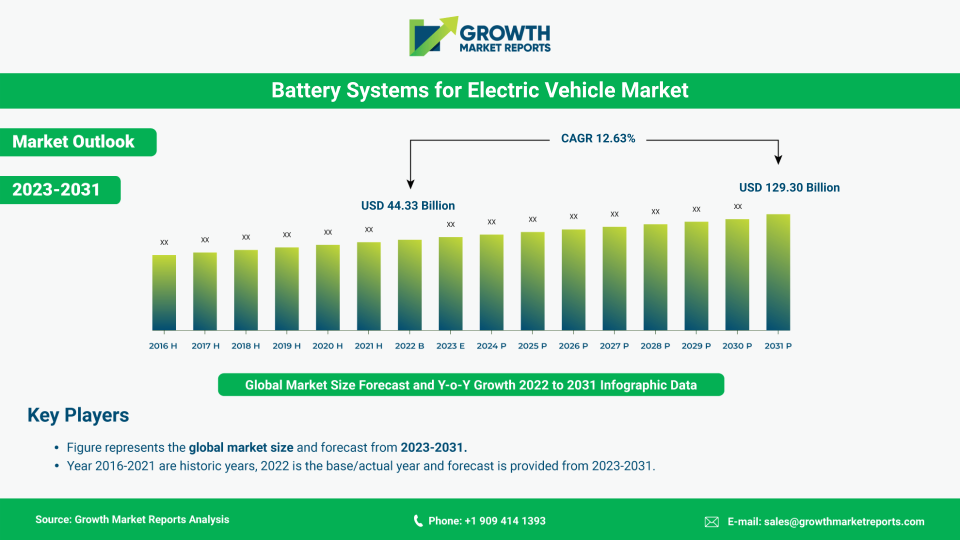
As per our latest research, the global market size for Battery Systems for Electric Vehicle in 2024 stands at USD 47.5 billion, with a robust compound annual growth rate (CAGR) of 18.7% projected during the forecast period from 2025 to 2033. This dynamic growth trajectory is primarily fueled by the accelerating transition towards sustainable transportation solutions, supportive government policies, and continuous advancements in battery technologies. By 2033, the market is forecasted to reach a substantial USD 241.9 billion, underscoring the transformative impact of electric vehicle (EV) adoption worldwide and the critical role of battery systems in this evolution.
One of the principal growth factors driving the Battery Systems for Electric Vehicle market is the global push for decarbonization and the reduction of greenhouse gas emissions. Governments across major economies are implementing stringent emission regulations and offering lucrative incentives, such as tax rebates and subsidies, to both manufacturers and consumers for adopting electric vehicles. Additionally, city administrations are increasingly establishing low-emission zones and planning bans on the sale of internal combustion engine vehicles, further bolstering the demand for electric vehicles and, by extension, advanced battery systems. This regulatory momentum is prompting automakers and battery manufacturers to invest heavily in research and development, striving to deliver batteries with higher energy density, longer cycle life, and reduced charging times, which are essential for mass EV adoption.
Another significant driver is the rapid technological innovation observed in battery chemistries and manufacturing processes. The industry is witnessing the emergence of next-generation batteries, such as solid-state and lithium-sulfur, which promise enhanced safety, longevity, and energy efficiency compared to conventional lithium-ion batteries. Companies are also focusing on scaling up battery production capacities and optimizing supply chains for critical raw materials like lithium, nickel, and cobalt. Strategic collaborations between automakers, battery suppliers, and technology providers are becoming increasingly common, as stakeholders seek to balance performance, cost, and sustainability. These advancements are not only lowering the overall cost of battery systems but are also making electric vehicles more accessible to a broader consumer base.
The expansion of electric vehicle applications beyond passenger cars into commercial vehicles, two-wheelers, and specialized fleets is further accelerating market growth. The electrification of public transportation, logistics, and last-mile delivery services is creating substantial demand for high-capacity, durable battery systems tailored to the unique requirements of these segments. Furthermore, the proliferation of fast-charging infrastructure and the integration of smart battery management systems are enhancing the convenience and reliability of EVs, thereby increasing consumer confidence. As battery systems become more modular and compatible with various vehicle architectures, manufacturers are able to offer a wider range of models at competitive price points, stimulating market penetration across diverse geographies.
Regionally, Asia Pacific remains at the forefront of the Battery Systems for Electric Vehicle market, driven by the dominance of China, Japan, and South Korea in both EV manufacturing and battery production. China, in particular, is the largest market for electric vehicles globally, supported by strong government backing, a robust supply chain, and aggressive investments in battery technology. Europe follows closely, buoyed by ambitious climate targets, a rapidly expanding EV charging network, and the presence of leading automotive OEMs. North America is witnessing a surge in investments, particularly in the United States, where federal initiatives and private sector commitments are catalyzing the shift towards electrification. Latin America and the Middle East & Africa are emerging markets, gradually increasing their EV adoption rates as infrastructure and policy frameworks evolve. The interplay of these regional dynamics is shaping the competitive landscape and setting the stage for sustained market growth through 2033.
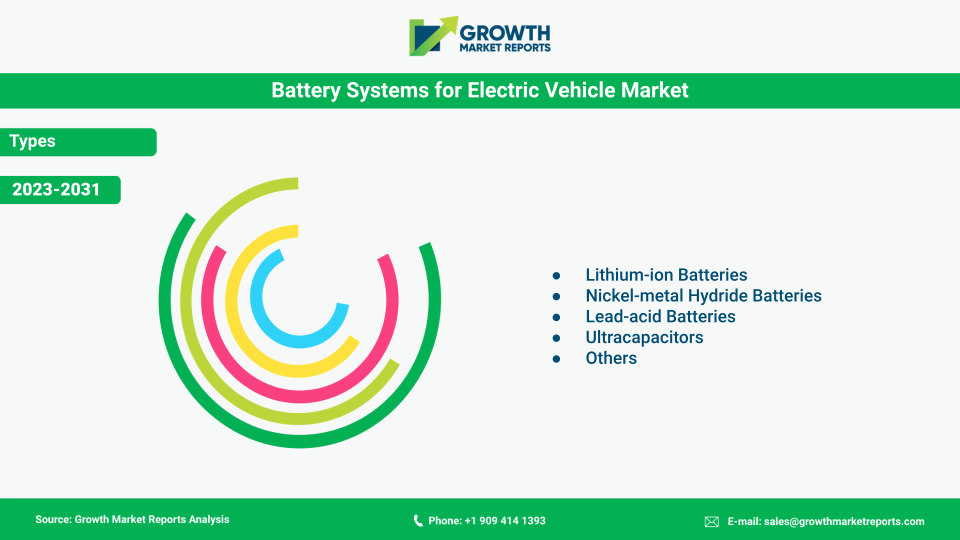
The battery type segment is a pivotal driver in the Battery Systems for Electric Vehicle market, as it directly influences vehicle performance, range, safety, and cost. Lithium-ion batteries currently dominate the market, accounting for the largest share due to their superior energy density, long cycle life, and declining production costs. The widespread adoption of lithium-ion technology has been instrumental in enabling the mass production of electric vehicles, with ongoing innovations such as silicon anode and cobalt-free chemistries further enhancing their appeal. As automakers prioritize longer driving ranges and faster charging capabilities, lithium-ion batteries are expected to maintain their leadership position, supported by significant investments in gigafactories and raw material sourcing.
Nickel-Metal Hydride (NiMH) batteries have traditionally been used in hybrid electric vehicles (HEVs) due to their proven safety record and moderate energy density. However, their market share is gradually declining as lithium-ion technology becomes more cost-competitive and versatile. Despite this, NiMH batteries continue to play a role in specific applications where high reliability and robustness are required, particularly in regions where hybrid vehicles remain popular. Manufacturers are also exploring ways to improve NiMH performance through enhanced electrode materials and manufacturing processes, aiming to extend their relevance in the evolving EV landscape.
Lead-acid batteries, once the mainstay of automotive energy storage, are now largely limited to auxiliary applications such as starting, lighting, and ignition (SLI) systems in electric vehicles. Their low cost and established recycling infrastructure offer certain advantages, particularly in emerging markets and low-speed electric vehicles. However, their limited energy density and shorter lifespan restrict their use in modern EVs, prompting a gradual phase-out in favor of more advanced alternatives. The market for lead-acid batteries in EVs is expected to shrink further as regulations tighten and consumer preferences shift towards higher-performing battery systems.
Solid-state batteries represent the next frontier in battery technology, offering the potential for significantly higher energy density, improved safety, and faster charging compared to conventional lithium-ion batteries. Although still in the developmental stage, major automakers and technology firms are investing heavily in solid-state research, with commercial adoption anticipated towards the latter part of the forecast period. The successful commercialization of solid-state batteries could be a game-changer for the EV market, enabling longer ranges, reduced weight, and enhanced durability. Other emerging battery types, such as lithium-sulfur and sodium-ion, are also being explored, though their market impact remains nascent.
In summary, the battery type segment is characterized by intense innovation and competition, with lithium-ion technology currently setting the industry standard. The transition towards solid-state and other advanced chemistries is expected to accelerate as technical challenges are overcome and economies of scale are realized. This evolution will have far-reaching implications for vehicle design, cost structures, and the overall trajectory of the Battery Systems for Electric Vehicle market.
| Attributes | Details |
| Report Title | Battery Systems for Electric Vehicle Market Research Report 2033 |
| By Battery Type | Lithium-ion, Nickel-Metal Hydride, Lead-Acid, Solid-State, Others |
| By Vehicle Type | Passenger Cars, Commercial Vehicles, Two-Wheelers, Others |
| By Application | BEV, PHEV, HEV, FCEV |
| By Battery Capacity | Less than 30 kWh, 30–60 kWh, Above 60 kWh |
| By Propulsion Type | Plug-in Hybrid, Hybrid, Pure Electric |
| By Distribution Channel | OEM, Aftermarket |
| Regions Covered | North America, Europe, APAC, Latin America, MEA |
| Base Year | 2024 |
| Historic Data | 2018-2023 |
| Forecast Period | 2025-2033 |
| Number of Pages | 288 |
| Number of Tables & Figures | 357 |
| Customization Available | Yes, the report can be customized as per your need. |
The vehicle type segment is a crucial determinant of demand patterns and technological requirements within the Battery Systems for Electric Vehicle market. Passenger cars constitute the largest segment, driven by the rapid adoption of electric vehicles among individual consumers and fleet operators. The growing availability of affordable EV models, coupled with expanding charging infrastructure and favorable government incentives, is propelling the shift towards electrified personal mobility. Battery systems designed for passenger cars prioritize energy density, compactness, and cost-effectiveness, with manufacturers striving to deliver longer ranges and shorter charging times to meet consumer expectations.
Commercial vehicles, including buses, trucks, and delivery vans, represent a rapidly expanding segment as businesses and municipalities seek to reduce their carbon footprint and operating costs. The electrification of public transportation and logistics fleets is driving demand for high-capacity, durable battery systems capable of supporting intensive duty cycles and extended ranges. Battery manufacturers are developing specialized solutions for commercial vehicles, focusing on fast-charging capabilities, thermal management, and modular designs that facilitate easy replacement and maintenance. The adoption of battery electric buses and trucks is particularly pronounced in urban areas with stringent emission regulations and government-backed electrification programs.
The two-wheeler segment, encompassing electric motorcycles, scooters, and bicycles, is experiencing robust growth, especially in densely populated regions such as Asia Pacific. The affordability, maneuverability, and low operating costs of electric two-wheelers make them an attractive option for urban commuters and delivery services. Battery systems for two-wheelers emphasize lightweight construction, rapid charging, and safety, with manufacturers exploring swappable battery technologies to enhance convenience and reduce downtime. The proliferation of shared mobility platforms and e-commerce delivery services is further stimulating demand for advanced battery systems in this segment.
Other vehicle types, including specialty vehicles and off-road applications, are gradually embracing electrification as battery technologies mature and cost barriers diminish. These include electric forklifts, construction equipment, and recreational vehicles, each with unique performance and durability requirements. Battery system providers are tailoring their offerings to address the specific needs of these niche markets, leveraging modular architectures and advanced battery management systems to optimize performance and longevity. As electrification expands across diverse vehicle categories, the demand for versatile and scalable battery solutions is expected to rise significantly.
Overall, the vehicle type segment reflects the broadening scope of the Battery Systems for Electric Vehicle market, with passenger cars leading the way but commercial vehicles and two-wheelers rapidly catching up. The ability of battery manufacturers to address the distinct requirements of each vehicle type will be a key differentiator in the highly competitive market landscape.
The application segment in the Battery Systems for Electric Vehicle market is defined by the specific propulsion technologies and use cases that batteries must support. Battery Electric Vehicles (BEVs) represent the largest and fastest-growing application, as they rely entirely on battery power for propulsion, eliminating the need for internal combustion engines. The increasing availability of long-range BEVs, coupled with declining battery costs and expanding fast-charging networks, is driving robust demand for high-capacity, high-performance battery systems. Manufacturers are focusing on enhancing energy density, safety, and thermal management to meet the rigorous demands of BEV applications.
Plug-in Hybrid Electric Vehicles (PHEVs) combine battery power with an internal combustion engine, offering greater flexibility and extended driving ranges. The battery systems used in PHEVs are typically smaller than those in BEVs but must deliver strong performance and durability across a wide range of operating conditions. PHEVs are particularly popular in regions where charging infrastructure is still developing or where consumers seek the reassurance of a backup power source. Battery manufacturers are optimizing chemistries and management systems to balance performance, cost, and longevity in PHEV applications.
Hybrid Electric Vehicles (HEVs) utilize battery systems primarily to support regenerative braking and provide supplemental power during acceleration. The batteries in HEVs are generally smaller and subject to frequent cycling, necessitating robust designs with high cycle life and rapid charge-discharge capabilities. While HEVs are gradually being overshadowed by BEVs and PHEVs in many markets, they remain a significant application segment, especially in regions with limited charging infrastructure or where fuel efficiency is a primary concern. Battery system providers are innovating to enhance the reliability and efficiency of HEV batteries, ensuring their continued relevance in the evolving EV landscape.
Fuel Cell Electric Vehicles (FCEVs) represent a niche but growing segment, utilizing battery systems as auxiliary power sources to complement hydrogen fuel cells. The batteries in FCEVs must support high-power output and rapid charge-discharge cycles, often under demanding operating conditions. As investments in hydrogen infrastructure increase and fuel cell technology matures, the demand for specialized battery systems in FCEVs is expected to rise, particularly in commercial vehicle and public transportation applications. Battery manufacturers are collaborating with fuel cell developers to optimize system integration and performance, positioning themselves for future growth in this segment.
In summary, the application segment underscores the diverse and evolving requirements of the Battery Systems for Electric Vehicle market. The ability to deliver tailored solutions for BEVs, PHEVs, HEVs, and FCEVs will be critical for battery manufacturers seeking to capture market share and drive innovation across the electric mobility ecosystem.
Battery capacity is a fundamental parameter influencing the performance, range, and cost of electric vehicles. The segment is typically categorized into less than 30 kWh, 30–60 kWh, and above 60 kWh capacities, each serving distinct vehicle types and applications. Batteries with capacities less than 30 kWh are commonly used in electric two-wheelers, small passenger cars, and city-focused vehicles. These batteries prioritize compactness, lightweight design, and affordability, catering to urban commuters and cost-sensitive markets. Manufacturers are continually improving the energy density and safety of small-capacity batteries to enhance their appeal and broaden their application scope.
The 30–60 kWh capacity segment is the mainstay for mainstream passenger cars and compact SUVs, offering a balance between range, performance, and cost. Vehicles equipped with batteries in this range typically deliver driving ranges of 200–350 kilometers on a single charge, meeting the needs of most urban and suburban users. Battery system providers are focusing on optimizing cell chemistry, thermal management, and packaging efficiency to maximize usable energy and minimize weight. The growing popularity of mid-range electric vehicles is driving steady demand for batteries in this capacity segment, with further growth expected as battery technology advances and economies of scale are realized.
Batteries with above 60 kWh capacity are primarily used in premium electric vehicles, long-range SUVs, and commercial vehicles that require extended driving ranges and high power output. These high-capacity batteries enable driving ranges of over 400 kilometers, making them suitable for long-distance travel and demanding applications. The development of fast-charging solutions and advanced battery management systems is critical for ensuring the safety, reliability, and longevity of large-capacity batteries. Automakers are increasingly equipping their flagship EV models with batteries exceeding 60 kWh, positioning themselves to meet the expectations of discerning consumers and commercial fleet operators.
The trend towards higher battery capacities is being driven by consumer demand for longer ranges and improved performance, as well as regulatory requirements for minimum electric range in certain markets. However, the challenges of cost, weight, and thermal management remain significant for large-capacity batteries. Manufacturers are investing in next-generation materials, such as solid-state electrolytes and high-nickel cathodes, to address these challenges and unlock new performance benchmarks. The battery capacity segment is thus a key battleground for innovation, with implications for vehicle design, market positioning, and overall competitiveness.
In conclusion, the battery capacity segment reflects the diverse needs of the electric vehicle market, from compact urban mobility solutions to high-performance, long-range vehicles. The ability to deliver reliable, high-capacity batteries at competitive costs will be a critical success factor for battery system providers in the years ahead.
The propulsion type segment is central to the Battery Systems for Electric Vehicle market, as it determines the specific requirements for battery design, performance, and integration. Pure electric propulsion, or battery electric vehicles (BEVs), relies entirely on battery systems for motive power, necessitating high-capacity, high-performance batteries capable of delivering extended ranges and rapid acceleration. The growing consumer preference for zero-emission vehicles, coupled with expanding fast-charging networks, is driving robust demand for pure electric propulsion systems. Battery manufacturers are focusing on enhancing energy density, charge rates, and safety to meet the rigorous demands of this segment.
Hybrid propulsion systems, which combine internal combustion engines with electric motors and batteries, offer a transitional pathway to full electrification. Hybrid vehicles (HEVs) and plug-in hybrids (PHEVs) utilize battery systems to support regenerative braking, electric-only driving, and supplemental power during acceleration. The batteries used in hybrid propulsion systems are typically smaller and subject to frequent charge-discharge cycles, requiring robust designs with high cycle life and rapid charging capabilities. The hybrid segment remains significant, particularly in markets where charging infrastructure is still developing or where consumers value the flexibility of dual power sources.
Plug-in hybrid propulsion represents a hybrid approach that allows vehicles to operate in electric-only mode for limited distances, with the option to switch to internal combustion power for longer journeys. Plug-in hybrids require battery systems that balance energy density, cost, and durability, as they must support both electric and hybrid operating modes. The popularity of plug-in hybrids is growing in regions with supportive government policies and incentives, as they offer a practical solution for reducing emissions while addressing range anxiety concerns. Battery system providers are optimizing chemistries and management systems to maximize the efficiency and longevity of plug-in hybrid batteries.
The interplay between propulsion type and battery system requirements is shaping the competitive landscape of the market. Manufacturers must tailor their offerings to meet the distinct needs of pure electric, hybrid, and plug-in hybrid vehicles, balancing performance, cost, and regulatory compliance. The transition towards pure electric propulsion is expected to accelerate as battery technology advances and charging infrastructure becomes more widespread, but hybrid and plug-in hybrid systems will continue to play a vital role in the interim.
Overall, the propulsion type segment highlights the complexity and diversity of the Battery Systems for Electric Vehicle market. The ability to deliver optimized solutions for each propulsion type will be essential for battery manufacturers seeking to capture market share and drive innovation across the electric mobility spectrum.
The distribution channel segment in the Battery Systems for Electric Vehicle market is bifurcated into OEM (Original Equipment Manufacturer) and Aftermarket channels, each playing a distinct role in the value chain. The OEM channel dominates the market, as most electric vehicles are equipped with battery systems during the manufacturing process. Automakers and battery suppliers collaborate closely to design, integrate, and optimize battery systems for specific vehicle models, ensuring seamless performance and compliance with safety standards. The growing trend towards vertical integration, with automakers investing directly in battery manufacturing and supply chains, is further strengthening the OEM channel's dominance.
The Aftermarket channel, while smaller in comparison, is gaining importance as the installed base of electric vehicles expands and batteries reach the end of their useful life. Aftermarket battery systems are primarily used for replacement, upgrades, and retrofitting of older vehicles. The aftermarket segment presents unique challenges, including compatibility, safety, and warranty considerations, but also offers opportunities for innovation in battery recycling, second-life applications, and value-added services. Battery system providers are developing standardized modules and plug-and-play solutions to address the diverse needs of the aftermarket, while also investing in training and certification programs for service providers.
The distribution channel landscape is evolving as digitalization and e-commerce platforms facilitate direct-to-consumer sales and support services. Online marketplaces are emerging as viable channels for battery system sales, particularly for two-wheelers and specialized vehicles. Manufacturers are leveraging digital tools to enhance customer engagement, streamline logistics, and provide real-time support for installation and maintenance. The rise of subscription models and battery-as-a-service offerings is also reshaping the distribution channel dynamics, enabling consumers and fleet operators to access battery systems on a pay-per-use basis.
The effectiveness of distribution channels is critical for market penetration and customer satisfaction. OEM partnerships ensure quality, reliability, and seamless integration, while aftermarket channels provide flexibility and support for the growing population of electric vehicles on the road. The ability to balance these channels and adapt to evolving consumer preferences will be a key success factor for battery system providers in the highly competitive market environment.
In summary, the distribution channel segment reflects the complexity and dynamism of the Battery Systems for Electric Vehicle market. The dominance of the OEM channel is expected to persist, but the aftermarket will play an increasingly important role as the market matures and the installed base of EVs grows.
The Battery Systems for Electric Vehicle market is brimming with opportunities, largely driven by the global shift towards sustainable transportation and the electrification of mobility. The ongoing expansion of government incentives, stricter emission norms, and growing environmental awareness among consumers are creating a fertile ground for innovation and investment. Battery manufacturers have the opportunity to capitalize on the rapid growth of electric vehicle adoption, particularly in emerging markets where urbanization and rising incomes are fueling demand for affordable, efficient mobility solutions. The development of next-generation battery technologies, such as solid-state and silicon-anode batteries, presents significant opportunities for differentiation and market leadership, with the potential to deliver breakthrough improvements in energy density, safety, and cost.
Another major opportunity lies in the integration of battery systems with smart grid and renewable energy solutions. As electric vehicles become increasingly connected and autonomous, battery systems can play a pivotal role in energy storage, vehicle-to-grid (V2G) applications, and demand response programs. The proliferation of fast-charging infrastructure and the rise of battery-as-a-service business models are opening new revenue streams and enhancing customer value propositions. Strategic partnerships between automakers, battery suppliers, utilities, and technology firms are enabling the development of holistic mobility ecosystems, positioning market participants to capture value across the entire electric vehicle lifecycle. The ability to leverage data analytics, artificial intelligence, and digital platforms will be critical for unlocking these opportunities and driving sustained growth.
Despite the promising outlook, the market faces significant threats and restrainers that could impede growth. The volatility of raw material prices, particularly for lithium, cobalt, and nickel, poses a major challenge for battery manufacturers, impacting cost structures and supply chain stability. Geopolitical tensions, trade restrictions, and environmental concerns related to mining and processing of critical minerals further exacerbate these risks. Additionally, the technical challenges associated with scaling up next-generation battery technologies, ensuring safety and reliability, and managing end-of-life disposal and recycling remain significant hurdles. Regulatory uncertainty, infrastructure gaps, and consumer apprehensions regarding range, charging time, and total cost of ownership also pose potential threats to widespread EV adoption. Addressing these challenges will require coordinated efforts across the value chain, sustained investment in research and development, and proactive engagement with policymakers and stakeholders.
Regionally, Asia Pacific is the undisputed leader in the Battery Systems for Electric Vehicle market, accounting for over 55% of global market revenue in 2024, equivalent to approximately USD 26.1 billion. The dominance of China, with its massive EV manufacturing base, extensive battery production capacity, and supportive government policies, is the primary driver of regional growth. Japan and South Korea also play significant roles, leveraging their expertise in advanced battery technologies and robust automotive industries. The rapid urbanization, rising disposable incomes, and increasing environmental consciousness in emerging Asian economies are further fueling demand for electric vehicles and battery systems. The region is expected to maintain its leadership position through 2033, with a projected CAGR of 19.2%.
Europe is the second-largest market, with a market size of USD 12.8 billion in 2024, driven by ambitious climate targets, stringent emission standards, and substantial investments in EV infrastructure. The presence of leading automotive OEMs, a well-developed supply chain, and a rapidly expanding network of charging stations are key factors underpinning market growth. Germany, France, the United Kingdom, and the Nordic countries are at the forefront of EV adoption, supported by comprehensive policy frameworks and consumer incentives. The European market is characterized by a strong focus on sustainability, circular economy principles, and the integration of renewable energy sources, positioning it as a global hub for battery innovation and deployment.
North America, with a market size of USD 6.4 billion in 2024, is witnessing accelerating growth as federal and state governments ramp up support for electric mobility. The United States, in particular, is seeing significant investments in battery manufacturing, EV production, and charging infrastructure, driven by both public and private sector initiatives. Canada and Mexico are also emerging as important players, leveraging their automotive manufacturing capabilities and access to critical raw materials. Latin America and the Middle East & Africa are relatively nascent markets, with combined revenues of USD 2.2 billion in 2024, but are expected to grow steadily as infrastructure improves and policy support strengthens. The regional outlook underscores the importance of localized strategies and tailored solutions to address diverse market dynamics and regulatory environments.
The Battery Systems for Electric Vehicle market is characterized by intense competition, rapid technological innovation, and a dynamic landscape of established players and new entrants. Major battery manufacturers are investing heavily in research and development to enhance energy density, safety, and cost-effectiveness, while also scaling up production capacities to meet surging demand. Vertical integration is a prominent trend, with leading automakers building their own battery manufacturing facilities and securing long-term supply agreements for critical raw materials. Strategic alliances, joint ventures, and mergers and acquisitions are common as companies seek to strengthen their market positions and accelerate the commercialization of next-generation battery technologies.
The competitive landscape is further shaped by the emergence of specialized technology firms and startups focused on advanced battery chemistries, battery management systems, and recycling solutions. These innovators are challenging incumbents by introducing disruptive technologies and business models, such as solid-state batteries, second-life applications, and battery-as-a-service offerings. The ability to innovate rapidly, scale efficiently, and forge strategic partnerships will be critical for success in this highly competitive environment. Intellectual property, manufacturing expertise, and access to raw materials are key sources of competitive advantage, with companies vying to secure their positions in the evolving value chain.
Market leaders are also prioritizing sustainability and circular economy principles, investing in battery recycling, reuse, and responsible sourcing of raw materials. The integration of digital technologies, such as artificial intelligence, data analytics, and IoT, is enabling manufacturers to optimize battery performance, enhance predictive maintenance, and deliver value-added services to customers. The focus on customer-centric solutions, including customizable battery packs, modular designs, and flexible financing options, is further differentiating market participants and driving customer loyalty. As the market matures, the ability to deliver high-quality, reliable, and sustainable battery systems will be a key determinant of long-term success.
Some of the major companies operating in the Battery Systems for Electric Vehicle market include Contemporary Amperex Technology Co. Limited (CATL), LG Energy Solution, Panasonic Corporation, BYD Company Limited, Samsung SDI Co., Ltd., SK Innovation Co., Ltd., Tesla, Inc., A123 Systems LLC, Hitachi Chemical Co., Ltd., and GS Yuasa Corporation. CATL is the global leader in battery manufacturing, supplying to a wide range of automakers and investing heavily in next-generation battery technologies. LG Energy Solution and Panasonic are renowned for their high-quality lithium-ion batteries and strategic partnerships with leading automotive OEMs. BYD is a vertically integrated player, manufacturing both electric vehicles and battery systems, with a strong presence in China and international markets.
Samsung SDI and SK Innovation are prominent South Korean players, known for their innovation in battery chemistries and large-scale manufacturing capabilities. Tesla, Inc. is a major force in the market, not only as an EV manufacturer but also as a pioneer in battery technology and energy storage solutions. The company’s Gigafactories and proprietary battery technologies have set new benchmarks for performance and cost in the industry. A123 Systems, Hitachi Chemical, and GS Yuasa are established players with a strong focus on advanced battery materials, safety, and reliability. These companies are actively investing in research and development, strategic collaborations, and capacity expansion to maintain their competitive edge in the fast-evolving market.
The Battery Systems for Electric Vehicle market has been segmented on the basis of
The major players in the battery systems for electric vehicle market include Samsung SDI Co Ltd, Toshiba Corporation, BYD, and Panasonic Corporation.
EV battery manufacturers are investing in R&D activities to improve the chemistry of the batteries in order to provide a longer discharge time.
Emerging trends include the development of solid-state batteries, silicon-anode and cobalt-free chemistries, modular battery systems, and battery-as-a-service business models.
The market is primarily divided into OEM (Original Equipment Manufacturer) and Aftermarket channels, with OEM dominating due to integration during vehicle manufacturing.
Major companies include CATL, LG Energy Solution, Panasonic Corporation, BYD Company Limited, Samsung SDI, SK Innovation, Tesla, A123 Systems, Hitachi Chemical, and GS Yuasa Corporation.
Key applications include Battery Electric Vehicles (BEVs), Plug-in Hybrid Electric Vehicles (PHEVs), Hybrid Electric Vehicles (HEVs), and Fuel Cell Electric Vehicles (FCEVs).
Major threats include raw material price volatility, supply chain disruptions, technical challenges in scaling next-gen batteries, regulatory uncertainty, and concerns about battery recycling and disposal.
Asia Pacific leads the market, especially China, Japan, and South Korea, followed by Europe and North America.
Key growth drivers include the global push for decarbonization, supportive government policies, technological advancements in battery chemistries, and expansion of EV applications beyond passenger cars.
Lithium-ion batteries currently dominate the market due to their superior energy density, long cycle life, and declining production costs.
The market is expected to grow at a compound annual growth rate (CAGR) of 18.7% from 2025 to 2033.
The global Battery Systems for Electric Vehicle market size in 2024 is estimated at USD 47.5 billion.