Segments - by Product Type (Open Grill, Contact Grill, Raclette Grill, Others), by Application (Residential, Commercial, Others), by Power Rating (Below 1, 000 Watts, 1, 000–2, 000 Watts, Above 2, 000 Watts), by Distribution Channel (Online Stores, Supermarkets/Hypermarkets, Specialty Stores, Others)
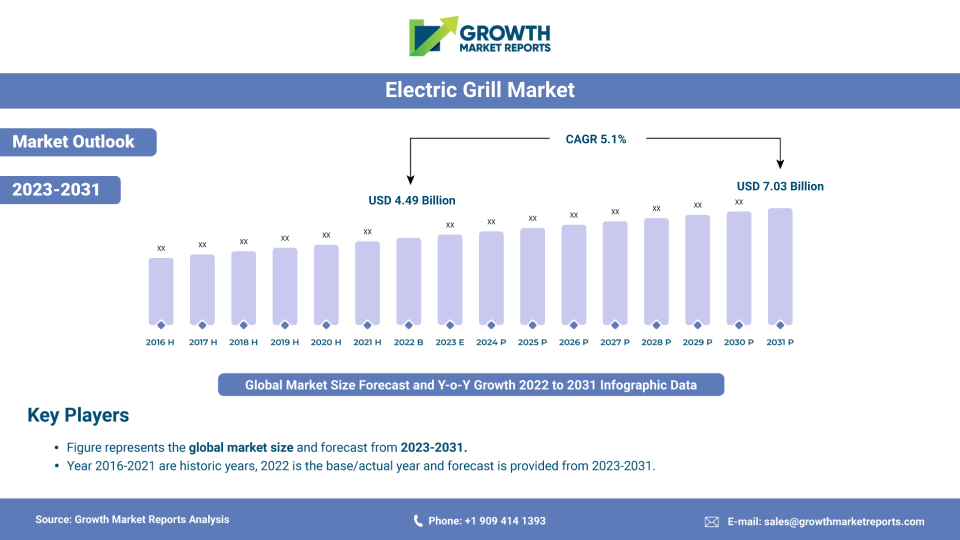
According to our latest research, the global electric grill market size reached USD 6.2 billion in 2024, reflecting robust consumer demand and technological advancements in home and commercial cooking equipment. The market is expected to grow at a CAGR of 7.8% from 2025 to 2033, reaching a forecasted value of USD 12.4 billion by 2033. The primary growth factor fueling this expansion is the increasing consumer inclination toward healthier cooking methods, coupled with the convenience and safety offered by electric grills compared to traditional charcoal or gas alternatives.
One of the most significant growth drivers for the electric grill market is the rising awareness about healthy eating habits and the associated benefits of oil-free or low-oil cooking. Electric grills offer a smokeless cooking experience, which is highly valued in urban settings where open-flame grilling is often restricted due to safety regulations. Consumers are increasingly opting for electric grills as they facilitate quick, uniform cooking with minimal fat, aligning with the global shift toward health-conscious lifestyles. Additionally, the ease of cleaning and maintenance further enhances the appeal of electric grills for both residential and commercial users, making them a preferred choice in modern kitchens and foodservice establishments.
Technological advancements have also played a pivotal role in the electric grill marketÂ’s growth trajectory. Manufacturers are investing in research and development to introduce smart grills equipped with features such as temperature control, timer settings, and Wi-Fi connectivity, which allow users to monitor and control the cooking process remotely. These innovations not only enhance user convenience but also contribute to energy efficiency, a critical consideration in todayÂ’s environmentally conscious market. The integration of IoT and AI-driven functionalities in electric grills is expected to attract tech-savvy consumers, further propelling market growth in the coming years.
The burgeoning trend of outdoor and rooftop dining, particularly in urban areas, has also contributed to the expansion of the electric grill market. With increasing restrictions on charcoal and gas grilling in apartment complexes and urban neighborhoods, electric grills provide a viable alternative that complies with safety standards while still delivering the authentic grilling experience. The versatility of electric grills, which can be used both indoors and outdoors, has made them a popular choice among consumers seeking flexibility in their cooking options. Moreover, the growing culture of home entertaining and the rise of food enthusiasts experimenting with global cuisines have further fueled the demand for advanced and multifunctional electric grills.
In addition to electric grills, the electric skillet has emerged as a versatile cooking appliance gaining popularity among health-conscious consumers. The electric skillet offers a convenient solution for those who wish to prepare a wide range of dishes with minimal oil usage. Its ability to maintain consistent temperatures makes it ideal for tasks such as sautéing, frying, and simmering, providing a healthier alternative to traditional stovetop cooking. As more households seek to incorporate nutritious meals into their daily routines, the electric skillet's ease of use and energy efficiency make it an attractive option. This growing interest in electric skillets reflects a broader trend towards multifunctional kitchen appliances that cater to diverse culinary needs.
From a regional perspective, North America continues to dominate the electric grill market, accounting for the largest market share in 2024, followed closely by Europe and the Asia Pacific. The high adoption rate in North America can be attributed to a combination of factors, including a strong culture of outdoor grilling, higher disposable incomes, and a well-established distribution network. Meanwhile, the Asia Pacific region is witnessing the fastest growth, driven by rapid urbanization, increasing middle-class population, and a growing preference for convenient cooking appliances. Europe remains a significant market due to stringent environmental regulations and a rising trend of sustainable living, which favors electric appliances over traditional fuel-based alternatives.
The electric grill market is segmented by product type into open grill, contact grill, raclette grill, and others. Among these, the open grill segment holds a substantial market share, owing to its versatility and ability to replicate the traditional grilling experience without the need for charcoal or gas. Open grills are particularly favored for their ease of use and suitability for both indoor and outdoor settings, making them a popular choice among urban dwellers and families. Their design allows for even heat distribution, which ensures consistent cooking results, and the open structure facilitates easy monitoring of the cooking process, a feature highly valued by both novice and experienced cooks.
The contact grill segment has witnessed remarkable growth in recent years, primarily due to its compact design and multifunctionality. Contact grills are highly efficient, as they cook food from both sides simultaneously, reducing cooking time and energy consumption. This segment is particularly popular in urban households and commercial kitchens where space is a constraint and quick service is essential. The ability to grill a variety of foods, from sandwiches to meats and vegetables, has broadened the appeal of contact grills, making them a staple in modern kitchens. Manufacturers are continuously innovating in this segment, introducing features like removable plates, adjustable temperature controls, and non-stick surfaces to enhance user experience.
Raclette grills, though a niche segment, have gained traction in regions with a strong tradition of communal dining, such as Europe. These grills are designed for social gatherings, allowing multiple users to cook their own portions simultaneously. The popularity of raclette grills is driven by the growing trend of experiential dining, where consumers seek interactive and engaging cooking experiences. This segment is also benefiting from the increasing number of specialty restaurants and food events that showcase raclette-based dishes, further boosting demand. Manufacturers are responding by offering raclette grills with modular designs and customizable features to cater to diverse consumer preferences.
The 'others' category includes specialty electric grills such as panini presses and smokeless indoor grills, which cater to specific culinary needs. These products are gaining popularity among urban consumers who seek convenience and versatility in their cooking appliances. The rise of compact living spaces has fueled demand for multifunctional appliances that can perform multiple cooking tasks without occupying much space. As manufacturers continue to innovate and expand their product portfolios, the 'others' segment is expected to witness steady growth, driven by evolving consumer preferences and the increasing adoption of electric grills in emerging markets.
| Attributes | Details |
| Report Title | Electric Grill Market Research Report 2033 |
| By Product Type | Open Grill, Contact Grill, Raclette Grill, Others |
| By Application | Residential, Commercial, Others |
| By Power Rating | Below 1, 000 Watts, 1, 000–2, 000 Watts, Above 2, 000 Watts |
| By Distribution Channel | Online Stores, Supermarkets/Hypermarkets, Specialty Stores, Others |
| Regions Covered | North America, Europe, APAC, Latin America, MEA |
| Base Year | 2024 |
| Historic Data | 2018-2023 |
| Forecast Period | 2025-2033 |
| Number of Pages | 269 |
| Number of Tables & Figures | 361 |
| Customization Available | Yes, the report can be customized as per your need. |
The application segment of the electric grill market is broadly categorized into residential, commercial, and others. The residential segment dominates the market, accounting for the largest share in 2024, driven by the growing trend of home cooking and the increasing popularity of home-based social gatherings. Electric grills are favored in residential settings for their convenience, safety features, and ability to deliver restaurant-quality results without the complexities associated with traditional grilling methods. The shift toward healthier eating habits and the desire for quick, hassle-free cooking solutions have further boosted the adoption of electric grills in households worldwide.
The commercial segment, encompassing restaurants, hotels, cafes, and catering services, is experiencing robust growth, fueled by the expanding foodservice industry and the rising demand for efficient, high-capacity cooking equipment. Electric grills are increasingly being adopted in commercial kitchens due to their ability to maintain consistent cooking temperatures, reduce smoke emissions, and comply with stringent health and safety regulations. The growing trend of open kitchens and live cooking stations in restaurants has also contributed to the popularity of electric grills, as they provide a clean and visually appealing cooking environment. Moreover, the versatility of electric grills allows commercial establishments to diversify their menus and cater to a wider range of customer preferences.
The 'others' application segment includes institutional settings such as schools, hospitals, and corporate cafeterias, where electric grills are valued for their safety, ease of use, and ability to prepare a variety of meals quickly. The increasing focus on providing nutritious and freshly prepared meals in institutional settings has driven the adoption of electric grills, which offer a healthier alternative to deep-frying and other traditional cooking methods. As institutions continue to prioritize health and wellness, the demand for electric grills in this segment is expected to grow steadily.
Manufacturers are responding to the diverse needs of different application segments by offering a wide range of products with varying capacities, features, and price points. Customization and modularity have become key trends, enabling users to select grills that best suit their specific requirements. As the market continues to evolve, the application segment is expected to witness further diversification, with new use cases emerging in response to changing consumer lifestyles and culinary trends.
The electric grill market is segmented by power rating into below 1,000 watts, 1,000–2,000 watts, and above 2,000 watts. The 1,000–2,000 watts segment holds the largest market share, as it strikes a balance between energy efficiency and cooking performance, making it suitable for both residential and commercial applications. Grills in this power range offer sufficient heat output for a wide variety of cooking tasks, from grilling meats and vegetables to preparing sandwiches and paninis. The popularity of this segment is further enhanced by the availability of models with advanced features such as adjustable temperature controls, digital displays, and energy-saving modes.
The below 1,000 watts segment caters primarily to the residential market, particularly in regions where compact living spaces and energy conservation are top priorities. These grills are ideal for small households, students, and individuals living in apartments with limited kitchen space. The lower power consumption makes them an attractive option for environmentally conscious consumers and those seeking to minimize their electricity bills. Manufacturers are focusing on developing innovative designs and features that maximize cooking efficiency while maintaining a compact footprint, thereby expanding the appeal of this segment.
The above 2,000 watts segment is primarily targeted at commercial users and large households that require high-capacity cooking equipment. Grills in this category deliver rapid heating and consistent performance, making them suitable for high-volume food preparation in restaurants, hotels, and catering services. The robust construction and advanced features of these grills, such as multiple cooking zones and programmable settings, cater to the demanding needs of professional chefs and foodservice operators. As the commercial foodservice industry continues to expand, the demand for high-power electric grills is expected to grow, driving innovation and competition in this segment.
The power rating of electric grills is a critical factor influencing purchase decisions, as it directly impacts cooking performance, energy consumption, and suitability for different applications. Manufacturers are increasingly focusing on energy-efficient designs and the integration of smart technologies to optimize power usage and enhance user experience. As consumers become more discerning and environmentally conscious, the demand for electric grills that offer a balance of performance, efficiency, and sustainability is expected to rise, shaping the future trajectory of the market.
The distribution channel segment of the electric grill market includes online stores, supermarkets/hypermarkets, specialty stores, and others. Online stores have emerged as the fastest-growing distribution channel, driven by the increasing penetration of e-commerce and the growing preference for convenient, hassle-free shopping experiences. Consumers are increasingly turning to online platforms to research, compare, and purchase electric grills, attracted by the wide range of options, competitive pricing, and home delivery services. The rise of digital marketing and influencer-driven promotions has further boosted online sales, making it a key focus area for manufacturers and retailers alike.
Supermarkets and hypermarkets remain a significant distribution channel, accounting for a substantial share of the market. These retail outlets offer consumers the advantage of physically inspecting products before purchase, as well as the opportunity to benefit from in-store promotions and bundled offers. The presence of knowledgeable sales staff and the ability to compare different brands and models side by side contribute to the popularity of this channel, particularly among traditional shoppers who prefer hands-on experiences. As urbanization continues and retail infrastructure expands, supermarkets and hypermarkets are expected to maintain their relevance in the electric grill market.
Specialty stores, which focus on kitchen appliances and home electronics, cater to a niche segment of consumers seeking expert advice and personalized service. These stores often carry premium and high-end electric grill models, targeting discerning customers who prioritize quality, performance, and advanced features. The ability to offer product demonstrations and after-sales support gives specialty stores a competitive edge, particularly in markets where consumers value in-depth product knowledge and tailored recommendations. As the market for electric grills becomes increasingly sophisticated, specialty stores are expected to play a pivotal role in driving sales of innovative and high-value products.
The 'others' distribution channel includes direct sales, department stores, and local retailers, which cater to specific market segments and regional preferences. While these channels account for a smaller share of the market, they play an important role in reaching consumers in remote or underserved areas. Manufacturers are adopting omnichannel strategies to ensure broad market coverage and enhance customer engagement across multiple touchpoints. As the retail landscape continues to evolve, the integration of online and offline channels is expected to drive growth and improve the overall customer experience in the electric grill market.
The electric grill market presents a multitude of opportunities, particularly in the realm of technological innovation and product diversification. The integration of smart technologies, such as IoT-enabled controls and AI-driven cooking assistants, offers manufacturers the chance to differentiate their products and cater to the growing demand for connected home appliances. The rise of health-conscious consumers seeking low-oil and smoke-free cooking alternatives provides a fertile ground for the development of new product features and functionalities. Additionally, the expansion of e-commerce and the increasing penetration of digital platforms enable manufacturers to reach a broader audience and tap into emerging markets with untapped potential. By leveraging these opportunities, companies can enhance their competitive positioning and drive sustained growth in the electric grill market.
Sustainability and environmental considerations are also emerging as key growth opportunities in the electric grill market. As consumers become more aware of the environmental impact of their purchasing decisions, there is a growing demand for energy-efficient and eco-friendly appliances. Manufacturers that prioritize the use of sustainable materials, energy-saving technologies, and recyclable packaging are likely to gain a competitive edge in the market. Furthermore, the shift toward green building standards and the increasing adoption of smart home solutions create opportunities for the integration of electric grills into holistic home automation ecosystems. By aligning their product development strategies with these trends, companies can capture new customer segments and drive long-term value creation.
Despite the promising outlook, the electric grill market faces certain restraining factors that could impede growth. One of the primary challenges is the intense competition from traditional grilling methods, such as charcoal and gas grills, which continue to enjoy strong brand loyalty among certain consumer segments. Additionally, the relatively higher upfront cost of electric grills, particularly models with advanced features, may deter price-sensitive customers in emerging markets. The need for access to reliable electricity and concerns about the environmental impact of increased energy consumption also pose potential barriers to widespread adoption. Manufacturers must address these challenges by offering value-driven solutions, educating consumers about the benefits of electric grilling, and investing in energy-efficient technologies to ensure sustained market growth.
In 2024, North America led the global electric grill market with a market size of USD 2.4 billion, driven by a strong culture of outdoor and indoor grilling, high disposable incomes, and a well-established retail infrastructure. The regionÂ’s affinity for barbecue culture and frequent home entertaining has made electric grills a staple in both residential and commercial settings. Manufacturers in North America are focusing on product innovation and the integration of smart technologies to cater to the evolving preferences of tech-savvy consumers. The presence of major market players and the widespread availability of electric grills through multiple distribution channels further contribute to the regionÂ’s dominance.
Europe accounted for the second-largest share of the electric grill market in 2024, with a market size of USD 1.8 billion. The regionÂ’s growth is fueled by stringent environmental regulations, a strong emphasis on sustainability, and a growing preference for energy-efficient appliances. European consumers are increasingly adopting electric grills as a cleaner and more convenient alternative to traditional grilling methods, particularly in urban areas where open-flame cooking is often restricted. The popularity of communal dining experiences, such as raclette and fondue, has also driven demand for specialty electric grills. With a projected CAGR of 7.2% from 2025 to 2033, Europe is expected to maintain its position as a key growth market for electric grills.
The Asia Pacific region is emerging as the fastest-growing market for electric grills, with a market size of USD 1.2 billion in 2024 and a projected CAGR of 9.4% through 2033. Rapid urbanization, rising middle-class incomes, and changing lifestyles are driving the adoption of modern kitchen appliances in countries such as China, India, and Japan. The increasing popularity of home cooking, coupled with the influence of Western culinary trends, has contributed to the growing demand for electric grills in the region. Manufacturers are capitalizing on this trend by offering affordable and compact models tailored to the needs of urban consumers. As the Asia Pacific market continues to expand, it is expected to play a pivotal role in shaping the future trajectory of the global electric grill market.
The electric grill market is characterized by intense competition, with a mix of established global players and emerging regional brands vying for market share. The competitive landscape is shaped by factors such as product innovation, brand reputation, pricing strategies, and distribution networks. Leading companies are investing heavily in research and development to introduce new features, improve energy efficiency, and enhance user experience. The integration of smart technologies, such as Wi-Fi connectivity, app-based controls, and AI-driven cooking assistants, has become a key differentiator in the market, enabling companies to cater to the evolving preferences of tech-savvy consumers. Additionally, strategic partnerships, mergers and acquisitions, and expansion into emerging markets are common strategies employed by market leaders to strengthen their competitive positioning.
Brand loyalty and customer trust play a significant role in the electric grill market, particularly among consumers who prioritize quality, performance, and after-sales support. Established brands with a strong track record of reliability and innovation are able to command premium pricing and maintain a loyal customer base. However, the entry of new players offering competitively priced products with innovative features has intensified price competition and increased the need for continuous product differentiation. Companies are also leveraging digital marketing, influencer partnerships, and social media campaigns to enhance brand visibility and engage with a broader audience.
The growing emphasis on sustainability and energy efficiency has prompted manufacturers to adopt eco-friendly practices and materials in their product development processes. Companies that prioritize sustainability are increasingly being favored by environmentally conscious consumers, giving them a competitive edge in the market. The ability to offer a diverse product portfolio that caters to different consumer segments, from budget-conscious buyers to premium customers seeking advanced features, is another key factor influencing competitive dynamics in the electric grill market.
Major companies operating in the global electric grill market include Weber-Stephen Products LLC, Koninklijke Philips N.V., Tefal (Groupe SEB), George Foreman (Spectrum Brands), Char-Broil (W.C. Bradley Co.), Hamilton Beach Brands, Inc., Breville Group Limited, DeÂ’Longhi S.p.A., Cuisinart (Conair Corporation), and Kenyon International, Inc. These companies are known for their strong R&D capabilities, extensive distribution networks, and commitment to product innovation. For instance, Weber-Stephen Products LLC is renowned for its premium electric grills with advanced temperature control and connectivity features, while Philips N.V. focuses on user-friendly designs and energy-efficient technologies. Tefal and George Foreman have established themselves as household names, offering a wide range of electric grills catering to both residential and commercial markets. Char-Broil and Hamilton Beach Brands are recognized for their affordable and versatile product offerings, targeting budget-conscious consumers without compromising on quality. As competition continues to intensify, these companies are expected to drive further innovation and shape the future direction of the electric grill market.
The Electric Grill market has been segmented on the basis of
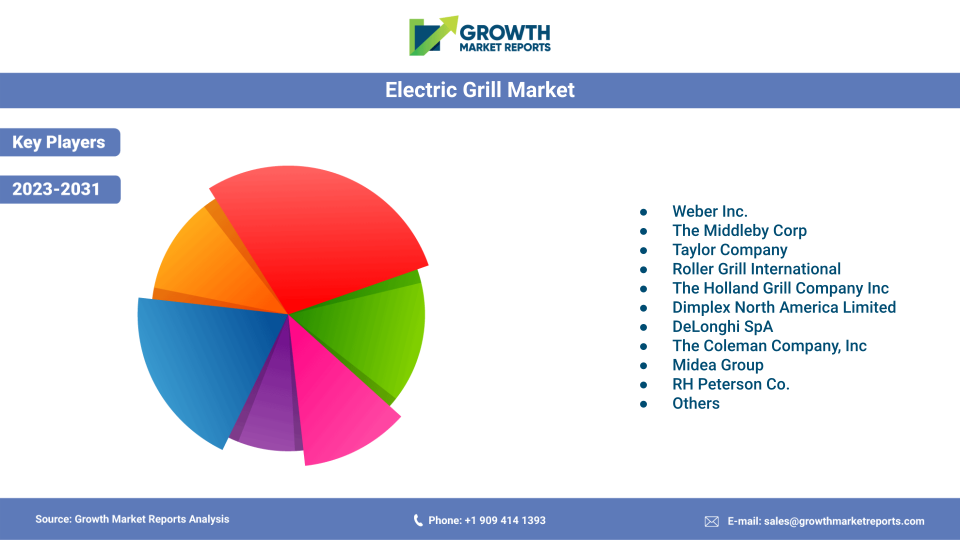
Major players of the market are Weber Inc., The Middleby Corp., Taylor Company, Roller Grill International, The Holland Grill Company Inc., Dimplex North America Limited, DeLonghi SpA, The Coleman Company, Inc., Midea Group., RH Peterson Co., Char-Broil LLC, ElectriChef, Cuisinart, Kenyon International, Inc., FIRE MAGIC, TTK Prestige Ltd, and Groupe SEB.
Companies are engaging in partnership, collaboration, and merges. Moreover, the companies are focusing on expanding their product portfolio to expand their expand share.
Challenges include competition from traditional charcoal and gas grills, higher upfront costs of advanced electric grills, reliance on electricity, and concerns over energy consumption. Manufacturers are addressing these through innovation and consumer education.
Manufacturers are integrating smart features such as temperature control, timers, Wi-Fi connectivity, IoT, and AI-driven functionalities, enhancing convenience, energy efficiency, and user experience.
Electric grills are sold through online stores, supermarkets/hypermarkets, specialty stores, and other channels like direct sales and department stores. Online stores are the fastest-growing channel due to the rise of e-commerce.
Electric grills are used in residential, commercial (restaurants, hotels, cafes), and institutional settings (schools, hospitals, corporate cafeterias). The residential segment holds the largest market share.
Key companies include Weber-Stephen Products LLC, Koninklijke Philips N.V., Tefal (Groupe SEB), George Foreman (Spectrum Brands), Char-Broil (W.C. Bradley Co.), Hamilton Beach Brands, Breville Group, De’Longhi S.p.A., Cuisinart (Conair Corporation), and Kenyon International, Inc.
The market is segmented into open grills, contact grills, raclette grills, and specialty types such as panini presses and smokeless indoor grills. Open grills are popular for their versatility, while contact grills are favored for their compact and multifunctional design.
North America leads the market, followed by Europe and the Asia Pacific. North America benefits from a strong grilling culture and high disposable incomes, while Asia Pacific is the fastest-growing region due to urbanization and rising middle-class incomes.
Key growth drivers include increasing consumer preference for healthier cooking methods, convenience and safety of electric grills, technological innovations like smart features, and the popularity of smokeless cooking in urban areas.
The electric grill market is expected to grow at a CAGR of 7.8% from 2025 to 2033, reaching an estimated value of USD 12.4 billion by 2033.
As of 2024, the global electric grill market size reached USD 6.2 billion, driven by strong consumer demand and technological advancements.