Segments - by Product Type (EDS Instruments, WDS Instruments, EBSD Instruments, Micro-XRF Instruments), by Application (Material Science, Electronics, Geology, Forensics, Environmental Analysis, Others), by End-User (Academic & Research Institutes, Industrial, Semiconductor, Mining, Others)
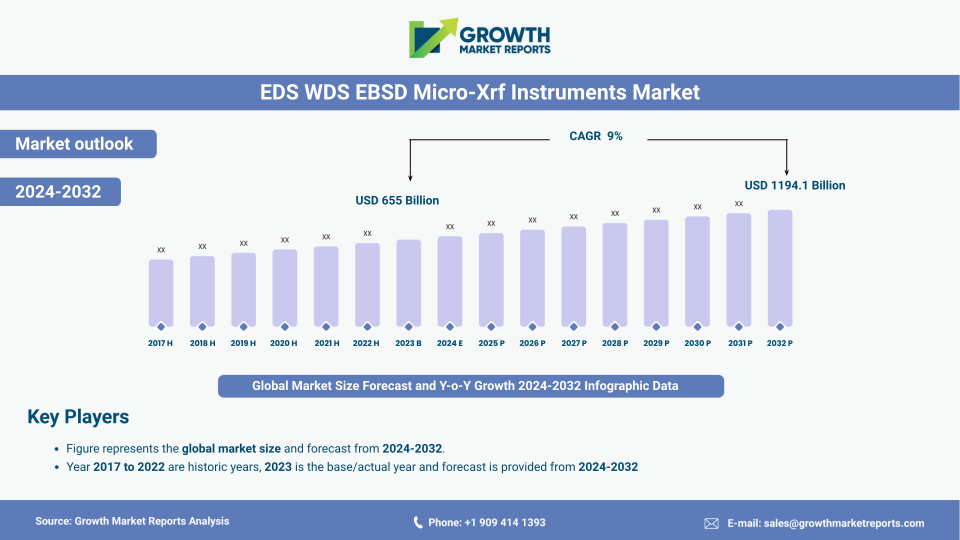
According to our latest research, the global EDS WDS EBSD Micro-XRF Instruments market size reached USD 1.25 billion in 2024. The market is currently experiencing robust growth, with a recorded compound annual growth rate (CAGR) of 7.6%. Propelled by advancements in material characterization technologies, the market is forecasted to expand significantly, attaining a value of approximately USD 2.42 billion by 2033. This growth is primarily driven by the increasing demand for high-resolution analytical instruments across diverse sectors such as materials science, electronics, and environmental analysis, as industries worldwide prioritize accuracy and efficiency in elemental and structural analysis.
A primary growth factor for the EDS WDS EBSD Micro-XRF Instruments market is the accelerating pace of innovation in materials science and nanotechnology. As research institutions and industrial laboratories push the boundaries of material discovery and engineering, the need for advanced analytical tools that can provide precise elemental and crystallographic information has surged. Energy Dispersive Spectroscopy (EDS), Wavelength Dispersive Spectroscopy (WDS), Electron Backscatter Diffraction (EBSD), and Micro-X-ray Fluorescence (Micro-XRF) instruments offer unmatched capabilities for detailed compositional and microstructural analysis. These technologies are vital for developing next-generation materials with enhanced properties, such as improved strength, conductivity, or corrosion resistance, which are essential in sectors like aerospace, automotive, and electronics. The integration of these instruments with automated workflows and data analytics platforms further amplifies their value, enabling faster and more reliable research outcomes.
Another significant driver for market growth is the increasing complexity and miniaturization of electronic devices. As the electronics industry moves towards smaller, more powerful components, the demand for precise failure analysis, quality control, and process optimization has intensified. EDS, WDS, EBSD, and Micro-XRF instruments are indispensable for semiconductor manufacturers and electronics companies, offering detailed insights into the elemental composition and crystalline structure of materials at the micro and nano scales. This capability is critical for ensuring device reliability, enhancing product yields, and maintaining compliance with stringent quality standards. Additionally, the ongoing transition to advanced packaging technologies and the proliferation of Internet of Things (IoT) devices are further fueling the adoption of these analytical instruments across the electronics value chain.
Environmental and regulatory considerations are also playing a pivotal role in shaping the EDS WDS EBSD Micro-XRF Instruments market. Governments and regulatory bodies worldwide are imposing stricter guidelines on pollution control, hazardous material management, and resource sustainability. These regulations necessitate rigorous material testing and environmental analysis, particularly in industries such as mining, forensics, and environmental science. Micro-XRF and related techniques offer non-destructive, rapid, and highly sensitive analysis of trace elements and contaminants, making them invaluable for regulatory compliance and environmental monitoring. The growing awareness of environmental issues and the need for sustainable practices are thus acting as strong catalysts for market expansion, as organizations increasingly invest in state-of-the-art analytical solutions to meet evolving standards and public expectations.
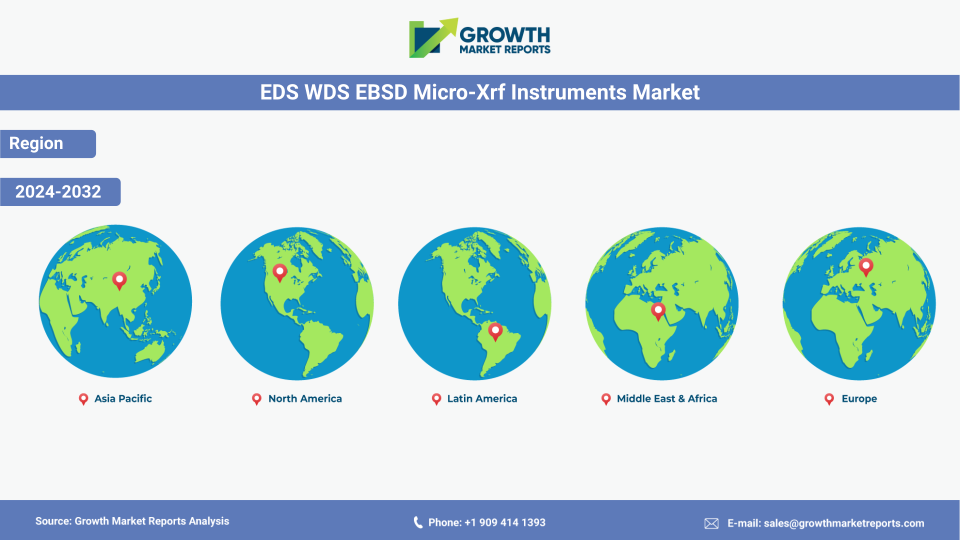
From a regional perspective, Asia Pacific continues to lead the EDS WDS EBSD Micro-XRF Instruments market, driven by rapid industrialization, substantial investments in research and development, and the presence of a robust electronics manufacturing ecosystem. Countries such as China, Japan, and South Korea are at the forefront of technological innovation, fueling demand for advanced analytical instruments in academic, industrial, and governmental laboratories. North America and Europe also represent significant market shares, supported by well-established research infrastructures and a strong focus on technological advancement. Meanwhile, emerging economies in Latin America and the Middle East & Africa are gradually increasing their market participation, buoyed by growing investments in mining, forensics, and environmental sciences. The global market landscape is thus characterized by a dynamic interplay of regional strengths, technological progress, and evolving application needs.
Micro X Ray Fluorescence (XRF) Systems for Materials have become increasingly significant in the realm of material analysis due to their non-destructive nature and high sensitivity. These systems are particularly adept at providing detailed elemental mapping and are crucial in applications where preserving the integrity of the sample is paramount. As industries continue to innovate, the demand for precise and efficient analytical tools like Micro XRF systems is on the rise. These systems are not only pivotal in traditional sectors such as forensics and environmental science but are also expanding their reach into emerging fields like cultural heritage preservation and advanced manufacturing. The versatility and accuracy of Micro XRF systems make them indispensable in meeting the growing analytical needs of various industries.
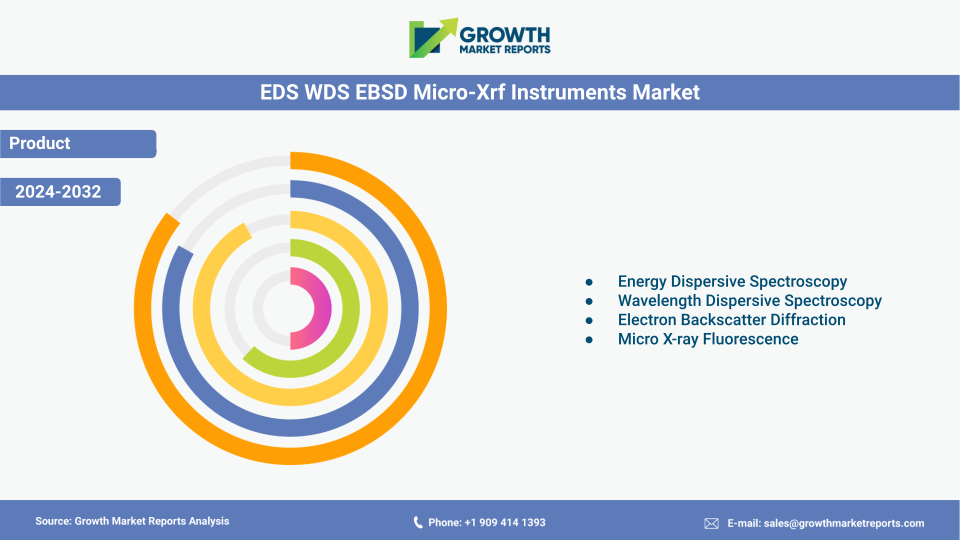
The EDS WDS EBSD Micro-XRF Instruments market by product type encompasses four major categories: EDS Instruments, WDS Instruments, EBSD Instruments, and Micro-XRF Instruments. Each of these technologies offers unique analytical capabilities tailored to specific research and industrial applications. Energy Dispersive Spectroscopy (EDS) instruments are widely recognized for their rapid elemental analysis capabilities, making them a staple in electron microscopy suites for material science and quality control. The increasing adoption of EDS in both academic and industrial settings is attributed to its ease of integration, user-friendly interfaces, and ability to deliver real-time compositional data. Recent advancements in detector technology have further enhanced the sensitivity and resolution of EDS systems, enabling more accurate analysis of light elements and trace contaminants, which is critical for high-purity manufacturing processes.
Wavelength Dispersive Spectroscopy (WDS) instruments, on the other hand, are prized for their superior spectral resolution and quantitative accuracy. WDS instruments are particularly valuable in applications requiring the differentiation of closely spaced elemental peaks, such as in complex alloy analysis and geochemical studies. The growing demand for high-precision material characterization in metallurgy, mining, and semiconductor industries has led to a steady increase in WDS adoption. Manufacturers are responding by developing more compact, automated, and integrated WDS solutions that can seamlessly interface with other analytical techniques, thus expanding the usability and appeal of WDS instruments across a broader range of end-users.
Electron Backscatter Diffraction (EBSD) instruments have emerged as essential tools for crystallographic analysis, providing detailed information on grain orientation, phase identification, and microstructural features. The proliferation of EBSD in materials science, metallurgy, and geology is driven by its ability to reveal insights into material deformation, recrystallization, and phase transformations, which are critical for developing advanced engineering materials. Recent innovations in EBSD detector technology, data processing algorithms, and integration with correlative microscopy platforms have significantly improved throughput and analytical depth, enabling researchers to tackle increasingly complex microstructural challenges.
Micro-X-ray Fluorescence (Micro-XRF) instruments round out the product portfolio, offering non-destructive, high-sensitivity elemental mapping at the microscale. Micro-XRF is particularly valued in applications such as forensics, environmental analysis, and cultural heritage studies, where sample preservation and trace element detection are paramount. The ongoing development of micro-focused X-ray sources, advanced detectors, and automated sample handling systems is enhancing the analytical versatility and productivity of Micro-XRF instruments. As regulatory requirements for environmental monitoring and hazardous material analysis become more stringent, the demand for Micro-XRF technology is expected to rise, further contributing to the overall market growth.
| Attributes | Details |
| Report Title | EDS WDS EBSD Micro-Xrf Instruments Market Research Report 2033 |
| By Product Type | EDS Instruments, WDS Instruments, EBSD Instruments, Micro-XRF Instruments |
| By Application | Material Science, Electronics, Geology, Forensics, Environmental Analysis, Others |
| By End-User | Academic & Research Institutes, Industrial, Semiconductor, Mining, Others |
| Regions Covered | North America, Europe, APAC, Latin America, MEA |
| Base Year | 2024 |
| Historic Data | 2018-2023 |
| Forecast Period | 2025-2033 |
| Number of Pages | 282 |
| Number of Tables & Figures | 322 |
| Customization Available | Yes, the report can be customized as per your need. |
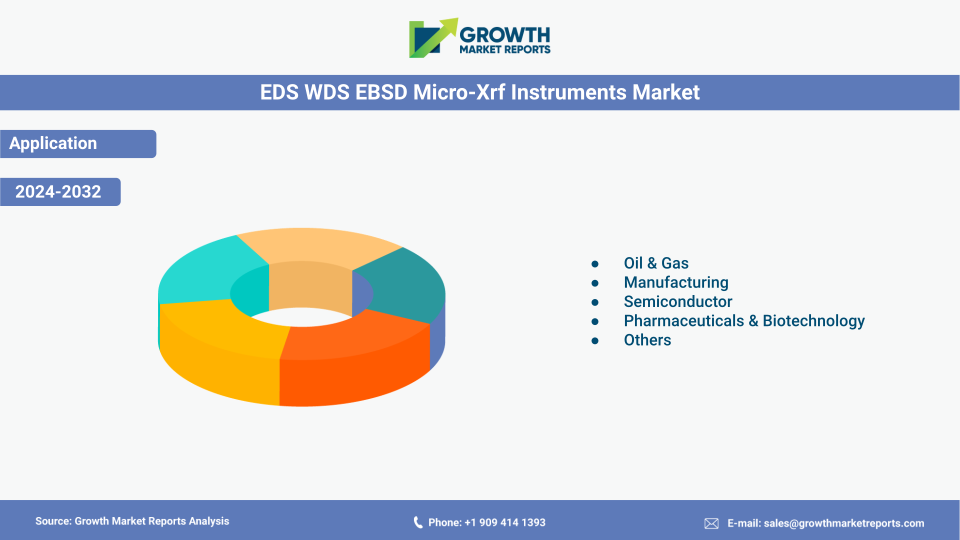
The EDS WDS EBSD Micro-XRF Instruments market finds extensive application across a diverse array of sectors, with material science leading the charge. In material science, these instruments are integral to the characterization of metals, polymers, ceramics, and composites. Researchers rely on EDS, WDS, EBSD, and Micro-XRF to analyze elemental composition, microstructure, and phase distribution, which are crucial for developing materials with tailored properties. The surge in advanced manufacturing techniques such as additive manufacturing and nanofabrication has further elevated the importance of high-resolution analytical tools. These instruments enable rapid prototyping, process optimization, and failure analysis, thereby accelerating innovation cycles and reducing time-to-market for new materials.
The advent of X-Ray Photoelectron Spectrometer technology has revolutionized surface analysis, providing unparalleled insights into the chemical composition and electronic state of materials. This technology is essential for industries that require precise surface characterization, such as semiconductor manufacturing, where even minute surface contaminants can significantly impact device performance. X-Ray Photoelectron Spectrometers are also invaluable in research settings, enabling scientists to explore surface phenomena with high precision. As the demand for advanced materials with tailored surface properties grows, the role of X-Ray Photoelectron Spectrometers in both industrial and academic research is set to expand, driving innovation and quality assurance across various sectors.
In the electronics industry, the application of these instruments is centered around quality control, failure analysis, and process development. As electronic components become increasingly miniaturized and complex, the ability to detect minute defects, compositional anomalies, and structural irregularities is critical for ensuring product reliability and performance. EDS and WDS are extensively used for elemental mapping and contamination analysis, while EBSD provides insights into crystallographic defects and grain boundary character. Micro-XRF, with its non-destructive analysis capabilities, is particularly useful for multilayer device inspection and the identification of hazardous substances such as lead and cadmium in compliance with environmental regulations like RoHS and WEEE.
Geology and mining represent another significant application domain for these analytical instruments. Accurate determination of mineral composition, trace element distribution, and ore grade is vital for resource exploration, extraction, and processing. WDS and Micro-XRF are especially valued in geochemical analysis for their ability to deliver highly sensitive and quantitative results. EBSD is employed to study mineral textures and deformation histories, providing critical insights for both academic research and industrial applications. The growing demand for rare earth elements and critical minerals in clean energy technologies is further driving the adoption of advanced analytical solutions in this sector.
Forensics and environmental analysis are rapidly growing application segments within the EDS WDS EBSD Micro-XRF Instruments market. In forensics, these instruments are used for trace evidence analysis, gunshot residue detection, and the examination of materials involved in criminal investigations. Their high sensitivity and specificity make them indispensable for law enforcement agencies and forensic laboratories. In environmental analysis, Micro-XRF and EDS are employed for soil, water, and air quality monitoring, particularly in the detection of heavy metals and pollutants. The increasing focus on public health and environmental sustainability is expected to amplify the demand for these technologies in the coming years.
The end-user landscape of the EDS WDS EBSD Micro-XRF Instruments market is diverse, encompassing academic and research institutes, industrial enterprises, semiconductor manufacturers, mining companies, and other specialized sectors. Academic and research institutes represent a major end-user segment, driven by the need for advanced analytical tools to support cutting-edge research in materials science, chemistry, physics, and earth sciences. The availability of government and private funding for research infrastructure, coupled with the increasing emphasis on interdisciplinary studies, has spurred significant investments in high-performance EDS, WDS, EBSD, and Micro-XRF instruments within universities and research organizations worldwide.
Industrial users, including manufacturers in aerospace, automotive, and energy sectors, rely heavily on these instruments for quality assurance, process optimization, and product development. The ability to perform rapid, accurate, and non-destructive analysis of raw materials, intermediates, and finished products is essential for maintaining competitive advantage and regulatory compliance. In particular, the integration of analytical instruments into automated production lines and quality control workflows has enabled manufacturers to enhance productivity, reduce waste, and improve product consistency. The trend towards Industry 4.0 and smart manufacturing is expected to further drive the adoption of advanced analytical solutions in industrial settings.
The semiconductor industry is another key end-user, with EDS, WDS, EBSD, and Micro-XRF instruments playing a critical role in wafer inspection, defect analysis, and process control. As device geometries shrink and materials become more complex, the demand for high-resolution, high-throughput analytical tools has intensified. Semiconductor companies are investing in state-of-the-art instrumentation to support the development of next-generation devices, including advanced logic, memory, and sensor technologies. The increasing adoption of compound semiconductors and heterogeneous integration is further expanding the application scope of these analytical techniques in the semiconductor value chain.
Mining companies and related industries leverage these instruments for mineral exploration, ore characterization, and environmental monitoring. Accurate analysis of elemental composition and mineralogy is essential for optimizing extraction processes, ensuring resource sustainability, and meeting regulatory requirements. The growing focus on responsible mining practices and the need to address environmental concerns are prompting mining companies to invest in advanced analytical technologies. Other end-users, such as forensics laboratories, environmental agencies, and cultural heritage institutions, are also contributing to market growth by adopting these instruments for specialized analytical applications.
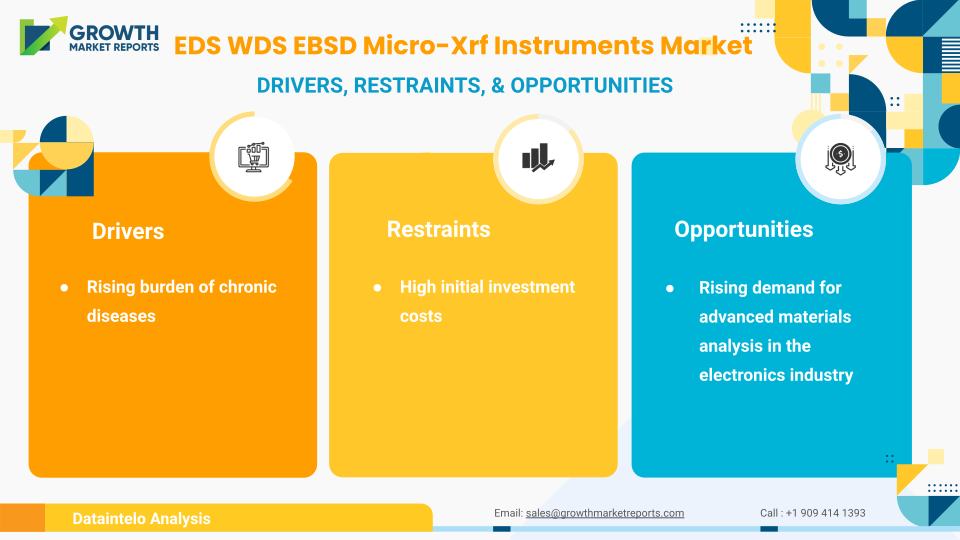
The EDS WDS EBSD Micro-XRF Instruments market presents substantial opportunities for growth, particularly in emerging application areas and geographic regions. One of the most promising opportunities lies in the integration of artificial intelligence (AI) and machine learning (ML) with analytical instrumentation. By leveraging AI-driven data analysis and pattern recognition, users can extract deeper insights from complex datasets, automate routine tasks, and accelerate discovery processes. This convergence of analytical chemistry and digital technologies is expected to unlock new possibilities in materials research, quality control, and failure analysis. Furthermore, the development of portable and miniaturized analytical devices is expanding the reach of these technologies into field-based applications, such as on-site environmental monitoring and in-situ mineral exploration, thereby opening new market segments and revenue streams.
Another significant opportunity is the growing demand for sustainable and green technologies. As industries and governments worldwide prioritize environmental protection and resource conservation, the need for advanced analytical solutions to monitor pollutants, assess material recyclability, and ensure regulatory compliance is intensifying. Micro-XRF and related techniques are particularly well-suited for environmental applications, offering rapid, non-destructive analysis of trace elements in complex matrices. The increasing adoption of circular economy principles and the push for zero-waste manufacturing are expected to drive further investments in analytical instrumentation, particularly in sectors such as electronics recycling, mining, and environmental remediation.
Despite the positive outlook, the market faces certain restraining factors, most notably the high initial cost and complexity of advanced analytical instruments. The acquisition, operation, and maintenance of EDS, WDS, EBSD, and Micro-XRF systems require significant capital investment, specialized infrastructure, and skilled personnel. Smaller organizations and institutions, particularly in developing regions, may face financial and technical barriers to adoption. Additionally, the rapid pace of technological advancement can lead to obsolescence concerns, as users may hesitate to invest in expensive equipment that could be superseded by newer technologies within a few years. Addressing these challenges will require manufacturers to focus on cost-effective solutions, user training, and robust after-sales support.
The Asia Pacific region dominates the EDS WDS EBSD Micro-XRF Instruments market, accounting for approximately 38% of the global market share in 2024, equivalent to a market value of USD 475 million. This leadership position is underpinned by the regionÂ’s thriving electronics manufacturing sector, significant investments in research and development, and the rapid adoption of advanced materials characterization technologies. China, Japan, and South Korea are the primary contributors, with robust demand from semiconductor, automotive, and materials science industries. The regionÂ’s strong focus on technological innovation, combined with government initiatives to promote scientific research and industrial modernization, is expected to sustain high growth rates, with a projected CAGR of 8.2% through 2033.
North America is another major market, holding a market share of approximately 28% in 2024, or about USD 350 million. The region benefits from a well-established research infrastructure, a strong presence of leading analytical instrument manufacturers, and a high level of investment in advanced manufacturing and technology sectors. The United States, in particular, is a global hub for semiconductor R&D, materials science, and environmental analysis, driving robust demand for EDS, WDS, EBSD, and Micro-XRF instruments. The emphasis on innovation, quality assurance, and regulatory compliance continues to fuel market expansion, with growth prospects further supported by ongoing investments in emerging fields such as nanotechnology and biotechnology.
Europe maintains a significant position in the global market, with a market share of 22% in 2024, translating to approximately USD 275 million. The European market is characterized by strong demand from academic and research institutions, advanced manufacturing industries, and environmental agencies. Countries such as Germany, the United Kingdom, and France are at the forefront of scientific research and technological innovation, driving the adoption of high-performance analytical instruments. The regionÂ’s focus on sustainability, environmental protection, and regulatory compliance is also contributing to market growth, particularly in applications such as environmental monitoring and materials recycling. Latin America and the Middle East & Africa, while currently representing smaller shares of the global market, are expected to witness steady growth as investments in research infrastructure and industrial development increase.
The EDS WDS EBSD Micro-XRF Instruments market is characterized by intense competition, with a mix of established global players and innovative new entrants vying for market share. The competitive landscape is shaped by ongoing technological advancements, strategic partnerships, and a strong emphasis on product differentiation. Leading companies are continuously investing in research and development to enhance the performance, reliability, and usability of their analytical instruments. This includes advancements in detector technology, automation, data analysis software, and integration with complementary analytical techniques. The ability to offer comprehensive, end-to-end solutions that address the evolving needs of diverse end-users is a key differentiator in this dynamic market.
Strategic collaborations and partnerships are increasingly common, as companies seek to expand their product portfolios, enter new geographic markets, and leverage complementary capabilities. Mergers and acquisitions are also shaping the competitive landscape, with larger players acquiring specialized firms to strengthen their technological expertise and market presence. In addition, many manufacturers are focusing on customer-centric strategies, such as providing robust after-sales support, training, and application consulting services, to build long-term relationships and enhance customer loyalty. The rise of digitalization and remote services is further transforming the competitive dynamics, enabling companies to offer remote diagnostics, software updates, and virtual training to customers worldwide.
Major companies in the EDS WDS EBSD Micro-XRF Instruments market include Oxford Instruments, Bruker Corporation, Thermo Fisher Scientific, JEOL Ltd., and Hitachi High-Technologies Corporation. These industry leaders are known for their broad product portfolios, global reach, and commitment to innovation. Oxford Instruments, for example, offers a comprehensive range of EDS, WDS, and EBSD systems, with a strong focus on integration and ease of use. Bruker Corporation is renowned for its high-performance analytical solutions, including advanced Micro-XRF instruments and integrated materials characterization platforms. Thermo Fisher Scientific is a global powerhouse, providing a wide array of analytical instruments and software solutions for research, industrial, and environmental applications.
JEOL Ltd. and Hitachi High-Technologies Corporation are prominent players in the electron microscopy and analytical instrumentation space, offering state-of-the-art EDS, WDS, and EBSD systems tailored to a variety of applications. Both companies are recognized for their technological leadership, customer support, and global distribution networks. In addition to these major players, the market features a number of specialized firms and emerging startups that are driving innovation in niche segments, such as portable analytical devices, AI-driven data analysis, and customized solutions for specific industries. The ongoing evolution of the competitive landscape is expected to foster further innovation, improve accessibility, and enhance the overall value proposition for end-users across the globe.
The EDS WDS EBSD Micro-Xrf Instruments market has been segmented on the basis of
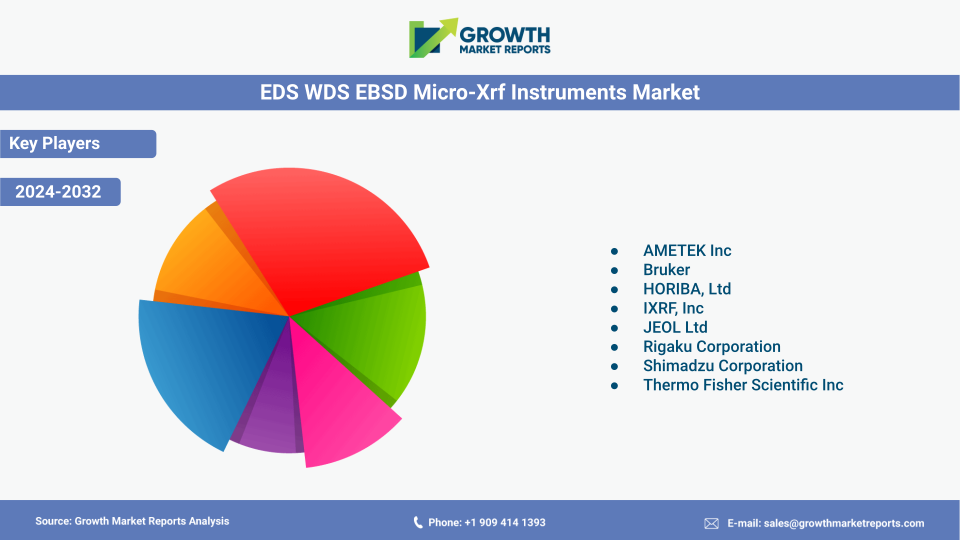
Key players competing in the global EDS WDS EBSD micro-Xrf instruments market are AMETEK Inc; Bruker; HORIBA, Ltd; IXRF, Inc; JEOL Ltd; Rigaku Corporation; Shimadzu Corporation; and Thermo Fisher Scientific Inc.
These companies use development strategies including mergers, acquisitions, partnerships, collaboration, and product launches to expand their consumer base worldwide. For instance,
On January 3, 2023, HORIBA, Ltd., a prominent Japan-based manufacturer renowned for precision instruments in measurement and analysis, unveiled an extension to their latest product series of XGT-9000. This expansion introduced two innovative the XGT-9000 Pro micro-XRF analyzers and the XGT-9000 Expert X-ray Analytical Microscopes. These advanced series serve an array of industries, encompassing lithium-ion batteries, pharmaceuticals, and diverse sectors.
Opportunities include integration with AI and digital technologies, expansion into field-based and portable applications, and growing demand for sustainable and green technologies in environmental and recycling sectors.
Stricter regulations on pollution control, hazardous material management, and sustainability are increasing the need for advanced analytical instruments for compliance, environmental monitoring, and trace element detection.
Challenges include high initial costs, complexity of operation, need for skilled personnel, and concerns about rapid technological obsolescence, especially for smaller organizations and developing regions.
Key trends include advancements in detector technology, automation, integration with AI and machine learning for data analysis, development of portable devices, and enhanced software for data processing and workflow automation.
Major companies include Thermo Fisher Scientific, Bruker Corporation, Oxford Instruments, JEOL Ltd., Hitachi High-Technologies Corporation, EDAX (AMETEK Inc.), Shimadzu Corporation, HORIBA Scientific, and Rigaku Corporation.
The main product types are EDS Instruments, WDS Instruments, EBSD Instruments, and Micro-XRF Instruments, each offering unique analytical capabilities for different research and industrial applications.
Asia Pacific leads the market, accounting for about 38% of the global share in 2024, followed by North America (28%) and Europe (22%). Latin America and the Middle East & Africa are emerging markets with growing investments.
These instruments are widely used for material characterization, quality control, failure analysis, process optimization, environmental monitoring, mineral exploration, and forensic investigations.
Key industries driving demand include materials science, electronics, environmental analysis, mining, forensics, and academic research, with a particular emphasis on sectors requiring high-resolution elemental and structural analysis.
The global EDS WDS EBSD Micro-XRF Instruments market reached USD 1.25 billion in 2024 and is projected to grow at a CAGR of 7.6%, reaching approximately USD 2.42 billion by 2033.