Segments - by Component (Hardware, Software, Services), by Simulator Type (Advanced Driving Simulators, Compact Driving Simulators, Full-Scale Driving Simulators), by Application (Training, Research & Testing, Entertainment, Others), by End-User (Automotive, Aviation, Marine, Railways, Defense & Security, Research & Academics, Others), by Vehicle Type (Passenger Vehicles, Commercial Vehicles, Others)
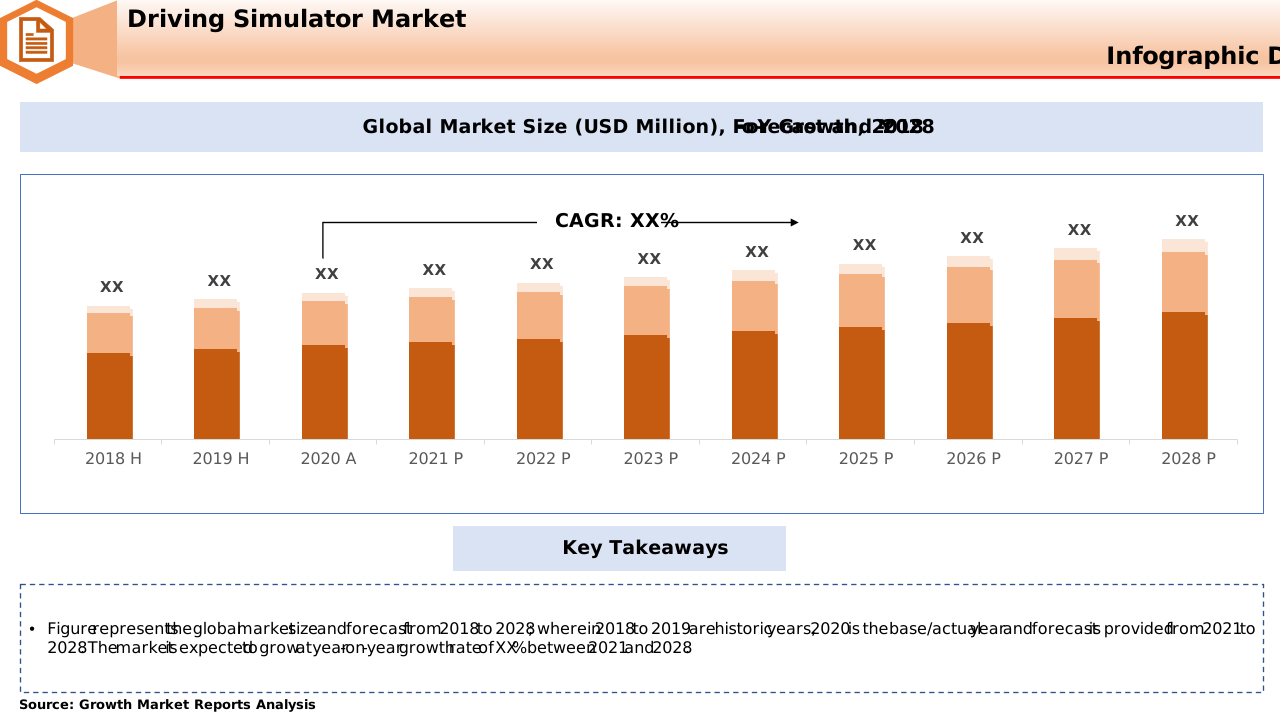
According to our latest research, the global driving simulator market size reached USD 2.04 billion in 2024, reflecting robust industry momentum. The market is expected to grow at a CAGR of 8.1% during the forecast period, resulting in a projected market value of USD 4.04 billion by 2033. This expansion is primarily driven by increasing demand for advanced training solutions, the integration of simulation technologies in automotive research and development, and the growing emphasis on driver safety and regulatory compliance across various sectors.
A significant growth factor for the driving simulator market is the rising adoption of simulation-based training in the automotive and transportation sectors. As road safety concerns intensify and regulatory bodies enforce stricter driver training requirements, organizations are increasingly turning to driving simulators for efficient, cost-effective, and risk-free training environments. The ability to replicate real-world scenarios, including hazardous conditions and emergency maneuvers, enables a higher standard of driver preparedness without exposing trainees to actual danger. This trend is particularly evident in developed economies where investments in road safety and driver education are prioritized, but it is rapidly gaining traction in emerging markets as well.
Another key driver is the technological evolution of driving simulators, especially with advancements in hardware and software components. The integration of immersive technologies such as virtual reality (VR), augmented reality (AR), and artificial intelligence (AI) has dramatically enhanced the realism and interactivity of simulation experiences. Automotive manufacturers and research institutions are leveraging these innovations to accelerate vehicle prototyping, test autonomous driving systems, and analyze driver behavior in controlled environments. Furthermore, the versatility of modern simulators allows for their deployment across various vehicle types, including passenger cars, commercial vehicles, and specialty vehicles, broadening their application scope.
The expansion of the driving simulator market is also supported by the growing use of simulators in research, testing, and entertainment. Academic institutions and research organizations utilize simulators to study human factors, traffic psychology, and vehicle dynamics, contributing to advancements in road safety and automotive design. Meanwhile, the entertainment sector has embraced driving simulators as a popular attraction in gaming centers and theme parks, offering highly engaging and realistic racing experiences. The convergence of these diverse applications underscores the market’s adaptability and potential for sustained growth across different end-user segments.
Regionally, the Asia Pacific market is emerging as a significant contributor to global growth, driven by rapid urbanization, increasing vehicle ownership, and heightened focus on transportation safety. North America and Europe continue to lead in terms of technological innovation and adoption, thanks to established automotive industries and proactive regulatory frameworks. Latin America and the Middle East & Africa are also witnessing gradual growth, supported by infrastructure development and investments in driver training programs. Collectively, these regional dynamics are shaping a competitive and evolving landscape for the global driving simulator market.
The driving simulator market is segmented by component into hardware, software, and services, each playing a pivotal role in the overall ecosystem. Hardware forms the backbone of any simulator setup, encompassing motion platforms, steering wheels, pedals, display systems, and vehicle cabins. The quality and sophistication of hardware directly influence the realism and effectiveness of simulation experiences. As end-users demand higher fidelity and immersive training, manufacturers are investing in advanced materials, force feedback systems, and multi-degree-of-freedom motion platforms, driving continuous innovation in this segment. The increasing integration of haptic feedback and ergonomic designs further enhances user engagement, making hardware a critical revenue driver in the market.
Software is equally essential, providing the virtual environments, scenario scripting, and analytics capabilities that define the simulator’s functionality. Modern driving simulator software leverages cutting-edge technologies such as AI-based traffic modeling, physics engines, and real-time data processing to deliver highly realistic and customizable experiences. The demand for modular, scalable software solutions is rising, particularly among automotive OEMs and research organizations seeking to simulate diverse driving conditions and vehicle behaviors. Additionally, cloud-based simulation platforms are gaining popularity, enabling remote access, collaborative projects, and seamless software updates, which contribute to the segment’s growth.
The services component includes installation, maintenance, technical support, and training services, all of which are crucial for maximizing simulator uptime and performance. As driving simulators become more complex and tailored to specific applications, end-users increasingly rely on specialized service providers for system integration, custom scenario development, and continuous technical support. The trend toward managed services and long-term maintenance contracts is particularly prominent among large enterprises, defense organizations, and academic institutions, ensuring sustained revenue streams for service providers. Furthermore, the emergence of consulting services for simulator selection and curriculum design highlights the growing importance of expertise-driven offerings in the market.
The interplay between hardware, software, and services is driving a shift toward integrated, turnkey solutions that address the full spectrum of customer needs. Leading market players are forming strategic partnerships to bundle hardware and software with value-added services, enhancing customer satisfaction and loyalty. This holistic approach not only streamlines procurement and deployment but also facilitates ongoing innovation through feedback loops and collaborative development. As a result, the component landscape of the driving simulator market is characterized by dynamic synergies and a strong focus on end-to-end user experiences.
Looking ahead, the continued evolution of each component segment will be instrumental in shaping the competitive dynamics and growth trajectory of the driving simulator market. Investments in R&D, interoperability standards, and user-centric design are expected to yield next-generation simulators that deliver unparalleled realism, flexibility, and operational efficiency. Market participants that excel in integrating hardware, software, and services into cohesive solutions will be well-positioned to capture emerging opportunities and drive industry leadership.
| Attributes | Details |
| Report Title | Driving Simulator Market Research Report 2033 |
| By Component | Hardware, Software, Services |
| By Simulator Type | Advanced Driving Simulators, Compact Driving Simulators, Full-Scale Driving Simulators |
| By Application | Training, Research & Testing, Entertainment, Others |
| By End-User | Automotive, Aviation, Marine, Railways, Defense & Security, Research & Academics, Others |
| By Vehicle Type | Passenger Vehicles, Commercial Vehicles, Others |
| Regions Covered | North America, Europe, APAC, Latin America, MEA |
| Countries Covered | North America (United States, Canada), Europe (Germany, France, Italy, United Kingdom, Spain, Russia, Rest of Europe), Asia Pacific (China, Japan, South Korea, India, Australia, South East Asia (SEA), Rest of Asia Pacific), Latin America (Mexico, Brazil, Rest of Latin America), Middle East & Africa (Saudi Arabia, South Africa, United Arab Emirates, Rest of Middle East & Africa) |
| Base Year | 2024 |
| Historic Data | 2018-2023 |
| Forecast Period | 2025-2033 |
| Number of Pages | 265 |
| Number of Tables & Figures | 283 |
| Customization Available | Yes, the report can be customized as per your need. |
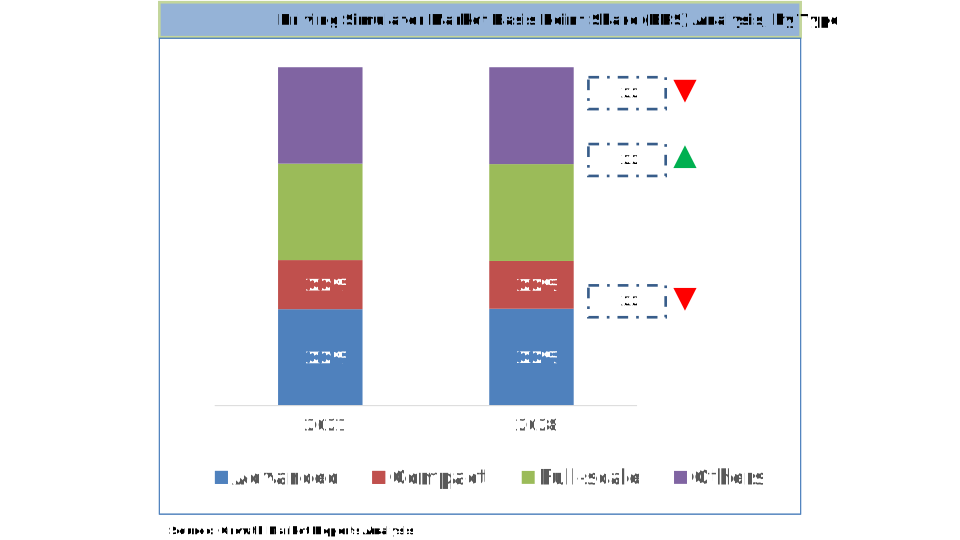
The simulator type segment of the driving simulator market is divided into advanced driving simulators, compact driving simulators, and full-scale driving simulators, each catering to distinct user requirements and application scenarios. Advanced driving simulators represent the pinnacle of simulation technology, featuring high-fidelity motion platforms, panoramic displays, and sophisticated control systems. These systems are primarily deployed in research, testing, and professional training environments where the highest levels of realism and data accuracy are essential. Automotive OEMs, defense organizations, and academic research centers are the primary adopters, leveraging advanced simulators to replicate complex driving scenarios, evaluate vehicle dynamics, and study driver behavior under controlled conditions.
Compact driving simulators, on the other hand, offer a more cost-effective and portable alternative without compromising on core functionality. These systems are widely used in commercial driver training schools, fleet management companies, and smaller research institutions. The compact form factor, ease of installation, and lower maintenance requirements make them attractive for organizations with budget constraints or space limitations. Despite their smaller footprint, modern compact simulators incorporate advanced features such as modular software, multi-scenario support, and cloud connectivity, enabling scalable and adaptable training solutions.
Full-scale driving simulators are designed to replicate the entire vehicle cabin, including all controls, displays, and instrumentation, providing an immersive and authentic driving experience. These simulators are extensively used in the aviation, marine, and defense sectors, where training requirements demand exact replicas of real-world vehicles and operational environments. The ability to simulate a wide range of scenarios, from routine operations to emergency procedures, makes full-scale simulators indispensable for mission-critical training and certification programs. The high initial investment and ongoing maintenance costs are offset by the significant benefits in terms of safety, efficiency, and regulatory compliance.
The market for simulator types is also influenced by the increasing demand for modular and customizable solutions. End-users are seeking simulators that can be easily reconfigured to accommodate different vehicle types, training objectives, and user profiles. This trend is driving innovation in modular hardware platforms, interchangeable control systems, and flexible software architectures. Manufacturers are responding by offering scalable product lines and upgrade paths, enabling customers to future-proof their simulation investments and adapt to evolving requirements.
Overall, the simulator type segment reflects a diverse and dynamic landscape, with each category addressing specific market needs and growth opportunities. The ongoing convergence of advanced technologies, user-centric design, and application-driven innovation is expected to further expand the adoption and impact of driving simulators across industries. Market participants that can deliver differentiated, high-performance solutions tailored to distinct user segments will be well-positioned to capitalize on the expanding global demand for simulation-based training and research.
The application segment of the driving simulator market is broadly classified into training, research & testing, entertainment, and others, each representing a unique set of requirements and growth drivers. Training is the largest and fastest-growing application, fueled by the increasing emphasis on driver safety, regulatory compliance, and operational efficiency. Driving simulators are widely adopted by commercial driving schools, fleet operators, defense organizations, and public transportation agencies to provide comprehensive training programs that cover basic skills, advanced maneuvers, and emergency response scenarios. The ability to deliver consistent, repeatable, and risk-free training experiences is a major advantage, particularly in sectors where safety and reliability are paramount.
Research & testing is another critical application area, encompassing automotive R&D, human factors studies, and vehicle systems validation. Automotive manufacturers and research institutions use driving simulators to accelerate the development of new vehicle models, test advanced driver-assistance systems (ADAS), and analyze the impact of various factors on driver performance and safety. The integration of high-fidelity simulation environments, real-time data analytics, and AI-driven scenario generation enables researchers to conduct controlled experiments and gather valuable insights that inform product design and regulatory standards. This application segment is expected to witness sustained growth as the automotive industry transitions toward autonomous and connected vehicles.
The entertainment application of driving simulators has gained significant traction in recent years, driven by the popularity of immersive gaming experiences and location-based entertainment venues. Simulators are featured in arcades, theme parks, and racing centers, offering realistic driving and racing experiences that attract a wide range of audiences. The incorporation of VR and motion feedback technologies enhances the sense of immersion and excitement, making driving simulators a sought-after attraction in the entertainment sector. This segment also benefits from the growing trend of e-sports and competitive gaming, where high-performance simulators are used for professional training and tournaments.
Other applications include rehabilitation, law enforcement training, and public awareness campaigns. In healthcare, driving simulators are used for cognitive and physical rehabilitation of patients recovering from injuries or neurological conditions. Law enforcement agencies utilize simulators to train officers in pursuit driving, emergency response, and situational awareness. Public safety organizations employ simulators to educate drivers about the dangers of distracted and impaired driving, supporting broader road safety initiatives. These diverse applications highlight the versatility and societal value of driving simulator technology.
As the range of applications continues to expand, driving simulator providers are focusing on developing specialized solutions tailored to specific user needs and industry requirements. Customizable training modules, scenario libraries, and performance analytics are becoming standard features, enabling end-users to maximize the value and impact of their simulation investments. The ongoing convergence of training, research, and entertainment applications is expected to further drive market growth and innovation in the coming years.
The end-user segment of the driving simulator market encompasses a diverse array of industries, including automotive, aviation, marine, railways, defense & security, research & academics, and others. The automotive sector is the dominant end-user, leveraging simulators for driver training, vehicle development, and safety testing. OEMs and suppliers utilize advanced simulators to evaluate vehicle dynamics, test new technologies, and train engineers and technicians. The increasing complexity of modern vehicles, coupled with the shift toward electric and autonomous platforms, is driving sustained investment in simulation-based development and validation processes.
Aviation is another major end-user, with flight simulators playing a critical role in pilot training, certification, and proficiency assessment. High-fidelity simulators replicate cockpit environments, flight dynamics, and emergency scenarios, enabling pilots to develop and maintain essential skills in a controlled setting. The aviation industry’s stringent regulatory requirements and focus on safety make simulators indispensable for both commercial and military training programs. The adoption of driving simulators for ground vehicle training at airports and airbases further expands the application scope within the aviation sector.
Marine and railway sectors are increasingly adopting simulators for crew training, operational planning, and safety drills. Maritime simulators replicate ship bridges, navigation systems, and port environments, supporting the training of captains, officers, and pilots. Railway simulators are used to train drivers, conductors, and maintenance personnel on various train types and signaling systems. The ability to simulate complex operational scenarios, including adverse weather, equipment failures, and emergency responses, enhances safety and efficiency across these transportation modes.
Defense & security organizations utilize driving simulators for mission-specific training, tactical exercises, and situational awareness development. Simulators enable military personnel to practice vehicle operation, convoy maneuvers, and threat response in realistic virtual environments. The integration of networked simulation systems allows for collaborative training across multiple units and platforms, supporting joint operations and mission rehearsal. Research & academic institutions represent another important end-user group, employing simulators for human factors studies, cognitive research, and curriculum development. The growing emphasis on interdisciplinary research and experiential learning is driving increased adoption of simulation technologies in academic settings.
Other end-users include public safety agencies, healthcare providers, and commercial enterprises. Public safety agencies use simulators for emergency vehicle operation, pursuit training, and disaster response planning. Healthcare providers leverage simulators for patient rehabilitation and driver assessment, while commercial enterprises employ them for fleet management and driver performance evaluation. The broad and expanding end-user base underscores the versatility and cross-industry relevance of driving simulator technology, positioning the market for continued growth and diversification.
The vehicle type segment of the driving simulator market is categorized into passenger vehicles, commercial vehicles, and others, each with distinct training, research, and operational requirements. Simulators designed for passenger vehicles are widely used in driver education, automotive R&D, and consumer training programs. The ability to replicate various car models, driving conditions, and traffic scenarios enables comprehensive skill development and safety assessment. Automotive manufacturers and driving schools are the primary adopters, leveraging simulators to enhance driver preparedness, reduce training costs, and accelerate vehicle development cycles.
Commercial vehicle simulators cater to the unique demands of trucks, buses, and specialty vehicles used in logistics, public transportation, and emergency services. These simulators are essential for training drivers on vehicle handling, load management, fuel efficiency, and regulatory compliance. Fleet operators and transportation agencies utilize simulators to improve driver performance, reduce accident rates, and optimize operational efficiency. The increasing focus on sustainability and emissions reduction is also driving the adoption of simulators for eco-driving training and alternative fuel vehicle operation.
The “others” category includes simulators for motorcycles, off-road vehicles, agricultural machinery, and construction equipment. These specialized simulators address the unique challenges and safety considerations associated with non-standard vehicles and environments. For example, motorcycle simulators are used for rider training and safety campaigns, while agricultural and construction equipment simulators support operator training and productivity enhancement in industrial settings. The growing demand for customized and application-specific simulators reflects the market’s adaptability and responsiveness to evolving industry needs.
The vehicle type segment is also characterized by increasing demand for multi-vehicle and modular simulation platforms. End-users are seeking solutions that can be easily reconfigured to simulate different vehicle types, operating conditions, and user profiles. This trend is driving innovation in modular hardware design, interchangeable control systems, and flexible software architectures. Manufacturers are responding by offering scalable product lines and upgrade paths, enabling customers to future-proof their simulation investments and adapt to changing requirements.
As the automotive and transportation industries continue to evolve, the vehicle type segment of the driving simulator market is poised for sustained growth and innovation. The ongoing shift toward electric, autonomous, and connected vehicles is creating new opportunities for simulation-based training, testing, and research. Market participants that can deliver high-performance, versatile, and user-centric simulators tailored to specific vehicle types and applications will be well-positioned to capture emerging opportunities and drive industry leadership.
The driving simulator market presents substantial opportunities for growth, driven by the accelerating adoption of advanced simulation technologies and the expanding range of applications across industries. The integration of artificial intelligence, machine learning, and data analytics into simulator platforms is enabling real-time performance assessment, adaptive training modules, and predictive maintenance capabilities. These innovations are not only enhancing the realism and effectiveness of simulation experiences but also providing valuable insights for continuous improvement and risk mitigation. The rise of connected and autonomous vehicles is creating new demand for simulation-based validation, scenario testing, and regulatory compliance, positioning driving simulators as essential tools in the future mobility ecosystem.
Another significant opportunity lies in the increasing focus on personalized and experiential learning. Educational institutions, training centers, and corporate organizations are seeking customized simulation solutions that cater to individual learning styles, skill levels, and training objectives. The development of modular, scalable, and cloud-based simulator platforms is enabling flexible and accessible training programs that can be tailored to diverse user groups. The growing popularity of remote and blended learning models is further expanding the reach and impact of driving simulators, particularly in regions with limited access to traditional training infrastructure. Strategic partnerships, collaborative research initiatives, and cross-industry alliances are expected to drive innovation and market expansion in the coming years.
Despite these opportunities, the driving simulator market faces certain restraints and challenges. High initial investment costs, particularly for advanced and full-scale simulators, can be a barrier to adoption for small and medium-sized enterprises, educational institutions, and organizations in developing regions. Ongoing maintenance, technical support, and software updates also contribute to the total cost of ownership, necessitating careful budgeting and resource allocation. Additionally, the rapid pace of technological change and evolving user expectations require continuous innovation and adaptation by market participants. Addressing these challenges will be critical for sustaining long-term growth and competitiveness in the global driving simulator market.
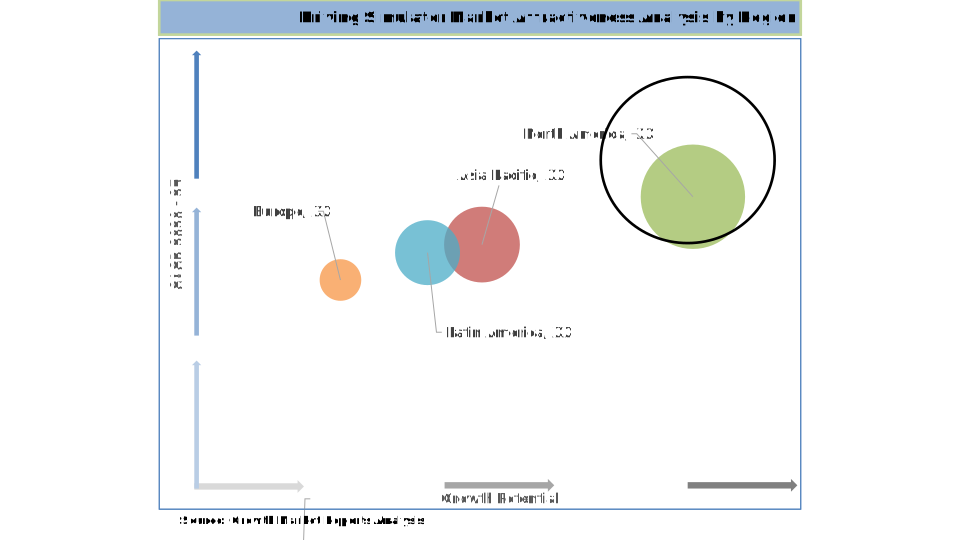
The regional landscape of the driving simulator market is shaped by varying levels of technological adoption, regulatory frameworks, and industry maturity. North America accounted for the largest share of the global market in 2024, with revenues reaching approximately USD 700 million. The region’s leadership is underpinned by the presence of major automotive manufacturers, advanced research institutions, and proactive government initiatives aimed at improving road safety and driver training standards. The United States, in particular, is a key market, driven by investments in simulation-based education, defense training, and autonomous vehicle development.
Europe is another significant market, with a strong focus on technological innovation, regulatory compliance, and sustainability. The region generated approximately USD 610 million in driving simulator revenues in 2024 and is expected to grow at a CAGR of 7.9% through 2033. Countries such as Germany, the United Kingdom, and France are at the forefront of simulation research and development, supported by robust automotive industries and academic collaborations. The European Union’s emphasis on road safety, emissions reduction, and digitalization is fostering increased adoption of driving simulators across transportation, defense, and academic sectors.
The Asia Pacific region is poised for the fastest growth, with market revenues reaching USD 480 million in 2024 and projected to surpass USD 1.1 billion by 2033. Rapid urbanization, rising vehicle ownership, and government initiatives to enhance driver training and road safety are fueling demand for simulation solutions across China, Japan, India, and Southeast Asia. The region’s expanding automotive manufacturing base, coupled with investments in education and infrastructure, is creating new opportunities for market expansion. Latin America and the Middle East & Africa, though smaller in scale, are witnessing steady growth, driven by infrastructure development, regulatory reforms, and increasing awareness of simulation benefits. Collectively, these regional dynamics are shaping a vibrant and competitive global market landscape.
The competitive landscape of the driving simulator market is characterized by the presence of global leaders, specialized niche players, and emerging innovators. Market participants are engaged in intense competition based on technology innovation, product differentiation, pricing strategies, and customer service. Leading companies are investing heavily in research and development to enhance the realism, functionality, and scalability of their simulator platforms. Strategic partnerships, mergers and acquisitions, and collaborative ventures are common strategies employed to expand product portfolios, enter new markets, and strengthen competitive positioning.
A key trend in the market is the shift toward integrated, end-to-end simulation solutions that combine hardware, software, and services into cohesive offerings. Companies are focusing on delivering value-added features such as cloud connectivity, AI-driven analytics, and modular architectures that enable customers to customize and scale their simulation environments. The ability to provide comprehensive training, research, and entertainment solutions across multiple vehicle types and applications is emerging as a critical success factor. Customer-centric approaches, including tailored support, consulting services, and long-term maintenance contracts, are also gaining importance in building lasting relationships and driving repeat business.
The market is witnessing increasing collaboration between simulator providers, automotive OEMs, research institutions, and government agencies. Joint development projects, pilot programs, and knowledge-sharing initiatives are accelerating innovation and facilitating the adoption of simulation technologies across industries. The entry of new players, particularly in emerging markets, is intensifying competition and driving price optimization, product localization, and service differentiation. At the same time, established players are leveraging their brand reputation, global reach, and technical expertise to maintain market leadership and capture high-value contracts.
Some of the major companies operating in the global driving simulator market include CAE Inc., ECA Group, VI-grade GmbH, Cruden B.V., Moog Inc., OKTAL S.A.S., Tecknotrove Systems, ST Engineering Antycip, and AVSimulation. CAE Inc. is recognized for its advanced simulation technologies and comprehensive training solutions for the automotive, aviation, and defense sectors. ECA Group specializes in high-fidelity simulators for land, sea, and air applications, with a strong focus on innovation and user experience. VI-grade GmbH and Cruden B.V. are leaders in automotive simulation, offering modular and scalable platforms for research, testing, and driver training.
Moog Inc. is renowned for its motion control systems and high-performance simulation hardware, serving a broad range of industries including automotive, aerospace, and defense. OKTAL S.A.S. and Tecknotrove Systems are notable for their expertise in customized simulator solutions and immersive training environments. ST Engineering Antycip and AVSimulation are prominent providers of virtual reality and digital simulation platforms, supporting a wide array of applications from academic research to public safety training. These companies are continuously innovating to address emerging market needs, enhance product capabilities, and deliver superior customer value in a rapidly evolving industry landscape.
The Driving Simulator market has been segmented on the basis of
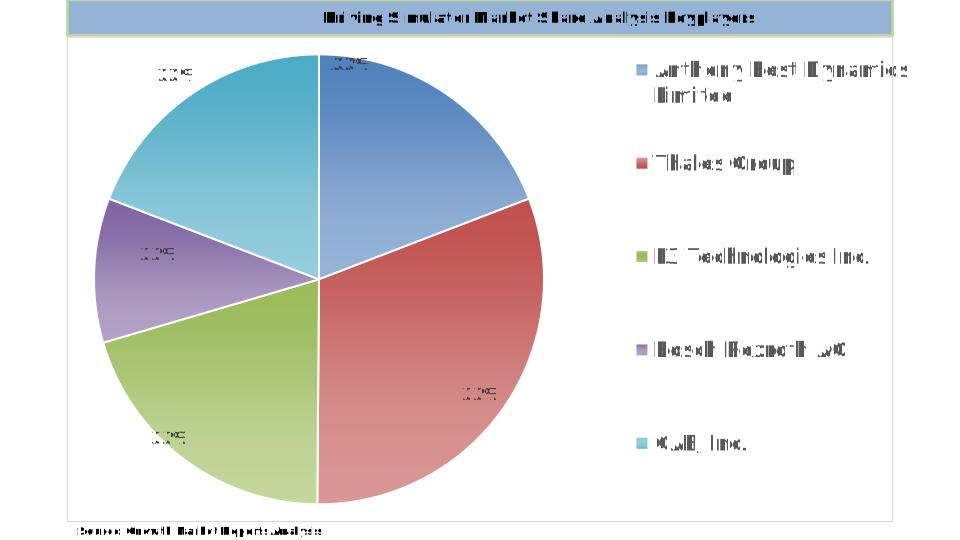
Key players competing in the global driving simulator market are Anthony Best Dynamics Limited; Thales Group; L3 Technologies Inc.; Bosch Rexroth AG; and CAE, Inc. Companies are focusing on business strategies such as partnerships, collaborations, and merger & acquisitions to expand their market share. Furthermore, key players are also engaging to expand their capacity to leverage their market position. In February 2018, Bosch Rexroth has announced that it would offer the Renault Dynamic Driving Simulator with an enhanced motion platform.
Key companies include CAE Inc., ECA Group, VI-grade GmbH, Cruden B.V., Moog Inc., OKTAL S.A.S., Tecknotrove Systems, ST Engineering Antycip, and AVSimulation. These companies focus on innovation, integrated solutions, and customer-centric services.
North America leads the market, followed by Europe and Asia Pacific. Asia Pacific is expected to see the fastest growth due to urbanization and rising vehicle ownership. Latin America and the Middle East & Africa are also experiencing steady growth.
Opportunities include the integration of AI, machine learning, and cloud-based solutions, as well as the rise of autonomous vehicles and personalized learning. Challenges include high initial investment costs, ongoing maintenance, and the need for continuous innovation.
The market is segmented into passenger vehicles, commercial vehicles (trucks, buses), and others (motorcycles, off-road vehicles, agricultural and construction equipment), with demand for multi-vehicle and modular simulation platforms increasing.
Primary end-users include the automotive industry, aviation, marine, railways, defense & security, research & academics, public safety agencies, healthcare providers, and commercial enterprises.
Driving simulators are used for training (driver schools, defense, public transport), research & testing (automotive R&D, ADAS, human factors), entertainment (arcades, theme parks, e-sports), and other uses such as rehabilitation and law enforcement training.
There are advanced driving simulators (for research and professional training), compact driving simulators (for commercial training and smaller institutions), and full-scale simulators (used in aviation, marine, and defense sectors for immersive training).
The market is segmented into hardware, software, and services. Hardware includes motion platforms, steering wheels, and display systems. Software provides virtual environments and analytics, while services cover installation, maintenance, and technical support.
Key growth drivers include the adoption of simulation-based training in automotive and transportation sectors, technological advancements in hardware and software (such as VR, AR, and AI), and increased emphasis on driver safety and regulatory compliance.
The global driving simulator market reached USD 2.04 billion in 2024 and is projected to grow at a CAGR of 8.1%, reaching USD 4.04 billion by 2033. Growth is driven by increasing demand for advanced training solutions, integration of simulation technologies in automotive R&D, and a focus on driver safety and regulatory compliance.