Segments - by Component (Sensors, Cameras, Software, Others), by Alert Type (Visual, Audible, Haptic), by Vehicle Type (Passenger Cars, Commercial Vehicles, Others), by Application (Drowsiness Detection, Distraction Detection, Lane Departure Warning, Forward Collision Warning, Others), by Sales Channel (OEM, Aftermarket)
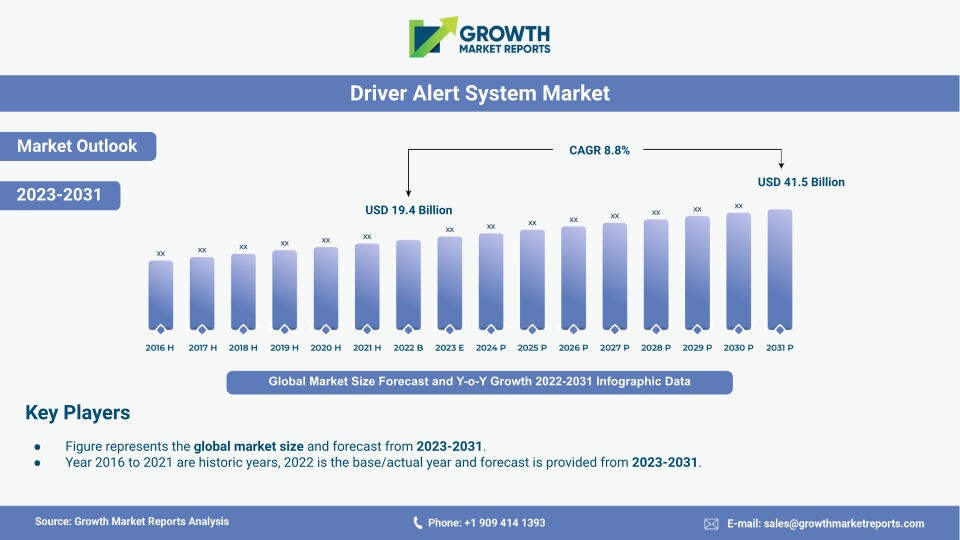
According to our latest research, the global Driver Alert System market size in 2024 stands at USD 3.52 billion, reflecting the growing emphasis on road safety and the rapid integration of advanced driver assistance technologies worldwide. The market is forecasted to reach USD 10.26 billion by 2033, expanding at a robust CAGR of 12.8% during the period from 2025 to 2033. This significant growth is primarily driven by stringent government regulations, increasing consumer awareness regarding vehicle safety, and the continuous advancements in automotive sensor and software technologies.
The growth trajectory of the Driver Alert System market is underpinned by the rising incidence of road accidents caused by driver fatigue and distraction. Governments and regulatory bodies across the globe are mandating the inclusion of advanced safety features in both passenger and commercial vehicles, which has accelerated the adoption of driver alert systems. The proliferation of connected vehicles and the integration of artificial intelligence in automotive electronics have further amplified the capabilities of these systems, allowing for real-time monitoring of driver behaviors and prompt alerts to prevent accidents. Additionally, the growing trend of autonomous and semi-autonomous vehicles is fostering the demand for robust driver monitoring solutions, ensuring that drivers remain alert and responsive even in vehicles with high levels of automation.
Another significant growth factor is the continuous technological innovation in sensor and camera technologies. Modern driver alert systems leverage a combination of visual, audible, and haptic alerts to maximize driver response and minimize the risk of accidents. The integration of advanced sensors, high-resolution cameras, and sophisticated software algorithms has enabled the development of highly accurate and reliable driver monitoring systems. These systems can now detect subtle signs of drowsiness, distraction, and other potentially hazardous behaviors, providing timely warnings that help prevent collisions. Furthermore, the decreasing cost of these components, driven by mass production and technological advancements, is making driver alert systems increasingly accessible to a broader range of vehicles, including entry-level models.
The evolving consumer preferences and the rising demand for enhanced in-vehicle safety features are also fueling market growth. Consumers are becoming more aware of the risks associated with driver fatigue and distraction, prompting them to seek vehicles equipped with advanced driver assistance systems (ADAS). Automotive manufacturers are responding to this demand by incorporating driver alert systems as standard or optional features in new vehicle models. The aftermarket segment is also witnessing substantial growth, as vehicle owners retrofit their existing vehicles with advanced alert systems to improve safety. This dual-channel growth, encompassing both OEM and aftermarket sales, is contributing to the overall expansion of the driver alert system market.
In recent years, the development of Adaptive Sound Alerts for Driving has emerged as a pivotal advancement in enhancing driver alert systems. These alerts utilize adaptive algorithms to modulate sound levels and frequencies based on the driving environment and the driver's current state of alertness. By tailoring auditory cues to the specific needs of the driver, these systems can effectively capture attention without causing undue distraction. This innovation is particularly beneficial in noisy environments or for drivers with hearing impairments, ensuring that critical alerts are both noticeable and non-intrusive. As the automotive industry continues to prioritize personalized safety solutions, the integration of adaptive sound alerts is expected to become a standard feature in advanced driver assistance systems, further reducing the risk of accidents and enhancing overall road safety.
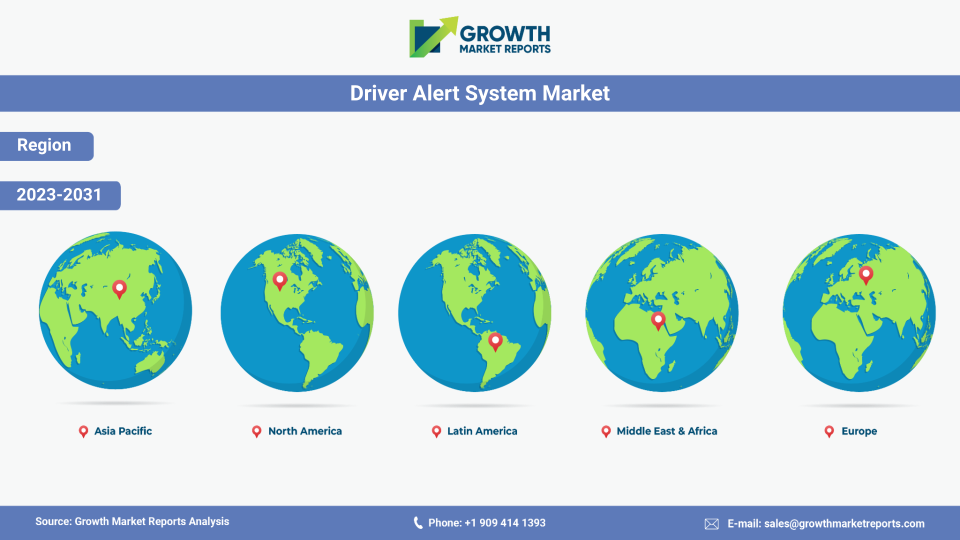
From a regional perspective, Asia Pacific is emerging as a key growth engine for the driver alert system market, driven by the rapid expansion of the automotive industry in countries such as China, Japan, and India. The region's large and growing vehicle fleet, coupled with increasing regulatory focus on road safety, is creating significant opportunities for market players. North America and Europe continue to be mature markets, benefiting from high levels of technology adoption and stringent safety regulations. Meanwhile, Latin America and the Middle East & Africa are gradually catching up, supported by improving economic conditions and rising investments in automotive infrastructure. The global outlook for the driver alert system market remains highly positive, with all regions expected to contribute to the sustained growth of the industry throughout the forecast period.
The Driver Alert System market is segmented by component into sensors, cameras, software, and others, each playing a vital role in the overall effectiveness of these systems. Sensors form the backbone of driver alert systems, providing the necessary data to monitor driver behavior and vehicle dynamics. Advanced sensors such as infrared, biometric, and steering angle sensors are increasingly being integrated into vehicles, enabling real-time detection of drowsiness, distraction, and other hazardous behaviors. The growing adoption of multi-sensor fusion technologies is further enhancing the accuracy and reliability of driver alert systems, as data from multiple sensors can be analyzed simultaneously to provide a comprehensive assessment of driver alertness.
Cameras are another critical component, particularly in systems designed for distraction detection and lane departure warning. High-resolution cameras mounted inside the vehicle cabin monitor the driver's eye movements, facial expressions, and head position to detect signs of fatigue or inattention. These cameras can also support external monitoring functions, such as lane keeping and forward collision warning, by analyzing the vehicle's position relative to road markings and other vehicles. The ongoing advancements in computer vision and image processing algorithms are enabling cameras to deliver highly accurate and real-time feedback, significantly reducing the risk of false alarms and missed detections.
Software is the intelligence layer that ties together data from sensors and cameras, interpreting complex patterns and triggering appropriate alerts. Modern driver alert system software leverages machine learning and artificial intelligence to continuously improve its detection capabilities, adapting to individual driver behaviors and environmental conditions. This software not only processes real-time data but also stores historical information, allowing for predictive analytics and personalized alert strategies. As vehicles become increasingly connected, software updates can be delivered over the air, ensuring that driver alert systems remain up-to-date with the latest safety features and regulatory requirements.
The "others" category includes additional components such as control units, actuators, and communication modules, which facilitate the seamless operation of driver alert systems. Control units process input from sensors and cameras, execute software algorithms, and manage the delivery of alerts to the driver through various interfaces. Actuators may be used to provide haptic feedback, such as steering wheel vibrations, while communication modules enable integration with other in-vehicle systems and external networks. The interoperability of these components is crucial for the effective functioning of driver alert systems, and ongoing innovation in component design is expected to drive further improvements in system performance and reliability.
| Attributes | Details |
| Report Title | Driver Alert System Market Research Report 2033 |
| By Component | Sensors, Cameras, Software, Others |
| By Alert Type | Visual, Audible, Haptic |
| By Vehicle Type | Passenger Cars, Commercial Vehicles, Others |
| By Application | Drowsiness Detection, Distraction Detection, Lane Departure Warning, Forward Collision Warning, Others |
| By Sales Channel | OEM, Aftermarket |
| Regions Covered | North America, Europe, APAC, Latin America, MEA |
| Base Year | 2024 |
| Historic Data | 2018-2023 |
| Forecast Period | 2025-2033 |
| Number of Pages | 280 |
| Number of Tables & Figures | 327 |
| Customization Available | Yes, the report can be customized as per your need. |
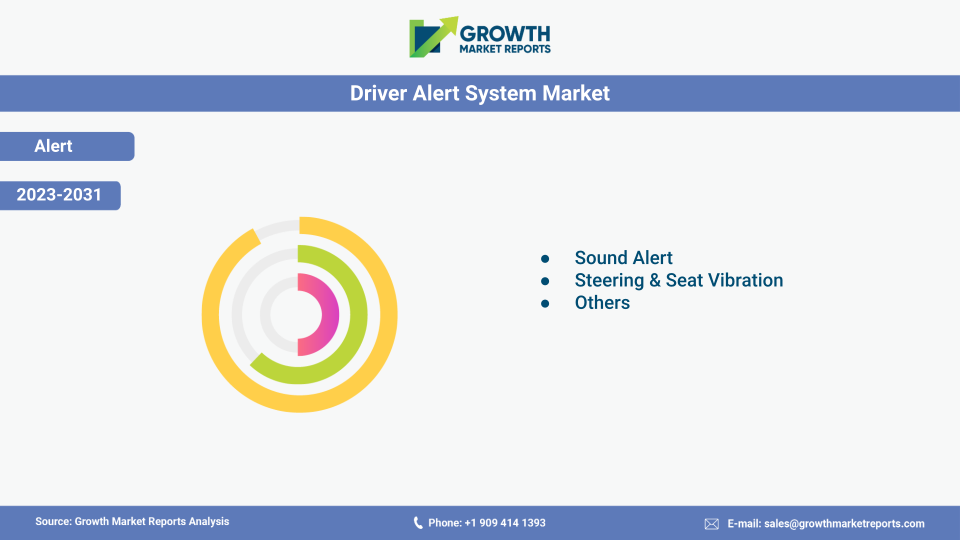
The alert type segment in the Driver Alert System market comprises visual, audible, and haptic alerts, each offering distinct advantages in terms of driver response and safety outcomes. Visual alerts typically involve dashboard indicators, warning lights, or heads-up displays that provide immediate feedback to the driver without causing significant distraction. These alerts are particularly effective in situations where the driver is already visually engaged with the road, allowing for quick recognition and response. The integration of advanced display technologies, such as augmented reality and high-contrast graphics, is further enhancing the visibility and effectiveness of visual alerts in modern vehicles.
Audible alerts, including chimes, beeps, and voice warnings, are widely used in driver alert systems to capture the driver's attention when visual cues may be insufficient. These alerts are especially valuable in scenarios where the driver's focus is diverted away from the dashboard or when immediate action is required to prevent a collision. The customization of audible alerts, such as adjusting volume and tone based on the severity of the detected risk, is becoming increasingly common, enabling a more personalized and context-aware driver experience. The combination of audible and visual alerts can also be employed to reinforce the urgency of warnings and ensure that critical messages are not missed.
Haptic alerts represent a rapidly growing segment within the driver alert system market, leveraging physical sensations to prompt driver action. Common haptic feedback mechanisms include steering wheel vibrations, seat vibrations, and pedal pulses, which can effectively cut through cognitive overload and prompt immediate corrective actions. Haptic alerts are particularly effective in situations where the driver may be visually or auditorily overloaded, such as during heavy traffic or complex driving maneuvers. The integration of haptic feedback with other alert types creates a multi-modal alerting strategy, maximizing the likelihood of timely driver response and reducing the risk of accidents.
The trend towards multi-modal alert systems, which combine visual, audible, and haptic feedback, is gaining momentum as automotive manufacturers seek to optimize driver safety and minimize the risk of missed alerts. Multi-modal systems can adapt to individual driver preferences and situational factors, delivering the most effective combination of alerts based on real-time conditions. This flexibility is particularly important in addressing the diverse needs of drivers across different age groups, driving environments, and vehicle types. As research continues to advance our understanding of human factors in driving, the development of more sophisticated and adaptive alert strategies is expected to drive further growth in this segment.
The vehicle type segment of the Driver Alert System market is divided into passenger cars, commercial vehicles, and others, each presenting unique challenges and opportunities for system adoption. Passenger cars represent the largest segment, driven by the increasing demand for advanced safety features among individual consumers and the growing prevalence of ADAS in new vehicle models. Automotive manufacturers are incorporating driver alert systems as standard or optional equipment in a wide range of passenger cars, from entry-level sedans to luxury vehicles. The focus on enhancing occupant safety and reducing accident rates is prompting consumers to prioritize vehicles equipped with comprehensive driver monitoring solutions.
Commercial vehicles, including trucks, buses, and delivery vans, are also witnessing significant adoption of driver alert systems, driven by regulatory mandates and the need to improve fleet safety. Commercial vehicle operators face unique challenges, such as long driving hours, high levels of fatigue, and increased liability in the event of accidents. As a result, fleet managers are increasingly investing in advanced driver alert systems to monitor driver behavior, reduce accident rates, and lower insurance costs. The integration of telematics and fleet management platforms with driver alert systems is enabling real-time monitoring and proactive intervention, further enhancing the safety and efficiency of commercial vehicle operations.
The "others" category includes specialty vehicles such as emergency response vehicles, construction equipment, and agricultural machinery, where driver alert systems are being adopted to address specific safety concerns. These vehicles often operate in challenging environments and under demanding conditions, making the risk of driver fatigue and distraction particularly acute. The customization of driver alert systems to suit the unique requirements of these vehicles is driving innovation in sensor design, alert strategies, and system integration. As awareness of the benefits of driver monitoring continues to grow, adoption in these niche segments is expected to accelerate, contributing to the overall expansion of the market.
The convergence of vehicle electrification, connectivity, and automation is also shaping the adoption of driver alert systems across different vehicle types. Electric and autonomous vehicles, in particular, require advanced driver monitoring solutions to ensure safe operation during manual and semi-autonomous driving modes. The integration of driver alert systems with other ADAS features, such as adaptive cruise control and automatic emergency braking, is creating new opportunities for system providers to deliver comprehensive safety solutions tailored to the needs of diverse vehicle segments.
The application segment of the Driver Alert System market includes drowsiness detection, distraction detection, lane departure warning, forward collision warning, and others, each addressing specific aspects of driver safety. Drowsiness detection systems are designed to monitor physiological and behavioral indicators of fatigue, such as eye closure, head nodding, and steering patterns. These systems provide timely alerts to the driver, reducing the risk of accidents caused by microsleep and impaired reaction times. The increasing prevalence of long-distance driving and shift work is driving demand for drowsiness detection solutions, particularly in commercial and fleet vehicles.
Distraction detection systems focus on identifying situations where the driver's attention is diverted from the road, such as texting, phone use, or interaction with in-vehicle infotainment systems. Advanced algorithms analyze eye movement, gaze direction, and head position to detect signs of distraction and issue appropriate alerts. As the use of mobile devices and in-car technology continues to rise, distraction detection is becoming a critical component of modern driver alert systems. The integration of distraction detection with other ADAS features is enabling a more holistic approach to driver safety, addressing both cognitive and physical factors that contribute to accidents.
Lane departure warning systems monitor the vehicle's position relative to road markings and provide alerts when unintentional lane departures are detected. These systems leverage a combination of cameras, sensors, and software algorithms to track lane boundaries and assess the driver's steering inputs. Lane departure warning is particularly valuable in preventing accidents caused by driver inattention or drowsiness, and is increasingly being mandated by regulatory authorities in many regions. The ongoing refinement of lane detection algorithms and the integration of lane keeping assist features are further enhancing the effectiveness of these systems.
Forward collision warning systems use sensors and cameras to detect potential collisions with vehicles or obstacles ahead, providing early warnings to prompt driver intervention. These systems are designed to reduce the severity and frequency of rear-end collisions, which are among the most common types of traffic accidents. The combination of forward collision warning with automatic emergency braking is becoming standard in many new vehicles, reflecting the growing emphasis on proactive safety measures. The "others" category in this segment includes applications such as driver identification, alcohol detection, and real-time health monitoring, further expanding the scope and impact of driver alert systems on overall road safety.
The Driver Alert System market is segmented by sales channel into OEM (original equipment manufacturer) and aftermarket, each representing distinct market dynamics and growth opportunities. The OEM segment dominates the market, driven by the increasing integration of driver alert systems into new vehicles as standard or optional features. Automotive manufacturers are under growing pressure from regulators and consumers to enhance vehicle safety, prompting them to adopt advanced driver monitoring solutions across their product portfolios. The OEM channel benefits from economies of scale, streamlined integration with other vehicle systems, and the ability to leverage the latest technological advancements in sensors, cameras, and software.
The aftermarket segment is experiencing robust growth, fueled by the rising demand for retrofitting existing vehicles with advanced safety features. Vehicle owners are increasingly seeking to enhance the safety and value of their vehicles by installing driver alert systems, particularly in regions where regulatory mandates are less stringent or where older vehicles constitute a significant share of the fleet. Aftermarket solutions offer flexibility in terms of customization and installation, allowing consumers to select the features and alert types that best suit their needs. The proliferation of online sales channels and the availability of plug-and-play systems are further driving adoption in the aftermarket segment.
Collaboration between OEMs and technology providers is playing a crucial role in the development and deployment of next-generation driver alert systems. Strategic partnerships enable OEMs to access cutting-edge sensor and software technologies, while technology providers benefit from the scale and market reach of established automotive brands. This collaborative approach is accelerating the pace of innovation and ensuring that driver alert systems remain at the forefront of vehicle safety solutions.
The evolving regulatory landscape is also influencing sales channel dynamics, with many regions introducing incentives or mandates for the installation of driver alert systems in both new and existing vehicles. As regulatory requirements become more stringent, OEMs and aftermarket providers are expected to expand their offerings and invest in marketing and consumer education initiatives to drive adoption. The combination of OEM and aftermarket sales is expected to sustain strong growth in the driver alert system market throughout the forecast period.
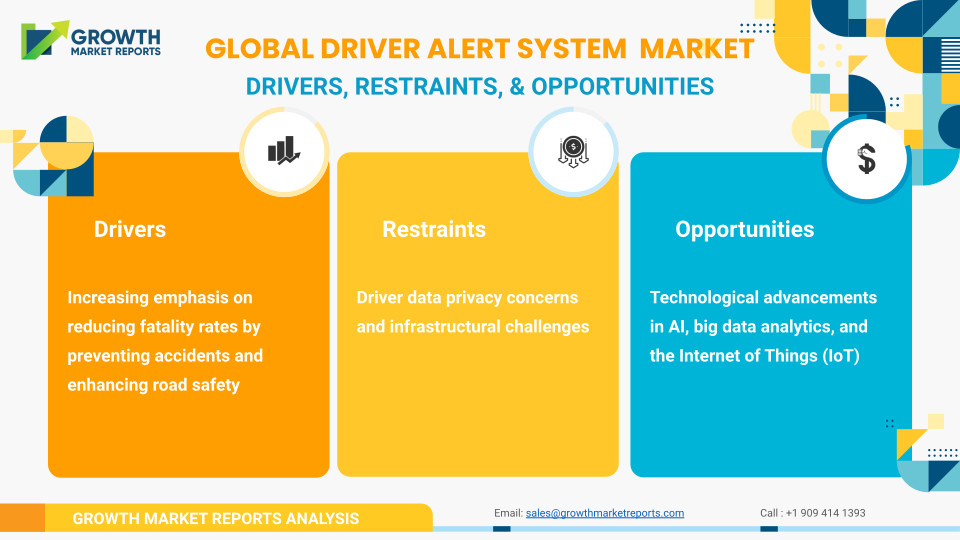
The Driver Alert System market is poised for significant opportunities as the automotive industry continues to prioritize safety and innovation. The rapid adoption of connected and autonomous vehicles is creating new avenues for the integration of advanced driver monitoring solutions, enabling seamless interaction between the driver, vehicle, and external environment. The development of predictive analytics and machine learning algorithms is opening up possibilities for personalized alert strategies, adaptive feedback, and proactive intervention, further enhancing the effectiveness of driver alert systems. Additionally, the expansion of regulatory mandates and safety standards across emerging markets is expected to drive substantial demand for both OEM and aftermarket solutions, creating new revenue streams for market players.
Another major opportunity lies in the convergence of driver alert systems with broader in-vehicle safety and infotainment ecosystems. The integration of driver monitoring with features such as adaptive cruise control, lane keeping assist, and real-time health monitoring is enabling the development of comprehensive safety platforms that address a wide range of driver behaviors and risk factors. The proliferation of electric and autonomous vehicles is also driving demand for advanced driver alert systems capable of supporting both manual and automated driving modes. As consumer awareness of vehicle safety continues to grow, the willingness to invest in premium safety features is expected to rise, further expanding the addressable market for driver alert systems.
Despite the strong growth prospects, the Driver Alert System market faces several restraining factors that could impact its expansion. High initial costs and the complexity of system integration remain significant barriers, particularly in price-sensitive markets and for older vehicle models. The challenge of minimizing false positives and ensuring the reliability of alerts is also critical, as excessive or inaccurate warnings can lead to driver annoyance and reduced system effectiveness. Additionally, concerns regarding data privacy and the security of in-vehicle monitoring systems may hinder adoption among certain consumer segments. Addressing these challenges will require ongoing investment in research and development, as well as collaboration between industry stakeholders and regulatory authorities to establish clear standards and best practices.
Asia Pacific is emerging as the fastest-growing region in the Driver Alert System market, with a market size of USD 1.21 billion in 2024 and a projected CAGR of 14.2% through 2033. The region's robust automotive industry, coupled with increasing regulatory focus on road safety and the rapid adoption of advanced driver assistance technologies, is fueling demand for driver alert systems. Countries such as China, Japan, and South Korea are at the forefront of this growth, driven by high vehicle production volumes, rising consumer awareness, and government initiatives aimed at reducing traffic accidents. The expansion of the middle class and the increasing penetration of connected vehicles are further contributing to the strong growth outlook for Asia Pacific.
North America remains a mature and highly competitive market for driver alert systems, with a market size of USD 0.97 billion in 2024. The region benefits from stringent safety regulations, high levels of technology adoption, and a well-established automotive manufacturing base. The United States and Canada are leading the way in terms of regulatory mandates for advanced driver assistance systems, including driver alert features. The strong presence of major automotive OEMs and technology providers, coupled with a high level of consumer awareness, is supporting sustained growth in the region. The integration of driver alert systems with broader in-vehicle safety and infotainment platforms is also driving innovation and differentiation in the North American market.
Europe is another key market, with a market size of USD 0.83 billion in 2024, supported by rigorous safety standards and a strong focus on vehicle automation and electrification. The European Union's Vision Zero initiative, which aims to eliminate road fatalities by 2050, is driving the adoption of advanced driver monitoring solutions across both passenger and commercial vehicles. Germany, France, and the United Kingdom are leading markets, benefiting from high levels of automotive R&D and a strong emphasis on innovation. The growing adoption of electric and autonomous vehicles is expected to further accelerate demand for driver alert systems in Europe, as manufacturers seek to enhance the safety and reliability of next-generation vehicles.
The Driver Alert System market is characterized by intense competition, with a diverse array of players ranging from established automotive OEMs to specialized technology providers and innovative startups. The competitive landscape is shaped by ongoing investments in research and development, strategic partnerships, and mergers and acquisitions aimed at expanding product portfolios and enhancing technological capabilities. Leading companies are focusing on the development of next-generation driver monitoring solutions that leverage artificial intelligence, machine learning, and advanced sensor technologies to deliver highly accurate and reliable alerts. The ability to offer integrated safety platforms that combine driver alert systems with other ADAS features is emerging as a key differentiator in the market.
Collaboration between automotive manufacturers and technology providers is playing a pivotal role in driving innovation and accelerating the adoption of driver alert systems. OEMs are increasingly partnering with leading sensor, camera, and software companies to access cutting-edge technologies and ensure seamless integration with other in-vehicle systems. These partnerships enable rapid product development and deployment, while also facilitating compliance with evolving regulatory requirements. The trend towards open platforms and standardized interfaces is further fostering collaboration and interoperability across the industry, enabling market players to deliver comprehensive and scalable safety solutions.
The market is also witnessing the entry of new players, particularly in the software and aftermarket segments, who are leveraging advancements in artificial intelligence and data analytics to offer differentiated solutions. These companies are focusing on the development of customizable and user-friendly driver alert systems that cater to the specific needs of different vehicle types and consumer segments. The increasing availability of plug-and-play aftermarket solutions is lowering barriers to entry and driving competition, particularly in regions with large fleets of older vehicles.
Major companies operating in the Driver Alert System market include Robert Bosch GmbH, Continental AG, Denso Corporation, Valeo SA, Aptiv PLC, Magna International Inc., Autoliv Inc., ZF Friedrichshafen AG, Hyundai Mobis, and Veoneer Inc. Bosch is recognized for its comprehensive portfolio of driver assistance systems, including advanced driver monitoring and alert solutions. Continental AG is a leader in sensor and camera technologies, with a strong focus on integrating driver alert systems with other ADAS features. Denso Corporation and Valeo SA are also prominent players, leveraging their expertise in automotive electronics and system integration to deliver innovative safety solutions. Aptiv PLC and Magna International Inc. are known for their focus on software and connectivity, enabling the development of highly adaptive and scalable driver alert platforms.
Autoliv Inc. and ZF Friedrichshafen AG have established themselves as key suppliers of safety systems, including driver alert solutions that are widely adopted by automotive OEMs worldwide. Hyundai Mobis and Veoneer Inc. are also making significant strides in the development of next-generation driver monitoring technologies, with a focus on enhancing system accuracy and reducing false positives. These companies are investing heavily in R&D and expanding their global footprint through strategic partnerships and collaborations. The competitive landscape is expected to remain dynamic, with ongoing innovation and consolidation shaping the future of the Driver Alert System market.
The Driver Alert System market has been segmented on the basis of
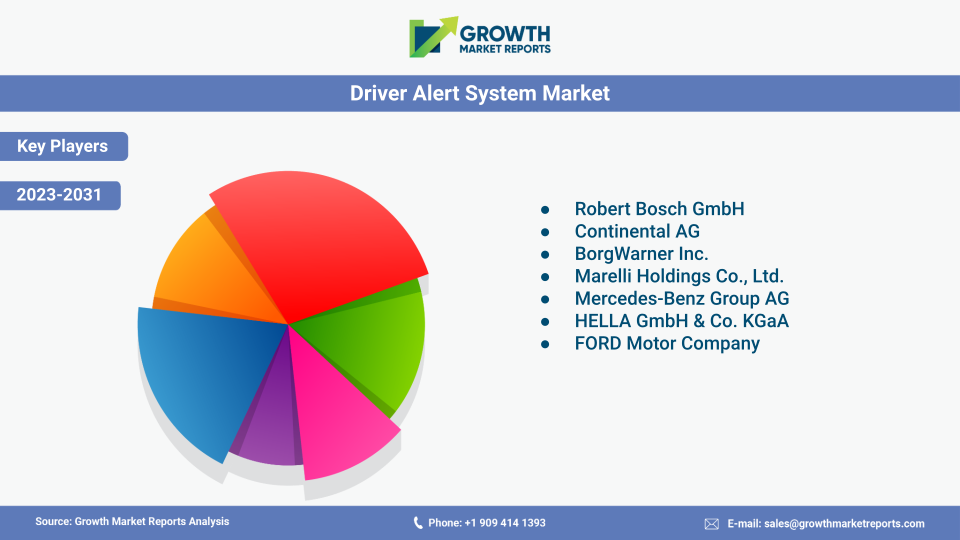
Players in the global driver alert system market share are Robert Bosch GmbH; Continental AG; BorgWarner Inc.; Marelli Holdings Co., Ltd.; Mercedes-Benz Group AG; HELLA GmbH & Co. KGaA; and FORD Motor Company. These companies adopt development strategies including mergers, acquisitions, partnerships, collaboration, product launches, and production expansion to expand their consumer base worldwide. For instance,
In June 2022, Valeo collaborated with BMW Group to provide advanced driver assisting systems comprising of driver alert systems to offer an enhanced driving experience to the drivers. Valeo developed an ADAS domain controller powered by Qualcomm Snapdragon SoCs processors to obtain real-time mapping and detect abnormalities in the vehicle surroundings.
Opportunities include integration with connected and autonomous vehicles, predictive analytics, and expanding regulatory mandates. Challenges involve high initial costs, system integration complexity, minimizing false positives, and addressing data privacy concerns.
Major companies include Robert Bosch GmbH, Continental AG, Denso Corporation, Valeo SA, Aptiv PLC, Magna International Inc., Autoliv Inc., ZF Friedrichshafen AG, Hyundai Mobis, Veoneer Inc., and others.
Asia Pacific is the fastest-growing region, led by China, Japan, and South Korea. North America and Europe are mature markets with high technology adoption and strict safety regulations, while Latin America and the Middle East & Africa are experiencing gradual growth.
Growth is driven by stringent government regulations, increasing consumer awareness of vehicle safety, technological advancements in sensors and software, and the rising adoption of connected and autonomous vehicles.
Driver alert systems are widely adopted in passenger cars and commercial vehicles (trucks, buses, delivery vans), with growing adoption in specialty vehicles like emergency response units, construction equipment, and agricultural machinery.
Key applications include drowsiness detection, distraction detection, lane departure warning, forward collision warning, and other functions such as driver identification and real-time health monitoring.
Driver alert systems provide visual alerts (dashboard indicators, warning lights), audible alerts (chimes, beeps, voice warnings), and haptic alerts (steering wheel or seat vibrations) to notify drivers of potential hazards or unsafe behaviors.
Driver alert systems typically include sensors (such as infrared and biometric sensors), cameras, software for data analysis and alert generation, and other components like control units, actuators, and communication modules.
The global driver alert system market is expected to grow from USD 3.52 billion in 2024 to USD 10.26 billion by 2033, at a compound annual growth rate (CAGR) of 12.8% from 2025 to 2033.
A driver alert system is an advanced safety feature in vehicles that monitors driver behavior and road conditions to detect signs of fatigue, distraction, or inattention. Using sensors, cameras, and software, it provides visual, audible, or haptic alerts to prompt the driver to stay alert and avoid accidents.