Digital Lending Platform Market Research Report 2033

Digital Lending Platform Market Research Report 2033

Segments - by Component (Solutions, Services), by Deployment Mode (On-Premises, Cloud), by Application (Personal Loans, SME Finance, Consumer Lending, Mortgage Lending, Others), by End-User (Banks, Credit Unions, NBFCs, FinTech Companies, Others)

https://growthmarketreports.com/Raksha
Author : Raksha Sharma
https://growthmarketreports.com/Vaibhav
Fact-checked by : V. Chandola
https://growthmarketreports.com/Shruti
Editor : Shruti Bhat

Upcoming | Report ID :BFSI-3717 | 4.8 Rating | 65 Reviews | 289 Pages | Format : Docx PDF

Report Description


Digital Lending Platform Market Outlook

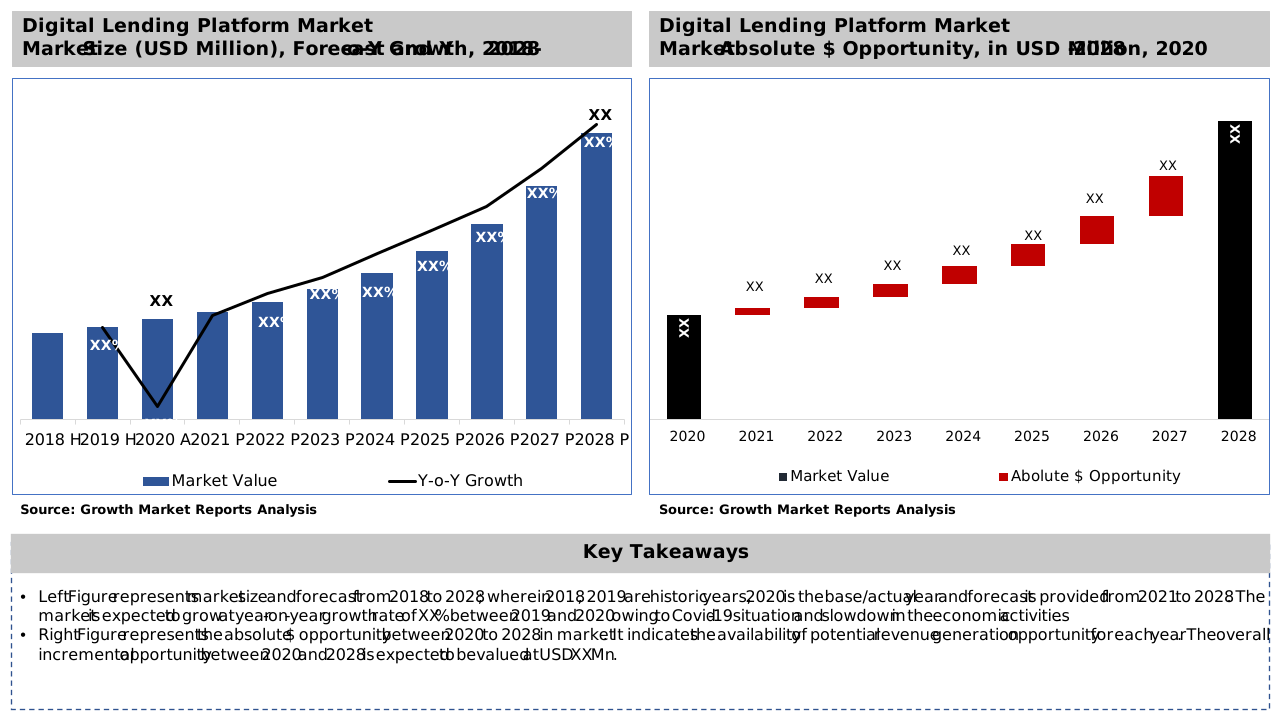
According to our latest research, the global Digital Lending Platform market size reached USD 16.8 billion in 2024, registering a robust growth trajectory. The market is expected to expand at a CAGR of 18.2% during the forecast period, reaching an estimated USD 74.1 billion by 2033. This remarkable growth is primarily driven by the increasing digital transformation initiatives across the financial services sector, the rising demand for seamless customer experiences, and the growing adoption of advanced technologies such as artificial intelligence and machine learning in lending processes.

The primary growth factor for the Digital Lending Platform market is the widespread digitization of financial services, which has fundamentally transformed the traditional lending landscape. Financial institutions are increasingly adopting digital lending solutions to streamline loan origination, underwriting, disbursement, and servicing processes. The integration of digital platforms enables lenders to reduce operational costs, minimize human errors, and significantly accelerate the loan approval process. Additionally, the proliferation of smartphones and internet connectivity has empowered consumers to access lending services from virtually anywhere, further propelling the adoption of digital lending platforms globally.

Another significant driver behind the exponential growth of the Digital Lending Platform market is the surging demand for personalized and customer-centric financial products. TodayÂ’s borrowers expect rapid, transparent, and convenient lending experiences, which traditional processes often fail to deliver. Digital lending platforms leverage advanced analytics, big data, and AI-driven algorithms to offer tailored loan products, automate credit assessments, and facilitate real-time decision-making. This not only enhances customer satisfaction but also enables lenders to tap into underserved and unbanked segments, expanding their market reach and reducing credit risk through more accurate borrower profiling.

Furthermore, regulatory support and favorable government initiatives are catalyzing the adoption of digital lending platforms, especially in emerging economies. Regulators worldwide are recognizing the potential of digital lending in promoting financial inclusion and fostering economic growth. They are introducing guidelines and frameworks to ensure transparency, security, and consumer protection in digital lending operations. For instance, the Reserve Bank of IndiaÂ’s digital lending guidelines and the European UnionÂ’s PSD2 directive have encouraged traditional banks, NBFCs, and fintech companies to invest in robust digital lending infrastructures. This regulatory push, combined with increasing investor interest and venture capital funding, is accelerating innovation and competition in the market.

In the evolving landscape of digital finance, the emergence of a Digital Factoring Platform is revolutionizing how businesses manage their accounts receivables. This innovative platform allows companies to convert their outstanding invoices into immediate cash flow, enhancing liquidity and operational efficiency. By leveraging advanced technologies such as AI and blockchain, digital factoring platforms offer real-time processing, reduced transaction costs, and improved transparency. This not only benefits businesses by providing quicker access to funds but also attracts a broader range of investors seeking alternative investment opportunities. As the digital lending ecosystem continues to expand, the integration of digital factoring solutions is poised to play a crucial role in supporting the financial health of businesses, especially in the SME sector.

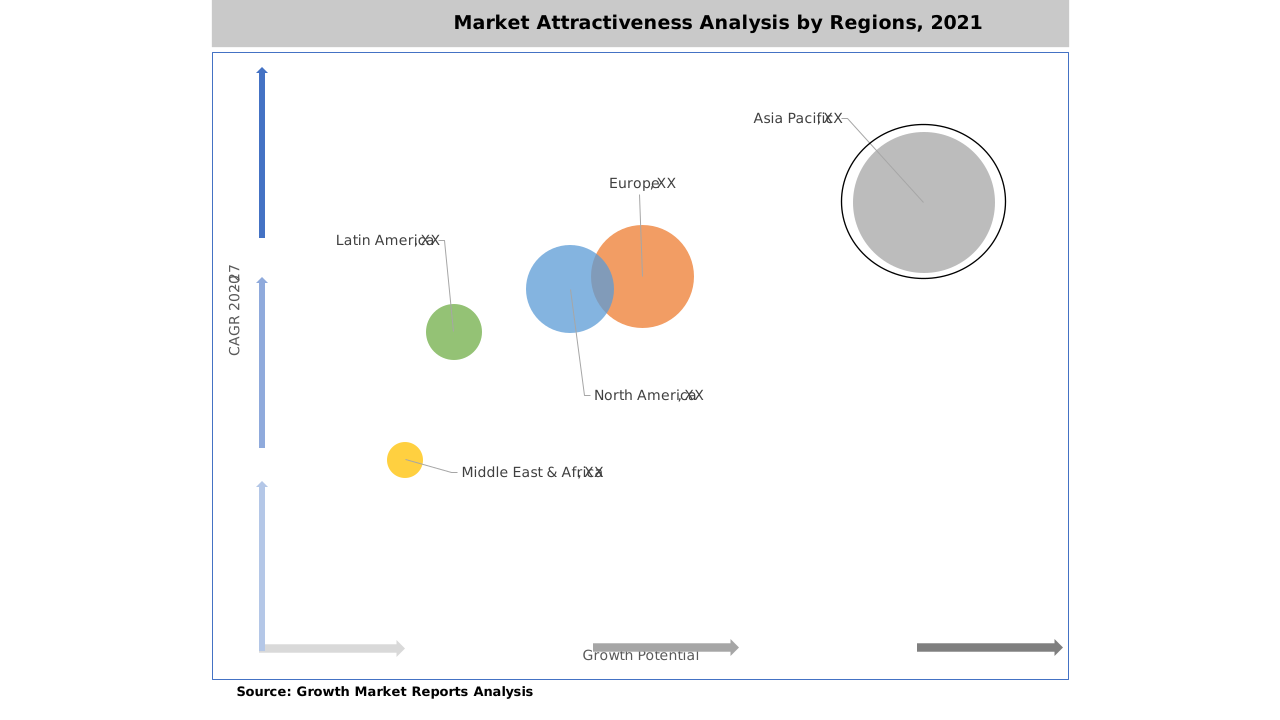
Regionally, the Digital Lending Platform market exhibits strong growth dynamics across North America, Europe, and Asia Pacific. North America leads the market, driven by a mature financial ecosystem, high technology adoption rates, and strong presence of leading fintech innovators. However, Asia Pacific is emerging as the fastest-growing region, fueled by a large unbanked population, rapid urbanization, and government-led digitalization initiatives. Europe, meanwhile, benefits from stringent regulatory frameworks and a growing appetite for alternative lending models. Latin America and the Middle East & Africa are also witnessing increased adoption, albeit at a slower pace, due to growing fintech penetration and efforts to boost financial inclusion.

Global Digital Lending Platform Industry Outlook

Component Analysis

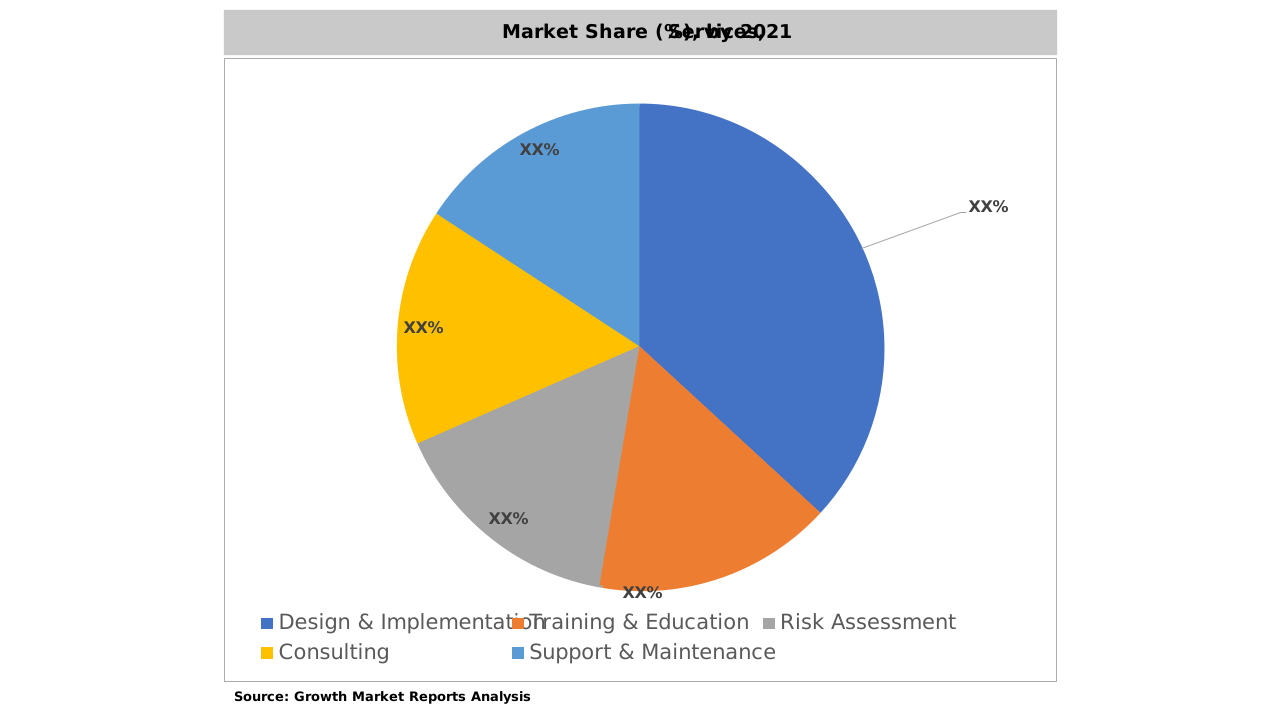
The Component segment of the Digital Lending Platform market is bifurcated into Solutions and Services, each playing a pivotal role in the overall ecosystem. Solutions encompass a wide array of software platforms and tools designed to automate the end-to-end lending process, including loan origination, credit assessment, risk management, compliance, and customer relationship management. These solutions are increasingly leveraging cloud-based architectures, artificial intelligence, and machine learning to enhance operational efficiency, scalability, and security. Financial institutions are rapidly adopting these solutions to stay competitive, reduce turnaround times, and deliver superior customer experiences.

Services, on the other hand, comprise consulting, implementation, integration, training, and support services that ensure seamless deployment and optimal utilization of digital lending platforms. As the complexity of digital lending solutions increases, the demand for specialized services is also rising. Service providers assist financial institutions in customizing platforms to their unique business requirements, integrating with existing core banking systems, and ensuring compliance with evolving regulatory standards. This segment is particularly crucial for organizations transitioning from legacy systems to modern digital infrastructures, as it mitigates operational disruptions and accelerates time-to-market.

The Solutions segment currently dominates the Digital Lending Platform market by revenue share, driven by continuous innovation and the introduction of feature-rich platforms tailored to diverse lending needs. Vendors are focusing on developing modular, API-driven solutions that facilitate easy integration with third-party services such as credit bureaus, payment gateways, and identity verification tools. This modularity enables lenders to build best-of-breed digital lending ecosystems and adapt rapidly to shifting market demands. The proliferation of open banking initiatives and the emergence of embedded finance are further fueling demand for interoperable digital lending solutions.

The rise of the Embedded Lending Platform is another transformative trend reshaping the financial services landscape. Embedded lending refers to the integration of lending services directly into non-financial digital platforms, such as e-commerce websites or mobile apps. This seamless integration allows consumers to access credit at the point of purchase, enhancing convenience and driving higher customer engagement. By utilizing data analytics and AI, embedded lending platforms can offer personalized loan offers and instant credit approvals, making the borrowing process more efficient and user-friendly. This trend is particularly gaining traction among fintech companies and retailers looking to enhance customer loyalty and drive sales growth through innovative financing solutions.

Meanwhile, the Services segment is projected to witness significant growth during the forecast period, with a notable CAGR, as more financial institutions seek expert guidance in navigating digital transformation journeys. The increasing complexity of regulatory compliance, cybersecurity threats, and evolving customer expectations necessitate ongoing support and training. Service providers are expanding their offerings to include managed services, proactive monitoring, and advanced analytics, empowering clients to maximize the value of their digital lending investments. As competition intensifies, the ability to deliver seamless, end-to-end service experiences will be a key differentiator for vendors in this segment.

Report Scope

Attributes Details
Report Title Digital Lending Platform Market Research Report 2033
By Component Solutions, Services
By Deployment Mode On-Premises, Cloud
By Application Personal Loans, SME Finance, Consumer Lending, Mortgage Lending, Others
By End-User Banks, Credit Unions, NBFCs, FinTech Companies, Others
Regions Covered North America, Europe, APAC, Latin America, MEA
Base Year 2024
Historic Data 2018-2023
Forecast Period 2025-2033
Number of Pages 289
Number of Tables & Figures 347
Customization Available Yes, the report can be customized as per your need.

Deployment Mode Analysis

The Deployment Mode segment of the Digital Lending Platform market is categorized into On-Premises and Cloud-based deployment, each offering distinct advantages and challenges. Traditionally, on-premises deployment was favored by large financial institutions seeking maximum control over their IT infrastructure, data security, and regulatory compliance. On-premises solutions enable organizations to customize platforms extensively and integrate them deeply with existing core systems. However, this approach often entails significant upfront capital expenditure, longer implementation timelines, and ongoing maintenance costs, making it less attractive for agile and cost-sensitive lenders.

In contrast, Cloud-based deployment has rapidly gained traction in recent years, emerging as the preferred choice for both established institutions and fintech startups. Cloud-based digital lending platforms offer unparalleled scalability, flexibility, and cost-efficiency, enabling lenders to launch new products, expand into new markets, and respond to changing customer demands with minimal IT overhead. The pay-as-you-go pricing model, combined with automatic updates and robust disaster recovery capabilities, further enhances the appeal of cloud solutions. As a result, cloud deployment is expected to account for the largest share of the market by 2033, driven by the accelerating pace of digital transformation and growing acceptance of Software-as-a-Service (SaaS) models.

Security and data privacy concerns remain a key consideration in the choice of deployment mode. While cloud providers have made significant investments in advanced security protocols, encryption, and compliance certifications, some financial institutions continue to prefer on-premises deployment for sensitive workloads and mission-critical applications. Hybrid deployment models are also emerging, allowing organizations to balance the benefits of cloud scalability with the control and security of on-premises infrastructure. Vendors are responding by offering flexible deployment options, seamless migration pathways, and enhanced security features to address the diverse needs of the market.

As the digital lending landscape evolves, Decision Engine Modernization for Lending has become a critical focus for financial institutions aiming to enhance their credit decision-making processes. Modern decision engines leverage AI and machine learning algorithms to analyze vast amounts of data, enabling more accurate and timely credit assessments. This modernization not only improves the speed and efficiency of loan approvals but also enhances risk management by providing deeper insights into borrower behavior and creditworthiness. By integrating advanced decision engines, lenders can offer more competitive and tailored loan products, thereby improving customer satisfaction and expanding their market reach. As the demand for agile and data-driven lending solutions grows, the modernization of decision engines will be pivotal in driving innovation and competitiveness in the digital lending sector.

Ultimately, the shift towards cloud-based digital lending platforms is expected to accelerate further as regulatory barriers are addressed, cloud adoption matures, and financial institutions seek to future-proof their operations. The ability to leverage cloud-native technologies such as microservices, containerization, and AI-driven analytics will be a key differentiator for vendors and lenders alike, driving innovation and enabling the rapid development of next-generation lending products and services.

Application Analysis

The Application segment of the Digital Lending Platform market encompasses a diverse range of use cases, including Personal Loans, SME Finance, Consumer Lending, Mortgage Lending, and Others. Personal Loans represent a significant portion of the market, driven by increasing consumer demand for quick, hassle-free access to credit. Digital lending platforms have revolutionized the personal loan segment by enabling instant approvals, automated credit checks, and seamless disbursement processes. The integration of alternative data sources, such as social media and utility payments, has further expanded access to credit for underserved populations, driving financial inclusion and market growth.

SME Finance is another critical application segment, as small and medium-sized enterprises often face significant barriers in accessing traditional bank loans due to stringent eligibility criteria and lengthy approval processes. Digital lending platforms are bridging this gap by offering streamlined, data-driven lending solutions tailored to the unique needs of SMEs. These platforms leverage advanced analytics, real-time data, and alternative credit scoring models to assess risk more accurately and disburse funds rapidly. The rise of peer-to-peer (P2P) lending and crowdfunding platforms is also contributing to the growth of the SME finance segment, enabling businesses to access capital from a broader pool of investors.

Consumer Lending, which includes auto loans, education loans, and other forms of unsecured credit, is witnessing robust growth as digital platforms make it easier for consumers to compare loan products, submit applications, and track approval status online. The adoption of mobile-first lending solutions, digital KYC (Know Your Customer) processes, and e-signature capabilities has significantly enhanced the convenience and accessibility of consumer lending. Lenders are increasingly leveraging AI and machine learning to personalize loan offers, detect fraud, and optimize risk management, resulting in higher approval rates and improved portfolio performance.

Mortgage Lending, traditionally characterized by complex documentation and lengthy approval cycles, is undergoing a digital transformation as well. Digital lending platforms are automating key processes such as property valuation, document verification, and underwriting, reducing turnaround times and improving customer satisfaction. The integration of blockchain technology and smart contracts is further streamlining mortgage origination and servicing, enhancing transparency and reducing operational risks. As housing markets recover and demand for homeownership rises, the mortgage lending segment is expected to witness substantial growth, particularly in developed markets.

End-User Analysis

The End-User segment of the Digital Lending Platform market includes Banks, Credit Unions, Non-Banking Financial Companies (NBFCs), FinTech Companies, and Others. Banks remain the largest end-user group, leveraging digital lending platforms to enhance operational efficiency, reduce costs, and offer innovative products to a tech-savvy customer base. By adopting advanced digital solutions, banks are able to automate loan origination, streamline credit assessment, and deliver personalized experiences, thereby improving customer retention and expanding their market share. The integration of digital lending platforms with core banking systems also enables banks to launch new products rapidly and comply with evolving regulatory requirements.

Credit Unions, which traditionally serve niche markets and community-based customers, are increasingly embracing digital lending platforms to remain competitive and relevant in a rapidly changing financial landscape. Digital platforms enable credit unions to offer faster, more convenient lending services, attract younger members, and expand their reach beyond traditional geographic boundaries. By leveraging data analytics and AI-driven insights, credit unions can better assess member needs, optimize risk management, and enhance member engagement. The collaborative nature of credit unions also facilitates the adoption of shared digital infrastructures and best practices, driving collective growth and innovation.

NBFCs and FinTech Companies are at the forefront of digital lending innovation, leveraging agile, technology-driven business models to disrupt traditional lending paradigms. NBFCs, in particular, are capitalizing on digital platforms to serve underserved segments, such as micro, small, and medium enterprises (MSMEs), gig economy workers, and individuals with limited credit histories. FinTech companies, meanwhile, are pioneering new lending models, such as embedded finance, buy-now-pay-later (BNPL), and digital micro-lending, leveraging advanced analytics, machine learning, and alternative data sources to assess creditworthiness and deliver rapid, frictionless lending experiences.

The Others segment includes insurance companies, peer-to-peer (P2P) lenders, and alternative finance providers, all of whom are leveraging digital lending platforms to diversify their product offerings and tap into new revenue streams. As competition intensifies and customer expectations continue to evolve, end-users across the spectrum are investing in robust, scalable, and secure digital lending infrastructures to drive growth, enhance customer satisfaction, and maintain regulatory compliance. The ability to deliver seamless, omnichannel lending experiences will be a key differentiator in the increasingly crowded digital lending landscape.

Opportunities & Threats

The Digital Lending Platform market presents a plethora of opportunities for stakeholders across the value chain. One of the most significant opportunities lies in expanding financial inclusion by leveraging digital platforms to serve unbanked and underbanked populations, particularly in emerging markets. By harnessing alternative data sources, AI-driven credit scoring, and mobile-first solutions, digital lenders can extend credit to individuals and businesses that have traditionally been excluded from formal financial systems. This not only drives social and economic development but also unlocks new growth avenues for financial institutions and technology providers.

Another major opportunity is the integration of advanced technologies such as blockchain, biometrics, and predictive analytics into digital lending platforms. Blockchain can enhance transparency, security, and efficiency in lending processes, while biometrics and digital identity solutions can streamline customer onboarding and reduce fraud. Predictive analytics, meanwhile, enables lenders to anticipate borrower behavior, optimize risk management, and deliver personalized product offerings. As regulatory frameworks evolve to support digital innovation, there is significant potential for collaboration between traditional financial institutions, fintech startups, and technology vendors to co-create next-generation digital lending ecosystems.

However, the Digital Lending Platform market also faces several restraining factors, chief among them being data privacy and cybersecurity risks. The increasing digitization of lending processes exposes financial institutions and customers to a growing array of cyber threats, including data breaches, identity theft, and financial fraud. Ensuring robust security protocols, compliance with data protection regulations, and continuous monitoring of digital platforms is imperative to maintaining customer trust and safeguarding sensitive information. The complexity of integrating digital lending platforms with legacy systems and navigating diverse regulatory environments also poses challenges, particularly for smaller institutions with limited resources.

Regional Outlook

North America continues to dominate the Digital Lending Platform market, accounting for approximately 38% of the global market size in 2024, or around USD 6.4 billion. The regionÂ’s leadership is underpinned by a highly developed financial ecosystem, widespread adoption of advanced technologies, and a strong presence of leading fintech innovators. The United States, in particular, is home to several digital lending pioneers and has witnessed significant investments in AI, machine learning, and blockchain-driven lending solutions. Canada is also experiencing robust growth, driven by regulatory support for open banking and digital transformation initiatives among traditional financial institutions.

Europe represents the second-largest market, with a share of approximately 26% in 2024, or USD 4.4 billion. The region benefits from a mature banking sector, stringent regulatory frameworks, and a growing appetite for alternative lending models. The United Kingdom, Germany, and France are leading the charge, supported by progressive regulations such as the PSD2 directive and strong demand for digital-first financial products. The European market is expected to grow at a steady CAGR of 16.5% through 2033, driven by increasing collaboration between banks and fintech companies, as well as the proliferation of embedded finance solutions.

Asia Pacific is the fastest-growing region, with a market size of USD 3.7 billion in 2024 and a projected CAGR of 22.1% through 2033. The regionÂ’s rapid growth is fueled by a large unbanked population, widespread smartphone adoption, and government-led digitalization initiatives in countries such as China, India, and Southeast Asia. The emergence of super-apps, mobile wallets, and alternative credit scoring models is transforming the lending landscape, enabling financial institutions to reach new customer segments and drive financial inclusion. Latin America and the Middle East & Africa, while currently representing smaller shares of the global market, are witnessing increased adoption of digital lending platforms as fintech penetration deepens and efforts to boost financial inclusion gain momentum.

Digital Lending Platform Market Statistics

Competitor Outlook

The Digital Lending Platform market is characterized by intense competition, with a diverse mix of global technology giants, specialized fintech vendors, and traditional financial institutions vying for market share. The competitive landscape is shaped by continuous innovation, rapid technological advancements, and evolving customer expectations. Leading players are investing heavily in research and development to enhance platform capabilities, integrate advanced analytics and AI, and deliver seamless, omnichannel lending experiences. Strategic partnerships, mergers and acquisitions, and collaborations with fintech startups are also common, as companies seek to expand their product portfolios, enter new markets, and accelerate digital transformation.

Key competitive differentiators in the market include platform scalability, flexibility, security, regulatory compliance, and the ability to deliver personalized customer experiences. Vendors are increasingly focusing on developing modular, API-driven platforms that facilitate easy integration with third-party services, such as credit bureaus, payment gateways, and identity verification tools. The rise of open banking and embedded finance is driving demand for interoperable solutions that can seamlessly connect with broader digital ecosystems. As competition intensifies, customer support, training, and managed services are emerging as critical factors in vendor selection and long-term client relationships.

The market is also witnessing the entry of new players, particularly fintech startups, that are leveraging agile, technology-driven business models to disrupt traditional lending paradigms. These challengers are pioneering innovative lending models, such as peer-to-peer (P2P) lending, buy-now-pay-later (BNPL), and digital micro-lending, and are rapidly gaining traction among digitally savvy consumers and underserved segments. To stay ahead, established players are increasingly adopting a collaborative approach, partnering with fintechs and technology vendors to co-create next-generation digital lending solutions and deliver superior value to customers.

Major companies operating in the Digital Lending Platform market include Finastra, FIS, Nucleus Software, Temenos, Roostify, Ellie Mae (now ICE Mortgage Technology), Tavant Technologies, Newgen Software, Pegasystems, and Intellect Design Arena. These companies offer comprehensive digital lending platforms, encompassing loan origination, credit assessment, risk management, compliance, and customer engagement capabilities. Finastra and FIS are recognized for their robust, scalable solutions tailored to large financial institutions and global banks. Nucleus Software and Temenos are renowned for their innovative, modular platforms that cater to both traditional lenders and fintech challengers.

Roostify and Ellie Mae (ICE Mortgage Technology) are prominent players in the mortgage lending segment, offering specialized solutions that automate and streamline the mortgage origination process. Tavant Technologies and Newgen Software are known for their AI-driven platforms and advanced analytics capabilities, enabling lenders to deliver personalized, data-driven lending experiences. Pegasystems and Intellect Design Arena offer flexible, cloud-native platforms designed to support rapid product development and integration with broader digital ecosystems. As the market continues to evolve, these companies are expected to play a pivotal role in shaping the future of digital lending, driving innovation, and setting new benchmarks for operational excellence and customer satisfaction.

Key Players

  • Finastra
  • FIS Global
  • Newgen Software
  • Tavant Technologies
  • Nucleus Software
  • Temenos
  • Roostify
  • Ellie Mae (ICE Mortgage Technology)
  • Pegasystems
  • Sigma Infosolutions
  • Intellect Design Arena
  • Mambu
  • TurnKey Lender
  • Juristech Associates
  • CU Direct
  • Decimal Technologies
  • LendFoundry
  • LendingKart
  • CrediFi
  • LendKey Technologies
Digital Lending Platform Market Overview

Segments

The Digital Lending Platform market has been segmented on the basis of

Component

  • Solutions
  • Services

Deployment Mode

  • On-Premises
  • Cloud

Application

  • Personal Loans
  • SME Finance
  • Consumer Lending
  • Mortgage Lending
  • Others

End-User

  • Banks
  • Credit Unions
  • NBFCs
  • FinTech Companies
  • Others

Competitive Landscape

Key players competing in the global digital lending platform market are FISFiserv, Inc.; Nucleus Software; Pegasystems Inc.; Roostify; Sigma Infosolutions; Tavant; Ellie Mae, Inc.; and Newgen Software.

In March 2019, Amount LLC partnered with TD Bank. The alliance is expected to leverage TD Bank’s loan offers.
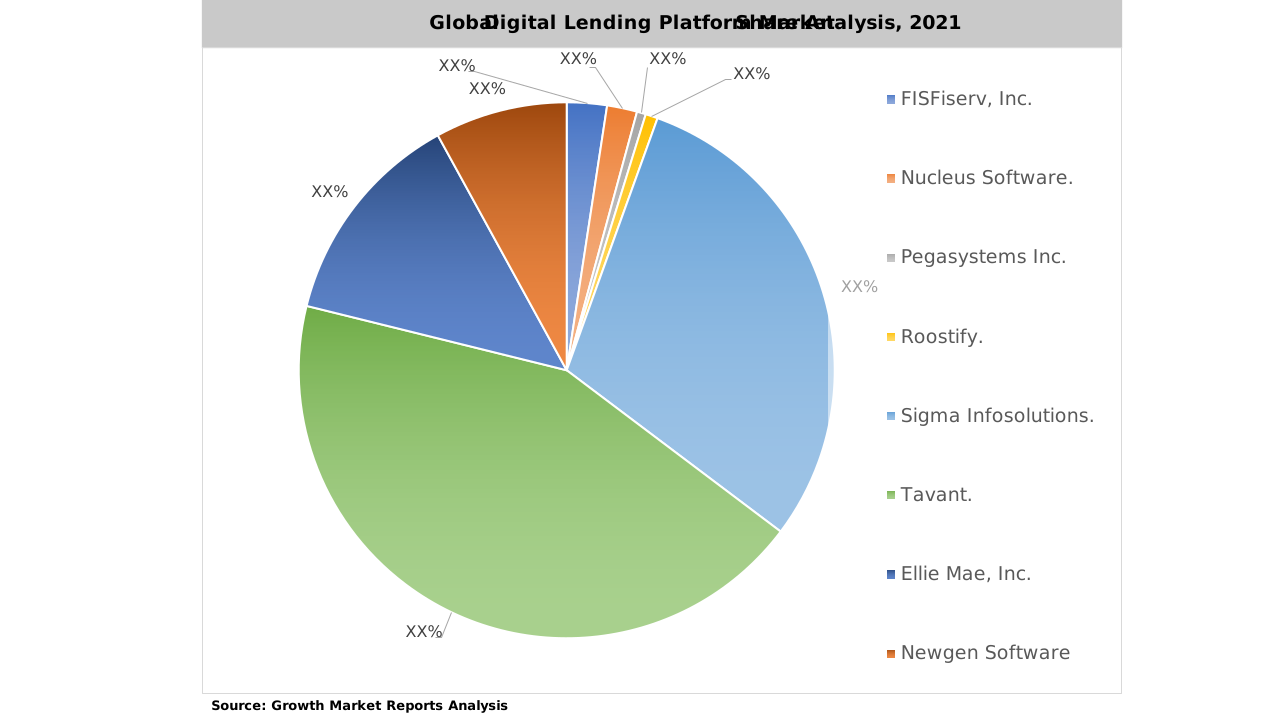

Digital Lending Platform Market by key players

Frequently Asked Questions

Regulatory support, such as the Reserve Bank of India’s digital lending guidelines and the EU’s PSD2 directive, is encouraging the adoption of digital lending platforms by ensuring transparency, security, and consumer protection.

Major players include Finastra, FIS, Nucleus Software, Temenos, Roostify, Ellie Mae (ICE Mortgage Technology), Tavant Technologies, Newgen Software, Pegasystems, and Intellect Design Arena.

Opportunities include expanding financial inclusion, integrating advanced technologies like blockchain and biometrics, and serving unbanked populations. Challenges include data privacy, cybersecurity risks, and integration with legacy systems.

The main end-users are banks, credit unions, non-banking financial companies (NBFCs), fintech companies, insurance companies, peer-to-peer lenders, and alternative finance providers.

Key applications include personal loans, SME finance, consumer lending (such as auto and education loans), mortgage lending, and other credit products.

Digital lending platforms can be deployed on-premises or via the cloud. Cloud-based solutions are gaining popularity due to their scalability, flexibility, and cost-efficiency.

Digital lending platforms comprise Solutions (software for loan origination, credit assessment, risk management, etc.) and Services (consulting, implementation, integration, training, and support).

North America leads the market, followed by Europe and Asia Pacific. Asia Pacific is the fastest-growing region due to its large unbanked population and government digitalization initiatives.

Key growth drivers include digital transformation in financial services, rising demand for seamless customer experiences, adoption of AI and machine learning, regulatory support, and increased smartphone and internet penetration.

As of 2024, the global digital lending platform market is valued at USD 16.8 billion and is projected to reach USD 74.1 billion by 2033, growing at a CAGR of 18.2%.

Table Of Content

Chapter 1 Executive Summary
Chapter 2 Assumptions and Acronyms Used
Chapter 3 Research Methodology
Chapter 4 Digital Lending Platform Market Overview
   4.1 Introduction
      4.1.1 Market Taxonomy
      4.1.2 Market Definition
      4.1.3 Macro-Economic Factors Impacting the Market Growth
   4.2 Digital Lending Platform Market Dynamics
      4.2.1 Market Drivers
      4.2.2 Market Restraints
      4.2.3 Market Opportunity
   4.3 Digital Lending Platform Market - Supply Chain Analysis
      4.3.1 List of Key Suppliers
      4.3.2 List of Key Distributors
      4.3.3 List of Key Consumers
   4.4 Key Forces Shaping the Digital Lending Platform Market
      4.4.1 Bargaining Power of Suppliers
      4.4.2 Bargaining Power of Buyers
      4.4.3 Threat of Substitution
      4.4.4 Threat of New Entrants
      4.4.5 Competitive Rivalry
   4.5 Global Digital Lending Platform Market Size & Forecast, 2023-2032
      4.5.1 Digital Lending Platform Market Size and Y-o-Y Growth
      4.5.2 Digital Lending Platform Market Absolute $ Opportunity

Chapter 5 Global Digital Lending Platform Market Analysis and Forecast By Component
   5.1 Introduction
      5.1.1 Key Market Trends & Growth Opportunities By Component
      5.1.2 Basis Point Share (BPS) Analysis By Component
      5.1.3 Absolute $ Opportunity Assessment By Component
   5.2 Digital Lending Platform Market Size Forecast By Component
      5.2.1 Solutions
      5.2.2 Services
   5.3 Market Attractiveness Analysis By Component

Chapter 6 Global Digital Lending Platform Market Analysis and Forecast By Deployment Mode
   6.1 Introduction
      6.1.1 Key Market Trends & Growth Opportunities By Deployment Mode
      6.1.2 Basis Point Share (BPS) Analysis By Deployment Mode
      6.1.3 Absolute $ Opportunity Assessment By Deployment Mode
   6.2 Digital Lending Platform Market Size Forecast By Deployment Mode
      6.2.1 On-Premises
      6.2.2 Cloud
   6.3 Market Attractiveness Analysis By Deployment Mode

Chapter 7 Global Digital Lending Platform Market Analysis and Forecast By Application
   7.1 Introduction
      7.1.1 Key Market Trends & Growth Opportunities By Application
      7.1.2 Basis Point Share (BPS) Analysis By Application
      7.1.3 Absolute $ Opportunity Assessment By Application
   7.2 Digital Lending Platform Market Size Forecast By Application
      7.2.1 Personal Loans
      7.2.2 SME Finance
      7.2.3 Consumer Lending
      7.2.4 Mortgage Lending
      7.2.5 Others
   7.3 Market Attractiveness Analysis By Application

Chapter 8 Global Digital Lending Platform Market Analysis and Forecast By End-User
   8.1 Introduction
      8.1.1 Key Market Trends & Growth Opportunities By End-User
      8.1.2 Basis Point Share (BPS) Analysis By End-User
      8.1.3 Absolute $ Opportunity Assessment By End-User
   8.2 Digital Lending Platform Market Size Forecast By End-User
      8.2.1 Banks
      8.2.2 Credit Unions
      8.2.3 NBFCs
      8.2.4 FinTech Companies
      8.2.5 Others
   8.3 Market Attractiveness Analysis By End-User

Chapter 9 Global Digital Lending Platform Market Analysis and Forecast by Region
   9.1 Introduction
      9.1.1 Key Market Trends & Growth Opportunities By Region
      9.1.2 Basis Point Share (BPS) Analysis By Region
      9.1.3 Absolute $ Opportunity Assessment By Region
   9.2 Digital Lending Platform Market Size Forecast By Region
      9.2.1 North America
      9.2.2 Europe
      9.2.3 Asia Pacific
      9.2.4 Latin America
      9.2.5 Middle East & Africa (MEA)
   9.3 Market Attractiveness Analysis By Region

Chapter 10 Coronavirus Disease (COVID-19) Impact 
   10.1 Introduction 
   10.2 Current & Future Impact Analysis 
   10.3 Economic Impact Analysis 
   10.4 Government Policies 
   10.5 Investment Scenario

Chapter 11 North America Digital Lending Platform Analysis and Forecast
   11.1 Introduction
   11.2 North America Digital Lending Platform Market Size Forecast by Country
      11.2.1 U.S.
      11.2.2 Canada
   11.3 Basis Point Share (BPS) Analysis by Country
   11.4 Absolute $ Opportunity Assessment by Country
   11.5 Market Attractiveness Analysis by Country
   11.6 North America Digital Lending Platform Market Size Forecast By Component
      11.6.1 Solutions
      11.6.2 Services
   11.7 Basis Point Share (BPS) Analysis By Component 
   11.8 Absolute $ Opportunity Assessment By Component 
   11.9 Market Attractiveness Analysis By Component
   11.10 North America Digital Lending Platform Market Size Forecast By Deployment Mode
      11.10.1 On-Premises
      11.10.2 Cloud
   11.11 Basis Point Share (BPS) Analysis By Deployment Mode 
   11.12 Absolute $ Opportunity Assessment By Deployment Mode 
   11.13 Market Attractiveness Analysis By Deployment Mode
   11.14 North America Digital Lending Platform Market Size Forecast By Application
      11.14.1 Personal Loans
      11.14.2 SME Finance
      11.14.3 Consumer Lending
      11.14.4 Mortgage Lending
      11.14.5 Others
   11.15 Basis Point Share (BPS) Analysis By Application 
   11.16 Absolute $ Opportunity Assessment By Application 
   11.17 Market Attractiveness Analysis By Application
   11.18 North America Digital Lending Platform Market Size Forecast By End-User
      11.18.1 Banks
      11.18.2 Credit Unions
      11.18.3 NBFCs
      11.18.4 FinTech Companies
      11.18.5 Others
   11.19 Basis Point Share (BPS) Analysis By End-User 
   11.20 Absolute $ Opportunity Assessment By End-User 
   11.21 Market Attractiveness Analysis By End-User

Chapter 12 Europe Digital Lending Platform Analysis and Forecast
   12.1 Introduction
   12.2 Europe Digital Lending Platform Market Size Forecast by Country
      12.2.1 Germany
      12.2.2 France
      12.2.3 Italy
      12.2.4 U.K.
      12.2.5 Spain
      12.2.6 Russia
      12.2.7 Rest of Europe
   12.3 Basis Point Share (BPS) Analysis by Country
   12.4 Absolute $ Opportunity Assessment by Country
   12.5 Market Attractiveness Analysis by Country
   12.6 Europe Digital Lending Platform Market Size Forecast By Component
      12.6.1 Solutions
      12.6.2 Services
   12.7 Basis Point Share (BPS) Analysis By Component 
   12.8 Absolute $ Opportunity Assessment By Component 
   12.9 Market Attractiveness Analysis By Component
   12.10 Europe Digital Lending Platform Market Size Forecast By Deployment Mode
      12.10.1 On-Premises
      12.10.2 Cloud
   12.11 Basis Point Share (BPS) Analysis By Deployment Mode 
   12.12 Absolute $ Opportunity Assessment By Deployment Mode 
   12.13 Market Attractiveness Analysis By Deployment Mode
   12.14 Europe Digital Lending Platform Market Size Forecast By Application
      12.14.1 Personal Loans
      12.14.2 SME Finance
      12.14.3 Consumer Lending
      12.14.4 Mortgage Lending
      12.14.5 Others
   12.15 Basis Point Share (BPS) Analysis By Application 
   12.16 Absolute $ Opportunity Assessment By Application 
   12.17 Market Attractiveness Analysis By Application
   12.18 Europe Digital Lending Platform Market Size Forecast By End-User
      12.18.1 Banks
      12.18.2 Credit Unions
      12.18.3 NBFCs
      12.18.4 FinTech Companies
      12.18.5 Others
   12.19 Basis Point Share (BPS) Analysis By End-User 
   12.20 Absolute $ Opportunity Assessment By End-User 
   12.21 Market Attractiveness Analysis By End-User

Chapter 13 Asia Pacific Digital Lending Platform Analysis and Forecast
   13.1 Introduction
   13.2 Asia Pacific Digital Lending Platform Market Size Forecast by Country
      13.2.1 China
      13.2.2 Japan
      13.2.3 South Korea
      13.2.4 India
      13.2.5 Australia
      13.2.6 South East Asia (SEA)
      13.2.7 Rest of Asia Pacific (APAC)
   13.3 Basis Point Share (BPS) Analysis by Country
   13.4 Absolute $ Opportunity Assessment by Country
   13.5 Market Attractiveness Analysis by Country
   13.6 Asia Pacific Digital Lending Platform Market Size Forecast By Component
      13.6.1 Solutions
      13.6.2 Services
   13.7 Basis Point Share (BPS) Analysis By Component 
   13.8 Absolute $ Opportunity Assessment By Component 
   13.9 Market Attractiveness Analysis By Component
   13.10 Asia Pacific Digital Lending Platform Market Size Forecast By Deployment Mode
      13.10.1 On-Premises
      13.10.2 Cloud
   13.11 Basis Point Share (BPS) Analysis By Deployment Mode 
   13.12 Absolute $ Opportunity Assessment By Deployment Mode 
   13.13 Market Attractiveness Analysis By Deployment Mode
   13.14 Asia Pacific Digital Lending Platform Market Size Forecast By Application
      13.14.1 Personal Loans
      13.14.2 SME Finance
      13.14.3 Consumer Lending
      13.14.4 Mortgage Lending
      13.14.5 Others
   13.15 Basis Point Share (BPS) Analysis By Application 
   13.16 Absolute $ Opportunity Assessment By Application 
   13.17 Market Attractiveness Analysis By Application
   13.18 Asia Pacific Digital Lending Platform Market Size Forecast By End-User
      13.18.1 Banks
      13.18.2 Credit Unions
      13.18.3 NBFCs
      13.18.4 FinTech Companies
      13.18.5 Others
   13.19 Basis Point Share (BPS) Analysis By End-User 
   13.20 Absolute $ Opportunity Assessment By End-User 
   13.21 Market Attractiveness Analysis By End-User

Chapter 14 Latin America Digital Lending Platform Analysis and Forecast
   14.1 Introduction
   14.2 Latin America Digital Lending Platform Market Size Forecast by Country
      14.2.1 Brazil
      14.2.2 Mexico
      14.2.3 Rest of Latin America (LATAM)
   14.3 Basis Point Share (BPS) Analysis by Country
   14.4 Absolute $ Opportunity Assessment by Country
   14.5 Market Attractiveness Analysis by Country
   14.6 Latin America Digital Lending Platform Market Size Forecast By Component
      14.6.1 Solutions
      14.6.2 Services
   14.7 Basis Point Share (BPS) Analysis By Component 
   14.8 Absolute $ Opportunity Assessment By Component 
   14.9 Market Attractiveness Analysis By Component
   14.10 Latin America Digital Lending Platform Market Size Forecast By Deployment Mode
      14.10.1 On-Premises
      14.10.2 Cloud
   14.11 Basis Point Share (BPS) Analysis By Deployment Mode 
   14.12 Absolute $ Opportunity Assessment By Deployment Mode 
   14.13 Market Attractiveness Analysis By Deployment Mode
   14.14 Latin America Digital Lending Platform Market Size Forecast By Application
      14.14.1 Personal Loans
      14.14.2 SME Finance
      14.14.3 Consumer Lending
      14.14.4 Mortgage Lending
      14.14.5 Others
   14.15 Basis Point Share (BPS) Analysis By Application 
   14.16 Absolute $ Opportunity Assessment By Application 
   14.17 Market Attractiveness Analysis By Application
   14.18 Latin America Digital Lending Platform Market Size Forecast By End-User
      14.18.1 Banks
      14.18.2 Credit Unions
      14.18.3 NBFCs
      14.18.4 FinTech Companies
      14.18.5 Others
   14.19 Basis Point Share (BPS) Analysis By End-User 
   14.20 Absolute $ Opportunity Assessment By End-User 
   14.21 Market Attractiveness Analysis By End-User

Chapter 15 Middle East & Africa (MEA) Digital Lending Platform Analysis and Forecast
   15.1 Introduction
   15.2 Middle East & Africa (MEA) Digital Lending Platform Market Size Forecast by Country
      15.2.1 Saudi Arabia
      15.2.2 South Africa
      15.2.3 UAE
      15.2.4 Rest of Middle East & Africa (MEA)
   15.3 Basis Point Share (BPS) Analysis by Country
   15.4 Absolute $ Opportunity Assessment by Country
   15.5 Market Attractiveness Analysis by Country
   15.6 Middle East & Africa (MEA) Digital Lending Platform Market Size Forecast By Component
      15.6.1 Solutions
      15.6.2 Services
   15.7 Basis Point Share (BPS) Analysis By Component 
   15.8 Absolute $ Opportunity Assessment By Component 
   15.9 Market Attractiveness Analysis By Component
   15.10 Middle East & Africa (MEA) Digital Lending Platform Market Size Forecast By Deployment Mode
      15.10.1 On-Premises
      15.10.2 Cloud
   15.11 Basis Point Share (BPS) Analysis By Deployment Mode 
   15.12 Absolute $ Opportunity Assessment By Deployment Mode 
   15.13 Market Attractiveness Analysis By Deployment Mode
   15.14 Middle East & Africa (MEA) Digital Lending Platform Market Size Forecast By Application
      15.14.1 Personal Loans
      15.14.2 SME Finance
      15.14.3 Consumer Lending
      15.14.4 Mortgage Lending
      15.14.5 Others
   15.15 Basis Point Share (BPS) Analysis By Application 
   15.16 Absolute $ Opportunity Assessment By Application 
   15.17 Market Attractiveness Analysis By Application
   15.18 Middle East & Africa (MEA) Digital Lending Platform Market Size Forecast By End-User
      15.18.1 Banks
      15.18.2 Credit Unions
      15.18.3 NBFCs
      15.18.4 FinTech Companies
      15.18.5 Others
   15.19 Basis Point Share (BPS) Analysis By End-User 
   15.20 Absolute $ Opportunity Assessment By End-User 
   15.21 Market Attractiveness Analysis By End-User

Chapter 16 Competition Landscape 
   16.1 Digital Lending Platform Market: Competitive Dashboard
   16.2 Global Digital Lending Platform Market: Market Share Analysis, 2023
   16.3 Company Profiles (Details – Overview, Financials, Developments, Strategy) 
      16.3.1 Finastra
FIS Global
Newgen Software
Tavant Technologies
Nucleus Software
Temenos
Roostify
Ellie Mae (ICE Mortgage Technology)
Pegasystems
Sigma Infosolutions
Intellect Design Arena
Mambu
TurnKey Lender
Juristech Associates
CU Direct
Decimal Technologies
LendFoundry
LendingKart
CrediFi
LendKey Technologies

Methodology

Our Clients

The John Holland Group
Pfizer
Siemens Healthcare
FedEx Logistics
Honda Motor Co. Ltd.
Deloitte
General Mills
sinopec