Segments - by Deployment Type (On-Premises, Cloud-Based, Hybrid), by Technology (Virtual Desktop Infrastructure, Desktop-as-a-Service, Remote Desktop Services, Application Virtualization), by Application (Oil & Gas, Power Generation, Renewable Energy, Utilities, Mining, Others), by Organization Size (Small and Medium Enterprises, Large Enterprises), by End-User (Upstream, Midstream, Downstream, Utilities, Others)
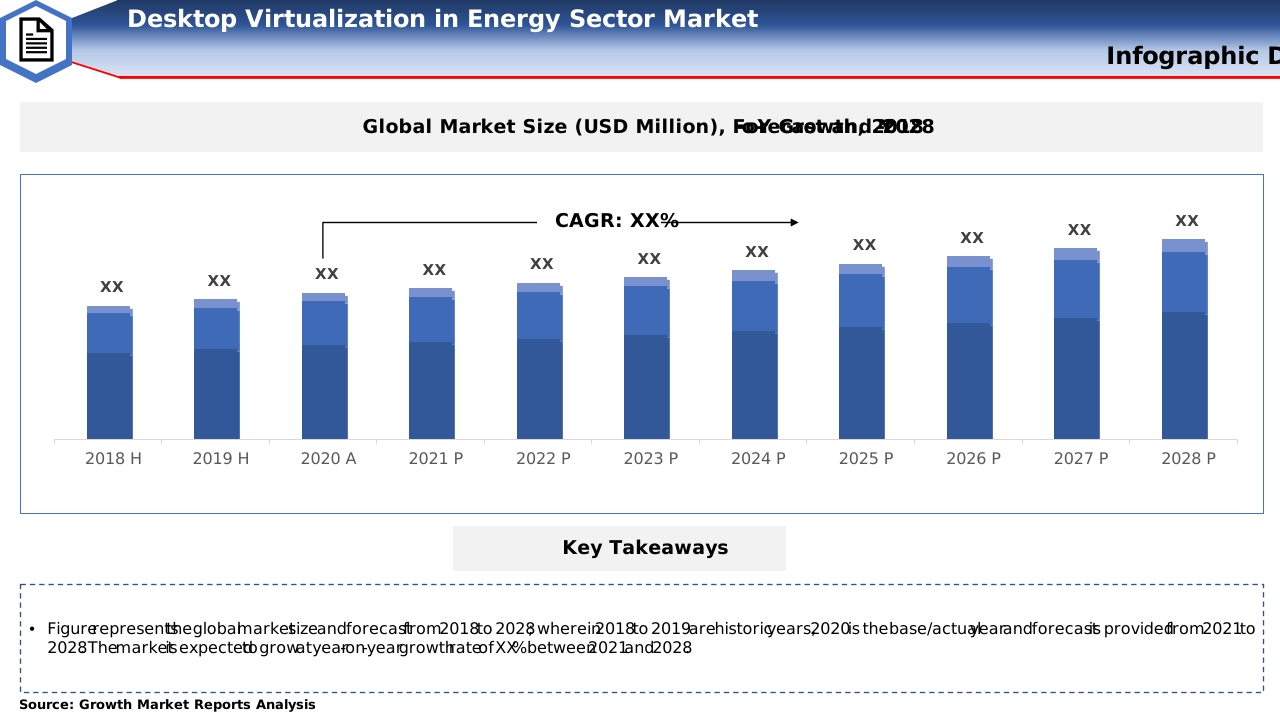
According to our latest research, the global desktop virtualization in energy sector market size reached USD 1.86 billion in 2024, reflecting a robust adoption trajectory across the energy industry. The market is expected to exhibit a CAGR of 13.2% from 2025 to 2033, reaching a forecasted value of approximately USD 5.68 billion by 2033. This strong growth is primarily driven by the sectorÂ’s increasing need for secure remote access, operational efficiency, and cost optimization amid digital transformation initiatives.
One of the primary growth factors for the desktop virtualization in energy sector market is the rising demand for secure and flexible IT infrastructures. Energy companies, especially those with geographically dispersed operations such as oil rigs, power plants, and remote mining sites, require robust solutions to provide seamless access to critical applications and data. Desktop virtualization enables centralized management, reducing IT overhead while enhancing security and compliance. The ability to rapidly deploy and scale virtual desktops supports dynamic workforce requirements, particularly during project expansions or crisis situations, such as natural disasters or cyber incidents. This flexibility is proving invaluable as the energy sector faces mounting pressure to modernize legacy systems and bolster cybersecurity defenses against increasingly sophisticated threats.
Another significant driver is the need for cost optimization and resource efficiency. The energy sector operates on tight margins and is continuously seeking ways to reduce operational expenses without compromising productivity or safety. Desktop virtualization solutions allow organizations to extend the lifecycle of endpoint devices, minimize hardware investments, and streamline software licensing and maintenance. By centralizing desktop management, IT teams can automate updates, patches, and security protocols, significantly reducing downtime and support costs. Furthermore, the pay-as-you-go models offered by cloud-based virtualization platforms provide energy companies with the financial agility to align IT expenditures with business needs, making it easier to scale up or down in response to market fluctuations or regulatory changes.
The ongoing digital transformation and integration of advanced technologies such as IoT, AI, and big data analytics are further accelerating the adoption of desktop virtualization in the energy sector. As energy companies leverage digital tools to optimize asset performance, monitor grid stability, and enhance predictive maintenance, the need for secure and reliable access to real-time data becomes paramount. Desktop virtualization enables seamless collaboration among geographically dispersed teams, supports remote monitoring and control, and ensures that employees and contractors can access mission-critical applications from any location. This capability is particularly crucial in the context of the global shift towards renewable energy, where distributed generation and decentralized operations are becoming the norm.
As the energy sector continues to embrace desktop virtualization, the role of Virtual Desktop Switcher tools is becoming increasingly significant. These tools allow users to seamlessly switch between multiple virtual desktops, enhancing productivity and user experience. In environments where energy professionals need to access different applications and datasets quickly, the ability to switch desktops without disruption is invaluable. This is particularly beneficial in scenarios where real-time data analysis and monitoring are critical, such as in control rooms or during field operations. By streamlining workflows and reducing the time spent navigating between tasks, Virtual Desktop Switcher tools contribute to greater operational efficiency and agility in the energy sector.
Regionally, North America and Europe are leading the adoption of desktop virtualization in the energy sector, driven by mature IT infrastructures, stringent regulatory requirements, and a high concentration of large energy enterprises. However, the Asia Pacific region is emerging as a significant growth market, fueled by rapid industrialization, increasing energy demand, and substantial investments in digital infrastructure. The Middle East & Africa and Latin America are also witnessing steady growth, supported by modernization initiatives in oil and gas, mining, and utility sectors. Each region presents unique opportunities and challenges, with local regulations, cybersecurity concerns, and workforce dynamics shaping the pace and scale of adoption.
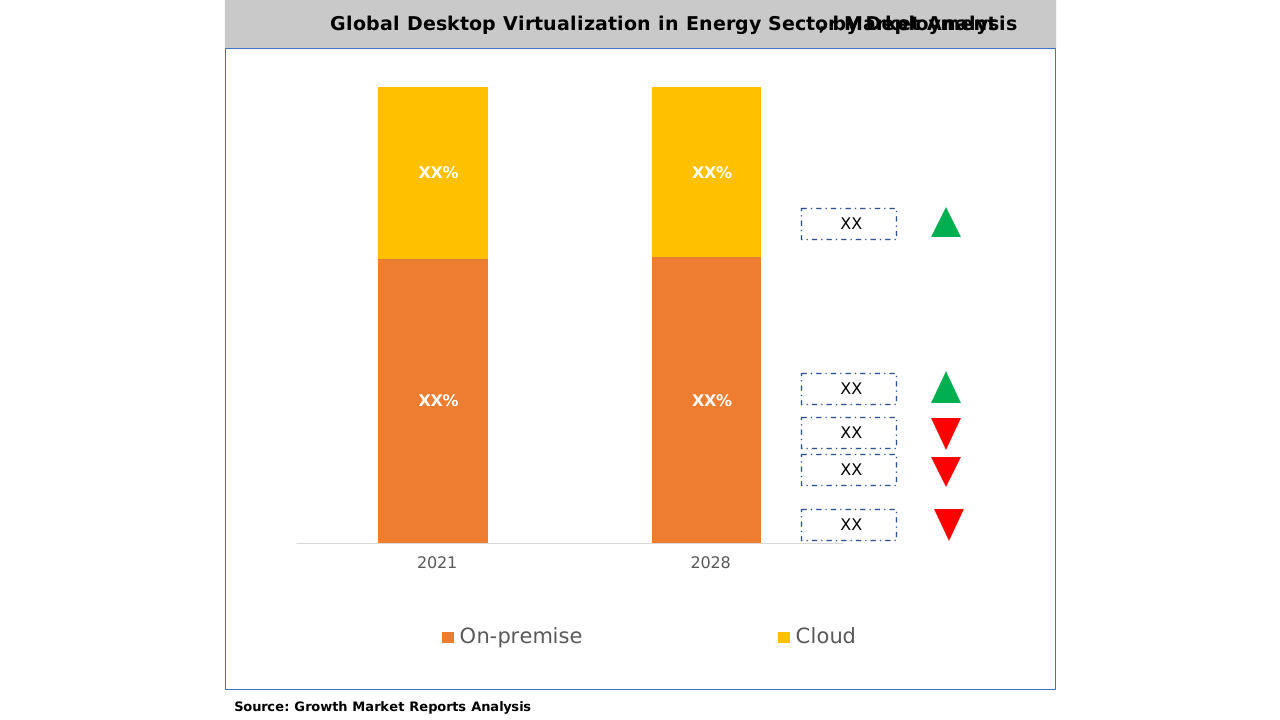
The deployment type segment of the desktop virtualization in energy sector market is categorized into On-Premises, Cloud-Based, and Hybrid solutions. On-premises deployment remains prevalent among large, established energy enterprises that prioritize complete control over their IT environments and have significant investments in legacy infrastructure. These organizations value the ability to customize and secure their virtual desktop environments according to stringent internal policies and regulatory mandates. However, the high upfront capital expenditure and ongoing maintenance requirements associated with on-premises solutions can be a barrier for smaller players or those seeking greater operational agility.
Cloud-based deployment, on the other hand, is gaining significant traction across the energy sector, particularly among organizations looking to capitalize on scalability, cost efficiency, and simplified IT management. Cloud-based desktop virtualization allows energy companies to quickly provision virtual desktops, support remote and mobile workforces, and respond dynamically to changing business requirements. The pay-as-you-go pricing models offered by cloud providers are especially attractive for small and medium enterprises (SMEs) and companies operating in volatile markets, as they enable better alignment of IT spending with operational needs. Additionally, cloud deployment reduces the burden on internal IT teams, allowing them to focus on strategic initiatives rather than routine maintenance.
Hybrid deployment models are increasingly being adopted as energy companies seek to balance the benefits of both on-premises and cloud-based solutions. Hybrid models enable organizations to maintain sensitive workloads and data on-premises for compliance or security reasons, while leveraging the cloud for less critical applications or to support remote operations. This approach offers greater flexibility, risk mitigation, and cost optimization, making it an ideal choice for energy companies with complex, distributed operations. The ability to seamlessly integrate on-premises and cloud environments also supports business continuity and disaster recovery initiatives, which are critical in the energy sector.
The choice of deployment model is influenced by several factors, including organizational size, regulatory environment, existing IT infrastructure, and the nature of business operations. Large enterprises with substantial legacy systems may prefer on-premises or hybrid models to ensure continuity and compliance, while newer or more agile players may opt for cloud-based solutions to accelerate digital transformation. As cloud security and compliance capabilities continue to mature, it is expected that the adoption of cloud-based and hybrid desktop virtualization solutions will continue to outpace on-premises deployments in the coming years.
Looking ahead, the deployment type landscape is expected to evolve in response to technological advancements, changing business models, and evolving regulatory requirements. Vendors are increasingly offering flexible deployment options, integration capabilities, and managed services to address the diverse needs of energy companies. As a result, energy sector organizations are well-positioned to leverage desktop virtualization to drive operational efficiency, enhance security, and support their broader digital transformation objectives.
| Attributes | Details |
| Report Title | Desktop Virtualization in Energy Sector Market Research Report 2033 |
| By Deployment Type | On-Premises, Cloud-Based, Hybrid |
| By Technology | Virtual Desktop Infrastructure, Desktop-as-a-Service, Remote Desktop Services, Application Virtualization |
| By Application | Oil & Gas, Power Generation, Renewable Energy, Utilities, Mining, Others |
| By Organization Size | Small and Medium Enterprises, Large Enterprises |
| By End-User | Upstream, Midstream, Downstream, Utilities, Others |
| Regions Covered | North America, Europe, APAC, Latin America, MEA |
| Base Year | 2024 |
| Historic Data | 2018-2023 |
| Forecast Period | 2025-2033 |
| Number of Pages | 268 |
| Number of Tables & Figures | 253 |
| Customization Available | Yes, the report can be customized as per your need. |
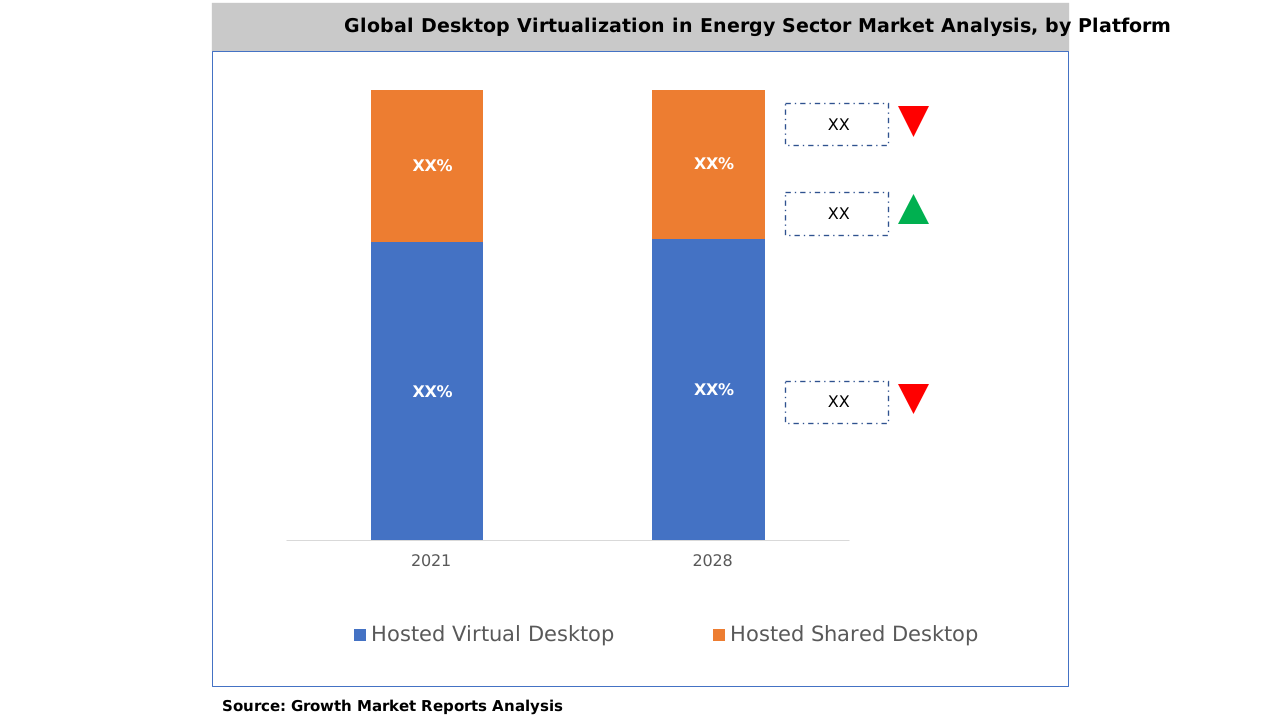
The technology segment of the desktop virtualization in energy sector market is defined by four primary categories: Virtual Desktop Infrastructure (VDI), Desktop-as-a-Service (DaaS), Remote Desktop Services (RDS), and Application Virtualization. Virtual Desktop Infrastructure (VDI) is widely adopted among large energy enterprises due to its ability to provide centralized management, robust security, and high-performance user experiences. VDI solutions are particularly well-suited for environments where data sensitivity and regulatory compliance are paramount, such as in upstream oil and gas operations or nuclear power generation. By hosting virtual desktops in centralized data centers, VDI enables IT teams to enforce strict access controls, monitor usage, and rapidly deploy updates or patches.
Desktop-as-a-Service (DaaS) is experiencing rapid growth in the energy sector, driven by the increasing demand for flexible, scalable, and cost-effective desktop virtualization solutions. DaaS allows energy companies to outsource the management of virtual desktops to third-party providers, reducing the burden on internal IT teams and enabling organizations to focus on core business activities. The subscription-based pricing model of DaaS is particularly attractive for SMEs and organizations with fluctuating workforce requirements, such as those involved in project-based work or seasonal operations. DaaS also supports rapid onboarding and offboarding of employees and contractors, enhancing workforce agility and reducing security risks associated with unmanaged endpoints.
Remote Desktop Services (RDS) remains a popular choice for energy companies seeking to provide remote access to legacy applications and systems. RDS enables users to connect to centralized servers and access desktop environments or specific applications from remote locations. This technology is particularly valuable in scenarios where bandwidth constraints, legacy application dependencies, or regulatory requirements limit the adoption of more advanced virtualization solutions. RDS offers a cost-effective and reliable solution for supporting remote operations, especially in regions with limited IT infrastructure or connectivity challenges.
Application virtualization is gaining momentum as energy companies seek to optimize software delivery, reduce compatibility issues, and enhance security. By decoupling applications from the underlying operating system, application virtualization enables organizations to deploy and manage software more efficiently, minimize conflicts, and ensure consistent user experiences across diverse devices and locations. This technology is particularly beneficial in environments with heterogeneous IT landscapes, such as those found in large utilities or multinational energy conglomerates. Application virtualization also supports rapid deployment of new tools and technologies, enabling energy companies to stay ahead of industry trends and regulatory changes.
The technology landscape for desktop virtualization in the energy sector is characterized by rapid innovation, increasing integration with cloud platforms, and growing emphasis on security and compliance. Vendors are continuously enhancing their offerings with advanced features such as AI-driven management, real-time analytics, and zero-trust security frameworks. As energy companies continue to digitize their operations and embrace new business models, the adoption of advanced desktop virtualization technologies is expected to accelerate, driving further growth and transformation across the sector.
The application segment of the desktop virtualization in energy sector market encompasses Oil & Gas, Power Generation, Renewable Energy, Utilities, Mining, and Others. The oil and gas industry represents a significant market for desktop virtualization, driven by the need for secure, remote access to mission-critical applications and data across upstream, midstream, and downstream operations. Virtualization enables seamless collaboration among geographically dispersed teams, supports real-time monitoring of assets, and enhances disaster recovery capabilities. The ability to centralize desktop management and enforce security protocols is particularly valuable in an industry that faces constant threats from cyberattacks and operational disruptions.
In the power generation sector, desktop virtualization is being leveraged to optimize grid management, support remote maintenance, and facilitate compliance with increasingly stringent regulatory requirements. Virtual desktops enable operators to access control systems, analytics platforms, and engineering tools from any location, improving operational efficiency and reducing response times during emergencies. The integration of virtualization with IoT and AI technologies is further enhancing predictive maintenance and asset optimization, enabling power generation companies to maximize uptime and reduce costs.
The renewable energy segment is experiencing rapid adoption of desktop virtualization solutions as companies seek to manage distributed generation assets, integrate with smart grids, and support remote monitoring and control. Virtualization enables renewable energy operators to centralize management of wind farms, solar installations, and energy storage systems, ensuring consistent performance and security across diverse locations. The ability to scale virtual desktop environments in response to changing demand is particularly valuable in a sector characterized by rapid growth and evolving business models.
Utilities and mining companies are also embracing desktop virtualization to support their digital transformation initiatives, enhance workforce mobility, and streamline IT operations. In the utilities sector, virtualization enables centralized management of customer service, billing, and outage management systems, improving service delivery and customer satisfaction. Mining companies are leveraging virtual desktops to support remote exploration, automate asset monitoring, and enhance safety and compliance. The ability to provide secure access to applications and data from remote or hazardous locations is a key driver of adoption in these industries.
Other applications, such as energy trading, regulatory compliance, and environmental monitoring, are also benefiting from desktop virtualization. The flexibility, scalability, and security offered by virtualization solutions are enabling energy companies to innovate, respond to changing market conditions, and maintain a competitive edge in an increasingly complex and dynamic industry landscape. As digital transformation accelerates across the energy sector, the application of desktop virtualization is expected to expand, driving further growth and value creation.
The organization size segment of the desktop virtualization in energy sector market is divided into Small and Medium Enterprises (SMEs) and Large Enterprises. Large enterprises, such as multinational oil and gas corporations, major utilities, and global mining companies, have been early adopters of desktop virtualization solutions. These organizations typically have complex IT environments, significant legacy infrastructure, and stringent security and compliance requirements. Desktop virtualization enables large enterprises to centralize desktop management, enhance security, and support a geographically dispersed workforce. The ability to rapidly scale virtual desktop environments in response to business needs is particularly valuable for large organizations with dynamic operations and global reach.
Small and medium enterprises (SMEs) are increasingly recognizing the benefits of desktop virtualization, particularly as cloud-based and managed service offerings become more accessible and affordable. For SMEs, desktop virtualization provides a cost-effective way to enhance IT security, improve operational efficiency, and support remote or mobile workforces. The ability to outsource desktop management to third-party providers allows SMEs to focus on core business activities while minimizing IT overhead. Cloud-based virtualization solutions, in particular, are enabling SMEs to compete more effectively with larger players by providing access to advanced technologies and flexible, scalable IT resources.
The adoption of desktop virtualization among SMEs is being driven by several factors, including the need to support remote work, comply with industry regulations, and protect against cyber threats. As SMEs in the energy sector increasingly participate in complex supply chains and collaborative projects, the ability to provide secure, reliable access to applications and data is becoming a critical success factor. Desktop virtualization also enables SMEs to quickly onboard new employees or contractors, support seasonal or project-based work, and respond to changing business requirements.
Despite the clear benefits, SMEs may face challenges related to limited IT resources, budget constraints, and a lack of in-house expertise. However, the growing availability of managed desktop virtualization services and cloud-based solutions is helping to address these barriers. Vendors are offering tailored solutions and support services designed to meet the unique needs of SMEs, further accelerating adoption across this segment. As digital transformation continues to reshape the energy sector, both large enterprises and SMEs are expected to increase their investment in desktop virtualization solutions.
Looking forward, the organization size landscape is expected to evolve as energy companies of all sizes seek to modernize their IT environments, enhance security, and support new ways of working. The convergence of cloud, AI, and cybersecurity technologies is enabling organizations to deploy more advanced and integrated desktop virtualization solutions, driving further growth and innovation across the market.
The end-user segment of the desktop virtualization in energy sector market includes Upstream, Midstream, Downstream, Utilities, and Others. Upstream operations, which encompass exploration, drilling, and production of oil and gas, require robust IT solutions to support remote and often hazardous environments. Desktop virtualization enables upstream operators to provide secure access to geospatial data, engineering applications, and real-time monitoring systems, facilitating collaboration among field teams, headquarters, and external partners. The ability to rapidly deploy and scale virtual desktops is particularly valuable in exploration projects, where workforce requirements can change quickly.
Midstream operations, focused on the transportation, storage, and distribution of energy resources, are leveraging desktop virtualization to optimize logistics, enhance asset management, and improve regulatory compliance. Virtual desktops enable midstream companies to centralize management of control systems, monitor pipeline integrity, and support remote operations. The integration of virtualization with IoT and analytics platforms is further enhancing operational visibility and risk management, enabling midstream operators to respond more effectively to incidents and market fluctuations.
Downstream operations, including refining, processing, and distribution of energy products, are adopting desktop virtualization to streamline supply chain management, support customer service, and enhance compliance with environmental and safety regulations. Virtual desktops enable downstream companies to centralize management of complex IT environments, ensure consistent application delivery, and support remote workforces. The ability to quickly onboard new employees or contractors, particularly during maintenance shutdowns or expansion projects, is a key driver of adoption in the downstream segment.
Utilities, which provide essential services such as electricity, water, and gas, are embracing desktop virtualization to modernize their IT environments, enhance customer service, and support digital transformation initiatives. Virtual desktops enable utilities to centralize management of customer information systems, outage management platforms, and billing applications, improving operational efficiency and service delivery. The integration of virtualization with smart grid technologies is further enabling utilities to optimize energy distribution, support demand response programs, and enhance grid resilience.
Other end-users, such as energy trading firms, regulatory agencies, and environmental organizations, are also adopting desktop virtualization to support their unique operational requirements. The flexibility, scalability, and security offered by virtualization solutions are enabling these organizations to innovate, comply with industry regulations, and respond to changing market dynamics. As the energy sector continues to evolve, the end-user landscape for desktop virtualization is expected to expand, driving further growth and value creation across the market.
The desktop virtualization in energy sector market presents significant opportunities for growth and innovation. One of the most promising opportunities lies in the integration of desktop virtualization with emerging technologies such as artificial intelligence, machine learning, and advanced analytics. By combining virtualization with AI-driven management and predictive analytics, energy companies can optimize asset performance, enhance cybersecurity, and improve decision-making. The ability to deliver real-time insights and automate routine tasks is enabling energy organizations to operate more efficiently, reduce costs, and respond more effectively to market and regulatory changes. Additionally, the growing adoption of cloud-based and hybrid virtualization solutions is opening new avenues for collaboration, workforce mobility, and business continuity.
Another key opportunity is the expansion of desktop virtualization into emerging markets and new application areas. As digital transformation accelerates across the global energy sector, organizations in regions such as Asia Pacific, Latin America, and the Middle East & Africa are increasingly investing in virtualization solutions to modernize their IT environments and support remote operations. The rise of distributed energy resources, smart grids, and renewable energy projects is further driving demand for flexible, scalable, and secure desktop virtualization solutions. Vendors that can offer tailored solutions, managed services, and integration capabilities are well-positioned to capture market share and drive innovation in these high-growth regions and segments.
Despite the significant opportunities, the desktop virtualization in energy sector market also faces several restraining factors. One of the primary challenges is the complexity of integrating virtualization solutions with legacy IT systems and operational technologies. Many energy companies operate in highly regulated environments with strict security and compliance requirements, making it difficult to adopt new technologies without disrupting critical operations. Additionally, concerns about data privacy, latency, and reliability can hinder the adoption of cloud-based and hybrid virtualization solutions, particularly in regions with limited connectivity or regulatory uncertainty. Addressing these challenges will require ongoing investment in technology, skills development, and collaboration between vendors, energy companies, and regulatory bodies.
North America remains the leading region in the desktop virtualization in energy sector market, accounting for approximately USD 680 million in 2024. The regionÂ’s dominance is driven by a high concentration of large energy enterprises, mature IT infrastructures, and stringent regulatory requirements related to cybersecurity and data protection. The United States and Canada are at the forefront of adoption, with major oil and gas companies, utilities, and renewable energy operators leveraging desktop virtualization to enhance operational efficiency, support remote workforces, and comply with industry standards. The region is also characterized by strong partnerships between energy companies, technology vendors, and research institutions, fostering innovation and driving market growth.
Europe is the second-largest market, with a value of approximately USD 510 million in 2024. The regionÂ’s growth is fueled by ongoing investments in digital transformation, the transition to renewable energy, and the need to comply with stringent data privacy and environmental regulations. Countries such as Germany, the United Kingdom, and Norway are leading the adoption of desktop virtualization, particularly in the power generation, utilities, and oil and gas sectors. The European market is also benefiting from strong government support for digitalization and sustainability initiatives, as well as a highly skilled workforce and advanced IT infrastructure. The region is expected to maintain a steady CAGR of around 12.5% through 2033, driven by continued innovation and regulatory compliance.
The Asia Pacific region is emerging as a high-growth market for desktop virtualization in the energy sector, with a value of USD 430 million in 2024. Rapid industrialization, increasing energy demand, and significant investments in digital infrastructure are driving adoption across the region. Countries such as China, India, Japan, and Australia are at the forefront, leveraging virtualization solutions to modernize their energy sectors, support remote operations, and enhance security. The region is also characterized by a diverse mix of energy companies, ranging from large state-owned enterprises to innovative startups, creating a dynamic and competitive market environment. Asia Pacific is expected to exhibit the highest CAGR of 14.8% over the forecast period, reflecting strong growth potential and increasing market maturity.
The competitive landscape of the desktop virtualization in energy sector market is characterized by a mix of global technology giants, specialized vendors, and emerging players. Leading companies are focusing on innovation, strategic partnerships, and the development of tailored solutions to address the unique needs of the energy sector. The market is highly dynamic, with vendors continuously enhancing their offerings with advanced features such as AI-driven management, real-time analytics, and zero-trust security frameworks. Competition is further intensified by the growing demand for cloud-based and hybrid solutions, as well as the need for integration with emerging technologies and legacy systems.
Major players in the market are investing heavily in research and development to stay ahead of industry trends and maintain a competitive edge. Strategic acquisitions, partnerships, and collaborations are common strategies employed to expand product portfolios, enhance service offerings, and enter new markets. Vendors are also focusing on providing comprehensive support services, including managed desktop virtualization, training, and consulting, to help energy companies navigate the complexities of digital transformation. The ability to offer flexible deployment options, seamless integration capabilities, and robust security features is increasingly becoming a key differentiator in the market.
The market is also witnessing the emergence of niche players and startups that are developing innovative solutions tailored to specific segments or applications within the energy sector. These companies are leveraging advanced technologies such as AI, machine learning, and IoT to deliver differentiated value propositions and address unmet needs. As the market continues to evolve, collaboration between established players and emerging innovators is expected to drive further growth and innovation, creating new opportunities for value creation and competitive advantage.
Some of the major companies operating in the desktop virtualization in energy sector market include VMware, Citrix Systems, Microsoft Corporation, Amazon Web Services (AWS), Nutanix, IBM Corporation, Oracle Corporation, Parallels, and Dell Technologies. VMware is a global leader in virtualization and cloud infrastructure solutions, offering a comprehensive portfolio of desktop virtualization products and services. Citrix Systems is renowned for its expertise in virtual desktop infrastructure and application delivery, serving a wide range of energy sector clients. Microsoft Corporation, with its Azure Virtual Desktop and Windows Virtual Desktop offerings, is a key player in the cloud-based virtualization space. Amazon Web Services (AWS) provides a robust suite of cloud-based desktop and application virtualization services, catering to the needs of energy companies worldwide.
Nutanix, IBM Corporation, and Oracle Corporation are also prominent players, offering integrated virtualization, cloud, and security solutions tailored to the energy sector. Parallels and Dell Technologies are recognized for their innovative virtualization technologies and strong focus on user experience and security. These companies are continuously enhancing their product portfolios, expanding their global reach, and investing in partnerships and collaborations to drive growth and innovation. The competitive landscape is expected to remain dynamic and highly competitive, with ongoing innovation, strategic investments, and evolving customer needs shaping the future of the desktop virtualization in energy sector market.
The Desktop Virtualization in Energy Sector market has been segmented on the basis of
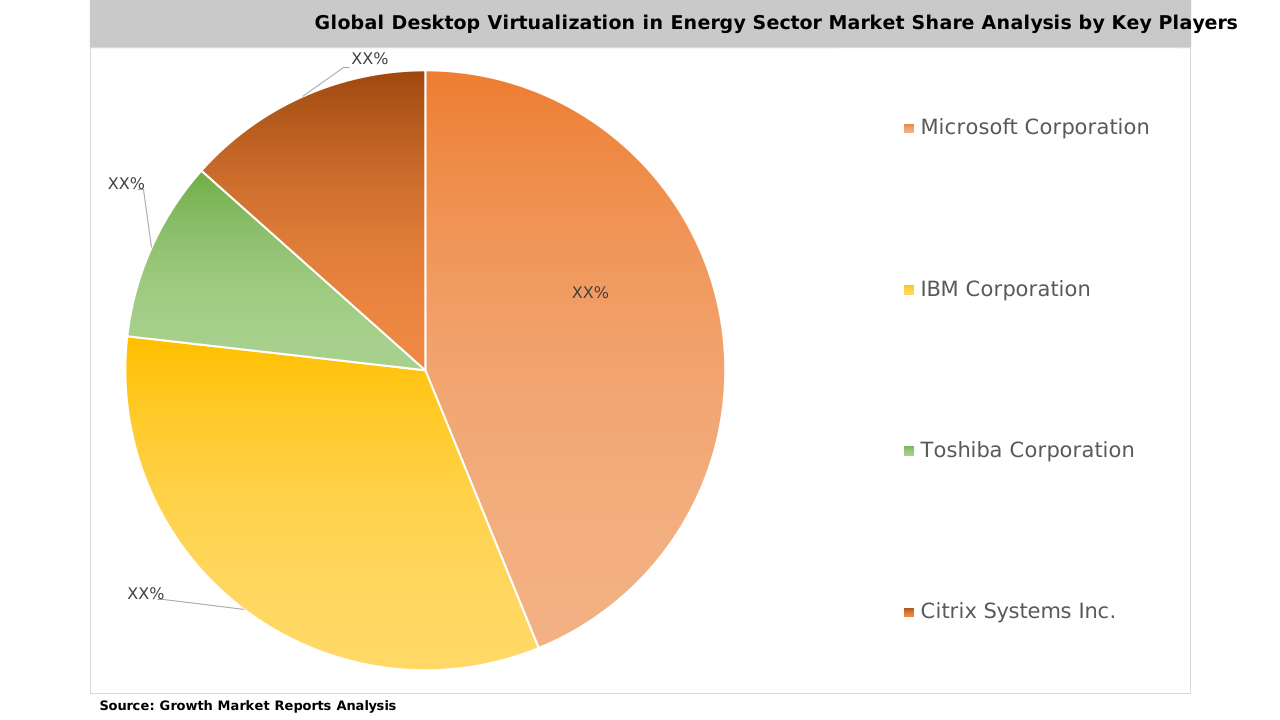
The major players in the desktop virtualization in energy sector market include Microsoft Corporation, IBM Corporation, Toshiba Corporation, and Citrix Systems Inc.
Some of these players are using several market strategies such as mergers, acquisitions, partnerships, collaborations, capacity expansion, and product launches to increase their market shares.
SMEs are increasingly adopting cloud-based and managed desktop virtualization solutions to enhance security, reduce IT overhead, and support remote workforces.
Challenges include integration with legacy systems, regulatory compliance, data privacy concerns, and connectivity limitations in some regions.
Key companies include Microsoft, Citrix, VMware, Amazon Web Services (AWS), IBM, Oracle, Dell Technologies, Nutanix, Parallels, and others.
It enables secure remote access, centralized management, real-time monitoring, disaster recovery, and supports digital transformation across these segments.
Common technologies include Virtual Desktop Infrastructure (VDI), Desktop-as-a-Service (DaaS), Remote Desktop Services (RDS), and Application Virtualization.
North America and Europe are leading, with Asia Pacific emerging as a high-growth market due to rapid industrialization and digital investment.
Deployment models include On-Premises, Cloud-Based, and Hybrid solutions, each catering to different organizational needs and regulatory requirements.
Key drivers include the need for secure remote access, operational efficiency, cost optimization, digital transformation, and enhanced cybersecurity.
The desktop virtualization in energy sector market is expected to grow at a CAGR of 13.2% from 2025 to 2033.
As of 2024, the global desktop virtualization in energy sector market size reached USD 1.86 billion, with strong growth expected through 2033.