Clavicle Plating System Market Research Report 2033

Clavicle Plating System Market Research Report 2033

Segments - by Product Type (Anatomical Plates, Reconstruction Plates, Locking Plates, Others), by Material (Stainless Steel, Titanium, Others), by Application (Midshaft Fractures, Distal Fractures, Medial Fractures, Others), by End-User (Hospitals, Ambulatory Surgical Centers, Specialty Clinics, Others)

https://growthmarketreports.com/raksha
Author : Raksha Sharma
https://growthmarketreports.com/Vaibhav
Fact-checked by : V. Chandola
https://growthmarketreports.com/Shruti
Editor : Shruti Bhat

Upcoming | Report ID :HC-211 | 4.2 Rating | 51 Reviews | 254 Pages | Format : Docx PDF

Report Description


Clavicle Plating System Market Outlook

According to our latest research, the global clavicle plating system market size reached USD 1.12 billion in 2024, demonstrating robust demand driven by advancements in orthopedic surgical procedures and growing trauma cases worldwide. The market is poised to expand at a CAGR of 6.7% from 2025 to 2033, with the forecasted market size projected to reach USD 2.17 billion by 2033. This strong growth trajectory is underpinned by the increasing prevalence of clavicle fractures, rising adoption of minimally invasive surgical techniques, and continuous innovations in plating system designs and materials.

The primary growth factor fueling the clavicle plating system market is the rising incidence of clavicle fractures, particularly among the aging population and individuals engaged in high-risk activities such as sports and manual labor. As the global population continues to age, the susceptibility to bone fragility and fracture risk escalates, thereby increasing the need for effective and reliable fixation systems. Furthermore, the expanding participation in sports and recreational activities, especially among younger demographics, has contributed to a surge in traumatic injuries, including clavicle fractures. This demographic trend, coupled with heightened awareness about the benefits of surgical interventions over conservative treatments, is propelling the demand for advanced clavicle plating systems.

Another significant driver of market growth is the technological innovation within the orthopedic device industry. Manufacturers are consistently developing anatomical, locking, and reconstruction plates tailored to specific fracture types and patient anatomies. These innovations have led to improved surgical outcomes, reduced complication rates, and faster patient recovery times. The integration of advanced materials such as titanium and bioresorbable composites has further enhanced the performance and biocompatibility of clavicle plating systems. Additionally, the emergence of minimally invasive surgical techniques, which offer reduced postoperative pain and shorter hospital stays, has increased the adoption of these systems by both surgeons and patients, thereby bolstering market growth.

Healthcare infrastructure improvements, particularly in emerging economies, are also contributing to the expansion of the clavicle plating system market. Governments and private sector entities are investing heavily in hospital and ambulatory surgical center development, thereby increasing access to advanced trauma care. The proliferation of specialty clinics focusing on orthopedic and trauma care is further facilitating the adoption of sophisticated plating systems. These trends are complemented by favorable reimbursement policies in developed regions, which encourage both patients and healthcare providers to opt for surgical fixation over conservative management. Collectively, these factors create a fertile environment for sustained market growth over the forecast period.

From a regional perspective, North America continues to dominate the global clavicle plating system market due to its advanced healthcare infrastructure, high incidence of trauma cases, and rapid adoption of innovative medical technologies. Europe follows closely, benefiting from a strong focus on orthopedic research and well-established reimbursement frameworks. Meanwhile, the Asia Pacific region is experiencing the fastest growth, driven by increasing healthcare investments, a burgeoning middle-class population, and rising awareness about advanced treatment options. Latin America and the Middle East & Africa are also witnessing steady growth, albeit at a slower pace, as healthcare access and infrastructure continue to improve. The dynamic interplay of these regional factors underscores the global nature of the market’s expansion.

Global Clavicle Plating System Industry Outlook

Product Type Analysis

The product type segment in the clavicle plating system market encompasses anatomical plates, reconstruction plates, locking plates, and other specialized designs. Anatomical plates have gained significant traction due to their contoured shape, which closely mimics the natural anatomy of the clavicle. This feature facilitates optimal fixation, reduces intraoperative bending, and enhances patient outcomes by promoting better bone healing and minimizing soft tissue irritation. The demand for anatomical plates is particularly strong in complex fracture cases where precision and stability are paramount. Manufacturers are focusing on expanding their anatomical plate portfolios to cater to diverse patient needs, further driving segment growth.

Reconstruction plates, characterized by their malleability and adaptability, continue to serve as a versatile option for surgeons dealing with multifragmentary and comminuted fractures. These plates can be manually contoured during surgery, allowing for customized fixation in challenging anatomical scenarios. Their widespread use in both acute trauma and revision surgeries underscores their importance in the market. However, the increasing preference for pre-contoured anatomical plates is gradually shifting market dynamics, with reconstruction plates retaining a stronghold in specific clinical situations where flexibility is crucial.

Locking plates have emerged as a game-changer in the clavicle plating system market due to their superior biomechanical stability and reduced risk of hardware failure. The fixed-angle construct provided by locking mechanisms ensures secure fixation even in osteoporotic bone, making them particularly valuable for elderly patients and those with compromised bone quality. Locking plates have demonstrated reduced rates of non-union and implant-related complications, leading to their widespread adoption in both primary and revision surgeries. The technological sophistication of locking plate systems, including variable-angle screw options and low-profile designs, continues to drive innovation and market growth within this segment.

Other specialized plates, such as hybrid plates and pediatric-specific designs, cater to niche patient populations and unique clinical scenarios. These products address the needs of patients with atypical fracture patterns or those requiring tailored fixation strategies, such as children and adolescents. The ongoing development of novel plating systems, including bioresorbable and antimicrobial-coated plates, reflects the industry’s commitment to addressing unmet clinical needs and reducing postoperative complications. As the orthopedic community continues to embrace evidence-based practices, the adoption of these advanced product types is expected to rise steadily, contributing to the overall expansion of the clavicle plating system market.

Report Scope

Attributes Details
Report Title Clavicle Plating System Market Research Report 2033
By Product Type Anatomical Plates, Reconstruction Plates, Locking Plates, Others
By Material Stainless Steel, Titanium, Others
By Application Midshaft Fractures, Distal Fractures, Medial Fractures, Others
By End-User Hospitals, Ambulatory Surgical Centers, Specialty Clinics, Others
Regions Covered North America, Europe, APAC, Latin America, MEA
Base Year 2024
Historic Data 2018-2023
Forecast Period 2025-2033
Number of Pages 254
Number of Tables & Figures 400
Customization Available Yes, the report can be customized as per your need.

Material Analysis

The material segment of the clavicle plating system market is dominated by stainless steel and titanium, with each material offering distinct advantages in terms of strength, biocompatibility, and clinical performance. Stainless steel has long been the material of choice due to its affordability, corrosion resistance, and mechanical strength. It remains a popular option in cost-sensitive markets and for use in temporary fixation devices. However, concerns about long-term biocompatibility and the potential for allergic reactions have spurred the development of alternative materials, prompting a gradual shift toward titanium-based systems.

Titanium has rapidly gained favor among surgeons and patients alike, owing to its superior biocompatibility, lighter weight, and reduced risk of allergic reactions. The material’s excellent corrosion resistance and ability to promote bone integration make it particularly well-suited for long-term implantation. Titanium plates are also associated with lower rates of implant failure and reduced imaging artifacts during postoperative assessments. As a result, this segment is experiencing robust growth, especially in developed regions where patient safety and clinical outcomes are prioritized. Manufacturers are investing heavily in research and development to optimize titanium plate designs, further solidifying the material’s position in the market.

In recent years, the emergence of next-generation materials such as bioresorbable polymers and composite alloys has expanded the landscape of the clavicle plating system market. Bioresorbable plates offer the advantage of gradual degradation within the body, eliminating the need for secondary removal surgeries and reducing the risk of long-term complications. These materials are particularly attractive for pediatric patients and cases where temporary fixation is desirable. Composite alloys, which combine the strengths of multiple materials, are also being explored for their potential to enhance implant performance and patient outcomes. While these innovative materials currently occupy a niche segment, ongoing research and clinical validation are expected to drive their adoption in the coming years.

Other materials, including cobalt-chromium alloys and antimicrobial-coated metals, are being developed to address specific clinical challenges such as infection prevention and enhanced mechanical strength. The integration of antimicrobial coatings, for example, aims to reduce the risk of postoperative infections, a significant concern in orthopedic surgeries. As regulatory agencies continue to emphasize patient safety and product efficacy, the adoption of these advanced materials is likely to increase, further diversifying the material segment of the clavicle plating system market. The interplay between material innovation and clinical demand will remain a key driver of market evolution throughout the forecast period.

Application Analysis

The application segment of the clavicle plating system market is categorized into midshaft fractures, distal fractures, medial fractures, and other specialized indications. Midshaft fractures represent the largest application segment, accounting for a significant share of global procedures. These fractures are the most common type of clavicle injury, often resulting from direct trauma or falls. The complexity of midshaft fractures, which can range from simple transverse breaks to highly comminuted patterns, necessitates the use of advanced plating systems for optimal fixation. Surgeons increasingly prefer anatomical and locking plates for these cases, given their ability to provide stable fixation and promote rapid bone healing.

Distal fractures, which occur near the lateral end of the clavicle, pose unique surgical challenges due to the proximity of critical ligaments and the acromioclavicular joint. Specialized plating systems with low-profile designs and variable-angle screw options are often employed to address these complexities. The growing incidence of distal fractures, particularly among older adults and athletes, has driven demand for innovative plating solutions tailored to this anatomical region. Clinical studies highlighting improved outcomes with surgical fixation over conservative management have further bolstered the adoption of clavicle plating systems in distal fracture cases.

Medial fractures, although less common, require meticulous surgical planning and specialized implants due to the proximity of vital neurovascular structures. The management of medial fractures often involves the use of reconstruction or hybrid plates that can be contoured to fit the unique anatomy of the medial clavicle. Advances in imaging and surgical navigation technologies have facilitated more precise fixation in these challenging cases, contributing to improved patient outcomes. As awareness of surgical options grows among both patients and healthcare providers, the demand for clavicle plating systems in medial fracture applications is expected to rise steadily.

Other applications of clavicle plating systems include the management of non-unions, malunions, and complex multi-fragmentary fractures. These cases often require customized fixation strategies and the use of specialized implants such as hybrid or bioresorbable plates. The increasing prevalence of revision surgeries and the need for secondary fixation in cases of implant failure or delayed healing have further expanded the scope of the application segment. As the orthopedic community continues to refine surgical techniques and develop evidence-based treatment protocols, the adoption of clavicle plating systems across a diverse range of clinical scenarios is anticipated to grow, driving overall market expansion.

End-User Analysis

The end-user segment of the clavicle plating system market is dominated by hospitals, which account for the majority of surgical procedures worldwide. Hospitals are equipped with advanced surgical infrastructure, skilled orthopedic surgeons, and comprehensive postoperative care facilities, making them the preferred setting for both routine and complex clavicle fixation surgeries. The high volume of trauma cases managed in hospital settings, coupled with the availability of multidisciplinary care teams, ensures optimal patient outcomes and drives consistent demand for clavicle plating systems. Hospitals in developed regions, in particular, are at the forefront of adopting innovative plating technologies and materials, further consolidating their position as the primary end-users in the market.

Ambulatory surgical centers (ASCs) have emerged as a rapidly growing segment within the clavicle plating system market, driven by the increasing preference for minimally invasive procedures and outpatient care. ASCs offer several advantages, including reduced healthcare costs, shorter patient wait times, and faster recovery periods. The adoption of advanced plating systems in these settings has been facilitated by improvements in surgical techniques and anesthesia protocols, enabling safe and effective management of clavicle fractures outside the traditional hospital environment. As healthcare systems worldwide shift toward value-based care models, the role of ASCs in delivering high-quality orthopedic services is expected to expand significantly.

Specialty clinics, focusing exclusively on orthopedic and trauma care, represent another important end-user segment. These clinics are often equipped with state-of-the-art diagnostic and surgical equipment, enabling them to deliver specialized care for clavicle fractures and other musculoskeletal injuries. The personalized approach offered by specialty clinics, combined with their ability to provide targeted rehabilitation services, has made them increasingly popular among patients seeking comprehensive and efficient treatment. The growth of specialty clinics is particularly notable in urban centers and regions with high rates of sports-related injuries.

Other end-users, including academic medical centers and military hospitals, contribute to the diverse landscape of the clavicle plating system market. These institutions play a critical role in advancing orthopedic research, training the next generation of surgeons, and managing complex trauma cases. The adoption of cutting-edge plating systems in these settings not only enhances patient care but also drives innovation and clinical validation of new products. As the demand for high-quality orthopedic care continues to rise globally, the contribution of various end-user segments to market growth is expected to remain substantial.

Opportunities & Threats

The clavicle plating system market presents a wealth of opportunities for manufacturers, healthcare providers, and investors. One of the most promising avenues is the ongoing development of next-generation plating systems that incorporate advanced materials, such as bioresorbable polymers and antimicrobial coatings. These innovations have the potential to reduce postoperative complications, enhance patient safety, and eliminate the need for secondary removal surgeries. Additionally, the increasing adoption of minimally invasive surgical techniques creates opportunities for companies to develop specialized plating systems optimized for smaller incisions and reduced tissue disruption. The growing focus on personalized medicine and patient-specific implants further expands the market’s potential, as manufacturers leverage 3D printing and digital modeling technologies to create customized solutions tailored to individual patient anatomies.

Expanding access to orthopedic care in emerging markets presents another significant opportunity for market growth. As healthcare infrastructure improves and disposable incomes rise in regions such as Asia Pacific and Latin America, the demand for advanced surgical interventions is expected to increase substantially. Government initiatives aimed at expanding trauma care services and enhancing healthcare reimbursement policies will further facilitate market penetration. Strategic collaborations between global manufacturers and local healthcare providers can accelerate the adoption of clavicle plating systems in these high-growth regions. Additionally, the increasing prevalence of sports injuries and road traffic accidents worldwide underscores the need for effective and reliable fixation systems, creating a sustained demand for innovative products.

Despite these opportunities, the clavicle plating system market faces several restraining factors that could hinder its growth trajectory. One of the primary challenges is the high cost associated with advanced plating systems, which may limit their adoption in cost-sensitive markets and among uninsured patient populations. Reimbursement issues and stringent regulatory requirements for product approval can also delay market entry and increase development costs for manufacturers. Furthermore, the risk of postoperative complications, such as infection, hardware failure, and non-union, remains a concern for both surgeons and patients. Addressing these challenges through continuous product innovation, robust clinical evidence, and effective stakeholder engagement will be critical to sustaining market growth in the years ahead.

Regional Outlook

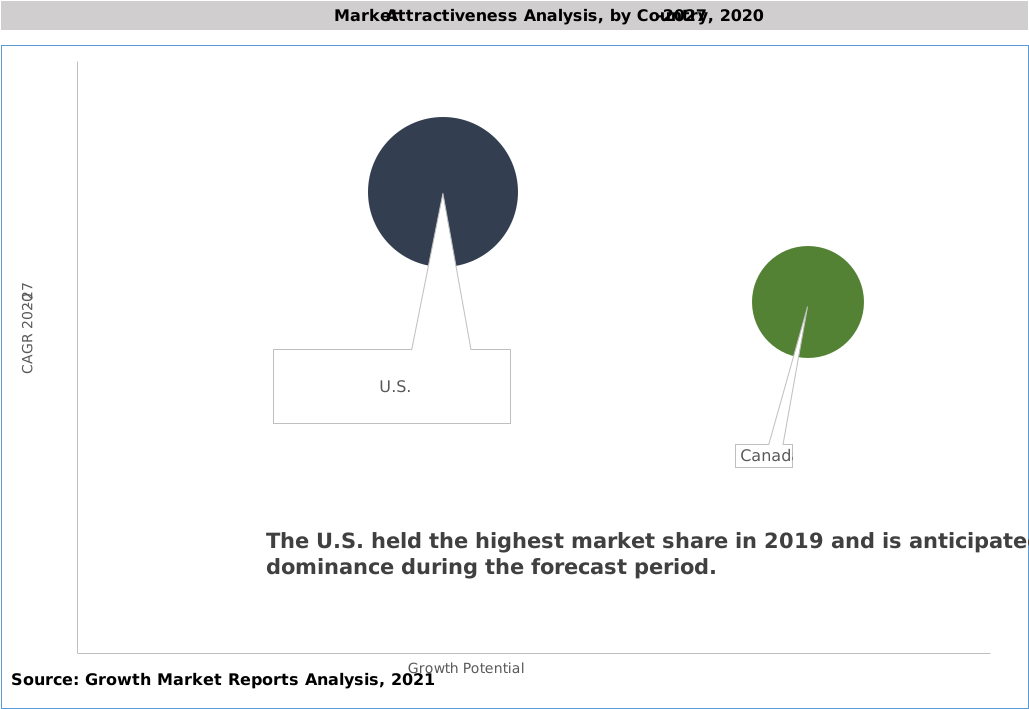
North America remains the leading region in the clavicle plating system market, with a market size estimated at USD 410 million in 2024. The region’s dominance is attributed to its advanced healthcare infrastructure, high incidence of trauma and sports-related injuries, and rapid adoption of innovative medical technologies. The United States accounts for the largest share, supported by a well-established reimbursement framework and a strong focus on orthopedic research and development. Canada also contributes significantly to regional growth, with increasing investments in trauma care and orthopedic services. The North American market is expected to maintain a steady CAGR of 5.9% through 2033, driven by ongoing technological advancements and rising healthcare expenditures.

Europe holds the second-largest share of the global clavicle plating system market, with a market size of approximately USD 318 million in 2024. The region benefits from a robust network of orthopedic centers, comprehensive trauma care services, and favorable reimbursement policies. Countries such as Germany, France, and the United Kingdom are at the forefront of adopting advanced plating systems and minimally invasive surgical techniques. The European market is characterized by a strong emphasis on patient safety, regulatory compliance, and clinical outcomes, which drives demand for high-quality implants and materials. The region is projected to experience moderate growth over the forecast period, supported by ongoing investments in healthcare infrastructure and an aging population.

The Asia Pacific region is emerging as the fastest-growing market for clavicle plating systems, with a market size of USD 255 million in 2024 and an anticipated CAGR of 8.2% through 2033. Rapid urbanization, increasing healthcare investments, and a growing middle-class population are key factors driving regional growth. China, India, and Japan are leading markets within the region, supported by expanding hospital networks and rising awareness about advanced orthopedic treatments. Government initiatives aimed at improving trauma care and increasing access to surgical services are further accelerating market expansion. As healthcare infrastructure continues to evolve, the Asia Pacific region is expected to play an increasingly important role in the global clavicle plating system market.

Clavicle Plating System Market Statistics

Competitor Outlook

The clavicle plating system market is characterized by intense competition among a diverse array of global and regional players. Leading companies are focused on continuous product innovation, strategic partnerships, and geographic expansion to maintain their competitive edge. The market is marked by a high degree of technological sophistication, with manufacturers investing heavily in research and development to introduce next-generation plating systems that offer enhanced biomechanical stability, improved biocompatibility, and reduced complication rates. The competitive landscape is further shaped by the increasing adoption of minimally invasive surgical techniques, which has prompted companies to develop specialized implants and instrumentation tailored to these procedures.

In addition to product innovation, companies are leveraging mergers and acquisitions to expand their product portfolios and strengthen their market presence. Strategic collaborations with healthcare providers, academic institutions, and research organizations are enabling manufacturers to accelerate the development and commercialization of advanced plating systems. The emphasis on evidence-based medicine and clinical validation has led to the proliferation of clinical trials and post-market surveillance studies, which play a critical role in building surgeon and patient confidence in new products. As regulatory requirements become more stringent, companies are investing in robust quality management systems and regulatory compliance initiatives to ensure product safety and efficacy.

The competitive dynamics of the clavicle plating system market are also influenced by the growing importance of emerging markets, where rising healthcare expenditures and expanding access to orthopedic care present significant growth opportunities. Leading companies are establishing local manufacturing facilities, distribution networks, and training programs to cater to the unique needs of these regions. The ability to offer cost-effective solutions without compromising on quality is a key differentiator in cost-sensitive markets. Furthermore, the increasing focus on patient-centric care and personalized medicine is driving the development of customized plating systems and digital surgical planning tools, further intensifying competition among market participants.

Major players in the global clavicle plating system market include DePuy Synthes (Johnson & Johnson), Stryker Corporation, Zimmer Biomet Holdings, Smith & Nephew plc, and Acumed LLC. DePuy Synthes is renowned for its comprehensive portfolio of anatomical and locking plate systems, as well as its commitment to clinical research and surgeon education. Stryker Corporation has established itself as a leader in orthopedic innovation, with a strong focus on minimally invasive plating solutions and advanced biomaterials. Zimmer Biomet Holdings offers a diverse range of plating systems designed to address a wide spectrum of fracture types and patient anatomies. Smith & Nephew plc is recognized for its expertise in trauma care and its robust global distribution network, while Acumed LLC specializes in the development of anatomically contoured plating systems and patient-specific implants.

Other notable companies in the market include Medtronic plc, Orthofix Medical Inc., B. Braun Melsungen AG, and Arthrex Inc., each of which brings unique strengths in product development, manufacturing, and clinical support. These companies are actively engaged in expanding their global footprint through strategic acquisitions, partnerships, and product launches. The competitive landscape is further enriched by the presence of regional players and emerging startups, which contribute to market dynamism through niche product offerings and innovative technologies. As the demand for advanced clavicle plating systems continues to grow, the competitive intensity within the market is expected to increase, driving further innovation and value creation for patients and healthcare providers alike.

Key Players

  • DePuy Synthes
  • Stryker Corporation
  • Zimmer Biomet
  • Smith & Nephew
  • Acumed LLC
  • Medtronic plc
  • B. Braun Melsungen AG
  • Orthofix Medical Inc.
  • Arthrex Inc.
  • CONMED Corporation
  • Tornier N.V.
  • Integra LifeSciences
  • Wright Medical Group N.V.
  • OsteoMed
  • Aesculap Implant Systems
  • Double Medical Technology Inc.
  • Medartis AG
  • KLS Martin Group
  • Xtant Medical Holdings
  • Advanced Orthopaedic Solutions
Clavicle Plating System Market Overview

Segments

The Clavicle Plating System market has been segmented on the basis of

Product Type

  • Anatomical Plates
  • Reconstruction Plates
  • Locking Plates
  • Others

Material

  • Stainless Steel
  • Titanium
  • Others

Application

  • Midshaft Fractures
  • Distal Fractures
  • Medial Fractures
  • Others

End-User

  • Hospitals
  • Ambulatory Surgical Centers
  • Specialty Clinics
  • Others

Competitive Landscape

Key players in the market include Stryker, Zimmer Biomet, ITS, and DePuy Synthes. These companies are considered as key manufacturers of clavicle plating system based on their revenue, regional presence, research & development (R&D) activities, and supply chain management system. These players are adopting key strategies such as acquisition, merger, and geographical expansion to strengthen their market position.

  • In June 2019, Acumed LLC purchased a device from Radicle Orthopaedics called the Reduction and Association of the Scaphoid and Lunate (RASL) system. This system includes wrist plating options and headless compression screw.
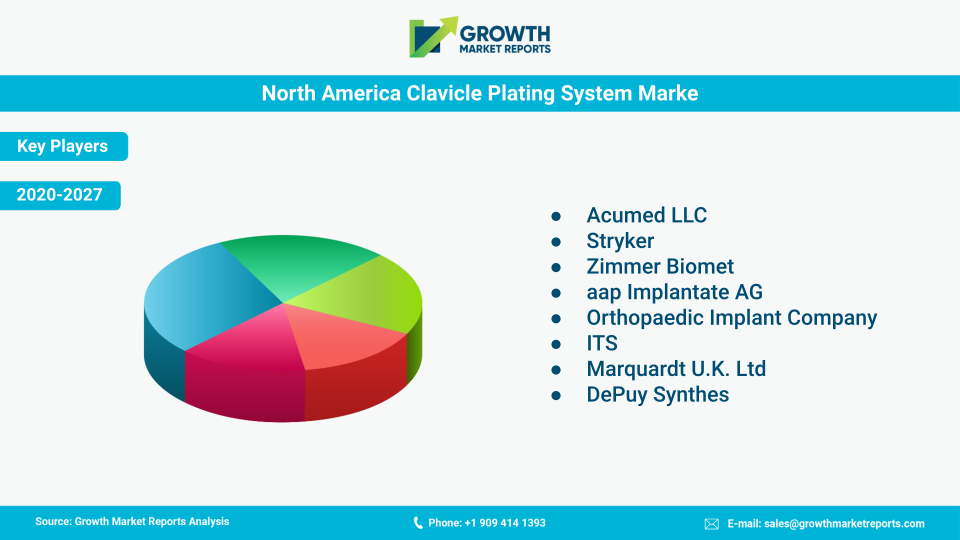

North America Clavicle Plating System Market Key Players

Frequently Asked Questions

Additional company profiles can be provided on request.

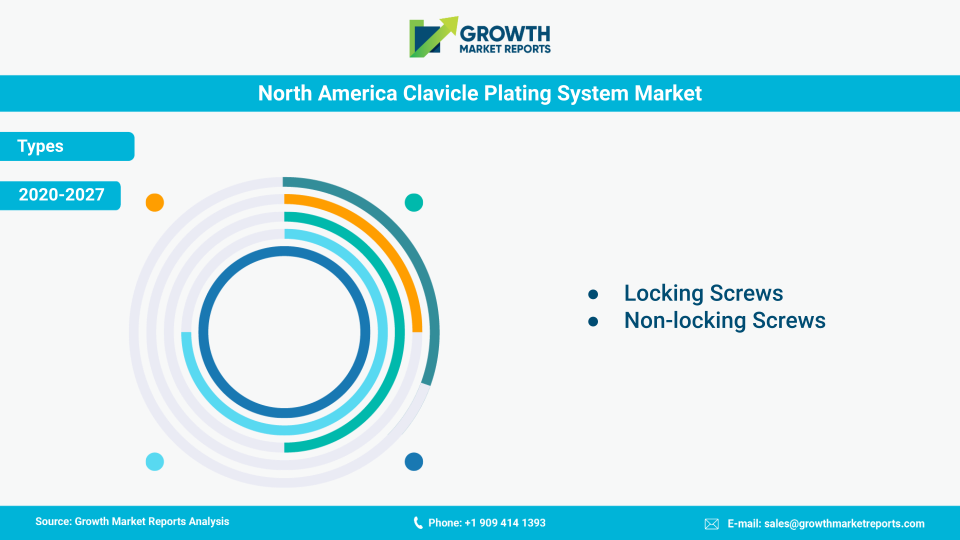
Yes, the report covers product specific information such as locking screws and non-locking screws.

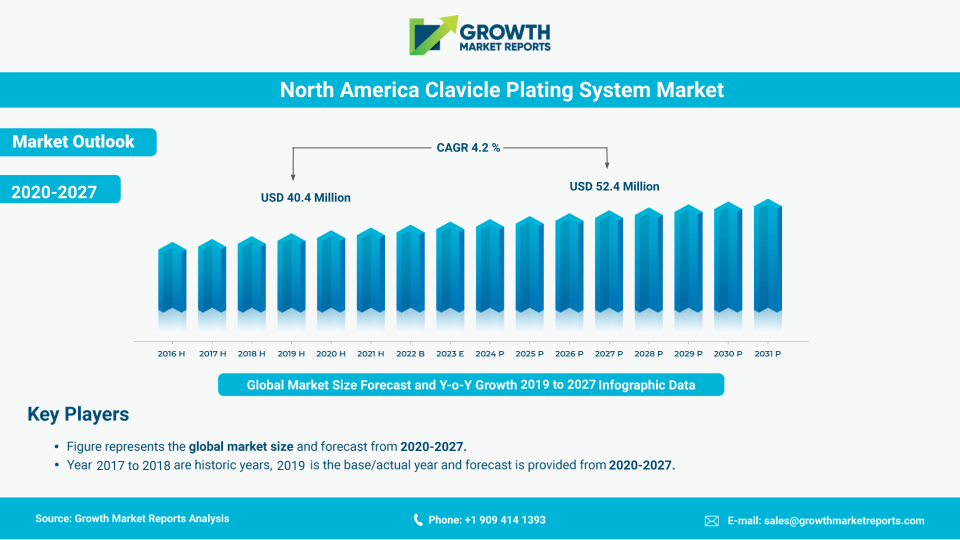
According to the Growth Market Reports, the North America clavicle plating system market is likely to register a CAGR of 4.2% during forecast period 2020-2027, with an anticipated valuation of USD 52.4 million by the end of the 2027.

The report provides company market share analysis and volume data.

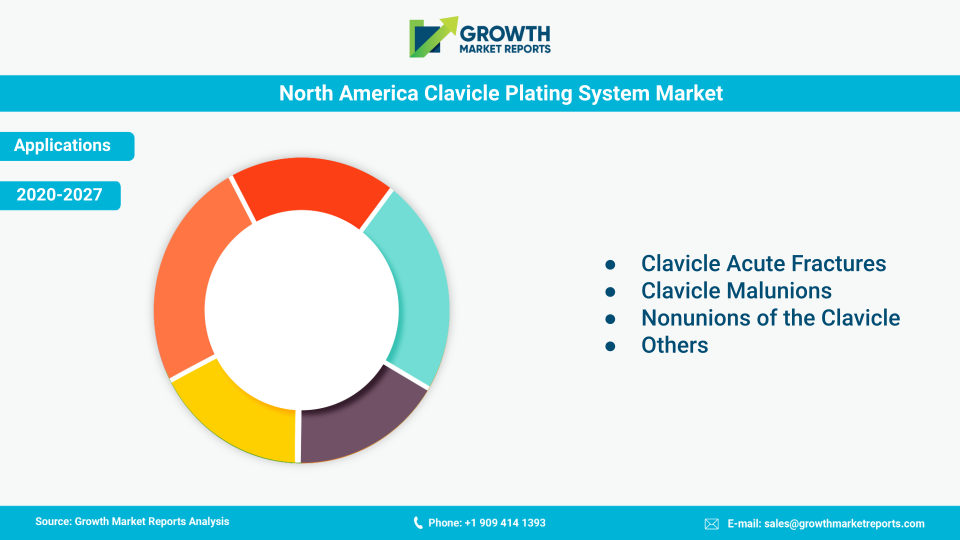
Increasing road accidents & sports injuries, strong presence of market players, and high prevalence of clavicle acute fractures in this region are expected to drive the market growth in North America.

Factors such as competitive strength and market positioning are key areas considered while selecting top companies to be profiled.

The market is expected to witness slow growth between 2019 and 2020 owing to the slight negative impact of COVID-19 pandemic on the clavicle plating system market.

The base year considered for the North America clavicle plating system market report is 2019. The complete analysis period is 2017 to 2027, wherein, 2017 & 2018 are the historic years and the forecast is provided from 2020 to 2027.

Hospitals and ambulatory surgical centers are the key end-users driving the market growth.

The major manufactures include Stryker, Zimmer Biomet, ITS, and DePuy Synthes.

Table Of Content

Chapter 1 Executive Summary
Chapter 2 Assumptions and Acronyms Used
Chapter 3 Research Methodology
Chapter 4 Clavicle Plating System Market Overview
   4.1 Introduction
      4.1.1 Market Taxonomy
      4.1.2 Market Definition
      4.1.3 Macro-Economic Factors Impacting the Market Growth
   4.2 Clavicle Plating System Market Dynamics
      4.2.1 Market Drivers
      4.2.2 Market Restraints
      4.2.3 Market Opportunity
   4.3 Clavicle Plating System Market - Supply Chain Analysis
      4.3.1 List of Key Suppliers
      4.3.2 List of Key Distributors
      4.3.3 List of Key Consumers
   4.4 Key Forces Shaping the Clavicle Plating System Market
      4.4.1 Bargaining Power of Suppliers
      4.4.2 Bargaining Power of Buyers
      4.4.3 Threat of Substitution
      4.4.4 Threat of New Entrants
      4.4.5 Competitive Rivalry
   4.5 Global Clavicle Plating System Market Size & Forecast, 2023-2032
      4.5.1 Clavicle Plating System Market Size and Y-o-Y Growth
      4.5.2 Clavicle Plating System Market Absolute $ Opportunity

Chapter 5 Global Clavicle Plating System Market Analysis and Forecast By Product Type
   5.1 Introduction
      5.1.1 Key Market Trends & Growth Opportunities By Product Type
      5.1.2 Basis Point Share (BPS) Analysis By Product Type
      5.1.3 Absolute $ Opportunity Assessment By Product Type
   5.2 Clavicle Plating System Market Size Forecast By Product Type
      5.2.1 Anatomical Plates
      5.2.2 Reconstruction Plates
      5.2.3 Locking Plates
      5.2.4 Others
   5.3 Market Attractiveness Analysis By Product Type

Chapter 6 Global Clavicle Plating System Market Analysis and Forecast By Material
   6.1 Introduction
      6.1.1 Key Market Trends & Growth Opportunities By Material
      6.1.2 Basis Point Share (BPS) Analysis By Material
      6.1.3 Absolute $ Opportunity Assessment By Material
   6.2 Clavicle Plating System Market Size Forecast By Material
      6.2.1 Stainless Steel
      6.2.2 Titanium
      6.2.3 Others
   6.3 Market Attractiveness Analysis By Material

Chapter 7 Global Clavicle Plating System Market Analysis and Forecast By Application
   7.1 Introduction
      7.1.1 Key Market Trends & Growth Opportunities By Application
      7.1.2 Basis Point Share (BPS) Analysis By Application
      7.1.3 Absolute $ Opportunity Assessment By Application
   7.2 Clavicle Plating System Market Size Forecast By Application
      7.2.1 Midshaft Fractures
      7.2.2 Distal Fractures
      7.2.3 Medial Fractures
      7.2.4 Others
   7.3 Market Attractiveness Analysis By Application

Chapter 8 Global Clavicle Plating System Market Analysis and Forecast By End-User
   8.1 Introduction
      8.1.1 Key Market Trends & Growth Opportunities By End-User
      8.1.2 Basis Point Share (BPS) Analysis By End-User
      8.1.3 Absolute $ Opportunity Assessment By End-User
   8.2 Clavicle Plating System Market Size Forecast By End-User
      8.2.1 Hospitals
      8.2.2 Ambulatory Surgical Centers
      8.2.3 Specialty Clinics
      8.2.4 Others
   8.3 Market Attractiveness Analysis By End-User

Chapter 9 Global Clavicle Plating System Market Analysis and Forecast by Region
   9.1 Introduction
      9.1.1 Key Market Trends & Growth Opportunities By Region
      9.1.2 Basis Point Share (BPS) Analysis By Region
      9.1.3 Absolute $ Opportunity Assessment By Region
   9.2 Clavicle Plating System Market Size Forecast By Region
      9.2.1 North America
      9.2.2 Europe
      9.2.3 Asia Pacific
      9.2.4 Latin America
      9.2.5 Middle East & Africa (MEA)
   9.3 Market Attractiveness Analysis By Region

Chapter 10 Coronavirus Disease (COVID-19) Impact 
   10.1 Introduction 
   10.2 Current & Future Impact Analysis 
   10.3 Economic Impact Analysis 
   10.4 Government Policies 
   10.5 Investment Scenario

Chapter 11 North America Clavicle Plating System Analysis and Forecast
   11.1 Introduction
   11.2 North America Clavicle Plating System Market Size Forecast by Country
      11.2.1 U.S.
      11.2.2 Canada
   11.3 Basis Point Share (BPS) Analysis by Country
   11.4 Absolute $ Opportunity Assessment by Country
   11.5 Market Attractiveness Analysis by Country
   11.6 North America Clavicle Plating System Market Size Forecast By Product Type
      11.6.1 Anatomical Plates
      11.6.2 Reconstruction Plates
      11.6.3 Locking Plates
      11.6.4 Others
   11.7 Basis Point Share (BPS) Analysis By Product Type 
   11.8 Absolute $ Opportunity Assessment By Product Type 
   11.9 Market Attractiveness Analysis By Product Type
   11.10 North America Clavicle Plating System Market Size Forecast By Material
      11.10.1 Stainless Steel
      11.10.2 Titanium
      11.10.3 Others
   11.11 Basis Point Share (BPS) Analysis By Material 
   11.12 Absolute $ Opportunity Assessment By Material 
   11.13 Market Attractiveness Analysis By Material
   11.14 North America Clavicle Plating System Market Size Forecast By Application
      11.14.1 Midshaft Fractures
      11.14.2 Distal Fractures
      11.14.3 Medial Fractures
      11.14.4 Others
   11.15 Basis Point Share (BPS) Analysis By Application 
   11.16 Absolute $ Opportunity Assessment By Application 
   11.17 Market Attractiveness Analysis By Application
   11.18 North America Clavicle Plating System Market Size Forecast By End-User
      11.18.1 Hospitals
      11.18.2 Ambulatory Surgical Centers
      11.18.3 Specialty Clinics
      11.18.4 Others
   11.19 Basis Point Share (BPS) Analysis By End-User 
   11.20 Absolute $ Opportunity Assessment By End-User 
   11.21 Market Attractiveness Analysis By End-User

Chapter 12 Europe Clavicle Plating System Analysis and Forecast
   12.1 Introduction
   12.2 Europe Clavicle Plating System Market Size Forecast by Country
      12.2.1 Germany
      12.2.2 France
      12.2.3 Italy
      12.2.4 U.K.
      12.2.5 Spain
      12.2.6 Russia
      12.2.7 Rest of Europe
   12.3 Basis Point Share (BPS) Analysis by Country
   12.4 Absolute $ Opportunity Assessment by Country
   12.5 Market Attractiveness Analysis by Country
   12.6 Europe Clavicle Plating System Market Size Forecast By Product Type
      12.6.1 Anatomical Plates
      12.6.2 Reconstruction Plates
      12.6.3 Locking Plates
      12.6.4 Others
   12.7 Basis Point Share (BPS) Analysis By Product Type 
   12.8 Absolute $ Opportunity Assessment By Product Type 
   12.9 Market Attractiveness Analysis By Product Type
   12.10 Europe Clavicle Plating System Market Size Forecast By Material
      12.10.1 Stainless Steel
      12.10.2 Titanium
      12.10.3 Others
   12.11 Basis Point Share (BPS) Analysis By Material 
   12.12 Absolute $ Opportunity Assessment By Material 
   12.13 Market Attractiveness Analysis By Material
   12.14 Europe Clavicle Plating System Market Size Forecast By Application
      12.14.1 Midshaft Fractures
      12.14.2 Distal Fractures
      12.14.3 Medial Fractures
      12.14.4 Others
   12.15 Basis Point Share (BPS) Analysis By Application 
   12.16 Absolute $ Opportunity Assessment By Application 
   12.17 Market Attractiveness Analysis By Application
   12.18 Europe Clavicle Plating System Market Size Forecast By End-User
      12.18.1 Hospitals
      12.18.2 Ambulatory Surgical Centers
      12.18.3 Specialty Clinics
      12.18.4 Others
   12.19 Basis Point Share (BPS) Analysis By End-User 
   12.20 Absolute $ Opportunity Assessment By End-User 
   12.21 Market Attractiveness Analysis By End-User

Chapter 13 Asia Pacific Clavicle Plating System Analysis and Forecast
   13.1 Introduction
   13.2 Asia Pacific Clavicle Plating System Market Size Forecast by Country
      13.2.1 China
      13.2.2 Japan
      13.2.3 South Korea
      13.2.4 India
      13.2.5 Australia
      13.2.6 South East Asia (SEA)
      13.2.7 Rest of Asia Pacific (APAC)
   13.3 Basis Point Share (BPS) Analysis by Country
   13.4 Absolute $ Opportunity Assessment by Country
   13.5 Market Attractiveness Analysis by Country
   13.6 Asia Pacific Clavicle Plating System Market Size Forecast By Product Type
      13.6.1 Anatomical Plates
      13.6.2 Reconstruction Plates
      13.6.3 Locking Plates
      13.6.4 Others
   13.7 Basis Point Share (BPS) Analysis By Product Type 
   13.8 Absolute $ Opportunity Assessment By Product Type 
   13.9 Market Attractiveness Analysis By Product Type
   13.10 Asia Pacific Clavicle Plating System Market Size Forecast By Material
      13.10.1 Stainless Steel
      13.10.2 Titanium
      13.10.3 Others
   13.11 Basis Point Share (BPS) Analysis By Material 
   13.12 Absolute $ Opportunity Assessment By Material 
   13.13 Market Attractiveness Analysis By Material
   13.14 Asia Pacific Clavicle Plating System Market Size Forecast By Application
      13.14.1 Midshaft Fractures
      13.14.2 Distal Fractures
      13.14.3 Medial Fractures
      13.14.4 Others
   13.15 Basis Point Share (BPS) Analysis By Application 
   13.16 Absolute $ Opportunity Assessment By Application 
   13.17 Market Attractiveness Analysis By Application
   13.18 Asia Pacific Clavicle Plating System Market Size Forecast By End-User
      13.18.1 Hospitals
      13.18.2 Ambulatory Surgical Centers
      13.18.3 Specialty Clinics
      13.18.4 Others
   13.19 Basis Point Share (BPS) Analysis By End-User 
   13.20 Absolute $ Opportunity Assessment By End-User 
   13.21 Market Attractiveness Analysis By End-User

Chapter 14 Latin America Clavicle Plating System Analysis and Forecast
   14.1 Introduction
   14.2 Latin America Clavicle Plating System Market Size Forecast by Country
      14.2.1 Brazil
      14.2.2 Mexico
      14.2.3 Rest of Latin America (LATAM)
   14.3 Basis Point Share (BPS) Analysis by Country
   14.4 Absolute $ Opportunity Assessment by Country
   14.5 Market Attractiveness Analysis by Country
   14.6 Latin America Clavicle Plating System Market Size Forecast By Product Type
      14.6.1 Anatomical Plates
      14.6.2 Reconstruction Plates
      14.6.3 Locking Plates
      14.6.4 Others
   14.7 Basis Point Share (BPS) Analysis By Product Type 
   14.8 Absolute $ Opportunity Assessment By Product Type 
   14.9 Market Attractiveness Analysis By Product Type
   14.10 Latin America Clavicle Plating System Market Size Forecast By Material
      14.10.1 Stainless Steel
      14.10.2 Titanium
      14.10.3 Others
   14.11 Basis Point Share (BPS) Analysis By Material 
   14.12 Absolute $ Opportunity Assessment By Material 
   14.13 Market Attractiveness Analysis By Material
   14.14 Latin America Clavicle Plating System Market Size Forecast By Application
      14.14.1 Midshaft Fractures
      14.14.2 Distal Fractures
      14.14.3 Medial Fractures
      14.14.4 Others
   14.15 Basis Point Share (BPS) Analysis By Application 
   14.16 Absolute $ Opportunity Assessment By Application 
   14.17 Market Attractiveness Analysis By Application
   14.18 Latin America Clavicle Plating System Market Size Forecast By End-User
      14.18.1 Hospitals
      14.18.2 Ambulatory Surgical Centers
      14.18.3 Specialty Clinics
      14.18.4 Others
   14.19 Basis Point Share (BPS) Analysis By End-User 
   14.20 Absolute $ Opportunity Assessment By End-User 
   14.21 Market Attractiveness Analysis By End-User

Chapter 15 Middle East & Africa (MEA) Clavicle Plating System Analysis and Forecast
   15.1 Introduction
   15.2 Middle East & Africa (MEA) Clavicle Plating System Market Size Forecast by Country
      15.2.1 Saudi Arabia
      15.2.2 South Africa
      15.2.3 UAE
      15.2.4 Rest of Middle East & Africa (MEA)
   15.3 Basis Point Share (BPS) Analysis by Country
   15.4 Absolute $ Opportunity Assessment by Country
   15.5 Market Attractiveness Analysis by Country
   15.6 Middle East & Africa (MEA) Clavicle Plating System Market Size Forecast By Product Type
      15.6.1 Anatomical Plates
      15.6.2 Reconstruction Plates
      15.6.3 Locking Plates
      15.6.4 Others
   15.7 Basis Point Share (BPS) Analysis By Product Type 
   15.8 Absolute $ Opportunity Assessment By Product Type 
   15.9 Market Attractiveness Analysis By Product Type
   15.10 Middle East & Africa (MEA) Clavicle Plating System Market Size Forecast By Material
      15.10.1 Stainless Steel
      15.10.2 Titanium
      15.10.3 Others
   15.11 Basis Point Share (BPS) Analysis By Material 
   15.12 Absolute $ Opportunity Assessment By Material 
   15.13 Market Attractiveness Analysis By Material
   15.14 Middle East & Africa (MEA) Clavicle Plating System Market Size Forecast By Application
      15.14.1 Midshaft Fractures
      15.14.2 Distal Fractures
      15.14.3 Medial Fractures
      15.14.4 Others
   15.15 Basis Point Share (BPS) Analysis By Application 
   15.16 Absolute $ Opportunity Assessment By Application 
   15.17 Market Attractiveness Analysis By Application
   15.18 Middle East & Africa (MEA) Clavicle Plating System Market Size Forecast By End-User
      15.18.1 Hospitals
      15.18.2 Ambulatory Surgical Centers
      15.18.3 Specialty Clinics
      15.18.4 Others
   15.19 Basis Point Share (BPS) Analysis By End-User 
   15.20 Absolute $ Opportunity Assessment By End-User 
   15.21 Market Attractiveness Analysis By End-User

Chapter 16 Competition Landscape 
   16.1 Clavicle Plating System Market: Competitive Dashboard
   16.2 Global Clavicle Plating System Market: Market Share Analysis, 2023
   16.3 Company Profiles (Details – Overview, Financials, Developments, Strategy) 
      16.3.1 DePuy Synthes
Stryker Corporation
Zimmer Biomet
Smith & Nephew
Acumed LLC
Medtronic plc
B. Braun Melsungen AG
Orthofix Medical Inc.
Arthrex Inc.
CONMED Corporation
Tornier N.V.
Integra LifeSciences
Wright Medical Group N.V.
OsteoMed
Aesculap Implant Systems
Double Medical Technology Inc.
Medartis AG
KLS Martin Group
Xtant Medical Holdings
Advanced Orthopaedic Solutions

Methodology

Our Clients

Microsoft
Pfizer
FedEx Logistics
Dassault Aviation
Deloitte
sinopec
Siemens Healthcare
General Electric