Cat Litter Market Research Report 2033

Cat Litter Market Research Report 2033

Segments - by Product Type (Clumping, Non-Clumping, Crystal/Silica, Biodegradable, Others), by Material (Clay, Silica, Plant-Based, Recycled Paper, Others), by Distribution Channel (Supermarkets/Hypermarkets, Pet Specialty Stores, Online Stores, Others), by End User (Household, Commercial, Others)

https://growthmarketreports.com/Debadatta
Author : Debadatta Patel
https://growthmarketreports.com/Vaibhav
Fact-checked by : V. Chandola
https://growthmarketreports.com/Shruti
Editor : Shruti Bhat

Upcoming | Report ID :CG-4137 | 4.3 Rating | 17 Reviews | 265 Pages | Format : Docx PDF

Report Description


Cat Litter Market Outlook

According to our latest research, the global cat litter market size reached USD 10.6 billion in 2024 and is poised to grow at a robust CAGR of 5.2% from 2025 to 2033. By the end of the forecast period, the market is expected to reach USD 16.7 billion. This growth is primarily driven by the increasing pet ownership rates, rising awareness regarding pet hygiene, and the continual innovation in cat litter products to address both convenience and environmental concerns.

One of the most significant growth factors for the cat litter market is the steady rise in pet adoption rates, particularly in urban areas. The humanization of pets, where cats are increasingly considered family members, has led to heightened awareness about their health and hygiene. This trend is especially pronounced among millennials and younger generations, who are more likely to adopt pets and invest in premium products for their well-being. As a result, there has been a notable surge in demand for high-quality, efficient, and odor-controlling cat litter products. Additionally, the growing number of dual-income households has contributed to increased spending on pet care, further propelling market growth.

Innovation in product formulation and packaging is another critical driver shaping the cat litter market. Manufacturers are investing heavily in research and development to create products that offer superior absorption, odor control, and ease of use. The introduction of biodegradable and plant-based cat litter products has gained substantial traction, aligning with the global shift towards sustainability. These eco-friendly options appeal to environmentally conscious consumers who seek to minimize their carbon footprint. Moreover, advancements in packaging, such as resealable bags and lightweight containers, have enhanced user convenience, making cat litter products more attractive to modern consumers.

E-commerce has emerged as a transformative force in the cat litter market. The proliferation of online retail channels has made it easier for consumers to access a wide variety of cat litter products, compare prices, and read reviews before making a purchase. Online platforms also facilitate subscription services, ensuring a steady supply of cat litter to households without the hassle of frequent store visits. This convenience, coupled with attractive discounts and loyalty programs offered by online retailers, has fueled the rapid adoption of online purchasing for pet care products. The COVID-19 pandemic further accelerated this shift, with many consumers preferring contactless shopping experiences.

As the market evolves, one innovative product that has gained attention is Cat Travel Litter Pellets. These pellets are designed specifically for pet owners who frequently travel with their cats, offering a convenient and mess-free solution. Unlike traditional cat litter, these pellets are lightweight and easy to pack, making them ideal for trips. They are also engineered to minimize dust and control odors effectively, ensuring a pleasant travel experience for both the pet and the owner. The growing trend of pet-friendly travel accommodations and the increasing number of pet owners who include their cats in travel plans have contributed to the rising demand for such specialized products. This niche segment highlights the industry's response to the diverse needs of modern pet owners.

Regionally, North America continues to dominate the cat litter market, accounting for the largest share in 2024, followed closely by Europe and Asia Pacific. The United States, in particular, boasts a high pet ownership rate and a well-established pet care industry. However, the Asia Pacific region is witnessing the fastest growth, driven by rising disposable incomes, urbanization, and increasing pet adoption in countries like China, Japan, and India. Europe remains a key market due to stringent regulations promoting sustainable and biodegradable products. Each region presents unique growth opportunities, shaped by cultural preferences, economic conditions, and regulatory frameworks.

Global Cat Litter Industry Outlook

Product Type Analysis

The cat litter market is segmented by product type into clumping, non-clumping, crystal/silica, biodegradable, and others. Among these, clumping cat litter holds a dominant share due to its superior absorbency and ease of cleaning. Consumers prefer clumping varieties as they simplify waste removal, reduce odor, and extend the usability of the product. The convenience offered by clumping cat litter is particularly valued by busy pet owners who prioritize hygiene and time efficiency. Manufacturers continue to innovate within this segment, introducing variants with enhanced odor control and dust-free formulations.

Non-clumping cat litter, while less popular than its clumping counterpart, remains a significant segment, particularly in emerging markets where price sensitivity is higher. Non-clumping varieties are often more affordable and are perceived as suitable for kittens or cats with specific health needs. However, they require more frequent replacement, which can offset their initial cost advantage. The demand for non-clumping cat litter is expected to remain steady, supported by consumers seeking basic and economical solutions for their pets.

Crystal or silica cat litter represents a premium segment characterized by its remarkable moisture absorption and long-lasting odor control. These products are made from silica gel beads that trap moisture and odors effectively, reducing the frequency of litter changes. Crystal cat litter appeals to pet owners seeking low-maintenance solutions and is particularly popular among urban dwellers with limited space. The higher price point of crystal cat litter is justified by its extended lifespan and superior performance, making it a preferred choice for discerning consumers.

Biodegradable cat litter is gaining rapid traction as environmental concerns take center stage. Made from materials such as corn, wheat, wood, or recycled paper, biodegradable cat litter offers a sustainable alternative to traditional clay-based products. This segment is witnessing strong growth, especially in regions with stringent environmental regulations and high consumer awareness about sustainability. Biodegradable cat litter not only reduces landfill waste but also appeals to eco-conscious pet owners, positioning it as a key growth driver for the market in the coming years.

Other product types, including specialty formulations designed for multi-cat households or cats with allergies, cater to niche segments of the market. These products often incorporate advanced features such as hypoallergenic ingredients, antibacterial properties, or enhanced odor control. While their market share remains relatively small, their presence underscores the growing trend towards product differentiation and personalization in the cat litter industry. As consumer preferences continue to evolve, manufacturers are likely to introduce more specialized offerings to capture untapped segments.

Report Scope

Attributes Details
Report Title Cat Litter Market Research Report 2033
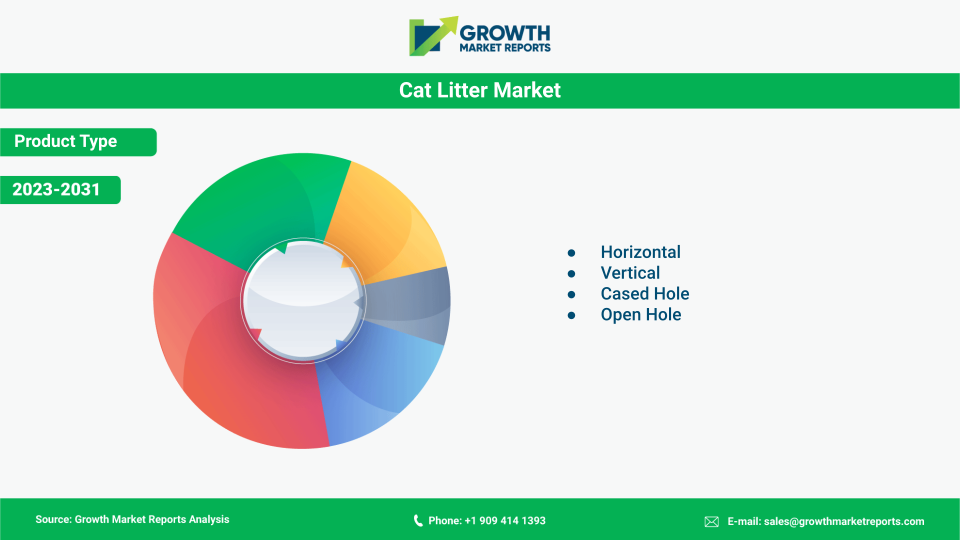
By Product Type Clumping, Non-Clumping, Crystal/Silica, Biodegradable, Others
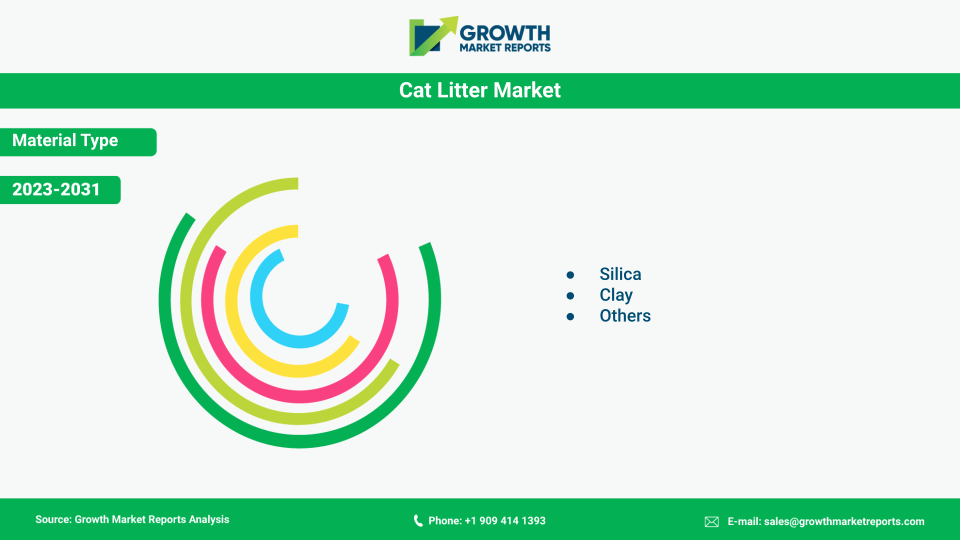
By Material Clay, Silica, Plant-Based, Recycled Paper, Others
By Distribution Channel Supermarkets/Hypermarkets, Pet Specialty Stores, Online Stores, Others
By End User Household, Commercial, Others
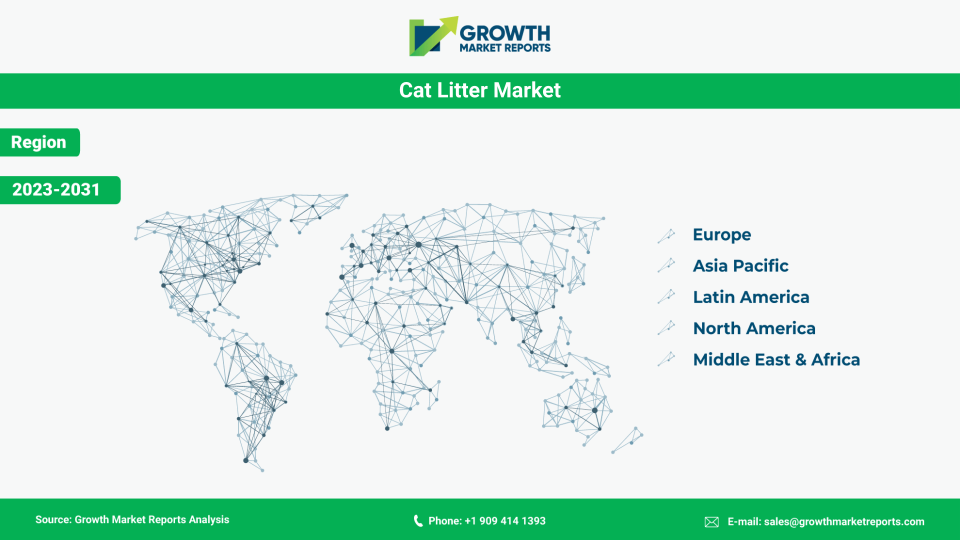
Regions Covered North America, Europe, APAC, Latin America, MEA
Base Year 2024
Historic Data 2018-2023
Forecast Period 2025-2033
Number of Pages 265
Number of Tables & Figures 393
Customization Available Yes, the report can be customized as per your need.

Material Analysis

The cat litter market is further segmented by material into clay, silica, plant-based, recycled paper, and others. Clay-based cat litter, particularly sodium bentonite clay, dominates the market due to its excellent clumping and absorbent properties. Clay is readily available, cost-effective, and widely accepted by consumers, making it the material of choice for most cat litter products. However, concerns about the environmental impact of clay mining and disposal are prompting a gradual shift towards alternative materials, especially in developed markets.

In addition to the variety of cat litter types available, Cat Litter Attractant has emerged as a valuable product for pet owners facing challenges with litter box training. This attractant is formulated to encourage cats to use their litter boxes consistently, addressing common behavioral issues. It is particularly beneficial for kittens, newly adopted cats, or those transitioning to a new type of litter. By incorporating natural herbs and scents that appeal to cats, litter attractants can significantly improve litter box usage and reduce accidents. As pet owners increasingly seek solutions to enhance their pets' well-being and home environment, the demand for such complementary products is expected to grow, offering new opportunities for manufacturers in the cat litter market.

Silica-based cat litter, made from silica gel or crystals, offers superior moisture absorption and odor control compared to traditional clay. Silica cat litter is lightweight, virtually dust-free, and requires less frequent changing, making it a convenient option for pet owners. The premium positioning of silica-based products is reflected in their higher price point, but their long-lasting performance justifies the investment for many consumers. As awareness of the benefits of silica cat litter grows, this segment is expected to expand steadily, particularly in urban markets.

Plant-based cat litter, derived from renewable resources such as corn, wheat, pine, or recycled wood, represents the fastest-growing material segment. The shift towards plant-based cat litter is driven by increasing consumer demand for sustainable and biodegradable products. These materials offer natural odor control, are compostable, and have a lower environmental footprint compared to clay or silica-based litters. Plant-based cat litter resonates strongly with environmentally conscious consumers and aligns with global trends towards green and eco-friendly products.

Recycled paper cat litter is another environmentally friendly option gaining traction in the market. Made from recycled newspapers or paper pulp, this type of cat litter is highly absorbent, lightweight, and virtually dust-free. Recycled paper cat litter is particularly suitable for cats with respiratory sensitivities or allergies, as it minimizes dust and chemical exposure. While its market share is still relatively small, growing awareness of its benefits is expected to drive adoption, especially in regions with strong recycling and sustainability initiatives.

Other materials, including specialty blends and innovative composites, are emerging as manufacturers seek to differentiate their offerings and address specific consumer needs. These may include combinations of natural and synthetic materials, antimicrobial additives, or unique odor-neutralizing agents. The continual evolution of materials in the cat litter market reflects the dynamic nature of consumer preferences and the ongoing quest for products that balance performance, convenience, and sustainability.

Distribution Channel Analysis

Distribution channels play a pivotal role in shaping the cat litter market, with supermarkets/hypermarkets, pet specialty stores, online stores, and others serving as the primary avenues for product sales. Supermarkets and hypermarkets remain the largest distribution channel, accounting for a substantial share of the market in 2024. These outlets offer consumers the convenience of one-stop shopping, a wide product assortment, and competitive pricing. The visibility and accessibility of cat litter products in these stores contribute significantly to their popularity among mainstream consumers.

Pet specialty stores represent a key distribution channel, particularly for premium and specialized cat litter products. These stores offer expert advice, personalized recommendations, and a curated selection of high-quality products tailored to the needs of pet owners. Pet specialty retailers often serve as trendsetters, introducing innovative and niche products to the market. The in-store experience, knowledgeable staff, and targeted marketing efforts make pet specialty stores a preferred destination for discerning consumers seeking the best for their pets.

Online stores have emerged as a game-changer in the cat litter market, witnessing exponential growth in recent years. The convenience of home delivery, ability to compare products and prices, and access to customer reviews have made online shopping increasingly popular among pet owners. E-commerce platforms also facilitate the purchase of bulk quantities and subscription services, ensuring a steady supply of cat litter without the need for frequent store visits. The COVID-19 pandemic further accelerated the shift towards online shopping, with many consumers opting for contactless and hassle-free purchasing experiences.

Other distribution channels, including convenience stores, veterinary clinics, and direct-to-consumer sales, cater to specific segments of the market. Convenience stores offer quick access to cat litter products for last-minute purchases, while veterinary clinics often recommend specialized products for cats with health issues. Direct-to-consumer sales, facilitated by brand websites and subscription models, are gaining traction as manufacturers seek to build stronger relationships with customers and gather valuable data on purchasing behavior.

Among the materials used in cat litter, Bentonite Cat Litter stands out due to its exceptional clumping ability and absorbency. Bentonite clay, a natural mineral, forms tight clumps upon contact with moisture, making it easy to scoop and maintain a clean litter box. This characteristic has made it a popular choice among pet owners who prioritize convenience and hygiene. Despite its widespread use, there is an ongoing dialogue about the environmental impact of bentonite mining and disposal. As a result, some consumers are exploring alternative materials that offer similar benefits with a reduced ecological footprint. Nevertheless, bentonite cat litter remains a staple in the market, with manufacturers continuously improving its formulation to meet evolving consumer expectations.

The interplay between traditional and digital distribution channels is shaping the future of the cat litter market. Manufacturers and retailers are increasingly adopting omnichannel strategies to reach a broader audience and enhance the customer experience. Seamless integration of online and offline channels, personalized marketing, and loyalty programs are becoming essential components of successful distribution strategies in the competitive cat litter market.

End User Analysis

The end-user segment of the cat litter market comprises households, commercial establishments, and others. Households represent the largest and most significant end-user segment, driving the bulk of cat litter demand globally. The increasing number of cat-owning households, coupled with rising disposable incomes and urbanization, has led to greater emphasis on pet hygiene and well-being. Households are increasingly opting for premium, convenient, and eco-friendly cat litter products that align with their lifestyle and values.

Commercial establishments, including pet boarding facilities, veterinary clinics, animal shelters, and pet hotels, constitute a growing segment of the cat litter market. These entities require cat litter products in larger quantities and prioritize performance, efficiency, and cost-effectiveness. Commercial end users often seek bulk packaging, specialized formulations, and products that minimize maintenance and labor costs. As the pet care industry expands and the demand for professional pet services increases, the commercial segment is expected to witness steady growth.

Other end users, such as research laboratories, zoos, and wildlife sanctuaries, represent niche segments with specific requirements for cat litter products. These organizations may require specialized formulations that address unique hygiene, safety, or environmental concerns. While their contribution to overall market demand is relatively small, their presence highlights the diverse applications and adaptability of cat litter products across various settings.

The evolving needs and preferences of end users are prompting manufacturers to diversify their product portfolios and offer tailored solutions. Customization, bulk purchasing options, and value-added services are becoming increasingly important in capturing and retaining end-user loyalty. As the cat litter market continues to mature, understanding the distinct needs of different end-user segments will be crucial for sustained growth and competitive differentiation.

The interplay between household and commercial demand is shaping product innovation and marketing strategies in the cat litter market. Manufacturers are leveraging insights from both segments to develop products that balance performance, sustainability, and affordability, ensuring broad market appeal and long-term success.

Opportunities & Threats

The cat litter market presents numerous opportunities for growth, driven by evolving consumer preferences, technological advancements, and the increasing focus on sustainability. One of the most promising opportunities lies in the development and commercialization of eco-friendly and biodegradable cat litter products. As environmental awareness grows, consumers are actively seeking alternatives to traditional clay-based litters that contribute to landfill waste. Manufacturers that invest in sustainable materials, innovative formulations, and green packaging solutions are well-positioned to capture market share and build brand loyalty among environmentally conscious consumers.

Another significant opportunity is the expansion of online and direct-to-consumer sales channels. The rapid growth of e-commerce has transformed the way consumers purchase cat litter, offering unparalleled convenience, product variety, and personalized shopping experiences. Brands that leverage digital marketing, subscription services, and data-driven insights can effectively engage with customers, drive repeat purchases, and differentiate themselves in a crowded marketplace. Additionally, the rise of smart home technology and connected devices opens new avenues for innovation, such as automated litter boxes and app-enabled monitoring solutions, further enhancing the value proposition for tech-savvy consumers.

Despite the positive growth outlook, the cat litter market faces several restraining factors that could hinder its expansion. Environmental concerns associated with the extraction and disposal of clay-based cat litter remain a significant challenge, particularly in regions with stringent regulations and high consumer awareness. The high cost of premium and specialty cat litter products may also limit adoption among price-sensitive consumers, especially in developing markets. Furthermore, the presence of counterfeit or low-quality products in the market can erode consumer trust and negatively impact brand reputation. Addressing these challenges requires a concerted effort from manufacturers, regulators, and industry stakeholders to promote sustainable practices, ensure product quality, and educate consumers about the benefits of advanced cat litter solutions.

Regional Outlook

North America remains the largest market for cat litter, accounting for approximately USD 4.1 billion in 2024. The region benefits from high pet ownership rates, advanced pet care infrastructure, and a strong culture of pet humanization. The United States leads the market, driven by a well-established retail network, widespread availability of premium products, and a strong emphasis on pet hygiene. Canada also contributes significantly, with increasing adoption of eco-friendly and biodegradable cat litter products. The North American market is characterized by intense competition, continuous product innovation, and a growing focus on sustainability.

Europe holds the second-largest share in the global cat litter market, with a market size of approximately USD 2.7 billion in 2024. The region is distinguished by stringent environmental regulations, high consumer awareness, and a preference for sustainable products. Countries such as Germany, the United Kingdom, and France are at the forefront of adopting biodegradable and plant-based cat litter solutions. The European market is expected to grow at a CAGR of 4.8% during the forecast period, driven by ongoing innovation, regulatory support, and rising pet ownership rates. The emphasis on circular economy principles and waste reduction further supports the adoption of eco-friendly cat litter products in the region.

The Asia Pacific region is witnessing the fastest growth in the cat litter market, with a market size of USD 2.2 billion in 2024 and projected to expand at a CAGR of 6.1% through 2033. Rapid urbanization, rising disposable incomes, and increasing pet adoption in countries such as China, Japan, and India are key drivers of market growth. The shift towards nuclear families and changing lifestyles are fueling demand for convenient and hygienic pet care products. While traditional clay-based cat litter remains popular, there is growing interest in premium, plant-based, and crystal cat litter products among urban consumers. The Asia Pacific market presents significant opportunities for manufacturers to introduce innovative products and expand their footprint in a dynamic and rapidly evolving landscape.

Cat Litter Market Statistics

Competitor Outlook

The cat litter market is highly competitive, characterized by the presence of numerous global and regional players vying for market share through innovation, product differentiation, and strategic partnerships. Leading companies are continually investing in research and development to introduce new and improved cat litter products that address evolving consumer preferences for sustainability, performance, and convenience. The competitive landscape is further shaped by mergers and acquisitions, collaborations, and expansion into emerging markets to capitalize on growth opportunities and strengthen distribution networks.

Major players in the cat litter market are focusing on sustainability as a key differentiator, launching biodegradable and plant-based products that appeal to environmentally conscious consumers. Brands are also leveraging digital marketing, e-commerce platforms, and subscription models to enhance customer engagement and drive repeat purchases. The integration of smart technology, such as automated litter boxes and odor-monitoring systems, is emerging as a new frontier for product innovation, offering added value and convenience to tech-savvy pet owners.

Private label brands and regional players are intensifying competition by offering affordable and locally tailored cat litter products. These companies often leverage their deep understanding of local consumer preferences, efficient supply chains, and targeted marketing strategies to gain a foothold in specific markets. The rise of direct-to-consumer brands, facilitated by digital platforms and social media, is also reshaping the competitive dynamics, enabling new entrants to challenge established players and capture niche segments.

The competitive landscape is further characterized by a strong emphasis on quality assurance, regulatory compliance, and customer education. Leading companies are investing in certifications, product testing, and transparent labeling to build trust and credibility among consumers. Strategic partnerships with retailers, veterinarians, and animal welfare organizations are also being pursued to enhance brand visibility and drive adoption of advanced cat litter solutions.

Some of the major companies operating in the global cat litter market include Clorox Company (Fresh Step), Church & Dwight Co., Inc. (Arm & Hammer), Nestlé Purina PetCare, Mars Petcare (Catsan), Dr. Elsey’s, Oil-Dri Corporation of America, and Kent Corporation. These companies have established strong brand recognition, extensive distribution networks, and a diverse product portfolio catering to various consumer needs. Clorox Company, through its Fresh Step brand, is known for its innovative odor control technologies and commitment to sustainability. Church & Dwight, with its Arm & Hammer brand, leverages its expertise in baking soda to deliver superior odor-neutralizing cat litter products.

Nestlé Purina PetCare and Mars Petcare are global leaders with a broad range of cat litter products under renowned brands such as Tidy Cats and Catsan. These companies invest heavily in research and development, marketing, and sustainability initiatives to maintain their competitive edge. Dr. Elsey’s has carved a niche in the premium segment, offering specialized formulations for multi-cat households and cats with specific health needs. Oil-Dri Corporation of America focuses on innovative absorbent technologies and is a key player in both the consumer and commercial cat litter markets. Kent Corporation, through its World’s Best Cat Litter brand, is a pioneer in plant-based and biodegradable cat litter solutions, catering to the growing demand for eco-friendly products.

In summary, the cat litter market is poised for sustained growth, driven by rising pet ownership, innovation, and the shift towards sustainable and convenient solutions. The competitive landscape is dynamic and evolving, with leading companies and new entrants alike striving to meet the diverse and changing needs of consumers in a rapidly expanding global market.

Key Players

  • Nestlé Purina PetCare
  • Mars Petcare
  • Church & Dwight Co., Inc.
  • Clorox Company (Fresh Step)
  • Oil-Dri Corporation of America
  • Dr. ElseyÂ’s
  • Kent Corporation (WorldÂ’s Best Cat Litter)
  • Spectrum Brands Holdings, Inc.
  • Healthy Pet (Ökocat)
  • Pettex Limited
  • Intersand
  • J. Rettenmaier & Söhne GmbH + Co KG
  • Siamons International Inc.
  • Weber Pet Care
  • Sanicat (Tolsa Group)
  • Ever Clean (Clorox)
  • Blue Buffalo Co., Ltd.
  • Arm & Hammer (Church & Dwight)
  • Petfive Brands (Sustainably Yours)
  • Vibrant Life (Walmart Private Label)
Cat Litter Market Overview

Segments

The Cat Litter market has been segmented on the basis of

Product Type

  • Clumping
  • Non-Clumping
  • Crystal/Silica
  • Biodegradable
  • Others

Material

  • Clay
  • Silica
  • Plant-Based
  • Recycled Paper
  • Others

Distribution Channel

  • Supermarkets/Hypermarkets
  • Pet Specialty Stores
  • Online Stores
  • Others

End User

  • Household
  • Commercial
  • Others

Competitive Landscape

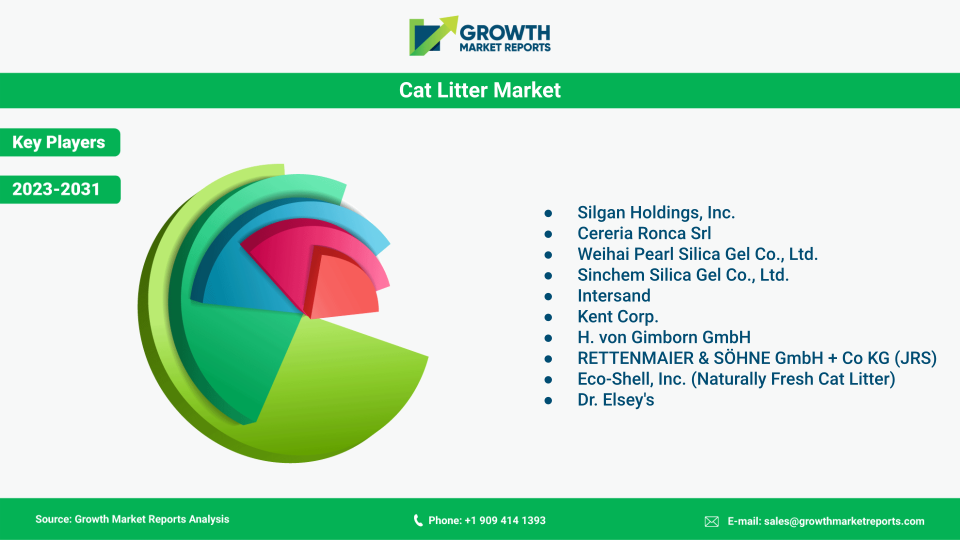
Key players competing in the cat litter market include Silgan Holdings, Inc.; Cereria Ronca Srl; Weihai Pearl Silica Gel Co., Ltd.; Sinchem Silica Gel Co., Ltd.; Intersand; Kent Corp.; H. von Gimborn GmbH; RETTENMAIER & SÖHNE GmbH + Co KG (JRS); Eco-Shell, Inc. (Naturally Fresh Cat Litter); Dr. Elsey's; Pettex Ltd.; Church & Dwight Co., Inc.; Oil-Dri Corporation of America; Nestlé S.A.; and The Clorox Company.

Some of these players are using several market strategies such as acquisitions, collaborations, mergers, and product launches to enhance their market shares, generate revenue, and raise their production line of the business in the coming years. For instance,

  • In January 2018, Clean Paws, an exclusive, low-tracking litter, was introduced by The Clorox Company's Fresh Step brand.
  • In April 2018, Intersand has introduced 'Ecolife,' a revolutionary eco-friendly clumping litter manufactured from a unique blend of corn and wheat that is both biodegradable and natural.

Cat Litter Market Key Players

Frequently Asked Questions

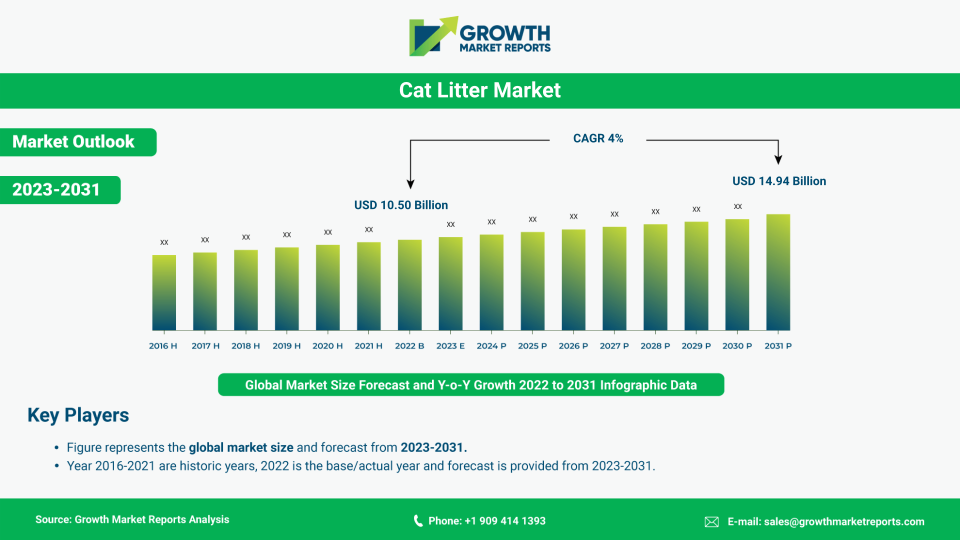
The cat litter market is projected to expand at a CAGR of around 4% during the forecast period, 2023 – 2031.

The cat litter market is projected to reach USD 14.94 Bn by 2031.

The cat litter market size was valued at USD 10.50 Bn in 2022.

North America accounted for a major market share in 2021.

Dr. Elsey's; Pettex Ltd.; Church & Dwight Co., Inc.; Oil-Dri Corporation of America; Nestlé S.A.; and The Clorox Company are some of the key players in the market.

Table Of Content

Chapter 1 Executive Summary
Chapter 2 Assumptions and Acronyms Used
Chapter 3 Research Methodology
Chapter 4 Cat Litter Market Overview
   4.1 Introduction
      4.1.1 Market Taxonomy
      4.1.2 Market Definition
      4.1.3 Macro-Economic Factors Impacting the Market Growth
   4.2 Cat Litter Market Dynamics
      4.2.1 Market Drivers
      4.2.2 Market Restraints
      4.2.3 Market Opportunity
   4.3 Cat Litter Market - Supply Chain Analysis
      4.3.1 List of Key Suppliers
      4.3.2 List of Key Distributors
      4.3.3 List of Key Consumers
   4.4 Key Forces Shaping the Cat Litter Market
      4.4.1 Bargaining Power of Suppliers
      4.4.2 Bargaining Power of Buyers
      4.4.3 Threat of Substitution
      4.4.4 Threat of New Entrants
      4.4.5 Competitive Rivalry
   4.5 Global Cat Litter Market Size & Forecast, 2023-2032
      4.5.1 Cat Litter Market Size and Y-o-Y Growth
      4.5.2 Cat Litter Market Absolute $ Opportunity

Chapter 5 Global Cat Litter Market Analysis and Forecast By Product Type
   5.1 Introduction
      5.1.1 Key Market Trends & Growth Opportunities By Product Type
      5.1.2 Basis Point Share (BPS) Analysis By Product Type
      5.1.3 Absolute $ Opportunity Assessment By Product Type
   5.2 Cat Litter Market Size Forecast By Product Type
      5.2.1 Clumping
      5.2.2 Non-Clumping
      5.2.3 Crystal/Silica
      5.2.4 Biodegradable
      5.2.5 Others
   5.3 Market Attractiveness Analysis By Product Type

Chapter 6 Global Cat Litter Market Analysis and Forecast By Material
   6.1 Introduction
      6.1.1 Key Market Trends & Growth Opportunities By Material
      6.1.2 Basis Point Share (BPS) Analysis By Material
      6.1.3 Absolute $ Opportunity Assessment By Material
   6.2 Cat Litter Market Size Forecast By Material
      6.2.1 Clay
      6.2.2 Silica
      6.2.3 Plant-Based
      6.2.4 Recycled Paper
      6.2.5 Others
   6.3 Market Attractiveness Analysis By Material

Chapter 7 Global Cat Litter Market Analysis and Forecast By Distribution Channel
   7.1 Introduction
      7.1.1 Key Market Trends & Growth Opportunities By Distribution Channel
      7.1.2 Basis Point Share (BPS) Analysis By Distribution Channel
      7.1.3 Absolute $ Opportunity Assessment By Distribution Channel
   7.2 Cat Litter Market Size Forecast By Distribution Channel
      7.2.1 Supermarkets/Hypermarkets
      7.2.2 Pet Specialty Stores
      7.2.3 Online Stores
      7.2.4 Others
   7.3 Market Attractiveness Analysis By Distribution Channel

Chapter 8 Global Cat Litter Market Analysis and Forecast By End User
   8.1 Introduction
      8.1.1 Key Market Trends & Growth Opportunities By End User
      8.1.2 Basis Point Share (BPS) Analysis By End User
      8.1.3 Absolute $ Opportunity Assessment By End User
   8.2 Cat Litter Market Size Forecast By End User
      8.2.1 Household
      8.2.2 Commercial
      8.2.3 Others
   8.3 Market Attractiveness Analysis By End User

Chapter 9 Global Cat Litter Market Analysis and Forecast by Region
   9.1 Introduction
      9.1.1 Key Market Trends & Growth Opportunities By Region
      9.1.2 Basis Point Share (BPS) Analysis By Region
      9.1.3 Absolute $ Opportunity Assessment By Region
   9.2 Cat Litter Market Size Forecast By Region
      9.2.1 North America
      9.2.2 Europe
      9.2.3 Asia Pacific
      9.2.4 Latin America
      9.2.5 Middle East & Africa (MEA)
   9.3 Market Attractiveness Analysis By Region

Chapter 10 Coronavirus Disease (COVID-19) Impact 
   10.1 Introduction 
   10.2 Current & Future Impact Analysis 
   10.3 Economic Impact Analysis 
   10.4 Government Policies 
   10.5 Investment Scenario

Chapter 11 North America Cat Litter Analysis and Forecast
   11.1 Introduction
   11.2 North America Cat Litter Market Size Forecast by Country
      11.2.1 U.S.
      11.2.2 Canada
   11.3 Basis Point Share (BPS) Analysis by Country
   11.4 Absolute $ Opportunity Assessment by Country
   11.5 Market Attractiveness Analysis by Country
   11.6 North America Cat Litter Market Size Forecast By Product Type
      11.6.1 Clumping
      11.6.2 Non-Clumping
      11.6.3 Crystal/Silica
      11.6.4 Biodegradable
      11.6.5 Others
   11.7 Basis Point Share (BPS) Analysis By Product Type 
   11.8 Absolute $ Opportunity Assessment By Product Type 
   11.9 Market Attractiveness Analysis By Product Type
   11.10 North America Cat Litter Market Size Forecast By Material
      11.10.1 Clay
      11.10.2 Silica
      11.10.3 Plant-Based
      11.10.4 Recycled Paper
      11.10.5 Others
   11.11 Basis Point Share (BPS) Analysis By Material 
   11.12 Absolute $ Opportunity Assessment By Material 
   11.13 Market Attractiveness Analysis By Material
   11.14 North America Cat Litter Market Size Forecast By Distribution Channel
      11.14.1 Supermarkets/Hypermarkets
      11.14.2 Pet Specialty Stores
      11.14.3 Online Stores
      11.14.4 Others
   11.15 Basis Point Share (BPS) Analysis By Distribution Channel 
   11.16 Absolute $ Opportunity Assessment By Distribution Channel 
   11.17 Market Attractiveness Analysis By Distribution Channel
   11.18 North America Cat Litter Market Size Forecast By End User
      11.18.1 Household
      11.18.2 Commercial
      11.18.3 Others
   11.19 Basis Point Share (BPS) Analysis By End User 
   11.20 Absolute $ Opportunity Assessment By End User 
   11.21 Market Attractiveness Analysis By End User

Chapter 12 Europe Cat Litter Analysis and Forecast
   12.1 Introduction
   12.2 Europe Cat Litter Market Size Forecast by Country
      12.2.1 Germany
      12.2.2 France
      12.2.3 Italy
      12.2.4 U.K.
      12.2.5 Spain
      12.2.6 Russia
      12.2.7 Rest of Europe
   12.3 Basis Point Share (BPS) Analysis by Country
   12.4 Absolute $ Opportunity Assessment by Country
   12.5 Market Attractiveness Analysis by Country
   12.6 Europe Cat Litter Market Size Forecast By Product Type
      12.6.1 Clumping
      12.6.2 Non-Clumping
      12.6.3 Crystal/Silica
      12.6.4 Biodegradable
      12.6.5 Others
   12.7 Basis Point Share (BPS) Analysis By Product Type 
   12.8 Absolute $ Opportunity Assessment By Product Type 
   12.9 Market Attractiveness Analysis By Product Type
   12.10 Europe Cat Litter Market Size Forecast By Material
      12.10.1 Clay
      12.10.2 Silica
      12.10.3 Plant-Based
      12.10.4 Recycled Paper
      12.10.5 Others
   12.11 Basis Point Share (BPS) Analysis By Material 
   12.12 Absolute $ Opportunity Assessment By Material 
   12.13 Market Attractiveness Analysis By Material
   12.14 Europe Cat Litter Market Size Forecast By Distribution Channel
      12.14.1 Supermarkets/Hypermarkets
      12.14.2 Pet Specialty Stores
      12.14.3 Online Stores
      12.14.4 Others
   12.15 Basis Point Share (BPS) Analysis By Distribution Channel 
   12.16 Absolute $ Opportunity Assessment By Distribution Channel 
   12.17 Market Attractiveness Analysis By Distribution Channel
   12.18 Europe Cat Litter Market Size Forecast By End User
      12.18.1 Household
      12.18.2 Commercial
      12.18.3 Others
   12.19 Basis Point Share (BPS) Analysis By End User 
   12.20 Absolute $ Opportunity Assessment By End User 
   12.21 Market Attractiveness Analysis By End User

Chapter 13 Asia Pacific Cat Litter Analysis and Forecast
   13.1 Introduction
   13.2 Asia Pacific Cat Litter Market Size Forecast by Country
      13.2.1 China
      13.2.2 Japan
      13.2.3 South Korea
      13.2.4 India
      13.2.5 Australia
      13.2.6 South East Asia (SEA)
      13.2.7 Rest of Asia Pacific (APAC)
   13.3 Basis Point Share (BPS) Analysis by Country
   13.4 Absolute $ Opportunity Assessment by Country
   13.5 Market Attractiveness Analysis by Country
   13.6 Asia Pacific Cat Litter Market Size Forecast By Product Type
      13.6.1 Clumping
      13.6.2 Non-Clumping
      13.6.3 Crystal/Silica
      13.6.4 Biodegradable
      13.6.5 Others
   13.7 Basis Point Share (BPS) Analysis By Product Type 
   13.8 Absolute $ Opportunity Assessment By Product Type 
   13.9 Market Attractiveness Analysis By Product Type
   13.10 Asia Pacific Cat Litter Market Size Forecast By Material
      13.10.1 Clay
      13.10.2 Silica
      13.10.3 Plant-Based
      13.10.4 Recycled Paper
      13.10.5 Others
   13.11 Basis Point Share (BPS) Analysis By Material 
   13.12 Absolute $ Opportunity Assessment By Material 
   13.13 Market Attractiveness Analysis By Material
   13.14 Asia Pacific Cat Litter Market Size Forecast By Distribution Channel
      13.14.1 Supermarkets/Hypermarkets
      13.14.2 Pet Specialty Stores
      13.14.3 Online Stores
      13.14.4 Others
   13.15 Basis Point Share (BPS) Analysis By Distribution Channel 
   13.16 Absolute $ Opportunity Assessment By Distribution Channel 
   13.17 Market Attractiveness Analysis By Distribution Channel
   13.18 Asia Pacific Cat Litter Market Size Forecast By End User
      13.18.1 Household
      13.18.2 Commercial
      13.18.3 Others
   13.19 Basis Point Share (BPS) Analysis By End User 
   13.20 Absolute $ Opportunity Assessment By End User 
   13.21 Market Attractiveness Analysis By End User

Chapter 14 Latin America Cat Litter Analysis and Forecast
   14.1 Introduction
   14.2 Latin America Cat Litter Market Size Forecast by Country
      14.2.1 Brazil
      14.2.2 Mexico
      14.2.3 Rest of Latin America (LATAM)
   14.3 Basis Point Share (BPS) Analysis by Country
   14.4 Absolute $ Opportunity Assessment by Country
   14.5 Market Attractiveness Analysis by Country
   14.6 Latin America Cat Litter Market Size Forecast By Product Type
      14.6.1 Clumping
      14.6.2 Non-Clumping
      14.6.3 Crystal/Silica
      14.6.4 Biodegradable
      14.6.5 Others
   14.7 Basis Point Share (BPS) Analysis By Product Type 
   14.8 Absolute $ Opportunity Assessment By Product Type 
   14.9 Market Attractiveness Analysis By Product Type
   14.10 Latin America Cat Litter Market Size Forecast By Material
      14.10.1 Clay
      14.10.2 Silica
      14.10.3 Plant-Based
      14.10.4 Recycled Paper
      14.10.5 Others
   14.11 Basis Point Share (BPS) Analysis By Material 
   14.12 Absolute $ Opportunity Assessment By Material 
   14.13 Market Attractiveness Analysis By Material
   14.14 Latin America Cat Litter Market Size Forecast By Distribution Channel
      14.14.1 Supermarkets/Hypermarkets
      14.14.2 Pet Specialty Stores
      14.14.3 Online Stores
      14.14.4 Others
   14.15 Basis Point Share (BPS) Analysis By Distribution Channel 
   14.16 Absolute $ Opportunity Assessment By Distribution Channel 
   14.17 Market Attractiveness Analysis By Distribution Channel
   14.18 Latin America Cat Litter Market Size Forecast By End User
      14.18.1 Household
      14.18.2 Commercial
      14.18.3 Others
   14.19 Basis Point Share (BPS) Analysis By End User 
   14.20 Absolute $ Opportunity Assessment By End User 
   14.21 Market Attractiveness Analysis By End User

Chapter 15 Middle East & Africa (MEA) Cat Litter Analysis and Forecast
   15.1 Introduction
   15.2 Middle East & Africa (MEA) Cat Litter Market Size Forecast by Country
      15.2.1 Saudi Arabia
      15.2.2 South Africa
      15.2.3 UAE
      15.2.4 Rest of Middle East & Africa (MEA)
   15.3 Basis Point Share (BPS) Analysis by Country
   15.4 Absolute $ Opportunity Assessment by Country
   15.5 Market Attractiveness Analysis by Country
   15.6 Middle East & Africa (MEA) Cat Litter Market Size Forecast By Product Type
      15.6.1 Clumping
      15.6.2 Non-Clumping
      15.6.3 Crystal/Silica
      15.6.4 Biodegradable
      15.6.5 Others
   15.7 Basis Point Share (BPS) Analysis By Product Type 
   15.8 Absolute $ Opportunity Assessment By Product Type 
   15.9 Market Attractiveness Analysis By Product Type
   15.10 Middle East & Africa (MEA) Cat Litter Market Size Forecast By Material
      15.10.1 Clay
      15.10.2 Silica
      15.10.3 Plant-Based
      15.10.4 Recycled Paper
      15.10.5 Others
   15.11 Basis Point Share (BPS) Analysis By Material 
   15.12 Absolute $ Opportunity Assessment By Material 
   15.13 Market Attractiveness Analysis By Material
   15.14 Middle East & Africa (MEA) Cat Litter Market Size Forecast By Distribution Channel
      15.14.1 Supermarkets/Hypermarkets
      15.14.2 Pet Specialty Stores
      15.14.3 Online Stores
      15.14.4 Others
   15.15 Basis Point Share (BPS) Analysis By Distribution Channel 
   15.16 Absolute $ Opportunity Assessment By Distribution Channel 
   15.17 Market Attractiveness Analysis By Distribution Channel
   15.18 Middle East & Africa (MEA) Cat Litter Market Size Forecast By End User
      15.18.1 Household
      15.18.2 Commercial
      15.18.3 Others
   15.19 Basis Point Share (BPS) Analysis By End User 
   15.20 Absolute $ Opportunity Assessment By End User 
   15.21 Market Attractiveness Analysis By End User

Chapter 16 Competition Landscape 
   16.1 Cat Litter Market: Competitive Dashboard
   16.2 Global Cat Litter Market: Market Share Analysis, 2023
   16.3 Company Profiles (Details – Overview, Financials, Developments, Strategy) 
      16.3.1 Nestlé Purina PetCare
Mars Petcare
Church & Dwight Co., Inc.
Clorox Company (Fresh Step)
Oil-Dri Corporation of America
Dr. Elsey’s
Kent Corporation (World’s Best Cat Litter)
Spectrum Brands Holdings, Inc.
Healthy Pet (Ökocat)
Pettex Limited
Intersand
J. Rettenmaier & Söhne GmbH + Co KG
Siamons International Inc.
Weber Pet Care
Sanicat (Tolsa Group)
Ever Clean (Clorox)
Blue Buffalo Co., Ltd.
Arm & Hammer (Church & Dwight)
Petfive Brands (Sustainably Yours)
Vibrant Life (Walmart Private Label)

Methodology

Our Clients

General Mills
Nestle SA
Pfizer
Microsoft
Honda Motor Co. Ltd.
Dassault Aviation
The John Holland Group
Deloitte