Cardiovascular Devices Market Research Report 2033

Cardiovascular Devices Market Research Report 2033

Segments - by Product Type (Diagnostic and Monitoring Devices, Therapeutic and Surgical Devices), by Application (Coronary Artery Disease, Cardiac Arrhythmia, Heart Failure, Peripheral Vascular Disease, Others), by End User (Hospitals, Ambulatory Surgical Centers, Clinics, Others)

https://growthmarketreports.com/raksha
Author : Raksha Sharma
https://growthmarketreports.com/Vaibhav
Fact-checked by : V. Chandola
https://growthmarketreports.com/Shruti
Editor : Shruti Bhat

Upcoming | Report ID :HC-3689 | 4.0 Rating | 74 Reviews | 295 Pages | Format : Docx PDF

Report Description


Cardiovascular Devices Market Outlook

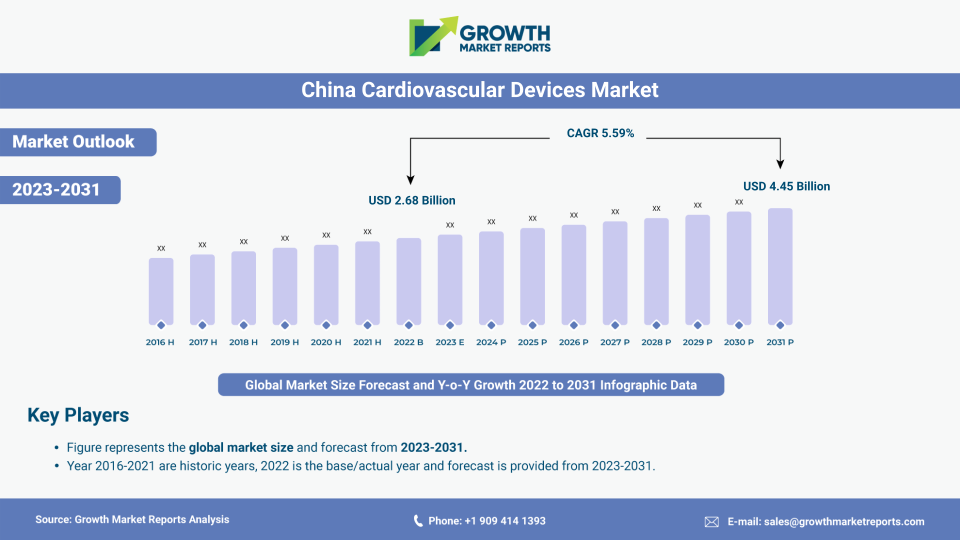
According to our latest research, the global cardiovascular devices market size reached USD 65.7 billion in 2024, driven by a robust demand for advanced diagnostic and therapeutic solutions across the globe. The market is projected to grow at a CAGR of 6.2% from 2025 to 2033, reaching an estimated value of USD 112.5 billion by the end of the forecast period. This growth is primarily fueled by the increasing prevalence of cardiovascular diseases, technological innovations, and expanding healthcare infrastructure worldwide. As per our comprehensive analysis, the market is set to witness significant expansion, particularly in emerging economies and among aging populations, which are contributing to higher adoption rates of cardiovascular devices.

One of the most significant growth factors propelling the cardiovascular devices market is the rising global burden of cardiovascular diseases (CVDs). With lifestyle changes, urbanization, and the growing incidence of risk factors such as obesity, diabetes, hypertension, and sedentary habits, the prevalence of CVDs has seen a marked increase. According to the World Health Organization, cardiovascular diseases remain the leading cause of mortality globally, accounting for nearly 17.9 million deaths each year. This alarming statistic underscores the urgent need for effective diagnostic and therapeutic interventions, thereby driving the demand for advanced cardiovascular devices. Furthermore, the growing awareness about early diagnosis and preventive healthcare is encouraging patients and healthcare providers to invest in state-of-the-art monitoring and surgical equipment, ensuring sustained market growth.

Technological advancements have been another critical driver of the cardiovascular devices market. The integration of cutting-edge technologies such as artificial intelligence, robotics, and minimally invasive surgical techniques has revolutionized the diagnosis and treatment of cardiovascular conditions. Innovations in imaging modalities, wearable cardiac monitors, and implantable devices have significantly improved patient outcomes and reduced recovery times. Additionally, the development of next-generation drug-eluting stents, bioresorbable scaffolds, and advanced pacemakers has broadened the therapeutic landscape, offering tailored solutions for complex cardiac cases. The continuous research and development activities undertaken by leading medical device manufacturers are expected to further accelerate market expansion, as healthcare systems worldwide strive to adopt the latest advancements to enhance patient care.

The increasing healthcare expenditure and supportive government initiatives are also contributing to the growth of the cardiovascular devices market. Many countries are investing heavily in upgrading their healthcare infrastructure, particularly in emerging regions such as Asia Pacific and Latin America. These investments are aimed at improving access to quality cardiac care, expanding the availability of advanced diagnostic and surgical equipment, and fostering public-private partnerships. Moreover, favorable reimbursement policies and regulatory approvals for innovative devices are encouraging market players to introduce new products and expand their geographical footprint. The collective impact of these factors is expected to sustain the upward trajectory of the global cardiovascular devices market over the forecast period.

From a regional perspective, North America currently dominates the cardiovascular devices market, accounting for the largest share due to its well-established healthcare infrastructure, high prevalence of cardiovascular diseases, and strong presence of leading market players. However, the Asia Pacific region is anticipated to witness the highest growth rate during the forecast period, driven by increasing healthcare investments, rising awareness, and a rapidly aging population. Europe also holds a significant share, supported by advanced medical technologies and favorable government policies. Meanwhile, Latin America and the Middle East & Africa are gradually emerging as lucrative markets, owing to improving healthcare access and growing demand for cardiovascular interventions. This regional diversification is expected to create new opportunities for market players and drive overall industry growth.

Global Cardiovascular Devices Industry Outlook

Product Type Analysis

The cardiovascular devices market by product type is broadly segmented into diagnostic and monitoring devices, as well as therapeutic and surgical devices. Diagnostic and monitoring devices, such as electrocardiograms (ECGs), Holter monitors, event monitors, and cardiac imaging systems, have seen substantial adoption due to their critical role in early disease detection and ongoing patient management. These devices enable timely diagnosis of arrhythmias, ischemic events, and other cardiac abnormalities, which is essential for initiating appropriate treatment and improving patient outcomes. The growing demand for non-invasive and real-time monitoring solutions, coupled with technological advancements in wearable devices, is further boosting the adoption of diagnostic and monitoring equipment in both clinical and home-care settings.

Therapeutic and surgical devices represent the largest and fastest-growing segment within the cardiovascular devices market. This category includes products such as pacemakers, implantable cardioverter defibrillators (ICDs), stents, heart valves, and ventricular assist devices (VADs). The increasing incidence of complex cardiovascular conditions and the rising number of surgical interventions have fueled the demand for advanced therapeutic devices. The shift towards minimally invasive procedures, which offer reduced hospital stays and lower complication rates, has also contributed to the popularity of products like drug-eluting stents and transcatheter heart valves. Moreover, ongoing research and innovation in device design, materials, and biocompatibility are enabling the development of more effective and durable solutions for cardiac patients.

The diagnostic and monitoring devices segment is experiencing significant growth due to the rising emphasis on preventive healthcare and early detection. The integration of digital health technologies, such as remote patient monitoring and telemedicine, has enabled continuous cardiac surveillance and improved patient engagement. These advancements are particularly beneficial for patients with chronic conditions who require regular monitoring to prevent adverse events. Additionally, the increasing adoption of artificial intelligence and machine learning algorithms in cardiac imaging and diagnostics is enhancing the accuracy and efficiency of disease detection, further driving the demand for these devices.

In contrast, therapeutic and surgical devices are witnessing rapid innovation, with manufacturers focusing on developing next-generation products that offer enhanced performance and safety. The introduction of leadless pacemakers, subcutaneous ICDs, and bioresorbable vascular scaffolds are some examples of groundbreaking advancements in this segment. These innovations are addressing the limitations of traditional devices, such as infection risk and device longevity, thereby improving patient quality of life. The growing preference for minimally invasive and catheter-based interventions is also expanding the market for therapeutic devices, as patients and healthcare providers seek alternatives to open-heart surgery.

Overall, the product type segmentation underscores the dynamic nature of the cardiovascular devices market, with both diagnostic and therapeutic categories playing pivotal roles in addressing the global burden of cardiovascular diseases. The continuous evolution of device technologies and the increasing focus on patient-centric care are expected to drive sustained growth across all product segments, offering significant opportunities for innovation and market expansion.

Report Scope

Attributes Details
Report Title Cardiovascular Devices Market Research Report 2033
By Product Type Diagnostic and Monitoring Devices, Therapeutic and Surgical Devices
By Application Coronary Artery Disease, Cardiac Arrhythmia, Heart Failure, Peripheral Vascular Disease, Others
By End User Hospitals, Ambulatory Surgical Centers, Clinics, Others
Regions Covered North America, Europe, APAC, Latin America, MEA
Base Year 2024
Historic Data 2018-2023
Forecast Period 2025-2033
Number of Pages 295
Number of Tables & Figures 362
Customization Available Yes, the report can be customized as per your need.

Application Analysis

The cardiovascular devices market is segmented by application into coronary artery disease, cardiac arrhythmia, heart failure, peripheral vascular disease, and others. Coronary artery disease (CAD) remains the leading application segment, accounting for a substantial share of the market due to its high prevalence and significant mortality rates. The widespread adoption of stents, angioplasty balloons, and other revascularization devices for the treatment of CAD has fueled the growth of this segment. The increasing prevalence of risk factors such as high cholesterol, obesity, and sedentary lifestyles has further contributed to the rising incidence of CAD, driving the demand for advanced diagnostic and therapeutic solutions.

Cardiac arrhythmia is another major application area, encompassing conditions such as atrial fibrillation, ventricular tachycardia, and bradycardia. The growing awareness about the risks associated with untreated arrhythmias, coupled with advancements in electrophysiology and ablation technologies, has led to increased adoption of devices such as pacemakers, ICDs, and cardiac mapping systems. The integration of remote monitoring and wireless communication capabilities in these devices has also improved patient management and outcomes, making them an essential component of modern cardiac care.

Heart failure represents a significant burden on healthcare systems worldwide, with increasing incidence rates among aging populations. The application of ventricular assist devices, implantable heart monitors, and cardiac resynchronization therapy (CRT) devices has transformed the management of heart failure, enabling improved survival rates and quality of life for patients. The development of innovative therapies and personalized treatment approaches is further enhancing the effectiveness of these devices, driving market growth in this segment.

Peripheral vascular disease (PVD) is an emerging application segment, driven by the rising prevalence of diabetes and other metabolic disorders. Devices such as peripheral stents, angioplasty balloons, and atherectomy systems play a crucial role in restoring blood flow and preventing complications associated with PVD. The increasing adoption of endovascular procedures and the development of drug-coated devices are expected to boost the growth of this segment, as healthcare providers seek minimally invasive solutions for vascular interventions.

The "others" category includes applications such as congenital heart disease, structural heart disease, and pulmonary embolism. The growing focus on early diagnosis and intervention for these conditions, coupled with advancements in imaging and surgical techniques, is expanding the application scope of cardiovascular devices. The continuous evolution of device technologies and the increasing emphasis on comprehensive cardiac care are expected to drive sustained growth across all application segments, offering significant opportunities for market players.

End User Analysis

The end user segmentation of the cardiovascular devices market includes hospitals, ambulatory surgical centers (ASCs), clinics, and others. Hospitals represent the largest end user segment, accounting for a dominant share of the market due to their comprehensive infrastructure, advanced medical technologies, and skilled healthcare professionals. Hospitals serve as primary centers for the diagnosis, treatment, and management of complex cardiovascular conditions, offering a wide range of diagnostic and therapeutic procedures. The increasing number of hospital-based cardiac care units and the growing adoption of minimally invasive interventions are driving the demand for cardiovascular devices in this segment.

Ambulatory surgical centers (ASCs) are witnessing rapid growth as an end user segment, driven by the increasing preference for outpatient procedures and the shift towards cost-effective healthcare delivery. ASCs offer several advantages, including reduced hospital stays, lower healthcare costs, and faster recovery times. The adoption of advanced cardiovascular devices in ASCs is enabling the performance of complex procedures such as angioplasty, pacemaker implantation, and electrophysiology studies in a safe and efficient manner. The growing emphasis on patient convenience and the rising number of ASCs across developed and emerging markets are expected to fuel the growth of this segment.

Clinics, including specialized cardiac clinics and diagnostic centers, play a vital role in the early detection and management of cardiovascular diseases. The increasing availability of advanced diagnostic and monitoring devices in clinics is enabling timely intervention and improved patient outcomes. Clinics are particularly important in regions with limited access to large hospitals, as they provide essential cardiac care services to underserved populations. The growing focus on preventive healthcare and the rising demand for point-of-care testing are expected to drive the adoption of cardiovascular devices in clinics.

The "others" category includes home healthcare settings, research institutes, and academic centers. The increasing adoption of wearable cardiac monitors and remote patient monitoring solutions is enabling the delivery of cardiac care in home settings, particularly for patients with chronic conditions who require continuous monitoring. Research institutes and academic centers are also contributing to market growth through ongoing research and development activities aimed at advancing cardiovascular device technologies. The expanding application of cardiovascular devices across diverse end user settings is expected to drive sustained market growth and create new opportunities for innovation and collaboration.

Overall, the end user segmentation highlights the diverse settings in which cardiovascular devices are utilized, reflecting the broad scope and critical importance of these devices in modern healthcare. The continuous evolution of healthcare delivery models and the increasing focus on patient-centric care are expected to drive sustained demand for cardiovascular devices across all end user segments.

Opportunities & Threats

The cardiovascular devices market presents significant opportunities for growth and innovation, driven by the increasing global burden of cardiovascular diseases and the ongoing advancements in medical technology. One of the key opportunities lies in the development of next-generation devices that offer improved safety, efficacy, and patient comfort. The integration of digital health technologies, such as remote monitoring, telemedicine, and artificial intelligence, is enabling personalized and data-driven cardiac care, opening new avenues for market expansion. Additionally, the growing focus on preventive healthcare and early diagnosis is creating demand for advanced diagnostic and monitoring devices, particularly in emerging markets with rising healthcare awareness and improving infrastructure.

Another major opportunity in the cardiovascular devices market is the expansion into untapped regions and underserved populations. Emerging economies in Asia Pacific, Latin America, and the Middle East & Africa are experiencing rapid urbanization, increasing healthcare investments, and rising prevalence of cardiovascular diseases. Market players can capitalize on these trends by introducing affordable and accessible devices tailored to the needs of these regions. Strategic collaborations with local healthcare providers, government agencies, and non-governmental organizations can further enhance market penetration and drive sustainable growth. The increasing adoption of minimally invasive and catheter-based interventions also presents opportunities for innovation and differentiation, as patients and healthcare providers seek alternatives to traditional surgical procedures.

Despite the numerous opportunities, the cardiovascular devices market faces several restraining factors that could hinder its growth. One of the primary challenges is the stringent regulatory environment and the lengthy approval processes for new devices. Regulatory agencies such as the US Food and Drug Administration (FDA) and the European Medicines Agency (EMA) require extensive clinical data to ensure the safety and efficacy of cardiovascular devices, which can delay product launches and increase development costs. Additionally, the high cost of advanced devices and procedures may limit their adoption, particularly in low- and middle-income countries with constrained healthcare budgets. Reimbursement issues, competition from alternative therapies, and concerns about device-related complications also pose challenges to market growth. Addressing these barriers will require ongoing collaboration between industry stakeholders, regulatory authorities, and healthcare providers to ensure the timely introduction of innovative and cost-effective solutions.

Regional Outlook

North America remains the leading region in the cardiovascular devices market, accounting for approximately 37% of the global market share, or around USD 24.3 billion in 2024. The region's dominance is attributed to its advanced healthcare infrastructure, high prevalence of cardiovascular diseases, and strong presence of leading medical device manufacturers. The United States, in particular, is a major contributor to market growth, driven by robust research and development activities, favorable reimbursement policies, and increasing adoption of innovative cardiac care solutions. Canada also plays a significant role, with ongoing investments in healthcare and a growing focus on preventive cardiology.

Europe holds the second-largest share in the global cardiovascular devices market, with a market size of approximately USD 18.5 billion in 2024. The region benefits from advanced medical technologies, well-established healthcare systems, and supportive government policies aimed at improving cardiac care. Countries such as Germany, the United Kingdom, and France are at the forefront of adopting cutting-edge cardiovascular devices, driven by high disease prevalence and increasing healthcare expenditure. The European market is expected to grow at a steady pace, with a projected CAGR of 5.8% during the forecast period, supported by ongoing research, innovation, and public health initiatives.

The Asia Pacific region is emerging as the fastest-growing market for cardiovascular devices, with a market size of USD 14.1 billion in 2024 and an anticipated CAGR of 7.8% from 2025 to 2033. The rapid growth in this region is fueled by increasing healthcare investments, rising awareness about cardiovascular diseases, and a growing aging population. Countries such as China, India, and Japan are witnessing significant improvements in healthcare infrastructure and access, driving the adoption of advanced diagnostic and therapeutic devices. The expanding middle class, urbanization, and government initiatives to combat non-communicable diseases are further contributing to market growth in Asia Pacific. Latin America and the Middle East & Africa, with market sizes of USD 5.2 billion and USD 3.6 billion respectively in 2024, are also experiencing gradual growth, supported by improving healthcare access and increasing demand for cardiovascular interventions.

Cardiovascular Devices Market Statistics

Competitor Outlook

The cardiovascular devices market is characterized by intense competition, with a diverse mix of global and regional players striving to capture market share through innovation, strategic collaborations, and geographic expansion. Leading companies are investing heavily in research and development to introduce next-generation devices that offer improved safety, efficacy, and patient outcomes. The competitive landscape is further shaped by mergers and acquisitions, partnerships, and product launches aimed at strengthening market positioning and expanding product portfolios. Companies are also focusing on enhancing their distribution networks and after-sales services to improve customer satisfaction and loyalty.

Innovation remains a key differentiator in the cardiovascular devices market, with companies leveraging advanced technologies such as artificial intelligence, robotics, and digital health solutions to develop cutting-edge products. The integration of remote monitoring, telemedicine, and wearable devices is enabling personalized and data-driven cardiac care, offering significant competitive advantages. Furthermore, the shift towards minimally invasive and catheter-based interventions is driving demand for specialized devices, prompting companies to invest in the development of novel materials, designs, and delivery systems. The ability to offer comprehensive solutions across the diagnostic, monitoring, and therapeutic segments is becoming increasingly important for market success.

The market is also witnessing a trend towards strategic collaborations and partnerships, as companies seek to leverage complementary strengths and expand their reach in emerging markets. Collaborations with healthcare providers, research institutes, and technology companies are enabling the development of integrated solutions that address the evolving needs of patients and healthcare systems. Additionally, companies are focusing on regulatory compliance and quality assurance to ensure the safety and efficacy of their products, particularly in light of stringent regulatory requirements and increasing scrutiny from regulatory agencies.

Some of the major companies operating in the global cardiovascular devices market include Medtronic plc, Abbott Laboratories, Boston Scientific Corporation, Edwards Lifesciences Corporation, Johnson & Johnson (Biosense Webster), Siemens Healthineers, GE Healthcare, Philips Healthcare, Terumo Corporation, and B. Braun Melsungen AG. These companies are at the forefront of innovation, with extensive product portfolios spanning diagnostic, monitoring, and therapeutic devices. Medtronic, for example, is a leader in cardiac rhythm management and heart failure devices, while Abbott Laboratories is known for its advanced stents and structural heart solutions. Boston Scientific and Edwards Lifesciences are recognized for their expertise in minimally invasive interventions and heart valve technologies, respectively.

Other notable players include Siemens Healthineers and GE Healthcare, which are leading providers of advanced cardiac imaging and diagnostic systems. Philips Healthcare is renowned for its comprehensive portfolio of cardiac monitoring and imaging devices, while Terumo Corporation and B. Braun Melsungen AG are prominent in the field of vascular intervention and surgical devices. These companies are continuously expanding their product offerings and geographic presence through strategic acquisitions, partnerships, and investments in research and development. The competitive landscape is expected to remain dynamic, with ongoing innovation and collaboration driving sustained growth and differentiation in the global cardiovascular devices market.

Key Players

  • Medtronic
  • Abbott Laboratories
  • Boston Scientific Corporation
  • Edwards Lifesciences Corporation
  • Johnson & Johnson (Biosense Webster)
  • Siemens Healthineers
  • GE Healthcare
  • Philips Healthcare
  • Terumo Corporation
  • B. Braun Melsungen AG
  • LivaNova PLC
  • MicroPort Scientific Corporation
  • Biotronik SE & Co. KG
  • Cardinal Health
  • W. L. Gore & Associates
  • Getinge AB
  • Meril Life Sciences Pvt. Ltd.
  • Stryker Corporation
  • Cook Medical
  • Zoll Medical Corporation
Cardiovascular Devices Market Overview

Segments

The Cardiovascular Devices market has been segmented on the basis of

Product Type

  • Diagnostic and Monitoring Devices
  • Therapeutic and Surgical Devices

Application

  • Coronary Artery Disease
  • Cardiac Arrhythmia
  • Heart Failure
  • Peripheral Vascular Disease
  • Others

End User

  • Hospitals
  • Ambulatory Surgical Centers
  • Clinics
  • Others

Competitive Landscape

Key players competing in the cardiovascular devices market are Abbott Laboratories; Lepu Medical Technology (Beijing) Co. Ltd; Terumo Corporation; Boston Scientific Corporation and Medtronic PLC.

In June 2021, Cardiovascular Systems, Inc. introduced OrbusNeich JADE percutaneous transluminal angioplasty (PTA) over-the-wire balloon catheters.

In October 2019, iRhythm, a digital healthcare organization, launched its Zio system in the UK for clinical findings of cardiac arrhythmias, such as atrial fibrillation (AF). The Zio system is a small wearable heart monitor that attaches to the patient’s chest for a time of as long as 14 days. With the fast speed of innovative advancements in cardiac monitoring and diagnostic gadgets, the future of cardiovascular devices looks promising.
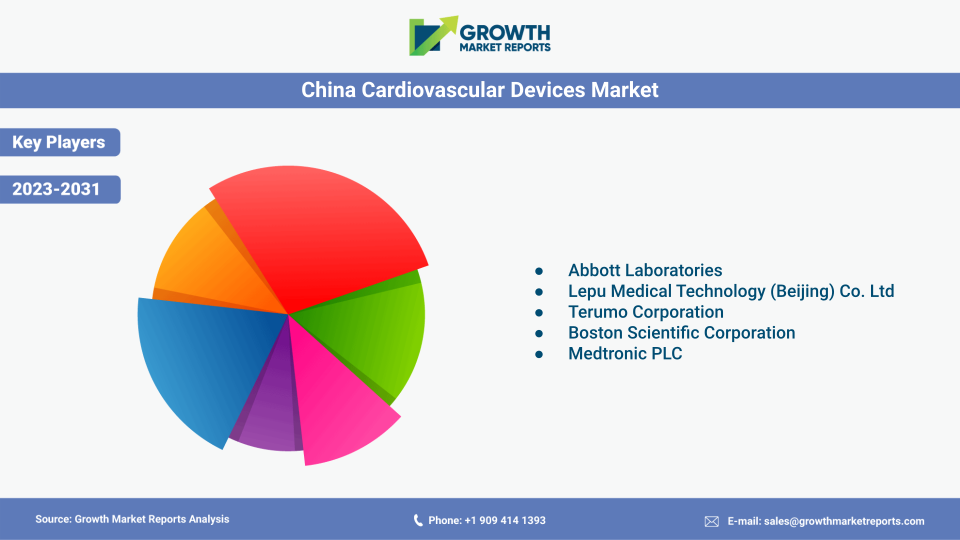

China Cardiovascular Devices Market Key Players

Frequently Asked Questions

Major players include Medtronic, Abbott Laboratories, Boston Scientific, Edwards Lifesciences, Johnson & Johnson (Biosense Webster), Siemens Healthineers, GE Healthcare, Philips Healthcare, Terumo Corporation, and B. Braun Melsungen AG.

Major challenges include stringent regulatory requirements, lengthy approval processes, high device costs, reimbursement issues, and competition from alternative therapies.

Innovations include artificial intelligence, robotics, minimally invasive surgical techniques, digital health integration (remote monitoring, telemedicine), and next-generation devices like leadless pacemakers and bioresorbable scaffolds.

Hospitals are the largest end users, followed by ambulatory surgical centers, clinics, and others (including home healthcare, research institutes, and academic centers).

Key application areas include coronary artery disease, cardiac arrhythmia, heart failure, peripheral vascular disease, and other conditions such as congenital heart disease and structural heart disease.

The market is segmented into diagnostic and monitoring devices (like ECGs, Holter monitors, cardiac imaging systems) and therapeutic and surgical devices (such as pacemakers, ICDs, stents, heart valves, and VADs).

North America currently dominates the market, followed by Europe. The Asia Pacific region is expected to witness the highest growth rate, while Latin America and the Middle East & Africa are emerging as lucrative markets.

Key growth drivers include the rising prevalence of cardiovascular diseases, technological advancements (such as AI and minimally invasive techniques), expanding healthcare infrastructure, and increasing healthcare expenditure worldwide.

The cardiovascular devices market is expected to grow at a CAGR of 6.2% from 2025 to 2033, reaching an estimated value of USD 112.5 billion by the end of the forecast period.

As of 2024, the global cardiovascular devices market size reached USD 65.7 billion, driven by increasing demand for advanced diagnostic and therapeutic solutions.

Table Of Content

Chapter 1 Executive Summary
Chapter 2 Assumptions and Acronyms Used
Chapter 3 Research Methodology
Chapter 4 Cardiovascular Devices Market Overview
   4.1 Introduction
      4.1.1 Market Taxonomy
      4.1.2 Market Definition
      4.1.3 Macro-Economic Factors Impacting the Market Growth
   4.2 Cardiovascular Devices Market Dynamics
      4.2.1 Market Drivers
      4.2.2 Market Restraints
      4.2.3 Market Opportunity
   4.3 Cardiovascular Devices Market - Supply Chain Analysis
      4.3.1 List of Key Suppliers
      4.3.2 List of Key Distributors
      4.3.3 List of Key Consumers
   4.4 Key Forces Shaping the Cardiovascular Devices Market
      4.4.1 Bargaining Power of Suppliers
      4.4.2 Bargaining Power of Buyers
      4.4.3 Threat of Substitution
      4.4.4 Threat of New Entrants
      4.4.5 Competitive Rivalry
   4.5 Global Cardiovascular Devices Market Size & Forecast, 2023-2032
      4.5.1 Cardiovascular Devices Market Size and Y-o-Y Growth
      4.5.2 Cardiovascular Devices Market Absolute $ Opportunity

Chapter 5 Global Cardiovascular Devices Market Analysis and Forecast By Product Type
   5.1 Introduction
      5.1.1 Key Market Trends & Growth Opportunities By Product Type
      5.1.2 Basis Point Share (BPS) Analysis By Product Type
      5.1.3 Absolute $ Opportunity Assessment By Product Type
   5.2 Cardiovascular Devices Market Size Forecast By Product Type
      5.2.1 Diagnostic and Monitoring Devices
      5.2.2 Therapeutic and Surgical Devices
   5.3 Market Attractiveness Analysis By Product Type

Chapter 6 Global Cardiovascular Devices Market Analysis and Forecast By Application
   6.1 Introduction
      6.1.1 Key Market Trends & Growth Opportunities By Application
      6.1.2 Basis Point Share (BPS) Analysis By Application
      6.1.3 Absolute $ Opportunity Assessment By Application
   6.2 Cardiovascular Devices Market Size Forecast By Application
      6.2.1 Coronary Artery Disease
      6.2.2 Cardiac Arrhythmia
      6.2.3 Heart Failure
      6.2.4 Peripheral Vascular Disease
      6.2.5 Others
   6.3 Market Attractiveness Analysis By Application

Chapter 7 Global Cardiovascular Devices Market Analysis and Forecast By End User
   7.1 Introduction
      7.1.1 Key Market Trends & Growth Opportunities By End User
      7.1.2 Basis Point Share (BPS) Analysis By End User
      7.1.3 Absolute $ Opportunity Assessment By End User
   7.2 Cardiovascular Devices Market Size Forecast By End User
      7.2.1 Hospitals
      7.2.2 Ambulatory Surgical Centers
      7.2.3 Clinics
      7.2.4 Others
   7.3 Market Attractiveness Analysis By End User

Chapter 8 Global Cardiovascular Devices Market Analysis and Forecast by Region
   8.1 Introduction
      8.1.1 Key Market Trends & Growth Opportunities By Region
      8.1.2 Basis Point Share (BPS) Analysis By Region
      8.1.3 Absolute $ Opportunity Assessment By Region
   8.2 Cardiovascular Devices Market Size Forecast By Region
      8.2.1 North America
      8.2.2 Europe
      8.2.3 Asia Pacific
      8.2.4 Latin America
      8.2.5 Middle East & Africa (MEA)
   8.3 Market Attractiveness Analysis By Region

Chapter 9 Coronavirus Disease (COVID-19) Impact 
   9.1 Introduction 
   9.2 Current & Future Impact Analysis 
   9.3 Economic Impact Analysis 
   9.4 Government Policies 
   9.5 Investment Scenario

Chapter 10 North America Cardiovascular Devices Analysis and Forecast
   10.1 Introduction
   10.2 North America Cardiovascular Devices Market Size Forecast by Country
      10.2.1 U.S.
      10.2.2 Canada
   10.3 Basis Point Share (BPS) Analysis by Country
   10.4 Absolute $ Opportunity Assessment by Country
   10.5 Market Attractiveness Analysis by Country
   10.6 North America Cardiovascular Devices Market Size Forecast By Product Type
      10.6.1 Diagnostic and Monitoring Devices
      10.6.2 Therapeutic and Surgical Devices
   10.7 Basis Point Share (BPS) Analysis By Product Type 
   10.8 Absolute $ Opportunity Assessment By Product Type 
   10.9 Market Attractiveness Analysis By Product Type
   10.10 North America Cardiovascular Devices Market Size Forecast By Application
      10.10.1 Coronary Artery Disease
      10.10.2 Cardiac Arrhythmia
      10.10.3 Heart Failure
      10.10.4 Peripheral Vascular Disease
      10.10.5 Others
   10.11 Basis Point Share (BPS) Analysis By Application 
   10.12 Absolute $ Opportunity Assessment By Application 
   10.13 Market Attractiveness Analysis By Application
   10.14 North America Cardiovascular Devices Market Size Forecast By End User
      10.14.1 Hospitals
      10.14.2 Ambulatory Surgical Centers
      10.14.3 Clinics
      10.14.4 Others
   10.15 Basis Point Share (BPS) Analysis By End User 
   10.16 Absolute $ Opportunity Assessment By End User 
   10.17 Market Attractiveness Analysis By End User

Chapter 11 Europe Cardiovascular Devices Analysis and Forecast
   11.1 Introduction
   11.2 Europe Cardiovascular Devices Market Size Forecast by Country
      11.2.1 Germany
      11.2.2 France
      11.2.3 Italy
      11.2.4 U.K.
      11.2.5 Spain
      11.2.6 Russia
      11.2.7 Rest of Europe
   11.3 Basis Point Share (BPS) Analysis by Country
   11.4 Absolute $ Opportunity Assessment by Country
   11.5 Market Attractiveness Analysis by Country
   11.6 Europe Cardiovascular Devices Market Size Forecast By Product Type
      11.6.1 Diagnostic and Monitoring Devices
      11.6.2 Therapeutic and Surgical Devices
   11.7 Basis Point Share (BPS) Analysis By Product Type 
   11.8 Absolute $ Opportunity Assessment By Product Type 
   11.9 Market Attractiveness Analysis By Product Type
   11.10 Europe Cardiovascular Devices Market Size Forecast By Application
      11.10.1 Coronary Artery Disease
      11.10.2 Cardiac Arrhythmia
      11.10.3 Heart Failure
      11.10.4 Peripheral Vascular Disease
      11.10.5 Others
   11.11 Basis Point Share (BPS) Analysis By Application 
   11.12 Absolute $ Opportunity Assessment By Application 
   11.13 Market Attractiveness Analysis By Application
   11.14 Europe Cardiovascular Devices Market Size Forecast By End User
      11.14.1 Hospitals
      11.14.2 Ambulatory Surgical Centers
      11.14.3 Clinics
      11.14.4 Others
   11.15 Basis Point Share (BPS) Analysis By End User 
   11.16 Absolute $ Opportunity Assessment By End User 
   11.17 Market Attractiveness Analysis By End User

Chapter 12 Asia Pacific Cardiovascular Devices Analysis and Forecast
   12.1 Introduction
   12.2 Asia Pacific Cardiovascular Devices Market Size Forecast by Country
      12.2.1 China
      12.2.2 Japan
      12.2.3 South Korea
      12.2.4 India
      12.2.5 Australia
      12.2.6 South East Asia (SEA)
      12.2.7 Rest of Asia Pacific (APAC)
   12.3 Basis Point Share (BPS) Analysis by Country
   12.4 Absolute $ Opportunity Assessment by Country
   12.5 Market Attractiveness Analysis by Country
   12.6 Asia Pacific Cardiovascular Devices Market Size Forecast By Product Type
      12.6.1 Diagnostic and Monitoring Devices
      12.6.2 Therapeutic and Surgical Devices
   12.7 Basis Point Share (BPS) Analysis By Product Type 
   12.8 Absolute $ Opportunity Assessment By Product Type 
   12.9 Market Attractiveness Analysis By Product Type
   12.10 Asia Pacific Cardiovascular Devices Market Size Forecast By Application
      12.10.1 Coronary Artery Disease
      12.10.2 Cardiac Arrhythmia
      12.10.3 Heart Failure
      12.10.4 Peripheral Vascular Disease
      12.10.5 Others
   12.11 Basis Point Share (BPS) Analysis By Application 
   12.12 Absolute $ Opportunity Assessment By Application 
   12.13 Market Attractiveness Analysis By Application
   12.14 Asia Pacific Cardiovascular Devices Market Size Forecast By End User
      12.14.1 Hospitals
      12.14.2 Ambulatory Surgical Centers
      12.14.3 Clinics
      12.14.4 Others
   12.15 Basis Point Share (BPS) Analysis By End User 
   12.16 Absolute $ Opportunity Assessment By End User 
   12.17 Market Attractiveness Analysis By End User

Chapter 13 Latin America Cardiovascular Devices Analysis and Forecast
   13.1 Introduction
   13.2 Latin America Cardiovascular Devices Market Size Forecast by Country
      13.2.1 Brazil
      13.2.2 Mexico
      13.2.3 Rest of Latin America (LATAM)
   13.3 Basis Point Share (BPS) Analysis by Country
   13.4 Absolute $ Opportunity Assessment by Country
   13.5 Market Attractiveness Analysis by Country
   13.6 Latin America Cardiovascular Devices Market Size Forecast By Product Type
      13.6.1 Diagnostic and Monitoring Devices
      13.6.2 Therapeutic and Surgical Devices
   13.7 Basis Point Share (BPS) Analysis By Product Type 
   13.8 Absolute $ Opportunity Assessment By Product Type 
   13.9 Market Attractiveness Analysis By Product Type
   13.10 Latin America Cardiovascular Devices Market Size Forecast By Application
      13.10.1 Coronary Artery Disease
      13.10.2 Cardiac Arrhythmia
      13.10.3 Heart Failure
      13.10.4 Peripheral Vascular Disease
      13.10.5 Others
   13.11 Basis Point Share (BPS) Analysis By Application 
   13.12 Absolute $ Opportunity Assessment By Application 
   13.13 Market Attractiveness Analysis By Application
   13.14 Latin America Cardiovascular Devices Market Size Forecast By End User
      13.14.1 Hospitals
      13.14.2 Ambulatory Surgical Centers
      13.14.3 Clinics
      13.14.4 Others
   13.15 Basis Point Share (BPS) Analysis By End User 
   13.16 Absolute $ Opportunity Assessment By End User 
   13.17 Market Attractiveness Analysis By End User

Chapter 14 Middle East & Africa (MEA) Cardiovascular Devices Analysis and Forecast
   14.1 Introduction
   14.2 Middle East & Africa (MEA) Cardiovascular Devices Market Size Forecast by Country
      14.2.1 Saudi Arabia
      14.2.2 South Africa
      14.2.3 UAE
      14.2.4 Rest of Middle East & Africa (MEA)
   14.3 Basis Point Share (BPS) Analysis by Country
   14.4 Absolute $ Opportunity Assessment by Country
   14.5 Market Attractiveness Analysis by Country
   14.6 Middle East & Africa (MEA) Cardiovascular Devices Market Size Forecast By Product Type
      14.6.1 Diagnostic and Monitoring Devices
      14.6.2 Therapeutic and Surgical Devices
   14.7 Basis Point Share (BPS) Analysis By Product Type 
   14.8 Absolute $ Opportunity Assessment By Product Type 
   14.9 Market Attractiveness Analysis By Product Type
   14.10 Middle East & Africa (MEA) Cardiovascular Devices Market Size Forecast By Application
      14.10.1 Coronary Artery Disease
      14.10.2 Cardiac Arrhythmia
      14.10.3 Heart Failure
      14.10.4 Peripheral Vascular Disease
      14.10.5 Others
   14.11 Basis Point Share (BPS) Analysis By Application 
   14.12 Absolute $ Opportunity Assessment By Application 
   14.13 Market Attractiveness Analysis By Application
   14.14 Middle East & Africa (MEA) Cardiovascular Devices Market Size Forecast By End User
      14.14.1 Hospitals
      14.14.2 Ambulatory Surgical Centers
      14.14.3 Clinics
      14.14.4 Others
   14.15 Basis Point Share (BPS) Analysis By End User 
   14.16 Absolute $ Opportunity Assessment By End User 
   14.17 Market Attractiveness Analysis By End User

Chapter 15 Competition Landscape 
   15.1 Cardiovascular Devices Market: Competitive Dashboard
   15.2 Global Cardiovascular Devices Market: Market Share Analysis, 2023
   15.3 Company Profiles (Details – Overview, Financials, Developments, Strategy) 
      15.3.1 Medtronic
Abbott Laboratories
Boston Scientific Corporation
Edwards Lifesciences Corporation
Johnson & Johnson (Biosense Webster)
Siemens Healthineers
GE Healthcare
Philips Healthcare
Terumo Corporation
B. Braun Melsungen AG
LivaNova PLC
MicroPort Scientific Corporation
Biotronik SE & Co. KG
Cardinal Health
W. L. Gore & Associates
Getinge AB
Meril Life Sciences Pvt. Ltd.
Stryker Corporation
Cook Medical
Zoll Medical Corporation

Methodology

Our Clients

sinopec
General Electric
Honda Motor Co. Ltd.
Deloitte
FedEx Logistics
General Mills
Dassault Aviation
Microsoft