Calcium Fluoride Market Research Report 2033

Calcium Fluoride Market Research Report 2033

Segments - by Form (Powder, Granules, Crystals, Others), by Purity (High Purity, Low Purity), by Application (Metallurgy, Optical, Chemical, Glass Manufacturing, Pharmaceuticals, Others), by End-Use Industry (Chemical, Metallurgical, Optical, Healthcare, Others)

https://growthmarketreports.com/Raksha
Author : Raksha Sharma
https://growthmarketreports.com/Vaibhav
Fact-checked by : V. Chandola
https://growthmarketreports.com/Shruti
Editor : Shruti Bhat

Upcoming | Report ID :MC-4991 | 4.8 Rating | 85 Reviews | 253 Pages | Format : Docx PDF

Report Description


Calcium Fluoride Market Outlook

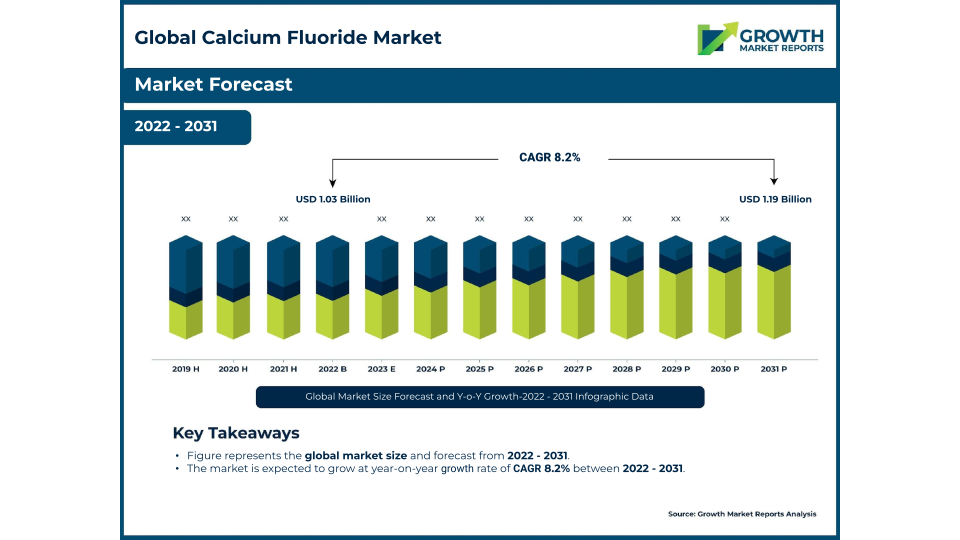
According to our latest research, the global calcium fluoride market size reached USD 2.38 billion in 2024, reflecting robust demand across multiple industrial sectors. The market is exhibiting a steady growth trajectory, supported by a CAGR of 5.1% from 2025 to 2033. By the end of the forecast period in 2033, the calcium fluoride market is anticipated to attain a value of USD 3.72 billion. Key growth factors driving this expansion include rising demand in metallurgy, the optical sector, and glass manufacturing, coupled with technological advancements in material processing and increasing utilization in emerging economies.

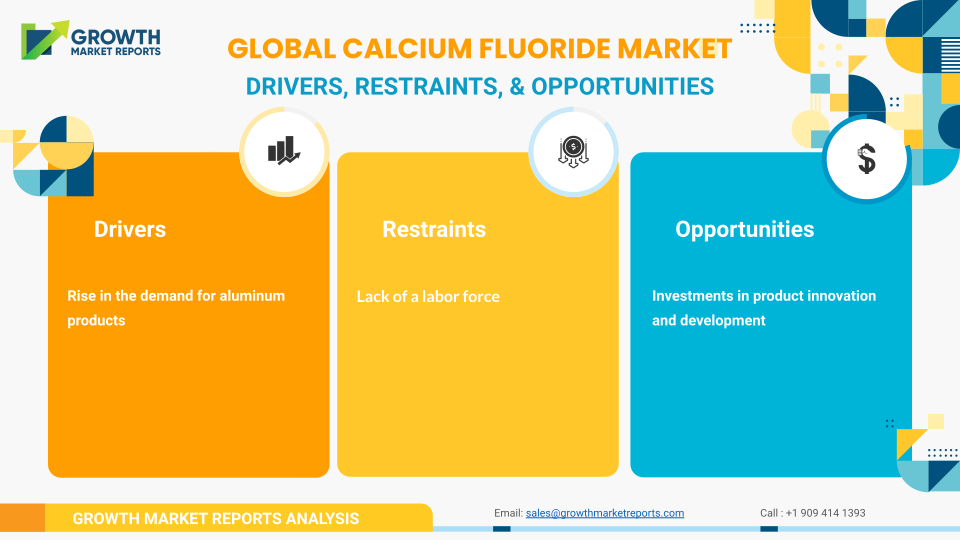
The primary growth catalyst for the calcium fluoride market is its indispensable role as a fluxing agent in the metallurgical industry. Calcium fluoride is extensively used in the production of steel and aluminum, where it significantly reduces the melting point of raw materials, enhances energy efficiency, and improves the quality of the final product. The ongoing expansion of global steel and aluminum output, particularly in Asia Pacific and emerging markets, has been a pivotal force behind the rising consumption of calcium fluoride. Furthermore, the adoption of advanced metallurgical processes and the increasing focus on sustainable production methods are expected to further amplify the demand for high purity calcium fluoride, thereby propelling market growth over the next decade.

In addition to its metallurgical applications, calcium fluoride is witnessing surging demand in the optical industry due to its unique optical properties, such as high transparency to ultraviolet and infrared light. It is a critical raw material for manufacturing lenses, windows, and prisms in high-performance optical systems used in scientific research, defense, and medical imaging. The proliferation of advanced technologies, such as lasers and photolithography in semiconductor manufacturing, has further broadened the application spectrum of calcium fluoride. This trend is supported by increasing investments in R&D and the rapid growth of sectors reliant on high-precision optics, which is expected to sustain the upward trajectory of the calcium fluoride market.

The glass manufacturing sector also significantly contributes to the growth of the calcium fluoride market. Calcium fluoride acts as a stabilizer and fluxing agent in the production of specialty glass, including opal and enamel glass. The rising demand for decorative glassware, architectural glass, and glass used in electronics and solar panels is creating new growth avenues for calcium fluoride suppliers. Moreover, the chemical industry’s use of calcium fluoride in the synthesis of hydrofluoric acid, a precursor to numerous industrial chemicals, further elevates its market relevance. The synergy among these diverse applications, combined with the ongoing expansion of end-use industries, is expected to solidify the market’s position in the coming years.

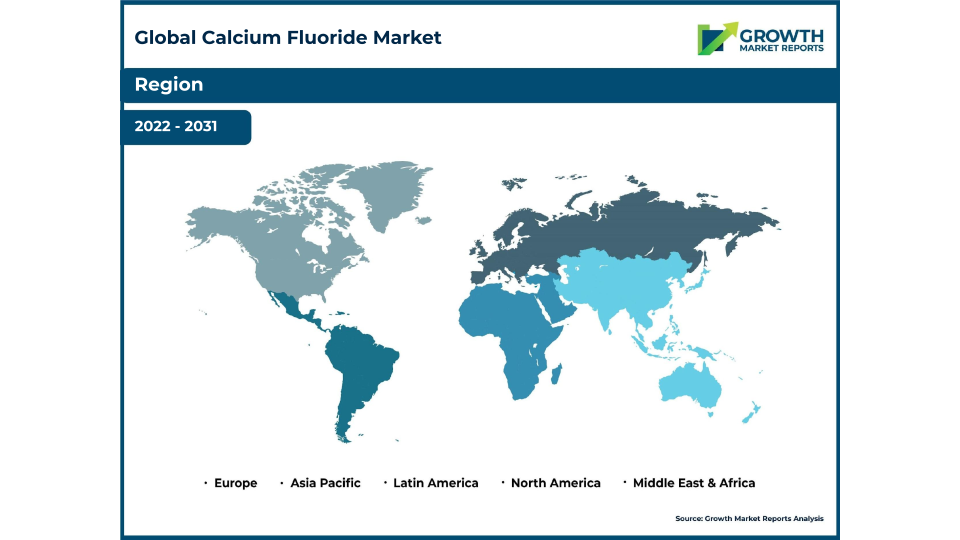
From a regional perspective, Asia Pacific continues to dominate the global calcium fluoride market, accounting for the largest share due to its strong industrial base, especially in China and India. The region’s rapid urbanization, infrastructure development, and growing investments in manufacturing and technology sectors are key drivers of market expansion. North America and Europe also represent significant markets, driven by advancements in optical technologies and a well-established metallurgical sector. Meanwhile, Latin America and the Middle East & Africa are emerging as promising markets, fueled by increasing investments in mining, metallurgy, and industrial development. This regional diversification is expected to enhance the resilience and growth prospects of the global calcium fluoride market.

Global Calcium Fluoride Industry Outlook

Form Analysis

The calcium fluoride market is segmented by form into powder, granules, crystals, and others, each catering to specific industrial requirements. Powdered calcium fluoride is the most widely used form, primarily due to its ease of handling, uniform particle size, and versatility in application. In metallurgy, powdered calcium fluoride is favored for its rapid dissolution and effective fluxing action, which streamlines the smelting process. The glass manufacturing and chemical industries also prefer the powdered form for its homogeneity and ability to blend seamlessly with other raw materials. The consistent quality and performance of powdered calcium fluoride make it the preferred choice for large-scale industrial operations.

Granular calcium fluoride, on the other hand, is gaining traction in applications where controlled release and slow dissolution are desired. Its larger particle size makes it suitable for use in continuous production processes, such as in the steel and aluminum industries. Granules are less prone to dust formation, which not only improves workplace safety but also enhances process efficiency by minimizing material loss. The growing adoption of automated and continuous production technologies in metallurgical plants is expected to drive the demand for granular calcium fluoride over the forecast period.

The crystalline form of calcium fluoride commands a premium in the optical industry due to its exceptional purity and optical clarity. High-quality calcium fluoride crystals are essential for manufacturing precision optical components, such as lenses and windows, used in lasers, telescopes, and advanced imaging systems. The increasing demand for high-performance optical devices in scientific, medical, and defense applications is fueling the growth of the crystalline calcium fluoride segment. Manufacturers are investing in advanced crystal growth technologies to meet the stringent quality requirements of the optical sector, further enhancing the market potential of this segment.

Other forms of calcium fluoride, including pellets and custom-engineered shapes, cater to niche applications where specific physical or chemical properties are required. These forms are often used in research and specialty applications, where conventional forms may not meet the technical specifications. The ongoing development of new materials and processing techniques is expected to expand the range of available forms, offering greater flexibility and customization to end-users. Overall, the diverse forms of calcium fluoride available in the market enable suppliers to address the unique needs of various industries, thereby supporting the sustained growth of the market.

Report Scope

Attributes Details
Report Title Calcium Fluoride Market Research Report 2033
By Form Powder, Granules, Crystals, Others
By Purity High Purity, Low Purity
By Application Metallurgy, Optical, Chemical, Glass Manufacturing, Pharmaceuticals, Others
By End-Use Industry Chemical, Metallurgical, Optical, Healthcare, Others
Regions Covered North America, Europe, APAC, Latin America, MEA
Base Year 2024
Historic Data 2018-2023
Forecast Period 2025-2033
Number of Pages 253
Number of Tables & Figures 289
Customization Available Yes, the report can be customized as per your need.

Purity Analysis

Purity is a critical parameter in the calcium fluoride market, with products broadly classified into high purity and low purity grades. High purity calcium fluoride is essential for applications demanding exceptional chemical and optical properties, such as in the optical, electronics, and pharmaceutical industries. The stringent quality standards in these sectors necessitate the use of calcium fluoride with minimal impurities, as even trace contaminants can adversely affect product performance. The growing emphasis on high-precision optical systems, advanced electronics, and pharmaceutical formulations is driving the demand for high purity calcium fluoride, prompting manufacturers to invest in advanced purification technologies.

Low purity calcium fluoride, while less expensive, serves as a cost-effective solution for bulk industrial applications, particularly in metallurgy and glass manufacturing. In these sectors, the primary function of calcium fluoride is as a fluxing agent or stabilizer, where minor impurities do not significantly impact performance. The widespread use of low purity calcium fluoride in steel and aluminum production, as well as in the synthesis of hydrofluoric acid, underpins its substantial market share. The continuous expansion of the global metallurgical and chemical industries is expected to sustain the demand for low purity calcium fluoride over the forecast period.

The distinction between high and low purity calcium fluoride is also reflected in the supply chain and pricing dynamics. High purity products command a premium price due to the additional processing and quality control measures required to achieve the desired specifications. Suppliers are increasingly focusing on vertical integration and advanced refining processes to enhance product quality and maintain competitive pricing. In contrast, the low purity segment is characterized by high-volume production and intense price competition, with manufacturers seeking to optimize operational efficiencies and reduce costs.

As the market continues to evolve, there is a growing trend towards customization and the development of application-specific grades of calcium fluoride. End-users are seeking products tailored to their unique process requirements, driving innovation in purification and processing technologies. This trend is particularly evident in high-growth sectors such as optics, electronics, and pharmaceuticals, where the demand for ultra-high purity materials is expected to rise steadily. Overall, the purity segment plays a pivotal role in shaping the competitive landscape and growth trajectory of the calcium fluoride market.

Application Analysis

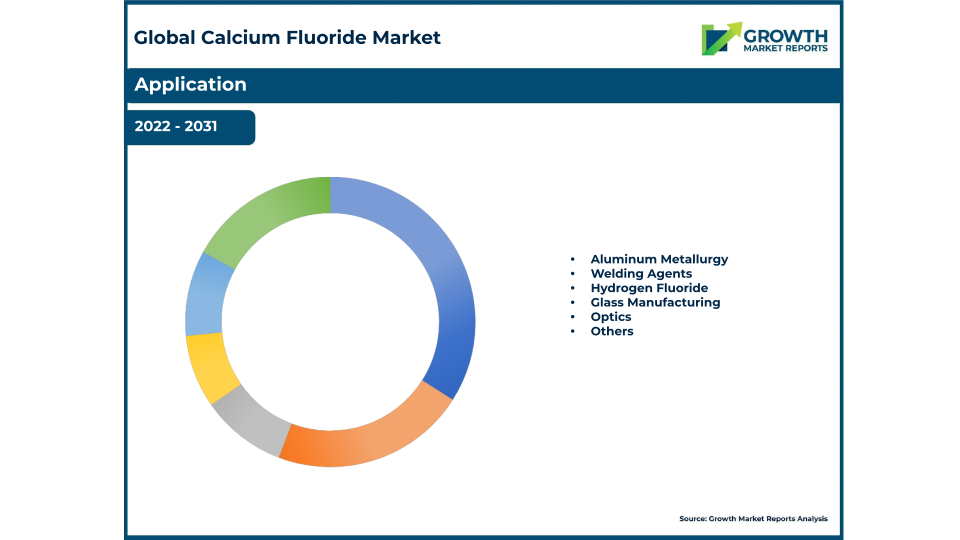
The application landscape of the calcium fluoride market is highly diverse, encompassing metallurgy, optical, chemical, glass manufacturing, pharmaceuticals, and other sectors. Metallurgy remains the largest application segment, accounting for a significant share of global calcium fluoride consumption. The material’s role as a fluxing agent in steel and aluminum production is indispensable, as it enhances process efficiency, reduces energy consumption, and improves the quality of the final product. The ongoing modernization of metallurgical plants and the adoption of advanced smelting technologies are expected to further boost the demand for calcium fluoride in this segment.

The optical industry represents a high-value application for calcium fluoride, leveraging its unique properties such as high transparency to ultraviolet and infrared light, low refractive index, and resistance to thermal shock. Calcium fluoride is a critical raw material for manufacturing precision optical components used in lasers, telescopes, cameras, and scientific instruments. The rapid advancements in photonics, semiconductor manufacturing, and medical imaging are driving the demand for high-quality optical grade calcium fluoride. This trend is supported by increasing investments in research and development, as well as the growing adoption of advanced optical technologies in various end-use sectors.

In the chemical industry, calcium fluoride is primarily used in the production of hydrofluoric acid, which serves as a precursor for numerous fluorine-containing chemicals and materials. Hydrofluoric acid is essential for the manufacture of refrigerants, pharmaceuticals, agrochemicals, and polymers, among others. The expanding chemical manufacturing sector, particularly in emerging economies, is expected to drive the demand for calcium fluoride as a key raw material. Moreover, the growing emphasis on sustainable and environmentally friendly chemical processes is prompting manufacturers to explore new applications and processing methods for calcium fluoride.

Glass manufacturing is another significant application segment, where calcium fluoride acts as a fluxing agent and stabilizer in the production of specialty glass products. The rising demand for decorative, architectural, and technical glass, as well as glass used in electronics and solar panels, is creating new growth opportunities for calcium fluoride suppliers. Additionally, the pharmaceutical industry is emerging as a niche application area, with calcium fluoride being used in the formulation of certain medications and dental products. The continuous expansion of these diverse application segments is expected to sustain the long-term growth of the calcium fluoride market.

End-Use Industry Analysis

The end-use industry segmentation of the calcium fluoride market highlights its widespread adoption across chemical, metallurgical, optical, healthcare, and other sectors. The chemical industry is a major consumer of calcium fluoride, utilizing it in the synthesis of hydrofluoric acid and other fluorine-based chemicals. The ongoing expansion of the global chemical manufacturing sector, driven by rising demand for specialty chemicals, pharmaceuticals, and advanced materials, is expected to fuel the growth of the calcium fluoride market in this segment. Manufacturers are increasingly focusing on sustainable production methods and resource optimization, further enhancing the market potential of calcium fluoride.

The metallurgical industry remains a cornerstone of the calcium fluoride market, with the material playing a critical role in steel and aluminum production. The adoption of advanced metallurgical processes, coupled with the increasing focus on energy efficiency and product quality, is driving the demand for high-grade calcium fluoride. The growth of infrastructure, construction, and automotive sectors, particularly in emerging economies, is expected to sustain the robust demand for calcium fluoride in the metallurgical industry over the forecast period.

The optical industry represents a high-value end-use segment, leveraging the unique optical properties of calcium fluoride for the production of precision components used in scientific research, defense, and medical imaging. The proliferation of advanced technologies, such as lasers, photonics, and semiconductor manufacturing, is creating new growth avenues for calcium fluoride suppliers. The increasing investments in research and development, coupled with the rising demand for high-performance optical systems, are expected to drive the growth of the calcium fluoride market in the optical industry.

The healthcare sector is emerging as a promising end-use industry for calcium fluoride, particularly in the formulation of pharmaceuticals, dental products, and medical imaging devices. The growing emphasis on preventive healthcare and the increasing adoption of advanced medical technologies are expected to fuel the demand for high-purity calcium fluoride in this segment. Other end-use industries, such as electronics, ceramics, and environmental engineering, are also contributing to the diversification and expansion of the calcium fluoride market. The broad spectrum of end-use industries underscores the versatility and strategic importance of calcium fluoride in the global industrial landscape.

Opportunities & Threats

The calcium fluoride market presents a multitude of opportunities, particularly in the context of technological advancements and the diversification of application sectors. One of the most promising opportunities lies in the development of high-purity calcium fluoride for use in advanced optical and electronic applications. The increasing demand for high-performance materials in lasers, photonics, and semiconductor manufacturing is driving innovation in purification and processing technologies. Manufacturers who can deliver ultra-high purity calcium fluoride tailored to the specific needs of these industries are well-positioned to capture a significant share of the market. Additionally, the growing emphasis on sustainable production methods and resource efficiency is creating new opportunities for process optimization and the development of environmentally friendly products.

Emerging markets, particularly in Asia Pacific and Latin America, offer substantial growth potential for calcium fluoride suppliers. The rapid industrialization, urbanization, and infrastructure development in these regions are driving the demand for steel, aluminum, glass, and chemicals, all of which rely on calcium fluoride as a key raw material. The increasing investments in manufacturing, construction, and technology sectors are expected to create new growth avenues for calcium fluoride suppliers. Furthermore, the expansion of the healthcare and pharmaceutical sectors in these regions is opening up new application areas for high-purity calcium fluoride. By leveraging these growth opportunities, market participants can enhance their competitive position and drive long-term value creation.

Despite the positive outlook, the calcium fluoride market faces certain restraining factors, primarily related to environmental regulations and the availability of substitutes. The mining and processing of calcium fluoride can generate environmental concerns, such as the release of fluorine compounds and the management of mining waste. Stringent environmental regulations and the increasing focus on sustainability are compelling manufacturers to adopt cleaner production methods and invest in waste management solutions. Additionally, the availability of alternative fluxing agents and raw materials, particularly in the metallurgical and chemical industries, poses a potential threat to market growth. To mitigate these risks, market participants must prioritize sustainability, innovation, and regulatory compliance in their operations.

Regional Outlook

The Asia Pacific region dominates the global calcium fluoride market, accounting for approximately 48% of global market revenue in 2024, which translates to a market size of about USD 1.14 billion. This dominance is driven by the region’s robust industrial base, particularly in China and India, where rapid urbanization, infrastructure development, and manufacturing expansion are fueling the demand for calcium fluoride. The region’s strong presence in metallurgy, glass manufacturing, and chemical production underpins its leading position in the global market. The Asia Pacific calcium fluoride market is expected to maintain a healthy CAGR of 5.7% through 2033, outpacing other regions due to ongoing investments in industrial development and technological innovation.

North America is the second-largest market for calcium fluoride, with a market size of USD 540 million in 2024. The region’s well-established metallurgical and optical industries, coupled with significant investments in research and development, are key drivers of market growth. The United States, in particular, is a major consumer of high-purity calcium fluoride for advanced optical and electronic applications. The region is also witnessing a steady increase in demand from the healthcare and pharmaceutical sectors, further diversifying the application landscape. North America’s focus on technological innovation and quality standards is expected to sustain its strong position in the global calcium fluoride market.

Europe holds a significant share of the calcium fluoride market, with a market size of USD 430 million in 2024. The region’s advanced manufacturing sector, strong presence in specialty chemicals, and leadership in optical technologies are key factors driving market growth. Countries such as Germany, France, and the United Kingdom are at the forefront of innovation in glass manufacturing, photonics, and medical imaging, creating sustained demand for high-quality calcium fluoride. Meanwhile, Latin America and the Middle East & Africa, with market sizes of USD 170 million and USD 100 million respectively in 2024, are emerging as promising markets, driven by increasing investments in industrial development and infrastructure. The regional diversification of the calcium fluoride market enhances its resilience and growth prospects, ensuring a balanced and sustainable expansion over the forecast period.

Calcium Fluoride Market Statistics

Competitor Outlook

The global calcium fluoride market is characterized by a competitive landscape with the presence of both established multinational corporations and regional players. The market is moderately consolidated, with leading companies focusing on capacity expansion, technological innovation, and strategic partnerships to strengthen their market position. Major players are investing in research and development to enhance product quality, develop high-purity grades, and expand their application portfolio. The emphasis on sustainability and environmental compliance is also shaping the competitive dynamics, with companies adopting cleaner production methods and investing in waste management solutions to meet regulatory requirements and customer expectations.

Innovation is a key differentiator in the calcium fluoride market, particularly in high-value segments such as optics and electronics. Companies that can deliver ultra-high purity calcium fluoride tailored to the specific needs of advanced applications are gaining a competitive edge. The development of new purification and processing technologies is enabling suppliers to meet the stringent quality standards of the optical, electronic, and pharmaceutical industries. In addition, the growing trend towards vertical integration and supply chain optimization is enhancing operational efficiencies and ensuring a stable supply of high-quality calcium fluoride to end-users.

Strategic partnerships and collaborations are increasingly common in the calcium fluoride market, as companies seek to leverage complementary strengths and expand their geographic reach. Joint ventures with mining companies, technology providers, and end-users are enabling market participants to access new resources, enhance product offerings, and enter emerging markets. Mergers and acquisitions are also playing a role in market consolidation, with leading players acquiring smaller companies to expand their product portfolio and strengthen their market presence. The competitive landscape is further shaped by the entry of new players, particularly in emerging markets, who are leveraging local resources and cost advantages to compete with established players.

Some of the major companies operating in the global calcium fluoride market include Solvay S.A., Fluorsid S.p.A., MINERSA Group, Mexichem S.A.B. de C.V., China Kings Resources Group Co., Ltd., Yingpeng Chemical Co., Ltd., Centralfluor Industries Group, Inc., and Sinochem Lantian Co., Ltd.. Solvay S.A. is renowned for its extensive product portfolio and strong focus on high-purity calcium fluoride for optical and electronic applications. Fluorsid S.p.A. and MINERSA Group are leading suppliers of metallurgical and chemical grade calcium fluoride, with a strong presence in Europe and Latin America. Mexichem, now part of Orbia, is a global leader in fluorine-based chemicals, with integrated operations spanning mining, processing, and distribution. Chinese companies such as China Kings Resources and Yingpeng Chemical are leveraging local resource advantages and cost efficiencies to expand their global footprint, particularly in the Asia Pacific region. These companies are investing in capacity expansion, technological innovation, and sustainability initiatives to maintain their competitive edge and capitalize on the growing demand for calcium fluoride worldwide.

Key Players

  • Solvay S.A.
  • Mongolrostsvetmet LLC
  • Fluorsid S.p.A.
  • Minersa Group
  • Sinochem Group
  • Mexichem S.A.B. de C.V. (Orbia)
  • Centralfluor Industries Group
  • China Kings Resources Group Co., Ltd.
  • Ying Peng Chemical Co., Ltd.
  • CFIC (China Fluorspar Co., Ltd.)
  • Wuyi Shenlong Flotation Co., Ltd.
  • Masan Resources
  • Tertiary Minerals plc
  • Kenya Fluorspar Company Ltd.
  • Sichuan Xinyang Mining Co., Ltd.
  • British Fluorspar Ltd.
  • RUSAL
  • Steyuan Mineral Resources Group
  • Inner Mongolia Huasheng Mining Co., Ltd.
  • Luoyang Lion Fluorite Mining Co., Ltd.
Calcium Fluoride Market Overview

Segments

The Calcium Fluoride market has been segmented on the basis of

Form

  • Powder
  • Granules
  • Crystals
  • Others

Purity

  • High Purity
  • Low Purity

Application

  • Metallurgy
  • Optical
  • Chemical
  • Glass Manufacturing
  • Pharmaceuticals
  • Others

End-Use Industry

  • Chemical
  • Metallurgical
  • Optical
  • Healthcare
  • Others

Competitive Landscape

The key players competing in the global calcium fluoride market are Solvay; Reade International Corp.; American Elements; GFS Chemicals, Inc.; SkinNeutrAll; Fluorchemie Group; KPL International Limited; Mitsui Mining and Smelting Co.; Super Conductor Materials Inc.; and Alufluor.

These companies adopted development strategies including mergers, acquisitions, partnerships, collaboration, product launches, and production expansion to expand their consumer base worldwide. For instance,

In March, 2021- SkinNeutrAll offers a solution to chemical incidents. The risk of injuries and infections increases when active and hazardous chemicals come in contact with the skin.
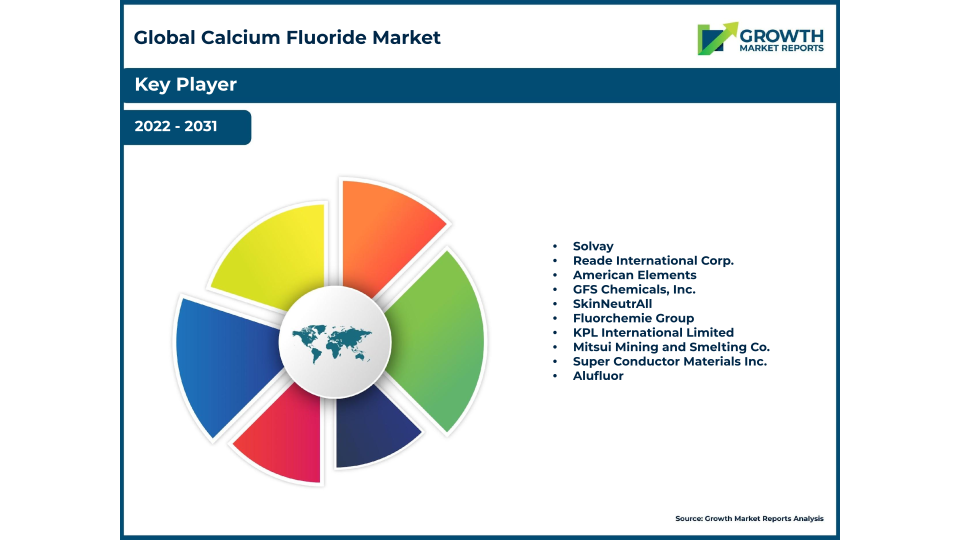

Calcium Fluoride Market Key Players 

Frequently Asked Questions

Yes, the calcium fluoride market research report offers customization options to meet specific client requirements.

In the optical industry, high-purity crystalline calcium fluoride is used for manufacturing precision components like lenses, windows, and prisms due to its high transparency to UV and IR light and low refractive index.

Key challenges include stringent environmental regulations, the need for sustainable production, and competition from alternative fluxing agents and raw materials.

Growth is driven by rising demand in metallurgy, optics, and glass manufacturing, technological advancements, increasing use in emerging economies, and the expansion of end-use industries.

Major companies include Solvay S.A., Fluorsid S.p.A., MINERSA Group, Mexichem S.A.B. de C.V. (Orbia), China Kings Resources Group, Yingpeng Chemical Co., Centralfluor Industries Group, and Sinochem Lantian Co., Ltd.

Purity is critical, with high purity calcium fluoride used in optics, electronics, and pharmaceuticals due to strict quality standards, while low purity grades are used in bulk applications like metallurgy and glass manufacturing.

Calcium fluoride is available in powder, granules, crystals, and other forms such as pellets and custom-engineered shapes, each catering to specific industrial requirements.

Asia Pacific dominates the calcium fluoride market, accounting for about 48% of global revenue in 2024, driven by strong industrial bases in China and India.

Calcium fluoride is primarily used in metallurgy (as a fluxing agent in steel and aluminum production), the optical industry (for high-performance lenses, windows, and prisms), glass manufacturing (as a stabilizer and fluxing agent), the chemical industry (for hydrofluoric acid synthesis), and pharmaceuticals.

The global calcium fluoride market reached USD 2.38 billion in 2024 and is projected to grow at a CAGR of 5.1% from 2025 to 2033, reaching USD 3.72 billion by 2033.

Table Of Content

Chapter 1 Executive Summary
Chapter 2 Assumptions and Acronyms Used
Chapter 3 Research Methodology
Chapter 4 Calcium Fluoride Market Overview
   4.1 Introduction
      4.1.1 Market Taxonomy
      4.1.2 Market Definition
      4.1.3 Macro-Economic Factors Impacting the Market Growth
   4.2 Calcium Fluoride Market Dynamics
      4.2.1 Market Drivers
      4.2.2 Market Restraints
      4.2.3 Market Opportunity
   4.3 Calcium Fluoride Market - Supply Chain Analysis
      4.3.1 List of Key Suppliers
      4.3.2 List of Key Distributors
      4.3.3 List of Key Consumers
   4.4 Key Forces Shaping the Calcium Fluoride Market
      4.4.1 Bargaining Power of Suppliers
      4.4.2 Bargaining Power of Buyers
      4.4.3 Threat of Substitution
      4.4.4 Threat of New Entrants
      4.4.5 Competitive Rivalry
   4.5 Global Calcium Fluoride Market Size & Forecast, 2023-2032
      4.5.1 Calcium Fluoride Market Size and Y-o-Y Growth
      4.5.2 Calcium Fluoride Market Absolute $ Opportunity

Chapter 5 Global Calcium Fluoride Market Analysis and Forecast By Form
   5.1 Introduction
      5.1.1 Key Market Trends & Growth Opportunities By Form
      5.1.2 Basis Point Share (BPS) Analysis By Form
      5.1.3 Absolute $ Opportunity Assessment By Form
   5.2 Calcium Fluoride Market Size Forecast By Form
      5.2.1 Powder
      5.2.2 Granules
      5.2.3 Crystals
      5.2.4 Others
   5.3 Market Attractiveness Analysis By Form

Chapter 6 Global Calcium Fluoride Market Analysis and Forecast By Purity
   6.1 Introduction
      6.1.1 Key Market Trends & Growth Opportunities By Purity
      6.1.2 Basis Point Share (BPS) Analysis By Purity
      6.1.3 Absolute $ Opportunity Assessment By Purity
   6.2 Calcium Fluoride Market Size Forecast By Purity
      6.2.1 High Purity
      6.2.2 Low Purity
   6.3 Market Attractiveness Analysis By Purity

Chapter 7 Global Calcium Fluoride Market Analysis and Forecast By Application
   7.1 Introduction
      7.1.1 Key Market Trends & Growth Opportunities By Application
      7.1.2 Basis Point Share (BPS) Analysis By Application
      7.1.3 Absolute $ Opportunity Assessment By Application
   7.2 Calcium Fluoride Market Size Forecast By Application
      7.2.1 Metallurgy
      7.2.2 Optical
      7.2.3 Chemical
      7.2.4 Glass Manufacturing
      7.2.5 Pharmaceuticals
      7.2.6 Others
   7.3 Market Attractiveness Analysis By Application

Chapter 8 Global Calcium Fluoride Market Analysis and Forecast By End-Use Industry
   8.1 Introduction
      8.1.1 Key Market Trends & Growth Opportunities By End-Use Industry
      8.1.2 Basis Point Share (BPS) Analysis By End-Use Industry
      8.1.3 Absolute $ Opportunity Assessment By End-Use Industry
   8.2 Calcium Fluoride Market Size Forecast By End-Use Industry
      8.2.1 Chemical
      8.2.2 Metallurgical
      8.2.3 Optical
      8.2.4 Healthcare
      8.2.5 Others
   8.3 Market Attractiveness Analysis By End-Use Industry

Chapter 9 Global Calcium Fluoride Market Analysis and Forecast by Region
   9.1 Introduction
      9.1.1 Key Market Trends & Growth Opportunities By Region
      9.1.2 Basis Point Share (BPS) Analysis By Region
      9.1.3 Absolute $ Opportunity Assessment By Region
   9.2 Calcium Fluoride Market Size Forecast By Region
      9.2.1 North America
      9.2.2 Europe
      9.2.3 Asia Pacific
      9.2.4 Latin America
      9.2.5 Middle East & Africa (MEA)
   9.3 Market Attractiveness Analysis By Region

Chapter 10 Coronavirus Disease (COVID-19) Impact 
   10.1 Introduction 
   10.2 Current & Future Impact Analysis 
   10.3 Economic Impact Analysis 
   10.4 Government Policies 
   10.5 Investment Scenario

Chapter 11 North America Calcium Fluoride Analysis and Forecast
   11.1 Introduction
   11.2 North America Calcium Fluoride Market Size Forecast by Country
      11.2.1 U.S.
      11.2.2 Canada
   11.3 Basis Point Share (BPS) Analysis by Country
   11.4 Absolute $ Opportunity Assessment by Country
   11.5 Market Attractiveness Analysis by Country
   11.6 North America Calcium Fluoride Market Size Forecast By Form
      11.6.1 Powder
      11.6.2 Granules
      11.6.3 Crystals
      11.6.4 Others
   11.7 Basis Point Share (BPS) Analysis By Form 
   11.8 Absolute $ Opportunity Assessment By Form 
   11.9 Market Attractiveness Analysis By Form
   11.10 North America Calcium Fluoride Market Size Forecast By Purity
      11.10.1 High Purity
      11.10.2 Low Purity
   11.11 Basis Point Share (BPS) Analysis By Purity 
   11.12 Absolute $ Opportunity Assessment By Purity 
   11.13 Market Attractiveness Analysis By Purity
   11.14 North America Calcium Fluoride Market Size Forecast By Application
      11.14.1 Metallurgy
      11.14.2 Optical
      11.14.3 Chemical
      11.14.4 Glass Manufacturing
      11.14.5 Pharmaceuticals
      11.14.6 Others
   11.15 Basis Point Share (BPS) Analysis By Application 
   11.16 Absolute $ Opportunity Assessment By Application 
   11.17 Market Attractiveness Analysis By Application
   11.18 North America Calcium Fluoride Market Size Forecast By End-Use Industry
      11.18.1 Chemical
      11.18.2 Metallurgical
      11.18.3 Optical
      11.18.4 Healthcare
      11.18.5 Others
   11.19 Basis Point Share (BPS) Analysis By End-Use Industry 
   11.20 Absolute $ Opportunity Assessment By End-Use Industry 
   11.21 Market Attractiveness Analysis By End-Use Industry

Chapter 12 Europe Calcium Fluoride Analysis and Forecast
   12.1 Introduction
   12.2 Europe Calcium Fluoride Market Size Forecast by Country
      12.2.1 Germany
      12.2.2 France
      12.2.3 Italy
      12.2.4 U.K.
      12.2.5 Spain
      12.2.6 Russia
      12.2.7 Rest of Europe
   12.3 Basis Point Share (BPS) Analysis by Country
   12.4 Absolute $ Opportunity Assessment by Country
   12.5 Market Attractiveness Analysis by Country
   12.6 Europe Calcium Fluoride Market Size Forecast By Form
      12.6.1 Powder
      12.6.2 Granules
      12.6.3 Crystals
      12.6.4 Others
   12.7 Basis Point Share (BPS) Analysis By Form 
   12.8 Absolute $ Opportunity Assessment By Form 
   12.9 Market Attractiveness Analysis By Form
   12.10 Europe Calcium Fluoride Market Size Forecast By Purity
      12.10.1 High Purity
      12.10.2 Low Purity
   12.11 Basis Point Share (BPS) Analysis By Purity 
   12.12 Absolute $ Opportunity Assessment By Purity 
   12.13 Market Attractiveness Analysis By Purity
   12.14 Europe Calcium Fluoride Market Size Forecast By Application
      12.14.1 Metallurgy
      12.14.2 Optical
      12.14.3 Chemical
      12.14.4 Glass Manufacturing
      12.14.5 Pharmaceuticals
      12.14.6 Others
   12.15 Basis Point Share (BPS) Analysis By Application 
   12.16 Absolute $ Opportunity Assessment By Application 
   12.17 Market Attractiveness Analysis By Application
   12.18 Europe Calcium Fluoride Market Size Forecast By End-Use Industry
      12.18.1 Chemical
      12.18.2 Metallurgical
      12.18.3 Optical
      12.18.4 Healthcare
      12.18.5 Others
   12.19 Basis Point Share (BPS) Analysis By End-Use Industry 
   12.20 Absolute $ Opportunity Assessment By End-Use Industry 
   12.21 Market Attractiveness Analysis By End-Use Industry

Chapter 13 Asia Pacific Calcium Fluoride Analysis and Forecast
   13.1 Introduction
   13.2 Asia Pacific Calcium Fluoride Market Size Forecast by Country
      13.2.1 China
      13.2.2 Japan
      13.2.3 South Korea
      13.2.4 India
      13.2.5 Australia
      13.2.6 South East Asia (SEA)
      13.2.7 Rest of Asia Pacific (APAC)
   13.3 Basis Point Share (BPS) Analysis by Country
   13.4 Absolute $ Opportunity Assessment by Country
   13.5 Market Attractiveness Analysis by Country
   13.6 Asia Pacific Calcium Fluoride Market Size Forecast By Form
      13.6.1 Powder
      13.6.2 Granules
      13.6.3 Crystals
      13.6.4 Others
   13.7 Basis Point Share (BPS) Analysis By Form 
   13.8 Absolute $ Opportunity Assessment By Form 
   13.9 Market Attractiveness Analysis By Form
   13.10 Asia Pacific Calcium Fluoride Market Size Forecast By Purity
      13.10.1 High Purity
      13.10.2 Low Purity
   13.11 Basis Point Share (BPS) Analysis By Purity 
   13.12 Absolute $ Opportunity Assessment By Purity 
   13.13 Market Attractiveness Analysis By Purity
   13.14 Asia Pacific Calcium Fluoride Market Size Forecast By Application
      13.14.1 Metallurgy
      13.14.2 Optical
      13.14.3 Chemical
      13.14.4 Glass Manufacturing
      13.14.5 Pharmaceuticals
      13.14.6 Others
   13.15 Basis Point Share (BPS) Analysis By Application 
   13.16 Absolute $ Opportunity Assessment By Application 
   13.17 Market Attractiveness Analysis By Application
   13.18 Asia Pacific Calcium Fluoride Market Size Forecast By End-Use Industry
      13.18.1 Chemical
      13.18.2 Metallurgical
      13.18.3 Optical
      13.18.4 Healthcare
      13.18.5 Others
   13.19 Basis Point Share (BPS) Analysis By End-Use Industry 
   13.20 Absolute $ Opportunity Assessment By End-Use Industry 
   13.21 Market Attractiveness Analysis By End-Use Industry

Chapter 14 Latin America Calcium Fluoride Analysis and Forecast
   14.1 Introduction
   14.2 Latin America Calcium Fluoride Market Size Forecast by Country
      14.2.1 Brazil
      14.2.2 Mexico
      14.2.3 Rest of Latin America (LATAM)
   14.3 Basis Point Share (BPS) Analysis by Country
   14.4 Absolute $ Opportunity Assessment by Country
   14.5 Market Attractiveness Analysis by Country
   14.6 Latin America Calcium Fluoride Market Size Forecast By Form
      14.6.1 Powder
      14.6.2 Granules
      14.6.3 Crystals
      14.6.4 Others
   14.7 Basis Point Share (BPS) Analysis By Form 
   14.8 Absolute $ Opportunity Assessment By Form 
   14.9 Market Attractiveness Analysis By Form
   14.10 Latin America Calcium Fluoride Market Size Forecast By Purity
      14.10.1 High Purity
      14.10.2 Low Purity
   14.11 Basis Point Share (BPS) Analysis By Purity 
   14.12 Absolute $ Opportunity Assessment By Purity 
   14.13 Market Attractiveness Analysis By Purity
   14.14 Latin America Calcium Fluoride Market Size Forecast By Application
      14.14.1 Metallurgy
      14.14.2 Optical
      14.14.3 Chemical
      14.14.4 Glass Manufacturing
      14.14.5 Pharmaceuticals
      14.14.6 Others
   14.15 Basis Point Share (BPS) Analysis By Application 
   14.16 Absolute $ Opportunity Assessment By Application 
   14.17 Market Attractiveness Analysis By Application
   14.18 Latin America Calcium Fluoride Market Size Forecast By End-Use Industry
      14.18.1 Chemical
      14.18.2 Metallurgical
      14.18.3 Optical
      14.18.4 Healthcare
      14.18.5 Others
   14.19 Basis Point Share (BPS) Analysis By End-Use Industry 
   14.20 Absolute $ Opportunity Assessment By End-Use Industry 
   14.21 Market Attractiveness Analysis By End-Use Industry

Chapter 15 Middle East & Africa (MEA) Calcium Fluoride Analysis and Forecast
   15.1 Introduction
   15.2 Middle East & Africa (MEA) Calcium Fluoride Market Size Forecast by Country
      15.2.1 Saudi Arabia
      15.2.2 South Africa
      15.2.3 UAE
      15.2.4 Rest of Middle East & Africa (MEA)
   15.3 Basis Point Share (BPS) Analysis by Country
   15.4 Absolute $ Opportunity Assessment by Country
   15.5 Market Attractiveness Analysis by Country
   15.6 Middle East & Africa (MEA) Calcium Fluoride Market Size Forecast By Form
      15.6.1 Powder
      15.6.2 Granules
      15.6.3 Crystals
      15.6.4 Others
   15.7 Basis Point Share (BPS) Analysis By Form 
   15.8 Absolute $ Opportunity Assessment By Form 
   15.9 Market Attractiveness Analysis By Form
   15.10 Middle East & Africa (MEA) Calcium Fluoride Market Size Forecast By Purity
      15.10.1 High Purity
      15.10.2 Low Purity
   15.11 Basis Point Share (BPS) Analysis By Purity 
   15.12 Absolute $ Opportunity Assessment By Purity 
   15.13 Market Attractiveness Analysis By Purity
   15.14 Middle East & Africa (MEA) Calcium Fluoride Market Size Forecast By Application
      15.14.1 Metallurgy
      15.14.2 Optical
      15.14.3 Chemical
      15.14.4 Glass Manufacturing
      15.14.5 Pharmaceuticals
      15.14.6 Others
   15.15 Basis Point Share (BPS) Analysis By Application 
   15.16 Absolute $ Opportunity Assessment By Application 
   15.17 Market Attractiveness Analysis By Application
   15.18 Middle East & Africa (MEA) Calcium Fluoride Market Size Forecast By End-Use Industry
      15.18.1 Chemical
      15.18.2 Metallurgical
      15.18.3 Optical
      15.18.4 Healthcare
      15.18.5 Others
   15.19 Basis Point Share (BPS) Analysis By End-Use Industry 
   15.20 Absolute $ Opportunity Assessment By End-Use Industry 
   15.21 Market Attractiveness Analysis By End-Use Industry

Chapter 16 Competition Landscape 
   16.1 Calcium Fluoride Market: Competitive Dashboard
   16.2 Global Calcium Fluoride Market: Market Share Analysis, 2023
   16.3 Company Profiles (Details – Overview, Financials, Developments, Strategy) 
      16.3.1 Solvay S.A.
Mongolrostsvetmet LLC
Fluorsid S.p.A.
Minersa Group
Sinochem Group
Mexichem S.A.B. de C.V. (Orbia)
Centralfluor Industries Group
China Kings Resources Group Co., Ltd.
Ying Peng Chemical Co., Ltd.
CFIC (China Fluorspar Co., Ltd.)
Wuyi Shenlong Flotation Co., Ltd.
Masan Resources
Tertiary Minerals plc
Kenya Fluorspar Company Ltd.
Sichuan Xinyang Mining Co., Ltd.
British Fluorspar Ltd.
RUSAL
Steyuan Mineral Resources Group
Inner Mongolia Huasheng Mining Co., Ltd.
Luoyang Lion Fluorite Mining Co., Ltd.

Methodology

Our Clients

The John Holland Group
Deloitte
Siemens Healthcare
Microsoft
Honda Motor Co. Ltd.
FedEx Logistics
Dassault Aviation
Nestle SA