Body Armor Plates Market Research Report 2033

Body Armor Plates Market Research Report 2033

Segments - by Material Type (Steel, Ceramic, Polyethylene, Composite, Others), by Protection Level (Level II, Level III, Level IV, Others), by Application (Military, Law Enforcement, Civilian, Others), by Distribution Channel (Direct Sales, Online Stores, Specialty Stores, Others)

https://growthmarketreports.com/Raksha
Author : Raksha Sharma
https://growthmarketreports.com/Vaibhav
Fact-checked by : V. Chandola
https://growthmarketreports.com/Shruti
Editor : Shruti Bhat

Upcoming | Report ID :AD-2102 | 5.0 Rating | 100 Reviews | 280 Pages | Format : Docx PDF

Report Description


Body Armor Plates Market Outlook

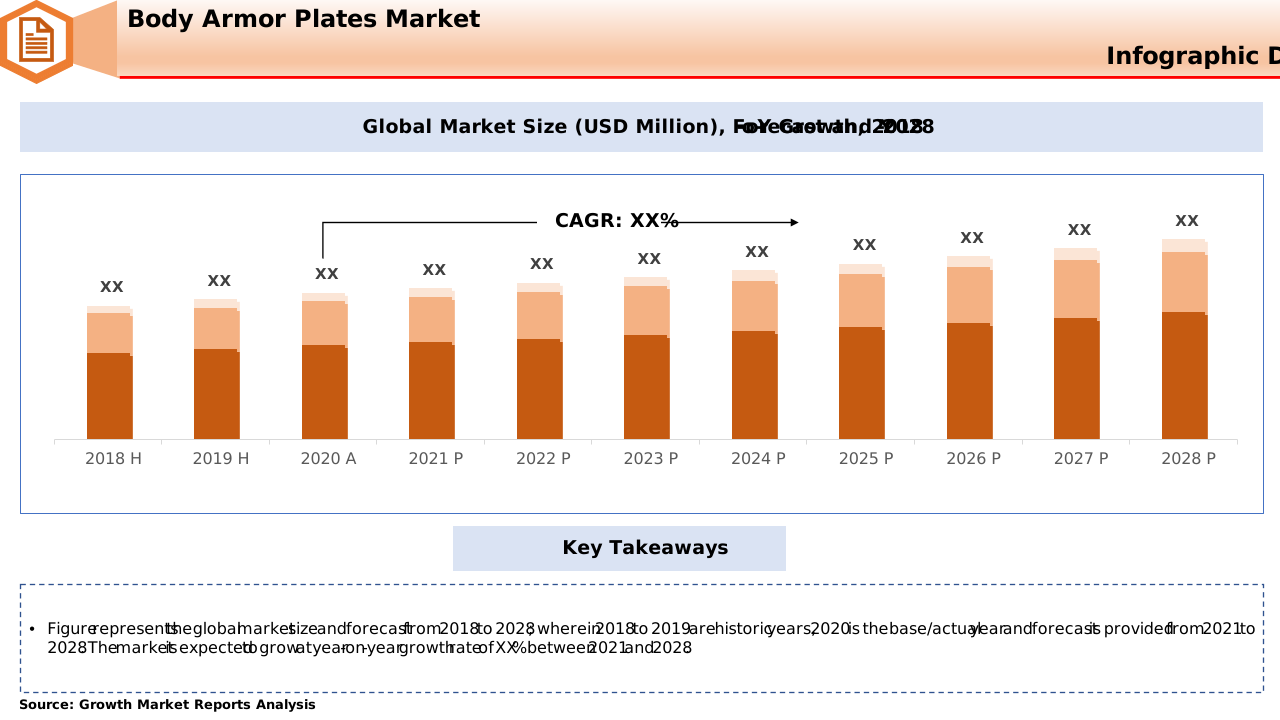
According to our latest research, the global body armor plates market size reached USD 2.71 billion in 2024. The market is experiencing robust expansion, driven by heightened security concerns and ongoing modernization of military and law enforcement agencies. The market is poised to grow at a CAGR of 5.8% during the forecast period, propelling the value to approximately USD 4.53 billion by 2033. This surge in demand is attributed to the increasing need for advanced personal protection solutions, technological advancements in armor materials, and rising investments in defense infrastructure worldwide.

The primary growth factor for the body armor plates market is the escalating threat landscape faced by military and law enforcement personnel globally. Geopolitical tensions, asymmetric warfare, and the proliferation of small arms and ammunition have necessitated the deployment of advanced protective gear. Governments are increasingly prioritizing the safety of their security forces, leading to substantial investments in next-generation body armor plates. Furthermore, ongoing military modernization programs in both developed and developing nations are catalyzing the replacement of outdated armor systems with lighter, more effective, and durable solutions. This trend is particularly prominent in regions experiencing heightened conflict or internal security challenges, where survivability and operational efficiency are paramount.

Technological innovation is another pivotal driver shaping the body armor plates market. The industry has witnessed significant advancements in material science, resulting in the development of plates that offer superior protection while minimizing weight and maximizing wearer comfort. The integration of ceramics, ultra-high-molecular-weight polyethylene (UHMWPE), and advanced composite materials has enabled manufacturers to produce plates that meet stringent protection standards without compromising mobility. Additionally, the adoption of modular and scalable armor systems allows for customization based on mission requirements, further fueling market growth. The emergence of smart textiles and sensor-embedded armor plates is also opening new avenues for product differentiation and enhanced situational awareness.

The market is further buoyed by the increasing adoption of body armor plates by the civilian sector, including private security personnel, journalists, and high-risk professionals. The rise in violent incidents, mass shootings, and civil unrest in certain regions has heightened the demand for personal protective equipment beyond traditional military and law enforcement applications. The proliferation of e-commerce platforms and specialty stores has improved product accessibility, enabling a broader consumer base to procure high-quality armor plates. Additionally, regulatory changes in some countries allowing civilian ownership of body armor have contributed to this expanding market segment. As awareness of personal safety continues to grow, the civilian application of body armor plates is expected to become a significant driver in the coming years.

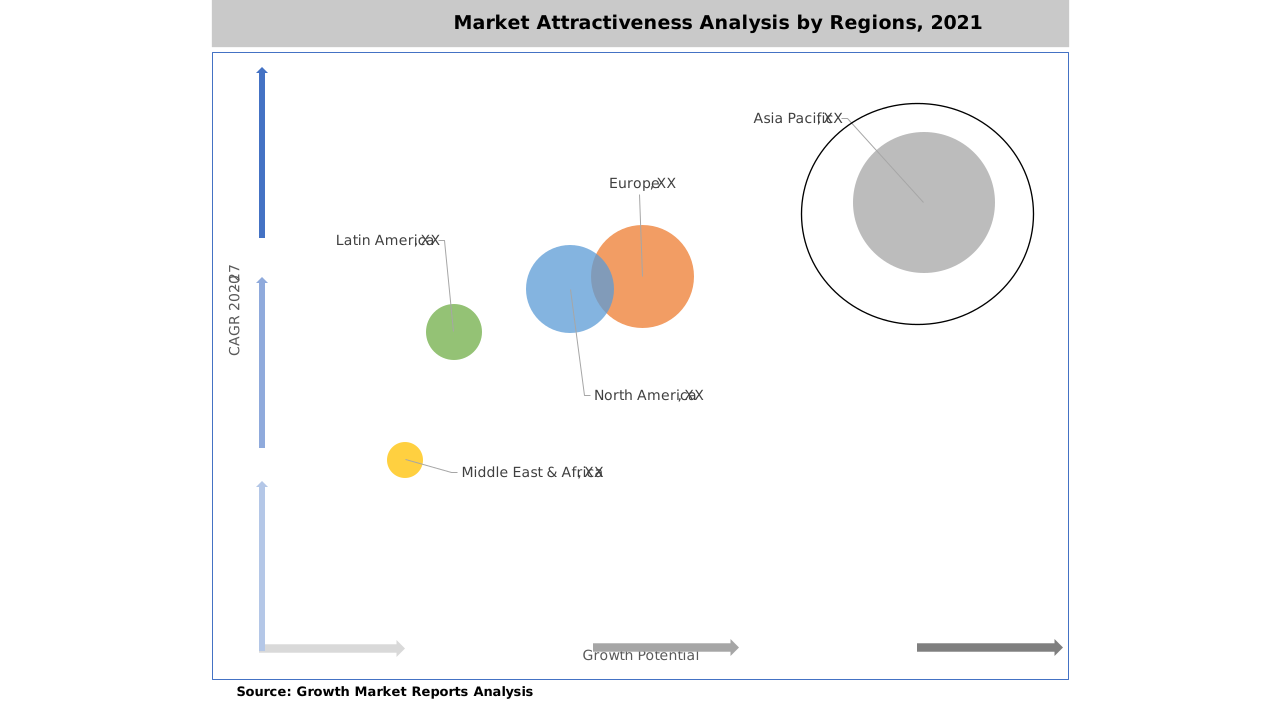
From a regional perspective, North America currently dominates the body armor plates market, accounting for the largest revenue share in 2024. This leadership is underpinned by substantial defense budgets, advanced manufacturing capabilities, and a strong focus on personnel protection. Europe and Asia Pacific are also witnessing rapid growth, driven by modernization initiatives and heightened security threats. The Middle East & Africa and Latin America regions are emerging as promising markets due to rising defense expenditures and ongoing efforts to enhance law enforcement capabilities. The diverse regional dynamics, coupled with varying regulatory environments and procurement policies, are shaping the competitive landscape and influencing market entry strategies for manufacturers.

Global Body Armor Plates Industry Outlook

Material Type Analysis

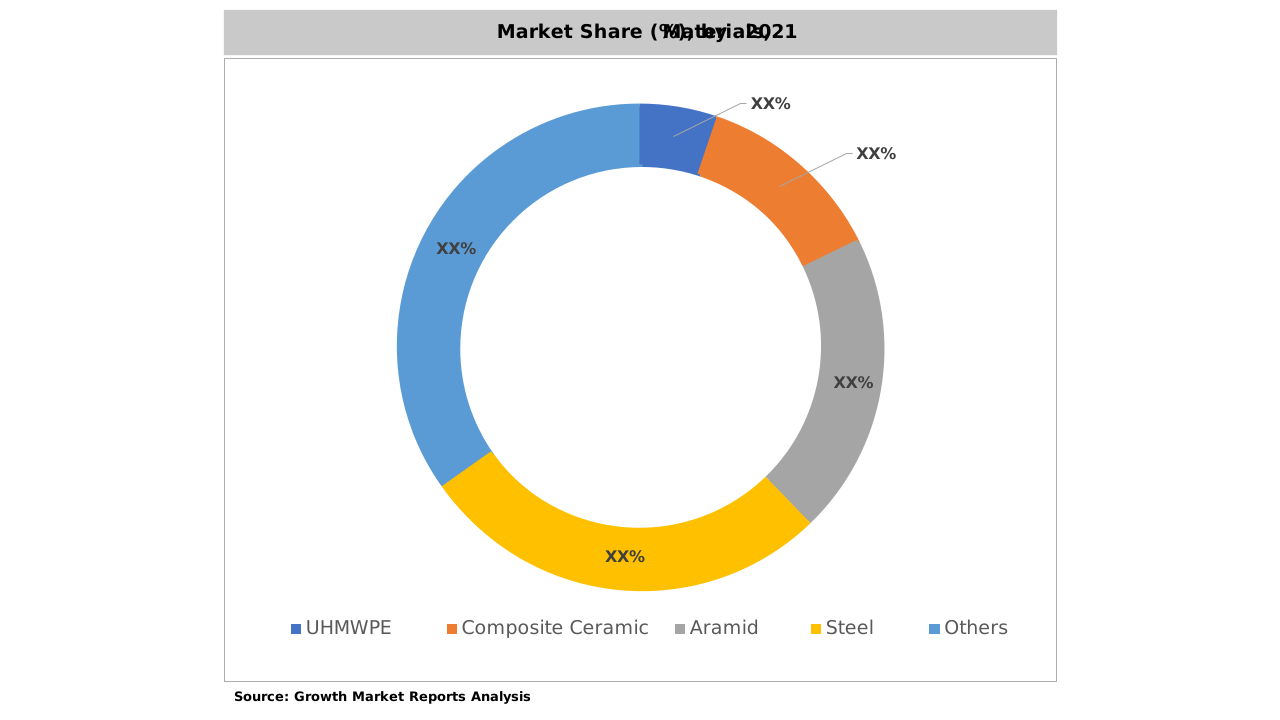
The material type segment plays a crucial role in determining the performance, weight, and cost-effectiveness of body armor plates. Steel armor plates, once the industry standard, are valued for their durability and cost efficiency. However, their substantial weight and reduced wearer comfort have led to a gradual decline in preference, particularly for applications where mobility is critical. Despite this, steel plates remain popular in budget-constrained settings and among certain civilian users due to their affordability and proven ballistic resistance. The ongoing advancements in steel treatment processes, such as improved hardness and anti-spall coatings, are helping to sustain demand in specific market niches.

Ceramic armor plates have gained significant traction in recent years, primarily due to their excellent balance between weight and protection. These plates are engineered to shatter incoming projectiles, dissipating energy and reducing blunt force trauma. The adoption of advanced ceramics such as boron carbide and silicon carbide has enabled manufacturers to produce thinner, lighter plates that meet or exceed stringent protection standards. Military and law enforcement agencies are increasingly favoring ceramic plates for frontline personnel, where agility and comfort are paramount. The higher cost of ceramics compared to steel is often justified by the enhanced survivability and mission effectiveness they offer.

Polyethylene, particularly ultra-high-molecular-weight polyethylene (UHMWPE), represents a cutting-edge material in the body armor plates market. UHMWPE plates are renowned for their exceptional lightness and flexibility, making them ideal for extended wear and rapid-response scenarios. These plates are capable of stopping high-velocity rounds while significantly reducing fatigue and strain on the wearer. The non-corrosive and buoyant nature of polyethylene also makes it suitable for maritime and special operations forces. However, UHMWPE plates are generally more expensive than traditional materials, and their effectiveness can be compromised under extreme heat conditions, necessitating ongoing research and development to address these limitations.

Composite armor plates, which combine multiple materials such as ceramics, polyethylene, and aramid fibers, are increasingly being adopted for their ability to offer multi-hit protection and customizable performance characteristics. These plates leverage the strengths of individual materials to achieve optimal protection levels while minimizing weight and thickness. The modular nature of composite plates allows for tailored solutions based on specific threat levels and operational requirements. Manufacturers are investing in innovative bonding techniques and hybrid material formulations to enhance the ballistic performance and durability of composite plates. This segment is expected to witness robust growth as end-users seek versatile and high-performance armor solutions.

Other materials, including titanium alloys and advanced polymers, are also being explored to further push the boundaries of body armor technology. While these materials are still in the experimental or limited deployment stages, they hold promise for future applications where ultra-lightweight and high-strength properties are required. The ongoing evolution of material science, coupled with increasing R&D investments, is expected to yield next-generation armor plates that offer unprecedented levels of protection, comfort, and adaptability, thereby shaping the future trajectory of the body armor plates market.

Report Scope

Attributes Details
Report Title Body Armor Plates Market Research Report 2033
By Material Type Steel, Ceramic, Polyethylene, Composite, Others
By Protection Level Level II, Level III, Level IV, Others
By Application Military, Law Enforcement, Civilian, Others
By Distribution Channel Direct Sales, Online Stores, Specialty Stores, Others
Regions Covered North America, Europe, APAC, Latin America, MEA
Base Year 2024
Historic Data 2018-2023
Forecast Period 2025-2033
Number of Pages 280
Number of Tables & Figures 250
Customization Available Yes, the report can be customized as per your need.

Protection Level Analysis

The protection level segment is a critical determinant in the selection and deployment of body armor plates, as it directly correlates with the types of threats the wearer may encounter. Level II armor plates are designed to stop lower velocity handgun rounds and are typically used in low-risk environments or by personnel who require lightweight, concealable protection. While Level II plates offer limited ballistic resistance, their flexibility and comfort make them suitable for undercover operations and routine law enforcement duties. However, the growing prevalence of high-caliber firearms has led to a shift towards higher protection levels in many jurisdictions.

Level III armor plates represent a significant upgrade in ballistic protection, capable of stopping rifle rounds commonly encountered in military and tactical scenarios. These plates are widely adopted by military forces, special operations units, and law enforcement tactical teams. Level III plates strike a balance between weight, mobility, and protection, making them a preferred choice for frontline deployments. The increasing frequency of active shooter incidents and armed confrontations has spurred demand for Level III plates among both public sector and private security organizations. Manufacturers are continually innovating to reduce the weight and thickness of Level III plates without compromising their protective capabilities.

Level IV armor plates offer the highest level of ballistic protection, capable of defeating armor-piercing rifle rounds. These plates are typically constructed from advanced ceramics or composite materials and are used in high-threat environments where maximum survivability is required. Military personnel operating in conflict zones, counter-terrorism units, and elite law enforcement teams are the primary users of Level IV plates. The adoption of Level IV armor is driven by the escalating sophistication of threats and the need to protect personnel against increasingly powerful ammunition. However, the added weight and bulk of Level IV plates can impact mobility and endurance, necessitating careful consideration of operational requirements.

Other protection levels, including specialized plates designed to counter specific threats such as armor-piercing handgun rounds or fragmentation, are also available in the market. These plates are often used in conjunction with soft armor systems to provide comprehensive protection against a wide range of ballistic and non-ballistic threats. The customization of protection levels based on mission profiles and threat assessments is becoming increasingly prevalent, as end-users seek to optimize the balance between survivability and operational effectiveness. The ongoing evolution of threat landscapes is expected to drive further innovation in protection level offerings within the body armor plates market.

Overall, the protection level segment is characterized by a dynamic interplay between threat assessment, material innovation, and user requirements. The ability to offer scalable and mission-specific protection solutions is emerging as a key differentiator for manufacturers, as end-users demand armor plates that can adapt to evolving operational environments. As ballistic threats continue to diversify, the market for advanced protection levels is poised for sustained growth, underpinned by ongoing investments in research and development and the pursuit of enhanced wearer safety.

Application Analysis

The application segment of the body armor plates market encompasses a diverse range of end-users, each with distinct requirements and operational challenges. The military segment remains the largest and most influential application area, accounting for a substantial share of global demand. Military forces worldwide are prioritizing the acquisition of advanced body armor plates to enhance troop survivability and mission success in increasingly hostile environments. The integration of body armor into standard issue gear, coupled with the adoption of modular and scalable protection systems, is driving sustained investment in this segment. Ongoing military modernization programs and the need to counter evolving threats such as improvised explosive devices (IEDs) and armor-piercing rounds are further fueling demand for high-performance armor plates.

Law enforcement agencies represent another critical application segment, with growing emphasis on officer safety and preparedness. The proliferation of firearms and the rising incidence of violent crime have underscored the importance of equipping police and tactical units with reliable body armor plates. Law enforcement agencies are increasingly adopting armor solutions that offer a balance between protection, comfort, and concealability, enabling officers to perform their duties effectively in both routine patrol and high-risk situations. The trend towards community policing and the need to address emerging threats such as active shooter incidents are driving innovation and procurement in this segment.

The civilian application of body armor plates is an emerging trend, fueled by growing awareness of personal safety and the increasing availability of advanced protective gear through commercial channels. Private security personnel, journalists operating in conflict zones, and high-net-worth individuals are among the primary adopters of civilian body armor plates. The rise in civil unrest, mass shootings, and targeted attacks in certain regions has heightened demand for personal protection solutions beyond traditional institutional users. Regulatory changes in some countries, allowing civilian ownership of body armor, have further expanded the addressable market. The civilian segment is expected to witness robust growth as product accessibility improves and awareness of ballistic threats increases.

Other application areas include specialized roles such as emergency response teams, security contractors, and non-governmental organizations (NGOs) operating in high-risk environments. These users often require tailored armor solutions that can be rapidly deployed and customized based on specific mission requirements. The increasing involvement of private contractors in military and security operations, as well as the growing prevalence of humanitarian missions in conflict zones, is contributing to the diversification of application areas within the body armor plates market. Manufacturers are responding by offering a wide range of products designed to meet the unique needs of these specialized users.

The application segment is characterized by a growing emphasis on user-centric design, modularity, and adaptability. As end-users become more discerning in their requirements, manufacturers are focusing on developing armor plates that offer enhanced ergonomics, improved weight distribution, and compatibility with a variety of load-bearing systems. The ability to provide comprehensive protection solutions that address the specific needs of different user groups is emerging as a key competitive advantage in the market. As the threat landscape continues to evolve, the application segment is expected to remain a focal point for innovation and market expansion.

Distribution Channel Analysis

The distribution channel segment plays a pivotal role in shaping the accessibility and adoption of body armor plates across various end-user groups. Direct sales channels, including government contracts and institutional procurement, account for the largest share of the market, particularly in the military and law enforcement segments. These channels are characterized by long-term supply agreements, rigorous quality assurance processes, and the need for compliance with stringent regulatory standards. The ability to secure direct contracts with government agencies is a key determinant of success for manufacturers, as it ensures a steady revenue stream and facilitates large-scale deployments of advanced armor solutions.

Online stores have emerged as a significant distribution channel, particularly for civilian and private security customers. The proliferation of e-commerce platforms has democratized access to high-quality body armor plates, enabling a broader consumer base to procure protective gear from the comfort of their homes. Online channels offer the advantages of product variety, competitive pricing, and convenient delivery options. Manufacturers and distributors are increasingly leveraging digital marketing strategies and user-friendly interfaces to enhance customer engagement and streamline the purchasing process. The rise of online reviews and product comparison tools has also empowered consumers to make informed decisions, further driving growth in this segment.

Specialty stores, including tactical gear retailers and authorized dealers, continue to play a vital role in the distribution of body armor plates. These outlets offer personalized service, expert advice, and the ability to physically inspect products before purchase. Specialty stores are particularly popular among law enforcement personnel, private security contractors, and enthusiasts who value hands-on experience and tailored recommendations. The presence of knowledgeable staff and the availability of complementary products such as carriers, pouches, and accessories enhance the overall customer experience and foster brand loyalty.

Other distribution channels include trade shows, defense expos, and direct-to-end-user marketing initiatives. These channels provide manufacturers with opportunities to showcase their latest innovations, engage with key decision-makers, and secure bulk orders from institutional buyers. The increasing participation of manufacturers in international defense exhibitions and industry conferences is helping to raise awareness of new products and technologies, driving demand across diverse market segments. The ability to offer customized solutions and responsive after-sales support is emerging as a critical success factor in the highly competitive body armor plates market.

The distribution channel landscape is evolving in response to changing customer preferences and technological advancements. The integration of omnichannel strategies, combining online and offline touchpoints, is enabling manufacturers to reach a wider audience and enhance customer satisfaction. As the market continues to expand, the ability to offer seamless, efficient, and customer-centric distribution solutions will be essential for sustaining growth and maintaining a competitive edge.

Opportunities & Threats

The body armor plates market presents a multitude of opportunities for growth and innovation. One of the most significant opportunities lies in the ongoing advancement of material science and manufacturing technologies. The development of lighter, stronger, and more flexible armor materials is enabling manufacturers to address longstanding challenges related to weight, comfort, and mobility. The integration of smart technologies, such as sensor-embedded plates and wearable health monitoring systems, is opening new avenues for product differentiation and enhanced operational effectiveness. As end-users increasingly demand armor solutions that offer both protection and situational awareness, the market is poised for significant technological disruption.

Another promising opportunity is the expanding application of body armor plates in the civilian and private security sectors. The rising incidence of violent crime, civil unrest, and targeted attacks has heightened awareness of personal safety and created a growing market for advanced protective gear among non-military users. Regulatory changes in several countries, allowing civilian ownership of body armor, are further expanding the addressable market. Manufacturers that can effectively cater to the unique needs of civilian customers, including discreetness, comfort, and ease of use, stand to gain a competitive advantage. The proliferation of e-commerce platforms and digital marketing strategies is also facilitating market penetration and product accessibility.

Despite the numerous opportunities, the body armor plates market faces several restraining factors and threats. One of the primary challenges is the high cost of advanced armor materials and manufacturing processes, which can limit adoption among budget-constrained end-users. Additionally, stringent regulatory requirements and export controls in certain regions can impede market entry and restrict the flow of products across borders. The risk of counterfeit or substandard products entering the market poses a significant threat to user safety and brand reputation. Furthermore, the evolving nature of ballistic threats, including the development of new ammunition types and delivery mechanisms, necessitates continuous innovation and adaptation. Manufacturers must navigate these challenges while maintaining compliance with international standards and ensuring the highest levels of product quality and reliability.

Regional Outlook

North America dominates the body armor plates market, accounting for the largest share of global revenue, with a market size of approximately USD 1.08 billion in 2024. The region's leadership is underpinned by substantial defense budgets, advanced manufacturing infrastructure, and a strong focus on personnel protection. The United States, in particular, is a major consumer of body armor plates, driven by ongoing military modernization programs and the need to equip law enforcement agencies with state-of-the-art protective gear. The presence of leading manufacturers and a robust innovation ecosystem further contribute to North America's dominance in the market.

Europe is another significant market, with a value of around USD 610 million in 2024. The region is characterized by a strong emphasis on law enforcement modernization, counter-terrorism initiatives, and the protection of critical infrastructure. Countries such as Germany, France, and the United Kingdom are investing heavily in advanced body armor solutions to enhance the safety and operational effectiveness of their security forces. The European market is also benefiting from increased collaboration between defense agencies and private manufacturers, fostering innovation and the development of next-generation armor technologies. The region is expected to grow at a steady CAGR of 5.2% over the forecast period.

The Asia Pacific region is emerging as a high-growth market, with a size of approximately USD 580 million in 2024. Rapid economic development, rising defense expenditures, and ongoing security challenges are driving demand for advanced body armor plates across the region. Countries such as China, India, and Japan are investing in the modernization of their military and law enforcement agencies, creating significant opportunities for manufacturers. The growing prevalence of civil unrest and cross-border tensions in certain areas is further fueling market expansion. The Asia Pacific market is projected to exhibit the highest CAGR among all regions, reflecting the increasing prioritization of personnel protection and the adoption of cutting-edge armor technologies.

Body Armor Plates Market Statistics

Competitor Outlook

The body armor plates market is characterized by intense competition, with a mix of established players and emerging innovators vying for market share. The competitive landscape is shaped by factors such as product quality, technological innovation, pricing strategies, and the ability to secure large-scale contracts with government and institutional buyers. Leading manufacturers are investing heavily in research and development to enhance the ballistic performance, comfort, and durability of their products. The focus on developing modular and scalable armor solutions that can be customized based on user requirements is emerging as a key differentiator in the market.

Strategic partnerships, mergers and acquisitions, and collaborations with defense agencies are common strategies employed by major players to strengthen their market position and expand their product portfolios. The ability to offer comprehensive after-sales support, training, and maintenance services is also becoming increasingly important, as end-users seek long-term value and reliability from their armor investments. The growing emphasis on sustainability and the use of eco-friendly materials is influencing product development and procurement decisions, particularly in regions with stringent environmental regulations.

The market is witnessing the entry of new players, particularly in the Asia Pacific and Middle East & Africa regions, where local manufacturers are leveraging cost advantages and proximity to key customers. However, the high barriers to entry associated with regulatory compliance, product certification, and the need for extensive testing and validation pose significant challenges for new entrants. The risk of product commoditization and price competition is prompting manufacturers to focus on innovation, brand differentiation, and the development of value-added features such as integrated sensors and smart technologies.

Some of the major companies operating in the body armor plates market include BAE Systems, 3M (Ceradyne), Point Blank Enterprises, Safariland Group, Armor Express, DuPont, TenCate Advanced Armor, MKU Limited, and Hesco Armor. BAE Systems is renowned for its extensive portfolio of advanced armor solutions, catering to both military and law enforcement customers worldwide. 3M (Ceradyne) is a leader in ceramic armor technology, offering lightweight and high-performance plates that meet stringent protection standards. Point Blank Enterprises and Safariland Group are prominent suppliers to the U.S. law enforcement and military sectors, known for their commitment to quality and innovation. Armor Express specializes in modular and customizable armor systems, while DuPont and TenCate Advanced Armor are at the forefront of material science and ballistic protection research. MKU Limited and Hesco Armor are expanding their global footprint, offering a wide range of products tailored to the needs of diverse end-users.

These companies are continuously investing in R&D to stay ahead of evolving threats and regulatory requirements. Their focus on collaboration with defense agencies, participation in international defense exhibitions, and the development of next-generation armor solutions is shaping the future of the body armor plates market. As competition intensifies, the ability to deliver innovative, reliable, and cost-effective products will be critical for sustaining growth and maintaining market leadership.

Key Players

  • BAE Systems
  • Point Blank Enterprises
  • Safariland Group
  • Armor Express
  • Ceradyne (3M)
  • DuPont
  • Honeywell International
  • TenCate Advanced Armor
  • Survitec Group
  • MKU Limited
  • U.S. Armor Corporation
  • Craig International Ballistics
  • EnGarde Body Armor
  • Sarkar Defence Solutions
  • Hard Shell
  • Plasan Sasa Ltd.
  • CoorsTek Inc.
  • Saint-Gobain
  • NP Aerospace
  • TYR Tactical
Body Armor Plates Market Overview

Segments

The Body Armor Plates market has been segmented on the basis of

Material Type

  • Steel
  • Ceramic
  • Polyethylene
  • Composite
  • Others

Protection Level

  • Level II
  • Level III
  • Level IV
  • Others

Application

  • Military
  • Law Enforcement
  • Civilian
  • Others

Distribution Channel

  • Direct Sales
  • Online Stores
  • Specialty Stores
  • Others

Competitive Landscape

Some of the major players competing in the market are Craig International Ballistics (Pty) Ltd; Safariland, LLC; BAE Systems PLC; Aegis Engineering Ltd; Pacific Safety Products Inc.; Point Blank Enterprises, Inc; Kejo Ltd. Co.; Hellweg International; Ceradyne Inc.; Ballistic Body Armour Pty.; and Armored Republic, LLC.

These major players are putting efforts to improve the operational aspects of their products, as well as developing new products to diversify their portfolios. As a result, companies are concentrating on marketing strategies such as, collaborations, partnerships, and mergers & acquisitions.

For example, the Safariland Group and Fechheimer Brothers Company have announced the joint launch of XpertFit in December 2020, an advanced virtual sizing technology that offers a contactless self-measuring process of capturing body measurements through a mobile phone that officers can use when ordering safety uniforms and body armor.

For instance, in August 2019, Avon Rubber p.l.c. has purchased 3M's ballistic protection unit as well as the Ceradyne brand's rights. This purchase was part of a larger strategy to acquire a contract for body protection plates from the US Army.
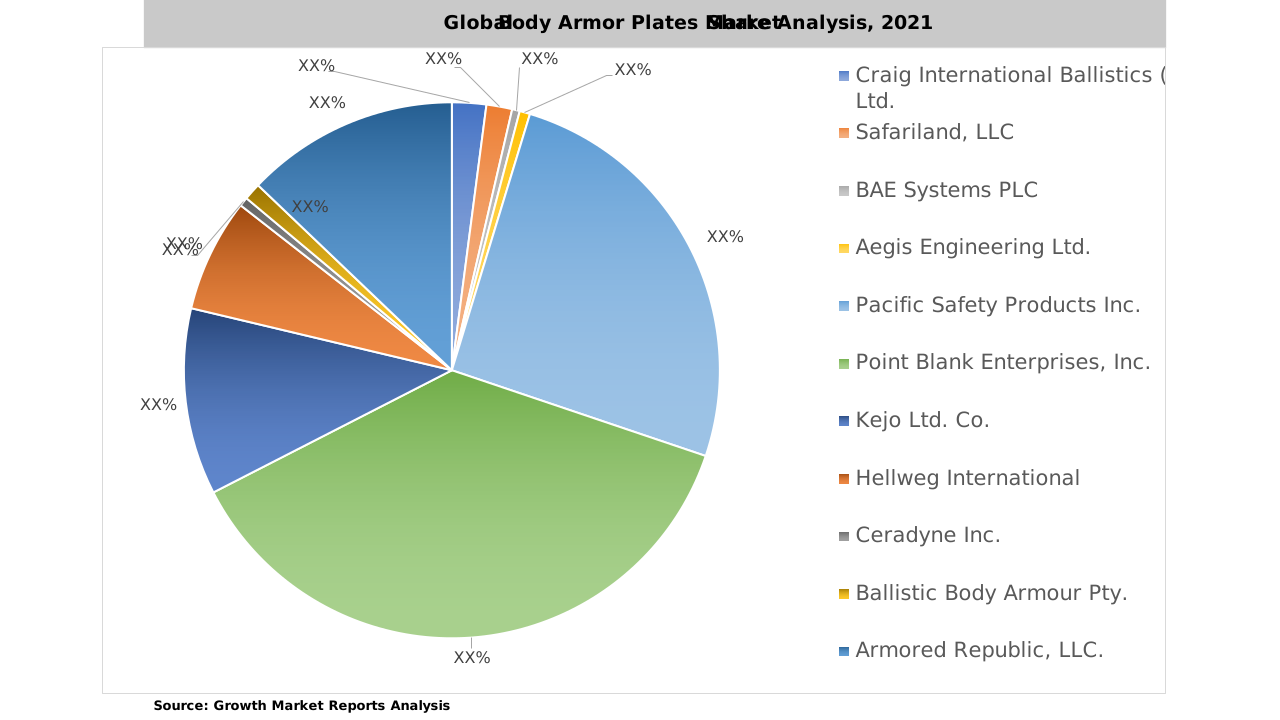

Body Armor Plates Market by key players

Frequently Asked Questions

Major players include BAE Systems, 3M (Ceradyne), Point Blank Enterprises, Safariland Group, Armor Express, DuPont, TenCate Advanced Armor, MKU Limited, and Hesco Armor, among others.

Opportunities include advancements in material science, expanding civilian and private security applications, and integration of smart technologies. Challenges include high costs, regulatory barriers, risk of counterfeit products, and the need to keep pace with evolving ballistic threats.

Trends include the use of advanced ceramics, UHMWPE, composite materials, modular and scalable armor systems, smart textiles, and sensor-embedded plates for enhanced protection and situational awareness.

North America leads the market, followed by Europe and Asia Pacific. North America’s dominance is due to high defense budgets and advanced manufacturing, while Asia Pacific is experiencing the fastest growth due to rising defense spending and security challenges.

Distribution channels include direct sales (government and institutional contracts), online stores (e-commerce for civilians and private security), specialty stores (tactical gear retailers), and trade shows or defense expos.

Primary end-users are military personnel, law enforcement agencies, and civilians such as private security, journalists, and high-risk professionals. Other users include emergency response teams, NGOs, and security contractors.

Protection levels include Level II (handgun rounds, used by law enforcement in low-risk environments), Level III (rifle rounds, used by military and tactical teams), Level IV (armor-piercing rounds, used in high-threat military and counter-terrorism operations), and specialized plates for unique threats.

Common materials include steel (durable and cost-effective), ceramics (lightweight with high protection), ultra-high-molecular-weight polyethylene (UHMWPE, extremely light and flexible), composites (multi-material for customizable protection), and emerging materials like titanium alloys and advanced polymers.

Key growth drivers include heightened security concerns, ongoing military and law enforcement modernization, technological advancements in armor materials, and increased investments in defense infrastructure worldwide.

The global body armor plates market reached USD 2.71 billion in 2024 and is projected to grow at a CAGR of 5.8%, reaching approximately USD 4.53 billion by 2033.

Table Of Content

Chapter 1 Executive Summary
Chapter 2 Assumptions and Acronyms Used
Chapter 3 Research Methodology
Chapter 4 Body Armor Plates Market Overview
   4.1 Introduction
      4.1.1 Market Taxonomy
      4.1.2 Market Definition
      4.1.3 Macro-Economic Factors Impacting the Market Growth
   4.2 Body Armor Plates Market Dynamics
      4.2.1 Market Drivers
      4.2.2 Market Restraints
      4.2.3 Market Opportunity
   4.3 Body Armor Plates Market - Supply Chain Analysis
      4.3.1 List of Key Suppliers
      4.3.2 List of Key Distributors
      4.3.3 List of Key Consumers
   4.4 Key Forces Shaping the Body Armor Plates Market
      4.4.1 Bargaining Power of Suppliers
      4.4.2 Bargaining Power of Buyers
      4.4.3 Threat of Substitution
      4.4.4 Threat of New Entrants
      4.4.5 Competitive Rivalry
   4.5 Global Body Armor Plates Market Size & Forecast, 2023-2032
      4.5.1 Body Armor Plates Market Size and Y-o-Y Growth
      4.5.2 Body Armor Plates Market Absolute $ Opportunity

Chapter 5 Global Body Armor Plates Market Analysis and Forecast By Material Type
   5.1 Introduction
      5.1.1 Key Market Trends & Growth Opportunities By Material Type
      5.1.2 Basis Point Share (BPS) Analysis By Material Type
      5.1.3 Absolute $ Opportunity Assessment By Material Type
   5.2 Body Armor Plates Market Size Forecast By Material Type
      5.2.1 Steel
      5.2.2 Ceramic
      5.2.3 Polyethylene
      5.2.4 Composite
      5.2.5 Others
   5.3 Market Attractiveness Analysis By Material Type

Chapter 6 Global Body Armor Plates Market Analysis and Forecast By Protection Level
   6.1 Introduction
      6.1.1 Key Market Trends & Growth Opportunities By Protection Level
      6.1.2 Basis Point Share (BPS) Analysis By Protection Level
      6.1.3 Absolute $ Opportunity Assessment By Protection Level
   6.2 Body Armor Plates Market Size Forecast By Protection Level
      6.2.1 Level II
      6.2.2 Level III
      6.2.3 Level IV
      6.2.4 Others
   6.3 Market Attractiveness Analysis By Protection Level

Chapter 7 Global Body Armor Plates Market Analysis and Forecast By Application
   7.1 Introduction
      7.1.1 Key Market Trends & Growth Opportunities By Application
      7.1.2 Basis Point Share (BPS) Analysis By Application
      7.1.3 Absolute $ Opportunity Assessment By Application
   7.2 Body Armor Plates Market Size Forecast By Application
      7.2.1 Military
      7.2.2 Law Enforcement
      7.2.3 Civilian
      7.2.4 Others
   7.3 Market Attractiveness Analysis By Application

Chapter 8 Global Body Armor Plates Market Analysis and Forecast By Distribution Channel
   8.1 Introduction
      8.1.1 Key Market Trends & Growth Opportunities By Distribution Channel
      8.1.2 Basis Point Share (BPS) Analysis By Distribution Channel
      8.1.3 Absolute $ Opportunity Assessment By Distribution Channel
   8.2 Body Armor Plates Market Size Forecast By Distribution Channel
      8.2.1 Direct Sales
      8.2.2 Online Stores
      8.2.3 Specialty Stores
      8.2.4 Others
   8.3 Market Attractiveness Analysis By Distribution Channel

Chapter 9 Global Body Armor Plates Market Analysis and Forecast by Region
   9.1 Introduction
      9.1.1 Key Market Trends & Growth Opportunities By Region
      9.1.2 Basis Point Share (BPS) Analysis By Region
      9.1.3 Absolute $ Opportunity Assessment By Region
   9.2 Body Armor Plates Market Size Forecast By Region
      9.2.1 North America
      9.2.2 Europe
      9.2.3 Asia Pacific
      9.2.4 Latin America
      9.2.5 Middle East & Africa (MEA)
   9.3 Market Attractiveness Analysis By Region

Chapter 10 Coronavirus Disease (COVID-19) Impact 
   10.1 Introduction 
   10.2 Current & Future Impact Analysis 
   10.3 Economic Impact Analysis 
   10.4 Government Policies 
   10.5 Investment Scenario

Chapter 11 North America Body Armor Plates Analysis and Forecast
   11.1 Introduction
   11.2 North America Body Armor Plates Market Size Forecast by Country
      11.2.1 U.S.
      11.2.2 Canada
   11.3 Basis Point Share (BPS) Analysis by Country
   11.4 Absolute $ Opportunity Assessment by Country
   11.5 Market Attractiveness Analysis by Country
   11.6 North America Body Armor Plates Market Size Forecast By Material Type
      11.6.1 Steel
      11.6.2 Ceramic
      11.6.3 Polyethylene
      11.6.4 Composite
      11.6.5 Others
   11.7 Basis Point Share (BPS) Analysis By Material Type 
   11.8 Absolute $ Opportunity Assessment By Material Type 
   11.9 Market Attractiveness Analysis By Material Type
   11.10 North America Body Armor Plates Market Size Forecast By Protection Level
      11.10.1 Level II
      11.10.2 Level III
      11.10.3 Level IV
      11.10.4 Others
   11.11 Basis Point Share (BPS) Analysis By Protection Level 
   11.12 Absolute $ Opportunity Assessment By Protection Level 
   11.13 Market Attractiveness Analysis By Protection Level
   11.14 North America Body Armor Plates Market Size Forecast By Application
      11.14.1 Military
      11.14.2 Law Enforcement
      11.14.3 Civilian
      11.14.4 Others
   11.15 Basis Point Share (BPS) Analysis By Application 
   11.16 Absolute $ Opportunity Assessment By Application 
   11.17 Market Attractiveness Analysis By Application
   11.18 North America Body Armor Plates Market Size Forecast By Distribution Channel
      11.18.1 Direct Sales
      11.18.2 Online Stores
      11.18.3 Specialty Stores
      11.18.4 Others
   11.19 Basis Point Share (BPS) Analysis By Distribution Channel 
   11.20 Absolute $ Opportunity Assessment By Distribution Channel 
   11.21 Market Attractiveness Analysis By Distribution Channel

Chapter 12 Europe Body Armor Plates Analysis and Forecast
   12.1 Introduction
   12.2 Europe Body Armor Plates Market Size Forecast by Country
      12.2.1 Germany
      12.2.2 France
      12.2.3 Italy
      12.2.4 U.K.
      12.2.5 Spain
      12.2.6 Russia
      12.2.7 Rest of Europe
   12.3 Basis Point Share (BPS) Analysis by Country
   12.4 Absolute $ Opportunity Assessment by Country
   12.5 Market Attractiveness Analysis by Country
   12.6 Europe Body Armor Plates Market Size Forecast By Material Type
      12.6.1 Steel
      12.6.2 Ceramic
      12.6.3 Polyethylene
      12.6.4 Composite
      12.6.5 Others
   12.7 Basis Point Share (BPS) Analysis By Material Type 
   12.8 Absolute $ Opportunity Assessment By Material Type 
   12.9 Market Attractiveness Analysis By Material Type
   12.10 Europe Body Armor Plates Market Size Forecast By Protection Level
      12.10.1 Level II
      12.10.2 Level III
      12.10.3 Level IV
      12.10.4 Others
   12.11 Basis Point Share (BPS) Analysis By Protection Level 
   12.12 Absolute $ Opportunity Assessment By Protection Level 
   12.13 Market Attractiveness Analysis By Protection Level
   12.14 Europe Body Armor Plates Market Size Forecast By Application
      12.14.1 Military
      12.14.2 Law Enforcement
      12.14.3 Civilian
      12.14.4 Others
   12.15 Basis Point Share (BPS) Analysis By Application 
   12.16 Absolute $ Opportunity Assessment By Application 
   12.17 Market Attractiveness Analysis By Application
   12.18 Europe Body Armor Plates Market Size Forecast By Distribution Channel
      12.18.1 Direct Sales
      12.18.2 Online Stores
      12.18.3 Specialty Stores
      12.18.4 Others
   12.19 Basis Point Share (BPS) Analysis By Distribution Channel 
   12.20 Absolute $ Opportunity Assessment By Distribution Channel 
   12.21 Market Attractiveness Analysis By Distribution Channel

Chapter 13 Asia Pacific Body Armor Plates Analysis and Forecast
   13.1 Introduction
   13.2 Asia Pacific Body Armor Plates Market Size Forecast by Country
      13.2.1 China
      13.2.2 Japan
      13.2.3 South Korea
      13.2.4 India
      13.2.5 Australia
      13.2.6 South East Asia (SEA)
      13.2.7 Rest of Asia Pacific (APAC)
   13.3 Basis Point Share (BPS) Analysis by Country
   13.4 Absolute $ Opportunity Assessment by Country
   13.5 Market Attractiveness Analysis by Country
   13.6 Asia Pacific Body Armor Plates Market Size Forecast By Material Type
      13.6.1 Steel
      13.6.2 Ceramic
      13.6.3 Polyethylene
      13.6.4 Composite
      13.6.5 Others
   13.7 Basis Point Share (BPS) Analysis By Material Type 
   13.8 Absolute $ Opportunity Assessment By Material Type 
   13.9 Market Attractiveness Analysis By Material Type
   13.10 Asia Pacific Body Armor Plates Market Size Forecast By Protection Level
      13.10.1 Level II
      13.10.2 Level III
      13.10.3 Level IV
      13.10.4 Others
   13.11 Basis Point Share (BPS) Analysis By Protection Level 
   13.12 Absolute $ Opportunity Assessment By Protection Level 
   13.13 Market Attractiveness Analysis By Protection Level
   13.14 Asia Pacific Body Armor Plates Market Size Forecast By Application
      13.14.1 Military
      13.14.2 Law Enforcement
      13.14.3 Civilian
      13.14.4 Others
   13.15 Basis Point Share (BPS) Analysis By Application 
   13.16 Absolute $ Opportunity Assessment By Application 
   13.17 Market Attractiveness Analysis By Application
   13.18 Asia Pacific Body Armor Plates Market Size Forecast By Distribution Channel
      13.18.1 Direct Sales
      13.18.2 Online Stores
      13.18.3 Specialty Stores
      13.18.4 Others
   13.19 Basis Point Share (BPS) Analysis By Distribution Channel 
   13.20 Absolute $ Opportunity Assessment By Distribution Channel 
   13.21 Market Attractiveness Analysis By Distribution Channel

Chapter 14 Latin America Body Armor Plates Analysis and Forecast
   14.1 Introduction
   14.2 Latin America Body Armor Plates Market Size Forecast by Country
      14.2.1 Brazil
      14.2.2 Mexico
      14.2.3 Rest of Latin America (LATAM)
   14.3 Basis Point Share (BPS) Analysis by Country
   14.4 Absolute $ Opportunity Assessment by Country
   14.5 Market Attractiveness Analysis by Country
   14.6 Latin America Body Armor Plates Market Size Forecast By Material Type
      14.6.1 Steel
      14.6.2 Ceramic
      14.6.3 Polyethylene
      14.6.4 Composite
      14.6.5 Others
   14.7 Basis Point Share (BPS) Analysis By Material Type 
   14.8 Absolute $ Opportunity Assessment By Material Type 
   14.9 Market Attractiveness Analysis By Material Type
   14.10 Latin America Body Armor Plates Market Size Forecast By Protection Level
      14.10.1 Level II
      14.10.2 Level III
      14.10.3 Level IV
      14.10.4 Others
   14.11 Basis Point Share (BPS) Analysis By Protection Level 
   14.12 Absolute $ Opportunity Assessment By Protection Level 
   14.13 Market Attractiveness Analysis By Protection Level
   14.14 Latin America Body Armor Plates Market Size Forecast By Application
      14.14.1 Military
      14.14.2 Law Enforcement
      14.14.3 Civilian
      14.14.4 Others
   14.15 Basis Point Share (BPS) Analysis By Application 
   14.16 Absolute $ Opportunity Assessment By Application 
   14.17 Market Attractiveness Analysis By Application
   14.18 Latin America Body Armor Plates Market Size Forecast By Distribution Channel
      14.18.1 Direct Sales
      14.18.2 Online Stores
      14.18.3 Specialty Stores
      14.18.4 Others
   14.19 Basis Point Share (BPS) Analysis By Distribution Channel 
   14.20 Absolute $ Opportunity Assessment By Distribution Channel 
   14.21 Market Attractiveness Analysis By Distribution Channel

Chapter 15 Middle East & Africa (MEA) Body Armor Plates Analysis and Forecast
   15.1 Introduction
   15.2 Middle East & Africa (MEA) Body Armor Plates Market Size Forecast by Country
      15.2.1 Saudi Arabia
      15.2.2 South Africa
      15.2.3 UAE
      15.2.4 Rest of Middle East & Africa (MEA)
   15.3 Basis Point Share (BPS) Analysis by Country
   15.4 Absolute $ Opportunity Assessment by Country
   15.5 Market Attractiveness Analysis by Country
   15.6 Middle East & Africa (MEA) Body Armor Plates Market Size Forecast By Material Type
      15.6.1 Steel
      15.6.2 Ceramic
      15.6.3 Polyethylene
      15.6.4 Composite
      15.6.5 Others
   15.7 Basis Point Share (BPS) Analysis By Material Type 
   15.8 Absolute $ Opportunity Assessment By Material Type 
   15.9 Market Attractiveness Analysis By Material Type
   15.10 Middle East & Africa (MEA) Body Armor Plates Market Size Forecast By Protection Level
      15.10.1 Level II
      15.10.2 Level III
      15.10.3 Level IV
      15.10.4 Others
   15.11 Basis Point Share (BPS) Analysis By Protection Level 
   15.12 Absolute $ Opportunity Assessment By Protection Level 
   15.13 Market Attractiveness Analysis By Protection Level
   15.14 Middle East & Africa (MEA) Body Armor Plates Market Size Forecast By Application
      15.14.1 Military
      15.14.2 Law Enforcement
      15.14.3 Civilian
      15.14.4 Others
   15.15 Basis Point Share (BPS) Analysis By Application 
   15.16 Absolute $ Opportunity Assessment By Application 
   15.17 Market Attractiveness Analysis By Application
   15.18 Middle East & Africa (MEA) Body Armor Plates Market Size Forecast By Distribution Channel
      15.18.1 Direct Sales
      15.18.2 Online Stores
      15.18.3 Specialty Stores
      15.18.4 Others
   15.19 Basis Point Share (BPS) Analysis By Distribution Channel 
   15.20 Absolute $ Opportunity Assessment By Distribution Channel 
   15.21 Market Attractiveness Analysis By Distribution Channel

Chapter 16 Competition Landscape 
   16.1 Body Armor Plates Market: Competitive Dashboard
   16.2 Global Body Armor Plates Market: Market Share Analysis, 2023
   16.3 Company Profiles (Details – Overview, Financials, Developments, Strategy) 
      16.3.1 BAE Systems
Point Blank Enterprises
Safariland Group
Armor Express
Ceradyne (3M)
DuPont
Honeywell International
TenCate Advanced Armor
Survitec Group
MKU Limited
U.S. Armor Corporation
Craig International Ballistics
EnGarde Body Armor
Sarkar Defence Solutions
Hard Shell
Plasan Sasa Ltd.
CoorsTek Inc.
Saint-Gobain
NP Aerospace
TYR Tactical

Methodology

Our Clients

Honda Motor Co. Ltd.
FedEx Logistics
Nestle SA
Microsoft
sinopec
The John Holland Group
Siemens Healthcare
Dassault Aviation