Aerospace & Defense Telemetry Market Research Report 2033

Aerospace & Defense Telemetry Market Research Report 2033

Segments - by Component (Sensors, Transmitters, Receivers, Antennas, Others), by Technology (Wired Telemetry, Wireless Telemetry), by Application (Aircraft, Spacecraft, UAVs, Missiles, Others), by Transmission Medium (Radio, Satellite, Optical Fiber, Ethernet, Others), by End-User (Military, Commercial, Others)

https://growthmarketreports.com/Raksha
Author : Raksha Sharma
https://growthmarketreports.com/Vaibhav
Fact-checked by : V. Chandola
https://growthmarketreports.com/Shruti
Editor : Shruti Bhat

Upcoming | Report ID :AD-919 | 4.0 Rating | 12 Reviews | 287 Pages | Format : Docx PDF

Report Description


Aerospace & Defense Telemetry Market Outlook

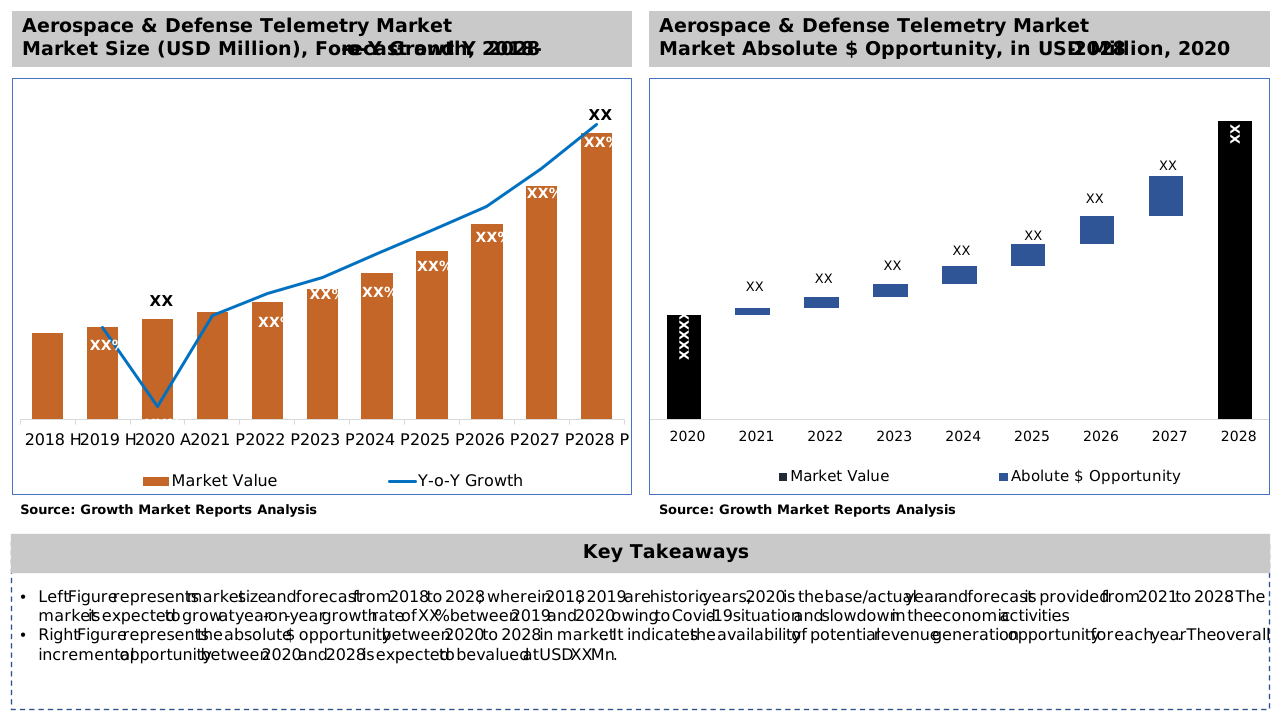
According to our latest research, the global aerospace & defense telemetry market size reached USD 18.2 billion in 2024. The market is poised for robust expansion, exhibiting a compound annual growth rate (CAGR) of 6.5% from 2025 to 2033. By the end of the forecast period in 2033, the market is expected to achieve a value of USD 32.0 billion. This growth is primarily driven by the increasing demand for real-time data acquisition, monitoring, and transmission across military and commercial aerospace platforms, as well as rapid technological advancements in telemetry systems.

One of the core growth factors propelling the aerospace & defense telemetry market is the escalating need for precise and reliable data collection in mission-critical defense and aerospace operations. Modern warfare and aerospace missions necessitate the use of advanced telemetry systems to monitor parameters such as speed, altitude, position, and system health in real time. The proliferation of unmanned aerial vehicles (UAVs), space exploration initiatives, and missile testing programs has further amplified the demand for robust telemetry solutions. Telemetry systems are now indispensable for ensuring mission success, safety, and operational efficiency, particularly in complex and high-risk environments. The integration of telemetry with advanced analytics and artificial intelligence is also enhancing decision-making capabilities, thereby fueling market growth.

Another pivotal driver is the continuous evolution of telemetry technologies, particularly in the realm of wireless and satellite-based transmission. The shift from traditional wired telemetry to wireless solutions has enabled more flexible, scalable, and cost-effective data transmission, especially in remote and challenging environments. Innovations such as miniaturized sensors, improved transmitters, and high-frequency antennas are enhancing the performance and reliability of telemetry systems. Furthermore, the adoption of satellite telemetry has opened new avenues for global coverage and uninterrupted data flow, which is crucial for long-range and cross-border aerospace missions. These technological advancements are not only improving the efficiency of telemetry systems but are also reducing operational costs, making them more accessible to a wider range of end users.

The growing emphasis on security, surveillance, and intelligence gathering is also contributing significantly to the expansion of the aerospace & defense telemetry market. Governments and defense organizations worldwide are investing heavily in next-generation telemetry systems to support their strategic and tactical objectives. The increasing frequency of joint military exercises, multinational space missions, and the modernization of existing defense infrastructure are driving the adoption of advanced telemetry solutions. Additionally, the commercial aviation sector is leveraging telemetry for predictive maintenance, flight safety, and fleet management, further broadening the marketÂ’s scope. The convergence of military and commercial applications is fostering innovation and collaboration, thereby accelerating market growth.

In the realm of aerospace and defense, the introduction of Secure Telemetry Die Monitor technology is revolutionizing the way data is managed and protected. This innovative solution is designed to enhance the security and reliability of telemetry systems by providing real-time monitoring and diagnostics at the die level. Secure Telemetry Die Monitor systems are particularly crucial in high-stakes environments where data integrity and security are paramount. By integrating advanced encryption and authentication protocols, these systems ensure that sensitive information remains protected from unauthorized access and cyber threats. The ability to detect and respond to potential anomalies in real-time further enhances the operational resilience of telemetry systems, making them indispensable for critical aerospace and defense applications.

From a regional perspective, North America remains the dominant market for aerospace & defense telemetry, accounting for the largest share in 2024. This leadership is attributed to the presence of major aerospace and defense contractors, significant government investments in research and development, and a well-established technological ecosystem. However, the Asia Pacific region is witnessing the fastest growth, driven by increasing defense budgets, expanding aerospace industries, and ambitious space exploration programs in countries like China and India. Europe is also a significant market, supported by collaborative defense initiatives and a strong focus on technological innovation. Latin America and the Middle East & Africa are emerging markets, with growing investments in defense modernization and aerospace infrastructure.

Global Aerospace & Defense Telemetry Industry Outlook

Component Analysis

The component segment of the aerospace & defense telemetry market encompasses sensors, transmitters, receivers, antennas, and other related hardware. Sensors play a critical role in telemetry systems by capturing essential data such as temperature, pressure, velocity, and position from various aerospace platforms. The demand for advanced sensors has surged due to the increasing complexity of aerospace missions and the need for high-precision data acquisition. Modern sensors are being designed to withstand extreme environmental conditions and offer enhanced sensitivity, reliability, and miniaturization. The integration of smart sensors with embedded processing capabilities is further augmenting the performance of telemetry systems, enabling real-time analytics and diagnostics.

Transmitters form the backbone of telemetry systems by facilitating the seamless transmission of data from remote or mobile platforms to ground stations or control centers. The evolution of transmitter technology, particularly in terms of frequency range, power efficiency, and signal integrity, has been instrumental in expanding the capabilities of telemetry systems. High-frequency and low-latency transmitters are now being deployed in advanced aerospace and defense applications, ensuring uninterrupted and secure data flow even in contested or hostile environments. The adoption of software-defined transmitters is also gaining traction, offering greater flexibility and adaptability to changing mission requirements.

Receivers are equally vital, as they decode and process the transmitted signals, enabling ground operators to monitor and analyze critical mission parameters in real time. The development of multi-channel and high-sensitivity receivers has significantly improved the accuracy and reliability of telemetry data reception. Advanced receivers are now equipped with sophisticated filtering and error-correction algorithms, ensuring the integrity of data even in the presence of interference or signal degradation. The trend towards integrated receiver modules, which combine multiple functionalities in a compact form factor, is also driving innovation in the market.

Antennas are essential for establishing robust communication links between airborne, spaceborne, and ground-based telemetry systems. The demand for high-gain, wideband, and steerable antennas is increasing, particularly for long-range and high-speed data transmission. The adoption of phased array and electronically scanned antennas is enabling dynamic beam steering and improved signal coverage, which are critical for modern aerospace and defense operations. The ongoing miniaturization and integration of antennas with other telemetry components are further enhancing system performance and reducing overall weight and footprint.

Other components, including power supplies, data loggers, and interface modules, also contribute to the overall efficiency and reliability of telemetry systems. The trend towards modular and scalable component architectures is enabling end users to customize telemetry solutions according to specific mission requirements. The continuous innovation in component design and manufacturing is expected to play a pivotal role in shaping the future of the aerospace & defense telemetry market, driving both performance improvements and cost efficiencies.

Report Scope

Attributes Details
Report Title Aerospace & Defense Telemetry Market Research Report 2033
By Component Sensors, Transmitters, Receivers, Antennas, Others
By Technology Wired Telemetry, Wireless Telemetry
By Application Aircraft, Spacecraft, UAVs, Missiles, Others
By Transmission Medium Radio, Satellite, Optical Fiber, Ethernet, Others
By End-User Military, Commercial, Others
Regions Covered North America, Europe, APAC, Latin America, MEA
Base Year 2024
Historic Data 2018-2023
Forecast Period 2025-2033
Number of Pages 287
Number of Tables & Figures 296
Customization Available Yes, the report can be customized as per your need.

Technology Analysis

The technology segment of the aerospace & defense telemetry market is primarily divided into wired telemetry and wireless telemetry. Wired telemetry has traditionally been the preferred choice for applications requiring high reliability, low latency, and secure data transmission. This technology utilizes physical cables, such as coaxial or fiber optic cables, to transmit data between sensors and control centers. Wired telemetry systems are extensively used in ground-based testing, laboratory environments, and certain aerospace platforms where electromagnetic interference and signal security are major concerns. The key advantages of wired telemetry include immunity to radio frequency interference, high data transfer rates, and minimal signal loss over short distances.

However, the advent of wireless telemetry has revolutionized the market by offering greater flexibility, scalability, and cost-effectiveness. Wireless telemetry systems utilize radio frequency (RF), satellite, or other wireless communication technologies to transmit data over long distances without the need for physical connections. This has made wireless telemetry particularly attractive for applications involving mobile, remote, or inaccessible platforms, such as UAVs, missiles, and spacecraft. The ongoing advancements in wireless protocols, encryption techniques, and spectrum management are enhancing the performance, security, and reliability of wireless telemetry systems, making them suitable for a wide range of aerospace and defense applications.

The integration of wireless telemetry with emerging technologies such as 5G, IoT, and cloud computing is opening new frontiers in data acquisition and management. 5G-enabled telemetry systems offer ultra-low latency, high bandwidth, and massive connectivity, which are essential for real-time monitoring and control of complex aerospace missions. The use of IoT devices and cloud-based analytics is enabling seamless data sharing, storage, and processing across multiple stakeholders, thereby improving operational efficiency and collaboration. These technological advancements are expected to drive the adoption of wireless telemetry in both military and commercial aerospace sectors over the forecast period.

Despite the numerous benefits of wireless telemetry, certain challenges remain, particularly in terms of signal interference, data security, and regulatory compliance. The proliferation of wireless devices and the increasing congestion of the RF spectrum are raising concerns about potential signal degradation and data breaches. To address these issues, industry players are investing in advanced encryption, frequency hopping, and spectrum management solutions. The development of hybrid telemetry systems, which combine the strengths of both wired and wireless technologies, is also gaining momentum, offering a balanced approach to performance, security, and flexibility.

The choice between wired and wireless telemetry ultimately depends on the specific requirements of each application, including data rate, range, security, and environmental conditions. As the aerospace & defense telemetry market continues to evolve, the convergence of these technologies is expected to create new opportunities for innovation and growth, enabling the development of next-generation telemetry solutions that meet the diverse needs of the industry.

Application Analysis

The application segment of the aerospace & defense telemetry market is highly diverse, encompassing aircraft, spacecraft, UAVs, missiles, and other specialized platforms. In the aircraft segment, telemetry systems are used extensively for real-time flight data monitoring, engine diagnostics, and predictive maintenance. The ability to capture and transmit critical flight parameters such as speed, altitude, fuel consumption, and system health is essential for ensuring flight safety, optimizing performance, and reducing operational costs. The adoption of advanced telemetry solutions is also enabling airlines and defense organizations to implement condition-based maintenance strategies, thereby minimizing downtime and extending asset lifecycles.

In the spacecraft segment, telemetry plays a crucial role in mission control, navigation, and payload management. Space missions, whether manned or unmanned, rely on telemetry systems to monitor spacecraft health, track trajectories, and transmit scientific data back to Earth. The increasing frequency of satellite launches, deep space exploration missions, and collaborative international space projects is driving the demand for high-performance telemetry systems with enhanced reliability, redundancy, and data throughput. The integration of telemetry with autonomous navigation and onboard data processing is further improving mission efficiency and success rates.

The proliferation of unmanned aerial vehicles (UAVs) in both military and commercial applications has created significant opportunities for the telemetry market. UAVs are equipped with sophisticated telemetry systems that enable remote piloting, real-time surveillance, and data collection over vast and often inaccessible areas. The use of telemetry in UAVs is critical for applications such as border surveillance, disaster management, agricultural monitoring, and infrastructure inspection. The ongoing development of long-endurance and beyond-visual-line-of-sight (BVLOS) UAVs is expected to drive further innovation in telemetry technologies, particularly in terms of range, data security, and bandwidth.

The missile segment represents another high-growth area for telemetry systems. Telemetry is essential for missile testing, guidance, and performance evaluation, providing real-time data on trajectory, velocity, acceleration, and system integrity. The increasing development and testing of advanced missile systems, including hypersonic and precision-guided munitions, is fueling the demand for robust and high-speed telemetry solutions. The ability to capture and analyze telemetry data during test flights is critical for validating missile designs, improving accuracy, and ensuring mission success.

Other applications of telemetry in the aerospace & defense sector include ground vehicles, naval platforms, and specialized research projects. The versatility and adaptability of telemetry systems make them suitable for a wide range of use cases, from environmental monitoring and scientific research to intelligence gathering and electronic warfare. The continuous expansion of application areas is expected to drive sustained growth in the aerospace & defense telemetry market, as end users seek to leverage the benefits of real-time data acquisition and analysis across diverse operational scenarios.

Transmission Medium Analysis

The transmission medium is a critical aspect of the aerospace & defense telemetry market, with key options including radio, satellite, optical fiber, Ethernet, and other emerging technologies. Radio telemetry has been the traditional choice for many aerospace and defense applications, offering reliable and cost-effective data transmission over moderate distances. Radio telemetry systems are widely used in aircraft, UAVs, and missile testing, where real-time data transfer and mobility are essential. The ongoing advancements in radio frequency (RF) technology, including the use of higher frequency bands and advanced modulation techniques, are enhancing the capacity and performance of radio telemetry systems.

Satellite telemetry has gained significant traction in recent years, particularly for applications requiring global coverage and long-range data transmission. Satellite-based telemetry systems are indispensable for space missions, intercontinental flights, and remote operations where terrestrial communication infrastructure is unavailable or unreliable. The increasing deployment of low Earth orbit (LEO) and geostationary satellites is expanding the reach and reliability of satellite telemetry, enabling uninterrupted data flow across vast geographical areas. The integration of satellite telemetry with advanced encryption and error-correction technologies is also improving data security and integrity.

Optical fiber telemetry is emerging as a preferred solution for high-speed, high-capacity data transmission in ground-based and laboratory environments. Optical fiber systems offer several advantages, including immunity to electromagnetic interference, low signal attenuation, and the ability to transmit large volumes of data over long distances. These features make optical fiber telemetry ideal for applications such as wind tunnel testing, ground station communications, and aerospace research facilities. The ongoing reduction in fiber optic costs and improvements in installation techniques are expected to drive the adoption of optical fiber telemetry in the coming years.

Ethernet-based telemetry is also gaining popularity, particularly in modern aerospace platforms that require seamless integration with digital networks and data management systems. Ethernet telemetry enables high-speed, real-time data exchange between onboard systems and ground control centers, supporting advanced applications such as predictive maintenance, flight data analysis, and mission planning. The adoption of Ethernet telemetry is being driven by the increasing digitization and connectivity of aerospace and defense platforms, as well as the need for standardized and interoperable communication protocols.

Other emerging transmission media, such as laser-based free-space optical (FSO) communication and ultrasonic telemetry, are being explored for niche applications that require ultra-high-speed or specialized data transmission capabilities. The choice of transmission medium is influenced by factors such as range, data rate, environmental conditions, and security requirements. As the aerospace & defense telemetry market continues to evolve, the development and integration of advanced transmission technologies will play a key role in enhancing system performance, reliability, and versatility.

End-User Analysis

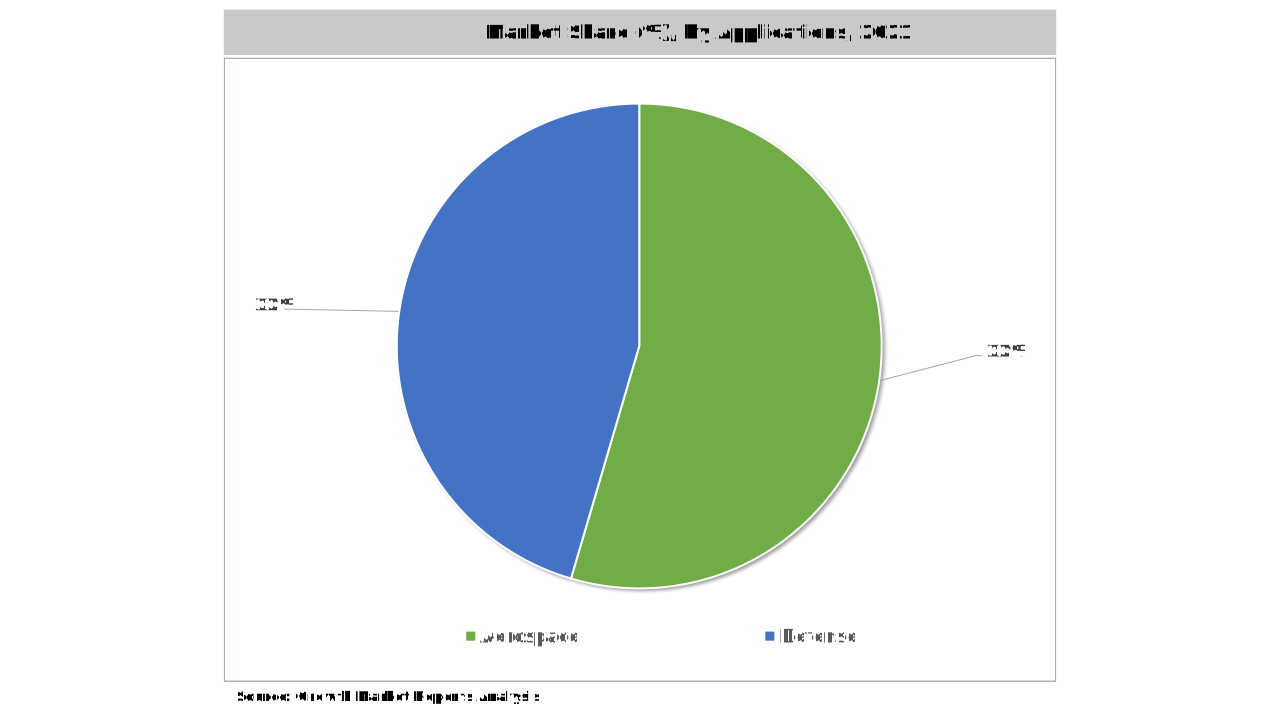
The end-user segment of the aerospace & defense telemetry market is broadly categorized into military, commercial, and other specialized users. The military segment accounts for the largest share of the market, driven by the critical need for real-time data acquisition, monitoring, and control in defense operations. Military organizations rely on telemetry systems for a wide range of applications, including missile testing, UAV operations, battlefield surveillance, and electronic warfare. The increasing focus on network-centric warfare, intelligence gathering, and situational awareness is driving the adoption of next-generation telemetry solutions with enhanced security, reliability, and interoperability.

The commercial segment is experiencing rapid growth, fueled by the expanding use of telemetry in civil aviation, space exploration, and commercial UAV operations. Airlines and aerospace companies are leveraging telemetry systems to improve flight safety, optimize maintenance schedules, and enhance operational efficiency. The growing adoption of predictive maintenance and condition-based monitoring is enabling commercial operators to minimize downtime, reduce costs, and extend the lifespan of critical assets. The commercial space sector, including satellite launches and space tourism, is also creating new opportunities for telemetry system providers.

Other end users, such as research institutions, government agencies, and specialized service providers, are also contributing to the growth of the aerospace & defense telemetry market. Research organizations use telemetry systems for scientific experiments, environmental monitoring, and technology development. Government agencies are investing in telemetry solutions to support disaster management, border security, and infrastructure monitoring. The increasing collaboration between public and private sector entities is fostering innovation and driving the adoption of advanced telemetry technologies across a wide range of applications.

The evolving requirements of end users are shaping the development of customized and application-specific telemetry solutions. Military users, for example, demand high-security, ruggedized systems capable of operating in harsh environments, while commercial users prioritize cost-effectiveness, ease of integration, and scalability. The ability of telemetry system providers to address the unique needs of different end-user segments will be a key factor in their long-term success and market competitiveness.

As the aerospace & defense telemetry market continues to expand, the diversification of end-user applications is expected to drive sustained demand for innovative telemetry solutions. The convergence of military and commercial requirements, coupled with the increasing involvement of research and government organizations, will create new opportunities for growth and collaboration across the industry.

Opportunities & Threats

The aerospace & defense telemetry market is ripe with opportunities, particularly as digital transformation accelerates across the sector. The integration of telemetry with emerging technologies such as artificial intelligence, machine learning, and big data analytics offers significant potential for enhancing operational efficiency, predictive maintenance, and decision-making. The adoption of cloud-based telemetry platforms is enabling real-time data sharing and collaboration among multiple stakeholders, including defense agencies, aerospace companies, and research institutions. The growing demand for autonomous and remotely operated platforms, such as UAVs and unmanned ground vehicles, is also driving the need for advanced telemetry solutions capable of supporting complex and dynamic mission requirements. These trends are expected to create new revenue streams and drive innovation in the aerospace & defense telemetry market over the forecast period.

Another major opportunity lies in the expansion of the commercial aerospace and space sectors. The increasing frequency of satellite launches, the emergence of space tourism, and the growing use of UAVs in commercial applications are creating new markets for telemetry system providers. The development of miniaturized, low-power telemetry systems is enabling the deployment of telemetry in small satellites (CubeSats), drones, and other compact platforms. The ongoing modernization of air traffic management and the implementation of next-generation flight safety systems are further boosting the demand for telemetry solutions in the commercial aviation sector. The ability to offer scalable, interoperable, and cost-effective telemetry systems will be a key differentiator for market players seeking to capitalize on these emerging opportunities.

Despite the positive outlook, the aerospace & defense telemetry market faces several restraining factors. One of the primary challenges is the increasing complexity of regulatory and security requirements, particularly for wireless and satellite-based telemetry systems. Concerns about data privacy, signal interference, and cyber threats are prompting governments and industry stakeholders to implement stringent standards and certification processes. The high cost of developing, deploying, and maintaining advanced telemetry systems can also be a barrier for smaller organizations and emerging markets. Additionally, the rapid pace of technological change and the need for continuous innovation pose risks for companies that are unable to keep up with evolving industry standards and customer expectations. Addressing these challenges will be essential for sustaining long-term growth and competitiveness in the aerospace & defense telemetry market.

Regional Outlook

North America continues to dominate the global aerospace & defense telemetry market, with a market size of USD 7.2 billion in 2024. The regionÂ’s leadership is underpinned by the presence of leading aerospace and defense contractors, robust government investment in research and development, and a well-established infrastructure for both military and commercial aerospace operations. The United States, in particular, is a major hub for telemetry system innovation, driven by ongoing modernization programs, space exploration initiatives, and the growing use of UAVs and advanced missile systems. Canada also contributes significantly to the regional market, particularly in the fields of satellite telemetry and aerospace research.

The Asia Pacific region is witnessing the fastest growth in the aerospace & defense telemetry market, with a projected CAGR of 8.2% from 2025 to 2033. The regional market size reached USD 4.3 billion in 2024 and is expected to exceed USD 8.2 billion by 2033. This rapid expansion is driven by increasing defense budgets, the expansion of national aerospace industries, and ambitious space exploration programs in countries such as China, India, and Japan. The region is also experiencing a surge in commercial aviation, satellite launches, and UAV applications, creating new opportunities for telemetry system providers. Government initiatives aimed at enhancing national security, disaster management, and technological self-reliance are further supporting market growth in the Asia Pacific.

Europe is another significant market for aerospace & defense telemetry, accounting for USD 3.9 billion in 2024. The region benefits from strong collaboration among member states, a vibrant aerospace manufacturing sector, and a focus on technological innovation. Key countries such as the United Kingdom, France, Germany, and Italy are investing in next-generation telemetry systems to support defense modernization, space missions, and commercial aerospace development. The European market is also characterized by a high degree of regulatory harmonization and a commitment to sustainability, which are driving the adoption of advanced and environmentally friendly telemetry solutions. Latin America and the Middle East & Africa are emerging markets, with combined market sizes of USD 2.8 billion in 2024, and are expected to grow steadily as regional governments invest in aerospace infrastructure and defense modernization.

Aerospace & Defense Telemetry Market Statistics

Competitor Outlook

The competitive landscape of the aerospace & defense telemetry market is characterized by intense rivalry among a mix of established global players, regional specialists, and innovative startups. Market leaders are focusing on expanding their product portfolios, enhancing system integration capabilities, and investing in research and development to maintain their competitive edge. Strategic partnerships, mergers, and acquisitions are common strategies employed to broaden market reach, access new technologies, and strengthen customer relationships. The ability to offer end-to-end telemetry solutions, from sensors and transmitters to data analytics and cloud platforms, is increasingly seen as a key differentiator in the market.

Innovation remains at the forefront of competition, with companies striving to develop next-generation telemetry systems that offer higher data rates, improved security, and enhanced reliability. The adoption of digital technologies such as artificial intelligence, machine learning, and IoT is enabling market players to deliver smarter and more adaptive telemetry solutions. Customization and flexibility are also becoming important, as end users demand tailored systems that can address specific operational requirements and integrate seamlessly with existing platforms. Companies that can rapidly respond to changing customer needs and technological trends are well positioned to capture market share in this dynamic industry.

The market is also witnessing increased collaboration between defense agencies, aerospace manufacturers, and technology providers. Joint ventures and public-private partnerships are facilitating the development and deployment of advanced telemetry systems for both military and commercial applications. The growing emphasis on interoperability, standardization, and regulatory compliance is driving industry-wide efforts to establish common frameworks and best practices. This collaborative approach is expected to accelerate innovation, reduce costs, and enhance the overall competitiveness of the aerospace & defense telemetry market.

Major companies operating in the aerospace & defense telemetry market include BAE Systems, Honeywell International Inc., L3Harris Technologies, Lockheed Martin Corporation, Northrop Grumman Corporation, Raytheon Technologies, Thales Group, Cobham Limited, Kongsberg Gruppen, and Safran Electronics & Defense. BAE Systems is renowned for its advanced telemetry solutions for military and space applications, while Honeywell International offers a broad range of telemetry products for both defense and commercial aerospace sectors. L3Harris Technologies and Raytheon Technologies are leaders in secure and high-performance telemetry systems, particularly for missile and UAV applications. Lockheed Martin and Northrop Grumman are at the forefront of integrating telemetry with advanced weapons and space systems.

Thales Group and Cobham Limited are prominent players in the European market, offering innovative telemetry solutions for civil and defense aerospace platforms. Kongsberg Gruppen and Safran Electronics & Defense are known for their expertise in specialized telemetry applications, including naval and space systems. These companies are continuously investing in research and development to enhance their product offerings, improve system integration, and address emerging customer needs. The competitive landscape is expected to remain dynamic, with ongoing innovation, strategic partnerships, and market expansion shaping the future of the aerospace & defense telemetry market.

Key Players

  • BAE Systems
  • Honeywell International Inc.
  • L3Harris Technologies
  • Lockheed Martin Corporation
  • Northrop Grumman Corporation
  • Raytheon Technologies Corporation
  • Thales Group
  • Leonardo S.p.A.
  • General Dynamics Corporation
  • Curtiss-Wright Corporation
  • Kratos Defense & Security Solutions
  • Safran S.A.
  • Cobham Limited
  • Teledyne Technologies Incorporated
  • Siemens AG
  • Rohde & Schwarz GmbH & Co KG
  • Meggitt PLC
  • Orbit Communications Systems Ltd.
  • HEICO Corporation
  • Dassault Aviation S.A.
Aerospace & Defense Telemetry Market Overview

Segments

The Aerospace & Defense Telemetry market has been segmented on the basis of

Component

  • Sensors
  • Transmitters
  • Receivers
  • Antennas
  • Others

Technology

  • Wired Telemetry
  • Wireless Telemetry

Application

  • Aircraft
  • Spacecraft
  • UAVs
  • Missiles
  • Others

Transmission Medium

  • Radio
  • Satellite
  • Optical Fiber
  • Ethernet
  • Others

End-User

  • Military
  • Commercial
  • Others

Competitive Landscape

Key players competing in the global aerospace & defense telemetry market are Thales Group; Safran SA; Raytheon Company; Orbit Communications Systems Ltd.; Lockheed Martin Corporation; Leonardo S.p.A; L3Harris Technologies, Inc.; Kongsberg Gruppen AS; Honeywell International Inc.; Curtiss-Wright Corp.; Cobham PLC; BAE Systems plc; and AstroNova Inc. Some of these players are adopting several business strategies including acquisitions, mergers, collaborations, partnerships, capacity expansion, and product launches to increase their market shares.
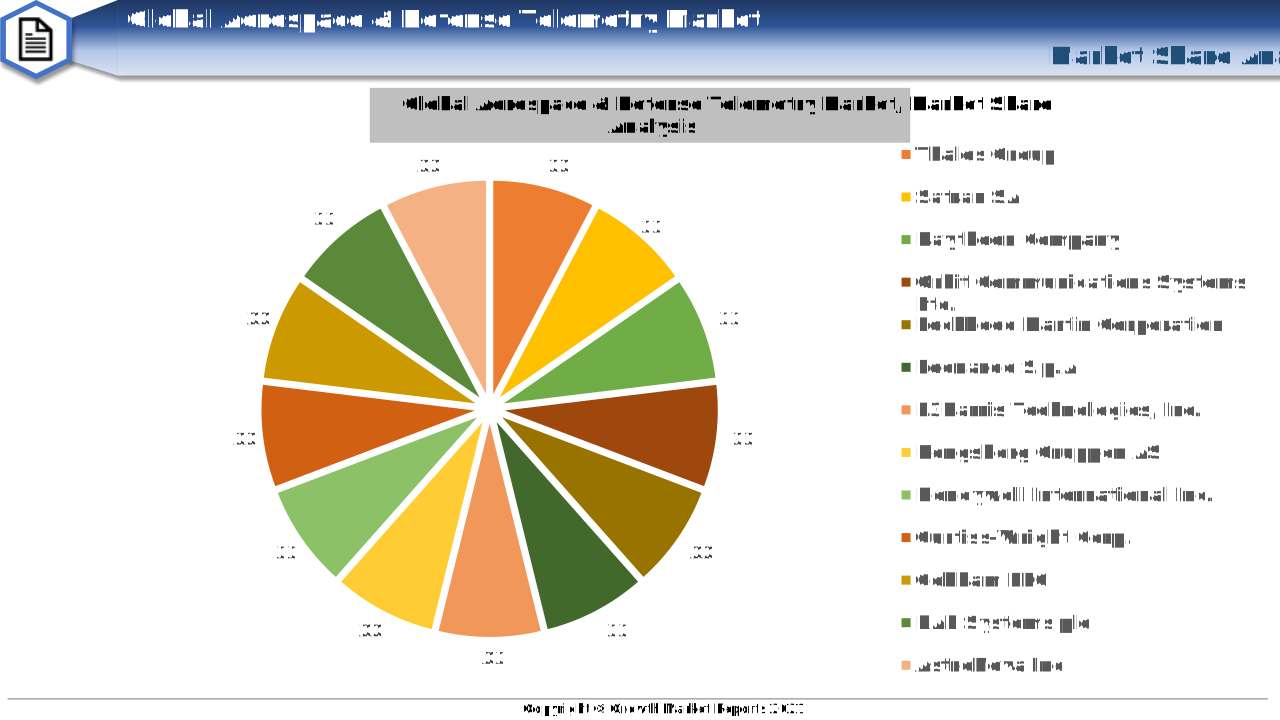

 Aerospace & Defense Telemetry Market By Key Players

Frequently Asked Questions

Key players include BAE Systems, Honeywell International, L3Harris Technologies, Lockheed Martin, Northrop Grumman, Raytheon Technologies, Thales Group, Cobham Limited, Kongsberg Gruppen, and Safran Electronics & Defense.

Opportunities include integration with AI, cloud, and big data, and expansion in commercial aerospace and space sectors. Challenges involve regulatory complexity, data security, high system costs, and rapid technological change.

End users include military organizations, commercial aerospace companies, research institutions, government agencies, and specialized service providers, each with unique requirements for telemetry solutions.

Common transmission media include radio, satellite, optical fiber, Ethernet, and emerging technologies like laser-based free-space optical communication, each suited to specific operational requirements.

Telemetry is used in aircraft for flight monitoring and maintenance, spacecraft for mission control, UAVs for remote piloting and surveillance, missiles for testing and guidance, and other platforms like naval and ground vehicles.

The market is shifting from wired to wireless telemetry, with advances in wireless protocols, satellite communication, 5G, IoT, and cloud computing. Hybrid systems combining wired and wireless technologies are also emerging.

Telemetry systems comprise sensors, transmitters, receivers, antennas, and other hardware such as power supplies and data loggers. Each component plays a critical role in data collection, transmission, and analysis.

North America leads the market due to strong aerospace and defense industries, while Asia Pacific is the fastest-growing region, driven by increasing defense budgets and expanding aerospace sectors in countries like China and India.

Key growth drivers include the rising demand for real-time data acquisition, monitoring, and transmission in military and commercial aerospace, rapid technological advancements, and the proliferation of UAVs, space missions, and missile testing.

The global aerospace & defense telemetry market reached USD 18.2 billion in 2024 and is projected to grow at a CAGR of 6.5% from 2025 to 2033, reaching USD 32.0 billion by 2033.

Table Of Content

Chapter 1 Executive Summary
Chapter 2 Assumptions and Acronyms Used
Chapter 3 Research Methodology
Chapter 4 Aerospace & Defense Telemetry Market Overview
   4.1 Introduction
      4.1.1 Market Taxonomy
      4.1.2 Market Definition
      4.1.3 Macro-Economic Factors Impacting the Market Growth
   4.2 Aerospace & Defense Telemetry Market Dynamics
      4.2.1 Market Drivers
      4.2.2 Market Restraints
      4.2.3 Market Opportunity
   4.3 Aerospace & Defense Telemetry Market - Supply Chain Analysis
      4.3.1 List of Key Suppliers
      4.3.2 List of Key Distributors
      4.3.3 List of Key Consumers
   4.4 Key Forces Shaping the Aerospace & Defense Telemetry Market
      4.4.1 Bargaining Power of Suppliers
      4.4.2 Bargaining Power of Buyers
      4.4.3 Threat of Substitution
      4.4.4 Threat of New Entrants
      4.4.5 Competitive Rivalry
   4.5 Global Aerospace & Defense Telemetry Market Size & Forecast, 2023-2032
      4.5.1 Aerospace & Defense Telemetry Market Size and Y-o-Y Growth
      4.5.2 Aerospace & Defense Telemetry Market Absolute $ Opportunity

Chapter 5 Global Aerospace & Defense Telemetry Market Analysis and Forecast By Component
   5.1 Introduction
      5.1.1 Key Market Trends & Growth Opportunities By Component
      5.1.2 Basis Point Share (BPS) Analysis By Component
      5.1.3 Absolute $ Opportunity Assessment By Component
   5.2 Aerospace & Defense Telemetry Market Size Forecast By Component
      5.2.1 Sensors
      5.2.2 Transmitters
      5.2.3 Receivers
      5.2.4 Antennas
      5.2.5 Others
   5.3 Market Attractiveness Analysis By Component

Chapter 6 Global Aerospace & Defense Telemetry Market Analysis and Forecast By Technology
   6.1 Introduction
      6.1.1 Key Market Trends & Growth Opportunities By Technology
      6.1.2 Basis Point Share (BPS) Analysis By Technology
      6.1.3 Absolute $ Opportunity Assessment By Technology
   6.2 Aerospace & Defense Telemetry Market Size Forecast By Technology
      6.2.1 Wired Telemetry
      6.2.2 Wireless Telemetry
   6.3 Market Attractiveness Analysis By Technology

Chapter 7 Global Aerospace & Defense Telemetry Market Analysis and Forecast By Application
   7.1 Introduction
      7.1.1 Key Market Trends & Growth Opportunities By Application
      7.1.2 Basis Point Share (BPS) Analysis By Application
      7.1.3 Absolute $ Opportunity Assessment By Application
   7.2 Aerospace & Defense Telemetry Market Size Forecast By Application
      7.2.1 Aircraft
      7.2.2 Spacecraft
      7.2.3 UAVs
      7.2.4 Missiles
      7.2.5 Others
   7.3 Market Attractiveness Analysis By Application

Chapter 8 Global Aerospace & Defense Telemetry Market Analysis and Forecast By Transmission Medium
   8.1 Introduction
      8.1.1 Key Market Trends & Growth Opportunities By Transmission Medium
      8.1.2 Basis Point Share (BPS) Analysis By Transmission Medium
      8.1.3 Absolute $ Opportunity Assessment By Transmission Medium
   8.2 Aerospace & Defense Telemetry Market Size Forecast By Transmission Medium
      8.2.1 Radio
      8.2.2 Satellite
      8.2.3 Optical Fiber
      8.2.4 Ethernet
      8.2.5 Others
   8.3 Market Attractiveness Analysis By Transmission Medium

Chapter 9 Global Aerospace & Defense Telemetry Market Analysis and Forecast By End-User
   9.1 Introduction
      9.1.1 Key Market Trends & Growth Opportunities By End-User
      9.1.2 Basis Point Share (BPS) Analysis By End-User
      9.1.3 Absolute $ Opportunity Assessment By End-User
   9.2 Aerospace & Defense Telemetry Market Size Forecast By End-User
      9.2.1 Military
      9.2.2 Commercial
      9.2.3 Others
   9.3 Market Attractiveness Analysis By End-User

Chapter 10 Global Aerospace & Defense Telemetry Market Analysis and Forecast by Region
   10.1 Introduction
      10.1.1 Key Market Trends & Growth Opportunities By Region
      10.1.2 Basis Point Share (BPS) Analysis By Region
      10.1.3 Absolute $ Opportunity Assessment By Region
   10.2 Aerospace & Defense Telemetry Market Size Forecast By Region
      10.2.1 North America
      10.2.2 Europe
      10.2.3 Asia Pacific
      10.2.4 Latin America
      10.2.5 Middle East & Africa (MEA)
   10.3 Market Attractiveness Analysis By Region

Chapter 11 Coronavirus Disease (COVID-19) Impact 
   11.1 Introduction 
   11.2 Current & Future Impact Analysis 
   11.3 Economic Impact Analysis 
   11.4 Government Policies 
   11.5 Investment Scenario

Chapter 12 North America Aerospace & Defense Telemetry Analysis and Forecast
   12.1 Introduction
   12.2 North America Aerospace & Defense Telemetry Market Size Forecast by Country
      12.2.1 U.S.
      12.2.2 Canada
   12.3 Basis Point Share (BPS) Analysis by Country
   12.4 Absolute $ Opportunity Assessment by Country
   12.5 Market Attractiveness Analysis by Country
   12.6 North America Aerospace & Defense Telemetry Market Size Forecast By Component
      12.6.1 Sensors
      12.6.2 Transmitters
      12.6.3 Receivers
      12.6.4 Antennas
      12.6.5 Others
   12.7 Basis Point Share (BPS) Analysis By Component 
   12.8 Absolute $ Opportunity Assessment By Component 
   12.9 Market Attractiveness Analysis By Component
   12.10 North America Aerospace & Defense Telemetry Market Size Forecast By Technology
      12.10.1 Wired Telemetry
      12.10.2 Wireless Telemetry
   12.11 Basis Point Share (BPS) Analysis By Technology 
   12.12 Absolute $ Opportunity Assessment By Technology 
   12.13 Market Attractiveness Analysis By Technology
   12.14 North America Aerospace & Defense Telemetry Market Size Forecast By Application
      12.14.1 Aircraft
      12.14.2 Spacecraft
      12.14.3 UAVs
      12.14.4 Missiles
      12.14.5 Others
   12.15 Basis Point Share (BPS) Analysis By Application 
   12.16 Absolute $ Opportunity Assessment By Application 
   12.17 Market Attractiveness Analysis By Application
   12.18 North America Aerospace & Defense Telemetry Market Size Forecast By Transmission Medium
      12.18.1 Radio
      12.18.2 Satellite
      12.18.3 Optical Fiber
      12.18.4 Ethernet
      12.18.5 Others
   12.19 Basis Point Share (BPS) Analysis By Transmission Medium 
   12.20 Absolute $ Opportunity Assessment By Transmission Medium 
   12.21 Market Attractiveness Analysis By Transmission Medium
   12.22 North America Aerospace & Defense Telemetry Market Size Forecast By End-User
      12.22.1 Military
      12.22.2 Commercial
      12.22.3 Others
   12.23 Basis Point Share (BPS) Analysis By End-User 
   12.24 Absolute $ Opportunity Assessment By End-User 
   12.25 Market Attractiveness Analysis By End-User

Chapter 13 Europe Aerospace & Defense Telemetry Analysis and Forecast
   13.1 Introduction
   13.2 Europe Aerospace & Defense Telemetry Market Size Forecast by Country
      13.2.1 Germany
      13.2.2 France
      13.2.3 Italy
      13.2.4 U.K.
      13.2.5 Spain
      13.2.6 Russia
      13.2.7 Rest of Europe
   13.3 Basis Point Share (BPS) Analysis by Country
   13.4 Absolute $ Opportunity Assessment by Country
   13.5 Market Attractiveness Analysis by Country
   13.6 Europe Aerospace & Defense Telemetry Market Size Forecast By Component
      13.6.1 Sensors
      13.6.2 Transmitters
      13.6.3 Receivers
      13.6.4 Antennas
      13.6.5 Others
   13.7 Basis Point Share (BPS) Analysis By Component 
   13.8 Absolute $ Opportunity Assessment By Component 
   13.9 Market Attractiveness Analysis By Component
   13.10 Europe Aerospace & Defense Telemetry Market Size Forecast By Technology
      13.10.1 Wired Telemetry
      13.10.2 Wireless Telemetry
   13.11 Basis Point Share (BPS) Analysis By Technology 
   13.12 Absolute $ Opportunity Assessment By Technology 
   13.13 Market Attractiveness Analysis By Technology
   13.14 Europe Aerospace & Defense Telemetry Market Size Forecast By Application
      13.14.1 Aircraft
      13.14.2 Spacecraft
      13.14.3 UAVs
      13.14.4 Missiles
      13.14.5 Others
   13.15 Basis Point Share (BPS) Analysis By Application 
   13.16 Absolute $ Opportunity Assessment By Application 
   13.17 Market Attractiveness Analysis By Application
   13.18 Europe Aerospace & Defense Telemetry Market Size Forecast By Transmission Medium
      13.18.1 Radio
      13.18.2 Satellite
      13.18.3 Optical Fiber
      13.18.4 Ethernet
      13.18.5 Others
   13.19 Basis Point Share (BPS) Analysis By Transmission Medium 
   13.20 Absolute $ Opportunity Assessment By Transmission Medium 
   13.21 Market Attractiveness Analysis By Transmission Medium
   13.22 Europe Aerospace & Defense Telemetry Market Size Forecast By End-User
      13.22.1 Military
      13.22.2 Commercial
      13.22.3 Others
   13.23 Basis Point Share (BPS) Analysis By End-User 
   13.24 Absolute $ Opportunity Assessment By End-User 
   13.25 Market Attractiveness Analysis By End-User

Chapter 14 Asia Pacific Aerospace & Defense Telemetry Analysis and Forecast
   14.1 Introduction
   14.2 Asia Pacific Aerospace & Defense Telemetry Market Size Forecast by Country
      14.2.1 China
      14.2.2 Japan
      14.2.3 South Korea
      14.2.4 India
      14.2.5 Australia
      14.2.6 South East Asia (SEA)
      14.2.7 Rest of Asia Pacific (APAC)
   14.3 Basis Point Share (BPS) Analysis by Country
   14.4 Absolute $ Opportunity Assessment by Country
   14.5 Market Attractiveness Analysis by Country
   14.6 Asia Pacific Aerospace & Defense Telemetry Market Size Forecast By Component
      14.6.1 Sensors
      14.6.2 Transmitters
      14.6.3 Receivers
      14.6.4 Antennas
      14.6.5 Others
   14.7 Basis Point Share (BPS) Analysis By Component 
   14.8 Absolute $ Opportunity Assessment By Component 
   14.9 Market Attractiveness Analysis By Component
   14.10 Asia Pacific Aerospace & Defense Telemetry Market Size Forecast By Technology
      14.10.1 Wired Telemetry
      14.10.2 Wireless Telemetry
   14.11 Basis Point Share (BPS) Analysis By Technology 
   14.12 Absolute $ Opportunity Assessment By Technology 
   14.13 Market Attractiveness Analysis By Technology
   14.14 Asia Pacific Aerospace & Defense Telemetry Market Size Forecast By Application
      14.14.1 Aircraft
      14.14.2 Spacecraft
      14.14.3 UAVs
      14.14.4 Missiles
      14.14.5 Others
   14.15 Basis Point Share (BPS) Analysis By Application 
   14.16 Absolute $ Opportunity Assessment By Application 
   14.17 Market Attractiveness Analysis By Application
   14.18 Asia Pacific Aerospace & Defense Telemetry Market Size Forecast By Transmission Medium
      14.18.1 Radio
      14.18.2 Satellite
      14.18.3 Optical Fiber
      14.18.4 Ethernet
      14.18.5 Others
   14.19 Basis Point Share (BPS) Analysis By Transmission Medium 
   14.20 Absolute $ Opportunity Assessment By Transmission Medium 
   14.21 Market Attractiveness Analysis By Transmission Medium
   14.22 Asia Pacific Aerospace & Defense Telemetry Market Size Forecast By End-User
      14.22.1 Military
      14.22.2 Commercial
      14.22.3 Others
   14.23 Basis Point Share (BPS) Analysis By End-User 
   14.24 Absolute $ Opportunity Assessment By End-User 
   14.25 Market Attractiveness Analysis By End-User

Chapter 15 Latin America Aerospace & Defense Telemetry Analysis and Forecast
   15.1 Introduction
   15.2 Latin America Aerospace & Defense Telemetry Market Size Forecast by Country
      15.2.1 Brazil
      15.2.2 Mexico
      15.2.3 Rest of Latin America (LATAM)
   15.3 Basis Point Share (BPS) Analysis by Country
   15.4 Absolute $ Opportunity Assessment by Country
   15.5 Market Attractiveness Analysis by Country
   15.6 Latin America Aerospace & Defense Telemetry Market Size Forecast By Component
      15.6.1 Sensors
      15.6.2 Transmitters
      15.6.3 Receivers
      15.6.4 Antennas
      15.6.5 Others
   15.7 Basis Point Share (BPS) Analysis By Component 
   15.8 Absolute $ Opportunity Assessment By Component 
   15.9 Market Attractiveness Analysis By Component
   15.10 Latin America Aerospace & Defense Telemetry Market Size Forecast By Technology
      15.10.1 Wired Telemetry
      15.10.2 Wireless Telemetry
   15.11 Basis Point Share (BPS) Analysis By Technology 
   15.12 Absolute $ Opportunity Assessment By Technology 
   15.13 Market Attractiveness Analysis By Technology
   15.14 Latin America Aerospace & Defense Telemetry Market Size Forecast By Application
      15.14.1 Aircraft
      15.14.2 Spacecraft
      15.14.3 UAVs
      15.14.4 Missiles
      15.14.5 Others
   15.15 Basis Point Share (BPS) Analysis By Application 
   15.16 Absolute $ Opportunity Assessment By Application 
   15.17 Market Attractiveness Analysis By Application
   15.18 Latin America Aerospace & Defense Telemetry Market Size Forecast By Transmission Medium
      15.18.1 Radio
      15.18.2 Satellite
      15.18.3 Optical Fiber
      15.18.4 Ethernet
      15.18.5 Others
   15.19 Basis Point Share (BPS) Analysis By Transmission Medium 
   15.20 Absolute $ Opportunity Assessment By Transmission Medium 
   15.21 Market Attractiveness Analysis By Transmission Medium
   15.22 Latin America Aerospace & Defense Telemetry Market Size Forecast By End-User
      15.22.1 Military
      15.22.2 Commercial
      15.22.3 Others
   15.23 Basis Point Share (BPS) Analysis By End-User 
   15.24 Absolute $ Opportunity Assessment By End-User 
   15.25 Market Attractiveness Analysis By End-User

Chapter 16 Middle East & Africa (MEA) Aerospace & Defense Telemetry Analysis and Forecast
   16.1 Introduction
   16.2 Middle East & Africa (MEA) Aerospace & Defense Telemetry Market Size Forecast by Country
      16.2.1 Saudi Arabia
      16.2.2 South Africa
      16.2.3 UAE
      16.2.4 Rest of Middle East & Africa (MEA)
   16.3 Basis Point Share (BPS) Analysis by Country
   16.4 Absolute $ Opportunity Assessment by Country
   16.5 Market Attractiveness Analysis by Country
   16.6 Middle East & Africa (MEA) Aerospace & Defense Telemetry Market Size Forecast By Component
      16.6.1 Sensors
      16.6.2 Transmitters
      16.6.3 Receivers
      16.6.4 Antennas
      16.6.5 Others
   16.7 Basis Point Share (BPS) Analysis By Component 
   16.8 Absolute $ Opportunity Assessment By Component 
   16.9 Market Attractiveness Analysis By Component
   16.10 Middle East & Africa (MEA) Aerospace & Defense Telemetry Market Size Forecast By Technology
      16.10.1 Wired Telemetry
      16.10.2 Wireless Telemetry
   16.11 Basis Point Share (BPS) Analysis By Technology 
   16.12 Absolute $ Opportunity Assessment By Technology 
   16.13 Market Attractiveness Analysis By Technology
   16.14 Middle East & Africa (MEA) Aerospace & Defense Telemetry Market Size Forecast By Application
      16.14.1 Aircraft
      16.14.2 Spacecraft
      16.14.3 UAVs
      16.14.4 Missiles
      16.14.5 Others
   16.15 Basis Point Share (BPS) Analysis By Application 
   16.16 Absolute $ Opportunity Assessment By Application 
   16.17 Market Attractiveness Analysis By Application
   16.18 Middle East & Africa (MEA) Aerospace & Defense Telemetry Market Size Forecast By Transmission Medium
      16.18.1 Radio
      16.18.2 Satellite
      16.18.3 Optical Fiber
      16.18.4 Ethernet
      16.18.5 Others
   16.19 Basis Point Share (BPS) Analysis By Transmission Medium 
   16.20 Absolute $ Opportunity Assessment By Transmission Medium 
   16.21 Market Attractiveness Analysis By Transmission Medium
   16.22 Middle East & Africa (MEA) Aerospace & Defense Telemetry Market Size Forecast By End-User
      16.22.1 Military
      16.22.2 Commercial
      16.22.3 Others
   16.23 Basis Point Share (BPS) Analysis By End-User 
   16.24 Absolute $ Opportunity Assessment By End-User 
   16.25 Market Attractiveness Analysis By End-User

Chapter 17 Competition Landscape 
   17.1 Aerospace & Defense Telemetry Market: Competitive Dashboard
   17.2 Global Aerospace & Defense Telemetry Market: Market Share Analysis, 2023
   17.3 Company Profiles (Details – Overview, Financials, Developments, Strategy) 
      17.3.1 BAE Systems
Honeywell International Inc.
L3Harris Technologies
Lockheed Martin Corporation
Northrop Grumman Corporation
Raytheon Technologies Corporation
Thales Group
Leonardo S.p.A.
General Dynamics Corporation
Curtiss-Wright Corporation
Kratos Defense & Security Solutions
Safran S.A.
Cobham Limited
Teledyne Technologies Incorporated
Siemens AG
Rohde & Schwarz GmbH & Co KG
Meggitt PLC
Orbit Communications Systems Ltd.
HEICO Corporation
Dassault Aviation S.A.

Methodology

Our Clients

Pfizer
Microsoft
FedEx Logistics
sinopec
Dassault Aviation
Nestle SA
The John Holland Group
General Electric