CBRNe Defense Market Research Report 2033

CBRNe Defense Market Research Report 2033

Segments - by Type (Chemical, Biological, Radiological, Nuclear, Explosives), by Equipment (Detection, Protection, Decontamination, Simulation & Training, Others), by Application (Military, Civil & Law Enforcement, Commercial), by End-User (Defense, Homeland Security, Commercial, Others)

https://growthmarketreports.com/Raksha
Author : Raksha Sharma
https://growthmarketreports.com/Vaibhav
Fact-checked by : V. Chandola
https://growthmarketreports.com/Shruti
Editor : Shruti Bhat

Upcoming | Report ID :AD-1471 | 4.7 Rating | 14 Reviews | 259 Pages | Format : Docx PDF

Report Description


CBRNe Defense Market Outlook

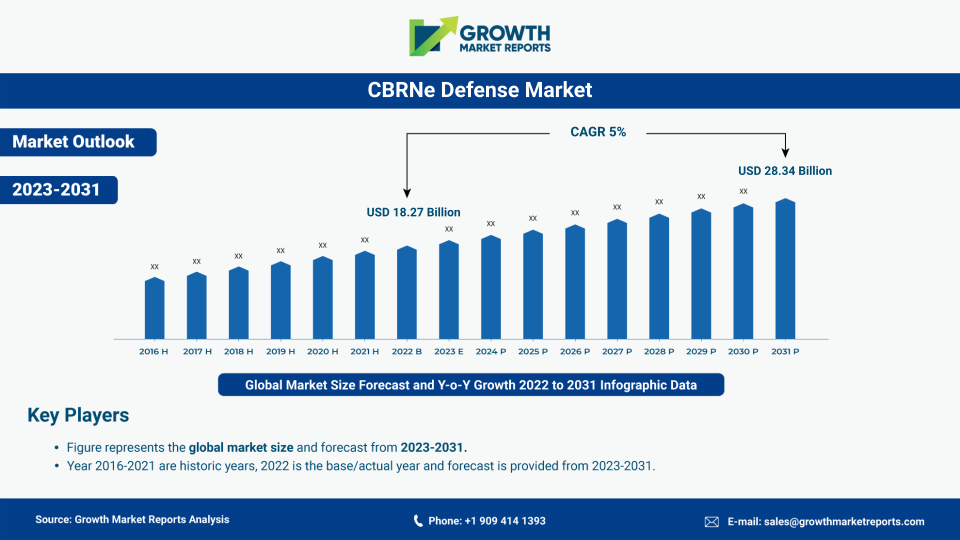
According to our latest research, the global CBRNe Defense market size reached USD 19.8 billion in 2024, reflecting robust investments in threat mitigation and preparedness across critical sectors. The market is expected to grow at a CAGR of 6.4% from 2025 to 2033, reaching an estimated USD 34.5 billion by 2033. This growth is primarily driven by escalating geopolitical tensions, increased frequency of chemical and biological threats, and the rising adoption of advanced detection and protection technologies. As per our comprehensive analysis, the CBRNe Defense market is witnessing a significant transformation, propelled by technological advancements, regulatory mandates, and the need for robust national security frameworks worldwide.

A key growth factor driving the CBRNe Defense market is the rising threat landscape associated with chemical, biological, radiological, nuclear, and explosive (CBRNe) materials. Global instability, terrorism, and the proliferation of unconventional weapons have compelled governments and private entities to invest heavily in detection, protection, and decontamination solutions. The increased frequency of incidents involving hazardous materials, both intentional and accidental, has underscored the necessity of robust CBRNe defense frameworks. Heightened public awareness, combined with rigorous international regulations, has further fueled demand for state-of-the-art equipment and systems capable of early threat identification and rapid response. These dynamics are catalyzing market growth, particularly in regions with heightened security concerns and critical infrastructure vulnerabilities.

Technological innovation is another significant factor propelling the CBRNe Defense market. The integration of artificial intelligence, real-time sensor networks, and advanced simulation and training modules has revolutionized how organizations detect, assess, and respond to CBRNe threats. Next-generation detection systems now offer enhanced sensitivity, portability, and interoperability, enabling faster and more accurate threat identification across diverse environments. Similarly, advancements in personal protective equipment (PPE) and decontamination technologies have improved responder safety and operational efficiency. The growing adoption of simulation and training tools, leveraging virtual and augmented reality, ensures that personnel are better prepared for evolving threat scenarios. These technological strides are not only enhancing operational readiness but also expanding the addressable market for CBRNe solutions.

Another crucial growth driver is the increasing focus on civil preparedness and law enforcement applications. Beyond military and defense, CBRNe threats pose significant risks to civilian populations, critical infrastructure, and commercial establishments. Governments worldwide are implementing comprehensive emergency response frameworks, mandating CBRNe preparedness across airports, mass transit systems, hospitals, and public venues. This trend is fostering greater collaboration between public and private sectors, resulting in expanded procurement of detection, decontamination, and simulation technologies. The rise in public-private partnerships and funding initiatives is further accelerating market penetration, particularly in urban centers and regions exposed to elevated threat vectors.

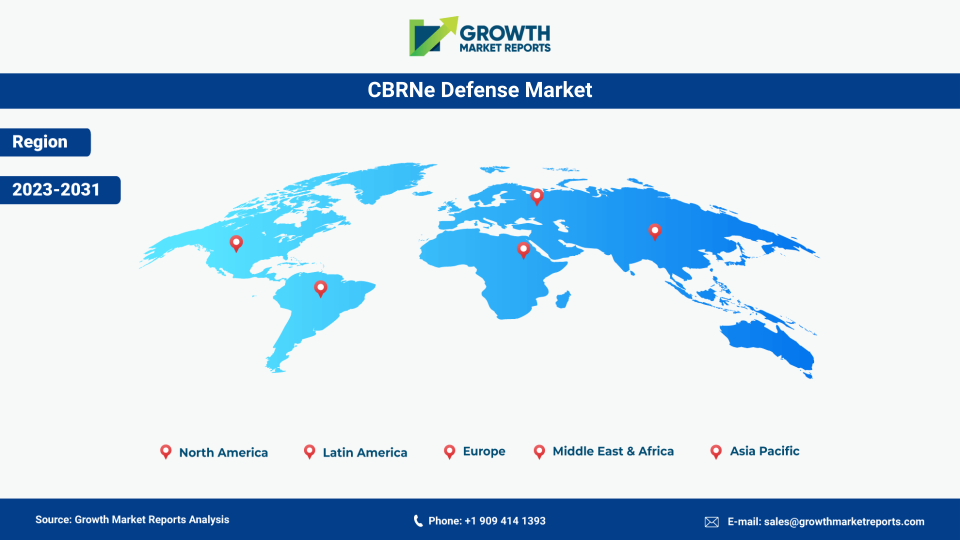
Regionally, North America continues to dominate the CBRNe Defense market, accounting for the largest share in 2024, followed by Europe and Asia Pacific. The United States, in particular, maintains significant investments in CBRNe defense due to its global military footprint and homeland security mandates. Europe is witnessing substantial growth, driven by cross-border security initiatives and increased focus on counter-terrorism. Meanwhile, Asia Pacific is emerging as a high-growth region, fueled by rising defense budgets, modernization programs, and heightened awareness of CBRNe risks. Latin America and the Middle East & Africa are also witnessing gradual adoption, driven by evolving security landscapes and international cooperation. This regional diversification is creating a dynamic and competitive market environment, with localized strategies and tailored solutions gaining prominence.

Global CBRNe Defense Industry Outlook

Type Analysis

The CBRNe Defense market by type is segmented into Chemical, Biological, Radiological, Nuclear, and Explosives, each representing unique challenges and technological needs. The chemical segment remains dominant, owing to the widespread use of hazardous chemicals in industrial processes, transportation, and potential weaponization. Incidents involving toxic industrial chemicals, accidental leaks, and deliberate attacks have heightened the demand for chemical detection, protection, and decontamination solutions. Governments and industries are investing in real-time chemical sensors, fixed and portable detectors, and advanced PPE to safeguard personnel and infrastructure. The integration of AI-driven analytics and cloud-based monitoring is further enhancing the efficiency and accuracy of chemical threat identification, driving sustained growth in this segment.

The biological segment is experiencing accelerated growth, particularly in the wake of global pandemics and bioterrorism threats. The COVID-19 pandemic underscored the vulnerabilities associated with biological agents, prompting governments and healthcare organizations to bolster their preparedness and response capabilities. Advanced biological detection systems, rapid diagnostic kits, and decontamination technologies are being deployed in airports, hospitals, and public venues to mitigate risks. The rise in synthetic biology and the potential misuse of genetically engineered organisms have further amplified the need for comprehensive biological defense measures. Collaborative research initiatives and public health investments are catalyzing innovation, resulting in more robust and scalable solutions across this segment.

Radiological and nuclear segments, while comparatively smaller, are critical due to the catastrophic consequences associated with radiological dispersal devices (RDDs) and nuclear incidents. The threat of radiological terrorism, coupled with concerns over nuclear facility safety, is driving investments in radiation detection, monitoring, and response systems. Portable radiation detectors, dosimeters, and remote sensing technologies are being adopted by military, law enforcement, and emergency response teams. Nuclear defense initiatives are also focusing on advanced shielding materials, robotic intervention systems, and fortified command centers. International treaties and regulatory frameworks, such as the Nuclear Non-Proliferation Treaty (NPT), are shaping market dynamics, ensuring compliance and fostering cross-border collaboration.

The development and deployment of CBRN Protective Equipment are critical to ensuring the safety of personnel operating in hazardous environments. This equipment, which includes advanced respirators, protective suits, and gloves, is designed to shield individuals from exposure to harmful agents. Innovations in material science and design have led to the creation of lightweight, durable, and highly effective protective gear that enhances mobility and comfort without compromising safety. The importance of CBRN Protective Equipment extends beyond military applications, as it is increasingly being adopted in civilian sectors such as healthcare, emergency response, and industrial safety. As threats continue to evolve, the demand for state-of-the-art protective solutions is expected to rise, driving further advancements in this essential aspect of CBRN defense.

The explosives segment is integral to both military and civil defense strategies, addressing threats posed by improvised explosive devices (IEDs), landmines, and explosive ordnance. The proliferation of asymmetric warfare and urban terrorism has heightened the need for advanced explosives detection and neutralization technologies. State-of-the-art scanners, bomb disposal robots, and trace detection systems are being widely deployed at airports, border checkpoints, and critical infrastructure sites. The integration of machine learning and data analytics is enabling faster threat recognition and decision-making, reducing response times and enhancing public safety. This segment is expected to witness sustained growth, driven by ongoing counter-terrorism operations and infrastructure protection mandates.

Report Scope

Attributes Details
Report Title CBRNe Defense Market Research Report 2033
By Type Chemical, Biological, Radiological, Nuclear, Explosives
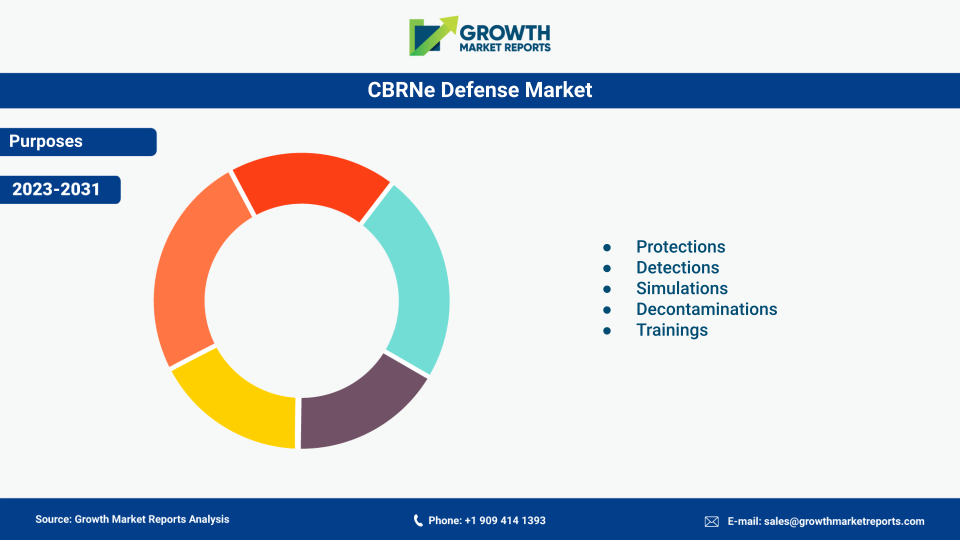
By Equipment Detection, Protection, Decontamination, Simulation & Training, Others
By Application Military, Civil & Law Enforcement, Commercial
By End-User Defense, Homeland Security, Commercial, Others
Regions Covered North America, Europe, APAC, Latin America, MEA
Base Year 2024
Historic Data 2018-2023
Forecast Period 2025-2033
Number of Pages 259
Number of Tables & Figures 299
Customization Available Yes, the report can be customized as per your need.

Equipment Analysis

The equipment segment of the CBRNe Defense market encompasses Detection, Protection, Decontamination, Simulation & Training, and Others, each playing a pivotal role in comprehensive threat management. Detection equipment forms the backbone of CBRNe defense strategies, enabling early identification and assessment of hazardous materials. Modern detection systems leverage advanced sensor technologies, real-time data analytics, and networked communication platforms to provide accurate and timely alerts. Fixed, portable, and wearable detectors are being widely adopted across military, law enforcement, and commercial applications. The demand for multi-threat detection devices, capable of simultaneously identifying chemical, biological, radiological, and explosive agents, is on the rise, driven by operational efficiency requirements and evolving threat landscapes.

Protection equipment is equally critical, safeguarding personnel and first responders from exposure to hazardous agents. Innovations in personal protective equipment (PPE), such as advanced respirators, protective suits, gloves, and boots, are enhancing wearer comfort, mobility, and safety. The integration of smart textiles, sensor-embedded garments, and modular designs is enabling adaptive protection based on threat levels and operational environments. Military and law enforcement agencies are increasingly investing in next-generation PPE to address emerging threats and ensure mission readiness. The commercial sector, particularly in healthcare and industrial settings, is also witnessing increased adoption of protective solutions, driven by regulatory mandates and workplace safety initiatives.

Decontamination equipment is essential for restoring safety and functionality in contaminated environments. Advanced decontamination technologies, including chemical neutralizers, biological disinfectants, and radiological decontamination systems, are being deployed across military bases, public venues, and critical infrastructure sites. The development of rapid deployment kits, portable decontamination units, and automated systems is enhancing response times and operational flexibility. Research and development efforts are focused on eco-friendly and non-toxic decontamination agents, minimizing environmental impact while ensuring efficacy. The rising frequency of hazardous material incidents and the need for swift recovery operations are driving sustained demand for decontamination solutions.

CBRN Filtration Systems play a pivotal role in safeguarding environments from contamination by hazardous agents. These systems are engineered to remove or neutralize chemical, biological, radiological, and nuclear particles from the air, ensuring that indoor and outdoor spaces remain safe for occupants. The technology behind CBRN Filtration Systems has advanced significantly, incorporating high-efficiency particulate air (HEPA) filters, activated carbon, and other innovative materials to achieve optimal performance. These systems are vital in a variety of settings, including military installations, hospitals, and public transportation hubs, where maintaining air quality is paramount. As global awareness of CBRN threats grows, the adoption of sophisticated filtration systems is becoming more widespread, underscoring their importance in comprehensive defense strategies.

Simulation and training equipment is gaining prominence as organizations recognize the importance of preparedness and skill development. Advanced simulators, virtual reality (VR), and augmented reality (AR) platforms are being used to replicate real-world CBRNe scenarios, enabling personnel to practice response protocols and decision-making in a safe environment. These training solutions are enhancing situational awareness, teamwork, and operational effectiveness, reducing the risk of errors during actual incidents. Governments and private organizations are investing in comprehensive training programs, leveraging cutting-edge simulation technologies to build resilient and capable response teams. The integration of AI-driven scenario generation and performance analytics is further elevating the effectiveness of training initiatives across the CBRNe Defense market.

Application Analysis

The CBRNe Defense market by application is segmented into Military, Civil & Law Enforcement, and Commercial sectors, each exhibiting distinct demand drivers and adoption patterns. The military segment remains the largest, accounting for a substantial share of the global market. Armed forces worldwide are prioritizing CBRNe defense as a core component of national security, investing in advanced detection, protection, and decontamination systems. Military modernization programs, joint exercises, and cross-border collaborations are fueling the procurement of state-of-the-art equipment and training solutions. The integration of unmanned systems, robotics, and AI-driven analytics is further enhancing military CBRNe capabilities, enabling rapid threat assessment and response in complex operational environments.

The civil and law enforcement segment is witnessing accelerated growth, driven by the increasing frequency of CBRNe incidents in urban and civilian settings. Police, fire departments, emergency medical services, and disaster response teams are investing in specialized detection, protection, and decontamination equipment to safeguard public safety. The rise in terrorism, chemical spills, and biological outbreaks has underscored the need for comprehensive civil defense frameworks. Governments are implementing stringent regulations, mandating CBRNe preparedness across critical infrastructure, public venues, and transportation hubs. The adoption of simulation and training solutions is also on the rise, ensuring that first responders are equipped to handle evolving threat scenarios with confidence and efficiency.

The commercial sector, while comparatively smaller, is emerging as a significant growth area within the CBRNe Defense market. Industries such as healthcare, pharmaceuticals, energy, and transportation are increasingly recognizing the risks posed by CBRNe threats to personnel, assets, and operations. Regulatory compliance, workplace safety mandates, and business continuity planning are driving investments in detection, protection, and decontamination solutions. Hospitals and laboratories, in particular, are adopting advanced biological detection and decontamination technologies to mitigate the risks of infectious disease outbreaks and hazardous material exposures. The rise in public-private partnerships and government funding initiatives is further accelerating commercial sector adoption, expanding the marketÂ’s addressable base.

End-User Analysis

The end-user landscape of the CBRNe Defense market is segmented into Defense, Homeland Security, Commercial, and Others, reflecting the diverse range of stakeholders involved in threat mitigation and response. The defense sector remains the primary end-user, accounting for the largest share of market revenues. National defense agencies are investing heavily in CBRNe capabilities, driven by the need to protect military personnel, assets, and operations from unconventional threats. Modernization programs, international collaborations, and strategic partnerships are fueling the adoption of cutting-edge detection, protection, and decontamination technologies. The integration of networked command and control systems, autonomous platforms, and real-time analytics is further enhancing defense sector capabilities, ensuring rapid and coordinated responses to CBRNe incidents.

Homeland security agencies represent another critical end-user segment, tasked with safeguarding civilian populations, critical infrastructure, and public spaces from CBRNe threats. The rise in terrorism, cross-border smuggling, and natural disasters has underscored the importance of robust homeland security frameworks. Agencies are investing in advanced detection systems, mobile response units, and simulation-based training programs to enhance operational readiness. The adoption of interoperable communication platforms and data-sharing networks is enabling seamless coordination among multiple stakeholders, including police, fire, medical, and disaster response teams. Homeland security initiatives are also focused on community engagement, public awareness campaigns, and capacity-building programs to foster resilience at the grassroots level.

The commercial sector, encompassing industries such as healthcare, energy, transportation, and manufacturing, is increasingly recognizing the need for CBRNe preparedness. Regulatory mandates, risk management requirements, and business continuity planning are driving investments in detection, protection, and decontamination solutions. Hospitals, laboratories, chemical plants, and transportation hubs are adopting advanced technologies to mitigate the risks associated with hazardous material exposures and infectious disease outbreaks. Public-private partnerships, industry associations, and government funding initiatives are facilitating knowledge sharing and technology transfer, accelerating commercial sector adoption of CBRNe solutions. The growing emphasis on workplace safety and regulatory compliance is expected to drive sustained growth in this segment.

Other end-users, including academic institutions, research organizations, and non-governmental organizations (NGOs), are also contributing to the CBRNe Defense market. These entities are engaged in research, training, and capacity-building initiatives, supporting the development and dissemination of best practices in CBRNe preparedness and response. Collaborative projects, international conferences, and knowledge-sharing platforms are fostering innovation and cross-sectoral cooperation, enhancing the overall effectiveness of CBRNe defense strategies. The involvement of diverse end-users is creating a dynamic and interconnected market ecosystem, driving continuous improvement and adaptation to emerging threats.

Opportunities & Threats

The CBRNe Defense market presents significant opportunities for growth and innovation, driven by evolving threat landscapes and technological advancements. One of the most promising opportunities lies in the integration of artificial intelligence, machine learning, and big data analytics into detection, monitoring, and response systems. AI-powered platforms can process vast amounts of sensor data in real-time, enabling faster and more accurate threat identification. Predictive analytics can help organizations anticipate and mitigate risks before they escalate, enhancing operational readiness and resilience. The development of interoperable, networked systems is also creating opportunities for seamless coordination among multiple stakeholders, improving situational awareness and response effectiveness. Companies that invest in R&D and collaborate with government agencies, research institutions, and industry partners are well-positioned to capitalize on these opportunities and drive market growth.

Another key opportunity lies in the expansion of CBRNe Defense solutions into emerging markets and non-traditional end-user segments. Rapid urbanization, industrialization, and infrastructure development in regions such as Asia Pacific, Latin America, and the Middle East & Africa are creating new demand for detection, protection, and decontamination technologies. Governments and private sector organizations in these regions are increasingly recognizing the importance of CBRNe preparedness, driven by rising security concerns and regulatory mandates. The commercialization of affordable, user-friendly solutions tailored to local needs is enabling broader market penetration and adoption. Additionally, the growing emphasis on public health, workplace safety, and environmental protection is expanding the addressable market for CBRNe solutions beyond traditional defense and homeland security applications.

However, the CBRNe Defense market also faces several restraining factors that could hinder growth. One of the primary challenges is the high cost of advanced detection, protection, and decontamination technologies, which can be prohibitive for budget-constrained organizations, particularly in developing regions. The complexity of integrating new systems with legacy infrastructure, coupled with the need for ongoing training and maintenance, adds to the total cost of ownership. Additionally, regulatory hurdles, intellectual property concerns, and data privacy issues can impede the adoption of innovative solutions. Market fragmentation, with multiple vendors offering disparate products and standards, can also create interoperability challenges and limit the effectiveness of CBRNe defense strategies. Addressing these restrainers will require concerted efforts from industry stakeholders, policymakers, and end-users to foster collaboration, standardization, and cost-effective innovation.

Regional Outlook

North America continues to lead the global CBRNe Defense market, with a market size of approximately USD 7.8 billion in 2024, reflecting its commitment to national security and technological innovation. The United States remains at the forefront, driven by significant investments from the Department of Defense, Department of Homeland Security, and other federal agencies. The region benefits from a well-established industrial base, advanced R&D capabilities, and a strong focus on public-private partnerships. Canada is also making notable strides, particularly in border security, critical infrastructure protection, and emergency preparedness. The North American market is expected to maintain a steady growth trajectory, supported by ongoing modernization programs and the integration of next-generation technologies.

Europe accounts for the second-largest share of the CBRNe Defense market, with a market size of USD 5.2 billion in 2024. The region is characterized by robust regulatory frameworks, cross-border security initiatives, and a strong emphasis on counter-terrorism. Key markets such as the United Kingdom, Germany, France, and Italy are investing in advanced detection, protection, and decontamination solutions to address evolving threat scenarios. The European UnionÂ’s focus on collaborative research, information sharing, and joint procurement is fostering innovation and market growth. The region is projected to grow at a CAGR of 6.1% through 2033, driven by increased funding for security and emergency response initiatives.

Asia Pacific is emerging as a high-growth region, with a market size of USD 4.1 billion in 2024, fueled by rising defense budgets, urbanization, and heightened awareness of CBRNe risks. Countries such as China, India, Japan, and South Korea are investing in modernization programs, infrastructure protection, and public health preparedness. The regionÂ’s diverse threat landscape, ranging from natural disasters to terrorism and industrial accidents, is driving demand for comprehensive CBRNe solutions. Regional collaboration, technology transfer, and capacity-building initiatives are further accelerating market adoption. Latin America and the Middle East & Africa, with market sizes of USD 1.4 billion and USD 1.3 billion respectively in 2024, are witnessing gradual adoption, driven by evolving security landscapes and international cooperation. These regions are expected to experience steady growth as governments prioritize CBRNe preparedness and resilience.

CBRNe Defense Market Statistics

Competitor Outlook

The competitive landscape of the CBRNe Defense market is characterized by the presence of established industry leaders, innovative startups, and specialized solution providers. Major players are focusing on product innovation, strategic partnerships, and geographic expansion to strengthen their market positions. The market is highly dynamic, with companies investing in R&D to develop advanced detection, protection, and decontamination technologies. Mergers and acquisitions, joint ventures, and collaborations with government agencies and research institutions are common strategies employed to enhance technological capabilities and address emerging threats. The competitive environment is further shaped by the need for compliance with stringent regulatory standards, interoperability requirements, and customer-specific customization.

Industry leaders are leveraging their global reach, extensive product portfolios, and strong customer relationships to capture significant market share. These companies are investing in next-generation technologies, such as AI-powered detection systems, smart PPE, and automated decontamination solutions, to differentiate themselves from competitors. The focus on digital transformation, data analytics, and integrated command and control platforms is enabling market leaders to offer comprehensive, end-to-end solutions tailored to diverse customer needs. The ability to provide rapid deployment, scalable solutions, and responsive customer support is increasingly becoming a key differentiator in the competitive landscape.

Emerging players and startups are also making their mark in the CBRNe Defense market, introducing innovative products and disruptive technologies. These companies are often agile and responsive to market trends, leveraging partnerships and funding opportunities to accelerate product development and commercialization. The emphasis on user-friendly, cost-effective solutions is enabling new entrants to penetrate underserved markets and expand their customer base. Collaboration with academic institutions, research organizations, and government agencies is fostering knowledge transfer and innovation, driving continuous improvement in CBRNe defense capabilities.

Key companies operating in the CBRNe Defense market include Smiths Group plc, FLIR Systems (now part of Teledyne Technologies), Bruker Corporation, Chemring Group, Argon Electronics, Avon Protection, and Blücher GmbH. Smiths Group plc is renowned for its advanced detection and screening technologies, serving military, homeland security, and commercial customers worldwide. FLIR Systems, now under Teledyne Technologies, specializes in thermal imaging, detection, and surveillance solutions, with a strong focus on military and law enforcement applications. Bruker Corporation is a leader in chemical and biological detection systems, offering a comprehensive portfolio of portable and fixed solutions. Chemring Group is recognized for its expertise in countermeasures, detection, and protection technologies, supporting defense and security agencies globally. Argon Electronics is a pioneer in simulation and training solutions, enabling realistic and immersive CBRNe preparedness programs. Avon Protection and Blücher GmbH are leading providers of advanced PPE and protective solutions, ensuring the safety of personnel in hazardous environments.

These companies are continuously investing in research and development to stay ahead of emerging threats and regulatory requirements. Strategic acquisitions, product launches, and international expansion are key components of their growth strategies. The competitive landscape is expected to remain dynamic, with ongoing innovation, collaboration, and consolidation shaping the future of the CBRNe Defense market. As the threat landscape evolves, companies that prioritize agility, customer-centricity, and technological leadership will be best positioned to capture new opportunities and drive sustainable growth.

Key Players

  • Argon Electronics
  • Avon Protection Systems
  • Bruker Corporation
  • Chemring Group PLC
  • FLIR Systems (now part of Teledyne Technologies)
  • Smiths Detection
  • Leidos Holdings
  • Honeywell International
  • AirBoss Defense Group
  • Environics Oy
  • Kärcher Futuretech GmbH
  • Rapiscan Systems
  • Thermo Fisher Scientific
  • Battelle Memorial Institute
  • BioFire Defense (bioMérieux)
  • Saab AB
  • General Dynamics Corporation
  • Cristanini S.p.A.
  • Ouvry SAS
  • Blücher GmbH
CBRNe Defense Market Overview

Segments

The CBRNe Defense market has been segmented on the basis of

Type

  • Chemical
  • Biological
  • Radiological
  • Nuclear
  • Explosives

Equipment

  • Detection
  • Protection
  • Decontamination
  • Simulation & Training
  • Others

Application

  • Military
  • Civil & Law Enforcement
  • Commercial

End-User

  • Defense
  • Homeland Security
  • Commercial
  • Others

Competitive Landscape

Key players competing in the global CBRNe defense market include Argon Electronics; Avon Rubber PLC; Battelle Memorial Institute; BLÜCHER GmbH; Chemring Group PLC; FLIR Systems Inc.; Kärcher Futuretech GmbH; Leidos Holdings Inc.; National Technology and Engineering Solutions of Sandia LLC.; Nexter group KNDS; QinetiQ Group PLC; Rapiscan Systems; Saab AB; and Smiths Group PLC.

Some of these players are adopting several market strategies such as acquisitions, mergers, collaborations, partnerships, capacity expansion, and product launches to increase their market shares.
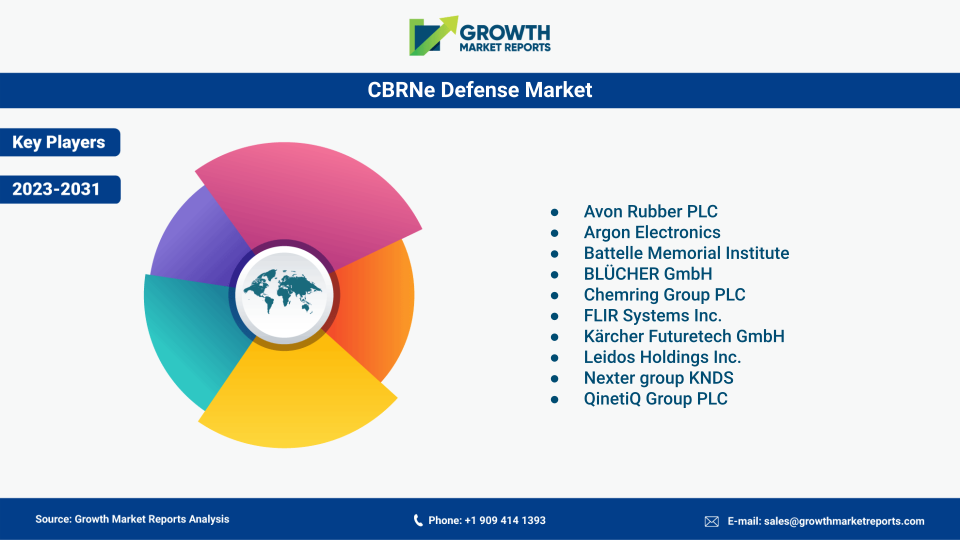

CBRNe Defense Market Key Players

Frequently Asked Questions

Applications include military, civil & law enforcement, and commercial sectors, with each segment focusing on tailored solutions for detection, protection, decontamination, and preparedness.

Technological advancements such as AI, real-time sensor networks, VR/AR simulation, and smart PPE are enhancing detection, response, and training capabilities, driving market growth and operational efficiency.

Key players include Smiths Group plc, FLIR Systems (Teledyne Technologies), Bruker Corporation, Chemring Group, Argon Electronics, Avon Protection, and Blücher GmbH, among others.

Opportunities include AI integration, expansion into emerging markets, and increased public-private partnerships. Challenges involve high costs, integration with legacy systems, regulatory hurdles, and market fragmentation.

Primary end-users include defense agencies, homeland security, commercial sectors (such as healthcare and energy), and others like academic institutions and NGOs.

Key equipment includes detection systems, personal protective equipment (PPE), decontamination units, and simulation & training tools. These are used across military, civil, law enforcement, and commercial applications.

The market addresses Chemical, Biological, Radiological, Nuclear, and Explosives threats, each requiring specialized detection, protection, and decontamination solutions.

North America leads the market, followed by Europe and Asia Pacific. The United States is the largest contributor, with Europe and Asia Pacific experiencing significant growth due to security initiatives and modernization programs.

Key growth drivers include escalating geopolitical tensions, increased chemical and biological threats, adoption of advanced detection and protection technologies, technological innovation, and heightened regulatory mandates for national security.

The global CBRNe Defense market reached USD 19.8 billion in 2024 and is projected to grow at a CAGR of 6.4% from 2025 to 2033, reaching approximately USD 34.5 billion by 2033.

Table Of Content

Chapter 1 Executive Summary
Chapter 2 Assumptions and Acronyms Used
Chapter 3 Research Methodology
Chapter 4 CBRNe Defense Market Overview
   4.1 Introduction
      4.1.1 Market Taxonomy
      4.1.2 Market Definition
      4.1.3 Macro-Economic Factors Impacting the Market Growth
   4.2 CBRNe Defense Market Dynamics
      4.2.1 Market Drivers
      4.2.2 Market Restraints
      4.2.3 Market Opportunity
   4.3 CBRNe Defense Market - Supply Chain Analysis
      4.3.1 List of Key Suppliers
      4.3.2 List of Key Distributors
      4.3.3 List of Key Consumers
   4.4 Key Forces Shaping the CBRNe Defense Market
      4.4.1 Bargaining Power of Suppliers
      4.4.2 Bargaining Power of Buyers
      4.4.3 Threat of Substitution
      4.4.4 Threat of New Entrants
      4.4.5 Competitive Rivalry
   4.5 Global CBRNe Defense Market Size & Forecast, 2023-2032
      4.5.1 CBRNe Defense Market Size and Y-o-Y Growth
      4.5.2 CBRNe Defense Market Absolute $ Opportunity

Chapter 5 Global CBRNe Defense Market Analysis and Forecast By Type
   5.1 Introduction
      5.1.1 Key Market Trends & Growth Opportunities By Type
      5.1.2 Basis Point Share (BPS) Analysis By Type
      5.1.3 Absolute $ Opportunity Assessment By Type
   5.2 CBRNe Defense Market Size Forecast By Type
      5.2.1 Chemical
      5.2.2 Biological
      5.2.3 Radiological
      5.2.4 Nuclear
      5.2.5 Explosives
   5.3 Market Attractiveness Analysis By Type

Chapter 6 Global CBRNe Defense Market Analysis and Forecast By Equipment
   6.1 Introduction
      6.1.1 Key Market Trends & Growth Opportunities By Equipment
      6.1.2 Basis Point Share (BPS) Analysis By Equipment
      6.1.3 Absolute $ Opportunity Assessment By Equipment
   6.2 CBRNe Defense Market Size Forecast By Equipment
      6.2.1 Detection
      6.2.2 Protection
      6.2.3 Decontamination
      6.2.4 Simulation & Training
      6.2.5 Others
   6.3 Market Attractiveness Analysis By Equipment

Chapter 7 Global CBRNe Defense Market Analysis and Forecast By Application
   7.1 Introduction
      7.1.1 Key Market Trends & Growth Opportunities By Application
      7.1.2 Basis Point Share (BPS) Analysis By Application
      7.1.3 Absolute $ Opportunity Assessment By Application
   7.2 CBRNe Defense Market Size Forecast By Application
      7.2.1 Military
      7.2.2 Civil & Law Enforcement
      7.2.3 Commercial
   7.3 Market Attractiveness Analysis By Application

Chapter 8 Global CBRNe Defense Market Analysis and Forecast By End-User
   8.1 Introduction
      8.1.1 Key Market Trends & Growth Opportunities By End-User
      8.1.2 Basis Point Share (BPS) Analysis By End-User
      8.1.3 Absolute $ Opportunity Assessment By End-User
   8.2 CBRNe Defense Market Size Forecast By End-User
      8.2.1 Defense
      8.2.2 Homeland Security
      8.2.3 Commercial
      8.2.4 Others
   8.3 Market Attractiveness Analysis By End-User

Chapter 9 Global CBRNe Defense Market Analysis and Forecast by Region
   9.1 Introduction
      9.1.1 Key Market Trends & Growth Opportunities By Region
      9.1.2 Basis Point Share (BPS) Analysis By Region
      9.1.3 Absolute $ Opportunity Assessment By Region
   9.2 CBRNe Defense Market Size Forecast By Region
      9.2.1 North America
      9.2.2 Europe
      9.2.3 Asia Pacific
      9.2.4 Latin America
      9.2.5 Middle East & Africa (MEA)
   9.3 Market Attractiveness Analysis By Region

Chapter 10 Coronavirus Disease (COVID-19) Impact 
   10.1 Introduction 
   10.2 Current & Future Impact Analysis 
   10.3 Economic Impact Analysis 
   10.4 Government Policies 
   10.5 Investment Scenario

Chapter 11 North America CBRNe Defense Analysis and Forecast
   11.1 Introduction
   11.2 North America CBRNe Defense Market Size Forecast by Country
      11.2.1 U.S.
      11.2.2 Canada
   11.3 Basis Point Share (BPS) Analysis by Country
   11.4 Absolute $ Opportunity Assessment by Country
   11.5 Market Attractiveness Analysis by Country
   11.6 North America CBRNe Defense Market Size Forecast By Type
      11.6.1 Chemical
      11.6.2 Biological
      11.6.3 Radiological
      11.6.4 Nuclear
      11.6.5 Explosives
   11.7 Basis Point Share (BPS) Analysis By Type 
   11.8 Absolute $ Opportunity Assessment By Type 
   11.9 Market Attractiveness Analysis By Type
   11.10 North America CBRNe Defense Market Size Forecast By Equipment
      11.10.1 Detection
      11.10.2 Protection
      11.10.3 Decontamination
      11.10.4 Simulation & Training
      11.10.5 Others
   11.11 Basis Point Share (BPS) Analysis By Equipment 
   11.12 Absolute $ Opportunity Assessment By Equipment 
   11.13 Market Attractiveness Analysis By Equipment
   11.14 North America CBRNe Defense Market Size Forecast By Application
      11.14.1 Military
      11.14.2 Civil & Law Enforcement
      11.14.3 Commercial
   11.15 Basis Point Share (BPS) Analysis By Application 
   11.16 Absolute $ Opportunity Assessment By Application 
   11.17 Market Attractiveness Analysis By Application
   11.18 North America CBRNe Defense Market Size Forecast By End-User
      11.18.1 Defense
      11.18.2 Homeland Security
      11.18.3 Commercial
      11.18.4 Others
   11.19 Basis Point Share (BPS) Analysis By End-User 
   11.20 Absolute $ Opportunity Assessment By End-User 
   11.21 Market Attractiveness Analysis By End-User

Chapter 12 Europe CBRNe Defense Analysis and Forecast
   12.1 Introduction
   12.2 Europe CBRNe Defense Market Size Forecast by Country
      12.2.1 Germany
      12.2.2 France
      12.2.3 Italy
      12.2.4 U.K.
      12.2.5 Spain
      12.2.6 Russia
      12.2.7 Rest of Europe
   12.3 Basis Point Share (BPS) Analysis by Country
   12.4 Absolute $ Opportunity Assessment by Country
   12.5 Market Attractiveness Analysis by Country
   12.6 Europe CBRNe Defense Market Size Forecast By Type
      12.6.1 Chemical
      12.6.2 Biological
      12.6.3 Radiological
      12.6.4 Nuclear
      12.6.5 Explosives
   12.7 Basis Point Share (BPS) Analysis By Type 
   12.8 Absolute $ Opportunity Assessment By Type 
   12.9 Market Attractiveness Analysis By Type
   12.10 Europe CBRNe Defense Market Size Forecast By Equipment
      12.10.1 Detection
      12.10.2 Protection
      12.10.3 Decontamination
      12.10.4 Simulation & Training
      12.10.5 Others
   12.11 Basis Point Share (BPS) Analysis By Equipment 
   12.12 Absolute $ Opportunity Assessment By Equipment 
   12.13 Market Attractiveness Analysis By Equipment
   12.14 Europe CBRNe Defense Market Size Forecast By Application
      12.14.1 Military
      12.14.2 Civil & Law Enforcement
      12.14.3 Commercial
   12.15 Basis Point Share (BPS) Analysis By Application 
   12.16 Absolute $ Opportunity Assessment By Application 
   12.17 Market Attractiveness Analysis By Application
   12.18 Europe CBRNe Defense Market Size Forecast By End-User
      12.18.1 Defense
      12.18.2 Homeland Security
      12.18.3 Commercial
      12.18.4 Others
   12.19 Basis Point Share (BPS) Analysis By End-User 
   12.20 Absolute $ Opportunity Assessment By End-User 
   12.21 Market Attractiveness Analysis By End-User

Chapter 13 Asia Pacific CBRNe Defense Analysis and Forecast
   13.1 Introduction
   13.2 Asia Pacific CBRNe Defense Market Size Forecast by Country
      13.2.1 China
      13.2.2 Japan
      13.2.3 South Korea
      13.2.4 India
      13.2.5 Australia
      13.2.6 South East Asia (SEA)
      13.2.7 Rest of Asia Pacific (APAC)
   13.3 Basis Point Share (BPS) Analysis by Country
   13.4 Absolute $ Opportunity Assessment by Country
   13.5 Market Attractiveness Analysis by Country
   13.6 Asia Pacific CBRNe Defense Market Size Forecast By Type
      13.6.1 Chemical
      13.6.2 Biological
      13.6.3 Radiological
      13.6.4 Nuclear
      13.6.5 Explosives
   13.7 Basis Point Share (BPS) Analysis By Type 
   13.8 Absolute $ Opportunity Assessment By Type 
   13.9 Market Attractiveness Analysis By Type
   13.10 Asia Pacific CBRNe Defense Market Size Forecast By Equipment
      13.10.1 Detection
      13.10.2 Protection
      13.10.3 Decontamination
      13.10.4 Simulation & Training
      13.10.5 Others
   13.11 Basis Point Share (BPS) Analysis By Equipment 
   13.12 Absolute $ Opportunity Assessment By Equipment 
   13.13 Market Attractiveness Analysis By Equipment
   13.14 Asia Pacific CBRNe Defense Market Size Forecast By Application
      13.14.1 Military
      13.14.2 Civil & Law Enforcement
      13.14.3 Commercial
   13.15 Basis Point Share (BPS) Analysis By Application 
   13.16 Absolute $ Opportunity Assessment By Application 
   13.17 Market Attractiveness Analysis By Application
   13.18 Asia Pacific CBRNe Defense Market Size Forecast By End-User
      13.18.1 Defense
      13.18.2 Homeland Security
      13.18.3 Commercial
      13.18.4 Others
   13.19 Basis Point Share (BPS) Analysis By End-User 
   13.20 Absolute $ Opportunity Assessment By End-User 
   13.21 Market Attractiveness Analysis By End-User

Chapter 14 Latin America CBRNe Defense Analysis and Forecast
   14.1 Introduction
   14.2 Latin America CBRNe Defense Market Size Forecast by Country
      14.2.1 Brazil
      14.2.2 Mexico
      14.2.3 Rest of Latin America (LATAM)
   14.3 Basis Point Share (BPS) Analysis by Country
   14.4 Absolute $ Opportunity Assessment by Country
   14.5 Market Attractiveness Analysis by Country
   14.6 Latin America CBRNe Defense Market Size Forecast By Type
      14.6.1 Chemical
      14.6.2 Biological
      14.6.3 Radiological
      14.6.4 Nuclear
      14.6.5 Explosives
   14.7 Basis Point Share (BPS) Analysis By Type 
   14.8 Absolute $ Opportunity Assessment By Type 
   14.9 Market Attractiveness Analysis By Type
   14.10 Latin America CBRNe Defense Market Size Forecast By Equipment
      14.10.1 Detection
      14.10.2 Protection
      14.10.3 Decontamination
      14.10.4 Simulation & Training
      14.10.5 Others
   14.11 Basis Point Share (BPS) Analysis By Equipment 
   14.12 Absolute $ Opportunity Assessment By Equipment 
   14.13 Market Attractiveness Analysis By Equipment
   14.14 Latin America CBRNe Defense Market Size Forecast By Application
      14.14.1 Military
      14.14.2 Civil & Law Enforcement
      14.14.3 Commercial
   14.15 Basis Point Share (BPS) Analysis By Application 
   14.16 Absolute $ Opportunity Assessment By Application 
   14.17 Market Attractiveness Analysis By Application
   14.18 Latin America CBRNe Defense Market Size Forecast By End-User
      14.18.1 Defense
      14.18.2 Homeland Security
      14.18.3 Commercial
      14.18.4 Others
   14.19 Basis Point Share (BPS) Analysis By End-User 
   14.20 Absolute $ Opportunity Assessment By End-User 
   14.21 Market Attractiveness Analysis By End-User

Chapter 15 Middle East & Africa (MEA) CBRNe Defense Analysis and Forecast
   15.1 Introduction
   15.2 Middle East & Africa (MEA) CBRNe Defense Market Size Forecast by Country
      15.2.1 Saudi Arabia
      15.2.2 South Africa
      15.2.3 UAE
      15.2.4 Rest of Middle East & Africa (MEA)
   15.3 Basis Point Share (BPS) Analysis by Country
   15.4 Absolute $ Opportunity Assessment by Country
   15.5 Market Attractiveness Analysis by Country
   15.6 Middle East & Africa (MEA) CBRNe Defense Market Size Forecast By Type
      15.6.1 Chemical
      15.6.2 Biological
      15.6.3 Radiological
      15.6.4 Nuclear
      15.6.5 Explosives
   15.7 Basis Point Share (BPS) Analysis By Type 
   15.8 Absolute $ Opportunity Assessment By Type 
   15.9 Market Attractiveness Analysis By Type
   15.10 Middle East & Africa (MEA) CBRNe Defense Market Size Forecast By Equipment
      15.10.1 Detection
      15.10.2 Protection
      15.10.3 Decontamination
      15.10.4 Simulation & Training
      15.10.5 Others
   15.11 Basis Point Share (BPS) Analysis By Equipment 
   15.12 Absolute $ Opportunity Assessment By Equipment 
   15.13 Market Attractiveness Analysis By Equipment
   15.14 Middle East & Africa (MEA) CBRNe Defense Market Size Forecast By Application
      15.14.1 Military
      15.14.2 Civil & Law Enforcement
      15.14.3 Commercial
   15.15 Basis Point Share (BPS) Analysis By Application 
   15.16 Absolute $ Opportunity Assessment By Application 
   15.17 Market Attractiveness Analysis By Application
   15.18 Middle East & Africa (MEA) CBRNe Defense Market Size Forecast By End-User
      15.18.1 Defense
      15.18.2 Homeland Security
      15.18.3 Commercial
      15.18.4 Others
   15.19 Basis Point Share (BPS) Analysis By End-User 
   15.20 Absolute $ Opportunity Assessment By End-User 
   15.21 Market Attractiveness Analysis By End-User

Chapter 16 Competition Landscape 
   16.1 CBRNe Defense Market: Competitive Dashboard
   16.2 Global CBRNe Defense Market: Market Share Analysis, 2023
   16.3 Company Profiles (Details – Overview, Financials, Developments, Strategy) 
      16.3.1 Argon Electronics
Avon Protection Systems
Bruker Corporation
Chemring Group PLC
FLIR Systems (now part of Teledyne Technologies)
Smiths Detection
Leidos Holdings
Honeywell International
AirBoss Defense Group
Environics Oy
Kärcher Futuretech GmbH
Rapiscan Systems
Thermo Fisher Scientific
Battelle Memorial Institute
BioFire Defense (bioMérieux)
Saab AB
General Dynamics Corporation
Cristanini S.p.A.
Ouvry SAS
Blücher GmbH

Methodology

Our Clients

The John Holland Group
General Mills
Nestle SA
General Electric
Microsoft
Dassault Aviation
Pfizer
Deloitte