Automotive Gear Oil Market Research Report 2033

Automotive Gear Oil Market Research Report 2033

Segments - by Product Type (Mineral Oil, Synthetic Oil, Semi-Synthetic Oil, Bio-Based Oil), by Application (Passenger Vehicles, Commercial Vehicles, Off-Highway Vehicles), by Distribution Channel (OEMs, Aftermarket), by End-User (Automotive, Industrial, Others)

https://growthmarketreports.com/Raksha
Author : Raksha Sharma
https://growthmarketreports.com/Vaibhav
Fact-checked by : V. Chandola
https://growthmarketreports.com/Shruti
Editor : Shruti Bhat

Upcoming | Report ID :AL-247 | 4.5 Rating | 93 Reviews | 292 Pages | Format : Docx PDF

Report Description


Automotive Gear Oil Market Outlook

According to our latest research, the global automotive gear oil market size stood at USD 3.12 billion in 2024, with a robust compound annual growth rate (CAGR) of 4.1% projected through the forecast period. By 2033, the market is expected to reach USD 4.46 billion, reflecting strong momentum driven by rising vehicle production, the increasing complexity of automotive transmissions, and heightened demand for advanced lubricants. The automotive sectorÂ’s ongoing shift towards high-performance and energy-efficient vehicles continues to be a key growth driver, with technological advancements in gear oil formulations further fueling market expansion.

One of the primary growth factors for the automotive gear oil market is the rapid expansion of the global automotive industry, particularly in emerging economies. The surge in passenger and commercial vehicle production in countries such as China, India, and Brazil has significantly increased the demand for automotive gear oils. These markets are witnessing a transition towards more sophisticated vehicle models, which require specialized lubricants to ensure optimal performance and efficiency. Additionally, the rise in disposable income and urbanization has led to higher vehicle ownership rates, further bolstering the consumption of gear oils. As more consumers prioritize vehicle longevity and performance, the adoption of high-quality gear oils is expected to rise, driving overall market growth.

Technological advancements in gear oil formulations have also played a pivotal role in shaping the market landscape. Manufacturers are increasingly focusing on developing synthetic and semi-synthetic gear oils that offer superior thermal stability, oxidation resistance, and extended drain intervals. These advanced lubricants are designed to meet the stringent requirements of modern transmissions and drivetrains, which operate under higher loads and temperatures. The integration of additives that enhance anti-wear, anti-foaming, and corrosion-resistant properties has further improved the performance of gear oils, making them suitable for a wide range of applications. This ongoing innovation is not only meeting the evolving needs of automotive manufacturers but also addressing environmental concerns by reducing emissions and improving fuel efficiency.

Another significant growth driver is the increasing emphasis on preventive maintenance and aftermarket services. As vehicles become more technologically advanced, the need for regular maintenance and the use of high-quality lubricants has become paramount to ensure the longevity and reliability of automotive components. The aftermarket segment, in particular, has witnessed substantial growth as consumers and fleet operators recognize the importance of using premium gear oils to minimize wear and tear, reduce maintenance costs, and enhance vehicle performance. This trend is further supported by the proliferation of service centers and the growing awareness of the benefits associated with proper lubrication practices.

The industrial sector, although not as large as the automotive segment, plays a crucial role in the demand for specialized lubricants such as Industrial Gear Oil. These oils are essential for the smooth operation of machinery in manufacturing plants, power generation, and other heavy-duty applications. Industrial Gear Oil is formulated to withstand extreme pressures and temperatures, ensuring the longevity and reliability of equipment. As industries continue to expand and modernize, particularly in emerging economies, the demand for high-performance industrial lubricants is expected to grow. This trend is driven by the need to enhance operational efficiency, reduce downtime, and comply with stringent environmental regulations. Manufacturers are focusing on developing advanced formulations that offer superior protection and performance, catering to the diverse needs of industrial applications.

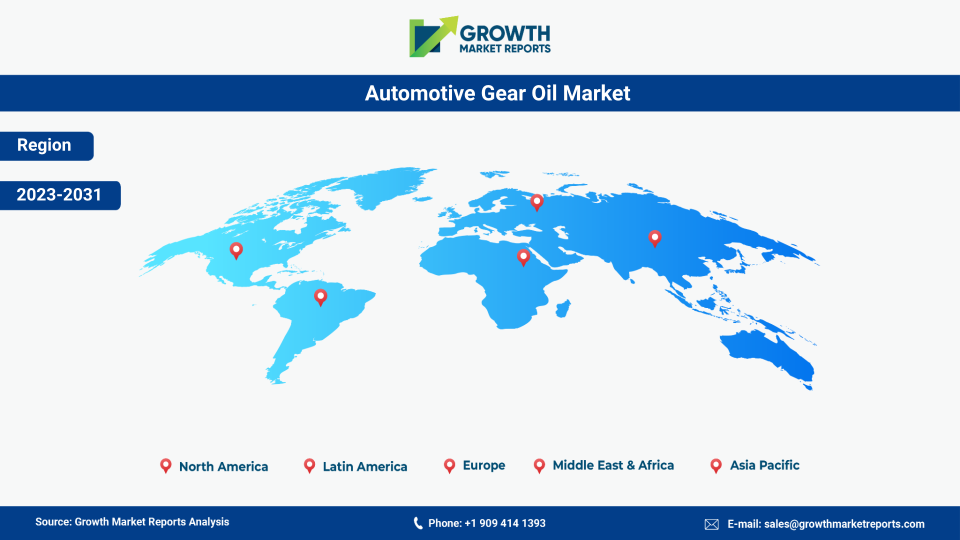
From a regional perspective, the Asia Pacific region dominates the automotive gear oil market, accounting for the largest share in 2024 due to its massive automotive manufacturing base and rapidly expanding vehicle fleet. North America and Europe follow closely, driven by technological advancements, stringent regulatory standards, and the presence of leading automotive manufacturers. Meanwhile, the Middle East & Africa and Latin America are emerging as promising markets, supported by infrastructure development and increasing automotive investments. Each region presents unique opportunities and challenges, with market dynamics shaped by local economic conditions, regulatory frameworks, and consumer preferences.

Global Automotive Gear Oil Industry Outlook

Product Type Analysis

The automotive gear oil market is segmented by product type into mineral oil, synthetic oil, semi-synthetic oil, and bio-based oil, each catering to distinct performance requirements and customer preferences. Mineral oil remains the most widely used segment due to its cost-effectiveness and widespread availability. It is primarily favored in regions with high vehicle density and price-sensitive markets, such as Asia Pacific and parts of Latin America. Mineral oils are derived from refined crude oil and offer satisfactory lubrication for standard operating conditions, making them suitable for conventional vehicles and applications where advanced performance is not a critical requirement. However, their limited thermal stability and shorter service intervals often necessitate more frequent oil changes, which can impact total cost of ownership over time.

Synthetic oil has witnessed significant growth in recent years, driven by its superior performance characteristics and the increasing complexity of modern automotive transmissions. Synthetic gear oils are engineered to offer enhanced thermal stability, oxidation resistance, and extended drain intervals, making them ideal for high-performance vehicles and demanding operating environments. These oils are particularly popular in North America and Europe, where stringent emission regulations and consumer demand for fuel-efficient vehicles have accelerated the adoption of advanced lubricants. The higher initial cost of synthetic oils is often offset by their longer service life and the reduced maintenance requirements they offer, making them a preferred choice for both OEMs and discerning end-users.

The semi-synthetic oil segment bridges the gap between mineral and synthetic oils, offering a balanced combination of performance and affordability. Semi-synthetic oils are formulated by blending mineral oil with a certain proportion of synthetic base stocks, resulting in improved lubrication properties and enhanced protection against wear and tear. This segment has gained traction among cost-conscious consumers who seek better performance than mineral oil without incurring the full expense of synthetic products. Semi-synthetic oils are widely used in passenger vehicles and light commercial vehicles, particularly in markets where vehicle owners are increasingly prioritizing value-for-money solutions.

Bio-based oil represents a nascent but rapidly growing segment within the automotive gear oil market. As environmental concerns and sustainability initiatives gain momentum, manufacturers are investing in the development of eco-friendly lubricants derived from renewable sources such as vegetable oils and esters. Bio-based gear oils offer comparable performance to their mineral and synthetic counterparts while significantly reducing environmental impact. This segment is expected to witness accelerated growth in the coming years, particularly in regions with stringent environmental regulations and a strong focus on green technologies. The adoption of bio-based oils is also supported by government incentives and corporate sustainability goals, positioning this segment as a key area of innovation and investment.

Report Scope

Attributes Details
Report Title Automotive Gear Oil Market Research Report 2033
By Product Type Mineral Oil, Synthetic Oil, Semi-Synthetic Oil, Bio-Based Oil
By Application Passenger Vehicles, Commercial Vehicles, Off-Highway Vehicles
By Distribution Channel OEMs, Aftermarket
By End-User Automotive, Industrial, Others
Regions Covered North America, Europe, APAC, Latin America, MEA
Base Year 2024
Historic Data 2018-2023
Forecast Period 2025-2033
Number of Pages 292
Number of Tables & Figures 257
Customization Available Yes, the report can be customized as per your need.

Application Analysis

The automotive gear oil market is further segmented by application into passenger vehicles, commercial vehicles, and off-highway vehicles, each with unique lubrication requirements and usage patterns. Passenger vehicles constitute the largest application segment, driven by the sheer volume of cars, SUVs, and light trucks on the road globally. The rise in personal mobility, coupled with increasing vehicle ownership in emerging economies, has led to sustained demand for gear oils tailored to passenger vehicles. These oils are formulated to ensure smooth gear shifting, reduce friction, and enhance fuel efficiency, aligning with consumer expectations for comfort and performance. The growing trend towards automatic and dual-clutch transmissions has further increased the need for specialized gear oils capable of handling higher loads and temperatures.

Commercial vehicles, including trucks, buses, and vans, represent a significant share of the automotive gear oil market due to their intensive usage and demanding operating conditions. These vehicles often operate under heavy loads, extended hours, and varying terrains, necessitating robust lubrication solutions to prevent gear wear and maintain operational efficiency. The commercial vehicle segment is particularly prominent in regions with thriving logistics, transportation, and construction industries, such as North America, Europe, and Asia Pacific. Fleet operators and logistics companies are increasingly investing in high-performance gear oils to minimize downtime, reduce maintenance costs, and extend the lifespan of their vehicles, thereby driving market growth in this segment.

The off-highway vehicles segment encompasses agricultural machinery, construction equipment, mining vehicles, and other specialized vehicles used in demanding environments. These applications require gear oils with exceptional load-carrying capacity, thermal stability, and resistance to contamination from dust, water, and other harsh elements. Off-highway vehicles often operate in remote locations and under extreme conditions, making the reliability and durability of gear oils critical to maintaining productivity and preventing costly breakdowns. The expansion of infrastructure projects, mining activities, and mechanized agriculture in emerging markets has fueled demand for high-performance gear oils tailored to off-highway vehicles, with manufacturers developing formulations that meet the unique challenges of these applications.

The application-based segmentation of the automotive gear oil market underscores the importance of customized lubrication solutions to meet the diverse needs of different vehicle types and operating environments. Manufacturers are continually innovating to develop gear oils that deliver optimal performance, protection, and efficiency across a wide range of applications. This focus on application-specific solutions is expected to drive further market growth as automotive technology evolves and end-user expectations continue to rise.

Distribution Channel Analysis

The distribution channel for automotive gear oil is bifurcated into OEMs (Original Equipment Manufacturers) and the aftermarket, each playing a pivotal role in shaping market dynamics. OEMs are responsible for supplying gear oils that meet the exact specifications of new vehicles during the manufacturing process. This segment is characterized by stringent quality standards, close collaboration with lubricant manufacturers, and a focus on long-term performance and reliability. OEM-supplied gear oils are typically formulated to meet the unique requirements of specific vehicle models and are often co-branded with automakers to assure customers of their quality and compatibility. The OEM channel is particularly influential in markets with strong automotive manufacturing bases, such as Asia Pacific, North America, and Europe.

The aftermarket segment, on the other hand, caters to the replacement and maintenance needs of vehicles already in operation. This channel includes independent service centers, authorized dealerships, retail outlets, and online platforms, offering a wide range of gear oil options to consumers and fleet operators. The aftermarket is characterized by greater product variety, competitive pricing, and the opportunity for consumers to choose from different brands and formulations based on their specific needs and preferences. The growing trend towards preventive maintenance and the increasing average age of vehicles on the road have contributed to the expansion of the aftermarket segment, with consumers seeking high-quality lubricants to extend vehicle life and enhance performance.

Both OEM and aftermarket channels are witnessing significant changes driven by digitalization and evolving consumer behavior. The rise of e-commerce platforms and digital marketing has transformed the way gear oils are marketed and distributed, enabling manufacturers to reach a broader customer base and offer personalized recommendations. This shift towards online sales is particularly pronounced in the aftermarket segment, where convenience, product information, and customer reviews play a crucial role in influencing purchase decisions. Manufacturers are leveraging digital tools to enhance customer engagement, streamline distribution, and provide value-added services such as oil change reminders and maintenance tips.

The interplay between OEM and aftermarket channels is shaping the competitive landscape of the automotive gear oil market, with each segment offering unique opportunities and challenges. OEM partnerships provide manufacturers with stable, long-term business relationships and brand recognition, while the aftermarket offers flexibility, product differentiation, and direct access to end-users. As the market continues to evolve, manufacturers are adopting multi-channel strategies to maximize reach, build brand loyalty, and capture a larger share of the growing demand for automotive gear oils.

End-User Analysis

The automotive gear oil market is segmented by end-user into automotive, industrial, and others, reflecting the diverse applications and requirements of different sectors. The automotive end-user segment is the largest, driven by the vast number of vehicles in operation and the ongoing need for regular maintenance and lubrication. This segment encompasses passenger vehicles, commercial vehicles, and off-highway vehicles, each with unique lubrication needs. The increasing complexity of modern vehicles, coupled with consumer demand for enhanced performance and longevity, has led to the widespread adoption of advanced gear oils in the automotive sector. Manufacturers are focusing on developing products that meet the specific requirements of different vehicle types, driving innovation and growth within this segment.

The industrial end-user segment includes applications such as manufacturing equipment, machinery, and industrial vehicles that require specialized gear oils to ensure smooth operation and prevent wear and tear. Industrial gear oils are formulated to withstand high loads, extreme temperatures, and challenging operating conditions, making them essential for maintaining the efficiency and reliability of critical equipment. The growth of the industrial sector, particularly in emerging economies, has fueled demand for high-performance gear oils that can meet the stringent requirements of modern manufacturing processes. Manufacturers are investing in research and development to create lubricants that deliver superior protection, reduce downtime, and extend the lifespan of industrial assets.

The others segment encompasses niche applications and specialized vehicles that do not fall within the traditional automotive or industrial categories. This includes sectors such as marine, aviation, and rail, where gear oils play a crucial role in ensuring the reliability and efficiency of complex mechanical systems. While this segment represents a smaller share of the overall market, it offers significant opportunities for manufacturers to develop tailored solutions that address the unique challenges of these applications. The increasing focus on sustainability and environmental performance in these sectors is driving demand for eco-friendly and high-performance gear oils that meet regulatory requirements and deliver long-term value.

The end-user segmentation of the automotive gear oil market highlights the importance of understanding the specific needs and challenges of different customer segments. Manufacturers are leveraging their expertise in formulation and application engineering to develop products that deliver optimal performance across a wide range of end-user industries. This focus on customer-centric innovation is expected to drive further growth and differentiation in the highly competitive automotive gear oil market.

Opportunities & Threats

The automotive gear oil market presents a wealth of opportunities for growth and innovation, particularly in the areas of product development and sustainability. The increasing adoption of electric and hybrid vehicles is creating new demand for specialized lubricants that can meet the unique requirements of advanced transmissions and drivetrains. Manufacturers that invest in research and development to create gear oils tailored to the needs of next-generation vehicles stand to gain a competitive edge in the evolving automotive landscape. Additionally, the growing focus on sustainability and environmental performance is driving demand for bio-based and low-emission gear oils, offering opportunities for companies that can deliver eco-friendly solutions without compromising on performance.

Another significant opportunity lies in the expansion of the aftermarket segment, driven by the increasing average age of vehicles and the growing emphasis on preventive maintenance. As consumers and fleet operators become more aware of the benefits of using high-quality gear oils, there is a rising demand for value-added services such as oil analysis, condition monitoring, and customized maintenance solutions. Manufacturers that can provide comprehensive support and education to their customers are well-positioned to capture a larger share of the aftermarket and build long-term brand loyalty. The proliferation of digital channels and e-commerce platforms further enhances market access and customer engagement, enabling companies to reach new customer segments and drive growth.

Despite the promising outlook, the automotive gear oil market faces several restraining factors that could impact growth. One of the primary challenges is the increasing shift towards electric vehicles (EVs), which typically require less lubrication than traditional internal combustion engine vehicles. As the adoption of EVs accelerates, particularly in developed markets, the demand for conventional gear oils may decline, posing a threat to established manufacturers. Additionally, fluctuations in raw material prices, regulatory changes, and the entry of new competitors could create pricing pressures and erode profit margins. Manufacturers must remain agile and innovative to navigate these challenges and capitalize on emerging opportunities in the dynamic automotive gear oil market.

Regional Outlook

The Asia Pacific region remains the largest and fastest-growing market for automotive gear oil, accounting for approximately 42% of the global market share in 2024. This dominance is driven by the regionÂ’s massive automotive manufacturing base, rapid urbanization, and rising disposable incomes. China, India, and Japan are the key contributors to regional growth, with significant investments in automotive production, infrastructure development, and technological innovation. The Asia Pacific market is expected to maintain a high CAGR of 4.8% through 2033, supported by ongoing expansion in vehicle production and the increasing penetration of high-performance gear oils.

North America and Europe collectively account for over 38% of the global automotive gear oil market, driven by advanced automotive industries, stringent regulatory standards, and a strong focus on sustainability. The United States, Germany, and the United Kingdom are leading markets within these regions, characterized by high demand for synthetic and semi-synthetic gear oils. The adoption of advanced transmission technologies, coupled with a mature aftermarket and a focus on preventive maintenance, has contributed to steady growth in these markets. Both regions are also at the forefront of electric vehicle adoption, which is expected to influence future demand patterns for gear oils.

The Middle East & Africa and Latin America represent emerging markets with significant growth potential, accounting for a combined 20% of the global market in 2024. These regions are benefiting from increased investments in infrastructure, rising vehicle ownership, and the expansion of industrial activities. Countries such as Brazil, South Africa, and the United Arab Emirates are witnessing steady growth in automotive production and aftermarket services, driving demand for high-quality gear oils. While these markets face challenges such as economic volatility and regulatory uncertainties, they offer attractive opportunities for manufacturers willing to invest in localized production and distribution networks.

Automotive Gear Oil Market Statistics

Competitor Outlook

The global automotive gear oil market is highly competitive, characterized by the presence of numerous multinational corporations and regional players vying for market share. Leading companies are focused on product innovation, strategic partnerships, and expansion into emerging markets to strengthen their competitive position. The market is witnessing a trend towards consolidation, with major players acquiring smaller companies to expand their product portfolios and enhance their technological capabilities. Manufacturers are also investing in research and development to create advanced gear oils that meet the evolving needs of modern vehicles and comply with stringent environmental regulations.

Competition in the automotive gear oil market is further intensified by the entry of new players, particularly in the synthetic and bio-based oil segments. These entrants are leveraging technological advancements and sustainability trends to differentiate their products and capture market share. Established companies are responding by enhancing their value propositions, offering comprehensive maintenance solutions, and expanding their distribution networks. The growing importance of digital channels and e-commerce platforms is also reshaping the competitive landscape, enabling companies to reach a broader customer base and offer personalized services.

Key strategies adopted by market leaders include collaboration with automotive OEMs, investment in sustainable product development, and the launch of high-performance gear oils tailored to specific applications. Companies are also focusing on customer education and support, recognizing the importance of building long-term relationships and brand loyalty in a highly competitive market. The ability to anticipate and respond to changing customer needs, regulatory requirements, and technological advancements will be crucial for success in the dynamic automotive gear oil market.

Major companies operating in the global automotive gear oil market include ExxonMobil Corporation, Royal Dutch Shell plc, BP plc, Chevron Corporation, TotalEnergies SE, Fuchs Petrolub SE, Valvoline Inc., PetroChina Company Limited, and Idemitsu Kosan Co., Ltd. These companies are recognized for their extensive product portfolios, strong R&D capabilities, and global distribution networks. ExxonMobil and Shell are industry leaders, known for their innovative synthetic gear oils and strong partnerships with automotive OEMs. BP and Chevron have a significant presence in both the automotive and industrial segments, offering a wide range of lubricants tailored to diverse applications. TotalEnergies and Fuchs Petrolub are renowned for their focus on sustainability and the development of bio-based and low-emission gear oils.

Valvoline, PetroChina, and Idemitsu Kosan are prominent players in the Asia Pacific market, leveraging their local expertise and production capabilities to meet the needs of regional customers. These companies are investing in capacity expansion, product innovation, and digital transformation to capture emerging opportunities and strengthen their market position. The competitive landscape is expected to remain dynamic, with companies continually adapting their strategies to address evolving market trends and customer preferences.

Key Players

  • ExxonMobil Corporation
  • Royal Dutch Shell plc
  • Chevron Corporation
  • BP plc
  • TotalEnergies SE
  • Fuchs Petrolub SE
  • Valvoline Inc.
  • PetroChina Company Limited
  • Indian Oil Corporation Ltd.
  • LUKOIL
  • Amsoil Inc.
  • BASF SE
  • Phillips 66 Lubricants
  • Petronas Lubricants International
  • Sinopec Lubricant Company
  • Castrol Limited
  • Quaker Chemical Corporation
  • Motul S.A.
  • Gulf Oil International
  • Idemitsu Kosan Co., Ltd.
Automotive Gear Oil Market Overview

Segments

The Automotive Gear Oil market has been segmented on the basis of

Product Type

  • Mineral Oil
  • Synthetic Oil
  • Semi-Synthetic Oil
  • Bio-Based Oil

Application

  • Passenger Vehicles
  • Commercial Vehicles
  • Off-Highway Vehicles

Distribution Channel

  • OEMs
  • Aftermarket

End-User

  • Automotive
  • Industrial
  • Others

Competitive Landscape

Prominent players in the market are Lubrication Engineers Inc., Royal Dutch Shell Plc., Fuchs Lubricants Co., Chevron Corporation, Exxon Mobil Corporation (XOM), Saudi Arabian Oil Co., Hindustan Petroleum Corporation Limited, and China Petroleum & Chemical Corporation (Sinopec).

In November 2019, Fuchs Group, a manufacturer and supplier in Germany, signed an agreement to acquire Nye lubricant Inc. The later company is engaged in formulation, and manufacturing of synthetic products. This acquisition is expected to help the former company to expand the product portfolio and serve in multiple industries.
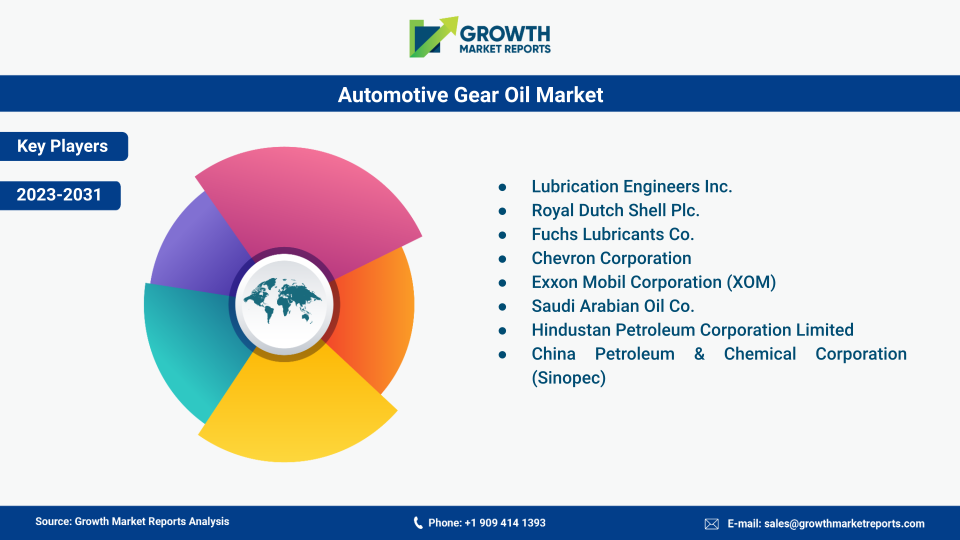

Automotive Gear Oil Market Keyplayers

Frequently Asked Questions

Opportunities lie in developing specialized lubricants for electric and hybrid vehicles, expanding aftermarket services, leveraging digital sales channels, and innovating sustainable product offerings.

Challenges include the rise of electric vehicles (which require less lubrication), raw material price fluctuations, regulatory changes, and increased competition from new entrants.

Key companies include ExxonMobil, Royal Dutch Shell, BP, Chevron, TotalEnergies, Fuchs Petrolub, Valvoline, PetroChina, and Idemitsu Kosan, among others.

There is growing demand for bio-based and eco-friendly gear oils due to environmental regulations and sustainability initiatives, with manufacturers investing in renewable and low-emission lubricant solutions.

OEMs supply gear oils for new vehicles with strict quality standards, while the aftermarket serves replacement and maintenance needs through service centers, dealerships, and online platforms.

Applications include passenger vehicles, commercial vehicles, and off-highway vehicles, each with unique lubrication requirements and usage patterns.

The market is segmented into mineral oil, synthetic oil, semi-synthetic oil, and bio-based oil, each catering to different performance needs and customer preferences.

Asia Pacific leads the market with the largest share, followed by North America and Europe. Emerging markets in the Middle East & Africa and Latin America are also showing significant growth potential.

Key growth drivers include rising vehicle production, increasing complexity of automotive transmissions, demand for advanced lubricants, technological advancements, and a shift towards high-performance, energy-efficient vehicles.

As of 2024, the global automotive gear oil market size is estimated at USD 3.12 billion, with projections to reach USD 4.46 billion by 2033.

Table Of Content

Chapter 1 Executive Summary
Chapter 2 Assumptions and Acronyms Used
Chapter 3 Research Methodology
Chapter 4 Automotive Gear Oil Market Overview
   4.1 Introduction
      4.1.1 Market Taxonomy
      4.1.2 Market Definition
      4.1.3 Macro-Economic Factors Impacting the Market Growth
   4.2 Automotive Gear Oil Market Dynamics
      4.2.1 Market Drivers
      4.2.2 Market Restraints
      4.2.3 Market Opportunity
   4.3 Automotive Gear Oil Market - Supply Chain Analysis
      4.3.1 List of Key Suppliers
      4.3.2 List of Key Distributors
      4.3.3 List of Key Consumers
   4.4 Key Forces Shaping the Automotive Gear Oil Market
      4.4.1 Bargaining Power of Suppliers
      4.4.2 Bargaining Power of Buyers
      4.4.3 Threat of Substitution
      4.4.4 Threat of New Entrants
      4.4.5 Competitive Rivalry
   4.5 Global Automotive Gear Oil Market Size & Forecast, 2023-2032
      4.5.1 Automotive Gear Oil Market Size and Y-o-Y Growth
      4.5.2 Automotive Gear Oil Market Absolute $ Opportunity

Chapter 5 Global Automotive Gear Oil Market Analysis and Forecast By Product Type
   5.1 Introduction
      5.1.1 Key Market Trends & Growth Opportunities By Product Type
      5.1.2 Basis Point Share (BPS) Analysis By Product Type
      5.1.3 Absolute $ Opportunity Assessment By Product Type
   5.2 Automotive Gear Oil Market Size Forecast By Product Type
      5.2.1 Mineral Oil
      5.2.2 Synthetic Oil
      5.2.3 Semi-Synthetic Oil
      5.2.4 Bio-Based Oil
   5.3 Market Attractiveness Analysis By Product Type

Chapter 6 Global Automotive Gear Oil Market Analysis and Forecast By Application
   6.1 Introduction
      6.1.1 Key Market Trends & Growth Opportunities By Application
      6.1.2 Basis Point Share (BPS) Analysis By Application
      6.1.3 Absolute $ Opportunity Assessment By Application
   6.2 Automotive Gear Oil Market Size Forecast By Application
      6.2.1 Passenger Vehicles
      6.2.2 Commercial Vehicles
      6.2.3 Off-Highway Vehicles
   6.3 Market Attractiveness Analysis By Application

Chapter 7 Global Automotive Gear Oil Market Analysis and Forecast By Distribution Channel
   7.1 Introduction
      7.1.1 Key Market Trends & Growth Opportunities By Distribution Channel
      7.1.2 Basis Point Share (BPS) Analysis By Distribution Channel
      7.1.3 Absolute $ Opportunity Assessment By Distribution Channel
   7.2 Automotive Gear Oil Market Size Forecast By Distribution Channel
      7.2.1 OEMs
      7.2.2 Aftermarket
   7.3 Market Attractiveness Analysis By Distribution Channel

Chapter 8 Global Automotive Gear Oil Market Analysis and Forecast By End-User
   8.1 Introduction
      8.1.1 Key Market Trends & Growth Opportunities By End-User
      8.1.2 Basis Point Share (BPS) Analysis By End-User
      8.1.3 Absolute $ Opportunity Assessment By End-User
   8.2 Automotive Gear Oil Market Size Forecast By End-User
      8.2.1 Automotive
      8.2.2 Industrial
      8.2.3 Others
   8.3 Market Attractiveness Analysis By End-User

Chapter 9 Global Automotive Gear Oil Market Analysis and Forecast by Region
   9.1 Introduction
      9.1.1 Key Market Trends & Growth Opportunities By Region
      9.1.2 Basis Point Share (BPS) Analysis By Region
      9.1.3 Absolute $ Opportunity Assessment By Region
   9.2 Automotive Gear Oil Market Size Forecast By Region
      9.2.1 North America
      9.2.2 Europe
      9.2.3 Asia Pacific
      9.2.4 Latin America
      9.2.5 Middle East & Africa (MEA)
   9.3 Market Attractiveness Analysis By Region

Chapter 10 Coronavirus Disease (COVID-19) Impact 
   10.1 Introduction 
   10.2 Current & Future Impact Analysis 
   10.3 Economic Impact Analysis 
   10.4 Government Policies 
   10.5 Investment Scenario

Chapter 11 North America Automotive Gear Oil Analysis and Forecast
   11.1 Introduction
   11.2 North America Automotive Gear Oil Market Size Forecast by Country
      11.2.1 U.S.
      11.2.2 Canada
   11.3 Basis Point Share (BPS) Analysis by Country
   11.4 Absolute $ Opportunity Assessment by Country
   11.5 Market Attractiveness Analysis by Country
   11.6 North America Automotive Gear Oil Market Size Forecast By Product Type
      11.6.1 Mineral Oil
      11.6.2 Synthetic Oil
      11.6.3 Semi-Synthetic Oil
      11.6.4 Bio-Based Oil
   11.7 Basis Point Share (BPS) Analysis By Product Type 
   11.8 Absolute $ Opportunity Assessment By Product Type 
   11.9 Market Attractiveness Analysis By Product Type
   11.10 North America Automotive Gear Oil Market Size Forecast By Application
      11.10.1 Passenger Vehicles
      11.10.2 Commercial Vehicles
      11.10.3 Off-Highway Vehicles
   11.11 Basis Point Share (BPS) Analysis By Application 
   11.12 Absolute $ Opportunity Assessment By Application 
   11.13 Market Attractiveness Analysis By Application
   11.14 North America Automotive Gear Oil Market Size Forecast By Distribution Channel
      11.14.1 OEMs
      11.14.2 Aftermarket
   11.15 Basis Point Share (BPS) Analysis By Distribution Channel 
   11.16 Absolute $ Opportunity Assessment By Distribution Channel 
   11.17 Market Attractiveness Analysis By Distribution Channel
   11.18 North America Automotive Gear Oil Market Size Forecast By End-User
      11.18.1 Automotive
      11.18.2 Industrial
      11.18.3 Others
   11.19 Basis Point Share (BPS) Analysis By End-User 
   11.20 Absolute $ Opportunity Assessment By End-User 
   11.21 Market Attractiveness Analysis By End-User

Chapter 12 Europe Automotive Gear Oil Analysis and Forecast
   12.1 Introduction
   12.2 Europe Automotive Gear Oil Market Size Forecast by Country
      12.2.1 Germany
      12.2.2 France
      12.2.3 Italy
      12.2.4 U.K.
      12.2.5 Spain
      12.2.6 Russia
      12.2.7 Rest of Europe
   12.3 Basis Point Share (BPS) Analysis by Country
   12.4 Absolute $ Opportunity Assessment by Country
   12.5 Market Attractiveness Analysis by Country
   12.6 Europe Automotive Gear Oil Market Size Forecast By Product Type
      12.6.1 Mineral Oil
      12.6.2 Synthetic Oil
      12.6.3 Semi-Synthetic Oil
      12.6.4 Bio-Based Oil
   12.7 Basis Point Share (BPS) Analysis By Product Type 
   12.8 Absolute $ Opportunity Assessment By Product Type 
   12.9 Market Attractiveness Analysis By Product Type
   12.10 Europe Automotive Gear Oil Market Size Forecast By Application
      12.10.1 Passenger Vehicles
      12.10.2 Commercial Vehicles
      12.10.3 Off-Highway Vehicles
   12.11 Basis Point Share (BPS) Analysis By Application 
   12.12 Absolute $ Opportunity Assessment By Application 
   12.13 Market Attractiveness Analysis By Application
   12.14 Europe Automotive Gear Oil Market Size Forecast By Distribution Channel
      12.14.1 OEMs
      12.14.2 Aftermarket
   12.15 Basis Point Share (BPS) Analysis By Distribution Channel 
   12.16 Absolute $ Opportunity Assessment By Distribution Channel 
   12.17 Market Attractiveness Analysis By Distribution Channel
   12.18 Europe Automotive Gear Oil Market Size Forecast By End-User
      12.18.1 Automotive
      12.18.2 Industrial
      12.18.3 Others
   12.19 Basis Point Share (BPS) Analysis By End-User 
   12.20 Absolute $ Opportunity Assessment By End-User 
   12.21 Market Attractiveness Analysis By End-User

Chapter 13 Asia Pacific Automotive Gear Oil Analysis and Forecast
   13.1 Introduction
   13.2 Asia Pacific Automotive Gear Oil Market Size Forecast by Country
      13.2.1 China
      13.2.2 Japan
      13.2.3 South Korea
      13.2.4 India
      13.2.5 Australia
      13.2.6 South East Asia (SEA)
      13.2.7 Rest of Asia Pacific (APAC)
   13.3 Basis Point Share (BPS) Analysis by Country
   13.4 Absolute $ Opportunity Assessment by Country
   13.5 Market Attractiveness Analysis by Country
   13.6 Asia Pacific Automotive Gear Oil Market Size Forecast By Product Type
      13.6.1 Mineral Oil
      13.6.2 Synthetic Oil
      13.6.3 Semi-Synthetic Oil
      13.6.4 Bio-Based Oil
   13.7 Basis Point Share (BPS) Analysis By Product Type 
   13.8 Absolute $ Opportunity Assessment By Product Type 
   13.9 Market Attractiveness Analysis By Product Type
   13.10 Asia Pacific Automotive Gear Oil Market Size Forecast By Application
      13.10.1 Passenger Vehicles
      13.10.2 Commercial Vehicles
      13.10.3 Off-Highway Vehicles
   13.11 Basis Point Share (BPS) Analysis By Application 
   13.12 Absolute $ Opportunity Assessment By Application 
   13.13 Market Attractiveness Analysis By Application
   13.14 Asia Pacific Automotive Gear Oil Market Size Forecast By Distribution Channel
      13.14.1 OEMs
      13.14.2 Aftermarket
   13.15 Basis Point Share (BPS) Analysis By Distribution Channel 
   13.16 Absolute $ Opportunity Assessment By Distribution Channel 
   13.17 Market Attractiveness Analysis By Distribution Channel
   13.18 Asia Pacific Automotive Gear Oil Market Size Forecast By End-User
      13.18.1 Automotive
      13.18.2 Industrial
      13.18.3 Others
   13.19 Basis Point Share (BPS) Analysis By End-User 
   13.20 Absolute $ Opportunity Assessment By End-User 
   13.21 Market Attractiveness Analysis By End-User

Chapter 14 Latin America Automotive Gear Oil Analysis and Forecast
   14.1 Introduction
   14.2 Latin America Automotive Gear Oil Market Size Forecast by Country
      14.2.1 Brazil
      14.2.2 Mexico
      14.2.3 Rest of Latin America (LATAM)
   14.3 Basis Point Share (BPS) Analysis by Country
   14.4 Absolute $ Opportunity Assessment by Country
   14.5 Market Attractiveness Analysis by Country
   14.6 Latin America Automotive Gear Oil Market Size Forecast By Product Type
      14.6.1 Mineral Oil
      14.6.2 Synthetic Oil
      14.6.3 Semi-Synthetic Oil
      14.6.4 Bio-Based Oil
   14.7 Basis Point Share (BPS) Analysis By Product Type 
   14.8 Absolute $ Opportunity Assessment By Product Type 
   14.9 Market Attractiveness Analysis By Product Type
   14.10 Latin America Automotive Gear Oil Market Size Forecast By Application
      14.10.1 Passenger Vehicles
      14.10.2 Commercial Vehicles
      14.10.3 Off-Highway Vehicles
   14.11 Basis Point Share (BPS) Analysis By Application 
   14.12 Absolute $ Opportunity Assessment By Application 
   14.13 Market Attractiveness Analysis By Application
   14.14 Latin America Automotive Gear Oil Market Size Forecast By Distribution Channel
      14.14.1 OEMs
      14.14.2 Aftermarket
   14.15 Basis Point Share (BPS) Analysis By Distribution Channel 
   14.16 Absolute $ Opportunity Assessment By Distribution Channel 
   14.17 Market Attractiveness Analysis By Distribution Channel
   14.18 Latin America Automotive Gear Oil Market Size Forecast By End-User
      14.18.1 Automotive
      14.18.2 Industrial
      14.18.3 Others
   14.19 Basis Point Share (BPS) Analysis By End-User 
   14.20 Absolute $ Opportunity Assessment By End-User 
   14.21 Market Attractiveness Analysis By End-User

Chapter 15 Middle East & Africa (MEA) Automotive Gear Oil Analysis and Forecast
   15.1 Introduction
   15.2 Middle East & Africa (MEA) Automotive Gear Oil Market Size Forecast by Country
      15.2.1 Saudi Arabia
      15.2.2 South Africa
      15.2.3 UAE
      15.2.4 Rest of Middle East & Africa (MEA)
   15.3 Basis Point Share (BPS) Analysis by Country
   15.4 Absolute $ Opportunity Assessment by Country
   15.5 Market Attractiveness Analysis by Country
   15.6 Middle East & Africa (MEA) Automotive Gear Oil Market Size Forecast By Product Type
      15.6.1 Mineral Oil
      15.6.2 Synthetic Oil
      15.6.3 Semi-Synthetic Oil
      15.6.4 Bio-Based Oil
   15.7 Basis Point Share (BPS) Analysis By Product Type 
   15.8 Absolute $ Opportunity Assessment By Product Type 
   15.9 Market Attractiveness Analysis By Product Type
   15.10 Middle East & Africa (MEA) Automotive Gear Oil Market Size Forecast By Application
      15.10.1 Passenger Vehicles
      15.10.2 Commercial Vehicles
      15.10.3 Off-Highway Vehicles
   15.11 Basis Point Share (BPS) Analysis By Application 
   15.12 Absolute $ Opportunity Assessment By Application 
   15.13 Market Attractiveness Analysis By Application
   15.14 Middle East & Africa (MEA) Automotive Gear Oil Market Size Forecast By Distribution Channel
      15.14.1 OEMs
      15.14.2 Aftermarket
   15.15 Basis Point Share (BPS) Analysis By Distribution Channel 
   15.16 Absolute $ Opportunity Assessment By Distribution Channel 
   15.17 Market Attractiveness Analysis By Distribution Channel
   15.18 Middle East & Africa (MEA) Automotive Gear Oil Market Size Forecast By End-User
      15.18.1 Automotive
      15.18.2 Industrial
      15.18.3 Others
   15.19 Basis Point Share (BPS) Analysis By End-User 
   15.20 Absolute $ Opportunity Assessment By End-User 
   15.21 Market Attractiveness Analysis By End-User

Chapter 16 Competition Landscape 
   16.1 Automotive Gear Oil Market: Competitive Dashboard
   16.2 Global Automotive Gear Oil Market: Market Share Analysis, 2023
   16.3 Company Profiles (Details – Overview, Financials, Developments, Strategy) 
      16.3.1 ExxonMobil Corporation
Royal Dutch Shell plc
Chevron Corporation
BP plc
TotalEnergies SE
Fuchs Petrolub SE
Valvoline Inc.
PetroChina Company Limited
Indian Oil Corporation Ltd.
LUKOIL
Amsoil Inc.
BASF SE
Phillips 66 Lubricants
Petronas Lubricants International
Sinopec Lubricant Company
Castrol Limited
Quaker Chemical Corporation
Motul S.A.
Gulf Oil International
Idemitsu Kosan Co., Ltd.

Methodology

Our Clients

General Mills
sinopec
The John Holland Group
Siemens Healthcare
Microsoft
General Electric
Honda Motor Co. Ltd.
Pfizer