Marine Fuel Injection System Market Research Report 2033

Marine Fuel Injection System Market Research Report 2033

Segments - by Component (Fuel Injector, Electronic Control Unit, Fuel Pump, Sensors, Others), by Engine Type (2-Stroke, 4-Stroke), by Application (Commercial Vessels, Offshore Support Vessels, Inland Waterways, Others), by Sales Channel (OEM, Aftermarket)

https://growthmarketreports.com/Raksha
Author : Raksha Sharma
https://growthmarketreports.com/Vaibhav
Fact-checked by : V. Chandola
https://growthmarketreports.com/Shruti
Editor : Shruti Bhat

Upcoming | Report ID :AL-3219 | 4.1 Rating | 76 Reviews | 271 Pages | Format : Docx PDF

Report Description


Marine Fuel Injection System Market Outlook

According to our latest research, the global marine fuel injection system market size reached USD 5.47 billion in 2024, driven by the increasing demand for efficient and cleaner marine propulsion technologies. The market is experiencing a robust growth trajectory, registering a CAGR of 4.9% from 2025 to 2033. By the end of this forecast period, the market is expected to achieve a value of USD 8.16 billion in 2033. This impressive expansion is propelled by the tightening international emissions regulations, rapid technological advancements in fuel injection systems, and the rising global trade volumes that necessitate more reliable and efficient marine vessels.

One of the primary growth factors for the marine fuel injection system market is the increasing stringency of international maritime emission regulations, particularly those imposed by the International Maritime Organization (IMO). The IMO 2020 regulation, which mandates a significant reduction in sulfur content in marine fuels, has compelled shipowners and operators to upgrade their fleets with advanced fuel injection systems. These systems are essential for optimizing fuel combustion, reducing harmful emissions, and ensuring compliance with evolving environmental standards. As a result, shipbuilders and retrofitters are increasingly integrating sophisticated fuel injection solutions to enhance engine performance, minimize operational costs, and meet regulatory requirements. The ongoing transition towards cleaner fuels, such as LNG and low-sulfur diesel, further amplifies the demand for high-precision fuel injection technologies capable of handling diverse fuel types.

Technological innovation is another critical driver shaping the marine fuel injection system market. The advent of electronic control units (ECUs), advanced sensors, and precision fuel injectors has revolutionized the efficiency and reliability of marine engines. Modern fuel injection systems are equipped with real-time monitoring and adaptive control capabilities, enabling optimal fuel delivery under varying operating conditions. This not only improves engine efficiency and power output but also prolongs engine life and reduces maintenance costs. Furthermore, the integration of digital technologies and IoT-based diagnostics is facilitating predictive maintenance and remote monitoring, further enhancing the value proposition of advanced marine fuel injection systems. The continuous investment in research and development by key market players is expected to yield further breakthroughs, fostering market growth.

The global expansion of maritime trade and the increasing number of commercial vessels are also contributing significantly to the growth of the marine fuel injection system market. As international shipping routes become busier and the demand for goods transportation rises, fleet owners are compelled to invest in reliable and efficient propulsion systems. The growth of offshore energy projects, including oil and gas exploration and offshore wind farms, is also boosting the deployment of offshore support vessels equipped with state-of-the-art fuel injection systems. Additionally, the rising popularity of inland waterways for cargo and passenger transportation is driving the adoption of advanced fuel injection technologies in smaller vessels. Collectively, these factors are creating a favorable environment for the sustained growth of the marine fuel injection system market.

Regionally, the Asia Pacific market is emerging as a dominant force, accounting for the largest share of global marine fuel injection system demand. This is attributed to the region's extensive shipbuilding industry, rapid economic growth, and expanding maritime trade networks. Countries like China, South Korea, and Japan are at the forefront, investing heavily in advanced marine technologies and modernizing their commercial fleets. North America and Europe also represent significant markets, driven by stringent environmental regulations and the presence of established maritime industries. Meanwhile, the Middle East & Africa and Latin America are witnessing steady growth, fueled by increasing offshore exploration activities and the modernization of port infrastructure. The regional landscape is characterized by varying regulatory frameworks, technological adoption rates, and investment levels, all of which influence market dynamics and growth opportunities.

Global Marine Fuel Injection System Industry Outlook

Component Analysis

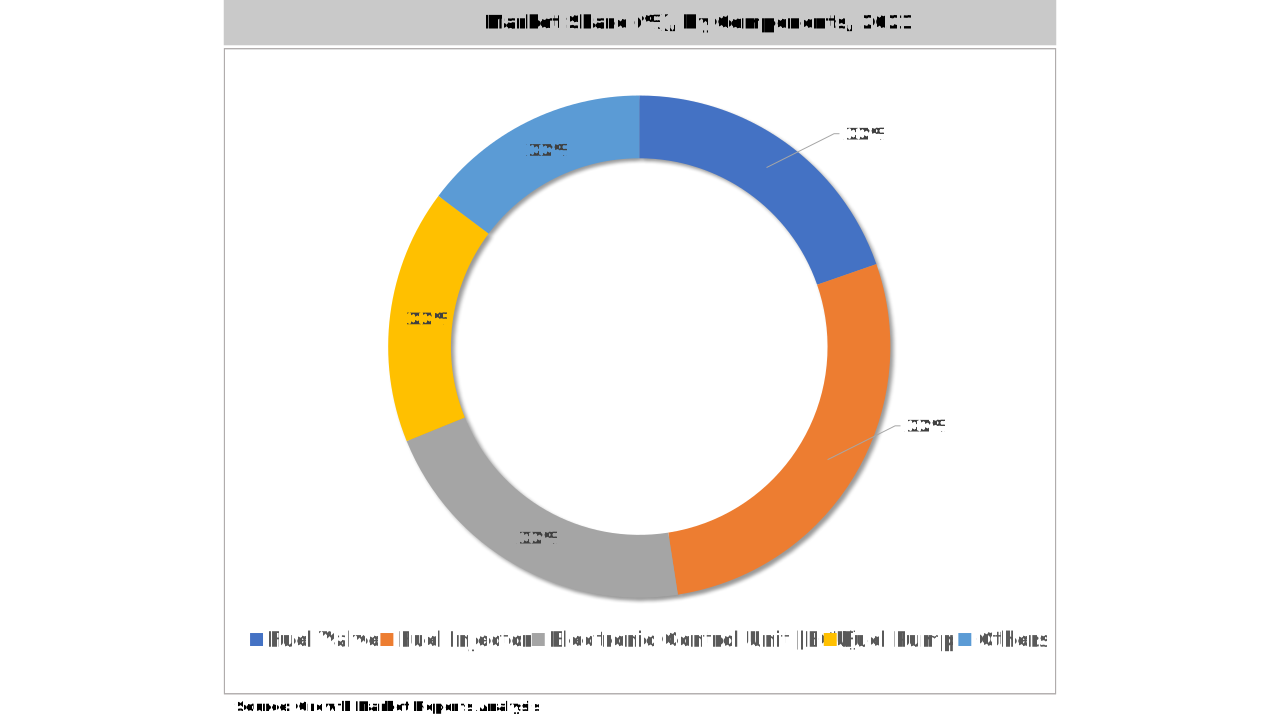
The marine fuel injection system market is segmented by component into fuel injectors, electronic control units (ECUs), fuel pumps, sensors, and others. Among these, fuel injectors form the core of the system, playing a pivotal role in delivering precise amounts of fuel into the combustion chamber under high pressure. The demand for advanced fuel injectors is rising as ship operators seek to enhance fuel atomization, improve combustion efficiency, and reduce emissions. Modern fuel injectors are engineered for durability and precision, utilizing advanced materials and manufacturing techniques to withstand harsh marine environments. The growing trend towards dual-fuel and alternative-fuel engines is further driving innovation in fuel injector design, as these components must accommodate varying fuel viscosities and combustion characteristics.

Electronic control units (ECUs) have become indispensable in contemporary marine fuel injection systems, thanks to their ability to manage and optimize fuel delivery based on real-time engine data. ECUs are responsible for processing inputs from various sensors and adjusting injection timing, duration, and pressure to achieve optimal performance. The proliferation of digitalization and the integration of smart technologies in marine vessels have led to the widespread adoption of ECUs, which enable adaptive control and diagnostics. This not only enhances engine efficiency but also facilitates compliance with emission standards and reduces the risk of engine failure. As marine engines become more complex and versatile, the role of ECUs in ensuring seamless operation and regulatory compliance is expected to grow substantially.

Fuel pumps are another critical component, responsible for supplying fuel at the required pressure to the injectors. Advances in fuel pump technology have focused on improving reliability, efficiency, and resistance to wear and corrosion. High-pressure common rail systems, which utilize advanced fuel pumps, are increasingly being adopted in new marine engines due to their ability to deliver consistent fuel pressure and support multiple injection events per cycle. This results in better combustion, lower emissions, and smoother engine operation. The demand for robust and maintenance-friendly fuel pumps is particularly high in commercial and offshore vessels, where operational downtime can have significant financial implications.

Sensors play a vital role in the modern marine fuel injection ecosystem by providing real-time data on parameters such as fuel pressure, temperature, and engine load. These sensors enable precise control of the injection process, contributing to improved fuel efficiency and reduced emissions. The integration of advanced sensor technologies, such as MEMS-based sensors and wireless monitoring systems, is enhancing the reliability and accuracy of marine fuel injection systems. As vessels become more connected and data-driven, the importance of high-quality sensors in ensuring optimal engine performance and facilitating predictive maintenance is set to increase.

Other components, including actuators, wiring harnesses, and filtration systems, also contribute to the overall performance and reliability of marine fuel injection systems. The ongoing trend towards system integration and modular design is enabling easier installation, maintenance, and scalability of these systems. As the marine industry continues to evolve, the demand for high-performance, durable, and technologically advanced components will remain a key driver of market growth.

Report Scope

Attributes Details
Report Title Marine Fuel Injection System Market Research Report 2033
By Component Fuel Injector, Electronic Control Unit, Fuel Pump, Sensors, Others
By Engine Type 2-Stroke, 4-Stroke
By Application Commercial Vessels, Offshore Support Vessels, Inland Waterways, Others
By Sales Channel OEM, Aftermarket
Regions Covered North America, Europe, APAC, Latin America, MEA
Base Year 2024
Historic Data 2018-2023
Forecast Period 2025-2033
Number of Pages 271
Number of Tables & Figures 392
Customization Available Yes, the report can be customized as per your need.

Engine Type Analysis

The marine fuel injection system market is segmented by engine type into 2-stroke and 4-stroke engines, each catering to distinct vessel categories and operational requirements. 2-stroke engines are predominantly used in large ocean-going vessels, such as container ships, bulk carriers, and oil tankers, due to their high power output and fuel efficiency. These engines require robust and high-capacity fuel injection systems capable of delivering precise fuel quantities at elevated pressures. The ongoing shift towards low-sulfur and alternative fuels is driving further innovation in 2-stroke fuel injection technology, with a focus on optimizing combustion and minimizing emissions. The demand for retrofit solutions is also rising, as fleet operators seek to upgrade existing engines to comply with new regulations and extend operational lifespans.

4-stroke engines are commonly found in smaller vessels, including commercial ships, offshore support vessels, and inland waterway crafts. These engines are valued for their versatility, reliability, and lower emission profiles. The fuel injection systems for 4-stroke engines are designed to provide precise control over multiple injection events, resulting in smoother operation, reduced noise, and improved fuel economy. The increasing adoption of 4-stroke engines in hybrid and dual-fuel configurations is creating new opportunities for advanced fuel injection technologies that can seamlessly switch between different fuel types. As the marine industry embraces cleaner propulsion solutions, the market for sophisticated 4-stroke fuel injection systems is expected to expand significantly.

The choice between 2-stroke and 4-stroke engines is largely influenced by vessel size, operational profile, and regulatory considerations. While 2-stroke engines dominate the deep-sea shipping segment, 4-stroke engines are gaining ground in coastal and inland applications where emission limits are more stringent and operational flexibility is paramount. The ongoing evolution of fuel injection technology is enabling both engine types to achieve higher efficiency, lower emissions, and improved reliability. Manufacturers are increasingly offering customized solutions tailored to specific engine requirements, further driving market growth.

The trend towards engine downsizing and the integration of alternative propulsion systems, such as LNG and hybrid-electric engines, is also impacting the marine fuel injection system market. These developments necessitate the adaptation of fuel injection technologies to accommodate new combustion processes and fuel characteristics. As the marine industry continues to innovate and diversify its propulsion portfolio, the demand for versatile and high-performance fuel injection systems across both 2-stroke and 4-stroke engine segments will remain strong.

In summary, the engine type segment of the marine fuel injection system market is characterized by a dynamic interplay between technological innovation, regulatory pressures, and evolving vessel requirements. The ability of fuel injection systems to adapt to different engine architectures and fuel types will be a key determinant of market success in the years ahead.

Application Analysis

The marine fuel injection system market is segmented by application into commercial vessels, offshore support vessels, inland waterways, and others. Commercial vessels, including container ships, bulk carriers, and oil tankers, represent the largest application segment, accounting for a substantial share of global demand. The sheer scale of global maritime trade and the need for reliable, high-capacity propulsion systems drive the adoption of advanced fuel injection technologies in this segment. Shipowners are increasingly investing in fuel-efficient and low-emission solutions to comply with international regulations and reduce operational costs. The trend towards larger and more sophisticated vessels is further boosting the demand for high-performance fuel injection systems capable of delivering consistent performance under demanding conditions.

Offshore support vessels, which include platform supply vessels, anchor handling tugs, and crew boats, form another key application segment. These vessels operate in challenging environments and are subject to strict safety and environmental standards. The need for robust and reliable propulsion systems is paramount, driving the adoption of advanced fuel injection technologies that offer superior efficiency, durability, and emissions control. The growth of offshore energy projects, particularly in oil and gas exploration and offshore wind farms, is fueling the demand for specialized support vessels equipped with state-of-the-art fuel injection systems. The ability to operate efficiently on a variety of fuels, including LNG and biofuels, is becoming increasingly important in this segment.

The inland waterways segment encompasses a diverse range of vessels, from cargo barges and ferries to passenger boats and recreational crafts. The adoption of advanced fuel injection systems in this segment is driven by the need to comply with local emission standards, improve fuel efficiency, and reduce maintenance costs. The increasing use of inland waterways for cargo and passenger transportation, particularly in regions with congested road and rail networks, is creating new opportunities for fuel injection system providers. The trend towards electrification and hybrid propulsion in smaller vessels is also influencing the development of fuel injection technologies tailored to these applications.

Other applications, such as military vessels, research ships, and specialized crafts, also contribute to the demand for marine fuel injection systems. These vessels often have unique operational requirements and must adhere to stringent performance and safety standards. The customization of fuel injection systems to meet specific mission profiles and environmental conditions is a key differentiator in this segment. As maritime operations become more diverse and complex, the ability to deliver tailored fuel injection solutions will be critical to capturing growth opportunities across a broad spectrum of vessel types.

Overall, the application landscape of the marine fuel injection system market is characterized by a wide range of vessel types, operational profiles, and regulatory requirements. The ability of fuel injection system providers to address the specific needs of each application segment, while delivering superior performance, efficiency, and compliance, will be central to sustained market growth.

Sales Channel Analysis

The marine fuel injection system market is segmented by sales channel into OEM (Original Equipment Manufacturer) and Aftermarket. The OEM segment dominates the market, as most new vessels are equipped with factory-installed fuel injection systems that are specifically engineered to meet the performance and regulatory requirements of the vessel. OEMs work closely with shipbuilders and engine manufacturers to integrate advanced fuel injection technologies into new builds, ensuring optimal compatibility and performance. The trend towards larger, more complex vessels and the increasing adoption of alternative propulsion systems are driving demand for customized OEM solutions. OEMs also play a critical role in supporting regulatory compliance, as new vessels must meet the latest emission standards from the outset.

The aftermarket segment, while smaller in volume compared to OEM, is experiencing robust growth due to the ongoing need for maintenance, upgrades, and retrofits. As emission regulations become more stringent and vessel operators seek to extend the operational life of their fleets, the demand for aftermarket fuel injection components and systems is rising. Retrofitting existing vessels with advanced fuel injection technologies is a cost-effective way to achieve compliance and improve fuel efficiency. The aftermarket is also characterized by a strong focus on service and support, with providers offering diagnostic tools, maintenance kits, and technical expertise to ensure reliable operation and minimize downtime. The expansion of global shipping fleets and the increasing average age of vessels are expected to sustain growth in the aftermarket segment.

The interplay between OEM and aftermarket channels is shaped by the lifecycle of marine vessels, regulatory developments, and technological advancements. OEMs are increasingly offering modular and upgradeable fuel injection systems that facilitate future retrofits and maintenance, blurring the lines between the two channels. The rise of digitalization and IoT-enabled diagnostics is also enabling remote monitoring and predictive maintenance, creating new opportunities for both OEM and aftermarket providers to deliver value-added services.

The regional distribution of sales channels varies, with OEMs having a strong presence in major shipbuilding hubs such as Asia Pacific, while the aftermarket is more prominent in regions with older fleets, such as Europe and North America. The ability to provide timely and effective support across diverse geographies is a key differentiator for market participants. As the marine industry continues to evolve, the alignment of OEM and aftermarket strategies will be essential to capturing growth opportunities and delivering comprehensive solutions to vessel operators.

In conclusion, the sales channel segment of the marine fuel injection system market is characterized by dynamic interactions between OEM and aftermarket providers, shaped by shifting regulatory, technological, and operational landscapes. The ability to deliver high-quality products, timely service, and tailored solutions across both channels will be critical to long-term market success.

Opportunities & Threats

The marine fuel injection system market presents a wealth of opportunities, particularly in the context of global efforts to reduce maritime emissions and transition towards cleaner fuels. The ongoing implementation of IMO 2020 and other emission regulations is driving significant investment in advanced fuel injection technologies that enable compliance and improve operational efficiency. The transition to alternative fuels, such as LNG, methanol, and biofuels, is creating new avenues for innovation in fuel injection system design and performance. Additionally, the increasing digitalization of marine operations, including the integration of IoT, predictive analytics, and remote monitoring, is opening up opportunities for value-added services and aftermarket support. The expansion of global maritime trade, the growth of offshore energy projects, and the modernization of inland waterway fleets further contribute to a positive outlook for the market.

Another significant opportunity lies in the development of hybrid and electric propulsion systems, which require highly adaptable fuel injection solutions capable of operating seamlessly with multiple power sources. The growing focus on lifecycle management and total cost of ownership is prompting vessel operators to invest in advanced fuel injection systems that offer improved reliability, ease of maintenance, and long-term sustainability. The rise of autonomous and unmanned vessels is also expected to drive demand for intelligent fuel injection systems equipped with real-time diagnostics and adaptive control capabilities. As the marine industry embraces digital transformation and sustainability, providers of fuel injection systems are well-positioned to capitalize on emerging trends and deliver innovative solutions to a diverse customer base.

Despite these opportunities, the marine fuel injection system market faces several restraining factors. The high initial cost of advanced fuel injection systems and the complexity of retrofitting older vessels can pose barriers to adoption, particularly for smaller operators with limited capital resources. Additionally, the rapid pace of technological change and the need for ongoing training and support can create challenges for both OEM and aftermarket providers. The uncertainty surrounding future fuel standards and regulatory frameworks may also impact investment decisions, as vessel operators weigh the risks and benefits of different propulsion technologies. Addressing these challenges will require a proactive approach to innovation, customer education, and regulatory engagement, as well as a commitment to delivering cost-effective and future-proof solutions.

Regional Outlook

The Asia Pacific region dominates the global marine fuel injection system market, accounting for approximately 41% of the total market value in 2024, or about USD 2.24 billion. This leadership position is underpinned by the region’s robust shipbuilding industry, particularly in China, South Korea, and Japan, which collectively account for a significant proportion of global newbuild deliveries. The rapid expansion of maritime trade routes, coupled with increasing investments in port infrastructure and fleet modernization, is driving sustained demand for advanced fuel injection systems across both commercial and offshore vessel segments. The Asia Pacific market is expected to maintain a strong CAGR of 5.3% through 2033, outpacing other regions due to continued economic growth and regulatory developments.

Europe is another key market for marine fuel injection systems, with a market size of USD 1.48 billion in 2024. The region’s focus on environmental sustainability and strict emission regulations, such as the European Union’s MRV (Monitoring, Reporting, and Verification) scheme, is accelerating the adoption of cutting-edge fuel injection technologies. European shipowners and operators are at the forefront of implementing alternative fuels and hybrid propulsion systems, creating a favorable environment for innovation and investment. The presence of leading marine technology providers and a mature aftermarket ecosystem further strengthens Europe’s position in the global market. Although growth is somewhat tempered by market maturity, the region continues to offer attractive opportunities, particularly in the retrofit and aftermarket segments.

North America, with a market value of USD 0.91 billion in 2024, is characterized by a strong focus on offshore energy projects, including oil and gas exploration and offshore wind development. The modernization of inland waterway fleets and the enforcement of stringent emission standards by the US Environmental Protection Agency (EPA) are driving demand for advanced fuel injection systems. The region’s well-developed service and support infrastructure, combined with a growing emphasis on digitalization and predictive maintenance, positions North America as a key growth market. Meanwhile, the Middle East & Africa and Latin America, with market sizes of USD 0.51 billion and USD 0.33 billion respectively, are experiencing steady growth driven by investments in port infrastructure, fleet expansion, and offshore exploration activities. While these regions currently account for a smaller share of the global market, their long-term growth prospects remain positive as economic development and regulatory frameworks evolve.

Marine Fuel Injection System Market Statistics

Competitor Outlook

The competitive landscape of the marine fuel injection system market is characterized by the presence of several global and regional players, each striving to differentiate themselves through technological innovation, product quality, and customer service. Leading companies are investing heavily in research and development to develop next-generation fuel injection systems that offer superior efficiency, reliability, and emissions performance. Strategic collaborations with engine manufacturers, shipbuilders, and regulatory bodies are common, as companies seek to align their product offerings with evolving market needs and regulatory requirements. The market is also witnessing increased consolidation, with larger players acquiring niche technology providers to expand their product portfolios and enhance their competitive positioning.

Innovation is a key focus area for market participants, with advancements in electronic control units, high-pressure injectors, and sensor technologies driving product differentiation. Companies are leveraging digitalization and IoT-enabled diagnostics to offer value-added services, such as predictive maintenance and remote monitoring, which enhance customer loyalty and create new revenue streams. The ability to provide customized solutions tailored to specific vessel types, engine architectures, and operational profiles is emerging as a critical success factor. As the marine industry transitions towards alternative fuels and hybrid propulsion systems, companies that can offer flexible and future-proof fuel injection solutions are likely to capture a larger share of the market.

The market is also characterized by intense competition in the aftermarket segment, where timely service, technical expertise, and global reach are essential for success. Companies are expanding their service networks and investing in training programs to support vessel operators in maintaining and upgrading their fuel injection systems. The rise of digital platforms and e-commerce is facilitating easier access to spare parts and technical support, further intensifying competition. Price competitiveness, product reliability, and brand reputation are key differentiators in this segment, particularly in regions with older fleets and higher retrofit demand.

Major companies operating in the marine fuel injection system market include Bosch, Woodward Inc., Yanmar Co., Ltd., Rolls-Royce Holdings plc, Cummins Inc., MAN Energy Solutions, Delphi Technologies, Liebherr Group, and Denso Corporation. Bosch is renowned for its high-precision fuel injection systems and strong focus on research and development, while Woodward Inc. specializes in advanced electronic control solutions for marine engines. Yanmar and MAN Energy Solutions are leading providers of integrated marine propulsion systems, offering both OEM and aftermarket solutions. Rolls-Royce and Cummins are recognized for their innovation in hybrid and alternative-fuel propulsion technologies, while Delphi Technologies and Denso Corporation are prominent players in the sensor and electronic control unit segments. Liebherr Group, with its expertise in heavy-duty engines and fuel systems, is a key supplier to both commercial and offshore vessel markets.

These companies are continuously expanding their product portfolios, investing in advanced manufacturing capabilities, and strengthening their global service networks to meet the evolving needs of the marine industry. Strategic partnerships with shipbuilders, engine manufacturers, and regulatory agencies enable them to stay ahead of market trends and regulatory developments. As competition intensifies, the ability to deliver high-quality, innovative, and sustainable fuel injection solutions will be the hallmark of market leaders in the years ahead.

Key Players

  • Woodward, Inc.
  • Cummins Inc.
  • Liebherr International AG
  • Robert Bosch GmbH
  • Yanmar Co., Ltd.
  • Caterpillar Inc.
  • Rolls-Royce Holdings plc
  • Delphi Technologies (BorgWarner Inc.)
  • Denso Corporation
  • MAN Energy Solutions SE
  • Wärtsilä Corporation
  • Heinzmann GmbH & Co. KG
  • Stanadyne LLC
  • CMI Group
  • DUAP AG
  • Bosch Rexroth AG
  • Scania AB
  • MTU Friedrichshafen GmbH
  • Suzuki Motor Corporation
  • Bryce Berger S.A.
Marine Fuel Injection System Market Overview

Segments

The Marine Fuel Injection System market has been segmented on the basis of

Component

  • Fuel Injector
  • Electronic Control Unit
  • Fuel Pump
  • Sensors
  • Others

Engine Type

  • 2-Stroke
  • 4-Stroke

Application

  • Commercial Vessels
  • Offshore Support Vessels
  • Inland Waterways
  • Others

Sales Channel

  • OEM
  • Aftermarket

Competitive Landscape

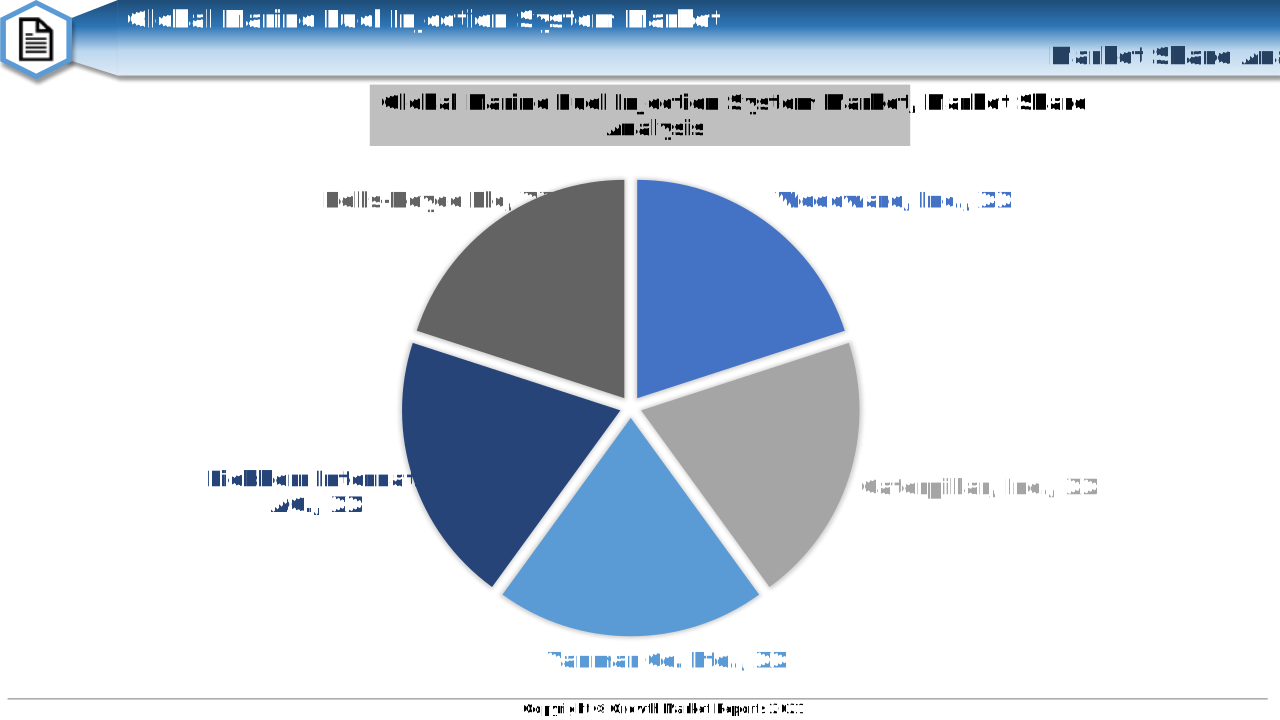
Key players competing in the global marine fuel injection market are Woodward, Inc.; Caterpillar, Inc.; Yanmar Co. Ltd.; Liebherr International AG.; and Rolls-Royce Plc.

Companies are investing in research & development for developing new, innovative, and advanced component for fuel injection systems. Furthermore, companies are focusing on collaborations, partnerships, and merger & acquisitions for expanding their market share. In November 2018, Liebherr International AG. announced its newly developed and designed hydraulic injection components for the Chinese market.

Marine Fuel Injection System Market By Key Players

Frequently Asked Questions

The market is segmented into OEM (Original Equipment Manufacturer) and aftermarket channels. OEM dominates new vessel installations, while the aftermarket is growing due to retrofits, upgrades, and maintenance needs for existing fleets.

Technological advancements such as electronic control units (ECUs), advanced sensors, real-time monitoring, IoT-based diagnostics, and precision fuel injectors are improving engine efficiency, reducing emissions, and enabling predictive maintenance.

Key applications are in commercial vessels (container ships, bulk carriers, oil tankers), offshore support vessels, inland waterways vessels, and specialized ships such as military and research vessels.

Major companies include Bosch, Woodward Inc., Yanmar Co., Ltd., Rolls-Royce Holdings plc, Cummins Inc., MAN Energy Solutions, Delphi Technologies, Liebherr Group, and Denso Corporation.

2-stroke engines, used mainly in large ocean-going vessels, require robust, high-capacity fuel injection systems for precise fuel delivery at high pressures. 4-stroke engines, common in smaller vessels, need fuel injection systems that provide precise control over multiple injection events for smoother operation and better fuel economy.

Stricter emission regulations, especially those from the International Maritime Organization (IMO), are compelling shipowners to upgrade to advanced fuel injection systems that optimize combustion, reduce emissions, and ensure regulatory compliance.

The main components include fuel injectors, electronic control units (ECUs), fuel pumps, sensors, and other parts such as actuators, wiring harnesses, and filtration systems.

Asia Pacific leads the market, accounting for about 41% of the global value in 2024, followed by Europe and North America. Asia Pacific's dominance is due to its strong shipbuilding industry and expanding maritime trade.

Key growth drivers include tightening international emissions regulations (such as IMO 2020), rapid technological advancements in fuel injection systems, rising global trade volumes, and the transition to cleaner marine fuels like LNG and low-sulfur diesel.

The global marine fuel injection system market is expected to reach USD 8.16 billion by 2033, growing from USD 5.47 billion in 2024 at a CAGR of 4.9%.

Table Of Content

Chapter 1 Executive Summary
Chapter 2 Assumptions and Acronyms Used
Chapter 3 Research Methodology
Chapter 4 Marine Fuel Injection System Market Overview
   4.1 Introduction
      4.1.1 Market Taxonomy
      4.1.2 Market Definition
      4.1.3 Macro-Economic Factors Impacting the Market Growth
   4.2 Marine Fuel Injection System Market Dynamics
      4.2.1 Market Drivers
      4.2.2 Market Restraints
      4.2.3 Market Opportunity
   4.3 Marine Fuel Injection System Market - Supply Chain Analysis
      4.3.1 List of Key Suppliers
      4.3.2 List of Key Distributors
      4.3.3 List of Key Consumers
   4.4 Key Forces Shaping the Marine Fuel Injection System Market
      4.4.1 Bargaining Power of Suppliers
      4.4.2 Bargaining Power of Buyers
      4.4.3 Threat of Substitution
      4.4.4 Threat of New Entrants
      4.4.5 Competitive Rivalry
   4.5 Global Marine Fuel Injection System Market Size & Forecast, 2023-2032
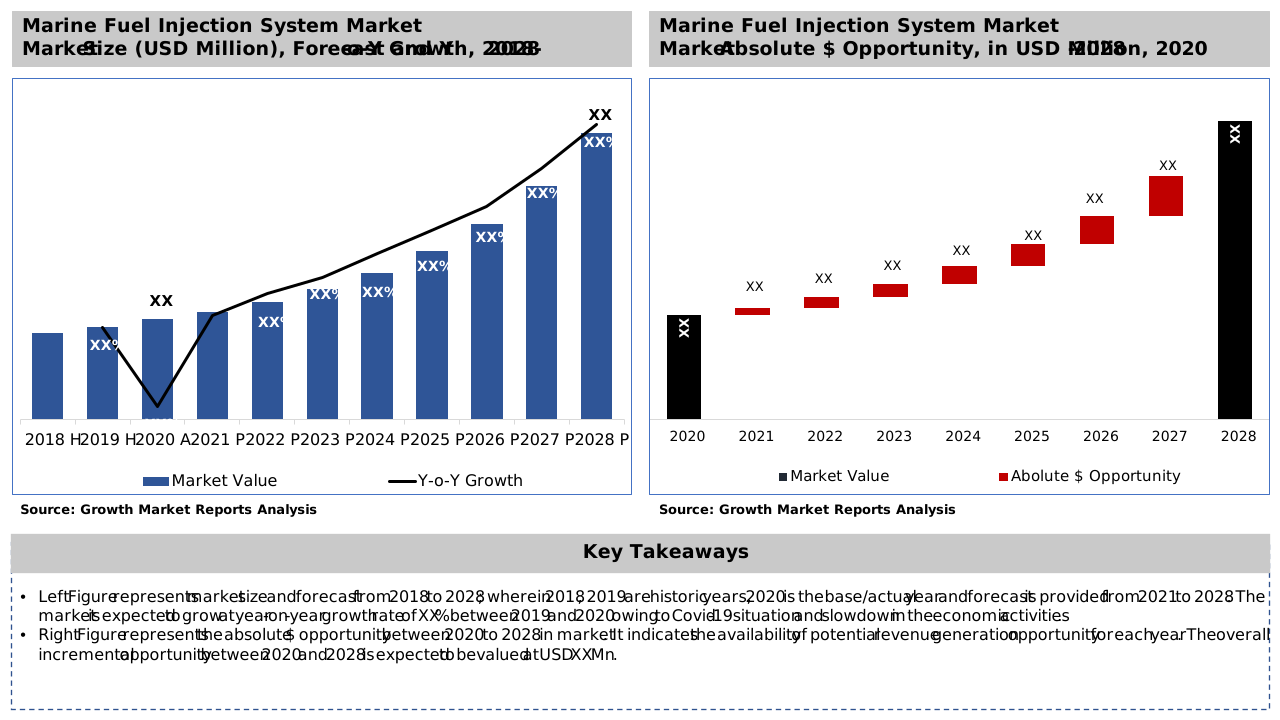
      4.5.1 Marine Fuel Injection System Market Size and Y-o-Y Growth
      4.5.2 Marine Fuel Injection System Market Absolute $ Opportunity

Chapter 5 Global Marine Fuel Injection System Market Analysis and Forecast By Component
   5.1 Introduction
      5.1.1 Key Market Trends & Growth Opportunities By Component
      5.1.2 Basis Point Share (BPS) Analysis By Component
      5.1.3 Absolute $ Opportunity Assessment By Component
   5.2 Marine Fuel Injection System Market Size Forecast By Component
      5.2.1 Fuel Injector
      5.2.2 Electronic Control Unit
      5.2.3 Fuel Pump
      5.2.4 Sensors
      5.2.5 Others
   5.3 Market Attractiveness Analysis By Component

Chapter 6 Global Marine Fuel Injection System Market Analysis and Forecast By Engine Type
   6.1 Introduction
      6.1.1 Key Market Trends & Growth Opportunities By Engine Type
      6.1.2 Basis Point Share (BPS) Analysis By Engine Type
      6.1.3 Absolute $ Opportunity Assessment By Engine Type
   6.2 Marine Fuel Injection System Market Size Forecast By Engine Type
      6.2.1 2-Stroke
      6.2.2 4-Stroke
   6.3 Market Attractiveness Analysis By Engine Type

Chapter 7 Global Marine Fuel Injection System Market Analysis and Forecast By Application
   7.1 Introduction
      7.1.1 Key Market Trends & Growth Opportunities By Application
      7.1.2 Basis Point Share (BPS) Analysis By Application
      7.1.3 Absolute $ Opportunity Assessment By Application
   7.2 Marine Fuel Injection System Market Size Forecast By Application
      7.2.1 Commercial Vessels
      7.2.2 Offshore Support Vessels
      7.2.3 Inland Waterways
      7.2.4 Others
   7.3 Market Attractiveness Analysis By Application

Chapter 8 Global Marine Fuel Injection System Market Analysis and Forecast By Sales Channel
   8.1 Introduction
      8.1.1 Key Market Trends & Growth Opportunities By Sales Channel
      8.1.2 Basis Point Share (BPS) Analysis By Sales Channel
      8.1.3 Absolute $ Opportunity Assessment By Sales Channel
   8.2 Marine Fuel Injection System Market Size Forecast By Sales Channel
      8.2.1 OEM
      8.2.2 Aftermarket
   8.3 Market Attractiveness Analysis By Sales Channel

Chapter 9 Global Marine Fuel Injection System Market Analysis and Forecast by Region
   9.1 Introduction
      9.1.1 Key Market Trends & Growth Opportunities By Region
      9.1.2 Basis Point Share (BPS) Analysis By Region
      9.1.3 Absolute $ Opportunity Assessment By Region
   9.2 Marine Fuel Injection System Market Size Forecast By Region
      9.2.1 North America
      9.2.2 Europe
      9.2.3 Asia Pacific
      9.2.4 Latin America
      9.2.5 Middle East & Africa (MEA)
   9.3 Market Attractiveness Analysis By Region

Chapter 10 Coronavirus Disease (COVID-19) Impact 
   10.1 Introduction 
   10.2 Current & Future Impact Analysis 
   10.3 Economic Impact Analysis 
   10.4 Government Policies 
   10.5 Investment Scenario

Chapter 11 North America Marine Fuel Injection System Analysis and Forecast
   11.1 Introduction
   11.2 North America Marine Fuel Injection System Market Size Forecast by Country
      11.2.1 U.S.
      11.2.2 Canada
   11.3 Basis Point Share (BPS) Analysis by Country
   11.4 Absolute $ Opportunity Assessment by Country
   11.5 Market Attractiveness Analysis by Country
   11.6 North America Marine Fuel Injection System Market Size Forecast By Component
      11.6.1 Fuel Injector
      11.6.2 Electronic Control Unit
      11.6.3 Fuel Pump
      11.6.4 Sensors
      11.6.5 Others
   11.7 Basis Point Share (BPS) Analysis By Component 
   11.8 Absolute $ Opportunity Assessment By Component 
   11.9 Market Attractiveness Analysis By Component
   11.10 North America Marine Fuel Injection System Market Size Forecast By Engine Type
      11.10.1 2-Stroke
      11.10.2 4-Stroke
   11.11 Basis Point Share (BPS) Analysis By Engine Type 
   11.12 Absolute $ Opportunity Assessment By Engine Type 
   11.13 Market Attractiveness Analysis By Engine Type
   11.14 North America Marine Fuel Injection System Market Size Forecast By Application
      11.14.1 Commercial Vessels
      11.14.2 Offshore Support Vessels
      11.14.3 Inland Waterways
      11.14.4 Others
   11.15 Basis Point Share (BPS) Analysis By Application 
   11.16 Absolute $ Opportunity Assessment By Application 
   11.17 Market Attractiveness Analysis By Application
   11.18 North America Marine Fuel Injection System Market Size Forecast By Sales Channel
      11.18.1 OEM
      11.18.2 Aftermarket
   11.19 Basis Point Share (BPS) Analysis By Sales Channel 
   11.20 Absolute $ Opportunity Assessment By Sales Channel 
   11.21 Market Attractiveness Analysis By Sales Channel

Chapter 12 Europe Marine Fuel Injection System Analysis and Forecast
   12.1 Introduction
   12.2 Europe Marine Fuel Injection System Market Size Forecast by Country
      12.2.1 Germany
      12.2.2 France
      12.2.3 Italy
      12.2.4 U.K.
      12.2.5 Spain
      12.2.6 Russia
      12.2.7 Rest of Europe
   12.3 Basis Point Share (BPS) Analysis by Country
   12.4 Absolute $ Opportunity Assessment by Country
   12.5 Market Attractiveness Analysis by Country
   12.6 Europe Marine Fuel Injection System Market Size Forecast By Component
      12.6.1 Fuel Injector
      12.6.2 Electronic Control Unit
      12.6.3 Fuel Pump
      12.6.4 Sensors
      12.6.5 Others
   12.7 Basis Point Share (BPS) Analysis By Component 
   12.8 Absolute $ Opportunity Assessment By Component 
   12.9 Market Attractiveness Analysis By Component
   12.10 Europe Marine Fuel Injection System Market Size Forecast By Engine Type
      12.10.1 2-Stroke
      12.10.2 4-Stroke
   12.11 Basis Point Share (BPS) Analysis By Engine Type 
   12.12 Absolute $ Opportunity Assessment By Engine Type 
   12.13 Market Attractiveness Analysis By Engine Type
   12.14 Europe Marine Fuel Injection System Market Size Forecast By Application
      12.14.1 Commercial Vessels
      12.14.2 Offshore Support Vessels
      12.14.3 Inland Waterways
      12.14.4 Others
   12.15 Basis Point Share (BPS) Analysis By Application 
   12.16 Absolute $ Opportunity Assessment By Application 
   12.17 Market Attractiveness Analysis By Application
   12.18 Europe Marine Fuel Injection System Market Size Forecast By Sales Channel
      12.18.1 OEM
      12.18.2 Aftermarket
   12.19 Basis Point Share (BPS) Analysis By Sales Channel 
   12.20 Absolute $ Opportunity Assessment By Sales Channel 
   12.21 Market Attractiveness Analysis By Sales Channel

Chapter 13 Asia Pacific Marine Fuel Injection System Analysis and Forecast
   13.1 Introduction
   13.2 Asia Pacific Marine Fuel Injection System Market Size Forecast by Country
      13.2.1 China
      13.2.2 Japan
      13.2.3 South Korea
      13.2.4 India
      13.2.5 Australia
      13.2.6 South East Asia (SEA)
      13.2.7 Rest of Asia Pacific (APAC)
   13.3 Basis Point Share (BPS) Analysis by Country
   13.4 Absolute $ Opportunity Assessment by Country
   13.5 Market Attractiveness Analysis by Country
   13.6 Asia Pacific Marine Fuel Injection System Market Size Forecast By Component
      13.6.1 Fuel Injector
      13.6.2 Electronic Control Unit
      13.6.3 Fuel Pump
      13.6.4 Sensors
      13.6.5 Others
   13.7 Basis Point Share (BPS) Analysis By Component 
   13.8 Absolute $ Opportunity Assessment By Component 
   13.9 Market Attractiveness Analysis By Component
   13.10 Asia Pacific Marine Fuel Injection System Market Size Forecast By Engine Type
      13.10.1 2-Stroke
      13.10.2 4-Stroke
   13.11 Basis Point Share (BPS) Analysis By Engine Type 
   13.12 Absolute $ Opportunity Assessment By Engine Type 
   13.13 Market Attractiveness Analysis By Engine Type
   13.14 Asia Pacific Marine Fuel Injection System Market Size Forecast By Application
      13.14.1 Commercial Vessels
      13.14.2 Offshore Support Vessels
      13.14.3 Inland Waterways
      13.14.4 Others
   13.15 Basis Point Share (BPS) Analysis By Application 
   13.16 Absolute $ Opportunity Assessment By Application 
   13.17 Market Attractiveness Analysis By Application
   13.18 Asia Pacific Marine Fuel Injection System Market Size Forecast By Sales Channel
      13.18.1 OEM
      13.18.2 Aftermarket
   13.19 Basis Point Share (BPS) Analysis By Sales Channel 
   13.20 Absolute $ Opportunity Assessment By Sales Channel 
   13.21 Market Attractiveness Analysis By Sales Channel

Chapter 14 Latin America Marine Fuel Injection System Analysis and Forecast
   14.1 Introduction
   14.2 Latin America Marine Fuel Injection System Market Size Forecast by Country
      14.2.1 Brazil
      14.2.2 Mexico
      14.2.3 Rest of Latin America (LATAM)
   14.3 Basis Point Share (BPS) Analysis by Country
   14.4 Absolute $ Opportunity Assessment by Country
   14.5 Market Attractiveness Analysis by Country
   14.6 Latin America Marine Fuel Injection System Market Size Forecast By Component
      14.6.1 Fuel Injector
      14.6.2 Electronic Control Unit
      14.6.3 Fuel Pump
      14.6.4 Sensors
      14.6.5 Others
   14.7 Basis Point Share (BPS) Analysis By Component 
   14.8 Absolute $ Opportunity Assessment By Component 
   14.9 Market Attractiveness Analysis By Component
   14.10 Latin America Marine Fuel Injection System Market Size Forecast By Engine Type
      14.10.1 2-Stroke
      14.10.2 4-Stroke
   14.11 Basis Point Share (BPS) Analysis By Engine Type 
   14.12 Absolute $ Opportunity Assessment By Engine Type 
   14.13 Market Attractiveness Analysis By Engine Type
   14.14 Latin America Marine Fuel Injection System Market Size Forecast By Application
      14.14.1 Commercial Vessels
      14.14.2 Offshore Support Vessels
      14.14.3 Inland Waterways
      14.14.4 Others
   14.15 Basis Point Share (BPS) Analysis By Application 
   14.16 Absolute $ Opportunity Assessment By Application 
   14.17 Market Attractiveness Analysis By Application
   14.18 Latin America Marine Fuel Injection System Market Size Forecast By Sales Channel
      14.18.1 OEM
      14.18.2 Aftermarket
   14.19 Basis Point Share (BPS) Analysis By Sales Channel 
   14.20 Absolute $ Opportunity Assessment By Sales Channel 
   14.21 Market Attractiveness Analysis By Sales Channel

Chapter 15 Middle East & Africa (MEA) Marine Fuel Injection System Analysis and Forecast
   15.1 Introduction
   15.2 Middle East & Africa (MEA) Marine Fuel Injection System Market Size Forecast by Country
      15.2.1 Saudi Arabia
      15.2.2 South Africa
      15.2.3 UAE
      15.2.4 Rest of Middle East & Africa (MEA)
   15.3 Basis Point Share (BPS) Analysis by Country
   15.4 Absolute $ Opportunity Assessment by Country
   15.5 Market Attractiveness Analysis by Country
   15.6 Middle East & Africa (MEA) Marine Fuel Injection System Market Size Forecast By Component
      15.6.1 Fuel Injector
      15.6.2 Electronic Control Unit
      15.6.3 Fuel Pump
      15.6.4 Sensors
      15.6.5 Others
   15.7 Basis Point Share (BPS) Analysis By Component 
   15.8 Absolute $ Opportunity Assessment By Component 
   15.9 Market Attractiveness Analysis By Component
   15.10 Middle East & Africa (MEA) Marine Fuel Injection System Market Size Forecast By Engine Type
      15.10.1 2-Stroke
      15.10.2 4-Stroke
   15.11 Basis Point Share (BPS) Analysis By Engine Type 
   15.12 Absolute $ Opportunity Assessment By Engine Type 
   15.13 Market Attractiveness Analysis By Engine Type
   15.14 Middle East & Africa (MEA) Marine Fuel Injection System Market Size Forecast By Application
      15.14.1 Commercial Vessels
      15.14.2 Offshore Support Vessels
      15.14.3 Inland Waterways
      15.14.4 Others
   15.15 Basis Point Share (BPS) Analysis By Application 
   15.16 Absolute $ Opportunity Assessment By Application 
   15.17 Market Attractiveness Analysis By Application
   15.18 Middle East & Africa (MEA) Marine Fuel Injection System Market Size Forecast By Sales Channel
      15.18.1 OEM
      15.18.2 Aftermarket
   15.19 Basis Point Share (BPS) Analysis By Sales Channel 
   15.20 Absolute $ Opportunity Assessment By Sales Channel 
   15.21 Market Attractiveness Analysis By Sales Channel

Chapter 16 Competition Landscape 
   16.1 Marine Fuel Injection System Market: Competitive Dashboard
   16.2 Global Marine Fuel Injection System Market: Market Share Analysis, 2023
   16.3 Company Profiles (Details – Overview, Financials, Developments, Strategy) 
      16.3.1 Woodward, Inc.
Cummins Inc.
Liebherr International AG
Robert Bosch GmbH
Yanmar Co., Ltd.
Caterpillar Inc.
Rolls-Royce Holdings plc
Delphi Technologies (BorgWarner Inc.)
Denso Corporation
MAN Energy Solutions SE
Wärtsilä Corporation
Heinzmann GmbH & Co. KG
Stanadyne LLC
CMI Group
DUAP AG
Bosch Rexroth AG
Scania AB
MTU Friedrichshafen GmbH
Suzuki Motor Corporation
Bryce Berger S.A.

Methodology

Our Clients

FedEx Logistics
Siemens Healthcare
Dassault Aviation
Deloitte
Microsoft
sinopec
Pfizer
The John Holland Group