Automotive Exhaust Aftertreatment System Market Research Report 2033

Automotive Exhaust Aftertreatment System Market Research Report 2033

Segments - by Product Type (Diesel Oxidation Catalyst, Selective Catalytic Reduction, Diesel Particulate Filter, Lean NOx Trap, Others), by Vehicle Type (Passenger Cars, Light Commercial Vehicles, Heavy Commercial Vehicles, Others), by Fuel Type (Diesel, Gasoline, Others), by Sales Channel (OEM, Aftermarket)

https://growthmarketreports.com/Raksha
Author : Raksha Sharma
https://growthmarketreports.com/Vaibhav
Fact-checked by : V. Chandola
https://growthmarketreports.com/Shruti
Editor : Shruti Bhat

Upcoming | Report ID :AL-1145 | 4.0 Rating | 94 Reviews | 286 Pages | Format : Docx PDF

Report Description


Automotive Exhaust Aftertreatment System Market Outlook

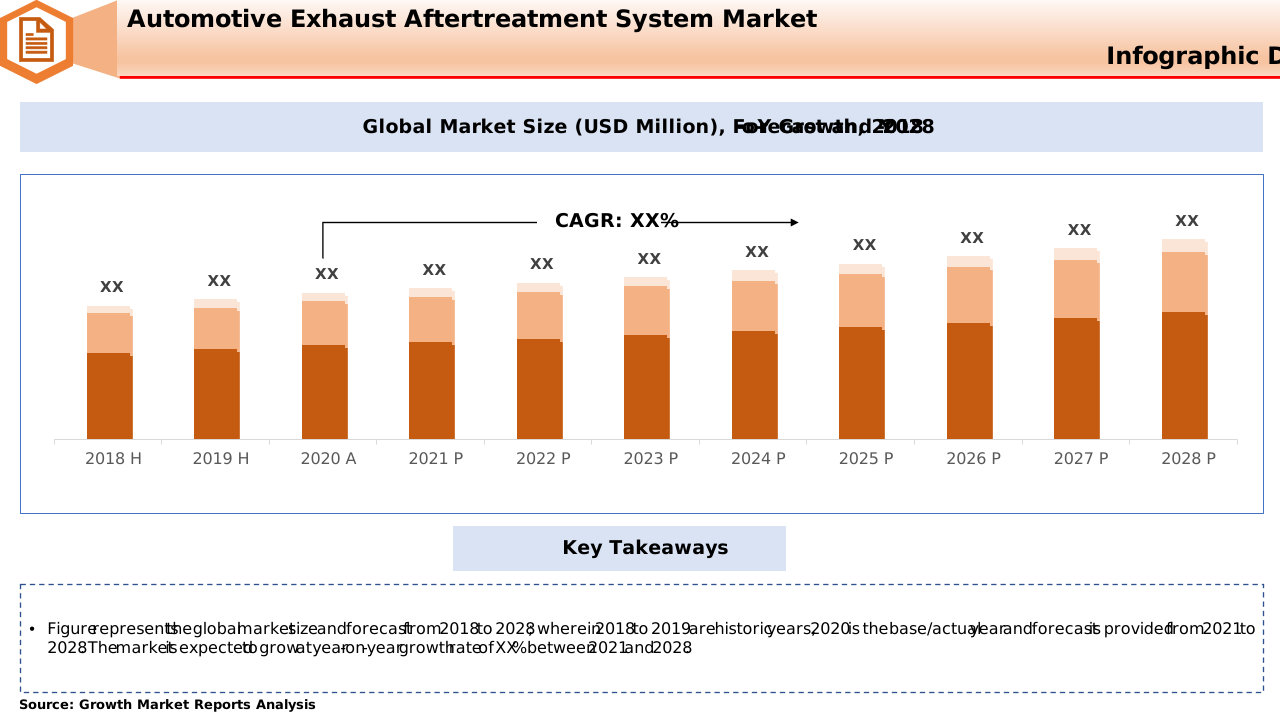
According to our latest research, the global automotive exhaust aftertreatment system market size reached USD 59.2 billion in 2024, reflecting the sectorÂ’s robust response to increasingly stringent emission regulations worldwide. The market is expected to expand at a CAGR of 7.1% during the forecast period, with a projected market size of USD 110.6 billion by 2033. This growth is primarily driven by the rising adoption of advanced emission control technologies, the tightening of global emission standards, and the automotive industryÂ’s accelerated transition towards cleaner and more sustainable mobility solutions.

One of the primary growth factors for the automotive exhaust aftertreatment system market is the implementation of stricter emission norms by regulatory authorities across major economies. Governments in regions such as Europe, North America, and Asia Pacific are mandating the adoption of advanced aftertreatment systems to control harmful emissions from both passenger and commercial vehicles. These regulations, including Euro 6, China 6, and Bharat Stage VI, necessitate the integration of technologies like diesel oxidation catalysts, selective catalytic reduction, and diesel particulate filters. As automotive manufacturers strive to comply with these standards, the demand for sophisticated aftertreatment systems continues to rise, thereby driving market growth.

Another significant driver is the growing consumer awareness and demand for environmentally friendly vehicles. With increasing concerns over air pollution and its adverse health impacts, both end-users and fleet operators are prioritizing vehicles with lower emissions and higher fuel efficiency. This shift in consumer preference is compelling automakers to invest in research and development of innovative aftertreatment solutions that not only reduce emissions but also enhance vehicle performance. Additionally, the surge in electric and hybrid vehicles, while still in its nascent stage, is influencing OEMs to develop adaptable aftertreatment systems suitable for a diverse range of fuel types, further expanding the marketÂ’s scope.

Technological advancements in exhaust aftertreatment systems are also playing a pivotal role in market expansion. Innovations such as integrated emission control modules, lightweight catalyst substrates, and advanced sensor technologies are enabling more efficient and cost-effective emission reduction. These advancements are particularly crucial for heavy commercial vehicles and off-highway applications, where emission control requirements are even more stringent. The integration of digital diagnostics and real-time monitoring systems is further enhancing the reliability and efficiency of aftertreatment systems, thus fostering greater adoption across the automotive industry.

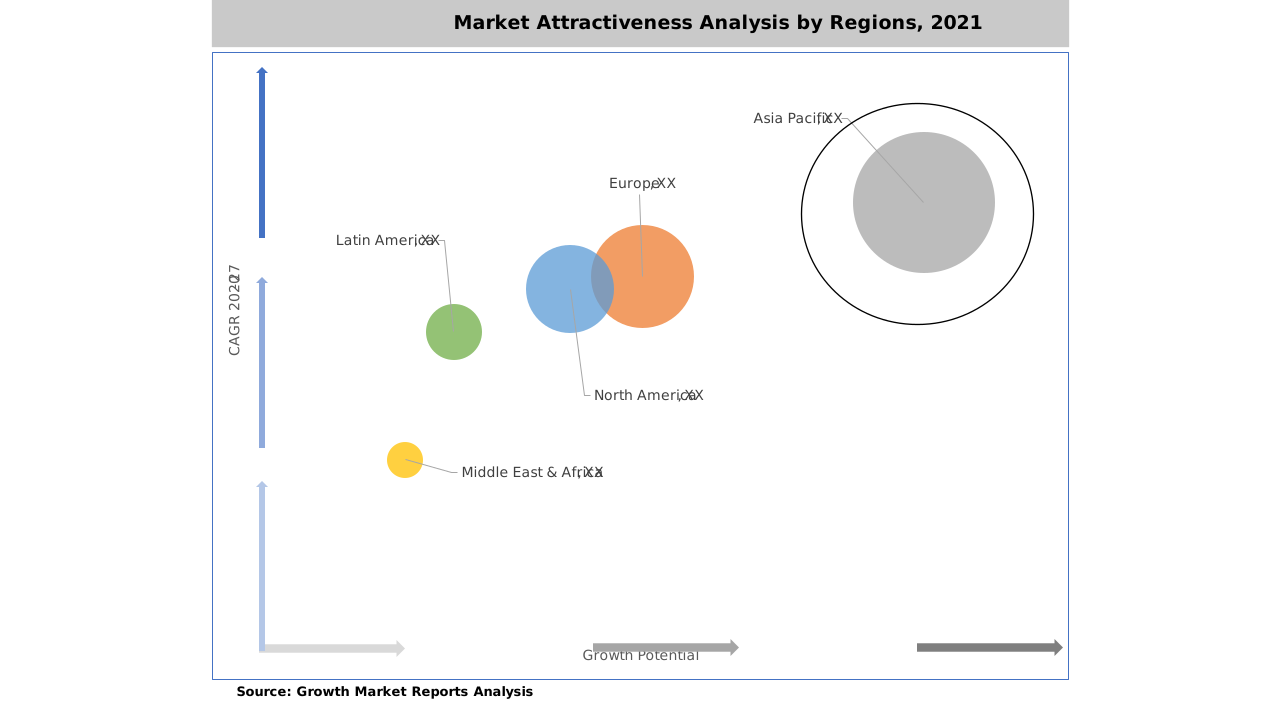
From a regional perspective, Asia Pacific continues to dominate the automotive exhaust aftertreatment system market, accounting for the largest share in 2024. The regionÂ’s leadership is attributed to its massive automotive production base, rapid urbanization, and the swift implementation of emission control policies in countries like China, India, and Japan. North America and Europe also represent significant markets, driven by early adoption of emission norms and a strong presence of leading automotive OEMs and technology providers. Meanwhile, emerging markets in Latin America and the Middle East & Africa are witnessing steady growth as governments introduce new regulations and consumers become more environmentally conscious.

The role of Small Engine Exhaust Aftertreatment systems is becoming increasingly significant in the broader context of emission control technologies. As the automotive industry shifts towards more compact and efficient powertrains, the demand for specialized aftertreatment solutions tailored for small engines is on the rise. These systems are crucial in minimizing the environmental impact of smaller vehicles, which are often used in urban settings where air quality concerns are paramount. By integrating advanced catalysts and filtration technologies, small engine exhaust aftertreatment systems help in reducing harmful emissions, ensuring compliance with stringent urban emission standards. This trend is particularly evident in regions with dense urban populations and strict environmental regulations, where the adoption of such systems is not just a regulatory requirement but also a competitive advantage for automakers.

Global Automotive Exhaust Aftertreatment System Industry Outlook

Product Type Analysis

The product type segment of the automotive exhaust aftertreatment system market encompasses diesel oxidation catalyst (DOC), selective catalytic reduction (SCR), diesel particulate filter (DPF), lean NOx trap (LNT), and other specialized systems. Among these, the selective catalytic reduction segment holds a dominant position, owing to its superior efficiency in reducing nitrogen oxide emissions, particularly in diesel-powered vehicles. The widespread implementation of SCR technology in commercial vehicles is a direct response to stringent NOx emission standards in regions like Europe and North America. Furthermore, ongoing research and development are enhancing the durability and performance of SCR systems, making them increasingly attractive for both OEMs and aftermarket players.

The diesel particulate filter segment is also experiencing significant growth, fueled by the rising demand for particulate matter reduction in urban environments. DPFs are now standard in most new diesel vehicles, particularly in regions with strict particulate emission regulations. The integration of advanced regeneration technologies and low-pressure drop designs is further improving the operational efficiency and lifespan of DPFs. As a result, both passenger car and heavy-duty vehicle manufacturers are increasingly incorporating DPFs into their emission control strategies, driving sustained growth in this segment.

Diesel oxidation catalysts remain a foundational component of exhaust aftertreatment systems, especially in light commercial vehicles and older diesel models. DOCs are valued for their ability to oxidize carbon monoxide and hydrocarbons, thereby reducing overall emissions. Recent advancements in catalyst materials and substrate technologies have enhanced the thermal stability and conversion efficiency of DOCs, ensuring their continued relevance in the evolving regulatory landscape. Additionally, the integration of DOCs with other aftertreatment components is creating opportunities for modular system designs, catering to a wide range of vehicle applications.

Lean NOx traps and other emerging aftertreatment solutions are gaining traction, particularly in markets where cost-effective alternatives to SCR are required. LNTs are increasingly being adopted in smaller diesel engines and hybrid vehicles, where space and cost constraints limit the use of larger SCR systems. Furthermore, ongoing innovations in catalyst formulations and regeneration strategies are expanding the applicability of LNTs across different vehicle segments. Collectively, these product types are shaping the competitive landscape of the automotive exhaust aftertreatment system market, with each offering distinct advantages tailored to specific regulatory and operational requirements.

Report Scope

Attributes Details
Report Title Automotive Exhaust Aftertreatment System Market Research Report 2033
By Product Type Diesel Oxidation Catalyst, Selective Catalytic Reduction, Diesel Particulate Filter, Lean NOx Trap, Others
By Vehicle Type Passenger Cars, Light Commercial Vehicles, Heavy Commercial Vehicles, Others
By Fuel Type Diesel, Gasoline, Others
By Sales Channel OEM, Aftermarket
Regions Covered North America, Europe, APAC, Latin America, MEA
Base Year 2024
Historic Data 2018-2023
Forecast Period 2025-2033
Number of Pages 286
Number of Tables & Figures 337
Customization Available Yes, the report can be customized as per your need.

Vehicle Type Analysis

The vehicle type segment of the automotive exhaust aftertreatment system market is broadly categorized into passenger cars, light commercial vehicles (LCVs), heavy commercial vehicles (HCVs), and others. Passenger cars represent a significant portion of the market, driven by the sheer volume of global production and the rapid adoption of emission control technologies in this segment. The increasing penetration of gasoline and diesel particulate filters, coupled with the integration of advanced catalyst systems, is enabling passenger cars to meet the latest emission standards. Moreover, the growing preference for hybrid and plug-in hybrid models is fostering demand for adaptable aftertreatment solutions that can efficiently manage emissions across varying operating conditions.

Light commercial vehicles are another key segment, witnessing robust growth due to their widespread use in urban logistics, last-mile delivery, and small-scale transportation. LCVs are typically subject to stringent emission regulations, particularly in developed markets. As a result, manufacturers are investing in advanced aftertreatment systems such as SCR, DPF, and DOC to ensure compliance. The trend towards electrification in the LCV segment is also influencing the development of lightweight and compact aftertreatment modules, which can be seamlessly integrated into hybrid powertrains.

Heavy commercial vehicles, including trucks and buses, are subject to the most rigorous emission control requirements, given their substantial contribution to NOx and particulate emissions. The adoption of high-capacity SCR and DPF systems is now standard practice in this segment, especially in regions with Euro VI and equivalent standards. Additionally, the integration of onboard diagnostics and real-time emission monitoring is enhancing the effectiveness and reliability of aftertreatment systems in HCVs. The push towards alternative fuels such as compressed natural gas (CNG) and liquefied natural gas (LNG) is further expanding the scope of aftertreatment technologies tailored for heavy-duty applications.

Other vehicle types, including off-highway vehicles, construction machinery, and agricultural equipment, are increasingly being targeted by emission control regulations. The unique operational profiles and emission characteristics of these vehicles necessitate specialized aftertreatment solutions, often involving a combination of DOC, SCR, and DPF technologies. The growing emphasis on sustainable practices in sectors such as mining and agriculture is driving the adoption of advanced aftertreatment systems, contributing to the overall expansion of the automotive exhaust aftertreatment system market across diverse vehicle categories.

Fuel Type Analysis

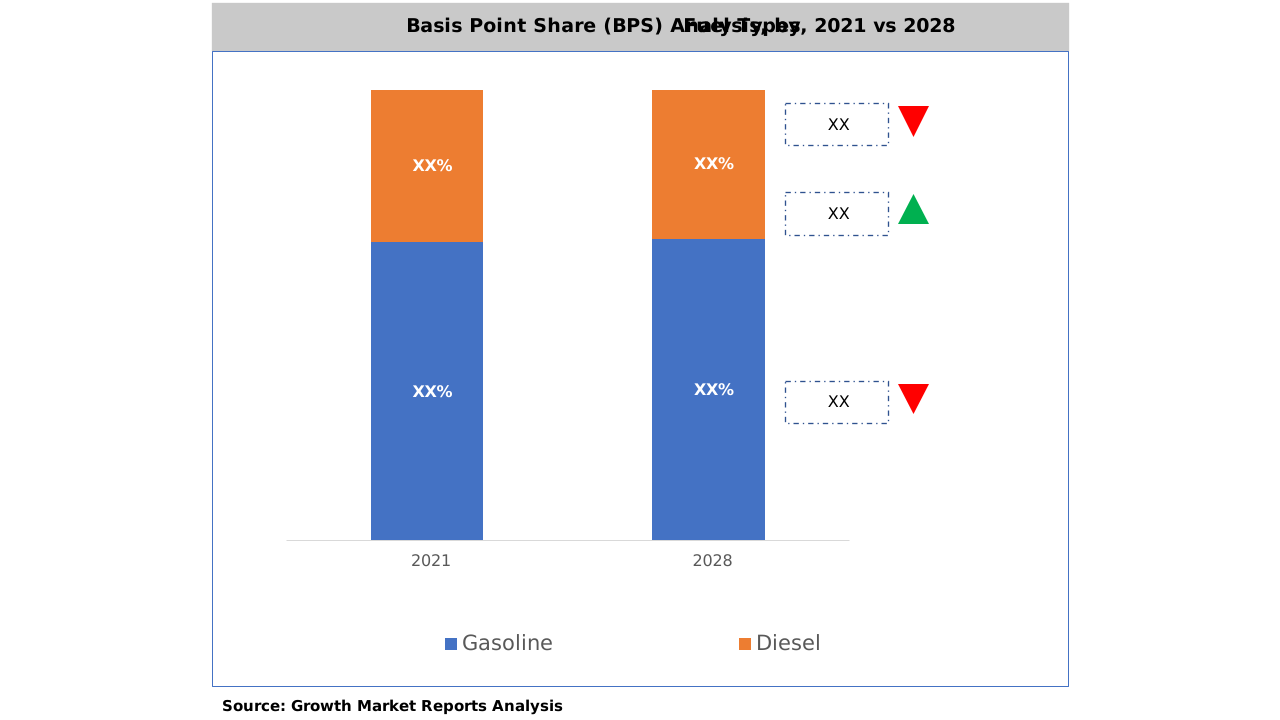
The fuel type segment comprises diesel, gasoline, and other alternative fuels, each presenting unique challenges and opportunities for the automotive exhaust aftertreatment system market. Diesel-powered vehicles have traditionally been the primary focus of aftertreatment technology deployment, given their higher NOx and particulate emissions. The widespread adoption of SCR, DPF, and DOC systems in diesel vehicles is a direct response to stringent emission norms, particularly in commercial and heavy-duty applications. Advances in catalyst materials, regeneration techniques, and system integration are further enhancing the performance and reliability of diesel aftertreatment systems, ensuring their continued dominance in the market.

Gasoline vehicles are increasingly coming under the purview of emission control regulations, especially with the introduction of gasoline particulate filters (GPF) in response to tightening particulate matter standards. The proliferation of turbocharged gasoline engines and direct injection technologies has heightened the need for effective aftertreatment solutions to manage both NOx and particulate emissions. As a result, OEMs are investing in the development of advanced catalyst systems and integrated emission control modules tailored for gasoline applications. This trend is expected to drive significant growth in the gasoline segment of the automotive exhaust aftertreatment system market over the forecast period.

The "others" category encompasses alternative fuels such as compressed natural gas (CNG), liquefied petroleum gas (LPG), and emerging biofuels. Vehicles powered by these fuels typically emit lower levels of NOx and particulates compared to traditional diesel and gasoline engines. However, the increasing adoption of these alternative fuels is prompting the development of specialized aftertreatment systems that can effectively address their unique emission profiles. Innovations in catalyst formulations and sensor technologies are enabling the design of versatile aftertreatment solutions capable of meeting the evolving needs of alternative fuel vehicles.

The ongoing transition towards electrification and hybridization is also influencing the fuel type landscape. While electric vehicles do not require traditional exhaust aftertreatment systems, hybrid models often necessitate adaptable solutions that can manage emissions during engine operation. This dynamic is driving research and development efforts aimed at creating next-generation aftertreatment technologies that are compatible with a broad spectrum of fuel types and powertrain configurations. As the automotive industry continues to diversify its energy mix, the automotive exhaust aftertreatment system market is poised to benefit from sustained innovation and expansion across all fuel segments.

Sales Channel Analysis

The sales channel segment of the automotive exhaust aftertreatment system market is divided into OEM (original equipment manufacturer) and aftermarket channels. The OEM segment holds a significant share, driven by the integration of advanced aftertreatment systems into new vehicles to comply with the latest emission regulations. Automotive manufacturers are increasingly partnering with leading technology providers to develop and deploy state-of-the-art emission control solutions at the production stage. The emphasis on modular and scalable aftertreatment architectures is enabling OEMs to efficiently address the diverse regulatory requirements across different markets and vehicle segments.

The aftermarket segment is also witnessing robust growth, fueled by the need for replacement and retrofitting of existing vehicles to meet updated emission standards. As regulatory authorities introduce stricter in-use vehicle testing and enforcement measures, fleet operators and individual vehicle owners are investing in aftermarket aftertreatment solutions to ensure compliance. The proliferation of certified retrofit kits and advanced diagnostic tools is enhancing the accessibility and effectiveness of aftermarket offerings, thereby expanding the marketÂ’s reach.

Technological advancements and digitalization are transforming both OEM and aftermarket sales channels. The integration of telematics, remote diagnostics, and predictive maintenance capabilities is enabling proactive management of aftertreatment system performance, reducing downtime and operating costs for end-users. These innovations are particularly valuable in commercial and fleet applications, where vehicle uptime and regulatory compliance are critical operational priorities.

The competitive dynamics between OEM and aftermarket channels are fostering continuous innovation and quality improvement across the automotive exhaust aftertreatment system market. OEMs are leveraging their scale and technical expertise to deliver integrated and high-performance solutions, while aftermarket players are focusing on cost-effective and flexible offerings that cater to the needs of older and diverse vehicle fleets. This interplay is ensuring a healthy balance between standardization and customization, driving sustained growth and value creation for stakeholders across the market.

Opportunities & Threats

The automotive exhaust aftertreatment system market presents a wealth of opportunities, particularly in the realm of technological innovation and regulatory compliance. The ongoing evolution of global emission standards is creating a fertile environment for the development and commercialization of next-generation aftertreatment solutions. Emerging technologies such as electrically heated catalysts, advanced sensors, and integrated emission control modules are enabling more efficient and cost-effective emission reduction, opening up new avenues for growth. Additionally, the increasing adoption of alternative fuels and hybrid powertrains is driving demand for adaptable and versatile aftertreatment systems, presenting lucrative opportunities for manufacturers and technology providers.

Another significant opportunity lies in the expansion of the aftermarket segment, particularly in emerging markets where vehicle fleets are aging and regulatory enforcement is intensifying. The proliferation of certified retrofit solutions and advanced diagnostic tools is making it easier for fleet operators and individual vehicle owners to upgrade their emission control systems, ensuring compliance with updated standards. Furthermore, the integration of digitalization and telematics is enabling proactive maintenance and performance optimization, enhancing the value proposition of aftermarket offerings. As governments and industry stakeholders continue to prioritize air quality and public health, the demand for effective and reliable aftertreatment solutions is expected to remain strong.

Despite these opportunities, the market faces several restraining factors, chief among them being the cost and complexity of advanced aftertreatment systems. The integration of multiple emission control technologies, coupled with the need for ongoing maintenance and periodic replacement of system components, can significantly increase the total cost of ownership for end-users. Additionally, the rapid pace of regulatory change and the diversity of emission standards across different regions can create challenges for manufacturers in terms of product development, certification, and market entry. Addressing these challenges will require sustained investment in research and development, as well as close collaboration between industry stakeholders and regulatory authorities to ensure the continued growth and success of the automotive exhaust aftertreatment system market.

Regional Outlook

The Asia Pacific region remains the largest and most dynamic market for automotive exhaust aftertreatment systems, accounting for approximately USD 24.8 billion in 2024. This dominance is underpinned by the regionÂ’s massive automotive production base, rapid urbanization, and the swift implementation of stringent emission standards in key markets such as China, India, and Japan. The introduction of China 6 and Bharat Stage VI norms has accelerated the adoption of advanced aftertreatment technologies, particularly in commercial and heavy-duty vehicles. The regionÂ’s strong growth trajectory is expected to continue, with a projected CAGR of 8.2% through 2033, driven by ongoing regulatory tightening and increasing consumer awareness of environmental issues.

Europe is another critical market, with a market size of USD 16.7 billion in 2024, reflecting the regionÂ’s leadership in emission control and environmental policy. The enforcement of Euro 6 and upcoming Euro 7 standards is compelling automakers to invest heavily in cutting-edge aftertreatment solutions, including SCR, DPF, and GPF technologies. The regionÂ’s strong focus on sustainability and innovation is fostering the development of integrated emission control systems and digital diagnostics, enhancing both compliance and operational efficiency. Additionally, EuropeÂ’s mature aftermarket segment is providing significant growth opportunities for retrofit and replacement solutions, particularly in the commercial vehicle and off-highway segments.

North America, with a market value of USD 12.3 billion in 2024, continues to be a major player in the automotive exhaust aftertreatment system market. The regionÂ’s early adoption of emission norms and robust regulatory enforcement are driving sustained demand for advanced aftertreatment technologies. The presence of leading automotive OEMs and technology providers, coupled with a strong focus on innovation and sustainability, is ensuring the regionÂ’s continued relevance in the global market. Meanwhile, emerging markets in Latin America and the Middle East & Africa are witnessing steady growth, supported by the gradual introduction of emission standards and increasing investment in automotive infrastructure. Collectively, these regions are shaping the global landscape of the automotive exhaust aftertreatment system market, creating diverse opportunities for stakeholders across the value chain.

Automotive Exhaust Aftertreatment System Market Statistics

Competitor Outlook

The automotive exhaust aftertreatment system market is characterized by intense competition and a high degree of technological innovation. Leading players are continuously investing in research and development to enhance the performance, durability, and cost-effectiveness of their aftertreatment solutions. The market is witnessing a trend towards the consolidation of key players, as companies seek to leverage economies of scale and expand their global footprint. Strategic partnerships, mergers, and acquisitions are common, enabling companies to access new markets, technologies, and customer segments. The competitive landscape is further shaped by the entry of new players, particularly in the aftermarket segment, where flexibility and cost competitiveness are critical success factors.

Innovation is a key differentiator in the automotive exhaust aftertreatment system market, with leading companies focusing on the development of integrated and modular solutions that can be tailored to the specific needs of different vehicle types and regulatory environments. The integration of digital diagnostics, real-time monitoring, and predictive maintenance capabilities is enhancing the value proposition of aftertreatment systems, enabling proactive management of emission performance and reducing total cost of ownership for end-users. Additionally, companies are investing in the development of next-generation catalyst materials, lightweight substrates, and advanced sensor technologies to further improve emission reduction efficiency and system reliability.

The market is also witnessing a growing emphasis on sustainability and environmental responsibility, with leading players prioritizing the development of recyclable and environmentally friendly aftertreatment components. The increasing adoption of circular economy principles is driving investment in the recovery and reuse of precious metals and other critical materials used in catalyst systems. This focus on sustainability is not only enhancing the environmental performance of aftertreatment systems but also creating new business opportunities for companies across the value chain.

Some of the major companies operating in the automotive exhaust aftertreatment system market include BASF SE, Johnson Matthey, Faurecia, Tenneco Inc., Eberspächer, Umicore, Continental AG, and Corning Incorporated. BASF SE is renowned for its advanced catalyst technologies and extensive global presence, while Johnson Matthey is a leader in emission control solutions for both light and heavy-duty vehicles. Faurecia and Tenneco Inc. are prominent suppliers of integrated aftertreatment systems, leveraging their expertise in exhaust system design and manufacturing. Eberspächer and Umicore are known for their innovation in thermal management and catalyst materials, respectively, while Continental AG and Corning Incorporated are at the forefront of sensor technology and substrate development. Collectively, these companies are shaping the future of the automotive exhaust aftertreatment system market through their commitment to innovation, quality, and sustainability.

BASF SE, for instance, has been a pioneer in developing advanced catalyst formulations that enable vehicles to meet the most stringent emission standards worldwide. The companyÂ’s focus on research and collaboration with leading automotive OEMs has positioned it as a key partner in the global transition towards cleaner mobility. Johnson Matthey, on the other hand, has a strong track record of delivering high-performance emission control solutions for both on-road and off-road applications. The companyÂ’s expertise in catalyst design and manufacturing is complemented by its commitment to sustainability and resource efficiency.

Faurecia and Tenneco Inc. are recognized for their comprehensive portfolios of exhaust aftertreatment systems, which cater to a wide range of vehicle types and regulatory requirements. Both companies have established strong relationships with leading automotive manufacturers, enabling them to deliver customized solutions that address the unique needs of each market. Eberspächer and Umicore are also key players, with Eberspächer specializing in thermal management solutions and Umicore focusing on the development of innovative catalyst materials. Continental AG and Corning Incorporated are driving advancements in sensor and substrate technologies, respectively, further enhancing the performance and reliability of aftertreatment systems.

These leading companies are not only driving innovation and growth in the automotive exhaust aftertreatment system market but also setting new benchmarks for environmental performance and sustainability. Through their ongoing investments in research and development, strategic partnerships, and commitment to quality, they are ensuring that the market remains at the forefront of the global transition towards cleaner and more sustainable mobility solutions.

Key Players

  • Tenneco Inc.
  • Faurecia
  • Eberspächer Group
  • BASF SE
  • Johnson Matthey
  • Bosal
  • Umicore
  • Corning Incorporated
  • Benteler International AG
  • Katcon
  • Denso Corporation
  • AP Exhaust Technologies
  • Boysen Group
  • Yutaka Giken Co., Ltd.
  • Sejong Industrial Co., Ltd.
  • Friedrich Boysen GmbH & Co. KG
  • Sango Co., Ltd.
  • Magneti Marelli S.p.A.
  • Donaldson Company, Inc.
  • Dinex Group
Automotive Exhaust Aftertreatment System Market Overview

Segments

The Automotive Exhaust Aftertreatment System market has been segmented on the basis of

Product Type

  • Diesel Oxidation Catalyst
  • Selective Catalytic Reduction
  • Diesel Particulate Filter
  • Lean NOx Trap
  • Others

Vehicle Type

  • Passenger Cars
  • Light Commercial Vehicles
  • Heavy Commercial Vehicles
  • Others

Fuel Type

  • Diesel
  • Gasoline
  • Others

Sales Channel

  • OEM
  • Aftermarket

Competitive Landscape

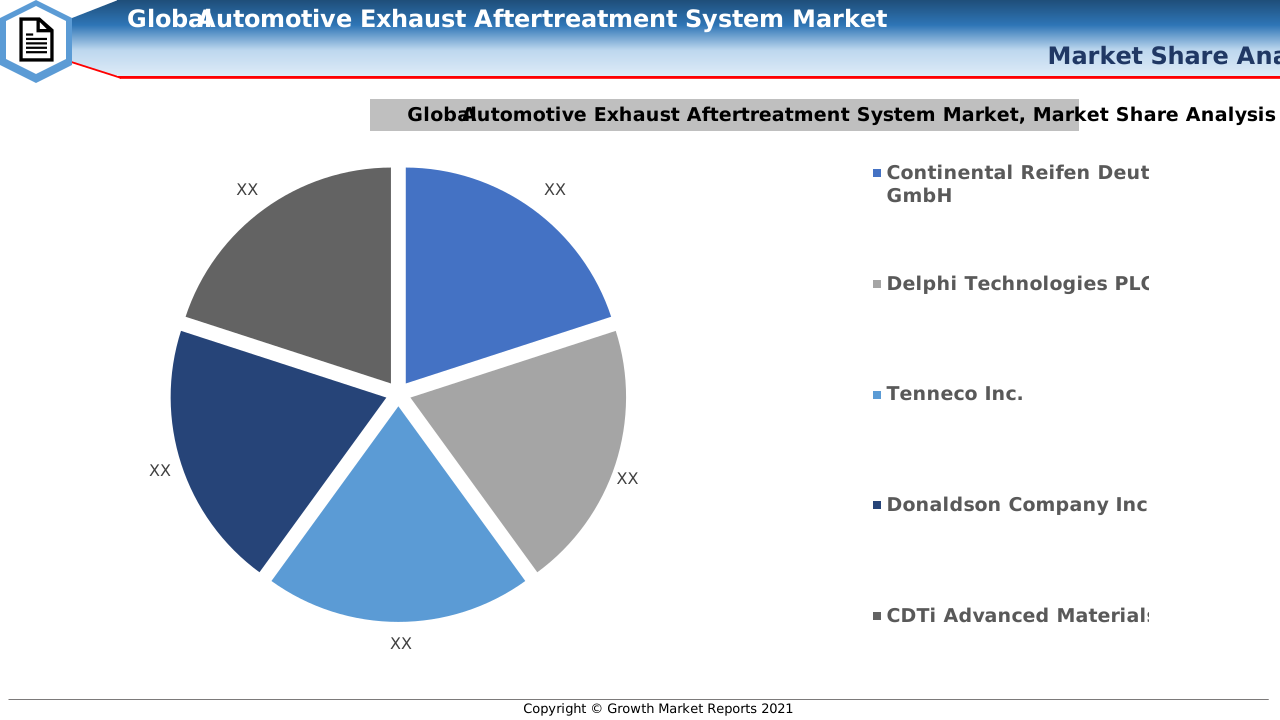
Key players competing in the automotive exhaust aftertreatment system market include Continental Reifen Deutschland GmbH, Delphi Technologies PLC, Tenneco Inc., Donaldson Company Inc., and CDTi Advanced Materials Inc.

Companies are engaging in partnerships with local manufacturers and are focusing on development of innovative products to expand their market share.
 

Automotive Exhaust Aftertreatment System Market by Key Players

Frequently Asked Questions

Major challenges include the high cost and complexity of advanced systems, ongoing maintenance requirements, and the need to comply with diverse and evolving emission standards across different regions.

Diesel vehicles primarily use SCR, DPF, and DOC systems due to higher NOx and particulate emissions, while gasoline vehicles increasingly adopt gasoline particulate filters (GPF) and advanced catalysts. Alternative fuels like CNG and LPG require specialized aftertreatment solutions.

Major companies include BASF SE, Johnson Matthey, Faurecia, Tenneco Inc., Eberspächer, Umicore, Continental AG, and Corning Incorporated, among others.

The aftermarket segment is growing rapidly, driven by the need for retrofitting and replacing emission control systems in existing vehicles to meet updated standards, especially in regions with aging vehicle fleets.

Stringent emission norms such as Euro 6, China 6, and Bharat Stage VI require automakers to integrate advanced aftertreatment systems, driving demand and innovation in the market.

Selective Catalytic Reduction (SCR) is the dominant technology in commercial vehicles due to its high efficiency in reducing nitrogen oxide (NOx) emissions and compliance with stringent emission standards.

The main product types are Diesel Oxidation Catalyst (DOC), Selective Catalytic Reduction (SCR), Diesel Particulate Filter (DPF), Lean NOx Trap (LNT), and other specialized systems.

Asia Pacific leads the market due to its large automotive production base and rapid implementation of emission standards, followed by Europe and North America. Emerging markets in Latin America and the Middle East & Africa are also experiencing steady growth.

Key growth drivers include stricter global emission regulations, rising adoption of advanced emission control technologies, increased consumer demand for eco-friendly vehicles, and ongoing technological advancements in aftertreatment systems.

The global automotive exhaust aftertreatment system market reached USD 59.2 billion in 2024 and is projected to grow at a CAGR of 7.1%, reaching USD 110.6 billion by 2033.

Table Of Content

Chapter 1 Executive Summary
Chapter 2 Assumptions and Acronyms Used
Chapter 3 Research Methodology
Chapter 4 Automotive Exhaust Aftertreatment System Market Overview
   4.1 Introduction
      4.1.1 Market Taxonomy
      4.1.2 Market Definition
      4.1.3 Macro-Economic Factors Impacting the Market Growth
   4.2 Automotive Exhaust Aftertreatment System Market Dynamics
      4.2.1 Market Drivers
      4.2.2 Market Restraints
      4.2.3 Market Opportunity
   4.3 Automotive Exhaust Aftertreatment System Market - Supply Chain Analysis
      4.3.1 List of Key Suppliers
      4.3.2 List of Key Distributors
      4.3.3 List of Key Consumers
   4.4 Key Forces Shaping the Automotive Exhaust Aftertreatment System Market
      4.4.1 Bargaining Power of Suppliers
      4.4.2 Bargaining Power of Buyers
      4.4.3 Threat of Substitution
      4.4.4 Threat of New Entrants
      4.4.5 Competitive Rivalry
   4.5 Global Automotive Exhaust Aftertreatment System Market Size & Forecast, 2023-2032
      4.5.1 Automotive Exhaust Aftertreatment System Market Size and Y-o-Y Growth
      4.5.2 Automotive Exhaust Aftertreatment System Market Absolute $ Opportunity

Chapter 5 Global Automotive Exhaust Aftertreatment System Market Analysis and Forecast By Product Type
   5.1 Introduction
      5.1.1 Key Market Trends & Growth Opportunities By Product Type
      5.1.2 Basis Point Share (BPS) Analysis By Product Type
      5.1.3 Absolute $ Opportunity Assessment By Product Type
   5.2 Automotive Exhaust Aftertreatment System Market Size Forecast By Product Type
      5.2.1 Diesel Oxidation Catalyst
      5.2.2 Selective Catalytic Reduction
      5.2.3 Diesel Particulate Filter
      5.2.4 Lean NOx Trap
      5.2.5 Others
   5.3 Market Attractiveness Analysis By Product Type

Chapter 6 Global Automotive Exhaust Aftertreatment System Market Analysis and Forecast By Vehicle Type
   6.1 Introduction
      6.1.1 Key Market Trends & Growth Opportunities By Vehicle Type
      6.1.2 Basis Point Share (BPS) Analysis By Vehicle Type
      6.1.3 Absolute $ Opportunity Assessment By Vehicle Type
   6.2 Automotive Exhaust Aftertreatment System Market Size Forecast By Vehicle Type
      6.2.1 Passenger Cars
      6.2.2 Light Commercial Vehicles
      6.2.3 Heavy Commercial Vehicles
      6.2.4 Others
   6.3 Market Attractiveness Analysis By Vehicle Type

Chapter 7 Global Automotive Exhaust Aftertreatment System Market Analysis and Forecast By Fuel Type
   7.1 Introduction
      7.1.1 Key Market Trends & Growth Opportunities By Fuel Type
      7.1.2 Basis Point Share (BPS) Analysis By Fuel Type
      7.1.3 Absolute $ Opportunity Assessment By Fuel Type
   7.2 Automotive Exhaust Aftertreatment System Market Size Forecast By Fuel Type
      7.2.1 Diesel
      7.2.2 Gasoline
      7.2.3 Others
   7.3 Market Attractiveness Analysis By Fuel Type

Chapter 8 Global Automotive Exhaust Aftertreatment System Market Analysis and Forecast By Sales Channel
   8.1 Introduction
      8.1.1 Key Market Trends & Growth Opportunities By Sales Channel
      8.1.2 Basis Point Share (BPS) Analysis By Sales Channel
      8.1.3 Absolute $ Opportunity Assessment By Sales Channel
   8.2 Automotive Exhaust Aftertreatment System Market Size Forecast By Sales Channel
      8.2.1 OEM
      8.2.2 Aftermarket
   8.3 Market Attractiveness Analysis By Sales Channel

Chapter 9 Global Automotive Exhaust Aftertreatment System Market Analysis and Forecast by Region
   9.1 Introduction
      9.1.1 Key Market Trends & Growth Opportunities By Region
      9.1.2 Basis Point Share (BPS) Analysis By Region
      9.1.3 Absolute $ Opportunity Assessment By Region
   9.2 Automotive Exhaust Aftertreatment System Market Size Forecast By Region
      9.2.1 North America
      9.2.2 Europe
      9.2.3 Asia Pacific
      9.2.4 Latin America
      9.2.5 Middle East & Africa (MEA)
   9.3 Market Attractiveness Analysis By Region

Chapter 10 Coronavirus Disease (COVID-19) Impact 
   10.1 Introduction 
   10.2 Current & Future Impact Analysis 
   10.3 Economic Impact Analysis 
   10.4 Government Policies 
   10.5 Investment Scenario

Chapter 11 North America Automotive Exhaust Aftertreatment System Analysis and Forecast
   11.1 Introduction
   11.2 North America Automotive Exhaust Aftertreatment System Market Size Forecast by Country
      11.2.1 U.S.
      11.2.2 Canada
   11.3 Basis Point Share (BPS) Analysis by Country
   11.4 Absolute $ Opportunity Assessment by Country
   11.5 Market Attractiveness Analysis by Country
   11.6 North America Automotive Exhaust Aftertreatment System Market Size Forecast By Product Type
      11.6.1 Diesel Oxidation Catalyst
      11.6.2 Selective Catalytic Reduction
      11.6.3 Diesel Particulate Filter
      11.6.4 Lean NOx Trap
      11.6.5 Others
   11.7 Basis Point Share (BPS) Analysis By Product Type 
   11.8 Absolute $ Opportunity Assessment By Product Type 
   11.9 Market Attractiveness Analysis By Product Type
   11.10 North America Automotive Exhaust Aftertreatment System Market Size Forecast By Vehicle Type
      11.10.1 Passenger Cars
      11.10.2 Light Commercial Vehicles
      11.10.3 Heavy Commercial Vehicles
      11.10.4 Others
   11.11 Basis Point Share (BPS) Analysis By Vehicle Type 
   11.12 Absolute $ Opportunity Assessment By Vehicle Type 
   11.13 Market Attractiveness Analysis By Vehicle Type
   11.14 North America Automotive Exhaust Aftertreatment System Market Size Forecast By Fuel Type
      11.14.1 Diesel
      11.14.2 Gasoline
      11.14.3 Others
   11.15 Basis Point Share (BPS) Analysis By Fuel Type 
   11.16 Absolute $ Opportunity Assessment By Fuel Type 
   11.17 Market Attractiveness Analysis By Fuel Type
   11.18 North America Automotive Exhaust Aftertreatment System Market Size Forecast By Sales Channel
      11.18.1 OEM
      11.18.2 Aftermarket
   11.19 Basis Point Share (BPS) Analysis By Sales Channel 
   11.20 Absolute $ Opportunity Assessment By Sales Channel 
   11.21 Market Attractiveness Analysis By Sales Channel

Chapter 12 Europe Automotive Exhaust Aftertreatment System Analysis and Forecast
   12.1 Introduction
   12.2 Europe Automotive Exhaust Aftertreatment System Market Size Forecast by Country
      12.2.1 Germany
      12.2.2 France
      12.2.3 Italy
      12.2.4 U.K.
      12.2.5 Spain
      12.2.6 Russia
      12.2.7 Rest of Europe
   12.3 Basis Point Share (BPS) Analysis by Country
   12.4 Absolute $ Opportunity Assessment by Country
   12.5 Market Attractiveness Analysis by Country
   12.6 Europe Automotive Exhaust Aftertreatment System Market Size Forecast By Product Type
      12.6.1 Diesel Oxidation Catalyst
      12.6.2 Selective Catalytic Reduction
      12.6.3 Diesel Particulate Filter
      12.6.4 Lean NOx Trap
      12.6.5 Others
   12.7 Basis Point Share (BPS) Analysis By Product Type 
   12.8 Absolute $ Opportunity Assessment By Product Type 
   12.9 Market Attractiveness Analysis By Product Type
   12.10 Europe Automotive Exhaust Aftertreatment System Market Size Forecast By Vehicle Type
      12.10.1 Passenger Cars
      12.10.2 Light Commercial Vehicles
      12.10.3 Heavy Commercial Vehicles
      12.10.4 Others
   12.11 Basis Point Share (BPS) Analysis By Vehicle Type 
   12.12 Absolute $ Opportunity Assessment By Vehicle Type 
   12.13 Market Attractiveness Analysis By Vehicle Type
   12.14 Europe Automotive Exhaust Aftertreatment System Market Size Forecast By Fuel Type
      12.14.1 Diesel
      12.14.2 Gasoline
      12.14.3 Others
   12.15 Basis Point Share (BPS) Analysis By Fuel Type 
   12.16 Absolute $ Opportunity Assessment By Fuel Type 
   12.17 Market Attractiveness Analysis By Fuel Type
   12.18 Europe Automotive Exhaust Aftertreatment System Market Size Forecast By Sales Channel
      12.18.1 OEM
      12.18.2 Aftermarket
   12.19 Basis Point Share (BPS) Analysis By Sales Channel 
   12.20 Absolute $ Opportunity Assessment By Sales Channel 
   12.21 Market Attractiveness Analysis By Sales Channel

Chapter 13 Asia Pacific Automotive Exhaust Aftertreatment System Analysis and Forecast
   13.1 Introduction
   13.2 Asia Pacific Automotive Exhaust Aftertreatment System Market Size Forecast by Country
      13.2.1 China
      13.2.2 Japan
      13.2.3 South Korea
      13.2.4 India
      13.2.5 Australia
      13.2.6 South East Asia (SEA)
      13.2.7 Rest of Asia Pacific (APAC)
   13.3 Basis Point Share (BPS) Analysis by Country
   13.4 Absolute $ Opportunity Assessment by Country
   13.5 Market Attractiveness Analysis by Country
   13.6 Asia Pacific Automotive Exhaust Aftertreatment System Market Size Forecast By Product Type
      13.6.1 Diesel Oxidation Catalyst
      13.6.2 Selective Catalytic Reduction
      13.6.3 Diesel Particulate Filter
      13.6.4 Lean NOx Trap
      13.6.5 Others
   13.7 Basis Point Share (BPS) Analysis By Product Type 
   13.8 Absolute $ Opportunity Assessment By Product Type 
   13.9 Market Attractiveness Analysis By Product Type
   13.10 Asia Pacific Automotive Exhaust Aftertreatment System Market Size Forecast By Vehicle Type
      13.10.1 Passenger Cars
      13.10.2 Light Commercial Vehicles
      13.10.3 Heavy Commercial Vehicles
      13.10.4 Others
   13.11 Basis Point Share (BPS) Analysis By Vehicle Type 
   13.12 Absolute $ Opportunity Assessment By Vehicle Type 
   13.13 Market Attractiveness Analysis By Vehicle Type
   13.14 Asia Pacific Automotive Exhaust Aftertreatment System Market Size Forecast By Fuel Type
      13.14.1 Diesel
      13.14.2 Gasoline
      13.14.3 Others
   13.15 Basis Point Share (BPS) Analysis By Fuel Type 
   13.16 Absolute $ Opportunity Assessment By Fuel Type 
   13.17 Market Attractiveness Analysis By Fuel Type
   13.18 Asia Pacific Automotive Exhaust Aftertreatment System Market Size Forecast By Sales Channel
      13.18.1 OEM
      13.18.2 Aftermarket
   13.19 Basis Point Share (BPS) Analysis By Sales Channel 
   13.20 Absolute $ Opportunity Assessment By Sales Channel 
   13.21 Market Attractiveness Analysis By Sales Channel

Chapter 14 Latin America Automotive Exhaust Aftertreatment System Analysis and Forecast
   14.1 Introduction
   14.2 Latin America Automotive Exhaust Aftertreatment System Market Size Forecast by Country
      14.2.1 Brazil
      14.2.2 Mexico
      14.2.3 Rest of Latin America (LATAM)
   14.3 Basis Point Share (BPS) Analysis by Country
   14.4 Absolute $ Opportunity Assessment by Country
   14.5 Market Attractiveness Analysis by Country
   14.6 Latin America Automotive Exhaust Aftertreatment System Market Size Forecast By Product Type
      14.6.1 Diesel Oxidation Catalyst
      14.6.2 Selective Catalytic Reduction
      14.6.3 Diesel Particulate Filter
      14.6.4 Lean NOx Trap
      14.6.5 Others
   14.7 Basis Point Share (BPS) Analysis By Product Type 
   14.8 Absolute $ Opportunity Assessment By Product Type 
   14.9 Market Attractiveness Analysis By Product Type
   14.10 Latin America Automotive Exhaust Aftertreatment System Market Size Forecast By Vehicle Type
      14.10.1 Passenger Cars
      14.10.2 Light Commercial Vehicles
      14.10.3 Heavy Commercial Vehicles
      14.10.4 Others
   14.11 Basis Point Share (BPS) Analysis By Vehicle Type 
   14.12 Absolute $ Opportunity Assessment By Vehicle Type 
   14.13 Market Attractiveness Analysis By Vehicle Type
   14.14 Latin America Automotive Exhaust Aftertreatment System Market Size Forecast By Fuel Type
      14.14.1 Diesel
      14.14.2 Gasoline
      14.14.3 Others
   14.15 Basis Point Share (BPS) Analysis By Fuel Type 
   14.16 Absolute $ Opportunity Assessment By Fuel Type 
   14.17 Market Attractiveness Analysis By Fuel Type
   14.18 Latin America Automotive Exhaust Aftertreatment System Market Size Forecast By Sales Channel
      14.18.1 OEM
      14.18.2 Aftermarket
   14.19 Basis Point Share (BPS) Analysis By Sales Channel 
   14.20 Absolute $ Opportunity Assessment By Sales Channel 
   14.21 Market Attractiveness Analysis By Sales Channel

Chapter 15 Middle East & Africa (MEA) Automotive Exhaust Aftertreatment System Analysis and Forecast
   15.1 Introduction
   15.2 Middle East & Africa (MEA) Automotive Exhaust Aftertreatment System Market Size Forecast by Country
      15.2.1 Saudi Arabia
      15.2.2 South Africa
      15.2.3 UAE
      15.2.4 Rest of Middle East & Africa (MEA)
   15.3 Basis Point Share (BPS) Analysis by Country
   15.4 Absolute $ Opportunity Assessment by Country
   15.5 Market Attractiveness Analysis by Country
   15.6 Middle East & Africa (MEA) Automotive Exhaust Aftertreatment System Market Size Forecast By Product Type
      15.6.1 Diesel Oxidation Catalyst
      15.6.2 Selective Catalytic Reduction
      15.6.3 Diesel Particulate Filter
      15.6.4 Lean NOx Trap
      15.6.5 Others
   15.7 Basis Point Share (BPS) Analysis By Product Type 
   15.8 Absolute $ Opportunity Assessment By Product Type 
   15.9 Market Attractiveness Analysis By Product Type
   15.10 Middle East & Africa (MEA) Automotive Exhaust Aftertreatment System Market Size Forecast By Vehicle Type
      15.10.1 Passenger Cars
      15.10.2 Light Commercial Vehicles
      15.10.3 Heavy Commercial Vehicles
      15.10.4 Others
   15.11 Basis Point Share (BPS) Analysis By Vehicle Type 
   15.12 Absolute $ Opportunity Assessment By Vehicle Type 
   15.13 Market Attractiveness Analysis By Vehicle Type
   15.14 Middle East & Africa (MEA) Automotive Exhaust Aftertreatment System Market Size Forecast By Fuel Type
      15.14.1 Diesel
      15.14.2 Gasoline
      15.14.3 Others
   15.15 Basis Point Share (BPS) Analysis By Fuel Type 
   15.16 Absolute $ Opportunity Assessment By Fuel Type 
   15.17 Market Attractiveness Analysis By Fuel Type
   15.18 Middle East & Africa (MEA) Automotive Exhaust Aftertreatment System Market Size Forecast By Sales Channel
      15.18.1 OEM
      15.18.2 Aftermarket
   15.19 Basis Point Share (BPS) Analysis By Sales Channel 
   15.20 Absolute $ Opportunity Assessment By Sales Channel 
   15.21 Market Attractiveness Analysis By Sales Channel

Chapter 16 Competition Landscape 
   16.1 Automotive Exhaust Aftertreatment System Market: Competitive Dashboard
   16.2 Global Automotive Exhaust Aftertreatment System Market: Market Share Analysis, 2023
   16.3 Company Profiles (Details – Overview, Financials, Developments, Strategy) 
      16.3.1 Tenneco Inc.
Faurecia
Eberspächer Group
BASF SE
Johnson Matthey
Bosal
Umicore
Corning Incorporated
Benteler International AG
Katcon
Denso Corporation
AP Exhaust Technologies
Boysen Group
Yutaka Giken Co., Ltd.
Sejong Industrial Co., Ltd.
Friedrich Boysen GmbH & Co. KG
Sango Co., Ltd.
Magneti Marelli S.p.A.
Donaldson Company, Inc.
Dinex Group

Methodology

Our Clients

Microsoft
Siemens Healthcare
FedEx Logistics
General Electric
sinopec
Honda Motor Co. Ltd.
Deloitte
Nestle SA