Segments - by Provider Type (Banks, OEMs, Credit Unions, Financial Institutions, Others), by Vehicle Type (Passenger Cars, Commercial Vehicles, Others), by Finance Type (Loan, Lease, Others), by Application (New Vehicles, Used Vehicles), by Distribution Channel (Direct, Indirect)
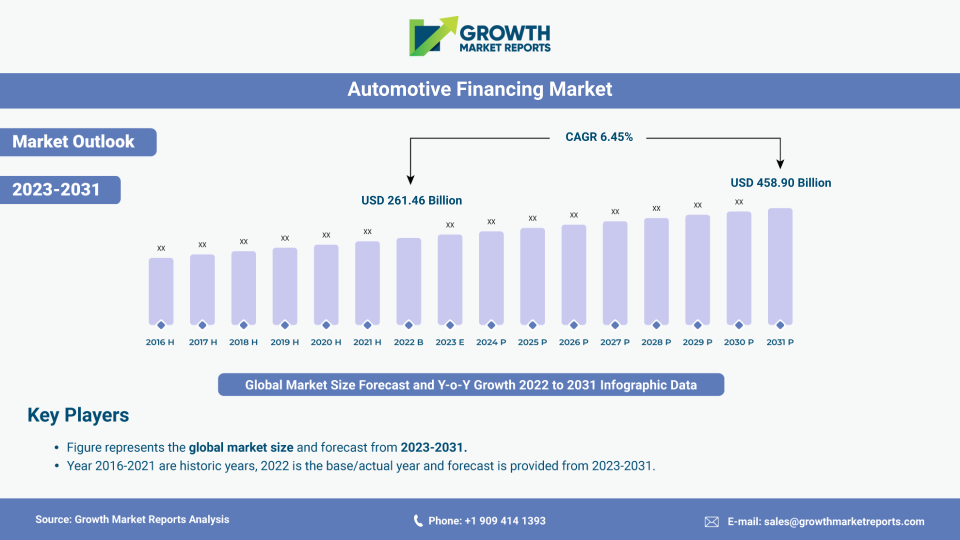
As per our latest research, the global automotive financing market size reached USD 290.7 billion in 2024, driven by the increasing demand for both new and used vehicles, coupled with evolving consumer preferences for flexible ownership models. The market is set to expand at a CAGR of 7.4% during the forecast period, with the overall value projected to reach USD 553.2 billion by 2033. This robust growth is primarily attributed to rising vehicle prices, digital transformation in financial services, and the proliferation of innovative financing solutions that cater to a broad spectrum of consumers and businesses worldwide.
The automotive financing market is experiencing significant momentum due to the rising prices of vehicles, which has made outright purchases less feasible for a large segment of consumers. As a result, there is a marked shift towards financing solutions that allow buyers to spread the cost of ownership over time, making vehicles more accessible. Additionally, the emergence of flexible finance options, such as balloon payments, lease-to-own, and subscription-based models, has broadened the appeal of automotive financing, attracting not only individuals but also commercial fleets and ride-sharing operators. This shift is further fueled by the growing penetration of digital platforms, which streamline loan approvals, enhance transparency, and offer consumers a seamless experience when securing finance for their automotive needs.
Another key growth driver for the automotive financing market is the increasing adoption of electric vehicles (EVs) and the subsequent need for specialized financing products tailored to this segment. The higher upfront costs associated with EVs have led to the development of innovative loan and lease structures, including government-backed incentives and lower interest rates, to encourage adoption. Financial institutions and OEMs are collaborating to design products that address the unique depreciation curves and residual value risks of EVs, thereby supporting the broader transition towards sustainable mobility. Furthermore, the proliferation of connected cars and telematics is enabling lenders to offer usage-based finance products, which align payments with vehicle utilization patterns, thereby reducing default risks and enhancing customer satisfaction.
Technological advancements and digitization are revolutionizing the automotive financing landscape, making it more customer-centric and efficient. The integration of artificial intelligence, big data analytics, and blockchain technologies is streamlining credit assessments, fraud detection, and contract management processes. Digital platforms are empowering consumers to compare offers, calculate EMIs, and submit applications from the comfort of their homes, reducing the dependency on traditional brick-and-mortar channels. Additionally, the rise of fintech startups and non-traditional lenders is intensifying competition, driving incumbents to innovate and offer more personalized solutions. The convergence of these factors is expected to sustain the strong growth trajectory of the automotive financing market through the forecast period.
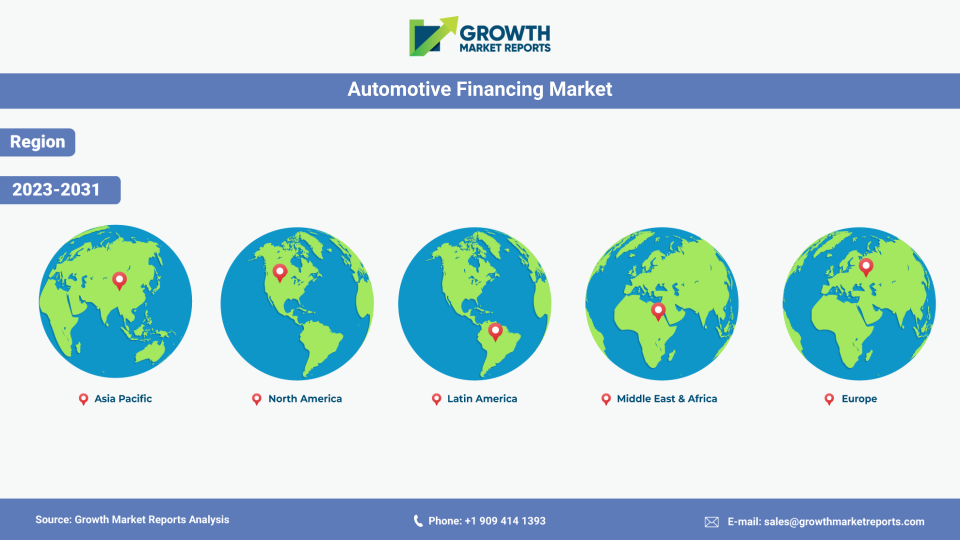
Regionally, Asia Pacific stands out as the fastest-growing market, driven by rapid urbanization, expanding middle-class populations, and increasing vehicle ownership rates in emerging economies such as China, India, and Southeast Asia. North America and Europe continue to be mature markets, characterized by high penetration rates and a strong presence of established financial institutions and OEM captive finance arms. Meanwhile, Latin America and the Middle East & Africa are witnessing steady growth, supported by improving macroeconomic conditions and growing consumer awareness about the benefits of automotive financing. The interplay of these regional dynamics is shaping the competitive landscape and influencing product innovation across the global automotive financing market.
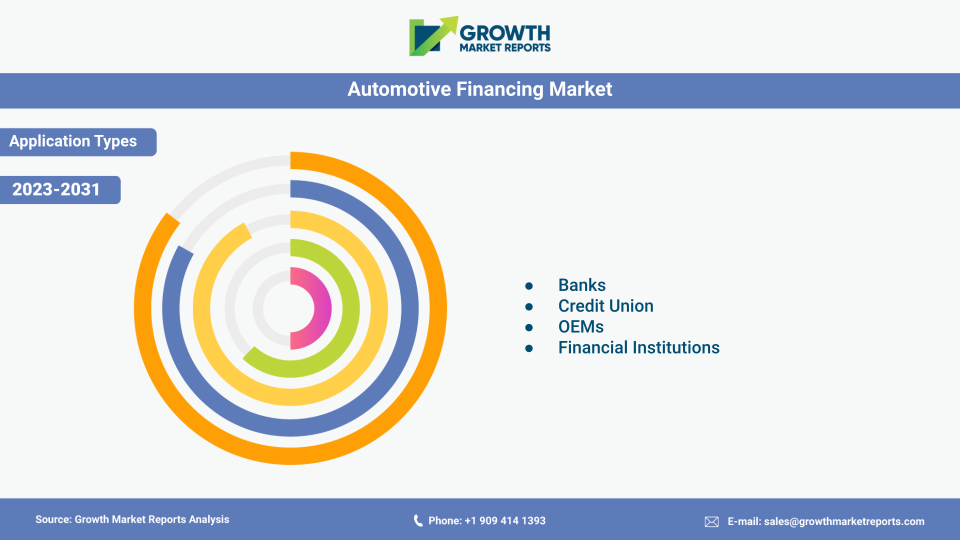
The automotive financing market by provider type is segmented into banks, OEMs, credit unions, financial institutions, and others. Banks continue to dominate the market, leveraging their extensive branch networks, established customer relationships, and robust risk management frameworks to offer competitive loan and lease products. Their ability to provide a wide range of financial services, including bundled insurance and maintenance packages, makes them a preferred choice for both individual and corporate customers. Moreover, banks are increasingly investing in digital transformation initiatives, enabling end-to-end online loan application and approval processes, which enhance convenience and reduce turnaround times for consumers.
Original equipment manufacturers (OEMs) are playing an increasingly pivotal role in the automotive financing space through their captive finance subsidiaries. These entities are uniquely positioned to offer tailored financing solutions that align with the parent company’s sales objectives and marketing strategies. OEMs often provide attractive promotional offers, such as zero-percent financing, deferred payment plans, and loyalty incentives, to drive vehicle sales and foster brand loyalty. By integrating financing options directly into the vehicle purchase process, OEMs are able to capture a larger share of the market and enhance the overall customer experience.
Credit unions and non-bank financial institutions are also gaining traction, particularly among subprime borrowers and niche market segments. Credit unions, in particular, are known for their member-centric approach, competitive interest rates, and flexible lending criteria, making them an attractive alternative for consumers who may not qualify for traditional bank loans. These institutions are leveraging technology to expand their reach and offer innovative products, such as green auto loans for electric vehicles and refinancing solutions for existing borrowers. Their ability to adapt quickly to changing market dynamics and regulatory requirements is contributing to their growing market share.
Other providers, including fintech companies and peer-to-peer lending platforms, are disrupting the traditional automotive financing ecosystem by leveraging advanced technologies and data analytics to offer more personalized and transparent solutions. These players are particularly appealing to younger, tech-savvy consumers who value speed, convenience, and digital-first experiences. By partnering with dealerships and OEMs, fintechs are able to integrate their offerings into the vehicle purchase journey, providing instant credit decisions and flexible repayment options. The entry of these new players is intensifying competition and driving innovation across the provider landscape.
Overall, the provider type segment of the automotive financing market is characterized by a diverse mix of incumbents and disruptors, each vying for a share of the growing demand for flexible and accessible vehicle finance solutions. The ability to leverage technology, build strategic partnerships, and offer customer-centric products will be key differentiators for providers seeking to capture market share and drive long-term growth in this dynamic industry.
| Attributes | Details |
| Report Title | Automotive Financing Market Research Report 2033 |
| By Provider Type | Banks, OEMs, Credit Unions, Financial Institutions, Others |
| By Vehicle Type | Passenger Cars, Commercial Vehicles, Others |
| By Finance Type | Loan, Lease, Others |
| By Application | New Vehicles, Used Vehicles |
| By Distribution Channel | Direct, Indirect |
| Regions Covered | North America, Europe, APAC, Latin America, MEA |
| Base Year | 2024 |
| Historic Data | 2018-2023 |
| Forecast Period | 2025-2033 |
| Number of Pages | 287 |
| Number of Tables & Figures | 285 |
| Customization Available | Yes, the report can be customized as per your need. |
The automotive financing market is segmented by vehicle type into passenger cars, commercial vehicles, and others. Passenger cars represent the largest segment, accounting for a significant share of the overall market value. The sustained demand for personal mobility, coupled with rising urbanization and expanding middle-class populations, particularly in emerging markets, is fueling the growth of this segment. Financing solutions for passenger cars are becoming increasingly diverse, with lenders offering a range of products to suit different customer profiles, including low down payment loans, flexible tenure options, and bundled value-added services such as maintenance and insurance.
Commercial vehicles, including light and heavy trucks, buses, and vans, constitute a substantial and growing segment of the automotive financing market. The expansion of e-commerce, logistics, and last-mile delivery services is driving demand for commercial vehicles, prompting fleet operators and small businesses to seek tailored financing solutions that align with their cash flow and operational requirements. Lenders are responding by developing products with features such as seasonal repayment schedules, higher loan-to-value ratios, and buyback guarantees, which are designed to mitigate risk and support business growth. Additionally, the increasing adoption of telematics and fleet management technologies is enabling more accurate credit assessments and usage-based finance models.
The "others" category encompasses specialty vehicles such as luxury cars, recreational vehicles (RVs), and two-wheelers, each with its own unique financing dynamics. Luxury vehicle financing, for example, often involves higher loan amounts, extended tenures, and bespoke repayment structures to cater to affluent customers. Similarly, RVs and two-wheelers are gaining popularity in certain markets, prompting lenders to develop specialized products that address the specific needs of these segments. The rise of shared mobility solutions, such as car-sharing and ride-hailing, is also influencing the demand for flexible and short-term financing options.
Across all vehicle types, the increasing focus on sustainability and environmental responsibility is shaping product innovation in automotive financing. Lenders are introducing green auto loans and preferential terms for electric and hybrid vehicles, in response to growing consumer demand for eco-friendly transportation options. These initiatives are supported by government incentives and regulatory frameworks aimed at promoting the adoption of clean mobility solutions. As a result, the vehicle type segment of the automotive financing market is evolving rapidly, with lenders adapting their offerings to meet changing consumer preferences and regulatory requirements.
In summary, the vehicle type segment of the automotive financing market is characterized by diverse demand drivers and evolving customer needs. The ability to offer tailored and flexible financing solutions, coupled with a focus on sustainability and innovation, will be critical for lenders seeking to capture growth opportunities and maintain a competitive edge in this dynamic market.
The automotive financing market by finance type is broadly categorized into loans, leases, and others. Loans remain the most prevalent form of automotive finance, accounting for a major share of the market. The traditional auto loan model, which involves fixed monthly payments over a predetermined tenure, continues to appeal to consumers seeking long-term ownership and asset accumulation. Lenders are innovating within this space by offering features such as zero or low down payments, flexible repayment schedules, and bundled insurance products, which enhance affordability and convenience for borrowers.
Leasing is gaining significant traction as an alternative to traditional loans, particularly among younger consumers and businesses seeking flexibility and lower upfront costs. Lease agreements typically involve lower monthly payments compared to loans, as customers are only paying for the depreciation of the vehicle over the lease term rather than the full purchase price. This model is especially popular for commercial fleets and urban dwellers who prefer to upgrade their vehicles frequently or avoid the hassles of ownership. The rise of operating leases, finance leases, and subscription-based models is further expanding the range of options available to consumers and businesses.
The "others" category includes innovative financing models such as balloon payments, hire purchase agreements, and peer-to-peer lending solutions. Balloon payment loans, for example, offer lower monthly installments with a larger lump sum payment due at the end of the term, providing greater flexibility for borrowers who anticipate increased income or liquidity in the future. Hire purchase agreements are popular in certain markets, allowing customers to gradually acquire ownership of the vehicle over time. Peer-to-peer lending platforms are leveraging technology to connect borrowers directly with individual investors, bypassing traditional financial intermediaries and offering more competitive rates.
The increasing adoption of digital platforms and fintech solutions is transforming the finance type segment of the automotive financing market. Online marketplaces and aggregators are enabling consumers to compare multiple finance options, calculate EMIs, and complete transactions seamlessly, enhancing transparency and reducing friction in the decision-making process. Lenders are also leveraging data analytics and artificial intelligence to personalize product offerings and optimize risk assessment, resulting in more accurate pricing and improved customer satisfaction.
Overall, the finance type segment of the automotive financing market is characterized by a diverse array of products and increasing innovation. The ability to offer flexible, customer-centric solutions that address the evolving needs of consumers and businesses will be key to capturing growth opportunities and maintaining competitiveness in this rapidly changing landscape.
The application segment of the automotive financing market is divided into new vehicles and used vehicles. Financing for new vehicles continues to dominate the market, driven by the steady introduction of new models, technological advancements, and aggressive promotional offers by OEMs and dealerships. Consumers are attracted to the latest features, safety technologies, and fuel efficiency improvements offered by new vehicles, prompting them to seek financing solutions that make ownership more affordable. Lenders are responding by offering attractive interest rates, extended warranty packages, and bundled maintenance plans to incentivize new vehicle purchases.
The used vehicle financing segment is experiencing robust growth, fueled by increasing consumer awareness of the value proposition offered by pre-owned vehicles. The growing availability of certified pre-owned (CPO) programs, which offer thoroughly inspected and refurbished vehicles with extended warranties, is enhancing consumer confidence and driving demand for used vehicle financing. Lenders are developing specialized products for this segment, including higher loan-to-value ratios, flexible tenure options, and refinancing solutions for existing loans. The rise of online marketplaces and digital platforms is making it easier for consumers to access information, compare offers, and secure financing for used vehicles.
Both new and used vehicle financing segments are benefiting from the increasing adoption of digital technologies, which are streamlining the application and approval processes, reducing paperwork, and enhancing transparency. The integration of artificial intelligence and machine learning is enabling lenders to assess credit risk more accurately and offer personalized product recommendations based on individual customer profiles. These advancements are improving the overall customer experience and driving higher conversion rates for both new and used vehicle financing.
The growing popularity of electric and hybrid vehicles is also influencing the application segment of the automotive financing market. Lenders are introducing specialized products and incentives for the purchase of eco-friendly vehicles, in line with government policies and consumer preferences for sustainable mobility solutions. These initiatives are expected to drive further growth in both new and used vehicle financing, as more consumers and businesses transition to cleaner transportation options.
In summary, the application segment of the automotive financing market is characterized by strong demand for both new and used vehicles, supported by technological innovation, evolving consumer preferences, and a focus on sustainability. The ability to offer tailored and flexible financing solutions will be critical for lenders seeking to capture market share and drive long-term growth in this dynamic industry.
The distribution channel segment of the automotive financing market is divided into direct and indirect channels. Direct channels refer to financing arrangements made directly between the lender and the borrower, without the involvement of intermediaries such as dealerships or brokers. This model is gaining popularity, particularly among digitally savvy consumers who prefer to research, compare, and secure financing online. Lenders are investing in user-friendly digital platforms that enable customers to complete the entire loan application and approval process remotely, enhancing convenience and reducing processing times.
Indirect channels, which involve intermediaries such as dealerships, brokers, and aggregators, continue to account for a significant share of the automotive financing market. Dealerships play a critical role in facilitating financing for vehicle purchases, leveraging their relationships with multiple lenders to offer customers a range of options. This model is particularly effective in capturing impulse buyers and those who value the convenience of securing financing at the point of sale. Lenders are partnering with dealerships to offer promotional rates, bundled services, and instant credit decisions, enhancing the overall customer experience and driving higher conversion rates.
The increasing integration of digital technologies is blurring the lines between direct and indirect channels, as dealerships and brokers adopt online platforms to streamline the financing process. Hybrid models are emerging, where customers can initiate the application process online and complete the transaction in person at the dealership, or vice versa. This omnichannel approach is enabling lenders and intermediaries to reach a broader audience and cater to diverse customer preferences.
The rise of fintech companies and online aggregators is also transforming the distribution channel landscape, offering consumers greater transparency, choice, and control over the financing process. These platforms enable users to compare multiple offers, access real-time information, and make informed decisions, reducing the reliance on traditional intermediaries. Lenders are leveraging data analytics and artificial intelligence to personalize product recommendations and optimize pricing, further enhancing the competitiveness of their offerings.
Overall, the distribution channel segment of the automotive financing market is evolving rapidly, driven by technological innovation, changing consumer behaviors, and increasing competition. The ability to offer a seamless, integrated, and customer-centric experience across multiple channels will be critical for lenders and intermediaries seeking to capture growth opportunities and maintain a competitive edge in this dynamic market.
The automotive financing market presents significant opportunities for growth, driven by the ongoing digital transformation of financial services and the increasing adoption of innovative business models. The proliferation of online platforms and mobile applications is making it easier for consumers to access information, compare offers, and secure financing, driving higher conversion rates and expanding the addressable market. Lenders that invest in digital capabilities, data analytics, and artificial intelligence are well-positioned to capture market share by offering personalized, transparent, and efficient solutions that meet the evolving needs of consumers and businesses. Additionally, the growing demand for electric and hybrid vehicles presents new opportunities for specialized financing products and green auto loans, supported by government incentives and regulatory frameworks promoting sustainable mobility.
Another major opportunity lies in the expansion of automotive financing solutions for underserved and emerging market segments. In many developing economies, a large proportion of the population remains unbanked or underbanked, limiting their access to traditional credit products. Fintech companies and non-traditional lenders are leveraging alternative data sources and innovative credit assessment models to extend financing to these segments, driving financial inclusion and supporting economic development. The rise of shared mobility solutions, such as ride-hailing and car-sharing, is also creating new demand for flexible and short-term financing options, presenting opportunities for lenders to diversify their product portfolios and tap into new revenue streams.
However, the automotive financing market also faces several threats and restraining factors that could impact its growth trajectory. One of the primary challenges is the increasing risk of loan defaults and delinquencies, particularly in the wake of economic downturns and rising interest rates. Lenders must invest in robust risk management frameworks, advanced credit assessment tools, and proactive collections strategies to mitigate these risks and maintain portfolio quality. Regulatory compliance and evolving data privacy requirements also pose challenges, requiring lenders to adapt their processes and invest in secure, compliant technologies. Additionally, intensifying competition from fintech disruptors and non-traditional lenders is putting pressure on margins and compelling incumbents to innovate continuously to stay relevant in the market.
The Asia Pacific region is the fastest-growing market for automotive financing, with a market size of USD 105.2 billion in 2024 and an anticipated CAGR of 9.1% through 2033. The rapid urbanization, expanding middle-class population, and increasing vehicle ownership rates in countries such as China, India, and Indonesia are driving robust demand for both new and used vehicle financing solutions. Government initiatives to promote electric vehicles and digital financial inclusion are further accelerating market growth. Financial institutions and OEMs are investing in digital platforms and innovative products to capture the burgeoning demand in this region, making Asia Pacific a focal point for future expansion and investment.
North America remains a mature and highly competitive market, with a market size of USD 80.6 billion in 2024. The region is characterized by high penetration rates, established financial institutions, and a strong presence of OEM captive finance arms. The growing adoption of digital platforms and fintech solutions is enhancing transparency and convenience for consumers, driving higher conversion rates and customer satisfaction. The increasing popularity of electric and hybrid vehicles is also creating new opportunities for specialized financing products and green auto loans. Despite the maturity of the market, ongoing innovation and strategic partnerships are expected to sustain steady growth in North America over the forecast period.
Europe is another significant market for automotive financing, with a market size of USD 58.7 billion in 2024. The region is characterized by a strong regulatory framework, high levels of consumer awareness, and a well-developed automotive industry. The increasing focus on sustainability and the transition to electric mobility are driving demand for green auto loans and innovative financing solutions. Latin America and the Middle East & Africa are smaller but steadily growing markets, with improving macroeconomic conditions and increasing consumer awareness supporting market expansion. As a whole, the regional outlook for the automotive financing market is positive, with each region presenting unique opportunities and challenges for lenders and intermediaries.
The global automotive financing market is highly competitive, with a diverse mix of traditional financial institutions, OEM captive finance arms, credit unions, fintech companies, and non-traditional lenders vying for market share. The competitive landscape is characterized by intense rivalry, rapid technological innovation, and a constant drive to enhance customer experience and operational efficiency. Established banks and financial institutions leverage their scale, brand reputation, and extensive branch networks to offer a wide range of automotive finance products, while OEMs use their captive finance subsidiaries to drive vehicle sales and foster brand loyalty through integrated financing solutions.
Fintech companies and online aggregators are emerging as significant disruptors in the automotive financing market, leveraging advanced technologies such as artificial intelligence, big data analytics, and blockchain to offer more personalized, transparent, and efficient solutions. These players are particularly appealing to younger, tech-savvy consumers who value speed, convenience, and digital-first experiences. By partnering with dealerships and OEMs, fintechs are able to integrate their offerings into the vehicle purchase journey, providing instant credit decisions, flexible repayment options, and seamless digital experiences. The entry of these new players is intensifying competition and driving innovation across the provider landscape.
Credit unions and non-bank financial institutions are also gaining traction, particularly among subprime borrowers and niche market segments. Their member-centric approach, competitive interest rates, and flexible lending criteria make them an attractive alternative for consumers who may not qualify for traditional bank loans. These institutions are leveraging technology to expand their reach and offer innovative products, such as green auto loans for electric vehicles and refinancing solutions for existing borrowers. The ability to adapt quickly to changing market dynamics and regulatory requirements is contributing to their growing market share.
In this dynamic and rapidly evolving market, the ability to leverage technology, build strategic partnerships, and offer customer-centric products will be key differentiators for providers seeking to capture market share and drive long-term growth. Companies that invest in digital transformation, data analytics, and artificial intelligence are well-positioned to stay ahead of the competition and meet the evolving needs of consumers and businesses.
Major companies operating in the global automotive financing market include Ally Financial Inc., Ford Motor Credit Company, Toyota Financial Services, General Motors Financial Company, JPMorgan Chase & Co., Bank of America Corporation, Volkswagen Financial Services, and Santander Consumer USA Holdings Inc. These companies have established strong market positions through a combination of scale, brand reputation, and innovative product offerings. Ally Financial Inc. and Ford Motor Credit Company are known for their extensive dealer networks and customer-centric solutions, while Toyota Financial Services and Volkswagen Financial Services are leveraging their OEM relationships to drive vehicle sales and brand loyalty through integrated financing options.
JPMorgan Chase & Co. and Bank of America Corporation are leveraging their scale and digital capabilities to offer a wide range of automotive finance products, including loans, leases, and refinancing solutions. General Motors Financial Company and Santander Consumer USA Holdings Inc. are focusing on expanding their product portfolios and enhancing the customer experience through digital transformation and strategic partnerships. These companies are also investing in green auto loans and specialized products for electric and hybrid vehicles, in line with the growing demand for sustainable mobility solutions.
The competitive landscape of the automotive financing market is expected to remain dynamic and highly competitive, with ongoing innovation and strategic partnerships driving growth and differentiation. Companies that are able to anticipate and respond to changing consumer preferences, regulatory requirements, and technological advancements will be well-positioned to capture growth opportunities and maintain a competitive edge in this rapidly evolving market.
The Automotive Financing market has been segmented on the basis of
Key players competing in the automotive financing market include Ally Financial Inc.; Hitachi Capital Asia Pacific Pte. Ltd.; Bank of America Corporation; Toyota Financial Services; and Capital One Financial Corporation.
Some of these players coming up with several strategies such as mergers, acquisitions, partnerships, collaborations, capacity expansion, and product launch to increase/enhance their market shares.
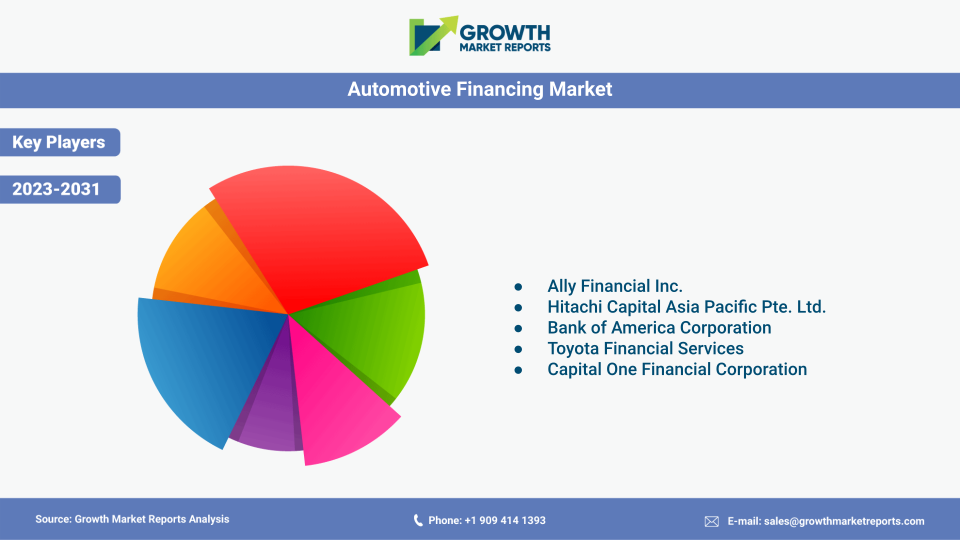
Key players include Ally Financial Inc., Ford Motor Credit Company, Toyota Financial Services, General Motors Financial Company, Volkswagen Financial Services, Bank of America, Santander Consumer USA, and several others.
Both direct (online, lender-to-borrower) and indirect (dealerships, brokers) channels are growing, with digital and hybrid models enhancing convenience, transparency, and customer choice.
Opportunities include digital transformation, expansion into emerging markets, and green auto loans for EVs. Threats include rising loan default risks, regulatory challenges, and increased competition from fintech disruptors.
The main finance types are loans, leases, and innovative models such as balloon payments, hire purchase agreements, and peer-to-peer lending, catering to diverse consumer and business needs.
Asia Pacific is the fastest-growing region, driven by urbanization and rising vehicle ownership, while North America and Europe are mature markets with high penetration. Latin America and the Middle East & Africa are experiencing steady growth.
The higher upfront cost of EVs has led to specialized financing products, government-backed incentives, and innovative loan and lease structures to support EV adoption and address unique depreciation and residual value risks.
Banks remain the dominant providers, followed by OEM captive finance arms, credit unions, fintech companies, and non-bank financial institutions, each offering unique products and customer experiences.
Digital platforms are streamlining loan approvals, enhancing transparency, and allowing consumers to compare offers, calculate EMIs, and apply for financing online, reducing the need for traditional in-person processes.
Key growth drivers include rising vehicle prices, increasing demand for flexible ownership models, digital transformation in financial services, and innovative financing solutions tailored to both consumers and businesses.
The global automotive financing market reached USD 290.7 billion in 2024 and is projected to grow at a CAGR of 7.4%, reaching USD 553.2 billion by 2033.