Airport Ground and Cargo Handling Services Market Research Report 2033

Airport Ground and Cargo Handling Services Market Research Report 2033

Segments - by Service Type (Passenger Handling, Ramp Handling, Baggage Handling, Cargo Handling, Others), by Application (Commercial Airports, Military Airports, Private Airports), by Service Provider (Independent, Airline Affiliated, Airport Authority), by End User (Domestic, International)

https://growthmarketreports.com/Raksha
Author : Raksha Sharma
https://growthmarketreports.com/Vaibhav
Fact-checked by : V. Chandola
https://growthmarketreports.com/Shruti
Editor : Shruti Bhat

Upcoming | Report ID :AD-5828 | 4.2 Rating | 28 Reviews | 250 Pages | Format : Docx PDF

Report Description


Airport Ground and Cargo Handling Services Market Outlook

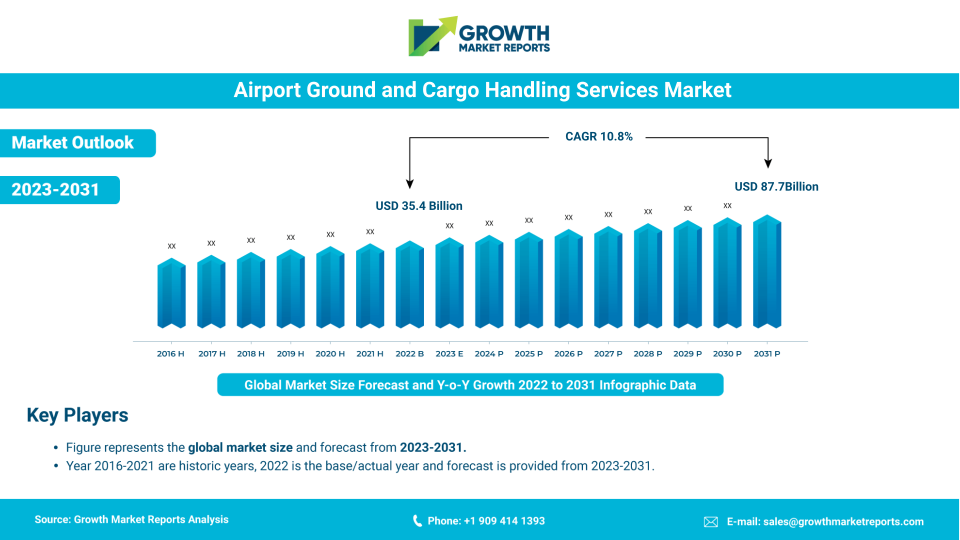
As per our latest research, the global airport ground and cargo handling services market size reached USD 35.8 billion in 2024, demonstrating robust growth momentum across the aviation sector. The market is expected to expand at a CAGR of 6.7% during the forecast period, with the total market value projected to reach USD 61.2 billion by 2033. This growth is primarily driven by the resurgence of air travel, increased air cargo volumes, and the modernization of airport infrastructure worldwide. The demand for efficient, reliable, and technology-driven ground and cargo handling services continues to rise, as airports and airlines strive to enhance operational efficiency and passenger experience in a rapidly evolving global landscape.

One of the key growth factors fueling the airport ground and cargo handling services market is the dramatic recovery and expansion of global air passenger traffic post-pandemic. The International Air Transport Association (IATA) reported a steady rebound in passenger numbers, with many regions surpassing pre-pandemic levels by 2024. This surge in passenger movement has placed immense pressure on airports to upgrade and expand their ground handling capabilities, particularly in areas such as check-in, baggage processing, and ramp services. The adoption of automation technologies, including self-service kiosks, automated baggage systems, and advanced resource management software, has become essential to manage higher passenger volumes efficiently and minimize turnaround times. As airports continue to invest in these technologies, the demand for specialized ground handling services is expected to grow significantly.

Another critical driver for the airport ground and cargo handling services market is the exponential growth in global air cargo volumes. E-commerce expansion, coupled with the increasing need for rapid delivery of goods, has propelled air freight as a preferred mode of transportation for high-value and time-sensitive shipments. Airports are responding by upgrading cargo terminals, integrating advanced tracking and management systems, and enhancing cold chain logistics to cater to pharmaceutical, perishable, and high-tech cargo. These developments have led to a surge in demand for professional cargo handling services, including loading, unloading, warehousing, and customs clearance. Service providers are also investing in digital platforms to offer real-time visibility and improved coordination across the supply chain, thereby strengthening their competitive positioning in the market.

Sustainability and regulatory compliance are emerging as pivotal factors shaping the airport ground and cargo handling services market. Governments and aviation authorities worldwide are imposing stricter environmental regulations, pushing airports and ground handlers to adopt greener technologies and practices. The adoption of electric ground support equipment (GSE), eco-friendly de-icing fluids, and renewable energy sources is becoming increasingly prevalent. Moreover, the push for carbon neutrality and the implementation of sustainable aviation fuel (SAF) initiatives are influencing ground handling operations, requiring continuous investments in training, equipment, and process optimization. These trends underscore the marketÂ’s transition towards a more sustainable and responsible operational model, aligning with global environmental objectives.

Airport Services play a crucial role in enhancing the overall passenger experience and operational efficiency at airports. These services encompass a wide range of activities, including passenger assistance, baggage handling, and aircraft servicing, all of which are essential for the smooth functioning of airport operations. As airports strive to accommodate increasing passenger numbers and cargo volumes, the demand for comprehensive and high-quality airport services is on the rise. The integration of digital technologies and automation into these services is transforming the way airports operate, allowing for more efficient resource management and improved customer satisfaction. By investing in innovative airport services, airports can ensure a seamless travel experience for passengers while maintaining high standards of safety and security.

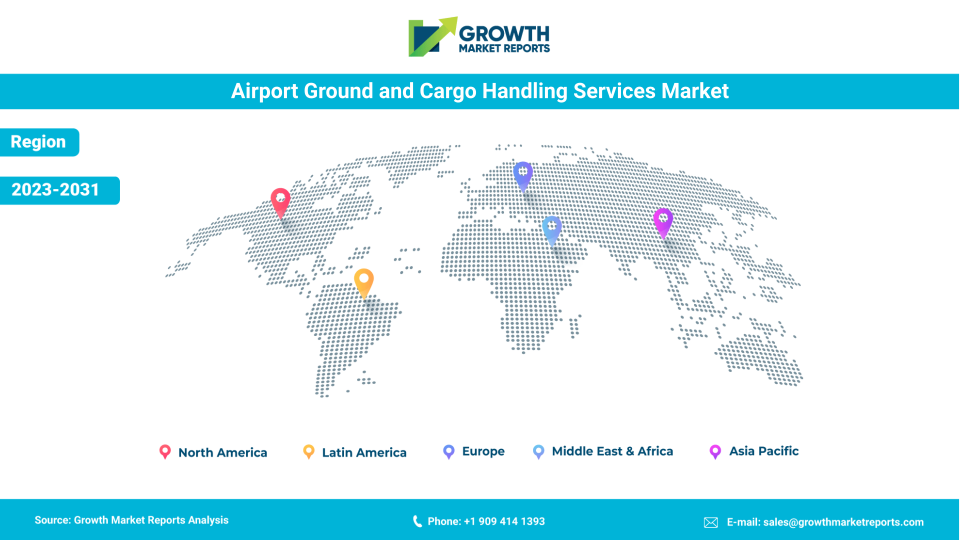
In terms of regional outlook, Asia Pacific remains the fastest-growing market for airport ground and cargo handling services, supported by rapid urbanization, rising air travel demand, and large-scale airport infrastructure projects in countries such as China, India, and Southeast Asia. North America and Europe continue to hold significant market shares, driven by mature aviation industries, high air cargo throughput, and ongoing investments in airport modernization. Meanwhile, the Middle East is emerging as a key hub for international air traffic and cargo, owing to its strategic geographic location and the ambitious expansion plans of major airports in the region. Each of these regions presents unique opportunities and challenges, shaping the competitive dynamics of the global airport ground and cargo handling services market.

Global Airport Ground and Cargo Handling Services Industry Outlook

Service Type Analysis

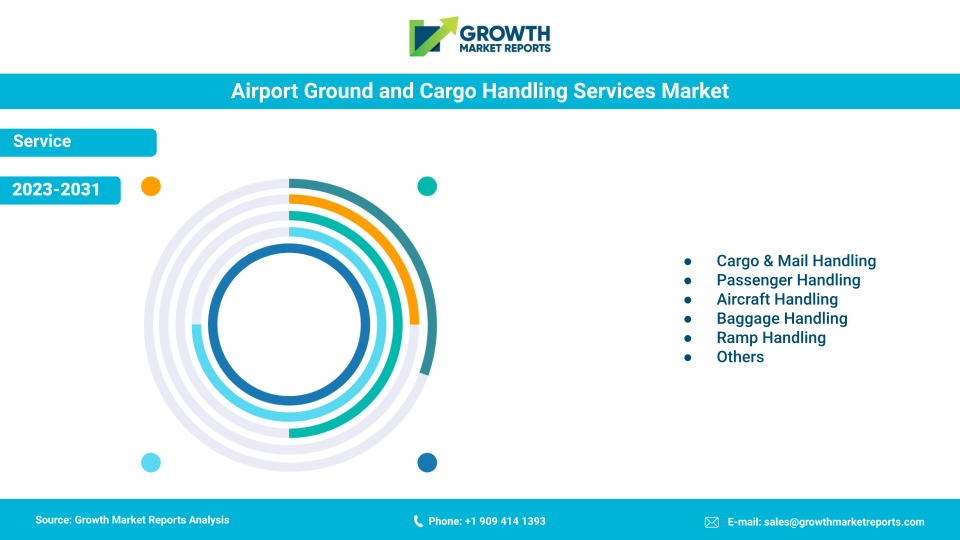
The airport ground and cargo handling services market is segmented by service type, including passenger handling, ramp handling, baggage handling, cargo handling, and other ancillary services. Passenger handling remains a cornerstone segment, accounting for a substantial share of the market due to the sheer volume of travelers passing through airports globally. This segment encompasses services such as check-in, boarding assistance, ticketing, and passenger mobility support. The increasing adoption of digital solutions, such as biometric identification and self-service kiosks, is transforming the passenger handling landscape, enabling airports to process travelers more efficiently and enhance the overall passenger experience. Service providers are investing heavily in staff training and technology upgrades to meet evolving customer expectations and regulatory requirements.

Airport Porter Services are an integral part of the airport ecosystem, providing essential support to passengers, especially those with special needs or heavy luggage. These services are designed to enhance the passenger experience by offering personalized assistance, ensuring a smooth and stress-free journey through the airport. As the aviation industry continues to grow, the demand for efficient and reliable porter services is increasing, prompting airports to invest in training and technology to improve service delivery. The presence of skilled porters not only aids in the efficient handling of baggage but also contributes to the overall operational efficiency of the airport. By focusing on customer-centric porter services, airports can differentiate themselves in a competitive market and foster customer loyalty.

Ramp handling is another critical segment, involving activities such as aircraft marshaling, towing, refueling, and lavatory servicing. The complexity of ramp operations necessitates highly skilled personnel and state-of-the-art equipment to ensure safety, punctuality, and cost-effectiveness. With the growing emphasis on operational efficiency and the reduction of aircraft turnaround times, airports are increasingly outsourcing ramp handling to specialized service providers equipped with advanced ground support equipment (GSE). The trend towards electrification of GSE, aimed at reducing carbon emissions and operational costs, is gaining traction, particularly in Europe and North America. This shift is expected to drive further investments in ramp handling infrastructure and technology.

Baggage handling has witnessed significant innovation, with airports adopting automated baggage sorting systems, RFID tracking, and real-time monitoring solutions to minimize mishandling and improve efficiency. The surge in passenger numbers has prompted airports to expand their baggage handling capacities and upgrade existing systems. Service providers are focusing on integrating baggage handling with other airport systems, such as security screening and passenger flow management, to create seamless and secure travel experiences. The implementation of International Air Transport Association (IATA) Resolution 753, which mandates baggage tracking at key points in the journey, has further accelerated investments in this segment.

Cargo handling is experiencing robust growth, driven by the global expansion of e-commerce, pharmaceuticals, and perishable goods transportation. This segment covers a wide range of activities, including cargo acceptance, build-up and breakdown of unit load devices (ULDs), warehousing, documentation, and customs clearance. The adoption of digital cargo management platforms, temperature-controlled storage solutions, and real-time tracking technologies is transforming the cargo handling landscape. Airports and service providers are collaborating to develop dedicated cargo terminals and optimize workflows, ensuring the timely and secure movement of goods. The growing importance of compliance with international safety and security standards is also shaping the evolution of cargo handling services.

Other ancillary services, such as aircraft cleaning, catering, and de-icing, play a supportive yet vital role in the overall airport ground and cargo handling ecosystem. The increasing focus on hygiene and safety, particularly in the wake of global health concerns, has elevated the importance of these services. Service providers are adopting advanced cleaning technologies, eco-friendly chemicals, and automated equipment to enhance service quality and operational sustainability. Collectively, these service type segments form the backbone of airport operations, driving efficiency, safety, and customer satisfaction across the aviation value chain.

Report Scope

Attributes Details
Report Title Airport Ground and Cargo Handling Services Market Research Report 2033
By Service Type Passenger Handling, Ramp Handling, Baggage Handling, Cargo Handling, Others
By Application Commercial Airports, Military Airports, Private Airports
By Service Provider Independent, Airline Affiliated, Airport Authority
By End User Domestic, International
Regions Covered North America, Europe, APAC, Latin America, MEA
Base Year 2024
Historic Data 2018-2023
Forecast Period 2025-2033
Number of Pages 250
Number of Tables & Figures 332
Customization Available Yes, the report can be customized as per your need.

Application Analysis

The application segment of the airport ground and cargo handling services market is categorized into commercial airports, military airports, and private airports. Commercial airports represent the largest application segment, accounting for the majority of market revenue due to their high passenger and cargo throughput. These airports serve as major hubs for domestic and international travel, necessitating comprehensive ground and cargo handling services to manage the complex flow of passengers, baggage, and freight. The ongoing expansion and modernization of commercial airports, particularly in emerging economies, are driving demand for advanced ground handling solutions. Service providers are tailoring their offerings to meet the specific needs of commercial airports, focusing on scalability, reliability, and integration with airport management systems.

Military airports, while representing a smaller market share, require highly specialized ground and cargo handling services to support defense operations, troop movements, and the transportation of military equipment and supplies. The stringent security protocols and operational requirements of military airports necessitate collaboration with certified service providers possessing expertise in handling sensitive cargo and adhering to strict regulatory standards. The modernization of military airbases and the increasing involvement of private contractors in defense logistics are contributing to the growth of this segment. Service providers are investing in specialized equipment and training programs to cater to the unique demands of military airport operations.

Private airports cater to business aviation, charter flights, and private jet operators, offering a distinct set of ground and cargo handling requirements. These airports prioritize personalized services, quick turnaround times, and high levels of discretion and security. The growth of the global business aviation sector, driven by increasing corporate travel and the expansion of high-net-worth individuals, is fueling demand for tailored ground handling solutions at private airports. Service providers are differentiating themselves through premium offerings, such as VIP lounges, concierge services, and dedicated ramp facilities, to attract and retain clientele in this niche market.

Across all application segments, the integration of digital technologies and automation is a common theme, aimed at enhancing operational efficiency, safety, and customer satisfaction. Airports are leveraging data analytics, artificial intelligence, and Internet of Things (IoT) solutions to optimize resource allocation, monitor equipment performance, and predict maintenance needs. These advancements are enabling service providers to deliver more responsive and cost-effective solutions, strengthening their value proposition to airport operators and end users.

The application landscape is further shaped by evolving regulatory frameworks, security requirements, and industry best practices. Compliance with international standards, such as those set by the International Civil Aviation Organization (ICAO) and IATA, is essential for service providers operating in commercial, military, and private airport environments. The ability to adapt to changing regulatory landscapes and incorporate best-in-class operational practices is a key differentiator in the highly competitive airport ground and cargo handling services market.

Service Provider Analysis

The service provider segment in the airport ground and cargo handling services market is divided into independent providers, airline-affiliated providers, and airport authority-managed services. Independent service providers hold a significant share of the market, offering specialized ground and cargo handling services to multiple airlines and airports. These providers benefit from economies of scale, operational flexibility, and the ability to invest in advanced technologies and training programs. The presence of global players such as Swissport, dnata, and Menzies Aviation has intensified competition, driving continuous innovation and service quality improvements. Independent providers are increasingly forming strategic partnerships and joint ventures to expand their geographic footprint and enhance their service portfolios.

Airline-affiliated service providers are typically subsidiaries or divisions of major airlines, offering ground and cargo handling services primarily to their parent companies and partner carriers. These providers benefit from deep integration with airline operations, enabling seamless coordination and alignment with airline-specific requirements. The trend towards outsourcing non-core functions has prompted some airlines to spin off their ground handling divisions as separate entities, allowing them to serve third-party customers and compete more effectively in the open market. Airline-affiliated providers are leveraging their operational expertise and brand reputation to secure long-term contracts and strengthen customer loyalty.

Airport authority-managed services represent another important segment, particularly in regions where airports retain direct control over ground and cargo handling operations. This model is prevalent in Asia Pacific and parts of Europe, where government-owned airport authorities manage a wide range of services to ensure compliance with national regulations and maintain service quality standards. Airport authority-managed services benefit from direct access to airport infrastructure and resources, enabling efficient coordination and rapid response to operational challenges. However, these providers may face limitations in terms of flexibility and innovation compared to independent and airline-affiliated counterparts.

The competitive dynamics among service providers are shaped by factors such as service quality, pricing, technological capabilities, and regulatory compliance. The increasing complexity of airport operations and the growing demand for integrated, end-to-end solutions are prompting providers to diversify their service offerings and invest in digital transformation initiatives. The ability to deliver consistent, high-quality services across multiple locations is a key differentiator, particularly for multinational airlines and airport operators seeking standardized solutions.

Strategic alliances, mergers, and acquisitions are common in the service provider landscape, as companies seek to expand their market presence and enhance their capabilities. The entry of new players, including technology startups and logistics companies, is further intensifying competition and driving innovation in the airport ground and cargo handling services market. Providers that can successfully navigate these dynamics and adapt to evolving customer needs are well-positioned to capture growth opportunities in this dynamic industry.

End User Analysis

The airport ground and cargo handling services market is segmented by end user into domestic and international segments. Domestic end users account for a substantial share of the market, driven by the high frequency of short-haul flights and the growing demand for regional air connectivity. The expansion of low-cost carriers, government initiatives to improve regional air infrastructure, and rising disposable incomes are fueling growth in domestic air travel, particularly in emerging economies. Service providers catering to domestic end users must prioritize speed, efficiency, and cost-effectiveness to handle high flight frequencies and quick turnaround times. Investments in automation, streamlined processes, and staff training are essential to meet the unique demands of domestic airport operations.

International end users represent a significant and rapidly growing segment, driven by the globalization of trade, tourism, and business travel. International flights typically involve larger aircraft, higher passenger volumes, and more complex ground and cargo handling requirements, including customs clearance, security screening, and interline baggage transfers. Service providers serving international end users must adhere to stringent regulatory standards and coordinate with multiple stakeholders, including airlines, customs authorities, and security agencies. The growth of international air travel, particularly in Asia Pacific, the Middle East, and Europe, is driving demand for advanced ground and cargo handling solutions capable of supporting seamless cross-border operations.

The distinction between domestic and international end users is also reflected in the types of services required and the level of customization demanded. Domestic operations often prioritize rapid turnaround and cost efficiency, while international operations place greater emphasis on compliance, security, and customer experience. Service providers must tailor their offerings to address these varying requirements, leveraging technology and process optimization to deliver value to both segments.

The ongoing recovery of international travel, following the easing of pandemic-related restrictions, is expected to drive robust growth in the international end user segment. Airlines and airports are ramping up operations to accommodate rising passenger and cargo volumes, necessitating investments in ground handling capacity, staff training, and digital infrastructure. The ability to deliver consistent, high-quality services across domestic and international operations is becoming a key differentiator for service providers in the competitive airport ground and cargo handling services market.

Overall, the end user segmentation underscores the diverse and evolving nature of demand in the airport ground and cargo handling services market. Service providers that can effectively address the distinct needs of domestic and international customers, while maintaining operational excellence and regulatory compliance, will be well-positioned to capitalize on emerging growth opportunities in the global aviation sector.

Opportunities & Threats

The airport ground and cargo handling services market presents substantial opportunities for growth, particularly through the adoption of advanced digital technologies and automation. The integration of artificial intelligence, machine learning, and Internet of Things (IoT) solutions into ground handling operations is enabling airports and service providers to optimize resource allocation, enhance predictive maintenance, and improve real-time decision-making. These technologies are also facilitating the development of smart airports, where data-driven insights drive operational efficiency, safety, and customer satisfaction. The increasing focus on sustainability and environmental responsibility is creating opportunities for service providers to differentiate themselves through the adoption of electric ground support equipment, eco-friendly materials, and green operational practices. As airports and airlines seek to reduce their carbon footprint and comply with stringent environmental regulations, service providers that can offer innovative, sustainable solutions are likely to gain a competitive edge.

Another significant opportunity lies in the expansion of emerging markets, particularly in Asia Pacific, the Middle East, and Africa. Rapid urbanization, rising disposable incomes, and government investments in airport infrastructure are driving robust growth in air travel and cargo volumes across these regions. The development of new airports, expansion of existing facilities, and the establishment of regional air connectivity initiatives are creating a strong demand for ground and cargo handling services. Service providers that can establish a presence in these high-growth markets, adapt to local regulatory environments, and offer tailored solutions are well-positioned to capture a share of the expanding market. Strategic partnerships with local stakeholders, investment in workforce development, and the deployment of scalable, flexible service models are key success factors for capitalizing on these opportunities.

Despite these opportunities, the airport ground and cargo handling services market faces several restraining factors that could hinder growth. One of the primary challenges is the high capital investment required for the acquisition and maintenance of advanced ground support equipment, digital infrastructure, and staff training programs. Smaller service providers may struggle to compete with larger players that have greater financial resources and operational scale. Additionally, the market is highly sensitive to fluctuations in air travel demand, which can be impacted by economic downturns, geopolitical tensions, and public health crises. Regulatory compliance, particularly in areas such as security, safety, and environmental standards, adds another layer of complexity and cost for service providers. Navigating these challenges requires a proactive approach to risk management, continuous innovation, and a commitment to operational excellence.

Regional Outlook

The regional distribution of the airport ground and cargo handling services market highlights distinctive growth patterns and market dynamics. Asia Pacific is the fastest-growing region, accounting for approximately USD 10.8 billion of the global market in 2024. The region is expected to exhibit a CAGR of 8.1% during the forecast period, driven by the rapid expansion of air travel in China, India, and Southeast Asia, as well as significant investments in airport infrastructure. Governments across the region are prioritizing the development of new airports and the modernization of existing facilities to accommodate rising passenger and cargo volumes. The proliferation of low-cost carriers and the growth of regional air connectivity are further fueling demand for ground and cargo handling services. Service providers in Asia Pacific are increasingly adopting digital technologies and automation to enhance operational efficiency and meet the evolving needs of airport operators and airlines.

North America remains a mature and highly competitive market, with a market size of USD 8.9 billion in 2024. The region benefits from a well-established aviation industry, high air cargo throughput, and ongoing investments in airport modernization and security. The United States, in particular, is a major hub for both passenger and cargo traffic, driving demand for advanced ground handling solutions. The adoption of electric ground support equipment, automated baggage systems, and digital resource management platforms is transforming ground handling operations across North American airports. Service providers are focusing on sustainability, operational efficiency, and regulatory compliance to maintain their competitive edge in this dynamic market.

Europe holds a significant share of the global airport ground and cargo handling services market, with a market value of USD 7.6 billion in 2024. The region is characterized by a dense network of airports, high levels of international travel, and a strong emphasis on sustainability and environmental responsibility. European airports are at the forefront of adopting green technologies and best practices, including the electrification of ground support equipment and the implementation of eco-friendly operational procedures. The presence of leading service providers, such as Swissport and Menzies Aviation, ensures a high level of service quality and innovation. The ongoing recovery of international travel and the expansion of air cargo operations are expected to drive further growth in the European market.

Airport Ground and Cargo Handling Services Market Statistics

Competitor Outlook

The competitive landscape of the airport ground and cargo handling services market is characterized by the presence of several global and regional players, each vying for market share through innovation, service quality, and geographic expansion. The market is highly fragmented, with a mix of independent service providers, airline-affiliated companies, and airport authority-managed operations. Leading players are leveraging their scale, technological capabilities, and global networks to secure long-term contracts with major airlines and airport operators. The increasing complexity of airport operations and the growing demand for integrated, end-to-end solutions are prompting service providers to diversify their offerings and invest in digital transformation initiatives.

Mergers, acquisitions, and strategic alliances are common strategies employed by market participants to expand their geographic presence, enhance their service portfolios, and achieve operational synergies. The entry of new players, including technology startups and logistics companies, is intensifying competition and driving innovation in the market. Service providers are differentiating themselves through the adoption of advanced technologies, such as artificial intelligence, machine learning, and IoT, to optimize resource allocation, improve predictive maintenance, and enhance real-time decision-making. The ability to deliver consistent, high-quality services across multiple locations is a key differentiator, particularly for multinational airlines and airport operators seeking standardized solutions.

Regulatory compliance, sustainability, and workforce development are critical focus areas for competitors in the airport ground and cargo handling services market. Companies are investing in training programs, safety protocols, and environmental initiatives to meet the evolving requirements of airport operators, airlines, and regulatory authorities. The adoption of electric ground support equipment, eco-friendly materials, and green operational practices is becoming increasingly important, as airports and airlines seek to reduce their carbon footprint and comply with stringent environmental regulations. Service providers that can offer innovative, sustainable solutions are likely to gain a competitive edge in the market.

Some of the major companies operating in the airport ground and cargo handling services market include Swissport International AG, dnata, Menzies Aviation, Worldwide Flight Services (WFS), SATS Ltd., Celebi Aviation Holding, and Aviapartner. Swissport is a global leader, providing ground and cargo handling services at over 300 airports worldwide. The company is known for its extensive network, advanced technology adoption, and commitment to sustainability. dnata, a subsidiary of the Emirates Group, is another major player, offering a comprehensive range of ground handling, cargo, and catering services across key markets in the Middle East, Asia, and Europe. Menzies Aviation is recognized for its strong presence in Europe and the Americas, with a focus on innovation and operational excellence.

Worldwide Flight Services (WFS) is a leading provider of air cargo handling services, with a strong presence in North America, Europe, and Asia. The company is known for its investment in digital cargo management platforms and temperature-controlled storage solutions. SATS Ltd., based in Singapore, is a major player in the Asia Pacific region, offering integrated ground handling, cargo, and catering services. Celebi Aviation Holding and Aviapartner are prominent regional players, with a strong focus on service quality, customer satisfaction, and operational efficiency. These companies are continually investing in technology, workforce development, and sustainability initiatives to maintain their competitive edge and capitalize on emerging growth opportunities in the global airport ground and cargo handling services market.

Key Players

  • Swissport International AG
  • dnata (The Emirates Group)
  • Menzies Aviation
  • SATS Ltd.
  • Worldwide Flight Services (WFS)
  • Celebi Aviation Holding
  • Aviapartner
  • HNA Group (Swissport China)
  • Fraport AG
  • Tokyo International Air Cargo Terminal Ltd. (TIACT)
  • BBA Aviation plc (Signature Aviation)
  • Aeroports de Paris (ADP Group)
  • John Menzies plc
  • Groundforce Portugal
  • AAS (Airport Authority of Singapore)
  • PrimeFlight Aviation Services
  • Çelebi Ground Handling
  • AeroGround Flughafen München GmbH
  • Servisair
  • Losch Airport Service GmbH
Airport Ground and Cargo Handling Services Market Overview

Segments

The Airport Ground and Cargo Handling Services market has been segmented on the basis of

Service Type

  • Passenger Handling
  • Ramp Handling
  • Baggage Handling
  • Cargo Handling
  • Others

Application

  • Commercial Airports
  • Military Airports
  • Private Airports

Service Provider

  • Independent
  • Airline Affiliated
  • Airport Authority

End User

  • Domestic
  • International

Competitive Landscape

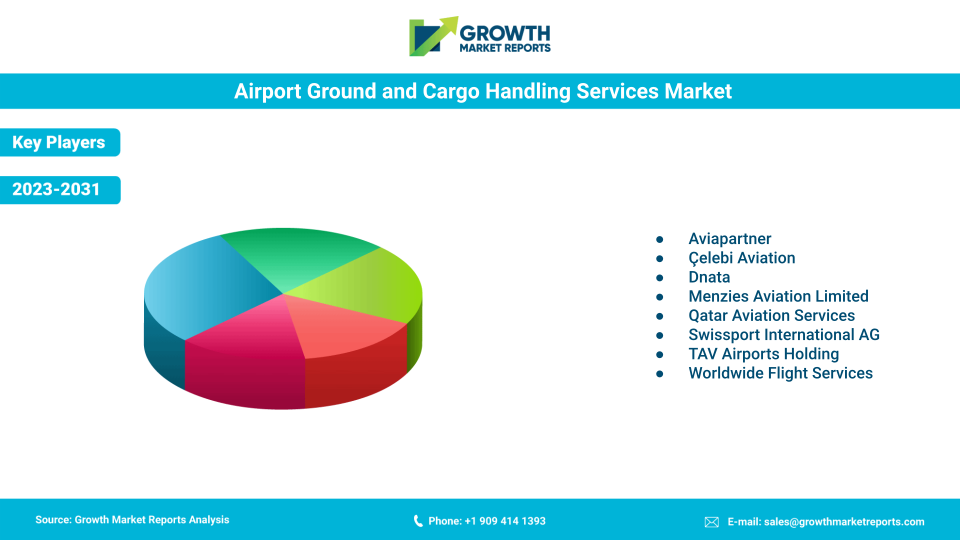
Key players competing in the global airport ground and cargo handling services market are Aviapartner; Çelebi Aviation; Dnata; Menzies Aviation Limited; Qatar Aviation Services; Swissport International AG; TAV Airports Holding; and Worldwide Flight Services.

These companies are boosting their market share by adopting various strategies such as partnerships, mergers, reduction in production costs, launching products, and implementing advanced technologies.              

  • On November 11, 2022, Çelebi Aviation, a provider of airport ground handling services, announced its partnership with flydubai to offer ground handling services in Dar Es Salaam, Tanzania. The agreement aims at expanding Celebi Aviation's market share by collaborating with Flydubai, a major player in the aviation industry. The partnership is likely to allow companies to improve its services to its customers in Tanzania and enhance its overall business operations in the region.

    Airport Ground and Cargo Handling Services Market Key Players

Frequently Asked Questions

Opportunities include leveraging digital transformation, expanding into emerging markets (Asia Pacific, Middle East, Africa), forming strategic partnerships, and offering sustainable, innovative solutions to meet evolving customer and regulatory demands.

Sustainability is a key focus, with increased adoption of electric ground support equipment, eco-friendly de-icing fluids, renewable energy, and efforts to achieve carbon neutrality and regulatory compliance.

Challenges include high capital investment requirements, regulatory compliance, market sensitivity to air travel demand fluctuations, and the need for continuous innovation and sustainability.

Major players include Swissport International AG, dnata, Menzies Aviation, Worldwide Flight Services (WFS), SATS Ltd., Celebi Aviation Holding, and Aviapartner.

Technology is transforming the industry through automation, digital platforms, AI, IoT, RFID baggage tracking, and real-time cargo management, leading to greater efficiency and improved passenger and cargo experiences.

The market is segmented into passenger handling, ramp handling, baggage handling, cargo handling, and other ancillary services such as aircraft cleaning, catering, and de-icing.

Asia Pacific is the fastest-growing region, while North America and Europe hold significant market shares. The Middle East is also emerging as a key hub due to its strategic location and airport expansion.

Key growth drivers include the resurgence of air travel, increased air cargo volumes, modernization of airport infrastructure, adoption of automation technologies, and a focus on sustainability.

The market is expected to expand at a CAGR of 6.7% from 2025 to 2033, reaching USD 61.2 billion by 2033.

As of 2024, the global airport ground and cargo handling services market size reached USD 35.8 billion.

Table Of Content

Chapter 1 Executive Summary
Chapter 2 Assumptions and Acronyms Used
Chapter 3 Research Methodology
Chapter 4 Airport Ground and Cargo Handling Services Market Overview
   4.1 Introduction
      4.1.1 Market Taxonomy
      4.1.2 Market Definition
      4.1.3 Macro-Economic Factors Impacting the Market Growth
   4.2 Airport Ground and Cargo Handling Services Market Dynamics
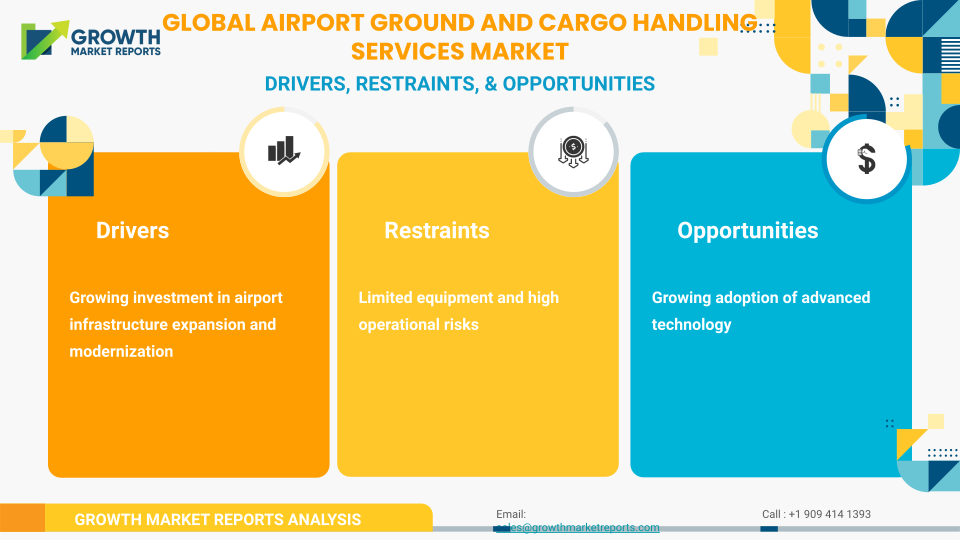
      4.2.1 Market Drivers
      4.2.2 Market Restraints
      4.2.3 Market Opportunity
   4.3 Airport Ground and Cargo Handling Services Market - Supply Chain Analysis
      4.3.1 List of Key Suppliers
      4.3.2 List of Key Distributors
      4.3.3 List of Key Consumers
   4.4 Key Forces Shaping the Airport Ground and Cargo Handling Services Market
      4.4.1 Bargaining Power of Suppliers
      4.4.2 Bargaining Power of Buyers
      4.4.3 Threat of Substitution
      4.4.4 Threat of New Entrants
      4.4.5 Competitive Rivalry
   4.5 Global Airport Ground and Cargo Handling Services Market Size & Forecast, 2023-2032
      4.5.1 Airport Ground and Cargo Handling Services Market Size and Y-o-Y Growth
      4.5.2 Airport Ground and Cargo Handling Services Market Absolute $ Opportunity

Chapter 5 Global Airport Ground and Cargo Handling Services Market Analysis and Forecast By Service Type
   5.1 Introduction
      5.1.1 Key Market Trends & Growth Opportunities By Service Type
      5.1.2 Basis Point Share (BPS) Analysis By Service Type
      5.1.3 Absolute $ Opportunity Assessment By Service Type
   5.2 Airport Ground and Cargo Handling Services Market Size Forecast By Service Type
      5.2.1 Passenger Handling
      5.2.2 Ramp Handling
      5.2.3 Baggage Handling
      5.2.4 Cargo Handling
      5.2.5 Others
   5.3 Market Attractiveness Analysis By Service Type

Chapter 6 Global Airport Ground and Cargo Handling Services Market Analysis and Forecast By Application
   6.1 Introduction
      6.1.1 Key Market Trends & Growth Opportunities By Application
      6.1.2 Basis Point Share (BPS) Analysis By Application
      6.1.3 Absolute $ Opportunity Assessment By Application
   6.2 Airport Ground and Cargo Handling Services Market Size Forecast By Application
      6.2.1 Commercial Airports
      6.2.2 Military Airports
      6.2.3 Private Airports
   6.3 Market Attractiveness Analysis By Application

Chapter 7 Global Airport Ground and Cargo Handling Services Market Analysis and Forecast By Service Provider
   7.1 Introduction
      7.1.1 Key Market Trends & Growth Opportunities By Service Provider
      7.1.2 Basis Point Share (BPS) Analysis By Service Provider
      7.1.3 Absolute $ Opportunity Assessment By Service Provider
   7.2 Airport Ground and Cargo Handling Services Market Size Forecast By Service Provider
      7.2.1 Independent
      7.2.2 Airline Affiliated
      7.2.3 Airport Authority
   7.3 Market Attractiveness Analysis By Service Provider

Chapter 8 Global Airport Ground and Cargo Handling Services Market Analysis and Forecast By End User
   8.1 Introduction
      8.1.1 Key Market Trends & Growth Opportunities By End User
      8.1.2 Basis Point Share (BPS) Analysis By End User
      8.1.3 Absolute $ Opportunity Assessment By End User
   8.2 Airport Ground and Cargo Handling Services Market Size Forecast By End User
      8.2.1 Domestic
      8.2.2 International
   8.3 Market Attractiveness Analysis By End User

Chapter 9 Global Airport Ground and Cargo Handling Services Market Analysis and Forecast by Region
   9.1 Introduction
      9.1.1 Key Market Trends & Growth Opportunities By Region
      9.1.2 Basis Point Share (BPS) Analysis By Region
      9.1.3 Absolute $ Opportunity Assessment By Region
   9.2 Airport Ground and Cargo Handling Services Market Size Forecast By Region
      9.2.1 North America
      9.2.2 Europe
      9.2.3 Asia Pacific
      9.2.4 Latin America
      9.2.5 Middle East & Africa (MEA)
   9.3 Market Attractiveness Analysis By Region

Chapter 10 Coronavirus Disease (COVID-19) Impact 
   10.1 Introduction 
   10.2 Current & Future Impact Analysis 
   10.3 Economic Impact Analysis 
   10.4 Government Policies 
   10.5 Investment Scenario

Chapter 11 North America Airport Ground and Cargo Handling Services Analysis and Forecast
   11.1 Introduction
   11.2 North America Airport Ground and Cargo Handling Services Market Size Forecast by Country
      11.2.1 U.S.
      11.2.2 Canada
   11.3 Basis Point Share (BPS) Analysis by Country
   11.4 Absolute $ Opportunity Assessment by Country
   11.5 Market Attractiveness Analysis by Country
   11.6 North America Airport Ground and Cargo Handling Services Market Size Forecast By Service Type
      11.6.1 Passenger Handling
      11.6.2 Ramp Handling
      11.6.3 Baggage Handling
      11.6.4 Cargo Handling
      11.6.5 Others
   11.7 Basis Point Share (BPS) Analysis By Service Type 
   11.8 Absolute $ Opportunity Assessment By Service Type 
   11.9 Market Attractiveness Analysis By Service Type
   11.10 North America Airport Ground and Cargo Handling Services Market Size Forecast By Application
      11.10.1 Commercial Airports
      11.10.2 Military Airports
      11.10.3 Private Airports
   11.11 Basis Point Share (BPS) Analysis By Application 
   11.12 Absolute $ Opportunity Assessment By Application 
   11.13 Market Attractiveness Analysis By Application
   11.14 North America Airport Ground and Cargo Handling Services Market Size Forecast By Service Provider
      11.14.1 Independent
      11.14.2 Airline Affiliated
      11.14.3 Airport Authority
   11.15 Basis Point Share (BPS) Analysis By Service Provider 
   11.16 Absolute $ Opportunity Assessment By Service Provider 
   11.17 Market Attractiveness Analysis By Service Provider
   11.18 North America Airport Ground and Cargo Handling Services Market Size Forecast By End User
      11.18.1 Domestic
      11.18.2 International
   11.19 Basis Point Share (BPS) Analysis By End User 
   11.20 Absolute $ Opportunity Assessment By End User 
   11.21 Market Attractiveness Analysis By End User

Chapter 12 Europe Airport Ground and Cargo Handling Services Analysis and Forecast
   12.1 Introduction
   12.2 Europe Airport Ground and Cargo Handling Services Market Size Forecast by Country
      12.2.1 Germany
      12.2.2 France
      12.2.3 Italy
      12.2.4 U.K.
      12.2.5 Spain
      12.2.6 Russia
      12.2.7 Rest of Europe
   12.3 Basis Point Share (BPS) Analysis by Country
   12.4 Absolute $ Opportunity Assessment by Country
   12.5 Market Attractiveness Analysis by Country
   12.6 Europe Airport Ground and Cargo Handling Services Market Size Forecast By Service Type
      12.6.1 Passenger Handling
      12.6.2 Ramp Handling
      12.6.3 Baggage Handling
      12.6.4 Cargo Handling
      12.6.5 Others
   12.7 Basis Point Share (BPS) Analysis By Service Type 
   12.8 Absolute $ Opportunity Assessment By Service Type 
   12.9 Market Attractiveness Analysis By Service Type
   12.10 Europe Airport Ground and Cargo Handling Services Market Size Forecast By Application
      12.10.1 Commercial Airports
      12.10.2 Military Airports
      12.10.3 Private Airports
   12.11 Basis Point Share (BPS) Analysis By Application 
   12.12 Absolute $ Opportunity Assessment By Application 
   12.13 Market Attractiveness Analysis By Application
   12.14 Europe Airport Ground and Cargo Handling Services Market Size Forecast By Service Provider
      12.14.1 Independent
      12.14.2 Airline Affiliated
      12.14.3 Airport Authority
   12.15 Basis Point Share (BPS) Analysis By Service Provider 
   12.16 Absolute $ Opportunity Assessment By Service Provider 
   12.17 Market Attractiveness Analysis By Service Provider
   12.18 Europe Airport Ground and Cargo Handling Services Market Size Forecast By End User
      12.18.1 Domestic
      12.18.2 International
   12.19 Basis Point Share (BPS) Analysis By End User 
   12.20 Absolute $ Opportunity Assessment By End User 
   12.21 Market Attractiveness Analysis By End User

Chapter 13 Asia Pacific Airport Ground and Cargo Handling Services Analysis and Forecast
   13.1 Introduction
   13.2 Asia Pacific Airport Ground and Cargo Handling Services Market Size Forecast by Country
      13.2.1 China
      13.2.2 Japan
      13.2.3 South Korea
      13.2.4 India
      13.2.5 Australia
      13.2.6 South East Asia (SEA)
      13.2.7 Rest of Asia Pacific (APAC)
   13.3 Basis Point Share (BPS) Analysis by Country
   13.4 Absolute $ Opportunity Assessment by Country
   13.5 Market Attractiveness Analysis by Country
   13.6 Asia Pacific Airport Ground and Cargo Handling Services Market Size Forecast By Service Type
      13.6.1 Passenger Handling
      13.6.2 Ramp Handling
      13.6.3 Baggage Handling
      13.6.4 Cargo Handling
      13.6.5 Others
   13.7 Basis Point Share (BPS) Analysis By Service Type 
   13.8 Absolute $ Opportunity Assessment By Service Type 
   13.9 Market Attractiveness Analysis By Service Type
   13.10 Asia Pacific Airport Ground and Cargo Handling Services Market Size Forecast By Application
      13.10.1 Commercial Airports
      13.10.2 Military Airports
      13.10.3 Private Airports
   13.11 Basis Point Share (BPS) Analysis By Application 
   13.12 Absolute $ Opportunity Assessment By Application 
   13.13 Market Attractiveness Analysis By Application
   13.14 Asia Pacific Airport Ground and Cargo Handling Services Market Size Forecast By Service Provider
      13.14.1 Independent
      13.14.2 Airline Affiliated
      13.14.3 Airport Authority
   13.15 Basis Point Share (BPS) Analysis By Service Provider 
   13.16 Absolute $ Opportunity Assessment By Service Provider 
   13.17 Market Attractiveness Analysis By Service Provider
   13.18 Asia Pacific Airport Ground and Cargo Handling Services Market Size Forecast By End User
      13.18.1 Domestic
      13.18.2 International
   13.19 Basis Point Share (BPS) Analysis By End User 
   13.20 Absolute $ Opportunity Assessment By End User 
   13.21 Market Attractiveness Analysis By End User

Chapter 14 Latin America Airport Ground and Cargo Handling Services Analysis and Forecast
   14.1 Introduction
   14.2 Latin America Airport Ground and Cargo Handling Services Market Size Forecast by Country
      14.2.1 Brazil
      14.2.2 Mexico
      14.2.3 Rest of Latin America (LATAM)
   14.3 Basis Point Share (BPS) Analysis by Country
   14.4 Absolute $ Opportunity Assessment by Country
   14.5 Market Attractiveness Analysis by Country
   14.6 Latin America Airport Ground and Cargo Handling Services Market Size Forecast By Service Type
      14.6.1 Passenger Handling
      14.6.2 Ramp Handling
      14.6.3 Baggage Handling
      14.6.4 Cargo Handling
      14.6.5 Others
   14.7 Basis Point Share (BPS) Analysis By Service Type 
   14.8 Absolute $ Opportunity Assessment By Service Type 
   14.9 Market Attractiveness Analysis By Service Type
   14.10 Latin America Airport Ground and Cargo Handling Services Market Size Forecast By Application
      14.10.1 Commercial Airports
      14.10.2 Military Airports
      14.10.3 Private Airports
   14.11 Basis Point Share (BPS) Analysis By Application 
   14.12 Absolute $ Opportunity Assessment By Application 
   14.13 Market Attractiveness Analysis By Application
   14.14 Latin America Airport Ground and Cargo Handling Services Market Size Forecast By Service Provider
      14.14.1 Independent
      14.14.2 Airline Affiliated
      14.14.3 Airport Authority
   14.15 Basis Point Share (BPS) Analysis By Service Provider 
   14.16 Absolute $ Opportunity Assessment By Service Provider 
   14.17 Market Attractiveness Analysis By Service Provider
   14.18 Latin America Airport Ground and Cargo Handling Services Market Size Forecast By End User
      14.18.1 Domestic
      14.18.2 International
   14.19 Basis Point Share (BPS) Analysis By End User 
   14.20 Absolute $ Opportunity Assessment By End User 
   14.21 Market Attractiveness Analysis By End User

Chapter 15 Middle East & Africa (MEA) Airport Ground and Cargo Handling Services Analysis and Forecast
   15.1 Introduction
   15.2 Middle East & Africa (MEA) Airport Ground and Cargo Handling Services Market Size Forecast by Country
      15.2.1 Saudi Arabia
      15.2.2 South Africa
      15.2.3 UAE
      15.2.4 Rest of Middle East & Africa (MEA)
   15.3 Basis Point Share (BPS) Analysis by Country
   15.4 Absolute $ Opportunity Assessment by Country
   15.5 Market Attractiveness Analysis by Country
   15.6 Middle East & Africa (MEA) Airport Ground and Cargo Handling Services Market Size Forecast By Service Type
      15.6.1 Passenger Handling
      15.6.2 Ramp Handling
      15.6.3 Baggage Handling
      15.6.4 Cargo Handling
      15.6.5 Others
   15.7 Basis Point Share (BPS) Analysis By Service Type 
   15.8 Absolute $ Opportunity Assessment By Service Type 
   15.9 Market Attractiveness Analysis By Service Type
   15.10 Middle East & Africa (MEA) Airport Ground and Cargo Handling Services Market Size Forecast By Application
      15.10.1 Commercial Airports
      15.10.2 Military Airports
      15.10.3 Private Airports
   15.11 Basis Point Share (BPS) Analysis By Application 
   15.12 Absolute $ Opportunity Assessment By Application 
   15.13 Market Attractiveness Analysis By Application
   15.14 Middle East & Africa (MEA) Airport Ground and Cargo Handling Services Market Size Forecast By Service Provider
      15.14.1 Independent
      15.14.2 Airline Affiliated
      15.14.3 Airport Authority
   15.15 Basis Point Share (BPS) Analysis By Service Provider 
   15.16 Absolute $ Opportunity Assessment By Service Provider 
   15.17 Market Attractiveness Analysis By Service Provider
   15.18 Middle East & Africa (MEA) Airport Ground and Cargo Handling Services Market Size Forecast By End User
      15.18.1 Domestic
      15.18.2 International
   15.19 Basis Point Share (BPS) Analysis By End User 
   15.20 Absolute $ Opportunity Assessment By End User 
   15.21 Market Attractiveness Analysis By End User

Chapter 16 Competition Landscape 
   16.1 Airport Ground and Cargo Handling Services Market: Competitive Dashboard
   16.2 Global Airport Ground and Cargo Handling Services Market: Market Share Analysis, 2023
   16.3 Company Profiles (Details – Overview, Financials, Developments, Strategy) 
      16.3.1 Swissport International AG
dnata (The Emirates Group)
Menzies Aviation
SATS Ltd.
Worldwide Flight Services (WFS)
Celebi Aviation Holding
Aviapartner
HNA Group (Swissport China)
Fraport AG
Tokyo International Air Cargo Terminal Ltd. (TIACT)
BBA Aviation plc (Signature Aviation)
Aeroports de Paris (ADP Group)
John Menzies plc
Groundforce Portugal
AAS (Airport Authority of Singapore)
PrimeFlight Aviation Services
Çelebi Ground Handling
AeroGround Flughafen München GmbH
Servisair
Losch Airport Service GmbH

Methodology

Our Clients

Siemens Healthcare
Pfizer
Honda Motor Co. Ltd.
FedEx Logistics
Deloitte
Microsoft
General Mills
Nestle SA