Segments - by Product Type (Box Style, Cube Style, Bullet Style, Periscope and Others), by Resolution (Full HD, Ultra HD, HD, Others), by Application (Sports, Recreational Activities, Emergency Services, Others), by Distribution Channel (Online, Offline), by End-User (Professional, Personal)
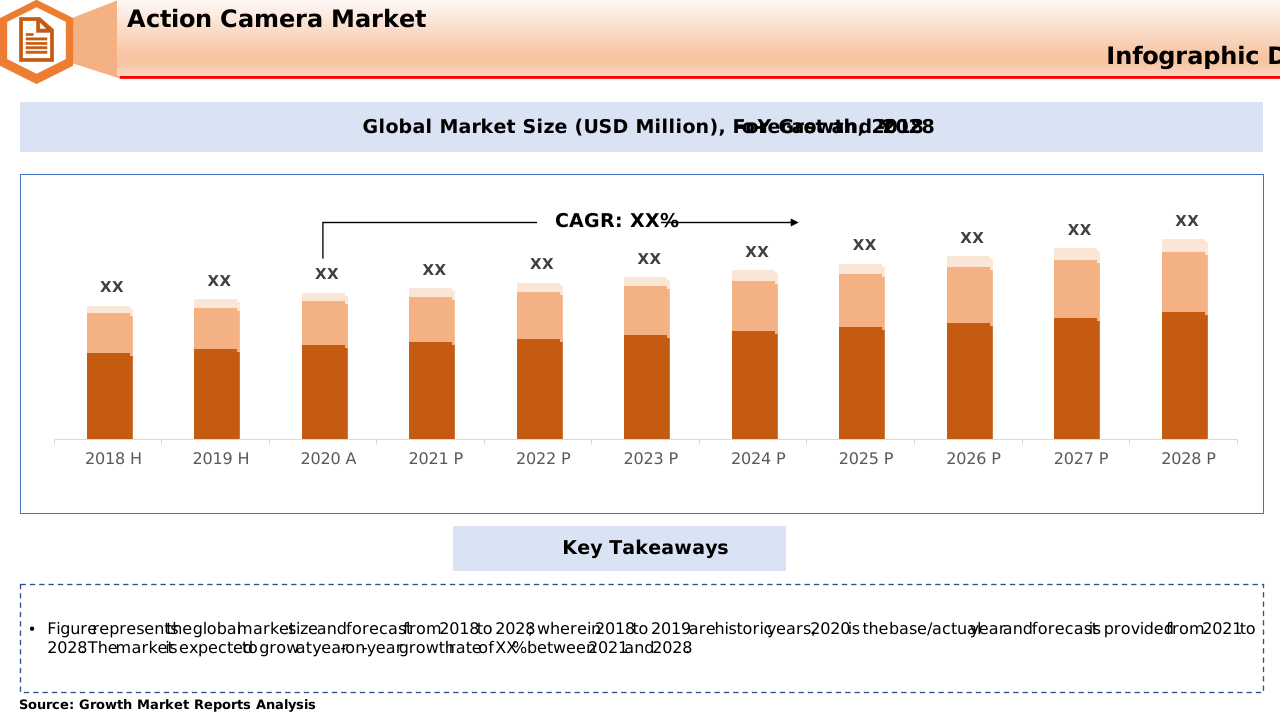
As per our latest research, the action camera market size reached a global valuation of USD 4.6 billion in 2024, driven by the surging demand for compact, high-performance imaging devices among adventure enthusiasts and professionals alike. The market is poised to grow at a robust CAGR of 12.3% from 2025 to 2033, with the total value expected to reach USD 13.1 billion by 2033. This impressive growth trajectory is underpinned by the proliferation of social media platforms, the rising trend of content creation, and technological advancements in imaging and connectivity features.
A primary growth factor for the action camera market is the ever-increasing popularity of adventure sports and outdoor recreational activities worldwide. The millennial and Gen Z demographics, in particular, are fueling demand for rugged, waterproof, and portable cameras that can capture high-quality videos and images in extreme environments. Social media influencers and travel vloggers are leveraging action cameras to create immersive content, thereby amplifying product visibility and consumer interest. Moreover, the integration of cutting-edge features such as 4K and 8K video recording, advanced image stabilization, and real-time wireless connectivity has significantly enhanced user experience, further propelling market adoption.
Technological innovation remains a cornerstone for the action camera industry’s sustained expansion. Manufacturers are focusing on miniaturization, improved battery life, and enhanced durability to cater to the evolving requirements of both professional and personal users. The incorporation of AI-driven functionalities, such as automatic editing and scene recognition, is making action cameras more user-friendly and appealing to a broader audience. Additionally, the growing adoption of action cameras in niche applications such as emergency services, law enforcement, and industrial inspections is opening new avenues for market growth. The availability of a diverse product range across various price points is also democratizing access, enabling wider market penetration.
Another significant growth driver is the expansion of e-commerce and online retail channels, which has made action cameras more accessible to consumers in emerging markets. The proliferation of online reviews, user-generated content, and influencer endorsements is shaping purchase decisions and accelerating product adoption. Offline retail, including specialty electronics stores and sports equipment outlets, continues to play a vital role by offering hands-on product demonstrations and after-sales support. The synergy between online and offline distribution channels is fostering a competitive landscape, encouraging brands to innovate and differentiate their offerings.
From a regional perspective, Asia Pacific is emerging as the fastest-growing market, fueled by rising disposable incomes, urbanization, and the increasing penetration of smartphones and internet connectivity. North America and Europe maintain their dominance due to a mature consumer base, high adoption rates of adventure sports, and the presence of leading market players. Latin America and the Middle East & Africa are witnessing steady growth, supported by the gradual uptake of outdoor recreational activities and the expanding reach of e-commerce. The global action camera market is thus characterized by dynamic regional trends, with each geography contributing uniquely to overall market expansion.
The action camera market is segmented by product type into Box Style, Cube Style, Bullet Style, Periscope, and Others. Box style action cameras, exemplified by market leaders such as GoPro, continue to dominate due to their versatility, durability, and compatibility with a wide array of mounting accessories. These cameras are favored by professionals and enthusiasts alike for their robust build, superior image quality, and adaptability to various shooting conditions. The modular nature of box style cameras allows users to customize their setups for different activities, making them a preferred choice for capturing action-packed moments in sports, travel, and adventure.
Cube style action cameras are gaining traction among casual users owing to their compact form factor and ease of use. These ultra-portable devices are designed for quick, on-the-go shooting and are particularly popular among personal users who prioritize convenience and simplicity. While cube style cameras may not offer the extensive feature set of their box style counterparts, they cater to consumers seeking affordable, entry-level options for everyday documentation and social media sharing. The growing demand for wearable technology and lifestyle gadgets is further bolstering the adoption of cube style action cameras in the market.
Bullet style action cameras, characterized by their sleek, cylindrical design, are widely used in sports such as cycling, motorcycling, and skiing. Their aerodynamic shape and lightweight construction make them ideal for mounting on helmets, handlebars, or vehicles, enabling users to capture immersive, first-person perspectives. Bullet style cameras are often equipped with specialized features such as waterproofing, shock resistance, and high frame rate recording, catering to the specific needs of athletes and adventure sports enthusiasts. The rising popularity of extreme sports and the demand for unique visual storytelling are key factors driving the growth of this segment.
Periscope action cameras, although a niche segment, are witnessing increased adoption in underwater exploration, diving, and marine research. These cameras are engineered to withstand high pressure and provide clear, distortion-free imaging in challenging aquatic environments. The integration of advanced optical technologies and wireless connectivity is enhancing the functionality and appeal of periscope cameras among professional divers, marine biologists, and documentary filmmakers. Other product types, including hybrid and modular designs, are also emerging to address specific user requirements and market gaps, contributing to the overall diversity and innovation within the action camera industry.
| Attributes | Details |
| Report Title | Action Camera Market Research Report 2033 |
| By Product Type | Box Style, Cube Style, Bullet Style, Periscope and Others |
| By Resolution | Full HD, Ultra HD, HD, Others |
| By Application | Sports, Recreational Activities, Emergency Services, Others |
| By Distribution Channel | Online, Offline |
| By End-User | Professional, Personal |
| Regions Covered | North America, Europe, APAC, Latin America, MEA |
| Countries Covered | North America (United States, Canada), Europe (Germany, France, Italy, United Kingdom, Spain, Russia, Rest of Europe), Asia Pacific (China, Japan, South Korea, India, Australia, South East Asia (SEA), Rest of Asia Pacific), Latin America (Mexico, Brazil, Rest of Latin America), Middle East & Africa (Saudi Arabia, South Africa, United Arab Emirates, Rest of Middle East & Africa) |
| Base Year | 2024 |
| Historic Data | 2018-2023 |
| Forecast Period | 2025-2033 |
| Number of Pages | 250 |
| Number of Tables & Figures | 261 |
| Customization Available | Yes, the report can be customized as per your need. |
Resolution is a critical factor influencing consumer choice in the action camera market, with segments including Full HD, Ultra HD, HD, and Others. Full HD (1080p) action cameras have long been the industry standard, offering a balanced combination of image clarity, storage efficiency, and affordability. These cameras are widely used for everyday activities, sports, and travel documentation. The proliferation of Full HD cameras has democratized high-quality video capture, enabling users across various demographics to create professional-looking content without significant investment in equipment.
Ultra HD (4K and above) action cameras are rapidly gaining market share, driven by consumer demand for superior image quality and immersive viewing experiences. The advent of 4K technology has revolutionized content creation, enabling users to capture intricate details and vibrant colors even in fast-paced or low-light scenarios. Ultra HD cameras are particularly popular among professionals, vloggers, and filmmakers who require high-resolution footage for editing, broadcasting, and cinematic production. The falling costs of 4K sensors and advancements in processing power are making Ultra HD action cameras increasingly accessible to mainstream consumers.
HD (720p) action cameras continue to appeal to budget-conscious consumers and entry-level users seeking basic video recording capabilities. While HD cameras may not deliver the same level of detail as their Full HD or Ultra HD counterparts, they offer reliable performance for casual use, social media sharing, and educational purposes. The affordability and simplicity of HD action cameras make them an attractive option for first-time buyers, children, and users in emerging markets where price sensitivity is a key consideration. Manufacturers are also leveraging HD cameras for specialized applications such as dashcams and security monitoring.
Other resolution categories, including 5K, 8K, and variable frame rate options, are emerging to cater to the evolving needs of professional content creators and industry specialists. These high-end cameras offer unparalleled image fidelity, advanced editing capabilities, and support for next-generation display technologies such as VR and AR. As consumer expectations continue to evolve, the action camera market is witnessing a shift towards higher resolutions, faster frame rates, and enhanced low-light performance, driving innovation and differentiation among leading brands.
The application landscape of the action camera market is diverse, encompassing Sports, Recreational Activities, Emergency Services, and Others. Sports remain the largest application segment, accounting for a significant share of global demand. Action cameras are indispensable tools for athletes, coaches, and sports broadcasters seeking to capture dynamic footage of events such as surfing, skiing, cycling, and motorsports. The ability to record high-speed action from unique angles has transformed sports coverage, enabling real-time analysis, training, and fan engagement. Sponsorship deals, brand collaborations, and the rise of e-sports are further fueling demand for action cameras in the sports segment.
Recreational activities, including travel, hiking, camping, and underwater exploration, represent a rapidly growing application area for action cameras. The desire to document and share personal experiences on social media platforms has led to a surge in demand for lightweight, portable cameras that can withstand challenging environments. Action cameras are increasingly being used by families, tourists, and adventure seekers to capture memorable moments and create engaging visual content. The trend towards experiential travel and the popularity of outdoor leisure activities are expected to drive sustained growth in this segment over the forecast period.
Emergency services and public safety agencies are adopting action cameras for a range of critical applications, including search and rescue operations, law enforcement, firefighting, and disaster response. These cameras provide real-time visual documentation, enhance situational awareness, and support evidence collection in high-risk environments. The integration of advanced features such as GPS tracking, night vision, and live streaming is expanding the utility of action cameras in emergency and security applications. Government initiatives, regulatory mandates, and the increasing focus on public safety are creating new opportunities for market players in this segment.
Other emerging applications include industrial inspections, wildlife monitoring, scientific research, and educational projects. Action cameras are being deployed in remote or hazardous locations to capture data, monitor equipment, and document research findings. The versatility and adaptability of action cameras make them suitable for a wide range of specialized use cases, driving innovation and expanding the addressable market. As technology continues to evolve, new applications are expected to emerge, further diversifying the action camera market and enhancing its long-term growth prospects.
The distribution landscape of the action camera market is segmented into Online and Offline channels, each playing a pivotal role in shaping consumer access and purchasing behavior. Online channels, including e-commerce platforms, brand websites, and digital marketplaces, have witnessed exponential growth in recent years. The convenience of online shopping, coupled with the availability of comprehensive product information, customer reviews, and competitive pricing, has made it the preferred channel for a large segment of consumers. The rise of influencer marketing, unboxing videos, and social media endorsements is further driving online sales, enabling brands to reach a global audience with minimal overhead costs.
Offline distribution channels, such as specialty electronics stores, sports equipment retailers, and large-format retail chains, continue to hold significant market share, particularly in developed regions. These channels offer consumers the opportunity to experience products firsthand, seek expert advice, and benefit from personalized service. Product demonstrations, bundled offers, and after-sales support are key differentiators that enhance the offline shopping experience. Offline channels are especially important for high-value purchases, professional users, and consumers who prioritize product reliability and post-purchase assistance.
The synergy between online and offline distribution is becoming increasingly important as brands adopt omnichannel strategies to maximize reach and customer engagement. Click-and-collect services, online-to-offline promotions, and integrated loyalty programs are bridging the gap between digital and physical retail, providing consumers with a seamless and flexible shopping experience. Retailers are leveraging data analytics, customer relationship management, and targeted marketing to personalize offerings and drive repeat purchases. The integration of augmented reality and virtual try-on features is also enhancing the online shopping experience, enabling consumers to visualize products in real-world scenarios.
While online channels are driving rapid growth in emerging markets, offline channels remain crucial for building brand trust, ensuring product authenticity, and delivering value-added services. The ongoing evolution of distribution strategies is fostering healthy competition, encouraging innovation, and expanding consumer choice. As the action camera market continues to mature, the balance between online and offline channels will play a key role in shaping industry dynamics and influencing future growth trajectories.
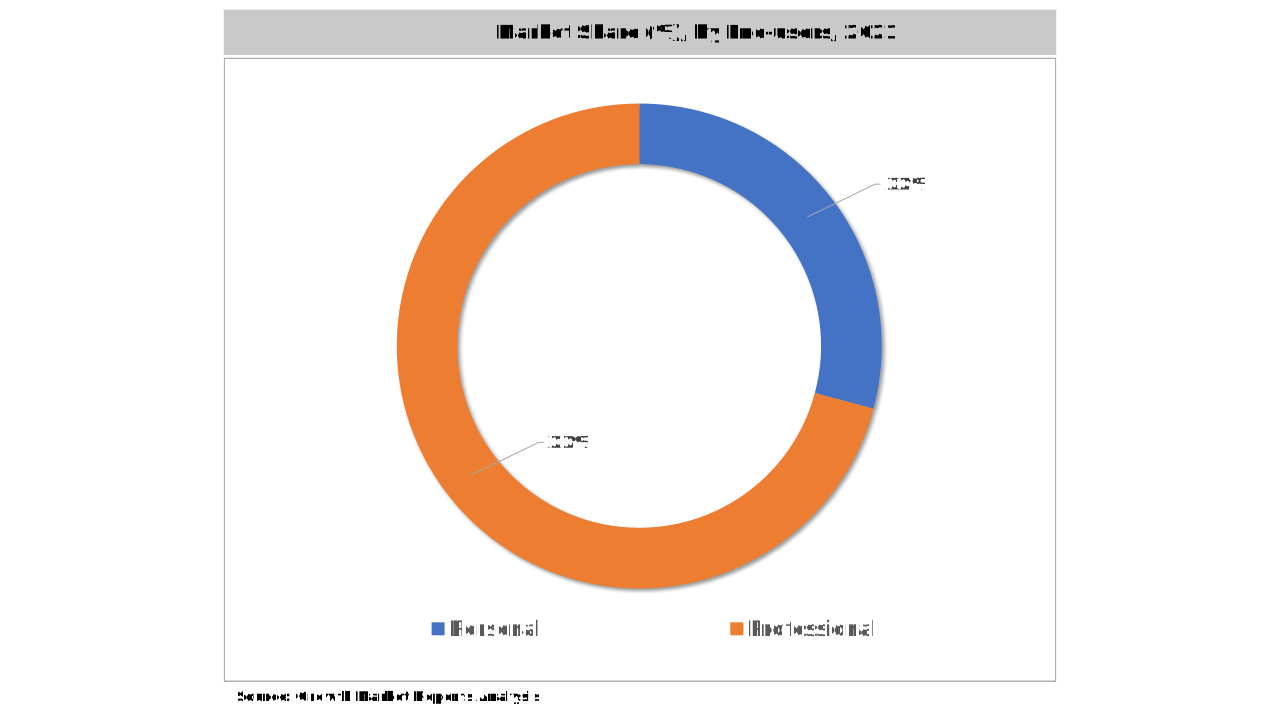
The action camera market serves a diverse end-user base, segmented into Professional and Personal categories. Professional users, including athletes, filmmakers, journalists, and emergency responders, require advanced features, superior image quality, and robust performance in demanding environments. Action cameras designed for professional use often incorporate high-resolution sensors, multiple connectivity options, and customizable settings to meet the specific needs of different industries. The growing adoption of action cameras in professional sports, media production, and public safety is driving demand for premium products with enhanced durability, reliability, and functionality.
Personal users represent a significant and growing segment of the action camera market, driven by the desire to document everyday experiences, travel adventures, and special occasions. The democratization of content creation, fueled by social media platforms and user-generated content, has made action cameras accessible to a broader audience. Personal users prioritize ease of use, affordability, and portability, seeking devices that can seamlessly integrate into their lifestyles. Entry-level and mid-range action cameras with intuitive interfaces, wireless connectivity, and versatile mounting options are particularly popular among personal users.
The distinction between professional and personal use is becoming increasingly blurred as technological advancements make high-end features available in consumer-grade products. Many personal users are aspiring content creators, vloggers, and influencers who demand professional-quality output without the complexity or cost of traditional camera equipment. Manufacturers are responding by offering a wide range of models tailored to different user profiles, from rugged, waterproof cameras for outdoor enthusiasts to compact, lightweight devices for everyday use. The proliferation of accessories, editing software, and cloud-based storage solutions is enhancing the value proposition for both professional and personal users.
The evolving needs of end-users are shaping product development, marketing strategies, and distribution channels within the action camera market. Customization, personalization, and user-centric design are emerging as key differentiators, enabling brands to build loyalty and drive repeat purchases. As the market continues to expand, understanding the unique preferences and requirements of different end-user segments will be critical for sustained success and competitive advantage.
The action camera market presents a multitude of opportunities for innovation, expansion, and value creation. One of the most promising areas is the integration of artificial intelligence and machine learning technologies, which can automate editing, enhance image stabilization, and enable intelligent scene recognition. These advancements are making action cameras more user-friendly and appealing to a wider audience, including novice users and professionals seeking efficiency gains. The growing popularity of live streaming, virtual reality, and augmented reality applications is also opening new avenues for product differentiation and revenue generation. Partnerships with social media platforms, sports organizations, and content creators can further enhance brand visibility and drive market adoption.
Another significant opportunity lies in the expansion into emerging markets, where rising disposable incomes, urbanization, and increasing internet penetration are creating new demand for action cameras. Localization strategies, affordable pricing, and targeted marketing campaigns can help brands tap into these high-growth regions. The development of specialized cameras for niche applications, such as underwater exploration, industrial inspections, and public safety, offers additional growth potential. Sustainability and eco-friendly product design are emerging trends that can attract environmentally conscious consumers and differentiate brands in a competitive market. The continued evolution of distribution channels, including omnichannel retail and direct-to-consumer models, can further enhance market reach and customer engagement.
Despite the positive outlook, the action camera market faces several restraining factors that could impede growth. Intense competition, price wars, and the commoditization of core features are putting pressure on profit margins and challenging brand differentiation. The rapid pace of technological change requires significant investment in research and development, which may not be feasible for smaller players. Consumer expectations for seamless integration with smartphones, cloud services, and other digital ecosystems are raising the bar for product innovation and interoperability. Additionally, concerns around data privacy, cybersecurity, and regulatory compliance are becoming increasingly important as action cameras become more connected and feature-rich. Addressing these challenges will be critical for sustaining long-term growth and maintaining competitive advantage in the global action camera market.
The regional distribution of the action camera market highlights the dominance of North America, which accounted for approximately USD 1.6 billion of the global market in 2024. The region’s leadership is underpinned by a mature consumer base, high disposable incomes, and widespread participation in adventure sports and outdoor recreational activities. The presence of leading market players, robust distribution networks, and a strong culture of content creation further contribute to North America’s market strength. The United States, in particular, is a major hub for innovation, product launches, and influencer-driven marketing, setting trends that resonate globally.
Europe is another key market, with a valuation of nearly USD 1.2 billion in 2024. The region’s growth is driven by a vibrant sports culture, increasing interest in travel and adventure tourism, and supportive regulatory frameworks. Countries such as Germany, the United Kingdom, and France are leading adopters of action cameras, with consumers seeking high-quality imaging solutions for personal and professional use. The European market is characterized by strong competition, a focus on sustainability, and a growing demand for premium products with advanced features. The region is expected to maintain a steady CAGR of 11.7% through 2033, supported by ongoing innovation and expanding applications.
The Asia Pacific region is emerging as the fastest-growing market, with a current valuation of USD 0.9 billion and a projected CAGR of 14.5% over the forecast period. Rapid urbanization, rising disposable incomes, and increasing internet penetration are fueling demand for action cameras among young, tech-savvy consumers. China, Japan, South Korea, and India are key growth engines, supported by a thriving e-commerce ecosystem and a burgeoning community of content creators. The region’s dynamic demographics, coupled with government initiatives to promote sports and tourism, are creating new opportunities for market expansion. Latin America and the Middle East & Africa, with combined revenues of USD 0.9 billion, are also witnessing steady growth, driven by the gradual uptake of outdoor activities and the expanding reach of online retail channels.
The competitive landscape of the action camera market is characterized by intense rivalry, rapid technological innovation, and a constant race to deliver superior user experiences. Leading brands are investing heavily in research and development to introduce new features, enhance product durability, and improve connectivity options. The market is highly dynamic, with frequent product launches, strategic partnerships, and mergers and acquisitions shaping industry dynamics. Companies are adopting aggressive marketing strategies, leveraging influencer partnerships, and engaging in sponsorship deals with sports organizations to boost brand visibility and drive consumer engagement. The proliferation of user-generated content and the rise of social media platforms are amplifying competition, as brands vie for attention in an increasingly crowded digital space.
Product differentiation is a key focus area for market leaders, with companies offering a wide range of models tailored to different user segments and applications. High-end action cameras feature advanced imaging sensors, 4K and 8K video recording, AI-powered editing tools, and robust waterproofing, catering to professional users and content creators. Entry-level and mid-range models prioritize affordability, ease of use, and portability, targeting casual users and first-time buyers. Accessory ecosystems, including mounts, housings, and editing software, are enhancing the value proposition and fostering brand loyalty. The integration of cloud services, mobile apps, and seamless device interoperability is further differentiating leading brands from their competitors.
The market is also witnessing the entry of new players, particularly from Asia, who are leveraging cost advantages, local manufacturing capabilities, and innovative business models to capture market share. These entrants are focusing on affordability, feature innovation, and online distribution to target price-sensitive consumers in emerging markets. The growing importance of sustainability, eco-friendly materials, and ethical manufacturing practices is influencing purchasing decisions, prompting established brands to adopt responsible business practices. Intellectual property protection, regulatory compliance, and data security are emerging as critical areas of focus, particularly as action cameras become more connected and feature-rich.
Major companies in the action camera market include GoPro Inc., DJI, Sony Corporation, Garmin Ltd., Insta360, Olympus Corporation, SJCAM, Yi Technology, TomTom International BV, and Panasonic Corporation. GoPro remains the undisputed leader, renowned for its iconic HERO series and a robust ecosystem of accessories and software. DJI, best known for its drones, has expanded its portfolio to include high-performance action cameras with advanced stabilization and connectivity features. Sony leverages its expertise in imaging technology to offer premium action cameras with superior sensor performance and low-light capabilities. Garmin focuses on rugged, GPS-enabled cameras for sports and outdoor applications, while Insta360 is pioneering 360-degree and VR-ready cameras for immersive content creation.
Emerging players such as SJCAM, Yi Technology, and TomTom are gaining traction by offering affordable, feature-rich alternatives to established brands. These companies are targeting niche segments and price-sensitive consumers, leveraging online distribution and influencer marketing to build brand awareness. Olympus and Panasonic, with their strong heritage in imaging and optics, are also active participants in the action camera market, offering specialized models for underwater and adventure applications. The competitive landscape is expected to remain dynamic, with ongoing innovation, strategic collaborations, and a relentless focus on user experience shaping the future of the global action camera market.
The Action Camera market has been segmented on the basis of
Key companies that are competing in the global action cameras are GoPro, Inc., Sony Corporation, Nikon Corporation, Garmin Ltd., SJCAM, YI Technology, SZ DJI Technology Co., Ltd., and Drift Innovation. These companies are successfully developing new camera models at cheap prices to expand their portfolio products and customer base.
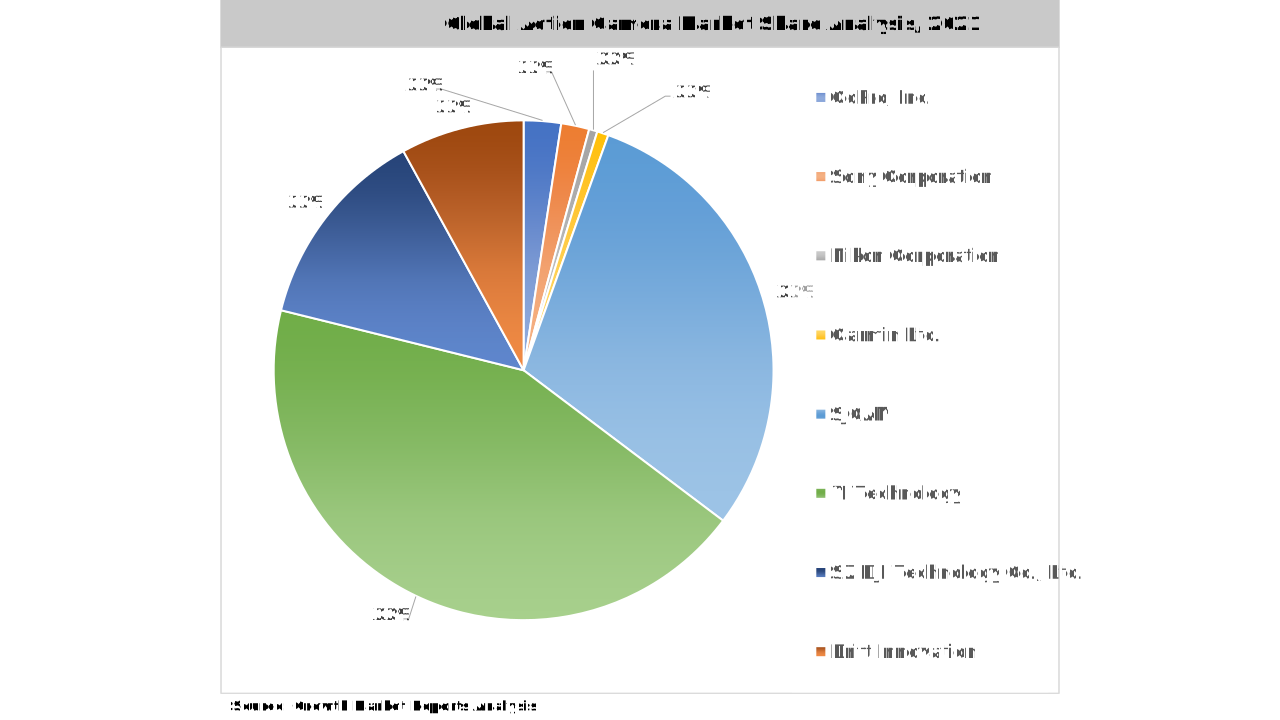
Major players include GoPro Inc., DJI, Sony Corporation, Garmin Ltd., Insta360, Olympus Corporation, SJCAM, Yi Technology, TomTom International BV, and Panasonic Corporation. GoPro remains the market leader.
Opportunities include AI integration, live streaming, VR/AR applications, expansion into emerging markets, and sustainable product design. Challenges include intense competition, price wars, rapid tech changes, and concerns over data privacy and cybersecurity.
End-users are segmented into Professional (athletes, filmmakers, journalists, emergency responders) and Personal (everyday users, travelers, vloggers, families). The line between these segments is blurring as advanced features become more accessible.
Action cameras are sold through both online (e-commerce, brand websites) and offline (specialty electronics stores, sports retailers) channels. Omnichannel strategies are increasingly important for reaching diverse consumer segments.
Action cameras are widely used in sports, recreational activities (travel, hiking, underwater exploration), emergency services (law enforcement, search and rescue), industrial inspections, wildlife monitoring, and educational projects.
Resolution is a key factor, with Full HD (1080p) being the standard, Ultra HD (4K and above) gaining popularity for professional use, and HD (720p) appealing to budget-conscious consumers. Higher resolutions like 5K and 8K are emerging for advanced users.
The market is segmented into Box Style (e.g., GoPro), Cube Style, Bullet Style, Periscope, and other hybrid/modular designs. Box Style remains the most popular due to its versatility and durability.
North America and Europe are the dominant markets due to mature consumer bases and high adoption rates. Asia Pacific is the fastest-growing region, driven by rising disposable incomes, urbanization, and increased internet penetration.
Key growth drivers include the rising popularity of adventure sports and outdoor activities, increased content creation for social media, technological advancements in imaging and connectivity, and the expansion of e-commerce channels.
The global action camera market reached a valuation of USD 4.6 billion in 2024 and is expected to grow at a CAGR of 12.3% from 2025 to 2033, reaching USD 13.1 billion by 2033.