Treasury Software Market Research Report 2033

Treasury Software Market Research Report 2033

Segments - by Component (Software, Services), by Deployment Mode (On-Premises, Cloud-Based), by Organization Size (Large Enterprises, Small and Medium Enterprises), by Application (Cash Management, Liquidity Management, Risk Management, Debt Management, Investment Management, Compliance Management, Others), by End-User (BFSI, Manufacturing, IT & Telecom, Healthcare, Retail, Government & Public Sector, Others)

https://growthmarketreports.com/Raksha
Author : Raksha Sharma
https://growthmarketreports.com/Vaibhav
Fact-checked by : V. Chandola
https://growthmarketreports.com/Shruti
Editor : Shruti Bhat

Upcoming | Report ID :ICT-SE-5131 | 4.4 Rating | 94 Reviews | 299 Pages | Format : Docx PDF

Report Description


Treasury Software Market Outlook

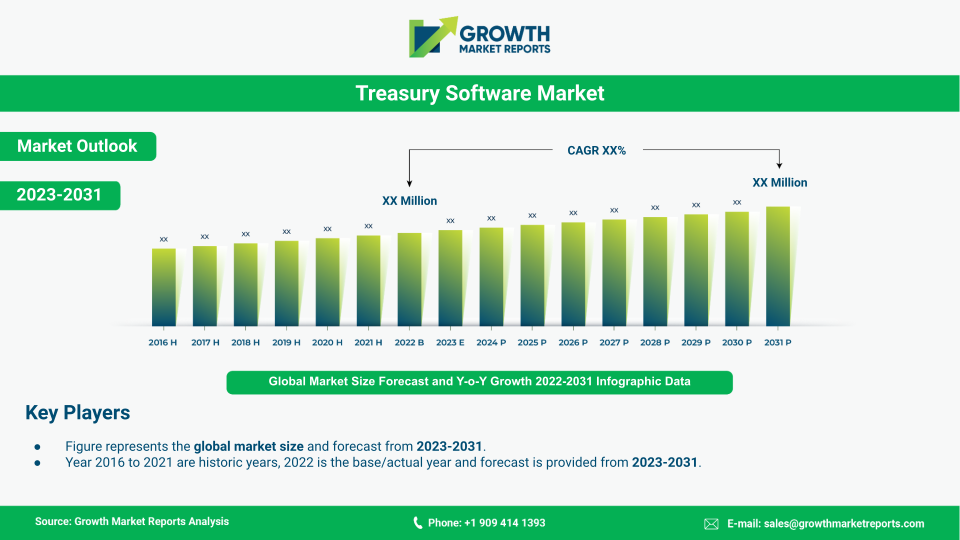
As per our latest research, the global Treasury Software market size in 2024 reached an impressive USD 6.8 billion, reflecting robust adoption across diverse industries. The market is experiencing a strong growth trajectory, with a CAGR of 10.2% anticipated from 2025 to 2033. By the end of 2033, the Treasury Software market is forecasted to reach approximately USD 16.1 billion, driven by increasing digital transformation initiatives, the need for real-time financial visibility, and the integration of advanced analytics and automation into treasury operations. The growing complexity of global financial operations and regulatory compliance requirements remain key growth factors propelling the Treasury Software market forward.

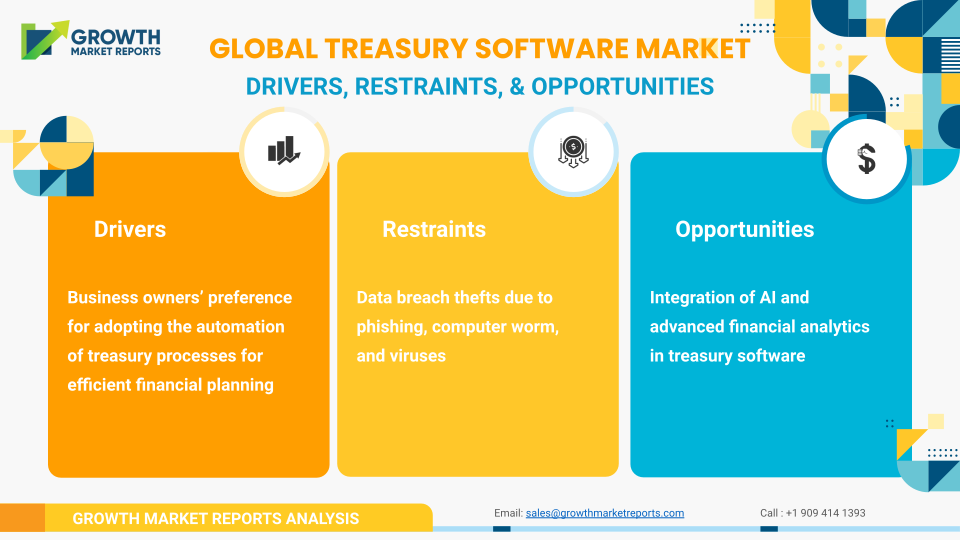
The primary growth driver for the Treasury Software market is the accelerating pace of digitalization in corporate finance. Organizations, regardless of size, are increasingly recognizing the necessity of automating their treasury functions to improve cash visibility, enhance liquidity management, and reduce manual errors. The proliferation of cloud-based solutions has further democratized access to sophisticated treasury management tools, making them more affordable and scalable for small and medium-sized enterprises. Additionally, the integration of artificial intelligence and machine learning into treasury software platforms is enabling predictive analytics, smarter risk management, and more efficient cash forecasting, which are critical for organizations operating in volatile market environments.

Another significant factor boosting the Treasury Software market is the heightened emphasis on regulatory compliance and risk mitigation. With evolving global financial regulations such as Basel III, SOX, and PSD2, organizations are under pressure to maintain transparency and demonstrate robust controls over their treasury operations. Treasury software solutions are evolving rapidly to offer advanced compliance management features, real-time monitoring, and audit trails, ensuring that organizations can not only comply with regulatory mandates but also proactively manage risks. The increasing frequency of cyber threats and financial fraud has also fueled demand for secure, integrated treasury management systems that can safeguard sensitive financial data.

The Treasury Software market is also benefitting from the globalization of businesses and the expansion of multinational corporations. As organizations operate in multiple geographies, the complexity of managing cash flows, foreign exchange, and intercompany transactions increases exponentially. Treasury software platforms are being designed to handle multi-currency, multi-entity, and multi-country operations seamlessly, offering centralized visibility and control over global finances. This capability is particularly valuable in today’s dynamic economic landscape, where rapid decision-making and agility are paramount for maintaining competitive advantage.

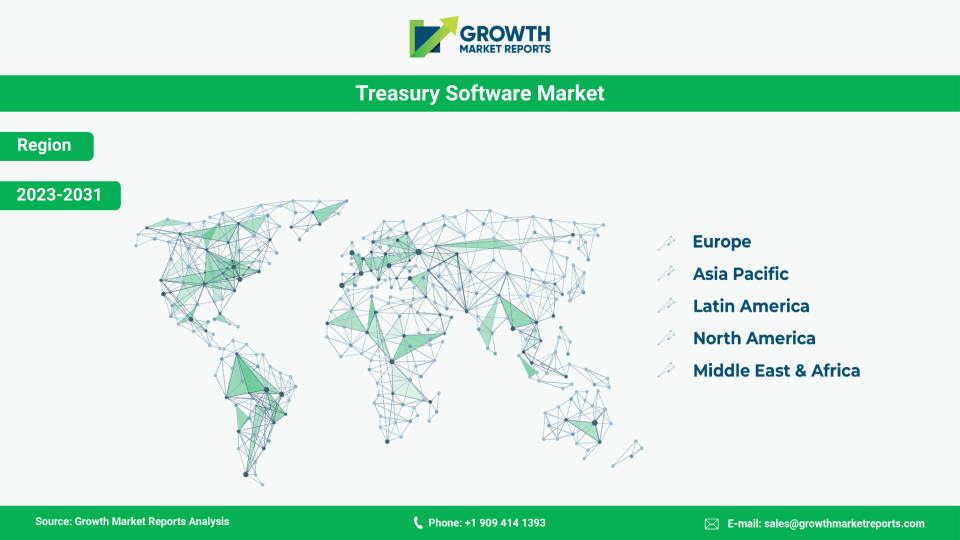
From a regional perspective, North America continues to dominate the Treasury Software market, accounting for the largest share in 2024, followed by Europe and Asia Pacific. The rapid adoption of advanced financial technologies, a mature BFSI sector, and stringent regulatory frameworks have contributed to North America's leadership position. Meanwhile, Asia Pacific is emerging as the fastest-growing region, fueled by the digital transformation of enterprises, increasing cross-border trade, and a burgeoning fintech ecosystem. Latin America and the Middle East & Africa are also witnessing steady growth, albeit from a smaller base, as organizations in these regions increasingly prioritize financial automation and risk management.

Global Treasury Software Industry Outlook

Component Analysis

The Treasury Software market is segmented by component into Software and Services. The software segment holds the dominant share, driven by the continuous evolution of treasury management platforms that offer end-to-end automation, real-time analytics, and seamless integration with enterprise resource planning (ERP) systems. Modern treasury software solutions are equipped with intuitive dashboards, customizable workflows, and support for multiple financial instruments, enabling organizations to efficiently manage cash, liquidity, and risk. The growing adoption of cloud-native architectures and APIs has further enhanced the flexibility and scalability of these platforms, allowing for rapid deployment and easy integration with third-party systems.

The services segment, while smaller in comparison to software, is experiencing significant growth as organizations seek specialized expertise for implementation, customization, training, and ongoing support. Consulting and managed services are in high demand, particularly among large enterprises with complex treasury operations and compliance requirements. Service providers are increasingly offering value-added services such as process optimization, regulatory advisory, and advanced analytics, helping organizations maximize the return on their treasury software investments. The rise of subscription-based and outcome-driven service models is also shaping the competitive landscape in this segment.

A key trend within the component segment is the convergence of software and services through the adoption of software-as-a-service (SaaS) delivery models. SaaS-based treasury solutions are gaining traction due to their cost-effectiveness, ease of maintenance, and ability to deliver continuous updates and enhancements. This model reduces the burden on internal IT teams and ensures organizations can quickly adapt to changing regulatory and market conditions. Vendors are increasingly bundling software and services to offer comprehensive, end-to-end treasury management solutions tailored to the unique needs of each client.

The competitive dynamics within the component segment are intensifying as established players and new entrants alike invest in research and development to introduce innovative features and functionalities. Artificial intelligence, machine learning, and blockchain technologies are being integrated into treasury software to enable smarter decision-making, automate routine tasks, and enhance security. Service providers are differentiating themselves by offering domain-specific expertise, industry best practices, and proactive support, further elevating the value proposition for end-users. As organizations continue to prioritize agility and efficiency, the demand for both advanced software and high-quality services is expected to remain strong throughout the forecast period.

Report Scope

Attributes Details
Report Title Treasury Software Market Research Report 2033
By Component Software, Services
By Deployment Mode On-Premises, Cloud-Based
By Organization Size Large Enterprises, Small and Medium Enterprises
By Application Cash Management, Liquidity Management, Risk Management, Debt Management, Investment Management, Compliance Management, Others
By End-User BFSI, Manufacturing, IT & Telecom, Healthcare, Retail, Government & Public Sector, Others
Regions Covered North America, Europe, APAC, Latin America, MEA
Base Year 2024
Historic Data 2018-2023
Forecast Period 2025-2033
Number of Pages 299
Number of Tables & Figures 259
Customization Available Yes, the report can be customized as per your need.

Deployment Mode Analysis

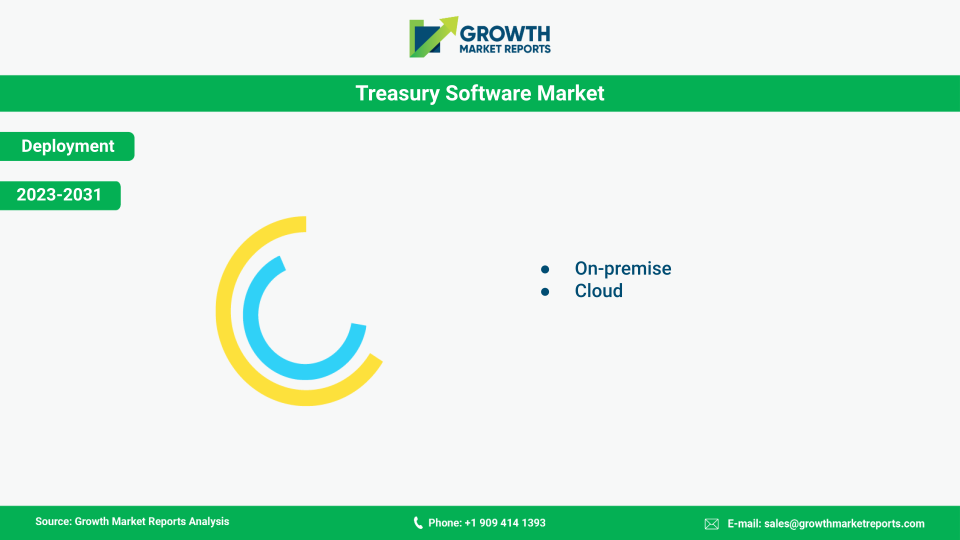
The Treasury Software market is bifurcated by deployment mode into On-Premises and Cloud-Based solutions. Historically, on-premises deployments have been the preferred choice for large enterprises and highly regulated industries due to concerns over data security, customization, and integration with legacy systems. On-premises treasury software offers organizations full control over their data and infrastructure, enabling tailored configurations and compliance with stringent internal policies. However, the high upfront costs, ongoing maintenance requirements, and limited scalability of on-premises solutions have prompted many organizations to reevaluate their deployment strategies.

Cloud-based treasury software is rapidly gaining momentum, accounting for a growing share of new deployments in 2024. The cloud model offers unparalleled flexibility, scalability, and cost savings, allowing organizations to quickly scale their treasury operations in response to business needs. Cloud-based solutions facilitate remote access, real-time collaboration, and seamless integration with other cloud applications, which has become increasingly important in the era of hybrid and remote work. The ability to leverage automatic updates, enhanced security features, and disaster recovery capabilities further strengthens the appeal of cloud-based treasury management systems.

The shift towards cloud-based deployment is also being driven by the need for rapid innovation and agility. Treasury teams are under constant pressure to adapt to changing market conditions, regulatory requirements, and technological advancements. Cloud-based platforms enable organizations to access the latest features and enhancements without the delays and disruptions associated with traditional software upgrades. Vendors are investing heavily in cloud infrastructure, security certifications, and compliance frameworks to address the concerns of risk-averse industries and accelerate cloud adoption across all segments.

Despite the growing popularity of cloud-based solutions, on-premises deployments continue to hold relevance in certain sectors, particularly where data sovereignty, regulatory compliance, and integration with proprietary systems are critical considerations. Hybrid deployment models, which combine the benefits of both on-premises and cloud environments, are emerging as a viable option for organizations seeking to balance control and flexibility. As the Treasury Software market evolves, the choice of deployment mode will increasingly be dictated by organizational priorities, risk appetite, and the pace of digital transformation.

Organization Size Analysis

The Treasury Software market is segmented by organization size into Large Enterprises and Small and Medium Enterprises (SMEs). Large enterprises have traditionally been the primary adopters of treasury management solutions, driven by the scale and complexity of their financial operations. These organizations require robust, customizable platforms capable of managing multi-entity, multi-currency operations, and ensuring compliance with global regulations. Large enterprises often invest in comprehensive treasury software suites with advanced analytics, risk management, and integration capabilities to optimize cash flow, mitigate financial risks, and support strategic decision-making.

The adoption of treasury software among SMEs is accelerating, fueled by the availability of affordable, cloud-based solutions that lower the barriers to entry. SMEs are increasingly recognizing the value of automating treasury functions to improve cash visibility, reduce manual errors, and enhance financial control. Vendors are tailoring their offerings to meet the unique needs of SMEs, providing modular, easy-to-use platforms that can scale with business growth. The shift towards subscription-based pricing models and SaaS delivery is making treasury software more accessible to smaller organizations with limited IT resources and budgets.

A key trend in the organization size segment is the convergence of requirements between large enterprises and SMEs. As SMEs expand their operations and engage in cross-border trade, their treasury management needs are becoming more sophisticated, driving demand for advanced features such as real-time cash forecasting, automated payments, and integrated risk management. Conversely, large enterprises are seeking more agile, user-friendly solutions that can be rapidly deployed and adapted to changing business needs. This convergence is prompting vendors to develop flexible, customizable platforms that cater to organizations of all sizes.

The competitive landscape in the organization size segment is characterized by intense competition among established players and niche providers. Vendors are differentiating themselves through industry-specific solutions, rapid implementation timelines, and superior customer support. Strategic partnerships with banks, fintechs, and consulting firms are also playing a crucial role in expanding market reach and delivering value-added services. As digital transformation accelerates across all segments, the demand for scalable, integrated treasury software solutions is expected to grow steadily among both large enterprises and SMEs.

Application Analysis

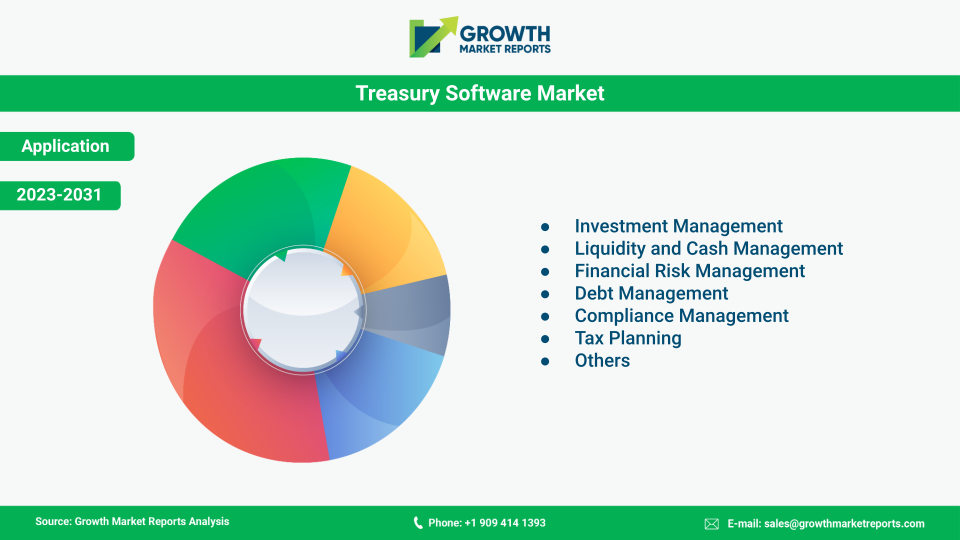
The Treasury Software market is segmented by application into Cash Management, Liquidity Management, Risk Management, Debt Management, Investment Management, Compliance Management, and Others. Cash management remains the cornerstone of treasury operations, with organizations seeking real-time visibility into cash positions, automated reconciliation, and efficient payment processing. Treasury software platforms are evolving to offer advanced cash management features, including dynamic cash forecasting, automated sweeps, and integration with bank portals, enabling organizations to optimize liquidity and minimize idle balances.

Liquidity management is another critical application area, particularly for organizations with complex, multi-entity structures and global operations. Treasury software solutions provide centralized visibility into liquidity positions, support intercompany lending, and facilitate the optimization of working capital. Advanced liquidity management modules leverage predictive analytics and scenario modeling to enable proactive decision-making and enhance financial resilience. The growing volatility of global markets and the need for agile liquidity planning are driving increased investment in this segment.

Risk management is gaining prominence as organizations face heightened exposure to market, credit, and operational risks. Treasury software platforms are integrating sophisticated risk analytics, real-time monitoring, and automated hedging tools to help organizations identify, assess, and mitigate financial risks. The ability to model different risk scenarios, track exposures, and generate actionable insights is becoming a key differentiator in the market. Compliance management is also a rapidly growing application, as organizations strive to keep pace with evolving regulatory requirements and demonstrate robust controls over their treasury operations.

Debt and investment management modules are essential for organizations seeking to optimize their capital structure and maximize returns on surplus cash. Treasury software solutions offer comprehensive tools for managing debt portfolios, tracking covenants, and automating interest calculations. Investment management modules support the evaluation, execution, and monitoring of investment strategies, ensuring alignment with organizational objectives and risk appetite. As organizations seek to streamline their treasury operations and drive value creation, the demand for integrated, multi-functional treasury software platforms is expected to remain strong.

End-User Analysis

The Treasury Software market serves a diverse range of end-users, including BFSI, Manufacturing, IT & Telecom, Healthcare, Retail, Government & Public Sector, and Others. The BFSI sector remains the largest end-user, accounting for a significant share of the market in 2024. Banks, insurance companies, and financial institutions require sophisticated treasury management solutions to handle complex financial instruments, manage liquidity, and comply with stringent regulatory requirements. The adoption of advanced treasury software is enabling BFSI organizations to enhance operational efficiency, reduce risks, and deliver superior customer experiences.

The manufacturing sector is witnessing growing adoption of treasury software as organizations seek to optimize cash flows, manage foreign exchange risks, and support global supply chain operations. Treasury management platforms are enabling manufacturers to automate payment processes, improve cash forecasting, and enhance financial control across multiple entities and geographies. The integration of treasury software with ERP and supply chain management systems is further driving efficiency and enabling data-driven decision-making.

IT & Telecom companies are leveraging treasury software to manage large volumes of transactions, optimize working capital, and support international expansion. The ability to automate treasury processes, monitor liquidity in real-time, and manage currency exposures is particularly valuable for organizations operating in fast-paced, dynamic markets. Healthcare providers are also increasingly adopting treasury management solutions to improve cash flow visibility, streamline payment processes, and ensure compliance with industry regulations.

Retail organizations are turning to treasury software to manage seasonal cash flows, optimize inventory financing, and enhance payment processing efficiency. The government and public sector segment is adopting treasury management platforms to improve transparency, enhance financial control, and comply with public sector accounting standards. As organizations across all sectors prioritize financial automation and risk management, the demand for tailored treasury software solutions is expected to grow steadily.

Opportunities & Threats

The Treasury Software market presents significant opportunities for growth and innovation, particularly in the areas of artificial intelligence, machine learning, and advanced analytics. The integration of AI-driven insights into treasury management platforms is enabling organizations to enhance cash forecasting, automate routine processes, and identify emerging risks in real time. The growing adoption of open banking and API-based integrations is facilitating seamless connectivity between treasury systems, banks, and third-party applications, unlocking new possibilities for data-driven decision-making and process automation. As organizations seek to optimize working capital and enhance financial agility, the demand for intelligent, integrated treasury software solutions is expected to rise.

Another major opportunity lies in the expansion of cloud-based treasury software offerings, particularly for SMEs and organizations in emerging markets. The scalability, cost-effectiveness, and accessibility of cloud solutions are enabling a broader range of organizations to benefit from advanced treasury management capabilities. Vendors that can deliver secure, user-friendly, and customizable cloud platforms are well-positioned to capture market share and drive adoption across diverse industry verticals. The rise of digital transformation initiatives, coupled with increasing regulatory complexity and the need for real-time financial visibility, will continue to fuel demand for innovative treasury software solutions globally.

Despite the positive outlook, the Treasury Software market faces several restraining factors, including concerns over data security, integration challenges, and resistance to change. Organizations operating in highly regulated industries or regions with strict data sovereignty requirements may be hesitant to adopt cloud-based solutions, limiting market penetration. Integration with legacy systems and the complexity of migrating existing processes to new platforms can also pose significant challenges, particularly for large enterprises with entrenched workflows. Additionally, the need for ongoing training and change management may slow adoption rates, especially among organizations with limited IT resources or experience with digital transformation.

Regional Outlook

North America dominates the global Treasury Software market, accounting for the largest share with a market value of approximately USD 2.8 billion in 2024. The region’s leadership is attributed to the rapid adoption of advanced financial technologies, a mature BFSI sector, and stringent regulatory frameworks that drive demand for sophisticated treasury management solutions. The presence of leading market players, a robust fintech ecosystem, and a high level of digital maturity further reinforce North America's position as the primary hub for treasury software innovation and adoption.

Europe is the second-largest market, with a value of around USD 2.1 billion in 2024, driven by the increasing focus on regulatory compliance, financial transparency, and risk management. The implementation of regulations such as PSD2, MiFID II, and GDPR has compelled organizations to invest in advanced treasury software platforms capable of supporting compliance and audit requirements. The region is witnessing strong adoption among BFSI, manufacturing, and government sectors, with a projected CAGR of 9.6% through 2033. The growing emphasis on digital transformation and the emergence of fintech startups are expected to further accelerate market growth in Europe.

Asia Pacific is emerging as the fastest-growing region in the Treasury Software market, with a market size of USD 1.2 billion in 2024 and a projected CAGR of 12.4% through 2033. The region’s growth is fueled by the rapid digitalization of enterprises, increasing cross-border trade, and the adoption of cloud-based financial solutions. China, India, Japan, and Southeast Asian countries are leading the charge, as organizations seek to enhance cash visibility, optimize liquidity, and manage financial risks in a dynamic economic environment. Latin America and the Middle East & Africa, with combined market sizes of USD 0.7 billion in 2024, are also witnessing steady growth as organizations prioritize financial automation and regulatory compliance.

Treasury Software Market Statistics

Competitor Outlook

The Treasury Software market is characterized by intense competition, with a diverse array of global and regional players vying for market share. The competitive landscape is shaped by continuous innovation, strategic partnerships, and a focus on delivering value-added services. Leading vendors are investing heavily in research and development to introduce new features, enhance user experience, and integrate emerging technologies such as artificial intelligence, machine learning, and blockchain into their platforms. The ability to offer scalable, secure, and customizable solutions is a key differentiator in the market, as organizations seek to address evolving business needs and regulatory requirements.

Mergers and acquisitions are a common strategy among market players seeking to expand their product portfolios, enter new markets, and strengthen their competitive positions. Strategic alliances with banks, fintechs, and consulting firms are also playing a pivotal role in driving innovation and expanding market reach. Vendors are increasingly focusing on customer-centric approaches, offering tailored solutions, rapid implementation timelines, and proactive support to enhance client satisfaction and loyalty. The shift towards cloud-based and subscription-based delivery models is prompting vendors to rethink their go-to-market strategies and invest in robust cloud infrastructure and security frameworks.

The market is witnessing the emergence of niche players and startups that are leveraging cutting-edge technologies to address specific pain points in treasury management. These companies are introducing innovative solutions for cash forecasting, risk analytics, and compliance management, challenging established players and driving competition. At the same time, large enterprise software providers are expanding their treasury offerings through organic development and acquisitions, further intensifying the competitive dynamics. The ability to deliver end-to-end, integrated treasury management platforms that support real-time decision-making, regulatory compliance, and operational efficiency will be crucial for success in this evolving market.

Major companies operating in the Treasury Software market include Kyriba Corporation, FIS Global, SAP SE, Oracle Corporation, ION Group, Bottomline Technologies, GTreasury, Bellin (Coupa Software), Reval (ION Group), and Broadridge Financial Solutions. Kyriba is known for its cloud-based treasury and risk management solutions, serving a global client base with advanced analytics and integration capabilities. FIS Global offers a comprehensive suite of treasury and cash management solutions, leveraging its expertise in financial services and technology innovation. SAP SE and Oracle Corporation are leveraging their enterprise software expertise to deliver integrated treasury management platforms that seamlessly connect with ERP and financial systems.

ION Group has established itself as a leader in treasury and risk management solutions, offering a broad portfolio of products for large enterprises and financial institutions. Bottomline Technologies and GTreasury are recognized for their focus on innovation, user experience, and customer-centric solutions. Bellin (Coupa Software) and Reval (ION Group) are known for their cloud-based treasury management platforms, catering to the needs of multinational organizations and SMEs alike. Broadridge Financial Solutions offers advanced treasury and risk management solutions, with a strong focus on regulatory compliance and operational efficiency. These companies are continuously enhancing their offerings through strategic investments in technology, partnerships, and customer support, ensuring their leadership positions in the rapidly evolving Treasury Software market.

Key Players

  • FIS
  • SAP
  • Kyriba
  • Oracle
  • Finastra
  • ION Treasury
  • Broadridge Financial Solutions
  • GTreasury
  • Reval (ION Group)
  • TreasuryXpress
  • Bellin (Kyriba)
  • Coupa Software
  • Murex
  • Openlink (ION Group)
  • Serrala
  • Infosys Finacle
  • DataLog Finance
  • Calypso Technology
  • Bottomline Technologies
  • Emagia
Treasury Software Market Overview

Segments

The Treasury Software market has been segmented on the basis of

Component

  • Software
  • Services

Deployment Mode

  • On-Premises
  • Cloud-Based

Organization Size

  • Large Enterprises
  • Small and Medium Enterprises

Application

  • Cash Management
  • Liquidity Management
  • Risk Management
  • Debt Management
  • Investment Management
  • Compliance Management
  • Others

End-User

  • BFSI
  • Manufacturing
  • IT & Telecom
  • Healthcare
  • Retail
  • Government & Public Sector
  • Others

Competitive Landscape

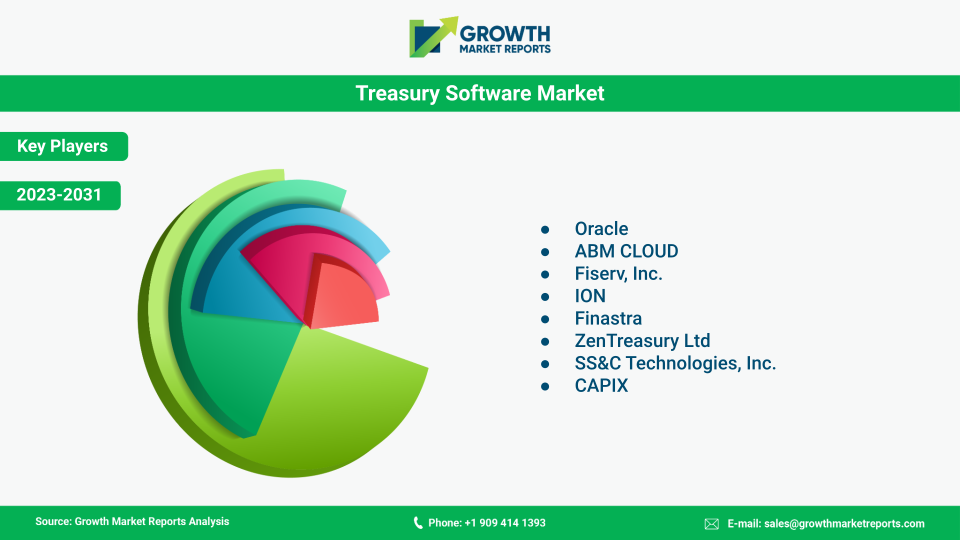
Key players competing in the global treasury software market are Oracle; ABM CLOUD; Fiserv, Inc.; ION; Finastra; ZenTreasury Ltd; SS&C Technologies, Inc.; and CAPIX. These companies adopt strategies including acquisitions, mergers, collaboration, partnerships, and product launches increase their worldwide presence. For instance,

  • On January 2023, ION, a global leader in treasury, trading, and analytics management solutions provider, announced that its flagship product XTP Front-to-Back Suite has been selected by a global options trader OptionsDesk for financial management operations. ION’s XTP Front-to-Back Suite provides integrated front-to-back platforms assist options traders to gain insights into clearing, execution, and settlement processes involved in the options trading activities.

    Treasury Software Market Key Players

Frequently Asked Questions

AI and machine learning are being integrated into treasury software to enable predictive analytics, smarter risk management, automated cash forecasting, and enhanced security.

Key players include Kyriba Corporation, FIS Global, SAP SE, Oracle Corporation, ION Group, Bottomline Technologies, GTreasury, Bellin (Coupa Software), Reval (ION Group), and Broadridge Financial Solutions.

Challenges include data security concerns, integration with legacy systems, resistance to change, and regulatory compliance, especially for organizations in highly regulated industries.

North America leads the market, followed by Europe and Asia Pacific. Asia Pacific is the fastest-growing region, while Latin America and the Middle East & Africa are also seeing steady growth.

The main applications are cash management, liquidity management, risk management, debt management, investment management, and compliance management.

Major end-users include BFSI (banking, financial services, and insurance), manufacturing, IT & telecom, healthcare, retail, and government & public sector organizations.

Cloud-based treasury software is rapidly gaining momentum due to its flexibility, scalability, cost-effectiveness, and ease of integration with other cloud applications.

Key growth drivers include increasing digital transformation, demand for real-time financial visibility, integration of advanced analytics and automation, regulatory compliance requirements, and the globalization of business operations.

The Treasury Software market is expected to grow at a CAGR of 10.2% from 2025 to 2033, reaching approximately USD 16.1 billion by the end of 2033.

As of 2024, the global Treasury Software market size reached USD 6.8 billion, reflecting strong adoption across various industries.

Table Of Content

Chapter 1 Executive Summary
Chapter 2 Assumptions and Acronyms Used
Chapter 3 Research Methodology
Chapter 4 Treasury Software Market Overview
   4.1 Introduction
      4.1.1 Market Taxonomy
      4.1.2 Market Definition
      4.1.3 Macro-Economic Factors Impacting the Market Growth
   4.2 Treasury Software Market Dynamics
      4.2.1 Market Drivers
      4.2.2 Market Restraints
      4.2.3 Market Opportunity
   4.3 Treasury Software Market - Supply Chain Analysis
      4.3.1 List of Key Suppliers
      4.3.2 List of Key Distributors
      4.3.3 List of Key Consumers
   4.4 Key Forces Shaping the Treasury Software Market
      4.4.1 Bargaining Power of Suppliers
      4.4.2 Bargaining Power of Buyers
      4.4.3 Threat of Substitution
      4.4.4 Threat of New Entrants
      4.4.5 Competitive Rivalry
   4.5 Global Treasury Software Market Size & Forecast, 2023-2032
      4.5.1 Treasury Software Market Size and Y-o-Y Growth
      4.5.2 Treasury Software Market Absolute $ Opportunity

Chapter 5 Global Treasury Software Market Analysis and Forecast By Component
   5.1 Introduction
      5.1.1 Key Market Trends & Growth Opportunities By Component
      5.1.2 Basis Point Share (BPS) Analysis By Component
      5.1.3 Absolute $ Opportunity Assessment By Component
   5.2 Treasury Software Market Size Forecast By Component
      5.2.1 Software
      5.2.2 Services
   5.3 Market Attractiveness Analysis By Component

Chapter 6 Global Treasury Software Market Analysis and Forecast By Deployment Mode
   6.1 Introduction
      6.1.1 Key Market Trends & Growth Opportunities By Deployment Mode
      6.1.2 Basis Point Share (BPS) Analysis By Deployment Mode
      6.1.3 Absolute $ Opportunity Assessment By Deployment Mode
   6.2 Treasury Software Market Size Forecast By Deployment Mode
      6.2.1 On-Premises
      6.2.2 Cloud-Based
   6.3 Market Attractiveness Analysis By Deployment Mode

Chapter 7 Global Treasury Software Market Analysis and Forecast By Organization Size
   7.1 Introduction
      7.1.1 Key Market Trends & Growth Opportunities By Organization Size
      7.1.2 Basis Point Share (BPS) Analysis By Organization Size
      7.1.3 Absolute $ Opportunity Assessment By Organization Size
   7.2 Treasury Software Market Size Forecast By Organization Size
      7.2.1 Large Enterprises
      7.2.2 Small and Medium Enterprises
   7.3 Market Attractiveness Analysis By Organization Size

Chapter 8 Global Treasury Software Market Analysis and Forecast By Application
   8.1 Introduction
      8.1.1 Key Market Trends & Growth Opportunities By Application
      8.1.2 Basis Point Share (BPS) Analysis By Application
      8.1.3 Absolute $ Opportunity Assessment By Application
   8.2 Treasury Software Market Size Forecast By Application
      8.2.1 Cash Management
      8.2.2 Liquidity Management
      8.2.3 Risk Management
      8.2.4 Debt Management
      8.2.5 Investment Management
      8.2.6 Compliance Management
      8.2.7 Others
   8.3 Market Attractiveness Analysis By Application

Chapter 9 Global Treasury Software Market Analysis and Forecast By End-User
   9.1 Introduction
      9.1.1 Key Market Trends & Growth Opportunities By End-User
      9.1.2 Basis Point Share (BPS) Analysis By End-User
      9.1.3 Absolute $ Opportunity Assessment By End-User
   9.2 Treasury Software Market Size Forecast By End-User
      9.2.1 BFSI
      9.2.2 Manufacturing
      9.2.3 IT & Telecom
      9.2.4 Healthcare
      9.2.5 Retail
      9.2.6 Government & Public Sector
      9.2.7 Others
   9.3 Market Attractiveness Analysis By End-User

Chapter 10 Global Treasury Software Market Analysis and Forecast by Region
   10.1 Introduction
      10.1.1 Key Market Trends & Growth Opportunities By Region
      10.1.2 Basis Point Share (BPS) Analysis By Region
      10.1.3 Absolute $ Opportunity Assessment By Region
   10.2 Treasury Software Market Size Forecast By Region
      10.2.1 North America
      10.2.2 Europe
      10.2.3 Asia Pacific
      10.2.4 Latin America
      10.2.5 Middle East & Africa (MEA)
   10.3 Market Attractiveness Analysis By Region

Chapter 11 Coronavirus Disease (COVID-19) Impact 
   11.1 Introduction 
   11.2 Current & Future Impact Analysis 
   11.3 Economic Impact Analysis 
   11.4 Government Policies 
   11.5 Investment Scenario

Chapter 12 North America Treasury Software Analysis and Forecast
   12.1 Introduction
   12.2 North America Treasury Software Market Size Forecast by Country
      12.2.1 U.S.
      12.2.2 Canada
   12.3 Basis Point Share (BPS) Analysis by Country
   12.4 Absolute $ Opportunity Assessment by Country
   12.5 Market Attractiveness Analysis by Country
   12.6 North America Treasury Software Market Size Forecast By Component
      12.6.1 Software
      12.6.2 Services
   12.7 Basis Point Share (BPS) Analysis By Component 
   12.8 Absolute $ Opportunity Assessment By Component 
   12.9 Market Attractiveness Analysis By Component
   12.10 North America Treasury Software Market Size Forecast By Deployment Mode
      12.10.1 On-Premises
      12.10.2 Cloud-Based
   12.11 Basis Point Share (BPS) Analysis By Deployment Mode 
   12.12 Absolute $ Opportunity Assessment By Deployment Mode 
   12.13 Market Attractiveness Analysis By Deployment Mode
   12.14 North America Treasury Software Market Size Forecast By Organization Size
      12.14.1 Large Enterprises
      12.14.2 Small and Medium Enterprises
   12.15 Basis Point Share (BPS) Analysis By Organization Size 
   12.16 Absolute $ Opportunity Assessment By Organization Size 
   12.17 Market Attractiveness Analysis By Organization Size
   12.18 North America Treasury Software Market Size Forecast By Application
      12.18.1 Cash Management
      12.18.2 Liquidity Management
      12.18.3 Risk Management
      12.18.4 Debt Management
      12.18.5 Investment Management
      12.18.6 Compliance Management
      12.18.7 Others
   12.19 Basis Point Share (BPS) Analysis By Application 
   12.20 Absolute $ Opportunity Assessment By Application 
   12.21 Market Attractiveness Analysis By Application
   12.22 North America Treasury Software Market Size Forecast By End-User
      12.22.1 BFSI
      12.22.2 Manufacturing
      12.22.3 IT & Telecom
      12.22.4 Healthcare
      12.22.5 Retail
      12.22.6 Government & Public Sector
      12.22.7 Others
   12.23 Basis Point Share (BPS) Analysis By End-User 
   12.24 Absolute $ Opportunity Assessment By End-User 
   12.25 Market Attractiveness Analysis By End-User

Chapter 13 Europe Treasury Software Analysis and Forecast
   13.1 Introduction
   13.2 Europe Treasury Software Market Size Forecast by Country
      13.2.1 Germany
      13.2.2 France
      13.2.3 Italy
      13.2.4 U.K.
      13.2.5 Spain
      13.2.6 Russia
      13.2.7 Rest of Europe
   13.3 Basis Point Share (BPS) Analysis by Country
   13.4 Absolute $ Opportunity Assessment by Country
   13.5 Market Attractiveness Analysis by Country
   13.6 Europe Treasury Software Market Size Forecast By Component
      13.6.1 Software
      13.6.2 Services
   13.7 Basis Point Share (BPS) Analysis By Component 
   13.8 Absolute $ Opportunity Assessment By Component 
   13.9 Market Attractiveness Analysis By Component
   13.10 Europe Treasury Software Market Size Forecast By Deployment Mode
      13.10.1 On-Premises
      13.10.2 Cloud-Based
   13.11 Basis Point Share (BPS) Analysis By Deployment Mode 
   13.12 Absolute $ Opportunity Assessment By Deployment Mode 
   13.13 Market Attractiveness Analysis By Deployment Mode
   13.14 Europe Treasury Software Market Size Forecast By Organization Size
      13.14.1 Large Enterprises
      13.14.2 Small and Medium Enterprises
   13.15 Basis Point Share (BPS) Analysis By Organization Size 
   13.16 Absolute $ Opportunity Assessment By Organization Size 
   13.17 Market Attractiveness Analysis By Organization Size
   13.18 Europe Treasury Software Market Size Forecast By Application
      13.18.1 Cash Management
      13.18.2 Liquidity Management
      13.18.3 Risk Management
      13.18.4 Debt Management
      13.18.5 Investment Management
      13.18.6 Compliance Management
      13.18.7 Others
   13.19 Basis Point Share (BPS) Analysis By Application 
   13.20 Absolute $ Opportunity Assessment By Application 
   13.21 Market Attractiveness Analysis By Application
   13.22 Europe Treasury Software Market Size Forecast By End-User
      13.22.1 BFSI
      13.22.2 Manufacturing
      13.22.3 IT & Telecom
      13.22.4 Healthcare
      13.22.5 Retail
      13.22.6 Government & Public Sector
      13.22.7 Others
   13.23 Basis Point Share (BPS) Analysis By End-User 
   13.24 Absolute $ Opportunity Assessment By End-User 
   13.25 Market Attractiveness Analysis By End-User

Chapter 14 Asia Pacific Treasury Software Analysis and Forecast
   14.1 Introduction
   14.2 Asia Pacific Treasury Software Market Size Forecast by Country
      14.2.1 China
      14.2.2 Japan
      14.2.3 South Korea
      14.2.4 India
      14.2.5 Australia
      14.2.6 South East Asia (SEA)
      14.2.7 Rest of Asia Pacific (APAC)
   14.3 Basis Point Share (BPS) Analysis by Country
   14.4 Absolute $ Opportunity Assessment by Country
   14.5 Market Attractiveness Analysis by Country
   14.6 Asia Pacific Treasury Software Market Size Forecast By Component
      14.6.1 Software
      14.6.2 Services
   14.7 Basis Point Share (BPS) Analysis By Component 
   14.8 Absolute $ Opportunity Assessment By Component 
   14.9 Market Attractiveness Analysis By Component
   14.10 Asia Pacific Treasury Software Market Size Forecast By Deployment Mode
      14.10.1 On-Premises
      14.10.2 Cloud-Based
   14.11 Basis Point Share (BPS) Analysis By Deployment Mode 
   14.12 Absolute $ Opportunity Assessment By Deployment Mode 
   14.13 Market Attractiveness Analysis By Deployment Mode
   14.14 Asia Pacific Treasury Software Market Size Forecast By Organization Size
      14.14.1 Large Enterprises
      14.14.2 Small and Medium Enterprises
   14.15 Basis Point Share (BPS) Analysis By Organization Size 
   14.16 Absolute $ Opportunity Assessment By Organization Size 
   14.17 Market Attractiveness Analysis By Organization Size
   14.18 Asia Pacific Treasury Software Market Size Forecast By Application
      14.18.1 Cash Management
      14.18.2 Liquidity Management
      14.18.3 Risk Management
      14.18.4 Debt Management
      14.18.5 Investment Management
      14.18.6 Compliance Management
      14.18.7 Others
   14.19 Basis Point Share (BPS) Analysis By Application 
   14.20 Absolute $ Opportunity Assessment By Application 
   14.21 Market Attractiveness Analysis By Application
   14.22 Asia Pacific Treasury Software Market Size Forecast By End-User
      14.22.1 BFSI
      14.22.2 Manufacturing
      14.22.3 IT & Telecom
      14.22.4 Healthcare
      14.22.5 Retail
      14.22.6 Government & Public Sector
      14.22.7 Others
   14.23 Basis Point Share (BPS) Analysis By End-User 
   14.24 Absolute $ Opportunity Assessment By End-User 
   14.25 Market Attractiveness Analysis By End-User

Chapter 15 Latin America Treasury Software Analysis and Forecast
   15.1 Introduction
   15.2 Latin America Treasury Software Market Size Forecast by Country
      15.2.1 Brazil
      15.2.2 Mexico
      15.2.3 Rest of Latin America (LATAM)
   15.3 Basis Point Share (BPS) Analysis by Country
   15.4 Absolute $ Opportunity Assessment by Country
   15.5 Market Attractiveness Analysis by Country
   15.6 Latin America Treasury Software Market Size Forecast By Component
      15.6.1 Software
      15.6.2 Services
   15.7 Basis Point Share (BPS) Analysis By Component 
   15.8 Absolute $ Opportunity Assessment By Component 
   15.9 Market Attractiveness Analysis By Component
   15.10 Latin America Treasury Software Market Size Forecast By Deployment Mode
      15.10.1 On-Premises
      15.10.2 Cloud-Based
   15.11 Basis Point Share (BPS) Analysis By Deployment Mode 
   15.12 Absolute $ Opportunity Assessment By Deployment Mode 
   15.13 Market Attractiveness Analysis By Deployment Mode
   15.14 Latin America Treasury Software Market Size Forecast By Organization Size
      15.14.1 Large Enterprises
      15.14.2 Small and Medium Enterprises
   15.15 Basis Point Share (BPS) Analysis By Organization Size 
   15.16 Absolute $ Opportunity Assessment By Organization Size 
   15.17 Market Attractiveness Analysis By Organization Size
   15.18 Latin America Treasury Software Market Size Forecast By Application
      15.18.1 Cash Management
      15.18.2 Liquidity Management
      15.18.3 Risk Management
      15.18.4 Debt Management
      15.18.5 Investment Management
      15.18.6 Compliance Management
      15.18.7 Others
   15.19 Basis Point Share (BPS) Analysis By Application 
   15.20 Absolute $ Opportunity Assessment By Application 
   15.21 Market Attractiveness Analysis By Application
   15.22 Latin America Treasury Software Market Size Forecast By End-User
      15.22.1 BFSI
      15.22.2 Manufacturing
      15.22.3 IT & Telecom
      15.22.4 Healthcare
      15.22.5 Retail
      15.22.6 Government & Public Sector
      15.22.7 Others
   15.23 Basis Point Share (BPS) Analysis By End-User 
   15.24 Absolute $ Opportunity Assessment By End-User 
   15.25 Market Attractiveness Analysis By End-User

Chapter 16 Middle East & Africa (MEA) Treasury Software Analysis and Forecast
   16.1 Introduction
   16.2 Middle East & Africa (MEA) Treasury Software Market Size Forecast by Country
      16.2.1 Saudi Arabia
      16.2.2 South Africa
      16.2.3 UAE
      16.2.4 Rest of Middle East & Africa (MEA)
   16.3 Basis Point Share (BPS) Analysis by Country
   16.4 Absolute $ Opportunity Assessment by Country
   16.5 Market Attractiveness Analysis by Country
   16.6 Middle East & Africa (MEA) Treasury Software Market Size Forecast By Component
      16.6.1 Software
      16.6.2 Services
   16.7 Basis Point Share (BPS) Analysis By Component 
   16.8 Absolute $ Opportunity Assessment By Component 
   16.9 Market Attractiveness Analysis By Component
   16.10 Middle East & Africa (MEA) Treasury Software Market Size Forecast By Deployment Mode
      16.10.1 On-Premises
      16.10.2 Cloud-Based
   16.11 Basis Point Share (BPS) Analysis By Deployment Mode 
   16.12 Absolute $ Opportunity Assessment By Deployment Mode 
   16.13 Market Attractiveness Analysis By Deployment Mode
   16.14 Middle East & Africa (MEA) Treasury Software Market Size Forecast By Organization Size
      16.14.1 Large Enterprises
      16.14.2 Small and Medium Enterprises
   16.15 Basis Point Share (BPS) Analysis By Organization Size 
   16.16 Absolute $ Opportunity Assessment By Organization Size 
   16.17 Market Attractiveness Analysis By Organization Size
   16.18 Middle East & Africa (MEA) Treasury Software Market Size Forecast By Application
      16.18.1 Cash Management
      16.18.2 Liquidity Management
      16.18.3 Risk Management
      16.18.4 Debt Management
      16.18.5 Investment Management
      16.18.6 Compliance Management
      16.18.7 Others
   16.19 Basis Point Share (BPS) Analysis By Application 
   16.20 Absolute $ Opportunity Assessment By Application 
   16.21 Market Attractiveness Analysis By Application
   16.22 Middle East & Africa (MEA) Treasury Software Market Size Forecast By End-User
      16.22.1 BFSI
      16.22.2 Manufacturing
      16.22.3 IT & Telecom
      16.22.4 Healthcare
      16.22.5 Retail
      16.22.6 Government & Public Sector
      16.22.7 Others
   16.23 Basis Point Share (BPS) Analysis By End-User 
   16.24 Absolute $ Opportunity Assessment By End-User 
   16.25 Market Attractiveness Analysis By End-User

Chapter 17 Competition Landscape 
   17.1 Treasury Software Market: Competitive Dashboard
   17.2 Global Treasury Software Market: Market Share Analysis, 2023
   17.3 Company Profiles (Details – Overview, Financials, Developments, Strategy) 
      17.3.1 FIS
SAP
Kyriba
Oracle
Finastra
ION Treasury
Broadridge Financial Solutions
GTreasury
Reval (ION Group)
TreasuryXpress
Bellin (Kyriba)
Coupa Software
Murex
Openlink (ION Group)
Serrala
Infosys Finacle
DataLog Finance
Calypso Technology
Bottomline Technologies
Emagia

Methodology

Our Clients

Microsoft
General Mills
Deloitte
Honda Motor Co. Ltd.
Nestle SA
Dassault Aviation
Siemens Healthcare
FedEx Logistics