Power EPC Market Market Research Report 2033

Power EPC Market Market Research Report 2033

Segments - by Power Generation Type (Thermal, Renewable, Nuclear, Hydroelectric, Others), by Service Type (Engineering, Procurement, Construction, Commissioning), by End-User (Utilities, Industrial, Commercial, Others)

https://growthmarketreports.com/Raksha
Author : Raksha Sharma
https://growthmarketreports.com/Vaibhav
Fact-checked by : V. Chandola
https://growthmarketreports.com/Shruti
Editor : Shruti Bhat

Upcoming | Report ID :EP-1342 | 4.7 Rating | 56 Reviews | 271 Pages | Format : Docx PDF

Report Description


Power EPC Market Outlook

According to our latest research, the global Power EPC market size has reached USD 80.7 billion in 2024, reflecting an increasingly robust demand for integrated engineering, procurement, and construction solutions across the power sector. The market is expected to register a compound annual growth rate (CAGR) of 5.1% from 2025 to 2033, reaching a projected value of USD 127.1 billion by the end of the forecast period. This growth is primarily driven by the accelerating shift towards renewable energy sources, modernization of aging grid infrastructure, and the expanding need for reliable energy in emerging economies. As per our latest research findings, the Power EPC market is poised for significant transformation, shaped by technological advancements, policy shifts, and evolving energy consumption patterns worldwide.

A key growth factor for the Power EPC market is the global transition towards cleaner and more sustainable energy sources. Governments and regulatory bodies across the globe are increasingly enacting stringent emission norms and providing incentives for renewable energy projects, such as solar, wind, and hydroelectric power plants. This policy-driven push has resulted in a surge of investments in renewable projects, which in turn fuels the demand for comprehensive EPC services. Power EPC contractors are playing a pivotal role in bridging the gap between conceptualization and operationalization of these large-scale energy projects, leveraging their expertise to deliver cost-effective, timely, and compliant energy infrastructure. The integration of digital technologies, such as Building Information Modeling (BIM) and advanced project management software, further enhances the efficiency and transparency of EPC processes, making these services indispensable in the current energy landscape.

Another significant driver for the Power EPC market is the ongoing modernization and expansion of transmission and distribution networks. Many countries, particularly in Asia Pacific and Africa, are witnessing rapid urbanization and industrialization, leading to increased electricity demand and the need for resilient power infrastructure. In mature markets like North America and Europe, the focus is on upgrading aging grid systems to accommodate decentralized generation sources and smart grid technologies. This dual trend of expansion in emerging markets and modernization in developed regions creates a sustained pipeline of EPC projects. Moreover, the growing adoption of distributed energy resources and microgrids is prompting utilities and independent power producers to seek specialized EPC services for integrating new technologies and ensuring grid stability.

The Power EPC market is also benefiting from the rising complexity of power projects, which demand multidisciplinary expertise and integrated project delivery. As energy projects grow in scale and sophistication—incorporating hybrid generation systems, battery storage, and advanced control systems—project owners are increasingly turning to EPC contractors for end-to-end solutions. This trend is particularly pronounced in the industrial and commercial sectors, where tailored power solutions are required to meet specific operational and sustainability goals. The ability of EPC firms to manage risk, optimize costs, and ensure regulatory compliance throughout the project lifecycle is becoming a critical differentiator, further accelerating market growth. Strategic partnerships between EPC providers, technology firms, and financial institutions are also fostering innovation and enabling the execution of complex, capital-intensive projects.

Regionally, Asia Pacific continues to dominate the Power EPC market, accounting for the largest share in both capacity additions and project investments. The regionÂ’s rapid economic development, coupled with ambitious renewable energy targets in countries like China, India, and Southeast Asian nations, is driving unprecedented demand for EPC services. North America and Europe follow, with significant activity in grid modernization, renewable integration, and the decommissioning of outdated thermal assets. Meanwhile, the Middle East & Africa and Latin America are emerging as high-growth regions, propelled by energy diversification initiatives and infrastructure development programs. Each region presents unique opportunities and challenges, shaping the overall dynamics of the global Power EPC market.

The emergence of Industrial Co-Generation Plant EPC services is significantly influencing the power sector, particularly in industrial applications where energy efficiency and cost-effectiveness are paramount. Co-generation, or combined heat and power (CHP), systems allow industrial facilities to produce electricity and thermal energy from a single fuel source, enhancing overall energy efficiency. This approach not only reduces energy costs but also minimizes environmental impact by lowering greenhouse gas emissions. As industries strive to meet stringent environmental regulations and sustainability goals, the demand for EPC services specializing in co-generation plants is on the rise. These plants are particularly beneficial in sectors with high energy demands, such as manufacturing and processing, where the simultaneous production of electricity and heat can lead to substantial operational savings. The integration of advanced technologies and digital solutions in co-generation plant EPC projects further optimizes performance and reliability, making them an attractive option for industries looking to enhance their energy resilience and sustainability.

Global Power EPC  Industry Outlook

Power Generation Type Analysis

The Power EPC market by power generation type is segmented into thermal, renewable, nuclear, hydroelectric, and others, each presenting distinct growth trajectories and investment patterns. Thermal power generation, encompassing coal, natural gas, and oil-fired plants, has historically dominated the EPC landscape due to its role as the backbone of base-load electricity supply. However, the segment is experiencing a gradual decline in new project activity in developed regions, owing to environmental concerns and regulatory pressures. Despite this, thermal EPC projects remain significant in emerging markets where energy security and affordability are paramount. EPC contractors in this segment are increasingly focusing on retrofitting and upgrading existing facilities to improve efficiency and reduce emissions, thereby extending the operational life of thermal assets while aligning with evolving environmental standards.

Renewable power generation has emerged as the fastest-growing segment within the Power EPC market, driven by global commitments to decarbonization and the falling cost of clean energy technologies. Solar and wind projects, in particular, are witnessing exponential growth, supported by favorable government policies, feed-in tariffs, and corporate sustainability initiatives. EPC contractors are adapting to the unique challenges of renewable projects, such as site selection, intermittency management, and grid integration, by leveraging advanced engineering techniques and modular construction approaches. The increasing adoption of hybrid power systems, combining renewables with battery storage or backup thermal generation, is further expanding the scope of EPC services in this segment. As a result, renewable EPC projects now account for a substantial share of new capacity additions globally and are expected to remain the primary driver of market growth over the forecast period.

Nuclear power generation continues to represent a niche yet critical segment of the Power EPC market, particularly in countries with established nuclear programs and long-term energy security strategies. EPC projects in this space are characterized by high capital intensity, stringent safety requirements, and extended project timelines. The complexity of nuclear EPC contracts necessitates specialized expertise in regulatory compliance, risk management, and technology integration. While new nuclear projects are limited to a handful of markets, there is considerable activity in the refurbishment and life-extension of existing reactors, as well as the deployment of next-generation small modular reactors (SMRs). These trends are creating new opportunities for EPC firms with the requisite technical capabilities and experience in nuclear project delivery.

Hydroelectric power generation remains a cornerstone of the Power EPC market, particularly in regions with abundant water resources and a legacy of large-scale dam construction. Hydroelectric EPC projects range from massive pumped storage facilities to run-of-river and micro-hydro installations, each requiring tailored engineering and construction solutions. The segment is benefiting from renewed interest in flexible, dispatchable power sources that can complement variable renewables and support grid stability. EPC contractors are increasingly involved in the modernization and rehabilitation of aging hydro assets, as well as the integration of digital control systems and environmental mitigation measures. The continued expansion of hydroelectric capacity in Asia Pacific, Latin America, and Africa underscores the enduring importance of this segment within the broader Power EPC market.

Other power generation types, including geothermal, biomass, and waste-to-energy, contribute to the diversification of the Power EPC market. These niche segments are gaining traction in regions with specific resource availability or policy incentives for distributed and sustainable energy solutions. EPC firms operating in these areas must navigate unique technical, environmental, and regulatory challenges, often collaborating with local stakeholders and technology providers to deliver customized project outcomes. As the global energy mix continues to evolve, the ability of EPC contractors to offer integrated solutions across diverse generation technologies will be a key determinant of long-term success in the Power EPC market.

The role of Power Plant EPC services is becoming increasingly pivotal as the energy landscape undergoes rapid transformation. Power Plant EPC encompasses the comprehensive management of power generation projects, from initial design through to construction and commissioning. This holistic approach ensures that projects are delivered on time, within budget, and to the highest standards of quality and safety. As the global energy mix shifts towards more sustainable sources, EPC contractors are tasked with integrating renewable technologies, such as solar and wind, into new and existing power plants. This requires a deep understanding of both traditional and emerging energy technologies, as well as the ability to navigate complex regulatory environments. The growing complexity of power plant projects, driven by the integration of hybrid systems and advanced control technologies, is increasing the demand for specialized EPC services. By leveraging their expertise and experience, Power Plant EPC contractors are playing a crucial role in facilitating the transition to a more sustainable and resilient energy future.

Report Scope

Attributes Details
Report Title Power EPC Market Market Research Report 2033
By Power Generation Type Thermal, Renewable, Nuclear, Hydroelectric, Others
By Service Type Engineering, Procurement, Construction, Commissioning
By End-User Utilities, Industrial, Commercial, Others
Regions Covered North America, Europe, APAC, Latin America, MEA
Base Year 2024
Historic Data 2018-2023
Forecast Period 2025-2033
Number of Pages 271
Number of Tables & Figures 396
Customization Available Yes, the report can be customized as per your need.

Service Type Analysis

The Power EPC market is fundamentally structured around four core service types: engineering, procurement, construction, and commissioning. Each service type plays a critical role in the successful delivery of complex power projects, and the integration of these services under a single contract is a defining feature of the EPC model. Engineering services encompass the conceptualization, feasibility studies, detailed design, and specification of all project components. The growing complexity of power projects, driven by the integration of advanced technologies and stringent regulatory requirements, is increasing the demand for high-quality engineering expertise. EPC firms are investing in digital tools, simulation software, and multidisciplinary teams to enhance the accuracy, efficiency, and innovation of their engineering services, ensuring that projects are optimized for performance, safety, and sustainability from the outset.

Procurement services represent a significant value driver in the Power EPC market, as they involve the sourcing, purchasing, and logistics management of all equipment, materials, and services required for project execution. The global nature of supply chains, coupled with the need for timely and cost-effective delivery, places considerable pressure on EPC contractors to manage procurement risks effectively. The adoption of digital supply chain management platforms, strategic supplier partnerships, and just-in-time delivery models is helping EPC firms to streamline procurement processes, reduce lead times, and mitigate the impact of market volatility. Additionally, the growing emphasis on sustainability and local content requirements is prompting EPC contractors to prioritize responsible sourcing and supplier diversity in their procurement strategies.

Construction services constitute the most resource-intensive phase of the Power EPC project lifecycle, encompassing site preparation, civil works, equipment installation, and system integration. The successful execution of construction activities is critical to meeting project timelines, budgets, and quality standards. EPC firms are leveraging advanced construction management techniques, such as modular and prefabricated construction, robotics, and real-time project monitoring, to enhance productivity, safety, and quality control. The increasing complexity and scale of power projects, particularly in the renewable and nuclear segments, are driving demand for specialized construction capabilities and experienced project management teams. The ability to coordinate multiple subcontractors, manage site logistics, and ensure compliance with health, safety, and environmental regulations is a key differentiator for leading EPC firms.

Commissioning services mark the final phase of the Power EPC project lifecycle, involving the testing, validation, and handover of completed facilities to the project owner or operator. This phase is critical to ensuring that all systems operate as intended, meet regulatory requirements, and achieve specified performance metrics. EPC contractors are increasingly adopting digital commissioning tools, remote monitoring technologies, and data analytics to streamline the commissioning process, identify and resolve issues proactively, and facilitate a smooth transition to commercial operation. The growing complexity of power projects, particularly those involving hybrid systems or advanced control technologies, is heightening the importance of robust commissioning services. EPC firms that can deliver comprehensive, integrated commissioning solutions are well-positioned to capture market share and build long-term client relationships.

The integration of engineering, procurement, construction, and commissioning services under a single contract offers significant advantages to project owners, including reduced project risk, streamlined communication, and enhanced accountability. As power projects become more complex and capital-intensive, the demand for turnkey EPC solutions that deliver certainty of outcome is expected to grow. Leading EPC firms are differentiating themselves through their ability to offer end-to-end project delivery, leverage digital technologies, and innovate in service delivery models, positioning themselves for success in an increasingly competitive Power EPC market.

End-User Analysis

The Power EPC market serves a diverse array of end-users, each with distinct requirements, investment drivers, and operational challenges. Utilities represent the largest end-user segment, accounting for a substantial share of EPC project activity worldwide. As the primary providers of electricity to residential, commercial, and industrial consumers, utilities are under constant pressure to expand capacity, modernize infrastructure, and integrate new technologies. The transition to renewable energy, the adoption of smart grid solutions, and the need to enhance grid resilience are driving utilities to invest in large-scale EPC projects. EPC contractors working with utilities must navigate complex regulatory environments, manage stakeholder expectations, and deliver projects that balance cost, reliability, and sustainability objectives.

The industrial sector constitutes another significant end-user segment within the Power EPC market, encompassing energy-intensive industries such as oil and gas, mining, chemicals, and manufacturing. These industries require reliable, high-capacity power solutions to support their operations, often in remote or challenging environments. EPC contractors serving the industrial sector must deliver customized, turnkey solutions that address specific operational requirements, minimize downtime, and comply with stringent safety and environmental standards. The growing emphasis on energy efficiency, decarbonization, and onsite power generation is creating new opportunities for EPC firms to deliver innovative solutions, such as combined heat and power (CHP) systems, microgrids, and hybrid power plants tailored to industrial applications.

Commercial end-users, including data centers, hospitals, retail complexes, and office buildings, are increasingly investing in dedicated power infrastructure to ensure uninterrupted operations and meet sustainability targets. The proliferation of digital technologies, the rise of electric vehicle charging infrastructure, and the growing importance of energy resilience are driving demand for EPC services in the commercial sector. EPC contractors must deliver scalable, flexible, and energy-efficient solutions that align with the unique needs of commercial clients. This includes the integration of distributed energy resources, battery storage, and demand-side management systems to optimize energy use and reduce operational costs. The ability to provide rapid project delivery, minimize disruption to ongoing operations, and ensure regulatory compliance is critical to success in the commercial EPC market.

Other end-users, such as government agencies, educational institutions, and non-profit organizations, also contribute to the diversity of the Power EPC market. These entities often pursue power projects to achieve specific policy objectives, such as rural electrification, public infrastructure modernization, or community resilience. EPC contractors working with these end-users must demonstrate the ability to navigate public procurement processes, engage with diverse stakeholders, and deliver projects that generate social, economic, and environmental value. The increasing availability of international development funding and public-private partnership models is expanding the scope of EPC opportunities in this segment, particularly in emerging markets and underserved communities.

Across all end-user segments, the demand for integrated, turnkey EPC solutions is growing as project owners seek to mitigate risk, optimize cost, and ensure timely project delivery. Leading EPC firms are differentiating themselves through their ability to understand and address the unique needs of each end-user, leverage digital technologies to enhance project outcomes, and deliver value-added services such as asset management, performance optimization, and lifecycle support. As the energy landscape continues to evolve, end-user requirements will become increasingly complex, creating new opportunities and challenges for Power EPC contractors worldwide.

Opportunities & Threats

The Power EPC market is poised for significant opportunities over the forecast period, driven by the global transition to renewable energy and the modernization of power infrastructure. The accelerating deployment of solar, wind, and hydroelectric projects, supported by favorable government policies and declining technology costs, is creating a robust pipeline of EPC opportunities. In addition, the increasing adoption of digital technologies, such as IoT-enabled asset monitoring, predictive analytics, and advanced project management tools, is enabling EPC firms to deliver more efficient, cost-effective, and reliable project outcomes. The rise of distributed energy resources, microgrids, and hybrid power systems is also expanding the scope of EPC services, allowing contractors to address new market segments and deliver tailored solutions that meet the evolving needs of utilities, industrial, and commercial clients.

Another major opportunity lies in the growing demand for grid modernization and resilience. Aging transmission and distribution infrastructure, particularly in developed markets, is driving investments in grid upgrades, smart grid technologies, and the integration of renewable and distributed energy resources. EPC contractors with expertise in grid modernization, digital substations, and advanced control systems are well-positioned to capitalize on this trend. Furthermore, the increasing focus on sustainability, energy efficiency, and decarbonization is prompting project owners to seek EPC partners that can deliver innovative solutions, such as energy storage, demand-side management, and carbon capture technologies. The ability to offer comprehensive, end-to-end services that encompass engineering, procurement, construction, and commissioning will be a key differentiator for EPC firms seeking to capture these emerging opportunities.

Despite the positive outlook, the Power EPC market faces several restraining factors that could impact growth. One of the most significant challenges is the rising complexity and risk associated with large-scale power projects, particularly in the renewable and nuclear segments. Delays in project execution, cost overruns, and regulatory hurdles can erode profitability and undermine investor confidence. Additionally, the ongoing volatility in global supply chains, driven by geopolitical tensions, trade barriers, and fluctuating commodity prices, poses significant procurement risks for EPC contractors. The increasing competition from local and regional EPC firms, as well as the entry of new players leveraging digital technologies and innovative business models, is intensifying price pressure and challenging the margins of established firms. To succeed in this environment, EPC contractors must invest in digitalization, risk management, and talent development to enhance their competitiveness and resilience.

Regional Outlook

Asia Pacific remains the largest and most dynamic region in the global Power EPC market, accounting for approximately USD 39.2 billion in market size in 2024. This dominance is underpinned by rapid economic development, urbanization, and ambitious energy transition targets in key countries such as China, India, Japan, and Southeast Asian nations. The region is witnessing significant investments in renewable energy, grid expansion, and rural electrification, creating a robust pipeline of EPC projects. The ongoing modernization of thermal and hydroelectric infrastructure, coupled with the deployment of advanced grid technologies, is further driving demand for integrated EPC services. With a projected CAGR of 5.8% through 2033, Asia Pacific is expected to maintain its leadership position, contributing significantly to global market growth.

North America and Europe collectively represent a mature yet evolving Power EPC market, with a combined market size of USD 28.7 billion in 2024. These regions are characterized by a strong focus on grid modernization, renewable integration, and the decommissioning of outdated thermal assets. The United States and Canada are investing heavily in smart grid technologies, battery storage, and the repowering of existing wind and solar facilities. In Europe, the drive towards decarbonization, energy security, and the integration of variable renewables is fueling demand for sophisticated EPC solutions. Both regions are also witnessing increased activity in nuclear life-extension projects and the deployment of small modular reactors. Despite the maturity of these markets, the complexity and scale of ongoing projects continue to create significant opportunities for EPC contractors with advanced technical capabilities.

The Middle East & Africa and Latin America are emerging as high-growth regions in the Power EPC market, with a combined market size of USD 12.8 billion in 2024. These regions are characterized by a strong focus on energy diversification, infrastructure development, and the expansion of electricity access. The Middle East is investing in large-scale solar and wind projects, as well as grid interconnection initiatives, to reduce reliance on fossil fuels and enhance energy security. Africa is witnessing significant activity in hydroelectric, solar, and off-grid projects aimed at increasing electrification rates and supporting economic development. Latin America, led by Brazil, Mexico, and Chile, is investing in renewable energy and grid modernization to support sustainable growth. With favorable demographics, abundant natural resources, and increasing international investment, these regions are expected to outpace the global average in Power EPC market growth over the forecast period.

Power EPC  Market Statistics

Competitor Outlook

The global Power EPC market is characterized by intense competition, with a mix of multinational conglomerates, regional specialists, and emerging players vying for market share. The competitive landscape is shaped by the ability of firms to deliver large-scale, complex projects on time and within budget, while meeting increasingly stringent regulatory, environmental, and safety standards. Leading EPC contractors are differentiating themselves through their technical expertise, project management capabilities, and track record of successful project delivery across diverse geographies and power generation technologies. The integration of digital tools, advanced analytics, and collaborative project delivery models is enabling top firms to enhance efficiency, reduce risk, and deliver superior value to clients.

Strategic partnerships, joint ventures, and mergers and acquisitions are common strategies employed by major players to expand their service offerings, enter new markets, and enhance their competitive positioning. The growing complexity of power projects, particularly in the renewable and nuclear segments, is prompting EPC firms to collaborate with technology providers, equipment manufacturers, and financial institutions to deliver integrated, turnkey solutions. The ability to offer comprehensive lifecycle services, including asset management, performance optimization, and decommissioning, is becoming increasingly important as clients seek to maximize the value of their investments over the long term. The entry of digital-first EPC firms and the adoption of innovative business models, such as performance-based contracting and public-private partnerships, are further reshaping the competitive dynamics of the market.

Regional players are gaining prominence in the Power EPC market, leveraging their local market knowledge, regulatory expertise, and established relationships with clients and suppliers. These firms are particularly competitive in small to mid-sized projects, as well as in regions with unique regulatory or logistical challenges. However, multinational EPC contractors continue to dominate large-scale, complex projects that require advanced technical capabilities, global supply chain management, and access to international financing. The ability to balance global reach with local execution is a critical success factor for leading EPC firms, enabling them to deliver consistent, high-quality outcomes across diverse markets and project types.

Some of the major companies operating in the global Power EPC market include Bechtel Corporation, Fluor Corporation, Larsen & Toubro (L&T), Siemens Energy, General Electric (GE) Power, Kiewit Corporation, Hyundai Engineering & Construction, Mitsubishi Heavy Industries, and Doosan Heavy Industries & Construction. Bechtel Corporation is renowned for its expertise in delivering large-scale, complex power projects worldwide, with a strong focus on nuclear, thermal, and renewable energy. Fluor Corporation offers a comprehensive suite of EPC services, with a track record of successful project delivery in power generation, transmission, and distribution. Larsen & Toubro (L&T) is a leading player in the Asia Pacific region, specializing in thermal, hydroelectric, and renewable EPC projects. Siemens Energy and GE Power are global leaders in power generation technology, offering integrated EPC solutions across thermal, renewable, and hybrid power plants.

Kiewit Corporation is a prominent EPC contractor in North America, with extensive experience in power generation, transmission, and grid modernization projects. Hyundai Engineering & Construction and Doosan Heavy Industries & Construction are key players in the Middle East and Asia Pacific regions, with a strong focus on thermal, nuclear, and renewable EPC projects. Mitsubishi Heavy Industries is recognized for its expertise in advanced power generation technologies, including gas turbines, nuclear reactors, and integrated renewable systems. These companies are investing in digitalization, innovation, and sustainability to enhance their competitive positioning and capture emerging opportunities in the global Power EPC market. Their ability to deliver integrated, end-to-end solutions, manage complex project risks, and build long-term client relationships will be critical to their continued success in this dynamic and evolving market.

Key Players

  • Siemens Energy
  • General Electric (GE) Power
  • Bechtel Corporation
  • Fluor Corporation
  • Mitsubishi Power
  • Toshiba Energy Systems & Solutions
  • Larsen & Toubro (L&T) Power
  • Kiewit Corporation
  • Doosan Heavy Industries & Construction
  • Babcock & Wilcox Enterprises
  • ABB Ltd.
  • Hitachi Energy
  • WorleyParsons
  • Black & Veatch
  • Sterling and Wilson
  • Shanghai Electric Group
  • Iberdrola Ingeniería y Construcción
  • SNC-Lavalin Group
  • Technip Energies
  • Sumitomo Corporation
Power EPC  Market Overview

Segments

The Power EPC Market market has been segmented on the basis of

Power Generation Type

  • Thermal
  • Renewable
  • Nuclear
  • Hydroelectric
  • Others

Service Type

  • Engineering
  • Procurement
  • Construction
  • Commissioning

End-User

  • Utilities
  • Industrial
  • Commercial
  • Others

Competitive Landscape

Key players competing in the India EPC power market include Bharat Heavy Electricals Limited, Larsen & Toubro Limited, Tata Group, Sterlite Power Transmission Limited, Doosan Corporation, Adani Power Limited, Reliance Power.
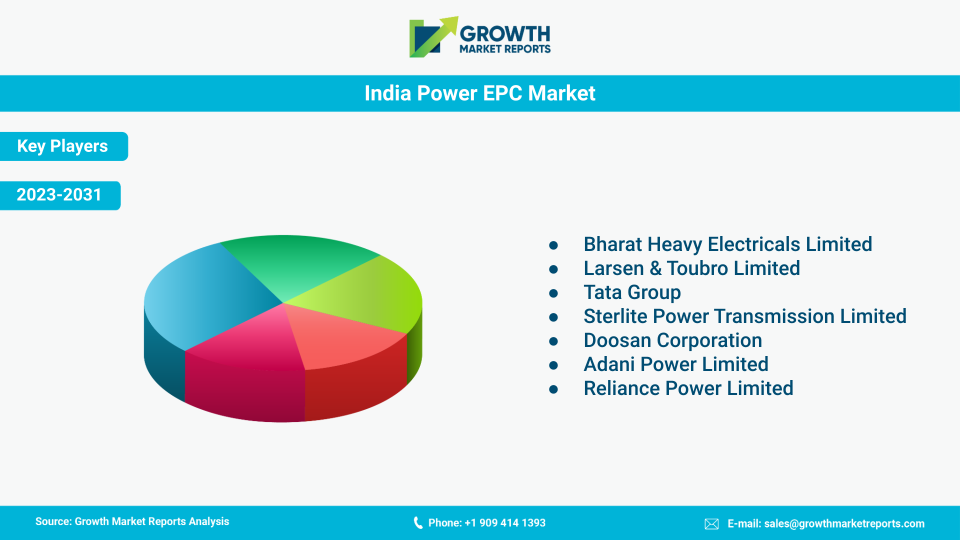

India Power EPC Market Key Players


Frequently Asked Questions

Digital technologies such as Building Information Modeling (BIM), IoT-enabled asset monitoring, predictive analytics, and advanced project management tools are enhancing efficiency, transparency, and risk management in EPC processes.

Major players include Siemens Energy, General Electric (GE) Power, Bechtel Corporation, Fluor Corporation, Larsen & Toubro (L&T), Kiewit Corporation, Mitsubishi Heavy Industries, Doosan Heavy Industries & Construction, and others.

Challenges include project complexity and risk, supply chain volatility, regulatory hurdles, cost overruns, and increasing competition from local and digital-first EPC firms.

Main end-users include utilities, industrial sectors (oil & gas, mining, manufacturing), commercial entities (data centers, hospitals, retail), and government or public sector organizations.

Power EPC contractors offer integrated services including engineering, procurement, construction, and commissioning, delivering end-to-end solutions for complex power projects.

The shift to renewable energy is driving exponential growth in EPC projects for solar and wind, supported by favorable policies, falling technology costs, and increased investments in clean energy infrastructure.

The market is segmented by power generation type into thermal, renewable, nuclear, hydroelectric, and others such as geothermal, biomass, and waste-to-energy.

Asia Pacific dominates the Power EPC market, followed by North America and Europe. The Middle East & Africa and Latin America are emerging as high-growth regions due to energy diversification and infrastructure development.

Key growth drivers include the global transition to renewable energy, modernization of aging grid infrastructure, increased demand for reliable energy in emerging economies, and the integration of digital technologies in EPC processes.

The global Power EPC market reached USD 80.7 billion in 2024 and is expected to grow at a CAGR of 5.1% from 2025 to 2033, reaching USD 127.1 billion by the end of the forecast period.

Table Of Content

Chapter 1 Executive Summary
Chapter 2 Assumptions and Acronyms Used
Chapter 3 Research Methodology
Chapter 4 Power EPC  Market Overview
   4.1 Introduction
      4.1.1 Market Taxonomy
      4.1.2 Market Definition
      4.1.3 Macro-Economic Factors Impacting the Market Growth
   4.2 Power EPC  Market Dynamics
      4.2.1 Market Drivers
      4.2.2 Market Restraints
      4.2.3 Market Opportunity
   4.3 Power EPC  Market - Supply Chain Analysis
      4.3.1 List of Key Suppliers
      4.3.2 List of Key Distributors
      4.3.3 List of Key Consumers
   4.4 Key Forces Shaping the Power EPC  Market
      4.4.1 Bargaining Power of Suppliers
      4.4.2 Bargaining Power of Buyers
      4.4.3 Threat of Substitution
      4.4.4 Threat of New Entrants
      4.4.5 Competitive Rivalry
   4.5 Global Power EPC  Market Size & Forecast, 2023-2032
      4.5.1 Power EPC  Market Size and Y-o-Y Growth
      4.5.2 Power EPC  Market Absolute $ Opportunity

Chapter 5 Global Power EPC  Market Analysis and Forecast By Power Generation Type
   5.1 Introduction
      5.1.1 Key Market Trends & Growth Opportunities By Power Generation Type
      5.1.2 Basis Point Share (BPS) Analysis By Power Generation Type
      5.1.3 Absolute $ Opportunity Assessment By Power Generation Type
   5.2 Power EPC  Market Size Forecast By Power Generation Type
      5.2.1 Thermal
      5.2.2 Renewable
      5.2.3 Nuclear
      5.2.4 Hydroelectric
      5.2.5 Others
   5.3 Market Attractiveness Analysis By Power Generation Type

Chapter 6 Global Power EPC  Market Analysis and Forecast By Service Type
   6.1 Introduction
      6.1.1 Key Market Trends & Growth Opportunities By Service Type
      6.1.2 Basis Point Share (BPS) Analysis By Service Type
      6.1.3 Absolute $ Opportunity Assessment By Service Type
   6.2 Power EPC  Market Size Forecast By Service Type
      6.2.1 Engineering
      6.2.2 Procurement
      6.2.3 Construction
      6.2.4 Commissioning
   6.3 Market Attractiveness Analysis By Service Type

Chapter 7 Global Power EPC  Market Analysis and Forecast By End-User
   7.1 Introduction
      7.1.1 Key Market Trends & Growth Opportunities By End-User
      7.1.2 Basis Point Share (BPS) Analysis By End-User
      7.1.3 Absolute $ Opportunity Assessment By End-User
   7.2 Power EPC  Market Size Forecast By End-User
      7.2.1 Utilities
      7.2.2 Industrial
      7.2.3 Commercial
      7.2.4 Others
   7.3 Market Attractiveness Analysis By End-User

Chapter 8 Global Power EPC  Market Analysis and Forecast by Region
   8.1 Introduction
      8.1.1 Key Market Trends & Growth Opportunities By Region
      8.1.2 Basis Point Share (BPS) Analysis By Region
      8.1.3 Absolute $ Opportunity Assessment By Region
   8.2 Power EPC  Market Size Forecast By Region
      8.2.1 North America
      8.2.2 Europe
      8.2.3 Asia Pacific
      8.2.4 Latin America
      8.2.5 Middle East & Africa (MEA)
   8.3 Market Attractiveness Analysis By Region

Chapter 9 Coronavirus Disease (COVID-19) Impact 
   9.1 Introduction 
   9.2 Current & Future Impact Analysis 
   9.3 Economic Impact Analysis 
   9.4 Government Policies 
   9.5 Investment Scenario

Chapter 10 North America Power EPC  Analysis and Forecast
   10.1 Introduction
   10.2 North America Power EPC  Market Size Forecast by Country
      10.2.1 U.S.
      10.2.2 Canada
   10.3 Basis Point Share (BPS) Analysis by Country
   10.4 Absolute $ Opportunity Assessment by Country
   10.5 Market Attractiveness Analysis by Country
   10.6 North America Power EPC  Market Size Forecast By Power Generation Type
      10.6.1 Thermal
      10.6.2 Renewable
      10.6.3 Nuclear
      10.6.4 Hydroelectric
      10.6.5 Others
   10.7 Basis Point Share (BPS) Analysis By Power Generation Type 
   10.8 Absolute $ Opportunity Assessment By Power Generation Type 
   10.9 Market Attractiveness Analysis By Power Generation Type
   10.10 North America Power EPC  Market Size Forecast By Service Type
      10.10.1 Engineering
      10.10.2 Procurement
      10.10.3 Construction
      10.10.4 Commissioning
   10.11 Basis Point Share (BPS) Analysis By Service Type 
   10.12 Absolute $ Opportunity Assessment By Service Type 
   10.13 Market Attractiveness Analysis By Service Type
   10.14 North America Power EPC  Market Size Forecast By End-User
      10.14.1 Utilities
      10.14.2 Industrial
      10.14.3 Commercial
      10.14.4 Others
   10.15 Basis Point Share (BPS) Analysis By End-User 
   10.16 Absolute $ Opportunity Assessment By End-User 
   10.17 Market Attractiveness Analysis By End-User

Chapter 11 Europe Power EPC  Analysis and Forecast
   11.1 Introduction
   11.2 Europe Power EPC  Market Size Forecast by Country
      11.2.1 Germany
      11.2.2 France
      11.2.3 Italy
      11.2.4 U.K.
      11.2.5 Spain
      11.2.6 Russia
      11.2.7 Rest of Europe
   11.3 Basis Point Share (BPS) Analysis by Country
   11.4 Absolute $ Opportunity Assessment by Country
   11.5 Market Attractiveness Analysis by Country
   11.6 Europe Power EPC  Market Size Forecast By Power Generation Type
      11.6.1 Thermal
      11.6.2 Renewable
      11.6.3 Nuclear
      11.6.4 Hydroelectric
      11.6.5 Others
   11.7 Basis Point Share (BPS) Analysis By Power Generation Type 
   11.8 Absolute $ Opportunity Assessment By Power Generation Type 
   11.9 Market Attractiveness Analysis By Power Generation Type
   11.10 Europe Power EPC  Market Size Forecast By Service Type
      11.10.1 Engineering
      11.10.2 Procurement
      11.10.3 Construction
      11.10.4 Commissioning
   11.11 Basis Point Share (BPS) Analysis By Service Type 
   11.12 Absolute $ Opportunity Assessment By Service Type 
   11.13 Market Attractiveness Analysis By Service Type
   11.14 Europe Power EPC  Market Size Forecast By End-User
      11.14.1 Utilities
      11.14.2 Industrial
      11.14.3 Commercial
      11.14.4 Others
   11.15 Basis Point Share (BPS) Analysis By End-User 
   11.16 Absolute $ Opportunity Assessment By End-User 
   11.17 Market Attractiveness Analysis By End-User

Chapter 12 Asia Pacific Power EPC  Analysis and Forecast
   12.1 Introduction
   12.2 Asia Pacific Power EPC  Market Size Forecast by Country
      12.2.1 China
      12.2.2 Japan
      12.2.3 South Korea
      12.2.4 India
      12.2.5 Australia
      12.2.6 South East Asia (SEA)
      12.2.7 Rest of Asia Pacific (APAC)
   12.3 Basis Point Share (BPS) Analysis by Country
   12.4 Absolute $ Opportunity Assessment by Country
   12.5 Market Attractiveness Analysis by Country
   12.6 Asia Pacific Power EPC  Market Size Forecast By Power Generation Type
      12.6.1 Thermal
      12.6.2 Renewable
      12.6.3 Nuclear
      12.6.4 Hydroelectric
      12.6.5 Others
   12.7 Basis Point Share (BPS) Analysis By Power Generation Type 
   12.8 Absolute $ Opportunity Assessment By Power Generation Type 
   12.9 Market Attractiveness Analysis By Power Generation Type
   12.10 Asia Pacific Power EPC  Market Size Forecast By Service Type
      12.10.1 Engineering
      12.10.2 Procurement
      12.10.3 Construction
      12.10.4 Commissioning
   12.11 Basis Point Share (BPS) Analysis By Service Type 
   12.12 Absolute $ Opportunity Assessment By Service Type 
   12.13 Market Attractiveness Analysis By Service Type
   12.14 Asia Pacific Power EPC  Market Size Forecast By End-User
      12.14.1 Utilities
      12.14.2 Industrial
      12.14.3 Commercial
      12.14.4 Others
   12.15 Basis Point Share (BPS) Analysis By End-User 
   12.16 Absolute $ Opportunity Assessment By End-User 
   12.17 Market Attractiveness Analysis By End-User

Chapter 13 Latin America Power EPC  Analysis and Forecast
   13.1 Introduction
   13.2 Latin America Power EPC  Market Size Forecast by Country
      13.2.1 Brazil
      13.2.2 Mexico
      13.2.3 Rest of Latin America (LATAM)
   13.3 Basis Point Share (BPS) Analysis by Country
   13.4 Absolute $ Opportunity Assessment by Country
   13.5 Market Attractiveness Analysis by Country
   13.6 Latin America Power EPC  Market Size Forecast By Power Generation Type
      13.6.1 Thermal
      13.6.2 Renewable
      13.6.3 Nuclear
      13.6.4 Hydroelectric
      13.6.5 Others
   13.7 Basis Point Share (BPS) Analysis By Power Generation Type 
   13.8 Absolute $ Opportunity Assessment By Power Generation Type 
   13.9 Market Attractiveness Analysis By Power Generation Type
   13.10 Latin America Power EPC  Market Size Forecast By Service Type
      13.10.1 Engineering
      13.10.2 Procurement
      13.10.3 Construction
      13.10.4 Commissioning
   13.11 Basis Point Share (BPS) Analysis By Service Type 
   13.12 Absolute $ Opportunity Assessment By Service Type 
   13.13 Market Attractiveness Analysis By Service Type
   13.14 Latin America Power EPC  Market Size Forecast By End-User
      13.14.1 Utilities
      13.14.2 Industrial
      13.14.3 Commercial
      13.14.4 Others
   13.15 Basis Point Share (BPS) Analysis By End-User 
   13.16 Absolute $ Opportunity Assessment By End-User 
   13.17 Market Attractiveness Analysis By End-User

Chapter 14 Middle East & Africa (MEA) Power EPC  Analysis and Forecast
   14.1 Introduction
   14.2 Middle East & Africa (MEA) Power EPC  Market Size Forecast by Country
      14.2.1 Saudi Arabia
      14.2.2 South Africa
      14.2.3 UAE
      14.2.4 Rest of Middle East & Africa (MEA)
   14.3 Basis Point Share (BPS) Analysis by Country
   14.4 Absolute $ Opportunity Assessment by Country
   14.5 Market Attractiveness Analysis by Country
   14.6 Middle East & Africa (MEA) Power EPC  Market Size Forecast By Power Generation Type
      14.6.1 Thermal
      14.6.2 Renewable
      14.6.3 Nuclear
      14.6.4 Hydroelectric
      14.6.5 Others
   14.7 Basis Point Share (BPS) Analysis By Power Generation Type 
   14.8 Absolute $ Opportunity Assessment By Power Generation Type 
   14.9 Market Attractiveness Analysis By Power Generation Type
   14.10 Middle East & Africa (MEA) Power EPC  Market Size Forecast By Service Type
      14.10.1 Engineering
      14.10.2 Procurement
      14.10.3 Construction
      14.10.4 Commissioning
   14.11 Basis Point Share (BPS) Analysis By Service Type 
   14.12 Absolute $ Opportunity Assessment By Service Type 
   14.13 Market Attractiveness Analysis By Service Type
   14.14 Middle East & Africa (MEA) Power EPC  Market Size Forecast By End-User
      14.14.1 Utilities
      14.14.2 Industrial
      14.14.3 Commercial
      14.14.4 Others
   14.15 Basis Point Share (BPS) Analysis By End-User 
   14.16 Absolute $ Opportunity Assessment By End-User 
   14.17 Market Attractiveness Analysis By End-User

Chapter 15 Competition Landscape 
   15.1 Power EPC  Market: Competitive Dashboard
   15.2 Global Power EPC  Market: Market Share Analysis, 2023
   15.3 Company Profiles (Details – Overview, Financials, Developments, Strategy) 
      15.3.1 Siemens Energy
General Electric (GE) Power
Bechtel Corporation
Fluor Corporation
Mitsubishi Power
Toshiba Energy Systems & Solutions
Larsen & Toubro (L&T) Power
Kiewit Corporation
Doosan Heavy Industries & Construction
Babcock & Wilcox Enterprises
ABB Ltd.
Hitachi Energy
WorleyParsons
Black & Veatch
Sterling and Wilson
Shanghai Electric Group
Iberdrola Ingeniería y Construcción
SNC-Lavalin Group
Technip Energies
Sumitomo Corporation

Methodology

Our Clients

General Mills
Dassault Aviation
Siemens Healthcare
Nestle SA
Microsoft
FedEx Logistics
Honda Motor Co. Ltd.
The John Holland Group