Multi-touch Screen Market Research Report 2033

Multi-touch Screen Market Research Report 2033

Segments - by Technology (Capacitive, Resistive, Infrared, Optical, Others), by Application (Consumer Electronics, Retail, Education, Healthcare, Automotive, Industrial, Others), by Screen Size (Small, Medium, Large), by End-User (Commercial, Residential, Industrial)

https://growthmarketreports.com/Debadatta
Author : Debadatta Patel
https://growthmarketreports.com/Vaibhav
Fact-checked by : V. Chandola
https://growthmarketreports.com/Shruti
Editor : Shruti Bhat

Upcoming | Report ID :CG-288 | 5.0 Rating | 28 Reviews | 255 Pages | Format : Docx PDF

Report Description


Multi-touch Screen Market Outlook

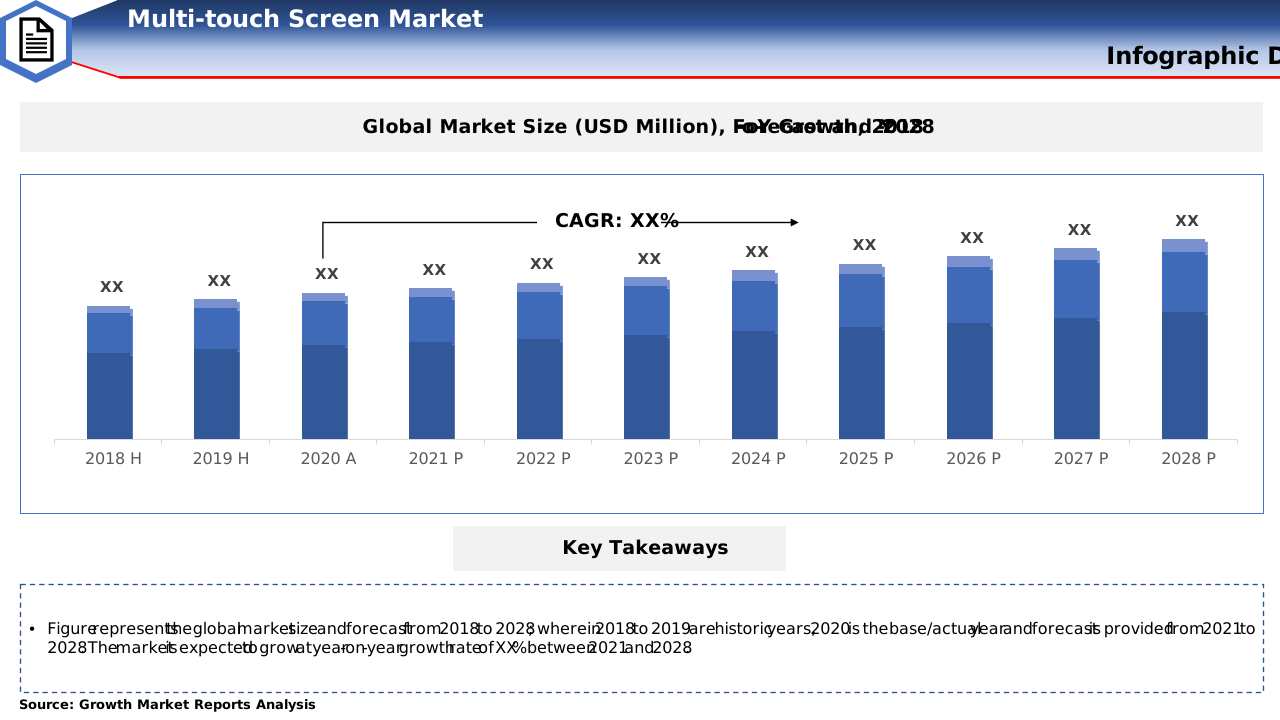
According to our latest research, the global multi-touch screen market size reached USD 16.8 billion in 2024 and is expected to grow at a robust CAGR of 13.2% from 2025 to 2033. By the end of the forecast period, the market is projected to attain a value of USD 48.6 billion. This significant growth is primarily driven by the rising adoption of interactive displays across diverse sectors, such as consumer electronics, retail, education, and automotive industries, alongside the increasing demand for intuitive user interfaces and enhanced touch experiences.

The expansion of the multi-touch screen market is largely fueled by the ongoing technological advancements in touch sensing and display technologies. As manufacturers continue to innovate, the integration of capacitive, infrared, and optical touch technologies has enabled more precise, responsive, and durable multi-touch screens. These improvements have led to widespread use in smartphones, tablets, interactive kiosks, and digital signage, meeting the ever-growing consumer expectations for seamless, multi-finger interactions. Additionally, the proliferation of smart devices and the Internet of Things (IoT) has further amplified the need for advanced touch interfaces, pushing the boundaries of traditional applications and opening new avenues for market growth.

Another key growth factor is the increasing incorporation of multi-touch screens in the retail and education sectors. In retail, interactive displays and self-service kiosks are transforming customer engagement, enabling personalized shopping experiences and efficient service delivery. Similarly, in education, the adoption of interactive whiteboards and touch-enabled learning tools is enhancing classroom collaboration and student engagement. These trends are supported by government initiatives and investments in digital infrastructure, particularly in emerging economies, which are accelerating the deployment of multi-touch technologies in public and private institutions alike.

The automotive and healthcare industries are also contributing to the expanding footprint of the multi-touch screen market. In automotive applications, touch-enabled infotainment systems, navigation panels, and control interfaces are becoming standard features in modern vehicles, offering drivers and passengers a more intuitive and connected experience. In healthcare, multi-touch screens are increasingly used in diagnostic equipment, patient monitoring systems, and electronic medical records management, streamlining workflows and improving patient care. The convergence of these trends is expected to maintain strong momentum in the multi-touch screen market over the next decade.

In the realm of retail and education, the introduction of Touch Table technology is revolutionizing the way users interact with digital content. These tables offer a unique platform for collaborative learning and customer engagement, providing an interactive surface that can accommodate multiple users simultaneously. In educational settings, Touch Tables facilitate group activities and discussions, allowing students to engage with educational materials in a hands-on manner. In retail, these tables enhance the shopping experience by enabling customers to explore product catalogs, customize items, and even complete transactions directly from the table. The versatility and intuitive nature of Touch Tables are driving their adoption across various sectors, contributing to the dynamic growth of the multi-touch screen market.

Regionally, Asia Pacific remains at the forefront of multi-touch screen adoption, driven by the presence of major electronics manufacturers, rapid urbanization, and a burgeoning middle-class population. North America and Europe are also witnessing substantial growth due to high consumer spending on advanced gadgets and the swift digital transformation across industries. Meanwhile, Latin America and the Middle East & Africa are emerging as promising markets, supported by increasing investments in digital infrastructure and growing awareness of the benefits of interactive technologies. This global expansion underscores the universal appeal and versatility of multi-touch screens across diverse end-user segments.

Global Multi-touch Screen Industry Outlook

Technology Analysis

The multi-touch screen market is characterized by a diverse array of underlying technologies, each contributing uniquely to the evolution of touch interfaces. Among these, capacitive technology dominates the market due to its superior responsiveness, clarity, and durability. Capacitive touch screens, which detect touch through the electrical properties of the human body, are widely adopted in smartphones, tablets, and high-end consumer electronics. Their ability to support multiple simultaneous touch points and gestures has set the benchmark for user experience, making them the preferred choice for manufacturers aiming to deliver seamless and intuitive interfaces. The ongoing miniaturization of electronic components and advancements in material science are further enhancing the performance and cost-effectiveness of capacitive touch solutions.

Resistive touch screens, while gradually losing market share to capacitive counterparts, continue to find relevance in specific applications that require robustness and cost efficiency. These screens operate by detecting pressure applied to the surface, making them suitable for industrial, commercial, and outdoor environments where users may wear gloves or use a stylus. The resilience of resistive technology to dust, moisture, and physical impact ensures its continued use in ruggedized devices, point-of-sale terminals, and certain automotive interfaces. Manufacturers are also innovating with hybrid touch solutions that combine the strengths of both capacitive and resistive technologies to meet the diverse needs of end-users.

Infrared and optical touch technologies are gaining traction in large-format displays and interactive digital signage, where high accuracy and multi-user interaction are essential. Infrared touch screens utilize a grid of infrared light beams to detect touch points, offering excellent durability and scalability for applications such as interactive kiosks and educational whiteboards. Optical touch screens, on the other hand, employ cameras and sensors to track touch events, providing superior performance in environments that require high touch accuracy and minimal maintenance. These technologies are particularly favored in public spaces and collaborative settings, where reliability and ease of use are paramount.

In addition to these mainstream technologies, emerging innovations such as projected capacitive, surface acoustic wave, and ultrasonic touch screens are expanding the capabilities of multi-touch interfaces. Projected capacitive technology, in particular, is being adopted in premium devices for its enhanced sensitivity, transparency, and support for complex gestures. The integration of haptic feedback and advanced gesture recognition is also pushing the boundaries of user interaction, enabling more immersive and intuitive experiences. As the market continues to evolve, the convergence of multiple touch technologies is expected to drive further differentiation and value creation across various industry verticals.

The evolution of Touchscreen Display technology is playing a pivotal role in the advancement of multi-touch interfaces. These displays are becoming increasingly sophisticated, offering high-resolution visuals and responsive touch capabilities that enhance user interaction. In consumer electronics, Touchscreen Displays are integral to the functionality of smartphones, tablets, and laptops, providing users with a seamless and intuitive interface. The integration of advanced features such as gesture recognition and haptic feedback is further elevating the user experience, making these displays a cornerstone of modern device design. As industries continue to innovate, the demand for high-quality Touchscreen Displays is expected to rise, driving further growth in the multi-touch screen market.

The competitive landscape within the technology segment is marked by continuous investment in research and development, with leading players focusing on reducing power consumption, improving touch accuracy, and enhancing display quality. Strategic collaborations between technology providers, display manufacturers, and device OEMs are accelerating the commercialization of next-generation touch solutions, ensuring that the multi-touch screen market remains at the forefront of interactive technology innovation.

Report Scope

Attributes Details
Report Title Multi-touch Screen Market Research Report 2033
By Technology Capacitive, Resistive, Infrared, Optical, Others
By Application Consumer Electronics, Retail, Education, Healthcare, Automotive, Industrial, Others
By Screen Size Small, Medium, Large
By End-User Commercial, Residential, Industrial
Regions Covered North America, Europe, APAC, Latin America, MEA
Base Year 2024
Historic Data 2018-2023
Forecast Period 2025-2033
Number of Pages 255
Number of Tables & Figures 326
Customization Available Yes, the report can be customized as per your need.

Application Analysis

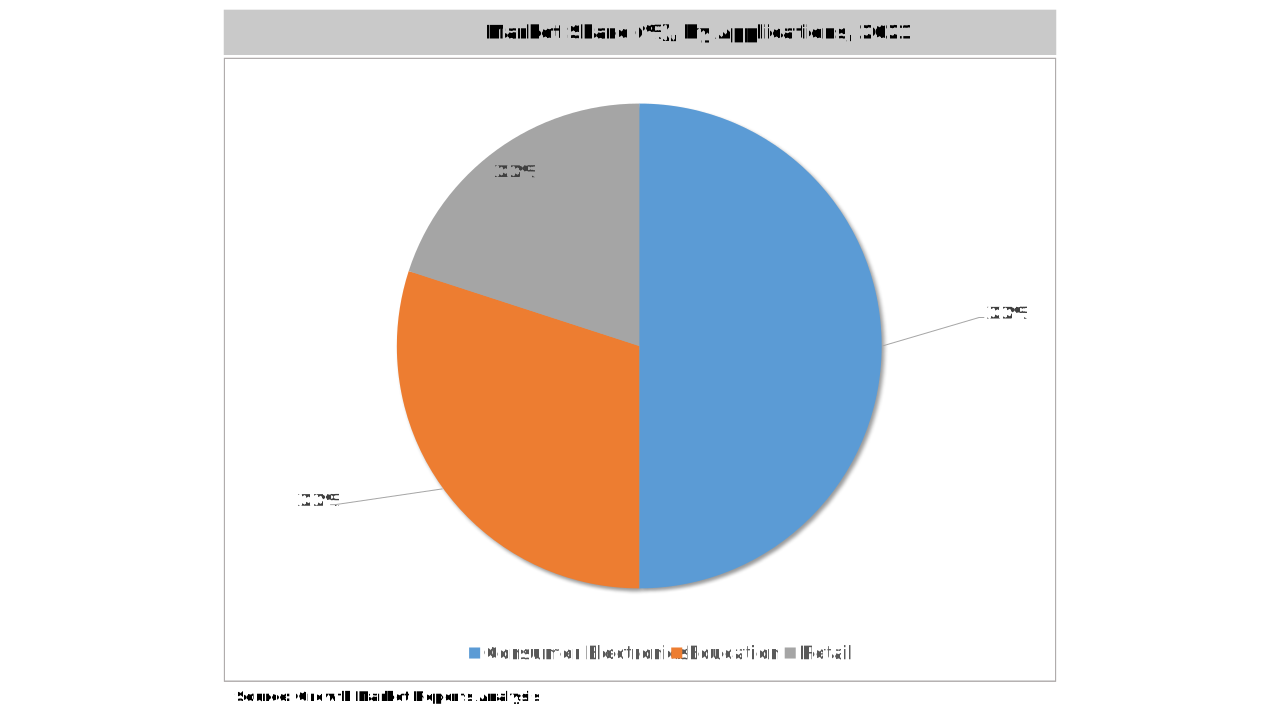
The application landscape of the multi-touch screen market is both broad and dynamic, reflecting the technology's versatility and adaptability across multiple industries. Consumer electronics remains the largest and most influential application segment, accounting for a significant share of global demand. The ubiquity of smartphones, tablets, laptops, and wearable devices has made multi-touch functionality an essential feature, driving continuous innovation in user interface design and performance. As consumers increasingly seek devices that offer seamless, intuitive, and responsive touch experiences, manufacturers are investing heavily in integrating advanced multi-touch capabilities into their product portfolios.

The retail sector is rapidly embracing multi-touch screens to enhance customer engagement and streamline operations. Interactive kiosks, digital signage, and self-service terminals are transforming the retail experience by enabling personalized recommendations, efficient checkout processes, and immersive product demonstrations. Retailers are leveraging multi-touch technology to gather valuable customer insights, optimize inventory management, and deliver targeted marketing campaigns. The growing trend of omnichannel retailing and the shift towards experiential shopping are expected to further accelerate the adoption of multi-touch screens in this sector.

In the education sector, multi-touch screens are revolutionizing teaching and learning methodologies. Interactive whiteboards, touch-enabled projectors, and collaborative learning platforms are fostering greater student engagement, participation, and knowledge retention. Educators are increasingly utilizing multi-touch solutions to create dynamic, interactive lessons that cater to diverse learning styles and promote collaborative problem-solving. The COVID-19 pandemic has also accelerated the adoption of digital learning tools, with schools and universities investing in technology-driven classrooms to support remote and hybrid learning environments.

The introduction of Touchscreen Jukebox systems is transforming the entertainment landscape, offering a modern twist on a classic concept. These systems combine the nostalgia of traditional jukeboxes with the convenience and interactivity of touch technology, allowing users to browse and select music with ease. In hospitality and leisure venues, Touchscreen Jukeboxes are enhancing the customer experience by providing a personalized and engaging way to enjoy music. The ability to integrate with digital music libraries and streaming services ensures a vast selection of songs, catering to diverse musical tastes. As the demand for interactive entertainment solutions grows, Touchscreen Jukeboxes are set to become a popular choice in venues seeking to offer a unique and memorable experience.

Healthcare is another key application area where multi-touch screens are making a significant impact. Touch-enabled medical devices, patient monitoring systems, and electronic health record (EHR) interfaces are streamlining clinical workflows, improving diagnostic accuracy, and enhancing patient care. The ability to access and manipulate complex medical data through intuitive touch interfaces is reducing administrative burdens and enabling healthcare professionals to focus more on patient outcomes. Additionally, the integration of multi-touch screens in telemedicine and remote patient monitoring solutions is expanding access to quality healthcare services, particularly in underserved regions.

The automotive and industrial sectors are also witnessing increased adoption of multi-touch screens. In automotive applications, touch-enabled infotainment systems, navigation panels, and climate control interfaces are enhancing driver and passenger experiences, while in industrial settings, multi-touch human-machine interfaces (HMIs) are improving operational efficiency and safety. The versatility of multi-touch technology is enabling its deployment in a wide range of innovative applications, from smart home automation to public information displays, underscoring its critical role in the digital transformation of industries worldwide.

Screen Size Analysis

The multi-touch screen market can be segmented by screen size into small, medium, and large formats, each catering to distinct application requirements and user preferences. Small-sized multi-touch screens, typically ranging from 3 to 7 inches, are predominantly used in smartphones, wearables, handheld gaming devices, and compact navigation systems. The compact form factor, combined with high touch sensitivity and resolution, makes these screens ideal for personal electronics that demand portability and ease of use. The continuous miniaturization of electronic components and advancements in display technology are enabling manufacturers to deliver enhanced performance and longer battery life in small devices.

Medium-sized multi-touch screens, spanning 8 to 20 inches, are widely adopted in tablets, laptops, all-in-one PCs, and automotive infotainment systems. This segment benefits from the growing trend towards hybrid and convertible computing devices, which offer the flexibility of both touch and traditional input methods. The increasing popularity of touch-enabled laptops and detachable tablets in both consumer and enterprise markets is driving significant demand for medium-sized screens. Additionally, the integration of multi-touch functionality in automotive dashboards and rear-seat entertainment systems is enhancing in-vehicle connectivity and user experience.

Large-sized multi-touch screens, typically exceeding 20 inches, are gaining prominence in applications such as interactive kiosks, digital signage, collaborative workspaces, and educational whiteboards. These screens are designed to support multi-user interactions, making them ideal for public spaces, retail environments, and classrooms. The scalability, durability, and high touch accuracy of large-format screens are enabling new use cases in sectors such as hospitality, transportation, and healthcare. The growing emphasis on digital engagement and immersive experiences is expected to drive robust growth in the large-sized multi-touch screen segment over the forecast period.

The choice of screen size is often influenced by the specific requirements of end-users, including portability, display quality, touch sensitivity, and intended use case. Manufacturers are increasingly offering customizable solutions that cater to the diverse needs of their customers, from ultra-compact screens for wearable devices to expansive displays for interactive installations. The convergence of high-resolution displays, advanced touch sensing, and energy-efficient components is enabling the development of multi-touch screens that deliver exceptional performance across all size categories.

As the market continues to evolve, the demand for flexible, foldable, and curved multi-touch screens is expected to gain momentum, particularly in the consumer electronics and automotive sectors. These innovations are opening up new possibilities for device form factors and user experiences, further expanding the addressable market for multi-touch screen technologies.

End-User Analysis

The end-user landscape of the multi-touch screen market is highly diverse, encompassing commercial, residential, and industrial segments, each with unique requirements and growth drivers. The commercial segment represents the largest share of the market, driven by widespread adoption in retail, hospitality, education, healthcare, and corporate environments. Businesses are leveraging multi-touch screens to enhance customer engagement, improve operational efficiency, and enable interactive collaboration. The proliferation of digital signage, self-service kiosks, and interactive displays in commercial spaces is fueling demand for advanced touch solutions that offer reliability, scalability, and ease of integration.

In the residential segment, the growing penetration of smart home devices, entertainment systems, and connected appliances is driving the adoption of multi-touch screens. Consumers are increasingly seeking intuitive and responsive interfaces for controlling home automation systems, accessing multimedia content, and managing daily tasks. The integration of multi-touch technology in smart TVs, home security panels, and personal devices is enhancing convenience, accessibility, and user satisfaction. As residential users become more accustomed to touch-based interactions in their daily lives, the demand for innovative and aesthetically pleasing multi-touch solutions is expected to rise.

The industrial segment is witnessing steady growth as manufacturers and operators embrace digital transformation to improve productivity, safety, and process control. Multi-touch human-machine interfaces (HMIs) are being deployed in factories, warehouses, and control rooms to facilitate real-time monitoring, data visualization, and equipment management. The robustness, durability, and resistance to harsh environmental conditions make multi-touch screens well-suited for industrial applications. Additionally, the adoption of Industry 4.0 principles and the increasing use of automation and robotics are driving the need for advanced touch interfaces that support complex workflows and remote operation.

Across all end-user segments, the emphasis is on delivering seamless, intuitive, and reliable touch experiences that enhance user satisfaction and drive business outcomes. Manufacturers are responding by developing customized solutions that cater to the specific needs of each segment, from ruggedized industrial panels to sleek, frameless displays for commercial and residential use. The integration of advanced features such as gesture recognition, haptic feedback, and voice control is further differentiating multi-touch screens and expanding their appeal across diverse end-user categories.

The future outlook for the end-user segment is highly optimistic, with continued investments in digital infrastructure, smart technologies, and user-centric design expected to drive sustained growth in the multi-touch screen market. As businesses and consumers alike seek to leverage the benefits of interactive technology, the demand for multi-touch screens across commercial, residential, and industrial applications is set to remain strong throughout the forecast period.

Opportunities & Threats

The multi-touch screen market presents a wealth of opportunities for innovation, expansion, and value creation across various industries. One of the most significant opportunities lies in the integration of multi-touch technology with emerging trends such as artificial intelligence, augmented reality, and the Internet of Things. By leveraging these synergies, manufacturers can develop next-generation touch interfaces that offer enhanced functionality, personalization, and interactivity. The growing demand for smart devices, connected vehicles, and intelligent environments is creating new use cases for multi-touch screens, from smart mirrors and interactive retail displays to advanced medical devices and collaborative workspaces. Additionally, the increasing focus on sustainability and energy efficiency is driving the development of eco-friendly touch solutions that minimize environmental impact while delivering superior performance.

Another major opportunity is the expansion of multi-touch screen adoption in emerging markets, where rapid urbanization, rising disposable incomes, and digital transformation initiatives are creating favorable conditions for growth. Governments and private sector players in regions such as Asia Pacific, Latin America, and the Middle East & Africa are investing heavily in digital infrastructure, education, and healthcare, driving demand for interactive technologies. The proliferation of affordable smartphones, tablets, and smart devices is accelerating the digital inclusion of previously underserved populations, opening up new avenues for market penetration. Strategic partnerships, localized product offerings, and targeted marketing campaigns are essential for capturing these growth opportunities and establishing a strong foothold in high-potential markets.

Despite the promising outlook, the multi-touch screen market faces several restraining factors that could hinder its growth trajectory. One of the primary challenges is the high cost of advanced touch technologies, particularly in large-format and specialized applications. The complexity of integrating multi-touch functionality with high-resolution displays, haptic feedback, and gesture recognition features can drive up manufacturing costs and limit affordability for price-sensitive segments. Additionally, issues related to durability, susceptibility to environmental factors, and compatibility with legacy systems may pose barriers to adoption, especially in industrial and outdoor applications. Addressing these challenges requires ongoing investment in research and development, as well as collaboration between technology providers, manufacturers, and end-users to deliver cost-effective and reliable solutions.

Regional Outlook

Asia Pacific continues to dominate the global multi-touch screen market, accounting for the largest share of revenue and unit shipments in 2024. The region's market size reached USD 7.2 billion, driven by the presence of leading electronics manufacturers, rapid technological advancements, and a large, tech-savvy consumer base. Countries such as China, Japan, South Korea, and Taiwan are at the forefront of innovation, with robust supply chains, skilled labor, and significant investments in research and development. The proliferation of smartphones, tablets, and smart home devices, coupled with government initiatives to promote digitalization in education and healthcare, is fueling sustained demand for multi-touch screens across the region.

North America remains a key market for multi-touch screen technologies, with a market size of USD 4.3 billion in 2024. The region benefits from high consumer spending on advanced electronic devices, a strong focus on user experience, and rapid adoption of digital solutions across industries. The United States and Canada are witnessing increased deployment of interactive displays in retail, education, healthcare, and automotive sectors, supported by a well-established technology ecosystem and favorable regulatory environment. The North American market is expected to grow at a steady CAGR of 12.1% through 2033, driven by ongoing innovation and the integration of multi-touch functionality in next-generation devices.

Europe represents another significant market, with revenues reaching USD 3.1 billion in 2024. The region's growth is underpinned by strong demand for interactive technologies in education, corporate, and public sector applications. Countries such as Germany, the United Kingdom, and France are leading the adoption of multi-touch screens in smart classrooms, digital signage, and transportation systems. The emphasis on digital transformation, coupled with investments in smart city initiatives and sustainable infrastructure, is creating new opportunities for market expansion. Meanwhile, Latin America and the Middle East & Africa, with market sizes of USD 1.3 billion and USD 0.9 billion respectively, are emerging as promising regions, supported by increasing investments in digital infrastructure, rising consumer awareness, and growing demand for affordable smart devices.

Multi-touch Screen Market Statistics

Competitor Outlook

The competitive landscape of the multi-touch screen market is highly dynamic, characterized by intense rivalry among global and regional players striving to capture market share through innovation, quality, and cost leadership. Leading companies are focusing on the development of advanced touch technologies that offer superior performance, reliability, and user experience. Continuous investment in research and development is a key differentiator, enabling market leaders to introduce new features such as gesture recognition, haptic feedback, and flexible displays. Strategic partnerships, mergers, and acquisitions are also prevalent, as companies seek to expand their technological capabilities, geographic reach, and customer base.

The market is witnessing a trend towards vertical integration, with major players controlling multiple stages of the value chain, from component manufacturing to system integration and end-user delivery. This approach allows companies to optimize costs, ensure product quality, and accelerate time-to-market for new innovations. The emergence of specialized players focusing on niche applications, such as industrial HMIs, automotive infotainment, and medical devices, is adding further complexity to the competitive landscape. These companies are leveraging domain expertise and customized solutions to address specific industry requirements and differentiate themselves from broader market participants.

Intellectual property and patents play a critical role in shaping the competitive dynamics of the multi-touch screen market. Leading players invest heavily in securing patents for proprietary technologies, manufacturing processes, and design innovations, creating barriers to entry for new entrants and protecting their market position. The rapid pace of technological change and the convergence of touch technology with other interactive modalities, such as voice and gesture control, are driving ongoing competition and collaboration among industry stakeholders. Companies are increasingly adopting open innovation models, partnering with research institutions, startups, and ecosystem partners to accelerate the development and commercialization of next-generation solutions.

Some of the major companies operating in the global multi-touch screen market include Apple Inc., Samsung Electronics Co., Ltd., LG Display Co., Ltd., Microsoft Corporation, Fujitsu Limited, 3M Company, NEC Corporation, Sharp Corporation, Panasonic Corporation, and Planar Systems, Inc.. These companies are at the forefront of innovation, with extensive product portfolios, strong brand recognition, and global distribution networks. Apple and Samsung, in particular, have set industry benchmarks for multi-touch performance and design, driving widespread adoption in the consumer electronics segment. LG Display and Sharp are recognized for their expertise in display manufacturing and technological advancements, while Microsoft and Fujitsu are leading the integration of multi-touch solutions in enterprise and industrial applications.

In addition to these global leaders, a number of regional players and emerging startups are making significant contributions to the market, particularly in specialized segments such as automotive, healthcare, and industrial automation. These companies are leveraging local market knowledge, agile development processes, and customer-centric approaches to deliver tailored solutions that meet the evolving needs of end-users. As the multi-touch screen market continues to grow and diversify, the competitive landscape is expected to remain vibrant, with ongoing innovation, strategic partnerships, and market consolidation shaping the future of interactive technology worldwide.

Key Players

  • 3M
  • Apple Inc.
  • Samsung Electronics Co. Ltd.
  • Microsoft Corporation
  • LG Display Co. Ltd.
  • Fujitsu Limited
  • NEC Corporation
  • Panasonic Corporation
  • Elo Touch Solutions
  • Synaptics Incorporated
  • Sharp Corporation
  • Sony Corporation
  • HP Inc.
  • Dell Technologies Inc.
  • Lenovo Group Limited
  • TPK Holding Co. Ltd.
  • Wintek Corporation
  • AU Optronics Corp.
  • Planar Systems Inc.
  • Displax Interactive Systems
Multi-touch Screen Market Overview

Segments

The Multi-touch Screen market has been segmented on the basis of

Technology

  • Capacitive
  • Resistive
  • Infrared
  • Optical
  • Others

Application

  • Consumer Electronics
  • Retail
  • Education
  • Healthcare
  • Automotive
  • Industrial
  • Others

Screen Size

  • Small
  • Medium
  • Large

End-User

  • Commercial
  • Residential
  • Industrial

Competitive Landscape

Major players competing in the global multi-touch screen market include 3MCompany, Freescale Gigabyte, DISPLAX Interactive Systems, Microsoft Corporation, LG Display, Corning Inc., Cypress Semiconductor Corporation, Wintek Corporation. Atmel Corporation, Fujitsu Ltd., Samsung, and Synaptics Incorporated.

Some of these businesses are involved in adopting numerous market strategies such as merger, acquisition, collaboration, partnership, product launch, R&D activities, and capacity expansion to increase market share and global presence.

Recently, 3M presented an advanced technology to generate new solutions such as using dental technology to be applied for the automotive application. The strategies developed by 3M are meant for long-term goals.
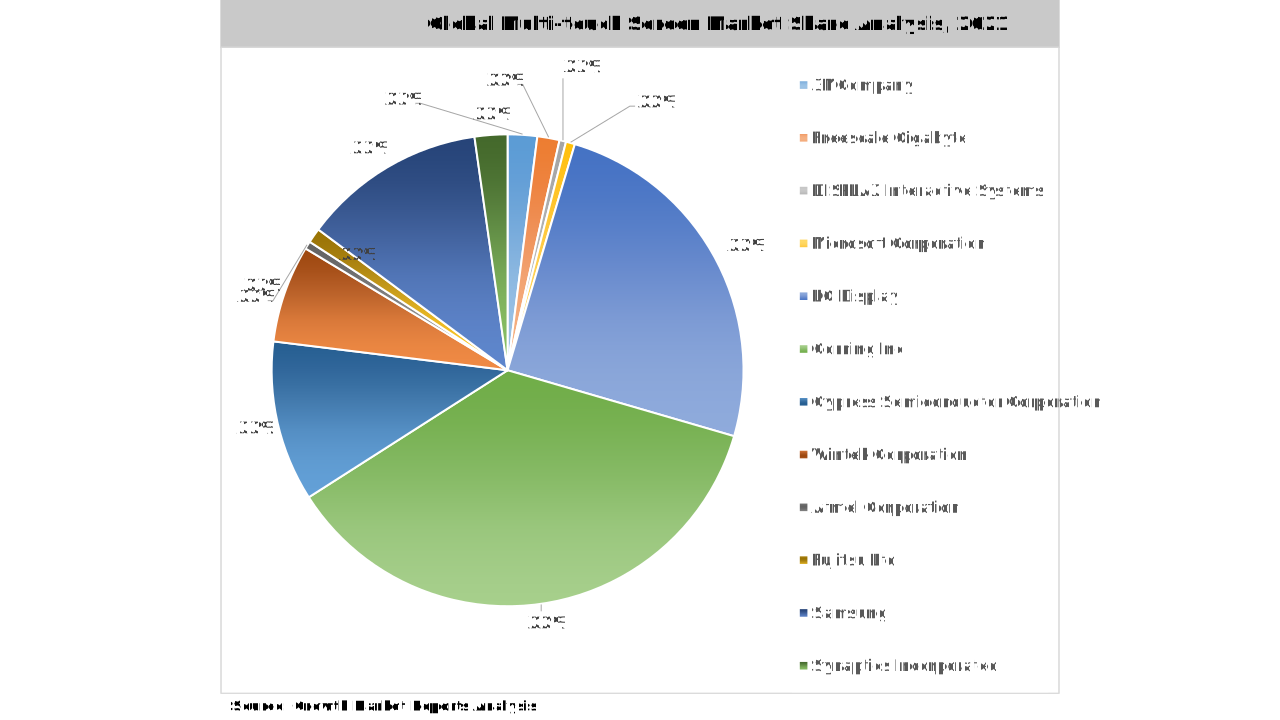

Global Multi Touch Screen Market Key Players

Frequently Asked Questions

The market is segmented into commercial, residential, and industrial end-users, with commercial applications (retail, education, healthcare, corporate) representing the largest share.

Challenges include the high cost of advanced touch technologies, durability concerns, integration complexity, and compatibility issues with legacy systems, especially in industrial and outdoor applications.

Trends include the integration of haptic feedback, gesture recognition, projected capacitive technology, and the development of flexible, foldable, and curved screens for enhanced user experiences.

Key companies include Apple Inc., Samsung Electronics Co. Ltd., LG Display Co. Ltd., Microsoft Corporation, Fujitsu Limited, 3M Company, NEC Corporation, Sharp Corporation, Panasonic Corporation, and Planar Systems, Inc.

Small screens (3-7 inches) are used in smartphones and wearables, medium screens (8-20 inches) in tablets and laptops, and large screens (over 20 inches) in kiosks, digital signage, and educational displays.

Asia Pacific leads the market, followed by North America and Europe. Latin America and the Middle East & Africa are emerging as promising markets due to increased investments in digital infrastructure.

In retail, multi-touch screens power interactive kiosks and digital signage for enhanced customer engagement. In education, they are used in interactive whiteboards and collaborative learning tools to boost student participation.

The primary technologies include capacitive, resistive, infrared, and optical touch screens, with capacitive technology dominating due to its responsiveness and durability.

Key industries fueling market growth include consumer electronics, retail, education, automotive, healthcare, and industrial sectors.

The global multi-touch screen market is expected to reach USD 48.6 billion by 2033, growing at a CAGR of 13.2% from 2025 to 2033.

Table Of Content

Chapter 1 Executive Summary
Chapter 2 Assumptions and Acronyms Used
Chapter 3 Research Methodology
Chapter 4 Multi-touch Screen Market Overview
   4.1 Introduction
      4.1.1 Market Taxonomy
      4.1.2 Market Definition
      4.1.3 Macro-Economic Factors Impacting the Market Growth
   4.2 Multi-touch Screen Market Dynamics
      4.2.1 Market Drivers
      4.2.2 Market Restraints
      4.2.3 Market Opportunity
   4.3 Multi-touch Screen Market - Supply Chain Analysis
      4.3.1 List of Key Suppliers
      4.3.2 List of Key Distributors
      4.3.3 List of Key Consumers
   4.4 Key Forces Shaping the Multi-touch Screen Market
      4.4.1 Bargaining Power of Suppliers
      4.4.2 Bargaining Power of Buyers
      4.4.3 Threat of Substitution
      4.4.4 Threat of New Entrants
      4.4.5 Competitive Rivalry
   4.5 Global Multi-touch Screen Market Size & Forecast, 2023-2032
      4.5.1 Multi-touch Screen Market Size and Y-o-Y Growth
      4.5.2 Multi-touch Screen Market Absolute $ Opportunity

Chapter 5 Global Multi-touch Screen Market Analysis and Forecast By Technology
   5.1 Introduction
      5.1.1 Key Market Trends & Growth Opportunities By Technology
      5.1.2 Basis Point Share (BPS) Analysis By Technology
      5.1.3 Absolute $ Opportunity Assessment By Technology
   5.2 Multi-touch Screen Market Size Forecast By Technology
      5.2.1 Capacitive
      5.2.2 Resistive
      5.2.3 Infrared
      5.2.4 Optical
      5.2.5 Others
   5.3 Market Attractiveness Analysis By Technology

Chapter 6 Global Multi-touch Screen Market Analysis and Forecast By Application
   6.1 Introduction
      6.1.1 Key Market Trends & Growth Opportunities By Application
      6.1.2 Basis Point Share (BPS) Analysis By Application
      6.1.3 Absolute $ Opportunity Assessment By Application
   6.2 Multi-touch Screen Market Size Forecast By Application
      6.2.1 Consumer Electronics
      6.2.2 Retail
      6.2.3 Education
      6.2.4 Healthcare
      6.2.5 Automotive
      6.2.6 Industrial
      6.2.7 Others
   6.3 Market Attractiveness Analysis By Application

Chapter 7 Global Multi-touch Screen Market Analysis and Forecast By Screen Size
   7.1 Introduction
      7.1.1 Key Market Trends & Growth Opportunities By Screen Size
      7.1.2 Basis Point Share (BPS) Analysis By Screen Size
      7.1.3 Absolute $ Opportunity Assessment By Screen Size
   7.2 Multi-touch Screen Market Size Forecast By Screen Size
      7.2.1 Small
      7.2.2 Medium
      7.2.3 Large
   7.3 Market Attractiveness Analysis By Screen Size

Chapter 8 Global Multi-touch Screen Market Analysis and Forecast By End-User
   8.1 Introduction
      8.1.1 Key Market Trends & Growth Opportunities By End-User
      8.1.2 Basis Point Share (BPS) Analysis By End-User
      8.1.3 Absolute $ Opportunity Assessment By End-User
   8.2 Multi-touch Screen Market Size Forecast By End-User
      8.2.1 Commercial
      8.2.2 Residential
      8.2.3 Industrial
   8.3 Market Attractiveness Analysis By End-User

Chapter 9 Global Multi-touch Screen Market Analysis and Forecast by Region
   9.1 Introduction
      9.1.1 Key Market Trends & Growth Opportunities By Region
      9.1.2 Basis Point Share (BPS) Analysis By Region
      9.1.3 Absolute $ Opportunity Assessment By Region
   9.2 Multi-touch Screen Market Size Forecast By Region
      9.2.1 North America
      9.2.2 Europe
      9.2.3 Asia Pacific
      9.2.4 Latin America
      9.2.5 Middle East & Africa (MEA)
   9.3 Market Attractiveness Analysis By Region

Chapter 10 Coronavirus Disease (COVID-19) Impact 
   10.1 Introduction 
   10.2 Current & Future Impact Analysis 
   10.3 Economic Impact Analysis 
   10.4 Government Policies 
   10.5 Investment Scenario

Chapter 11 North America Multi-touch Screen Analysis and Forecast
   11.1 Introduction
   11.2 North America Multi-touch Screen Market Size Forecast by Country
      11.2.1 U.S.
      11.2.2 Canada
   11.3 Basis Point Share (BPS) Analysis by Country
   11.4 Absolute $ Opportunity Assessment by Country
   11.5 Market Attractiveness Analysis by Country
   11.6 North America Multi-touch Screen Market Size Forecast By Technology
      11.6.1 Capacitive
      11.6.2 Resistive
      11.6.3 Infrared
      11.6.4 Optical
      11.6.5 Others
   11.7 Basis Point Share (BPS) Analysis By Technology 
   11.8 Absolute $ Opportunity Assessment By Technology 
   11.9 Market Attractiveness Analysis By Technology
   11.10 North America Multi-touch Screen Market Size Forecast By Application
      11.10.1 Consumer Electronics
      11.10.2 Retail
      11.10.3 Education
      11.10.4 Healthcare
      11.10.5 Automotive
      11.10.6 Industrial
      11.10.7 Others
   11.11 Basis Point Share (BPS) Analysis By Application 
   11.12 Absolute $ Opportunity Assessment By Application 
   11.13 Market Attractiveness Analysis By Application
   11.14 North America Multi-touch Screen Market Size Forecast By Screen Size
      11.14.1 Small
      11.14.2 Medium
      11.14.3 Large
   11.15 Basis Point Share (BPS) Analysis By Screen Size 
   11.16 Absolute $ Opportunity Assessment By Screen Size 
   11.17 Market Attractiveness Analysis By Screen Size
   11.18 North America Multi-touch Screen Market Size Forecast By End-User
      11.18.1 Commercial
      11.18.2 Residential
      11.18.3 Industrial
   11.19 Basis Point Share (BPS) Analysis By End-User 
   11.20 Absolute $ Opportunity Assessment By End-User 
   11.21 Market Attractiveness Analysis By End-User

Chapter 12 Europe Multi-touch Screen Analysis and Forecast
   12.1 Introduction
   12.2 Europe Multi-touch Screen Market Size Forecast by Country
      12.2.1 Germany
      12.2.2 France
      12.2.3 Italy
      12.2.4 U.K.
      12.2.5 Spain
      12.2.6 Russia
      12.2.7 Rest of Europe
   12.3 Basis Point Share (BPS) Analysis by Country
   12.4 Absolute $ Opportunity Assessment by Country
   12.5 Market Attractiveness Analysis by Country
   12.6 Europe Multi-touch Screen Market Size Forecast By Technology
      12.6.1 Capacitive
      12.6.2 Resistive
      12.6.3 Infrared
      12.6.4 Optical
      12.6.5 Others
   12.7 Basis Point Share (BPS) Analysis By Technology 
   12.8 Absolute $ Opportunity Assessment By Technology 
   12.9 Market Attractiveness Analysis By Technology
   12.10 Europe Multi-touch Screen Market Size Forecast By Application
      12.10.1 Consumer Electronics
      12.10.2 Retail
      12.10.3 Education
      12.10.4 Healthcare
      12.10.5 Automotive
      12.10.6 Industrial
      12.10.7 Others
   12.11 Basis Point Share (BPS) Analysis By Application 
   12.12 Absolute $ Opportunity Assessment By Application 
   12.13 Market Attractiveness Analysis By Application
   12.14 Europe Multi-touch Screen Market Size Forecast By Screen Size
      12.14.1 Small
      12.14.2 Medium
      12.14.3 Large
   12.15 Basis Point Share (BPS) Analysis By Screen Size 
   12.16 Absolute $ Opportunity Assessment By Screen Size 
   12.17 Market Attractiveness Analysis By Screen Size
   12.18 Europe Multi-touch Screen Market Size Forecast By End-User
      12.18.1 Commercial
      12.18.2 Residential
      12.18.3 Industrial
   12.19 Basis Point Share (BPS) Analysis By End-User 
   12.20 Absolute $ Opportunity Assessment By End-User 
   12.21 Market Attractiveness Analysis By End-User

Chapter 13 Asia Pacific Multi-touch Screen Analysis and Forecast
   13.1 Introduction
   13.2 Asia Pacific Multi-touch Screen Market Size Forecast by Country
      13.2.1 China
      13.2.2 Japan
      13.2.3 South Korea
      13.2.4 India
      13.2.5 Australia
      13.2.6 South East Asia (SEA)
      13.2.7 Rest of Asia Pacific (APAC)
   13.3 Basis Point Share (BPS) Analysis by Country
   13.4 Absolute $ Opportunity Assessment by Country
   13.5 Market Attractiveness Analysis by Country
   13.6 Asia Pacific Multi-touch Screen Market Size Forecast By Technology
      13.6.1 Capacitive
      13.6.2 Resistive
      13.6.3 Infrared
      13.6.4 Optical
      13.6.5 Others
   13.7 Basis Point Share (BPS) Analysis By Technology 
   13.8 Absolute $ Opportunity Assessment By Technology 
   13.9 Market Attractiveness Analysis By Technology
   13.10 Asia Pacific Multi-touch Screen Market Size Forecast By Application
      13.10.1 Consumer Electronics
      13.10.2 Retail
      13.10.3 Education
      13.10.4 Healthcare
      13.10.5 Automotive
      13.10.6 Industrial
      13.10.7 Others
   13.11 Basis Point Share (BPS) Analysis By Application 
   13.12 Absolute $ Opportunity Assessment By Application 
   13.13 Market Attractiveness Analysis By Application
   13.14 Asia Pacific Multi-touch Screen Market Size Forecast By Screen Size
      13.14.1 Small
      13.14.2 Medium
      13.14.3 Large
   13.15 Basis Point Share (BPS) Analysis By Screen Size 
   13.16 Absolute $ Opportunity Assessment By Screen Size 
   13.17 Market Attractiveness Analysis By Screen Size
   13.18 Asia Pacific Multi-touch Screen Market Size Forecast By End-User
      13.18.1 Commercial
      13.18.2 Residential
      13.18.3 Industrial
   13.19 Basis Point Share (BPS) Analysis By End-User 
   13.20 Absolute $ Opportunity Assessment By End-User 
   13.21 Market Attractiveness Analysis By End-User

Chapter 14 Latin America Multi-touch Screen Analysis and Forecast
   14.1 Introduction
   14.2 Latin America Multi-touch Screen Market Size Forecast by Country
      14.2.1 Brazil
      14.2.2 Mexico
      14.2.3 Rest of Latin America (LATAM)
   14.3 Basis Point Share (BPS) Analysis by Country
   14.4 Absolute $ Opportunity Assessment by Country
   14.5 Market Attractiveness Analysis by Country
   14.6 Latin America Multi-touch Screen Market Size Forecast By Technology
      14.6.1 Capacitive
      14.6.2 Resistive
      14.6.3 Infrared
      14.6.4 Optical
      14.6.5 Others
   14.7 Basis Point Share (BPS) Analysis By Technology 
   14.8 Absolute $ Opportunity Assessment By Technology 
   14.9 Market Attractiveness Analysis By Technology
   14.10 Latin America Multi-touch Screen Market Size Forecast By Application
      14.10.1 Consumer Electronics
      14.10.2 Retail
      14.10.3 Education
      14.10.4 Healthcare
      14.10.5 Automotive
      14.10.6 Industrial
      14.10.7 Others
   14.11 Basis Point Share (BPS) Analysis By Application 
   14.12 Absolute $ Opportunity Assessment By Application 
   14.13 Market Attractiveness Analysis By Application
   14.14 Latin America Multi-touch Screen Market Size Forecast By Screen Size
      14.14.1 Small
      14.14.2 Medium
      14.14.3 Large
   14.15 Basis Point Share (BPS) Analysis By Screen Size 
   14.16 Absolute $ Opportunity Assessment By Screen Size 
   14.17 Market Attractiveness Analysis By Screen Size
   14.18 Latin America Multi-touch Screen Market Size Forecast By End-User
      14.18.1 Commercial
      14.18.2 Residential
      14.18.3 Industrial
   14.19 Basis Point Share (BPS) Analysis By End-User 
   14.20 Absolute $ Opportunity Assessment By End-User 
   14.21 Market Attractiveness Analysis By End-User

Chapter 15 Middle East & Africa (MEA) Multi-touch Screen Analysis and Forecast
   15.1 Introduction
   15.2 Middle East & Africa (MEA) Multi-touch Screen Market Size Forecast by Country
      15.2.1 Saudi Arabia
      15.2.2 South Africa
      15.2.3 UAE
      15.2.4 Rest of Middle East & Africa (MEA)
   15.3 Basis Point Share (BPS) Analysis by Country
   15.4 Absolute $ Opportunity Assessment by Country
   15.5 Market Attractiveness Analysis by Country
   15.6 Middle East & Africa (MEA) Multi-touch Screen Market Size Forecast By Technology
      15.6.1 Capacitive
      15.6.2 Resistive
      15.6.3 Infrared
      15.6.4 Optical
      15.6.5 Others
   15.7 Basis Point Share (BPS) Analysis By Technology 
   15.8 Absolute $ Opportunity Assessment By Technology 
   15.9 Market Attractiveness Analysis By Technology
   15.10 Middle East & Africa (MEA) Multi-touch Screen Market Size Forecast By Application
      15.10.1 Consumer Electronics
      15.10.2 Retail
      15.10.3 Education
      15.10.4 Healthcare
      15.10.5 Automotive
      15.10.6 Industrial
      15.10.7 Others
   15.11 Basis Point Share (BPS) Analysis By Application 
   15.12 Absolute $ Opportunity Assessment By Application 
   15.13 Market Attractiveness Analysis By Application
   15.14 Middle East & Africa (MEA) Multi-touch Screen Market Size Forecast By Screen Size
      15.14.1 Small
      15.14.2 Medium
      15.14.3 Large
   15.15 Basis Point Share (BPS) Analysis By Screen Size 
   15.16 Absolute $ Opportunity Assessment By Screen Size 
   15.17 Market Attractiveness Analysis By Screen Size
   15.18 Middle East & Africa (MEA) Multi-touch Screen Market Size Forecast By End-User
      15.18.1 Commercial
      15.18.2 Residential
      15.18.3 Industrial
   15.19 Basis Point Share (BPS) Analysis By End-User 
   15.20 Absolute $ Opportunity Assessment By End-User 
   15.21 Market Attractiveness Analysis By End-User

Chapter 16 Competition Landscape 
   16.1 Multi-touch Screen Market: Competitive Dashboard
   16.2 Global Multi-touch Screen Market: Market Share Analysis, 2023
   16.3 Company Profiles (Details – Overview, Financials, Developments, Strategy) 
      16.3.1 3M
Apple Inc.
Samsung Electronics Co. Ltd.
Microsoft Corporation
LG Display Co. Ltd.
Fujitsu Limited
NEC Corporation
Panasonic Corporation
Elo Touch Solutions
Synaptics Incorporated
Sharp Corporation
Sony Corporation
HP Inc.
Dell Technologies Inc.
Lenovo Group Limited
TPK Holding Co. Ltd.
Wintek Corporation
AU Optronics Corp.
Planar Systems Inc.
Displax Interactive Systems

Methodology

Our Clients

General Mills
The John Holland Group
Deloitte
Pfizer
Honda Motor Co. Ltd.
General Electric
Dassault Aviation
FedEx Logistics