Segments - by Type (Life Insurance, Non-Life Insurance), by Distribution Channel (Direct, Agents & Brokers, Bancassurance, Online, Others), by End User (Individuals, Corporates, Others)
According to our latest research, the global Life and Non-Life Insurance market size reached USD 6.5 trillion in 2024, registering a robust performance backed by diversified growth factors. The market is expected to expand at a CAGR of 5.8% from 2025 to 2033, propelling the total market value to an estimated USD 11.1 trillion by 2033. This upward trajectory is primarily driven by increased risk awareness post-pandemic, rapid digital transformation, and evolving customer expectations across both mature and emerging economies. As per the latest research, the market’s growth is underpinned by regulatory reforms, product innovations, and expanding distribution networks, particularly in Asia Pacific and North America.
A primary growth driver for the Life and Non-Life Insurance market is the heightened consumer awareness regarding the importance of financial protection and risk mitigation. The COVID-19 pandemic has fundamentally shifted consumer attitudes, prompting individuals and businesses to prioritize insurance coverage for both life and non-life risks. This shift has spurred demand for comprehensive life insurance products, including term, whole life, and unit-linked policies, as well as non-life offerings like health, property, and casualty insurance. In addition, the rising middle-class population in emerging economies has increased the penetration of insurance products, as more people seek financial security and wealth protection. Governments and regulatory bodies have also played a pivotal role by introducing mandatory insurance schemes and promoting financial literacy, further fueling market expansion.
Another significant factor propelling the Life and Non-Life Insurance market is the rapid adoption of digital technologies across the insurance value chain. Insurtech innovations, such as artificial intelligence, big data analytics, and blockchain, are transforming product development, underwriting, claims processing, and customer engagement. These advancements have enabled insurers to enhance operational efficiency, reduce fraud, and offer personalized products tailored to individual risk profiles. The proliferation of online distribution channels and mobile applications has democratized access to insurance, especially among younger, tech-savvy consumers. This digital shift is not only reducing acquisition costs but also improving customer retention and satisfaction, thereby driving sustained market growth.
Demographic shifts and evolving lifestyle trends are also reshaping the Life and Non-Life Insurance market. The aging global population, particularly in developed regions, is increasing demand for retirement, annuity, and long-term care insurance products. Meanwhile, urbanization and rising disposable incomes are fueling the need for property and motor insurance in rapidly developing markets. The growing gig economy and flexible work arrangements are leading to the emergence of new insurance needs, such as income protection and cyber liability coverage. Insurers are responding with innovative solutions and flexible policies that cater to these changing demands. The convergence of traditional and digital business models is creating a highly competitive landscape, encouraging continuous innovation and customer-centricity.
From a regional perspective, Asia Pacific stands out as the fastest-growing market, driven by economic growth, urbanization, and supportive regulatory frameworks. North America and Europe continue to dominate the Life and Non-Life Insurance market in terms of market share, owing to high insurance penetration and established distribution networks. Latin America and the Middle East & Africa are emerging as lucrative markets, supported by rising awareness, favorable demographics, and government initiatives to increase insurance inclusion. Regional disparities in insurance penetration, regulatory environments, and consumer behavior necessitate tailored strategies for market players to capture growth opportunities and address unique challenges across different geographies.
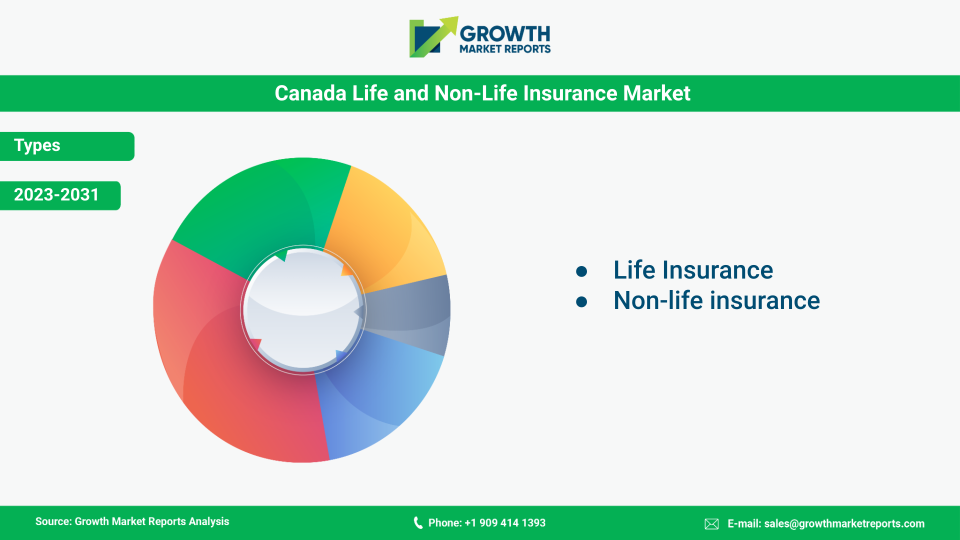
The Type segment of the Life and Non-Life Insurance market is bifurcated into Life Insurance and Non-Life Insurance, each exhibiting distinct growth patterns and market dynamics. Life Insurance, which includes products such as term life, whole life, endowment, and unit-linked insurance policies (ULIPs), continues to account for a significant share of the global market. The demand for life insurance is largely driven by increasing awareness around financial planning, wealth transfer, and family protection. The rising middle class in emerging economies, coupled with tax benefits and evolving regulatory frameworks, is further boosting the adoption of life insurance products. Insurers are also innovating with hybrid products that combine protection and investment features to appeal to a broader customer base.
Non-Life Insurance, encompassing health, property, casualty, motor, and liability insurance, has witnessed accelerated growth in recent years. The surge in health insurance uptake, particularly post-pandemic, is a key contributor to this segment’s expansion. Rising healthcare costs, growing incidence of lifestyle diseases, and government-led health insurance schemes are driving demand for both individual and group health insurance policies. Meanwhile, urbanization, infrastructure development, and increased vehicle ownership are fueling growth in property and motor insurance. The non-life insurance segment is also benefiting from increased awareness about risk management among businesses, leading to higher adoption of commercial insurance products such as fire, marine, and liability coverage.
The interplay between Life and Non-Life Insurance segments is becoming increasingly evident as insurers seek to offer bundled solutions that address holistic customer needs. For instance, bancassurance partnerships and digital platforms are enabling cross-selling of life and non-life products, enhancing customer convenience and boosting revenue streams. The convergence of health and life insurance, particularly in the context of critical illness and disability coverage, is another emerging trend. Insurers are leveraging data analytics to better understand customer risk profiles and design products that offer comprehensive protection across multiple risk categories. This integrated approach is expected to drive future growth and differentiate market leaders from their competitors.
Regulatory developments continue to shape the competitive landscape of the Type segment. Governments and supervisory authorities are introducing reforms to enhance consumer protection, promote transparency, and encourage innovation. For example, the adoption of risk-based capital frameworks and solvency regulations is improving the financial stability of insurers, thereby increasing consumer confidence in both life and non-life products. Regulatory support for microinsurance and inclusive insurance initiatives is also expanding market reach, particularly in underserved and rural areas. As the market matures, insurers will need to balance compliance requirements with the need for agility and customer-centricity to sustain long-term growth.
| Attributes | Details |
| Report Title | Life and Non- Life Insurance Market Research Report 2033 |
| By Type | Life Insurance, Non-Life Insurance |
| By Distribution Channel | Direct, Agents & Brokers, Bancassurance, Online, Others |
| By End User | Individuals, Corporates, Others |
| Regions Covered | North America, Europe, APAC, Latin America, MEA |
| Base Year | 2024 |
| Historic Data | 2018-2023 |
| Forecast Period | 2025-2033 |
| Number of Pages | 295 |
| Number of Tables & Figures | 291 |
| Customization Available | Yes, the report can be customized as per your need. |
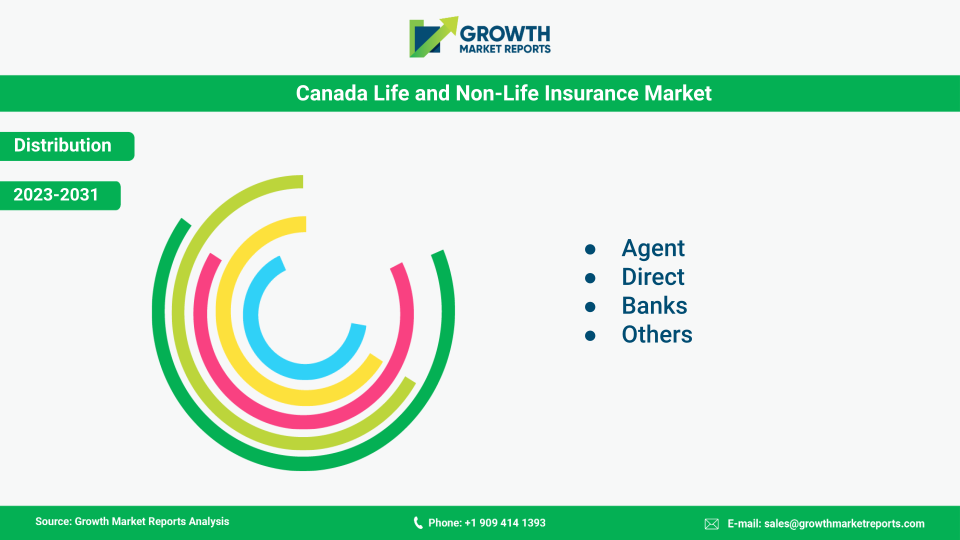
The Distribution Channel segment of the Life and Non-Life Insurance market is characterized by a diverse array of channels, including Direct, Agents & Brokers, Bancassurance, Online, and Others. Traditional channels such as Agents & Brokers continue to dominate in many regions, leveraging established relationships and personalized service to build trust and drive sales. Agents play a crucial role in educating customers about complex insurance products, while brokers offer independent advice and access to a wide range of policies. Despite the rise of digital channels, face-to-face interactions remain particularly important for high-value and complex insurance products, underscoring the enduring relevance of traditional distribution models.
Bancassurance has emerged as a powerful distribution channel, particularly in Asia Pacific and Europe. This model leverages the extensive branch networks and customer bases of banks to offer insurance products alongside traditional banking services. Bancassurance partnerships provide insurers with cost-effective access to large customer pools, while banks benefit from diversified revenue streams and enhanced customer loyalty. Regulatory support for bancassurance, coupled with digital integration, is further driving its adoption. The channel’s success hinges on seamless collaboration between insurers and banks, as well as the ability to deliver tailored solutions that meet the evolving needs of customers.
The Online distribution channel is witnessing exponential growth, propelled by digital transformation and changing consumer preferences. Insurers are investing heavily in user-friendly websites, mobile apps, and digital marketing to reach tech-savvy customers who value convenience, transparency, and instant access to information. Online platforms enable customers to compare products, obtain quotes, and purchase policies with minimal friction, reducing acquisition costs and broadening market reach. The COVID-19 pandemic accelerated the shift towards digital channels, with remote onboarding, e-KYC, and digital claims processing becoming industry norms. Insurtech startups are also disrupting the market with innovative digital-first business models, further intensifying competition and driving customer-centric innovation.
Other distribution channels, such as affinity partnerships, retail outlets, and workplace marketing, are gaining traction as insurers seek to diversify their go-to-market strategies. Affinity groups, including professional associations and membership organizations, offer targeted access to niche customer segments. Retail partnerships enable insurers to tap into high-traffic locations, while workplace marketing leverages employer-employee relationships to promote group insurance products. The proliferation of multi-channel and omnichannel distribution strategies is enabling insurers to optimize customer engagement and maximize sales opportunities. As the market evolves, successful insurers will be those that can seamlessly integrate traditional and digital channels to deliver a superior customer experience.
The End User segment of the Life and Non-Life Insurance market is broadly categorized into Individuals, Corporates, and Others. Individual consumers represent the largest end-user group, driving demand for both life and non-life insurance products. The increasing financial literacy and risk awareness among individuals, coupled with rising disposable incomes, are fueling the uptake of personal insurance policies. Life insurance products such as term, whole life, and endowment policies are particularly popular among individuals seeking long-term financial security and wealth accumulation. Meanwhile, non-life products like health, motor, and property insurance are gaining traction as individuals prioritize protection against unforeseen events and lifestyle risks.
Corporates constitute a significant and growing end-user segment, particularly in the non-life insurance market. Businesses of all sizes are increasingly recognizing the importance of comprehensive risk management to safeguard their assets, employees, and operations. Corporate insurance products, including group health, property, liability, marine, and business interruption insurance, are witnessing robust demand across sectors such as manufacturing, IT, finance, and retail. The rise of the gig economy and flexible work arrangements is also driving demand for innovative corporate insurance solutions, such as income protection and cyber liability coverage. Insurers are responding by offering tailored policies and value-added services that address the unique needs of corporate clients, including risk assessment, loss prevention, and employee wellness programs.
The “Others” category encompasses a diverse range of end users, including government entities, non-profit organizations, and affinity groups. Governments play a pivotal role in driving insurance penetration through mandatory schemes, social insurance programs, and public-private partnerships. Non-profit organizations and affinity groups, such as professional associations and cooperatives, are increasingly partnering with insurers to offer customized insurance solutions to their members. These collaborations are expanding market reach and promoting financial inclusion, particularly in underserved and rural areas. The growing emphasis on inclusive insurance and microinsurance is further broadening the end-user base, enabling insurers to tap into new growth opportunities.
The evolving needs and preferences of end users are prompting insurers to innovate and diversify their product offerings. Personalization, flexibility, and value-added services are becoming key differentiators in a highly competitive market. Insurers are leveraging advanced analytics and digital tools to better understand customer behavior, anticipate emerging risks, and deliver tailored solutions. The shift towards customer-centric business models is enhancing customer satisfaction, loyalty, and retention, driving sustainable growth in the Life and Non-Life Insurance market. As end-user expectations continue to evolve, insurers will need to remain agile and responsive to capture emerging opportunities and address new challenges.
The Life and Non-Life Insurance market is brimming with opportunities, particularly in the realm of digital transformation and product innovation. The rapid adoption of advanced technologies, such as artificial intelligence, machine learning, and big data analytics, is enabling insurers to enhance underwriting accuracy, streamline claims processing, and deliver personalized customer experiences. The proliferation of insurtech startups is fostering a culture of innovation, driving the development of new business models and value-added services. Emerging trends such as usage-based insurance, parametric insurance, and on-demand coverage are creating new revenue streams and expanding market reach. The growing emphasis on financial inclusion and microinsurance is opening up untapped markets, particularly in developing regions with low insurance penetration.
Another significant opportunity lies in the expansion of distribution networks and strategic partnerships. Insurers are increasingly collaborating with banks, fintech companies, retailers, and affinity groups to diversify their go-to-market strategies and reach new customer segments. The rise of omnichannel distribution models is enabling insurers to optimize customer engagement and maximize sales opportunities. Regulatory support for innovation, such as sandbox initiatives and open insurance frameworks, is further facilitating market entry and experimentation. The integration of sustainability and ESG (environmental, social, and governance) considerations into insurance products is also creating new opportunities, as consumers and businesses seek to align their insurance choices with their values and sustainability goals.
Despite these opportunities, the Life and Non-Life Insurance market faces several threats and restraining factors. Regulatory complexity and compliance costs remain significant challenges, particularly in highly regulated markets. Insurers must navigate a complex web of local, national, and international regulations, which can hinder innovation and increase operational costs. The rising frequency and severity of natural disasters, cyberattacks, and pandemics are also heightening risk exposures and straining insurer balance sheets. Intense competition from both traditional and digital players is putting pressure on margins and driving consolidation within the industry. To overcome these challenges, insurers must invest in risk management, regulatory compliance, and operational resilience to sustain long-term growth.
Regionally, Asia Pacific continues to be the powerhouse of growth in the Life and Non-Life Insurance market, with a market size of approximately USD 2.7 trillion in 2024 and an impressive CAGR of 7.2% projected through 2033. This growth is fueled by rapid urbanization, a burgeoning middle class, and supportive regulatory reforms across major economies such as China, India, and Southeast Asian nations. The rising adoption of digital channels, coupled with government-led financial inclusion initiatives, is driving higher insurance penetration and expanding the customer base. Insurers in this region are leveraging technology to innovate products, streamline operations, and enhance customer engagement, positioning Asia Pacific as a key growth engine for the global market.
North America remains a dominant force in the Life and Non-Life Insurance market, accounting for a market size of USD 1.9 trillion in 2024. The region is characterized by high insurance penetration, mature distribution networks, and a strong regulatory environment. The United States leads the market, driven by a large and affluent customer base, advanced insurtech ecosystem, and a highly competitive landscape. The region is witnessing growing demand for innovative products such as cyber insurance, pet insurance, and telematics-based motor insurance. Canada is also experiencing steady growth, supported by rising awareness of health and retirement planning. The North American market is expected to maintain a stable growth trajectory, with a focus on digital transformation, customer experience, and product diversification.
Europe holds a significant share of the Life and Non-Life Insurance market, with a market size of USD 1.3 trillion in 2024. The region is marked by a well-established insurance culture, stringent regulatory frameworks, and a high degree of product sophistication. Key markets such as the United Kingdom, Germany, and France are driving innovation in areas such as green insurance, parametric insurance, and digital distribution. The European market is also witnessing increased consolidation and cross-border expansion, as insurers seek to achieve scale and operational efficiency. Latin America and the Middle East & Africa are emerging markets, with combined market sizes of USD 0.6 trillion in 2024, supported by rising awareness, favorable demographics, and government initiatives to increase insurance inclusion. These regions offer significant growth potential, particularly in microinsurance and inclusive insurance segments.
The competitive landscape of the Life and Non-Life Insurance market is highly dynamic and fragmented, with a mix of global giants, regional players, and innovative insurtech startups vying for market share. Established insurers are leveraging their financial strength, brand reputation, and extensive distribution networks to maintain their leadership positions. At the same time, they are investing heavily in digital transformation, product innovation, and customer experience to stay ahead of the curve. The entry of insurtech firms is intensifying competition, driving incumbents to adopt agile business models, collaborate with technology partners, and accelerate the pace of innovation. Mergers, acquisitions, and strategic alliances are becoming increasingly common as players seek to achieve scale, diversify their portfolios, and enter new markets.
Product differentiation and customer-centricity are emerging as key competitive levers in the Life and Non-Life Insurance market. Insurers are increasingly focusing on personalization, flexibility, and value-added services to enhance customer satisfaction and loyalty. Advanced analytics, artificial intelligence, and machine learning are being deployed to gain deeper insights into customer behavior, optimize pricing, and improve risk selection. The integration of digital tools and platforms is enabling insurers to streamline operations, reduce costs, and deliver seamless omnichannel experiences. As customer expectations continue to evolve, insurers that can effectively balance innovation with operational excellence will be best positioned to capture market opportunities and sustain long-term growth.
Regulatory compliance and risk management are also critical differentiators in the highly regulated Life and Non-Life Insurance market. Insurers must navigate a complex and evolving regulatory landscape, balancing the need for innovation with the imperative to protect policyholder interests. Leading players are investing in robust governance frameworks, advanced risk modeling, and proactive engagement with regulators to ensure compliance and build trust. The growing emphasis on sustainability and ESG considerations is also shaping competitive strategies, as insurers seek to align their operations and product offerings with broader societal goals.
Some of the major companies operating in the global Life and Non-Life Insurance market include Allianz SE, AXA S.A., MetLife, Inc., Prudential plc, Ping An Insurance, China Life Insurance Company, Zurich Insurance Group, Munich Re Group, AIA Group Limited, and Aviva plc. Allianz SE and AXA S.A. are recognized for their global reach, diversified product portfolios, and strong financial performance. MetLife, Inc. and Prudential plc are leading players in both life and non-life segments, with a strong presence in North America, Europe, and Asia Pacific. Ping An Insurance and China Life Insurance Company are dominant forces in the rapidly growing Asia Pacific market, leveraging digital innovation and expansive distribution networks to drive growth.
Zurich Insurance Group and Munich Re Group are renowned for their expertise in risk management, reinsurance, and specialty insurance lines. AIA Group Limited is a major player in the Asia Pacific region, with a focus on life and health insurance. Aviva plc has a strong presence in Europe, offering a wide range of life, non-life, and asset management solutions. These companies are at the forefront of industry innovation, investing in digital transformation, sustainability, and customer-centricity to maintain their competitive edge. The competitive landscape is expected to remain dynamic, with ongoing consolidation, new market entrants, and continuous innovation shaping the future of the Life and Non-Life Insurance market.
The Life and Non- Life Insurance market has been segmented on the basis of
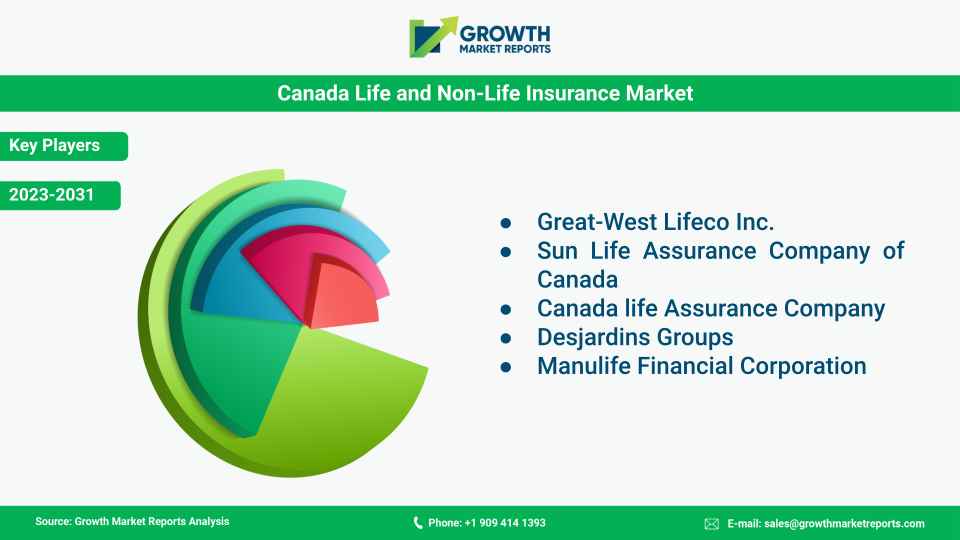
Key players competing in Canada life and non-life insurance market include Great-West Lifeco Inc.; Sun Life Assurance Company of Canada; Canada life Assurance Company; Desjardins Groups; Manulife Financial Corporation. Some of these players are using several market strategies such as product launches, acquisitions, capacity expansion, merger, partnerships, and collaborations to enhance their market shares and to generate revenue and raise their production line of the business in the coming years. For instance
Insurers are innovating with bundled solutions, hybrid products, and flexible policies, leveraging advanced analytics for personalization, and integrating digital and traditional channels to enhance customer experience and retention.
Major players include Allianz SE, AXA S.A., MetLife, Inc., Prudential plc, Ping An Insurance, China Life Insurance Company, Zurich Insurance Group, Munich Re Group, AIA Group Limited, and Aviva plc.
Opportunities include digital transformation, product innovation, expansion of distribution networks, and financial inclusion. Threats involve regulatory complexity, rising natural disasters and cyber risks, and intense competition from both traditional and digital players.
Asia Pacific is the fastest-growing region, driven by urbanization and regulatory reforms. North America and Europe have the largest market shares, while Latin America and the Middle East & Africa are emerging as high-potential markets.
Primary end users include Individuals, Corporates, and Others (such as government entities, non-profits, and affinity groups), with individuals representing the largest segment.
Major distribution channels include Direct, Agents & Brokers, Bancassurance, Online, and Others. While traditional channels remain strong, online and bancassurance channels are rapidly growing due to digital adoption and strategic partnerships.
The market is segmented into Life Insurance (including term, whole life, endowment, and unit-linked policies) and Non-Life Insurance (covering health, property, casualty, motor, and liability insurance).
Digital transformation is revolutionizing the insurance sector through insurtech innovations like AI, big data analytics, and blockchain, which enhance operational efficiency, reduce fraud, and enable personalized insurance products and seamless online distribution.
Key growth drivers include increased risk awareness post-pandemic, rapid digital transformation, evolving customer expectations, regulatory reforms, product innovations, and expanding distribution networks, especially in Asia Pacific and North America.
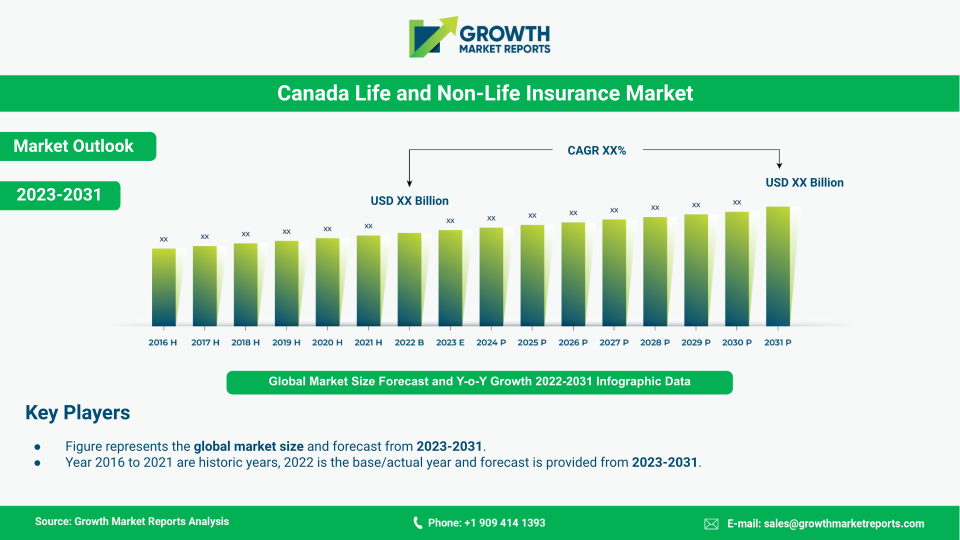
The global Life and Non-Life Insurance market reached USD 6.5 trillion in 2024 and is projected to grow at a CAGR of 5.8% from 2025 to 2033, reaching an estimated USD 11.1 trillion by 2033.