Health Insurance Exchange Market Research Report 2033

Health Insurance Exchange Market Research Report 2033

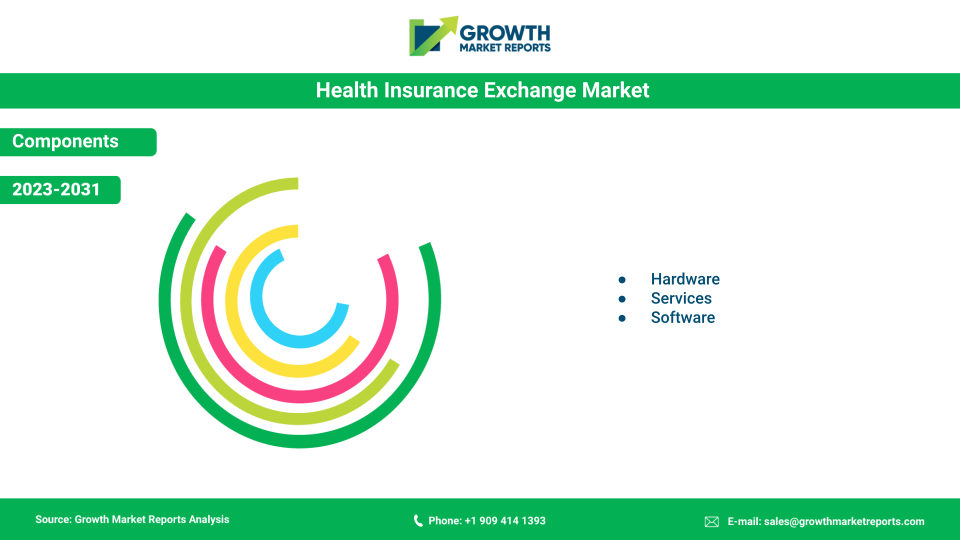
Segments - by Type (Public Exchange, Private Exchange), by Product (Individual, Family, Small Group, Large Group), by Service Provider (Health Plans, Brokers, Third Party Administrators), by End User (Individuals, Employers, Government Agencies)

https://growthmarketreports.com/Raksha
Author : Raksha Sharma
https://growthmarketreports.com/Vaibhav
Fact-checked by : V. Chandola
https://growthmarketreports.com/Shruti
Editor : Shruti Bhat

Upcoming | Report ID :BFSI-3216 | 5.0 Rating | 9 Reviews | 300 Pages | Format : Docx PDF

Report Description


Health Insurance Exchange Market Outlook

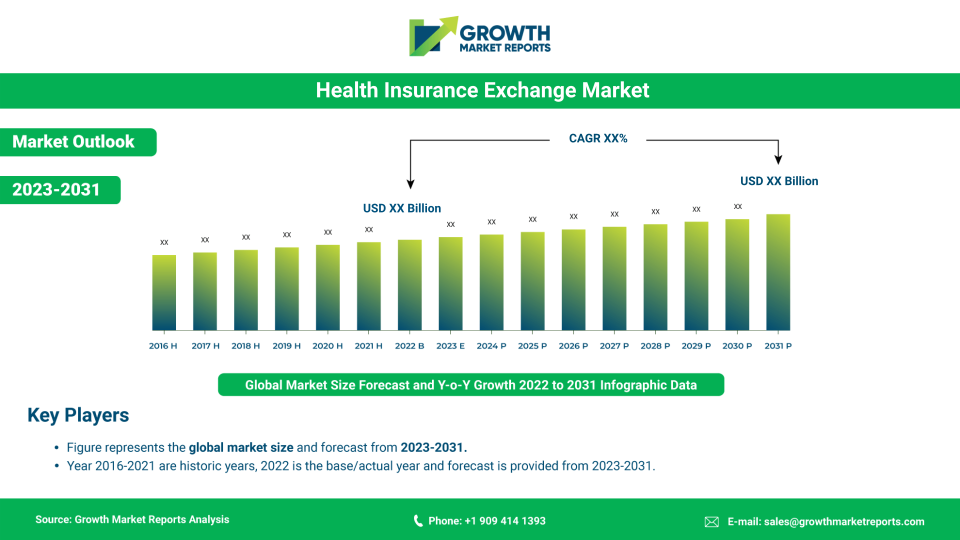
According to our latest research, the global health insurance exchange market size stood at USD 7.2 billion in 2024. Driven by regulatory reforms, increasing digital adoption, and a growing emphasis on accessible healthcare coverage, the market is expected to expand at a robust CAGR of 8.7% from 2025 to 2033. By the end of the forecast period, the health insurance exchange market is projected to reach USD 15.3 billion by 2033. This growth trajectory is strongly supported by government initiatives to enhance healthcare access, rising consumer awareness, and the ongoing digital transformation within the insurance sector.

One of the primary growth factors propelling the health insurance exchange market is the increasing demand for transparent, affordable, and easily accessible health insurance plans. As healthcare costs continue to rise globally, individuals and organizations are seeking more efficient platforms to compare, select, and purchase insurance products. Health insurance exchanges, both public and private, provide a centralized marketplace where consumers can evaluate plan features, premiums, and coverage options, fostering greater competition among insurers and ultimately driving down costs. Additionally, the integration of advanced technologies such as artificial intelligence, big data analytics, and cloud computing has significantly improved the user experience, streamlined administrative processes, and enhanced the overall efficiency of these exchanges.

Another significant driver is the evolving regulatory landscape, particularly in developed markets such as North America and Europe. Governments are actively promoting health insurance exchanges as a means to achieve universal coverage, reduce the uninsured population, and simplify the enrollment process. The implementation of policies like the Affordable Care Act (ACA) in the United States has set a precedent for other regions, encouraging the establishment of similar frameworks. Furthermore, the COVID-19 pandemic has underscored the importance of robust healthcare infrastructure and insurance coverage, prompting a surge in enrollment through exchanges and accelerating digital transformation across the sector.

Employer-driven demand is also fueling the growth of the health insurance exchange market. As businesses strive to offer competitive employee benefits and comply with regulatory mandates, they are increasingly turning to private exchanges to customize health plans, manage costs, and provide greater choice to their workforce. Small and medium-sized enterprises, in particular, benefit from the flexibility and scalability offered by these platforms. Additionally, health insurance exchanges are expanding their service offerings to include ancillary products such as dental, vision, and wellness programs, further enhancing their value proposition and attracting a broader customer base.

From a regional perspective, North America continues to dominate the health insurance exchange market, accounting for a significant share of global revenues. This leadership is attributed to well-established public and private exchange platforms, high insurance penetration, and proactive government policies. However, Asia Pacific is emerging as a lucrative market, driven by rapid urbanization, increasing healthcare expenditure, and ongoing digitalization efforts. Europe is also witnessing steady growth, supported by regulatory harmonization and rising demand for cross-border health insurance solutions. Latin America and the Middle East & Africa, while still in the nascent stages, are expected to register healthy growth rates as awareness and adoption of health insurance exchanges increase.

Global Health Insurance Exchange Industry Outlook

Type Analysis

The health insurance exchange market is broadly segmented by type into public and private exchanges. Public exchanges are government-sponsored platforms designed to facilitate the purchase of health insurance plans, particularly for individuals and small businesses. These exchanges have played a pivotal role in expanding coverage to underserved populations and promoting health equity. The success of initiatives like the U.S. Health Insurance Marketplace under the ACA has demonstrated the effectiveness of public exchanges in increasing insurance enrollment and providing subsidies to eligible participants. However, public exchanges often face challenges related to bureaucratic complexities, limited plan options, and periodic policy changes, which can impact user satisfaction and market stability.

On the other hand, private exchanges are operated by insurance companies, brokers, or third-party administrators and cater primarily to employers and organizations seeking customized health benefit solutions. These platforms offer a broader array of plan options, greater flexibility in benefit design, and enhanced user experiences through advanced digital tools. Private exchanges have gained significant traction among large employers and small businesses alike, as they enable tailored plan selection, cost control, and streamlined administration. The growing trend of consumerization in healthcare, where individuals demand greater choice and control over their benefits, is further boosting the adoption of private exchanges.

The interplay between public and private exchanges is shaping the overall market dynamics. While public exchanges focus on accessibility and affordability, private exchanges emphasize customization and value-added services. Collaborations between public and private entities are becoming increasingly common, with hybrid models emerging to address diverse consumer needs. For instance, some private exchanges partner with government programs to offer subsidized plans or facilitate enrollment for specific populations. This convergence is expected to drive innovation, improve market efficiency, and enhance the overall value proposition of health insurance exchanges.

The competitive landscape within the type segment is also evolving, with technology providers playing a crucial role in enabling seamless integration, data interoperability, and regulatory compliance. The adoption of cloud-based solutions, mobile applications, and artificial intelligence is transforming the way exchanges operate, making them more agile, scalable, and user-friendly. As a result, both public and private exchanges are investing heavily in digital infrastructure to enhance their offerings and stay ahead of the competition. The ongoing digital transformation is expected to further blur the lines between public and private exchanges, creating new opportunities for growth and differentiation.

Report Scope

Attributes Details
Report Title Health Insurance Exchange Market Research Report 2033
By Type Public Exchange, Private Exchange
By Product Individual, Family, Small Group, Large Group
By Service Provider Health Plans, Brokers, Third Party Administrators
By End User Individuals, Employers, Government Agencies
Regions Covered North America, Europe, APAC, Latin America, MEA
Base Year 2024
Historic Data 2018-2023
Forecast Period 2025-2033
Number of Pages 300
Number of Tables & Figures 291
Customization Available Yes, the report can be customized as per your need.

Product Analysis

The product segment of the health insurance exchange market encompasses individual, family, small group, and large group plans. Individual plans are designed for single policyholders seeking personal health coverage. These plans have witnessed substantial growth, particularly among freelancers, gig workers, and self-employed individuals who may not have access to employer-sponsored insurance. The flexibility, affordability, and wide range of options available through health insurance exchanges make individual plans an attractive choice for this demographic. Additionally, regulatory mandates requiring minimum essential coverage have further driven demand for individual products.

Family plans cater to households seeking comprehensive coverage for multiple members under a single policy. These plans offer cost efficiencies, streamlined administration, and coordinated care benefits, making them popular among families with children or dependents. Health insurance exchanges have played a crucial role in simplifying the comparison and selection of family plans, enabling consumers to evaluate coverage options, network providers, and premium costs with ease. Enhanced digital tools, personalized recommendations, and integrated wellness programs are further enhancing the appeal of family products within the exchange ecosystem.

Small group plans are targeted at businesses with a limited number of employees, typically ranging from two to fifty. These plans are designed to provide affordable, flexible, and compliant health coverage to small and medium-sized enterprises (SMEs). Health insurance exchanges have democratized access to group insurance for SMEs, enabling them to offer competitive benefits, attract talent, and comply with regulatory requirements. The ability to customize plan features, manage costs, and access value-added services such as telemedicine and wellness programs has made small group plans increasingly popular among employers.

Large group plans are tailored for organizations with a substantial workforce, often exceeding fifty employees. These plans offer economies of scale, comprehensive coverage options, and advanced administrative capabilities. Health insurance exchanges have enabled large employers to streamline benefits administration, optimize plan design, and enhance employee engagement through digital platforms. The growing emphasis on employee wellness, preventive care, and data-driven decision-making is driving innovation within the large group segment. As organizations seek to balance cost containment with employee satisfaction, the role of health insurance exchanges in facilitating efficient, transparent, and scalable solutions is becoming increasingly critical.

Service Provider Analysis

Within the health insurance exchange market, service providers play a pivotal role in shaping the value proposition and operational efficiency of exchange platforms. The primary categories of service providers include health plans, brokers, and third-party administrators (TPAs). Health plans, or insurance carriers, are responsible for designing, underwriting, and managing insurance products offered on exchanges. They compete on factors such as plan features, pricing, network coverage, and customer service, driving innovation and differentiation within the market. Health plans are increasingly leveraging data analytics, artificial intelligence, and digital engagement tools to enhance plan design, risk assessment, and member experience.

Brokers serve as intermediaries between consumers and insurance carriers, providing expert guidance, plan recommendations, and enrollment support. Their role is particularly important in complex markets where consumers may struggle to navigate plan options, eligibility requirements, and subsidy calculations. Brokers leverage their industry expertise, digital platforms, and customer relationship management tools to simplify the purchasing process and ensure optimal plan selection. The growing trend towards digital brokerage services, including online comparison tools and virtual consultations, is transforming the traditional broker model and expanding their reach within the health insurance exchange ecosystem.

Third-party administrators (TPAs) provide essential administrative services such as claims processing, eligibility verification, billing, and compliance management. TPAs play a critical role in enhancing operational efficiency, reducing administrative burdens, and ensuring regulatory compliance for both public and private exchanges. The adoption of cloud-based solutions, automation, and advanced analytics is enabling TPAs to deliver faster, more accurate, and cost-effective services. As exchanges continue to evolve, TPAs are expanding their offerings to include value-added services such as wellness programs, care coordination, and data analytics, further strengthening their position within the market.

The interplay between health plans, brokers, and TPAs is driving greater collaboration, integration, and innovation within the health insurance exchange market. Technology providers are also emerging as key enablers, offering digital infrastructure, cybersecurity, and interoperability solutions to support seamless data exchange, user authentication, and regulatory compliance. The growing emphasis on user experience, data security, and personalized services is prompting service providers to invest in digital transformation, workforce training, and strategic partnerships. As the market matures, the role of service providers in shaping the competitive landscape, enhancing value delivery, and driving market growth will become increasingly pronounced.

End User Analysis

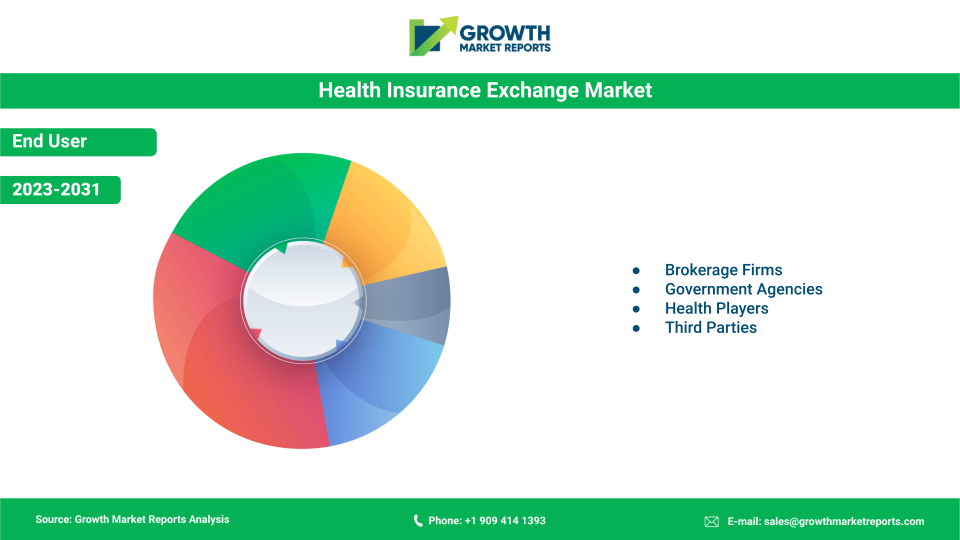
The end user segment of the health insurance exchange market comprises individuals, employers, and government agencies, each with distinct needs and purchasing behaviors. Individuals represent a diverse demographic, including self-employed professionals, freelancers, gig workers, and those without access to employer-sponsored insurance. Health insurance exchanges provide individuals with a transparent, user-friendly platform to compare plans, assess coverage options, and access subsidies or financial assistance. The rise of digital literacy, mobile applications, and personalized recommendations is enhancing the user experience and driving higher engagement among individual consumers.

Employers, particularly small and medium-sized enterprises, are increasingly leveraging health insurance exchanges to offer competitive benefits, manage costs, and comply with regulatory mandates. Private exchanges, in particular, provide employers with the flexibility to customize plan options, integrate wellness programs, and streamline benefits administration. The ability to offer a wide range of plans, facilitate employee choice, and access value-added services is enhancing the attractiveness of exchanges for employers seeking to attract and retain talent in a competitive labor market. Large organizations are also adopting exchange platforms to optimize benefits delivery, enhance employee engagement, and support workforce health and productivity.

Government agencies play a dual role as both operators and end users of health insurance exchanges. Public exchanges, operated by federal or state agencies, are instrumental in expanding coverage, administering subsidies, and ensuring regulatory compliance. Government agencies also utilize exchange platforms to manage benefits for public sector employees, retirees, and vulnerable populations. The integration of digital technologies, data analytics, and interoperability solutions is enabling government agencies to enhance operational efficiency, improve program outcomes, and deliver better value to constituents. As governments continue to prioritize healthcare access and affordability, the role of exchanges in supporting public health objectives will become increasingly significant.

The evolving needs of end users are driving continuous innovation within the health insurance exchange market. Exchanges are expanding their offerings to include ancillary products such as dental, vision, and wellness programs, as well as value-added services like telemedicine, care coordination, and chronic disease management. The growing emphasis on user experience, personalized recommendations, and digital engagement is shaping the future of health insurance exchanges, enabling them to better meet the diverse needs of individuals, employers, and government agencies.

Opportunities & Threats

The health insurance exchange market presents a wealth of opportunities for stakeholders across the value chain. One of the most significant opportunities lies in the continued digital transformation of the insurance sector. The adoption of advanced technologies such as artificial intelligence, machine learning, and big data analytics is enabling exchanges to deliver personalized recommendations, automate administrative processes, and enhance user engagement. The integration of telemedicine, wellness programs, and value-added services is further expanding the value proposition of exchanges, attracting new customer segments and driving higher retention rates. Additionally, the growing trend of consumerization in healthcare, where individuals demand greater choice, transparency, and control over their benefits, is creating new avenues for innovation and differentiation.

Another key opportunity is the expansion of health insurance exchanges into emerging markets. Rapid urbanization, rising healthcare expenditure, and increasing digital penetration are creating favorable conditions for the adoption of exchange platforms in regions such as Asia Pacific, Latin America, and the Middle East & Africa. Governments and private players are collaborating to launch new exchange initiatives, enhance regulatory frameworks, and promote digital literacy among consumers. The ability to offer affordable, accessible, and customizable health insurance solutions is positioning exchanges as a critical enabler of healthcare access and financial protection in these markets. Strategic partnerships, cross-border collaborations, and the development of localized solutions are expected to drive significant growth opportunities for market participants.

Despite the promising outlook, the health insurance exchange market faces several threats and restraining factors. Regulatory uncertainty, particularly in markets with evolving healthcare policies, can create instability and hinder market growth. Frequent changes in subsidy structures, eligibility criteria, and compliance requirements can disrupt exchange operations, create confusion among consumers, and increase administrative burdens for service providers. Additionally, data security and privacy concerns are becoming increasingly prominent as exchanges handle sensitive personal and health information. Ensuring robust cybersecurity measures, regulatory compliance, and consumer trust is critical to sustaining long-term growth and market credibility.

Regional Outlook

Regionally, North America remains the largest market for health insurance exchanges, accounting for approximately USD 4.1 billion of the global market in 2024. The United States, in particular, has established a mature exchange ecosystem driven by the Affordable Care Act, high insurance penetration, and proactive government initiatives. The presence of leading technology providers, innovative health plans, and a digitally savvy population further supports market growth. Canada is also witnessing increased adoption of health insurance exchanges, particularly among small businesses and individual consumers seeking flexible coverage options.

The Europe region is characterized by a diverse regulatory landscape and varying degrees of health insurance market maturity. In 2024, Europe accounted for USD 1.5 billion of the global market. Countries such as the United Kingdom, Germany, and France are leading the adoption of digital health insurance platforms, supported by regulatory harmonization, cross-border healthcare initiatives, and rising demand for portable coverage solutions. The region is expected to grow at a steady CAGR of 7.2% over the forecast period, driven by ongoing digital transformation, increased consumer awareness, and government efforts to enhance healthcare access and affordability.

The Asia Pacific region is emerging as a high-growth market, with a market size of USD 1.1 billion in 2024. Rapid urbanization, expanding middle-class populations, and rising healthcare expenditure are fueling demand for health insurance exchanges in countries such as China, India, Japan, and Australia. Governments are investing in digital health infrastructure, regulatory reforms, and public-private partnerships to promote insurance adoption and improve healthcare outcomes. The region is expected to register the highest CAGR of 10.5% during the forecast period, outpacing other regions and contributing significantly to global market growth. Latin America and the Middle East & Africa, while still at an early stage of adoption, are expected to witness steady growth as awareness, digital penetration, and regulatory support increase.

Health Insurance Exchange Market Statistics

Competitor Outlook

The health insurance exchange market is highly competitive, characterized by the presence of a diverse array of players including insurance carriers, technology providers, brokers, and third-party administrators. The competitive landscape is shaped by factors such as product innovation, digital transformation, customer experience, and regulatory compliance. Leading players are investing heavily in research and development, digital infrastructure, and strategic partnerships to enhance their offerings, expand their market presence, and differentiate themselves from competitors. The growing emphasis on user experience, data security, and personalized services is prompting companies to adopt advanced technologies, streamline operations, and deliver greater value to customers.

Strategic collaborations and partnerships are becoming increasingly common as companies seek to leverage complementary strengths, access new customer segments, and accelerate innovation. For instance, insurance carriers are partnering with technology providers to develop advanced digital platforms, integrate artificial intelligence and analytics, and enhance interoperability with other healthcare systems. Brokers and third-party administrators are collaborating with exchanges to expand their service offerings, improve customer engagement, and drive higher enrollment rates. The convergence of public and private exchanges, along with the emergence of hybrid models, is further intensifying competition and creating new opportunities for market participants.

Mergers and acquisitions are also shaping the competitive landscape, as companies seek to achieve scale, expand their geographic footprint, and access new technologies. The acquisition of digital health platforms, insurtech startups, and data analytics firms is enabling established players to accelerate their digital transformation, enhance operational efficiency, and deliver innovative solutions to customers. The influx of venture capital and private equity investments is supporting the growth of emerging players, fostering innovation, and driving market consolidation. As the market continues to evolve, the ability to adapt to changing consumer needs, regulatory requirements, and technological advancements will be critical to sustaining competitive advantage.

Some of the major companies operating in the health insurance exchange market include CVS Health (Aetna), UnitedHealth Group, Anthem Inc., Cigna Corporation, Oscar Health, eHealth Inc., HealthCare.gov, GetInsured, and Benefitfocus. CVS Health (Aetna) and UnitedHealth Group are leading insurance carriers offering a wide range of health plans through both public and private exchanges, leveraging advanced analytics and digital engagement tools to enhance customer experience. Anthem Inc. and Cigna Corporation are focusing on product innovation, network expansion, and strategic partnerships to strengthen their market position. Oscar Health is a prominent insurtech player known for its digital-first approach, personalized recommendations, and seamless user experience.

eHealth Inc. is a leading online broker providing plan comparison, enrollment, and advisory services to individuals, families, and small businesses. HealthCare.gov, operated by the U.S. federal government, is the largest public health insurance exchange, serving millions of Americans and facilitating access to subsidized coverage. GetInsured and Benefitfocus are prominent technology providers offering digital platforms, enrollment solutions, and data analytics services to exchanges, insurers, and employers. These companies are at the forefront of digital transformation, driving innovation, and shaping the future of the health insurance exchange market through continuous investment in technology, customer-centric solutions, and strategic collaborations.

Key Players

  • UnitedHealth Group
  • Anthem Inc.
  • Aetna (CVS Health)
  • Cigna Corporation
  • Humana Inc.
  • Centene Corporation
  • Molina Healthcare
  • Kaiser Permanente
  • Blue Cross Blue Shield Association
  • Oscar Health
  • Bupa
  • Allianz SE
  • AXA
  • Aviva plc
  • Ping An Insurance
  • China Life Insurance
  • Zurich Insurance Group
  • MetLife
  • Nippon Life Insurance
  • Sun Life Financial
Health Insurance Exchange Market Overview

Segments

The Health Insurance Exchange market has been segmented on the basis of

Type

  • Public Exchange
  • Private Exchange

Product

  • Individual
  • Family
  • Small Group
  • Large Group

Service Provider

  • Health Plans
  • Brokers
  • Third Party Administrators

End User

  • Individuals
  • Employers
  • Government Agencies

Competitive Landscape

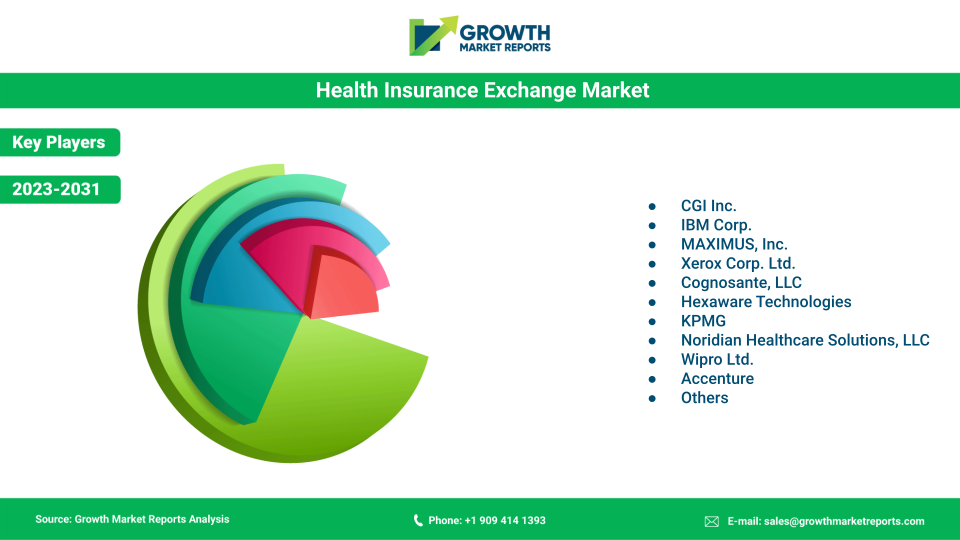
Key players competing in the global health insurance exchange market are CGI Inc.; IBM Corp.; MAXIMUS, Inc.; Xerox Corp. Ltd.; Cognosante, LLC; Hexaware Technologies; KPMG; Noridian Healthcare Solutions, LLC; Wipro Ltd.; Accenture; Deloitte Touche Tohmatsu Ltd.; Infosys Ltd.; Oracle Corp.; Connecture, Inc.; hCentive, Inc.; HP, Innovation Inc.; Microsoft Corp.; and Tata Consultancy Services.

Companies are focusing on product improvement to maintain their competitive position in the market. Furthermore, companies
have been widely engaged in strategic partnership, merger & acquisition, new product launch, and collaborations to boost their market share and acquiring new buyers.

Health Insurance Exchange Market Key Players

Frequently Asked Questions

Yes, the Health Insurance Exchange Market Research Report 2033 can be customized as per specific requirements.

Technologies like artificial intelligence, cloud computing, and big data analytics are enhancing user experience, streamlining administration, enabling personalized recommendations, and driving innovation across both public and private exchanges.

Key companies include UnitedHealth Group, Anthem Inc., Aetna (CVS Health), Cigna Corporation, Oscar Health, eHealth Inc., HealthCare.gov, GetInsured, Benefitfocus, and several international insurers like Allianz, AXA, and Ping An Insurance.

Opportunities include digital transformation, expansion into emerging markets, and integration of value-added services like telemedicine. Challenges involve regulatory uncertainty, data security concerns, and frequent policy changes.

The main service providers are health plans (insurance carriers), brokers, and third-party administrators (TPAs), each playing a critical role in plan design, enrollment support, and administrative services.

Health insurance exchanges offer individual, family, small group, and large group plans, catering to single policyholders, households, small businesses, and large organizations respectively.

North America dominates the market, especially the United States, due to established exchange platforms and supportive policies. Asia Pacific is the fastest-growing region, followed by steady growth in Europe. Latin America and the Middle East & Africa are emerging markets with increasing adoption.

Public exchanges are government-sponsored platforms focused on accessibility and affordability, while private exchanges are operated by insurers or brokers, offering more customization, flexibility, and a broader range of plan options, especially for employers.

Key growth drivers include regulatory reforms, increasing digital adoption, government initiatives to improve healthcare access, rising consumer awareness, and the integration of advanced technologies such as AI and big data analytics.

The global health insurance exchange market was valued at USD 7.2 billion in 2024 and is projected to reach USD 15.3 billion by 2033, growing at a CAGR of 8.7% during the forecast period.

Table Of Content

Chapter 1 Executive Summary
Chapter 2 Assumptions and Acronyms Used
Chapter 3 Research Methodology
Chapter 4 Health Insurance Exchange Market Overview
   4.1 Introduction
      4.1.1 Market Taxonomy
      4.1.2 Market Definition
      4.1.3 Macro-Economic Factors Impacting the Market Growth
   4.2 Health Insurance Exchange Market Dynamics
      4.2.1 Market Drivers
      4.2.2 Market Restraints
      4.2.3 Market Opportunity
   4.3 Health Insurance Exchange Market - Supply Chain Analysis
      4.3.1 List of Key Suppliers
      4.3.2 List of Key Distributors
      4.3.3 List of Key Consumers
   4.4 Key Forces Shaping the Health Insurance Exchange Market
      4.4.1 Bargaining Power of Suppliers
      4.4.2 Bargaining Power of Buyers
      4.4.3 Threat of Substitution
      4.4.4 Threat of New Entrants
      4.4.5 Competitive Rivalry
   4.5 Global Health Insurance Exchange Market Size & Forecast, 2023-2032
      4.5.1 Health Insurance Exchange Market Size and Y-o-Y Growth
      4.5.2 Health Insurance Exchange Market Absolute $ Opportunity

Chapter 5 Global Health Insurance Exchange Market Analysis and Forecast By Type
   5.1 Introduction
      5.1.1 Key Market Trends & Growth Opportunities By Type
      5.1.2 Basis Point Share (BPS) Analysis By Type
      5.1.3 Absolute $ Opportunity Assessment By Type
   5.2 Health Insurance Exchange Market Size Forecast By Type
      5.2.1 Public Exchange
      5.2.2 Private Exchange
   5.3 Market Attractiveness Analysis By Type

Chapter 6 Global Health Insurance Exchange Market Analysis and Forecast By Product
   6.1 Introduction
      6.1.1 Key Market Trends & Growth Opportunities By Product
      6.1.2 Basis Point Share (BPS) Analysis By Product
      6.1.3 Absolute $ Opportunity Assessment By Product
   6.2 Health Insurance Exchange Market Size Forecast By Product
      6.2.1 Individual
      6.2.2 Family
      6.2.3 Small Group
      6.2.4 Large Group
   6.3 Market Attractiveness Analysis By Product

Chapter 7 Global Health Insurance Exchange Market Analysis and Forecast By Service Provider
   7.1 Introduction
      7.1.1 Key Market Trends & Growth Opportunities By Service Provider
      7.1.2 Basis Point Share (BPS) Analysis By Service Provider
      7.1.3 Absolute $ Opportunity Assessment By Service Provider
   7.2 Health Insurance Exchange Market Size Forecast By Service Provider
      7.2.1 Health Plans
      7.2.2 Brokers
      7.2.3 Third Party Administrators
   7.3 Market Attractiveness Analysis By Service Provider

Chapter 8 Global Health Insurance Exchange Market Analysis and Forecast By End User
   8.1 Introduction
      8.1.1 Key Market Trends & Growth Opportunities By End User
      8.1.2 Basis Point Share (BPS) Analysis By End User
      8.1.3 Absolute $ Opportunity Assessment By End User
   8.2 Health Insurance Exchange Market Size Forecast By End User
      8.2.1 Individuals
      8.2.2 Employers
      8.2.3 Government Agencies
   8.3 Market Attractiveness Analysis By End User

Chapter 9 Global Health Insurance Exchange Market Analysis and Forecast by Region
   9.1 Introduction
      9.1.1 Key Market Trends & Growth Opportunities By Region
      9.1.2 Basis Point Share (BPS) Analysis By Region
      9.1.3 Absolute $ Opportunity Assessment By Region
   9.2 Health Insurance Exchange Market Size Forecast By Region
      9.2.1 North America
      9.2.2 Europe
      9.2.3 Asia Pacific
      9.2.4 Latin America
      9.2.5 Middle East & Africa (MEA)
   9.3 Market Attractiveness Analysis By Region

Chapter 10 Coronavirus Disease (COVID-19) Impact 
   10.1 Introduction 
   10.2 Current & Future Impact Analysis 
   10.3 Economic Impact Analysis 
   10.4 Government Policies 
   10.5 Investment Scenario

Chapter 11 North America Health Insurance Exchange Analysis and Forecast
   11.1 Introduction
   11.2 North America Health Insurance Exchange Market Size Forecast by Country
      11.2.1 U.S.
      11.2.2 Canada
   11.3 Basis Point Share (BPS) Analysis by Country
   11.4 Absolute $ Opportunity Assessment by Country
   11.5 Market Attractiveness Analysis by Country
   11.6 North America Health Insurance Exchange Market Size Forecast By Type
      11.6.1 Public Exchange
      11.6.2 Private Exchange
   11.7 Basis Point Share (BPS) Analysis By Type 
   11.8 Absolute $ Opportunity Assessment By Type 
   11.9 Market Attractiveness Analysis By Type
   11.10 North America Health Insurance Exchange Market Size Forecast By Product
      11.10.1 Individual
      11.10.2 Family
      11.10.3 Small Group
      11.10.4 Large Group
   11.11 Basis Point Share (BPS) Analysis By Product 
   11.12 Absolute $ Opportunity Assessment By Product 
   11.13 Market Attractiveness Analysis By Product
   11.14 North America Health Insurance Exchange Market Size Forecast By Service Provider
      11.14.1 Health Plans
      11.14.2 Brokers
      11.14.3 Third Party Administrators
   11.15 Basis Point Share (BPS) Analysis By Service Provider 
   11.16 Absolute $ Opportunity Assessment By Service Provider 
   11.17 Market Attractiveness Analysis By Service Provider
   11.18 North America Health Insurance Exchange Market Size Forecast By End User
      11.18.1 Individuals
      11.18.2 Employers
      11.18.3 Government Agencies
   11.19 Basis Point Share (BPS) Analysis By End User 
   11.20 Absolute $ Opportunity Assessment By End User 
   11.21 Market Attractiveness Analysis By End User

Chapter 12 Europe Health Insurance Exchange Analysis and Forecast
   12.1 Introduction
   12.2 Europe Health Insurance Exchange Market Size Forecast by Country
      12.2.1 Germany
      12.2.2 France
      12.2.3 Italy
      12.2.4 U.K.
      12.2.5 Spain
      12.2.6 Russia
      12.2.7 Rest of Europe
   12.3 Basis Point Share (BPS) Analysis by Country
   12.4 Absolute $ Opportunity Assessment by Country
   12.5 Market Attractiveness Analysis by Country
   12.6 Europe Health Insurance Exchange Market Size Forecast By Type
      12.6.1 Public Exchange
      12.6.2 Private Exchange
   12.7 Basis Point Share (BPS) Analysis By Type 
   12.8 Absolute $ Opportunity Assessment By Type 
   12.9 Market Attractiveness Analysis By Type
   12.10 Europe Health Insurance Exchange Market Size Forecast By Product
      12.10.1 Individual
      12.10.2 Family
      12.10.3 Small Group
      12.10.4 Large Group
   12.11 Basis Point Share (BPS) Analysis By Product 
   12.12 Absolute $ Opportunity Assessment By Product 
   12.13 Market Attractiveness Analysis By Product
   12.14 Europe Health Insurance Exchange Market Size Forecast By Service Provider
      12.14.1 Health Plans
      12.14.2 Brokers
      12.14.3 Third Party Administrators
   12.15 Basis Point Share (BPS) Analysis By Service Provider 
   12.16 Absolute $ Opportunity Assessment By Service Provider 
   12.17 Market Attractiveness Analysis By Service Provider
   12.18 Europe Health Insurance Exchange Market Size Forecast By End User
      12.18.1 Individuals
      12.18.2 Employers
      12.18.3 Government Agencies
   12.19 Basis Point Share (BPS) Analysis By End User 
   12.20 Absolute $ Opportunity Assessment By End User 
   12.21 Market Attractiveness Analysis By End User

Chapter 13 Asia Pacific Health Insurance Exchange Analysis and Forecast
   13.1 Introduction
   13.2 Asia Pacific Health Insurance Exchange Market Size Forecast by Country
      13.2.1 China
      13.2.2 Japan
      13.2.3 South Korea
      13.2.4 India
      13.2.5 Australia
      13.2.6 South East Asia (SEA)
      13.2.7 Rest of Asia Pacific (APAC)
   13.3 Basis Point Share (BPS) Analysis by Country
   13.4 Absolute $ Opportunity Assessment by Country
   13.5 Market Attractiveness Analysis by Country
   13.6 Asia Pacific Health Insurance Exchange Market Size Forecast By Type
      13.6.1 Public Exchange
      13.6.2 Private Exchange
   13.7 Basis Point Share (BPS) Analysis By Type 
   13.8 Absolute $ Opportunity Assessment By Type 
   13.9 Market Attractiveness Analysis By Type
   13.10 Asia Pacific Health Insurance Exchange Market Size Forecast By Product
      13.10.1 Individual
      13.10.2 Family
      13.10.3 Small Group
      13.10.4 Large Group
   13.11 Basis Point Share (BPS) Analysis By Product 
   13.12 Absolute $ Opportunity Assessment By Product 
   13.13 Market Attractiveness Analysis By Product
   13.14 Asia Pacific Health Insurance Exchange Market Size Forecast By Service Provider
      13.14.1 Health Plans
      13.14.2 Brokers
      13.14.3 Third Party Administrators
   13.15 Basis Point Share (BPS) Analysis By Service Provider 
   13.16 Absolute $ Opportunity Assessment By Service Provider 
   13.17 Market Attractiveness Analysis By Service Provider
   13.18 Asia Pacific Health Insurance Exchange Market Size Forecast By End User
      13.18.1 Individuals
      13.18.2 Employers
      13.18.3 Government Agencies
   13.19 Basis Point Share (BPS) Analysis By End User 
   13.20 Absolute $ Opportunity Assessment By End User 
   13.21 Market Attractiveness Analysis By End User

Chapter 14 Latin America Health Insurance Exchange Analysis and Forecast
   14.1 Introduction
   14.2 Latin America Health Insurance Exchange Market Size Forecast by Country
      14.2.1 Brazil
      14.2.2 Mexico
      14.2.3 Rest of Latin America (LATAM)
   14.3 Basis Point Share (BPS) Analysis by Country
   14.4 Absolute $ Opportunity Assessment by Country
   14.5 Market Attractiveness Analysis by Country
   14.6 Latin America Health Insurance Exchange Market Size Forecast By Type
      14.6.1 Public Exchange
      14.6.2 Private Exchange
   14.7 Basis Point Share (BPS) Analysis By Type 
   14.8 Absolute $ Opportunity Assessment By Type 
   14.9 Market Attractiveness Analysis By Type
   14.10 Latin America Health Insurance Exchange Market Size Forecast By Product
      14.10.1 Individual
      14.10.2 Family
      14.10.3 Small Group
      14.10.4 Large Group
   14.11 Basis Point Share (BPS) Analysis By Product 
   14.12 Absolute $ Opportunity Assessment By Product 
   14.13 Market Attractiveness Analysis By Product
   14.14 Latin America Health Insurance Exchange Market Size Forecast By Service Provider
      14.14.1 Health Plans
      14.14.2 Brokers
      14.14.3 Third Party Administrators
   14.15 Basis Point Share (BPS) Analysis By Service Provider 
   14.16 Absolute $ Opportunity Assessment By Service Provider 
   14.17 Market Attractiveness Analysis By Service Provider
   14.18 Latin America Health Insurance Exchange Market Size Forecast By End User
      14.18.1 Individuals
      14.18.2 Employers
      14.18.3 Government Agencies
   14.19 Basis Point Share (BPS) Analysis By End User 
   14.20 Absolute $ Opportunity Assessment By End User 
   14.21 Market Attractiveness Analysis By End User

Chapter 15 Middle East & Africa (MEA) Health Insurance Exchange Analysis and Forecast
   15.1 Introduction
   15.2 Middle East & Africa (MEA) Health Insurance Exchange Market Size Forecast by Country
      15.2.1 Saudi Arabia
      15.2.2 South Africa
      15.2.3 UAE
      15.2.4 Rest of Middle East & Africa (MEA)
   15.3 Basis Point Share (BPS) Analysis by Country
   15.4 Absolute $ Opportunity Assessment by Country
   15.5 Market Attractiveness Analysis by Country
   15.6 Middle East & Africa (MEA) Health Insurance Exchange Market Size Forecast By Type
      15.6.1 Public Exchange
      15.6.2 Private Exchange
   15.7 Basis Point Share (BPS) Analysis By Type 
   15.8 Absolute $ Opportunity Assessment By Type 
   15.9 Market Attractiveness Analysis By Type
   15.10 Middle East & Africa (MEA) Health Insurance Exchange Market Size Forecast By Product
      15.10.1 Individual
      15.10.2 Family
      15.10.3 Small Group
      15.10.4 Large Group
   15.11 Basis Point Share (BPS) Analysis By Product 
   15.12 Absolute $ Opportunity Assessment By Product 
   15.13 Market Attractiveness Analysis By Product
   15.14 Middle East & Africa (MEA) Health Insurance Exchange Market Size Forecast By Service Provider
      15.14.1 Health Plans
      15.14.2 Brokers
      15.14.3 Third Party Administrators
   15.15 Basis Point Share (BPS) Analysis By Service Provider 
   15.16 Absolute $ Opportunity Assessment By Service Provider 
   15.17 Market Attractiveness Analysis By Service Provider
   15.18 Middle East & Africa (MEA) Health Insurance Exchange Market Size Forecast By End User
      15.18.1 Individuals
      15.18.2 Employers
      15.18.3 Government Agencies
   15.19 Basis Point Share (BPS) Analysis By End User 
   15.20 Absolute $ Opportunity Assessment By End User 
   15.21 Market Attractiveness Analysis By End User

Chapter 16 Competition Landscape 
   16.1 Health Insurance Exchange Market: Competitive Dashboard
   16.2 Global Health Insurance Exchange Market: Market Share Analysis, 2023
   16.3 Company Profiles (Details – Overview, Financials, Developments, Strategy) 
      16.3.1 UnitedHealth Group
Anthem Inc.
Aetna (CVS Health)
Cigna Corporation
Humana Inc.
Centene Corporation
Molina Healthcare
Kaiser Permanente
Blue Cross Blue Shield Association
Oscar Health
Bupa
Allianz SE
AXA
Aviva plc
Ping An Insurance
China Life Insurance
Zurich Insurance Group
MetLife
Nippon Life Insurance
Sun Life Financial

Methodology

Our Clients

Dassault Aviation
The John Holland Group
General Electric
sinopec
General Mills
Deloitte
Honda Motor Co. Ltd.
Pfizer