Segments - by Service Type (Claims Investigation, Underwriting Investigation, Surveillance Services, Background Checks, Others), by End-User (Life Insurance, Health Insurance, Property & Casualty Insurance, Automobile Insurance, Others), by Organization Size (Small and Medium Enterprises, Large Enterprises), by Deployment Mode (On-Premises, Cloud-Based)
As per our latest research, the global Insurance Fraud Investigation Outsourcing Market size reached USD 5.2 billion in 2024, with a robust compound annual growth rate (CAGR) of 9.6% projected through 2033. By the end of the forecast period, the market is expected to achieve a value of USD 12.1 billion. This impressive growth trajectory is primarily driven by the increasing sophistication of insurance fraud schemes, the rising complexity of insurance products, and the mounting pressure on insurers to control costs and minimize losses. The adoption of advanced analytics, artificial intelligence, and digital investigation techniques is further propelling the demand for outsourced fraud investigation services, as insurers seek to leverage specialized expertise and scalable resources.
One of the most significant growth factors for the insurance fraud investigation outsourcing market is the escalating frequency and complexity of fraudulent claims across various insurance segments. The proliferation of digital channels and the increasing use of online platforms for insurance transactions have widened the avenues for fraudulent activities, making traditional in-house investigation methods less effective. Insurers are increasingly recognizing the value of outsourcing to specialized service providers who possess the technological infrastructure, skilled personnel, and industry knowledge to detect, analyze, and mitigate fraud efficiently. This strategic move enables insurance companies to focus on their core operations while ensuring that fraud risks are managed proactively and comprehensively.
Another key driver is the growing regulatory scrutiny and compliance requirements imposed by governments and industry bodies worldwide. Insurance regulators are demanding higher standards of transparency, due diligence, and reporting in fraud management processes. Outsourcing partners, equipped with advanced investigative tools and compliance expertise, help insurers navigate these evolving regulatory landscapes while maintaining operational efficiency. The integration of cutting-edge technologies such as machine learning, predictive analytics, and big data analytics into outsourced investigation services enhances the accuracy and speed of fraud detection, further strengthening the market’s appeal among insurance providers seeking to stay ahead of fraudsters and regulatory demands.
The cost-efficiency and scalability offered by outsourcing are also playing a pivotal role in market expansion. Insurance fraud investigation requires significant investment in technology, skilled personnel, and continuous training to keep pace with evolving fraud tactics. Outsourcing these functions allows insurers to convert fixed costs into variable costs, scale resources up or down as needed, and access best-in-class investigative capabilities without incurring substantial capital expenditures. This is particularly advantageous for small and medium enterprises (SMEs) and regional insurers, who may lack the resources to maintain a full-fledged in-house fraud investigation team but still face considerable fraud risks.
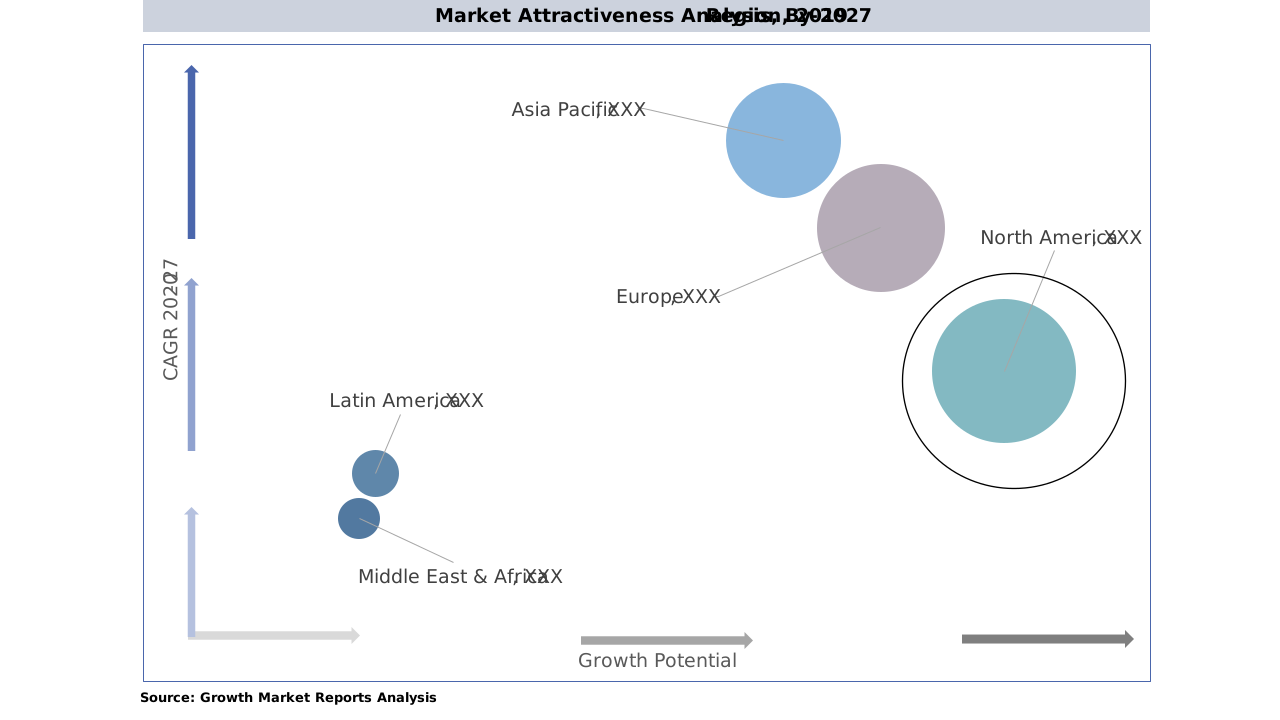
Regionally, North America continues to dominate the insurance fraud investigation outsourcing market due to the high incidence of insurance fraud, stringent regulatory frameworks, and the early adoption of advanced fraud detection technologies. However, the Asia Pacific region is emerging as a lucrative market, driven by the rapid growth of the insurance sector, increasing digitalization, and rising awareness about the benefits of outsourcing fraud investigation. Europe also holds a substantial share, supported by mature insurance markets and favorable regulatory environments. Meanwhile, Latin America and the Middle East & Africa are witnessing steady growth, fueled by increasing insurance penetration and the gradual adoption of outsourced investigation services.
The service type segment of the insurance fraud investigation outsourcing market is highly diversified, encompassing claims investigation, underwriting investigation, surveillance services, background checks, and other specialized offerings. Claims investigation remains the largest and most critical sub-segment, accounting for a significant portion of the market’s revenue. This is attributed to the high volume of insurance claims processed daily and the increasing prevalence of fraudulent claims, particularly in health, automobile, and property insurance. Outsourced claims investigation services deploy advanced data analytics, field investigations, and digital forensics to scrutinize suspicious claims, verify facts, and gather evidence, thereby enabling insurers to make informed decisions and minimize losses.
Underwriting investigation is another vital component, gaining traction as insurers strive to assess risks accurately and prevent fraudulent policies from being issued. This service involves thorough checks on applicants’ backgrounds, financial histories, and previous insurance records to identify red flags and inconsistencies. Outsourcing underwriting investigations allows insurers to tap into specialized databases, leverage sophisticated risk assessment tools, and ensure compliance with regulatory standards. The demand for these services is particularly pronounced in life and health insurance, where fraudulent applications can result in substantial financial losses and reputational damage.
Surveillance services have witnessed increased adoption, especially in property and casualty as well as automobile insurance segments. These services involve covert monitoring of claimants to detect fraudulent activities such as exaggeration of injuries, staged accidents, or false property loss. Outsourcing surveillance operations provides insurers with access to trained investigators, state-of-the-art surveillance equipment, and legal expertise, ensuring that evidence is collected in compliance with privacy laws and can withstand legal scrutiny. The growing sophistication of fraud schemes has made surveillance an indispensable tool in the fight against insurance fraud.
Background checks are integral to both claims and underwriting investigations, enabling insurers to verify the authenticity of personal, financial, and employment information provided by applicants and claimants. Outsourced background check services utilize global databases, public records, and proprietary intelligence networks to uncover hidden risks and prevent fraudulent activities. The increasing reliance on digital onboarding and remote verification processes has further amplified the need for robust background screening solutions, making this sub-segment a key growth driver within the market.
Other specialized services, such as forensic accounting, cyber fraud investigation, and document authentication, are also gaining prominence as insurance fraud becomes more multifaceted and technologically advanced. Service providers are continuously innovating to offer tailored solutions that address emerging fraud trends, such as identity theft, synthetic fraud, and social engineering attacks. The ability to offer a comprehensive suite of investigation services positions outsourcing partners as strategic allies for insurers seeking to safeguard their operations and maintain customer trust.
| Attributes | Details |
| Report Title | Insurance Fraud Investigation Outsourcing Market Research Report 2033 |
| By Service Type | Claims Investigation, Underwriting Investigation, Surveillance Services, Background Checks, Others |
| By End-User | Life Insurance, Health Insurance, Property & Casualty Insurance, Automobile Insurance, Others |
| By Organization Size | Small and Medium Enterprises, Large Enterprises |
| By Deployment Mode | On-Premises, Cloud-Based |
| Regions Covered | North America, Europe, APAC, Latin America, MEA |
| Base Year | 2024 |
| Historic Data | 2018-2023 |
| Forecast Period | 2025-2033 |
| Number of Pages | 298 |
| Number of Tables & Figures | 399 |
| Customization Available | Yes, the report can be customized as per your need. |
The end-user segment of the insurance fraud investigation outsourcing market is characterized by diverse demand patterns across life insurance, health insurance, property & casualty insurance, automobile insurance, and other specialized insurance lines. Life insurance companies are increasingly outsourcing fraud investigation to mitigate risks associated with fraudulent applications, beneficiary fraud, and misrepresentation of personal information. The high value of life insurance policies and the complexity of claims processes make thorough investigations essential, prompting insurers to seek external expertise for enhanced due diligence and risk mitigation.
Health insurance providers face a unique set of challenges, including billing fraud, false claims, and identity theft. The rising cost of healthcare and the increasing incidence of health insurance fraud have driven insurers to partner with specialized investigation firms that employ advanced analytics, medical record reviews, and network analysis to detect and prevent fraud. Outsourcing enables health insurers to access medical expertise, leverage technology-driven solutions, and ensure compliance with healthcare regulations, thereby safeguarding both financial and reputational interests.
Property & casualty insurance is another major end-user segment, where fraud schemes such as arson, staged accidents, and inflated property loss claims are prevalent. The complexity and diversity of property and casualty claims necessitate comprehensive investigation services, including on-site inspections, forensic analysis, and digital evidence collection. Outsourcing these functions allows insurers to respond swiftly to suspicious claims, gather credible evidence, and reduce the risk of fraudulent payouts, contributing to overall loss control and profitability.
Automobile insurance providers are increasingly relying on outsourced investigation services to combat fraud related to staged accidents, false injury claims, and vehicle theft. The high frequency of auto insurance claims and the growing use of telematics and connected car technologies have expanded the scope of fraud detection and investigation. External service providers offer specialized skills in accident reconstruction, digital forensics, and surveillance, enabling auto insurers to identify fraudulent patterns and take prompt corrective actions.
Other insurance lines, such as travel, marine, and specialty insurance, are also adopting outsourced investigation solutions to address niche fraud risks. The ability to customize investigation services to specific insurance products and regulatory environments enhances the value proposition for insurers operating in diverse markets. As the insurance landscape continues to evolve, the demand for specialized, scalable, and technology-driven investigation services is expected to grow across all end-user segments.
The organization size segment of the insurance fraud investigation outsourcing market comprises small and medium enterprises (SMEs) and large enterprises, each exhibiting distinct needs and adoption patterns. Large enterprises, including multinational insurers and global insurance conglomerates, are at the forefront of outsourcing fraud investigation services. These organizations typically manage vast portfolios of insurance products, process high volumes of claims, and operate in multiple regulatory jurisdictions. Outsourcing enables them to standardize fraud management practices, access global investigative resources, and implement consistent risk mitigation strategies across their operations.
Large insurers are also more likely to invest in advanced technologies, such as artificial intelligence, machine learning, and predictive analytics, to enhance their fraud detection capabilities. Outsourcing partners with expertise in these domains provide tailored solutions that integrate seamlessly with insurers’ existing systems, enabling real-time monitoring, automated alerts, and data-driven decision-making. The scalability and flexibility offered by outsourcing are particularly valuable for large enterprises facing fluctuating demand, seasonal claim spikes, or expansion into new markets.
Small and medium enterprises (SMEs) represent a growing segment within the insurance fraud investigation outsourcing market. While SMEs may have smaller claim volumes and limited resources compared to their larger counterparts, they are equally vulnerable to fraud risks. Outsourcing provides SMEs with cost-effective access to specialized investigative skills, advanced technology, and industry best practices that would otherwise be prohibitively expensive to develop in-house. This democratization of fraud management capabilities enables SMEs to compete effectively, maintain regulatory compliance, and protect their financial interests.
SMEs often face unique challenges, such as limited internal expertise, constrained budgets, and the need for rapid response to emerging fraud threats. Outsourcing partners offer flexible service models, including pay-per-use, subscription-based, or project-based arrangements, allowing SMEs to tailor investigation services to their specific needs and budget constraints. The ability to scale services up or down as required ensures that SMEs can manage fraud risks efficiently without overextending their resources.
As the insurance industry continues to embrace digital transformation, both large enterprises and SMEs are recognizing the strategic value of outsourcing fraud investigation. The convergence of technology, expertise, and scalability offered by outsourcing partners is driving widespread adoption across organizations of all sizes, contributing to the overall growth and resilience of the insurance sector.
The deployment mode segment of the insurance fraud investigation outsourcing market is segmented into on-premises and cloud-based solutions, each offering distinct advantages and addressing specific operational requirements. On-premises deployment remains a preferred choice for insurers with stringent data security, privacy, and regulatory compliance needs. This deployment mode provides organizations with full control over their investigative data, infrastructure, and access protocols, making it suitable for insurers operating in highly regulated environments or handling sensitive personal and financial information.
On-premises solutions are often favored by large enterprises with established IT infrastructure, dedicated security teams, and the resources to manage and maintain complex investigative systems. These organizations prioritize data sovereignty, customization, and integration with legacy systems, ensuring that their fraud investigation processes align with internal policies and regulatory mandates. However, the higher upfront costs, longer implementation timelines, and ongoing maintenance requirements associated with on-premises deployment can be a barrier for some insurers, particularly smaller firms.
Cloud-based deployment is rapidly gaining traction, driven by the need for agility, scalability, and cost-efficiency in fraud investigation operations. Cloud-based solutions offer insurers the flexibility to access investigative tools, data analytics, and reporting capabilities from anywhere, at any time, without the need for substantial capital investment in IT infrastructure. This deployment mode is particularly attractive to SMEs and insurers with distributed operations, as it enables seamless collaboration, real-time data sharing, and rapid deployment of new features and updates.
Cloud-based fraud investigation services are also leveraging advanced technologies such as artificial intelligence, machine learning, and big data analytics to enhance the accuracy and speed of fraud detection. Service providers offer robust security measures, including encryption, multi-factor authentication, and regular security audits, to address insurers’ concerns about data privacy and compliance. The pay-as-you-go pricing model further enhances the cost-effectiveness of cloud-based solutions, allowing insurers to align their spending with actual usage and business needs.
The ongoing shift towards digitalization, remote work, and distributed business models is expected to accelerate the adoption of cloud-based fraud investigation services in the coming years. As insurers seek to modernize their operations, improve agility, and respond to evolving fraud threats, the demand for flexible, scalable, and technology-driven deployment models will continue to grow, shaping the future of the insurance fraud investigation outsourcing market.
The insurance fraud investigation outsourcing market presents a wealth of opportunities for growth and innovation, driven by the increasing adoption of advanced technologies and the expanding scope of insurance products. One of the most promising opportunities lies in the integration of artificial intelligence, machine learning, and predictive analytics into fraud investigation processes. These technologies enable service providers to analyze vast volumes of data, identify complex fraud patterns, and deliver actionable insights in real time. The ability to automate routine investigative tasks, enhance decision-making accuracy, and reduce investigation timelines positions technology-driven outsourcing partners as strategic enablers for insurers seeking to stay ahead of sophisticated fraudsters.
Another significant opportunity arises from the growing demand for customized and industry-specific investigation solutions. As insurance products become more diverse and tailored to niche markets, insurers are seeking outsourcing partners who can provide specialized expertise, local knowledge, and regulatory compliance support. The expansion of insurance coverage in emerging markets, coupled with rising awareness about the benefits of outsourcing, is opening new avenues for service providers to expand their footprint and capture untapped market potential. Additionally, the increasing emphasis on data privacy, cybersecurity, and ethical investigation practices is driving the development of innovative solutions that balance operational efficiency with compliance and customer trust.
Despite the positive outlook, the market faces several restraining factors that could impact growth. One of the primary challenges is the concern over data security, privacy, and confidentiality when outsourcing sensitive investigative functions to third-party providers. Insurers must ensure that their outsourcing partners adhere to stringent security protocols, comply with local and international data protection regulations, and maintain robust mechanisms for monitoring and reporting data breaches. The risk of reputational damage, legal liabilities, and regulatory penalties associated with data breaches or non-compliance remains a significant deterrent for some insurers, particularly those operating in highly regulated markets or handling sensitive personal information.
The regional landscape of the insurance fraud investigation outsourcing market is shaped by varying levels of insurance penetration, regulatory frameworks, and adoption of advanced technologies. North America leads the market, accounting for approximately USD 2.1 billion in 2024, driven by the high incidence of insurance fraud, mature insurance markets, and early adoption of digital investigation solutions. The United States, in particular, is at the forefront, supported by a robust regulatory environment, advanced technological infrastructure, and a strong focus on fraud prevention and detection. The presence of leading outsourcing service providers and the willingness of insurers to invest in innovative solutions further bolster the region’s dominance.
Europe holds a substantial share of the global market, with a market size of around USD 1.3 billion in 2024. The region benefits from well-established insurance markets, stringent regulatory requirements, and a growing emphasis on transparency and compliance in fraud management. Countries such as the United Kingdom, Germany, and France are leading adopters of outsourced investigation services, leveraging advanced analytics and technology-driven solutions to combat rising fraud risks. The increasing cross-border nature of insurance transactions and the need for harmonized fraud detection practices are expected to drive further growth in the European market, with a projected CAGR of 8.7% through 2033.
The Asia Pacific region is emerging as a high-growth market, with a market size of USD 0.9 billion in 2024 and a projected CAGR of 12.2% over the forecast period. Rapid economic development, increasing insurance penetration, and the digital transformation of the insurance sector are fueling demand for outsourced fraud investigation services. Countries such as China, India, and Japan are witnessing a surge in insurance fraud cases, prompting insurers to seek external expertise and technology-driven solutions. The growing awareness about the benefits of outsourcing, coupled with supportive regulatory initiatives, is expected to accelerate market growth in the region. Meanwhile, Latin America and the Middle East & Africa are gradually embracing outsourced investigation services, with combined market sizes of USD 0.6 billion in 2024, driven by increasing insurance adoption and the need for cost-effective fraud management solutions.
The competitive landscape of the insurance fraud investigation outsourcing market is characterized by the presence of a diverse array of service providers, ranging from global consulting firms and specialized investigation agencies to technology-driven startups. Market leaders are distinguished by their ability to offer comprehensive, end-to-end solutions that integrate advanced analytics, artificial intelligence, and digital forensics into traditional investigative practices. The ability to innovate, adapt to evolving fraud trends, and deliver measurable outcomes is a key differentiator in this highly competitive market. Service providers are increasingly focusing on building strategic partnerships with insurers, investing in talent development, and expanding their global footprint to capture emerging opportunities.
Technological innovation is at the heart of competition in this market, with leading players leveraging machine learning, predictive analytics, and big data technologies to enhance the accuracy, speed, and scalability of fraud investigations. The integration of cloud-based platforms, real-time monitoring tools, and automated reporting capabilities enables service providers to deliver agile, cost-effective solutions that meet the evolving needs of insurers. The ability to offer customized, industry-specific solutions, backed by deep domain expertise and regulatory knowledge, further strengthens the competitive positioning of market leaders.
The market is also witnessing increased consolidation, as larger players acquire niche investigation firms and technology startups to enhance their service offerings and expand their customer base. This trend is driven by the need to access specialized skills, proprietary technologies, and new market segments. Strategic alliances, joint ventures, and collaborations are becoming increasingly common, as service providers seek to pool resources, share best practices, and accelerate innovation in response to rising fraud risks and evolving customer expectations.
Some of the major companies operating in the global insurance fraud investigation outsourcing market include Cognizant Technology Solutions, Genpact, EXL Service, Accenture, Deloitte, KPMG, PWC, Charles Taylor, Quinte Financial Technologies, and Sutherland Global Services. These companies are recognized for their extensive experience, global reach, and commitment to technological innovation. Cognizant and Genpact, for example, have built robust fraud investigation platforms that leverage AI and analytics to deliver real-time insights and actionable recommendations. Accenture and Deloitte offer end-to-end fraud management solutions, combining consulting, technology, and managed services to address the full spectrum of fraud risks.
Charles Taylor and EXL Service have established themselves as leaders in claims and underwriting investigation services, with a strong focus on customer-centric solutions and regulatory compliance. Quinte Financial Technologies and Sutherland Global Services are known for their agile, technology-driven approaches, catering to both large enterprises and SMEs. KPMG and PWC leverage their global networks, industry expertise, and advanced analytics capabilities to deliver tailored investigation services across multiple insurance lines and geographies. The ongoing investment in research and development, talent acquisition, and strategic partnerships underscores the commitment of these major players to driving innovation and excellence in the insurance fraud investigation outsourcing market.
The Insurance Fraud Investigation Outsourcing market has been segmented on the basis of
Additional company profiles can be provided on request.
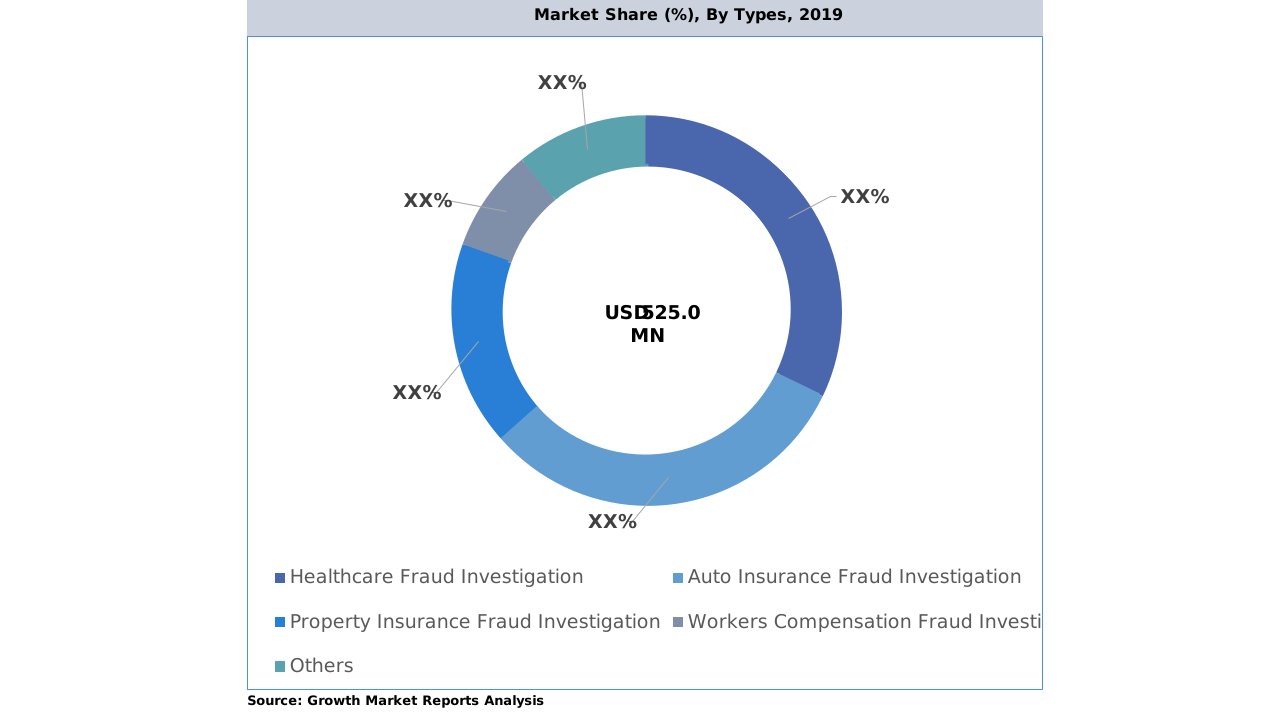
Yes, the report covers various types of insurance fraud investigation outsourcing such as healthcare fraud investigation, auto insurance fraud investigation, property insurance fraud investigation, workers compensation fraud investigation, and others.
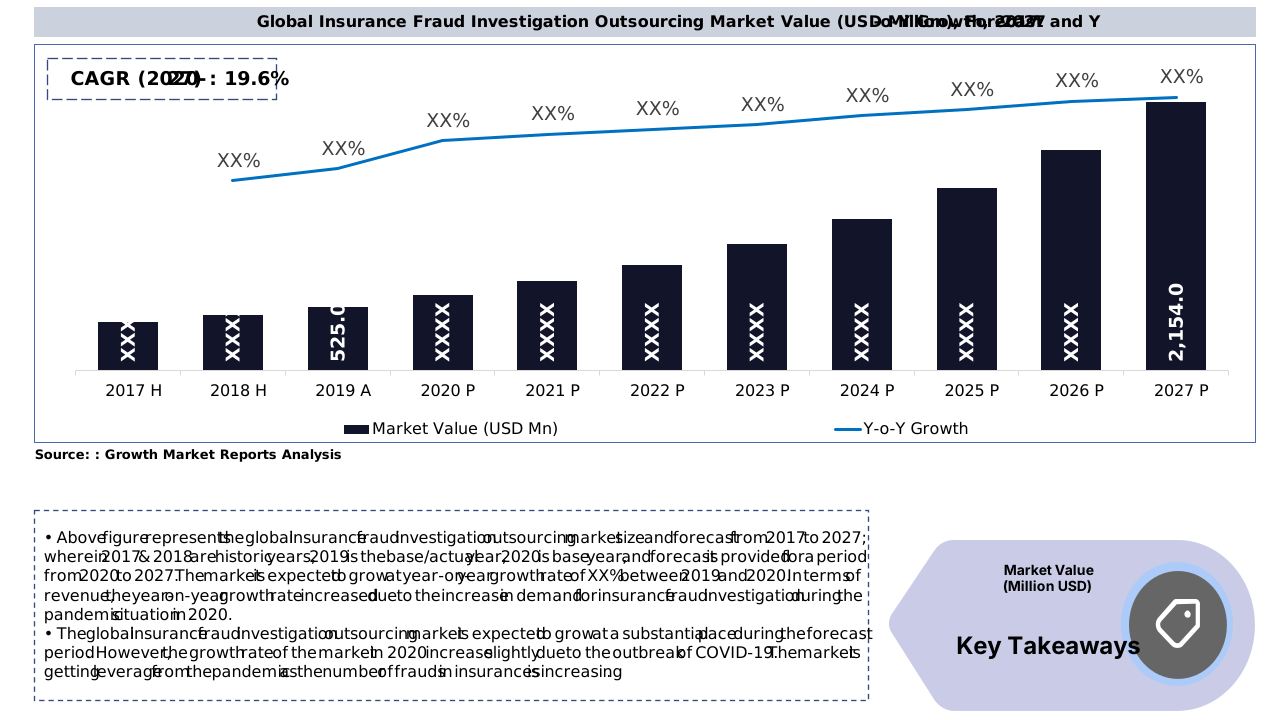
According to this Growth Market Reports, the market from insurance fraud investigation outsourcing market is likely to register a CAGR of 19.6% during period 2020-2027, with an anticipated valuation of USD 2,154.0 million by the end of the 2027.
In addition to market size (in USD Million) and Company Market Share (in % for base year 2019), other data such Macro-economic factors, COVID-19 Impact on the insurance fraud investigation outsourcing market is available in final report.
Factors such as competitive strength and market positioning are key areas considered while selecting top companies to be profiled.
The insurance fraud investigation outsourcing market is anticipated to grow significantly during forecast period due greater expertise offered through these outsourcing services, reduction in risk and cost for insurance companies, increasing adoption of advanced analytics techniques, and stringent regulatory compliances.
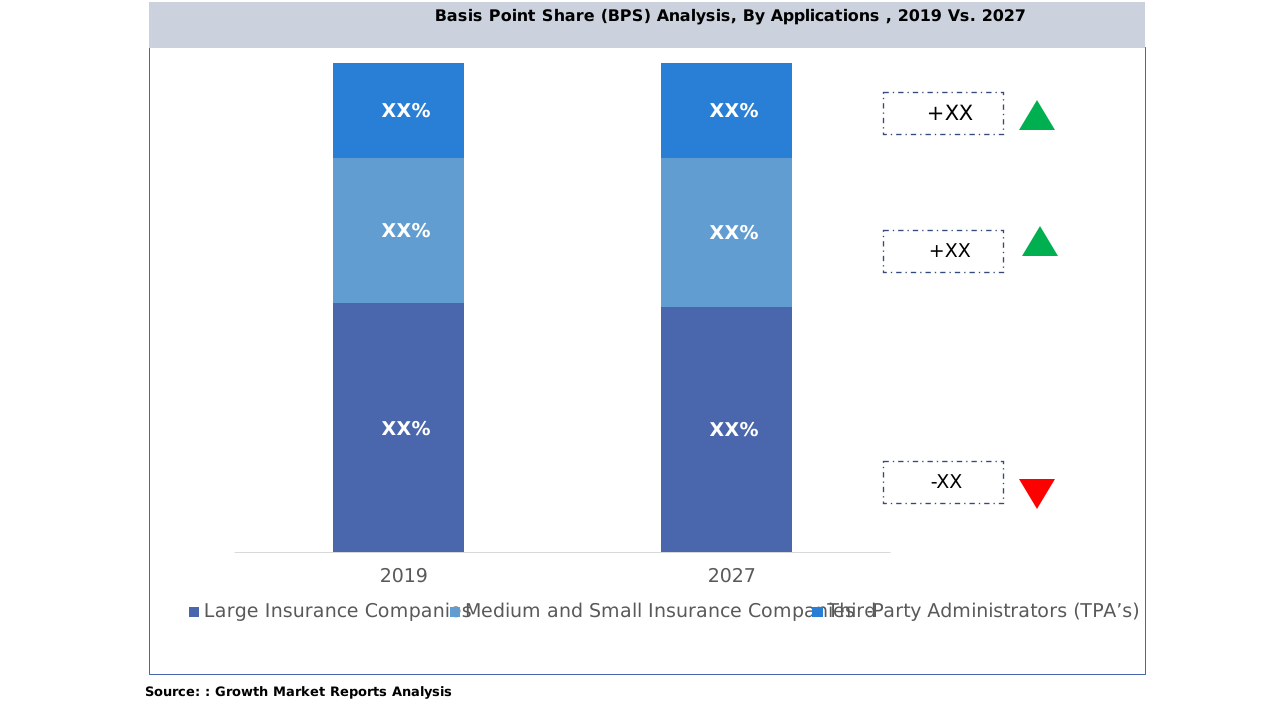
The demand for insurance fraud investigation from large insurance companies, medium and small insurance companies, and third-party administrators (TPA’s) is driving the market growth.
The market is expected to witness sluggish growth with slow increase in terms of demand during 2019-2020 owing to the negative impact of COVID-19 pandemic on the insurance fraud investigation outsourcing market.
The base year considered for the insurance fraud investigation outsourcing market report is 2019. The complete analysis period is 2017 to 2027, wherein, 2017 & 2018 are the historic years, and the forecast is provided from 2020 to 2027.
Major Manufactures include Brumell Group / Brumell Investigations Inc., Corporate Investigative Services, CoventBridge, crigroup.com., Delta Investigative Services, ICORP Investigations, Integrated Security Services, and others.