Insurance Analytics Market Report 2034

Insurance Analytics Market Report 2034

Segments - by Component (Software, Services), by Deployment Mode (On-Premises, Cloud), by Application (Claims Management, Risk Management, Customer Management and Personalization, Process Optimization, Others), by Organization Size (Large Enterprises, Small and Medium Enterprises), by End-User (Insurance Companies, Third-Party Administrators, Brokers, Others)

https://growthmarketreports.com/Raksha
Author : Raksha Sharma
https://growthmarketreports.com/Vaibhav
Fact-checked by : V. Chandola
https://growthmarketreports.com/Shruti
Editor : Shruti Bhat

Last Updated : Jun, 2026 | Report ID :BFSI-3218 | 4.4 Rating | 42 Reviews | 269 Pages | Format : Docx PDF

Report Description

This report is updated with the latest market data and insights as of June 2026. Base year: 2025  |  Forecast period: 2026-2034


Insurance Analytics Market Outlook

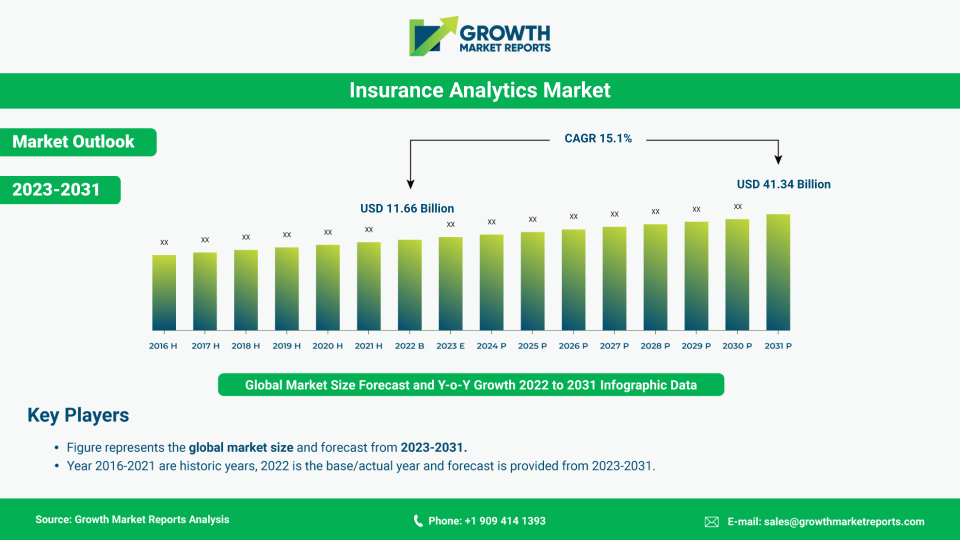
According to our latest research, the global insurance analytics market size reached USD 15.6 billion in 2025, reflecting a robust expansion driven by digital transformation and data-driven decision-making across the insurance sector. The market is expected to further accelerate at a CAGR of 12.3% during the forecast period, reaching an estimated USD 44.2 billion by 2034. This impressive growth is primarily fueled by the increasing adoption of advanced analytics solutions to enhance operational efficiency, improve risk assessment, and deliver personalized customer experiences, as per our comprehensive industry analysis.

Global Insurance Analytics Market Size Forecast 2025-2034, USD Billion

One of the principal growth drivers for the insurance analytics market is the rapid proliferation of data sources, including IoT devices, telematics, social media, and customer interaction channels. Insurance companies are leveraging these rich data streams to gain actionable insights, enabling them to refine underwriting processes, optimize pricing models, and proactively manage claims. Furthermore, the integration of artificial intelligence and machine learning algorithms into analytics platforms is significantly enhancing the predictive accuracy and speed of data analysis, leading to better risk assessment and fraud detection. The convergence of insurance pricing analytics capabilities with AI-driven platforms is helping carriers set more competitive and accurate premiums while controlling loss ratios. As insurers continue to invest in digital transformation initiatives, the demand for sophisticated analytics tools is expected to surge, further propelling market growth.

Another major factor contributing to the expansion of the insurance analytics market is the growing emphasis on regulatory compliance and risk management. With evolving regulatory frameworks and heightened scrutiny from governing bodies worldwide, insurers are increasingly turning to analytics solutions to ensure compliance, monitor solvency, and report accurately. These solutions not only automate compliance processes but also provide real-time insights into risk exposure, helping organizations to mitigate potential financial and reputational losses. The ability of analytics to support proactive risk management and regulatory adherence is driving widespread adoption across both established and emerging insurance markets. The application of analytics to specialized segments such as space insurance further illustrates the technology's expanding reach across the industry.

Customer-centricity has emerged as a key theme in the insurance industry, and analytics is playing a pivotal role in this transformation. Insurers are harnessing analytics to segment customers, personalize offerings, and enhance engagement through targeted communication strategies. By understanding customer behavior and preferences, insurers can design tailored products, streamline claims processing, and improve retention rates. The use of advanced analytics for customer management and personalization is creating new opportunities for insurers to differentiate themselves in a highly competitive landscape, thereby contributing to the sustained growth of the insurance analytics market.

From a regional perspective, North America currently dominates the insurance analytics market, accounting for approximately 38% of global revenue in 2025. This leadership position can be attributed to the presence of major insurance providers, high digital adoption rates, and a mature regulatory environment. However, the Asia Pacific region is expected to witness the fastest growth over the forecast period from 2026 to 2034, driven by increasing insurance penetration, rapid economic development, and rising awareness of data-driven decision-making among insurers. Europe, Latin America, and the Middle East and Africa are also anticipated to contribute significantly to market growth, each with unique drivers such as regulatory changes, technological advancements, and evolving customer expectations.

Predictive Analytics in Insurance is revolutionizing the way insurers operate, offering unprecedented capabilities to forecast future trends and behaviors. By leveraging vast amounts of historical and real-time data, insurers can now predict customer needs, optimize pricing strategies, and anticipate potential risks with greater accuracy. This proactive approach not only enhances decision-making but also enables insurers to offer more personalized services, thereby improving customer satisfaction and loyalty. As the industry continues to embrace digital transformation, predictive analytics is becoming an integral tool for insurers aiming to stay competitive and responsive to market changes. The ability to foresee and adapt to future scenarios is empowering insurers to mitigate risks more effectively and capitalize on emerging opportunities.

Component Analysis

The insurance analytics market, segmented by component, primarily comprises software and services. The software segment holds a dominant share of approximately 62.5% in 2025, owing to the widespread adoption of advanced analytics platforms that offer capabilities such as data mining, predictive modeling, and real-time reporting. These platforms enable insurers to process vast volumes of structured and unstructured data, transforming raw information into actionable insights that drive business value. As insurers increasingly seek to automate and optimize their operations, demand for sophisticated analytics software is expected to remain robust, with vendors continuously innovating to introduce new functionalities and enhance user experience.

Insurance Analytics Market Share by Component 2025

On the other hand, the services segment, accounting for roughly 37.5% of the market in 2025, is experiencing substantial growth, reflecting the rising need for consulting, implementation, support, and managed services. Insurance companies often require expert guidance to successfully deploy analytics solutions, integrate them with existing systems, and derive maximum value from their investments. Service providers play a critical role in facilitating seamless adoption, customizing solutions to meet specific business requirements, and ensuring ongoing support and training. The growing complexity of analytics ecosystems and the shortage of in-house expertise are further driving demand for professional and managed services in the insurance analytics market.

The interplay between software and services is becoming increasingly important as insurers pursue holistic analytics strategies. Many organizations are opting for end-to-end solutions that combine powerful analytics platforms with comprehensive service offerings, enabling them to accelerate time-to-value and achieve strategic objectives. This trend is fostering the emergence of integrated solution providers that offer bundled software and service packages tailored to the unique needs of the insurance industry. Analytics capabilities applied to specific verticals, such as auto insurance claims analytics, demonstrate how specialized software and service combinations are delivering measurable outcomes for carriers.

Additionally, the rise of cloud-based analytics solutions is reshaping the component landscape, enabling insurers to access cutting-edge software and services on a subscription basis. This shift is lowering barriers to entry, allowing organizations of all sizes to leverage advanced analytics capabilities without significant upfront investments. Cloud-based offerings are particularly attractive to small and medium-sized insurers, who can benefit from scalability, flexibility, and cost efficiencies. As cloud adoption accelerates through 2026 and beyond, the demand for cloud-native analytics software and associated services is expected to surge, contributing to the overall growth of the insurance analytics market.

Report Scope

Attributes Details
Report Title Insurance Analytics Market Research Report 2034
By Component Software, Services
By Deployment Mode On-Premises, Cloud
By Application Claims Management, Risk Management, Customer Management and Personalization, Process Optimization, Others
By Organization Size Large Enterprises, Small and Medium Enterprises
By End-User Insurance Companies, Third-Party Administrators, Brokers, Others
Regions Covered North America, Europe, APAC, Latin America, MEA
Base Year 2025
Historic Data 2019-2024
Forecast Period 2026-2034
Number of Pages 269
Number of Tables & Figures 265
Customization Available Yes, the report can be customized as per your need.

Deployment Mode Analysis

Deployment mode is a critical consideration for insurance organizations implementing analytics solutions, with the market segmented into on-premises and cloud-based deployments. On-premises deployment has traditionally been favored by large insurers with significant legacy infrastructure and stringent data security requirements. This model offers greater control over data, customization, and integration with existing systems, making it suitable for organizations with complex IT environments and regulatory constraints. However, the on-premises segment is gradually losing ground as insurers seek more agile and cost-effective deployment options.

Cloud deployment is rapidly gaining traction in the insurance analytics market, driven by the need for scalability, flexibility, and reduced total cost of ownership. Cloud-based analytics solutions enable insurers to access powerful tools and resources on demand, eliminating the need for substantial capital investments in hardware and software. The pay-as-you-go model offered by cloud providers allows insurers to scale their analytics capabilities in line with business growth, while also facilitating rapid deployment and updates. This deployment mode is particularly appealing to small and medium-sized enterprises, who can leverage advanced analytics without the burden of managing complex IT infrastructure. Analysts expect cloud-based insurance analytics to account for the majority of new deployments by 2028.

The growing adoption of hybrid deployment models is also shaping the insurance analytics market. Many insurers are opting for a hybrid approach that combines on-premises and cloud-based solutions, enabling them to balance the benefits of both models. This approach allows organizations to retain sensitive data and critical applications on-premises while leveraging the agility and scalability of the cloud for less sensitive workloads. Hybrid deployments are becoming increasingly popular as insurers navigate evolving regulatory requirements and seek to optimize their analytics infrastructure for performance, security, and cost-effectiveness.

Security, compliance, and data sovereignty remain key considerations influencing deployment decisions in the insurance analytics market. While cloud providers are investing heavily in robust security measures and compliance certifications, some insurers continue to prefer on-premises deployments for mission-critical applications. However, advances in cloud security and the availability of industry-specific compliance solutions are gradually alleviating these concerns, paving the way for broader adoption of cloud-based analytics. As the market evolves through the 2026-2034 forecast period, deployment mode choices will be shaped by a combination of technological advancements, regulatory developments, and shifting business priorities.

Application Analysis

The insurance analytics market is characterized by a wide range of applications, each addressing specific business needs and challenges. Claims management is one of the most prominent application areas, with insurers leveraging analytics to streamline claims processing, detect fraud, and improve customer satisfaction. Advanced analytics solutions enable real-time analysis of claims data, identification of suspicious patterns, and automation of routine tasks, resulting in faster and more accurate claims settlement. The ability to reduce loss ratios and enhance operational efficiency is driving significant investment in claims analytics across the insurance industry. Innovations in this space are well illustrated by advancements in auto insurance claims analytics platforms that are setting new benchmarks for speed and accuracy in claim resolution.

Risk management is another critical application of insurance analytics, enabling insurers to assess and mitigate risks more effectively. By analyzing historical data, external factors, and emerging trends, analytics solutions provide insurers with a comprehensive understanding of risk exposures and potential losses. Predictive modeling and scenario analysis tools help organizations to optimize underwriting processes, set appropriate premiums, and manage capital reserves. The growing complexity of risk landscapes, coupled with increasing regulatory scrutiny, is fueling demand for advanced risk analytics solutions that support proactive risk management and compliance.

Customer management and personalization represent a rapidly growing application segment within the insurance analytics market. Insurers are leveraging analytics to gain deep insights into customer behavior, preferences, and life events, enabling them to deliver personalized products and services. Segmentation, propensity modeling, and customer lifetime value analysis are some of the key techniques used to enhance marketing effectiveness, improve retention rates, and drive cross-selling and upselling opportunities. The shift towards customer-centric business models is prompting insurers to invest in analytics solutions that support targeted engagement and superior customer experiences.

Process optimization is an emerging application area, with insurers using analytics to identify inefficiencies, streamline workflows, and optimize resource allocation. By analyzing operational data, insurers can uncover bottlenecks, monitor key performance indicators, and implement data-driven improvements across the value chain. Process analytics is particularly valuable in areas such as policy administration, underwriting, and customer service, where efficiency gains can translate into significant cost savings and competitive advantage. Innovations in insurance distribution analytics are enabling carriers and brokers to optimize channel performance, identify high-value customer segments, and reduce acquisition costs more effectively. Other application areas, including product development, distribution management, and regulatory reporting, are also benefiting from the adoption of advanced analytics solutions, underscoring the versatility and impact of analytics across the insurance industry.

Organization Size Analysis

The insurance analytics market is segmented by organization size into large enterprises and small and medium enterprises (SMEs), each with distinct adoption patterns and requirements. Large enterprises, which account for a significant share of the market in 2025, are characterized by complex operations, extensive customer bases, and substantial data volumes. These organizations have the resources and expertise to invest in comprehensive analytics platforms, integrate multiple data sources, and develop custom solutions tailored to their unique needs. Large insurers are at the forefront of analytics adoption, leveraging advanced tools to drive innovation, enhance competitiveness, and meet evolving regulatory demands.

Small and medium enterprises represent a rapidly growing segment within the insurance analytics market, driven by increasing awareness of the benefits of data-driven decision-making. SMEs often face resource constraints and lack the in-house expertise required to implement and manage sophisticated analytics solutions. However, the advent of cloud-based analytics platforms and the availability of affordable, scalable solutions are lowering barriers to entry for SMEs. These organizations are increasingly adopting analytics to improve operational efficiency, enhance customer engagement, and compete effectively with larger players. The trend is expected to intensify through the 2026-2034 period as subscription-based pricing models become more accessible.

The adoption of insurance analytics by SMEs is further supported by the growing ecosystem of service providers offering consulting, implementation, and managed services tailored to the needs of smaller organizations. These services enable SMEs to access expert guidance, accelerate deployment, and maximize the value of their analytics investments without the need for significant upfront capital expenditure. As competition intensifies and customer expectations evolve, SMEs are recognizing the strategic importance of analytics in driving growth and profitability.

The convergence of technology, affordability, and service availability is creating new opportunities for both large enterprises and SMEs to harness the power of insurance analytics. As the market matures, increased collaboration and knowledge sharing between organizations of different sizes is fostering innovation and accelerating industry-wide adoption of analytics solutions. The ability to leverage analytics at scale will be a key differentiator for insurers seeking to thrive in an increasingly data-driven and competitive landscape over the forecast period.

End-User Analysis

The insurance analytics market serves a diverse range of end-users, including insurance companies, third-party administrators (TPAs), brokers, and others. Insurance companies represent the largest end-user segment, accounting for the majority of market revenue in 2025. These organizations are leveraging analytics to optimize core functions such as underwriting, claims management, customer engagement, and risk assessment. The ability to extract actionable insights from vast data repositories is enabling insurers to enhance decision-making, improve profitability, and deliver superior value to policyholders.

Third-party administrators are increasingly adopting insurance analytics to manage claims processing, policy administration, and customer service on behalf of insurers. Analytics solutions enable TPAs to streamline operations, reduce costs, and deliver high-quality services to their clients. By leveraging data-driven insights, TPAs can identify trends, monitor performance, and implement continuous improvements across their service offerings. The growing complexity of insurance operations and the need for specialized expertise are driving demand for analytics solutions among TPAs through 2034 and beyond.

Brokers play a critical role in the insurance value chain, acting as intermediaries between insurers and customers. Analytics is empowering brokers to better understand customer needs, recommend tailored products, and optimize distribution strategies. By analyzing market trends, customer preferences, and competitive dynamics, brokers can enhance their advisory capabilities and strengthen client relationships. The adoption of analytics by brokers is expected to accelerate as they seek to differentiate themselves in a crowded marketplace and deliver greater value to their clients.

Other end-users, including reinsurers, regulatory bodies, and insurtech startups, are also leveraging analytics to address specific business challenges and opportunities. Reinsurers are using analytics to assess risk exposures, optimize reinsurance programs, and manage capital more effectively. Regulatory bodies are adopting analytics to monitor industry compliance, detect fraudulent activities, and ensure market stability. Insurtech startups are harnessing analytics to disrupt traditional business models, introduce innovative products, and drive digital transformation across the insurance ecosystem. The growing diversity of end-users is contributing to the expanding scope and impact of insurance analytics solutions across the globe.

Opportunities & Threats

The insurance analytics market presents a wealth of opportunities for industry stakeholders, driven by ongoing digital transformation and the proliferation of data sources. The integration of artificial intelligence, machine learning, and advanced analytics techniques is unlocking new possibilities for insurers to enhance risk assessment, improve fraud detection, and deliver personalized customer experiences. The rise of insurtech startups and the increasing adoption of cloud-based analytics platforms are fostering innovation and competition, creating opportunities for solution providers to develop differentiated offerings and capture new market segments. Additionally, the growing emphasis on customer-centricity and regulatory compliance is prompting insurers to invest in analytics capabilities that support proactive decision-making and sustainable growth through 2034.

Emerging technologies such as blockchain, IoT, and telematics are further expanding the horizons of insurance analytics, enabling real-time data collection, enhanced transparency, and improved risk modeling. The adoption of predictive analytics and automation is streamlining core processes, reducing operational costs, and accelerating claims settlement. As insurers seek to harness the full potential of data-driven insights, there is a growing demand for skilled analytics professionals, robust data governance frameworks, and integrated solutions that deliver measurable business outcomes. The growing sophistication of insurance graph analytics platforms is also enabling carriers to detect complex fraud networks and uncover hidden relationships within large datasets, representing a significant opportunity for market expansion. The convergence of technology, data, and analytics is creating a dynamic and rapidly evolving market landscape, offering significant growth opportunities for both established players and new entrants.

Despite the numerous opportunities, the insurance analytics market faces several restraining factors that could impact growth. Data privacy and security concerns remain a top priority for insurers, particularly in light of stringent regulatory requirements such as GDPR in Europe and state-level privacy laws in the United States, as well as the sensitive nature of customer information. The complexity of integrating analytics solutions with legacy systems, coupled with the shortage of skilled professionals, poses significant challenges for organizations seeking to adopt advanced analytics. Additionally, the high cost of implementation and the need for ongoing investment in technology and talent may deter some insurers, particularly smaller organizations, from fully embracing analytics. Addressing these challenges will be crucial for market participants seeking to capitalize on the growing demand for insurance analytics solutions through the forecast period.

Regional Outlook

North America is the leading regional market for insurance analytics, accounting for approximately 38% of the global market revenue in 2025, equivalent to USD 5.9 billion. The region's dominance is attributed to the presence of major insurance providers, advanced digital infrastructure, and a strong focus on regulatory compliance and data-driven decision-making. The United States, in particular, is a major contributor to market growth, with insurers investing heavily in analytics to enhance competitiveness, improve customer experiences, and address evolving risk landscapes. The region is expected to maintain its leadership position over the 2026-2034 forecast period, supported by ongoing innovation, strategic partnerships, and a robust ecosystem of analytics solution providers.

Insurance Analytics Market Regional Share 2025

The Asia Pacific region is emerging as the fastest-growing market for insurance analytics, with a projected CAGR of 15.4% between 2026 and 2034. The market size in Asia Pacific reached USD 3.3 billion in 2025 and is expected to surpass USD 12.1 billion by 2034. Rapid economic development, increasing insurance penetration, and rising awareness of the benefits of analytics are driving adoption across key markets such as China, India, Japan, and Southeast Asia. Insurers in the region are leveraging analytics to address unique challenges, including large and diverse customer bases, evolving regulatory frameworks, and the need for innovative products and services. The growing adoption of digital technologies and the expansion of insurtech ecosystems are expected to further accelerate market growth in Asia Pacific over the coming years.

Europe, Latin America, and the Middle East and Africa collectively accounted for USD 6.4 billion in market revenue in 2025. Europe is characterized by a mature insurance industry, stringent regulatory requirements under frameworks such as Solvency II and GDPR, and a strong focus on innovation and customer-centricity. The region is witnessing steady growth in analytics adoption, with insurers investing in advanced solutions to optimize operations, manage risks, and comply with evolving regulations. Latin America and the Middle East and Africa are experiencing increasing adoption of insurance analytics, driven by rising insurance awareness, expanding digital infrastructure, and the entry of global solution providers. While these regions currently represent a smaller share of the global market, they offer significant long-term growth potential as insurers seek to modernize operations and enhance competitiveness through 2034.

Competitor Outlook

The insurance analytics market is highly competitive and characterized by the presence of both established technology giants and specialized analytics solution providers. The competitive landscape is shaped by ongoing innovation, strategic partnerships, and the continuous introduction of new products and services. Leading vendors are investing heavily in research and development to enhance the capabilities of their analytics platforms, integrate advanced technologies such as artificial intelligence and machine learning, and address the evolving needs of insurance organizations. The ability to deliver end-to-end solutions that combine powerful analytics software with comprehensive services is emerging as a key differentiator in the market as of 2025.

Strategic collaborations and acquisitions are common strategies employed by market participants to expand their product portfolios, enter new markets, and strengthen their competitive positions. Technology providers are partnering with insurers, insurtech startups, and consulting firms to co-develop innovative solutions, accelerate digital transformation, and deliver measurable business outcomes. The emergence of cloud-based analytics platforms is intensifying competition, as new entrants and niche players introduce agile, scalable, and cost-effective solutions tailored to the needs of different market segments. As the market evolves through 2034, increased consolidation is expected, with larger players acquiring specialized vendors to broaden their offerings and enhance market reach.

Customer-centricity, data security, and regulatory compliance are key focus areas for insurers when selecting analytics solution providers. Vendors that can demonstrate a strong track record in delivering secure, compliant, and customer-focused solutions are well-positioned to capture market share. The growing demand for industry-specific analytics capabilities, customizable solutions, and integrated service offerings is prompting vendors to differentiate themselves through innovation, domain expertise, and a deep understanding of insurance industry dynamics. The ability to provide robust support, training, and ongoing value-added services is also critical to building long-term customer relationships and driving market growth.

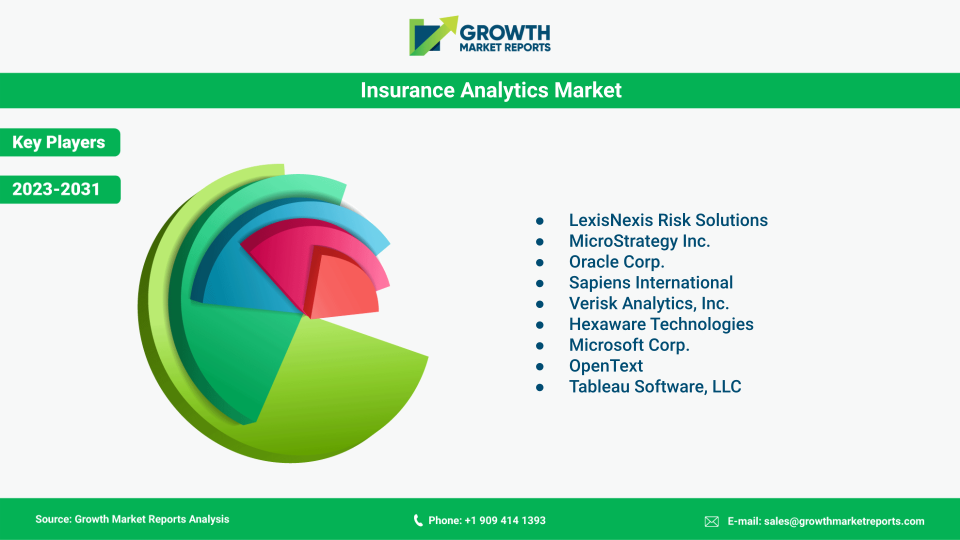
Major companies operating in the insurance analytics market include SAS Institute Inc., IBM Corporation, Oracle Corporation, Salesforce Inc., Microsoft Corporation, SAP SE, Verisk Analytics Inc., Guidewire Software Inc., LexisNexis Risk Solutions, EXL Service Holdings Inc., Palantir Technologies Inc., Shift Technology, Duck Creek Technologies, Sapiens International Corporation, and Applied Systems Inc.. SAS Institute offers advanced analytics and AI solutions specifically tailored for the insurance industry, while IBM leverages its watsonx platform to deliver predictive analytics and cognitive computing capabilities. Oracle and Microsoft provide scalable cloud-based analytics solutions, enabling insurers to harness the power of big data and drive digital transformation. Guidewire and Verisk Analytics are known for their deep industry knowledge and specialized solutions for claims management, risk assessment, and regulatory compliance. Shift Technology has emerged as a notable specialist in AI-powered fraud detection and claims automation, while Palantir is gaining traction with large carriers seeking advanced data integration and modeling platforms.

In addition to these major players, a growing number of insurtech startups and niche vendors are entering the market, offering innovative solutions that leverage emerging technologies such as blockchain, IoT, and machine learning. These companies are disrupting traditional business models, introducing new products and services, and driving competition across the insurance analytics value chain. The dynamic and rapidly evolving competitive landscape presents both challenges and opportunities for market participants, with success increasingly dependent on the ability to innovate, collaborate, and deliver measurable business value to insurance organizations across the globe.

Key Players

  • IBM Corporation
  • Oracle Corporation
  • SAS Institute Inc.
  • Salesforce Inc.
  • Microsoft Corporation
  • SAP SE
  • LexisNexis Risk Solutions
  • Verisk Analytics Inc.
  • Guidewire Software Inc.
  • OpenText Corporation
  • Cognizant Technology Solutions
  • Pegasystems Inc.
  • Palantir Technologies Inc.
  • DXC Technology Company
  • EXL Service Holdings Inc.
  • Sapiens International Corporation
  • Majesco
  • Shift Technology
  • Duck Creek Technologies
  • Applied Systems Inc.

Segments

The Insurance Analytics market has been segmented on the basis of

Component

  • Software
  • Services

Deployment Mode

  • On-Premises
  • Cloud

Application

  • Claims Management
  • Risk Management
  • Customer Management and Personalization
  • Process Optimization
  • Others

Organization Size

  • Large Enterprises
  • Small and Medium Enterprises

End-User

  • Insurance Companies
  • Third-Party Administrators
  • Brokers
  • Others

Frequently Asked Questions

Leading players include IBM Corporation, Oracle Corporation, SAS Institute Inc., Salesforce Inc., Microsoft Corporation, SAP SE, Verisk Analytics Inc., Guidewire Software Inc., LexisNexis Risk Solutions, EXL Service Holdings Inc., Palantir Technologies Inc., Shift Technology, Duck Creek Technologies, Sapiens International Corporation, and Applied Systems Inc. These companies compete on the basis of platform capabilities, industry expertise, cloud offerings, AI integration, and breadth of service.

Key challenges include data privacy and cybersecurity risks given the sensitive nature of customer information, the complexity of integrating modern analytics solutions with legacy IT systems, a persistent shortage of skilled data scientists and analytics professionals within the insurance industry, high implementation costs that may deter smaller organizations, and navigating diverse and evolving regulatory frameworks across different geographies.

Insurance companies represent the largest end-user segment, leveraging analytics for underwriting, claims, and customer engagement. Third-party administrators use analytics to streamline claims processing and policy administration. Brokers apply analytics to optimize distribution strategies and personalize client advice. Other end-users include reinsurers, insurtech startups, and regulatory bodies that use analytics for compliance monitoring and fraud detection.

Core applications include claims management, where analytics streamlines processing and detects fraud; risk management, which uses predictive modeling to optimize underwriting and set accurate premiums; customer management and personalization, enabling targeted product offerings and improved retention; process optimization to boost operational efficiency; and emerging areas such as product development, distribution management, and regulatory reporting.

Cloud-based deployment is growing rapidly and is expected to surpass on-premises deployments in total market share by 2028. The pay-as-you-go, scalable nature of cloud analytics is particularly attractive to small and medium-sized insurers. Many larger organizations are adopting hybrid models that combine on-premises control for sensitive data with the agility and scalability of cloud environments.

The market is segmented into software and services. Software holds the dominant share at approximately 62.5% in 2025, encompassing data mining platforms, predictive modeling tools, and real-time reporting dashboards. Services, accounting for roughly 37.5%, include consulting, implementation, integration, support, and managed services that help insurers deploy and maximize the value of their analytics investments.

North America leads the global market with approximately 38% of revenue in 2025, supported by advanced digital infrastructure and a mature insurance industry. Asia Pacific is the fastest-growing region, projected at a CAGR of 15.4% from 2026 to 2034, driven by rapid economic development, rising insurance penetration, and expanding insurtech ecosystems in China, India, Japan, and Southeast Asia.

Key growth drivers include the proliferation of IoT devices and telematics data, the integration of artificial intelligence and machine learning into analytics platforms, rising regulatory compliance pressures, the shift toward customer-centric business models, and the accelerating pace of digital transformation across the global insurance industry.

The insurance analytics market is projected to grow at a CAGR of 12.3% during the forecast period from 2026 to 2034, reaching an estimated USD 44.2 billion by 2034, driven by increasing investments in advanced analytics, cloud adoption, and regulatory compliance requirements.

The global insurance analytics market reached USD 15.6 billion in 2025, reflecting sustained expansion fueled by digital transformation, growing data volumes, and the widespread adoption of AI-driven analytics tools across the insurance sector.

Table Of Content

Chapter 1 Executive Summary
Chapter 2 Assumptions and Acronyms Used
Chapter 3 Research Methodology
Chapter 4 Insurance Analytics Market Overview
   4.1 Introduction
      4.1.1 Market Taxonomy
      4.1.2 Market Definition
      4.1.3 Macro-Economic Factors Impacting the Market Growth
   4.2 Insurance Analytics Market Dynamics
      4.2.1 Market Drivers
      4.2.2 Market Restraints
      4.2.3 Market Opportunity
   4.3 Insurance Analytics Market - Supply Chain Analysis
      4.3.1 List of Key Suppliers
      4.3.2 List of Key Distributors
      4.3.3 List of Key Consumers
   4.4 Key Forces Shaping the Insurance Analytics Market
      4.4.1 Bargaining Power of Suppliers
      4.4.2 Bargaining Power of Buyers
      4.4.3 Threat of Substitution
      4.4.4 Threat of New Entrants
      4.4.5 Competitive Rivalry
   4.5 Global Insurance Analytics Market Size & Forecast, 2023-2032
      4.5.1 Insurance Analytics Market Size and Y-o-Y Growth
      4.5.2 Insurance Analytics Market Absolute $ Opportunity

Chapter 5 Global Insurance Analytics Market Analysis and Forecast By Component
   5.1 Introduction
      5.1.1 Key Market Trends & Growth Opportunities By Component
      5.1.2 Basis Point Share (BPS) Analysis By Component
      5.1.3 Absolute $ Opportunity Assessment By Component
   5.2 Insurance Analytics Market Size Forecast By Component
      5.2.1 Software
      5.2.2 Services
   5.3 Market Attractiveness Analysis By Component

Chapter 6 Global Insurance Analytics Market Analysis and Forecast By Deployment Mode
   6.1 Introduction
      6.1.1 Key Market Trends & Growth Opportunities By Deployment Mode
      6.1.2 Basis Point Share (BPS) Analysis By Deployment Mode
      6.1.3 Absolute $ Opportunity Assessment By Deployment Mode
   6.2 Insurance Analytics Market Size Forecast By Deployment Mode
      6.2.1 On-Premises
      6.2.2 Cloud
   6.3 Market Attractiveness Analysis By Deployment Mode

Chapter 7 Global Insurance Analytics Market Analysis and Forecast By Application
   7.1 Introduction
      7.1.1 Key Market Trends & Growth Opportunities By Application
      7.1.2 Basis Point Share (BPS) Analysis By Application
      7.1.3 Absolute $ Opportunity Assessment By Application
   7.2 Insurance Analytics Market Size Forecast By Application
      7.2.1 Claims Management
      7.2.2 Risk Management
      7.2.3 Customer Management and Personalization
      7.2.4 Process Optimization
      7.2.5 Others
   7.3 Market Attractiveness Analysis By Application

Chapter 8 Global Insurance Analytics Market Analysis and Forecast By Organization Size
   8.1 Introduction
      8.1.1 Key Market Trends & Growth Opportunities By Organization Size
      8.1.2 Basis Point Share (BPS) Analysis By Organization Size
      8.1.3 Absolute $ Opportunity Assessment By Organization Size
   8.2 Insurance Analytics Market Size Forecast By Organization Size
      8.2.1 Large Enterprises
      8.2.2 Small and Medium Enterprises
   8.3 Market Attractiveness Analysis By Organization Size

Chapter 9 Global Insurance Analytics Market Analysis and Forecast By End-User
   9.1 Introduction
      9.1.1 Key Market Trends & Growth Opportunities By End-User
      9.1.2 Basis Point Share (BPS) Analysis By End-User
      9.1.3 Absolute $ Opportunity Assessment By End-User
   9.2 Insurance Analytics Market Size Forecast By End-User
      9.2.1 Insurance Companies
      9.2.2 Third-Party Administrators
      9.2.3 Brokers
      9.2.4 Others
   9.3 Market Attractiveness Analysis By End-User

Chapter 10 Global Insurance Analytics Market Analysis and Forecast by Region
   10.1 Introduction
      10.1.1 Key Market Trends & Growth Opportunities By Region
      10.1.2 Basis Point Share (BPS) Analysis By Region
      10.1.3 Absolute $ Opportunity Assessment By Region
   10.2 Insurance Analytics Market Size Forecast By Region
      10.2.1 North America
      10.2.2 Europe
      10.2.3 Asia Pacific
      10.2.4 Latin America
      10.2.5 Middle East & Africa (MEA)
   10.3 Market Attractiveness Analysis By Region

Chapter 11 Coronavirus Disease (COVID-19) Impact 
   11.1 Introduction 
   11.2 Current & Future Impact Analysis 
   11.3 Economic Impact Analysis 
   11.4 Government Policies 
   11.5 Investment Scenario

Chapter 12 North America Insurance Analytics Analysis and Forecast
   12.1 Introduction
   12.2 North America Insurance Analytics Market Size Forecast by Country
      12.2.1 U.S.
      12.2.2 Canada
   12.3 Basis Point Share (BPS) Analysis by Country
   12.4 Absolute $ Opportunity Assessment by Country
   12.5 Market Attractiveness Analysis by Country
   12.6 North America Insurance Analytics Market Size Forecast By Component
      12.6.1 Software
      12.6.2 Services
   12.7 Basis Point Share (BPS) Analysis By Component 
   12.8 Absolute $ Opportunity Assessment By Component 
   12.9 Market Attractiveness Analysis By Component
   12.10 North America Insurance Analytics Market Size Forecast By Deployment Mode
      12.10.1 On-Premises
      12.10.2 Cloud
   12.11 Basis Point Share (BPS) Analysis By Deployment Mode 
   12.12 Absolute $ Opportunity Assessment By Deployment Mode 
   12.13 Market Attractiveness Analysis By Deployment Mode
   12.14 North America Insurance Analytics Market Size Forecast By Application
      12.14.1 Claims Management
      12.14.2 Risk Management
      12.14.3 Customer Management and Personalization
      12.14.4 Process Optimization
      12.14.5 Others
   12.15 Basis Point Share (BPS) Analysis By Application 
   12.16 Absolute $ Opportunity Assessment By Application 
   12.17 Market Attractiveness Analysis By Application
   12.18 North America Insurance Analytics Market Size Forecast By Organization Size
      12.18.1 Large Enterprises
      12.18.2 Small and Medium Enterprises
   12.19 Basis Point Share (BPS) Analysis By Organization Size 
   12.20 Absolute $ Opportunity Assessment By Organization Size 
   12.21 Market Attractiveness Analysis By Organization Size
   12.22 North America Insurance Analytics Market Size Forecast By End-User
      12.22.1 Insurance Companies
      12.22.2 Third-Party Administrators
      12.22.3 Brokers
      12.22.4 Others
   12.23 Basis Point Share (BPS) Analysis By End-User 
   12.24 Absolute $ Opportunity Assessment By End-User 
   12.25 Market Attractiveness Analysis By End-User

Chapter 13 Europe Insurance Analytics Analysis and Forecast
   13.1 Introduction
   13.2 Europe Insurance Analytics Market Size Forecast by Country
      13.2.1 Germany
      13.2.2 France
      13.2.3 Italy
      13.2.4 U.K.
      13.2.5 Spain
      13.2.6 Russia
      13.2.7 Rest of Europe
   13.3 Basis Point Share (BPS) Analysis by Country
   13.4 Absolute $ Opportunity Assessment by Country
   13.5 Market Attractiveness Analysis by Country
   13.6 Europe Insurance Analytics Market Size Forecast By Component
      13.6.1 Software
      13.6.2 Services
   13.7 Basis Point Share (BPS) Analysis By Component 
   13.8 Absolute $ Opportunity Assessment By Component 
   13.9 Market Attractiveness Analysis By Component
   13.10 Europe Insurance Analytics Market Size Forecast By Deployment Mode
      13.10.1 On-Premises
      13.10.2 Cloud
   13.11 Basis Point Share (BPS) Analysis By Deployment Mode 
   13.12 Absolute $ Opportunity Assessment By Deployment Mode 
   13.13 Market Attractiveness Analysis By Deployment Mode
   13.14 Europe Insurance Analytics Market Size Forecast By Application
      13.14.1 Claims Management
      13.14.2 Risk Management
      13.14.3 Customer Management and Personalization
      13.14.4 Process Optimization
      13.14.5 Others
   13.15 Basis Point Share (BPS) Analysis By Application 
   13.16 Absolute $ Opportunity Assessment By Application 
   13.17 Market Attractiveness Analysis By Application
   13.18 Europe Insurance Analytics Market Size Forecast By Organization Size
      13.18.1 Large Enterprises
      13.18.2 Small and Medium Enterprises
   13.19 Basis Point Share (BPS) Analysis By Organization Size 
   13.20 Absolute $ Opportunity Assessment By Organization Size 
   13.21 Market Attractiveness Analysis By Organization Size
   13.22 Europe Insurance Analytics Market Size Forecast By End-User
      13.22.1 Insurance Companies
      13.22.2 Third-Party Administrators
      13.22.3 Brokers
      13.22.4 Others
   13.23 Basis Point Share (BPS) Analysis By End-User 
   13.24 Absolute $ Opportunity Assessment By End-User 
   13.25 Market Attractiveness Analysis By End-User

Chapter 14 Asia Pacific Insurance Analytics Analysis and Forecast
   14.1 Introduction
   14.2 Asia Pacific Insurance Analytics Market Size Forecast by Country
      14.2.1 China
      14.2.2 Japan
      14.2.3 South Korea
      14.2.4 India
      14.2.5 Australia
      14.2.6 South East Asia (SEA)
      14.2.7 Rest of Asia Pacific (APAC)
   14.3 Basis Point Share (BPS) Analysis by Country
   14.4 Absolute $ Opportunity Assessment by Country
   14.5 Market Attractiveness Analysis by Country
   14.6 Asia Pacific Insurance Analytics Market Size Forecast By Component
      14.6.1 Software
      14.6.2 Services
   14.7 Basis Point Share (BPS) Analysis By Component 
   14.8 Absolute $ Opportunity Assessment By Component 
   14.9 Market Attractiveness Analysis By Component
   14.10 Asia Pacific Insurance Analytics Market Size Forecast By Deployment Mode
      14.10.1 On-Premises
      14.10.2 Cloud
   14.11 Basis Point Share (BPS) Analysis By Deployment Mode 
   14.12 Absolute $ Opportunity Assessment By Deployment Mode 
   14.13 Market Attractiveness Analysis By Deployment Mode
   14.14 Asia Pacific Insurance Analytics Market Size Forecast By Application
      14.14.1 Claims Management
      14.14.2 Risk Management
      14.14.3 Customer Management and Personalization
      14.14.4 Process Optimization
      14.14.5 Others
   14.15 Basis Point Share (BPS) Analysis By Application 
   14.16 Absolute $ Opportunity Assessment By Application 
   14.17 Market Attractiveness Analysis By Application
   14.18 Asia Pacific Insurance Analytics Market Size Forecast By Organization Size
      14.18.1 Large Enterprises
      14.18.2 Small and Medium Enterprises
   14.19 Basis Point Share (BPS) Analysis By Organization Size 
   14.20 Absolute $ Opportunity Assessment By Organization Size 
   14.21 Market Attractiveness Analysis By Organization Size
   14.22 Asia Pacific Insurance Analytics Market Size Forecast By End-User
      14.22.1 Insurance Companies
      14.22.2 Third-Party Administrators
      14.22.3 Brokers
      14.22.4 Others
   14.23 Basis Point Share (BPS) Analysis By End-User 
   14.24 Absolute $ Opportunity Assessment By End-User 
   14.25 Market Attractiveness Analysis By End-User

Chapter 15 Latin America Insurance Analytics Analysis and Forecast
   15.1 Introduction
   15.2 Latin America Insurance Analytics Market Size Forecast by Country
      15.2.1 Brazil
      15.2.2 Mexico
      15.2.3 Rest of Latin America (LATAM)
   15.3 Basis Point Share (BPS) Analysis by Country
   15.4 Absolute $ Opportunity Assessment by Country
   15.5 Market Attractiveness Analysis by Country
   15.6 Latin America Insurance Analytics Market Size Forecast By Component
      15.6.1 Software
      15.6.2 Services
   15.7 Basis Point Share (BPS) Analysis By Component 
   15.8 Absolute $ Opportunity Assessment By Component 
   15.9 Market Attractiveness Analysis By Component
   15.10 Latin America Insurance Analytics Market Size Forecast By Deployment Mode
      15.10.1 On-Premises
      15.10.2 Cloud
   15.11 Basis Point Share (BPS) Analysis By Deployment Mode 
   15.12 Absolute $ Opportunity Assessment By Deployment Mode 
   15.13 Market Attractiveness Analysis By Deployment Mode
   15.14 Latin America Insurance Analytics Market Size Forecast By Application
      15.14.1 Claims Management
      15.14.2 Risk Management
      15.14.3 Customer Management and Personalization
      15.14.4 Process Optimization
      15.14.5 Others
   15.15 Basis Point Share (BPS) Analysis By Application 
   15.16 Absolute $ Opportunity Assessment By Application 
   15.17 Market Attractiveness Analysis By Application
   15.18 Latin America Insurance Analytics Market Size Forecast By Organization Size
      15.18.1 Large Enterprises
      15.18.2 Small and Medium Enterprises
   15.19 Basis Point Share (BPS) Analysis By Organization Size 
   15.20 Absolute $ Opportunity Assessment By Organization Size 
   15.21 Market Attractiveness Analysis By Organization Size
   15.22 Latin America Insurance Analytics Market Size Forecast By End-User
      15.22.1 Insurance Companies
      15.22.2 Third-Party Administrators
      15.22.3 Brokers
      15.22.4 Others
   15.23 Basis Point Share (BPS) Analysis By End-User 
   15.24 Absolute $ Opportunity Assessment By End-User 
   15.25 Market Attractiveness Analysis By End-User

Chapter 16 Middle East & Africa (MEA) Insurance Analytics Analysis and Forecast
   16.1 Introduction
   16.2 Middle East & Africa (MEA) Insurance Analytics Market Size Forecast by Country
      16.2.1 Saudi Arabia
      16.2.2 South Africa
      16.2.3 UAE
      16.2.4 Rest of Middle East & Africa (MEA)
   16.3 Basis Point Share (BPS) Analysis by Country
   16.4 Absolute $ Opportunity Assessment by Country
   16.5 Market Attractiveness Analysis by Country
   16.6 Middle East & Africa (MEA) Insurance Analytics Market Size Forecast By Component
      16.6.1 Software
      16.6.2 Services
   16.7 Basis Point Share (BPS) Analysis By Component 
   16.8 Absolute $ Opportunity Assessment By Component 
   16.9 Market Attractiveness Analysis By Component
   16.10 Middle East & Africa (MEA) Insurance Analytics Market Size Forecast By Deployment Mode
      16.10.1 On-Premises
      16.10.2 Cloud
   16.11 Basis Point Share (BPS) Analysis By Deployment Mode 
   16.12 Absolute $ Opportunity Assessment By Deployment Mode 
   16.13 Market Attractiveness Analysis By Deployment Mode
   16.14 Middle East & Africa (MEA) Insurance Analytics Market Size Forecast By Application
      16.14.1 Claims Management
      16.14.2 Risk Management
      16.14.3 Customer Management and Personalization
      16.14.4 Process Optimization
      16.14.5 Others
   16.15 Basis Point Share (BPS) Analysis By Application 
   16.16 Absolute $ Opportunity Assessment By Application 
   16.17 Market Attractiveness Analysis By Application
   16.18 Middle East & Africa (MEA) Insurance Analytics Market Size Forecast By Organization Size
      16.18.1 Large Enterprises
      16.18.2 Small and Medium Enterprises
   16.19 Basis Point Share (BPS) Analysis By Organization Size 
   16.20 Absolute $ Opportunity Assessment By Organization Size 
   16.21 Market Attractiveness Analysis By Organization Size
   16.22 Middle East & Africa (MEA) Insurance Analytics Market Size Forecast By End-User
      16.22.1 Insurance Companies
      16.22.2 Third-Party Administrators
      16.22.3 Brokers
      16.22.4 Others
   16.23 Basis Point Share (BPS) Analysis By End-User 
   16.24 Absolute $ Opportunity Assessment By End-User 
   16.25 Market Attractiveness Analysis By End-User

Chapter 17 Competition Landscape 
   17.1 Insurance Analytics Market: Competitive Dashboard
   17.2 Global Insurance Analytics Market: Market Share Analysis, 2023
   17.3 Company Profiles (Details – Overview, Financials, Developments, Strategy) 
      17.3.1 IBM Corporation
      17.3.2 Oracle Corporation
      17.3.3 SAS Institute Inc.
      17.3.4 Salesforce Inc.
      17.3.5 Microsoft Corporation
      17.3.6 SAP SE
      17.3.7 LexisNexis Risk Solutions
      17.3.8 Verisk Analytics Inc.
      17.3.9 Guidewire Software Inc.
      17.3.10 OpenText Corporation
      17.3.11 Cognizant Technology Solutions
      17.3.12 Pegasystems Inc.
      17.3.13 Palantir Technologies Inc.
      17.3.14 DXC Technology Company
      17.3.15 EXL Service Holdings Inc.
      17.3.16 Sapiens International Corporation
      17.3.17 Majesco
      17.3.18 Shift Technology
      17.3.19 Duck Creek Technologies
      17.3.20 Applied Systems Inc.

Methodology

Our Clients

General Mills
The John Holland Group
Dassault Aviation
Honda Motor Co. Ltd.
Pfizer
Nestle SA
sinopec
Deloitte