Lab Automation in Genomics Market Research Report 2033

Lab Automation in Genomics Market Research Report 2033

Segments - by Product Type (Robotic Liquid Handlers, Automated Nucleic Acid Extraction Systems, Microplate Readers, Automated PCR Systems, Others), by Application (Genomic Sequencing, Sample Preparation, Genotyping, Gene Expression Analysis, Others), by End-User (Pharmaceutical & Biotechnology Companies, Academic & Research Institutes, Clinical Laboratories, Others)

https://growthmarketreports.com/raksha
Author : Raksha Sharma
https://growthmarketreports.com/Vaibhav
Fact-checked by : V. Chandola
https://growthmarketreports.com/Shruti
Editor : Shruti Bhat

Upcoming | Report ID :HC-1048 | 5.0 Rating | 17 Reviews | 270 Pages | Format : Docx PDF

Report Description


Lab Automation in Genomics Market Outlook

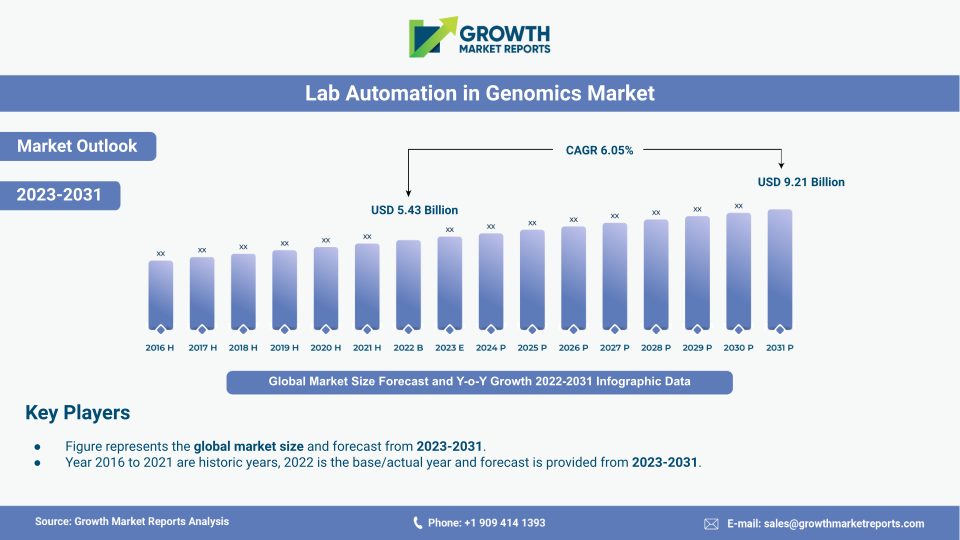
As per our latest research, the global market size for Lab Automation in Genomics reached USD 6.8 billion in 2024, reflecting robust demand across research and clinical applications. The market is anticipated to expand at a CAGR of 9.4% during the forecast period, projecting a value of approximately USD 15.2 billion by 2033. This strong growth trajectory is primarily driven by the increasing adoption of automated solutions to enhance throughput, accuracy, and reproducibility in genomics workflows, alongside rising investments in genomics research and personalized medicine.

A key growth factor for the Lab Automation in Genomics Market is the escalating volume of genomic data being generated worldwide, necessitating advanced automated systems to manage, process, and analyze large-scale datasets efficiently. With the advent of next-generation sequencing (NGS) technologies, laboratories are experiencing a surge in demand for high-throughput sample preparation, nucleic acid extraction, and downstream analysis. Automation not only reduces manual labor and human error but also ensures consistency and scalability, which are critical for both research and clinical diagnostics. This trend is further bolstered by the growing prevalence of genetic disorders and the increasing focus on precision medicine, prompting healthcare and research organizations to invest in cutting-edge automation platforms.

Another significant driver is the continuous technological advancement in robotic liquid handlers, microplate readers, and automated PCR systems. Innovations in hardware and software interfaces have made lab automation solutions more user-friendly, adaptable, and capable of integrating with laboratory information management systems (LIMS). The integration of artificial intelligence and machine learning into automated genomics platforms is also facilitating real-time data interpretation and decision-making, further enhancing operational efficiency. In addition, the cost of automation systems is gradually decreasing due to economies of scale and increased competition among manufacturers, making these technologies more accessible to a broader range of end-users, including small and medium-sized laboratories.

The market is also witnessing considerable growth due to the rising number of collaborative initiatives between academic institutions, biotechnology companies, and government agencies. These collaborations are accelerating the development and adoption of innovative automation solutions tailored to specific genomics applications, such as single-cell sequencing, CRISPR-based gene editing, and large-scale population genomics studies. Furthermore, the increasing availability of funding for genomics research, particularly in emerging economies, is stimulating market growth. However, the high initial investment required for implementing advanced automation systems and the need for skilled personnel to operate and maintain these platforms remain notable challenges.

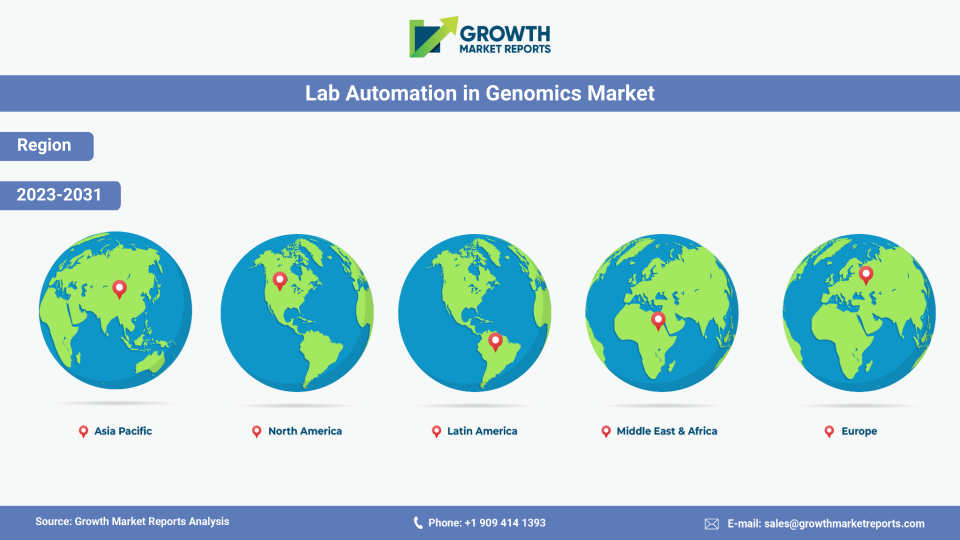
Regionally, North America continues to dominate the Lab Automation in Genomics Market, accounting for the largest share in 2024, driven by substantial investments in genomics research, a well-established healthcare infrastructure, and the presence of major market players. Europe follows closely, supported by strong government initiatives and a growing focus on translational genomics. Meanwhile, the Asia Pacific region is emerging as a high-growth market, propelled by expanding biotechnology sectors, increasing research funding, and rising awareness about the benefits of lab automation. Latin America and the Middle East & Africa are also showing promising growth, albeit from a smaller base, as they gradually enhance their research capabilities and infrastructure.

Global Lab Automation in Genomics Industry Outlook

Product Type Analysis

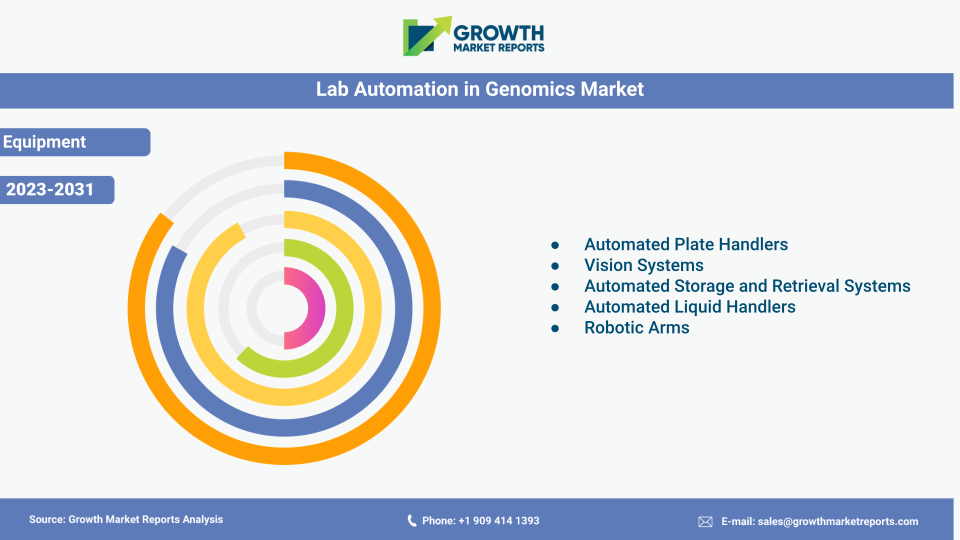
The Product Type segment in the Lab Automation in Genomics Market is highly diversified, encompassing robotic liquid handlers, automated nucleic acid extraction systems, microplate readers, automated PCR systems, and other specialized devices. Robotic liquid handlers represent a cornerstone of automated genomics workflows, significantly increasing throughput and accuracy in processes such as sample dispensing, reagent addition, and plate replication. These systems are increasingly favored in high-throughput laboratories due to their ability to handle complex protocols with minimal human intervention. The integration of advanced robotics and intuitive software interfaces has further enhanced their performance, enabling seamless adaptation to evolving laboratory needs. As a result, the demand for robotic liquid handlers is projected to remain strong, particularly in large-scale genomic sequencing facilities and pharmaceutical research centers.

Automated nucleic acid extraction systems are witnessing substantial adoption, especially in clinical laboratories and molecular diagnostics settings. These systems streamline the critical step of isolating high-quality DNA and RNA from various sample types, which is essential for downstream genomic analysis. Automation in nucleic acid extraction not only improves reproducibility and reduces contamination risk but also minimizes turnaround time, which is crucial for applications such as infectious disease diagnostics and cancer genomics. The increasing prevalence of infectious diseases and genetic disorders, coupled with the growing adoption of NGS-based diagnostics, is fueling the demand for automated extraction solutions. Vendors are continuously innovating to enhance system flexibility, throughput, and compatibility with diverse sample matrices, further driving market growth in this segment.

Microplate readers play a pivotal role in genomics laboratories by enabling high-throughput detection and quantification of nucleic acids, proteins, and other biomolecules. These devices are integral to applications such as quantitative PCR (qPCR), fluorescence-based assays, and enzyme-linked immunosorbent assays (ELISA). The adoption of advanced detection technologies, such as multimode and high-sensitivity readers, is expanding the capabilities of microplate readers, making them indispensable tools for genomics research and clinical diagnostics. The trend toward miniaturization and multiplexing is also driving innovation in this segment, allowing researchers to perform multiple assays simultaneously and conserve valuable reagents and samples.

Automated PCR systems are another critical product category, offering precise thermal cycling and real-time detection capabilities for a wide range of genomic applications. These systems have become essential for high-throughput genotyping, gene expression analysis, and pathogen detection. The increasing use of PCR in clinical diagnostics, particularly for infectious diseases and oncology, is boosting the demand for automated platforms that can deliver reliable and reproducible results at scale. Manufacturers are focusing on enhancing system throughput, sensitivity, and integration with upstream and downstream automation modules to provide end-to-end solutions for genomics laboratories.

The "Others" category includes a variety of specialized automation devices, such as colony pickers, automated storage systems, and sample tracking solutions. These products are gaining traction as laboratories seek to automate ancillary processes and further streamline genomics workflows. The adoption of integrated automation solutions that combine multiple product types is also rising, as laboratories aim to maximize operational efficiency and data integrity. Overall, the Product Type segment is characterized by rapid technological innovation and increasing customization to meet the diverse needs of genomics researchers and clinicians.

Report Scope

Attributes Details
Report Title Lab Automation in Genomics Market Research Report 2033
By Product Type Robotic Liquid Handlers, Automated Nucleic Acid Extraction Systems, Microplate Readers, Automated PCR Systems, Others
By Application Genomic Sequencing, Sample Preparation, Genotyping, Gene Expression Analysis, Others
By End-User Pharmaceutical & Biotechnology Companies, Academic & Research Institutes, Clinical Laboratories, Others
Regions Covered North America, Europe, APAC, Latin America, MEA
Base Year 2024
Historic Data 2018-2023
Forecast Period 2025-2033
Number of Pages 270
Number of Tables & Figures 274
Customization Available Yes, the report can be customized as per your need.

Application Analysis

The Application segment of the Lab Automation in Genomics Market is broad, encompassing genomic sequencing, sample preparation, genotyping, gene expression analysis, and other specialized uses. Genomic sequencing remains the dominant application, driven by the widespread adoption of NGS technologies in research, clinical diagnostics, and personalized medicine. Automated solutions are crucial for managing the high sample volumes and complex workflows associated with sequencing projects, enabling laboratories to achieve faster turnaround times, higher accuracy, and greater scalability. The integration of automated sample tracking, liquid handling, and data management systems is further enhancing the efficiency of sequencing operations, supporting the growing demand for population-scale genomics studies and large-scale disease research.

Sample preparation is a critical bottleneck in many genomics workflows, making automation particularly valuable in this application area. Automated sample preparation systems streamline processes such as DNA/RNA extraction, normalization, and library preparation, reducing manual labor and minimizing the risk of errors and contamination. These systems are increasingly being adopted in both research and clinical laboratories, where reproducibility and throughput are paramount. The trend toward miniaturization and multiplexing in sample preparation is also driving the development of innovative automation platforms that can process multiple samples simultaneously with minimal reagent consumption, further enhancing laboratory productivity.

Genotyping is another key application area benefiting from lab automation, particularly in the context of large-scale genetic association studies, pharmacogenomics, and agricultural genomics. Automated genotyping platforms enable high-throughput analysis of genetic variants across thousands of samples, supporting research into disease susceptibility, drug response, and crop improvement. The ability to rapidly and accurately genotype large populations is essential for advancing precision medicine and agricultural biotechnology, making automation a critical enabler in these fields. As the demand for personalized healthcare and sustainable agriculture continues to grow, the adoption of automated genotyping solutions is expected to increase accordingly.

Gene expression analysis is fundamental to understanding the functional genomics of health and disease, and automation is playing a pivotal role in enhancing the throughput and reproducibility of these studies. Automated systems for RNA extraction, reverse transcription, and quantitative PCR are enabling researchers to analyze gene expression profiles across large sample cohorts with high precision. The integration of automation with advanced data analysis tools is also facilitating the interpretation of complex gene expression datasets, supporting the identification of novel biomarkers and therapeutic targets. As the field of transcriptomics continues to evolve, the demand for automated gene expression analysis platforms is expected to rise.

The "Others" application segment includes a range of specialized uses, such as single-cell genomics, epigenomics, and CRISPR-based gene editing. Automation is increasingly being adopted in these emerging areas to address the challenges of high-throughput sample processing, data management, and quality control. The development of tailored automation solutions for niche applications is expanding the scope of the Lab Automation in Genomics Market, enabling researchers to explore new frontiers in genomics and molecular biology. Overall, the Application segment is characterized by a strong emphasis on throughput, accuracy, and scalability, driving continuous innovation in automation technologies.

End-User Analysis

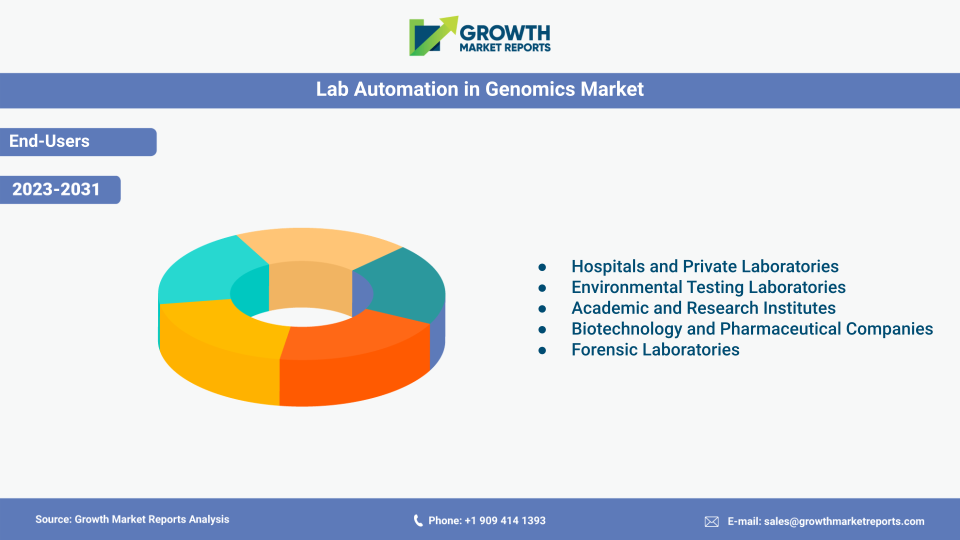
The End-User segment of the Lab Automation in Genomics Market is composed of pharmaceutical and biotechnology companies, academic and research institutes, clinical laboratories, and other entities such as contract research organizations (CROs) and government agencies. Pharmaceutical and biotechnology companies are the largest end-users, leveraging lab automation to accelerate drug discovery, biomarker identification, and translational genomics research. These organizations require high-throughput, scalable, and reliable automation solutions to manage large volumes of samples and data, support regulatory compliance, and reduce time-to-market for new therapeutics. The increasing adoption of genomics-driven drug development and personalized medicine is further driving investment in advanced automation platforms within this segment.

Academic and research institutes represent a significant and growing end-user segment, driven by the expansion of genomics research programs and the increasing availability of research funding. These institutions are adopting lab automation to enhance the efficiency and reproducibility of basic and applied genomics research, support large-scale collaborative projects, and facilitate training and education in molecular biology techniques. The trend toward interdisciplinary research and the integration of genomics with other omics technologies is also stimulating demand for flexible and customizable automation solutions that can accommodate diverse research needs and protocols.

Clinical laboratories are rapidly embracing lab automation to support the growing demand for molecular diagnostics, genetic testing, and precision medicine. Automated systems are essential for managing high sample volumes, ensuring quality control, and delivering timely and accurate results to clinicians and patients. The increasing prevalence of genetic disorders, infectious diseases, and cancer is driving the adoption of automated solutions for applications such as NGS-based diagnostics, pharmacogenomics, and companion diagnostics. Regulatory requirements for data integrity, traceability, and standardization are also prompting clinical laboratories to invest in integrated automation and informatics platforms.

The "Others" end-user category includes contract research organizations, government agencies, and public health laboratories, all of which are expanding their use of lab automation to support genomics research, public health surveillance, and biobanking. These entities often require scalable and adaptable automation solutions that can be deployed across multiple sites and integrated with existing laboratory infrastructure. The increasing involvement of public sector organizations in genomics research and population health initiatives is creating new opportunities for automation vendors to expand their customer base and develop tailored solutions for specific use cases.

Overall, the End-User segment is characterized by diverse requirements and purchasing behaviors, with each category prioritizing different features and functionalities in lab automation solutions. Vendors are responding by offering a wide range of products and services, from fully integrated automation platforms to modular systems and customized workflow solutions. The growing emphasis on collaboration, data sharing, and interoperability is also influencing the development of automation technologies that can seamlessly interface with laboratory information management systems and other digital health platforms.

Opportunities & Threats

The Lab Automation in Genomics Market presents significant opportunities for growth and innovation, particularly in the context of expanding applications in precision medicine, population genomics, and synthetic biology. The increasing integration of artificial intelligence, machine learning, and advanced analytics with automation platforms is opening new avenues for real-time data interpretation, predictive modeling, and decision support. These advancements are enabling laboratories to extract deeper insights from genomic data, accelerate discovery, and improve patient outcomes. In addition, the trend toward decentralization and miniaturization of laboratory workflows is creating opportunities for the development of portable and point-of-care automation solutions, expanding access to genomics technologies in resource-limited settings and remote locations.

Another major opportunity lies in the growing demand for customized and flexible automation solutions that can be tailored to specific research and clinical applications. As genomics research becomes increasingly interdisciplinary and data-intensive, laboratories are seeking automation platforms that can accommodate diverse sample types, protocols, and throughput requirements. Vendors that can offer modular, scalable, and interoperable systems are well-positioned to capture market share and address the evolving needs of end-users. Furthermore, the rising focus on sustainability and green laboratory practices is driving interest in automation solutions that minimize reagent consumption, reduce waste, and optimize energy efficiency, creating additional opportunities for innovation and differentiation in the market.

Despite the substantial growth potential, the Lab Automation in Genomics Market faces several restraining factors, most notably the high initial investment required for purchasing and implementing advanced automation systems. The cost of hardware, software, and integration services can be prohibitive for small and medium-sized laboratories, particularly in resource-constrained settings. In addition, the complexity of installing, configuring, and maintaining automation platforms requires specialized technical expertise, which may not be readily available in all organizations. Concerns about data security, system interoperability, and regulatory compliance also pose challenges for widespread adoption, particularly in clinical and regulated environments. Addressing these barriers will be critical for ensuring the continued growth and sustainability of the market.

Regional Outlook

North America remains the largest regional market for Lab Automation in Genomics, accounting for approximately USD 2.9 billion of the global market size in 2024. The region's dominance is underpinned by significant investments in genomics research, a robust biotechnology and pharmaceutical sector, and the presence of leading automation technology providers. The United States, in particular, is at the forefront of innovation and adoption, with numerous academic, government, and commercial initiatives driving demand for advanced automation solutions. Canada is also making notable progress, supported by strong research funding and a growing focus on precision medicine. The North American market is expected to maintain a steady growth trajectory, supported by ongoing technological advancements and expanding applications in clinical diagnostics and translational research.

Europe follows closely, with a market size of around USD 1.8 billion in 2024, driven by a well-established research infrastructure, strong government support for genomics initiatives, and a growing emphasis on personalized healthcare. Countries such as Germany, the United Kingdom, and France are leading contributors to market growth, supported by collaborative research networks and public-private partnerships. The European market is characterized by a high degree of regulatory oversight and standardization, which is fostering the adoption of integrated automation and informatics solutions. The region is expected to grow at a CAGR of 8.7% through 2033, driven by increasing investments in healthcare innovation and the expansion of genomics-based diagnostics and therapeutics.

The Asia Pacific region is emerging as a high-growth market, with a current value of USD 1.3 billion and the highest projected CAGR of 11.2% over the forecast period. Rapid advancements in biotechnology, increasing research funding, and rising awareness about the benefits of lab automation are driving market expansion in countries such as China, Japan, South Korea, and India. The region is witnessing a surge in genomics research and clinical applications, supported by government initiatives, international collaborations, and the establishment of new research centers and biobanks. While Latin America and the Middle East & Africa currently represent smaller market shares, they are poised for steady growth as they enhance their research infrastructure and invest in healthcare modernization.

Lab Automation in Genomics Market Statistics

Competitor Outlook

The competitive landscape of the Lab Automation in Genomics Market is characterized by a dynamic mix of established global players, emerging technology innovators, and specialized solution providers. The market is highly fragmented, with companies competing on the basis of technology innovation, product portfolio breadth, system integration capabilities, and customer support services. Leading vendors are investing heavily in research and development to introduce next-generation automation platforms that offer enhanced throughput, flexibility, and data management capabilities. Strategic collaborations, mergers and acquisitions, and partnerships with research institutions and healthcare organizations are common strategies employed by market participants to expand their market presence and accelerate product development.

In addition to product innovation, companies are focusing on developing comprehensive solutions that integrate hardware, software, and informatics to deliver end-to-end automation for genomics workflows. The integration of artificial intelligence, machine learning, and cloud-based analytics is becoming increasingly important, enabling laboratories to extract actionable insights from complex genomic datasets and streamline decision-making processes. Vendors are also prioritizing user experience, offering intuitive interfaces, customizable workflows, and robust technical support to ensure seamless adoption and operation of automation systems. The emphasis on interoperability and compatibility with existing laboratory information management systems is further enhancing the value proposition of leading automation solutions.

The market is also witnessing the entry of new players, particularly in the Asia Pacific region, where local companies are leveraging regional expertise and cost advantages to develop innovative automation products tailored to local market needs. These emerging players are challenging the dominance of established global vendors by offering competitive pricing, localized support, and customized solutions. At the same time, established companies are expanding their geographic reach through distribution agreements, joint ventures, and direct investments in emerging markets. The competitive environment is thus characterized by intense rivalry, rapid innovation cycles, and a strong focus on customer-centric solutions.

Major companies operating in the Lab Automation in Genomics Market include Thermo Fisher Scientific, Beckman Coulter (Danaher Corporation), Agilent Technologies, Tecan Group, Hamilton Company, PerkinElmer, QIAGEN, Eppendorf, Bio-Rad Laboratories, and Roche Diagnostics. Thermo Fisher Scientific is a global leader, offering a comprehensive portfolio of automated liquid handling, nucleic acid extraction, and sequencing preparation solutions. Beckman Coulter and Agilent Technologies are renowned for their advanced robotic platforms and integrated laboratory automation systems, catering to both research and clinical applications. Tecan Group and Hamilton Company specialize in modular and scalable automation solutions, with a strong focus on flexibility and customization.

PerkinElmer and QIAGEN are leading providers of automated nucleic acid extraction and sample preparation systems, supporting high-throughput genomics workflows in research and diagnostics. Eppendorf and Bio-Rad Laboratories are recognized for their innovative PCR and microplate reader technologies, while Roche Diagnostics is a key player in automated molecular diagnostics platforms. These companies are continuously expanding their product portfolios through internal development and strategic acquisitions, aiming to address the evolving needs of genomics laboratories worldwide. The competitive landscape is expected to remain dynamic, with ongoing technological advancements and increasing customer demand driving further innovation and market consolidation.

Key Players

  • Thermo Fisher Scientific
  • Agilent Technologies
  • PerkinElmer
  • QIAGEN
  • Hamilton Company
  • Tecan Group
  • Beckman Coulter (Danaher Corporation)
  • Roche Diagnostics
  • Bio-Rad Laboratories
  • Eppendorf AG
  • Illumina
  • Siemens Healthineers
  • Hudson Robotics
  • Synchron Lab Automation
  • Analytik Jena
  • Aurora Biomed
  • Becton, Dickinson and Company (BD)
  • Labcyte (now part of Beckman Coulter)
  • Formulatrix
  • HighRes Biosolutions
Lab Automation in Genomics Market Overview

Segments

The Lab Automation in Genomics market has been segmented on the basis of

Product Type

  • Robotic Liquid Handlers
  • Automated Nucleic Acid Extraction Systems
  • Microplate Readers
  • Automated PCR Systems
  • Others

Application

  • Genomic Sequencing
  • Sample Preparation
  • Genotyping
  • Gene Expression Analysis
  • Others

End-User

  • Pharmaceutical & Biotechnology Companies
  • Academic & Research Institutes
  • Clinical Laboratories
  • Others

Competitive Landscape

Key players competing in the lab automation in genomics market include PerkinElmer Inc., Siemens Healthineers AG, Thermo Fisher Scientific Inc., Tecan Group Ltd, Becton Dickinson, Honeywell International, Danaher Corporation, Synchron Lab Automation, Hudson Robotics, Inc., Eppendorf AG, and Agilent Technologies Inc.

Key players are using several business strategies such as acquisitions, merger, collaborations, partnerships, capacity expansion, and product launches to enhance their market shares and to generate revenue and raise their production line of the business in the coming years.
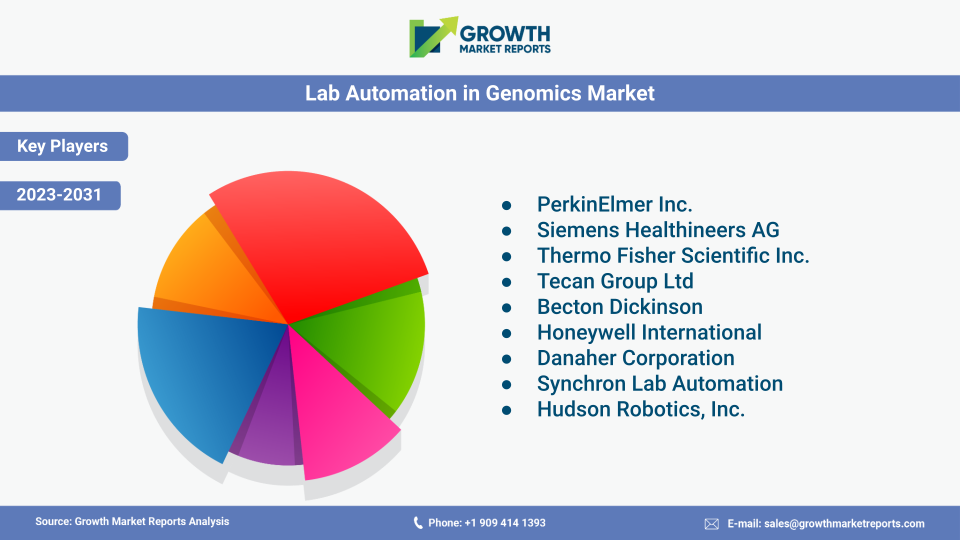

Lab Automation in Genomics Market Key Players

Frequently Asked Questions

Future opportunities include the expansion of precision medicine, population genomics, synthetic biology, portable and point-of-care automation solutions, and sustainable, energy-efficient laboratory practices.

Leading companies include Thermo Fisher Scientific, Agilent Technologies, PerkinElmer, QIAGEN, Hamilton Company, Tecan Group, Beckman Coulter, Roche Diagnostics, Bio-Rad Laboratories, and Eppendorf AG.

Technological advancements include the integration of artificial intelligence and machine learning, improvements in robotic liquid handling, user-friendly software interfaces, and the development of modular and scalable automation platforms.

Major challenges include the high initial investment cost, the need for skilled personnel to operate and maintain systems, concerns about data security, and regulatory compliance.

Primary end-users include pharmaceutical and biotechnology companies, academic and research institutes, clinical laboratories, contract research organizations, and government agencies.

Lab automation is used in genomic sequencing, sample preparation, genotyping, gene expression analysis, and specialized applications like single-cell genomics and CRISPR-based gene editing to increase throughput, accuracy, and reproducibility.

The main product types include robotic liquid handlers, automated nucleic acid extraction systems, microplate readers, automated PCR systems, and other specialized automation devices.

North America is the leading region, followed by Europe. The Asia Pacific region is emerging as a high-growth market due to expanding biotechnology sectors and increasing research funding.

Key growth drivers include the increasing adoption of automated solutions to improve throughput and accuracy, rising investments in genomics research, advancements in next-generation sequencing (NGS) technologies, and the growing focus on personalized medicine.

As of 2024, the global Lab Automation in Genomics Market is valued at USD 6.8 billion and is projected to reach approximately USD 15.2 billion by 2033.

Table Of Content

Chapter 1 Executive Summary
Chapter 2 Assumptions and Acronyms Used
Chapter 3 Research Methodology
Chapter 4 Lab Automation in Genomics Market Overview
   4.1 Introduction
      4.1.1 Market Taxonomy
      4.1.2 Market Definition
      4.1.3 Macro-Economic Factors Impacting the Market Growth
   4.2 Lab Automation in Genomics Market Dynamics
      4.2.1 Market Drivers
      4.2.2 Market Restraints
      4.2.3 Market Opportunity
   4.3 Lab Automation in Genomics Market - Supply Chain Analysis
      4.3.1 List of Key Suppliers
      4.3.2 List of Key Distributors
      4.3.3 List of Key Consumers
   4.4 Key Forces Shaping the Lab Automation in Genomics Market
      4.4.1 Bargaining Power of Suppliers
      4.4.2 Bargaining Power of Buyers
      4.4.3 Threat of Substitution
      4.4.4 Threat of New Entrants
      4.4.5 Competitive Rivalry
   4.5 Global Lab Automation in Genomics Market Size & Forecast, 2023-2032
      4.5.1 Lab Automation in Genomics Market Size and Y-o-Y Growth
      4.5.2 Lab Automation in Genomics Market Absolute $ Opportunity

Chapter 5 Global Lab Automation in Genomics Market Analysis and Forecast By Product Type
   5.1 Introduction
      5.1.1 Key Market Trends & Growth Opportunities By Product Type
      5.1.2 Basis Point Share (BPS) Analysis By Product Type
      5.1.3 Absolute $ Opportunity Assessment By Product Type
   5.2 Lab Automation in Genomics Market Size Forecast By Product Type
      5.2.1 Robotic Liquid Handlers
      5.2.2 Automated Nucleic Acid Extraction Systems
      5.2.3 Microplate Readers
      5.2.4 Automated PCR Systems
      5.2.5 Others
   5.3 Market Attractiveness Analysis By Product Type

Chapter 6 Global Lab Automation in Genomics Market Analysis and Forecast By Application
   6.1 Introduction
      6.1.1 Key Market Trends & Growth Opportunities By Application
      6.1.2 Basis Point Share (BPS) Analysis By Application
      6.1.3 Absolute $ Opportunity Assessment By Application
   6.2 Lab Automation in Genomics Market Size Forecast By Application
      6.2.1 Genomic Sequencing
      6.2.2 Sample Preparation
      6.2.3 Genotyping
      6.2.4 Gene Expression Analysis
      6.2.5 Others
   6.3 Market Attractiveness Analysis By Application

Chapter 7 Global Lab Automation in Genomics Market Analysis and Forecast By End-User
   7.1 Introduction
      7.1.1 Key Market Trends & Growth Opportunities By End-User
      7.1.2 Basis Point Share (BPS) Analysis By End-User
      7.1.3 Absolute $ Opportunity Assessment By End-User
   7.2 Lab Automation in Genomics Market Size Forecast By End-User
      7.2.1 Pharmaceutical & Biotechnology Companies
      7.2.2 Academic & Research Institutes
      7.2.3 Clinical Laboratories
      7.2.4 Others
   7.3 Market Attractiveness Analysis By End-User

Chapter 8 Global Lab Automation in Genomics Market Analysis and Forecast by Region
   8.1 Introduction
      8.1.1 Key Market Trends & Growth Opportunities By Region
      8.1.2 Basis Point Share (BPS) Analysis By Region
      8.1.3 Absolute $ Opportunity Assessment By Region
   8.2 Lab Automation in Genomics Market Size Forecast By Region
      8.2.1 North America
      8.2.2 Europe
      8.2.3 Asia Pacific
      8.2.4 Latin America
      8.2.5 Middle East & Africa (MEA)
   8.3 Market Attractiveness Analysis By Region

Chapter 9 Coronavirus Disease (COVID-19) Impact 
   9.1 Introduction 
   9.2 Current & Future Impact Analysis 
   9.3 Economic Impact Analysis 
   9.4 Government Policies 
   9.5 Investment Scenario

Chapter 10 North America Lab Automation in Genomics Analysis and Forecast
   10.1 Introduction
   10.2 North America Lab Automation in Genomics Market Size Forecast by Country
      10.2.1 U.S.
      10.2.2 Canada
   10.3 Basis Point Share (BPS) Analysis by Country
   10.4 Absolute $ Opportunity Assessment by Country
   10.5 Market Attractiveness Analysis by Country
   10.6 North America Lab Automation in Genomics Market Size Forecast By Product Type
      10.6.1 Robotic Liquid Handlers
      10.6.2 Automated Nucleic Acid Extraction Systems
      10.6.3 Microplate Readers
      10.6.4 Automated PCR Systems
      10.6.5 Others
   10.7 Basis Point Share (BPS) Analysis By Product Type 
   10.8 Absolute $ Opportunity Assessment By Product Type 
   10.9 Market Attractiveness Analysis By Product Type
   10.10 North America Lab Automation in Genomics Market Size Forecast By Application
      10.10.1 Genomic Sequencing
      10.10.2 Sample Preparation
      10.10.3 Genotyping
      10.10.4 Gene Expression Analysis
      10.10.5 Others
   10.11 Basis Point Share (BPS) Analysis By Application 
   10.12 Absolute $ Opportunity Assessment By Application 
   10.13 Market Attractiveness Analysis By Application
   10.14 North America Lab Automation in Genomics Market Size Forecast By End-User
      10.14.1 Pharmaceutical & Biotechnology Companies
      10.14.2 Academic & Research Institutes
      10.14.3 Clinical Laboratories
      10.14.4 Others
   10.15 Basis Point Share (BPS) Analysis By End-User 
   10.16 Absolute $ Opportunity Assessment By End-User 
   10.17 Market Attractiveness Analysis By End-User

Chapter 11 Europe Lab Automation in Genomics Analysis and Forecast
   11.1 Introduction
   11.2 Europe Lab Automation in Genomics Market Size Forecast by Country
      11.2.1 Germany
      11.2.2 France
      11.2.3 Italy
      11.2.4 U.K.
      11.2.5 Spain
      11.2.6 Russia
      11.2.7 Rest of Europe
   11.3 Basis Point Share (BPS) Analysis by Country
   11.4 Absolute $ Opportunity Assessment by Country
   11.5 Market Attractiveness Analysis by Country
   11.6 Europe Lab Automation in Genomics Market Size Forecast By Product Type
      11.6.1 Robotic Liquid Handlers
      11.6.2 Automated Nucleic Acid Extraction Systems
      11.6.3 Microplate Readers
      11.6.4 Automated PCR Systems
      11.6.5 Others
   11.7 Basis Point Share (BPS) Analysis By Product Type 
   11.8 Absolute $ Opportunity Assessment By Product Type 
   11.9 Market Attractiveness Analysis By Product Type
   11.10 Europe Lab Automation in Genomics Market Size Forecast By Application
      11.10.1 Genomic Sequencing
      11.10.2 Sample Preparation
      11.10.3 Genotyping
      11.10.4 Gene Expression Analysis
      11.10.5 Others
   11.11 Basis Point Share (BPS) Analysis By Application 
   11.12 Absolute $ Opportunity Assessment By Application 
   11.13 Market Attractiveness Analysis By Application
   11.14 Europe Lab Automation in Genomics Market Size Forecast By End-User
      11.14.1 Pharmaceutical & Biotechnology Companies
      11.14.2 Academic & Research Institutes
      11.14.3 Clinical Laboratories
      11.14.4 Others
   11.15 Basis Point Share (BPS) Analysis By End-User 
   11.16 Absolute $ Opportunity Assessment By End-User 
   11.17 Market Attractiveness Analysis By End-User

Chapter 12 Asia Pacific Lab Automation in Genomics Analysis and Forecast
   12.1 Introduction
   12.2 Asia Pacific Lab Automation in Genomics Market Size Forecast by Country
      12.2.1 China
      12.2.2 Japan
      12.2.3 South Korea
      12.2.4 India
      12.2.5 Australia
      12.2.6 South East Asia (SEA)
      12.2.7 Rest of Asia Pacific (APAC)
   12.3 Basis Point Share (BPS) Analysis by Country
   12.4 Absolute $ Opportunity Assessment by Country
   12.5 Market Attractiveness Analysis by Country
   12.6 Asia Pacific Lab Automation in Genomics Market Size Forecast By Product Type
      12.6.1 Robotic Liquid Handlers
      12.6.2 Automated Nucleic Acid Extraction Systems
      12.6.3 Microplate Readers
      12.6.4 Automated PCR Systems
      12.6.5 Others
   12.7 Basis Point Share (BPS) Analysis By Product Type 
   12.8 Absolute $ Opportunity Assessment By Product Type 
   12.9 Market Attractiveness Analysis By Product Type
   12.10 Asia Pacific Lab Automation in Genomics Market Size Forecast By Application
      12.10.1 Genomic Sequencing
      12.10.2 Sample Preparation
      12.10.3 Genotyping
      12.10.4 Gene Expression Analysis
      12.10.5 Others
   12.11 Basis Point Share (BPS) Analysis By Application 
   12.12 Absolute $ Opportunity Assessment By Application 
   12.13 Market Attractiveness Analysis By Application
   12.14 Asia Pacific Lab Automation in Genomics Market Size Forecast By End-User
      12.14.1 Pharmaceutical & Biotechnology Companies
      12.14.2 Academic & Research Institutes
      12.14.3 Clinical Laboratories
      12.14.4 Others
   12.15 Basis Point Share (BPS) Analysis By End-User 
   12.16 Absolute $ Opportunity Assessment By End-User 
   12.17 Market Attractiveness Analysis By End-User

Chapter 13 Latin America Lab Automation in Genomics Analysis and Forecast
   13.1 Introduction
   13.2 Latin America Lab Automation in Genomics Market Size Forecast by Country
      13.2.1 Brazil
      13.2.2 Mexico
      13.2.3 Rest of Latin America (LATAM)
   13.3 Basis Point Share (BPS) Analysis by Country
   13.4 Absolute $ Opportunity Assessment by Country
   13.5 Market Attractiveness Analysis by Country
   13.6 Latin America Lab Automation in Genomics Market Size Forecast By Product Type
      13.6.1 Robotic Liquid Handlers
      13.6.2 Automated Nucleic Acid Extraction Systems
      13.6.3 Microplate Readers
      13.6.4 Automated PCR Systems
      13.6.5 Others
   13.7 Basis Point Share (BPS) Analysis By Product Type 
   13.8 Absolute $ Opportunity Assessment By Product Type 
   13.9 Market Attractiveness Analysis By Product Type
   13.10 Latin America Lab Automation in Genomics Market Size Forecast By Application
      13.10.1 Genomic Sequencing
      13.10.2 Sample Preparation
      13.10.3 Genotyping
      13.10.4 Gene Expression Analysis
      13.10.5 Others
   13.11 Basis Point Share (BPS) Analysis By Application 
   13.12 Absolute $ Opportunity Assessment By Application 
   13.13 Market Attractiveness Analysis By Application
   13.14 Latin America Lab Automation in Genomics Market Size Forecast By End-User
      13.14.1 Pharmaceutical & Biotechnology Companies
      13.14.2 Academic & Research Institutes
      13.14.3 Clinical Laboratories
      13.14.4 Others
   13.15 Basis Point Share (BPS) Analysis By End-User 
   13.16 Absolute $ Opportunity Assessment By End-User 
   13.17 Market Attractiveness Analysis By End-User

Chapter 14 Middle East & Africa (MEA) Lab Automation in Genomics Analysis and Forecast
   14.1 Introduction
   14.2 Middle East & Africa (MEA) Lab Automation in Genomics Market Size Forecast by Country
      14.2.1 Saudi Arabia
      14.2.2 South Africa
      14.2.3 UAE
      14.2.4 Rest of Middle East & Africa (MEA)
   14.3 Basis Point Share (BPS) Analysis by Country
   14.4 Absolute $ Opportunity Assessment by Country
   14.5 Market Attractiveness Analysis by Country
   14.6 Middle East & Africa (MEA) Lab Automation in Genomics Market Size Forecast By Product Type
      14.6.1 Robotic Liquid Handlers
      14.6.2 Automated Nucleic Acid Extraction Systems
      14.6.3 Microplate Readers
      14.6.4 Automated PCR Systems
      14.6.5 Others
   14.7 Basis Point Share (BPS) Analysis By Product Type 
   14.8 Absolute $ Opportunity Assessment By Product Type 
   14.9 Market Attractiveness Analysis By Product Type
   14.10 Middle East & Africa (MEA) Lab Automation in Genomics Market Size Forecast By Application
      14.10.1 Genomic Sequencing
      14.10.2 Sample Preparation
      14.10.3 Genotyping
      14.10.4 Gene Expression Analysis
      14.10.5 Others
   14.11 Basis Point Share (BPS) Analysis By Application 
   14.12 Absolute $ Opportunity Assessment By Application 
   14.13 Market Attractiveness Analysis By Application
   14.14 Middle East & Africa (MEA) Lab Automation in Genomics Market Size Forecast By End-User
      14.14.1 Pharmaceutical & Biotechnology Companies
      14.14.2 Academic & Research Institutes
      14.14.3 Clinical Laboratories
      14.14.4 Others
   14.15 Basis Point Share (BPS) Analysis By End-User 
   14.16 Absolute $ Opportunity Assessment By End-User 
   14.17 Market Attractiveness Analysis By End-User

Chapter 15 Competition Landscape 
   15.1 Lab Automation in Genomics Market: Competitive Dashboard
   15.2 Global Lab Automation in Genomics Market: Market Share Analysis, 2023
   15.3 Company Profiles (Details – Overview, Financials, Developments, Strategy) 
      15.3.1 Thermo Fisher Scientific
Agilent Technologies
PerkinElmer
QIAGEN
Hamilton Company
Tecan Group
Beckman Coulter (Danaher Corporation)
Roche Diagnostics
Bio-Rad Laboratories
Eppendorf AG
Illumina
Siemens Healthineers
Hudson Robotics
Synchron Lab Automation
Analytik Jena
Aurora Biomed
Becton, Dickinson and Company (BD)
Labcyte (now part of Beckman Coulter)
Formulatrix
HighRes Biosolutions

Methodology

Our Clients

Honda Motor Co. Ltd.
FedEx Logistics
Pfizer
Siemens Healthcare
Deloitte
General Electric
The John Holland Group
sinopec