IT Robotic Automation Market Research Report 2033

IT Robotic Automation Market Research Report 2033

Segments - by Type (Tools, Services), by Operation (Rule-Based, Knowledge-Based), by Application (Banking, Financial Services and Insurance (BFSI), Healthcare, Retail, Manufacturing, Telecom and IT, Others), by Organization Size (Small and Medium Enterprises, Large Enterprises)

https://growthmarketreports.com/Raksha
Author : Raksha Sharma
https://growthmarketreports.com/Vaibhav
Fact-checked by : V. Chandola
https://growthmarketreports.com/Shruti
Editor : Shruti Bhat

Upcoming | Report ID :ICT-SE-554 | 4.6 Rating | 56 Reviews | 290 Pages | Format : Docx PDF

Report Description


IT Robotic Automation Market Outlook

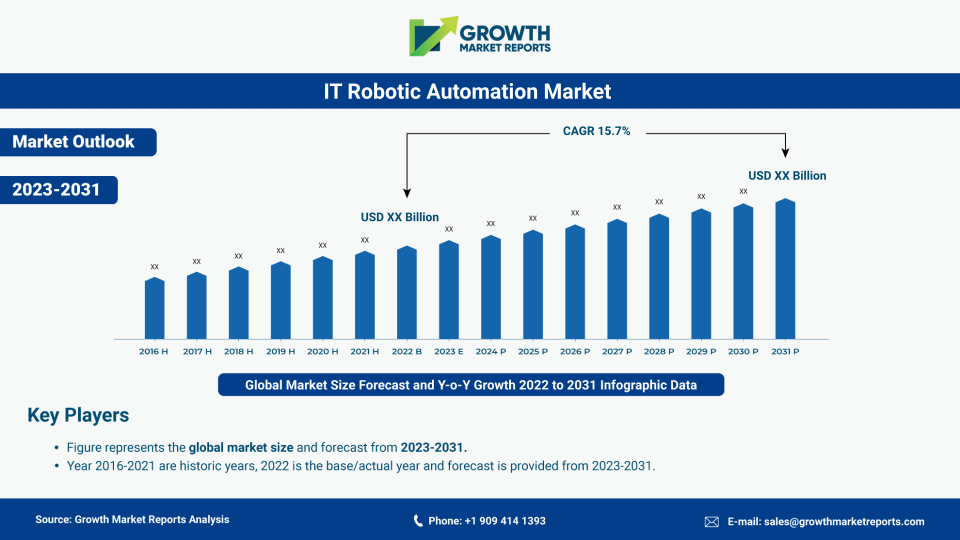
According to our latest research, the global IT Robotic Automation market size reached USD 6.4 billion in 2024, reflecting a robust expansion driven by digital transformation initiatives across diverse industries. The market is expected to grow at a CAGR of 23.1% from 2025 to 2033, with the market forecasted to reach USD 46.4 billion by 2033. This exceptional growth is primarily attributed to the increasing adoption of automation technologies to streamline IT operations, reduce operational costs, and enhance workflow efficiency. As organizations continue to prioritize operational agility and digital innovation, the demand for IT Robotic Automation solutions is set to accelerate globally.

A major growth factor propelling the IT Robotic Automation market is the escalating need for process optimization and cost reduction across enterprises. Businesses are increasingly under pressure to deliver faster and more accurate services while minimizing human error and operational expenditure. IT Robotic Automation enables organizations to automate repetitive, rule-based tasks, freeing up valuable human resources for more strategic initiatives. This shift is particularly pronounced in sectors such as banking, financial services, and insurance (BFSI), healthcare, and manufacturing, where legacy processes are being rapidly modernized through automation. The promise of improved productivity and reduced turnaround times is compelling organizations to invest heavily in robotic automation technologies, thus fueling market expansion.

Another critical driver is the growing integration of artificial intelligence (AI) and machine learning (ML) capabilities within IT Robotic Automation platforms. These advanced technologies are enhancing the cognitive abilities of robots, allowing them to handle more complex, knowledge-based processes that go beyond simple rule-based automation. This evolution is enabling businesses to automate not only structured but also unstructured tasks, such as data analysis, decision-making, and customer interactions. The convergence of AI, ML, and robotic process automation is creating new avenues for innovation, enabling organizations to derive actionable insights from vast data sets and make more informed business decisions. This technological synergy is expected to be a cornerstone of market growth over the forecast period.

The proliferation of cloud-based deployment models is also playing a pivotal role in the expansion of the IT Robotic Automation market. Cloud platforms offer scalability, flexibility, and cost-efficiency, making robotic automation accessible to organizations of all sizes, including small and medium enterprises (SMEs). By leveraging cloud infrastructure, businesses can deploy, manage, and scale automation solutions without significant upfront investments in hardware or software. This democratization of automation technology is driving widespread adoption across various industries and geographies. Furthermore, the emergence of as-a-service models is lowering entry barriers, allowing even resource-constrained organizations to benefit from the advantages of IT Robotic Automation.

Robotic Desktop Automation is increasingly becoming a pivotal component in the broader landscape of IT Robotic Automation. This technology focuses on automating tasks at the desktop level, enabling employees to enhance productivity by automating routine and repetitive tasks directly on their computers. By integrating Robotic Desktop Automation, organizations can achieve a seamless blend of human and digital workforce, allowing for more efficient task management and reducing the likelihood of errors. This approach not only streamlines operations but also empowers employees to focus on more strategic and creative tasks, thereby driving innovation and growth within the organization. As businesses continue to embrace digital transformation, the role of Robotic Desktop Automation is expected to expand, offering new opportunities for operational excellence.

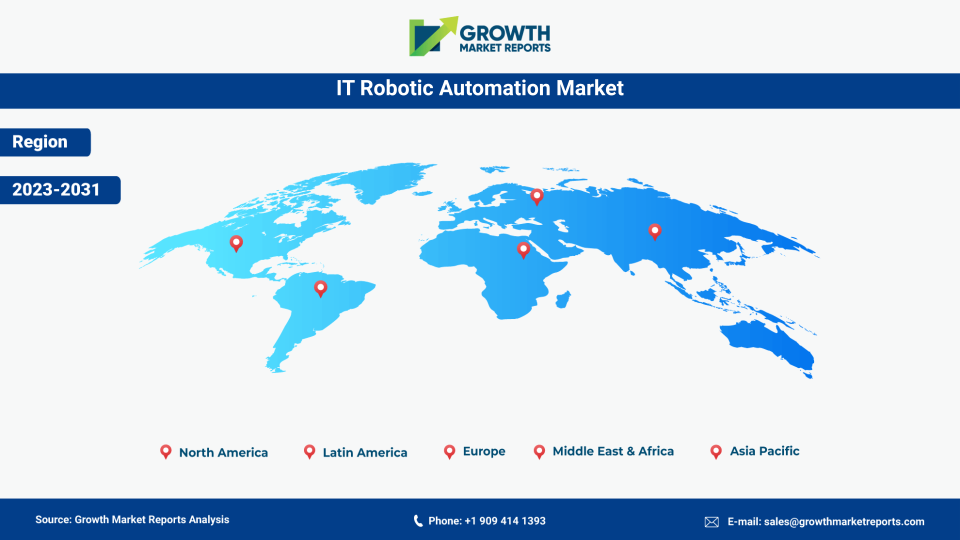
From a regional perspective, North America continues to lead the IT Robotic Automation market, accounting for the largest share in 2024. The region's dominance is underpinned by the presence of major technology providers, early adoption of automation solutions, and a strong focus on digital transformation across industries. However, Asia Pacific is emerging as the fastest-growing region, driven by rapid industrialization, increasing IT investments, and a burgeoning demand for automation in countries like China, India, and Japan. Europe also holds a significant market share, supported by stringent regulatory requirements and a mature technology landscape. The Middle East & Africa and Latin America are witnessing steady growth, fueled by digitalization initiatives and rising awareness of automation benefits.

Global IT Robotic Automation Industry Outlook

Type Analysis

The IT Robotic Automation market by type is bifurcated into tools and services, each playing a critical role in the overall ecosystem. Tools refer to the software platforms and solutions that enable the automation of IT processes, while services encompass consulting, implementation, training, and support. The tools segment dominates the market, accounting for a substantial share in 2024, as organizations increasingly invest in advanced automation platforms to streamline their IT operations. The continuous evolution of these tools, with features such as AI and ML integration, is enabling businesses to automate a broader range of processes, from simple repetitive tasks to complex decision-making workflows. The demand for scalable, user-friendly, and secure automation tools is expected to remain strong throughout the forecast period.

On the other hand, the services segment is witnessing rapid growth, driven by the need for expert guidance and support in deploying and managing IT Robotic Automation solutions. As organizations embark on their automation journeys, they often require consulting services to identify the most suitable processes for automation, design optimal workflows, and ensure seamless integration with existing IT infrastructure. Implementation services are critical for configuring and customizing automation platforms to meet specific business requirements, while training and support services help organizations maximize the value of their automation investments. The increasing complexity of IT environments and the growing demand for end-to-end automation solutions are expected to drive sustained growth in the services segment.

The interplay between tools and services is becoming increasingly important as organizations seek holistic automation solutions that address both technological and operational challenges. Leading vendors are offering integrated offerings that combine powerful automation tools with comprehensive services, enabling clients to achieve faster time-to-value and minimize implementation risks. This trend is particularly evident among large enterprises, which often require customized solutions and ongoing support to manage complex IT landscapes. The growing emphasis on partnership-driven models is fostering long-term relationships between solution providers and clients, further stimulating market growth.

Furthermore, the shift towards cloud-based automation tools is reshaping the competitive landscape, with vendors offering subscription-based pricing models and modular solutions that cater to diverse business needs. This approach is making IT Robotic Automation more accessible to small and medium enterprises, which may lack the resources to invest in on-premises infrastructure. As a result, the market is witnessing a democratization of automation technology, with tools and services becoming increasingly tailored to the unique requirements of different industry verticals and organization sizes.

Report Scope

Attributes Details
Report Title IT Robotic Automation Market Research Report 2033
By Type Tools, Services
By Operation Rule-Based, Knowledge-Based
By Application Banking, Financial Services and Insurance (BFSI), Healthcare, Retail, Manufacturing, Telecom and IT, Others
By Organization Size Small and Medium Enterprises, Large Enterprises
Regions Covered North America, Europe, APAC, Latin America, MEA
Base Year 2024
Historic Data 2018-2023
Forecast Period 2025-2033
Number of Pages 290
Number of Tables & Figures 384
Customization Available Yes, the report can be customized as per your need.

Operation Analysis

The IT Robotic Automation market is segmented by operation into rule-based and knowledge-based automation, each representing distinct approaches to process automation. Rule-based automation involves the execution of predefined, structured tasks based on explicit instructions and logical rules. This segment has historically dominated the market, as it enables organizations to automate repetitive, high-volume processes with minimal human intervention. Examples include data entry, transaction processing, and report generation. The simplicity and reliability of rule-based automation make it an attractive option for businesses seeking quick wins and immediate efficiency gains.

However, the market is witnessing a significant shift towards knowledge-based automation, which leverages advanced technologies such as AI, ML, and natural language processing to handle more complex, unstructured processes. Knowledge-based automation enables robots to learn from data, adapt to changing conditions, and make decisions based on context and historical patterns. This capability is particularly valuable in scenarios that require cognitive skills, such as customer service interactions, fraud detection, and predictive analytics. As organizations seek to automate a broader range of tasks and achieve higher levels of operational intelligence, the adoption of knowledge-based automation is expected to accelerate rapidly.

The integration of rule-based and knowledge-based automation is emerging as a best practice, allowing organizations to create hybrid workflows that combine the strengths of both approaches. For instance, rule-based bots can handle routine data processing tasks, while knowledge-based bots can analyze exceptions, resolve ambiguities, and provide intelligent recommendations. This synergistic approach is enabling businesses to achieve end-to-end automation, improve process accuracy, and enhance customer experiences. Leading vendors are investing in the development of unified platforms that support both rule-based and knowledge-based automation, providing clients with the flexibility to address diverse business needs.

The growing complexity of IT environments and the increasing volume of unstructured data are driving demand for advanced knowledge-based automation solutions. Organizations are recognizing the limitations of traditional rule-based approaches and are turning to cognitive automation to unlock new efficiencies and competitive advantages. As AI and ML technologies continue to mature, the capabilities of knowledge-based bots are expected to expand further, enabling the automation of even more sophisticated processes. This ongoing evolution is set to redefine the IT Robotic Automation landscape over the coming years.

Application Analysis

The application landscape of the IT Robotic Automation market is diverse, encompassing sectors such as Banking, Financial Services and Insurance (BFSI), healthcare, retail, manufacturing, telecom and IT, and others. The BFSI sector leads the market, driven by the need to automate high-volume, rule-based processes such as account opening, loan processing, compliance checks, and fraud detection. IT Robotic Automation is enabling banks and financial institutions to enhance operational efficiency, reduce errors, and improve customer satisfaction. The stringent regulatory environment in this sector is also fueling demand for automation solutions that ensure compliance and data security.

Healthcare is another major application area, where IT Robotic Automation is being used to streamline administrative processes, manage patient records, process insurance claims, and support clinical decision-making. The increasing pressure on healthcare providers to deliver high-quality care while controlling costs is driving the adoption of automation technologies. By automating routine tasks, healthcare organizations can allocate more resources to patient care and improve overall service delivery. The COVID-19 pandemic has further accelerated the adoption of IT Robotic Automation in healthcare, as organizations seek to enhance resilience and agility in the face of unprecedented challenges.

In the retail sector, IT Robotic Automation is transforming supply chain management, inventory control, order processing, and customer service. Retailers are leveraging automation to optimize operations, reduce turnaround times, and deliver personalized experiences to customers. The rise of e-commerce and omnichannel retailing is driving demand for agile, scalable automation solutions that can handle fluctuating workloads and support rapid business growth. Manufacturing organizations are also increasingly adopting IT Robotic Automation to enhance production efficiency, manage procurement processes, and ensure quality control.

The telecom and IT sector is witnessing significant adoption of IT Robotic Automation, as service providers seek to automate network management, service provisioning, billing, and customer support. Automation is enabling telecom companies to reduce operational costs, minimize downtime, and deliver faster, more reliable services to customers. Other sectors, including logistics, energy, and government, are also embracing IT Robotic Automation to drive digital transformation and improve service delivery. The versatility of automation solutions is enabling organizations across industries to achieve their strategic objectives and stay competitive in an increasingly digital world.

Organization Size Analysis

The IT Robotic Automation market is segmented by organization size into small and medium enterprises (SMEs) and large enterprises, each exhibiting distinct adoption patterns and requirements. Large enterprises have traditionally been the primary adopters of IT Robotic Automation, driven by the scale and complexity of their operations. These organizations often have the resources and expertise to invest in advanced automation platforms and customize solutions to meet their specific needs. The focus in large enterprises is typically on end-to-end process automation, integration with existing IT systems, and achieving measurable business outcomes such as cost savings, productivity improvements, and enhanced compliance.

However, SMEs are emerging as a significant growth segment in the IT Robotic Automation market, thanks to the proliferation of cloud-based solutions and as-a-service models. These offerings are lowering the barriers to entry for SMEs, enabling them to access powerful automation tools without the need for significant upfront investments. SMEs are leveraging IT Robotic Automation to streamline key business processes, reduce manual workloads, and improve operational agility. The ability to scale automation solutions in line with business growth is particularly appealing to SMEs, as it allows them to remain competitive and responsive to changing market conditions.

The unique challenges faced by SMEs, such as limited IT resources and budget constraints, are driving demand for user-friendly, cost-effective automation solutions. Vendors are responding by developing modular, scalable platforms that cater to the needs of smaller organizations. Training, support, and managed services are also gaining traction in the SME segment, as businesses seek to maximize the value of their automation investments with minimal disruption to daily operations. The growing recognition of the benefits of IT Robotic Automation among SMEs is expected to drive sustained market growth in this segment.

In both large enterprises and SMEs, the focus is shifting from isolated automation initiatives to enterprise-wide automation strategies that deliver long-term value. Organizations are increasingly looking to integrate IT Robotic Automation with other digital technologies, such as AI, analytics, and cloud computing, to create intelligent, responsive business processes. This holistic approach is enabling businesses of all sizes to achieve greater agility, efficiency, and competitiveness in the digital age.

Opportunities & Threats

The IT Robotic Automation market is rife with opportunities, as organizations across industries seek to harness the power of automation to drive digital transformation. One of the most promising opportunities lies in the integration of IT Robotic Automation with emerging technologies such as AI, ML, and advanced analytics. This convergence is enabling the development of intelligent automation solutions that can handle complex, knowledge-based tasks, deliver actionable insights, and support data-driven decision-making. As businesses increasingly prioritize innovation and agility, the demand for advanced automation solutions is expected to soar, creating new growth avenues for vendors and service providers.

Another significant opportunity is the expansion of IT Robotic Automation into new industry verticals and geographies. While sectors such as BFSI, healthcare, and retail have been early adopters, other industries, including logistics, energy, and government, are beginning to recognize the benefits of automation. The growing availability of cloud-based solutions and as-a-service models is making IT Robotic Automation accessible to organizations of all sizes and in all regions. Vendors that can tailor their offerings to the unique needs of different industries and geographies are well-positioned to capture a larger share of the market. Partnerships, alliances, and ecosystem development are also emerging as key strategies for driving market expansion and innovation.

Despite the numerous opportunities, the IT Robotic Automation market faces several restraining factors that could hinder growth. One of the primary challenges is the complexity of integrating automation solutions with existing IT systems and processes. Many organizations have legacy infrastructures that are not easily compatible with modern automation platforms, leading to implementation delays and increased costs. Additionally, concerns around data security, privacy, and regulatory compliance are top of mind for businesses, particularly in highly regulated sectors. The shortage of skilled professionals with expertise in automation technologies is another significant barrier, as organizations struggle to find and retain talent to manage their automation initiatives. Addressing these challenges will be critical for vendors and end-users alike to realize the full potential of IT Robotic Automation.

Regional Outlook

North America continues to dominate the IT Robotic Automation market, with a market size of approximately USD 2.7 billion in 2024. The region's leadership is underpinned by the presence of major technology providers, early adoption of automation solutions, and a strong focus on digital transformation across industries such as BFSI, healthcare, and retail. The United States accounts for the lion's share of the North American market, driven by significant investments in IT infrastructure, a mature regulatory environment, and a culture of innovation. Canada is also witnessing steady growth, supported by government initiatives and rising awareness of automation benefits among enterprises.

Asia Pacific is emerging as the fastest-growing region in the IT Robotic Automation market, with a projected CAGR of 27.8% from 2025 to 2033. The market size in Asia Pacific reached USD 1.4 billion in 2024, and is expected to surpass USD 12.1 billion by 2033. Rapid industrialization, increasing IT investments, and the proliferation of digital technologies are driving demand for automation solutions in countries such as China, India, Japan, and South Korea. The region's large and diverse business landscape offers significant opportunities for vendors to expand their footprint and capture new market segments. Government initiatives aimed at promoting digitalization and innovation are further accelerating the adoption of IT Robotic Automation in Asia Pacific.

Europe holds a significant share of the global IT Robotic Automation market, with a market size of USD 1.2 billion in 2024. The region's growth is supported by stringent regulatory requirements, a mature technology landscape, and a strong emphasis on operational efficiency and compliance. Key markets in Europe include the United Kingdom, Germany, France, and the Nordics, where organizations are leveraging automation to enhance productivity, reduce costs, and ensure compliance with data protection regulations. The Middle East & Africa and Latin America are also experiencing steady growth, with market sizes of USD 0.7 billion and USD 0.6 billion respectively in 2024. These regions are benefiting from increasing digitalization initiatives, rising awareness of automation benefits, and growing investments in IT infrastructure.

IT Robotic Automation Market Statistics

Competitor Outlook

The competitive landscape of the IT Robotic Automation market is characterized by intense rivalry among global and regional players, each striving to gain a larger share of this rapidly expanding market. Leading vendors are focusing on innovation, product differentiation, and strategic partnerships to strengthen their market positions. The market is witnessing a wave of mergers and acquisitions, as companies seek to enhance their capabilities, expand their product portfolios, and enter new geographies. The ability to offer integrated, end-to-end automation solutions that combine tools and services is emerging as a key differentiator, as organizations increasingly seek holistic approaches to automation.

Technology leadership is a critical success factor in the IT Robotic Automation market, with vendors investing heavily in research and development to incorporate advanced features such as AI, ML, natural language processing, and analytics into their platforms. The shift towards cloud-based and as-a-service models is also reshaping the competitive dynamics, as vendors compete to offer flexible, scalable, and cost-effective solutions that cater to diverse customer needs. Customer-centricity is becoming increasingly important, with vendors providing comprehensive support, training, and managed services to help clients maximize the value of their automation investments.

The market is also witnessing the emergence of niche players and startups that are leveraging innovative technologies and business models to disrupt the status quo. These companies are focusing on specific industry verticals, use cases, or regions, and are gaining traction by offering tailored solutions that address unique customer challenges. The growing emphasis on ecosystem development, including partnerships with technology providers, system integrators, and consulting firms, is enabling vendors to deliver more comprehensive and integrated automation offerings. As the market continues to evolve, the competitive landscape is expected to become even more dynamic and fragmented.

Major companies operating in the IT Robotic Automation market include UiPath, Automation Anywhere, Blue Prism, NICE, Pegasystems, Kofax, WorkFusion, Kryon Systems, Softomotive (acquired by Microsoft), and EdgeVerve Systems (an Infosys company). UiPath is renowned for its user-friendly automation platform and strong presence in both large enterprises and SMEs. Automation Anywhere is a leader in cloud-native automation solutions, offering a comprehensive suite of tools and services. Blue Prism is recognized for its robust, scalable platform and focus on enterprise-grade automation. NICE is a key player in the integration of AI and analytics with robotic process automation, while Pegasystems is known for its end-to-end process automation and customer engagement solutions.

Kofax stands out for its intelligent automation capabilities, combining robotic process automation with cognitive document automation and analytics. WorkFusion specializes in intelligent automation for data-intensive industries, leveraging AI and ML to automate complex processes. Kryon Systems is known for its process discovery and optimization tools, enabling organizations to identify and prioritize automation opportunities. Softomotive, now part of Microsoft, offers a range of automation solutions that integrate seamlessly with the Microsoft ecosystem. EdgeVerve Systems, a subsidiary of Infosys, is a prominent player in the Asia Pacific region, providing automation solutions tailored to the needs of large enterprises and emerging markets.

These companies are continuously enhancing their platforms with new features, expanding their service offerings, and forming strategic alliances to stay ahead of the competition. The focus on innovation, customer success, and ecosystem development is expected to drive further growth and consolidation in the IT Robotic Automation market over the coming years.

Key Players

  • UiPath
  • Automation Anywhere
  • Blue Prism
  • Kofax
  • Pegasystems
  • NICE Systems
  • WorkFusion
  • EdgeVerve Systems (Infosys)
  • SAP
  • IBM
  • Microsoft
  • Appian
  • AntWorks
  • Softomotive (Microsoft)
  • HelpSystems
  • Kryon Systems
  • Redwood Software
  • Jacada
  • Datamatics
  • Samsung SDS
IT Robotic Automation Market Overview

Segments

The IT Robotic Automation market has been segmented on the basis of

Type

  • Tools
  • Services

Operation

  • Rule-Based
  • Knowledge-Based

Application

  • Banking
  • Financial Services and Insurance (BFSI)
  • Healthcare
  • Retail
  • Manufacturing
  • Telecom and IT
  • Others

Organization Size

  • Small and Medium Enterprises
  • Large Enterprises

Competitive Landscape

Some of the major players in the global IT robotic automation market are IPSoft Inc., Blue Prism Ltd., Be Informed BV, Automation Anywhere Inc., Tata Consultancy Services, Accenture PLC, Sutherland Global Services, Cognizant Technology Solutions, Hewlett Packard Company, and Infosys Ltd. Some of these players are adopting several market strategies to enhance their market position.

Blue Prism Ltd. provides automation tools as well as a production toolkit and methodologies that can help companies to build automatic business processes using robotics. The machine works without human intervention. It is also expected that the software aims to minimize reliance on offshoring. IPSoft Inc.

offers infrastructure maintenance software, known as IPCenter software, which is capable of tracking, diagnosing, remediating, and rescaling accidents and events. The company also provides process management software. This software is expected to take the support tasks previously performed by major Indian vendors.


Cognizant acquired Trizetto, a healthcare process automation (HPA) platform, which was projected to help the former company to provide automation applications in the BFSI industry. The former company used its products, Automatika and ADPART, to simplify test case construction and forecast weak market process.
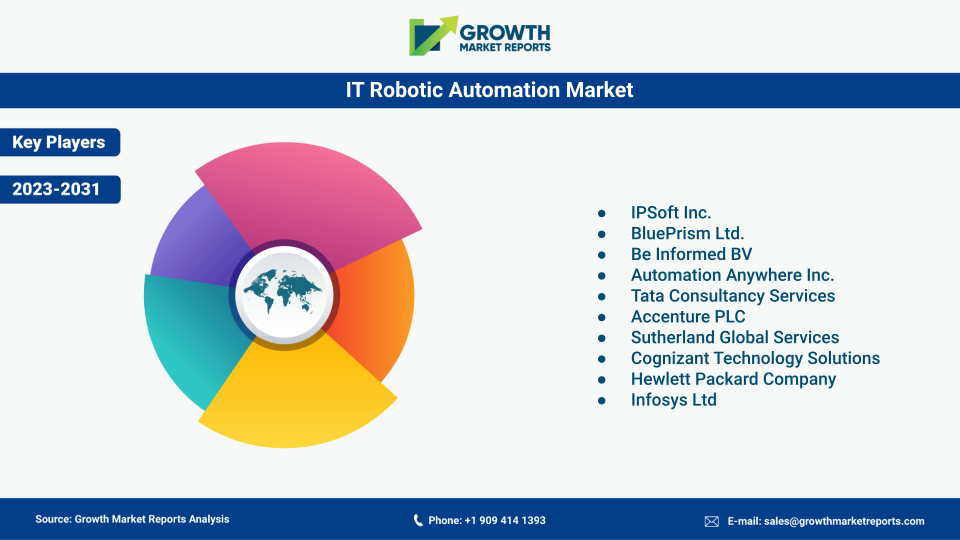

IT Robotic Automation Market Key Players

Frequently Asked Questions

Rule-based automation executes predefined, structured tasks based on explicit rules, ideal for repetitive processes. Knowledge-based automation uses AI and machine learning to handle complex, unstructured tasks, enabling robots to learn from data, adapt, and make context-based decisions.

Major companies include UiPath, Automation Anywhere, Blue Prism, NICE, Pegasystems, Kofax, WorkFusion, Kryon Systems, Softomotive (Microsoft), EdgeVerve Systems (Infosys), SAP, IBM, Appian, AntWorks, HelpSystems, Redwood Software, Jacada, Datamatics, and Samsung SDS.

Key challenges include integration with legacy IT systems, data security and privacy concerns, regulatory compliance, and a shortage of skilled professionals in automation technologies. Addressing these issues is crucial for successful automation initiatives.

SMEs are increasingly adopting IT Robotic Automation thanks to cloud-based and as-a-service models, which lower entry barriers and reduce the need for large upfront investments. These solutions help SMEs streamline processes, reduce manual workloads, and improve agility.

North America leads the market due to early adoption and strong technology infrastructure. Asia Pacific is the fastest-growing region, driven by rapid industrialization and IT investments, while Europe maintains a significant share due to regulatory requirements and mature technology landscapes.

The IT Robotic Automation market is segmented into tools (software platforms for automation) and services (consulting, implementation, training, and support). Tools dominate the market, while services are growing rapidly due to the need for expert guidance and support.

AI and machine learning are enhancing IT Robotic Automation by enabling robots to handle complex, knowledge-based tasks beyond simple rule-based automation. This includes data analysis, decision-making, and customer interactions, making automation more intelligent and adaptive.

Key industries adopting IT Robotic Automation include Banking, Financial Services and Insurance (BFSI), healthcare, retail, manufacturing, telecom, and IT. BFSI leads due to high-volume, rule-based processes, while healthcare and retail are rapidly increasing adoption for efficiency and improved service delivery.

The global IT Robotic Automation market is expected to grow from USD 6.4 billion in 2024 to USD 46.4 billion by 2033, at a compound annual growth rate (CAGR) of 23.1% during the forecast period.

IT Robotic Automation refers to the use of software robots to automate repetitive, rule-based IT tasks and processes. It helps organizations streamline operations, reduce operational costs, minimize human error, and free up employees for more strategic work, leading to increased efficiency and productivity.

Table Of Content

Chapter 1 Executive Summary
Chapter 2 Assumptions and Acronyms Used
Chapter 3 Research Methodology
Chapter 4 IT Robotic Automation Market Overview
   4.1 Introduction
      4.1.1 Market Taxonomy
      4.1.2 Market Definition
      4.1.3 Macro-Economic Factors Impacting the Market Growth
   4.2 IT Robotic Automation Market Dynamics
      4.2.1 Market Drivers
      4.2.2 Market Restraints
      4.2.3 Market Opportunity
   4.3 IT Robotic Automation Market - Supply Chain Analysis
      4.3.1 List of Key Suppliers
      4.3.2 List of Key Distributors
      4.3.3 List of Key Consumers
   4.4 Key Forces Shaping the IT Robotic Automation Market
      4.4.1 Bargaining Power of Suppliers
      4.4.2 Bargaining Power of Buyers
      4.4.3 Threat of Substitution
      4.4.4 Threat of New Entrants
      4.4.5 Competitive Rivalry
   4.5 Global IT Robotic Automation Market Size & Forecast, 2023-2032
      4.5.1 IT Robotic Automation Market Size and Y-o-Y Growth
      4.5.2 IT Robotic Automation Market Absolute $ Opportunity

Chapter 5 Global IT Robotic Automation Market Analysis and Forecast By Type
   5.1 Introduction
      5.1.1 Key Market Trends & Growth Opportunities By Type
      5.1.2 Basis Point Share (BPS) Analysis By Type
      5.1.3 Absolute $ Opportunity Assessment By Type
   5.2 IT Robotic Automation Market Size Forecast By Type
      5.2.1 Tools
      5.2.2 Services
   5.3 Market Attractiveness Analysis By Type

Chapter 6 Global IT Robotic Automation Market Analysis and Forecast By Operation
   6.1 Introduction
      6.1.1 Key Market Trends & Growth Opportunities By Operation
      6.1.2 Basis Point Share (BPS) Analysis By Operation
      6.1.3 Absolute $ Opportunity Assessment By Operation
   6.2 IT Robotic Automation Market Size Forecast By Operation
      6.2.1 Rule-Based
      6.2.2 Knowledge-Based
   6.3 Market Attractiveness Analysis By Operation

Chapter 7 Global IT Robotic Automation Market Analysis and Forecast By Application
   7.1 Introduction
      7.1.1 Key Market Trends & Growth Opportunities By Application
      7.1.2 Basis Point Share (BPS) Analysis By Application
      7.1.3 Absolute $ Opportunity Assessment By Application
   7.2 IT Robotic Automation Market Size Forecast By Application
      7.2.1 Banking
      7.2.2 Financial Services and Insurance (BFSI)
      7.2.3 Healthcare
      7.2.4 Retail
      7.2.5 Manufacturing
      7.2.6 Telecom and IT
      7.2.7 Others
   7.3 Market Attractiveness Analysis By Application

Chapter 8 Global IT Robotic Automation Market Analysis and Forecast By Organization Size
   8.1 Introduction
      8.1.1 Key Market Trends & Growth Opportunities By Organization Size
      8.1.2 Basis Point Share (BPS) Analysis By Organization Size
      8.1.3 Absolute $ Opportunity Assessment By Organization Size
   8.2 IT Robotic Automation Market Size Forecast By Organization Size
      8.2.1 Small and Medium Enterprises
      8.2.2 Large Enterprises
   8.3 Market Attractiveness Analysis By Organization Size

Chapter 9 Global IT Robotic Automation Market Analysis and Forecast by Region
   9.1 Introduction
      9.1.1 Key Market Trends & Growth Opportunities By Region
      9.1.2 Basis Point Share (BPS) Analysis By Region
      9.1.3 Absolute $ Opportunity Assessment By Region
   9.2 IT Robotic Automation Market Size Forecast By Region
      9.2.1 North America
      9.2.2 Europe
      9.2.3 Asia Pacific
      9.2.4 Latin America
      9.2.5 Middle East & Africa (MEA)
   9.3 Market Attractiveness Analysis By Region

Chapter 10 Coronavirus Disease (COVID-19) Impact 
   10.1 Introduction 
   10.2 Current & Future Impact Analysis 
   10.3 Economic Impact Analysis 
   10.4 Government Policies 
   10.5 Investment Scenario

Chapter 11 North America IT Robotic Automation Analysis and Forecast
   11.1 Introduction
   11.2 North America IT Robotic Automation Market Size Forecast by Country
      11.2.1 U.S.
      11.2.2 Canada
   11.3 Basis Point Share (BPS) Analysis by Country
   11.4 Absolute $ Opportunity Assessment by Country
   11.5 Market Attractiveness Analysis by Country
   11.6 North America IT Robotic Automation Market Size Forecast By Type
      11.6.1 Tools
      11.6.2 Services
   11.7 Basis Point Share (BPS) Analysis By Type 
   11.8 Absolute $ Opportunity Assessment By Type 
   11.9 Market Attractiveness Analysis By Type
   11.10 North America IT Robotic Automation Market Size Forecast By Operation
      11.10.1 Rule-Based
      11.10.2 Knowledge-Based
   11.11 Basis Point Share (BPS) Analysis By Operation 
   11.12 Absolute $ Opportunity Assessment By Operation 
   11.13 Market Attractiveness Analysis By Operation
   11.14 North America IT Robotic Automation Market Size Forecast By Application
      11.14.1 Banking
      11.14.2 Financial Services and Insurance (BFSI)
      11.14.3 Healthcare
      11.14.4 Retail
      11.14.5 Manufacturing
      11.14.6 Telecom and IT
      11.14.7 Others
   11.15 Basis Point Share (BPS) Analysis By Application 
   11.16 Absolute $ Opportunity Assessment By Application 
   11.17 Market Attractiveness Analysis By Application
   11.18 North America IT Robotic Automation Market Size Forecast By Organization Size
      11.18.1 Small and Medium Enterprises
      11.18.2 Large Enterprises
   11.19 Basis Point Share (BPS) Analysis By Organization Size 
   11.20 Absolute $ Opportunity Assessment By Organization Size 
   11.21 Market Attractiveness Analysis By Organization Size

Chapter 12 Europe IT Robotic Automation Analysis and Forecast
   12.1 Introduction
   12.2 Europe IT Robotic Automation Market Size Forecast by Country
      12.2.1 Germany
      12.2.2 France
      12.2.3 Italy
      12.2.4 U.K.
      12.2.5 Spain
      12.2.6 Russia
      12.2.7 Rest of Europe
   12.3 Basis Point Share (BPS) Analysis by Country
   12.4 Absolute $ Opportunity Assessment by Country
   12.5 Market Attractiveness Analysis by Country
   12.6 Europe IT Robotic Automation Market Size Forecast By Type
      12.6.1 Tools
      12.6.2 Services
   12.7 Basis Point Share (BPS) Analysis By Type 
   12.8 Absolute $ Opportunity Assessment By Type 
   12.9 Market Attractiveness Analysis By Type
   12.10 Europe IT Robotic Automation Market Size Forecast By Operation
      12.10.1 Rule-Based
      12.10.2 Knowledge-Based
   12.11 Basis Point Share (BPS) Analysis By Operation 
   12.12 Absolute $ Opportunity Assessment By Operation 
   12.13 Market Attractiveness Analysis By Operation
   12.14 Europe IT Robotic Automation Market Size Forecast By Application
      12.14.1 Banking
      12.14.2 Financial Services and Insurance (BFSI)
      12.14.3 Healthcare
      12.14.4 Retail
      12.14.5 Manufacturing
      12.14.6 Telecom and IT
      12.14.7 Others
   12.15 Basis Point Share (BPS) Analysis By Application 
   12.16 Absolute $ Opportunity Assessment By Application 
   12.17 Market Attractiveness Analysis By Application
   12.18 Europe IT Robotic Automation Market Size Forecast By Organization Size
      12.18.1 Small and Medium Enterprises
      12.18.2 Large Enterprises
   12.19 Basis Point Share (BPS) Analysis By Organization Size 
   12.20 Absolute $ Opportunity Assessment By Organization Size 
   12.21 Market Attractiveness Analysis By Organization Size

Chapter 13 Asia Pacific IT Robotic Automation Analysis and Forecast
   13.1 Introduction
   13.2 Asia Pacific IT Robotic Automation Market Size Forecast by Country
      13.2.1 China
      13.2.2 Japan
      13.2.3 South Korea
      13.2.4 India
      13.2.5 Australia
      13.2.6 South East Asia (SEA)
      13.2.7 Rest of Asia Pacific (APAC)
   13.3 Basis Point Share (BPS) Analysis by Country
   13.4 Absolute $ Opportunity Assessment by Country
   13.5 Market Attractiveness Analysis by Country
   13.6 Asia Pacific IT Robotic Automation Market Size Forecast By Type
      13.6.1 Tools
      13.6.2 Services
   13.7 Basis Point Share (BPS) Analysis By Type 
   13.8 Absolute $ Opportunity Assessment By Type 
   13.9 Market Attractiveness Analysis By Type
   13.10 Asia Pacific IT Robotic Automation Market Size Forecast By Operation
      13.10.1 Rule-Based
      13.10.2 Knowledge-Based
   13.11 Basis Point Share (BPS) Analysis By Operation 
   13.12 Absolute $ Opportunity Assessment By Operation 
   13.13 Market Attractiveness Analysis By Operation
   13.14 Asia Pacific IT Robotic Automation Market Size Forecast By Application
      13.14.1 Banking
      13.14.2 Financial Services and Insurance (BFSI)
      13.14.3 Healthcare
      13.14.4 Retail
      13.14.5 Manufacturing
      13.14.6 Telecom and IT
      13.14.7 Others
   13.15 Basis Point Share (BPS) Analysis By Application 
   13.16 Absolute $ Opportunity Assessment By Application 
   13.17 Market Attractiveness Analysis By Application
   13.18 Asia Pacific IT Robotic Automation Market Size Forecast By Organization Size
      13.18.1 Small and Medium Enterprises
      13.18.2 Large Enterprises
   13.19 Basis Point Share (BPS) Analysis By Organization Size 
   13.20 Absolute $ Opportunity Assessment By Organization Size 
   13.21 Market Attractiveness Analysis By Organization Size

Chapter 14 Latin America IT Robotic Automation Analysis and Forecast
   14.1 Introduction
   14.2 Latin America IT Robotic Automation Market Size Forecast by Country
      14.2.1 Brazil
      14.2.2 Mexico
      14.2.3 Rest of Latin America (LATAM)
   14.3 Basis Point Share (BPS) Analysis by Country
   14.4 Absolute $ Opportunity Assessment by Country
   14.5 Market Attractiveness Analysis by Country
   14.6 Latin America IT Robotic Automation Market Size Forecast By Type
      14.6.1 Tools
      14.6.2 Services
   14.7 Basis Point Share (BPS) Analysis By Type 
   14.8 Absolute $ Opportunity Assessment By Type 
   14.9 Market Attractiveness Analysis By Type
   14.10 Latin America IT Robotic Automation Market Size Forecast By Operation
      14.10.1 Rule-Based
      14.10.2 Knowledge-Based
   14.11 Basis Point Share (BPS) Analysis By Operation 
   14.12 Absolute $ Opportunity Assessment By Operation 
   14.13 Market Attractiveness Analysis By Operation
   14.14 Latin America IT Robotic Automation Market Size Forecast By Application
      14.14.1 Banking
      14.14.2 Financial Services and Insurance (BFSI)
      14.14.3 Healthcare
      14.14.4 Retail
      14.14.5 Manufacturing
      14.14.6 Telecom and IT
      14.14.7 Others
   14.15 Basis Point Share (BPS) Analysis By Application 
   14.16 Absolute $ Opportunity Assessment By Application 
   14.17 Market Attractiveness Analysis By Application
   14.18 Latin America IT Robotic Automation Market Size Forecast By Organization Size
      14.18.1 Small and Medium Enterprises
      14.18.2 Large Enterprises
   14.19 Basis Point Share (BPS) Analysis By Organization Size 
   14.20 Absolute $ Opportunity Assessment By Organization Size 
   14.21 Market Attractiveness Analysis By Organization Size

Chapter 15 Middle East & Africa (MEA) IT Robotic Automation Analysis and Forecast
   15.1 Introduction
   15.2 Middle East & Africa (MEA) IT Robotic Automation Market Size Forecast by Country
      15.2.1 Saudi Arabia
      15.2.2 South Africa
      15.2.3 UAE
      15.2.4 Rest of Middle East & Africa (MEA)
   15.3 Basis Point Share (BPS) Analysis by Country
   15.4 Absolute $ Opportunity Assessment by Country
   15.5 Market Attractiveness Analysis by Country
   15.6 Middle East & Africa (MEA) IT Robotic Automation Market Size Forecast By Type
      15.6.1 Tools
      15.6.2 Services
   15.7 Basis Point Share (BPS) Analysis By Type 
   15.8 Absolute $ Opportunity Assessment By Type 
   15.9 Market Attractiveness Analysis By Type
   15.10 Middle East & Africa (MEA) IT Robotic Automation Market Size Forecast By Operation
      15.10.1 Rule-Based
      15.10.2 Knowledge-Based
   15.11 Basis Point Share (BPS) Analysis By Operation 
   15.12 Absolute $ Opportunity Assessment By Operation 
   15.13 Market Attractiveness Analysis By Operation
   15.14 Middle East & Africa (MEA) IT Robotic Automation Market Size Forecast By Application
      15.14.1 Banking
      15.14.2 Financial Services and Insurance (BFSI)
      15.14.3 Healthcare
      15.14.4 Retail
      15.14.5 Manufacturing
      15.14.6 Telecom and IT
      15.14.7 Others
   15.15 Basis Point Share (BPS) Analysis By Application 
   15.16 Absolute $ Opportunity Assessment By Application 
   15.17 Market Attractiveness Analysis By Application
   15.18 Middle East & Africa (MEA) IT Robotic Automation Market Size Forecast By Organization Size
      15.18.1 Small and Medium Enterprises
      15.18.2 Large Enterprises
   15.19 Basis Point Share (BPS) Analysis By Organization Size 
   15.20 Absolute $ Opportunity Assessment By Organization Size 
   15.21 Market Attractiveness Analysis By Organization Size

Chapter 16 Competition Landscape 
   16.1 IT Robotic Automation Market: Competitive Dashboard
   16.2 Global IT Robotic Automation Market: Market Share Analysis, 2023
   16.3 Company Profiles (Details – Overview, Financials, Developments, Strategy) 
      16.3.1 UiPath
Automation Anywhere
Blue Prism
Kofax
Pegasystems
NICE Systems
WorkFusion
EdgeVerve Systems (Infosys)
SAP
IBM
Microsoft
Appian
AntWorks
Softomotive (Microsoft)
HelpSystems
Kryon Systems
Redwood Software
Jacada
Datamatics
Samsung SDS

Methodology

Our Clients

Nestle SA
Microsoft
Siemens Healthcare
sinopec
Pfizer
General Electric
The John Holland Group
Honda Motor Co. Ltd.