Segments - by Service Type (Strategy Consulting, Management Consulting, Operations Consulting, Financial Advisory, Technology Consulting, Human Resources Consulting, Others), by End-User (BFSI, Healthcare, IT and Telecommunications, Manufacturing, Retail, Government, Energy & Utilities, Others), by Enterprise Size (Small and Medium Enterprises, Large Enterprises), by Delivery Model (Onsite, Offsite, Online/Virtual)
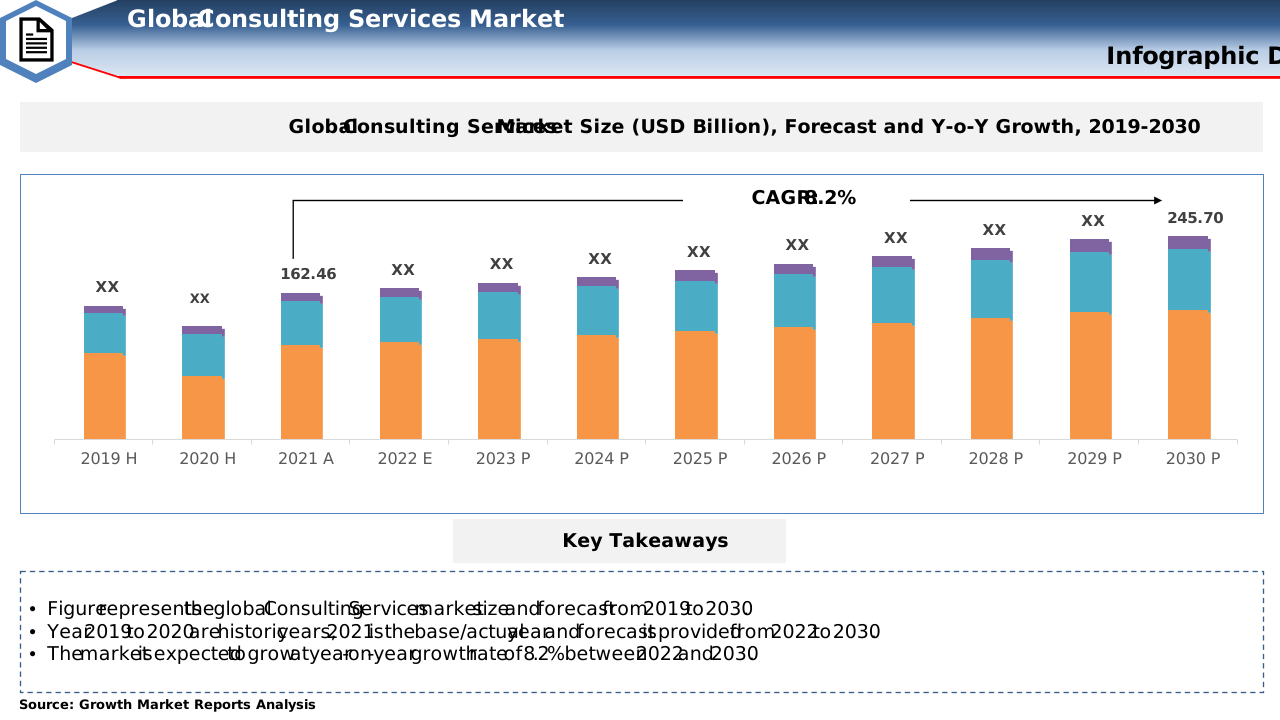
According to our latest research, the global consulting services market size reached USD 355.2 billion in 2024, demonstrating robust expansion driven by digital transformation and evolving business needs. The market is projected to grow at a CAGR of 6.1% from 2025 to 2033, reaching an estimated USD 604.3 billion by 2033. Key growth factors include the increasing complexity of business operations, the rapid adoption of advanced technologies, and a heightened focus on operational efficiency and regulatory compliance across industries worldwide.
One of the primary growth drivers for the consulting services market is the accelerating pace of digital transformation initiatives across various industry verticals. Organizations are increasingly turning to consulting firms for guidance on digital strategy, technology adoption, and process optimization to remain competitive in a rapidly evolving business landscape. The proliferation of emerging technologies such as artificial intelligence, cloud computing, data analytics, and cybersecurity has heightened demand for specialized consulting expertise. Consulting firms are playing a pivotal role in helping companies navigate these technological shifts, streamline their operations, and achieve sustainable growth. As businesses continue to prioritize innovation and agility, the demand for consulting services is expected to remain strong throughout the forecast period.
Another significant factor propelling the consulting services market is the growing complexity of regulatory environments and the need for compliance across multiple jurisdictions. Industries such as BFSI, healthcare, and energy are subject to stringent regulations that require expert guidance to ensure compliance and mitigate risks. Consulting firms offer tailored solutions to help organizations understand and implement regulatory requirements, develop risk management frameworks, and enhance corporate governance. Additionally, the increasing focus on environmental, social, and governance (ESG) criteria has further amplified the demand for consulting services, as organizations seek to align their operations with global sustainability standards and stakeholder expectations.
The expanding role of consulting services in supporting organizational change management and workforce transformation is also contributing to market growth. As businesses undergo mergers, acquisitions, restructuring, and digital upskilling, they rely on consulting experts to manage change effectively, optimize human capital, and foster a culture of innovation. Human resources consulting, in particular, is gaining traction as companies strive to attract, retain, and develop top talent in a competitive labor market. The integration of remote and hybrid work models has also created new opportunities for consulting firms to advise clients on best practices for workforce management, employee engagement, and organizational resilience.
From a regional perspective, North America continues to dominate the consulting services market, accounting for the largest revenue share in 2024, followed closely by Europe and Asia Pacific. The mature business ecosystem, high digital adoption rates, and presence of leading consulting firms in North America contribute to its market leadership. Meanwhile, Asia Pacific is experiencing the fastest growth, driven by rapid industrialization, economic development, and increasing investment in technology-driven business solutions. Latin America and the Middle East & Africa are also witnessing steady growth, supported by emerging economies, infrastructure development, and rising demand for specialized consulting services across diverse sectors.
The consulting services market is segmented by service type into strategy consulting, management consulting, operations consulting, financial advisory, technology consulting, human resources consulting, and others. Among these, strategy consulting holds a significant share, as organizations seek expert advice on navigating market uncertainties, entering new markets, and formulating long-term growth strategies. Strategy consultants are increasingly involved in helping businesses adapt to disruptive trends, identify new revenue streams, and restructure their business models to maintain competitiveness. The evolving global economic landscape, coupled with heightened competition, is compelling organizations to prioritize strategic planning, thereby fueling demand for strategy consulting services.
Management consulting is another core segment, encompassing a wide range of services aimed at improving organizational performance, efficiency, and effectiveness. This segment is witnessing robust growth as businesses grapple with complex challenges such as digital transformation, globalization, and changing consumer preferences. Management consultants are instrumental in driving business process reengineering, organizational restructuring, and change management initiatives. Their expertise in operational excellence, cost optimization, and performance measurement is highly valued by enterprises seeking to enhance productivity and achieve operational agility. The increasing need for business resilience and adaptability in the post-pandemic era has further accelerated the adoption of management consulting services.
Operations consulting focuses on optimizing business processes, supply chain management, and operational efficiency. This segment is gaining traction as companies strive to streamline their operations, reduce costs, and improve service delivery. Operations consultants leverage data analytics, process automation, and lean management principles to identify inefficiencies and implement best practices across various functional areas. The growing emphasis on customer-centricity, digital supply chains, and sustainable operations is driving demand for specialized operations consulting services. Industries such as manufacturing, retail, and logistics are particularly reliant on operations consultants to enhance performance and maintain a competitive edge.
Financial advisory and technology consulting are also key segments within the consulting services market. Financial advisory services encompass mergers and acquisitions, risk management, corporate finance, and regulatory compliance. The increasing complexity of financial transactions and the need for sound financial strategies are propelling demand for financial advisory consulting. Technology consulting, on the other hand, is experiencing rapid growth due to the widespread adoption of digital technologies, cloud computing, and cybersecurity solutions. Technology consultants assist organizations in selecting, implementing, and optimizing technology solutions to drive innovation, enhance security, and achieve digital transformation goals. Human resources consulting, which includes talent management, organizational development, and employee engagement, is also witnessing steady growth as businesses prioritize workforce transformation and employee well-being.
| Attributes | Details |
| Report Title | Consulting Services Market Research Report 2033 |
| By Service Type | Strategy Consulting, Management Consulting, Operations Consulting, Financial Advisory, Technology Consulting, Human Resources Consulting, Others |
| By End-User | BFSI, Healthcare, IT and Telecommunications, Manufacturing, Retail, Government, Energy & Utilities, Others |
| By Enterprise Size | Small and Medium Enterprises, Large Enterprises |
| By Delivery Model | Onsite, Offsite, Online/Virtual |
| Regions Covered | North America, Europe, APAC, Latin America, MEA |
| Base Year | 2024 |
| Historic Data | 2018-2023 |
| Forecast Period | 2025-2033 |
| Number of Pages | 253 |
| Number of Tables & Figures | 360 |
| Customization Available | Yes, the report can be customized as per your need. |
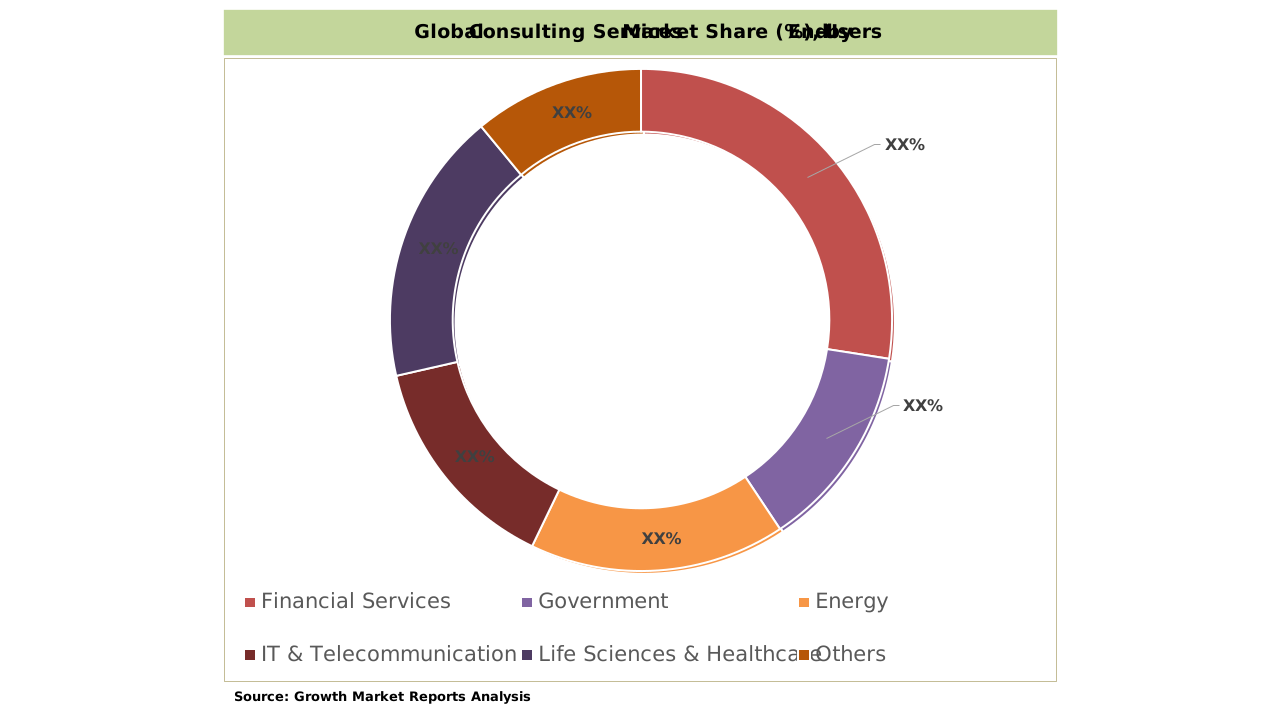
The consulting services market caters to a diverse range of end-users, including BFSI, healthcare, IT and telecommunications, manufacturing, retail, government, energy & utilities, and others. The BFSI sector remains one of the largest consumers of consulting services, driven by the need for regulatory compliance, risk management, digital banking transformation, and customer experience enhancement. Consulting firms play a critical role in helping financial institutions navigate complex regulatory landscapes, implement robust risk frameworks, and leverage technology to deliver innovative financial products and services. The increasing adoption of fintech solutions and the emergence of digital-only banks are further fueling demand for consulting expertise within the BFSI sector.
Healthcare is another major end-user segment, with consulting services in high demand for regulatory compliance, digital health transformation, and operational efficiency. Healthcare providers, payers, and life sciences companies rely on consultants to implement electronic health records, optimize clinical workflows, and comply with evolving healthcare regulations. The growing focus on patient-centric care, telemedicine, and value-based healthcare models is driving the need for specialized consulting services. Consultants also assist healthcare organizations in navigating mergers and acquisitions, developing growth strategies, and enhancing overall organizational performance.
The IT and telecommunications sector is experiencing significant demand for consulting services, particularly in areas such as digital transformation, cybersecurity, cloud adoption, and network optimization. As technology continues to evolve at a rapid pace, organizations in this sector require expert guidance to stay ahead of the curve, mitigate risks, and capitalize on emerging opportunities. Consulting firms are instrumental in helping IT and telecom companies develop robust digital strategies, implement advanced technologies, and enhance customer engagement. The proliferation of 5G, Internet of Things (IoT), and edge computing is further driving demand for consulting services in this sector.
Manufacturing, retail, government, and energy & utilities are also key end-user segments within the consulting services market. Manufacturing companies seek consulting expertise to optimize production processes, implement Industry 4.0 solutions, and enhance supply chain resilience. Retailers rely on consultants to develop omnichannel strategies, improve customer experience, and leverage data analytics for personalized marketing. Government agencies engage consulting firms for policy development, digital transformation, and public sector efficiency initiatives. The energy & utilities sector, facing increasing pressure to transition to sustainable energy sources, relies on consulting services for regulatory compliance, sustainability strategies, and operational optimization. Other industries, including transportation, education, and hospitality, are also leveraging consulting services to address evolving business challenges and capitalize on new opportunities.
The consulting services market is segmented by enterprise size into small and medium enterprises (SMEs) and large enterprises. Large enterprises account for the majority of market revenue, as they have greater resources and more complex business needs that require specialized consulting expertise. These organizations often engage consulting firms for large-scale transformation projects, mergers and acquisitions, global expansion, and regulatory compliance initiatives. The scale and complexity of operations in large enterprises necessitate comprehensive consulting support across multiple functional areas, including strategy, operations, technology, and human resources. As a result, large enterprises continue to be the primary drivers of demand within the consulting services market.
Small and medium enterprises (SMEs) are increasingly recognizing the value of consulting services in driving business growth, improving operational efficiency, and navigating market challenges. While SMEs typically have more limited budgets compared to large enterprises, they are leveraging consulting expertise to access specialized knowledge, adopt best practices, and implement innovative solutions. Consulting firms are tailoring their service offerings to meet the unique needs of SMEs, providing cost-effective solutions, flexible engagement models, and industry-specific expertise. The growing adoption of digital technologies, cloud-based solutions, and e-commerce platforms among SMEs is further fueling demand for consulting services in this segment.
The rise of digital consulting platforms and virtual engagement models is making consulting services more accessible to SMEs, enabling them to benefit from expert guidance without the need for extensive on-site engagements. Online and virtual consulting services are particularly appealing to SMEs, as they offer greater flexibility, scalability, and cost-efficiency. Consulting firms are leveraging digital tools, data analytics, and remote collaboration platforms to deliver high-quality services to SMEs, regardless of their geographic location. This trend is expected to drive continued growth in the SME segment of the consulting services market.
Despite the increasing adoption of consulting services among SMEs, challenges such as budget constraints, limited internal resources, and resistance to change can hinder the uptake of consulting engagements. Consulting firms are addressing these challenges by offering value-based pricing models, outcome-driven engagements, and targeted training programs to help SMEs maximize the benefits of consulting services. As SMEs continue to play a vital role in global economic growth and innovation, their demand for consulting services is expected to rise steadily over the forecast period.
The consulting services market is segmented by delivery model into onsite, offsite, and online/virtual engagements. Onsite consulting remains a preferred delivery model for complex projects that require in-depth analysis, hands-on support, and close collaboration with client teams. Onsite engagements are particularly common in strategy consulting, operations consulting, and large-scale transformation initiatives, where consultants work closely with clients to assess business processes, implement solutions, and drive change. The personalized nature of onsite consulting allows for a deeper understanding of client needs, fostering stronger relationships and higher levels of client satisfaction.
Offsite consulting involves consultants working remotely from their own offices or dedicated facilities, providing expertise and support through regular communication and periodic site visits. This delivery model offers greater flexibility and cost-efficiency, as it reduces travel and accommodation expenses while enabling consultants to serve multiple clients simultaneously. Offsite consulting is well-suited for projects that require specialized expertise, data analysis, or research-based deliverables. The increasing adoption of digital collaboration tools, cloud-based platforms, and secure communication channels is enhancing the effectiveness of offsite consulting engagements.
Online and virtual consulting is experiencing rapid growth, driven by advancements in digital technology, the rise of remote work, and changing client preferences. Virtual consulting services leverage video conferencing, online collaboration platforms, and digital project management tools to deliver expert guidance and support to clients regardless of geographic location. This delivery model offers significant benefits, including reduced costs, faster turnaround times, and greater accessibility for clients of all sizes. The COVID-19 pandemic accelerated the adoption of virtual consulting, and this trend is expected to continue as clients increasingly seek flexible, scalable, and technology-enabled consulting solutions.
Consulting firms are investing in digital transformation to enhance their delivery models, improve client engagement, and drive operational efficiency. The integration of artificial intelligence, data analytics, and automation into consulting workflows is enabling firms to deliver more value-added services, generate actionable insights, and achieve better outcomes for clients. As the consulting services market continues to evolve, the ability to offer a seamless blend of onsite, offsite, and virtual consulting will be a key differentiator for leading consulting firms.
The consulting services market presents a wealth of opportunities for growth and innovation, particularly in the areas of digital transformation, sustainability, and emerging technologies. Organizations across industries are increasingly seeking consulting expertise to navigate the complexities of digital adoption, implement advanced analytics, and leverage artificial intelligence for business optimization. The growing emphasis on sustainability and ESG initiatives is creating new opportunities for consulting firms to advise clients on sustainable business practices, regulatory compliance, and stakeholder engagement. As businesses strive to achieve operational agility, enhance customer experience, and drive innovation, the demand for specialized consulting services is expected to rise significantly.
Another major opportunity lies in the expansion of consulting services into emerging markets and high-growth regions such as Asia Pacific, Latin America, and the Middle East & Africa. Rapid economic development, urbanization, and increased investment in infrastructure and technology are fueling demand for consulting expertise in these regions. Consulting firms that can offer localized solutions, industry-specific knowledge, and culturally relevant strategies will be well-positioned to capitalize on these growth opportunities. Additionally, the rise of digital consulting platforms and virtual engagement models is enabling consulting firms to reach a broader client base, including SMEs and startups, further expanding their market potential.
Despite the promising outlook, the consulting services market faces several restraining factors that could impact growth. One of the primary challenges is the increasing competition from in-house consulting teams and boutique consulting firms, which offer specialized expertise and cost-effective solutions. Additionally, economic uncertainties, budget constraints, and resistance to external consulting engagements can limit market expansion, particularly among SMEs and public sector organizations. The rapid pace of technological change also requires consulting firms to continuously upskill their workforce, invest in digital capabilities, and adapt their service offerings to remain relevant in a dynamic market environment.
North America remains the largest market for consulting services, accounting for approximately 38% of global revenue in 2024, or about USD 135 billion. The region's mature business environment, high digital adoption rates, and presence of leading consulting firms contribute to its market dominance. The United States is the key driver of growth in North America, with strong demand for consulting services in technology, healthcare, BFSI, and government sectors. The region is also witnessing increased adoption of virtual consulting models and digital transformation initiatives, further fueling market expansion.
Europe holds the second-largest share of the consulting services market, representing around 29% of global revenue in 2024, or approximately USD 103 billion. The region's diverse industrial landscape, stringent regulatory environment, and focus on sustainability and innovation drive demand for consulting expertise across various sectors. Key markets in Europe include the United Kingdom, Germany, and France, where consulting firms are actively supporting digital transformation, regulatory compliance, and organizational change initiatives. The European consulting market is expected to grow at a steady CAGR of 5.7% through 2033, supported by ongoing investments in technology and talent development.
Asia Pacific is the fastest-growing region in the consulting services market, with a CAGR of 8.4% projected through 2033. The region accounted for about 22% of global revenue in 2024, or roughly USD 78 billion. Rapid industrialization, urbanization, and the increasing adoption of digital technologies are driving demand for consulting services in countries such as China, India, Japan, and Australia. The growing presence of multinational corporations, expanding middle class, and government initiatives to promote innovation and entrepreneurship are further contributing to market growth. Latin America and the Middle East & Africa collectively accounted for the remaining 11% of global revenue in 2024, with steady growth expected as these regions continue to invest in infrastructure, technology, and business modernization.
The global consulting services market is characterized by intense competition, with a mix of large multinational firms, mid-sized players, and boutique consultancies vying for market share. The competitive landscape is shaped by the ability of firms to deliver value-added services, leverage digital capabilities, and build long-term client relationships. Leading consulting firms are investing heavily in technology, talent development, and service innovation to differentiate themselves in a crowded marketplace. Strategic partnerships, mergers and acquisitions, and geographic expansion are common strategies employed by top players to strengthen their market position and broaden their service offerings.
Digital transformation is a key focus area for consulting firms, as clients increasingly demand technology-driven solutions and data-driven insights. Firms that can seamlessly integrate digital consulting, data analytics, and automation into their service portfolios are gaining a competitive edge. The rise of virtual consulting platforms and remote engagement models is also reshaping the competitive landscape, enabling firms to serve clients more efficiently and expand their reach across geographies. In addition to traditional consulting services, firms are increasingly offering managed services, training, and implementation support to provide end-to-end solutions and enhance client value.
The consulting services market is also witnessing the emergence of specialized boutique firms that offer deep industry expertise, customized solutions, and agile delivery models. These firms are particularly successful in niche markets and high-growth sectors, where clients value specialized knowledge and personalized service. However, large multinational firms continue to dominate the market, leveraging their global presence, extensive resources, and broad service portfolios to win large-scale projects and long-term engagements. The ability to attract and retain top talent, foster a culture of innovation, and maintain strong client relationships remains critical to success in the consulting services market.
Major companies operating in the global consulting services market include Accenture PLC, Deloitte Touche Tohmatsu Limited, PricewaterhouseCoopers (PwC), Ernst & Young (EY), KPMG International, Bain & Company, The Boston Consulting Group (BCG), McKinsey & Company, Capgemini SE, and IBM Global Business Services. These firms are recognized for their global reach, comprehensive service offerings, and expertise in driving large-scale transformation initiatives. Accenture is known for its leadership in digital and technology consulting, while Deloitte and PwC have strong capabilities in strategy, financial advisory, and risk management. McKinsey, BCG, and Bain are renowned for their expertise in strategy consulting and organizational transformation. Capgemini and IBM are leaders in technology consulting and digital transformation, offering end-to-end solutions to clients across industries. These firms are continuously investing in innovation, talent development, and strategic partnerships to maintain their competitive advantage and drive sustainable growth in the dynamic consulting services market.
The Consulting Services market has been segmented on the basis of
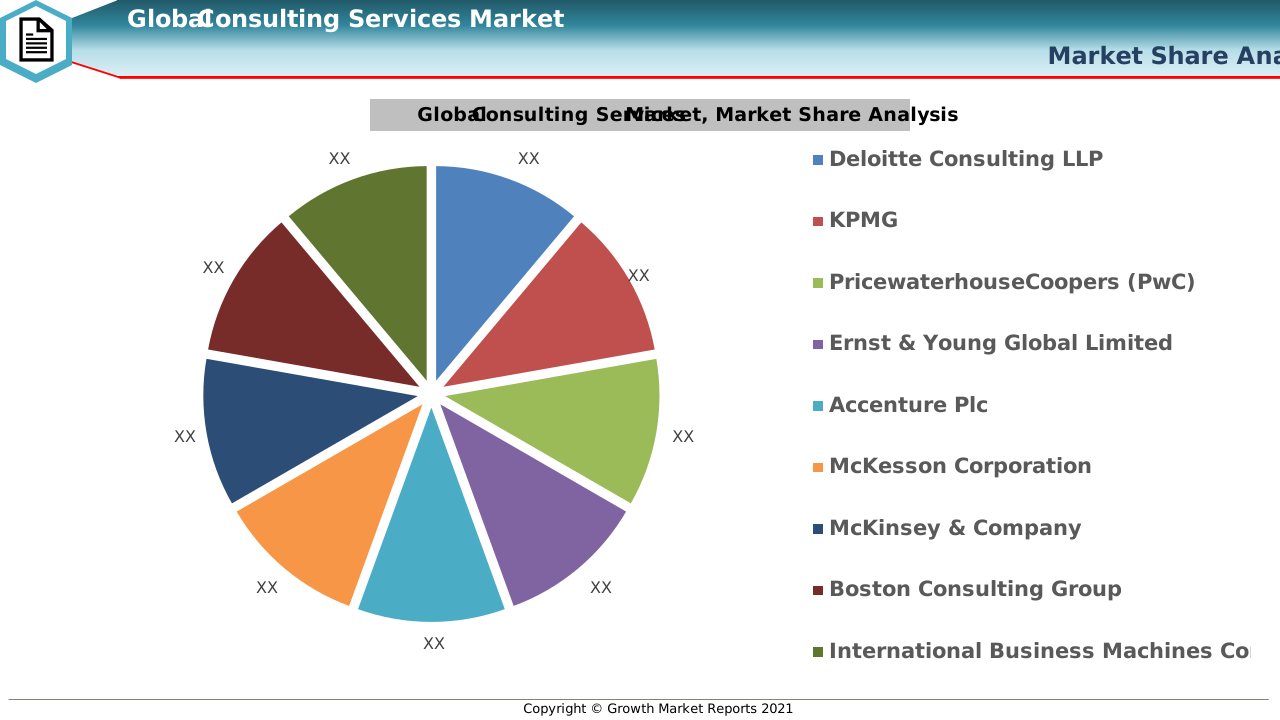
Key players competing in the global consulting services market are Deloitte Consulting LLP; KPMG; PricewaterhouseCoopers (PwC); Ernst & Young Global Limited; Accenture Plc.; McKesson Corporation; McKinsey & Company; Boston Consulting Group; and International Business Machines Corporation. Some of these key player have adopted various business development strategies such as acquisition, new product launches, and expansion of services to gain competitive edge in the market.
For instance, on May 2021, Ernst & Young Global Limited (EY) announced the acquisition of a UK-based technology company, Pythagoras Communications Holdings Limited. Under the deal, several technology including Microsoft Azure, Dynamics 365, SharePoint, and the Power Platform were integrated to EY’s consulting business to enhance its operation capacities.
SMEs are increasingly adopting consulting services for business growth, operational efficiency, and digital transformation, often leveraging online and virtual consulting for flexibility and cost-effectiveness.
Opportunities include digital transformation, sustainability consulting, and expansion into emerging markets. Challenges involve competition from in-house teams, economic uncertainties, and rapid technological change.
Key players include Accenture, Deloitte, PwC, EY, KPMG, McKinsey & Company, Boston Consulting Group (BCG), Bain & Company, Capgemini, and IBM Global Business Services.
Consulting services are delivered through onsite, offsite, and online/virtual models, with virtual consulting gaining popularity due to digital advancements.
Major end-users include BFSI, healthcare, IT and telecommunications, manufacturing, retail, government, and energy & utilities.
The market is segmented into strategy consulting, management consulting, operations consulting, financial advisory, technology consulting, human resources consulting, and others.
Key growth drivers include digital transformation, adoption of advanced technologies, increasing regulatory complexity, and a focus on operational efficiency and ESG compliance.
North America holds the largest share of the consulting services market, followed by Europe and Asia Pacific. Asia Pacific is the fastest-growing region.
The consulting services market is expected to grow at a CAGR of 6.1% from 2025 to 2033, reaching approximately USD 604.3 billion by 2033.
As of 2024, the global consulting services market reached USD 355.2 billion, driven by digital transformation and evolving business needs.