Freight and Logistics Market Research Report 2033

Freight and Logistics Market Research Report 2033

Segments - by Service Type (Transportation, Warehousing, Value-added Services, Freight Forwarding, Others), by Mode Of Transport (Roadways, Railways, Airways, Waterways, Multimodal), by End-User (Manufacturing, Retail, Healthcare, Automotive, Aerospace & Defense, Oil & Gas, Others), by Business Type (Domestic, International)

https://growthmarketreports.com/Raksha
Author : Raksha Sharma
https://growthmarketreports.com/Vaibhav
Fact-checked by : V. Chandola
https://growthmarketreports.com/Shruti
Editor : Shruti Bhat

Upcoming | Report ID :AL-1712 | 4.0 Rating | 21 Reviews | 292 Pages | Format : Docx PDF

Report Description


Freight and Logistics Market Outlook

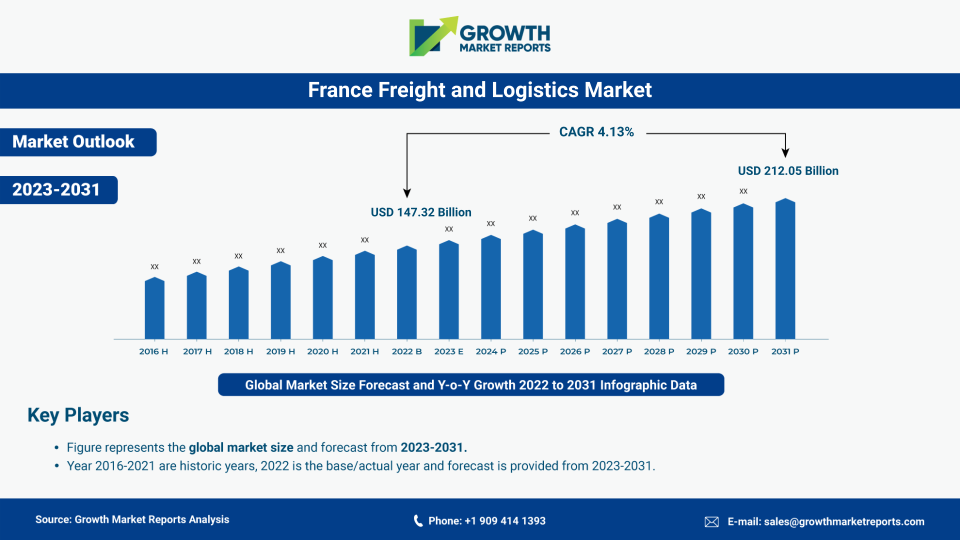
As per our latest research, the global freight and logistics market size reached USD 14.5 trillion in 2024, reflecting the sector's pivotal role in enabling global trade and supply chain continuity. The market is expected to grow at a robust CAGR of 5.7% during the forecast period, with the market poised to reach USD 23.2 trillion by 2033. This sustained growth is driven by rapid globalization, the expansion of e-commerce, and ongoing advancements in digital logistics solutions, which are collectively transforming how goods are transported, stored, and managed across continents.

The primary growth factor for the freight and logistics market is the exponential increase in global trade volumes, underpinned by the rising interconnectivity of economies and the proliferation of cross-border e-commerce. With consumers and businesses demanding faster, more reliable deliveries, logistics providers are investing heavily in technology-driven solutions such as real-time tracking, automated warehousing, and predictive analytics. These innovations are enhancing operational efficiency and transparency, making logistics services more attractive to a wider range of industries. Additionally, the integration of the Internet of Things (IoT) and blockchain technology is enabling end-to-end supply chain visibility, reducing bottlenecks, and minimizing the risk of disruptions.

Another significant driver is the evolution of supply chain models in response to shifting consumer preferences and the need for just-in-time inventory management. The rise of omnichannel retailing and direct-to-consumer (D2C) business models has compelled companies to adopt flexible logistics strategies that can accommodate varying order sizes, delivery speeds, and distribution points. This has led to increased demand for value-added services such as packaging, labeling, and reverse logistics, which are now integral components of the modern freight and logistics ecosystem. Moreover, the ongoing digital transformation is empowering logistics providers to optimize route planning, reduce costs, and improve customer satisfaction, further fueling market expansion.

Sustainability is also emerging as a critical growth factor, as governments and corporations worldwide set ambitious targets for carbon neutrality and emissions reduction. The freight and logistics sector, traditionally a significant contributor to greenhouse gas emissions, is responding by investing in greener transportation modes, alternative fuels, and energy-efficient infrastructure. Companies are increasingly adopting electric vehicles, rail freight, and intermodal solutions to minimize their environmental footprint. Regulatory incentives and consumer demand for sustainable supply chains are accelerating this transition, making sustainability a key differentiator in the competitive landscape.

Regionally, the Asia Pacific market continues to dominate the freight and logistics industry, accounting for the largest share due to its robust manufacturing base, burgeoning e-commerce sector, and extensive infrastructure development. North America and Europe also remain significant markets, driven by technological innovation, mature logistics networks, and high levels of trade activity. Meanwhile, emerging markets in Latin America, the Middle East, and Africa are witnessing rapid growth, fueled by investments in transportation infrastructure and increasing integration into global supply chains. Each region presents unique opportunities and challenges, shaping the overall trajectory of the global freight and logistics market.

Global Freight and Logistics  Industry Outlook

Service Type Analysis

The freight and logistics market is segmented by service type into transportation, warehousing, value-added services, freight forwarding, and others. Transportation services form the backbone of the industry, accounting for the largest revenue share. This segment encompasses the movement of goods via roadways, railways, airways, and waterways, addressing the diverse needs of shippers and consignees. The surge in e-commerce and cross-border trade has led to increased demand for both last-mile and long-haul transportation solutions. Companies are investing in fleet expansion, route optimization, and real-time tracking technologies to enhance service quality and meet stringent delivery timelines. The transportation segment is also witnessing a shift towards sustainable practices, with the adoption of electric vehicles and alternative fuels gaining momentum.

Freight forwarding is an essential aspect of the logistics industry, playing a crucial role in facilitating international trade. By acting as intermediaries between shippers and carriers, freight forwarders ensure that goods are transported efficiently and cost-effectively across borders. They handle the complexities of customs clearance, documentation, and compliance with international regulations, allowing businesses to focus on their core operations. The rise of digital freight platforms is revolutionizing the freight forwarding sector, offering enhanced transparency, streamlined processes, and improved tracking capabilities. As global trade continues to expand, the demand for skilled freight forwarders who can navigate the intricacies of international logistics is expected to grow significantly.

Warehousing services have become increasingly vital as businesses seek to optimize inventory management and reduce lead times. Modern warehouses are evolving into smart facilities equipped with automation, robotics, and IoT-enabled systems to streamline operations and minimize errors. The demand for cold storage, bonded warehouses, and distribution centers is rising, particularly in sectors such as pharmaceuticals, food and beverage, and retail. Warehousing providers are differentiating themselves by offering customized solutions, such as temperature-controlled storage and value-added processing, to cater to the specific needs of various industries.

Value-added services are gaining prominence as logistics providers strive to offer comprehensive solutions beyond basic transportation and storage. These services include packaging, labeling, kitting, assembly, and reverse logistics, which add significant value to the supply chain by enhancing product quality, compliance, and customer experience. The growth of e-commerce and the increasing complexity of global supply chains are driving demand for these tailored solutions. Companies are leveraging digital platforms to offer real-time visibility, order customization, and returns management, making value-added services a key revenue driver in the freight and logistics market.

Freight forwarding remains a critical component of the logistics ecosystem, facilitating the movement of goods across international borders. Freight forwarders coordinate shipments, manage documentation, and ensure compliance with regulatory requirements, acting as intermediaries between shippers and carriers. The rise of digital freight platforms and blockchain-based solutions is transforming the freight forwarding landscape, enabling greater transparency, efficiency, and cost savings. As global trade volumes continue to rise, the role of freight forwarders in managing complex, multimodal shipments and navigating customs procedures is becoming increasingly important.

The "others" segment includes specialized logistics services such as project cargo, hazardous materials handling, and event logistics. These niche services cater to industries with unique requirements, such as oil and gas, construction, and entertainment. Providers in this segment are focusing on building expertise, investing in specialized equipment, and adhering to stringent safety and regulatory standards to address the specific challenges of these industries. As global economic activity becomes more diversified, the demand for specialized logistics solutions is expected to grow, further expanding the scope of the freight and logistics market.

Report Scope

Attributes Details
Report Title Freight and Logistics Market Research Report 2033
By Service Type Transportation, Warehousing, Value-added Services, Freight Forwarding, Others
By Mode Of Transport Roadways, Railways, Airways, Waterways, Multimodal
By End-User Manufacturing, Retail, Healthcare, Automotive, Aerospace & Defense, Oil & Gas, Others
By Business Type Domestic, International
Regions Covered North America, Europe, APAC, Latin America, MEA
Base Year 2024
Historic Data 2018-2023
Forecast Period 2025-2033
Number of Pages 292
Number of Tables & Figures 333
Customization Available Yes, the report can be customized as per your need.

Mode of Transport Analysis

The mode of transport is a crucial segment in the freight and logistics market, comprising roadways, railways, airways, waterways, and multimodal solutions. Roadways continue to dominate the market due to their flexibility, extensive network coverage, and ability to provide door-to-door services. Road transport is particularly vital for last-mile deliveries and short-haul shipments, making it indispensable for e-commerce and retail logistics. Companies are increasingly investing in fleet modernization, telematics, and route optimization to enhance efficiency and reduce operational costs. The push towards electric and autonomous vehicles is also gaining traction, as logistics providers seek to minimize emissions and improve sustainability.

Railways offer a cost-effective and environmentally friendly alternative for transporting bulk commodities and long-haul shipments. The rail freight segment is benefiting from investments in infrastructure upgrades, digital signaling systems, and intermodal connectivity, which are improving service reliability and reducing transit times. Rail transport is particularly popular in regions with well-developed networks, such as North America, Europe, and parts of Asia. The integration of rail with other modes of transport through multimodal logistics hubs is enabling seamless movement of goods, enhancing supply chain efficiency, and supporting the growth of regional and international trade.

Airways are the preferred mode for high-value, time-sensitive, and perishable goods, such as electronics, pharmaceuticals, and fresh produce. Although air freight accounts for a smaller share of total cargo volumes, it commands a significant portion of the market in terms of value. The sector has witnessed increased demand during global disruptions, such as the COVID-19 pandemic, when speed and reliability became paramount. Airlines and logistics providers are investing in dedicated cargo fleets, advanced tracking systems, and temperature-controlled solutions to cater to the specific needs of air freight customers. The adoption of sustainable aviation fuels and carbon offset programs is also becoming a priority in response to environmental concerns.

Waterways remain the backbone of international trade, handling the majority of global cargo volumes. Maritime transport is essential for moving bulk commodities, containerized goods, and oversized cargo across continents. The sector is experiencing significant investments in port infrastructure, digitalization, and green technologies, aimed at improving operational efficiency and reducing environmental impact. The adoption of larger, more fuel-efficient vessels and the implementation of smart port solutions are enabling faster turnaround times and enhanced cargo handling capabilities. Waterways are also playing a key role in the development of multimodal logistics corridors, facilitating seamless integration with road, rail, and air transport.

Dynamic discounting for logistics services is emerging as a strategic tool for optimizing cash flow and enhancing supplier relationships in the freight and logistics sector. By offering early payment discounts to logistics providers, companies can improve their working capital management while fostering stronger partnerships with their service providers. This approach not only benefits the logistics companies by providing them with quicker access to cash but also allows businesses to negotiate better rates and terms, ultimately reducing overall logistics costs. As the logistics industry becomes more competitive, dynamic discounting is gaining traction as a valuable financial strategy that aligns the interests of both shippers and carriers, promoting efficiency and collaboration across the supply chain.

Multimodal transport is gaining traction as businesses seek to optimize supply chain efficiency, reduce costs, and minimize transit times. Multimodal logistics involves the use of two or more transport modes under a single contract, enabling seamless movement of goods across different geographies. The integration of digital platforms, real-time tracking, and automated documentation is streamlining multimodal operations, enhancing visibility, and improving coordination among stakeholders. As global supply chains become more complex and customer expectations rise, multimodal solutions are emerging as a strategic imperative for logistics providers seeking to deliver end-to-end, value-added services.

End-User Analysis

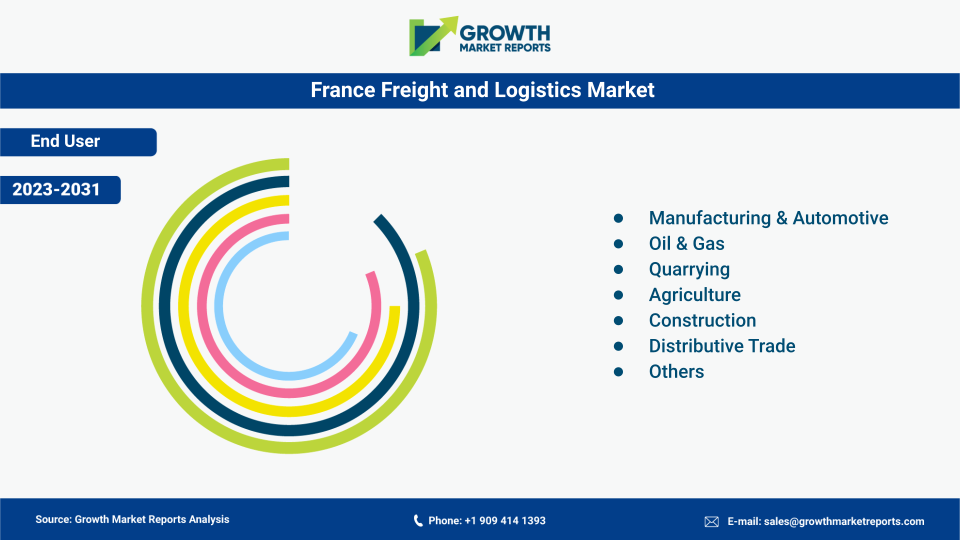
The freight and logistics market serves a diverse range of end-users, including manufacturing, retail, healthcare, automotive, aerospace and defense, oil and gas, and others. Manufacturing remains the largest end-user segment, driven by the need for efficient transportation and storage of raw materials, components, and finished goods. The globalization of manufacturing operations, coupled with the adoption of just-in-time inventory models, has heightened the demand for reliable and responsive logistics services. Manufacturers are increasingly partnering with third-party logistics providers to optimize supply chain operations, reduce costs, and enhance competitiveness in global markets.

Retail is another major end-user, with the rapid growth of e-commerce and omnichannel distribution models transforming logistics requirements. Retailers are focusing on improving last-mile delivery capabilities, enhancing inventory visibility, and offering flexible fulfillment options to meet evolving consumer expectations. The integration of advanced analytics, automation, and real-time tracking is enabling retailers to streamline operations, reduce delivery times, and improve customer satisfaction. As competition intensifies and consumer preferences shift towards faster, more personalized services, logistics providers are playing a critical role in enabling retail transformation.

Healthcare logistics is characterized by the need for stringent quality control, regulatory compliance, and temperature-sensitive storage and transportation. The growing demand for pharmaceuticals, medical devices, and vaccines is driving investments in specialized logistics infrastructure, such as cold chain facilities and secure distribution networks. Healthcare providers and pharmaceutical companies are partnering with logistics specialists to ensure the safe and timely delivery of critical products, minimize the risk of spoilage, and maintain regulatory compliance. The COVID-19 pandemic underscored the importance of resilient healthcare supply chains, prompting increased focus on risk management and contingency planning.

The automotive sector relies heavily on efficient logistics to manage complex supply chains, support just-in-time manufacturing, and facilitate global distribution of vehicles and components. Automotive logistics providers are leveraging digital platforms, predictive analytics, and automated warehousing to optimize inventory management, reduce lead times, and minimize production disruptions. The shift towards electric vehicles and the emergence of new mobility solutions are creating new logistics challenges and opportunities, as companies adapt to changing supply chain dynamics and regulatory requirements.

Other notable end-users include aerospace and defense, which require specialized logistics solutions for handling high-value, sensitive, and regulated cargo, and oil and gas, where the transportation of hazardous materials and oversized equipment demands strict safety and compliance standards. These industries are increasingly turning to logistics providers with domain expertise, advanced technology capabilities, and global reach to support their unique requirements. As economic activity diversifies and new industries emerge, the freight and logistics market is expected to witness continued growth in demand from a broadening range of end-users.

Business Type Analysis

The freight and logistics market is segmented by business type into domestic and international logistics, each presenting distinct challenges and opportunities. Domestic logistics encompasses the movement of goods within national borders, serving industries such as retail, manufacturing, and healthcare. This segment is characterized by high frequency, shorter transit times, and a focus on last-mile delivery. The rise of e-commerce and urbanization is driving demand for efficient, flexible, and cost-effective domestic logistics solutions. Companies are investing in urban distribution centers, automated sorting facilities, and digital platforms to enhance operational efficiency and meet the expectations of time-sensitive consumers.

International logistics involves the transportation of goods across borders, requiring coordination among multiple stakeholders, compliance with complex regulations, and management of longer transit times. This segment is heavily influenced by global trade dynamics, customs procedures, and geopolitical factors. The growth of cross-border e-commerce, free trade agreements, and global supply chain integration is fueling demand for international logistics services. Companies are leveraging digital freight platforms, blockchain technology, and advanced analytics to streamline operations, improve visibility, and reduce risks associated with international shipments.

The interplay between domestic and international logistics is becoming more pronounced as supply chains globalize and customer expectations evolve. Businesses are seeking integrated logistics solutions that can seamlessly manage both domestic and international movements, optimize inventory across multiple locations, and provide end-to-end visibility. The adoption of multimodal transport, real-time tracking, and automated documentation is enabling logistics providers to offer comprehensive, value-added services that address the full spectrum of business needs. As competition intensifies, the ability to deliver integrated, scalable, and responsive logistics solutions will be a key differentiator in the market.

Regulatory compliance is a critical consideration for both domestic and international logistics providers. Adherence to safety, security, and environmental standards is essential to maintain operational integrity and avoid legal penalties. Companies are investing in compliance management systems, staff training, and risk mitigation strategies to ensure adherence to evolving regulatory requirements. The increasing focus on sustainability and social responsibility is also shaping business practices, with logistics providers adopting greener transportation modes, energy-efficient facilities, and ethical sourcing policies to meet stakeholder expectations.

The future of the freight and logistics market will be shaped by the convergence of domestic and international business models, driven by technological innovation, changing consumer behavior, and the growing complexity of global supply chains. Companies that can adapt to these trends, leverage digital technologies, and deliver integrated, customer-centric solutions will be well-positioned to capitalize on the significant growth opportunities in this dynamic market.

Opportunities & Threats

The freight and logistics market is ripe with opportunities driven by technological advancements, digital transformation, and the ongoing expansion of global trade. The adoption of artificial intelligence, machine learning, and big data analytics is enabling logistics providers to optimize route planning, enhance demand forecasting, and automate routine tasks. These innovations are improving operational efficiency, reducing costs, and enhancing customer satisfaction. The growth of e-commerce and the shift towards omnichannel retailing are creating new opportunities for logistics providers to offer tailored solutions, such as same-day delivery, returns management, and personalized fulfillment services. Additionally, the increasing focus on sustainability is opening up new avenues for growth, as companies invest in green logistics solutions, alternative fuels, and energy-efficient infrastructure to meet regulatory requirements and consumer expectations.

Another significant opportunity lies in the development of emerging markets, particularly in Asia Pacific, Latin America, and Africa. Rapid urbanization, rising disposable incomes, and investments in transportation infrastructure are driving demand for logistics services in these regions. Companies that can establish a strong presence, build local partnerships, and adapt to regional market dynamics will be well-positioned to capture a share of this growing market. The integration of digital platforms, real-time tracking, and automated documentation is enabling logistics providers to overcome traditional challenges associated with fragmented infrastructure, regulatory complexity, and limited visibility. As global supply chains become more interconnected, the ability to offer seamless, end-to-end logistics solutions will be a key competitive advantage.

Despite the significant growth opportunities, the freight and logistics market faces several challenges and threats, including geopolitical uncertainties, regulatory complexities, and supply chain disruptions. Trade tensions, tariffs, and changing customs regulations can create uncertainty and increase operational risks for logistics providers. The sector is also vulnerable to external shocks, such as natural disasters, pandemics, and cyberattacks, which can disrupt supply chains and impact service delivery. Additionally, the ongoing shortage of skilled labor, rising fuel costs, and increasing competition are putting pressure on margins and forcing companies to continuously innovate and adapt. To mitigate these risks, logistics providers must invest in risk management, supply chain resilience, and continuous improvement initiatives.

Regional Outlook

The Asia Pacific region leads the global freight and logistics market, accounting for approximately 38% of the total market size in 2024, equivalent to around USD 5.5 trillion. This dominance is attributed to the regionÂ’s robust manufacturing sector, rapid urbanization, and the explosive growth of e-commerce in countries like China, India, and Southeast Asia. Investments in infrastructure development, such as ports, railways, and logistics parks, are further enhancing the regionÂ’s logistics capabilities. The Asia Pacific market is expected to maintain a strong growth trajectory, with a projected CAGR of 6.3% through 2033, driven by continued economic expansion, increasing cross-border trade, and the adoption of digital logistics solutions.

North America represents the second-largest regional market, with a market size of approximately USD 3.8 trillion in 2024. The region benefits from a mature logistics network, advanced technology adoption, and high levels of trade activity between the United States, Canada, and Mexico. The implementation of the United States-Mexico-Canada Agreement (USMCA) has further strengthened regional trade ties and created new opportunities for logistics providers. North America is also at the forefront of innovation in areas such as autonomous vehicles, drone deliveries, and blockchain-enabled supply chains. Despite its maturity, the market continues to grow, driven by the expansion of e-commerce, increasing demand for value-added services, and the need for supply chain resilience in the face of global disruptions.

Europe accounts for a market size of around USD 2.9 trillion in 2024, characterized by a well-developed transportation infrastructure, strong regulatory frameworks, and a high degree of market integration. The region is a leader in sustainable logistics, with significant investments in green transportation modes, energy-efficient facilities, and circular supply chains. The European UnionÂ’s focus on digitalization and cross-border harmonization is facilitating the seamless movement of goods across member states, reducing barriers and enhancing competitiveness. While growth rates are more moderate compared to emerging markets, Europe remains a key player in the global freight and logistics landscape, offering significant opportunities for innovation and value creation.

Freight and Logistics  Market Statistics

Competitor Outlook

The freight and logistics market is highly competitive, characterized by the presence of a diverse array of players ranging from global logistics giants to regional specialists and niche service providers. The competitive landscape is shaped by factors such as service quality, technology adoption, pricing strategies, and the ability to offer integrated, end-to-end solutions. Leading companies are investing heavily in digital transformation, automation, and sustainability initiatives to differentiate themselves and capture a larger share of the market. Strategic partnerships, mergers and acquisitions, and geographic expansion are common strategies employed by market leaders to strengthen their capabilities and broaden their service offerings.

Technology is playing a pivotal role in reshaping the competitive dynamics of the freight and logistics market. Companies that leverage advanced analytics, artificial intelligence, and IoT-enabled platforms are able to optimize operations, enhance visibility, and deliver superior customer experiences. Digital freight platforms are disrupting traditional business models by enabling real-time pricing, automated booking, and end-to-end tracking, reducing inefficiencies and increasing transparency. The ability to integrate and scale technology solutions across global networks is becoming a key differentiator, enabling logistics providers to respond quickly to changing market conditions and customer demands.

Sustainability is emerging as a critical factor in the competitive landscape, as customers and regulators increasingly demand greener logistics solutions. Leading companies are investing in alternative fuels, electric vehicles, and energy-efficient infrastructure to reduce their environmental footprint and meet regulatory requirements. The adoption of circular supply chain models, carbon offset programs, and sustainable packaging solutions is further enhancing the competitive positioning of forward-thinking logistics providers. Companies that can demonstrate a commitment to sustainability and social responsibility are likely to gain a competitive edge in an increasingly environmentally conscious market.

Major players in the global freight and logistics market include DHL Group, FedEx Corporation, United Parcel Service (UPS), Maersk Group, Kuehne+Nagel, DB Schenker, XPO Logistics, and C.H. Robinson Worldwide. These companies have established extensive global networks, advanced technology platforms, and a broad portfolio of services, enabling them to serve a diverse range of industries and customers. DHL Group, for example, is renowned for its focus on innovation and sustainability, while FedEx and UPS are leaders in express delivery and integrated logistics solutions. Maersk Group is a dominant player in maritime logistics, leveraging its scale and expertise to offer end-to-end supply chain services.

Regional players and niche specialists also play a vital role in the market, offering tailored solutions and deep domain expertise in areas such as cold chain logistics, project cargo, and last-mile delivery. These companies often excel in customer service, flexibility, and local market knowledge, enabling them to compete effectively with larger players. The ongoing consolidation in the industry, driven by mergers, acquisitions, and strategic alliances, is reshaping the competitive landscape and creating opportunities for companies to expand their capabilities and geographic reach. As the market continues to evolve, the ability to innovate, adapt to changing customer needs, and deliver integrated, value-added solutions will be critical to long-term success.

Key Players

  • DHL Supply Chain & Global Forwarding
  • Kuehne + Nagel International AG
  • DB Schenker
  • DSV A/S
  • C.H. Robinson Worldwide, Inc.
  • XPO Logistics, Inc.
  • Nippon Express Co., Ltd.
  • Sinotrans Limited
  • Expeditors International of Washington, Inc.
  • GEODIS
  • CEVA Logistics
  • Yusen Logistics Co., Ltd.
  • Agility Logistics
  • Panalpina (now part of DSV)
  • FedEx Logistics
  • UPS Supply Chain Solutions
  • Bolloré Logistics
  • Hellmann Worldwide Logistics
  • Kintetsu World Express, Inc.
  • Maersk Logistics & Services
Freight and Logistics  Market Overview

Segments

The Freight and Logistics market has been segmented on the basis of

Service Type

  • Transportation
  • Warehousing
  • Value-added Services
  • Freight Forwarding
  • Others

Mode Of Transport

  • Roadways
  • Railways
  • Airways
  • Waterways
  • Multimodal

End-User

  • Manufacturing
  • Retail
  • Healthcare
  • Automotive
  • Aerospace & Defense
  • Oil & Gas
  • Others

Business Type

  • Domestic
  • International

Competitive Landscape

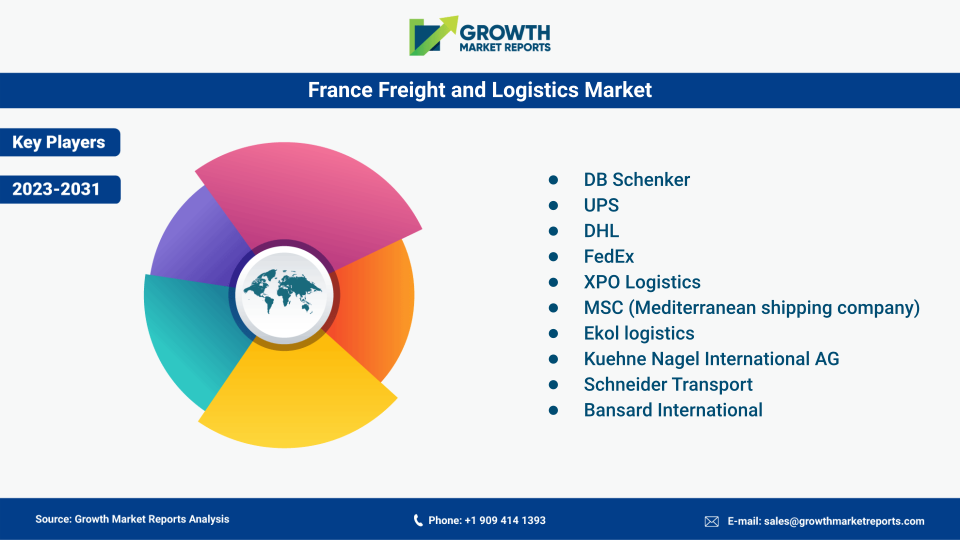
The major players of the market are DB Schenker, UPS, DHL, FedEx, XPO Logistics, MSC (Mediterranean shipping company), Ekol logistics, Kuehne Nagel International AG, Schneider Transport, Bansard International and FlyTrans International Forwarders.

Companies are focusing on joint ventures and acquisitions to expand their market share. Moreover, they’re integrating latest technologies to leverage their market position.

Freight and Logistics Market Key Players

Frequently Asked Questions

Key challenges include geopolitical uncertainties, regulatory complexities, supply chain disruptions, skilled labor shortages, rising fuel costs, and increasing competition.

Major companies include DHL Group, FedEx Corporation, UPS, Maersk Group, Kuehne+Nagel, DB Schenker, XPO Logistics, C.H. Robinson Worldwide, and several regional and niche specialists.

Sustainability is increasingly important, with companies investing in electric vehicles, alternative fuels, and energy-efficient infrastructure to reduce emissions and meet regulatory and consumer demands.

Technology is driving transformation through real-time tracking, automation, IoT, blockchain, AI, and digital freight platforms, enhancing efficiency, transparency, and customer experience.

The main modes of transport are roadways, railways, airways, waterways, and multimodal solutions, each serving different needs based on shipment size, speed, and geography.

The market is segmented by service type into transportation, warehousing, value-added services (such as packaging and reverse logistics), freight forwarding, and specialized services like project cargo and hazardous materials handling.

Key growth drivers include rapid globalization, expansion of e-commerce, advancements in digital logistics solutions, and a growing emphasis on sustainability and green logistics.

Asia Pacific leads the market, accounting for about 38% of the global share in 2024, followed by North America and Europe. Emerging markets in Latin America, the Middle East, and Africa are also experiencing rapid growth.

The freight and logistics market is expected to grow at a CAGR of 5.7% from 2025 to 2033, reaching an estimated USD 23.2 trillion by 2033.

As of 2024, the global freight and logistics market size reached USD 14.5 trillion, reflecting its critical role in global trade and supply chain management.

Table Of Content

Chapter 1 Executive Summary
Chapter 2 Assumptions and Acronyms Used
Chapter 3 Research Methodology
Chapter 4 Freight and Logistics  Market Overview
   4.1 Introduction
      4.1.1 Market Taxonomy
      4.1.2 Market Definition
      4.1.3 Macro-Economic Factors Impacting the Market Growth
   4.2 Freight and Logistics  Market Dynamics
      4.2.1 Market Drivers
      4.2.2 Market Restraints
      4.2.3 Market Opportunity
   4.3 Freight and Logistics  Market - Supply Chain Analysis
      4.3.1 List of Key Suppliers
      4.3.2 List of Key Distributors
      4.3.3 List of Key Consumers
   4.4 Key Forces Shaping the Freight and Logistics  Market
      4.4.1 Bargaining Power of Suppliers
      4.4.2 Bargaining Power of Buyers
      4.4.3 Threat of Substitution
      4.4.4 Threat of New Entrants
      4.4.5 Competitive Rivalry
   4.5 Global Freight and Logistics  Market Size & Forecast, 2023-2032
      4.5.1 Freight and Logistics  Market Size and Y-o-Y Growth
      4.5.2 Freight and Logistics  Market Absolute $ Opportunity

Chapter 5 Global Freight and Logistics  Market Analysis and Forecast By Service Type
   5.1 Introduction
      5.1.1 Key Market Trends & Growth Opportunities By Service Type
      5.1.2 Basis Point Share (BPS) Analysis By Service Type
      5.1.3 Absolute $ Opportunity Assessment By Service Type
   5.2 Freight and Logistics  Market Size Forecast By Service Type
      5.2.1 Transportation
      5.2.2 Warehousing
      5.2.3 Value-added Services
      5.2.4 Freight Forwarding
      5.2.5 Others
   5.3 Market Attractiveness Analysis By Service Type

Chapter 6 Global Freight and Logistics  Market Analysis and Forecast By Mode Of Transport
   6.1 Introduction
      6.1.1 Key Market Trends & Growth Opportunities By Mode Of Transport
      6.1.2 Basis Point Share (BPS) Analysis By Mode Of Transport
      6.1.3 Absolute $ Opportunity Assessment By Mode Of Transport
   6.2 Freight and Logistics  Market Size Forecast By Mode Of Transport
      6.2.1 Roadways
      6.2.2 Railways
      6.2.3 Airways
      6.2.4 Waterways
      6.2.5 Multimodal
   6.3 Market Attractiveness Analysis By Mode Of Transport

Chapter 7 Global Freight and Logistics  Market Analysis and Forecast By End-User
   7.1 Introduction
      7.1.1 Key Market Trends & Growth Opportunities By End-User
      7.1.2 Basis Point Share (BPS) Analysis By End-User
      7.1.3 Absolute $ Opportunity Assessment By End-User
   7.2 Freight and Logistics  Market Size Forecast By End-User
      7.2.1 Manufacturing
      7.2.2 Retail
      7.2.3 Healthcare
      7.2.4 Automotive
      7.2.5 Aerospace & Defense
      7.2.6 Oil & Gas
      7.2.7 Others
   7.3 Market Attractiveness Analysis By End-User

Chapter 8 Global Freight and Logistics  Market Analysis and Forecast By Business Type
   8.1 Introduction
      8.1.1 Key Market Trends & Growth Opportunities By Business Type
      8.1.2 Basis Point Share (BPS) Analysis By Business Type
      8.1.3 Absolute $ Opportunity Assessment By Business Type
   8.2 Freight and Logistics  Market Size Forecast By Business Type
      8.2.1 Domestic
      8.2.2 International
   8.3 Market Attractiveness Analysis By Business Type

Chapter 9 Global Freight and Logistics  Market Analysis and Forecast by Region
   9.1 Introduction
      9.1.1 Key Market Trends & Growth Opportunities By Region
      9.1.2 Basis Point Share (BPS) Analysis By Region
      9.1.3 Absolute $ Opportunity Assessment By Region
   9.2 Freight and Logistics  Market Size Forecast By Region
      9.2.1 North America
      9.2.2 Europe
      9.2.3 Asia Pacific
      9.2.4 Latin America
      9.2.5 Middle East & Africa (MEA)
   9.3 Market Attractiveness Analysis By Region

Chapter 10 Coronavirus Disease (COVID-19) Impact 
   10.1 Introduction 
   10.2 Current & Future Impact Analysis 
   10.3 Economic Impact Analysis 
   10.4 Government Policies 
   10.5 Investment Scenario

Chapter 11 North America Freight and Logistics  Analysis and Forecast
   11.1 Introduction
   11.2 North America Freight and Logistics  Market Size Forecast by Country
      11.2.1 U.S.
      11.2.2 Canada
   11.3 Basis Point Share (BPS) Analysis by Country
   11.4 Absolute $ Opportunity Assessment by Country
   11.5 Market Attractiveness Analysis by Country
   11.6 North America Freight and Logistics  Market Size Forecast By Service Type
      11.6.1 Transportation
      11.6.2 Warehousing
      11.6.3 Value-added Services
      11.6.4 Freight Forwarding
      11.6.5 Others
   11.7 Basis Point Share (BPS) Analysis By Service Type 
   11.8 Absolute $ Opportunity Assessment By Service Type 
   11.9 Market Attractiveness Analysis By Service Type
   11.10 North America Freight and Logistics  Market Size Forecast By Mode Of Transport
      11.10.1 Roadways
      11.10.2 Railways
      11.10.3 Airways
      11.10.4 Waterways
      11.10.5 Multimodal
   11.11 Basis Point Share (BPS) Analysis By Mode Of Transport 
   11.12 Absolute $ Opportunity Assessment By Mode Of Transport 
   11.13 Market Attractiveness Analysis By Mode Of Transport
   11.14 North America Freight and Logistics  Market Size Forecast By End-User
      11.14.1 Manufacturing
      11.14.2 Retail
      11.14.3 Healthcare
      11.14.4 Automotive
      11.14.5 Aerospace & Defense
      11.14.6 Oil & Gas
      11.14.7 Others
   11.15 Basis Point Share (BPS) Analysis By End-User 
   11.16 Absolute $ Opportunity Assessment By End-User 
   11.17 Market Attractiveness Analysis By End-User
   11.18 North America Freight and Logistics  Market Size Forecast By Business Type
      11.18.1 Domestic
      11.18.2 International
   11.19 Basis Point Share (BPS) Analysis By Business Type 
   11.20 Absolute $ Opportunity Assessment By Business Type 
   11.21 Market Attractiveness Analysis By Business Type

Chapter 12 Europe Freight and Logistics  Analysis and Forecast
   12.1 Introduction
   12.2 Europe Freight and Logistics  Market Size Forecast by Country
      12.2.1 Germany
      12.2.2 France
      12.2.3 Italy
      12.2.4 U.K.
      12.2.5 Spain
      12.2.6 Russia
      12.2.7 Rest of Europe
   12.3 Basis Point Share (BPS) Analysis by Country
   12.4 Absolute $ Opportunity Assessment by Country
   12.5 Market Attractiveness Analysis by Country
   12.6 Europe Freight and Logistics  Market Size Forecast By Service Type
      12.6.1 Transportation
      12.6.2 Warehousing
      12.6.3 Value-added Services
      12.6.4 Freight Forwarding
      12.6.5 Others
   12.7 Basis Point Share (BPS) Analysis By Service Type 
   12.8 Absolute $ Opportunity Assessment By Service Type 
   12.9 Market Attractiveness Analysis By Service Type
   12.10 Europe Freight and Logistics  Market Size Forecast By Mode Of Transport
      12.10.1 Roadways
      12.10.2 Railways
      12.10.3 Airways
      12.10.4 Waterways
      12.10.5 Multimodal
   12.11 Basis Point Share (BPS) Analysis By Mode Of Transport 
   12.12 Absolute $ Opportunity Assessment By Mode Of Transport 
   12.13 Market Attractiveness Analysis By Mode Of Transport
   12.14 Europe Freight and Logistics  Market Size Forecast By End-User
      12.14.1 Manufacturing
      12.14.2 Retail
      12.14.3 Healthcare
      12.14.4 Automotive
      12.14.5 Aerospace & Defense
      12.14.6 Oil & Gas
      12.14.7 Others
   12.15 Basis Point Share (BPS) Analysis By End-User 
   12.16 Absolute $ Opportunity Assessment By End-User 
   12.17 Market Attractiveness Analysis By End-User
   12.18 Europe Freight and Logistics  Market Size Forecast By Business Type
      12.18.1 Domestic
      12.18.2 International
   12.19 Basis Point Share (BPS) Analysis By Business Type 
   12.20 Absolute $ Opportunity Assessment By Business Type 
   12.21 Market Attractiveness Analysis By Business Type

Chapter 13 Asia Pacific Freight and Logistics  Analysis and Forecast
   13.1 Introduction
   13.2 Asia Pacific Freight and Logistics  Market Size Forecast by Country
      13.2.1 China
      13.2.2 Japan
      13.2.3 South Korea
      13.2.4 India
      13.2.5 Australia
      13.2.6 South East Asia (SEA)
      13.2.7 Rest of Asia Pacific (APAC)
   13.3 Basis Point Share (BPS) Analysis by Country
   13.4 Absolute $ Opportunity Assessment by Country
   13.5 Market Attractiveness Analysis by Country
   13.6 Asia Pacific Freight and Logistics  Market Size Forecast By Service Type
      13.6.1 Transportation
      13.6.2 Warehousing
      13.6.3 Value-added Services
      13.6.4 Freight Forwarding
      13.6.5 Others
   13.7 Basis Point Share (BPS) Analysis By Service Type 
   13.8 Absolute $ Opportunity Assessment By Service Type 
   13.9 Market Attractiveness Analysis By Service Type
   13.10 Asia Pacific Freight and Logistics  Market Size Forecast By Mode Of Transport
      13.10.1 Roadways
      13.10.2 Railways
      13.10.3 Airways
      13.10.4 Waterways
      13.10.5 Multimodal
   13.11 Basis Point Share (BPS) Analysis By Mode Of Transport 
   13.12 Absolute $ Opportunity Assessment By Mode Of Transport 
   13.13 Market Attractiveness Analysis By Mode Of Transport
   13.14 Asia Pacific Freight and Logistics  Market Size Forecast By End-User
      13.14.1 Manufacturing
      13.14.2 Retail
      13.14.3 Healthcare
      13.14.4 Automotive
      13.14.5 Aerospace & Defense
      13.14.6 Oil & Gas
      13.14.7 Others
   13.15 Basis Point Share (BPS) Analysis By End-User 
   13.16 Absolute $ Opportunity Assessment By End-User 
   13.17 Market Attractiveness Analysis By End-User
   13.18 Asia Pacific Freight and Logistics  Market Size Forecast By Business Type
      13.18.1 Domestic
      13.18.2 International
   13.19 Basis Point Share (BPS) Analysis By Business Type 
   13.20 Absolute $ Opportunity Assessment By Business Type 
   13.21 Market Attractiveness Analysis By Business Type

Chapter 14 Latin America Freight and Logistics  Analysis and Forecast
   14.1 Introduction
   14.2 Latin America Freight and Logistics  Market Size Forecast by Country
      14.2.1 Brazil
      14.2.2 Mexico
      14.2.3 Rest of Latin America (LATAM)
   14.3 Basis Point Share (BPS) Analysis by Country
   14.4 Absolute $ Opportunity Assessment by Country
   14.5 Market Attractiveness Analysis by Country
   14.6 Latin America Freight and Logistics  Market Size Forecast By Service Type
      14.6.1 Transportation
      14.6.2 Warehousing
      14.6.3 Value-added Services
      14.6.4 Freight Forwarding
      14.6.5 Others
   14.7 Basis Point Share (BPS) Analysis By Service Type 
   14.8 Absolute $ Opportunity Assessment By Service Type 
   14.9 Market Attractiveness Analysis By Service Type
   14.10 Latin America Freight and Logistics  Market Size Forecast By Mode Of Transport
      14.10.1 Roadways
      14.10.2 Railways
      14.10.3 Airways
      14.10.4 Waterways
      14.10.5 Multimodal
   14.11 Basis Point Share (BPS) Analysis By Mode Of Transport 
   14.12 Absolute $ Opportunity Assessment By Mode Of Transport 
   14.13 Market Attractiveness Analysis By Mode Of Transport
   14.14 Latin America Freight and Logistics  Market Size Forecast By End-User
      14.14.1 Manufacturing
      14.14.2 Retail
      14.14.3 Healthcare
      14.14.4 Automotive
      14.14.5 Aerospace & Defense
      14.14.6 Oil & Gas
      14.14.7 Others
   14.15 Basis Point Share (BPS) Analysis By End-User 
   14.16 Absolute $ Opportunity Assessment By End-User 
   14.17 Market Attractiveness Analysis By End-User
   14.18 Latin America Freight and Logistics  Market Size Forecast By Business Type
      14.18.1 Domestic
      14.18.2 International
   14.19 Basis Point Share (BPS) Analysis By Business Type 
   14.20 Absolute $ Opportunity Assessment By Business Type 
   14.21 Market Attractiveness Analysis By Business Type

Chapter 15 Middle East & Africa (MEA) Freight and Logistics  Analysis and Forecast
   15.1 Introduction
   15.2 Middle East & Africa (MEA) Freight and Logistics  Market Size Forecast by Country
      15.2.1 Saudi Arabia
      15.2.2 South Africa
      15.2.3 UAE
      15.2.4 Rest of Middle East & Africa (MEA)
   15.3 Basis Point Share (BPS) Analysis by Country
   15.4 Absolute $ Opportunity Assessment by Country
   15.5 Market Attractiveness Analysis by Country
   15.6 Middle East & Africa (MEA) Freight and Logistics  Market Size Forecast By Service Type
      15.6.1 Transportation
      15.6.2 Warehousing
      15.6.3 Value-added Services
      15.6.4 Freight Forwarding
      15.6.5 Others
   15.7 Basis Point Share (BPS) Analysis By Service Type 
   15.8 Absolute $ Opportunity Assessment By Service Type 
   15.9 Market Attractiveness Analysis By Service Type
   15.10 Middle East & Africa (MEA) Freight and Logistics  Market Size Forecast By Mode Of Transport
      15.10.1 Roadways
      15.10.2 Railways
      15.10.3 Airways
      15.10.4 Waterways
      15.10.5 Multimodal
   15.11 Basis Point Share (BPS) Analysis By Mode Of Transport 
   15.12 Absolute $ Opportunity Assessment By Mode Of Transport 
   15.13 Market Attractiveness Analysis By Mode Of Transport
   15.14 Middle East & Africa (MEA) Freight and Logistics  Market Size Forecast By End-User
      15.14.1 Manufacturing
      15.14.2 Retail
      15.14.3 Healthcare
      15.14.4 Automotive
      15.14.5 Aerospace & Defense
      15.14.6 Oil & Gas
      15.14.7 Others
   15.15 Basis Point Share (BPS) Analysis By End-User 
   15.16 Absolute $ Opportunity Assessment By End-User 
   15.17 Market Attractiveness Analysis By End-User
   15.18 Middle East & Africa (MEA) Freight and Logistics  Market Size Forecast By Business Type
      15.18.1 Domestic
      15.18.2 International
   15.19 Basis Point Share (BPS) Analysis By Business Type 
   15.20 Absolute $ Opportunity Assessment By Business Type 
   15.21 Market Attractiveness Analysis By Business Type

Chapter 16 Competition Landscape 
   16.1 Freight and Logistics  Market: Competitive Dashboard
   16.2 Global Freight and Logistics  Market: Market Share Analysis, 2023
   16.3 Company Profiles (Details – Overview, Financials, Developments, Strategy) 
      16.3.1 DHL Supply Chain & Global Forwarding
Kuehne + Nagel International AG
DB Schenker
DSV A/S
C.H. Robinson Worldwide, Inc.
XPO Logistics, Inc.
Nippon Express Co., Ltd.
Sinotrans Limited
Expeditors International of Washington, Inc.
GEODIS
CEVA Logistics
Yusen Logistics Co., Ltd.
Agility Logistics
Panalpina (now part of DSV)
FedEx Logistics
UPS Supply Chain Solutions
Bolloré Logistics
Hellmann Worldwide Logistics
Kintetsu World Express, Inc.
Maersk Logistics & Services

Methodology

Our Clients

Nestle SA
Honda Motor Co. Ltd.
Siemens Healthcare
Deloitte
Microsoft
The John Holland Group
sinopec
FedEx Logistics