Reverse Logistics Market Research Report 2033

Reverse Logistics Market Research Report 2033

Segments - by Return Type (Recalls, Commercial Returns, Repairable Returns, End-of-Life Returns, Others), by Service (Transportation, Warehousing, Reselling, Replacement Management, Others), by End-User (Retail & E-commerce, Automotive, Consumer Electronics, Pharmaceuticals, Food & Beverage, Others), by Mode Of Transport (Roadways, Railways, Airways, Waterways)

https://growthmarketreports.com/Raksha
Author : Raksha Sharma
https://growthmarketreports.com/Vaibhav
Fact-checked by : V. Chandola
https://growthmarketreports.com/Shruti
Editor : Shruti Bhat

Upcoming | Report ID :AL-180 | 4.6 Rating | 70 Reviews | 269 Pages | Format : Docx PDF

Report Description


Reverse Logistics Market Outlook

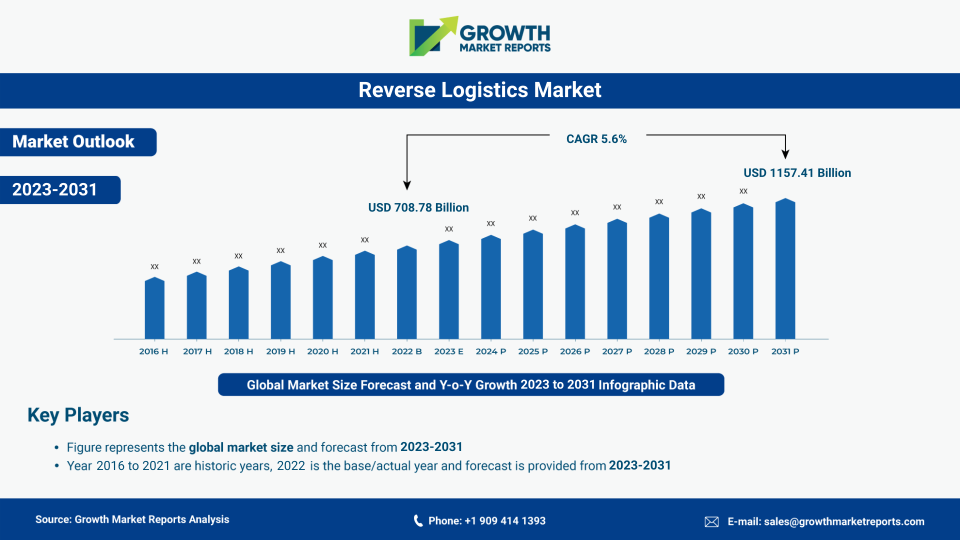
According to our latest research, the global reverse logistics market size in 2024 stands at USD 958.4 billion, demonstrating the sector’s robust presence in global supply chain management. The market is expected to grow at a CAGR of 9.2% from 2025 to 2033, reaching a forecasted value of USD 2,074.3 billion by 2033. This growth is primarily driven by the increasing volume of product returns due to the expansion of e-commerce, heightened consumer awareness regarding sustainable practices, and stricter regulations on waste management. The reverse logistics market’s evolution is further propelled by technological advancements and the growing need for efficient resource utilization across industries.

One of the most significant growth factors for the reverse logistics market is the rapid expansion of the global e-commerce sector. With the proliferation of online shopping platforms, return rates have surged, especially for apparel, electronics, and consumer goods. Retailers are under pressure to streamline their return processes, minimize costs, and enhance customer satisfaction, making reverse logistics solutions indispensable. Moreover, as consumer expectations for hassle-free returns rise, companies are investing in advanced tracking, automation, and analytics to optimize their reverse supply chains. This trend is driving demand for specialized reverse logistics service providers that can manage high volumes of returns efficiently while maintaining transparency and cost-effectiveness throughout the process.

Another vital driver is the growing emphasis on sustainability and circular economy initiatives. Governments and regulatory bodies worldwide are implementing stricter guidelines regarding waste disposal, recycling, and product end-of-life management. Industries such as electronics, automotive, and pharmaceuticals are increasingly required to reclaim, recycle, or properly dispose of products, components, and packaging. Reverse logistics plays a crucial role in enabling companies to comply with these regulations, reduce environmental impact, and recover value from returned or end-of-life products. As sustainability becomes a core business objective, organizations are leveraging reverse logistics not only to manage compliance but also to enhance their brand reputation and achieve cost savings through refurbished goods and remanufacturing.

Technological innovation is also significantly shaping the reverse logistics market landscape. The integration of digital platforms, IoT-enabled tracking, artificial intelligence, and data analytics is transforming traditional reverse logistics operations. Companies are now able to gain real-time visibility into return flows, optimize routing, automate sorting and grading processes, and make data-driven decisions to improve efficiency. These advancements are reducing turnaround times, lowering operational costs, and enabling predictive maintenance and inventory planning. Furthermore, the adoption of blockchain technology is enhancing transparency and traceability, which is particularly valuable in sectors like pharmaceuticals and food & beverage, where product authenticity and safety are paramount.

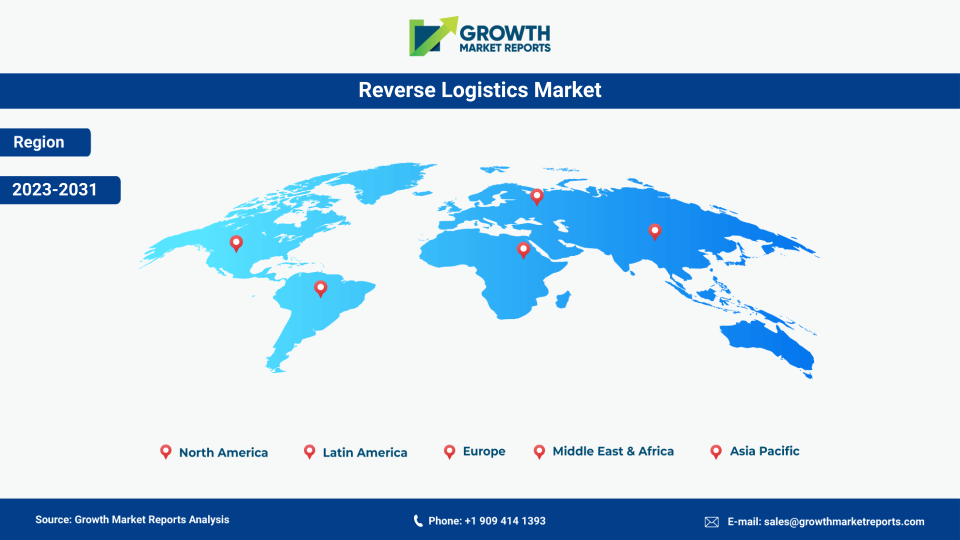
Regionally, Asia Pacific continues to dominate the reverse logistics market, driven by its large manufacturing base, booming e-commerce sector, and increasing regulatory focus on waste management. North America and Europe also hold substantial market shares, fueled by mature supply chain infrastructures and early adoption of sustainable practices. Meanwhile, emerging markets in Latin America and the Middle East & Africa are witnessing accelerated growth due to rising consumer demand, improving logistics networks, and government initiatives promoting recycling and resource recovery. Each region presents unique opportunities and challenges, shaping the competitive dynamics and strategic priorities of market participants.

Global Reverse Logistics Industry Outlook

Return Type Analysis

The reverse logistics market is segmented by return type into recalls, commercial returns, repairable returns, end-of-life returns, and others. Recalls represent a critical segment, particularly in industries such as automotive, pharmaceuticals, and consumer electronics, where product safety and regulatory compliance are paramount. The frequency of product recalls has increased in recent years due to heightened regulatory scrutiny and consumer expectations for quality assurance. This has led to significant investments in reverse logistics capabilities to manage the complex processes involved in retrieving, inspecting, and disposing of or refurbishing recalled products. Companies are also leveraging digital platforms to communicate efficiently with customers and regulatory authorities during recall events, thereby minimizing reputational risks and operational disruptions.

Commercial returns constitute a substantial portion of the reverse logistics market, especially in the retail and e-commerce sectors. With the rise of online shopping, return rates have soared, prompting retailers to prioritize reverse logistics as a competitive differentiator. Efficient handling of commercial returns is crucial for maintaining customer loyalty and managing costs associated with restocking, refurbishment, and reselling. Advanced analytics and automation are increasingly being deployed to streamline the returns process, identify trends, and optimize inventory management. Companies are also exploring innovative models such as return-to-store and drop-off points to enhance convenience for consumers and reduce reverse logistics costs.

Repairable returns are gaining prominence across industries where products can be refurbished or remanufactured for resale, such as electronics, automotive, and industrial equipment. This segment is closely aligned with the principles of the circular economy, enabling companies to extract additional value from returned products while reducing waste. The growth of repairable returns is supported by advancements in diagnostics, automated sorting, and predictive maintenance technologies. Organizations are establishing dedicated repair and refurbishment centers to process returned goods efficiently, ensuring quality and compliance while maximizing recovery rates. This not only supports sustainability goals but also creates new revenue streams through the sale of certified refurbished products.

End-of-life returns are a critical focus area in sectors facing stringent environmental regulations, such as electronics, automotive, and pharmaceuticals. Proper management of end-of-life products is essential for compliance with laws governing hazardous waste disposal, recycling, and resource recovery. Companies are investing in reverse logistics solutions that facilitate the collection, disassembly, and environmentally responsible disposal or recycling of end-of-life goods. Partnerships with specialized recycling firms and adoption of traceability technologies are enhancing transparency and accountability in this segment. The growing consumer preference for environmentally responsible brands is also encouraging companies to publicize their end-of-life management practices as part of their corporate social responsibility initiatives.

The others category includes returns driven by warranty claims, seasonal returns, and returns due to incorrect shipments or damaged goods. Although these returns may not occur at the same scale as recalls or commercial returns, they nonetheless require efficient management to minimize costs and maintain customer satisfaction. Companies are leveraging integrated reverse logistics platforms to handle diverse return types, ensuring consistent processes and real-time visibility across the supply chain. The ability to manage a wide range of return scenarios is becoming a key differentiator for reverse logistics service providers, enabling them to cater to the evolving needs of businesses across industries.

Report Scope

Attributes Details
Report Title Reverse Logistics Market Research Report 2033
By Return Type Recalls, Commercial Returns, Repairable Returns, End-of-Life Returns, Others
By Service Transportation, Warehousing, Reselling, Replacement Management, Others
By End-User Retail & E-commerce, Automotive, Consumer Electronics, Pharmaceuticals, Food & Beverage, Others
By Mode Of Transport Roadways, Railways, Airways, Waterways
Regions Covered North America, Europe, APAC, Latin America, MEA
Countries Covered North America (United States, Canada), Europe (Germany, France, Italy, United Kingdom, Spain, Russia, Rest of Europe), Asia Pacific (China, Japan, South Korea, India, Australia, South East Asia (SEA), Rest of Asia Pacific), Latin America (Mexico, Brazil, Rest of Latin America), Middle East & Africa (Saudi Arabia, South Africa, United Arab Emirates, Rest of Middle East & Africa)
Base Year 2024
Historic Data 2018-2023
Forecast Period 2025-2033
Number of Pages 269
Number of Tables & Figures 374
Customization Available Yes, the report can be customized as per your need.

Service Analysis

The reverse logistics market is further segmented by service type, comprising transportation, warehousing, reselling, replacement management, and others. Transportation forms the backbone of reverse logistics, facilitating the movement of returned products from end-users to processing centers, repair facilities, or recycling plants. Efficient transportation solutions are essential for minimizing turnaround times, reducing costs, and ensuring timely processing of returns. Companies are increasingly adopting route optimization technologies, real-time tracking, and collaborative logistics networks to enhance the efficiency and sustainability of reverse logistics transportation. The rise of last-mile and first-mile delivery solutions is also transforming the dynamics of reverse logistics, particularly in urban and densely populated regions.

Warehousing is another critical service segment, encompassing the storage, sorting, and inspection of returned goods. Modern reverse logistics warehouses are equipped with advanced automation, robotics, and inventory management systems to handle high volumes of returns efficiently. These facilities play a pivotal role in grading returned products, determining their disposition (resale, repair, recycling, or disposal), and preparing them for further processing. The integration of digital platforms and IoT-enabled devices is providing real-time visibility into warehouse operations, enabling companies to optimize space utilization, reduce handling times, and improve overall efficiency. As return volumes continue to rise, investment in scalable and flexible warehousing solutions is becoming a strategic priority for businesses.

Reselling services are gaining traction as companies seek to recover value from returned products through secondary markets. The growth of online marketplaces for refurbished, open-box, and returned goods is creating new opportunities for reverse logistics providers. These platforms enable businesses to reach a broader customer base, reduce inventory holding costs, and support sustainability objectives by extending product lifecycles. Effective reselling strategies require robust quality control processes, transparent grading systems, and efficient logistics networks to ensure customer satisfaction and regulatory compliance. Partnerships with reselling platforms and investment in digital marketing are further enhancing the visibility and profitability of reselling operations.

Replacement management is a vital service for industries with high return rates due to warranty claims, product defects, or customer dissatisfaction. Efficient replacement management processes are essential for maintaining customer loyalty and minimizing operational disruptions. Companies are leveraging automated systems to process replacement requests, manage inventory, and coordinate logistics for swift delivery of replacement products. Integration with customer relationship management (CRM) platforms and supply chain management systems is enabling seamless communication and coordination across departments. As customer expectations for quick and hassle-free replacements rise, investment in advanced replacement management solutions is becoming increasingly important.

The others service category includes value-added services such as data analytics, consulting, and customized reverse logistics solutions tailored to specific industry needs. These services are helping companies optimize their reverse logistics strategies, improve decision-making, and achieve greater operational efficiency. The growing complexity of global supply chains and the increasing diversity of return scenarios are driving demand for specialized consulting and analytics services. Providers that can offer end-to-end solutions, from initial assessment to implementation and ongoing optimization, are well-positioned to capture a larger share of the reverse logistics market.

End-User Analysis

The reverse logistics market serves a diverse range of end-users, including retail & e-commerce, automotive, consumer electronics, pharmaceuticals, food & beverage, and others. The retail & e-commerce segment is the largest end-user, driven by the exponential growth of online shopping and the associated surge in product returns. E-commerce platforms are under constant pressure to enhance their return policies and streamline reverse logistics processes to meet customer expectations. Investments in automated return centers, real-time tracking, and customer-facing digital interfaces are enabling retailers to manage high return volumes efficiently while maintaining profitability. The increasing focus on sustainability and circular economy practices is also encouraging retailers to explore innovative reverse logistics solutions, such as refurbishment and reselling of returned goods.

The automotive sector is another significant end-user, with reverse logistics playing a critical role in managing recalls, warranty returns, and end-of-life vehicle processing. Automotive manufacturers and suppliers are investing in robust reverse logistics networks to ensure compliance with safety regulations, recover valuable components, and minimize environmental impact. Advanced tracking and traceability solutions are being deployed to monitor the movement of returned parts and vehicles, enabling efficient processing and reporting. The growing adoption of electric vehicles and the increasing complexity of automotive components are further driving demand for specialized reverse logistics services in this sector.

In the consumer electronics industry, reverse logistics is essential for managing high return rates due to product defects, upgrades, and end-of-life disposal. Electronics manufacturers and retailers are leveraging reverse logistics to reclaim valuable materials, refurbish returned products, and ensure responsible recycling of hazardous components. The integration of advanced diagnostics, automated sorting, and data analytics is enabling companies to optimize return flows and maximize value recovery. Partnerships with specialized recycling firms and reselling platforms are further enhancing the efficiency and profitability of reverse logistics operations in this sector.

The pharmaceuticals segment presents unique reverse logistics challenges, including the need for strict regulatory compliance, temperature-controlled transportation, and secure disposal of expired or recalled products. Pharmaceutical companies are investing in advanced tracking and traceability solutions to ensure the safe and efficient management of returns. Collaboration with specialized reverse logistics providers is enabling the industry to meet regulatory requirements, minimize waste, and protect public health. The growing focus on sustainability and the rise of circular economy initiatives are also encouraging pharmaceutical companies to explore innovative approaches to reverse logistics, such as the recovery and recycling of packaging materials.

The food & beverage industry relies on reverse logistics to manage returns due to product recalls, spoilage, and packaging defects. Efficient reverse logistics processes are essential for minimizing food waste, ensuring compliance with safety regulations, and maintaining brand reputation. Companies are leveraging real-time tracking, automated sorting, and data analytics to optimize return flows and enhance decision-making. Partnerships with specialized disposal and recycling firms are enabling the industry to manage waste responsibly and recover value from returned products. The increasing focus on sustainability and resource efficiency is driving further investment in advanced reverse logistics solutions across the food & beverage sector.

Mode of Transport Analysis

The reverse logistics market is segmented by mode of transport into roadways, railways, airways, and waterways. Roadways remain the dominant mode of transport, accounting for the largest share of reverse logistics movements globally. The flexibility, accessibility, and cost-effectiveness of road transport make it the preferred choice for managing returns across diverse industries. Companies are investing in route optimization, real-time tracking, and collaborative logistics networks to enhance the efficiency and sustainability of road-based reverse logistics operations. The rise of urbanization and the growth of e-commerce are further driving demand for last-mile and first-mile delivery solutions, transforming the dynamics of reverse logistics transportation.

Railways play a significant role in reverse logistics, particularly for bulk returns and long-distance movements. The cost-efficiency and environmental benefits of rail transport make it an attractive option for industries such as automotive, electronics, and heavy machinery. Companies are leveraging rail networks to transport large volumes of returned goods to central processing centers, recycling facilities, or refurbishment hubs. The integration of digital platforms and IoT-enabled tracking is enhancing visibility and coordination across rail-based reverse logistics operations. As sustainability becomes a key business objective, the adoption of rail transport for reverse logistics is expected to increase, particularly in regions with well-developed rail infrastructure.

Airways are increasingly being used for high-value, time-sensitive, or perishable returns, such as electronics, pharmaceuticals, and food & beverage products. The speed and reliability of air transport make it ideal for managing urgent recalls, warranty returns, and international reverse logistics movements. Companies are investing in advanced tracking, temperature-controlled solutions, and streamlined customs processes to optimize air-based reverse logistics operations. The growing globalization of supply chains and the increasing complexity of international regulations are further driving demand for specialized air transport solutions in the reverse logistics market.

Waterways are primarily used for large-scale, international reverse logistics movements, particularly for bulk goods, automotive components, and end-of-life products. The cost-effectiveness and capacity of maritime transport make it an attractive option for managing returns over long distances. Companies are leveraging digital platforms, real-time tracking, and collaborative logistics networks to enhance the efficiency and sustainability of water-based reverse logistics operations. The increasing focus on sustainability and the need to reduce carbon emissions are encouraging companies to explore multimodal transport solutions that combine waterways with road, rail, and air transport for optimal efficiency.

The choice of transport mode in reverse logistics is influenced by factors such as product type, return volume, distance, cost, and regulatory requirements. Companies are increasingly adopting multimodal transport strategies to balance speed, cost, and sustainability objectives. The integration of digital platforms, real-time tracking, and advanced analytics is enabling companies to optimize transport mode selection and enhance the overall efficiency of reverse logistics operations. As the complexity of global supply chains continues to increase, investment in flexible and scalable transport solutions is becoming a key priority for businesses across industries.

Opportunities & Threats

The reverse logistics market is ripe with opportunities, particularly as sustainability and circular economy initiatives gain prominence across industries. Companies are increasingly recognizing the value of reverse logistics in reducing waste, recovering valuable materials, and enhancing brand reputation. The growth of secondary markets for refurbished and returned goods is creating new revenue streams and supporting sustainability objectives. Technological advancements, such as IoT-enabled tracking, artificial intelligence, and blockchain, are enabling companies to optimize reverse logistics operations, reduce costs, and improve transparency. The increasing complexity of global supply chains and the rising volume of product returns are driving demand for specialized reverse logistics service providers that can offer end-to-end solutions tailored to industry-specific needs.

Another significant opportunity lies in the integration of digital platforms and advanced analytics into reverse logistics operations. Companies that can leverage real-time data to optimize return flows, predict trends, and enhance decision-making are well-positioned to gain a competitive edge. The rise of e-commerce and the increasing focus on customer experience are encouraging retailers and manufacturers to invest in automated return centers, real-time tracking, and customer-facing digital interfaces. Partnerships with technology providers, reselling platforms, and recycling firms are further enhancing the efficiency and profitability of reverse logistics operations. As regulatory requirements regarding waste management and product end-of-life disposal become more stringent, companies that can demonstrate compliance and sustainability leadership are likely to capture a larger share of the reverse logistics market.

Despite these opportunities, the reverse logistics market faces several restraining factors. The complexity and cost of managing diverse return scenarios, particularly in global supply chains, can be significant. Companies must invest in advanced technologies, skilled personnel, and robust infrastructure to handle high return volumes efficiently. Regulatory compliance, particularly in industries such as pharmaceuticals and electronics, adds another layer of complexity and cost. The lack of standardized processes and the fragmentation of the reverse logistics industry can create challenges in achieving economies of scale and consistency. Companies must also address customer expectations for quick and hassle-free returns, which can further strain resources and impact profitability. Overcoming these challenges requires a strategic approach, investment in innovation, and collaboration across the supply chain ecosystem.

Regional Outlook

The Asia Pacific region dominates the global reverse logistics market, accounting for approximately USD 389.2 billion in 2024. This leadership is driven by the region’s large manufacturing base, rapid growth of e-commerce, and increasing regulatory focus on waste management and sustainability. Countries such as China, India, and Japan are investing heavily in advanced reverse logistics infrastructure, digital platforms, and circular economy initiatives. The rising consumer demand for sustainable products and the increasing complexity of supply chains are further driving demand for specialized reverse logistics services. The Asia Pacific market is expected to continue its strong growth trajectory, with a projected CAGR of 10.1% from 2025 to 2033, outpacing other regions.

North America holds a significant share of the reverse logistics market, valued at USD 261.9 billion in 2024. The region benefits from a mature supply chain infrastructure, early adoption of advanced technologies, and a strong emphasis on customer experience and sustainability. The United States is the largest market within the region, driven by the rapid growth of e-commerce, high return rates, and stringent regulatory requirements regarding waste management and product recalls. Companies in North America are investing in automated return centers, real-time tracking, and advanced analytics to optimize reverse logistics operations. The increasing focus on circular economy initiatives and the rise of secondary markets for refurbished goods are further supporting market growth in the region.

Europe is another major player in the reverse logistics market, with a market value of USD 205.5 billion in 2024. The region is characterized by a strong regulatory framework, high consumer awareness of sustainability issues, and a well-developed logistics infrastructure. Countries such as Germany, the United Kingdom, and France are leading the adoption of reverse logistics solutions, particularly in industries such as automotive, electronics, and pharmaceuticals. The European Union’s focus on circular economy initiatives and extended producer responsibility regulations is driving further investment in reverse logistics capabilities. As sustainability becomes a core business objective, companies in Europe are leveraging reverse logistics to enhance brand reputation, achieve cost savings, and comply with regulatory requirements.

Reverse Logistics Market Statistics

Competitor Outlook

The reverse logistics market is characterized by intense competition, with a mix of global logistics giants, specialized service providers, and technology startups vying for market share. The competitive landscape is shaped by the increasing complexity of return scenarios, the need for industry-specific solutions, and the growing emphasis on sustainability and circular economy practices. Companies are differentiating themselves through investments in advanced technologies, scalable infrastructure, and end-to-end service offerings. Strategic partnerships, mergers, and acquisitions are common as players seek to expand their capabilities, geographic reach, and customer base. The ability to offer integrated solutions that combine transportation, warehousing, reselling, and analytics is becoming a key differentiator in the market.

Global logistics giants such as DHL Supply Chain, FedEx Reverse Logistics, and UPS Supply Chain Solutions are leveraging their extensive networks, technological capabilities, and industry expertise to capture a significant share of the reverse logistics market. These companies are investing in automated return centers, real-time tracking, and digital platforms to enhance efficiency and customer experience. Specialized reverse logistics providers, such as Reverse Logistics Group and GENCO (a FedEx company), are focusing on industry-specific solutions, including electronics recycling, automotive recalls, and pharmaceutical returns. Technology startups are also making inroads, offering innovative platforms for real-time tracking, automated sorting, and data analytics.

Major companies in the reverse logistics market include DHL Supply Chain, FedEx Reverse Logistics, UPS Supply Chain Solutions, Reverse Logistics Group, GENCO, XPO Logistics, Ryder System, Inc., C.H. Robinson Worldwide, Inc., DB Schenker, and Kuehne + Nagel. These companies are at the forefront of innovation, leveraging advanced technologies, scalable infrastructure, and strategic partnerships to deliver comprehensive reverse logistics solutions. DHL Supply Chain, for example, is known for its global reach, industry expertise, and investment in sustainability initiatives. FedEx Reverse Logistics and UPS Supply Chain Solutions are recognized for their integrated service offerings, real-time tracking capabilities, and focus on customer experience.

Reverse Logistics Group specializes in industry-specific solutions, including electronics recycling and automotive recalls, while GENCO (a FedEx company) is a leader in returns management, refurbishment, and secondary market sales. XPO Logistics, Ryder System, Inc., and C.H. Robinson Worldwide, Inc. are also prominent players, offering a range of reverse logistics services tailored to the needs of diverse industries. DB Schenker and Kuehne + Nagel are leveraging their global logistics networks and digital platforms to enhance the efficiency and scalability of reverse logistics operations. As the market continues to evolve, companies that can offer integrated, technology-driven solutions and demonstrate a commitment to sustainability are expected to maintain a competitive edge.

Key Players

  • FedEx Corporation
  • United Parcel Service (UPS)
  • DHL Supply Chain (Deutsche Post DHL Group)
  • XPO Logistics
  • C.H. Robinson Worldwide, Inc.
  • DB Schenker
  • Kuehne + Nagel International AG
  • Ryder System, Inc.
  • GEFCO Group
  • CoreCentric Solutions, Inc.
  • Reverse Logistics Group (RLG)
  • Yusen Logistics Co., Ltd.
  • Sims Lifecycle Services
  • GENCO (A FedEx Company)
  • B-Stock Solutions
  • Optoro, Inc.
  • Happy Returns (A PayPal Company)
  • Inmar Intelligence
  • Cycleon
  • LiquiDonate
Reverse Logistics Market Overview

Segments

The Reverse Logistics market has been segmented on the basis of

Return Type

  • Recalls
  • Commercial Returns
  • Repairable Returns
  • End-of-Life Returns
  • Others

Service

  • Transportation
  • Warehousing
  • Reselling
  • Replacement Management
  • Others

End-User

  • Retail & E-commerce
  • Automotive
  • Consumer Electronics
  • Pharmaceuticals
  • Food & Beverage
  • Others

Mode Of Transport

  • Roadways
  • Railways
  • Airways
  • Waterways

Competitive Landscape

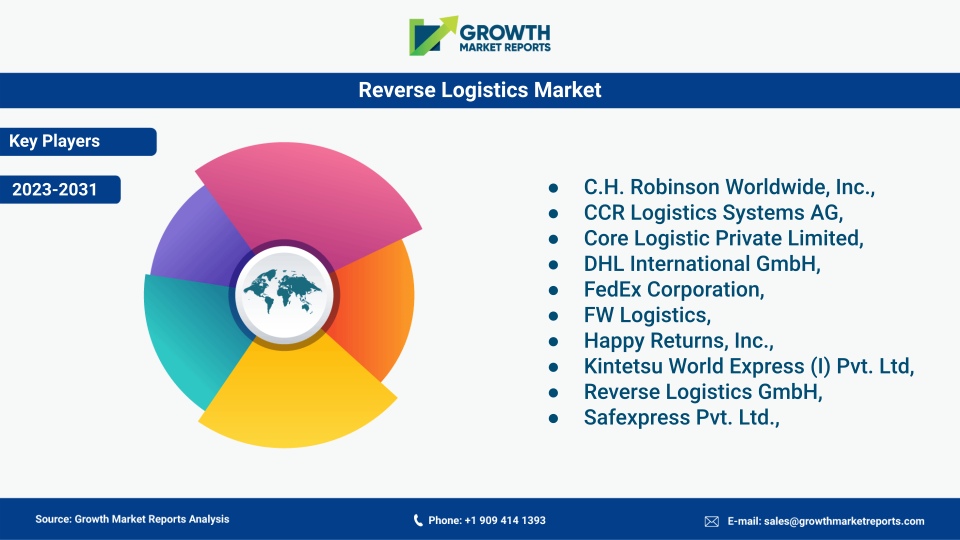
Key participants in the global reverse logistics market include C.H. Robinson Worldwide, Inc., CCR Logistics Systems AG, Core Logistic Private Limited, DHL International GmbH, FedEx Corporation, FW Logistics, Happy Returns, Inc., Kintetsu World Express (I) Pvt. Ltd, Reverse Logistics GmbH, Safexpress Pvt. Ltd., Schenker AG, United Parcel Service, Inc., United States Postal Service, XPO Logistics, Inc., YUSEN LOGISTICS CO., LTD.

They engage in strategies such as mergers & acquisitions, collaborations agreements, and partnerships. Some of the key participants are adopting innovative methods for product launches to strengthen their geographical presence.

Reverse Logistics Market Key Players

Frequently Asked Questions

Challenges include managing diverse return scenarios, high operational costs, regulatory compliance, lack of standardized processes, and meeting customer expectations for fast, hassle-free returns.

Major players include DHL Supply Chain, FedEx Reverse Logistics, UPS Supply Chain Solutions, Reverse Logistics Group, GENCO, XPO Logistics, Ryder System, C.H. Robinson Worldwide, DB Schenker, and Kuehne + Nagel.

Roadways are the most widely used, followed by railways, airways, and waterways. The choice depends on product type, volume, distance, cost, and regulatory requirements.

Asia Pacific leads the market, followed by North America and Europe. Asia Pacific's dominance is driven by its manufacturing base, e-commerce growth, and regulatory focus on sustainability.

Return types include recalls, commercial returns, repairable returns, end-of-life returns, warranty claims, seasonal returns, and returns due to incorrect shipments or damaged goods.

Technologies like IoT-enabled tracking, artificial intelligence, data analytics, automation, and blockchain are improving efficiency, transparency, and cost-effectiveness in reverse logistics.

Major end-users include retail & e-commerce, automotive, consumer electronics, pharmaceuticals, and food & beverage industries.

Key growth drivers include the expansion of e-commerce, increased product returns, heightened consumer awareness of sustainability, stricter waste management regulations, and technological advancements.

The reverse logistics market is expected to grow at a CAGR of 9.2% from 2025 to 2033, reaching USD 2,074.3 billion by 2033.

As of 2024, the global reverse logistics market size is valued at USD 958.4 billion.

Table Of Content

Chapter 1 Executive Summary
Chapter 2 Assumptions and Acronyms Used
Chapter 3 Research Methodology
Chapter 4 Reverse Logistics Market Overview
   4.1 Introduction
      4.1.1 Market Taxonomy
      4.1.2 Market Definition
      4.1.3 Macro-Economic Factors Impacting the Market Growth
   4.2 Reverse Logistics Market Dynamics
      4.2.1 Market Drivers
      4.2.2 Market Restraints
      4.2.3 Market Opportunity
   4.3 Reverse Logistics Market - Supply Chain Analysis
      4.3.1 List of Key Suppliers
      4.3.2 List of Key Distributors
      4.3.3 List of Key Consumers
   4.4 Key Forces Shaping the Reverse Logistics Market
      4.4.1 Bargaining Power of Suppliers
      4.4.2 Bargaining Power of Buyers
      4.4.3 Threat of Substitution
      4.4.4 Threat of New Entrants
      4.4.5 Competitive Rivalry
   4.5 Global Reverse Logistics Market Size & Forecast, 2023-2032
      4.5.1 Reverse Logistics Market Size and Y-o-Y Growth
      4.5.2 Reverse Logistics Market Absolute $ Opportunity

Chapter 5 Global Reverse Logistics Market Analysis and Forecast By Return Type
   5.1 Introduction
      5.1.1 Key Market Trends & Growth Opportunities By Return Type
      5.1.2 Basis Point Share (BPS) Analysis By Return Type
      5.1.3 Absolute $ Opportunity Assessment By Return Type
   5.2 Reverse Logistics Market Size Forecast By Return Type
      5.2.1 Recalls
      5.2.2 Commercial Returns
      5.2.3 Repairable Returns
      5.2.4 End-of-Life Returns
      5.2.5 Others
   5.3 Market Attractiveness Analysis By Return Type

Chapter 6 Global Reverse Logistics Market Analysis and Forecast By Service
   6.1 Introduction
      6.1.1 Key Market Trends & Growth Opportunities By Service
      6.1.2 Basis Point Share (BPS) Analysis By Service
      6.1.3 Absolute $ Opportunity Assessment By Service
   6.2 Reverse Logistics Market Size Forecast By Service
      6.2.1 Transportation
      6.2.2 Warehousing
      6.2.3 Reselling
      6.2.4 Replacement Management
      6.2.5 Others
   6.3 Market Attractiveness Analysis By Service

Chapter 7 Global Reverse Logistics Market Analysis and Forecast By End-User
   7.1 Introduction
      7.1.1 Key Market Trends & Growth Opportunities By End-User
      7.1.2 Basis Point Share (BPS) Analysis By End-User
      7.1.3 Absolute $ Opportunity Assessment By End-User
   7.2 Reverse Logistics Market Size Forecast By End-User
      7.2.1 Retail & E-commerce
      7.2.2 Automotive
      7.2.3 Consumer Electronics
      7.2.4 Pharmaceuticals
      7.2.5 Food & Beverage
      7.2.6 Others
   7.3 Market Attractiveness Analysis By End-User

Chapter 8 Global Reverse Logistics Market Analysis and Forecast By Mode Of Transport
   8.1 Introduction
      8.1.1 Key Market Trends & Growth Opportunities By Mode Of Transport
      8.1.2 Basis Point Share (BPS) Analysis By Mode Of Transport
      8.1.3 Absolute $ Opportunity Assessment By Mode Of Transport
   8.2 Reverse Logistics Market Size Forecast By Mode Of Transport
      8.2.1 Roadways
      8.2.2 Railways
      8.2.3 Airways
      8.2.4 Waterways
   8.3 Market Attractiveness Analysis By Mode Of Transport

Chapter 9 Global Reverse Logistics Market Analysis and Forecast by Region
   9.1 Introduction
      9.1.1 Key Market Trends & Growth Opportunities By Region
      9.1.2 Basis Point Share (BPS) Analysis By Region
      9.1.3 Absolute $ Opportunity Assessment By Region
   9.2 Reverse Logistics Market Size Forecast By Region
      9.2.1 North America
      9.2.2 Europe
      9.2.3 Asia Pacific
      9.2.4 Latin America
      9.2.5 Middle East & Africa (MEA)
   9.3 Market Attractiveness Analysis By Region

Chapter 10 Coronavirus Disease (COVID-19) Impact 
   10.1 Introduction 
   10.2 Current & Future Impact Analysis 
   10.3 Economic Impact Analysis 
   10.4 Government Policies 
   10.5 Investment Scenario

Chapter 11 North America Reverse Logistics Analysis and Forecast
   11.1 Introduction
   11.2 North America Reverse Logistics Market Size Forecast by Country
      11.2.1 U.S.
      11.2.2 Canada
   11.3 Basis Point Share (BPS) Analysis by Country
   11.4 Absolute $ Opportunity Assessment by Country
   11.5 Market Attractiveness Analysis by Country
   11.6 North America Reverse Logistics Market Size Forecast By Return Type
      11.6.1 Recalls
      11.6.2 Commercial Returns
      11.6.3 Repairable Returns
      11.6.4 End-of-Life Returns
      11.6.5 Others
   11.7 Basis Point Share (BPS) Analysis By Return Type 
   11.8 Absolute $ Opportunity Assessment By Return Type 
   11.9 Market Attractiveness Analysis By Return Type
   11.10 North America Reverse Logistics Market Size Forecast By Service
      11.10.1 Transportation
      11.10.2 Warehousing
      11.10.3 Reselling
      11.10.4 Replacement Management
      11.10.5 Others
   11.11 Basis Point Share (BPS) Analysis By Service 
   11.12 Absolute $ Opportunity Assessment By Service 
   11.13 Market Attractiveness Analysis By Service
   11.14 North America Reverse Logistics Market Size Forecast By End-User
      11.14.1 Retail & E-commerce
      11.14.2 Automotive
      11.14.3 Consumer Electronics
      11.14.4 Pharmaceuticals
      11.14.5 Food & Beverage
      11.14.6 Others
   11.15 Basis Point Share (BPS) Analysis By End-User 
   11.16 Absolute $ Opportunity Assessment By End-User 
   11.17 Market Attractiveness Analysis By End-User
   11.18 North America Reverse Logistics Market Size Forecast By Mode Of Transport
      11.18.1 Roadways
      11.18.2 Railways
      11.18.3 Airways
      11.18.4 Waterways
   11.19 Basis Point Share (BPS) Analysis By Mode Of Transport 
   11.20 Absolute $ Opportunity Assessment By Mode Of Transport 
   11.21 Market Attractiveness Analysis By Mode Of Transport

Chapter 12 Europe Reverse Logistics Analysis and Forecast
   12.1 Introduction
   12.2 Europe Reverse Logistics Market Size Forecast by Country
      12.2.1 Germany
      12.2.2 France
      12.2.3 Italy
      12.2.4 U.K.
      12.2.5 Spain
      12.2.6 Russia
      12.2.7 Rest of Europe
   12.3 Basis Point Share (BPS) Analysis by Country
   12.4 Absolute $ Opportunity Assessment by Country
   12.5 Market Attractiveness Analysis by Country
   12.6 Europe Reverse Logistics Market Size Forecast By Return Type
      12.6.1 Recalls
      12.6.2 Commercial Returns
      12.6.3 Repairable Returns
      12.6.4 End-of-Life Returns
      12.6.5 Others
   12.7 Basis Point Share (BPS) Analysis By Return Type 
   12.8 Absolute $ Opportunity Assessment By Return Type 
   12.9 Market Attractiveness Analysis By Return Type
   12.10 Europe Reverse Logistics Market Size Forecast By Service
      12.10.1 Transportation
      12.10.2 Warehousing
      12.10.3 Reselling
      12.10.4 Replacement Management
      12.10.5 Others
   12.11 Basis Point Share (BPS) Analysis By Service 
   12.12 Absolute $ Opportunity Assessment By Service 
   12.13 Market Attractiveness Analysis By Service
   12.14 Europe Reverse Logistics Market Size Forecast By End-User
      12.14.1 Retail & E-commerce
      12.14.2 Automotive
      12.14.3 Consumer Electronics
      12.14.4 Pharmaceuticals
      12.14.5 Food & Beverage
      12.14.6 Others
   12.15 Basis Point Share (BPS) Analysis By End-User 
   12.16 Absolute $ Opportunity Assessment By End-User 
   12.17 Market Attractiveness Analysis By End-User
   12.18 Europe Reverse Logistics Market Size Forecast By Mode Of Transport
      12.18.1 Roadways
      12.18.2 Railways
      12.18.3 Airways
      12.18.4 Waterways
   12.19 Basis Point Share (BPS) Analysis By Mode Of Transport 
   12.20 Absolute $ Opportunity Assessment By Mode Of Transport 
   12.21 Market Attractiveness Analysis By Mode Of Transport

Chapter 13 Asia Pacific Reverse Logistics Analysis and Forecast
   13.1 Introduction
   13.2 Asia Pacific Reverse Logistics Market Size Forecast by Country
      13.2.1 China
      13.2.2 Japan
      13.2.3 South Korea
      13.2.4 India
      13.2.5 Australia
      13.2.6 South East Asia (SEA)
      13.2.7 Rest of Asia Pacific (APAC)
   13.3 Basis Point Share (BPS) Analysis by Country
   13.4 Absolute $ Opportunity Assessment by Country
   13.5 Market Attractiveness Analysis by Country
   13.6 Asia Pacific Reverse Logistics Market Size Forecast By Return Type
      13.6.1 Recalls
      13.6.2 Commercial Returns
      13.6.3 Repairable Returns
      13.6.4 End-of-Life Returns
      13.6.5 Others
   13.7 Basis Point Share (BPS) Analysis By Return Type 
   13.8 Absolute $ Opportunity Assessment By Return Type 
   13.9 Market Attractiveness Analysis By Return Type
   13.10 Asia Pacific Reverse Logistics Market Size Forecast By Service
      13.10.1 Transportation
      13.10.2 Warehousing
      13.10.3 Reselling
      13.10.4 Replacement Management
      13.10.5 Others
   13.11 Basis Point Share (BPS) Analysis By Service 
   13.12 Absolute $ Opportunity Assessment By Service 
   13.13 Market Attractiveness Analysis By Service
   13.14 Asia Pacific Reverse Logistics Market Size Forecast By End-User
      13.14.1 Retail & E-commerce
      13.14.2 Automotive
      13.14.3 Consumer Electronics
      13.14.4 Pharmaceuticals
      13.14.5 Food & Beverage
      13.14.6 Others
   13.15 Basis Point Share (BPS) Analysis By End-User 
   13.16 Absolute $ Opportunity Assessment By End-User 
   13.17 Market Attractiveness Analysis By End-User
   13.18 Asia Pacific Reverse Logistics Market Size Forecast By Mode Of Transport
      13.18.1 Roadways
      13.18.2 Railways
      13.18.3 Airways
      13.18.4 Waterways
   13.19 Basis Point Share (BPS) Analysis By Mode Of Transport 
   13.20 Absolute $ Opportunity Assessment By Mode Of Transport 
   13.21 Market Attractiveness Analysis By Mode Of Transport

Chapter 14 Latin America Reverse Logistics Analysis and Forecast
   14.1 Introduction
   14.2 Latin America Reverse Logistics Market Size Forecast by Country
      14.2.1 Brazil
      14.2.2 Mexico
      14.2.3 Rest of Latin America (LATAM)
   14.3 Basis Point Share (BPS) Analysis by Country
   14.4 Absolute $ Opportunity Assessment by Country
   14.5 Market Attractiveness Analysis by Country
   14.6 Latin America Reverse Logistics Market Size Forecast By Return Type
      14.6.1 Recalls
      14.6.2 Commercial Returns
      14.6.3 Repairable Returns
      14.6.4 End-of-Life Returns
      14.6.5 Others
   14.7 Basis Point Share (BPS) Analysis By Return Type 
   14.8 Absolute $ Opportunity Assessment By Return Type 
   14.9 Market Attractiveness Analysis By Return Type
   14.10 Latin America Reverse Logistics Market Size Forecast By Service
      14.10.1 Transportation
      14.10.2 Warehousing
      14.10.3 Reselling
      14.10.4 Replacement Management
      14.10.5 Others
   14.11 Basis Point Share (BPS) Analysis By Service 
   14.12 Absolute $ Opportunity Assessment By Service 
   14.13 Market Attractiveness Analysis By Service
   14.14 Latin America Reverse Logistics Market Size Forecast By End-User
      14.14.1 Retail & E-commerce
      14.14.2 Automotive
      14.14.3 Consumer Electronics
      14.14.4 Pharmaceuticals
      14.14.5 Food & Beverage
      14.14.6 Others
   14.15 Basis Point Share (BPS) Analysis By End-User 
   14.16 Absolute $ Opportunity Assessment By End-User 
   14.17 Market Attractiveness Analysis By End-User
   14.18 Latin America Reverse Logistics Market Size Forecast By Mode Of Transport
      14.18.1 Roadways
      14.18.2 Railways
      14.18.3 Airways
      14.18.4 Waterways
   14.19 Basis Point Share (BPS) Analysis By Mode Of Transport 
   14.20 Absolute $ Opportunity Assessment By Mode Of Transport 
   14.21 Market Attractiveness Analysis By Mode Of Transport

Chapter 15 Middle East & Africa (MEA) Reverse Logistics Analysis and Forecast
   15.1 Introduction
   15.2 Middle East & Africa (MEA) Reverse Logistics Market Size Forecast by Country
      15.2.1 Saudi Arabia
      15.2.2 South Africa
      15.2.3 UAE
      15.2.4 Rest of Middle East & Africa (MEA)
   15.3 Basis Point Share (BPS) Analysis by Country
   15.4 Absolute $ Opportunity Assessment by Country
   15.5 Market Attractiveness Analysis by Country
   15.6 Middle East & Africa (MEA) Reverse Logistics Market Size Forecast By Return Type
      15.6.1 Recalls
      15.6.2 Commercial Returns
      15.6.3 Repairable Returns
      15.6.4 End-of-Life Returns
      15.6.5 Others
   15.7 Basis Point Share (BPS) Analysis By Return Type 
   15.8 Absolute $ Opportunity Assessment By Return Type 
   15.9 Market Attractiveness Analysis By Return Type
   15.10 Middle East & Africa (MEA) Reverse Logistics Market Size Forecast By Service
      15.10.1 Transportation
      15.10.2 Warehousing
      15.10.3 Reselling
      15.10.4 Replacement Management
      15.10.5 Others
   15.11 Basis Point Share (BPS) Analysis By Service 
   15.12 Absolute $ Opportunity Assessment By Service 
   15.13 Market Attractiveness Analysis By Service
   15.14 Middle East & Africa (MEA) Reverse Logistics Market Size Forecast By End-User
      15.14.1 Retail & E-commerce
      15.14.2 Automotive
      15.14.3 Consumer Electronics
      15.14.4 Pharmaceuticals
      15.14.5 Food & Beverage
      15.14.6 Others
   15.15 Basis Point Share (BPS) Analysis By End-User 
   15.16 Absolute $ Opportunity Assessment By End-User 
   15.17 Market Attractiveness Analysis By End-User
   15.18 Middle East & Africa (MEA) Reverse Logistics Market Size Forecast By Mode Of Transport
      15.18.1 Roadways
      15.18.2 Railways
      15.18.3 Airways
      15.18.4 Waterways
   15.19 Basis Point Share (BPS) Analysis By Mode Of Transport 
   15.20 Absolute $ Opportunity Assessment By Mode Of Transport 
   15.21 Market Attractiveness Analysis By Mode Of Transport

Chapter 16 Competition Landscape 
   16.1 Reverse Logistics Market: Competitive Dashboard
   16.2 Global Reverse Logistics Market: Market Share Analysis, 2023
   16.3 Company Profiles (Details – Overview, Financials, Developments, Strategy) 
      16.3.1 FedEx Corporation
United Parcel Service (UPS)
DHL Supply Chain (Deutsche Post DHL Group)
XPO Logistics
C.H. Robinson Worldwide, Inc.
DB Schenker
Kuehne + Nagel International AG
Ryder System, Inc.
GEFCO Group
CoreCentric Solutions, Inc.
Reverse Logistics Group (RLG)
Yusen Logistics Co., Ltd.
Sims Lifecycle Services
GENCO (A FedEx Company)
B-Stock Solutions
Optoro, Inc.
Happy Returns (A PayPal Company)
Inmar Intelligence
Cycleon
LiquiDonate

Methodology

Our Clients

Dassault Aviation
General Mills
Siemens Healthcare
The John Holland Group
Microsoft
Nestle SA
Pfizer
Deloitte