Fraud Detection and Prevention Market Research Report 2033

Fraud Detection and Prevention Market Research Report 2033

Segments - by Component (Solutions, Services), by Deployment Mode (On-Premises, Cloud), by Organization Size (Small and Medium Enterprises, Large Enterprises), by Application (Identity Theft, Payment Fraud, Money Laundering, Insurance Fraud, Others), by End-User (BFSI, Retail, Healthcare, Government, IT and Telecom, Manufacturing, Others)

https://growthmarketreports.com/Raksha
Author : Raksha Sharma
https://growthmarketreports.com/Vaibhav
Fact-checked by : V. Chandola
https://growthmarketreports.com/Shruti
Editor : Shruti Bhat

Upcoming | Report ID :ICT-SE-3113 | 4.0 Rating | 16 Reviews | 256 Pages | Format : Docx PDF

Report Description


Fraud Detection and Prevention Market Outlook

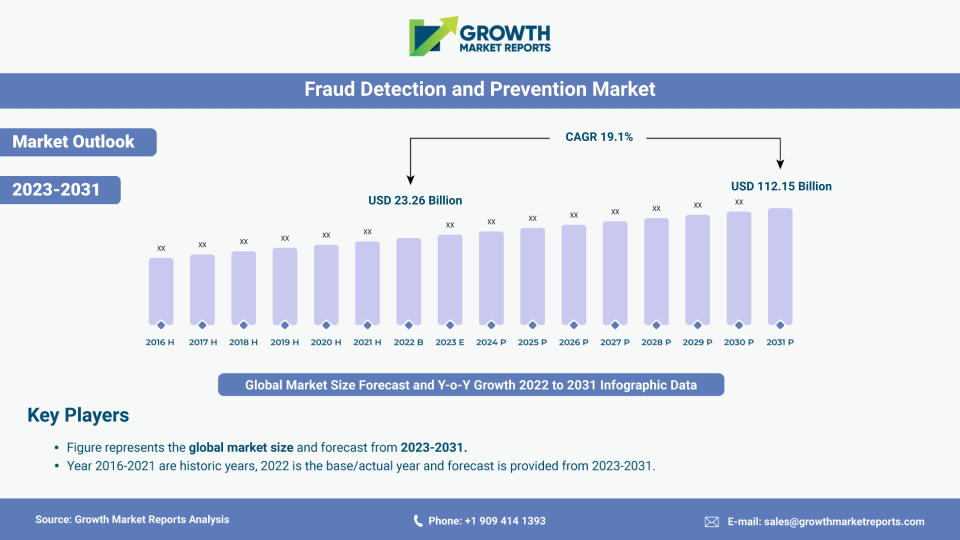
According to our latest research, the global fraud detection and prevention market size in 2024 stands at USD 42.7 billion, reflecting robust demand for advanced security solutions across industries. The market is projected to grow at a CAGR of 18.2% from 2025 to 2033, reaching a forecasted value of USD 139.6 billion by 2033. This significant growth is driven by the escalating sophistication of cyber threats, increasing digital transactions, and stringent regulatory mandates worldwide. The marketÂ’s expansion is further fueled by the rapid adoption of artificial intelligence and machine learning technologies, which are revolutionizing the way organizations detect and prevent fraudulent activities in real time.

The primary growth factor for the fraud detection and prevention market is the exponential rise in digital transactions, particularly in the banking, financial services, and insurance (BFSI) sector. As consumers and businesses increasingly rely on online platforms for financial operations, the risk of cyber-attacks and fraudulent activities has surged. This necessitates the deployment of advanced fraud detection solutions capable of analyzing vast volumes of transactional data, identifying suspicious patterns, and preventing unauthorized access. Furthermore, the proliferation of e-commerce, mobile banking, and online payment gateways has created new vulnerabilities, compelling organizations to invest in robust, scalable, and intelligent fraud prevention systems to safeguard their assets and customer trust.

A second major driver is the evolution of fraud tactics, which has outpaced traditional security measures. Cybercriminals are leveraging sophisticated techniques such as phishing, identity theft, synthetic fraud, and account takeover, making it imperative for organizations to adopt next-generation fraud detection technologies. The integration of artificial intelligence, machine learning, and behavioral analytics enables real-time monitoring and adaptive response to emerging threats. Additionally, regulatory frameworks like PSD2 in Europe and KYC/AML regulations globally are pushing organizations to enhance their compliance infrastructure, further boosting the adoption of fraud detection and prevention solutions.

Thirdly, the growing awareness of the financial and reputational damage caused by fraud is encouraging enterprises of all sizes to prioritize fraud risk management. The cost of fraud, including direct financial loss and indirect costs such as legal penalties, customer attrition, and brand damage, has made proactive fraud prevention a strategic imperative. Organizations are increasingly seeking integrated solutions that offer end-to-end visibility, seamless integration with existing IT infrastructure, and actionable insights. The shift towards cloud-based deployment models is also accelerating market growth, as it offers scalability, cost efficiency, and real-time threat intelligence.

Fraud Detection has become a cornerstone in the strategic arsenal of many organizations, as they seek to protect themselves against increasingly sophisticated cyber threats. The ability to identify and mitigate fraudulent activities in real-time is crucial for maintaining trust and ensuring the security of digital transactions. With the rise of e-commerce and mobile banking, fraud detection systems are now more vital than ever, providing businesses with the tools they need to safeguard their operations and customer data. The integration of advanced technologies such as artificial intelligence and machine learning into fraud detection processes has significantly enhanced the ability of organizations to predict and prevent fraud before it occurs.

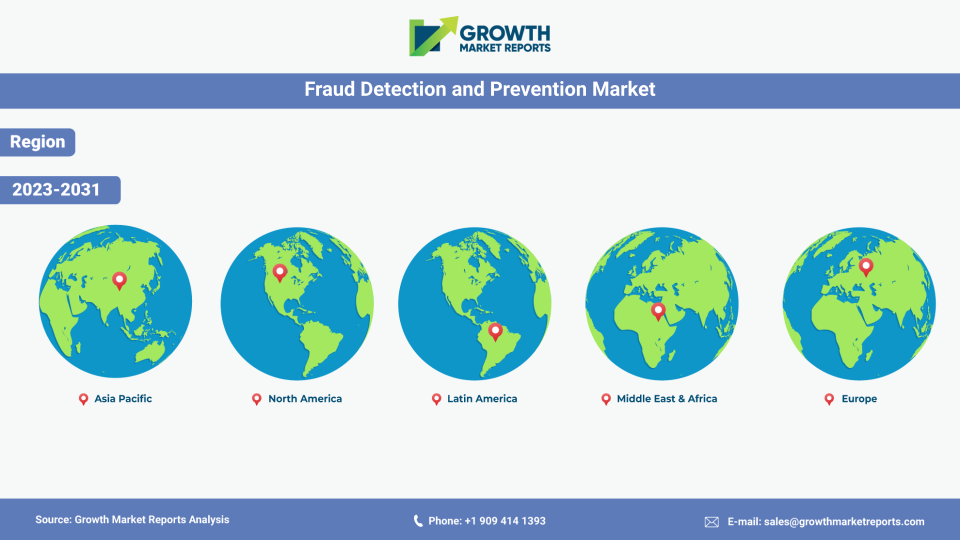
Regionally, North America dominates the fraud detection and prevention market, accounting for the largest share in 2024 due to the presence of leading technology providers, high digital adoption, and stringent regulatory requirements. However, the Asia Pacific region is emerging as the fastest-growing market, driven by rapid digitalization, increasing mobile payments, and rising incidences of cyber fraud. Europe follows closely, fueled by robust regulatory frameworks and a strong focus on data privacy and security. Latin America and the Middle East & Africa are also witnessing increased adoption of fraud detection solutions, although at a relatively slower pace due to budget constraints and varying levels of digital maturity.

Global Fraud Detection and Prevention Industry Outlook

Component Analysis

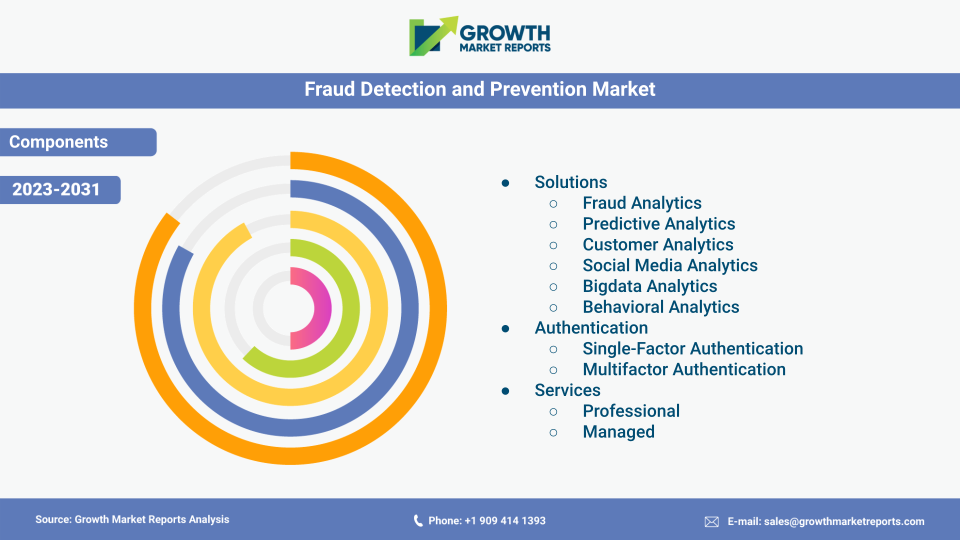
The fraud detection and prevention market is segmented by component into solutions and services, each playing a pivotal role in the overall value chain. The solutions segment encompasses a wide array of software platforms and tools designed to detect, analyze, and prevent fraudulent activities. These solutions include identity verification, transaction monitoring, risk scoring, and behavioral analytics, which are increasingly powered by artificial intelligence and machine learning algorithms. The demand for comprehensive, real-time solutions is rising as organizations seek to stay ahead of evolving fraud tactics and ensure regulatory compliance. Vendors are focusing on developing modular, scalable, and interoperable solutions that can seamlessly integrate with existing IT infrastructure, providing organizations with holistic fraud risk management capabilities.

The services segment, on the other hand, includes consulting, integration, training, and support services that complement the deployment of fraud detection solutions. These services are critical for ensuring successful implementation, customization, and continuous optimization of fraud prevention strategies. As the threat landscape becomes more complex, organizations are increasingly relying on managed services and expert consulting to address specific challenges, such as regulatory compliance, incident response, and threat intelligence. Service providers are also offering ongoing monitoring, maintenance, and upgrades to ensure that fraud detection systems remain effective against emerging threats.

The interplay between solutions and services is crucial for delivering end-to-end fraud prevention. While solutions provide the technological foundation, services ensure that organizations can effectively leverage these tools to achieve their security objectives. The growing trend towards cloud-based and as-a-service delivery models is blurring the lines between solutions and services, enabling organizations to access cutting-edge fraud detection capabilities without significant upfront investment. This shift is particularly beneficial for small and medium enterprises (SMEs), which may lack the internal resources to manage complex fraud prevention systems.

Looking ahead, the component landscape is expected to evolve with the integration of advanced analytics, automation, and threat intelligence into both solutions and services. Vendors are investing in research and development to enhance the accuracy, speed, and scalability of their offerings. The rise of ecosystem partnerships and collaborative platforms is also driving innovation, as solution providers, service firms, and industry consortia work together to address emerging fraud risks. As organizations continue to prioritize fraud prevention, the demand for both solutions and services is set to grow, with a strong emphasis on flexibility, interoperability, and real-time intelligence.

Report Scope

Attributes Details
Report Title Fraud Detection and Prevention Market Research Report 2033
By Component Solutions, Services
By Deployment Mode On-Premises, Cloud
By Organization Size Small and Medium Enterprises, Large Enterprises
By Application Identity Theft, Payment Fraud, Money Laundering, Insurance Fraud, Others
By End-User BFSI, Retail, Healthcare, Government, IT and Telecom, Manufacturing, Others
Regions Covered North America, Europe, APAC, Latin America, MEA
Base Year 2024
Historic Data 2018-2023
Forecast Period 2025-2033
Number of Pages 256
Number of Tables & Figures 400
Customization Available Yes, the report can be customized as per your need.

Deployment Mode Analysis

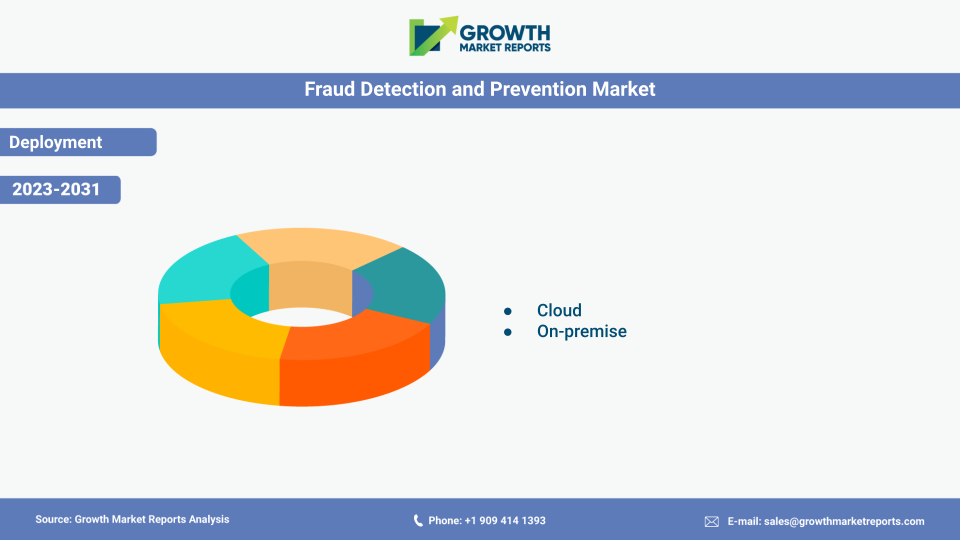
Deployment mode is a critical consideration in the fraud detection and prevention market, with organizations choosing between on-premises and cloud-based solutions based on their security needs, regulatory requirements, and IT infrastructure. Traditionally, on-premises deployment has been favored by large enterprises and highly regulated industries that require complete control over data and security protocols. On-premises solutions offer robust customization, integration with legacy systems, and enhanced data privacy, making them suitable for organizations with complex security requirements. However, they also entail higher upfront costs, longer implementation timelines, and ongoing maintenance responsibilities.

In contrast, the adoption of cloud-based fraud detection and prevention solutions is accelerating rapidly, driven by the need for scalability, agility, and cost efficiency. Cloud deployment enables organizations to access advanced analytics, real-time threat intelligence, and automated response capabilities without the need for significant capital investment. This model is particularly attractive to SMEs, which benefit from the flexibility, pay-as-you-go pricing, and ease of integration with other cloud services. Cloud-based solutions also facilitate seamless updates, rapid deployment, and centralized management, allowing organizations to stay ahead of evolving threats.

The shift towards cloud deployment is further supported by advancements in cloud security, data encryption, and regulatory compliance. Leading vendors are investing in secure cloud architectures, multi-factor authentication, and continuous monitoring to address concerns related to data privacy and unauthorized access. The growing adoption of hybrid and multi-cloud strategies is enabling organizations to balance the benefits of cloud scalability with the control and security of on-premises systems. This hybrid approach is gaining traction in industries with stringent compliance requirements, such as BFSI and healthcare.

Despite the advantages of cloud deployment, some organizations continue to prefer on-premises solutions due to concerns over data sovereignty, regulatory compliance, and integration with legacy systems. However, as cloud technologies mature and regulatory frameworks evolve, the market is witnessing a gradual shift towards cloud-based models. Vendors are responding by offering flexible deployment options, including hybrid and private cloud solutions, to meet the diverse needs of their customers. The deployment mode landscape is expected to remain dynamic, with organizations increasingly prioritizing agility, scalability, and real-time intelligence in their fraud prevention strategies.

Organization Size Analysis

The fraud detection and prevention market is segmented by organization size into small and medium enterprises (SMEs) and large enterprises, each with distinct needs and adoption patterns. Large enterprises, with their extensive customer bases, complex operations, and higher exposure to financial risk, have traditionally been the primary adopters of sophisticated fraud detection solutions. These organizations invest heavily in advanced analytics, machine learning, and real-time monitoring to safeguard their assets, comply with regulatory requirements, and maintain customer trust. Large enterprises also have the resources to deploy on-premises or hybrid solutions, integrate fraud detection with broader risk management frameworks, and leverage dedicated security teams for ongoing monitoring and response.

In recent years, there has been a notable increase in adoption among SMEs, driven by the democratization of advanced fraud detection technologies and the availability of cloud-based solutions. SMEs are increasingly targeted by cybercriminals due to perceived vulnerabilities and limited security resources. As a result, these organizations are seeking affordable, scalable, and easy-to-deploy solutions that offer real-time protection against a wide range of fraud threats. Cloud-based fraud detection platforms are particularly popular among SMEs, as they eliminate the need for significant upfront investment and provide access to the latest threat intelligence and analytics capabilities.

The needs of SMEs and large enterprises also differ in terms of customization, integration, and support services. While large enterprises may require bespoke solutions tailored to their unique risk profiles and operational environments, SMEs often prefer standardized, out-of-the-box solutions that can be quickly implemented and managed with minimal IT expertise. Service providers are responding by offering tiered solutions, flexible pricing models, and managed services to address the specific requirements of different organization sizes.

Looking forward, the market is expected to see continued growth across both segments, with SMEs representing a significant opportunity for vendors. The increasing frequency and sophistication of fraud attacks, coupled with the rising cost of cyber insurance and regulatory penalties, are compelling organizations of all sizes to prioritize fraud prevention. As technology becomes more accessible and affordable, the adoption gap between SMEs and large enterprises is expected to narrow, driving overall market growth and innovation.

Application Analysis

The application landscape of the fraud detection and prevention market is diverse, encompassing identity theft, payment fraud, money laundering, insurance fraud, and other emerging threats. Identity theft remains a top concern for organizations, as cybercriminals exploit stolen credentials to gain unauthorized access to sensitive information and financial accounts. Advanced identity verification solutions, incorporating biometrics, multi-factor authentication, and behavioral analytics, are being deployed to combat this growing threat. Organizations are also leveraging artificial intelligence to detect anomalies in user behavior and flag suspicious activities in real time.

Payment fraud is another major application area, particularly in the BFSI, retail, and e-commerce sectors. The proliferation of digital payments, mobile wallets, and contactless transactions has created new opportunities for fraudsters to exploit vulnerabilities in payment systems. Real-time transaction monitoring, risk scoring, and machine learning algorithms are being used to detect and prevent fraudulent transactions before they are completed. Payment fraud solutions are also integrating with broader fraud management platforms to provide end-to-end visibility and response capabilities.

Money laundering poses a significant challenge for financial institutions, which are required to comply with stringent anti-money laundering (AML) regulations. Advanced analytics, network analysis, and machine learning are being used to identify suspicious patterns of transactions, flag high-risk entities, and automate compliance reporting. The integration of fraud detection and AML solutions is enabling organizations to streamline their compliance processes, reduce manual effort, and improve the accuracy of their risk assessments.

Insurance fraud is a growing concern for insurers, as fraudulent claims drive up costs and erode profitability. Predictive analytics, data mining, and social network analysis are being used to detect fraudulent claims, identify organized fraud rings, and uncover hidden relationships between claimants. Insurance companies are also investing in automated claims processing and real-time fraud alerts to enhance their fraud prevention capabilities. Other application areas, such as account takeover, synthetic fraud, and internal fraud, are also gaining attention as organizations seek to address the full spectrum of fraud risks.

End-User Analysis

The fraud detection and prevention market serves a wide range of end-users, with the BFSI sector accounting for the largest share due to its high exposure to financial crime and regulatory scrutiny. Banks, insurance companies, and financial service providers are at the forefront of adopting advanced fraud detection technologies to protect their customers, assets, and reputations. The increasing digitization of financial services, coupled with the rise of digital banking and fintech, is driving demand for real-time, AI-powered fraud prevention solutions. The BFSI sector is also leading the way in integrating fraud detection with broader risk management and compliance frameworks.

Retail and e-commerce are rapidly emerging as key end-users, driven by the surge in online transactions, mobile payments, and omnichannel commerce. Retailers are deploying fraud detection solutions to combat payment fraud, account takeover, and return fraud, while enhancing the customer experience through seamless and secure transactions. The integration of fraud prevention with customer identity and access management (CIAM) platforms is enabling retailers to balance security with convenience, reducing friction for legitimate customers while blocking fraudulent activity.

Healthcare organizations are increasingly targeted by cybercriminals seeking to exploit vulnerabilities in electronic health records, medical billing systems, and insurance claims. The adoption of fraud detection solutions in the healthcare sector is driven by the need to protect sensitive patient information, comply with regulations such as HIPAA, and prevent fraudulent billing and insurance claims. Government agencies are also investing in fraud prevention to safeguard public funds, detect welfare and tax fraud, and ensure the integrity of public services.

Other end-users, including IT and telecom, manufacturing, and education, are recognizing the importance of fraud prevention as digital transformation accelerates across industries. The growing interconnectedness of devices, systems, and networks is creating new attack vectors, making it essential for organizations in all sectors to invest in robust fraud detection and prevention solutions. Vendors are developing industry-specific offerings and use cases to address the unique challenges and regulatory requirements of different end-users, driving market growth and innovation.

Opportunities & Threats

The fraud detection and prevention market presents significant opportunities for innovation and growth, particularly in the areas of artificial intelligence, machine learning, and big data analytics. The ability to analyze vast volumes of structured and unstructured data in real time is transforming the way organizations detect and respond to fraud. Advanced analytics and AI-powered solutions enable organizations to identify subtle patterns, adapt to emerging threats, and automate decision-making processes. The integration of fraud detection with broader cybersecurity, risk management, and compliance platforms is creating new value propositions and revenue streams for vendors. As digital transformation accelerates, there is a growing demand for scalable, cloud-based solutions that can be rapidly deployed and customized to meet the evolving needs of organizations across industries.

Another major opportunity lies in the expansion of fraud detection and prevention solutions into emerging markets and new industry verticals. As digital adoption increases in regions such as Asia Pacific, Latin America, and the Middle East & Africa, organizations are seeking affordable, easy-to-implement solutions to address rising fraud risks. Vendors are developing industry-specific offerings, localized threat intelligence, and flexible pricing models to capture these growth opportunities. The rise of open banking, digital identity, and real-time payments is also driving demand for innovative fraud prevention technologies. Partnerships, ecosystem collaboration, and regulatory compliance are key enablers for market expansion and differentiation.

Despite the positive outlook, the market faces several restraining factors. The complexity and cost of implementing advanced fraud detection solutions can be a barrier for some organizations, particularly SMEs with limited resources. Integration with legacy systems, data privacy concerns, and regulatory compliance requirements can also pose challenges. Additionally, the rapid evolution of fraud tactics means that solutions must be continuously updated and optimized to remain effective. Vendors must balance the need for advanced features with usability, affordability, and interoperability to ensure broad market adoption.

Regional Outlook

North America remains the largest regional market for fraud detection and prevention, accounting for approximately 38% of the global market share in 2024, or about USD 16.2 billion. The regionÂ’s dominance is attributed to the presence of leading technology providers, high digital adoption, and stringent regulatory frameworks such as the Gramm-Leach-Bliley Act (GLBA) and the California Consumer Privacy Act (CCPA). The United States, in particular, is a major hub for innovation, with financial institutions, retailers, and healthcare providers investing heavily in advanced fraud detection technologies. Canada is also witnessing increased adoption, driven by regulatory compliance and rising cyber threats.

Europe is the second-largest market, with a market size of USD 11.8 billion in 2024, representing around 28% of the global market. The regionÂ’s growth is driven by robust regulatory frameworks such as the General Data Protection Regulation (GDPR) and the revised Payment Services Directive (PSD2), which mandate stringent security and fraud prevention measures. Countries such as the United Kingdom, Germany, and France are leading adopters, while Central and Eastern Europe are emerging as growth markets. The European market is expected to grow at a CAGR of 17.6% through 2033, driven by increasing digitalization and cross-border payments.

The Asia Pacific region is the fastest-growing market, with a 2024 market size of USD 9.4 billion and a projected CAGR of 22.1% from 2025 to 2033. Rapid digital transformation, rising mobile payments, and increasing incidences of cyber fraud are fueling demand for fraud detection solutions in countries such as China, India, Japan, and Australia. The regionÂ’s diverse regulatory environment, large unbanked population, and growing e-commerce sector present both challenges and opportunities for vendors. Latin America and the Middle East & Africa, with market sizes of USD 3.4 billion and USD 1.9 billion respectively, are also witnessing increased adoption, albeit at a slower pace due to varying levels of digital maturity and investment capacity.

Fraud Detection and Prevention Market Statistics

Competitor Outlook

The global fraud detection and prevention market is highly competitive, characterized by the presence of established technology giants, specialized security vendors, and innovative startups. The competitive landscape is shaped by continuous innovation, strategic partnerships, mergers and acquisitions, and a strong focus on research and development. Leading players are investing in artificial intelligence, machine learning, and big data analytics to enhance the accuracy, speed, and scalability of their solutions. The market is also witnessing increased collaboration between solution providers, service firms, and industry consortia to address emerging threats and regulatory requirements.

Vendors are differentiating themselves through the development of modular, scalable, and interoperable solutions that can seamlessly integrate with existing IT infrastructure. The shift towards cloud-based and as-a-service delivery models is enabling vendors to reach a broader customer base, including SMEs and organizations in emerging markets. Customer support, managed services, and ongoing innovation are key factors influencing vendor selection and customer loyalty. The ability to provide real-time threat intelligence, automated response, and actionable insights is becoming a critical differentiator in the market.

The competitive landscape is also shaped by the growing importance of ecosystem partnerships and platform-based approaches. Leading vendors are forming alliances with cloud providers, system integrators, and industry associations to expand their reach, enhance their offerings, and address the unique needs of different end-users. The rise of open APIs, developer communities, and collaborative platforms is fostering innovation and enabling organizations to build customized fraud prevention solutions.

Major companies in the fraud detection and prevention market include IBM Corporation, SAS Institute Inc., FICO, Experian plc, LexisNexis Risk Solutions, ACI Worldwide, BAE Systems, Nice Ltd., TransUnion, and Oracle Corporation. IBM is known for its AI-powered fraud detection solutions and extensive portfolio of security services. SAS Institute offers advanced analytics and machine learning capabilities for fraud prevention across multiple industries. FICO is a leader in risk scoring and real-time transaction monitoring, while Experian and TransUnion provide comprehensive identity verification and credit risk management solutions. LexisNexis Risk Solutions specializes in data analytics and risk assessment, with a strong focus on financial services and insurance. ACI Worldwide and Nice Ltd. offer real-time payment fraud detection and compliance solutions, while BAE Systems and Oracle provide integrated risk management platforms for large enterprises and government agencies.

These companies are continuously expanding their product portfolios, investing in innovation, and pursuing strategic acquisitions to strengthen their market positions. They are also focusing on enhancing customer experience, expanding into new geographies, and addressing the evolving needs of organizations in a rapidly changing threat landscape. The competitive dynamics of the fraud detection and prevention market are expected to remain intense, with innovation, agility, and customer-centricity as key drivers of success.

Key Players

  • IBM Corporation
  • FICO (Fair Isaac Corporation)
  • SAS Institute Inc.
  • ACI Worldwide
  • BAE Systems
  • Experian plc
  • LexisNexis Risk Solutions
  • NICE Actimize
  • Fiserv, Inc.
  • Oracle Corporation
  • SAP SE
  • TransUnion
  • Fis
  • NCR Corporation
  • Software AG
  • ThreatMetrix (a LexisNexis company)
  • Equifax Inc.
  • Dell Technologies
  • Kount (an Equifax company)
  • Bottomline Technologies
Fraud Detection and Prevention Market Overview

Segments

The Fraud Detection and Prevention market has been segmented on the basis of

Component

  • Solutions
  • Services

Deployment Mode

  • On-Premises
  • Cloud

Organization Size

  • Small and Medium Enterprises
  • Large Enterprises

Application

  • Identity Theft
  • Payment Fraud
  • Money Laundering
  • Insurance Fraud
  • Others

End-User

  • BFSI
  • Retail
  • Healthcare
  • Government
  • IT and Telecom
  • Manufacturing
  • Others

Competitive Landscape

Key players in the fraud detection and prevention market include Accertify Inc., BAE Systems. Inc, CaseWare International Inc, DataVerify, Datavisor Inc, Digital Resolve, DXC Technologies, FCASE Ltd, FICO, Gurucul, and others.

Companies adopted various organic and inorganic growth strategies such as product launches, product enhancements, partnerships, agreements, mergers, and acquisitions to expand their presence. Detailed analysis of major companies, which include company overview, financials, products offerings, recent developments, and others, is covered in the report.
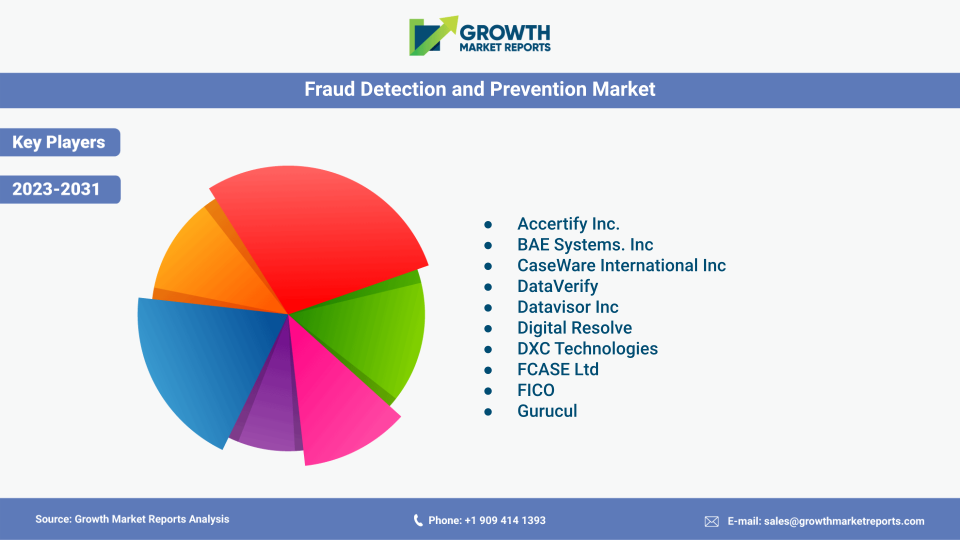

 Fraud Detection and Prevention Market Key Players

Frequently Asked Questions

SMEs are increasingly adopting cloud-based fraud detection solutions due to affordability, scalability, and ease of deployment, helping them protect against rising cyber threats despite limited internal resources.

Challenges include the complexity and cost of advanced solutions, integration with legacy systems, data privacy concerns, regulatory compliance, and the need for continuous updates to address evolving fraud tactics.

Major companies include IBM Corporation, FICO, SAS Institute Inc., Experian, LexisNexis Risk Solutions, ACI Worldwide, BAE Systems, NICE Actimize, TransUnion, and Oracle Corporation.

Key applications include identity theft, payment fraud, money laundering, insurance fraud, account takeover, synthetic fraud, and internal fraud.

North America holds the largest market share, followed by Europe and the Asia Pacific region, which is the fastest-growing market due to rapid digitalization and rising cyber threats.

AI and machine learning are revolutionizing fraud detection by enabling real-time monitoring, adaptive response to emerging threats, and advanced behavioral analytics for more accurate and efficient fraud prevention.

Organizations can choose between on-premises and cloud-based deployment modes, with cloud adoption accelerating due to scalability, cost efficiency, and real-time threat intelligence.

The banking, financial services, and insurance (BFSI) sector is the primary driver, along with retail, healthcare, government, IT and telecom, and manufacturing industries.

The fraud detection and prevention market is expected to grow at a CAGR of 18.2% from 2025 to 2033, reaching an estimated value of USD 139.6 billion by 2033.

As of 2024, the global fraud detection and prevention market is valued at USD 42.7 billion, with strong demand for advanced security solutions across various industries.

Table Of Content

Chapter 1 Executive Summary
Chapter 2 Assumptions and Acronyms Used
Chapter 3 Research Methodology
Chapter 4 Fraud Detection and Prevention Market Overview
   4.1 Introduction
      4.1.1 Market Taxonomy
      4.1.2 Market Definition
      4.1.3 Macro-Economic Factors Impacting the Market Growth
   4.2 Fraud Detection and Prevention Market Dynamics
      4.2.1 Market Drivers
      4.2.2 Market Restraints
      4.2.3 Market Opportunity
   4.3 Fraud Detection and Prevention Market - Supply Chain Analysis
      4.3.1 List of Key Suppliers
      4.3.2 List of Key Distributors
      4.3.3 List of Key Consumers
   4.4 Key Forces Shaping the Fraud Detection and Prevention Market
      4.4.1 Bargaining Power of Suppliers
      4.4.2 Bargaining Power of Buyers
      4.4.3 Threat of Substitution
      4.4.4 Threat of New Entrants
      4.4.5 Competitive Rivalry
   4.5 Global Fraud Detection and Prevention Market Size & Forecast, 2023-2032
      4.5.1 Fraud Detection and Prevention Market Size and Y-o-Y Growth
      4.5.2 Fraud Detection and Prevention Market Absolute $ Opportunity

Chapter 5 Global Fraud Detection and Prevention Market Analysis and Forecast By Component
   5.1 Introduction
      5.1.1 Key Market Trends & Growth Opportunities By Component
      5.1.2 Basis Point Share (BPS) Analysis By Component
      5.1.3 Absolute $ Opportunity Assessment By Component
   5.2 Fraud Detection and Prevention Market Size Forecast By Component
      5.2.1 Solutions
      5.2.2 Services
   5.3 Market Attractiveness Analysis By Component

Chapter 6 Global Fraud Detection and Prevention Market Analysis and Forecast By Deployment Mode
   6.1 Introduction
      6.1.1 Key Market Trends & Growth Opportunities By Deployment Mode
      6.1.2 Basis Point Share (BPS) Analysis By Deployment Mode
      6.1.3 Absolute $ Opportunity Assessment By Deployment Mode
   6.2 Fraud Detection and Prevention Market Size Forecast By Deployment Mode
      6.2.1 On-Premises
      6.2.2 Cloud
   6.3 Market Attractiveness Analysis By Deployment Mode

Chapter 7 Global Fraud Detection and Prevention Market Analysis and Forecast By Organization Size
   7.1 Introduction
      7.1.1 Key Market Trends & Growth Opportunities By Organization Size
      7.1.2 Basis Point Share (BPS) Analysis By Organization Size
      7.1.3 Absolute $ Opportunity Assessment By Organization Size
   7.2 Fraud Detection and Prevention Market Size Forecast By Organization Size
      7.2.1 Small and Medium Enterprises
      7.2.2 Large Enterprises
   7.3 Market Attractiveness Analysis By Organization Size

Chapter 8 Global Fraud Detection and Prevention Market Analysis and Forecast By Application
   8.1 Introduction
      8.1.1 Key Market Trends & Growth Opportunities By Application
      8.1.2 Basis Point Share (BPS) Analysis By Application
      8.1.3 Absolute $ Opportunity Assessment By Application
   8.2 Fraud Detection and Prevention Market Size Forecast By Application
      8.2.1 Identity Theft
      8.2.2 Payment Fraud
      8.2.3 Money Laundering
      8.2.4 Insurance Fraud
      8.2.5 Others
   8.3 Market Attractiveness Analysis By Application

Chapter 9 Global Fraud Detection and Prevention Market Analysis and Forecast By End-User
   9.1 Introduction
      9.1.1 Key Market Trends & Growth Opportunities By End-User
      9.1.2 Basis Point Share (BPS) Analysis By End-User
      9.1.3 Absolute $ Opportunity Assessment By End-User
   9.2 Fraud Detection and Prevention Market Size Forecast By End-User
      9.2.1 BFSI
      9.2.2 Retail
      9.2.3 Healthcare
      9.2.4 Government
      9.2.5 IT and Telecom
      9.2.6 Manufacturing
      9.2.7 Others
   9.3 Market Attractiveness Analysis By End-User

Chapter 10 Global Fraud Detection and Prevention Market Analysis and Forecast by Region
   10.1 Introduction
      10.1.1 Key Market Trends & Growth Opportunities By Region
      10.1.2 Basis Point Share (BPS) Analysis By Region
      10.1.3 Absolute $ Opportunity Assessment By Region
   10.2 Fraud Detection and Prevention Market Size Forecast By Region
      10.2.1 North America
      10.2.2 Europe
      10.2.3 Asia Pacific
      10.2.4 Latin America
      10.2.5 Middle East & Africa (MEA)
   10.3 Market Attractiveness Analysis By Region

Chapter 11 Coronavirus Disease (COVID-19) Impact 
   11.1 Introduction 
   11.2 Current & Future Impact Analysis 
   11.3 Economic Impact Analysis 
   11.4 Government Policies 
   11.5 Investment Scenario

Chapter 12 North America Fraud Detection and Prevention Analysis and Forecast
   12.1 Introduction
   12.2 North America Fraud Detection and Prevention Market Size Forecast by Country
      12.2.1 U.S.
      12.2.2 Canada
   12.3 Basis Point Share (BPS) Analysis by Country
   12.4 Absolute $ Opportunity Assessment by Country
   12.5 Market Attractiveness Analysis by Country
   12.6 North America Fraud Detection and Prevention Market Size Forecast By Component
      12.6.1 Solutions
      12.6.2 Services
   12.7 Basis Point Share (BPS) Analysis By Component 
   12.8 Absolute $ Opportunity Assessment By Component 
   12.9 Market Attractiveness Analysis By Component
   12.10 North America Fraud Detection and Prevention Market Size Forecast By Deployment Mode
      12.10.1 On-Premises
      12.10.2 Cloud
   12.11 Basis Point Share (BPS) Analysis By Deployment Mode 
   12.12 Absolute $ Opportunity Assessment By Deployment Mode 
   12.13 Market Attractiveness Analysis By Deployment Mode
   12.14 North America Fraud Detection and Prevention Market Size Forecast By Organization Size
      12.14.1 Small and Medium Enterprises
      12.14.2 Large Enterprises
   12.15 Basis Point Share (BPS) Analysis By Organization Size 
   12.16 Absolute $ Opportunity Assessment By Organization Size 
   12.17 Market Attractiveness Analysis By Organization Size
   12.18 North America Fraud Detection and Prevention Market Size Forecast By Application
      12.18.1 Identity Theft
      12.18.2 Payment Fraud
      12.18.3 Money Laundering
      12.18.4 Insurance Fraud
      12.18.5 Others
   12.19 Basis Point Share (BPS) Analysis By Application 
   12.20 Absolute $ Opportunity Assessment By Application 
   12.21 Market Attractiveness Analysis By Application
   12.22 North America Fraud Detection and Prevention Market Size Forecast By End-User
      12.22.1 BFSI
      12.22.2 Retail
      12.22.3 Healthcare
      12.22.4 Government
      12.22.5 IT and Telecom
      12.22.6 Manufacturing
      12.22.7 Others
   12.23 Basis Point Share (BPS) Analysis By End-User 
   12.24 Absolute $ Opportunity Assessment By End-User 
   12.25 Market Attractiveness Analysis By End-User

Chapter 13 Europe Fraud Detection and Prevention Analysis and Forecast
   13.1 Introduction
   13.2 Europe Fraud Detection and Prevention Market Size Forecast by Country
      13.2.1 Germany
      13.2.2 France
      13.2.3 Italy
      13.2.4 U.K.
      13.2.5 Spain
      13.2.6 Russia
      13.2.7 Rest of Europe
   13.3 Basis Point Share (BPS) Analysis by Country
   13.4 Absolute $ Opportunity Assessment by Country
   13.5 Market Attractiveness Analysis by Country
   13.6 Europe Fraud Detection and Prevention Market Size Forecast By Component
      13.6.1 Solutions
      13.6.2 Services
   13.7 Basis Point Share (BPS) Analysis By Component 
   13.8 Absolute $ Opportunity Assessment By Component 
   13.9 Market Attractiveness Analysis By Component
   13.10 Europe Fraud Detection and Prevention Market Size Forecast By Deployment Mode
      13.10.1 On-Premises
      13.10.2 Cloud
   13.11 Basis Point Share (BPS) Analysis By Deployment Mode 
   13.12 Absolute $ Opportunity Assessment By Deployment Mode 
   13.13 Market Attractiveness Analysis By Deployment Mode
   13.14 Europe Fraud Detection and Prevention Market Size Forecast By Organization Size
      13.14.1 Small and Medium Enterprises
      13.14.2 Large Enterprises
   13.15 Basis Point Share (BPS) Analysis By Organization Size 
   13.16 Absolute $ Opportunity Assessment By Organization Size 
   13.17 Market Attractiveness Analysis By Organization Size
   13.18 Europe Fraud Detection and Prevention Market Size Forecast By Application
      13.18.1 Identity Theft
      13.18.2 Payment Fraud
      13.18.3 Money Laundering
      13.18.4 Insurance Fraud
      13.18.5 Others
   13.19 Basis Point Share (BPS) Analysis By Application 
   13.20 Absolute $ Opportunity Assessment By Application 
   13.21 Market Attractiveness Analysis By Application
   13.22 Europe Fraud Detection and Prevention Market Size Forecast By End-User
      13.22.1 BFSI
      13.22.2 Retail
      13.22.3 Healthcare
      13.22.4 Government
      13.22.5 IT and Telecom
      13.22.6 Manufacturing
      13.22.7 Others
   13.23 Basis Point Share (BPS) Analysis By End-User 
   13.24 Absolute $ Opportunity Assessment By End-User 
   13.25 Market Attractiveness Analysis By End-User

Chapter 14 Asia Pacific Fraud Detection and Prevention Analysis and Forecast
   14.1 Introduction
   14.2 Asia Pacific Fraud Detection and Prevention Market Size Forecast by Country
      14.2.1 China
      14.2.2 Japan
      14.2.3 South Korea
      14.2.4 India
      14.2.5 Australia
      14.2.6 South East Asia (SEA)
      14.2.7 Rest of Asia Pacific (APAC)
   14.3 Basis Point Share (BPS) Analysis by Country
   14.4 Absolute $ Opportunity Assessment by Country
   14.5 Market Attractiveness Analysis by Country
   14.6 Asia Pacific Fraud Detection and Prevention Market Size Forecast By Component
      14.6.1 Solutions
      14.6.2 Services
   14.7 Basis Point Share (BPS) Analysis By Component 
   14.8 Absolute $ Opportunity Assessment By Component 
   14.9 Market Attractiveness Analysis By Component
   14.10 Asia Pacific Fraud Detection and Prevention Market Size Forecast By Deployment Mode
      14.10.1 On-Premises
      14.10.2 Cloud
   14.11 Basis Point Share (BPS) Analysis By Deployment Mode 
   14.12 Absolute $ Opportunity Assessment By Deployment Mode 
   14.13 Market Attractiveness Analysis By Deployment Mode
   14.14 Asia Pacific Fraud Detection and Prevention Market Size Forecast By Organization Size
      14.14.1 Small and Medium Enterprises
      14.14.2 Large Enterprises
   14.15 Basis Point Share (BPS) Analysis By Organization Size 
   14.16 Absolute $ Opportunity Assessment By Organization Size 
   14.17 Market Attractiveness Analysis By Organization Size
   14.18 Asia Pacific Fraud Detection and Prevention Market Size Forecast By Application
      14.18.1 Identity Theft
      14.18.2 Payment Fraud
      14.18.3 Money Laundering
      14.18.4 Insurance Fraud
      14.18.5 Others
   14.19 Basis Point Share (BPS) Analysis By Application 
   14.20 Absolute $ Opportunity Assessment By Application 
   14.21 Market Attractiveness Analysis By Application
   14.22 Asia Pacific Fraud Detection and Prevention Market Size Forecast By End-User
      14.22.1 BFSI
      14.22.2 Retail
      14.22.3 Healthcare
      14.22.4 Government
      14.22.5 IT and Telecom
      14.22.6 Manufacturing
      14.22.7 Others
   14.23 Basis Point Share (BPS) Analysis By End-User 
   14.24 Absolute $ Opportunity Assessment By End-User 
   14.25 Market Attractiveness Analysis By End-User

Chapter 15 Latin America Fraud Detection and Prevention Analysis and Forecast
   15.1 Introduction
   15.2 Latin America Fraud Detection and Prevention Market Size Forecast by Country
      15.2.1 Brazil
      15.2.2 Mexico
      15.2.3 Rest of Latin America (LATAM)
   15.3 Basis Point Share (BPS) Analysis by Country
   15.4 Absolute $ Opportunity Assessment by Country
   15.5 Market Attractiveness Analysis by Country
   15.6 Latin America Fraud Detection and Prevention Market Size Forecast By Component
      15.6.1 Solutions
      15.6.2 Services
   15.7 Basis Point Share (BPS) Analysis By Component 
   15.8 Absolute $ Opportunity Assessment By Component 
   15.9 Market Attractiveness Analysis By Component
   15.10 Latin America Fraud Detection and Prevention Market Size Forecast By Deployment Mode
      15.10.1 On-Premises
      15.10.2 Cloud
   15.11 Basis Point Share (BPS) Analysis By Deployment Mode 
   15.12 Absolute $ Opportunity Assessment By Deployment Mode 
   15.13 Market Attractiveness Analysis By Deployment Mode
   15.14 Latin America Fraud Detection and Prevention Market Size Forecast By Organization Size
      15.14.1 Small and Medium Enterprises
      15.14.2 Large Enterprises
   15.15 Basis Point Share (BPS) Analysis By Organization Size 
   15.16 Absolute $ Opportunity Assessment By Organization Size 
   15.17 Market Attractiveness Analysis By Organization Size
   15.18 Latin America Fraud Detection and Prevention Market Size Forecast By Application
      15.18.1 Identity Theft
      15.18.2 Payment Fraud
      15.18.3 Money Laundering
      15.18.4 Insurance Fraud
      15.18.5 Others
   15.19 Basis Point Share (BPS) Analysis By Application 
   15.20 Absolute $ Opportunity Assessment By Application 
   15.21 Market Attractiveness Analysis By Application
   15.22 Latin America Fraud Detection and Prevention Market Size Forecast By End-User
      15.22.1 BFSI
      15.22.2 Retail
      15.22.3 Healthcare
      15.22.4 Government
      15.22.5 IT and Telecom
      15.22.6 Manufacturing
      15.22.7 Others
   15.23 Basis Point Share (BPS) Analysis By End-User 
   15.24 Absolute $ Opportunity Assessment By End-User 
   15.25 Market Attractiveness Analysis By End-User

Chapter 16 Middle East & Africa (MEA) Fraud Detection and Prevention Analysis and Forecast
   16.1 Introduction
   16.2 Middle East & Africa (MEA) Fraud Detection and Prevention Market Size Forecast by Country
      16.2.1 Saudi Arabia
      16.2.2 South Africa
      16.2.3 UAE
      16.2.4 Rest of Middle East & Africa (MEA)
   16.3 Basis Point Share (BPS) Analysis by Country
   16.4 Absolute $ Opportunity Assessment by Country
   16.5 Market Attractiveness Analysis by Country
   16.6 Middle East & Africa (MEA) Fraud Detection and Prevention Market Size Forecast By Component
      16.6.1 Solutions
      16.6.2 Services
   16.7 Basis Point Share (BPS) Analysis By Component 
   16.8 Absolute $ Opportunity Assessment By Component 
   16.9 Market Attractiveness Analysis By Component
   16.10 Middle East & Africa (MEA) Fraud Detection and Prevention Market Size Forecast By Deployment Mode
      16.10.1 On-Premises
      16.10.2 Cloud
   16.11 Basis Point Share (BPS) Analysis By Deployment Mode 
   16.12 Absolute $ Opportunity Assessment By Deployment Mode 
   16.13 Market Attractiveness Analysis By Deployment Mode
   16.14 Middle East & Africa (MEA) Fraud Detection and Prevention Market Size Forecast By Organization Size
      16.14.1 Small and Medium Enterprises
      16.14.2 Large Enterprises
   16.15 Basis Point Share (BPS) Analysis By Organization Size 
   16.16 Absolute $ Opportunity Assessment By Organization Size 
   16.17 Market Attractiveness Analysis By Organization Size
   16.18 Middle East & Africa (MEA) Fraud Detection and Prevention Market Size Forecast By Application
      16.18.1 Identity Theft
      16.18.2 Payment Fraud
      16.18.3 Money Laundering
      16.18.4 Insurance Fraud
      16.18.5 Others
   16.19 Basis Point Share (BPS) Analysis By Application 
   16.20 Absolute $ Opportunity Assessment By Application 
   16.21 Market Attractiveness Analysis By Application
   16.22 Middle East & Africa (MEA) Fraud Detection and Prevention Market Size Forecast By End-User
      16.22.1 BFSI
      16.22.2 Retail
      16.22.3 Healthcare
      16.22.4 Government
      16.22.5 IT and Telecom
      16.22.6 Manufacturing
      16.22.7 Others
   16.23 Basis Point Share (BPS) Analysis By End-User 
   16.24 Absolute $ Opportunity Assessment By End-User 
   16.25 Market Attractiveness Analysis By End-User

Chapter 17 Competition Landscape 
   17.1 Fraud Detection and Prevention Market: Competitive Dashboard
   17.2 Global Fraud Detection and Prevention Market: Market Share Analysis, 2023
   17.3 Company Profiles (Details – Overview, Financials, Developments, Strategy) 
      17.3.1 IBM Corporation
FICO (Fair Isaac Corporation)
SAS Institute Inc.
ACI Worldwide
BAE Systems
Experian plc
LexisNexis Risk Solutions
NICE Actimize
Fiserv, Inc.
Oracle Corporation
SAP SE
TransUnion
Fis
NCR Corporation
Software AG
ThreatMetrix (a LexisNexis company)
Equifax Inc.
Dell Technologies
Kount (an Equifax company)
Bottomline Technologies

Methodology

Our Clients

sinopec
Pfizer
Deloitte
FedEx Logistics
General Electric
Nestle SA
Microsoft
The John Holland Group