Fintech Market Research Report 2033

Fintech Market Research Report 2033

Segments - by Component (Solutions, Services), by Deployment Mode (On-Premises, Cloud), by Application (Payments, Wealth Management, Personal Finance, Insurance, Lending, Fund Transfer, Others), by End-User (Banking, Insurance, Securities, Others), by Enterprise Size (Large Enterprises, Small and Medium Enterprises)

https://growthmarketreports.com/Raksha
Author : Raksha Sharma
https://growthmarketreports.com/Vaibhav
Fact-checked by : V. Chandola
https://growthmarketreports.com/Shruti
Editor : Shruti Bhat

Upcoming | Report ID :BFSI-4308 | 4.6 Rating | 77 Reviews | 250 Pages | Format : Docx PDF

Report Description


Fintech Market Outlook

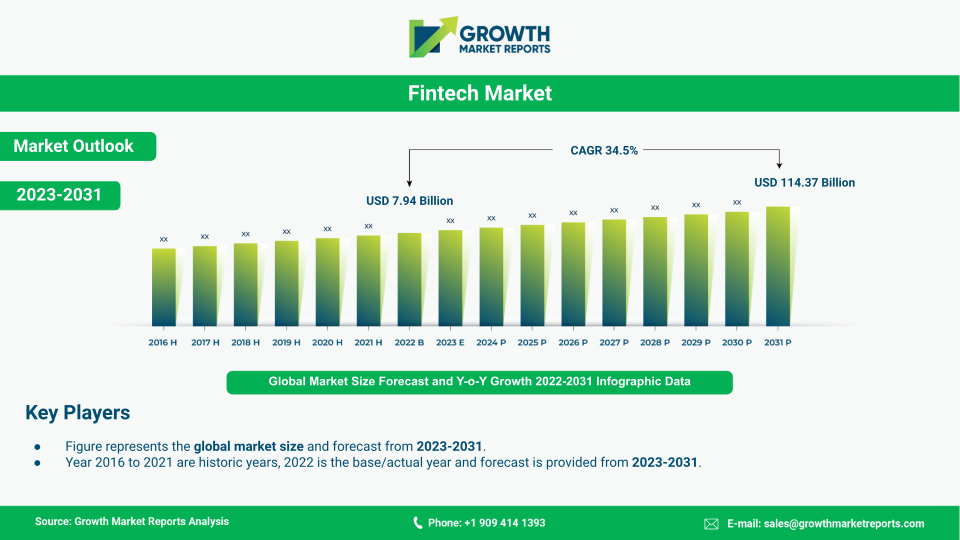
According to our latest research, the global fintech market size reached USD 312.5 billion in 2024, supported by a robust compound annual growth rate (CAGR) of 16.8% from 2025 to 2033. The market is projected to achieve a value of USD 1,018.9 billion by 2033. This remarkable growth trajectory is driven by the rapid adoption of digital financial services, increasing smartphone penetration, and the ongoing digital transformation of traditional banking and financial institutions worldwide. The fintech market continues to benefit from the convergence of technology with financial services, fostering innovation and efficiency across all segments.

The primary growth factor in the fintech market is the accelerating shift towards digitalization within the financial sector. Financial institutions are increasingly leveraging advanced technologies such as artificial intelligence, blockchain, and big data analytics to enhance operational efficiencies, reduce costs, and deliver superior customer experiences. The proliferation of mobile banking and contactless payment solutions has further propelled the adoption of fintech platforms, especially in emerging economies where traditional banking infrastructure is lacking. Additionally, regulatory initiatives aimed at promoting financial inclusion and fostering innovation have created a favorable environment for fintech startups and established players alike, driving sustained market expansion.

Another significant contributor to the fintech market's growth is the rising demand for personalized financial products and services. Consumers are seeking tailored solutions that cater to their unique financial needs, prompting fintech companies to innovate in areas such as wealth management, personal finance, and insurance. The integration of machine learning and predictive analytics enables fintech firms to offer customized financial advice, automate investment strategies, and streamline insurance underwriting processes. This trend is particularly pronounced among younger, tech-savvy demographics who expect seamless, on-demand access to financial services through digital channels, further fueling market growth.

Strategic partnerships and collaborations between fintech firms and traditional financial institutions are also playing a pivotal role in shaping the market landscape. These alliances enable banks and insurers to enhance their digital capabilities, expand their service offerings, and reach new customer segments. For instance, collaborations focused on open banking and API integration have paved the way for innovative payment solutions and real-time fund transfers. Moreover, the entry of technology giants and non-banking entities into the fintech ecosystem has intensified competition, driving continuous innovation and improving service quality across the industry.

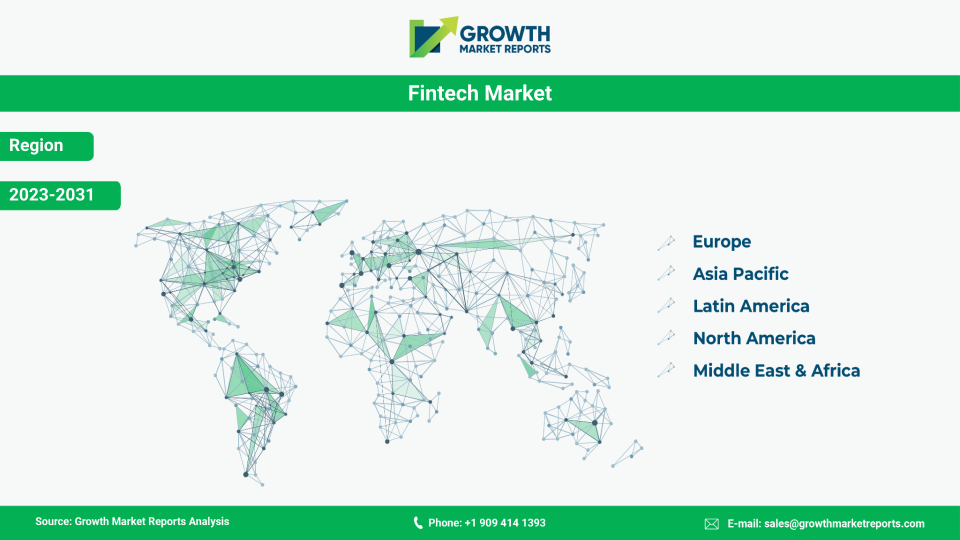
From a regional perspective, Asia Pacific has emerged as the fastest-growing market for fintech, fueled by a large unbanked population, widespread mobile adoption, and supportive government policies. North America remains a dominant player, owing to its mature financial services infrastructure and high levels of technology adoption. Meanwhile, Europe is witnessing robust growth driven by regulatory frameworks such as PSD2 and the increasing focus on open banking. Latin America and the Middle East & Africa are also experiencing significant fintech adoption, primarily due to efforts aimed at enhancing financial inclusion and digital payment infrastructure. Collectively, these regional dynamics underscore the global nature of fintech market growth and the diverse opportunities it presents.

Global Fintech Industry Outlook

Component Analysis

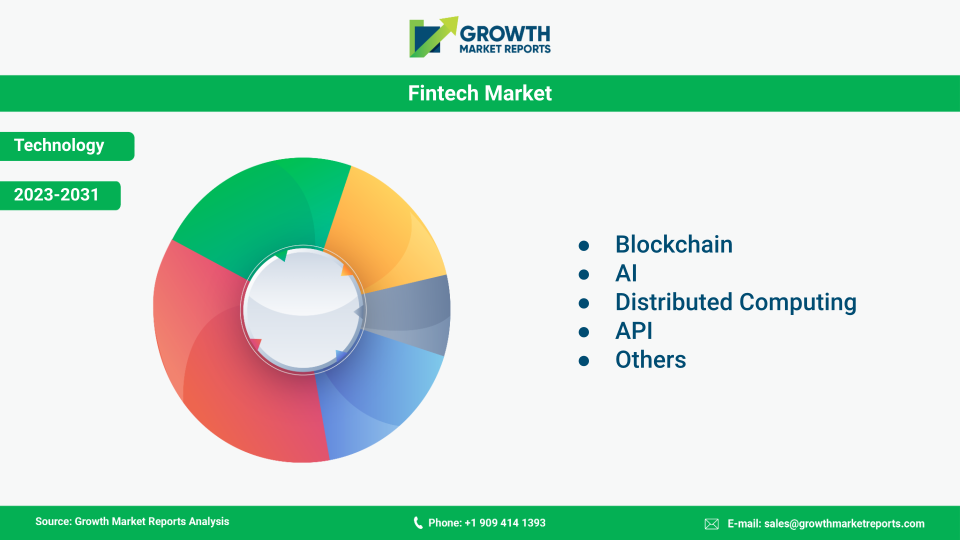
The fintech market is segmented by component into solutions and services, each playing a distinct yet complementary role in driving industry growth. Fintech solutions encompass a wide range of software and platforms designed to streamline financial processes, enhance security, and improve customer engagement. These solutions include payment gateways, digital wallets, robo-advisors, and blockchain-based applications, all of which are integral to the modernization of financial services. The demand for robust, scalable, and secure fintech solutions has surged as financial institutions seek to differentiate themselves in an increasingly competitive market. Advanced analytics and artificial intelligence are being embedded into these solutions, enabling real-time decision-making and personalized user experiences.

On the services front, fintech companies are offering a diverse array of consulting, integration, and support services to help clients implement and optimize digital financial technologies. These services are critical for ensuring the seamless deployment and ongoing management of fintech solutions, particularly for organizations lacking in-house technical expertise. Service providers assist with regulatory compliance, cybersecurity, data migration, and system integration, thereby reducing the risk associated with digital transformation initiatives. The growing complexity of financial regulations and the need for continuous innovation have made professional services an indispensable component of the fintech ecosystem.

The interplay between solutions and services is further exemplified by the emergence of platform-as-a-service (PaaS) and software-as-a-service (SaaS) models within the fintech sector. These models enable financial institutions to access cutting-edge technologies on a subscription basis, reducing upfront capital expenditures and accelerating time-to-market for new products. Fintech vendors are increasingly bundling solutions with value-added services such as analytics, fraud detection, and customer support, creating comprehensive offerings that address the end-to-end needs of financial organizations. This holistic approach is particularly appealing to small and medium enterprises (SMEs) seeking to enhance their digital capabilities without significant investment.

Moreover, the component segment is witnessing a shift towards open and interoperable platforms that facilitate seamless integration with third-party applications and services. Open banking initiatives, driven by regulatory mandates and market demand, are encouraging the development of APIs and standardized protocols that enable secure data sharing and collaboration across the financial ecosystem. This trend is fostering innovation and competition, as fintech companies and traditional institutions alike strive to deliver more flexible, customer-centric solutions. As the fintech market continues to evolve, the synergy between solutions and services will remain a key driver of value creation and competitive differentiation.

In summary, the component analysis highlights the critical role of both solutions and services in enabling the digital transformation of the financial sector. While fintech solutions provide the technological foundation for innovation, services ensure the successful adoption, integration, and ongoing optimization of these technologies. Together, they form the backbone of the fintech market, supporting its rapid growth and evolution in response to changing customer expectations and regulatory requirements.

Report Scope

Attributes Details
Report Title Fintech Market Research Report 2033
By Component Solutions, Services
By Deployment Mode On-Premises, Cloud
By Application Payments, Wealth Management, Personal Finance, Insurance, Lending, Fund Transfer, Others
By End-User Banking, Insurance, Securities, Others
By Enterprise Size Large Enterprises, Small and Medium Enterprises
Regions Covered North America, Europe, APAC, Latin America, MEA
Base Year 2024
Historic Data 2018-2023
Forecast Period 2025-2033
Number of Pages 250
Number of Tables & Figures 271
Customization Available Yes, the report can be customized as per your need.

Deployment Mode Analysis

Deployment mode is a significant segment in the fintech market, with organizations choosing between on-premises and cloud-based solutions based on their unique operational requirements, security concerns, and scalability needs. Traditionally, on-premises deployment was favored by large financial institutions due to perceived advantages in data control, security, and compliance. This approach involves hosting fintech applications and data within the organization’s own IT infrastructure, providing direct oversight and customization capabilities. However, on-premises deployment can entail substantial upfront investments in hardware, software, and ongoing maintenance, which may limit its appeal for smaller players.

In recent years, the adoption of cloud-based fintech solutions has accelerated dramatically, driven by the need for agility, cost efficiency, and rapid innovation. Cloud deployment enables financial organizations to scale resources dynamically, launch new services quickly, and minimize capital expenditures. Cloud platforms also facilitate seamless integration with third-party applications and support remote access, which has become increasingly important in the post-pandemic era. Major cloud service providers are investing heavily in security and compliance features tailored to the needs of the financial sector, alleviating concerns around data privacy and regulatory adherence.

The shift towards cloud-based deployment is also being driven by the growing complexity and volume of financial data. Cloud solutions offer advanced analytics, machine learning, and artificial intelligence capabilities that empower fintech firms to extract actionable insights and deliver personalized services at scale. Additionally, cloud infrastructure supports disaster recovery, business continuity, and real-time data processing, all of which are critical for maintaining operational resilience in a rapidly evolving market. As a result, cloud deployment is increasingly viewed as a strategic enabler of digital transformation within the fintech industry.

Despite the growing popularity of cloud deployment, certain regulatory and security considerations continue to influence deployment decisions, particularly in highly regulated markets such as banking and insurance. Some organizations opt for hybrid deployment models, combining the security of on-premises infrastructure with the flexibility of cloud services. This approach allows financial institutions to balance the need for data sovereignty and compliance with the benefits of cloud scalability and innovation. As regulatory frameworks evolve and cloud technologies mature, the adoption of cloud-based fintech solutions is expected to accelerate further, reshaping the competitive landscape.

In conclusion, deployment mode is a critical factor in the fintech market, influencing the speed, cost, and effectiveness of digital transformation initiatives. While on-premises deployment remains relevant for certain use cases, the advantages of cloud-based solutions are driving widespread adoption across organizations of all sizes. The ability to innovate rapidly, scale efficiently, and respond to changing market dynamics positions cloud deployment as the preferred choice for forward-thinking fintech firms and financial institutions.

Application Analysis

The application segment of the fintech market is highly diverse, encompassing a wide range of use cases such as payments, wealth management, personal finance, insurance, lending, fund transfer, and others. Payments represent the largest and most dynamic application area, driven by the proliferation of digital wallets, contactless payments, and peer-to-peer (P2P) payment platforms. The rise of e-commerce, mobile commerce, and cross-border transactions has fueled demand for seamless, secure, and instant payment solutions. Fintech companies are leveraging technologies such as near-field communication (NFC), biometric authentication, and blockchain to enhance payment security and user convenience.

Wealth management is another key application area, with fintech firms offering robo-advisory platforms, automated investment services, and portfolio management tools. These solutions democratize access to sophisticated investment strategies, enabling individuals to manage their wealth with minimal fees and personalized guidance. Artificial intelligence and machine learning are being used to analyze market trends, optimize asset allocation, and deliver tailored investment recommendations. The growing interest in sustainable and impact investing is also driving innovation in fintech-enabled wealth management solutions.

Personal finance applications are gaining traction as consumers seek greater control over their financial lives. Fintech platforms provide budgeting tools, expense trackers, credit monitoring, and financial planning services that empower users to make informed decisions and achieve their financial goals. These applications often integrate with bank accounts, credit cards, and other financial products, providing a holistic view of an individual’s financial health. The use of gamification and behavioral analytics further enhances user engagement and promotes positive financial behaviors.

In the insurance segment, fintech is transforming traditional processes through the introduction of digital insurance platforms, automated underwriting, and on-demand insurance products. Insurtech companies are leveraging big data, IoT, and AI to assess risk more accurately, streamline claims processing, and deliver personalized insurance offerings. The ability to purchase, manage, and claim insurance policies digitally is improving customer satisfaction and operational efficiency. Similarly, fintech is revolutionizing the lending landscape by enabling peer-to-peer lending, alternative credit scoring, and instant loan disbursement, expanding access to credit for underserved populations.

Other notable applications include fund transfer, remittances, crowdfunding, and regulatory technology (regtech). Fintech solutions are facilitating low-cost, real-time fund transfers and remittances, particularly for migrant workers and cross-border transactions. Crowdfunding platforms are providing alternative financing options for startups and small businesses, while regtech solutions help financial institutions comply with complex regulatory requirements through automation and advanced analytics. Collectively, these diverse applications underscore the transformative impact of fintech across the entire financial services value chain.

End-User Analysis

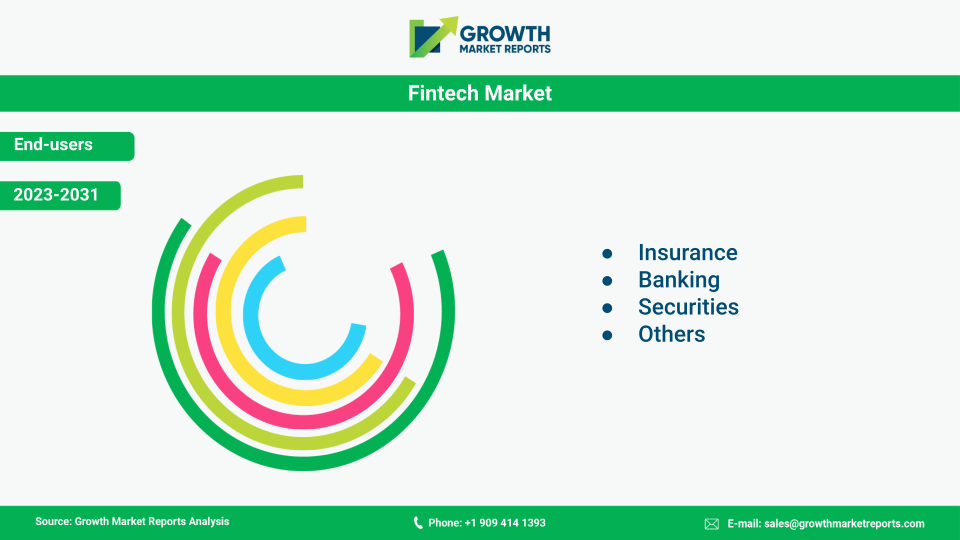
The end-user segment of the fintech market includes banking, insurance, securities, and others, each with unique requirements and adoption patterns. The banking sector is the largest end-user of fintech solutions, driven by the need to modernize legacy systems, enhance customer engagement, and comply with evolving regulatory standards. Banks are leveraging fintech to streamline core banking operations, automate customer onboarding, and introduce innovative products such as digital wallets and real-time payments. The integration of artificial intelligence, machine learning, and blockchain is enabling banks to improve risk management, detect fraud, and deliver personalized services, thereby enhancing competitiveness and customer loyalty.

The insurance industry is undergoing a digital transformation, with insurtech solutions reshaping product development, distribution, and claims management. Insurance companies are adopting fintech platforms to automate underwriting, personalize policy offerings, and improve customer service through chatbots and digital portals. The use of telematics, IoT, and big data analytics is enabling insurers to assess risk more accurately and offer usage-based insurance products. These innovations are driving operational efficiencies, reducing costs, and expanding market reach, particularly in emerging markets where insurance penetration remains low.

In the securities sector, fintech is facilitating the digitization of trading, investment management, and regulatory compliance. Online trading platforms, robo-advisors, and blockchain-based settlement systems are transforming the way securities are bought, sold, and managed. Fintech solutions are reducing transaction costs, increasing market transparency, and enabling real-time settlement of trades. The adoption of regtech solutions is helping securities firms comply with stringent regulatory requirements, automate reporting, and monitor market activity for suspicious behavior. These advancements are attracting a new generation of investors and driving growth in capital markets.

Beyond banking, insurance, and securities, fintech is also being adopted by a wide range of other end-users, including retail businesses, government agencies, and non-profit organizations. Retailers are leveraging fintech to offer embedded finance, loyalty programs, and buy-now-pay-later (BNPL) solutions that enhance customer engagement and drive sales. Government agencies are adopting digital payment platforms to improve the efficiency and transparency of public services, while non-profits are using crowdfunding and digital fundraising tools to expand their donor base. This broad adoption underscores the versatility and impact of fintech across diverse sectors.

The end-user analysis highlights the widespread adoption of fintech solutions across the financial services ecosystem and beyond. Each end-user segment faces unique challenges and opportunities, driving the development of tailored fintech solutions that address specific needs. As digital transformation accelerates, the role of fintech in enabling innovation, efficiency, and customer-centricity will continue to expand, reshaping the future of financial services.

Enterprise Size Analysis

Enterprise size is a crucial factor influencing fintech adoption, with distinct trends observed among large enterprises and small and medium enterprises (SMEs). Large enterprises, including major banks, insurance companies, and investment firms, have been at the forefront of fintech adoption, leveraging their substantial resources to invest in advanced technologies and digital transformation initiatives. These organizations are implementing comprehensive fintech solutions to modernize legacy systems, enhance operational efficiency, and deliver innovative products and services. The ability to scale technology investments and integrate fintech with existing infrastructure gives large enterprises a competitive edge in the rapidly evolving financial landscape.

In contrast, small and medium enterprises (SMEs) are increasingly turning to fintech to access affordable, scalable, and user-friendly financial solutions. Fintech platforms offer SMEs a range of services, from digital payments and invoicing to expense management and alternative lending. These solutions help SMEs overcome traditional barriers such as limited access to credit, high transaction costs, and complex regulatory requirements. The adoption of cloud-based fintech platforms is particularly appealing to SMEs, enabling them to leverage advanced financial technologies without significant upfront investment or IT expertise.

The democratization of financial technology is leveling the playing field for SMEs, enabling them to compete more effectively with larger organizations. Fintech solutions designed specifically for SMEs often feature intuitive interfaces, automated workflows, and integration with popular accounting and business management tools. These features reduce administrative burdens, improve cash flow management, and support business growth. The rise of embedded finance, where financial services are integrated directly into business applications, is further expanding fintech adoption among SMEs, providing seamless access to payments, lending, and insurance products.

Despite the benefits, SMEs may face challenges related to digital literacy, cybersecurity, and regulatory compliance when adopting fintech solutions. Fintech providers are addressing these concerns by offering educational resources, robust security features, and compliance support tailored to the needs of smaller businesses. As digital transformation becomes a strategic imperative across all enterprise sizes, the fintech market is witnessing increased collaboration between fintech firms, technology providers, and industry associations to support SME adoption and drive inclusive growth.

In summary, enterprise size plays a pivotal role in shaping fintech adoption patterns and solution preferences. While large enterprises continue to lead in terms of investment and innovation, SMEs represent a significant growth opportunity for fintech providers. The ability to deliver scalable, affordable, and user-centric solutions will be critical for capturing the diverse needs of organizations across the enterprise spectrum and sustaining long-term market growth.

Opportunities & Threats

The fintech market presents significant opportunities for innovation, growth, and value creation across the financial services ecosystem. One of the most promising opportunities lies in the expansion of financial inclusion, particularly in emerging markets where large segments of the population remain unbanked or underbanked. Fintech platforms are leveraging mobile technology, digital identity, and alternative credit scoring to provide access to banking, payments, and credit services for underserved communities. This not only drives market growth but also supports broader socio-economic development by empowering individuals and small businesses to participate in the formal financial system.

Another key opportunity is the ongoing digital transformation of traditional financial institutions. Banks, insurers, and asset managers are increasingly partnering with fintech firms to accelerate innovation, enhance customer experiences, and streamline operations. The adoption of open banking, API integration, and cloud-based platforms is enabling financial organizations to launch new products, enter new markets, and respond rapidly to changing customer needs. The rise of decentralized finance (DeFi), blockchain, and digital assets is also opening up new avenues for innovation and competition, challenging established business models and creating opportunities for agile fintech startups to disrupt the status quo.

Despite the significant opportunities, the fintech market faces several restraining factors that could impede growth. Regulatory uncertainty and compliance challenges remain a major concern, particularly as governments and regulatory bodies seek to balance innovation with consumer protection and financial stability. The rapidly evolving regulatory landscape can create barriers to entry, increase compliance costs, and slow the pace of innovation. Cybersecurity threats, data privacy concerns, and the risk of fraud also pose significant challenges, requiring ongoing investment in security technologies and risk management practices. Fintech firms must navigate these risks while maintaining customer trust and meeting regulatory requirements to sustain long-term growth.

Regional Outlook

Regionally, the fintech market is characterized by diverse adoption patterns, regulatory environments, and growth trajectories. Asia Pacific leads the global fintech market, with a market size of USD 128.7 billion in 2024 and a projected CAGR of 19.2% through 2033. The region’s rapid growth is driven by widespread mobile adoption, a large unbanked population, and proactive government initiatives to promote digital financial inclusion. China, India, and Southeast Asian countries are at the forefront of fintech innovation, with vibrant startup ecosystems and increasing investment in digital payments, lending, and wealth management platforms.

North America remains a dominant force in the fintech market, with a market size of USD 96.2 billion in 2024. The region benefits from a mature financial services infrastructure, high levels of technology adoption, and a supportive regulatory environment. The United States is home to many of the world’s leading fintech companies, as well as major financial institutions that are actively investing in digital transformation. Canada is also experiencing robust fintech growth, supported by government initiatives and cross-border collaboration. The region’s focus on innovation, cybersecurity, and customer-centricity continues to drive market expansion and competitive differentiation.

Europe accounted for USD 49.8 billion in 2024, with strong growth fueled by regulatory frameworks such as PSD2, the General Data Protection Regulation (GDPR), and the increasing adoption of open banking. The United Kingdom, Germany, and France are leading fintech hubs, attracting significant investment and fostering innovation in payments, regtech, and insurtech. Latin America and the Middle East & Africa represent emerging markets with significant growth potential, driven by efforts to enhance financial inclusion and expand digital payment infrastructure. Collectively, these regional dynamics reflect the global nature of the fintech market and the diverse opportunities for growth and innovation across geographies.

Fintech Market Statistics

Competitor Outlook

The competitive landscape of the fintech market is highly dynamic and characterized by intense competition, rapid innovation, and a diverse mix of market participants. Established financial institutions, technology giants, and fintech startups are all vying for market share, leveraging their unique strengths to capture new opportunities and address evolving customer needs. Traditional banks and insurers are accelerating their digital transformation initiatives, investing in advanced technologies, and forming strategic partnerships with fintech firms to enhance their service offerings and improve operational efficiency. This collaborative approach enables incumbents to leverage the agility and innovation of fintech startups while maintaining their scale and regulatory expertise.

Fintech startups, on the other hand, are disrupting traditional business models by offering agile, customer-centric solutions that address specific pain points in the financial services value chain. These companies are leveraging cutting-edge technologies such as artificial intelligence, blockchain, and cloud computing to deliver innovative products and services at lower costs and with greater convenience. The ability to iterate quickly, respond to market feedback, and scale rapidly gives fintech startups a competitive advantage in capturing emerging opportunities and challenging established players.

Technology giants such as Google, Amazon, Apple, and Microsoft are also making significant inroads into the fintech market, leveraging their vast user bases, advanced analytics capabilities, and robust infrastructure to launch digital payment platforms, lending services, and financial management tools. These companies are well-positioned to disrupt traditional financial services by integrating fintech solutions into their broader ecosystems, offering seamless, integrated experiences that appeal to a wide range of customers. The entry of non-traditional players is intensifying competition and driving continuous innovation across the industry.

The fintech market is also characterized by a high level of merger and acquisition activity, as companies seek to expand their capabilities, enter new markets, and achieve economies of scale. Strategic investments, joint ventures, and partnerships are commonplace, enabling firms to share resources, access new technologies, and accelerate growth. The competitive landscape is further shaped by regulatory developments, technological advancements, and shifting customer expectations, all of which require companies to remain agile and responsive to change.

Major companies operating in the global fintech market include PayPal Holdings Inc., Square Inc. (Block), Ant Group, Adyen NV, Fiserv Inc., Stripe Inc., Robinhood Markets Inc., SoFi Technologies Inc., Plaid Inc., and Revolut Ltd. PayPal is a leading provider of digital payment solutions, serving millions of merchants and consumers worldwide. Square, now known as Block, has expanded its offerings to include point-of-sale systems, small business lending, and cryptocurrency services. Ant Group, a subsidiary of Alibaba, operates Alipay, one of the world’s largest digital payment platforms, and is a major player in China’s fintech ecosystem.

Adyen NV is a global payment company that provides end-to-end payment solutions for merchants, enabling seamless transactions across online, mobile, and in-store channels. Fiserv Inc. is a leading provider of financial technology and payment processing solutions, serving banks, credit unions, and other financial institutions. Stripe Inc. is renowned for its developer-friendly payment infrastructure and has expanded into areas such as lending, fraud prevention, and business financing. Robinhood Markets Inc. has revolutionized retail investing with its commission-free trading platform and user-friendly mobile app.

SoFi Technologies Inc. offers a range of financial products, including student loan refinancing, personal loans, mortgages, and investment management services, targeting millennials and young professionals. Plaid Inc. provides the data infrastructure that powers many fintech applications, enabling secure access to financial data and facilitating seamless integration between banks and fintech platforms. Revolut Ltd. is a digital banking app offering multi-currency accounts, international money transfers, and cryptocurrency trading, with a strong presence in Europe and expanding globally.

These leading companies are at the forefront of innovation, continuously expanding their product portfolios, entering new markets, and investing in advanced technologies to maintain their competitive edge. The fintech market’s competitive landscape is expected to remain dynamic and fast-paced, with ongoing consolidation, technological advancements, and evolving customer expectations shaping the future of financial services worldwide.

Key Players

  • Stripe
  • PayPal
  • Ant Group
  • Adyen
  • Square (Block, Inc.)
  • Robinhood
  • Revolut
  • Klarna
  • Nubank
  • Plaid
  • SoFi
  • Chime
  • Wise (formerly TransferWise)
  • Coinbase
  • Afterpay
  • Affirm
  • Checkout.com
  • Toast
  • Brex
  • Cash App
Fintech Market Overview

Segments

The Fintech market has been segmented on the basis of

Component

  • Solutions
  • Services

Deployment Mode

  • On-Premises
  • Cloud

Application

  • Payments
  • Wealth Management
  • Personal Finance
  • Insurance
  • Lending
  • Fund Transfer
  • Others

End-User

  • Banking
  • Insurance
  • Securities
  • Others

Enterprise Size

  • Large Enterprises
  • Small and Medium Enterprises

Competitive Landscape

Key players competing in the global fintech market are Google Payment Corp.; Paypal Holdings, Inc.; Tencent Holdings Ltd.; Avant, LLC; Robinhood Markets, Inc.; Afterpay, Limited; Nexi SpA; One97 Communications Ltd.; Ant Group Co. Ltd.; Klarna Bank AB; Social Finance, Inc.; Adyen NV.; and Qudian Inc.

Some of these key players actively engage in the implementation of various market development strategies such as acquisition and mergers, fund raising, and massive R&D investment to enhance their market positions. For instance,

  • In March 2018, a China-based internet service provider, Tencent Holdings Ltd. and Allianz X, the digital investment unit of Allianz Group co-led the Series C Funding for Berlin-based neobank, N26. It was one of the largest equity financing rounds for a fintech company in Europe, which laid a vision for strategy growth globally.
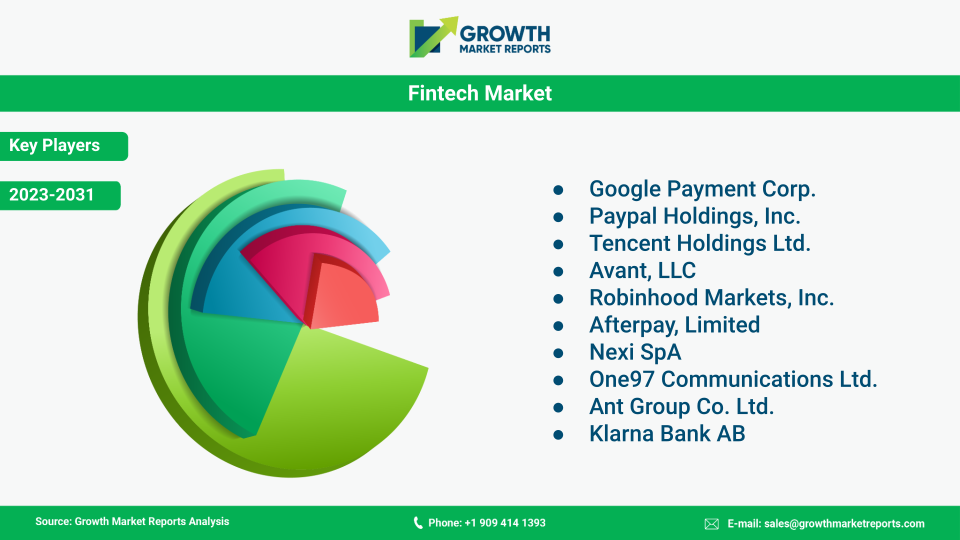

Fintech Market key Players

Frequently Asked Questions

Key players include Stripe, PayPal, Ant Group, Adyen, Square (Block, Inc.), Robinhood, Revolut, Klarna, Nubank, Plaid, SoFi, Chime, Wise, Coinbase, Afterpay, Affirm, Checkout.com, Toast, Brex, and Cash App.

Opportunities include expanding financial inclusion, digital transformation of financial institutions, and innovation in DeFi and digital assets. Challenges include regulatory uncertainty, compliance costs, cybersecurity risks, and data privacy concerns.

Large enterprises lead in fintech adoption due to greater resources, while SMEs are increasingly adopting fintech for affordable, scalable solutions. Cloud-based platforms and embedded finance are making fintech more accessible to SMEs.

Main end-users include banks, insurance companies, securities firms, retailers, government agencies, and non-profit organizations, each adopting fintech to address unique operational and customer needs.

Fintech applications include payments, wealth management, personal finance, insurance, lending, fund transfer, crowdfunding, and regulatory technology (regtech). Payments remain the largest and most dynamic segment.

Cloud-based fintech solutions are gaining popularity for their scalability, cost efficiency, and rapid innovation, while on-premises deployment is still preferred for data control and compliance in some large institutions. Hybrid models are also emerging.

The fintech market is segmented into solutions (such as payment gateways, digital wallets, robo-advisors, and blockchain applications) and services (including consulting, integration, and support services).

Asia Pacific is the fastest-growing region due to a large unbanked population and mobile adoption. North America remains dominant thanks to mature infrastructure and high tech adoption, while Europe is driven by regulatory frameworks like PSD2 and open banking.

Key growth drivers include rapid digitalization of financial services, increased smartphone penetration, digital transformation of traditional banking, and regulatory initiatives promoting financial inclusion and innovation.

The global fintech market reached USD 312.5 billion in 2024 and is projected to grow at a CAGR of 16.8% from 2025 to 2033, reaching USD 1,018.9 billion by 2033.

Table Of Content

Chapter 1 Executive Summary
Chapter 2 Assumptions and Acronyms Used
Chapter 3 Research Methodology
Chapter 4 Fintech Market Overview
   4.1 Introduction
      4.1.1 Market Taxonomy
      4.1.2 Market Definition
      4.1.3 Macro-Economic Factors Impacting the Market Growth
   4.2 Fintech Market Dynamics
      4.2.1 Market Drivers
      4.2.2 Market Restraints
      4.2.3 Market Opportunity
   4.3 Fintech Market - Supply Chain Analysis
      4.3.1 List of Key Suppliers
      4.3.2 List of Key Distributors
      4.3.3 List of Key Consumers
   4.4 Key Forces Shaping the Fintech Market
      4.4.1 Bargaining Power of Suppliers
      4.4.2 Bargaining Power of Buyers
      4.4.3 Threat of Substitution
      4.4.4 Threat of New Entrants
      4.4.5 Competitive Rivalry
   4.5 Global Fintech Market Size & Forecast, 2023-2032
      4.5.1 Fintech Market Size and Y-o-Y Growth
      4.5.2 Fintech Market Absolute $ Opportunity

Chapter 5 Global Fintech Market Analysis and Forecast By Component
   5.1 Introduction
      5.1.1 Key Market Trends & Growth Opportunities By Component
      5.1.2 Basis Point Share (BPS) Analysis By Component
      5.1.3 Absolute $ Opportunity Assessment By Component
   5.2 Fintech Market Size Forecast By Component
      5.2.1 Solutions
      5.2.2 Services
   5.3 Market Attractiveness Analysis By Component

Chapter 6 Global Fintech Market Analysis and Forecast By Deployment Mode
   6.1 Introduction
      6.1.1 Key Market Trends & Growth Opportunities By Deployment Mode
      6.1.2 Basis Point Share (BPS) Analysis By Deployment Mode
      6.1.3 Absolute $ Opportunity Assessment By Deployment Mode
   6.2 Fintech Market Size Forecast By Deployment Mode
      6.2.1 On-Premises
      6.2.2 Cloud
   6.3 Market Attractiveness Analysis By Deployment Mode

Chapter 7 Global Fintech Market Analysis and Forecast By Application
   7.1 Introduction
      7.1.1 Key Market Trends & Growth Opportunities By Application
      7.1.2 Basis Point Share (BPS) Analysis By Application
      7.1.3 Absolute $ Opportunity Assessment By Application
   7.2 Fintech Market Size Forecast By Application
      7.2.1 Payments
      7.2.2 Wealth Management
      7.2.3 Personal Finance
      7.2.4 Insurance
      7.2.5 Lending
      7.2.6 Fund Transfer
      7.2.7 Others
   7.3 Market Attractiveness Analysis By Application

Chapter 8 Global Fintech Market Analysis and Forecast By End-User
   8.1 Introduction
      8.1.1 Key Market Trends & Growth Opportunities By End-User
      8.1.2 Basis Point Share (BPS) Analysis By End-User
      8.1.3 Absolute $ Opportunity Assessment By End-User
   8.2 Fintech Market Size Forecast By End-User
      8.2.1 Banking
      8.2.2 Insurance
      8.2.3 Securities
      8.2.4 Others
   8.3 Market Attractiveness Analysis By End-User

Chapter 9 Global Fintech Market Analysis and Forecast By Enterprise Size
   9.1 Introduction
      9.1.1 Key Market Trends & Growth Opportunities By Enterprise Size
      9.1.2 Basis Point Share (BPS) Analysis By Enterprise Size
      9.1.3 Absolute $ Opportunity Assessment By Enterprise Size
   9.2 Fintech Market Size Forecast By Enterprise Size
      9.2.1 Large Enterprises
      9.2.2 Small and Medium Enterprises
   9.3 Market Attractiveness Analysis By Enterprise Size

Chapter 10 Global Fintech Market Analysis and Forecast by Region
   10.1 Introduction
      10.1.1 Key Market Trends & Growth Opportunities By Region
      10.1.2 Basis Point Share (BPS) Analysis By Region
      10.1.3 Absolute $ Opportunity Assessment By Region
   10.2 Fintech Market Size Forecast By Region
      10.2.1 North America
      10.2.2 Europe
      10.2.3 Asia Pacific
      10.2.4 Latin America
      10.2.5 Middle East & Africa (MEA)
   10.3 Market Attractiveness Analysis By Region

Chapter 11 Coronavirus Disease (COVID-19) Impact 
   11.1 Introduction 
   11.2 Current & Future Impact Analysis 
   11.3 Economic Impact Analysis 
   11.4 Government Policies 
   11.5 Investment Scenario

Chapter 12 North America Fintech Analysis and Forecast
   12.1 Introduction
   12.2 North America Fintech Market Size Forecast by Country
      12.2.1 U.S.
      12.2.2 Canada
   12.3 Basis Point Share (BPS) Analysis by Country
   12.4 Absolute $ Opportunity Assessment by Country
   12.5 Market Attractiveness Analysis by Country
   12.6 North America Fintech Market Size Forecast By Component
      12.6.1 Solutions
      12.6.2 Services
   12.7 Basis Point Share (BPS) Analysis By Component 
   12.8 Absolute $ Opportunity Assessment By Component 
   12.9 Market Attractiveness Analysis By Component
   12.10 North America Fintech Market Size Forecast By Deployment Mode
      12.10.1 On-Premises
      12.10.2 Cloud
   12.11 Basis Point Share (BPS) Analysis By Deployment Mode 
   12.12 Absolute $ Opportunity Assessment By Deployment Mode 
   12.13 Market Attractiveness Analysis By Deployment Mode
   12.14 North America Fintech Market Size Forecast By Application
      12.14.1 Payments
      12.14.2 Wealth Management
      12.14.3 Personal Finance
      12.14.4 Insurance
      12.14.5 Lending
      12.14.6 Fund Transfer
      12.14.7 Others
   12.15 Basis Point Share (BPS) Analysis By Application 
   12.16 Absolute $ Opportunity Assessment By Application 
   12.17 Market Attractiveness Analysis By Application
   12.18 North America Fintech Market Size Forecast By End-User
      12.18.1 Banking
      12.18.2 Insurance
      12.18.3 Securities
      12.18.4 Others
   12.19 Basis Point Share (BPS) Analysis By End-User 
   12.20 Absolute $ Opportunity Assessment By End-User 
   12.21 Market Attractiveness Analysis By End-User
   12.22 North America Fintech Market Size Forecast By Enterprise Size
      12.22.1 Large Enterprises
      12.22.2 Small and Medium Enterprises
   12.23 Basis Point Share (BPS) Analysis By Enterprise Size 
   12.24 Absolute $ Opportunity Assessment By Enterprise Size 
   12.25 Market Attractiveness Analysis By Enterprise Size

Chapter 13 Europe Fintech Analysis and Forecast
   13.1 Introduction
   13.2 Europe Fintech Market Size Forecast by Country
      13.2.1 Germany
      13.2.2 France
      13.2.3 Italy
      13.2.4 U.K.
      13.2.5 Spain
      13.2.6 Russia
      13.2.7 Rest of Europe
   13.3 Basis Point Share (BPS) Analysis by Country
   13.4 Absolute $ Opportunity Assessment by Country
   13.5 Market Attractiveness Analysis by Country
   13.6 Europe Fintech Market Size Forecast By Component
      13.6.1 Solutions
      13.6.2 Services
   13.7 Basis Point Share (BPS) Analysis By Component 
   13.8 Absolute $ Opportunity Assessment By Component 
   13.9 Market Attractiveness Analysis By Component
   13.10 Europe Fintech Market Size Forecast By Deployment Mode
      13.10.1 On-Premises
      13.10.2 Cloud
   13.11 Basis Point Share (BPS) Analysis By Deployment Mode 
   13.12 Absolute $ Opportunity Assessment By Deployment Mode 
   13.13 Market Attractiveness Analysis By Deployment Mode
   13.14 Europe Fintech Market Size Forecast By Application
      13.14.1 Payments
      13.14.2 Wealth Management
      13.14.3 Personal Finance
      13.14.4 Insurance
      13.14.5 Lending
      13.14.6 Fund Transfer
      13.14.7 Others
   13.15 Basis Point Share (BPS) Analysis By Application 
   13.16 Absolute $ Opportunity Assessment By Application 
   13.17 Market Attractiveness Analysis By Application
   13.18 Europe Fintech Market Size Forecast By End-User
      13.18.1 Banking
      13.18.2 Insurance
      13.18.3 Securities
      13.18.4 Others
   13.19 Basis Point Share (BPS) Analysis By End-User 
   13.20 Absolute $ Opportunity Assessment By End-User 
   13.21 Market Attractiveness Analysis By End-User
   13.22 Europe Fintech Market Size Forecast By Enterprise Size
      13.22.1 Large Enterprises
      13.22.2 Small and Medium Enterprises
   13.23 Basis Point Share (BPS) Analysis By Enterprise Size 
   13.24 Absolute $ Opportunity Assessment By Enterprise Size 
   13.25 Market Attractiveness Analysis By Enterprise Size

Chapter 14 Asia Pacific Fintech Analysis and Forecast
   14.1 Introduction
   14.2 Asia Pacific Fintech Market Size Forecast by Country
      14.2.1 China
      14.2.2 Japan
      14.2.3 South Korea
      14.2.4 India
      14.2.5 Australia
      14.2.6 South East Asia (SEA)
      14.2.7 Rest of Asia Pacific (APAC)
   14.3 Basis Point Share (BPS) Analysis by Country
   14.4 Absolute $ Opportunity Assessment by Country
   14.5 Market Attractiveness Analysis by Country
   14.6 Asia Pacific Fintech Market Size Forecast By Component
      14.6.1 Solutions
      14.6.2 Services
   14.7 Basis Point Share (BPS) Analysis By Component 
   14.8 Absolute $ Opportunity Assessment By Component 
   14.9 Market Attractiveness Analysis By Component
   14.10 Asia Pacific Fintech Market Size Forecast By Deployment Mode
      14.10.1 On-Premises
      14.10.2 Cloud
   14.11 Basis Point Share (BPS) Analysis By Deployment Mode 
   14.12 Absolute $ Opportunity Assessment By Deployment Mode 
   14.13 Market Attractiveness Analysis By Deployment Mode
   14.14 Asia Pacific Fintech Market Size Forecast By Application
      14.14.1 Payments
      14.14.2 Wealth Management
      14.14.3 Personal Finance
      14.14.4 Insurance
      14.14.5 Lending
      14.14.6 Fund Transfer
      14.14.7 Others
   14.15 Basis Point Share (BPS) Analysis By Application 
   14.16 Absolute $ Opportunity Assessment By Application 
   14.17 Market Attractiveness Analysis By Application
   14.18 Asia Pacific Fintech Market Size Forecast By End-User
      14.18.1 Banking
      14.18.2 Insurance
      14.18.3 Securities
      14.18.4 Others
   14.19 Basis Point Share (BPS) Analysis By End-User 
   14.20 Absolute $ Opportunity Assessment By End-User 
   14.21 Market Attractiveness Analysis By End-User
   14.22 Asia Pacific Fintech Market Size Forecast By Enterprise Size
      14.22.1 Large Enterprises
      14.22.2 Small and Medium Enterprises
   14.23 Basis Point Share (BPS) Analysis By Enterprise Size 
   14.24 Absolute $ Opportunity Assessment By Enterprise Size 
   14.25 Market Attractiveness Analysis By Enterprise Size

Chapter 15 Latin America Fintech Analysis and Forecast
   15.1 Introduction
   15.2 Latin America Fintech Market Size Forecast by Country
      15.2.1 Brazil
      15.2.2 Mexico
      15.2.3 Rest of Latin America (LATAM)
   15.3 Basis Point Share (BPS) Analysis by Country
   15.4 Absolute $ Opportunity Assessment by Country
   15.5 Market Attractiveness Analysis by Country
   15.6 Latin America Fintech Market Size Forecast By Component
      15.6.1 Solutions
      15.6.2 Services
   15.7 Basis Point Share (BPS) Analysis By Component 
   15.8 Absolute $ Opportunity Assessment By Component 
   15.9 Market Attractiveness Analysis By Component
   15.10 Latin America Fintech Market Size Forecast By Deployment Mode
      15.10.1 On-Premises
      15.10.2 Cloud
   15.11 Basis Point Share (BPS) Analysis By Deployment Mode 
   15.12 Absolute $ Opportunity Assessment By Deployment Mode 
   15.13 Market Attractiveness Analysis By Deployment Mode
   15.14 Latin America Fintech Market Size Forecast By Application
      15.14.1 Payments
      15.14.2 Wealth Management
      15.14.3 Personal Finance
      15.14.4 Insurance
      15.14.5 Lending
      15.14.6 Fund Transfer
      15.14.7 Others
   15.15 Basis Point Share (BPS) Analysis By Application 
   15.16 Absolute $ Opportunity Assessment By Application 
   15.17 Market Attractiveness Analysis By Application
   15.18 Latin America Fintech Market Size Forecast By End-User
      15.18.1 Banking
      15.18.2 Insurance
      15.18.3 Securities
      15.18.4 Others
   15.19 Basis Point Share (BPS) Analysis By End-User 
   15.20 Absolute $ Opportunity Assessment By End-User 
   15.21 Market Attractiveness Analysis By End-User
   15.22 Latin America Fintech Market Size Forecast By Enterprise Size
      15.22.1 Large Enterprises
      15.22.2 Small and Medium Enterprises
   15.23 Basis Point Share (BPS) Analysis By Enterprise Size 
   15.24 Absolute $ Opportunity Assessment By Enterprise Size 
   15.25 Market Attractiveness Analysis By Enterprise Size

Chapter 16 Middle East & Africa (MEA) Fintech Analysis and Forecast
   16.1 Introduction
   16.2 Middle East & Africa (MEA) Fintech Market Size Forecast by Country
      16.2.1 Saudi Arabia
      16.2.2 South Africa
      16.2.3 UAE
      16.2.4 Rest of Middle East & Africa (MEA)
   16.3 Basis Point Share (BPS) Analysis by Country
   16.4 Absolute $ Opportunity Assessment by Country
   16.5 Market Attractiveness Analysis by Country
   16.6 Middle East & Africa (MEA) Fintech Market Size Forecast By Component
      16.6.1 Solutions
      16.6.2 Services
   16.7 Basis Point Share (BPS) Analysis By Component 
   16.8 Absolute $ Opportunity Assessment By Component 
   16.9 Market Attractiveness Analysis By Component
   16.10 Middle East & Africa (MEA) Fintech Market Size Forecast By Deployment Mode
      16.10.1 On-Premises
      16.10.2 Cloud
   16.11 Basis Point Share (BPS) Analysis By Deployment Mode 
   16.12 Absolute $ Opportunity Assessment By Deployment Mode 
   16.13 Market Attractiveness Analysis By Deployment Mode
   16.14 Middle East & Africa (MEA) Fintech Market Size Forecast By Application
      16.14.1 Payments
      16.14.2 Wealth Management
      16.14.3 Personal Finance
      16.14.4 Insurance
      16.14.5 Lending
      16.14.6 Fund Transfer
      16.14.7 Others
   16.15 Basis Point Share (BPS) Analysis By Application 
   16.16 Absolute $ Opportunity Assessment By Application 
   16.17 Market Attractiveness Analysis By Application
   16.18 Middle East & Africa (MEA) Fintech Market Size Forecast By End-User
      16.18.1 Banking
      16.18.2 Insurance
      16.18.3 Securities
      16.18.4 Others
   16.19 Basis Point Share (BPS) Analysis By End-User 
   16.20 Absolute $ Opportunity Assessment By End-User 
   16.21 Market Attractiveness Analysis By End-User
   16.22 Middle East & Africa (MEA) Fintech Market Size Forecast By Enterprise Size
      16.22.1 Large Enterprises
      16.22.2 Small and Medium Enterprises
   16.23 Basis Point Share (BPS) Analysis By Enterprise Size 
   16.24 Absolute $ Opportunity Assessment By Enterprise Size 
   16.25 Market Attractiveness Analysis By Enterprise Size

Chapter 17 Competition Landscape 
   17.1 Fintech Market: Competitive Dashboard
   17.2 Global Fintech Market: Market Share Analysis, 2023
   17.3 Company Profiles (Details – Overview, Financials, Developments, Strategy) 
      17.3.1 Stripe
PayPal
Ant Group
Adyen
Square (Block, Inc.)
Robinhood
Revolut
Klarna
Nubank
Plaid
SoFi
Chime
Wise (formerly TransferWise)
Coinbase
Afterpay
Affirm
Checkout.com
Toast
Brex
Cash App

Methodology

Our Clients

Pfizer
Honda Motor Co. Ltd.
Deloitte
Nestle SA
Microsoft
General Electric
sinopec
General Mills