Electric Vehicle Charging Kiosk Market Research Report 2033

Electric Vehicle Charging Kiosk Market Research Report 2033

Segments - by Charger Type (Fast Charger, Slow Charger), by Application (Commercial, Residential, Public Charging, Fleet Charging), by Connectivity (Standalone, Networked), by Mounting Type (Wall Mounted, Floor Mounted), by Power Output (Up to 22 kW, 22–50 kW, Above 50 kW)

https://growthmarketreports.com/Raksha
Author : Raksha Sharma
https://growthmarketreports.com/Vaibhav
Fact-checked by : V. Chandola
https://growthmarketreports.com/Shruti
Editor : Shruti Bhat

Upcoming | Report ID :AL-6407 | 4.9 Rating | 57 Reviews | 294 Pages | Format : Docx PDF

Report Description


Electric Vehicle Charging Kiosk Market Outlook

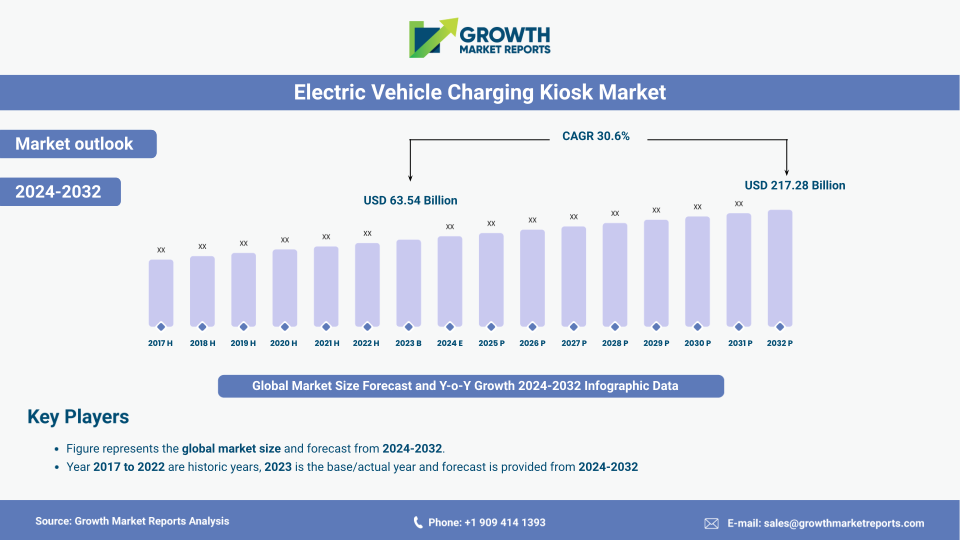
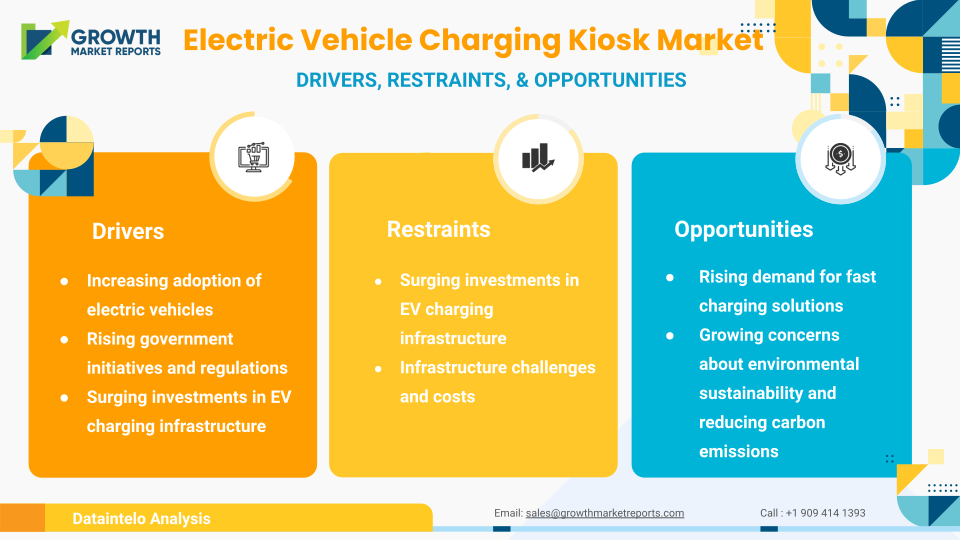
According to our latest research, the global Electric Vehicle Charging Kiosk market size reached USD 7.42 billion in 2024, demonstrating robust expansion across major economies. The market is projected to grow at a strong CAGR of 28.6% during the forecast period, reaching an estimated USD 65.41 billion by 2033. This remarkable growth trajectory is driven by surging electric vehicle (EV) adoption, supportive government policies, and rapid advancements in charging infrastructure technology. As per our in-depth analysis, the rising emphasis on sustainable transportation and the urgent need to reduce carbon emissions are catalyzing investments and innovations in the Electric Vehicle Charging Kiosk market globally.

One of the primary growth factors fueling the Electric Vehicle Charging Kiosk market is the exponential rise in electric vehicle sales worldwide. As consumers and businesses increasingly transition from internal combustion engine vehicles to electric alternatives, the demand for accessible, reliable, and efficient charging solutions has surged. Automakers are launching a diverse range of EV models, making electric mobility more attainable for a broader audience. Consequently, the need for robust charging infrastructure, particularly kiosks that can be deployed in public, commercial, and residential settings, has become paramount. The integration of smart technologies, such as real-time monitoring, mobile payment solutions, and user-friendly interfaces, further enhances the appeal of modern charging kiosks, attracting both EV owners and infrastructure investors.

Another significant driver is the proactive role of governments and regulatory bodies in promoting EV adoption and infrastructure development. Numerous countries have established ambitious targets for emission reduction and have introduced incentives, subsidies, and tax benefits to accelerate the deployment of EV charging stations. Urban planning initiatives increasingly mandate the installation of charging kiosks in new commercial and residential developments. Additionally, public-private partnerships are fostering investments in networked charging infrastructure, ensuring interoperability and seamless user experiences. These initiatives are not only supporting the growth of the Electric Vehicle Charging Kiosk market but also encouraging technological advancements in fast charging and connectivity features.

Technological innovation is also playing a crucial role in shaping the Electric Vehicle Charging Kiosk market. Advancements in charging speed, power output, and kiosk durability are making EV charging more convenient and efficient. The development of ultra-fast chargers and networked charging solutions is addressing range anxiety, a key barrier to EV adoption. Moreover, the integration of renewable energy sources, such as solar panels, with charging kiosks is enhancing sustainability and reducing operational costs. As manufacturers focus on modular and scalable designs, the deployment of charging kiosks in diverse environments, from urban centers to remote locations, is becoming increasingly feasible, thus propelling market growth.

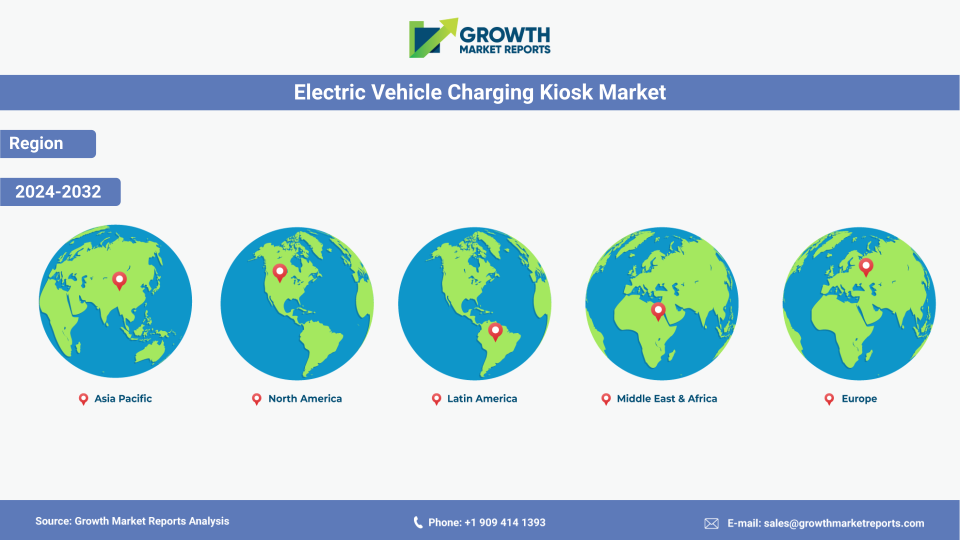
From a regional perspective, Asia Pacific is emerging as the dominant market for Electric Vehicle Charging Kiosks, driven by aggressive EV adoption in China, Japan, and South Korea. Europe follows closely, with strong regulatory support and a rapidly expanding EV fleet. North America is witnessing substantial investments, particularly in the United States and Canada, where federal and state initiatives are accelerating infrastructure rollout. Meanwhile, Latin America and the Middle East & Africa are gradually embracing EV charging solutions, supported by pilot projects and growing awareness of sustainable mobility. Each region presents unique opportunities and challenges, but the overarching trend is a global shift towards electrified transportation, underpinned by robust charging infrastructure development.

Global Electric Vehicle Charging Kiosk Industry Outlook

Charger Type Analysis

The Electric Vehicle Charging Kiosk market by charger type is segmented into Fast Chargers and Slow Chargers, each catering to distinct user needs and deployment scenarios. Fast Chargers, often referred to as DC fast chargers, are increasingly favored in public and commercial settings due to their ability to rapidly replenish an EV’s battery, typically within 30 to 60 minutes. This capability is essential for urban areas with high traffic density, highway corridors, and locations where quick turnaround is critical, such as fleet depots and service stations. The proliferation of fast charging technology is supported by advancements in power electronics, thermal management, and safety protocols, enabling higher power outputs and greater efficiency. These factors are driving significant investments from both public and private stakeholders, making fast chargers a vital component in the evolving EV ecosystem.

Conversely, Slow Chargers, primarily AC chargers, are widely deployed in residential and workplace environments where vehicles are parked for extended periods. These chargers offer a more cost-effective solution for overnight or long-duration charging, aligning with the typical usage patterns of private EV owners and corporate fleets. The adoption of slow chargers is further bolstered by their compatibility with existing electrical infrastructure, ease of installation, and lower operational costs. As residential EV ownership rises and employers implement green mobility initiatives, the demand for slow charging kiosks is expected to remain robust, particularly in regions with high urbanization and limited access to public charging facilities.

The competitive dynamics between fast and slow chargers are influenced by evolving consumer expectations, technological innovation, and regulatory frameworks. While fast chargers are gaining traction in public and commercial domains, slow chargers continue to dominate residential and semi-public spaces. Market participants are increasingly offering hybrid solutions that combine both charging types, providing flexibility and convenience to users. This trend is evident in multi-unit dwellings, shopping centers, and transit hubs, where diverse charging needs must be accommodated. The integration of smart grid technologies and demand response capabilities further enhances the value proposition of both charger types, supporting grid stability and energy optimization.

Looking ahead, the adoption of fast chargers is anticipated to outpace slow chargers in terms of revenue growth, given the premium pricing and higher utilization rates associated with rapid charging. However, slow chargers will maintain a significant presence in volume terms, particularly in emerging markets and residential segments. The interplay between these charger types will shape the future landscape of the Electric Vehicle Charging Kiosk market, with manufacturers and service providers focusing on innovation, interoperability, and user-centric design to capture a larger share of this dynamic sector.

Report Scope

Attributes Details
Report Title Electric Vehicle Charging Kiosk Market Market Research Report 2033
By Charger Type Fast Charger, Slow Charger
By Application Commercial, Residential, Public Charging, Fleet Charging
By Connectivity Standalone, Networked
By Mounting Type Wall Mounted, Floor Mounted
By Power Output Up to 22 kW, 22–50 kW, Above 50 kW
Regions Covered North America, Europe, APAC, Latin America, MEA
Base Year 2024
Historic Data 2018-2023
Forecast Period 2025-2033
Number of Pages 294
Number of Tables & Figures 396
Customization Available Yes, the report can be customized as per your need.

Application Analysis

The application segment of the Electric Vehicle Charging Kiosk market encompasses Commercial, Residential, Public Charging, and Fleet Charging, each representing unique growth drivers and deployment challenges. Commercial applications are witnessing significant momentum, as businesses, retail chains, hotels, and office complexes increasingly install charging kiosks to attract customers, enhance employee benefits, and demonstrate sustainability leadership. The integration of value-added services, such as loyalty programs, advertising displays, and seamless payment solutions, is transforming commercial charging kiosks into multi-functional assets. This trend is particularly pronounced in urban centers and high-traffic zones, where the availability of charging infrastructure directly influences consumer behavior and business competitiveness.

Residential applications are gaining traction as EV ownership becomes mainstream, especially in developed economies with supportive policies and high disposable incomes. Home charging kiosks offer unparalleled convenience, enabling users to charge their vehicles overnight or during off-peak hours. The growing adoption of smart home technologies and energy management systems is further enhancing the appeal of residential charging solutions, allowing homeowners to monitor usage, schedule charging sessions, and optimize energy consumption. As governments introduce building codes and incentives for residential EV infrastructure, the market for home charging kiosks is expected to witness sustained growth.

Public charging remains a cornerstone of the Electric Vehicle Charging Kiosk market, addressing the critical need for accessible, reliable, and widely distributed charging infrastructure. Municipalities, transportation authorities, and private operators are investing heavily in public charging networks, often in collaboration with automakers and utility companies. The deployment of public charging kiosks in parking lots, transit stations, highways, and urban centers is essential for alleviating range anxiety and supporting long-distance travel. The integration of digital platforms, real-time availability tracking, and reservation systems is enhancing user experience and operational efficiency, making public charging an indispensable component of the EV ecosystem.

Fleet charging is emerging as a high-growth application, driven by the electrification of commercial vehicle fleets in logistics, ride-hailing, public transportation, and delivery services. Fleet operators require reliable, scalable, and cost-effective charging solutions to manage large volumes of vehicles and optimize operational uptime. Charging kiosks designed for fleet applications often feature high power outputs, networked management systems, and integration with fleet management software. The transition to electric fleets is supported by stringent emission regulations, corporate sustainability goals, and the total cost of ownership advantages of EVs. As fleet electrification accelerates, the demand for specialized charging kiosks is expected to surge, creating lucrative opportunities for market participants.

Connectivity Analysis

The connectivity segment of the Electric Vehicle Charging Kiosk market is bifurcated into Standalone and Networked kiosks, each offering distinct advantages and addressing specific market needs. Standalone kiosks operate independently, providing basic charging functionality without the need for continuous internet connectivity or centralized management. These kiosks are particularly suited for remote locations, private properties, and small-scale deployments where simplicity, reliability, and cost-effectiveness are paramount. Standalone solutions are often favored in emerging markets or rural areas, where infrastructure limitations and lower EV penetration rates necessitate straightforward, easy-to-maintain charging options.

In contrast, Networked kiosks are equipped with advanced connectivity features, enabling real-time monitoring, remote diagnostics, user authentication, and seamless payment processing. These kiosks are integral to modern charging networks, offering enhanced user experiences and operational efficiencies. Networked solutions facilitate data-driven decision-making, predictive maintenance, and dynamic pricing models, making them highly attractive for commercial, public, and fleet applications. The integration of networked kiosks with mobile applications, navigation systems, and smart grid platforms is transforming the EV charging landscape, enabling interoperability and supporting the transition to intelligent, connected mobility ecosystems.

The growing adoption of networked kiosks is driven by the increasing complexity and scale of charging infrastructure deployments. As operators seek to maximize asset utilization, minimize downtime, and deliver superior customer service, the ability to centrally manage large networks of kiosks becomes essential. Networked kiosks also support value-added services, such as loyalty programs, energy management, and demand response, creating new revenue streams and enhancing the overall business case for charging infrastructure investments. Regulatory requirements for data security, interoperability, and user privacy are further shaping the evolution of networked solutions, driving continuous innovation and standardization.

While networked kiosks are poised to dominate the Electric Vehicle Charging Kiosk market in terms of revenue and feature adoption, standalone kiosks will continue to play a vital role in specific use cases and geographies. The coexistence of both connectivity models reflects the diverse needs of EV users and infrastructure stakeholders, underscoring the importance of flexibility, scalability, and adaptability in charging kiosk design and deployment. As the market matures, the convergence of standalone and networked functionalities is expected, with hybrid solutions offering the best of both worlds to meet evolving market demands.

Mounting Type Analysis

The mounting type segment of the Electric Vehicle Charging Kiosk market is divided into Wall Mounted and Floor Mounted options, each tailored to different installation environments and user preferences. Wall Mounted kiosks are particularly popular in residential and workplace settings, where space constraints and aesthetic considerations are paramount. These kiosks offer a compact, unobtrusive solution that can be easily integrated into existing structures, such as garages, parking lots, and building facades. The simplicity of installation, coupled with lower hardware and maintenance costs, makes wall mounted kiosks an attractive option for homeowners, small businesses, and property managers seeking to support EV adoption without significant infrastructure investments.

Floor Mounted kiosks, on the other hand, are designed for high-traffic, public, and commercial environments where durability, visibility, and accessibility are critical. These kiosks are typically installed in parking lots, commercial complexes, transit hubs, and highway rest areas, providing robust charging solutions capable of withstanding harsh weather conditions and frequent use. Floor mounted designs offer greater flexibility in terms of power output, user interface options, and integration with ancillary services, such as lighting, signage, and security systems. The scalability and versatility of floor mounted kiosks make them the preferred choice for large-scale infrastructure projects and networked charging deployments.

The choice between wall mounted and floor mounted kiosks is influenced by a range of factors, including site-specific requirements, user demographics, regulatory standards, and budget considerations. In many cases, a combination of both mounting types is deployed to address diverse charging needs and optimize infrastructure utilization. For example, residential complexes may install wall mounted kiosks in private garages, while offering floor mounted options in communal parking areas. Similarly, commercial operators may deploy floor mounted kiosks in outdoor settings and wall mounted units in covered or indoor locations.

As the Electric Vehicle Charging Kiosk market evolves, manufacturers are focusing on modular, customizable designs that can be adapted to various mounting configurations. Innovations in materials, enclosure design, and installation techniques are enhancing the durability, safety, and ease of deployment of both wall mounted and floor mounted kiosks. The integration of smart features, such as cable management systems, adaptive lighting, and user-friendly interfaces, is further improving the user experience and operational efficiency of charging infrastructure across all mounting types.

Power Output Analysis

The power output segment of the Electric Vehicle Charging Kiosk market is categorized into Up to 22 kW, 22–50 kW, and Above 50 kW, reflecting the diverse charging needs of EV users and applications. Kiosks with power output up to 22 kW are typically AC chargers, ideal for residential, workplace, and semi-public environments where vehicles are parked for longer durations. These chargers offer a balanced combination of affordability, compatibility, and charging speed, making them the preferred choice for private EV owners and small fleet operators. The widespread availability of supporting electrical infrastructure and the ability to leverage off-peak electricity rates further enhance the appeal of this segment.

Kiosks with power output between 22 kW and 50 kW represent a growing segment, bridging the gap between standard AC charging and high-speed DC charging. These chargers are well-suited for commercial and public applications, offering faster turnaround times without the higher costs and infrastructure requirements associated with ultra-fast chargers. The 22–50 kW segment is particularly attractive for retail locations, parking facilities, and urban charging hubs, where moderate charging speeds align with typical dwell times and user expectations. The flexibility to support both AC and DC charging standards is driving adoption in this segment, enabling operators to cater to a wider range of EV models and user needs.

Kiosks with power output above 50 kW, often referred to as ultra-fast or high-power chargers, are at the forefront of technological innovation in the Electric Vehicle Charging Kiosk market. These chargers are essential for highway corridors, transit hubs, and fleet depots, where rapid charging is critical to minimizing downtime and supporting long-distance travel. The deployment of high-power kiosks is supported by advancements in battery technology, thermal management, and grid integration, enabling safe and efficient delivery of large amounts of energy in short timeframes. The growing adoption of electric buses, trucks, and commercial vehicles is further fueling demand for ultra-fast charging solutions, creating new opportunities for market participants.

The distribution of power output preferences is shaped by regional market dynamics, vehicle mix, and infrastructure maturity. In developed economies with high EV penetration and advanced grid capabilities, the adoption of high-power kiosks is accelerating, driven by consumer demand for convenience and speed. In contrast, emerging markets are focusing on lower-power solutions that align with existing infrastructure and affordability constraints. As battery technologies evolve and charging standards converge, the segmentation of power output is expected to blur, with multi-standard, adaptive kiosks gaining prominence in the global market.

Opportunities & Threats

The Electric Vehicle Charging Kiosk market presents a wealth of opportunities as the global transition to electric mobility accelerates. One of the most significant opportunities lies in the integration of renewable energy sources, such as solar and wind, with charging infrastructure. By leveraging clean energy, operators can reduce operational costs, enhance sustainability, and support grid stability through energy storage and demand response capabilities. This trend aligns with broader decarbonization goals and offers a compelling value proposition to environmentally conscious consumers and businesses. Additionally, the proliferation of smart charging solutions, enabled by IoT, AI, and data analytics, is unlocking new revenue streams and business models, such as subscription services, dynamic pricing, and value-added offerings. These innovations are transforming the charging experience, fostering user loyalty, and driving long-term market growth.

Another major opportunity is the expansion of charging infrastructure into underserved markets and emerging economies. As EV adoption gains momentum beyond traditional strongholds, there is a pressing need to deploy charging kiosks in rural areas, secondary cities, and developing regions. Public-private partnerships, concessional financing, and international cooperation can play a pivotal role in bridging infrastructure gaps and ensuring equitable access to charging solutions. The electrification of commercial fleets, public transportation, and shared mobility services further amplifies the demand for scalable, reliable, and cost-effective charging kiosks. Companies that can offer modular, interoperable, and easy-to-deploy solutions will be well-positioned to capture market share in these high-growth segments.

Despite the promising outlook, the Electric Vehicle Charging Kiosk market faces several restraining factors that could hinder its growth trajectory. One of the primary challenges is the high upfront cost of charging infrastructure deployment, particularly for fast and ultra-fast chargers. The need for extensive electrical upgrades, grid enhancements, and site preparation can pose significant financial and logistical barriers, especially in regions with limited resources or outdated infrastructure. Additionally, the lack of standardized protocols, interoperability issues, and fragmented regulatory frameworks can impede seamless user experiences and limit the scalability of charging networks. Addressing these challenges will require concerted efforts from industry stakeholders, policymakers, and technology providers to harmonize standards, streamline permitting processes, and foster innovation in financing and business models.

Regional Outlook

The regional landscape of the Electric Vehicle Charging Kiosk market is characterized by significant disparities in market size, growth rates, and infrastructure maturity. Asia Pacific leads the global market, accounting for approximately USD 3.21 billion in 2024, driven by aggressive EV adoption in China, Japan, and South Korea. The region is witnessing rapid expansion of charging infrastructure, supported by strong government mandates, substantial investments from both public and private sectors, and a burgeoning EV manufacturing ecosystem. China, in particular, is at the forefront, with an extensive network of fast and ultra-fast charging kiosks deployed across urban centers and highway corridors. The Asia Pacific market is expected to maintain a robust CAGR of 30.2% through 2033, fueled by continuous policy support and technological innovation.

Europe is the second-largest market, with a market size of USD 2.15 billion in 2024, underpinned by stringent emission regulations, ambitious climate targets, and a rapidly growing EV fleet. The European Union’s Green Deal and national electrification strategies are accelerating the rollout of charging kiosks in both urban and rural areas. Countries such as Germany, the United Kingdom, France, and the Netherlands are leading the charge, with comprehensive public charging networks and innovative business models. The integration of renewable energy, smart grid technologies, and cross-border interoperability is further enhancing the competitiveness of the European market. Europe is projected to achieve a CAGR of 27.8% during the forecast period, reaching a market value of USD 18.97 billion by 2033.

North America follows closely, with a market size of USD 1.64 billion in 2024, driven by strong policy support, rising consumer awareness, and increasing investments in charging infrastructure. The United States and Canada are witnessing a surge in public and commercial charging deployments, supported by federal and state-level incentives, utility programs, and automaker initiatives. The focus on ultra-fast charging, networked solutions, and interoperability is shaping the competitive landscape, with major cities and transportation corridors emerging as key hotspots. North America is expected to register a CAGR of 26.5% through 2033, reaching an estimated market size of USD 13.97 billion. Meanwhile, Latin America and the Middle East & Africa are gradually embracing EV charging solutions, with pilot projects, regulatory reforms, and growing consumer interest laying the groundwork for future expansion. These regions collectively accounted for USD 0.42 billion in 2024 and are expected to see accelerated growth as market conditions mature.

Electric Vehicle Charging Kiosk Market Statistics

Competitor Outlook

The competitive landscape of the Electric Vehicle Charging Kiosk market is dynamic and rapidly evolving, characterized by the presence of global technology giants, specialized charging infrastructure providers, automakers, and emerging startups. The market is witnessing intense competition as players vie to differentiate their offerings through innovation, reliability, and scalability. Key competitive strategies include the development of high-power charging solutions, integration of smart features, expansion of charging networks, and strategic partnerships with automotive OEMs, utilities, and real estate developers. The ability to deliver seamless user experiences, support multiple charging standards, and ensure interoperability is becoming a critical differentiator in the market.

Mergers, acquisitions, and collaborations are frequent as companies seek to enhance their technological capabilities, expand geographic reach, and capture new customer segments. The entry of automakers and energy companies into the charging infrastructure space is reshaping the competitive dynamics, leading to the emergence of vertically integrated business models that span vehicle manufacturing, energy supply, and charging services. Startups and innovators are also making significant inroads, leveraging digital platforms, data analytics, and modular designs to address niche market needs and disrupt traditional business models. The competitive intensity is further heightened by regulatory mandates, evolving customer expectations, and the rapid pace of technological change.

In addition to product innovation, companies are focusing on after-sales service, maintenance, and customer support to build long-term relationships and enhance brand loyalty. The provision of value-added services, such as remote monitoring, predictive maintenance, and loyalty programs, is becoming increasingly important in differentiating offerings and driving recurring revenue streams. Sustainability and environmental stewardship are also emerging as key themes, with companies investing in renewable energy integration, energy storage, and circular economy initiatives to align with global decarbonization goals and enhance their corporate reputation.

Major companies operating in the Electric Vehicle Charging Kiosk market include ABB Ltd., Siemens AG, Schneider Electric SE, ChargePoint Holdings Inc., Tesla Inc., EVBox Group, Blink Charging Co., and Delta Electronics Inc. ABB Ltd. is renowned for its comprehensive range of fast and ultra-fast charging solutions, leveraging advanced power electronics and smart connectivity features. Siemens AG offers integrated charging infrastructure solutions, focusing on interoperability, digitalization, and grid integration. Schneider Electric SE specializes in energy management and automation, providing scalable charging kiosks for residential, commercial, and public applications. ChargePoint Holdings Inc. operates one of the largest global charging networks, emphasizing user-centric design and seamless connectivity. Tesla Inc. has established a proprietary Supercharger network, delivering high-speed charging for its vehicles and setting industry benchmarks for performance and reliability. EVBox Group and Blink Charging Co. are prominent players in the European and North American markets, respectively, known for their innovative product portfolios and strategic partnerships. Delta Electronics Inc. is recognized for its expertise in power management and energy-efficient charging solutions, catering to diverse market segments and geographies.

These companies are continuously investing in research and development, expanding their global footprint, and forging alliances to stay ahead in the competitive landscape. The focus on customer experience, technological leadership, and sustainability will remain central to their growth strategies as the Electric Vehicle Charging Kiosk market enters a new phase of expansion and innovation.

Key Players

  • ABB Ltd.
  • Siemens AG
  • Schneider Electric SE
  • Tesla, Inc.
  • ChargePoint, Inc.
  • EVBox Group
  • Blink Charging Co.
  • Alfen N.V.
  • Webasto Group
  • Delta Electronics, Inc.
  • Eaton Corporation plc
  • Leviton Manufacturing Co., Inc.
  • AeroVironment, Inc. (now part of Nidec)
  • BP Pulse (BP Chargemaster)
  • Shell Recharge Solutions (formerly NewMotion)
  • Tritium DCFC Limited
  • Enel X (now Enel X Way)
  • Star Charge
  • EVgo Services LLC
  • Electrify America LLC
Electric Vehicle Charging Kiosk Market Overview

Segments

The Electric Vehicle Charging Kiosk market has been segmented on the basis of

Charger Type

  • Fast Charger
  • Slow Charger

Application

  • Commercial
  • Residential
  • Public Charging
  • Fleet Charging

Connectivity

  • Standalone
  • Networked

Mounting Type

  • Wall Mounted
  • Floor Mounted

Power Output

  • Up to 22 kW
  • 22–50 kW
  • Above 50 kW

Competitive Landscape

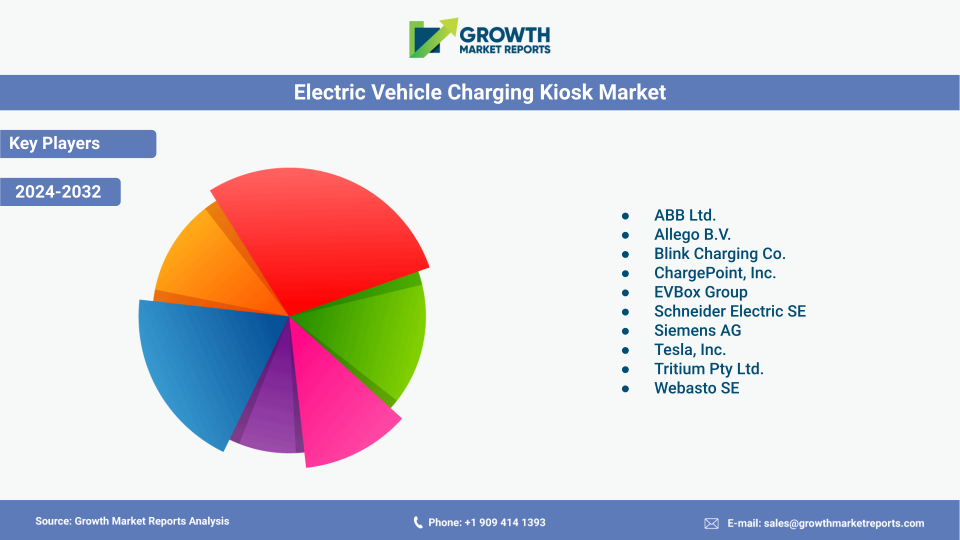
Key players competing in the global electric vehicle charging kiosk market are ABB Ltd.; Allego B.V.; Blink Charging Co.; ChargePoint, Inc.; EVBox Group; Schneider Electric SE; Siemens AG; Tesla, Inc.; Tritium Pty Ltd.; and Webasto SE.

  • In November 2023, ChargePoint unveiled its latest iteration of the mobile application, commemorating the achievement of one million quarterly active drivers on its EV charging network.
  • In October 2023, BP invested USD100 Million in Tesla ultra-fast chargers to enhance its EV charging network, a first for Tesla's chargers outside their network. This is part of BP's USD 1 Billion EV charging plan in the US by 2030. BP Pulse, with 27,000+ charge points, plans to deploy over 100,000 globally by 2030. Tesla chargers are expected to be integrated into BP Pulse sites starting in 2024.
  • In June 2023, EVBox collaborated with Shell to deploy electric vehicle charging stations at Shell service stations across Europe.
  • In April 2023, ABB partnered with Volvo Cars to provide fast charging solutions for Volvo's electric vehicle.
Electric Vehicle Charging Kiosk Market Key Players

Frequently Asked Questions

Major companies include ABB Ltd., Siemens AG, Schneider Electric SE, Tesla Inc., ChargePoint Holdings Inc., EVBox Group, Blink Charging Co., Delta Electronics Inc., and others.

Opportunities include integration with renewable energy, expansion into emerging markets, and smart charging solutions. Challenges involve high upfront costs, infrastructure upgrades, lack of standardization, and regulatory fragmentation.

Power output is categorized as Up to 22 kW (mainly AC chargers for residential use), 22–50 kW (for commercial and public applications), and Above 50 kW (ultra-fast DC chargers for highways and fleet depots).

Kiosks can be wall mounted, suitable for residential and workplace settings with space constraints, or floor mounted, which are preferred for public and commercial environments due to their durability and accessibility.

Standalone kiosks operate independently and are ideal for remote or small-scale deployments, while networked kiosks offer real-time monitoring, remote diagnostics, user authentication, and seamless payment processing, making them suitable for larger networks and commercial use.

Applications include Commercial (businesses, retail, hotels), Residential (home charging), Public Charging (municipalities, transit stations, highways), and Fleet Charging (logistics, ride-hailing, public transportation).

Asia Pacific is the dominant region, led by China, Japan, and South Korea. Europe and North America follow, with strong regulatory support and investments. Latin America and the Middle East & Africa are emerging markets with growing adoption.

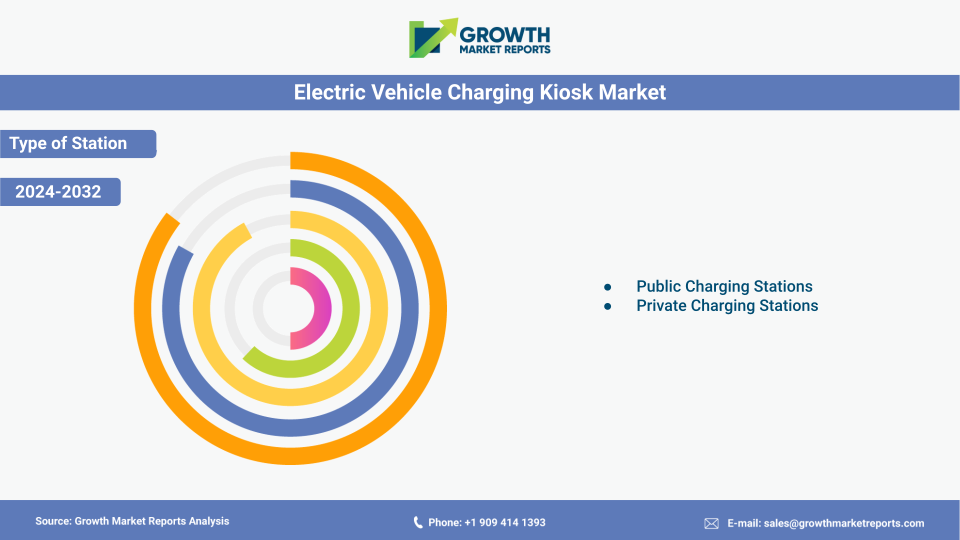
The market offers Fast Chargers (DC fast chargers) for rapid charging in public and commercial settings, and Slow Chargers (primarily AC chargers) for residential and workplace environments. Hybrid solutions combining both types are also available.

Key growth drivers include rising electric vehicle adoption, supportive government policies, advancements in charging infrastructure technology, and a global emphasis on sustainable transportation and carbon emission reduction.

The global Electric Vehicle Charging Kiosk market reached USD 7.42 billion in 2024 and is expected to grow at a CAGR of 28.6%, reaching approximately USD 65.41 billion by 2033.

Table Of Content

Chapter 1 Executive Summary
Chapter 2 Assumptions and Acronyms Used
Chapter 3 Research Methodology
Chapter 4 Electric Vehicle Charging Kiosk Market Overview
   4.1 Introduction
      4.1.1 Market Taxonomy
      4.1.2 Market Definition
      4.1.3 Macro-Economic Factors Impacting the Market Growth
   4.2 Electric Vehicle Charging Kiosk Market Dynamics
      4.2.1 Market Drivers
      4.2.2 Market Restraints
      4.2.3 Market Opportunity
   4.3 Electric Vehicle Charging Kiosk Market - Supply Chain Analysis
      4.3.1 List of Key Suppliers
      4.3.2 List of Key Distributors
      4.3.3 List of Key Consumers
   4.4 Key Forces Shaping the Electric Vehicle Charging Kiosk Market
      4.4.1 Bargaining Power of Suppliers
      4.4.2 Bargaining Power of Buyers
      4.4.3 Threat of Substitution
      4.4.4 Threat of New Entrants
      4.4.5 Competitive Rivalry
   4.5 Global Electric Vehicle Charging Kiosk Market Size & Forecast, 2023-2032
      4.5.1 Electric Vehicle Charging Kiosk Market Size and Y-o-Y Growth
      4.5.2 Electric Vehicle Charging Kiosk Market Absolute $ Opportunity

Chapter 5 Global Electric Vehicle Charging Kiosk Market Analysis and Forecast By Charger Type
   5.1 Introduction
      5.1.1 Key Market Trends & Growth Opportunities By Charger Type
      5.1.2 Basis Point Share (BPS) Analysis By Charger Type
      5.1.3 Absolute $ Opportunity Assessment By Charger Type
   5.2 Electric Vehicle Charging Kiosk Market Size Forecast By Charger Type
      5.2.1 Fast Charger
      5.2.2 Slow Charger
   5.3 Market Attractiveness Analysis By Charger Type

Chapter 6 Global Electric Vehicle Charging Kiosk Market Analysis and Forecast By Application
   6.1 Introduction
      6.1.1 Key Market Trends & Growth Opportunities By Application
      6.1.2 Basis Point Share (BPS) Analysis By Application
      6.1.3 Absolute $ Opportunity Assessment By Application
   6.2 Electric Vehicle Charging Kiosk Market Size Forecast By Application
      6.2.1 Commercial
      6.2.2 Residential
      6.2.3 Public Charging
      6.2.4 Fleet Charging
   6.3 Market Attractiveness Analysis By Application

Chapter 7 Global Electric Vehicle Charging Kiosk Market Analysis and Forecast By Connectivity
   7.1 Introduction
      7.1.1 Key Market Trends & Growth Opportunities By Connectivity
      7.1.2 Basis Point Share (BPS) Analysis By Connectivity
      7.1.3 Absolute $ Opportunity Assessment By Connectivity
   7.2 Electric Vehicle Charging Kiosk Market Size Forecast By Connectivity
      7.2.1 Standalone
      7.2.2 Networked
   7.3 Market Attractiveness Analysis By Connectivity

Chapter 8 Global Electric Vehicle Charging Kiosk Market Analysis and Forecast By Mounting Type
   8.1 Introduction
      8.1.1 Key Market Trends & Growth Opportunities By Mounting Type
      8.1.2 Basis Point Share (BPS) Analysis By Mounting Type
      8.1.3 Absolute $ Opportunity Assessment By Mounting Type
   8.2 Electric Vehicle Charging Kiosk Market Size Forecast By Mounting Type
      8.2.1 Wall Mounted
      8.2.2 Floor Mounted
   8.3 Market Attractiveness Analysis By Mounting Type

Chapter 9 Global Electric Vehicle Charging Kiosk Market Analysis and Forecast By Power Output
   9.1 Introduction
      9.1.1 Key Market Trends & Growth Opportunities By Power Output
      9.1.2 Basis Point Share (BPS) Analysis By Power Output
      9.1.3 Absolute $ Opportunity Assessment By Power Output
   9.2 Electric Vehicle Charging Kiosk Market Size Forecast By Power Output
      9.2.1 Up to 22 kW
      9.2.2 22–50 kW
      9.2.3 Above 50 kW
   9.3 Market Attractiveness Analysis By Power Output

Chapter 10 Global Electric Vehicle Charging Kiosk Market Analysis and Forecast by Region
   10.1 Introduction
      10.1.1 Key Market Trends & Growth Opportunities By Region
      10.1.2 Basis Point Share (BPS) Analysis By Region
      10.1.3 Absolute $ Opportunity Assessment By Region
   10.2 Electric Vehicle Charging Kiosk Market Size Forecast By Region
      10.2.1 North America
      10.2.2 Europe
      10.2.3 Asia Pacific
      10.2.4 Latin America
      10.2.5 Middle East & Africa (MEA)
   10.3 Market Attractiveness Analysis By Region

Chapter 11 Coronavirus Disease (COVID-19) Impact 
   11.1 Introduction 
   11.2 Current & Future Impact Analysis 
   11.3 Economic Impact Analysis 
   11.4 Government Policies 
   11.5 Investment Scenario

Chapter 12 North America Electric Vehicle Charging Kiosk Analysis and Forecast
   12.1 Introduction
   12.2 North America Electric Vehicle Charging Kiosk Market Size Forecast by Country
      12.2.1 U.S.
      12.2.2 Canada
   12.3 Basis Point Share (BPS) Analysis by Country
   12.4 Absolute $ Opportunity Assessment by Country
   12.5 Market Attractiveness Analysis by Country
   12.6 North America Electric Vehicle Charging Kiosk Market Size Forecast By Charger Type
      12.6.1 Fast Charger
      12.6.2 Slow Charger
   12.7 Basis Point Share (BPS) Analysis By Charger Type 
   12.8 Absolute $ Opportunity Assessment By Charger Type 
   12.9 Market Attractiveness Analysis By Charger Type
   12.10 North America Electric Vehicle Charging Kiosk Market Size Forecast By Application
      12.10.1 Commercial
      12.10.2 Residential
      12.10.3 Public Charging
      12.10.4 Fleet Charging
   12.11 Basis Point Share (BPS) Analysis By Application 
   12.12 Absolute $ Opportunity Assessment By Application 
   12.13 Market Attractiveness Analysis By Application
   12.14 North America Electric Vehicle Charging Kiosk Market Size Forecast By Connectivity
      12.14.1 Standalone
      12.14.2 Networked
   12.15 Basis Point Share (BPS) Analysis By Connectivity 
   12.16 Absolute $ Opportunity Assessment By Connectivity 
   12.17 Market Attractiveness Analysis By Connectivity
   12.18 North America Electric Vehicle Charging Kiosk Market Size Forecast By Mounting Type
      12.18.1 Wall Mounted
      12.18.2 Floor Mounted
   12.19 Basis Point Share (BPS) Analysis By Mounting Type 
   12.20 Absolute $ Opportunity Assessment By Mounting Type 
   12.21 Market Attractiveness Analysis By Mounting Type
   12.22 North America Electric Vehicle Charging Kiosk Market Size Forecast By Power Output
      12.22.1 Up to 22 kW
      12.22.2 22–50 kW
      12.22.3 Above 50 kW
   12.23 Basis Point Share (BPS) Analysis By Power Output 
   12.24 Absolute $ Opportunity Assessment By Power Output 
   12.25 Market Attractiveness Analysis By Power Output

Chapter 13 Europe Electric Vehicle Charging Kiosk Analysis and Forecast
   13.1 Introduction
   13.2 Europe Electric Vehicle Charging Kiosk Market Size Forecast by Country
      13.2.1 Germany
      13.2.2 France
      13.2.3 Italy
      13.2.4 U.K.
      13.2.5 Spain
      13.2.6 Russia
      13.2.7 Rest of Europe
   13.3 Basis Point Share (BPS) Analysis by Country
   13.4 Absolute $ Opportunity Assessment by Country
   13.5 Market Attractiveness Analysis by Country
   13.6 Europe Electric Vehicle Charging Kiosk Market Size Forecast By Charger Type
      13.6.1 Fast Charger
      13.6.2 Slow Charger
   13.7 Basis Point Share (BPS) Analysis By Charger Type 
   13.8 Absolute $ Opportunity Assessment By Charger Type 
   13.9 Market Attractiveness Analysis By Charger Type
   13.10 Europe Electric Vehicle Charging Kiosk Market Size Forecast By Application
      13.10.1 Commercial
      13.10.2 Residential
      13.10.3 Public Charging
      13.10.4 Fleet Charging
   13.11 Basis Point Share (BPS) Analysis By Application 
   13.12 Absolute $ Opportunity Assessment By Application 
   13.13 Market Attractiveness Analysis By Application
   13.14 Europe Electric Vehicle Charging Kiosk Market Size Forecast By Connectivity
      13.14.1 Standalone
      13.14.2 Networked
   13.15 Basis Point Share (BPS) Analysis By Connectivity 
   13.16 Absolute $ Opportunity Assessment By Connectivity 
   13.17 Market Attractiveness Analysis By Connectivity
   13.18 Europe Electric Vehicle Charging Kiosk Market Size Forecast By Mounting Type
      13.18.1 Wall Mounted
      13.18.2 Floor Mounted
   13.19 Basis Point Share (BPS) Analysis By Mounting Type 
   13.20 Absolute $ Opportunity Assessment By Mounting Type 
   13.21 Market Attractiveness Analysis By Mounting Type
   13.22 Europe Electric Vehicle Charging Kiosk Market Size Forecast By Power Output
      13.22.1 Up to 22 kW
      13.22.2 22–50 kW
      13.22.3 Above 50 kW
   13.23 Basis Point Share (BPS) Analysis By Power Output 
   13.24 Absolute $ Opportunity Assessment By Power Output 
   13.25 Market Attractiveness Analysis By Power Output

Chapter 14 Asia Pacific Electric Vehicle Charging Kiosk Analysis and Forecast
   14.1 Introduction
   14.2 Asia Pacific Electric Vehicle Charging Kiosk Market Size Forecast by Country
      14.2.1 China
      14.2.2 Japan
      14.2.3 South Korea
      14.2.4 India
      14.2.5 Australia
      14.2.6 South East Asia (SEA)
      14.2.7 Rest of Asia Pacific (APAC)
   14.3 Basis Point Share (BPS) Analysis by Country
   14.4 Absolute $ Opportunity Assessment by Country
   14.5 Market Attractiveness Analysis by Country
   14.6 Asia Pacific Electric Vehicle Charging Kiosk Market Size Forecast By Charger Type
      14.6.1 Fast Charger
      14.6.2 Slow Charger
   14.7 Basis Point Share (BPS) Analysis By Charger Type 
   14.8 Absolute $ Opportunity Assessment By Charger Type 
   14.9 Market Attractiveness Analysis By Charger Type
   14.10 Asia Pacific Electric Vehicle Charging Kiosk Market Size Forecast By Application
      14.10.1 Commercial
      14.10.2 Residential
      14.10.3 Public Charging
      14.10.4 Fleet Charging
   14.11 Basis Point Share (BPS) Analysis By Application 
   14.12 Absolute $ Opportunity Assessment By Application 
   14.13 Market Attractiveness Analysis By Application
   14.14 Asia Pacific Electric Vehicle Charging Kiosk Market Size Forecast By Connectivity
      14.14.1 Standalone
      14.14.2 Networked
   14.15 Basis Point Share (BPS) Analysis By Connectivity 
   14.16 Absolute $ Opportunity Assessment By Connectivity 
   14.17 Market Attractiveness Analysis By Connectivity
   14.18 Asia Pacific Electric Vehicle Charging Kiosk Market Size Forecast By Mounting Type
      14.18.1 Wall Mounted
      14.18.2 Floor Mounted
   14.19 Basis Point Share (BPS) Analysis By Mounting Type 
   14.20 Absolute $ Opportunity Assessment By Mounting Type 
   14.21 Market Attractiveness Analysis By Mounting Type
   14.22 Asia Pacific Electric Vehicle Charging Kiosk Market Size Forecast By Power Output
      14.22.1 Up to 22 kW
      14.22.2 22–50 kW
      14.22.3 Above 50 kW
   14.23 Basis Point Share (BPS) Analysis By Power Output 
   14.24 Absolute $ Opportunity Assessment By Power Output 
   14.25 Market Attractiveness Analysis By Power Output

Chapter 15 Latin America Electric Vehicle Charging Kiosk Analysis and Forecast
   15.1 Introduction
   15.2 Latin America Electric Vehicle Charging Kiosk Market Size Forecast by Country
      15.2.1 Brazil
      15.2.2 Mexico
      15.2.3 Rest of Latin America (LATAM)
   15.3 Basis Point Share (BPS) Analysis by Country
   15.4 Absolute $ Opportunity Assessment by Country
   15.5 Market Attractiveness Analysis by Country
   15.6 Latin America Electric Vehicle Charging Kiosk Market Size Forecast By Charger Type
      15.6.1 Fast Charger
      15.6.2 Slow Charger
   15.7 Basis Point Share (BPS) Analysis By Charger Type 
   15.8 Absolute $ Opportunity Assessment By Charger Type 
   15.9 Market Attractiveness Analysis By Charger Type
   15.10 Latin America Electric Vehicle Charging Kiosk Market Size Forecast By Application
      15.10.1 Commercial
      15.10.2 Residential
      15.10.3 Public Charging
      15.10.4 Fleet Charging
   15.11 Basis Point Share (BPS) Analysis By Application 
   15.12 Absolute $ Opportunity Assessment By Application 
   15.13 Market Attractiveness Analysis By Application
   15.14 Latin America Electric Vehicle Charging Kiosk Market Size Forecast By Connectivity
      15.14.1 Standalone
      15.14.2 Networked
   15.15 Basis Point Share (BPS) Analysis By Connectivity 
   15.16 Absolute $ Opportunity Assessment By Connectivity 
   15.17 Market Attractiveness Analysis By Connectivity
   15.18 Latin America Electric Vehicle Charging Kiosk Market Size Forecast By Mounting Type
      15.18.1 Wall Mounted
      15.18.2 Floor Mounted
   15.19 Basis Point Share (BPS) Analysis By Mounting Type 
   15.20 Absolute $ Opportunity Assessment By Mounting Type 
   15.21 Market Attractiveness Analysis By Mounting Type
   15.22 Latin America Electric Vehicle Charging Kiosk Market Size Forecast By Power Output
      15.22.1 Up to 22 kW
      15.22.2 22–50 kW
      15.22.3 Above 50 kW
   15.23 Basis Point Share (BPS) Analysis By Power Output 
   15.24 Absolute $ Opportunity Assessment By Power Output 
   15.25 Market Attractiveness Analysis By Power Output

Chapter 16 Middle East & Africa (MEA) Electric Vehicle Charging Kiosk Analysis and Forecast
   16.1 Introduction
   16.2 Middle East & Africa (MEA) Electric Vehicle Charging Kiosk Market Size Forecast by Country
      16.2.1 Saudi Arabia
      16.2.2 South Africa
      16.2.3 UAE
      16.2.4 Rest of Middle East & Africa (MEA)
   16.3 Basis Point Share (BPS) Analysis by Country
   16.4 Absolute $ Opportunity Assessment by Country
   16.5 Market Attractiveness Analysis by Country
   16.6 Middle East & Africa (MEA) Electric Vehicle Charging Kiosk Market Size Forecast By Charger Type
      16.6.1 Fast Charger
      16.6.2 Slow Charger
   16.7 Basis Point Share (BPS) Analysis By Charger Type 
   16.8 Absolute $ Opportunity Assessment By Charger Type 
   16.9 Market Attractiveness Analysis By Charger Type
   16.10 Middle East & Africa (MEA) Electric Vehicle Charging Kiosk Market Size Forecast By Application
      16.10.1 Commercial
      16.10.2 Residential
      16.10.3 Public Charging
      16.10.4 Fleet Charging
   16.11 Basis Point Share (BPS) Analysis By Application 
   16.12 Absolute $ Opportunity Assessment By Application 
   16.13 Market Attractiveness Analysis By Application
   16.14 Middle East & Africa (MEA) Electric Vehicle Charging Kiosk Market Size Forecast By Connectivity
      16.14.1 Standalone
      16.14.2 Networked
   16.15 Basis Point Share (BPS) Analysis By Connectivity 
   16.16 Absolute $ Opportunity Assessment By Connectivity 
   16.17 Market Attractiveness Analysis By Connectivity
   16.18 Middle East & Africa (MEA) Electric Vehicle Charging Kiosk Market Size Forecast By Mounting Type
      16.18.1 Wall Mounted
      16.18.2 Floor Mounted
   16.19 Basis Point Share (BPS) Analysis By Mounting Type 
   16.20 Absolute $ Opportunity Assessment By Mounting Type 
   16.21 Market Attractiveness Analysis By Mounting Type
   16.22 Middle East & Africa (MEA) Electric Vehicle Charging Kiosk Market Size Forecast By Power Output
      16.22.1 Up to 22 kW
      16.22.2 22–50 kW
      16.22.3 Above 50 kW
   16.23 Basis Point Share (BPS) Analysis By Power Output 
   16.24 Absolute $ Opportunity Assessment By Power Output 
   16.25 Market Attractiveness Analysis By Power Output

Chapter 17 Competition Landscape 
   17.1 Electric Vehicle Charging Kiosk Market: Competitive Dashboard
   17.2 Global Electric Vehicle Charging Kiosk Market: Market Share Analysis, 2023
   17.3 Company Profiles (Details – Overview, Financials, Developments, Strategy) 
      17.3.1 ABB Ltd.
Siemens AG
Schneider Electric SE
Tesla, Inc.
ChargePoint, Inc.
EVBox Group
Blink Charging Co.
Alfen N.V.
Webasto Group
Delta Electronics, Inc.
Eaton Corporation plc
Leviton Manufacturing Co., Inc.
AeroVironment, Inc. (now part of Nidec)
BP Pulse (BP Chargemaster)
Shell Recharge Solutions (formerly NewMotion)
Tritium DCFC Limited
Enel X (now Enel X Way)
Star Charge
EVgo Services LLC
Electrify America LLC

Methodology

Our Clients

sinopec
The John Holland Group
Honda Motor Co. Ltd.
Microsoft
Siemens Healthcare
FedEx Logistics
Nestle SA
General Mills