Segments - by Product Type (Bioinsecticides, Biofungicides, Bionematicides, Others), by Source (Microbial, Biochemical, Beneficial Insects, Others), by Formulation (Liquid, Dry), by Mode Of Application (Foliar Spray, Seed Treatment, Soil Treatment, Others), by Crop Type (Cereals & Grains, Fruits & Vegetables, Oilseeds & Pulses, Others)
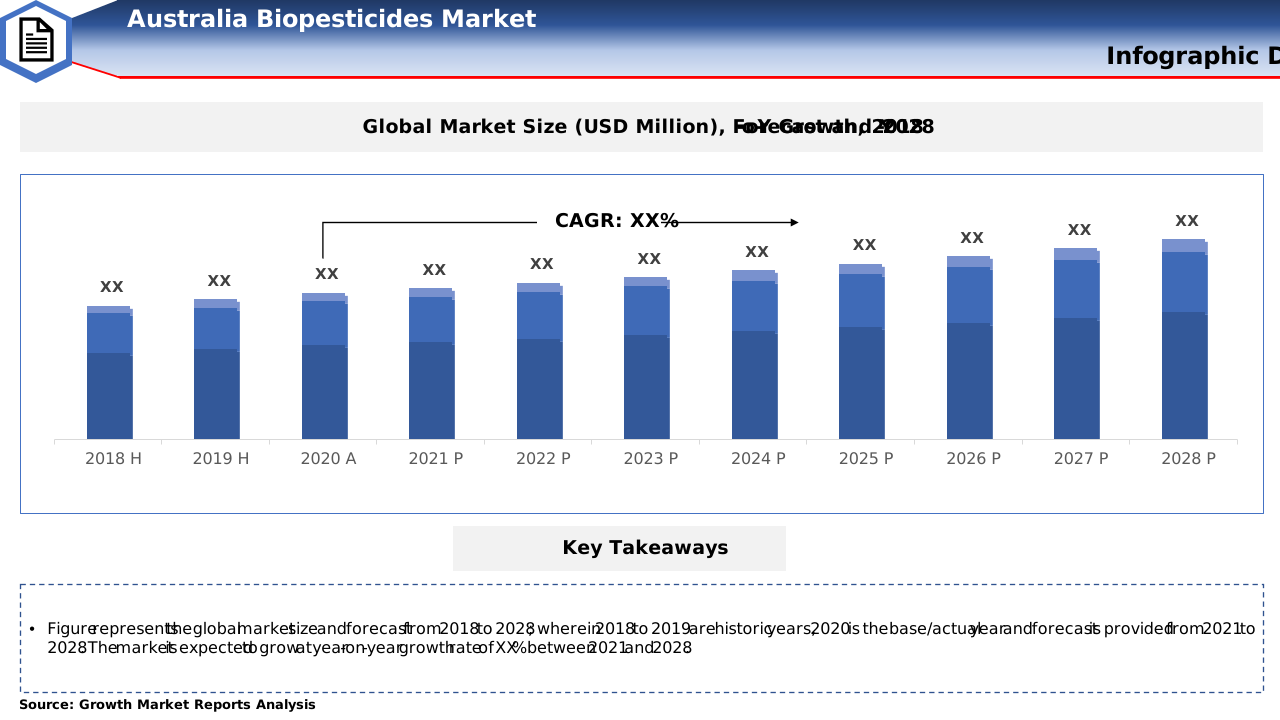
According to our latest research, the global biopesticides market size reached USD 7.4 billion in 2024, reflecting a robust expansion trajectory driven by increasing demand for sustainable agricultural solutions. The market is expected to grow at a remarkable CAGR of 13.1% from 2025 to 2033, reaching an estimated value of USD 23.1 billion by the end of the forecast period. This growth is primarily fueled by the rising adoption of organic farming practices, stringent regulations on chemical pesticide usage, and escalating consumer awareness regarding food safety and environmental health. As per our latest research, the biopesticides market is witnessing a pivotal shift as stakeholders across the agricultural value chain prioritize eco-friendly crop protection alternatives.
The primary growth driver for the global biopesticides market is the increasing shift towards sustainable agriculture and organic farming. With growing concerns over the adverse environmental and health impacts of synthetic chemical pesticides, farmers and agricultural enterprises are actively seeking safer and more sustainable crop protection solutions. Biopesticides, derived from natural materials such as microorganisms, plant extracts, and beneficial insects, offer an effective alternative that aligns with global sustainability goals. Additionally, government initiatives and subsidies promoting organic farming practices are further accelerating the adoption of biopesticides across both developed and developing economies. The integration of biopesticides into integrated pest management (IPM) programs is also enhancing their market penetration, as these products help reduce chemical residues while maintaining crop yield and quality.
Another key factor propelling the growth of the biopesticides market is the increasing regulatory scrutiny over chemical pesticides. Regulatory bodies in North America, Europe, and parts of Asia Pacific are imposing stringent limits on the use of synthetic pesticides due to their potential to contaminate soil and water, harm non-target organisms, and contribute to the development of pest resistance. These regulations have created a favorable environment for the commercialization and adoption of biopesticides, which are generally recognized as safe and environmentally benign. The expedited registration processes and reduced regulatory barriers for biopesticides, compared to conventional chemical pesticides, are further encouraging manufacturers to invest in research and development, thus expanding the range of available biopesticide products.
Technological advancements and innovations in formulation and application methods are also significantly contributing to the expansion of the biopesticides market. The development of novel microbial strains, improved fermentation technologies, and advanced delivery systems such as microencapsulation and nano-formulations are enhancing the efficacy, stability, and shelf-life of biopesticide products. These innovations are making biopesticides more attractive to commercial growers and large-scale agricultural enterprises, who require reliable and consistent pest control solutions. Furthermore, collaborations between research institutes, agrochemical companies, and government agencies are fostering the development of next-generation biopesticides that can target a broader spectrum of pests and diseases, thus broadening their market appeal.
Biopesticide solutions are increasingly being recognized for their role in sustainable agriculture, offering a viable alternative to conventional chemical pesticides. As farmers and agricultural stakeholders seek to reduce their environmental footprint, biopesticides provide a means to achieve effective pest control while maintaining ecological balance. These natural pest management tools are derived from living organisms or natural substances, ensuring minimal impact on non-target species and the environment. By integrating biopesticides into their pest management strategies, farmers can enhance crop resilience and productivity, aligning with global sustainability goals and consumer demand for eco-friendly agricultural practices.
Regionally, North America remains the largest market for biopesticides, accounting for a significant share of global revenues in 2024. The region benefits from a well-established organic farming sector, proactive regulatory frameworks, and a high level of consumer awareness regarding food safety and environmental sustainability. Europe closely follows, driven by stringent EU regulations on pesticide residues and a strong emphasis on sustainable agriculture. Meanwhile, the Asia Pacific region is emerging as the fastest-growing market, supported by rapid population growth, rising food demand, and increasing government support for sustainable agricultural practices. Latin America and the Middle East & Africa are also witnessing steady growth, albeit from a smaller base, as awareness and adoption of biopesticides continue to rise.
The biopesticides market is segmented by product type into bioinsecticides, biofungicides, bionematicides, and others. Among these, bioinsecticides hold the largest market share, driven by their effectiveness in controlling a wide range of insect pests that threaten major crops such as cereals, fruits, and vegetables. The growing resistance of insects to conventional chemical insecticides has accelerated the adoption of bioinsecticides, which offer targeted pest control with minimal impact on non-target organisms and the environment. Leading companies are investing heavily in the development of novel bioinsecticide formulations that deliver enhanced efficacy, longer residual activity, and improved compatibility with other crop protection products.
Biofungicides represent the second-largest segment, with rapid growth projected throughout the forecast period. The increasing incidence of fungal diseases, particularly in high-value crops like fruits and vegetables, has heightened the demand for effective and safe fungicidal solutions. Biofungicides, which are primarily based on beneficial microorganisms such as Trichoderma, Bacillus, and Pseudomonas species, are gaining traction due to their ability to suppress a broad spectrum of pathogenic fungi while promoting plant health and resilience. Regulatory support for the development and commercialization of biofungicides is also contributing to their market expansion.
Bionematicides, although currently representing a smaller share of the biopesticides market, are expected to witness substantial growth over the coming years. Nematode infestations can cause significant yield losses in a variety of crops, and the limited availability of effective chemical nematicides, coupled with regulatory restrictions, is driving the adoption of biological alternatives. Advances in microbial research and the identification of novel nematode-antagonistic organisms are expanding the range and efficacy of bionematicide products, making them increasingly viable for both smallholder and commercial farmers.
Other product types, including bioherbicides and miscellaneous biopesticides, are also gaining attention as integrated pest management strategies become more sophisticated. These products offer targeted solutions for specific weed and pest challenges, often complementing the use of bioinsecticides and biofungicides. The ongoing research and development efforts aimed at expanding the spectrum of biopesticide products will further enhance the marketÂ’s ability to address diverse crop protection needs, supporting the overall growth of the biopesticides sector.
| Attributes | Details |
| Report Title | Biopesticides Market Research Report 2033 |
| By Product Type | Bioinsecticides, Biofungicides, Bionematicides, Others |
| By Source | Microbial, Biochemical, Beneficial Insects, Others |
| By Formulation | Liquid, Dry |
| By Mode Of Application | Foliar Spray, Seed Treatment, Soil Treatment, Others |
| By Crop Type | Cereals & Grains, Fruits & Vegetables, Oilseeds & Pulses, Others |
| Regions Covered | North America, Europe, APAC, Latin America, MEA |
| Base Year | 2024 |
| Historic Data | 2018-2023 |
| Forecast Period | 2025-2033 |
| Number of Pages | 272 |
| Number of Tables & Figures | 260 |
| Customization Available | Yes, the report can be customized as per your need. |
The biopesticides market is categorized by source into microbial, biochemical, beneficial insects, and others. Microbial biopesticides, derived from bacteria, fungi, viruses, and protozoa, dominate the market due to their broad applicability, proven efficacy, and established safety profiles. These products are extensively used in both conventional and organic farming systems to control a variety of pests and diseases. The continuous discovery of new microbial strains and the development of advanced fermentation and formulation technologies are enhancing the performance and reliability of microbial biopesticides, making them increasingly attractive to growers worldwide.
Biochemical biopesticides, including plant extracts, pheromones, and natural oils, represent a growing segment of the market. These products function by disrupting pest behavior, inhibiting growth, or enhancing plant resistance to stress. The demand for biochemical biopesticides is being driven by their compatibility with integrated pest management programs and their minimal impact on non-target organisms and the environment. Regulatory agencies often provide streamlined approval processes for biochemical biopesticides, which is encouraging product innovation and market entry.
Beneficial insects, such as predatory beetles, parasitoid wasps, and nematodes, are increasingly being utilized as living biopesticides to control pest populations in agricultural and horticultural settings. The use of beneficial insects aligns with the principles of biological control and offers a sustainable alternative to chemical pesticides. Advances in mass rearing and release technologies are making it easier and more cost-effective for growers to deploy beneficial insects, thereby expanding their market potential. However, the adoption of beneficial insects is often limited by factors such as environmental conditions, crop type, and the need for specialized knowledge and management practices.
Other sources of biopesticides, including genetically modified organisms and novel natural compounds, are gaining interest as research and development efforts intensify. These innovative products have the potential to address specific pest and disease challenges that are not adequately managed by existing biopesticide solutions. The ongoing exploration of new sources and modes of action will continue to diversify the biopesticides market and enhance its ability to meet the evolving needs of global agriculture.
Biopesticides are formulated in various forms to optimize their stability, efficacy, and ease of application. The market is segmented by formulation into liquid and dry forms, each offering distinct advantages and challenges. Liquid formulations are widely preferred for their ease of handling, rapid mixing, and uniform application, particularly in large-scale commercial agriculture. These formulations are often used in foliar sprays, seed treatments, and soil drenches, providing flexible and effective pest control solutions. The development of advanced liquid formulations with enhanced shelf-life and compatibility with other agrochemicals is further driving their adoption.
Dry formulations, including powders, granules, and dusts, are also gaining popularity, especially among smallholder farmers and in regions with limited access to sophisticated application equipment. Dry biopesticide formulations offer advantages such as extended storage stability, reduced risk of spillage, and ease of transportation. They are particularly well-suited for seed treatments and soil applications, where precise dosing and localized delivery are critical. Manufacturers are investing in the development of novel dry formulations that improve dispersibility, adherence, and efficacy under diverse environmental conditions.
The choice of formulation is often influenced by factors such as crop type, pest pressure, application method, and user preferences. For example, liquid formulations are generally favored for foliar applications in high-value crops, while dry formulations are preferred for seed and soil treatments in cereals and grains. The ongoing innovation in formulation technologies, including the use of encapsulation, controlled-release systems, and adjuvants, is enhancing the performance and user experience of biopesticide products, thereby supporting their broader adoption in global agriculture.
Formulation development is also addressing challenges related to the shelf-life, stability, and compatibility of biopesticides with other crop protection products. The sensitivity of certain biopesticide active ingredients to environmental factors such as temperature, humidity, and UV radiation necessitates the use of protective carriers and stabilizers. Advances in formulation science are enabling the production of biopesticides with improved resilience and efficacy, ensuring that they remain effective throughout the supply chain and under diverse field conditions.
The biopesticides market is segmented by mode of application into foliar spray, seed treatment, soil treatment, and others. Foliar sprays represent the most common mode of application, accounting for a significant share of the market due to their versatility and effectiveness in delivering biopesticides directly to the target pest or disease. Foliar applications are widely used in fruits, vegetables, and ornamental crops, where rapid and uniform coverage is essential for effective pest and disease control. The development of advanced spraying equipment and precision application technologies is further enhancing the efficiency and adoption of foliar biopesticide treatments.
Seed treatment is an increasingly popular mode of application, particularly in cereals, grains, and oilseeds. Treating seeds with biopesticides provides early protection against soil-borne pathogens and pests, promoting healthy seedling establishment and reducing the need for subsequent chemical interventions. Seed treatment offers several advantages, including reduced labor costs, lower environmental impact, and improved crop vigor. The growing emphasis on sustainable seed technologies and the integration of biopesticides into seed treatment formulations are driving the growth of this segment.
Soil treatment involves the application of biopesticides to the soil to control pests and diseases that reside in the rhizosphere or root zone. This mode of application is particularly effective against soil-borne pathogens, nematodes, and certain insect larvae. Soil treatment is commonly used in high-value crops, greenhouse production, and organic farming systems. Advances in soil application technologies, such as drip irrigation and precision placement, are improving the efficiency and effectiveness of biopesticide soil treatments, making them more accessible to a wider range of growers.
Other modes of application, including trunk injection, root dipping, and aerial spraying, are also being explored to address specific crop protection challenges. The choice of application method is influenced by factors such as crop type, pest or disease pressure, environmental conditions, and grower preferences. The ongoing development of user-friendly application technologies and integrated pest management strategies is supporting the expansion of biopesticide use across diverse agricultural systems.
The biopesticides market is segmented by crop type into cereals and grains, fruits and vegetables, oilseeds and pulses, and others. Fruits and vegetables represent the largest segment, driven by the high-value nature of these crops and the stringent regulations governing pesticide residues. Biopesticides are widely used in fruit and vegetable production to control a variety of pests and diseases while minimizing chemical residues and ensuring compliance with export standards. The increasing consumer demand for organic and residue-free produce is further boosting the adoption of biopesticides in this segment.
Cereals and grains constitute a significant share of the biopesticides market, reflecting their importance as staple food crops worldwide. The adoption of biopesticides in cereals and grains is being driven by the need to manage pest resistance, reduce chemical inputs, and promote sustainable crop production. Seed treatment and soil application are the primary modes of biopesticide use in this segment, offering early and effective protection against key pests and diseases.
Oilseeds and pulses are also emerging as important segments for biopesticide adoption, particularly in regions with large-scale commercial production. The increasing prevalence of pest and disease outbreaks in oilseed and pulse crops, coupled with the limited availability of effective chemical solutions, is driving the demand for biopesticide alternatives. Biopesticides offer targeted and environmentally friendly solutions that support the sustainable intensification of oilseed and pulse production.
Other crop types, including ornamentals, turf, and specialty crops, are also contributing to the growth of the biopesticides market. The diversification of biopesticide applications across a wide range of crops reflects the growing recognition of their benefits in promoting plant health, reducing chemical inputs, and supporting sustainable agricultural practices. The ongoing development of crop-specific biopesticide solutions will further enhance market penetration and support the long-term growth of the sector.
The biopesticides market presents significant opportunities for growth and innovation, particularly in the context of global sustainability initiatives and the transition towards greener agricultural practices. One of the most promising opportunities lies in the development of next-generation biopesticides with enhanced efficacy, broader spectra of activity, and improved resistance management properties. Advances in biotechnology, genomics, and microbial research are enabling the discovery and commercialization of novel biopesticide products that can address emerging pest and disease threats. Additionally, the integration of biopesticides into precision agriculture and digital farming platforms is creating new avenues for targeted and efficient pest management, reducing input costs and environmental impact. Strategic collaborations between agrochemical companies, research institutions, and government agencies are also fostering innovation and accelerating the adoption of biopesticides in both developed and developing markets.
Another major opportunity for the biopesticides market is the increasing demand for organic and sustainably produced food. As consumers become more health-conscious and environmentally aware, the demand for organic produce is rising rapidly, particularly in North America and Europe. This trend is creating a favorable market environment for biopesticide manufacturers, who can capitalize on the growing preference for residue-free and eco-friendly crop protection solutions. The expansion of organic farming acreage and the inclusion of biopesticides in organic certification standards are further supporting market growth. Moreover, government policies and subsidies promoting sustainable agriculture and reduced chemical pesticide use are providing additional impetus for the adoption of biopesticides across diverse agricultural systems.
Despite the positive outlook, the biopesticides market faces several restraining factors that could impede its growth. One of the main challenges is the relatively high cost of biopesticide products compared to conventional chemical pesticides, which can limit their adoption, particularly among smallholder farmers in developing regions. Additionally, the variable efficacy of certain biopesticides under different environmental conditions, and the requirement for specific storage and handling practices, can pose operational challenges for growers. The lack of awareness and technical knowledge regarding the proper use of biopesticides, coupled with limited access to extension services and training, further constrains market penetration. Addressing these challenges will require concerted efforts from industry stakeholders, policymakers, and research organizations to promote education, capacity building, and the development of cost-effective and user-friendly biopesticide solutions.
North America remains the leading regional market for biopesticides, accounting for USD 2.9 billion in revenue in 2024. The regionÂ’s dominance is underpinned by a well-established organic farming sector, proactive regulatory support, and high levels of consumer awareness regarding food safety and environmental sustainability. The United States, in particular, is a major contributor to market growth, with extensive adoption of biopesticides in fruits, vegetables, and row crops. The presence of leading biopesticide manufacturers and research institutions, coupled with favorable government policies, is further driving innovation and market expansion in North America.
Europe is the second-largest market for biopesticides, with revenues reaching USD 2.1 billion in 2024. The regionÂ’s growth is driven by stringent EU regulations on pesticide residues, a strong emphasis on sustainable agriculture, and a rapidly expanding organic food market. Countries such as Germany, France, and the United Kingdom are at the forefront of biopesticide adoption, supported by robust regulatory frameworks and active government promotion of integrated pest management practices. The European biopesticides market is expected to grow at a CAGR of 12.6% from 2025 to 2033, reflecting ongoing investments in research, innovation, and market development.
The Asia Pacific region is emerging as the fastest-growing market for biopesticides, with revenues reaching USD 1.6 billion in 2024 and projected to grow at a CAGR of 15.2% over the forecast period. Rapid population growth, rising food demand, and increasing government support for sustainable agriculture are driving the adoption of biopesticides across major economies such as China, India, and Australia. The expansion of organic farming acreage, coupled with growing awareness of the environmental and health benefits of biopesticides, is further fueling market growth in the region. Latin America and the Middle East & Africa are also witnessing steady growth, with revenues of USD 0.5 billion and USD 0.3 billion respectively in 2024, as awareness and adoption of biopesticides continue to rise in these emerging markets.
The global biopesticides market is characterized by intense competition, with a diverse mix of multinational agrochemical companies, specialized biopesticide manufacturers, and emerging startups. The competitive landscape is shaped by ongoing innovation, strategic alliances, and mergers and acquisitions aimed at expanding product portfolios, enhancing technological capabilities, and strengthening market presence. Leading companies are investing heavily in research and development to discover novel active ingredients, improve formulation technologies, and develop integrated pest management solutions that combine biopesticides with other crop protection products. The ability to offer a comprehensive range of high-performance, cost-effective, and user-friendly biopesticide products is a key differentiator in this dynamic market.
Market leaders are also focusing on expanding their geographic footprint through partnerships, joint ventures, and distribution agreements with local players. This strategy enables them to tap into emerging markets, address region-specific pest and disease challenges, and cater to the unique needs of diverse customer segments. The increasing emphasis on sustainability, regulatory compliance, and traceability is driving companies to adopt transparent supply chain practices and invest in certification and quality assurance programs. The rise of digital agriculture and precision farming is also creating new opportunities for competitors to integrate biopesticides into holistic crop management solutions, enhancing their value proposition to growers.
The competitive landscape is further shaped by the entry of innovative startups and small-to-medium enterprises (SMEs) that are leveraging advanced biotechnology, microbial research, and data analytics to develop next-generation biopesticide products. These companies are often more agile and responsive to emerging market trends, enabling them to introduce innovative solutions that address unmet needs in the market. Strategic collaborations between startups, research institutions, and established agrochemical companies are fostering a vibrant ecosystem of innovation and accelerating the commercialization of new biopesticide products.
Major companies operating in the global biopesticides market include Bayer AG, Syngenta AG, BASF SE, Marrone Bio Innovations, UPL Limited, Certis USA LLC, Koppert Biological Systems, Valent BioSciences LLC, and Bioworks Inc. Bayer AG and Syngenta AG are prominent players with extensive product portfolios, global distribution networks, and strong research and development capabilities. BASF SE is recognized for its focus on integrated pest management solutions and sustainable agriculture initiatives. Marrone Bio Innovations and Certis USA LLC are leading innovators in microbial and biochemical biopesticides, with a strong emphasis on product development and commercialization. Koppert Biological Systems and Valent BioSciences LLC are renowned for their expertise in beneficial insects and microbial biopesticides, respectively. UPL Limited and Bioworks Inc. are also key players, leveraging their global reach and technical expertise to expand their presence in the biopesticides market.
These companies are actively engaged in launching new products, expanding their production capacities, and entering into strategic partnerships to strengthen their market position. For instance, recent collaborations between major agrochemical firms and biotechnology startups have resulted in the development of innovative biopesticide formulations with enhanced efficacy and broader spectra of activity. The ongoing investment in research, innovation, and market development is expected to drive further consolidation and growth in the global biopesticides market, ensuring a competitive and dynamic landscape for years to come.
The Biopesticides market has been segmented on the basis of
Key players competing in the Australia biopesticides market include Eid Parry; Bayer cropscience; BASF; Emery Oleochemicals; Valent Biosciences Corp
Some of these players are coming up with several market/business strategies including mergers, acquisitions, partnerships, collaborations, capacity expansion, and product launches to increase their market shares.
Major players include Bayer AG, Syngenta AG, BASF SE, Marrone Bio Innovations, Certis USA LLC, Koppert Biological Systems, Valent BioSciences LLC, UPL Limited, and Bioworks Inc.
Challenges include higher costs compared to chemical pesticides, variable efficacy under different conditions, need for specific storage and handling, and limited awareness or technical knowledge among farmers.
Fruits and vegetables are the largest segment for biopesticide use, followed by cereals & grains, oilseeds & pulses, and other crops like ornamentals and specialty crops.
Biopesticides are applied through various methods including foliar spray, seed treatment, soil treatment, and other specialized techniques such as trunk injection and aerial spraying.
Biopesticides are sourced from microbes (bacteria, fungi, viruses, protozoa), biochemicals (plant extracts, pheromones, natural oils), beneficial insects, and other novel sources.
The main product types are bioinsecticides, biofungicides, bionematicides, and others such as bioherbicides. Bioinsecticides currently hold the largest market share.
North America is the largest market for biopesticides, followed by Europe. The Asia Pacific region is the fastest-growing market, while Latin America and the Middle East & Africa are also experiencing steady growth.
Key growth drivers include the rising adoption of organic farming, stringent regulations on chemical pesticide usage, increased consumer awareness about food safety and environmental health, and government initiatives promoting sustainable agriculture.
The biopesticides market is expected to grow at a CAGR of 13.1% from 2025 to 2033, reaching an estimated value of USD 23.1 billion by the end of the forecast period.
As of 2024, the global biopesticides market size reached USD 7.4 billion, reflecting strong growth driven by increasing demand for sustainable agricultural solutions.