Agricultural Enzymes Market Research Report 2033

Agricultural Enzymes Market Research Report 2033

Segments - by Product Type (Carbohydrases, Proteases, Lipases, Polymerases & Nucleases, Others), by Crop Type (Cereals & Grains, Oilseeds & Pulses, Fruits & Vegetables, Others), by Application (Fertility Products, Growth Enhancing Products, Control Products, Others), by Form (Liquid, Granular, Others)

https://growthmarketreports.com/Anuradha
Author : Anuradha B. More
https://growthmarketreports.com/Vaibhav
Fact-checked by : Vaibhav Chandola
https://growthmarketreports.com/Shruti
Editor : Shruti Bhat

Upcoming | Report ID :FB-2781 | 4.8 Rating | 91 Reviews | 280 Pages | Format : Docx PDF

Report Description


Agricultural Enzymes Market Outlook

According to our latest research and market analysis, the global agricultural enzymes market size is valued at USD 551.2 million in 2024, reflecting a robust growth trajectory in the agricultural biotechnology sector. The market is experiencing a healthy expansion with a CAGR of 7.8% from 2025 to 2033. By 2033, the market is forecasted to reach USD 1,090.1 million as per our CAGR-based calculations. This impressive growth rate is primarily driven by the increasing global emphasis on sustainable agricultural practices, the rising demand for organic food, and the urgent need to improve crop productivity amid growing population pressures. As per our latest research, technological advancements and the adoption of enzyme-based products for soil fertility and crop protection are further propelling the market forward.

One of the primary growth factors for the agricultural enzymes market is the escalating global demand for food, which is compelling farmers and agribusinesses to seek innovative solutions to enhance crop yields while maintaining environmental sustainability. Agricultural enzymes, such as carbohydrases, proteases, and lipases, play a pivotal role in boosting nutrient availability, improving soil health, and promoting efficient crop growth. The shift towards sustainable farming practices, driven by consumer preferences for organic and residue-free produce, has led to a significant uptick in the adoption of enzyme-based agricultural inputs. Furthermore, governments and regulatory bodies worldwide are supporting the use of biological products over chemical alternatives, which is expected to further stimulate market growth in the coming years.

Technological advancements in biotechnology and enzyme engineering have also contributed significantly to the growth of the agricultural enzymes market. The development of tailored enzyme formulations that target specific agricultural challenges—such as improving nutrient uptake, enhancing crop resistance to pests, and promoting soil fertility—has expanded the application scope of these products. Research and development activities by key industry players are focused on creating enzyme blends that deliver optimal results in diverse agro-climatic conditions. This innovation-driven approach not only enhances the efficacy of agricultural enzymes but also reduces the dependency on synthetic agrochemicals, aligning with global trends towards eco-friendly and sustainable agriculture.

Another important growth driver is the growing awareness among farmers and agronomists regarding the benefits of enzyme-based products in improving crop quality and yield. Educational initiatives, demonstration projects, and extension services provided by industry stakeholders and government agencies are playing a crucial role in disseminating knowledge about the advantages of agricultural enzymes. The increasing availability of these products in both developed and developing regions, coupled with advancements in distribution networks, is enabling wider market penetration. As a result, the agricultural enzymes market is poised for sustained growth, with significant opportunities for innovation and expansion across various crop types and applications.

From a regional perspective, North America currently leads the agricultural enzymes market, driven by the presence of advanced agricultural technologies, strong research and development infrastructure, and high adoption rates of sustainable farming practices. Europe is following closely, supported by stringent environmental regulations and a growing organic food market. The Asia Pacific region, however, is expected to witness the fastest growth during the forecast period, owing to the rapid expansion of the agriculture sector, increasing population, and rising awareness about sustainable agricultural inputs. Latin America and the Middle East & Africa are also emerging as promising markets, fueled by government initiatives to boost agricultural productivity and ensure food security. The global outlook for the agricultural enzymes market remains highly optimistic, with ample opportunities for growth and innovation across all major regions.

Global  Agricultural Enzymes Industry Outlook

Product Type Analysis

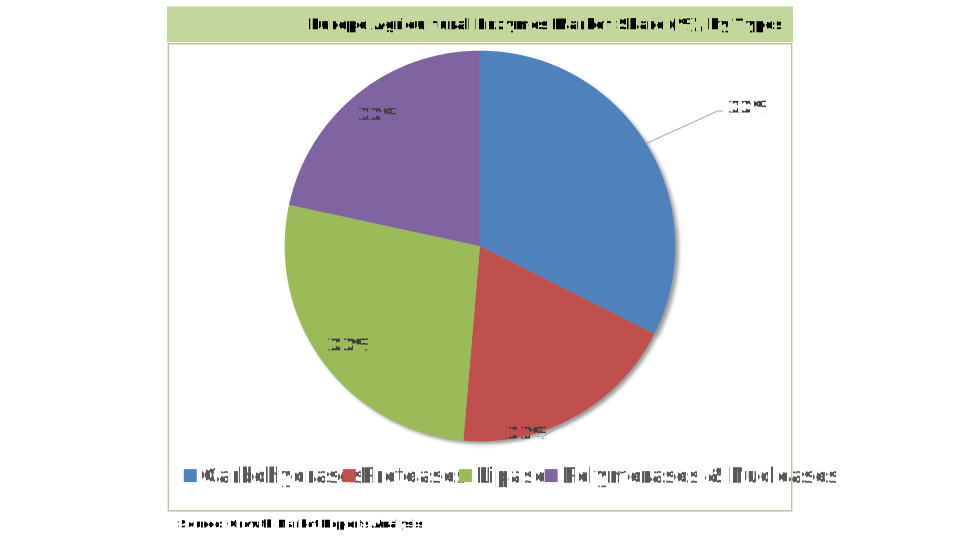
The agricultural enzymes market is segmented by product type into carbohydrases, proteases, lipases, polymerases & nucleases, and others. Carbohydrases, which include amylases and cellulases, dominate the market due to their crucial role in breaking down complex carbohydrates in soil organic matter, thereby enhancing nutrient availability for crops. The widespread use of carbohydrases in improving soil fertility and promoting plant growth has made them the largest product segment. Their effectiveness in decomposing crop residues and organic fertilizers aligns with the growing trend towards sustainable farming practices, further boosting their demand in both developed and emerging agricultural economies.

Proteases represent another significant segment, valued for their ability to break down proteins into simpler forms, which facilitates nutrient absorption by plants. The application of proteases is particularly beneficial in soils with high organic matter, where protein decomposition is essential for nutrient cycling. As farmers increasingly recognize the importance of soil health and balanced nutrition, the demand for protease-based products is on the rise. The development of innovative protease formulations tailored for specific soil and crop types is further enhancing their market penetration, making this segment a key contributor to the overall growth of the agricultural enzymes market.

Lipases, though a smaller segment compared to carbohydrases and proteases, are gaining traction in the agricultural sector due to their role in breaking down fats and oils in the soil. This process not only improves soil structure but also enhances the bioavailability of essential nutrients, supporting healthier crop growth. The adoption of lipase-based products is particularly notable in regions with intensive oilseed cultivation, where soil fertility management is a critical concern. As research continues to uncover new applications for lipases in agriculture, this segment is expected to witness steady growth over the forecast period.

Polymerases & nucleases, while representing a niche segment, are increasingly being explored for their potential in advanced agricultural applications, such as genetic modification and molecular diagnostics. These enzymes play a pivotal role in biotechnology-driven crop improvement programs, enabling precise genetic interventions and disease diagnostics. The growing investment in agricultural biotechnology research is expected to drive the demand for polymerases & nucleases, particularly in regions with strong R&D capabilities. The 'others' category includes specialized enzymes that address unique agricultural challenges, further expanding the product landscape and offering new growth avenues for market players.

Report Scope

Attributes Details
Report Title Agricultural Enzymes Market Research Report 2033
By Product Type Carbohydrases, Proteases, Lipases, Polymerases & Nucleases, Others
By Crop Type Cereals & Grains, Oilseeds & Pulses, Fruits & Vegetables, Others
By Application Fertility Products, Growth Enhancing Products, Control Products, Others
By Form Liquid, Granular, Others
Regions Covered North America, Europe, APAC, Latin America, MEA
Base Year 2024
Historic Data 2018-2023
Forecast Period 2025-2033
Number of Pages 280
Number of Tables & Figures 311
Customization Available Yes, the report can be customized as per your need.

Crop Type Analysis

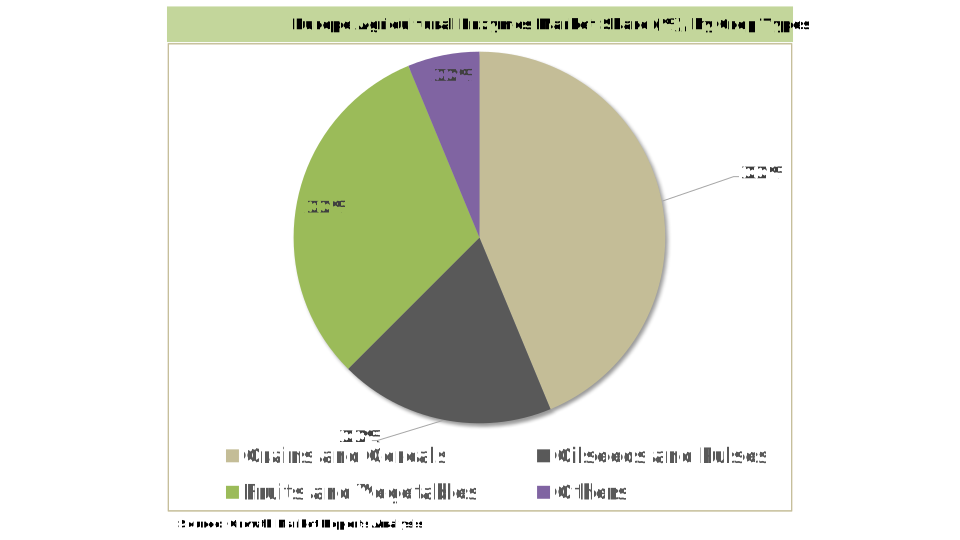
The agricultural enzymes market is also segmented by crop type, encompassing cereals & grains, oilseeds & pulses, fruits & vegetables, and others. Cereals & grains constitute the largest segment, accounting for a substantial share of the market. This dominance is attributed to the global significance of staple crops such as wheat, rice, and maize, which form the backbone of food security in many countries. Enzyme-based products are extensively used in the cultivation of cereals & grains to enhance soil fertility, improve nutrient uptake, and increase crop yields. The adoption of enzymes in this segment is further supported by government initiatives aimed at boosting staple crop production and ensuring food security.

Oilseeds & pulses represent another key crop type segment, driven by the increasing demand for edible oils and plant-based proteins. The use of agricultural enzymes in oilseed and pulse cultivation helps in breaking down organic matter, facilitating nutrient availability, and improving soil structure. This, in turn, leads to higher crop productivity and better quality yields. As the global market for plant-based foods continues to expand, the demand for enzyme-based solutions in oilseed and pulse production is expected to grow significantly, offering lucrative opportunities for market participants.

Fruits & vegetables, characterized by their high value and perishability, form an important segment of the agricultural enzymes market. Enzyme applications in this segment focus on enhancing soil health, promoting plant growth, and improving resistance to pests and diseases. The rising consumer preference for fresh, organic produce is driving the adoption of enzyme-based products among fruit and vegetable growers. Additionally, the need to minimize post-harvest losses and maintain crop quality during storage and transportation is fueling the demand for innovative enzyme solutions tailored for horticultural crops.

The 'others' category includes specialty crops, such as flowers, herbs, and medicinal plants, where enzyme-based inputs are used to address specific agronomic challenges. The expanding market for specialty crops, driven by changing dietary preferences and the growing demand for natural products, is creating new growth opportunities for agricultural enzyme manufacturers. As the agricultural sector continues to diversify, the crop type segment is expected to witness dynamic growth, with enzymes playing an increasingly vital role in enhancing productivity and sustainability across a wide range of crops.

Application Analysis

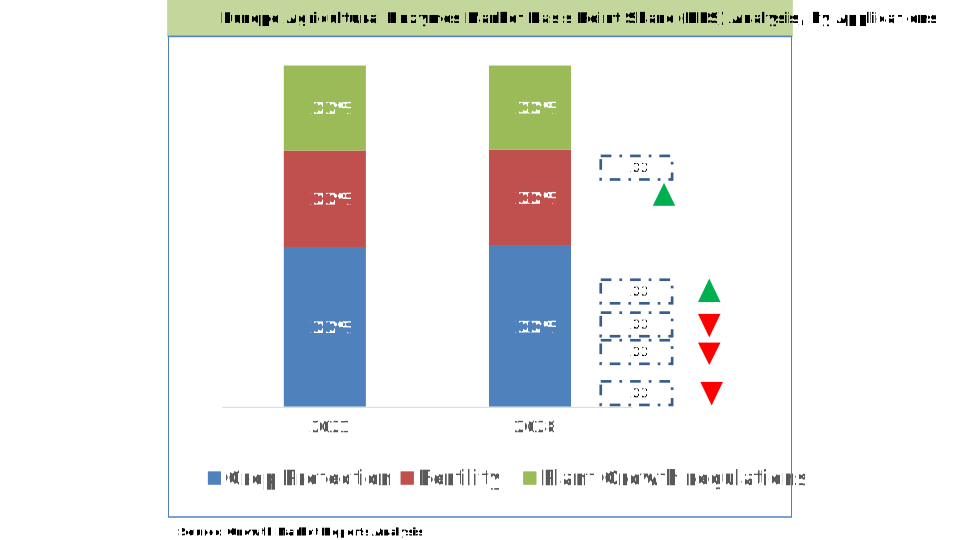
The application segment of the agricultural enzymes market includes fertility products, growth enhancing products, control products, and others. Fertility products represent the largest application segment, owing to their critical role in improving soil health and nutrient availability. Enzyme-based fertility products facilitate the decomposition of organic matter, enhance nutrient cycling, and promote the development of beneficial soil microorganisms. This not only boosts crop yields but also contributes to long-term soil sustainability, making these products highly attractive to farmers seeking to balance productivity with environmental stewardship.

Growth enhancing products are gaining significant traction as farmers and agribusinesses strive to maximize crop potential in the face of changing climatic conditions and resource constraints. These products leverage the power of enzymes to stimulate plant growth, enhance root development, and improve resistance to abiotic stresses. The increasing adoption of growth enhancing enzyme formulations is driven by the need to achieve higher productivity from limited arable land, as well as the growing focus on precision agriculture and resource optimization. Ongoing research and innovation in this segment are expected to yield new products with enhanced efficacy and broader application scope.

Control products, which include enzyme-based solutions for pest and disease management, are emerging as a vital component of integrated crop protection strategies. These products offer a sustainable alternative to chemical pesticides, reducing the risk of environmental contamination and the development of pest resistance. The adoption of enzyme-based control products is particularly pronounced in regions with stringent regulations on pesticide use and a strong emphasis on sustainable agriculture. As the market for biopesticides and biofungicides continues to expand, the control products segment is poised for robust growth, supported by ongoing advancements in enzyme technology.

The 'others' application segment encompasses a diverse range of enzyme-based products designed to address specific agricultural challenges, such as soil remediation, seed treatment, and post-harvest management. The growing recognition of the multifaceted benefits of agricultural enzymes is driving innovation in this segment, with manufacturers developing tailored solutions to meet the evolving needs of farmers and agronomists. As the agricultural sector becomes increasingly complex and diversified, the application segment is expected to witness sustained growth, with enzymes playing a central role in enhancing productivity, sustainability, and resilience.

Form Analysis

The agricultural enzymes market is further segmented by form into liquid, granular, and others. Liquid formulations dominate the market, owing to their ease of application, rapid action, and compatibility with a wide range of agricultural practices. Liquid enzyme products are particularly favored in large-scale commercial farming operations, where efficient application methods and uniform coverage are critical for achieving optimal results. The growing adoption of precision agriculture technologies is also driving the demand for liquid formulations, as they can be easily integrated into modern irrigation and fertigation systems.

Granular formulations represent a significant and growing segment of the agricultural enzymes market. These products offer several advantages, including ease of handling, longer shelf life, and suitability for use in both conventional and organic farming systems. Granular enzyme products are particularly well-suited for smallholder farmers and regions with limited access to advanced application equipment. The development of innovative granular formulations that deliver sustained enzyme activity and improved performance under diverse environmental conditions is expected to drive further growth in this segment.

The 'others' category includes specialized enzyme formulations, such as powders, capsules, and slow-release products, designed to address specific agronomic challenges and application requirements. These products are gaining traction in niche markets, including specialty crop production and organic farming, where customized solutions are often required. The ongoing trend towards product differentiation and value-added offerings is encouraging manufacturers to invest in the development of novel enzyme formulations tailored to the unique needs of different crops, soils, and farming systems.

Advancements in formulation technology are playing a pivotal role in shaping the form segment of the agricultural enzymes market. The development of stable, high-performance enzyme products that retain their activity under a wide range of storage and field conditions is a key focus area for industry players. As the market continues to evolve, the form segment is expected to witness increased innovation and diversification, with liquid, granular, and other formulations offering complementary solutions to meet the diverse needs of the global agricultural sector.

Opportunities & Threats

The agricultural enzymes market presents a wealth of opportunities for growth and innovation, driven by the increasing global focus on sustainable agriculture and environmental stewardship. The rising demand for organic and residue-free food products is creating significant opportunities for enzyme manufacturers to develop and market products that cater to the needs of organic and eco-conscious farmers. Additionally, the growing adoption of precision agriculture technologies is opening up new avenues for the integration of enzyme-based solutions into advanced crop management systems. Collaborations between industry players, research institutions, and government agencies are fostering innovation and driving the development of next-generation enzyme products with enhanced efficacy and broader application scope.

Emerging markets, particularly in Asia Pacific and Latin America, offer substantial growth potential for the agricultural enzymes market. Rapid population growth, expanding agricultural activities, and increasing awareness about the benefits of enzyme-based products are driving demand in these regions. Government initiatives aimed at promoting sustainable farming practices and improving food security are further supporting market expansion. The development of cost-effective enzyme formulations tailored to the specific needs of smallholder farmers and resource-constrained regions is expected to unlock new growth opportunities and enhance market penetration.

Despite the promising outlook, the agricultural enzymes market faces several restraining factors that could hinder its growth trajectory. One of the primary challenges is the relatively high cost of enzyme-based products compared to conventional agrochemicals, which can limit adoption among price-sensitive farmers, particularly in developing regions. Additionally, the lack of awareness and technical knowledge about the proper use and benefits of agricultural enzymes remains a significant barrier to market growth. Regulatory hurdles and the need for extensive field trials to demonstrate product efficacy and safety can also delay product approvals and market entry. Addressing these challenges will require concerted efforts from industry stakeholders, policymakers, and extension services to promote the adoption of agricultural enzymes and ensure their long-term success in the global agricultural sector.

Regional Outlook

North America remains the leading region in the global agricultural enzymes market, with a market size of approximately USD 180 million in 2024. The region's dominance is underpinned by the widespread adoption of advanced agricultural technologies, strong research and development infrastructure, and a high level of awareness about sustainable farming practices. The United States, in particular, is a major contributor to regional growth, driven by large-scale commercial farming operations and a strong focus on soil health and crop productivity. Canada is also witnessing increased adoption of enzyme-based products, supported by government initiatives to promote sustainable agriculture and reduce the environmental impact of conventional agrochemicals.

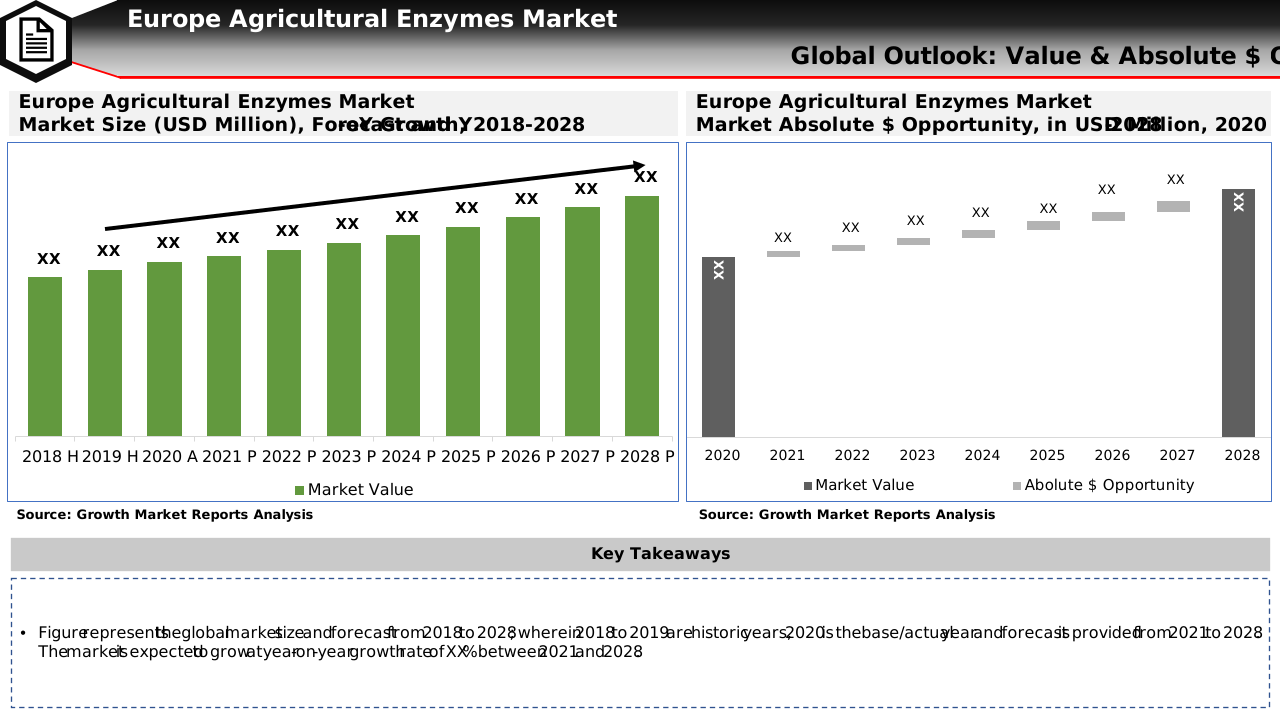
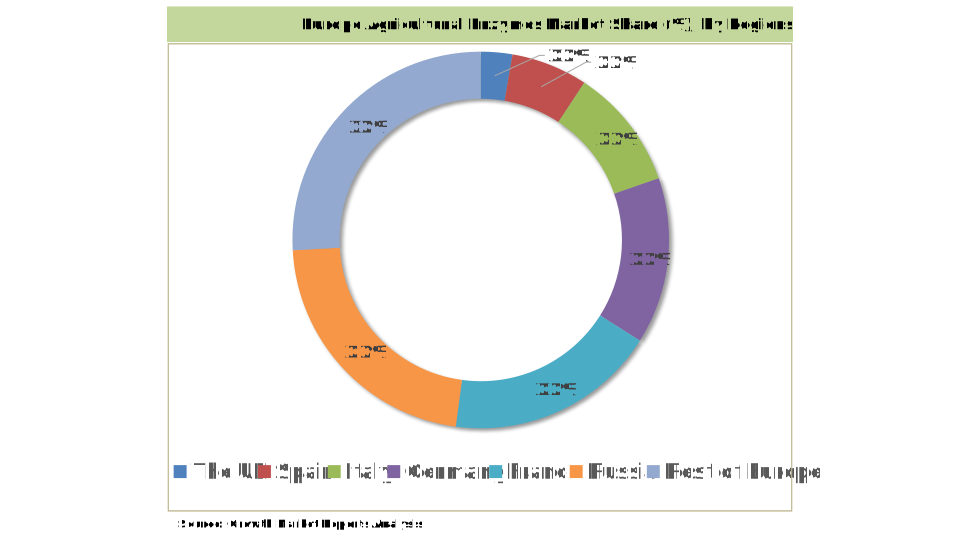
Europe is the second-largest market for agricultural enzymes, with a market size of USD 140 million in 2024. The region's growth is fueled by stringent environmental regulations, a well-established organic food market, and a strong emphasis on sustainable agriculture. Countries such as Germany, France, and the United Kingdom are at the forefront of enzyme adoption, driven by robust research and innovation ecosystems and supportive policy frameworks. The European Union's commitment to reducing chemical pesticide use and promoting biological alternatives is expected to further accelerate market growth, with a projected CAGR of 7.2% during the forecast period.

The Asia Pacific region is poised for the fastest growth in the agricultural enzymes market, with a market size of USD 120 million in 2024 and a projected CAGR of 9.4% through 2033. Rapid population growth, expanding agricultural activities, and increasing government support for sustainable farming practices are driving demand for enzyme-based products in countries such as China, India, and Australia. The region's large and diverse agricultural sector offers significant opportunities for market expansion, particularly in the context of rising food security concerns and the need to enhance crop productivity. Latin America and the Middle East & Africa, with market sizes of USD 65 million and USD 46.2 million respectively in 2024, are emerging as promising markets, supported by government initiatives to boost agricultural productivity and promote sustainable farming practices.

 Agricultural Enzymes Market Statistics

Competitor Outlook

The agricultural enzymes market is highly competitive, characterized by the presence of a diverse mix of multinational corporations, regional players, and emerging startups. The competitive landscape is shaped by ongoing innovation, strategic partnerships, and a strong focus on research and development. Leading companies are investing heavily in the development of novel enzyme formulations, tailored solutions for specific crop types and agro-climatic conditions, and advanced delivery systems that enhance product efficacy and ease of use. Mergers, acquisitions, and collaborations with research institutions and agricultural organizations are common strategies employed by market leaders to strengthen their market position and expand their product portfolios.

Innovation is a key differentiator in the agricultural enzymes market, with companies competing to develop products that deliver superior performance, cost-effectiveness, and environmental benefits. The ability to offer customized solutions that address the unique needs of different crops, soils, and farming systems is increasingly important in gaining a competitive edge. Market leaders are also focusing on expanding their global footprint through strategic partnerships, joint ventures, and distribution agreements, particularly in high-growth regions such as Asia Pacific and Latin America. The competitive landscape is further shaped by the entry of new players, who are leveraging advanced biotechnological tools and digital platforms to disrupt traditional business models and drive market innovation.

Regulatory compliance and product quality are critical factors influencing the competitive dynamics of the agricultural enzymes market. Companies are required to adhere to stringent regulatory standards governing product safety, efficacy, and environmental impact, particularly in developed markets such as North America and Europe. The ability to navigate complex regulatory environments and secure timely product approvals is a key determinant of market success. Leading players are investing in robust quality assurance systems, extensive field trials, and comprehensive product documentation to ensure compliance and build trust among customers and regulatory authorities.

Some of the major companies operating in the agricultural enzymes market include Novozymes A/S, BASF SE, DuPont de Nemours, Inc. (Corteva Agriscience), Bayer AG, Syngenta AG, American Biosystems, Inc., and Stoller USA Inc. Novozymes A/S is a global leader in enzyme production, with a strong focus on innovation and sustainability. BASF SE and Bayer AG are leveraging their extensive research capabilities and global distribution networks to expand their agricultural enzyme portfolios. DuPont (Corteva Agriscience) is at the forefront of developing enzyme-based solutions for crop protection and productivity enhancement. Syngenta AG is investing in integrated crop management solutions that combine enzyme technology with digital agriculture tools. American Biosystems, Inc. and Stoller USA Inc. are notable for their focus on tailored enzyme products for specific crop and soil challenges. These companies are continually investing in R&D, strategic partnerships, and market expansion initiatives to maintain their competitive edge and drive growth in the rapidly evolving agricultural enzymes market.

Key Players

  • Novozymes A/S
  • BASF SE
  • DuPont de Nemours, Inc.
  • DSM N.V.
  • Bayer AG
  • Syngenta AG
  • Monsanto Company
  • Advanced Enzyme Technologies Ltd.
  • American Biosystems, Inc.
  • BioWorks, Inc.
  • Stoller USA Inc.
  • Camson Bio Technologies Limited
  • Agri Life
  • Enzyme India Pvt. Ltd.
  • Aumgene Biosciences
  • Deepak Fertilisers and Petrochemicals Corporation Ltd.
  • Greenmax AgroTech
  • Creative Enzymes
  • Novus International, Inc.
  • Chr. Hansen Holding A/S
 Agricultural Enzymes Market Overview

Segments

The Agricultural Enzymes market has been segmented on the basis of

Product Type

  • Carbohydrases
  • Proteases
  • Lipases
  • Polymerases & Nucleases
  • Others

Crop Type

  • Cereals & Grains
  • Oilseeds & Pulses
  • Fruits & Vegetables
  • Others

Application

  • Fertility Products
  • Growth Enhancing Products
  • Control Products
  • Others

Form

  • Liquid
  • Granular
  • Others

Competitive Landscape

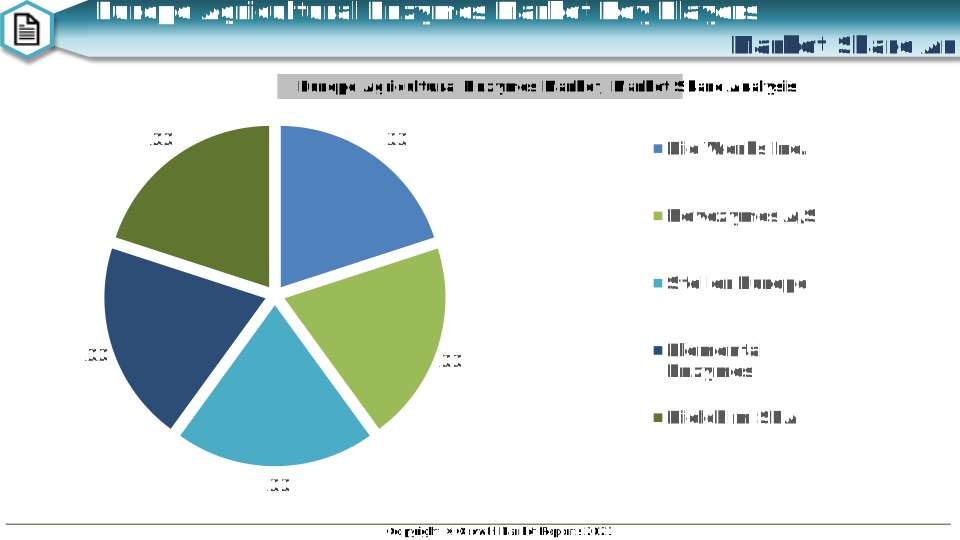
Key players competing in the Europe agricultural enzymes market includes Bio Works Inc.; Novozymes A/S; Stoller Europe; Elemental Enzymes; and Biolchim SPA.

Some of these players are engaging in business strategies such as mergers, acquisitions, partnerships, collaborations, capacity expansion, and product launches to enhance their market share.

Europe Agricultural Enzymes Market

Frequently Asked Questions

Innovation is driving the market through the development of tailored enzyme formulations, advanced delivery systems, and products designed for specific crops and agro-climatic conditions, often supported by strategic partnerships and R&D investments.

Major companies include Novozymes A/S, BASF SE, DuPont de Nemours, Inc. (Corteva Agriscience), Bayer AG, Syngenta AG, American Biosystems, Inc., and Stoller USA Inc., among others.

Challenges include the higher cost of enzyme-based products compared to traditional agrochemicals, lack of awareness among farmers, and regulatory hurdles related to product approval and field trials.

Agricultural enzymes are available in liquid, granular, and other forms such as powders and capsules. Liquid formulations dominate due to ease of application and compatibility with modern farming practices.

Key applications include fertility products (for soil health), growth enhancing products (for plant development), control products (for pest and disease management), and other specialized uses like soil remediation and seed treatment.

Agricultural enzymes are used in cereals & grains, oilseeds & pulses, fruits & vegetables, and specialty crops to enhance soil fertility, nutrient uptake, crop yield, and resistance to pests and diseases.

The market is segmented into carbohydrases (including amylases and cellulases), proteases, lipases, polymerases & nucleases, and other specialized enzymes.

North America leads the market, followed by Europe. Asia Pacific is expected to see the fastest growth, while Latin America and the Middle East & Africa are emerging markets with strong government support for sustainable agriculture.

Key growth drivers include increasing demand for sustainable agriculture, rising preference for organic food, technological advancements in enzyme engineering, and government support for biological over chemical agricultural inputs.

The global agricultural enzymes market is valued at USD 551.2 million in 2024 and is projected to reach USD 1,090.1 million by 2033, growing at a CAGR of 7.8% from 2025 to 2033.

Table Of Content

Chapter 1 Executive Summary
Chapter 2 Assumptions and Acronyms Used
Chapter 3 Research Methodology
Chapter 4  Agricultural Enzymes Market Overview
   4.1 Introduction
      4.1.1 Market Taxonomy
      4.1.2 Market Definition
      4.1.3 Macro-Economic Factors Impacting the Market Growth
   4.2  Agricultural Enzymes Market Dynamics
      4.2.1 Market Drivers
      4.2.2 Market Restraints
      4.2.3 Market Opportunity
   4.3  Agricultural Enzymes Market - Supply Chain Analysis
      4.3.1 List of Key Suppliers
      4.3.2 List of Key Distributors
      4.3.3 List of Key Consumers
   4.4 Key Forces Shaping the  Agricultural Enzymes Market
      4.4.1 Bargaining Power of Suppliers
      4.4.2 Bargaining Power of Buyers
      4.4.3 Threat of Substitution
      4.4.4 Threat of New Entrants
      4.4.5 Competitive Rivalry
   4.5 Global  Agricultural Enzymes Market Size & Forecast, 2023-2032
      4.5.1  Agricultural Enzymes Market Size and Y-o-Y Growth
      4.5.2  Agricultural Enzymes Market Absolute $ Opportunity

Chapter 5 Global  Agricultural Enzymes Market Analysis and Forecast By Product Type
   5.1 Introduction
      5.1.1 Key Market Trends & Growth Opportunities By Product Type
      5.1.2 Basis Point Share (BPS) Analysis By Product Type
      5.1.3 Absolute $ Opportunity Assessment By Product Type
   5.2  Agricultural Enzymes Market Size Forecast By Product Type
      5.2.1 Carbohydrases
      5.2.2 Proteases
      5.2.3 Lipases
      5.2.4 Polymerases & Nucleases
      5.2.5 Others
   5.3 Market Attractiveness Analysis By Product Type

Chapter 6 Global  Agricultural Enzymes Market Analysis and Forecast By Crop Type
   6.1 Introduction
      6.1.1 Key Market Trends & Growth Opportunities By Crop Type
      6.1.2 Basis Point Share (BPS) Analysis By Crop Type
      6.1.3 Absolute $ Opportunity Assessment By Crop Type
   6.2  Agricultural Enzymes Market Size Forecast By Crop Type
      6.2.1 Cereals & Grains
      6.2.2 Oilseeds & Pulses
      6.2.3 Fruits & Vegetables
      6.2.4 Others
   6.3 Market Attractiveness Analysis By Crop Type

Chapter 7 Global  Agricultural Enzymes Market Analysis and Forecast By Application
   7.1 Introduction
      7.1.1 Key Market Trends & Growth Opportunities By Application
      7.1.2 Basis Point Share (BPS) Analysis By Application
      7.1.3 Absolute $ Opportunity Assessment By Application
   7.2  Agricultural Enzymes Market Size Forecast By Application
      7.2.1 Fertility Products
      7.2.2 Growth Enhancing Products
      7.2.3 Control Products
      7.2.4 Others
   7.3 Market Attractiveness Analysis By Application

Chapter 8 Global  Agricultural Enzymes Market Analysis and Forecast By Form
   8.1 Introduction
      8.1.1 Key Market Trends & Growth Opportunities By Form
      8.1.2 Basis Point Share (BPS) Analysis By Form
      8.1.3 Absolute $ Opportunity Assessment By Form
   8.2  Agricultural Enzymes Market Size Forecast By Form
      8.2.1 Liquid
      8.2.2 Granular
      8.2.3 Others
   8.3 Market Attractiveness Analysis By Form

Chapter 9 Global  Agricultural Enzymes Market Analysis and Forecast by Region
   9.1 Introduction
      9.1.1 Key Market Trends & Growth Opportunities By Region
      9.1.2 Basis Point Share (BPS) Analysis By Region
      9.1.3 Absolute $ Opportunity Assessment By Region
   9.2  Agricultural Enzymes Market Size Forecast By Region
      9.2.1 North America
      9.2.2 Europe
      9.2.3 Asia Pacific
      9.2.4 Latin America
      9.2.5 Middle East & Africa (MEA)
   9.3 Market Attractiveness Analysis By Region

Chapter 10 Coronavirus Disease (COVID-19) Impact 
   10.1 Introduction 
   10.2 Current & Future Impact Analysis 
   10.3 Economic Impact Analysis 
   10.4 Government Policies 
   10.5 Investment Scenario

Chapter 11 North America  Agricultural Enzymes Analysis and Forecast
   11.1 Introduction
   11.2 North America  Agricultural Enzymes Market Size Forecast by Country
      11.2.1 U.S.
      11.2.2 Canada
   11.3 Basis Point Share (BPS) Analysis by Country
   11.4 Absolute $ Opportunity Assessment by Country
   11.5 Market Attractiveness Analysis by Country
   11.6 North America  Agricultural Enzymes Market Size Forecast By Product Type
      11.6.1 Carbohydrases
      11.6.2 Proteases
      11.6.3 Lipases
      11.6.4 Polymerases & Nucleases
      11.6.5 Others
   11.7 Basis Point Share (BPS) Analysis By Product Type 
   11.8 Absolute $ Opportunity Assessment By Product Type 
   11.9 Market Attractiveness Analysis By Product Type
   11.10 North America  Agricultural Enzymes Market Size Forecast By Crop Type
      11.10.1 Cereals & Grains
      11.10.2 Oilseeds & Pulses
      11.10.3 Fruits & Vegetables
      11.10.4 Others
   11.11 Basis Point Share (BPS) Analysis By Crop Type 
   11.12 Absolute $ Opportunity Assessment By Crop Type 
   11.13 Market Attractiveness Analysis By Crop Type
   11.14 North America  Agricultural Enzymes Market Size Forecast By Application
      11.14.1 Fertility Products
      11.14.2 Growth Enhancing Products
      11.14.3 Control Products
      11.14.4 Others
   11.15 Basis Point Share (BPS) Analysis By Application 
   11.16 Absolute $ Opportunity Assessment By Application 
   11.17 Market Attractiveness Analysis By Application
   11.18 North America  Agricultural Enzymes Market Size Forecast By Form
      11.18.1 Liquid
      11.18.2 Granular
      11.18.3 Others
   11.19 Basis Point Share (BPS) Analysis By Form 
   11.20 Absolute $ Opportunity Assessment By Form 
   11.21 Market Attractiveness Analysis By Form

Chapter 12 Europe  Agricultural Enzymes Analysis and Forecast
   12.1 Introduction
   12.2 Europe  Agricultural Enzymes Market Size Forecast by Country
      12.2.1 Germany
      12.2.2 France
      12.2.3 Italy
      12.2.4 U.K.
      12.2.5 Spain
      12.2.6 Russia
      12.2.7 Rest of Europe
   12.3 Basis Point Share (BPS) Analysis by Country
   12.4 Absolute $ Opportunity Assessment by Country
   12.5 Market Attractiveness Analysis by Country
   12.6 Europe  Agricultural Enzymes Market Size Forecast By Product Type
      12.6.1 Carbohydrases
      12.6.2 Proteases
      12.6.3 Lipases
      12.6.4 Polymerases & Nucleases
      12.6.5 Others
   12.7 Basis Point Share (BPS) Analysis By Product Type 
   12.8 Absolute $ Opportunity Assessment By Product Type 
   12.9 Market Attractiveness Analysis By Product Type
   12.10 Europe  Agricultural Enzymes Market Size Forecast By Crop Type
      12.10.1 Cereals & Grains
      12.10.2 Oilseeds & Pulses
      12.10.3 Fruits & Vegetables
      12.10.4 Others
   12.11 Basis Point Share (BPS) Analysis By Crop Type 
   12.12 Absolute $ Opportunity Assessment By Crop Type 
   12.13 Market Attractiveness Analysis By Crop Type
   12.14 Europe  Agricultural Enzymes Market Size Forecast By Application
      12.14.1 Fertility Products
      12.14.2 Growth Enhancing Products
      12.14.3 Control Products
      12.14.4 Others
   12.15 Basis Point Share (BPS) Analysis By Application 
   12.16 Absolute $ Opportunity Assessment By Application 
   12.17 Market Attractiveness Analysis By Application
   12.18 Europe  Agricultural Enzymes Market Size Forecast By Form
      12.18.1 Liquid
      12.18.2 Granular
      12.18.3 Others
   12.19 Basis Point Share (BPS) Analysis By Form 
   12.20 Absolute $ Opportunity Assessment By Form 
   12.21 Market Attractiveness Analysis By Form

Chapter 13 Asia Pacific  Agricultural Enzymes Analysis and Forecast
   13.1 Introduction
   13.2 Asia Pacific  Agricultural Enzymes Market Size Forecast by Country
      13.2.1 China
      13.2.2 Japan
      13.2.3 South Korea
      13.2.4 India
      13.2.5 Australia
      13.2.6 South East Asia (SEA)
      13.2.7 Rest of Asia Pacific (APAC)
   13.3 Basis Point Share (BPS) Analysis by Country
   13.4 Absolute $ Opportunity Assessment by Country
   13.5 Market Attractiveness Analysis by Country
   13.6 Asia Pacific  Agricultural Enzymes Market Size Forecast By Product Type
      13.6.1 Carbohydrases
      13.6.2 Proteases
      13.6.3 Lipases
      13.6.4 Polymerases & Nucleases
      13.6.5 Others
   13.7 Basis Point Share (BPS) Analysis By Product Type 
   13.8 Absolute $ Opportunity Assessment By Product Type 
   13.9 Market Attractiveness Analysis By Product Type
   13.10 Asia Pacific  Agricultural Enzymes Market Size Forecast By Crop Type
      13.10.1 Cereals & Grains
      13.10.2 Oilseeds & Pulses
      13.10.3 Fruits & Vegetables
      13.10.4 Others
   13.11 Basis Point Share (BPS) Analysis By Crop Type 
   13.12 Absolute $ Opportunity Assessment By Crop Type 
   13.13 Market Attractiveness Analysis By Crop Type
   13.14 Asia Pacific  Agricultural Enzymes Market Size Forecast By Application
      13.14.1 Fertility Products
      13.14.2 Growth Enhancing Products
      13.14.3 Control Products
      13.14.4 Others
   13.15 Basis Point Share (BPS) Analysis By Application 
   13.16 Absolute $ Opportunity Assessment By Application 
   13.17 Market Attractiveness Analysis By Application
   13.18 Asia Pacific  Agricultural Enzymes Market Size Forecast By Form
      13.18.1 Liquid
      13.18.2 Granular
      13.18.3 Others
   13.19 Basis Point Share (BPS) Analysis By Form 
   13.20 Absolute $ Opportunity Assessment By Form 
   13.21 Market Attractiveness Analysis By Form

Chapter 14 Latin America  Agricultural Enzymes Analysis and Forecast
   14.1 Introduction
   14.2 Latin America  Agricultural Enzymes Market Size Forecast by Country
      14.2.1 Brazil
      14.2.2 Mexico
      14.2.3 Rest of Latin America (LATAM)
   14.3 Basis Point Share (BPS) Analysis by Country
   14.4 Absolute $ Opportunity Assessment by Country
   14.5 Market Attractiveness Analysis by Country
   14.6 Latin America  Agricultural Enzymes Market Size Forecast By Product Type
      14.6.1 Carbohydrases
      14.6.2 Proteases
      14.6.3 Lipases
      14.6.4 Polymerases & Nucleases
      14.6.5 Others
   14.7 Basis Point Share (BPS) Analysis By Product Type 
   14.8 Absolute $ Opportunity Assessment By Product Type 
   14.9 Market Attractiveness Analysis By Product Type
   14.10 Latin America  Agricultural Enzymes Market Size Forecast By Crop Type
      14.10.1 Cereals & Grains
      14.10.2 Oilseeds & Pulses
      14.10.3 Fruits & Vegetables
      14.10.4 Others
   14.11 Basis Point Share (BPS) Analysis By Crop Type 
   14.12 Absolute $ Opportunity Assessment By Crop Type 
   14.13 Market Attractiveness Analysis By Crop Type
   14.14 Latin America  Agricultural Enzymes Market Size Forecast By Application
      14.14.1 Fertility Products
      14.14.2 Growth Enhancing Products
      14.14.3 Control Products
      14.14.4 Others
   14.15 Basis Point Share (BPS) Analysis By Application 
   14.16 Absolute $ Opportunity Assessment By Application 
   14.17 Market Attractiveness Analysis By Application
   14.18 Latin America  Agricultural Enzymes Market Size Forecast By Form
      14.18.1 Liquid
      14.18.2 Granular
      14.18.3 Others
   14.19 Basis Point Share (BPS) Analysis By Form 
   14.20 Absolute $ Opportunity Assessment By Form 
   14.21 Market Attractiveness Analysis By Form

Chapter 15 Middle East & Africa (MEA)  Agricultural Enzymes Analysis and Forecast
   15.1 Introduction
   15.2 Middle East & Africa (MEA)  Agricultural Enzymes Market Size Forecast by Country
      15.2.1 Saudi Arabia
      15.2.2 South Africa
      15.2.3 UAE
      15.2.4 Rest of Middle East & Africa (MEA)
   15.3 Basis Point Share (BPS) Analysis by Country
   15.4 Absolute $ Opportunity Assessment by Country
   15.5 Market Attractiveness Analysis by Country
   15.6 Middle East & Africa (MEA)  Agricultural Enzymes Market Size Forecast By Product Type
      15.6.1 Carbohydrases
      15.6.2 Proteases
      15.6.3 Lipases
      15.6.4 Polymerases & Nucleases
      15.6.5 Others
   15.7 Basis Point Share (BPS) Analysis By Product Type 
   15.8 Absolute $ Opportunity Assessment By Product Type 
   15.9 Market Attractiveness Analysis By Product Type
   15.10 Middle East & Africa (MEA)  Agricultural Enzymes Market Size Forecast By Crop Type
      15.10.1 Cereals & Grains
      15.10.2 Oilseeds & Pulses
      15.10.3 Fruits & Vegetables
      15.10.4 Others
   15.11 Basis Point Share (BPS) Analysis By Crop Type 
   15.12 Absolute $ Opportunity Assessment By Crop Type 
   15.13 Market Attractiveness Analysis By Crop Type
   15.14 Middle East & Africa (MEA)  Agricultural Enzymes Market Size Forecast By Application
      15.14.1 Fertility Products
      15.14.2 Growth Enhancing Products
      15.14.3 Control Products
      15.14.4 Others
   15.15 Basis Point Share (BPS) Analysis By Application 
   15.16 Absolute $ Opportunity Assessment By Application 
   15.17 Market Attractiveness Analysis By Application
   15.18 Middle East & Africa (MEA)  Agricultural Enzymes Market Size Forecast By Form
      15.18.1 Liquid
      15.18.2 Granular
      15.18.3 Others
   15.19 Basis Point Share (BPS) Analysis By Form 
   15.20 Absolute $ Opportunity Assessment By Form 
   15.21 Market Attractiveness Analysis By Form

Chapter 16 Competition Landscape 
   16.1  Agricultural Enzymes Market: Competitive Dashboard
   16.2 Global  Agricultural Enzymes Market: Market Share Analysis, 2023
   16.3 Company Profiles (Details – Overview, Financials, Developments, Strategy) 
      16.3.1 Novozymes A/S
BASF SE
DuPont de Nemours, Inc.
DSM N.V.
Bayer AG
Syngenta AG
Monsanto Company
Advanced Enzyme Technologies Ltd.
American Biosystems, Inc.
BioWorks, Inc.
Stoller USA Inc.
Camson Bio Technologies Limited
Agri Life
Enzyme India Pvt. Ltd.
Aumgene Biosciences
Deepak Fertilisers and Petrochemicals Corporation Ltd.
Greenmax AgroTech
Creative Enzymes
Novus International, Inc.
Chr. Hansen Holding A/S

Methodology

Our Clients

Dassault Aviation
Microsoft
Honda Motor Co. Ltd.
Nestle SA
sinopec
Pfizer
Siemens Healthcare
General Mills