Segments - by Component (Solutions, Services), by Authentication Type (Biometrics, Smart Cards, Mobile Authentication, Multi-factor Authentication, Others), by Deployment Mode (On-Premises, Cloud), by Organization Size (Small and Medium Enterprises, Large Enterprises), by End-User (BFSI, Healthcare, Government, IT and Telecom, Retail, Others)
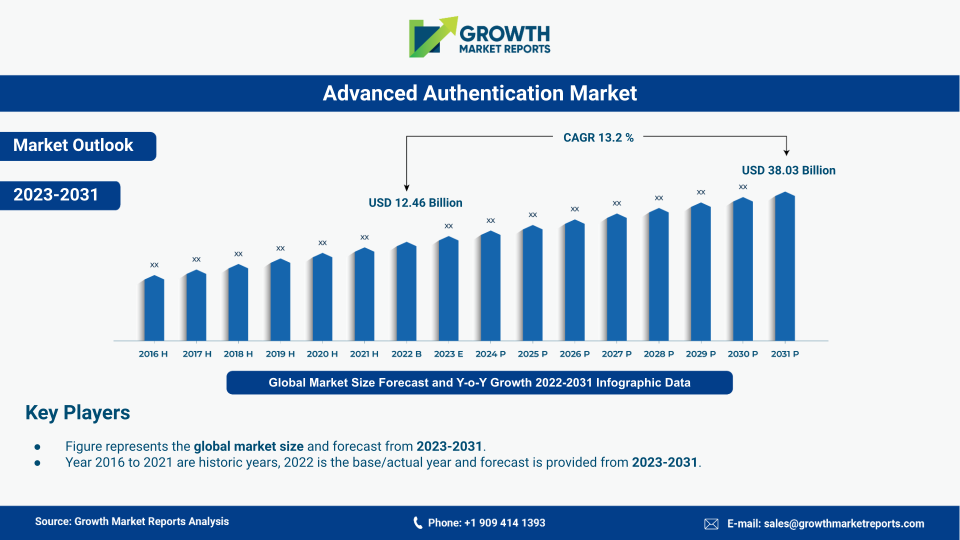
According to our latest research, the global advanced authentication market size was valued at USD 15.2 billion in 2024, demonstrating robust expansion driven by the increasing need for secure digital identity solutions. The market is expected to grow at a CAGR of 13.7% from 2025 to 2033, reaching a forecasted value of USD 47.2 billion by 2033. This growth is primarily fueled by escalating cyber threats, regulatory mandates for enhanced security, and the rapid digitization of enterprises across various sectors. The advanced authentication market is witnessing a significant transformation, with organizations worldwide prioritizing multi-layered security frameworks to safeguard critical assets and sensitive information.
A key growth factor for the advanced authentication market is the surge in cyberattacks and data breaches, which have become increasingly sophisticated and frequent over the past few years. Organizations are now facing immense pressure to protect both their internal and customer-facing applications from unauthorized access and identity theft. As a result, there is a strong shift towards adopting advanced authentication solutions such as multi-factor authentication (MFA), biometrics, and smart cards. These technologies provide an additional layer of security beyond traditional username and password combinations, thereby significantly reducing the risk of account compromise. The proliferation of mobile devices and remote work culture post-pandemic has further amplified the need for robust authentication mechanisms, as endpoints have become more dispersed and vulnerable to attack.
Another significant driver propelling the advanced authentication market is the tightening regulatory landscape across regions. Governments and regulatory bodies globally are enforcing stringent compliance standards, such as GDPR in Europe, CCPA in California, and PSD2 in the banking sector, all of which mandate enhanced identity verification and data protection measures. These regulations are compelling organizations to upgrade their legacy authentication systems and adopt advanced solutions that ensure compliance while delivering seamless user experiences. Furthermore, the integration of artificial intelligence (AI) and machine learning (ML) into authentication platforms is enabling real-time threat detection and adaptive security, further bolstering market growth. Enterprises are also leveraging these innovations to streamline onboarding processes and reduce friction for legitimate users.
The rapid digital transformation across industries is also playing a pivotal role in the expansion of the advanced authentication market. Sectors such as BFSI, healthcare, and retail are embracing digital channels for service delivery, necessitating secure and reliable authentication frameworks. The rise of cloud computing, Internet of Things (IoT), and connected devices has increased the attack surface, making it imperative for organizations to deploy scalable and flexible authentication solutions. Advanced authentication not only mitigates security risks but also enhances operational efficiency by automating identity verification and reducing dependency on manual intervention. As businesses continue to digitize their operations and customer interactions, the demand for advanced authentication technologies is expected to witness sustained growth throughout the forecast period.
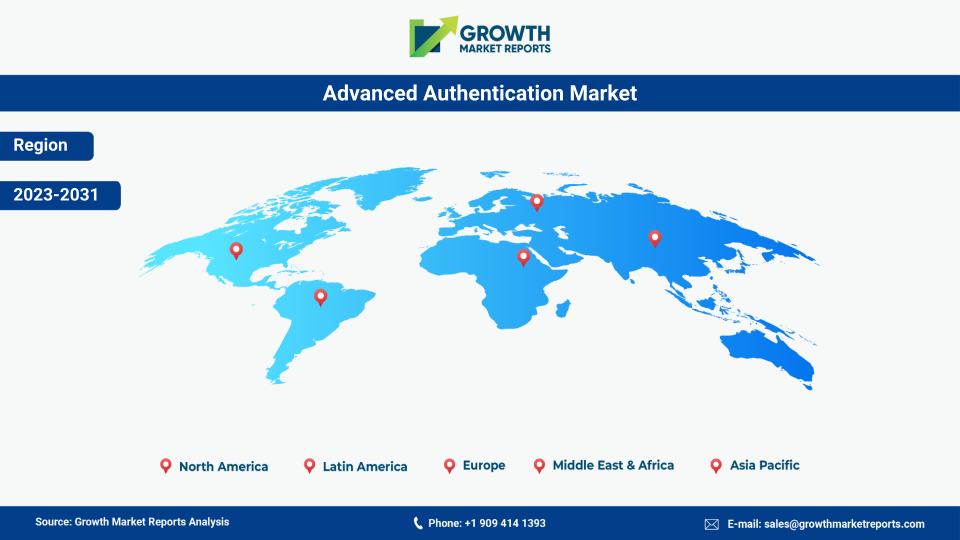
Regionally, North America continues to dominate the advanced authentication market, accounting for the largest revenue share in 2024, followed closely by Europe and the Asia Pacific. This dominance is attributed to the presence of major technology providers, early adoption of innovative security solutions, and a highly regulated environment. However, the Asia Pacific region is anticipated to witness the fastest CAGR over the forecast period, driven by rapid digitalization, increasing cyber threats, and growing awareness about data protection. Emerging economies in Latin America and the Middle East & Africa are also experiencing accelerated adoption, supported by government initiatives and investments in digital infrastructure. Overall, the global advanced authentication market is poised for substantial growth, underpinned by technological advancements and evolving security requirements.
The advanced authentication market is segmented by component into solutions and services, with both segments playing crucial roles in the overall value chain. The solutions segment encompasses a wide array of authentication technologies, including biometrics, smart cards, tokens, and multi-factor authentication platforms. These solutions are designed to address the growing complexity of cyber threats by providing robust security mechanisms for identity verification and access control. Enterprises across various industries are increasingly investing in advanced authentication solutions to protect sensitive data, ensure regulatory compliance, and enhance user trust. The solutions market is characterized by continuous innovation, with vendors integrating AI, ML, and behavioral analytics to deliver adaptive and context-aware authentication experiences.
On the other hand, the services segment includes consulting, integration, maintenance, and support services, which are essential for the successful deployment and management of advanced authentication systems. As organizations grapple with the challenges of integrating new authentication technologies into existing IT infrastructures, the demand for specialized services is on the rise. Service providers offer end-to-end support, from initial assessment and solution design to implementation, training, and ongoing maintenance. This comprehensive approach ensures that enterprises can maximize the value of their authentication investments while minimizing operational disruptions and security risks. The services segment is expected to witness steady growth, particularly as businesses seek to accelerate digital transformation and navigate evolving threat landscapes.
A notable trend within the component segment is the growing emphasis on managed authentication services, where third-party providers take responsibility for the day-to-day management and monitoring of authentication systems. This model is gaining traction among small and medium enterprises (SMEs) that lack in-house expertise and resources to maintain complex security infrastructures. Managed services not only reduce the burden on internal IT teams but also provide access to advanced threat intelligence and rapid incident response capabilities. As cyber threats become more sophisticated, the value proposition of managed authentication services is expected to strengthen, driving further adoption across the market.
The interplay between solutions and services is critical to the success of advanced authentication initiatives. While innovative solutions provide the technological foundation for secure identity management, high-quality services ensure seamless integration, user adoption, and ongoing optimization. Vendors are increasingly offering bundled solutions that combine cutting-edge authentication technologies with tailored services, enabling organizations to address their unique security challenges effectively. This holistic approach is particularly appealing to enterprises undergoing digital transformation, as it simplifies procurement, reduces total cost of ownership, and accelerates time-to-value. As the advanced authentication market continues to evolve, the synergy between solutions and services will remain a key driver of market growth and differentiation.
| Attributes | Details |
| Report Title | Advanced Authentication Market Research Report 2033 |
| By Component | Solutions, Services |
| By Authentication Type | Biometrics, Smart Cards, Mobile Authentication, Multi-factor Authentication, Others |
| By Deployment Mode | On-Premises, Cloud |
| By Organization Size | Small and Medium Enterprises, Large Enterprises |
| By End-User | BFSI, Healthcare, Government, IT and Telecom, Retail, Others |
| Regions Covered | North America, Europe, APAC, Latin America, MEA |
| Base Year | 2024 |
| Historic Data | 2018-2023 |
| Forecast Period | 2025-2033 |
| Number of Pages | 296 |
| Number of Tables & Figures | 378 |
| Customization Available | Yes, the report can be customized as per your need. |
The authentication type segment of the advanced authentication market encompasses a diverse range of technologies, including biometrics, smart cards, mobile authentication, multi-factor authentication (MFA), and others. Biometrics, which includes fingerprint, facial, iris, and voice recognition, has emerged as one of the most secure and user-friendly authentication methods. The adoption of biometric authentication is being driven by its ability to provide high levels of accuracy, convenience, and resistance to spoofing attacks. Sectors such as banking, healthcare, and government are at the forefront of biometric adoption, leveraging these technologies to enhance security and streamline user experiences. The integration of biometrics with mobile devices and cloud platforms is further expanding its reach and applicability across various use cases.
Smart cards represent another significant authentication type, offering a physical token-based approach to identity verification. Smart cards are widely used in sectors that require high assurance levels, such as government, defense, and financial services. They provide secure storage of credentials and support multi-factor authentication by combining something the user has (the card) with something the user knows (a PIN or password). The adoption of smart cards is being bolstered by advancements in chip technology, increased interoperability, and growing regulatory requirements for secure access control. While the market for smart cards remains robust, it is facing competition from more flexible and scalable authentication methods, such as mobile and cloud-based solutions.
Mobile authentication is gaining significant traction, driven by the proliferation of smartphones and the shift towards mobile-first digital experiences. Mobile authentication leverages device-based credentials, biometrics, and one-time passwords (OTPs) to facilitate secure and convenient access to applications and services. The widespread adoption of mobile banking, e-commerce, and remote work solutions is fueling the demand for mobile authentication, as organizations seek to balance security with user convenience. Vendors are continuously innovating in this space, introducing features such as push notifications, QR code scanning, and adaptive authentication to enhance security and usability. As mobile devices become the primary access point for digital services, mobile authentication is expected to witness sustained growth.
Multi-factor authentication (MFA) remains the cornerstone of advanced authentication strategies, providing a layered approach to security by requiring users to present multiple forms of verification. MFA combines something the user knows (password), something the user has (token or device), and something the user is (biometric) to ensure robust identity verification. The adoption of MFA is being driven by regulatory mandates, increasing cyber threats, and the need for secure remote access. Organizations across industries are deploying MFA to protect critical systems, sensitive data, and customer accounts from unauthorized access. The market for MFA is characterized by continuous innovation, with vendors integrating risk-based authentication, behavioral analytics, and AI-driven threat detection to deliver adaptive and context-aware security.
The deployment mode segment of the advanced authentication market is bifurcated into on-premises and cloud-based solutions, each catering to distinct organizational needs and preferences. On-premises deployment remains a preferred choice for organizations with stringent data sovereignty, privacy, and compliance requirements. Sectors such as government, defense, and financial services often opt for on-premises authentication solutions to maintain full control over their security infrastructure and sensitive data. On-premises deployments offer the advantage of customization, integration with legacy systems, and enhanced security, albeit at the cost of higher upfront investments and ongoing maintenance. Despite the growing popularity of cloud-based solutions, on-premises deployments continue to hold significant market share, particularly in highly regulated industries.
Cloud-based deployment is witnessing rapid adoption, driven by the need for scalability, flexibility, and cost efficiency. Cloud authentication solutions offer organizations the ability to deploy and manage authentication services without the need for extensive on-premises infrastructure. This model is particularly appealing to small and medium enterprises (SMEs) and organizations undergoing digital transformation, as it enables rapid deployment, seamless updates, and reduced total cost of ownership. Cloud-based authentication platforms also facilitate integration with other cloud services, enabling organizations to implement unified security policies across hybrid and multi-cloud environments. The shift towards remote work and the increasing use of Software-as-a-Service (SaaS) applications are further accelerating the adoption of cloud-based authentication solutions.
A key trend in the deployment mode segment is the rise of hybrid authentication models, which combine the strengths of both on-premises and cloud-based solutions. Hybrid models enable organizations to maintain critical authentication workloads on-premises while leveraging the scalability and agility of the cloud for less sensitive applications. This approach allows enterprises to address diverse security and compliance requirements while optimizing resource utilization and operational efficiency. Vendors are increasingly offering hybrid authentication platforms that support seamless integration, centralized management, and unified user experiences across deployment environments. As organizations navigate complex digital transformation journeys, hybrid deployment models are expected to gain prominence in the advanced authentication market.
Security and compliance considerations play a pivotal role in deployment mode decisions. Organizations must carefully assess their risk profiles, regulatory obligations, and operational requirements before selecting an authentication deployment model. While cloud-based solutions offer significant advantages in terms of scalability and agility, they also introduce concerns related to data privacy, third-party risk, and regulatory compliance. Vendors are addressing these concerns by offering advanced encryption, data residency controls, and compliance certifications to instill confidence in cloud-based authentication platforms. As the advanced authentication market continues to evolve, deployment flexibility and security assurance will remain key differentiators for solution providers.
The advanced authentication market is segmented by organization size into small and medium enterprises (SMEs) and large enterprises, each with unique security challenges and adoption drivers. Large enterprises, with their complex IT infrastructures and vast user bases, have been early adopters of advanced authentication technologies. These organizations face heightened risks from targeted cyberattacks, insider threats, and regulatory scrutiny, necessitating robust identity and access management frameworks. Large enterprises typically invest in comprehensive authentication solutions that support multi-factor authentication, biometrics, and adaptive security. They also require scalable platforms capable of supporting thousands of users across multiple locations and devices. The demand for advanced authentication in large enterprises is further driven by the need to protect intellectual property, customer data, and critical business processes.
Small and medium enterprises (SMEs) are increasingly recognizing the importance of advanced authentication in safeguarding their digital assets and maintaining customer trust. While SMEs may lack the resources and expertise of larger organizations, they are equally vulnerable to cyber threats and regulatory penalties. The proliferation of cloud-based authentication solutions has democratized access to advanced security technologies, enabling SMEs to implement robust authentication frameworks without significant upfront investments. Vendors are offering tailored solutions and managed services specifically designed for SMEs, addressing their unique needs for simplicity, affordability, and ease of deployment. As cyber threats continue to evolve, SMEs are expected to play a growing role in driving demand for advanced authentication technologies.
A notable trend in the organization size segment is the convergence of authentication requirements across SMEs and large enterprises. Both segments are facing similar challenges related to remote work, digital transformation, and regulatory compliance, leading to increased adoption of multi-factor authentication, biometrics, and mobile authentication. However, the scale and complexity of deployment may differ, with large enterprises requiring more sophisticated integration, customization, and management capabilities. Vendors are responding by offering modular and scalable authentication platforms that can be tailored to the specific needs of organizations of all sizes. This approach enables enterprises to future-proof their security investments and adapt to changing business requirements.
Cost considerations remain a key factor influencing authentication adoption decisions across organization sizes. While large enterprises may have the budget to invest in best-of-breed solutions and dedicated security teams, SMEs often operate under tighter financial constraints. The availability of subscription-based pricing models, managed services, and cloud-based platforms is helping to lower the barriers to entry for SMEs, enabling them to access advanced authentication technologies at predictable costs. As the advanced authentication market matures, solution providers will need to continue innovating to deliver value-driven offerings that address the diverse needs of organizations across the size spectrum.
The advanced authentication market serves a diverse range of end-users, including BFSI, healthcare, government, IT and telecom, retail, and others. The BFSI sector is a major adopter of advanced authentication technologies, driven by the need to protect sensitive financial data, prevent fraud, and comply with stringent regulatory requirements. Banks and financial institutions are investing heavily in multi-factor authentication, biometrics, and behavioral analytics to secure online banking, mobile payments, and ATM transactions. The integration of advanced authentication with core banking systems and customer-facing applications is enabling BFSI organizations to deliver seamless and secure digital experiences while mitigating the risk of account takeover and identity theft.
The healthcare sector is another key end-user of advanced authentication, as organizations seek to protect patient data, ensure regulatory compliance (such as HIPAA), and enable secure access to electronic health records (EHRs). The adoption of biometrics, smart cards, and mobile authentication is helping healthcare providers streamline clinical workflows, reduce administrative burden, and enhance patient safety. Secure authentication is also critical for telemedicine, remote patient monitoring, and health information exchanges, where data privacy and integrity are paramount. As healthcare organizations continue to digitize their operations and embrace connected health technologies, the demand for advanced authentication solutions is expected to grow significantly.
Government agencies are increasingly deploying advanced authentication technologies to enhance the security of e-government services, citizen portals, and critical infrastructure. The need to protect sensitive government data, prevent identity fraud, and comply with national security mandates is driving the adoption of multi-factor authentication, biometrics, and smart cards. Governments are also investing in national identity programs and digital ID initiatives, which rely on advanced authentication to enable secure and convenient access to public services. The integration of authentication with digital signatures, encryption, and access control systems is further strengthening the security posture of government agencies.
The IT and telecom sector is at the forefront of digital innovation, making it a prime target for cyberattacks and data breaches. Organizations in this sector are adopting advanced authentication to secure access to critical systems, protect intellectual property, and ensure the integrity of customer communications. The rise of cloud computing, IoT, and 5G networks is increasing the complexity of authentication requirements, necessitating scalable and adaptive security solutions. Retailers, on the other hand, are leveraging advanced authentication to secure online transactions, protect customer data, and combat payment fraud. The integration of authentication with loyalty programs, mobile wallets, and e-commerce platforms is enabling retailers to deliver personalized and secure shopping experiences. As digital transformation accelerates across industries, the adoption of advanced authentication by end-users is expected to remain strong.
The advanced authentication market presents significant opportunities for growth and innovation, particularly as organizations worldwide prioritize digital security and regulatory compliance. The increasing adoption of cloud computing, mobile devices, and IoT is expanding the attack surface, creating a pressing need for advanced authentication solutions that can secure diverse endpoints and user identities. Vendors have the opportunity to differentiate themselves by offering adaptive and context-aware authentication platforms that leverage AI, ML, and behavioral analytics to detect and respond to emerging threats in real time. The integration of authentication with identity and access management (IAM), zero trust architectures, and digital identity ecosystems is also creating new avenues for value creation. As organizations seek to balance security with user experience, there is a growing demand for frictionless authentication methods that deliver both convenience and protection.
Another key opportunity lies in the expansion of advanced authentication into emerging markets and underserved segments. As digital transformation accelerates in regions such as Asia Pacific, Latin America, and the Middle East & Africa, there is a rising need for affordable and scalable authentication solutions that can address the unique challenges of these markets. Vendors can capitalize on this opportunity by offering localized solutions, flexible pricing models, and managed services that cater to the specific needs of small and medium enterprises, government agencies, and healthcare providers. The proliferation of digital identity programs and national ID initiatives in emerging economies is also expected to drive demand for advanced authentication technologies. By partnering with local stakeholders and leveraging regional expertise, solution providers can unlock new growth opportunities and expand their global footprint.
Despite the promising outlook, the advanced authentication market faces several restraining factors that could hinder its growth. One of the primary challenges is the complexity and cost associated with deploying and managing advanced authentication systems, particularly for small and medium enterprises with limited resources. Integration with legacy systems, user resistance to change, and the need for ongoing maintenance and support can create barriers to adoption. Additionally, concerns related to data privacy, interoperability, and regulatory compliance may slow down the implementation of cloud-based and biometric authentication solutions. Vendors must address these challenges by offering user-friendly, interoperable, and compliant solutions that minimize operational disruption and deliver clear value to customers.
North America remains the largest regional market for advanced authentication, accounting for a revenue share of approximately 38% in 2024, which equates to about USD 5.8 billion. The region's dominance is underpinned by the early adoption of cutting-edge security technologies, a highly regulated business environment, and the presence of leading solution providers. The United States, in particular, is a major driver of market growth, with organizations across BFSI, healthcare, and government sectors investing heavily in multi-factor authentication, biometrics, and cloud-based security platforms. The increasing frequency and sophistication of cyberattacks, coupled with stringent regulatory mandates such as CCPA and HIPAA, are further fueling demand for advanced authentication solutions in North America.
Europe is the second-largest market, with a 2024 revenue share of 28%, or approximately USD 4.3 billion. The region's advanced authentication market is characterized by strong regulatory frameworks, such as GDPR and PSD2, which mandate robust identity verification and data protection measures. Countries like the United Kingdom, Germany, and France are leading adopters of advanced authentication technologies, particularly in the BFSI, government, and healthcare sectors. The European market is also witnessing increased investment in digital identity programs, e-government initiatives, and cross-border authentication frameworks. As organizations in Europe continue to digitize their operations and enhance cybersecurity resilience, the demand for advanced authentication is expected to grow at a healthy CAGR of 12.9% through 2033.
The Asia Pacific region is poised to register the fastest growth in the advanced authentication market, with a projected CAGR of 16.2% from 2025 to 2033. The region accounted for 21% of the global market in 2024, or approximately USD 3.2 billion. Rapid digitalization, increasing smartphone penetration, and rising cyber threat awareness are key factors driving adoption in countries such as China, India, Japan, and South Korea. Government-led digital identity initiatives, investments in smart city infrastructure, and the expansion of e-commerce and online banking are further accelerating demand for advanced authentication solutions. While Latin America and the Middle East & Africa currently represent smaller shares of the global market, they are witnessing steady growth, supported by digital transformation initiatives, regulatory reforms, and increasing investments in cybersecurity infrastructure.
The advanced authentication market is highly competitive, characterized by the presence of global technology giants, specialized security vendors, and innovative startups. The competitive landscape is shaped by continuous innovation, strategic partnerships, mergers and acquisitions, and the introduction of new products and services. Leading players are investing heavily in research and development to enhance the capabilities of their authentication platforms, leveraging AI, ML, and behavioral analytics to deliver adaptive and context-aware security solutions. The market is also witnessing increased collaboration between solution providers, system integrators, and managed service providers, aimed at delivering end-to-end authentication solutions that address the evolving needs of enterprises across industries.
Product differentiation and customer-centricity are key strategies adopted by market leaders to maintain their competitive edge. Vendors are focusing on delivering seamless and frictionless authentication experiences, integrating advanced technologies such as biometrics, mobile authentication, and risk-based authentication into their platforms. The ability to support diverse deployment models (on-premises, cloud, hybrid) and provide comprehensive services (consulting, integration, managed services) is emerging as a critical success factor. As organizations increasingly prioritize user experience and operational efficiency, solution providers are offering modular, scalable, and interoperable platforms that can be tailored to the unique requirements of different industries and organization sizes.
The competitive landscape is further shaped by regulatory compliance and data privacy considerations. Vendors are seeking to differentiate themselves by obtaining certifications, adhering to international standards, and offering solutions that enable customers to meet regulatory obligations. The integration of authentication with broader identity and access management (IAM) and zero trust security architectures is also a key trend, as organizations seek to implement holistic security frameworks that address the full spectrum of identity-related risks. The ability to provide real-time threat intelligence, adaptive authentication, and centralized management is becoming increasingly important in the competitive landscape.
Some of the major companies operating in the advanced authentication market include Microsoft Corporation, IBM Corporation, RSA Security LLC (a Dell Technologies business), Okta Inc., HID Global (an ASSA ABLOY Group brand), Gemalto NV (Thales Group), Duo Security (Cisco Systems), OneSpan Inc., SecureAuth Corporation, and NEC Corporation. These companies are at the forefront of innovation, offering a wide range of authentication solutions and services tailored to the needs of enterprises across industries. Microsoft and IBM are leveraging their extensive cloud and AI capabilities to deliver integrated authentication platforms, while Okta and Duo Security are recognized for their leadership in identity-as-a-service (IDaaS) and cloud-based authentication. HID Global and Gemalto are leading providers of smart card and biometric authentication solutions, catering to the needs of government, BFSI, and enterprise customers.
RSA Security and SecureAuth are known for their expertise in multi-factor authentication, risk-based authentication, and adaptive security, serving large enterprises and regulated industries. NEC Corporation is a leader in biometric authentication, offering advanced facial, fingerprint, and iris recognition solutions for government, public safety, and commercial applications. OneSpan is recognized for its digital identity and transaction security solutions, serving the BFSI sector with a focus on fraud prevention and regulatory compliance. These companies are continuously expanding their product portfolios, investing in R&D, and forming strategic alliances to strengthen their market position and address emerging customer needs.
The advanced authentication market is expected to remain highly dynamic, with ongoing technological advancements, evolving threat landscapes, and changing customer preferences shaping the competitive environment. Vendors that can deliver innovative, user-centric, and compliant authentication solutions will be well-positioned to capture market share and drive sustained growth in the years ahead.
The Advanced Authentication market has been segmented on the basis of
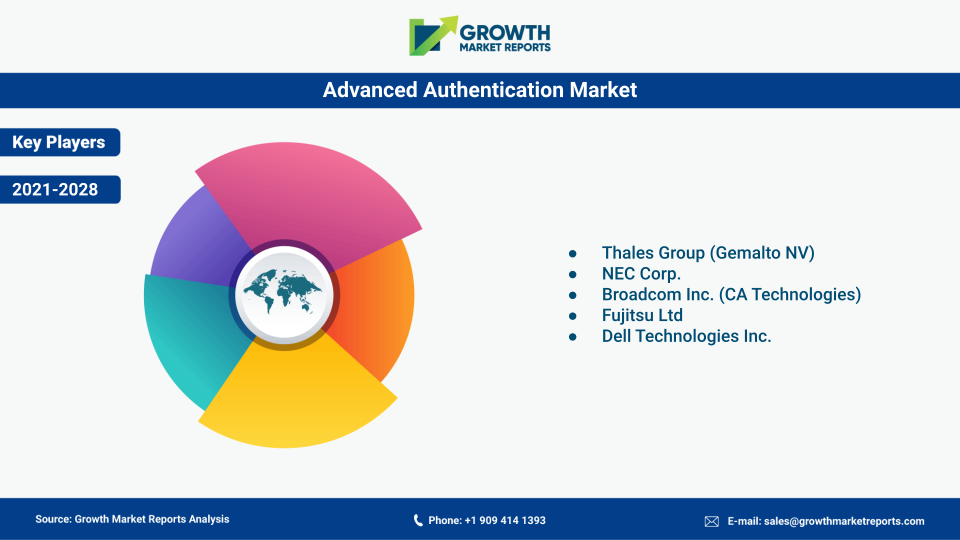
Key players in the global advanced authentication market are Thales Group (Gemalto NV); NEC Corp.; Broadcom Inc. (CA Technologies); Fujitsu Ltd; and Dell Technologies Inc.
These market leaders are concentrating their efforts on growing their consumer base to include international countries. To improve their market share and profitability, these firms are relying on strategic cooperation projects.
Opportunities include expanding into emerging markets, offering managed authentication services, developing adaptive and context-aware solutions, and integrating with identity and access management (IAM) and zero trust architectures.
AI and machine learning are being integrated into authentication platforms to enable real-time threat detection, adaptive security, and streamlined user onboarding, enhancing both security and user experience.
Major companies include Microsoft Corporation, IBM Corporation, RSA Security LLC, Okta Inc., HID Global, Gemalto NV (Thales Group), Duo Security (Cisco Systems), OneSpan Inc., SecureAuth Corporation, and NEC Corporation.
Challenges include the complexity and cost of deployment, integration with legacy systems, user resistance, data privacy concerns, and regulatory compliance issues.
North America leads the market with a 38% share, followed by Europe (28%) and Asia Pacific (21%). Asia Pacific is expected to experience the fastest CAGR due to rapid digitalization and increasing cyber threats.
Major end-users include BFSI (banking, financial services, and insurance), healthcare, government, IT and telecom, and retail sectors.
The market is segmented into on-premises and cloud-based deployment modes. On-premises is preferred for stringent security and compliance needs, while cloud-based solutions offer scalability, flexibility, and cost efficiency.
Popular technologies include biometrics (fingerprint, facial, iris, and voice recognition), smart cards, mobile authentication, and multi-factor authentication (MFA).
Key growth drivers include rising cyber threats, regulatory mandates for enhanced security (such as GDPR, CCPA, and PSD2), rapid digital transformation across industries, and the proliferation of mobile devices and remote work.
The global advanced authentication market was valued at USD 15.2 billion in 2024 and is projected to reach USD 47.2 billion by 2033, growing at a CAGR of 13.7% during the forecast period.