Segments - by Component (Solutions, Services), by Deployment Mode (On-Premises, Cloud), by Application (Threat Detection, Data Loss Prevention, Insider Threat Detection, Compliance Management, Others), by Organization Size (Small and Medium Enterprises, Large Enterprises), by End-User (BFSI, Healthcare, Retail and E-commerce, Government and Defense, IT and Telecommunications, Others)
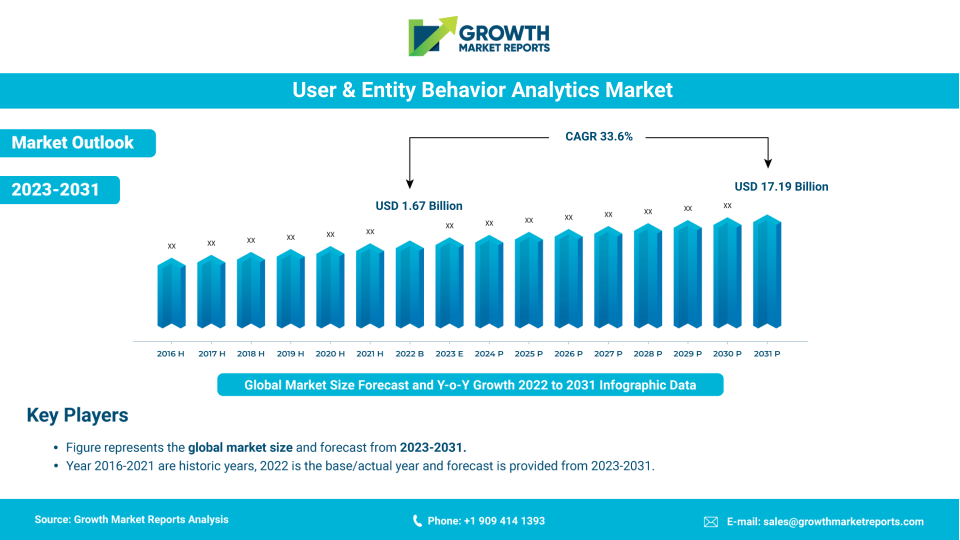
According to our latest research, the global User & Entity Behavior Analytics (UEBA) market size stood at USD 2.8 billion in 2024, demonstrating robust momentum driven by the escalating sophistication of cyber threats and the growing need for advanced security analytics. The market is expected to expand at a CAGR of 29.2% from 2025 to 2033, reaching a projected value of USD 23.3 billion by 2033. This surge is primarily fueled by the increasing adoption of digital transformation initiatives, the proliferation of cloud-based applications, and the critical demand for proactive threat detection and risk management across industries.
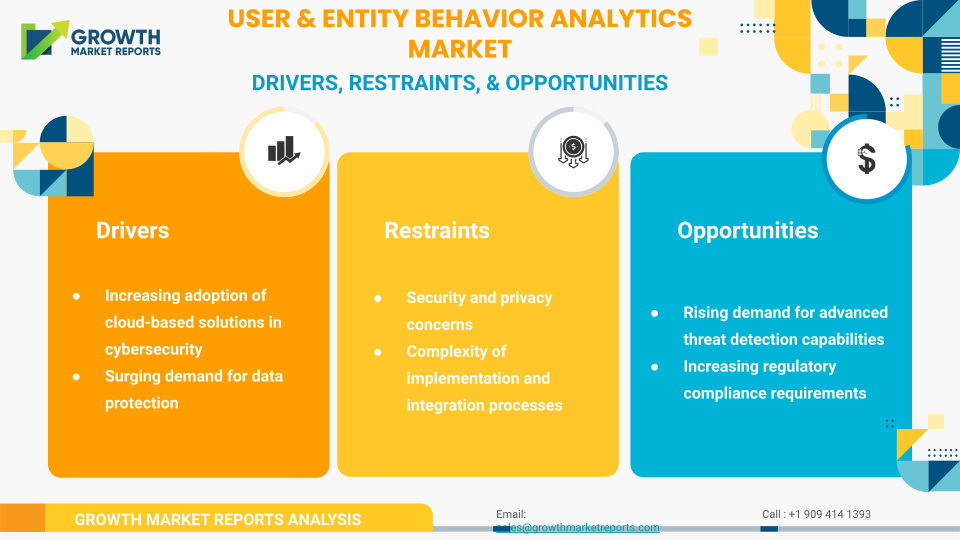
The growth trajectory of the User & Entity Behavior Analytics market is underpinned by several compelling factors. One of the most significant drivers is the exponential rise in cyberattacks, including insider threats, phishing, and advanced persistent threats (APTs), which have exposed the limitations of traditional security solutions. Organizations are increasingly turning to UEBA platforms to leverage machine learning and advanced analytics for detecting anomalous behavior patterns among users and entities. These platforms offer a proactive layer of defense, identifying threats that often evade signature-based detection tools. The growing adoption of remote work, fueled by global events and the shift towards hybrid work models, has further intensified the need for robust behavioral analytics to safeguard distributed digital environments.
Another key growth factor is the heightened regulatory landscape, with compliance mandates such as GDPR, HIPAA, and SOX compelling organizations to invest in advanced monitoring and reporting tools. UEBA solutions provide comprehensive audit trails and help ensure compliance by continuously monitoring user activities and generating real-time alerts for suspicious actions. This capability is particularly vital for industries handling sensitive data, such as BFSI, healthcare, and government sectors. The integration of artificial intelligence and big data analytics into UEBA platforms has also elevated their efficacy, enabling real-time analysis of massive data volumes and reducing false positives, thereby enhancing operational efficiency and security posture.
Furthermore, the rapid digitalization of business processes and the adoption of cloud-first strategies are accelerating the uptake of UEBA solutions. As organizations migrate workloads to the cloud and embrace SaaS applications, the attack surface expands, necessitating advanced monitoring tools capable of tracking user and entity behavior across complex, multi-cloud environments. UEBA platforms are increasingly integrated with Security Information and Event Management (SIEM) and Security Orchestration, Automation, and Response (SOAR) systems, providing a unified approach to threat detection, investigation, and response. This convergence is driving market expansion as enterprises seek holistic security frameworks to manage evolving risks.
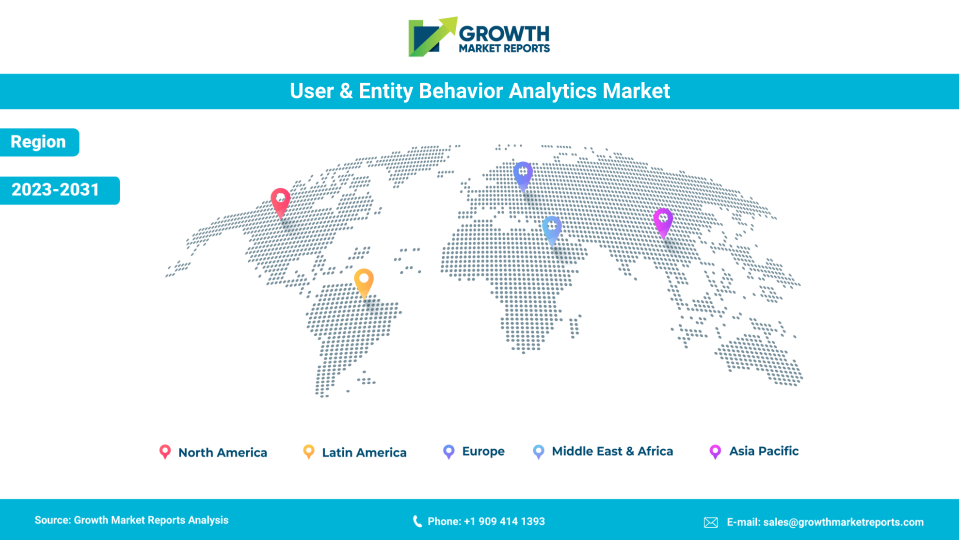
From a regional perspective, North America continues to dominate the User & Entity Behavior Analytics market, accounting for the largest revenue share in 2024. The region's leadership is attributed to the presence of leading cybersecurity vendors, early adoption of advanced technologies, and stringent regulatory requirements. However, Asia Pacific is emerging as the fastest-growing market, supported by rapid digital transformation, increasing cybercrime incidents, and rising investments in cybersecurity infrastructure across countries like China, India, and Japan. Europe and the Middle East & Africa are also witnessing steady growth, driven by regulatory compliance and the need to secure critical infrastructure. The interplay of these regional dynamics is shaping the global UEBA market landscape, fostering innovation and competitive differentiation.
The User & Entity Behavior Analytics market is segmented by component into solutions and services, each playing a pivotal role in the overall value proposition of UEBA deployments. UEBA solutions encompass software platforms that leverage machine learning, statistical analysis, and behavioral modeling to monitor, detect, and respond to anomalous activities. These solutions have witnessed significant advancements, with vendors focusing on features such as real-time analytics, integration with existing security ecosystems, and support for hybrid and multi-cloud environments. The demand for comprehensive, scalable, and customizable UEBA solutions is on the rise as organizations seek to address diverse threat landscapes and compliance requirements. The software segment continues to command a major market share, driven by continuous innovation and the growing need for automated, intelligent threat detection.
On the other hand, services related to UEBA are gaining prominence as organizations recognize the complexity of deploying and managing advanced analytics platforms. These services include consulting, integration, training, support, and managed services, which are essential for ensuring seamless implementation and optimal utilization of UEBA solutions. Service providers assist enterprises in tailoring UEBA deployments to their unique operational environments, aligning analytics models with specific business processes and risk profiles. The growing trend towards outsourcing security operations and the shortage of skilled cybersecurity professionals are further propelling the demand for managed UEBA services, enabling organizations to focus on core business activities while maintaining a robust security posture.
The interplay between solutions and services is critical to the success of UEBA initiatives. As threat actors evolve their tactics, organizations require ongoing support to update analytics models, fine-tune detection thresholds, and respond to emerging threats. Service providers play a vital role in continuous improvement, offering expertise in threat intelligence, incident response, and compliance management. This collaborative approach enhances the value delivered by UEBA platforms, ensuring that organizations can adapt to dynamic threat environments and regulatory changes.
Moreover, the integration of artificial intelligence and machine learning into both UEBA solutions and services is revolutionizing the market. Vendors are investing heavily in R&D to enhance the accuracy, scalability, and usability of their platforms. Advanced features such as automated investigation, contextual risk scoring, and seamless integration with SIEM and SOAR tools are becoming standard offerings. This technological evolution is driving market differentiation and enabling organizations to derive greater value from their UEBA investments, positioning the component segment as a key determinant of market growth.
| Attributes | Details |
| Report Title | User & Entity Behavior Analytics Market Research Report 2033 |
| By Component | Solutions, Services |
| By Deployment Mode | On-Premises, Cloud |
| By Application | Threat Detection, Data Loss Prevention, Insider Threat Detection, Compliance Management, Others |
| By Organization Size | Small and Medium Enterprises, Large Enterprises |
| By End-User | BFSI, Healthcare, Retail and E-commerce, Government and Defense, IT and Telecommunications, Others |
| Regions Covered | North America, Europe, APAC, Latin America, MEA |
| Base Year | 2024 |
| Historic Data | 2018-2023 |
| Forecast Period | 2025-2033 |
| Number of Pages | 265 |
| Number of Tables & Figures | 318 |
| Customization Available | Yes, the report can be customized as per your need. |
The deployment mode segment of the User & Entity Behavior Analytics market is bifurcated into on-premises and cloud-based solutions, each catering to distinct organizational needs and operational environments. On-premises deployment remains a preferred choice for organizations with stringent data sovereignty, privacy, and regulatory requirements, particularly in sectors such as government, defense, and financial services. These enterprises prioritize full control over their security infrastructure and data, opting for on-premises UEBA solutions that can be tightly integrated with existing IT systems and customized to meet specific compliance mandates. The on-premises segment is characterized by high upfront capital investments, longer deployment cycles, and the need for dedicated IT resources for ongoing management and maintenance.
In contrast, the cloud-based deployment model is witnessing exponential growth, driven by the widespread adoption of cloud computing, SaaS applications, and remote work practices. Cloud-based UEBA solutions offer unparalleled scalability, flexibility, and cost-efficiency, allowing organizations to rapidly deploy advanced analytics capabilities without the burden of managing physical infrastructure. These solutions are particularly attractive to small and medium enterprises (SMEs) and organizations with distributed workforces, as they enable seamless monitoring of user and entity behavior across diverse locations and devices. The cloud segment is further bolstered by continuous updates, automated threat intelligence feeds, and integration with other cloud-native security tools, making it the fastest-growing deployment mode in the UEBA market.
The choice between on-premises and cloud deployment is often influenced by factors such as organizational size, industry vertical, regulatory environment, and existing IT infrastructure. While large enterprises with complex security requirements may opt for hybrid models that combine the strengths of both deployment modes, SMEs are increasingly gravitating towards cloud-based solutions for their agility and lower total cost of ownership. The growing trend towards digital transformation and the migration of critical workloads to the cloud are expected to sustain the momentum of cloud-based UEBA platforms, reshaping the competitive landscape and driving innovation in deployment strategies.
Furthermore, the integration of UEBA with cloud-native security platforms and managed security services is amplifying the value proposition of cloud deployments. Vendors are focusing on enhancing interoperability, automating threat detection and response, and providing unified dashboards for centralized management. This convergence is enabling organizations to achieve comprehensive visibility, faster incident response, and improved compliance across hybrid and multi-cloud environments. As cyber threats continue to evolve, the deployment mode segment will remain a critical factor in the adoption and success of UEBA solutions.
The User & Entity Behavior Analytics market is segmented by application into threat detection, data loss prevention, insider threat detection, compliance management, and others, reflecting the diverse use cases addressed by UEBA platforms. Threat detection is the primary application, leveraging advanced analytics to identify anomalous behaviors indicative of cyberattacks, malware infections, and compromised accounts. UEBA solutions excel at correlating user activities, network traffic, and system events to detect sophisticated threats that bypass traditional security controls. The growing frequency and complexity of cyber incidents are driving organizations to adopt UEBA as a critical component of their security operations centers (SOCs), enhancing their ability to proactively detect and respond to emerging threats.
Data loss prevention (DLP) is another key application area, with UEBA platforms providing granular visibility into user actions that may lead to unauthorized data access, leakage, or exfiltration. By monitoring file movements, access patterns, and data transfers, UEBA solutions help organizations identify and mitigate risks associated with data breaches, intellectual property theft, and regulatory violations. The integration of DLP capabilities with behavioral analytics is particularly valuable for industries handling sensitive information, such as healthcare, finance, and legal services, where data protection is paramount.
Insider threat detection has emerged as a critical use case for UEBA, given the rising incidence of malicious or negligent actions by employees, contractors, and third-party partners. UEBA platforms analyze user behavior over time, establishing baselines and flagging deviations that may indicate insider threats, privilege abuse, or policy violations. This capability is essential for organizations seeking to protect sensitive assets, maintain operational integrity, and comply with regulatory requirements. The ability to detect subtle, low-and-slow attacks that evade conventional security tools is a key differentiator of UEBA solutions in the insider threat landscape.
Compliance management is a growing application area, as organizations face increasing pressure to adhere to complex regulatory frameworks and demonstrate effective security controls. UEBA solutions automate the collection, analysis, and reporting of user activity data, simplifying audit processes and enabling real-time compliance monitoring. By generating alerts for suspicious activities and maintaining comprehensive audit trails, UEBA platforms help organizations avoid costly penalties and reputational damage associated with non-compliance. The versatility of UEBA in addressing multiple security and compliance challenges is driving its adoption across diverse industry verticals.
In addition to these core applications, UEBA platforms are being leveraged for a range of emerging use cases, including fraud detection, privileged access management, and security automation. The continuous evolution of threat vectors and regulatory requirements is expanding the scope of UEBA applications, prompting vendors to innovate and enhance their offerings. As organizations increasingly recognize the value of behavioral analytics in strengthening their security posture, the application segment is poised for sustained growth and diversification.
The User & Entity Behavior Analytics market is segmented by organization size into small and medium enterprises (SMEs) and large enterprises, each exhibiting distinct adoption patterns and requirements. Large enterprises have historically been the primary adopters of UEBA solutions, driven by their complex IT environments, extensive user bases, and heightened risk profiles. These organizations typically possess the resources and expertise required to deploy, integrate, and manage advanced analytics platforms, and they prioritize comprehensive security frameworks to protect critical assets and ensure regulatory compliance. The large enterprise segment continues to account for a significant share of UEBA market revenue, with ongoing investments in digital transformation, cloud migration, and threat intelligence integration.
Small and medium enterprises (SMEs) are increasingly recognizing the importance of advanced security analytics in mitigating cyber risks and ensuring business continuity. Traditionally constrained by limited budgets and IT resources, SMEs are now leveraging cloud-based UEBA solutions that offer affordable, scalable, and easy-to-deploy capabilities. The proliferation of SaaS applications, remote work, and digital payment systems has expanded the attack surface for SMEs, making them attractive targets for cybercriminals. UEBA platforms enable SMEs to detect and respond to threats proactively, reducing the likelihood of data breaches, financial losses, and reputational harm. The growing availability of managed security services and pay-as-you-go pricing models is further driving UEBA adoption among SMEs.
The differing needs of large enterprises and SMEs are shaping the development and delivery of UEBA solutions. Vendors are offering modular, customizable platforms that can be tailored to the size, complexity, and risk appetite of each organization. For large enterprises, the focus is on advanced analytics, integration with existing security tools, and support for hybrid and multi-cloud environments. For SMEs, simplicity, affordability, and rapid deployment are key priorities, with vendors emphasizing user-friendly interfaces, automated workflows, and minimal maintenance requirements. This segmentation is enabling broader market penetration and fostering innovation in product design and service delivery.
Moreover, the increasing frequency and impact of cyberattacks on organizations of all sizes are underscoring the need for robust security analytics. Regulatory pressures, customer expectations, and the evolving threat landscape are compelling both large enterprises and SMEs to invest in UEBA platforms. As awareness of the benefits of behavioral analytics grows, the organization size segment is expected to witness sustained growth, with SMEs emerging as a key driver of market expansion in the coming years.
The User & Entity Behavior Analytics market serves a diverse array of end-users, including BFSI, healthcare, retail and e-commerce, government and defense, IT and telecommunications, and others. BFSI (Banking, Financial Services, and Insurance) is a leading adopter of UEBA solutions, given the sector's stringent regulatory requirements, high-value assets, and susceptibility to cyber threats. Financial institutions leverage UEBA platforms to detect fraudulent transactions, insider threats, and policy violations, while ensuring compliance with regulations such as PCI DSS, SOX, and GDPR. The integration of UEBA with core banking systems, payment gateways, and fraud detection tools is enhancing the security and resilience of BFSI organizations.
The healthcare sector is another major end-user, driven by the need to protect sensitive patient data, ensure regulatory compliance (e.g., HIPAA), and safeguard critical infrastructure. UEBA platforms help healthcare providers monitor user activities, detect unauthorized access to electronic health records (EHRs), and prevent data breaches. The increasing adoption of telemedicine, electronic prescriptions, and connected medical devices is expanding the attack surface, making behavioral analytics an essential component of healthcare cybersecurity strategies.
Retail and e-commerce organizations are leveraging UEBA to protect customer data, prevent payment fraud, and secure digital storefronts. The rapid growth of online transactions, mobile payments, and omnichannel retailing has heightened the risk of cyberattacks, prompting retailers to invest in advanced analytics for threat detection and response. UEBA solutions provide visibility into user and entity behavior across digital channels, enabling proactive identification of suspicious activities and reducing the risk of financial losses and reputational damage.
Government and defense agencies are increasingly adopting UEBA platforms to safeguard national security, protect critical infrastructure, and ensure the integrity of government operations. These organizations face persistent threats from nation-state actors, cybercriminals, and insider threats, necessitating advanced behavioral analytics for real-time threat detection and response. UEBA solutions are integrated with government security frameworks, enabling continuous monitoring, incident investigation, and compliance reporting.
The IT and telecommunications sector is also a significant end-user of UEBA, given its role in supporting critical digital infrastructure and services. Telecom operators and IT service providers leverage UEBA to monitor network traffic, detect anomalies, and prevent service disruptions. The convergence of IT and operational technology (OT), the proliferation of IoT devices, and the adoption of 5G networks are driving the need for advanced security analytics in this sector. As digital transformation accelerates across industries, the end-user segment is expected to witness sustained growth and diversification, with UEBA playing a central role in securing modern enterprises.
The User & Entity Behavior Analytics market presents a wealth of opportunities for growth and innovation, driven by the escalating complexity of cyber threats and the increasing reliance on digital technologies. One of the most significant opportunities lies in the integration of UEBA with other security solutions, such as SIEM, SOAR, and endpoint detection and response (EDR) platforms. This convergence enables organizations to achieve holistic visibility, automate threat detection and response, and streamline security operations. Vendors that can deliver seamless integration, interoperability, and unified dashboards will be well-positioned to capture market share and differentiate their offerings. The growing adoption of artificial intelligence, machine learning, and big data analytics is also opening new avenues for innovation, enabling UEBA platforms to deliver more accurate, context-aware, and adaptive threat detection capabilities.
Another major opportunity is the expansion of UEBA into emerging use cases and industry verticals. As organizations embrace digital transformation, cloud migration, and remote work, the attack surface is expanding, creating demand for advanced behavioral analytics across sectors such as manufacturing, energy, education, and logistics. The proliferation of IoT devices, connected systems, and smart infrastructure is generating vast amounts of data that can be leveraged for behavioral analysis, enabling organizations to detect anomalies, prevent operational disruptions, and ensure compliance. Vendors that can tailor UEBA solutions to the unique needs of these industries, offer flexible deployment models, and provide value-added services will be able to tap into new revenue streams and drive market expansion.
Despite the significant opportunities, the UEBA market faces certain restraining factors that could impact its growth trajectory. One of the primary challenges is the complexity and cost associated with deploying and managing advanced analytics platforms, particularly for resource-constrained organizations. The shortage of skilled cybersecurity professionals, the need for continuous model tuning, and the risk of false positives can hinder the effective adoption and utilization of UEBA solutions. Additionally, concerns around data privacy, regulatory compliance, and the potential misuse of behavioral data may pose barriers to market penetration. Vendors and service providers must address these challenges by offering user-friendly, cost-effective, and privacy-centric solutions, as well as providing comprehensive training, support, and managed services to ensure successful UEBA deployments.
The regional landscape of the User & Entity Behavior Analytics market is characterized by varying levels of adoption, regulatory frameworks, and technological maturity. North America leads the global market, accounting for approximately USD 1.1 billion of the total revenue in 2024. The region's dominance is driven by the presence of leading cybersecurity vendors, early adoption of advanced technologies, and stringent data protection regulations such as CCPA and HIPAA. The United States, in particular, is a major contributor to market growth, with enterprises across BFSI, healthcare, and government sectors investing heavily in UEBA platforms to mitigate evolving cyber threats and ensure regulatory compliance. The robust ecosystem of managed security service providers (MSSPs) and the availability of skilled cybersecurity professionals further bolster the North American market.
Asia Pacific is emerging as the fastest-growing region in the UEBA market, with a projected CAGR of 33.1% from 2025 to 2033. The region generated approximately USD 640 million in revenue in 2024, driven by rapid digital transformation, increasing cybercrime incidents, and rising investments in cybersecurity infrastructure. Countries such as China, India, Japan, and Australia are witnessing a surge in UEBA adoption across BFSI, healthcare, retail, and government sectors. The proliferation of cloud computing, mobile devices, and IoT technologies is expanding the attack surface, prompting organizations to invest in advanced behavioral analytics for threat detection and compliance management. Government initiatives to strengthen cybersecurity frameworks and the growing awareness of data protection are further accelerating market growth in Asia Pacific.
Europe and Middle East & Africa collectively accounted for approximately USD 780 million in UEBA market revenue in 2024. Europe is characterized by a strong regulatory environment, with GDPR and other data protection laws driving the adoption of advanced security solutions. Organizations across financial services, healthcare, and critical infrastructure sectors are investing in UEBA platforms to ensure compliance, protect sensitive data, and mitigate insider threats. The Middle East & Africa region is witnessing steady growth, supported by increasing investments in digital infrastructure, rising cyber threats, and government-led cybersecurity initiatives. As organizations across these regions continue to prioritize digital resilience and regulatory compliance, the demand for UEBA solutions is expected to rise steadily in the coming years.
The competitive landscape of the User & Entity Behavior Analytics market is dynamic and evolving, with a mix of established cybersecurity giants, innovative startups, and specialized vendors vying for market share. Leading players are focusing on product innovation, strategic partnerships, and mergers and acquisitions to strengthen their market position and expand their customer base. The integration of artificial intelligence, machine learning, and big data analytics is a key differentiator, enabling vendors to deliver more accurate, scalable, and adaptive UEBA solutions. The market is also witnessing the emergence of niche players offering tailored solutions for specific industries, deployment models, and use cases, contributing to increased competition and market fragmentation.
Major vendors are investing heavily in research and development to enhance the capabilities of their UEBA platforms, with a focus on real-time analytics, automated investigation, and seamless integration with existing security ecosystems. The ability to deliver unified dashboards, contextual risk scoring, and automated response workflows is becoming increasingly important as organizations seek to streamline security operations and improve incident response times. Vendors are also expanding their service offerings, including managed security services, consulting, and training, to address the growing demand for end-to-end UEBA solutions.
Strategic partnerships and alliances are playing a critical role in driving market growth and innovation. Leading vendors are collaborating with SIEM, SOAR, and EDR providers to deliver integrated security solutions that offer comprehensive visibility and control. These partnerships enable organizations to leverage the strengths of multiple platforms, automate threat detection and response, and achieve greater operational efficiency. The growing trend towards open APIs, interoperability, and cloud-native architectures is further facilitating collaboration and integration across the cybersecurity ecosystem.
Some of the major companies operating in the User & Entity Behavior Analytics market include Splunk Inc., Varonis Systems, LogRhythm Inc., Exabeam, Securonix, Rapid7, IBM Corporation, Microsoft Corporation, RSA Security, and Forcepoint. Splunk Inc. is recognized for its advanced analytics and integration capabilities, offering robust UEBA solutions for large enterprises and government agencies. Varonis Systems specializes in data-centric security and insider threat detection, providing comprehensive visibility into user and entity behavior across hybrid environments. LogRhythm Inc. and Exabeam are known for their innovative approaches to SIEM and UEBA integration, delivering unified platforms that enhance threat detection and response capabilities.
Securonix and Rapid7 are prominent for their cloud-native UEBA solutions, catering to organizations seeking scalable, flexible, and cost-effective security analytics. IBM Corporation and Microsoft Corporation leverage their extensive technology portfolios and global reach to deliver integrated UEBA offerings as part of their broader security suites. RSA Security and Forcepoint are also key players, focusing on behavioral analytics, risk management, and compliance solutions for regulated industries. These companies are continuously enhancing their platforms through AI-driven analytics, automation, and seamless integration with other security tools, positioning themselves as leaders in the rapidly evolving UEBA market.
In summary, the User & Entity Behavior Analytics market is characterized by intense competition, rapid innovation, and a growing emphasis on integration, scalability, and user-centric design. As cyber threats continue to evolve and organizations prioritize digital resilience, the competitive landscape will remain dynamic, with vendors striving to deliver differentiated, value-driven solutions that address the complex security challenges of modern enterprises.
The User & Entity Behavior Analytics market has been segmented on the basis of
Key players competing in the global user & entity behavior analytics market are Bay Dynamics; Dtex Systems; Exabeam Inc.; Forcepoint; Gurucul Solutions Pvt. Ltd.; Rapid7 LLC; Securonix; Securonix Inc.; Splunk Inc.; and Varonis Systems Inc.
On March 5, 2024, Alphabet's CapitalG invests USD 50 Million in DTEX Systems to bolster insider threat protection. DTEX, a leader in insider risk management, secures funding to expand global operations. Utilizing AI and machine learning, DTEX's InTERCEPT platform enables proactive risk management while preserving privacy. DTEX emphasizes the need to focus on the human element to shift to proactive security measures.
In February 2023, LogRhythm partnered with ABPSecurite, a cybersecurity distributor in Singapore, to distribute its SIEM, UEBA, and Axon solutions, expanding its reach.
Challenges include the complexity and cost of deployment, shortage of skilled cybersecurity professionals, managing false positives, and concerns around data privacy and regulatory compliance.
Major vendors include Splunk Inc., Varonis Systems, Securonix, Exabeam, Rapid7, LogRhythm, Microsoft Corporation, IBM Corporation, RSA Security, Forcepoint, McAfee LLC, Fortinet Inc., Cisco Systems, Dtex Systems, ObserveIT (Proofpoint), Gurucul, Imperva, Netwrix Corporation, and Micro Focus (OpenText).
North America leads the UEBA market, driven by advanced cybersecurity infrastructure and strict regulations. Asia Pacific is the fastest-growing region, while Europe and the Middle East & Africa are also experiencing steady growth.
Primary applications include threat detection, data loss prevention, insider threat detection, and compliance management. UEBA is also used for fraud detection, privileged access management, and security automation.
UEBA platforms provide comprehensive audit trails, real-time monitoring of user activities, and automated alerts for suspicious actions, helping organizations comply with regulations like GDPR, HIPAA, SOX, and PCI DSS.
UEBA solutions can be deployed on-premises or in the cloud. On-premises deployment is preferred by organizations with strict data sovereignty and regulatory needs, while cloud-based deployment is gaining popularity due to its scalability, flexibility, and cost-efficiency.
Major adopters include BFSI (Banking, Financial Services, and Insurance), healthcare, retail and e-commerce, government and defense, and IT and telecommunications sectors.
Key drivers include the increasing sophistication of cyber threats, rising adoption of digital transformation and cloud-based applications, the need for proactive threat detection, regulatory compliance requirements, and the growing trend of remote and hybrid work models.
The global User & Entity Behavior Analytics (UEBA) market is expected to reach USD 23.3 billion by 2033, growing at a CAGR of 29.2% from 2025 to 2033.
User & Entity Behavior Analytics (UEBA) is a cybersecurity technology that uses machine learning and advanced analytics to monitor, detect, and respond to anomalous behavior patterns among users and entities, helping organizations identify threats that traditional security tools may miss.