The Denmark solar energy market size was valued at USD XX Billion in 2022 and is likely to reach USD XX Billion by 2031, expanding at a CAGR of 10% during the forecast period, 2023–2031. The growth of the market is attributed to the fluctuating price of silicon, a significant raw material in solar panels.
Solar energy is derived from the sun and can be harnessed by using a variety of methods, the most common of which being solar panels. The method through which silicon solar panels collect the sun's energy and create electricity is known as the photovoltaic effect.
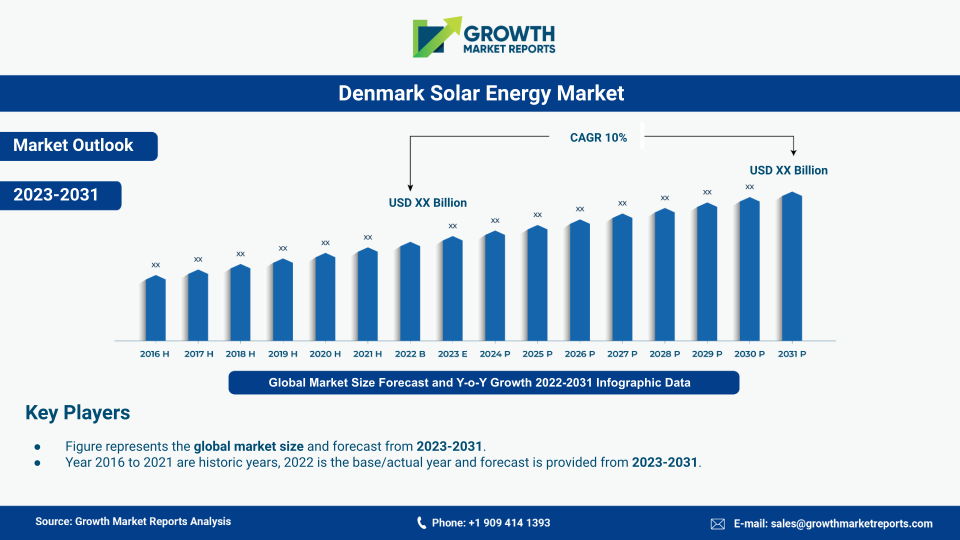
Solar energy represents for around 2% of the total electricity generation. Declining cost of installation of solar panels and silicon is expected to positively influence the market growth. Solar is a clean, renewable energy source that is expected to play a significant role in the future of the renewable energy industry.
Photovoltaic solar panels installation expanded at a healthy rate in recent years. It contributed to approximately 1000 MW in Denmark in 2019. Meanwhile, concentrated solar power is yet in the nascent stage; however, it is expected to grow at a robust rate in the coming years.
The percentage of solar energy is projected to rise significantly as a result of investments from tech giants such as Google, which plans to invest in five solar projects in Denmark with a combined capacity of more than 150 MW. The Government of Denmark announced an energy program named "Energy for a green Denmark" in April 2018. Thus, such initiatives are expected to benefit the industry players during the forecast period.
Denmark Solar Energy Market Trends, Drivers, Restraints, and Opportunities
- Increasing number of government policies that encourage the use of renewable energy to fulfil the rising energy demand and to the reliance on fossil fuels are projected to provide lucrative opportunities for emerging players in the market.
- Rapid growth of the power industry is one of the major factors propelling the market expansion in the coming years.
- Weather conditions and geographical latitudes are expected to hinder the market growth.
- The COVID-19 outbreak had disrupted the supply chain across the globe. This, in turn, impeded the market growth. However, relaxation in the restrictions imposed by government state bodies is expected to help the market to reach pre-COVID level soon.
- High initial investment, unreliable energy sources, and the requirement for huge installation sites can hamper the market during the forecast period.
- Installation and operations costs have decreased as a result of technological advancements and increased market competition is estimated to create lucrative opportunities for the market players.
Scope of Denmark Solar Energy Market Report
The report on the Denmark Solar Energy market includes an assessment of the market, trends, segments, and regional markets. Overview and dynamics have also been included in the report.
|
Attributes
|
Details
|
|
Report Title
|
Solar Energy Market - Denmark Industry Analysis, Growth, Share, Size, Trends, and Forecast
|
|
Base Year
|
2022
|
|
Historic Data
|
2016–2021
|
|
Forecast Period
|
2023–2031
|
|
Segmentation
|
Type (Photovoltaic and Concentrated Solar Power)
|
|
Geographical Zone
|
Denmark
|
|
Report Coverage
|
Company Share, Market Analysis and Size, Competitive Landscape, Growth Factors, and Trends, and Revenue Forecast
|
|
Key Players Covered in the Report
|
Danish Solar Energy Ltd, Oersted A/S, Arcon-Sunmark A/S, Better Energy A/S, and BeGreen A/S
|
Denmark Solar Energy Market Segment Insights
The photovoltaic segment is projected to hold a major market share
On the basis of types, the market is bifurcated into photovoltaic and concentrated solar power. The photovoltaic segment is expected to represent a key market share during the forecast period. Photovoltaics originates from the photovoltaic effect, which is the process of converting light, also known as photons to electricity.
Photovoltaics (PVs) are solar photovoltaic material-based arrays of cells that convert solar radiation or energy into direct current power. To reduce any current loss, they are made out of a variety of semiconductors, generally silicon, and highly conductive wire, which makes them costly. However, the operating costs are so minimal that according to estimates from 2018, they are expected to be cost-free after 25 years.
According to the Government of Denmark, the country is on track to build 4900 MW based on PV by 2030, which is a CAGR of more than 10% during the forecast period. Based on current project advancements in PV solar panels, the PV segment is projected to hold a considerable market share in Denmark's energy sector.
Segments
The Denmark Solar Energy market has been segmented on the basis of
Type
- Photovoltaic
- Concentrated Solar Power
Country
Key Players
Competitive Landscape
Key players competing in the Denmark Solar Energy market include Danish Solar Energy Ltd, Oersted A/S, Arcon-Sunmark A/S, Better Energy A/S, and BeGreen A/S. Some of these players are using several market strategies such as mergers, acquisitions, partnerships, collaborations, capacity expansion, and product launches to increase their market shares.











 Request For Customization
 Enquiry Before Buying
 Speak With Analyst





