Segments - by Technology (Monocrystalline Silicon, Polycrystalline Silicon, Thin Film, Others), by Application (Residential, Commercial, Industrial, Utility), by Grid Type (On-Grid, Off-Grid), by Installation Type (Ground-Mounted, Rooftop, Floating PV, Others)
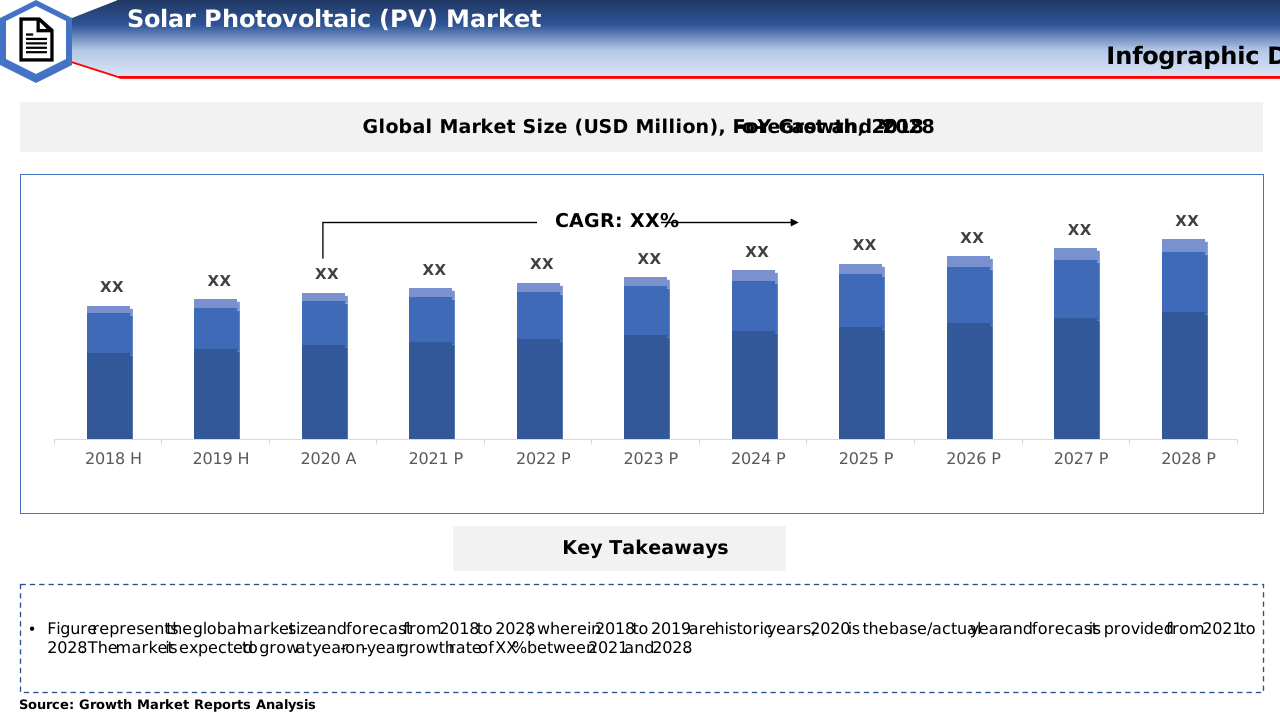
As per our latest research, the global solar photovoltaic (PV) market size reached USD 250.7 billion in 2024, reflecting a robust demand surge driven by both policy support and technological advancements. The market is set to expand at a CAGR of 10.2% from 2025 to 2033, reaching a forecasted value of USD 598.9 billion by 2033. This remarkable growth trajectory is attributed to the accelerating transition toward clean energy, ongoing reductions in solar module costs, and the increasing urgency among governments and corporations to achieve net-zero emissions targets.
The primary growth driver for the solar photovoltaic market is the intensifying global commitment to decarbonization and renewable energy adoption. Governments worldwide are implementing ambitious policies, incentives, and regulatory frameworks to phase out fossil fuels and promote solar energy deployment. For instance, large-scale solar tenders, feed-in tariffs, and tax credits have been instrumental in boosting utility-scale and distributed solar installations. Additionally, international agreements such as the Paris Climate Accord are compelling countries to scale up renewable energy capacities, with solar PV being a cornerstone of these strategies. The widespread adoption of solar PV is also facilitated by the declining levelized cost of electricity (LCOE) for solar, which has made it increasingly competitive with traditional energy sources. As a result, both developed and emerging economies are witnessing an unprecedented surge in solar PV adoption across residential, commercial, and utility sectors.
Technological innovation is another critical factor propelling the solar photovoltaic market. Advancements in PV cell efficiency, module design, and manufacturing processes have significantly enhanced the performance and affordability of solar panels. The evolution from polycrystalline to monocrystalline silicon and the emergence of thin-film technologies have enabled higher energy yields and better adaptability to diverse installation environments. Furthermore, the integration of smart inverters, energy storage solutions, and digital monitoring systems is optimizing solar energy utilization and grid integration. The rapid pace of research and development in materials science, such as perovskite solar cells and bifacial modules, promises to further elevate the efficiency and cost-effectiveness of solar PV systems. These technological breakthroughs are fostering broader adoption across various applications, from rooftop installations to large-scale solar farms.
Financial innovation and evolving business models are also shaping the solar photovoltaic market landscape. The proliferation of solar leasing, power purchase agreements (PPAs), and community solar programs is lowering the barrier to entry for consumers and businesses alike. These models enable end-users to benefit from solar energy without incurring significant upfront costs, thus democratizing access to clean power. Additionally, the involvement of institutional investors and green bonds is channeling substantial capital into solar projects, accelerating market growth. The emergence of integrated solar solutions, such as solar-plus-storage and hybrid renewable systems, is further expanding the addressable market. As financing mechanisms become more sophisticated and accessible, the solar PV sector is poised for sustained expansion across all regions and customer segments.
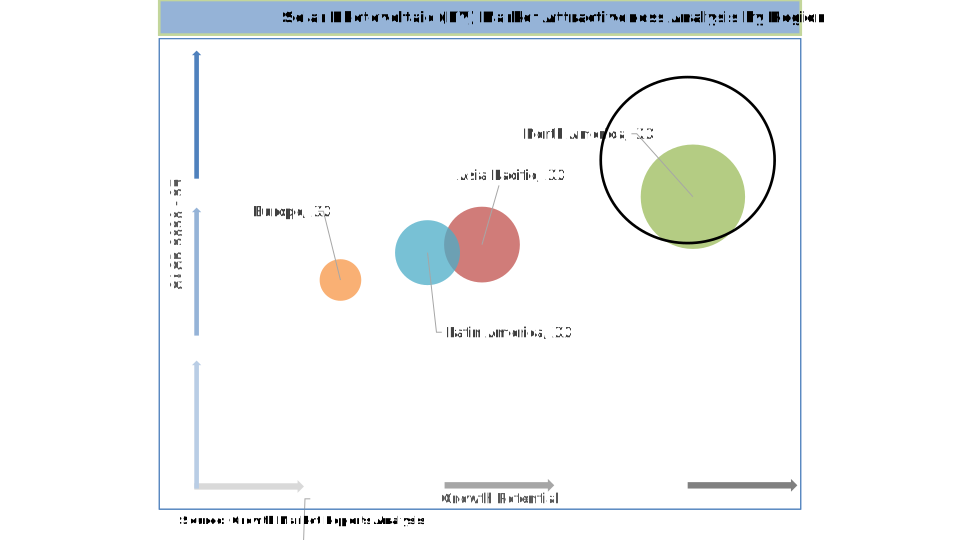
From a regional perspective, the Asia Pacific region continues to dominate the global solar photovoltaic market, accounting for the largest share of installations and capacity additions. China, India, and Southeast Asian countries are leading the charge, driven by supportive government policies, large-scale manufacturing capabilities, and rising electricity demand. North America and Europe are also witnessing robust growth, fueled by ambitious renewable energy targets and favorable regulatory environments. The Middle East & Africa and Latin America, though currently smaller markets, are emerging as high-growth regions due to abundant solar resources and increasing investments in solar infrastructure. The regional diversification of the solar PV market underscores its resilience and adaptability to varying economic, climatic, and policy conditions worldwide.
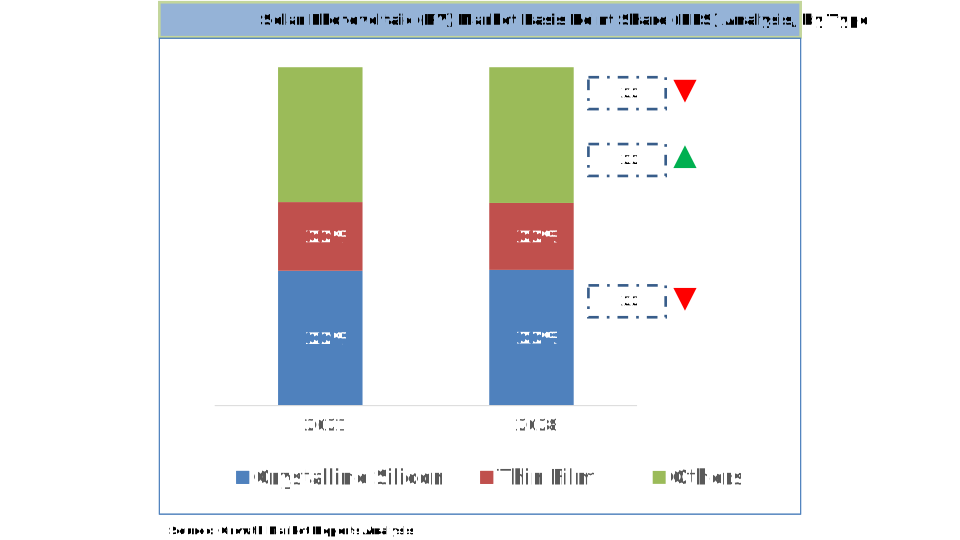
The technology segment of the solar photovoltaic market is primarily categorized into monocrystalline silicon, polycrystalline silicon, thin film, and others. Monocrystalline silicon technology has emerged as the dominant segment due to its superior efficiency rates, longevity, and declining manufacturing costs. These panels, characterized by their uniform dark appearance and high silicon purity, are increasingly favored for both residential and utility-scale projects, particularly in space-constrained environments where maximizing energy output is critical. The ongoing advancements in wafer slicing and cell architecture have further reduced the cost differential between monocrystalline and polycrystalline technologies, bolstering their market penetration.
Polycrystalline silicon technology, while historically popular due to its lower production costs, is witnessing a gradual decline in market share as monocrystalline panels become more affordable and efficient. Polycrystalline panels are recognized for their blue, speckled appearance and are typically utilized in large-scale installations where space is less of a constraint. However, the efficiency gap compared to monocrystalline panels, coupled with the global push for higher-performance solar solutions, is prompting many developers to transition toward monocrystalline options. Despite this trend, polycrystalline technology remains relevant in cost-sensitive markets and applications where upfront capital expenditure is a primary concern.
Thin film solar technology, encompassing cadmium telluride (CdTe), amorphous silicon, and copper indium gallium selenide (CIGS) variants, offers unique advantages such as flexibility, lightweight design, and superior performance in low-light conditions. These attributes make thin film panels particularly suitable for commercial rooftops, building-integrated photovoltaics (BIPV), and off-grid applications. While thin film panels generally exhibit lower efficiency compared to crystalline silicon counterparts, ongoing research and development efforts are narrowing this gap. Additionally, the lower energy and material inputs required for thin film production contribute to a reduced environmental footprint, enhancing their appeal in sustainability-focused projects.
The "others" category within solar PV technology encompasses emerging innovations such as bifacial modules, perovskite solar cells, and tandem cell architectures. Bifacial modules, capable of capturing sunlight from both sides, are gaining traction in utility-scale solar farms, delivering higher energy yields and improved project economics. Perovskite solar cells, though still in the research and pilot phase, hold significant promise due to their potential for ultra-high efficiency and low-cost manufacturing. The commercialization of these next-generation technologies is expected to further disrupt the solar PV market landscape, driving continuous improvements in performance, cost, and application versatility.
| Attributes | Details |
| Report Title | Solar Photovoltaic Market Research Report 2033 |
| By Technology | Monocrystalline Silicon, Polycrystalline Silicon, Thin Film, Others |
| By Application | Residential, Commercial, Industrial, Utility |
| By Grid Type | On-Grid, Off-Grid |
| By Installation Type | Ground-Mounted, Rooftop, Floating PV, Others |
| Regions Covered | North America, Europe, APAC, Latin America, MEA |
| Base Year | 2024 |
| Historic Data | 2018-2023 |
| Forecast Period | 2025-2033 |
| Number of Pages | 253 |
| Number of Tables & Figures | 300 |
| Customization Available | Yes, the report can be customized as per your need. |
The solar photovoltaic market is segmented by application into residential, commercial, industrial, and utility sectors. The residential segment has experienced exponential growth in recent years, fueled by rising consumer awareness, supportive government incentives, and the proliferation of rooftop solar solutions. Homeowners are increasingly adopting solar PV systems to reduce electricity bills, enhance energy independence, and contribute to environmental sustainability. The integration of smart home technologies and battery storage solutions is further enhancing the value proposition of residential solar, enabling consumers to optimize energy consumption and participate in grid services.
The commercial application segment encompasses solar installations on commercial buildings, offices, retail centers, and educational institutions. Businesses are leveraging solar PV systems to achieve cost savings, meet corporate sustainability goals, and hedge against volatile energy prices. The availability of innovative financing models, such as solar leasing and power purchase agreements (PPAs), is facilitating widespread adoption in the commercial sector. Additionally, the integration of solar PV with energy management systems and electric vehicle (EV) charging infrastructure is creating new opportunities for value creation and operational efficiency.
In the industrial sector, solar PV is increasingly being deployed to power manufacturing facilities, warehouses, and logistics centers. Industrial users, often characterized by high and consistent energy demand, are adopting solar solutions to lower operational costs, reduce carbon footprints, and enhance energy security. The scalability of solar PV systems, combined with the potential for on-site generation and self-consumption, makes them an attractive option for industrial applications. Moreover, the integration of solar with other renewable sources and energy storage is enabling industries to achieve greater resilience and flexibility in their energy supply.
The utility segment represents the largest share of the solar photovoltaic market, driven by the development of large-scale solar farms and grid-connected power plants. Utility-scale projects benefit from economies of scale, favorable land availability, and long-term power purchase agreements with utilities and governments. These installations play a pivotal role in decarbonizing the electricity grid, supporting renewable energy targets, and providing reliable, low-cost power to consumers. Advances in project financing, digital monitoring, and grid integration are further enhancing the viability and competitiveness of utility-scale solar PV.
The grid type segment of the solar photovoltaic market is divided into on-grid and off-grid systems. On-grid solar PV systems, also known as grid-tied systems, are directly connected to the public electricity grid and are the most commonly deployed configuration worldwide. These systems allow users to draw power from the grid when solar generation is insufficient and export excess electricity back to the grid, often benefiting from net metering or feed-in tariff schemes. The widespread adoption of on-grid solar is driven by favorable policies, declining system costs, and the increasing reliability of grid infrastructure.
Off-grid solar PV systems operate independently of the public electricity grid and are typically used in remote or rural areas where grid access is limited or non-existent. These systems are essential for providing electricity to underserved communities, powering telecommunications infrastructure, and supporting agricultural and water pumping applications. Off-grid solar solutions often incorporate battery storage to ensure continuous power supply during periods of low solar irradiance. The declining cost of solar panels and batteries, coupled with innovative business models such as pay-as-you-go (PAYG), is accelerating the adoption of off-grid solar in emerging markets.
Hybrid systems, which combine on-grid and off-grid capabilities, are gaining traction as a means to enhance energy resilience and reliability. These systems can operate in grid-connected mode during normal conditions and switch to off-grid mode during outages or grid instability. The integration of solar PV with other distributed energy resources, such as wind turbines and diesel generators, is further expanding the applicability of hybrid systems across diverse settings. Advances in energy management software and smart inverters are enabling seamless operation and optimization of hybrid solar installations.
The choice between on-grid and off-grid solar PV systems is influenced by factors such as local electricity prices, grid reliability, regulatory frameworks, and consumer preferences. In developed markets with robust grid infrastructure, on-grid systems dominate due to their cost-effectiveness and ease of integration. In contrast, off-grid and hybrid systems are more prevalent in developing regions, where electrification remains a key challenge. The continued evolution of grid infrastructure, coupled with the expansion of rural electrification programs, is expected to shape the future growth dynamics of the grid type segment in the solar PV market.
The installation type segment of the solar photovoltaic market includes ground-mounted, rooftop, floating PV, and others. Ground-mounted solar installations are predominantly used for utility-scale projects and large commercial or industrial applications. These systems are typically deployed on open land, enabling optimal orientation and tilt for maximum solar exposure. The scalability and cost-effectiveness of ground-mounted installations make them ideal for large power generation projects, contributing significantly to overall market growth. Innovations such as single-axis and dual-axis trackers are further enhancing the energy yield and economic viability of ground-mounted solar farms.
Rooftop solar installations cater primarily to residential, commercial, and small industrial applications. These systems leverage existing building rooftops to generate electricity, reducing the need for additional land and infrastructure. Rooftop solar is particularly attractive in urban environments with high population density and limited open space. The modular nature of rooftop systems allows for flexible sizing and phased deployment, making them accessible to a wide range of consumers. Government incentives, net metering policies, and the growing trend of prosumerism are driving the rapid adoption of rooftop solar worldwide.
Floating PV installations represent an innovative and rapidly growing segment within the solar photovoltaic market. These systems are deployed on water bodies such as reservoirs, lakes, and ponds, offering unique advantages such as reduced land use, enhanced panel cooling, and minimized evaporation. Floating PV is particularly relevant in regions with limited land availability or high land costs, such as densely populated countries and island nations. The technology is gaining traction in Asia Pacific, Europe, and the Middle East, supported by favorable policies and pilot projects demonstrating its technical and economic feasibility.
The "others" category in installation type includes building-integrated photovoltaics (BIPV), carports, and solar canopies. BIPV systems integrate solar panels directly into building materials such as facades, windows, and roofs, providing both energy generation and architectural functionality. Solar carports and canopies are increasingly being adopted in commercial and public spaces, offering shade and charging infrastructure for electric vehicles while generating clean electricity. The diversification of installation types is broadening the application scope of solar PV and enabling tailored solutions to meet varying customer needs and site conditions.
The solar photovoltaic market is brimming with opportunities, primarily driven by the global shift toward renewable energy and the decarbonization of the power sector. One of the most significant opportunities lies in the integration of solar PV with energy storage systems, enabling greater grid stability, energy arbitrage, and resilience against power outages. The emergence of smart grids, digital monitoring, and data analytics is further enhancing the operational efficiency and value proposition of solar PV systems. Additionally, the electrification of transportation and the proliferation of electric vehicles are creating new demand streams for distributed solar generation and charging infrastructure. The ongoing expansion of rural electrification programs in developing regions presents another lucrative opportunity, as solar PV offers a cost-effective and scalable solution for providing electricity to off-grid and underserved communities. The continuous evolution of financing models, such as green bonds and pay-as-you-go schemes, is also unlocking new markets and customer segments, accelerating the global adoption of solar PV.
Technological innovation remains a cornerstone of opportunity in the solar photovoltaic market. The development of high-efficiency modules, bifacial and tandem cell architectures, and advanced manufacturing techniques is driving down costs and expanding the application potential of solar PV. The commercialization of emerging technologies such as perovskite solar cells and building-integrated photovoltaics (BIPV) is expected to open new frontiers in solar deployment, from urban skyscrapers to wearable devices. The integration of artificial intelligence and machine learning in system monitoring and maintenance is enhancing reliability and reducing operational costs. Furthermore, the growing emphasis on circular economy principles and end-of-life management is fostering the development of solar recycling and repurposing industries, creating additional value streams and environmental benefits.
Despite the abundant opportunities, the solar photovoltaic market faces several restraining factors and threats. One of the primary challenges is the intermittency of solar power generation, which can lead to grid stability issues and necessitate the deployment of complementary energy storage or backup systems. Regulatory uncertainty, policy reversals, and trade disputes can also hinder market growth by disrupting supply chains, increasing project costs, and undermining investor confidence. The availability of suitable land for large-scale solar installations, particularly in densely populated regions, poses another constraint. Additionally, concerns related to the environmental impact of PV module manufacturing, recycling, and disposal are garnering increased attention, necessitating the development of sustainable supply chains and end-of-life management solutions. Addressing these challenges will require coordinated efforts from policymakers, industry stakeholders, and the research community.
The Asia Pacific region holds the largest share of the global solar photovoltaic market, accounting for approximately 47% of the total market value in 2024, or around USD 117.8 billion. China remains the world leader in both solar PV manufacturing and installations, with aggressive government targets, robust supply chains, and significant investments in research and development. India is also experiencing rapid growth, supported by ambitious solar capacity targets, favorable policy frameworks, and expanding rural electrification efforts. Southeast Asian countries, including Vietnam, Thailand, and the Philippines, are emerging as high-growth markets, driven by rising electricity demand and supportive regulatory environments. The Asia Pacific region is expected to maintain a strong CAGR of 11.5% through 2033, fueled by ongoing investments in solar infrastructure and technology innovation.
North America represents the second-largest regional market, with a market size of USD 51.4 billion in 2024, driven primarily by the United States. The region benefits from a mature solar industry, well-established policy support, and a growing emphasis on decarbonization at both federal and state levels. The extension of investment tax credits (ITC), net metering policies, and corporate renewable energy procurement are key drivers of market growth. Canada and Mexico are also witnessing increased solar adoption, particularly in utility-scale and commercial applications. North America's solar PV market is projected to grow at a steady CAGR of 9.1% over the forecast period, supported by ongoing policy support and technological advancements.
Europe, with a market value of USD 45.2 billion in 2024, continues to be a frontrunner in renewable energy adoption and climate action. The European Union's Green Deal, ambitious emissions reduction targets, and supportive regulatory frameworks are driving large-scale solar deployments across member states. Germany, Spain, Italy, and France are leading markets, with significant investments in both rooftop and utility-scale solar projects. The increasing integration of solar PV with energy storage, demand response, and electric vehicle infrastructure is further enhancing market growth. The Middle East & Africa and Latin America, though smaller in market size at USD 18.9 billion and USD 17.4 billion respectively, are emerging as high-potential regions due to abundant solar resources, declining technology costs, and growing energy demand. These regions are expected to witness accelerated growth as governments and private sector players ramp up investments in solar infrastructure and rural electrification.
The global solar photovoltaic market is characterized by intense competition, rapid technological innovation, and a dynamic landscape of established players and new entrants. The competitive environment is shaped by factors such as product differentiation, cost leadership, supply chain integration, and geographic reach. Leading companies are investing heavily in research and development to enhance module efficiency, reduce manufacturing costs, and develop next-generation solar technologies. Strategic partnerships, mergers and acquisitions, and vertical integration are common strategies employed to strengthen market position and expand global footprints. The increasing focus on sustainability, circular economy principles, and end-of-life management is also influencing competitive dynamics, with companies seeking to differentiate themselves through environmentally responsible practices and product offerings.
Chinese manufacturers dominate the global solar PV supply chain, accounting for a significant share of module production, polysilicon processing, and component exports. Companies such as LONGi Green Energy Technology, JinkoSolar, and Trina Solar have established themselves as industry leaders through economies of scale, technological innovation, and aggressive pricing strategies. These firms are continuously expanding their manufacturing capacities, investing in advanced cell technologies, and forging strategic alliances with downstream project developers and EPC contractors. The dominance of Chinese players has contributed to the rapid decline in global solar module prices, making solar PV more accessible and affordable worldwide.
In addition to Chinese giants, several international players are actively shaping the solar photovoltaic market landscape. Companies such as First Solar (United States), Canadian Solar (Canada/China), and Hanwha Q CELLS (South Korea/Germany) are recognized for their technological expertise, diversified product portfolios, and global project development capabilities. First Solar, for instance, is a leader in thin-film solar technology, while Canadian Solar and Hanwha Q CELLS have a strong presence in both crystalline silicon and project development segments. These companies are leveraging their technological strengths, financial resources, and market insights to capture opportunities in emerging and established markets alike.
Other notable players in the solar PV market include SunPower Corporation (United States), REC Group (Singapore/Norway), JA Solar (China), and Risen Energy (China). SunPower is renowned for its high-efficiency solar panels and integrated energy solutions, while REC Group specializes in innovative module designs and sustainability initiatives. JA Solar and Risen Energy are recognized for their large-scale manufacturing capabilities and extensive global distribution networks. As the market continues to evolve, competition is expected to intensify, with companies vying for leadership through continuous innovation, customer-centric solutions, and strategic expansion into new markets and applications.
The Solar Photovoltaic market has been segmented on the basis of
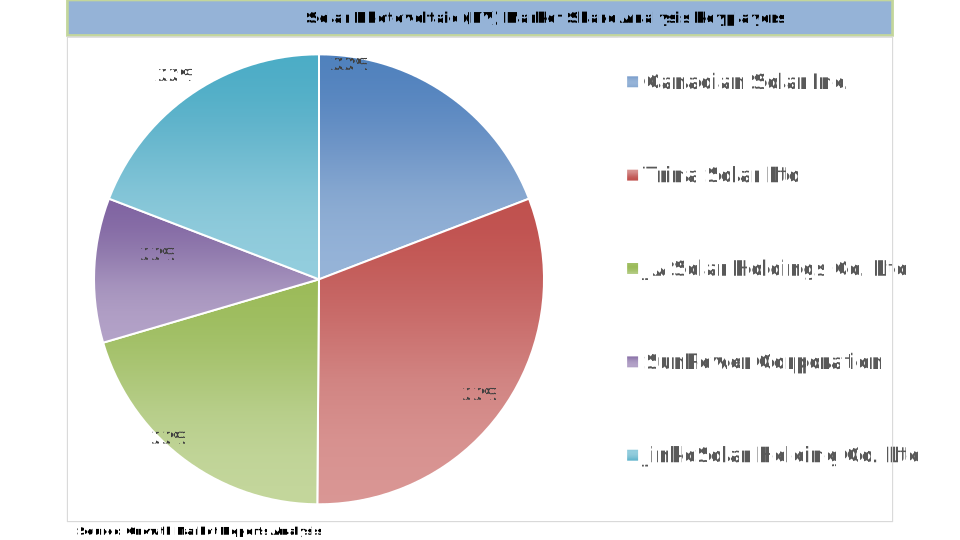
Key players competing in the solar photovoltaic market include Canadian Solar Inc., Trina Solar Ltd; JA Solar Holdings Co. Ltd; SunPower Corporation; JinkoSolar Holding Co. Ltd. Some of these players are focusing on business strategies including partnerships, collaborations, capacity expansion, and product launches to increase their market shares
Advancements in PV cell efficiency, module design, manufacturing processes, and new materials like perovskite and bifacial modules are improving performance, reducing costs, and expanding the range of solar applications.
Opportunities include integration with energy storage, smart grids, rural electrification, and technological innovations like high-efficiency modules and AI-driven monitoring. Challenges include solar intermittency, regulatory uncertainties, land availability, and environmental concerns related to manufacturing and recycling.
Major players include LONGi Green Energy Technology, JinkoSolar, Trina Solar, JA Solar, Canadian Solar, First Solar, Hanwha Q CELLS, Risen Energy, SunPower Corporation, REC Group, and several others.
Installation types include ground-mounted (mainly for utility-scale), rooftop (residential and commercial), floating PV (on water bodies), and others such as building-integrated photovoltaics (BIPV), carports, and solar canopies.
On-grid systems are connected to the public electricity grid, allowing for net metering and grid backup, while off-grid systems operate independently, often with battery storage, and are ideal for remote or rural areas without grid access.
The market is segmented into residential, commercial, industrial, and utility applications. Utility-scale projects hold the largest share, while residential and commercial segments are growing rapidly due to incentives and innovative business models.
The primary solar PV technologies include monocrystalline silicon, polycrystalline silicon, thin film (such as CdTe, amorphous silicon, and CIGS), and emerging technologies like bifacial modules and perovskite solar cells.
Asia Pacific dominates the market, accounting for about 47% of the global value, led by China, India, and Southeast Asian countries due to strong policy support, manufacturing capabilities, and rising electricity demand. North America and Europe also show robust growth, while the Middle East, Africa, and Latin America are emerging as high-growth regions.
Key growth drivers include global decarbonization efforts, supportive government policies, declining solar module costs, technological advancements, and increasing corporate and governmental commitments to net-zero emissions.
The global solar photovoltaic market reached USD 250.7 billion in 2024 and is projected to grow at a CAGR of 10.2% from 2025 to 2033, reaching approximately USD 598.9 billion by 2033.